The Next Time I Fall

Wednesday has rolled around again and it’s Pay-the-Bills Day. Huzzah.

That’s the worst part of being an adult, methinks–being responsible financially.

hate it.

Ah, well, it’s an evil thing that must be done, alas, for there is no choice.

I was still extremely tired yesterday when I got home from work; it was a long day, of course, and I am probably still recovering from whatever that was I caught at Tiger Stadium Saturday night–my throat is still sore–and I slept like a stone last night. I was so relaxed and comfortable this morning I didn’t want to get out of bed, and in fact, stayed in bed much longer than I probably should have. What can I say? Sleep is essential, and necessary, and I clearly needed more. I probably should have stayed home again yesterday, to make sure I was completely rested and over everything, but…yeah. I felt well enough to go to work and so I did.

I am, as ever, behind on everything; I tried yesterday but just didn’t have the energy to focus and get things done. I’ll have to do better today, as the month of October is clearly slipping through my fingers. But I have to make groceries on the way home from work tonight, and I’m not sure how much energy I’ll have once I get home. I need to remember to conserve my energy, and not expend it all the time. This weekend I seriously need to get my shit together and get some work done on the Lost Apartment–it’s seriously filthy; the LSU-Mississippi State game is the marquee game on CBS Saturday, so it’ll be on smack dab in the middle of the day, at 2:30–which means I’ll be on the emotional rollercoaster until sometime after five. So, clearly Saturday is the day I need to run errands and focus on cleaning around here, so I can devote Sunday to writing.

I keep getting more ideas on how to make Bury Me in Shadows a better book than it currently is; so that’s going to be my primary focus for the rest of this month–getting that finished. I think part of the problem I’ve been having this month so far has been lack of focus; I’ve been far too scattered with my energies this month, which is always a problem with me–that and focus. Squirrel! See what I mean?

And let’s be serious, any ideas I get on how to make the current WIP better are welcomed. I groan and moan about the additional work its going to cause me, but I already knew the manuscript needed work, and there were holes and inconsistencies in the story–the ever popular oh why would they do this other than I need them to in order to advance the story keeps popping up, and that’s what, frankly, needs the work. There’s nothing worth than having contrivances in your story.

Last night the SEC Network rebroadcast the LSU-Florida game, and as I already mentioned, I was too tired to do much of anything last night–even read–so I just put the television on the game yet again–I rewatched it Sunday night, but was so ill and tired I kept falling asleep and it was primarily on for background noise, that’s how tired I was–and as I watched the  game again my mind started wandering again–back to the first LSU game Paul and I ever attended, back in 2010 against Ole Miss. That game was also a nail-biter, with LSU finally clinching the win with a touchdown in the final minute of the game. LSU has, as I’ve mentioned before, never lost when we are in the stadium. I then remembered that I promised to dedicate my next book to the Judge and his wife, Janet, if they gave us those tickets–which they did, and so I did, and that book was, I believe, Sleeping Angel. Janet and the Judge have gifted us with their game tickets at least once per season ever since–others have given us tickets over the years as well, and we’ve sometimes bought them on Stubhub–and as I was thinking about Sleeping Angel, I realized, wow, I haven’t thought about that book in YEARS.

I had written a foreword for the new edition of Jay B. Laws’ The Unfinished, which was brought back into print yesterday byReQueered Tales–this was the essay I was struggling with several months ago–and while I did get it finished (the publisher loved it, I might add, writing me back to tell me it was beautifully written), in the posts about the book’s release yesterday I was referred to as “legendary writer Greg Herren” and other such complimentary things. I am always, inevitably, taken aback by such pronouncements–I don’t see myself as legendary, or any of the other kind ways people refer to me these days; mainly because when I think of legendary queer crime writers I think about Michael Nava and John Morgan Wilson, among others. It isn’t fake humility, either–although I’ve been accused of that before. I generally don’t, as a rule, tend to think about myself in those kinds of terms; therein lies, I believe, the path to madness–which I really don’t need any help finding, thank you very much. Felice Picano told me once, a long time ago, that if you stick around long enough you’ll get respected for the longevity, if nothing else…and it’s also weird to me when I realized I’ve been doing this consistently for seventeen years.

I was also thinking, in my roundabout way last night, about the need to buckle down and focus. I was talking with another writer friend yesterday about short stories–we’d both written a story for the same anthology–and we exchanged our stories, which turned out to be vastly different. But I loved hers–it’s wickedly funny–and she loved mine, which was also very cool. I love writing short stories, even though I often struggle with them, and right now I have two out for submission, and about three that are pending publication. I have two collections I want to do–Monsters of New Orleans, which would be Gothic horror stories set here, and Once a Tiger and Other Stories, which would compile my crime short stories that have been written and/or published since Survivor’s Guilt and Other Stories was published. I was also thinking I need to rename Once a Tiger and Other Stories; maybe This Town and Other Stories, since people really seemed to like my story in Murder-a-Go-Go’s a lot. I was also thinking about doing the four novellas into one book thing, like Stephen King has done–which would most likely have  Never Kiss a Stranger anchoring the collection. I’d of course have to get permission from Kensington to reprint “The Nightwatchers” in this collection, and if they don’t give it to me, I’d have to write another, which wouldn’t be the end of the world, either. I’d always wanted to turn “The Nightwatchers” into a series; it’s loosely connected to both the vampire novella and novel I later wrote as Todd Gregory–“Blood on the Moon” and Need–but have never gotten back to them. (The next book I’d planned would have been Desire.)

I was also thinking I should dedicate another book to the Judge and Janet; the game experience was so amazing on Saturday night I should do something incredibly nice for the two of them again.

And maybe I should revisit Sleeping Angel. It, along with Sorceress, was set in the mountains of California, in the small city of Woodbridge; I’d intended to write several novels set there, and connect all my y/a fiction together in some way. Laura, the main character in Sorceress, was from the small rural area of Kansas where I also set Sara; and I keep forgetting that Dark Tide is also kind of connected to Bury Me in Shadows, which is also kind of connected to Lake Thirteen and Sara. 

I also have an unfinished manuscript, tentatively titled Spellcaster, which is also set in Woodbridge with some character overlap.

I was trying to do an R. L. Stine thing.

And on that note, the bills aren’t going to pay themselves, so I best put on my mining cap and head back into the spice mines.

552300_526660110697064_982318603_n

Free Your Mind

Well, I slept deeply and well last night, only waking up twice–and both times I was able to go back into a lovely, lovely deep sleep. I also didn’t wake up until almost nine. I know, right? It’s so lovely to feel rested.

LSU’s game isn’t on until tonight, but there are some terrific games on throughout the day. I suspect I can finish the floors and cleaning the living room around and during some of these games; I can also get some writing done as well, methinks. I am leaning towards editing some short stories rather than working on the book–yes, I know that will put me two days behind where I want to be with it, but I am also stuck. (And no sooner did I type that, did I come up with a way to start Chapter Four in a way that will help advance the plot somewhat. Huzzah!)

Yesterday, as I mentioned, I stopped at the Latter Library on my way home from work to pick up a book I’d requested on-line, Volume 2 of Otto Penzler’s Bibliomysteries. If you aren’t familiar with the “Bibliomysteries,” these are slightly longer than your average short stories, written by today’s top crime writers, and have to focus or be centered around a book or a bookstore. I first became aware of them when I was a judge for the Edgar Award for Best Short Story a few years ago (maybe more than a few; time has become so fluid and untethered for me–particularly when I realize it’s fucking 2018 sometimes), and in fact we picked John Connelly’s Bibliomystery, “‘The Caxton Lending Library and Book Depository,” as that year’s Best Short Story winner. Since then, I’ve read others–Megan Abbott’s “The Little Men,” Laura Lippman’s “The Book Thing,” Denise Mina’s “Every Seven Years”–and been blown away by their absolute brilliance (which reminds me, I really need to get back to the Short Story Project, which has sadly fallen by the wayside); so I am very excited to read this second collection of these singles; the stories are, you see, originally published as singles–you can buy them as ebooks or you can get a print copy.

I love the library, and was extremely pleased with myself, as Constant Reader is probably already aware, for finally getting my library card. I haven’t had one since I left Kansas in 1981; and even in Kansas I hadn’t used mine for years when we moved. Libraries were very important to me, as a kid and as a teen; I don’t know why I stopped using them–other than the fact that I often lost library books, or forgot to return them on time, which meant fines, which meant lectures from my mother about irresponsibility and on and on and on it went–but I remember the Tomen Branch of the Chicago Public Library fondly; the library on 6th Street in Emporia, and the little library in Americus, as well as when the Bolingbrook Library opened. I often spent time in my school libraries as well as a kid. Stupidly, I suspect I stopped using libraries when I started working and had my own money to buy books with; I loved owning books, always coveted other people’s, and for years was also sentimentally attached to books and didn’t want to get rid of my copies of them. I still am, and I still hoard books, always buying more when I haven’t read all the ones on hand, and I was the same with the library; always checking out more than I could possibly read because I also wanted choices about what to read. I’m looking forward to reading–and reporting back–on the stories in this book I haven’t already read–the Abbott and Mina stories are also inside this collection of them. Writing a Bibliomystery is a bucket-list thing for me; but I will also need to become more important of a writer to be asked.

Last night, as I laundered the bed lines and blankets and coverlets, it took longer for the dryer to dry things then planned–it was damp yesterday, and damp always affects the dryer–so I had to stay up a little later than I wanted to, so I started streaming an 1980’s classic thru Prime: Night of the Comet, starring Robert Beltran, Catherine-Mary Stewart, and Kelli Maroney. I saw this movie in the theater when it was released; it’s not the greatest movie in the world, but it also recognized that it wasn’t a great movie and embraced its camp sensibility. The premise of the movie is this: a comet with an enormous orbit through space is going to pass close by Earth again for the first time in sixty-five million years (hello, dinosaur extinction event!), and of course, it turns into this thing, with comet-watching parties and so forth. Our two leading ladies manage to miss the comet by falling asleep inside of steel–Stewart in the cinema where she works in a steel-walled room for storing film; Maroney in a steel shed in the backyard–and the comet turns everyone into either dust or murderously insane zombies, and they have to survive somehow. Fortunately, the women–sisters–have a father in the military who taught them how to protect themselves. Beltran plays a truck driver (who passed the night inside his truck) they encounter, and eventually team up with for survival. I was just far enough into the movie to get to the part where they run into Beltran for the first time–having already realized most of the world is dead–when the blankets were finished. I also remembered some trivia–Stewart’s big break was being the original Kayla on Days of Our Lives (her replacement became one of the most-loved and popular stars of the show), and Maroney started out playing a manipulative spoiled bitch teenager on Ryan’s Hope. Stewart was also the female lead in a favorite scifi movie of mine from that same period, The Last Starfighter. Both kind of faded away which I always thought was kind of unfortunate–although watching the movie again last night and seeing their performances clearly, it’s really not that surprising.

And Beltran, of course, was part of the Paul Bartel stable, also appearing in Eating Raoul and Scenes from the Class Struggle in Beverly Hills. Interesting that Bartel’s films, which were kind of the same style as John Waters movies, aren’t remembered or talked about much anymore. (Bartel and his usual female muse, Mary Woronov, also were in another classic from the period, Rock ‘n’ Roll High School–but I don’t remember if Bartel directed that one.)

I may finish watching Night of the Comet at some point today; we shall see how the day goes.

And now, back to the spice mines.

IMG_4332

Do I Have to Say the Words?

GEAUX TIGERS!

It wasn’t a pretty win by any means, but a win is a win–and LSU is now the only team to have beaten four teams that were ranked at the time of the game. With Ohio State’s stunning blow-out loss to Purdue, the Tigers should be ranked in the top four (probably number four) when the rankings come out..and also setting up a huge game against Number One ranked Alabama… look completely unbeatable. Regardless, this has been a wonderful dream season so far–particularly when you take into consideration everyone had LSU dead and buried before the season started. The defense looked amazing against Mississippi State last night; the offense moved the ball decently at times, but for the most part looked sluggish and off. But on a night when the offense wasn’t clicking, we still managed to beat a top 25 team 19-3.

Yes, this season has been joyous, for the most part.

I did all my chores and ran all my errands yesterday. I was too nervous about the game to get much else of anything done, other than random tasks that don’t require much thinking; filing, organizing, cleaning, dishes, putting groceries away, and so forth. I did some thinking about writing while my  hands were busy, which sort of counts, and I did look over the Scotty book. I do like getting organized and preparing my thoughts. I am going to try to get my revisions done this morning before the Saints game; knowing I will become completely useless afterwards. But at least I don’t spend as much time as I used to parked in front of the television, flipping back and forth between games I don’t care very much about.

That’s something, at any rate, isn’t it?

The Saints game isn’t until two this afternoon, so I have plenty of time to answer emails and do some editing/revising/cleaning in the meantime. This is actually kind of nice; I slept later than I’d intended this morning but again I feel amazingly rested, which is kind of nice; and I remain hopeful that I’ll be able to get everything done that I need to get done today. It would be lovely to get three chapters finished; but I’ll have to see how that goes as I start writing. I’d also like to get my floors done today, and maybe some more reading of Empire of Sin; I also need to mark up my old journal with sticky notes for ideas on works in progress so I don’t forget about those notes. I used to have such an amazing memory; it’s almost tragic how much my brain has slowed and how overloaded it has become in my late fifties. Tragedy, truly.

Yesterday, in the afternoon lull before the LSU game, rather than reading something new I took down my hardcover copy of Stephen King’s ‘salem’s Lot, which is one of my favorite novels of all time, and dipped into it again from the beginning. If The Stand is my favorite King novel–of several to choose from; if pressed I name it as my favorite but it’s on a pretty equal par with several others, including Christine, Carrie, The Dead Zone, It, Misery, The Eyes of the Dragon, The Talisman, and Firestarter, to name just a few–‘salem’s Lot also holds a special place in my heart for any number of reasons. For one, it’s a book I bought solely because of the name of the author–the first time I did this with King, and from this one on I anxiously awaited the new King novel every year–because I’d never read anything remotely like Carrie before, and I was curious to see what he would do in this new book. I was living in Kansas when it was released in paperback; I actually saw in the grocery store line at Safeway with my mother and I asked if I could have it. She said yes in this instance–I always was asking for a book whenever we were anywhere shopping; whenever we went to malls she would send me into a bookstore while she shopped; the most exciting thing my mother could ever say to me was You can have a book–and I started reading it in the car on the way home. I remember it was a Saturday; I  remember retiring to my room with a bag of taco-flavored Doritos (also a treat; my mom would either get me a bag of those or barbecue Fritos whenever she went to the grocery store and I would spend the afternoon methodically eating the entire bag while reading in my bed), and starting to read. Living in Kansas I had no idea what books were about–there were no book reviews in the Emporia Gazette, the only paper we had access to–and so I could only go by the blurb on the back of the book or on the first page inside the front cover. I had no idea what was going on in this little town in Maine until King revealed it halfway through the book. Also, when you bear in mind that Jerusalem’s Lot’s population at the beginning of the book was just over a thousand and I was living in a small town with a population just under a thousand; it was raining that day and as I read, the rain turned into a thunderstorm that seemed to last for hours; and right at the time King revealed that the secret supernatural thing going on was vampires the wind blew a tree branch against the screen of the window directly next to my bed–well, you can see why I may have uttered a half-scream and dropped the book. I remember my heart was racing and I was breathing hard; I had to go wash my face and take some deep breaths before I could pick up the book, find my lost page, and finish reading it. I stayed up until three in the morning finishing the book. ‘salem’s Lot has always had a place in my heart as the first book I ever read that truly terrified me; I’d read horror fiction before but I’d never had such a major physical reaction of sheer terror and shock as I had in that book. (I had also barreled through Carrie in one day, but it didn’t terrify me so much as suck me into a fast-moving train of a story about a horrible tragedy; I’d never read anything like it before–and this would prove to be the case with so many of King’s novels for me.) Reading ‘salem’s Lot made me a King fan for life; a Constant Reader, if you will. Eventually, other distractions and changes in my life also changed my King fandom; I don’t always necessarily buy his new novel the day it is released and put everything else on hold as I read it in a day or two, shutting everything else in the world out. (I just, for example, bought The Outsider yesterday; I still don’t have a copy of Sleeping Beauties, and I’ve never finished reading The Dark Tower series, haven’t read Bronco Billy or The Girl Who Loved Tom Gordon or Black House or Doctor Sleep or 11/22/63 or End of Watch yet; I know, I am a terrible King fan.)

But one of the things I loved the best about King–one of the reasons I always felt, back in the days when he was dismissed as simply another hack genre writer–was the way he depicted small towns and the people who populate them; Jerusalem’s Lot was the first of his great small towns, to be followed by Castle Rock and later, Derry. King’s small town, and the people who populate them, are so realistic, so real, so these are my next door neighbors, that I’ve always loved his work and characters and their reality, their realness. This is why his horror works so well–the reader is invested emotionally with his characters–which is also one of the reasons why my least-favorite King novel, The Tommyknockers, is my least favorite. (I also want to revisit that novel at some point; just as I want to reread Pet Sematary again. Both are amongst the few earlier King novels that I’ve only read once and never went back to; I used to reread King all the time.) This is also, I think, why Netflix’ adaptation of The Haunting of Hill House was so powerful, and why I enjoyed it so much: so much was done with character and their relationships with each other that I became vested; I cared what happened to the Crains.

And isn’t that, ultimately, what makes any work resonate with the reader? The ability to identify with, and care about, the characters?

I am really looking forward to continuing my return visit to Jerusalem’s Lot.

IMG_4281

Small Town

I’m never really certain how to describe where I’m from; because it isn’t simple. I was born in Alabama, which is where my people are from (which is what we say in Alabama), but we moved to Chicago when I was two. We lived in the city until I was ten, which is when we moved out to the suburbs. I was fourteen when we moved to Kansas, and nineteen when I followed my parents to California. Since California, I’ve lived in: Houston, Tampa, Houston, Tampa, Minneapolis, New Orleans, DC, and then back to New Orleans once and for all. So, saying I grew up in Kansas isn’t quite accurate, nor is I grew up in Chicago. I graduated from high school in Kansas, so there is that. I consider New Orleans home; I’ve certainly lived here longer than I have anywhere else in my life, but in a sense, I am kind of ‘homeless’ in that regard. I’ve always pretty much considered wherever my parents live to be home, even though now they live somewhere I’ve never actually lived–so I lazily say I’m going home to see my parents, even though their current home has never really been my home; I guess in that sense that wherever my parents are is home because my parents define, for me, where that indescribable, undefinable place that I call home would be. I also think of Alabama as home, too; though I haven’t lived there in fifty-five years and I have no memory of ever living there.

Does that make sense?

New Orleans is home for me now; Alabama is where I’m from, but I also consider anywhere my parents live to also be home.

Is it any wonder I am barely clinging to my sanity with my fingernails?

And yes, I lived in a very small town in Kansas: I believe the population of Americus was 932 when I lived there (that number is stuck in my head, so it came from somewhere), and moving there, even from a suburb of Chicago, was a bit of culture shock for me. (Not nearly as big as the shock must have been for my parents, moving from a mostly country existence in a remote part of Alabama to Chicago when they were twenty with two toddlers.) The streets didn’t have names or numbers; and at the main intersection in town there was a blinking red light hovering over the center, suspended on wire that waved and swayed in the wind. There was a gas station and a tiny little food place called the Katy Drive-in; what was now the Americus Road that you took to “go to town” (the county seat, Emporia, about eight miles away) used to be the Katy Railroad Line, long gone and almost completely forgotten. We caught the bus at the grade school, which had been the high school until its conversion when the old grade school was condemned by the fire marshall; people in town were still bitter about the loss of the town’s high school and the students being absorbed into the consolidated high school, about sixteen miles from town: Northern Heights High School, about a mile east of yet another small town named Allen. Northern Heights’s student body was an amalgamation of farm kids and kids from five towns: Americus, Bushong, Allen, Admire, and Miller, each of which used to have it’s own grade and high school.

It was strange for me, but being the new kid  had added benefits to it; no one knew, at my new school, that at my previous school I was picked on and sort of mocked and belittled and made fun of; had gay slurs sneered at me in the hallways since the seventh grade, sometimes cornered by a group of boys who got their jollies by mocking me and making me worry about physical violence. By the time some of the kids at my new school realized that I was different not only because I was new and from the big city but because I was harboring the deep secret that I was gay it was the second semester of my senior year and I only had a few months to endure slurs and mocking laughter, of finding Greg Herren sucks cock written in magic marker on my locker or on the desk I usually sat in during a class.

Kansas has been on my mind a lot lately; Constant Reader will no doubt remember that several months ago I had dinner with a classmate, passing through town on his way to a long bike ride along the Natchez Trace. That dinner reminded me of things I hadn’t thought about in years; the smell of corn fields after the rain, the brooding heat, how you could see a thunderstorm coming from miles away across the flat terrain, and the long drive to school. The WIP is set in a town based on Emporia; Sara was set in a high school based on the one I attended. Laura, my main character in Sorceress, was from Kansas and had gone to the Sara high school until her parents’ death, which is the impetus that ended with her in the California mountains. My story “Promises in Every Star” is set at an imaginary high school reunion in Kansas, where my main character returns for the first time in years.

I do have a lot of fond memories of my high school years in Kansas; I don’t want to make it seem as though I don’t. But the passing of time and the malignant spread of nostalgia through my brain hasn’t yet succeeded in dulling the bad memories either, or painting over them with a golden, rosy sheen.

But I also wouldn’t be who I am now were it not for that time, so I can’t be bitter or angry about the bad; you can’t have the good that came from then without having to accept the bad. And there was a lot of good, really, a lot of fun and laughter. Even were I not a gay kid terrified of what would happen if anyone knew–although more knew than I was aware back then–being from the city would have made me different anyway; as would being a creative type who loved to read and aspired to be a writer.

I would have been different anyway; the main issue of almost all of my life experiences before I finally came to terms with who I am, my difference, was always predicated in my mind on my sexuality; it took a long time for me to realize that my difference wasn’t just the gay thing because the gay thing overrode everything else.

Heavy thoughts for a Sunday morning.

And you will be pleased to know, Constant Reader, that I have returned to the Short Story Project. Next up is “Nemesia’s Garden” by Mariano Alonso, from Cemetery Dance, Issue 79, edited by Richard Chizmar:

Why is it that the secrets we don’t like to talk about during our lives are the same secrets we don’t want to take to the grave with us?

The day before dying on a hospital bed after a long battle with cancer, my mother told me a story that happened the year before I went off to college. The story was as strange as the time she chose to share it.

For many years, my mother worked as a cleaning lady in several private residences on Manhattan’s Upper East Side and Upper West Side. She was an illegal immigrant with basic education and poor English-language skills; for this reason she was in no position to negotiate with her wealthy patrons for a fair wage that, at least, was always in cash and tax-free.

This is a creepy ass story about two twisted, elderly sisters–one disabled, the other cruel–which is more than a little reminiscent of What Ever Happened to Baby Jane in style and theme and tone, but I greatly enjoyed reading it. It’s told from the perspective of their cleaning woman, an illegal immigrant who is telling the story to her son, as you can tell above, when she is dying, because she can’t go to her grave with the creepy tale on her conscience.

And now, back to the spice mines.

14792bc77e5759abf69f4950ef00ffaa

Friends and Lovers

Well, I wrote practically nothing yesterday; maybe a couple of hundred words on “This Thing of Darkness.” I did reread Chapter 2 of the WIP, and realized it needs a complete overhauling, but that’s fine. There’s an endgame in sight, and now I kind of know how to get there, so I don’t mind the massive work that will be required to get me there. Huzzah! And I know that, when it is completed, I will be enormously happy with it.

It’s weird because this story; these characters, have been brewing inside my brain for a very long time; I’ve used this fictional town in Kansas for aborted novels and short stories before. I’ve always wanted to write about this town–I cannot deny that it is based on/inspired by Emporia, Kansas, the seat of the county where I spent five years of my life. When you said you were going to town you meant Emporia, even if you lived in a one of the small hamlets scattered throughout the county. My particular hamlet, Americus, was one of the larger ones; I believe with a population of approximately 932. I do know it was more than nine hundred and less than a thousand. I know that the main crossroads of the town had a flashing red light suspended on wires over it’s center, the town park was right on one corner and the bank was on another. I’ve gone back to the well with Kansas and that area several times in my writing career, but it never really ever seems to get anywhere. Sara was set in Kansas, in a county based on the real one,  in a high school based on the one I attended, but very loosely.

I’ve always wondered if it’s because I’ve not been back there since leaving in 1981 that the stories are so hard, so difficult, to write; the place so hard to envision. And then again, of course it’s ridiculous because any inconsistencies, or changes in my fictional town, might not matter simply because I am writing about a fictional place.

But this manuscript, which I’ve really been working on, in one shape or another, since about 1982 (!), is hard for me because I’ve been trying to write this book for over thirty years. The story and plot has changed dramatically over those years, the names of the characters have been changed, and I’ve blatantly stolen or adapted plots that were originally thought up for this book for others (Murder in the Garden District being one of them; the murder in the back was originally set in my fictional city in Kansas in its original version; for a Chanse novel I had to pare back the literal dozens of suspects and adapt it into New Orleans). For years in the aughts I called this “the Kansas book” as it went through different iterations and ideas and how the story worked; it was originally intended to be a two different time line novel, with a crime that was committed back in the 1970’s with the wrong person convicted and going to prison and dying there; a chance encounter between two people who knew each other back there and then in New York City–one now a successful realtor, the other a successful journalist–and a casual conversation in which the realtor reveals to the journalist that the wrong person was convicted and the murder was a lot more complicated than anyone knew, gets her to thinking. Then she finds out the realtor went back there and also turns up dead; this brings her back as well, as she investigates the current murder and the old one at the same time. I thought it was a very clever idea, but I could never get the story to work for me properly; and I still like the idea; I may write it someday. But I’ve taken the characters and the town from that idea and used it for this one. I also then tried another version, where it was the same town and the same characters and the same set up from the past, only with a dramatically different storyline for the present.

And now, I am using the town and the characters for something completely different.

As I have said numerous times, I am nothing if not stubborn, and apparently I am determined to someday publish a novel about this fucking town and these fucking characters.

“This Thing of Darkness”, the short story I am currently working on, while set in New Orleans, also harkens back to Kansas in some ways. I like this short story, I like the idea behind it, and now it’s really just a matter of seeing whether or not I can pull it off the way I want to. I’ve also realized that my own satisfaction with my short stories is the most important thing, not whether they get published by a magazine or not. I also need to expand my scope of where I submit short stories to; not everything works for the major crime magazines, and who knows? Maybe some of these stories are more  correct for other markets. I’d love to have something in some of the Southern magazines, for example.

Anyway. I am looking forward to this weekend, and hope you all have a lovely, pleasant one as well.

And now, back to the spice mines.

32831365_1845850449042523_4356301928657846272_n

Burning Heart

Sunday morning, and yet another good night’s sleep. It truly is amazing what a difference that can make in one’s life; I miss the days when I could simply tumble into bed and close my eyes and, as Paul once put it, “sleep through a nuclear holocaust.” Yesterday was a good day; I got groceries and did some cleaning. I read both “This Town” and “Don’t Look Down” aloud, did the necessary clean-ups on them, and this morning I am going to read “Fireflies” aloud and see if it, indeed, does hold together. I wrote the first draft of “Fireflies” something like thirty years ago (!) and it’s still in the file folder, handwritten (because until computers, I almost always hand-wrote everything); I am still not entirely certain the story works; but we will find out today when I read it out loud.

I was very pleased with the two stories I read aloud yesterday, and if I do say so myself, I feel “This Town” is one of the better stories I’ve written. I’m going to read “Fireflies” aloud this morning, and then I’m going to work on “This Thing of Darkness” for a little bit, see how that goes, and then maybe dive into one of the two novels I am working on (focusing on, really; there’s a third I started writing a couple of weeks ago, which I am itching to get back to, but that’s just crazy talk). I also started reading Alex Segura’s Blackout yesterday, not getting very far, alas; but I am looking forward to getting further into it. I also started reading Martin Edwards’ Edgar Award winning The Golden Age of Murder, which is my new ‘read a chapter or two before bed’ book. We also started watching Harlan Coben’s new Netflix series, Safe, and are really enjoying it thus far.

My kitchen is also a disaster area; I made ravioli last night and yes, well, a mess is a bit of an understatement.

I also stopped at Office Depot yesterday to purchase pens. I’ve discovered a new brand of pen that I absolutely love: Tul, with a dash over the u. They sent us a couple of them at the office a month or so ago, and I absconded with them, as is my wont, and then bought a couple more. Yesterday I bought several more packs of them. I’ve always been a bit of a pen nerd, and I also noticed last night, as I made notes in my journal, that my blank book is almost full; time to get a new one soon. Yay! I really am glad I’ve gone back to keeping a journal to write notes and ideas down into; I’ve worked out issues with several of my short stories this year in it, as well as the books.

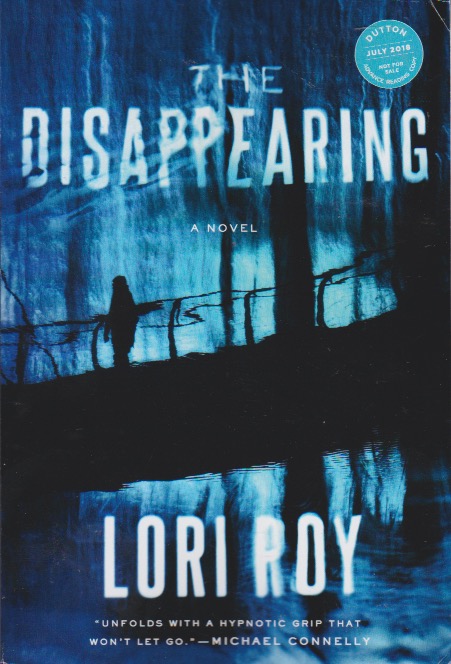
I also managed to finish Lori Roy’s upcoming new release, The Disappearing, last night.

the disappearing

Lane Wallace is alone inside Rowland’s Tavern when the front door flies open. A man stumbles inside, bringing with him a spray of rain that throws a shine on the hickory-brown floors. He scans the dark rooms, stomps his feet, and draws both hands over his wet, round face. If the man says anything, Lane doesn’t hear him for the rain pounding the tin roof and the palm fronds slapping the front windows. It’s supposed to rain through the night, and all around Waddell, people will be keeping a close eye on the river.

Lane smiles because maybe the man is a friend of a friend and not a stranger. She’s expecting a big crowd tonight, and one of her regulars might have invited him. But he doesn’t smile back. Slipping her phone from her back pocket. she lays it on the bar top where the man will be sure to see it. It’s a subtle warning, but if the man is looking for trouble, it’ll make him reconsider.

He’s a little on the heavy side; doughy, a person might say. From behind the bar, Lane asks the main if a beer’ll do him, and as he slides into a booth near the front door, he nods. Hr regulars, men who’ve known her all her life, or rather who have known her father, won’t show up for another hour or so but Rowland Jansen will be back any time now. He ran out to move his car and Lane’s to the higher and drier ground of the parking lot out front, so she won’t be alone with the man for long.

This is Lori Roy’s fourth novel, and it’s quite an achievement. His first three novels–Bent Road, Until She Comes Home, and Let Me Die in His Footsteps–were all shortlisted for Edgar Awards; she won Best First for Bent Road and Best Novel for Let Me Die in His Footsteps, raising her up into the exalted, rarified air of the Multiple Edgar Winner Circle. I’ve only read Bent Road–I do own the others, will every intent to read them at some point; too many books, not enough time–and it blew me away with its stunning depiction of rural Kansas, its juggling of two separate time-lines, and its thematic exploration of how the pains and evils of the past can influence the present.

That same theme runs through this stunning new novel, The Disappearing, as well, and is explored even more deeply and explicitly than in the first. Waddell is a small town in north Florida, amorphously near Tallahassee; Roy’s captured the feel of rural small town Florida deftly (there is, as not many know, a huge and significant difference between the coastal cities of Florida and the insular, small towns of the state’s interior). She plays with the memories of Ted Bundy’s journey through the area; a young woman, a student at Florida State doing some internship work at a local, fading plantation is missing, which has stirred up all those fearful memories of Bundy’s spree. The plantation also shares a boundary with a closed reform school for boys, whose own violent and possibly deadly past has also come back to haunt Waddell.

But it’s also an exploration of family, and how the damage from a past history of deep violence and emotional abuse, locked away and ignored, can reverberate through the years and have deep, horrific implications on the present. Susannah Bauer’s disappearance triggers a chain reaction of emotion and violence and horror, spread over the course of a few days after the night of the heavy rain, that will continue to cycle through the future unless honestly and painfully dealt with in this present.

There are four point of view characters in The Disappearing: three women from generations of the same family–Erma, the matriarch of the Fielding family, with her guilts and secrets festering inside her for decades; Lane, her daughter, whose own emotional damage and baggage perpetuates the cycle; and Lane’s younger daughter, Talley, whose wanderings due to her own loneliness and unhappiness makes her the holder of most of the secrets and truths of the present. The fourth point of view character is Daryl, a mentally disabled young man who is the groundskeeper at the church, and his story is told in the recent past rather than the present, as Lori Roy deftly spins all the secrets and lies and horrors of the town of Waddell into an astonishingly well-blended tale of flawed people and the damage they can leave in their wake.

Even more impressive than the characters and the story itself is the mood and the voice; the way she maintains this almost dreamy tone, creating the perfect mood for the story is masterful. The voices of her characters are compelling and real; only Daryl tells his story in the first person; the others are a very tight third person present tense. The shifts in voice, the tone, the tense and the word choices and the imagery, kept reminding me of Faulkner’s brilliant The Sound and the Fury, and in a very good way.

The Disappearing is an extraordinary achievement, and is destined to make awards short-lists and all the Top Ten lists for 2018.

That’s What Friends Are For

So, yeah, yesterday. I get nearly as much done yesterday as I’d intended, despite my plans in the morning. I wound up getting sidetracked (the whole #cockygate thing was fascinating), I also started reading Lori Roy’s The Disappearing (not far into it, but already it’s fantastic–quelle surprise), and I also had dinner with a friend from high school whom I’d not seen in (gulp) forty years.

I don’t really mind, though. Beating myself up over not getting as much done as I wanted is kind of a waste of time. It’s not like it’s an outcome I can change, after all.

And why worry about things you can’t change?

It was fun seeing someone from high school again; a lot more fun than I thought it would be. The other day  I talked about how my life, or my memoir, would be divided up into decades, because it seemed like, in looking back, every new decade of my life almost coincided with a calendar decade and always signified change of some sort. I left Kansas in early 1981 for California, and I never returned. I’ve written about Kansas–not as much as I’ve written about New Orleans, of course; I’ve never written about anywhere as much as I’ve written about Kansas–and sometimes I think I should go back; but when I write about Kansas I make up the towns and the counties and the rural areas I write about, so I can write from my memory so if my memory turns out to be faulty, well, I made up the town. My fictional places are based on real places, but they are fictional.

The WIP, which I can never seem to find the time to get back to, is actually set in fictional Kansas. It’s been kicking around in my head for at least fifteen years, and the story has changed repeatedly over the years. I think I’ve got the right story now, and I really need to finish the Scotty so I can get back to it and finish the final, first person revision, which I think is the right way to go with this.

Anyway.

I don’t dwell on the past very often; but one of the nice things about seeing someone from high school is it kind of forces me to look back over the years. I mean, sometimes I do think about things, but it’s not something I spend a lot of time dwelling on; the past can’t be changed. But you can look back with a different perspective; with the wisdom that comes with the passing of time–or at least, a different perspective. I was desperately unhappy when I was younger; I also now know that my difficulty in focusing and inability to not have my mind wander would now warrant ADD medication. I spent a very long time of my life being unhappy; feeling like the life I wanted to live was something I would never be able to live. And yet I can honestly say I wouldn’t change any of the experiences I had, no matter how unhappy they may have made me at the time–because all of that made me the person that I am now, and I’m kind of happy with who I am now, and the life I have now. Sure, it would be terrific to have more success and more money; but I also think that would always be the case no matter how much success and how much money I might have.

It’s a weird world, it’s a weird life.

I’ve always been weird.  I never fit in anywhere. I didn’t fit in at either high school, I didn’t fit in at college or in my fraternity. I used to think my not fitting in was because of the gay thing; but then, like I said, I never really fit in with other gay men, either. I’m not sure what that’s about; maybe there’s some kind of social anxiety issue I have that hasn’t ever been diagnosed. But I am always uncomfortable at parties or in large gatherings, particularly when I walk into one alone and there’s no one there that I know; I’ve always envied gregarious, outgoing people who can walk up to total strangers and start a conversation. I am horrible at small talk; and live in deathly fear of saying something completely inappropriate to someone I’ve just met and giving offense; God knows someone I’ve only just met has certainly said offensive things to me before.

Ah, life.

And on that note, it’s back to the spice mines.

IMG_1240

The Warrior

Yesterday I wrote approximately 3300 words of a short story that is due by the end of the month, and I am rather pleased with how it’s going, if I might be so bold. It flowed rather easily from my keyboard also; I’m hoping that mojo will still be there as I try to finish the draft today. It’s dark–when are my stories anything but dark, really–but I am very happy it’s getting close to completion in this draft. I would love to have it finished so I can spend my weekend revising and editing this and another short story I finished in a first draft recently.

I also mapped out a young adult novel over the weekend I’ve been wanting to write for years. I originally wrote it as a short story back in the 1980’s, calling it “Ruins”; I’ve always thought it would make a really good y/a novel if I could figure out how to deal with some societal and cultural issues with it which really couldn’t be ignored. And then I realized, this weekend, that the best way to deal with them is to face them head on. It will get criticized, of course, and I may even get called out, but you can’t not write something because you’re afraid of repercussions, can you? And hope that good discussion comes from it.

Then again, it could just come and go without notice. That happens, too.

This year has mostly been, for me at least, a struggle to write. I’m not sure what has caused this for me; the year had some remarkable highs–the Macavity Award nomination; the Anthony Award win–but for the most part it’s been a struggle with self-doubt and it’s horrible twin sister, depression. I don’t know why this happens to me; I always find that writing–even if I have to force myself to do it–always makes me feel better, even if the work isn’t going particularly well. Sinking my teeth into a story, feeling the characters come to life in my mind and through my keyboard, always seems to make me feel better. I also can use the writing as a way to channel things that upset or bother me; writing is an excellent way to channel anger and rage and heartbreak and every other emotion under the sun. But as this bedeviled year draws to a close, I am feeling creative and productive again; and most importantly, driven.

Then again, tomorrow I could feel like crap and be all ‘why bother’ again.

This is why writers drink.

I’m also really enjoying Krysten Ritter’s Bonfire, even as it is reminding me of Megan Abbott’s The Fever. There are some similarities; although in Abbott’s novel the mysterious illness in the girls is current and in Ritter’s it’s in the past. But it’s very wwell written, and there is some diversity of representation in her characters. It also reminds me a little of Lori Rader-Day’s Little Pretty Things, with it’s small town Indiana setting and it’s strange story from the past. (If you’ve not read Abbott or Rader-Day, buy their books NOW. You’re in for a magnificent treat!) The book also makes me think of my own Kansas past…and book ideas I have that mine that past. Reading good books always inspires me…and that really is the ultimate compliment I can give Ritter’s book. It’s inspiring me.

And that’s terrific.

And now, back to the spice mines.

Patrick-McGrath-90s-Inspired-Shoot-005

Mystified

Ah. another cold Wednesday morning in New Orleans. Although, apparently it is going to be in the seventies this weekend, just in time for the holiday. Clearly, it’s going to be another bipolar winter in New Orleans. But at least this morning wasn’t as bad as Monday and Tuesday.

I continue to struggle with the book, but I think I’ve solved the problem I was having–I’ve found the character’s voice, without which writing the book is near impossible. I think I’m going to hit the required groove soon, which is also quite lovely–particularly as I continue to fall further and further behind on it. It’s not beyond the realm of possibility that it’ll be finished on time, but then again…who knows what distractions lie in my immediate future?

Heavy heaving sigh.

But in odd news of the coincidental, last weekend I was looking something up on Google Earth, which of course led me into the wormhole of hey, let me look up every place I’ve ever lived and every place I went to school and so on and so forth, and of course as I explored Lyon County, Kansas–which led to me to some important findings for a secret project I’ve been working on for two years and hope to get back to with a vengeance in January–I started reliving some of my old high school memories from Kansas, and tried to locate (drum roll please) the missile base.

Back on the dark days of the Cold War, the Midwest was riddled with nuclear missile bases, and there was one near the small town of Bushong, which we drove past in the school bus on our way to school every morning. The only way you knew there was a town there was because you could see the Bushong water tower from the road, and through the foliage you could see the roof of the old high school, closed and absorbed in the 1950’s into the high school I went to, Northern Heights. You knew you were at Bushong when you got to the railroad tracks; there wasn’t even a sign. The presence of the missile base–which was long abandoned at the time I lived there–meant that Bushong was still considered a potential target for nuclear attack, should it ever come, from the Soviet Union. When the ABC movie-for-television about the aftermath of a nuclear war, The Day After, aired in the early 1980’s, it made that message very clear–there were lots of missiles in Kansas, and Kansas would definitely be a major target.

All the kids knew about the missile base, and I went out there twice. I am sure it was trespassing; I think at that time the land still belonged to the government because I remember the big gate had military signs on it and warned people away; but there were also holes in the fencing and there were no guards. It was completely deserted. I remember there was a hill, with a big metal door built into the side of it. I know both times we went out there we opened the door–it wasn’t even locked–and with the daylight you could see along the entry hall, which dead-ended about thirty or forty feet, bisecting at a ninety degree angle another hallway which went off in both directions. It was pitch dark down there, and I remember you could barely read the warning side on the wall all the way down there–but it was clearly a warning about radiation. You keep hear water dripping, and other weird sounds…and no, we never ventured inside.

I always thought it would make an interesting setting for a story, or novel.

So, the other day I was trying to find it on Google Earth, with no luck.

Then, today, someone I knew way back when in Kansas posted a link to this blog someone wrote about visiting Bushong and the missile base.

How weird is that? Should I take it as a sign to start thinking about a book about the missile base?

And now back to the spice mines.

Here’s today’s hunk: