I Was Made For Dancin’

Tuesday morning and am easing back into the week somehow. I was a bit tired yesterday, and felt a little low energy, like the prelude to an onset of something. By the time I got home from work I truly felt lousy, so relaxed for a while, took some Dayquil, and let my mind wander while watching the news, this week’s John Oliver episode, and decided to peek in on the most recent episode of The White Lotus, to see what everyone was talking about on social media all day yesterday. Okay, got it. We’ll probably watch the entire season once it’s all available; it definitely piqued my interest and I will have forgotten all or most of this by the time we watch anyway–one of the benefits of this truly shitty memory thing I have going on anymore. I did work on the book a bit, and knew what to do, but was just too fatigued to do it. I hate when that happens. But this morning I feel better than I did yesterday morning, so here’s to a productive day. I really hate feeling under the weather. Tired is an entirely different thing I don’t mind so much, but being sick can fuck all the way off.

The world, and country, continue to burn to the ground as the MAGA government by billionaire further establishes and consolidates power to the executive branch. (Thanks again, Sycophant Schumer. Your interview in the New York Times only served to further underscore how out of touch with your constituents and your base you are. You’re as big a disgrace as Roger P. Taney and James Buchanan. You fucking own this, you and the other nine who knifed the base in the back. Oh, and thanks again for shivving Biden last summer, you fucking piece of shit, and handing the White House back to the Right. Remember, we sent the Rosenbergs to the chair. We are where we are because of Democratic cowardice. I will never forget.) It’s hard not to get worried, stressed or be anxious. My job is federally funded, after all, and they are coming for queers and queer books, too. Woo-hoo, nothing like having both of your careers hanging over the precipice, is there? My Social Security and Medicare apparently are also on the line, so after a lifetime of working hard and paying into both systems, I’ll never be able to retire…voluntarily, at any rate.

Thank God I have anxiety medications. Thanks again, Senator Schumer and the Asinine Nine.

Heavy heaving sigh.

I am pleased with how the book is coming along, even if I was too brain-dead last night to do much more work on it. It’s going to be pretty good, I think, nice and spooky and Gothic and creepy. Years ago I read a John D. MacDonald novel called Murder in the Wind, which takes place during a hurricane, when a bunch of motorists take shelter in an abandoned house–all strangers, but one car contained a psychopathic criminal–and that’s kind of the tone I want to merge with the usual Scotty tone to pull the whole story off. I know MacDonald was a sexist writer whose work was very much of its time and some of it hasn’t aged well, but the man could write and tell a story and create some memorable characters, plots and situations; I’m sure a revisit of his canon would also turn up some racism and homophobia, too. I do think, were he to be alive and writing now, he’d be more woke than conservative; almost all of his later Florida novels had to do with environmentalism and how greed and corruption were destroying the state (Condominium, anyone?), and I have often longed for someone to write those kind of Louisiana books…I also think Carl Hiassen style novels about Louisiana would also be kind of awesome. Don’t look at me, I’m not a strong enough plotter to write anything like Haissen, just as I am not familiar enough with the environmental disasters conservative greed and corruption create to write about them…and doing the research would probably make me anxious again. I know I’ve always wanted to write about cancer alley and the poor Black communities poisoned by it, but how do you tell that story when there’s no justice in the end for anyone? Not to mention the disappearing wetlands. Who knows how long Louisiana can still call itself “sportsmen’s paradise” once everything is ruined down here?

Louisiana, and New Orleans, never cease to be sources of inspiration, you know?

And who knows? Stranger things have happened.

And on that note, I am heading into the spice mines. Have a lovely Tuesday, Constant Reader, and I may be back later. One never can be entirely sure.

The bare curve of a male ass–do we think it will trigger Meta’s puritans?

I Know a Place

Saturday morning in the Lost Apartment and all is well. I slept incredibly last night. I woke up at seven and stayed in bed relaxing in a half-sleep for another hour or so, and finally got up when Sparky woke up and decided he was hungry. He was delayed this morning–and was very calm and cuddly and sleepy yesterday–because of the vaccines he got yesterday, as well as the shock to his system of leaving the apartment. He likes his carrier–he’ll go in there on his own, and Paul often tells him to go get in the crate when he’s having Big Kitten Energy, which he does–but he finally started meowing yesterday when we took him outside in the crate. He’s never meowed before, only chirped, which worried me a bit…but now he’s done it so I guess he only meows when he’s unhappy. His nails were trimmed (which he also didn’t like this time), but we brought him home to be a sleepy, cuddly sweet kitty for the rest of the night. We also went to Costco yesterday, which was nice and a little tiring. We watched Skate America last night (ladies and pairs short programs) and of course, today is a football all day kind of day. LSU plays at Arkansas tonight, and of course Alabama-Tennessee is this afternoon’s game. I am going to take books to the library sale this morning and go to the grocery store today before I come home to watch games for the rest of the day. There’s also some cleaning I can do around here this morning, too. Yippee!

I’m also going to read some more of Gabino’s book this morning; I read some while Sparky and Paul were with the vet yesterday and I just love the way he writes, in this interesting combination of Jim Thompson crossed with some John D. MacDonald but heavily flavored and filtered through his own remarkable talent in a unique voice that is entirely his own. It’s very rare to come across a writer with a voice and style so strikingly original, and the pacing is ethereal but also fast at the same time. I loved his last book, and I am absolutely loving this own. Next weekend I’ll be heading up to Kentucky to see Dad for about a week, so I can listen to another horror novel in the car (maybe Shadowland by Peter Straub, which I’ve not read before. I can take the paperback with me if the audio book is too long for a twelve hour drive; I actually just went to Audible and got Nick Cutter’s The Troop, and saw that I had a Riley Sager already downloaded, so that’s the trip up and back sorted. I also got the Straub), and I can take some horror with me to read. I’ll make shrimp tempura for dinner tonight, and am kind of torn about making chili or not tomorrow, but will probably go ahead and do so; I may even make it over night so tomorrow morning I can just get up and put it in the refrigerator. That’ll sort my lunches for the week, methinks.

I also managed to get the majority of the dishes done yesterday, no small feat I might add. That’ll teach me to be lazy when I get home from work every day, won’t it? It seemed endless, and I was also doing the bed linens at the same time as well as unpacking Costco and putting everything away; the living room is, even now, filled with empty boxes that need to go out this morning. I need to revise that short story and start working on another one for the Bouchercon anthology open call; I picked out the story just have to finish it now, which is also no easy chore. But today is an official day off from everything other than relaxation, reading and some cleaning around the house. I’ll try to reread the story I’ve selected; I just need to remember to channel my rage at developments in the neighborhood and on my street–this is one of the reasons I love being a writer, petty revenge on people who’ll never even know they inspired me to kill them in fiction–and retrieve that voice from deep inside my head. I think one of the problems I’ve had with some of the stories I’ve been writing lately is I’ve been too lazy to write about people the way they really are, instead of an idealized character who is logical and rational and then simply snaps. It’s that breakdown of going from law-abiding to murderous that I live to explore–it worked really well in “Neighborhood Alert”–but in some of the noirish stories I’ve been trying to write and sell since the pandemic they come across as too cheerful; bitterness and rage is what drives my stories, and the tone and voice need to reflect that.

Tone and voice are key to whether your story works or not.

And on that note, I am heading into the spice mines. Have a lovely day, Constant Reader, and I’ll check in with you again later. GEAUX TIGERS!

Screenshot

Help!

Wednesday and it’s Pay the Bills Day again! Woo-hoo! I didn’t sleep through the night–getting up a couple of times, but I feel rested and fine this morning. Go figure. I hit a wall again yesterday afternoon, and was very tired when I got home last night. I did have my Sparky time, collapsing into my easy chair and getting caught up on the news; he expects this time now, because I’ve trained him to expect that after I get home and he gets fed–just like he tries to wake me up every morning at six on the days I don’t have to get up. Friday I have to go to Quest to get labs drawn at seven in the morning, and I also have a department meeting that morning as well, so I’ll roll out of bed and stumble, bleary-eyed, to Quest, then come back home and swill coffee and get cleaned up to head into the office (since I am already there, I am just going to do my hours at the office rather than coming back home to do work-at-home duties.

We started watching The Decameron last night before giving up after the second episode. It’s a great idea and I love that they made a show about one of the great classics of history, but it just doesn’t really deliver completely. There were some great moments, and it might get better, and I also see why they made it; a bubonic plague show, after the pandemic? But it just wasn’t engaging in the way I would have preferred, so we watched an episode of Evil, which we’d been watching before the Olympics and had forgotten about. But it’s kind of a fun show–a religious X-Files, basically–and it’s engaging.

I’ve been thinking a lot lately about my own work–probably because I’m not really doing any of it at the moment–and why I write it and what can I do about the dumpster fire the world is turning into. I’ve mentioned here several times how much I wished we had a Louisiana John D. MacDonald type writer, addressing the exploitation of Florida and the environmental damage that exploitation hath wrought on the state (Condominium is a great book about greedy developers and corrupt politicians), and originally I always was thinking someone else would be better to do it than me. But…that’s really laziness on my part, because studying the ecological disaster Louisiana has become (with no bottom to the disaster in sight, especially given what we have in Baton Rouge now) was a lot of work. I’ve always wanted to address the situation in Cancer Alley1, which is a stain on the nation. Those communities are mostly black and completely poor, so you can imagine how much our politicians–including those representing those parishes–care about them. It is a disgrace.

And that’s not even taking into consideration the erosion of the wetlands, making Louisiana at even higher risk of disaster during hurricane season (which we are in right now).

And given what we are dealing with in terms of political leadership these days (Project 2025 is already here), someone needs to start talking about this stuff.

Why not me? Although I suppose it would mean resubscribing to the MAGA Times-Picayune again, which totally sucks. Heavy heaving sigh. Can anyone be a local crime writer without reading the local paper? Probably not, so I might as well bite the damned bullet and get back on that train at some point. I hate having to compromise my principles. But I also don’t have to enjoy it, do it? And with football season on the horizon, sigh. Their coverage of LSU, Tulane2, and the Saints is really the best. Sigh. I’ll just donate the same amount to the Harris campaign.

And on that note, I am heading into the spice mines. Have a lovely Wednesday, Constant Reader, and I may be back later; stranger things have happened.

  1. “Cancer Alley” is the eighty-two mile section of the Mississippi River between Baton Rouge and New Orleans, with a ridiculous amount of petrochemical plants and refineries in the poorer parishes, where the rate of cancer is insanely high and everyone knows it’s the factories poisoning everyone, but no one ever does anything about it. It is Louisiana’s shame, frankly. ↩︎
  2. See, Ellen? I don’t always forget Tulane. ↩︎

Oh Very Young

Friday morning and I slept late and I don’t care. I also did little to nothing yesterday and I don’t feel in the least bit guilty about it, either. Ordinarily, I’d be chastising myself and feeling like I wasted an entire day, but so what if I did? Am I never allowed to actually have a day off where I don’t do much of anything? I did get the laundry finally done, but I’m not going to kill myself this weekend, either. There are definitely things I need to do today–laundry, errands, gym, writing–but I am going to get to things when I get to them and if I don’t, there’s always another day.

And if there isn’t, oh well, no need to worry about any of it, is there?

Yesterday was lovely, as non-active days inevitably are. I wrote some posts and worked on the laundry yesterday morning, but once Paul got up, I turned the television onto Wimbledon for him and I kept sitting here at my desk, finishing that blog post, which was very cool–the television usually is a distraction, and it wasn’t yesterday. I did eventually move into the living room to watch television with him, and we got caught up on The Boys (which is going so hard on the right this season that sometimes I laugh out loud; one of the most horrible supes this week quote that trash from Georgia MTG, and then I realized the entire character was her, and laughed and laughed and laughed), then watched the entire new season of That 90’s Show (the best character is Ozzie the young gay). We also finished the Dallas Cowboys Cheerleaders documentary on Netflix, which again was really just a better produced and edited together season of their old reality show, but a lot more serious and it also went in on some of the girls more. I said, while watching, “It really does take a certain kind of person to want to be one of these girls, doesn’t it? It’s like they create this big sorority.” That was what it reminded me the most of–a big sorority–with little to no drama between the girls…which I suspect would NOT be tolerated should it ever happen. Usually watching anything documentary style, or non-fictional, usually gives me several ideas of how this little “bubble” they live in could lead to crime; and I realized yesterday in all our years watching Making the Team and now this, that’s never happened once. Even sitting here this morning with my coffee and a cat in my inbox (Sparky is watching Cat TV out the window), I cannot think of why anyone would want to kill any of those girls or even their coaching staff. Kellie, the primary coach, reminds me a lot of that woman from Navarro from the Cheer series.

Besides, I was just thinking the other day that if and when I write another young adult novel, I am not going to write about cheerleaders and football players. That was my primary experience in high school, but there are so many other kids that are neither of those things and I kind of would like to write from a different perspective rather than the usual, high school stereotype kids. (Which, now that I’ve said that, is precisely who The Grimoire of Broken Dreams is about; so it will be the last of those…but The Summer of Lost Boys will be about a high school outsider; it’s the only way the story works in the first place.)

I do have some picking up to do today, and I certainly need to get the dishes done–which always makes such a difference when it comes to how the kitchen looks–and I’d like to get some more filing work done…at least alphabetizing so the files are easily found. I have one more file drawer to get through–there’s a lot of sorting that needs to be done on it–and then that is finished. I’d like to get started moving boxes off the tops of the cabinets this weekend, too. Some of it is just paper that can go in the trash; others are books that also need to be gone through. I hope the library sale is open tomorrow so I can drop these books off to them, which will also make the living room look less cluttered. I also have a long term scanning project to work on, too–all my old articles and reviews and so forth that I have stored neatly in a box; I’d like to get that all scanned so I can give these old queer magazines and newspapers to the local queer archive. I hate throwing it all in the trash; someone might someday want to see these old issues of Lambda Book Report that I edited, and I doubt they are electronically available; it wouldn’t surprise me if even Lambda didn’t have copies of its issues going back to the 1980s.

There’s a part of me–the packrat part–that wants to keep all of this and archive it and all my papers and put them somewhere, like at Tulane (who wanted them at one point) or the Historic New Orleans Collection; but that seems a lot like hubris to me, you know? “Oh I am so important my papers need to be collected for future scholars and historians” isn’t something that rolls easily off my keyboard, you know? After a lifetime of not being taken seriously to the point that I rarely take myself seriously, it’s hard for me to imagine that my writing and my life would be of interest to anyone in the future, you know? Someone told me that I was the only writer who documented what life was like here for a gay man before Katrina, and sadly, all I can do is think of all the things I haven’t documented here, like the wars over Southern Decadence against homophobic pedophile Grant Storms (it’s always projection with them, isn’t it?)–I wanted to write a book about that, and Storms himself along with psychotic Louisiana Republican politician Woody Jenkins1 inspired Bourbon Street Blues–and various other battles here in the state. Cancer Alley, the poisoning of poor black communities by petrochemical plants and oil refineries, the loss of the coastline and the wetlands are all things that should be written about, and I really wish there was some John D. Macdonald here in Louisiana who could write about the environmental disaster the state already is, and how we are making it worse by the day every day.

But I’ve decided2 to just throw it all away, really. I don’t have the time or the interest to catalogue and organize a lifetime of writing, let alone the logistics of getting it all somewhere, and every draft I’ve written is electronic, except for the files that are so old no program will recognize them anymore, and there’s also this blog. It’s never been the whole story, and it’s always been relatively carefully curated, but when I do write things here I don’t censor myself. The only blog topics that have always been off-limits are Paul, my family, and deeply personal stuff. I also try very hard not to invade the privacy of my friends, which I wasn’t so good about in the early days back at livejournal almost twenty years ago.

I also think that’s why I want to keep doing the Greg’s Gay Life or Pride Posts throughout the rest of the year. I’d like to document more of my past, the things that I clung to (like the tiny queer rep in film, movies and books when I was a gayby), and sharing what it was like to live through things. I have no desire to write a memoir of any kind, but I kind of do at the same time, but my fear is always the faulty memory and the memories of the other people who were there will inevitably be different. I’ve already noticed how the kids I went to high school with clearly had no idea how miserable I was; the mask I wore of the class clown who makes sure everyone is having fun was more successful than I ever thought it was…although I have become convinced everyone knew somehow I was gay. That delusion was hard to let go of, but it’s also true. No one I ever came out to was surprised, you know.

Maybe my memoir could be called Deluded.

And on that note, I am getting some more coffee and going to work on the sink. Have a lovely Friday, whether you are off like me or have to work. I’ll most likely be back later.

  1. Jenkins was too extreme for Louisiana back then, but he’s to the left of our current governor. Jenkins was also the first Republican that I can recall who claimed the election was stolen from him and wanted an FBI investigation. This behavior killed his career in state politics; he couldn’t even get elected to represent the racist part of Baton Rouge that recently seceded from the capital. And yes, Louisiana will go at least 60% for another crybaby sore loser this November. Funny how that works. ↩︎
  2. Don’t @ me about this; my mind is made up. ↩︎

Floridays

Michael Koryta is one of my favorite writers.

I may not have discovered him had I not been an award judge one year, and his book So Cold the River was entered. I absolutely loved the book, that perfect hybrid of crime and horror that is so often far too hard to find, let alone have it be done well. The Prophet and The Ridge cemented his place as one of my favorite writers. I had bought The Cypress House when it was new, but somehow had never gotten around to reading it–there are several volumes of unread Koryta books that I am looking forward to getting to at some point. I know I picked it up and started it at one point, but something happened to distract me and I never got back to it. Last weekend, I finally decided it was time.

And I am very glad I chose it at last.

They’d been on the train for five hours before Arlen Wagner saw the first of the dead men.

To that point it had been a hell of a nice ride. Hot, sure, and progressively more humid as they passed out of Alabama and through southern Georgia and into Florida, but nice enough all the same. There were thirty-four on board the train who were bound for the camps in the Keys, all of them veterans with the exception of the nineteen-year-old who rode at Arlen’s side, a bou from Jersey by the name of Paul Brickhill.

They’d all made a bit of conversation at the outset, exchanges of names and casual barbs and jabs thrown around in that way men have when they are getting used to one another, all of them figuring they’d be together for several months to come, and then things quieted down. Some slept, a few started card games, others just sat and watched the countryside roll by, fields going misty with late-summer twilight and then shapeless and darl as the moon rose like a watchful specter. Arlen, though, Arlen just listened. Wasn’t anything else to do, because Paul Brickhill had an outboard motor where his mouth belonged.

What a great opening.

Koryta is an exceptional writer. He doesn’t always blend the supernatural/horror into his crime novels, but I love it when he does–very few authors (Paul Tremblay being one of them) who can deliver such extraordinary hybrid work. I’ve loved every Koryta novel I’ve read–there was one about caves that absolutely terrified me, being claustrophobic and afraid of the dark, so much so that I never did read the sequel–it got under my skin that much. (I will read the sequel, never fear!) He has also started using the name Scott Carson for these hybrid books, to differentiate them from the straight-up crime novels.

The Cypress House is a historical novel, hard-boiled and noir to its core. Set in the 1930’s during the Depression, Arlen and Paul’s journey is about finding work at government projects–they are heading for the Florida Keys to build a highway connecting the keys to mainland Florida. Arlen is a WWI veteran, a survivor of the horror that was the Belleau Wood..and it was during his service in the war that he began seeing premonitions of death in people–their eyes are filled with smoke, and he knows they are going to die. As they speed through the night in Florida, he starts seeing smoke in the eyes of everyone on the train, and knows they have to get off the train, which they do at the next stop. Paul isn’t sure he believes Arlen, but he’s attached himself to the older man like a puppy, so he also doesn’t get back on the train.

They later learn a hurricane swept through the Keys and killed everyone on the train.

The two men accept a ride to a work camp in Tampa, which winds up with them at the Cypress House, a beachfront “resort” on an inlet in the middle of the swamp jungles which is a mob front…and meet the beautiful Rebecca Cady, who runs the place. When their driver’s car explodes, they are now stuck there–and are thrown in jail for their trouble by the corrupt local sheriff and judge, Solomon Wade, who is connected to the mob all over the country and runs drugs in through the inlet. Arlen decides to help Rebecca, whom he is falling in love with, and then all hell breaks lose.

Koryta is a master of building suspense and tension, and the chapters where the three of them are riding out a hurricane/massive storm surge was absolutely chilling and terrifying, especially when you’ve done that yourself. The historical setting is apt, and as I have said before, a lot of remote places in the South are still run this way–an authoritarian sheriff and other politicians who are essentially tin-pot dictators. This book reminded me of great Florida novels of the past–John D. MacDonald and Robert Wilder’s Flamingo Road spring to mind–and this would also make a great movie.

The Cypress House is yet another feather in the cap of Koryta’s canon. Highly recommended. You should be reading Koryta/Scott Carson. Fix that if you’ve not.

Six Feet Under

Ah, Murder in the Irish Channel.

I really enjoyed writing this one.

It was the sixth Chanse, and I was trying something different with the opening of this one. I hadn’t read Ross Macdonald before I became a writer, and I was very much in the “John D. is my favorite Macdonald crime writer” camp. I had been on panels with Chris Rice a few times and he raved about Ross every time, so I kept thinking you need to read Ross Macdonald and so, sometime after Katrina, I started reading the Archer novels, moving on to stand alones and the short stories eventually. When it was time for me to write this book, I thought, try to write an opening in Ross Macdonald’s style, and try to keep that world-weary, cynical pov through the whole book.

The house was a tired-looking single shotgun, badly in need of paint and listing to one side. It was in the middle of a block on Constance Street, facing the river. There was a rusted cyclone fence around the front yard. A statue of the Blessed Virgin Mary sat inside a circle of stone to the left of the walk leading to the front gallery. I put my car into park and verified the address—sorry I’d quit smoking for maybe the ten thousandth time.

In my line of work, it’s never a good idea to make a decision when you’re tired.

But I’d given my word, even though I’d been ready to fall asleep. It didn’t mean I had to take the job—whatever it was. All I had to do was find out what the problem was, maybe even just give some advice—which would most likely be either nothing anyone can do or this is a job for the police.

Besides, whoever lived in this dump sure as hell couldn’t afford a private eye.

I shut off the engine and got out of the car. It was already over eighty degrees, and it wasn’t even noon yet. Beads of sweat popped out on my forehead. Early April, and it felt like summer already. I sighed and pushed the gate open. It only opened about six inches before it caught on the cracked pavement of the walk and stopped. I sighed and stepped through, catching my jeans on the fence with a slight ripping sound. I swore under my breath and examined the tear. The jeans weren’t new, but it was still annoying.

This book had several different inspirations.

First, the casino used to have MMA fights every weekend, so we had MMA fighters in the city. One of their requirements to fight was they had to have a current negative HIV and Hep C test, and guess what we do at my job? For the longest time, all these hot young fighters would come into the office every Saturday to get cleared to fight, and they came in fairly regularly. I used to talk to them a lot–I wrestled, and MMA is a lot more violent–to get some kind of idea why they did this, how they got into it, and so on. I had thought about writing a mystery about a murdered MMA fighter, but could never really get my mind around it…and then I decided, what if he was the client? Interesting.

The second source of inspiration came from a decision of the Archdiocese of New Orleans to close some churches/parishes in the city, and my friend Billy Martin was involved in the protests to save Our Lady of Good Counsel (it was a gorgeous church), even getting arrested. I wanted to do something around this as it was something that actually happened, and I also got to skewer the Archdiocese (any place that could hire David Vitter’s horrific wife to be their legal counsel deserves every skewering it gets)…so I filed that thought away.

The third and final inspiration was serving on jury duty for a civil trial. It was, of all things, a Katrina insurance fight–in which the insurance company was trying to not pay out a claim (all of us in the jury were like, “why on earth would you allow a Katrina insurance case to go to trial in New Orleans? We fucking hate insurance companies.” The fact that it was Lloyd’s of London (who became famous in the wake of the San Francisco earthquake when the president of the company wired the San Francisco office, “pay every claim”) made it even more of an eyeroll for me. An apartment complex on the west bank had sustained damage in the storm, and the insurance company was claiming they didn’t have to pay out “because the claim is for issues that predated Katrina and the place was a shithole” while claiming the complex could have reopened after Katrina “because it was gorgeous” and so they didn’t have to pay out for lost income. The first person who was called to the stand was the complex’s forensic accountant who corroborated all of the plaintiff’s claims and basically made it clear that Lloyd’s was just trying to get out of a huge payment. After he testified, we took a long lunch as they were all in conference…and the claim was settled. I think the lawyers from Lloyd’s hoped that the plaintiff would eventually back down and wouldn’t go to court–and they called that bluff and were decimating Lloyd’s in court.

I mean, the place couldn’t be a shithole and a beautiful property available for rental. Make up your fucking minds, trash at the insurance company.

And what if the MMA fighter’s mom was fighting the closing of her church, had worked for someone suing an insurance company, and then she disappears?

Yes, that was a lot of fun to write. And I was pretty pleased with how it turned out in the end, too. It was also my first Chanse novel with Bold Strokes, and they gave me that beautiful cover above that I love. It made a lovely transition for the series.

Take a Chance On Me

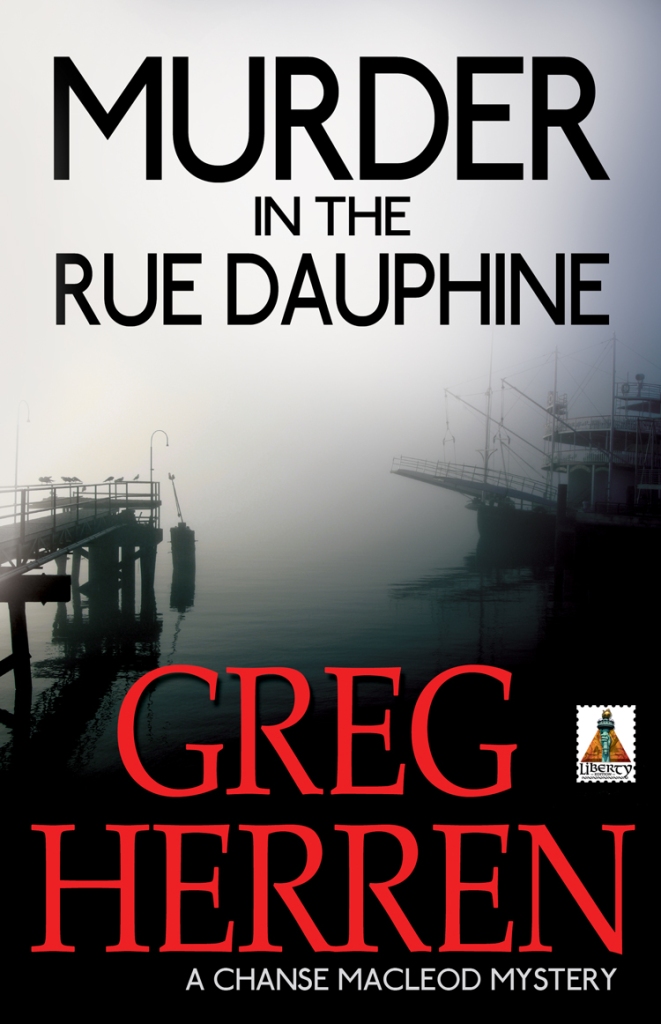
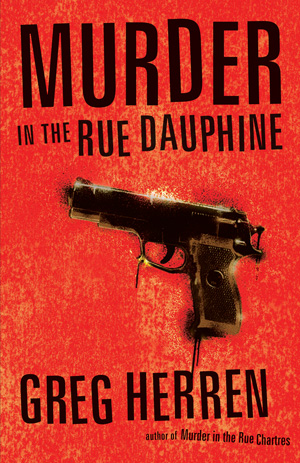
Ah, Murder in the Rue Dauphine.

It’s always weird for me to talk about my writing and my books and so forth on here; I always worry that I am either contradicting and/or repeating myself. When you’re as self-obsessed as I am, that can be a problem; talking about myself is probably my favorite thing to do–on here, at least. And I feel like I’ve told the story of where Chanse came from and how the series developed from the very beginning many, many times.

It was when I was living in Houston that I rediscovered crime fiction, and the old love was even deeper once it was rediscovered. This was the period when I read most of the Perry Mason novels, discovered Paretsky and Grafton and Muller, and decided to give Travis McGee and John D. MacDonald another try. (I had read The Dreadful Lemon Sky when I was a teenager, but I hadn’t liked it; I was more into the classic detective mystery, with lots of suspects and a denouement with everyone gathered in a drawing room as the identity of the killer was unveiled–the McGee series was definitely not that. But MacDonald had written a superb introduction to Stephen King’s first short story collection, Night Shift, and I had always wanted to give him another chance–pun fully intended.) I devoured the McGee series this time around; and I really admired the character and how fully rounded and developed he was (I should give the series a reread; I’d be curious to see how they hold up now)…and armed with all these new private eye novels and Perry Mason puzzles, so I started coming up with my own version. Even the name was a shout out to McGee. My character was also tall with sandy/dirty blond hair, a former college football player, and he lived in Houston, with an office downtown and a secretary named Clara. The title of the first book was going to be The Body in the Bayou, and I started basing the case on the tragic Joan Robinson Hill case, immortalized in Tommy Thompson’s Blood and Money (the premise of the story was that the character representing Joan’s father hires Chanse after Joan’s death to find dirt on John–and then John is murdered; fictionalized, of course.) I wrote about six or seven really bad chapters long hand before giving up. I didn’t know how to write a novel then nor did I understand the concept of rewrites and revisions and drafts. (My ignorance was truly astounding.) The hurdle I couldn’t clear was typing. I was a terrible typist. I’d had a job in California working for an insurance brokerage that was computerized, and had a word processing program that I used to write short stories on; it made such an incredible difference that I knew I would have a much better shot at actually making my dreams come true if I only had a word processor…

In 1991, after I moved to Tampa, I managed to get a word processor, and that was what I wrote my first two and a half young adult novels on–the original drafts of Sara, Sorceress, and Sleeping Angel–and used it happily for several years until it finally died on me. But by then, I was living with Paul and had swung back around to wanting to write adult crime fiction again, and I wanted to write the Chanse character that I’d already created…so I picked back up on The Body in the Bayou, moved it from Houston to New Orleans, got rid of the office and the secretary, and made Chanse gay. I kept the title, but threw away the story; I wanted it to be a gay story, too. I don’t really remember the plot, but it had to do with the murder of a beautiful boy-toy for a wealthy closeted gay man in New Orleans…and Chanse knew the boy-toy from his days working as an escort before he landed the rich man, I wrote about six or seven chapters of this before we moved to New Orleans….and I realized I’d have to throw it all out again because it was all wrong; I’d made the classic mistake so many writers make when writing about New Orleans: writing about it having never lived here, I only had tourist experiences–which are vastly and dramatically different from the actually “living here” experiences. So, once again, I threw it all out and started over, this time calling it Tricks instead of The Body in the Bayou.

The title morphed again to the less saleable Faggots Die after the first draft; and I remember talking to Felice Picano–he was coming into town for the Tennessee Williams Festival, and I picked him up at the airport. As we drove back into the city from Kenner, we talked about my book and the series, and he nixed the new title as well as the old one. “No one, ” he wisely said, “will pick up a book called Faggots Die, and Tricks sounds like a pornographic memoir of your sex life.” Felice was actually the one who suggested I mimic titles for the series from a classic writer…and we were throwing titles around in the car when I said, “You know, the streets in the Quarter are technically rues–Rue Bourbon, Rue Royale, Rue Dumaine–and the murder happens on Dauphine. Maybe Murder in the Rue Dauphine?”

“That’s perfect,” Felice said, and then we played with Poe titles the rest of the way into the city–incidentally, one of them was The Purloined Rentboy, which became my short story “The Affair of the Purloined Rentboy”, so never throw anything away.

And thus was Murder in the Rue Dauphine titled; and the plan for the series titles was also devised–the branding was changed by the publisher, but I can honestly say my first book was titled by Felice Picano.

Never come to New Orleans in the summer. It’s hot. It’s humid. It’s sticky. It’s damp. It’s hot. Air conditioners blow on high. Ceiling fans rotate. Nothing helps. The air is thick as syrup. Sweat becomes a given. No antiperspirant works. Aerosols, sticks, powders, and creams all fail. The thick air just hangs there, brooding. The sun shows no mercy. The vegetation grows out of control. Everything’s wet. The build­ings perspire. Even a simple task becomes a chore. Taking the garbage out becomes an ordeal. The heat makes the garbage rot faster. The city starts to smell sour. The locals try to mask the smell of sweat with more perfume. Hair spray sales go up. Women turn their hair into lacquered helmets that start to sag after an hour or so.

Even the flies get lazy.

My sinuses were giving me fits as I left the airport and headed into the city. It was only 7 o’clock in the morning but already hotter than hell. The air was thick. I reached for the box of tissue under my seat and blew my nose. The pressure in my ears popped. Blessed relief.

As I drove alongside the runways I could see a Transco Airlines 737 taxiing into takeoff position. I saluted as I drove past, thinking it might be the flight that my current lover was working. Paul looked good in the uniform. It takes a great body to look sexy in polyester. He does.

He’d be gone for four days on this trip. I was at loose ends. I’d wrapped up a security job for Crown Enterprises the previous Wednesday. The big check that I’d banked guaranteed I wouldn’t have to worry about money for a while. I like when money’s not a concern.

And so began a series that lasted for seven titles and about twelve years or so; I don’t remember what year the last book in the series was published. I never expected anyone would publish it; it was intended to be a “practice novel” so I would get used to rejections and learn. It was also the first manuscript I ever wrote that went through multiple drafts before I thought it was finished enough to send out on query. It was supposed to be an exercise in learning humility and getting experience with the business while I wrote the book I did expect to get an agent with and sell–which was what I’d always called “the Kansas book” for over a decade at this point. (It eventually morphed into #shedeservedit.) But you never really learn what you’re supposed to when you’re stubborn, thin-skinned, and used to being demeaned and talked over and not taken seriously, for any number of reasons. I sent the manuscript to three agents: two sent me lovely but form rejections, which was disappointed but not surprising. I took this well, put the manuscripts away to send to three more once the final rejection came.

It came on a Friday, if I recall correctly. I went to pick-up the mail and my manuscript was there. Not a surprise, of course, but still a little disappointing. I went out to my car and opened the package…and paper-clipped to the title page of the rubber-band bound manuscript was a torn piece of used paper, with a note in ink reading I find this manuscriptand characters neither interesting or compelling with the agent’s initials at the bottom.

It was like being slapped in the face.

By the time I got home I was in a raging fury. I was literally shaking with rage when I came inside. How fucking unprofessional, I thought as I sat down at my computer to check my emails, trying to decide how I would enact my vengeance on this rude piece of shit.1 There was an email there from the editor I was working with on an anthology which had taken my first-ever fiction short story and thus would be my first publication. I had never read the signature line–mainly because I was so excited for my first fiction sale (NARRATOR VOICE: it was porn). This day, he concluded his email with Please send us more work. We definitely want to see more from you and as my ego preened, slightly soothed from the insulting agent note from earlier in the day2, I also looked down at the signature line and realized I was communicating with the senior editor at Alyson Books! I immediately wrote him back a very short note: I’ve written a novel with a gay private eye set in New Orleans, would you be interested in that? and before I could talk myself out of it, hit send.

He wrote back immediately and said please send it to me ASAP!

I put the same manuscript back in a new envelope, and drove back to the postal service to get it in the mail before I changed my mind, and breathed a sigh of relief once I got back to the car–and immediately forgot all about it.

Six weeks later I came home to a phone message from the editor. I called him back, he made me an offer, and my career leapt forward much faster than I expected…and it started a roll of good luck and “being in the right place at the right time” that has kept me publishing almost non-stop since Murder in the Rue Dauphine was released in 2002.

It sold really well, got mostly favorable reviews, and scored me my first Lambda Literary Award nomination.

Not bad for a manuscript and characters who were neither interesting or compelling, right?3

It also took me a long time to realize–or rationalize–that the note wasn’t meant for me. (I was most offended that I wasn’t even worthy of an actual form rejection letter; that was the truly insulting part for me.) I realized when telling this story on a panel somewhere, that the note was probably meant for an intern or a secretary or an assistant, who just shoved the whole thing in an envelope to do the rejection and through some wild Lucy-and-Ethel office shenanigans, it went out without the rejection letter and with the note intended for internal eyes only…and made me wonder, how different would my career and life be had that fuck-up not happened?

We’ll never know, I guess.

  1. Not really proud of this reaction, but I did get the last laugh. ↩︎
  2. Said agent died a few years later. I may have smiled and said good, a la Bette Davis vis a vis Joan Crawford’s death. ↩︎
  3. I may be more forgiving about a lot of things these days, but I will always be petty about that hateful agent. ↩︎

Green Light

One of the things I’ve been thinking about lately is how we don’t really have a Louisiana crime writer who explores and illuminates the damage we are doing to the ecosystem and environmentalism of the state the way John D. Macdonald infused many of his Florida novels with so frequently. Condominium, published in the 1980’s, is a stinging indictment of crooked developers and corrupt politicians putting up massive condominium buildings along the coastline of Florida, despite the damage they do to the environment, all in the name of a quick buck. I have been thinking about this because I spent a lot of time in the panhandle in the 1970s, back before Panama City Beach developed into what it is now. I’ve not been back there since 1980, at the latest; but just looking at Google Earth images it’s horrifying how different and over-developed that whole area has become. (I was looking at the images because I was thinking about setting a book along the Redneck Riviera/Baja Alabama/Emerald Coast/Miracle Strip, whichever name you use for the region.) Louisiana, nicknamed “Sportsmen’s Paradise” because of the abundant fish and game and the stunning natural beauty of the state, has pretty much spent the last hundred or so years (at least) destroying and despoiling the natural resources of the state of Louisiana, killing off wildlife species while introducing new invasive ones–and don’t even get me started on Cancer Alley, that stretch of the river between New Orleans and Baton Rouge lined with petrochemical plants parked next to poor, mostly Black communities that have, surprisingly enough, large instances of cancers in the residents. Now the level of the river is so low that it can’t keep the Gulf water pushed down, and the salty water is making its way up the river and intruding into our drinking water supply here in southeastern Louisiana. I’m sure the loss of so much of the wetlands to ensure oil company profits hasn’t affected this in any way, shape or form. There’s a really good environmental thriller to be written about Louisiana (if not more), and I think maybe part of the problem in writing about the destruction of Louisiana in the name of unfettered greed is that I don’t feel knowledgeable enough on the subject to tackle it, nor do I have the time to spend on the research necessary.

It’s really disappointing to me that James Michener never wrote one of his two thousand page plus books about Louisiana. Louisiana history, no offense, is a lot more interesting than Texas’.

And Sportsmen’s Paradise is a great title for a book about Louisiana’s environmental disasters.

I suppose I should just go ahead and do it, regardless of how difficult and long and tedious the process may be. I also think part of the reason I’ve resisted this aspect of writing about Louisiana is because no matter how dark my books may get, I always want justice to be done in some way and to end the book with some sort of hope; there literally is no hope for the future of Louisiana because our politicians are all too greedy and corrupt and only focused on the now rather than the future, no matter how much they beat the “but the children!” drum publicly to fool those incapable of deeper thought. There have been so many environmental disasters in Louisiana over the nearly three decades I’ve lived here I can’t remember them all; and yes, I definitely count boil water advisories in that, too. There was the sinkhole at Bayou Corne (anyone remember that?) and of course Deepwater Horizon, whose true impact and the damage it wrought on the Gulf and the coastline will not be fully known for generations.

The one consistent thing throughout Louisiana’s history has been the entrenched systemic political corruption. I have written about that.

I’ve also been thinking a lot about Jackson Square Jazz, as I get into this revision, and remembering why I wrote it and what I was trying to say within the book; there was a thread in it that ties directly into the new one, and there are also some thematic commonalities with S. A. Cosby’s All the Sinners Bleed, which I am really enjoying reading. Shawn is such an extraordinary writer, with a gift not only for language but character, dialogue, setting and story; the complete deal, as it were, and definitely is going to be considered one of the definitive crime writers of this new generation of exceptional talent that has risen over the last few years. I am going to spend some more time with Shawn’s book this morning, too; I am really enjoying it and wanting to see where it goes and how it all ends. I also have the new Lou Berney on deck, and Lou’s books are always high-quality, clever, and engaging.

College football was interesting yesterday. My Tigers prevailed in a three-point nail-biter against Arkansas in Tiger Stadium 34-31, running the clock out and kicking the winning field goal on the last play of the game. Paul and I were stunned, as was the crowd in the stadium..,and then I laughed. “LSU fans aren’t used to smart clock management in tight games,” I observed, and Paul started laughing with me because the crowd in the stadium didn’t know how to react to the end of the game either. It almost seemed ant-climactic rather than exciting…how many games have we lost this century because of poor clock management skills displayed by the coaching staff? So it was lovely, for once, to see the Tigers play smart at the end of a game for a change. Alabama finally looked like Alabama for the first time this season–but only in the second half as they iced Mississippi. LSU now has to play Mississippi in Oxford next weekend; it’ll be interesting to see how LSU stacks up against our old Magnolia Bowl foe. Colorado finally lost, which brought out all the racist college football fans on social media. The Texas A&M-Auburn game was just sloppy, ugly and unimpressive, while Mississippi State fell to South Carolina. But the big game of the day lived up to its billing–Ohio State v. Notre Dame in South Bend, with the Buckeyes scoring the winning touchdown on the literal last play of the game, 17-14. I literally only saw the closing minutes of the game, switching over once the LSU game concluded. The Saints play at noon today at Green Bay, so the grocery run I need to make will happen around that time–no fool me; everyone knows the best time to make groceries is during a Saints game here.

Yesterday was pretty relaxing, over all; a lovely day for the weekend and a restful and nice one, despite the stress of the LSU game. I’ll probably have the Saints game on in the background because it’s too anxiety-making to watch the games. (I have yet to learn how to control the anxiety during a game; it was certainly there last night and while I tried very hard not to get negative during the game, I could feel the adrenaline spiking and my heart rate going up, but I managed to keep my mind from spiraling and going super-dark as well not getting overly emotional It is, after all, just a football game and LSU football success isn’t necessary for my mental well-being.)

My goals for today are to read Shawn’s book for a few hours, get cleaned up and make a grocery run; while finishing the first chapters of the new Valerie and Jem books (tentatively titled, thus far, The House of the Seven Grables and You Gone, Girl) and also wanting to do some short story work as well, which is always fun. This Friday I am getting fitted for my new teeth (hurray!) and I have also reached the point where I can eat and enjoy noodles, so yesterday I made box mac’n’cheese (not Kraft, but one that came from the refrigerated section and simply needed microwaving and stirring; it wasn’t bad, either). Tonight I am going to make ravioli for dinner; we’ll see how that goes, although I am sure I won’t be able to eat any garlic bread. (I am able to eat Cheese Puffs, though.) I really want a burger, more than anything else. We are also making a trip to the SPCA to adopt a cat this coming Friday, which is perhaps the most exciting thing of all! I’ve really missed having a cat; they are such darling animals, and of course we want to get another ginger boy.

And on that note, I think I am going to head into the spice mines. Have a lovely Sunday, Constant Reader, and I’ll be back–if not later, than tomorrow.

But I’m Not

Sunday and I slept late this morning and i am not a bit ashamed of it, quite frankly. The opportunities to sleep in are rare these days–getting up early so often for so long has adjusted and shifted my body clock in ways I’m getting used to but don’t like, and chief among those ways is the inability to sleep in. Yesterday I was up before eight, for example, but this morning it wasn’t even nine when I got up, and I could have easily stayed in bed longer. But there’s spice to mine today, and while there is still a lot of it to get done, I am feeling very good about things this morning. I actually felt really good about them yesterday if I am going to be completely honest. I got two chapters done and finished editing a manuscript (not my own) and turned it in to the publisher, which felt marvelous to be finished with that. Deadlines and juggling projects is something I’ve always done, but something I’ve noticed since the pandemic shutdown is deadlines are much more stressful and demanding on me, and take a bigger emotional toll than they used to. Probably part and parcel of the long COVID rewiring of my brain, but whereas before, I relished the pressure and it drove me to work harder, now it shuts me down and/or depresses me, which has the exact opposite reaction it used to have with me: instead of driving me, I think oh I’ll never get this all done so why bother and I end up blowing things off completely. Depression is quite the bitch, you know.

But I am very pleased with the work I got done yesterday and look forward to today’s work. I also did a load of dishes and laundry yesterday, and some cleaning. But after I was finished with work for the day, my brain was too fatigued to read so I watched movies on television, discovered two gems I’ve been wanting to revisit: Cruising and The Last of Sheila. I wanted to watch Cruising because I remember all the controversies about the movie while it was being filmed (yes, even in rural Kansas we heard about the gays being mad about the movie). I eventually watched it in the mid-1990’s. Paul is a huge Al Pacino fan, and when we moved in together he owned almost the entire Pacino filmography on videocassettes, so one night we watched Cruising. I didn’t much care for it when I watched it the first time, but I’ve wanted to watch it again–when I watched I wasn’t yet a published crime writer–because the story itself is interesting to me. A hot young ambitious cop sent undercover into the gay BDSM/leather community to look for a serial killer? The question of identity and sexual confusion that could arise from playing the part, which entailed going out and picking up (or being picked up) by gay men expecting some sex? I mean, you have to admit that’s a great set-up and concept for story. The Oscar winning director William Friedkin (he won for The French Connection but was much better known for directing The Exorcist) failed and ended up with a deeply flawed film. Pacino was also robbed of a far greater performance due to the homophobic cowardice of the either the director or the studio. Rewatching, the film’s flaws are even more apparent, but it’s a shame. It could have been a great film–and it does remain one of the few Hollywood films that actually depicts gay bar culture of the late 1970s the way it was–but I don’t know what went wrong with it, but it’s still a great idea. I also liked seeing New York as dirty and grimy, the way it was during that time period before gentrification came to Manhattan. It’s also fun seeing old movies where people who went on to greater stardom later had bit parts or cameos; Ed O’Neill popped up on screen at one point, as did several others that made me think, hmmmm.

If I had the time or inclination, I would take that basic framework of an idea and turn it into something stronger than the film. There was also a book it was based on, but it’s rare and used copies are insanely expensive. It also reminded me of a gay crime novel I read as a teenager living in Kansas; I may have been in college, I don’t remember, called A Brother’s Touch by Owen Levy. The book was about a brother who comes to New York to look into his estranged brother’s life after he is murdered–they were estranged because the dead brother was openly gay–and begins to question his own sexuality after being enmeshed into the gay community of Manhattan at the time. It was reprinted recently and I got a copy (by recently I mean in the years since Katrina; I have no concept of time and its passage anymore); I should move it closer to the top of the TBR pile. I wish I could still read as voraciously as I used to…something else that has slowed down with getting older.

After watching this I wanted to rewatch a classic old crime film of the old school, The Last of Sheila, which I’ve always loved. Co-written by Stephen Sondheim and Anthony Perkins and directed by Herbert Ross, it’s a whodunit worthy of Christie herself, in which a widowed producer invites some film community members on hard times for a week on his yacht. Everyone invited was at the party a year before where the producer’s wife Sheila wound up being killed by a hit-and-run driver, and the producer, whose known for loving to play games, has come up with a game for his guests to play. Everyone gets a card, and every day they will stop somewhere they will look for clues to the identity of whoever holds the card of the day–the first is a shoplifter, the second is a homosexual–and of course, the game turns dark and ugly when the producer host–played to sadistic asshole perfection by James Coburn, is murdered…and it turns out the game their host was playing had layers none of the guests knew about going in. The cast is a perfect time capsule of early 1970’s stardom: Richard Benjamin, Raquel Welch, Dyan Cannon, James Mason, Joan Hackett, a beautiful young Ian McShane, and of course, Coburn. It has twists and turns and surprises, and is so markedly clever that it’s hard to describe without spoiling anything…and the surprises are what make it such a great and fun film. This was one of our Sunday movie-after-church movies, I think; I do remember seeing it in the theater and being impressed and amazed. One thing I absolutely loved in the rewatch was the books scattered over every set–they are all mystery novels by Agatha Christie, Ngaio Marsh, Ellery Queen, and Erle Stanley Gardner, which should tip the viewer off that you are in for a mystery influenced by the master crime plotters of the time. It’s really a shame the film wasn’t a success, because it would have been amazing if Perkins and Sondheim had collaborated on more scripts like this one. As I was watching, I kept thinking how much I would love to write a puzzle-type mystery like this one; I’ve always feared such a thing was outside of my wheelhouse so I have always been afraid to try. Who knows? Maybe I will.

I feel very rested this morning and I am not dreading diving into the book this morning, which is nice. I don’t think I have the mindspace and bandwidth to work on multiple things all at the same time anymore, if that makes sense. I don’t know if it has to do with the long COVID rewriting of my brain waves or what, but the last few books I’ve written or worked on–going back to Bury Me in Shadows–have been more stressful than fun for me to write. Writing on a deadline is always stressful, and I rarely, if ever, actually make deadlines. But having multiple projects going on at the same time now feels like I am not devoting enough of my time and attention to any of them, let alone all of them, and that makes me feel uncomfortable about the work. Of course, my last three books–and my last anthology–have all gotten a lot of mainstream award attention, which makes it seem weirder. Which, of course, makes me wonder if the stress and the heavy burden pressure of multiple projects going is somehow making me produce somehow better work than before, and do I really want to mess with that at all? It never ceases to amaze me how neurotic I am about being a writer, and how afraid I am that any change or variation means it’s all over for me now.

I do wonder sometimes if other writers have that same secret fear: that the well will eventually run dry or that we’ll forget how to do what we do. People like to call me prolific; I’ve slowly come to the conclusion that I am and that it’s not a bad thing (I always try to figure out if being called something is bad–which goes back to being called a fairy as a child and thinking he was saying ferry and being very confused). John D. MacDonald was prolific; so were Ellery Queen, Agatha Christie, and Erle Stanley Gardner. I think my insecurities came into play when people started calling me prolific; I am so used to being insulted that I assumed it must be an insult as well, like it was something I should be ashamed of or something. I’ve decided to embrace it as a compliment. I am sure there are literary writers who produce one novel every ten years or so who would think it an insult, but I don’t respect them so don’t really care much what they think. And if I am not as prolific as I used to be–which I am not–it’s nothing to be ashamed of; I’ve gotten older, have gone through some things, and I don’t have the energy that I used to have. My imagination still rages out of control at any and all times, of course, but I don’t have the energy to fool myself into thinking every idea I have will turn into a short story, an essay, or a novel. I certainly won’t live long enough to turn all the ideas I already have into longer works of whatever style and kind.

And on that note, I am diving back into the book. I am getting another cup of coffee and putting some bread in the toaster for later, and I may or may not do another Pride month entry later today. Anyway, you have the loveliest Sunday possible, Constant Reader, and I will check in with you again later.

Die Another Day

At some point, with all the book -bans and censorship that’s going on, I am going to have to recap and go over my own experience with being banned; but that will require logic, rational thought and revisiting my blog entries from that period to refresh my memory. Yesterday I got political on here for the first time in a long time, and you know–it kind of felt good to get that out of my system and into the public sphere. I do feel very complicit for not speaking out sooner, but…I’ve always worried, more so after turning fifty, that my opinions might cause trouble for others I am associated with; I work at a non-profit for one, and of course, I had a very long volunteer service ‘career’ with Mystery Writers of America. It was probably at least nine years of service all told; and I didn’t want anyone claiming I was speaking for MWA (particularly when I was serving as Executive Vice President) when I was expressing myself personally; nor did I want anything I might say or do to reflect poorly on the organization–or have my words used against it in any way. As EVP, I was one of only two people authorized to speak for the organization publicly; and that last year after pandemic restrictions were lifted I traveled a lot, representing the organization at several conferences and events. And even though I personally knew where the lines were drawn and what was and wasn’t separate, I couldn’t count on other people to keep or recognize those same distinctions…and I was far too busy with everything to willingly risk more things to have to deal with by opening my mouth on here. That’s part of the reason I dialed that all back–along with the “preaching to the choir” element–but yesterday morning I realized you don’t have to be careful about what you say publicly anymore and it was incredibly liberating. So yes, I will sometimes be taking on things that I feel strongly about and not keeping my mouth shut the way I have for so long. (In my narcissistic hubris, I also sort of blame myself for the state of the world right now because I kept my mouth shut for so long.) Besides, if you read this blog or my books (hopefully both), it should be readily apparent that politically I am basically a Jacobin–albeit one who understands how our government runs and functions and how it is supposed to work…which some people serving in Washington don’t seem to know, which is odd. Surely the ones in my age group had to take Government or Civics in high school? I don’t see how they could have passed it, but here we are.

So be prepared, Constant Reader. There’s a lengthy tome coming on the Virginia Incident.

But I finished editing the manuscript I was working on (not one of my own) last evening and sent it back to the author, and I can breathe. I have a ZOOM call scheduled with my editor, so we can talk out all the issues and scheduling for Mississippi River Mischief, which I am actually itching to get back to work on. I think I’ll take today and tomorrow as free days from writing, and then I will jump back into the book on Sunday. I want to do it the way I always do my editing and revisions; by chapter as opposed to entire manuscript, which is what I had been doing and I think this change of work habits, on top of the depression and everything else, made it impossible for me to get the book finished. I don’t think I’ll get it done by the end of May, but surely I can get it finished by mid-June, and then can move back to Chlorine–which will also require me going over and revising the opening chapters again so I can get the voice down again. I am also going to go back to my chapter-per-week project I was working on before my life blew up late last year, and I feel marvelous about everything. I feel very excited about this, and about getting back to writing again. This hasn’t been the best year for me thus far, really, and I also need to stop thinking oh I need to understand why I feel like this or trying to deconstruct everything in some kind of pseudo-psychological processing. My mother died after a slow, lengthy decline, at an extremely difficult time for me professionally. I need to stop feeling guilty about grieving, or being unable to do anything because of depression. Of course I am experiencing some depression; I’d have to be inhuman not to feel anything. And like with all previous traumas, I am learning to navigate grief as I go–although maybe I should read Joan Didion’s The Year of Magical Thinking–and like all previous traumas, it creates a bipolar existence where one day you are fine and the next you’re back in the pit of despair. Sometimes the day will start out great and will flip as it goes on. I have nothing wise or profound to say about loss or grief; although there is something to be said about the numb emotional deadening the HIV/AIDS crisis brought in its wake. I would never want to be that zombie-like ever again, drifting through the days waiting to hear someone else is in the hospital, someone else has died, and there’s another funeral in a few days–but I also have to start recognizing, at this great advanced age, that I’ve never processed or dealt with that time either. (It’s a Sin was a strong reminder of that very thing. I was also thinking Longtime Companion deserves a revisit; it’s always been hard to watch for me, but the beach scene at the end always makes me sob. I’ve also been thinking about the literature of the plague; has anyone ever compiled a list of the classic HIV/AIDS writings? There’s a thesis for a grad student.)

Last night I slept like a log; the sleep of the righteous for finally finishing that editing job. I feel great this morning–rested and relaxed. I do have some work at home duties to accomplish today, and the kitchen is a complete disaster area. I have decided that I am going to finish reading Lori Roy’s Let Me Die in His Footsteps (which is fucking brilliant in every way), as well as reread the openings of the Scotty books this weekend, to see if I can get his voice back into my brain–I feel like that’s the big problem in Mississippi River Mischief–I haven’t nailed the voice and tone in any of the drafts yet, so I need to re-familiarize myself with Scotty’s voice and his wicked, wicked ways. I am actually excited about getting reacquainted with him. This is our ninth outing together, and I always wonder with each one if this is the last or not. I think there’s at least two more Scottys within the reaches of my brain–Hurricane Party Hustle and Quarter Quarantine Quadrille for sure–but you never know what is going to happen next and what may come along your road to write from out of nowhere. I’d like to get both Chlorine and Muscles finished this year, as well as the novellas, and maybe a short story collection by the end of the year. I have also been thinking that one thing that is missing from the annals of New Orleans (or Louisiana, for that matter) crime fiction is the environmental novel. John D. MacDonald deplored what politicians and greedy developers were doing to the tropical paradise of Florida, and slipped that social commentary into almost every Travis McGee novel and many of his stand alones (Barrier Island comes to mind). Louisiana has been in an environmental crisis for decades, and yet no one ever writes about the eroding coastline, the greed of the oil companies and the politicians they buy and pay for every year; Cancer Alley along the river between Baton Rouge and New Orleans being a hotbed of toxic waste; and of there was the Bayou Corne sinkhole a few years ago. I don’t know that I have the knowledge or the time to do the necessary research to write such things, but it’s something someone needs to write. And you know what I always say–if you think someone should write it, that someone should be you.

For me, though, the problem with research is how do you stop from going down wormholes and wasting days? Where do you draw the line, and when do you know you’ve done enough? As Constant Reader knows, I can never get enough of the sixteenth and seventeenth centuries of European history; I can spend days in wormholes of research about politics and wars and the powerful; it was an interesting time–when white Europeans began their colonization of the world, when Christianity had it’s huge splintering that led to war after war after war, the Hapsburgs continuing to expand their empire by marrying it, and on and on and on. Remarkable female leaders proliferated in the sixteenth century more than perhaps any other century before or since; which makes the sixteenth a bit more interesting than the seventeenth. The seventeenth interests me because it was the century when the world empires continued to grow and oppress natives around the globe, but it was also the time of the rise of the modern state, when the political games became more about state power rather than faith or old inheritance claims–when politics became more about the country than the King’s whims. I also go down New Orleans and Louisiana history wormholes a lot, too. I will never have the time to write everything I want to write, or research history enough to write about it. I really, for example, want to write about the German Coast rebellion of the enslaved; I want to write about Freniere, Louisiana being wiped off the map; and I want to write more historical stories set in New Orleans.

And I want to write a romance. I had that on my list of projects for this year, but then everything blew up in my face and my control over the year slipped right out of my fingers. But even though it’s mid to late May, it’s not too late to salvage the rest of the year from the wreckage of the first five months.

And on that note, I’m heading into the spice mines. Have a lovely Friday, Constant Reader, and I will check in which you again later or tomorrow.