For All We Know

The world shut down in March of 2020, in the face of a deadly new virus that was spreading around the world, and spreading quickly. It was a major paradigm shift; everything changed and the world would never be the same as it was before. As everyone locked down and adapted (or decided it was all a hoax and chafed against the intrusion), the question began being asked of writers: how will you handle the pandemic in your work, or will you address it at all? A lot of authors said that they wouldn’t address it, because they couldn’t imagine anyone wanting to read about it, or revisit it again after it was over. I came down firmly on the side of “we have to address it”; pointing out that Hurricane Katrina was a paradigm shift for New Orleans and Louisiana authors, and we all had faced the same issue and question. Some writers chose not to deal with it at all, some stopped writing entirely, and others–like me–addressed it. I found it incredibly cathartic to write about the disaster by viewing it through someone else’s eyes, and of course, much of what Chanse saw and dealt with was taken directly from my own experience. Writing the book in some ways helped me to heal from the emotional trauma and deep depression I was experiencing, and I don’t think I would have possibly gotten over it had I not written it out of my system. I will undoubtedly deal with the pandemic in a Scotty book at some point–I already have the title for it picked out and a folder created to keep my notes and ideas in–but I am not quite there as yet.

Leave it to Carol Goodman to not only do it, but do it incredibly well.

“We’re here.”

Reed’s voice wakes me from the fitful sleep I’d fallen into somewhere north of Portland, the slap of wipers and the sluice of tires accomplishing what bourbon and sleeping pills had failed to do for the past two weeks. I open my eyes to a wall of sodden gray the color of wet cement. I can feel it pressing down my throat–

I cough.

Reed swivels his head toward me, blue eyes feverish in the gloom above his white surgical mask.

“I’m fine.” I reach for the water bottle and swig lukewarm water that tastes like copper. “The others–“

“Behind us. Crosby’s driving like an old woman, trying to protect his precious Volvo’s paint job. Honestly, for a supposed socialist he likes the trappings of the bourgeoisie.” He grins, his bones sharpening under sallow skin. With all the stress of the recent news and preparations to come to the island, neither of us has been eating much for the past few weeks.

“They could have gotten lost.”

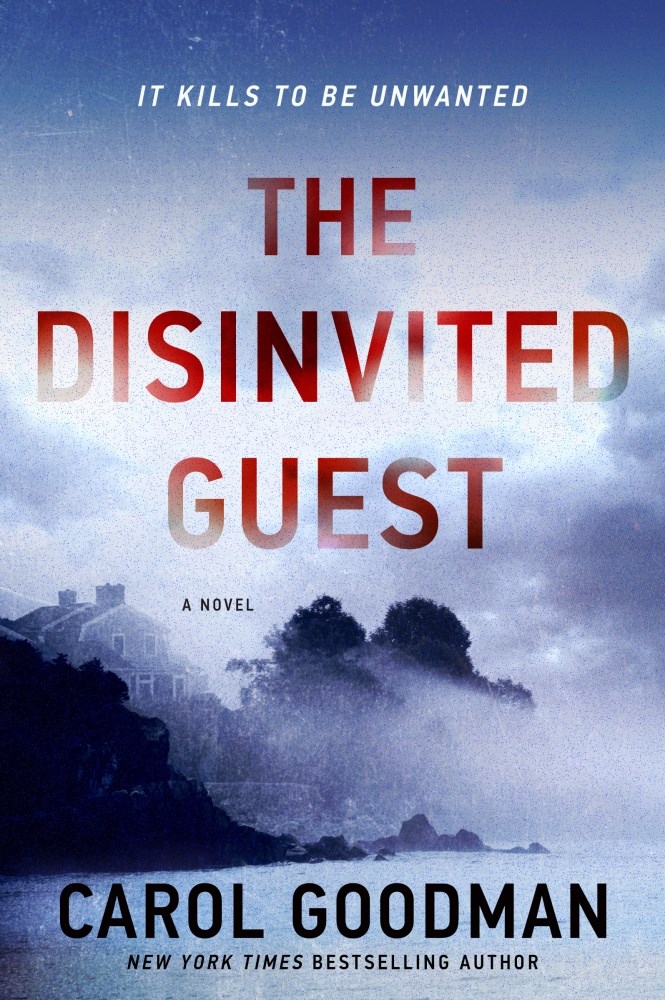
I’ve been a huge fan of Carol Goodman’s since my first dip into her canon, The Sea of Lost Girls. I have since been dipping back into at times as a reward to myself; she’s easily moved into my top ten list of current writers and won’t be dislodged anytime soon. She’s won numerous awards–deservedly–and is, to me at least, the modern incarnation of the great Mary Stewart. Goodman’s novels are decidedly Gothic and extremely smart and literate, with strong characters that are sharply defined and well rounded that the reader can easily identify with as well as like or dislike.

The premise of The Disinvited Guest is that another pandemic has descended upon the world after the 2020 COVID-19 one. Wealthy Reed Harper has decided to quarantine on an island his family owns–Fever Island, off the coast of Maine and near the mouth of the St. Lawrence River–since his wife Lucy has residual health problems since the first pandemic. Invited along are his lesbian sister Liz, a painter; Nico, Liz’ partner, a photographer; Ada, an old college friend of both Reed and Lucy who works now as an ER nurse; and her husband, also a medical professional in hospital administration, Crosby–who’s a bit of a dick. The remaining character is Mac, whose mother was a housekeeper for the Harper family working on the island. Mac knew Reed and Liz as children, and now he lives on the island as a caretaker. Reed, who also suffers from OCD, has carefully planned out every last aspect of this quarantine adventure–and while the quarantine and safety is the primary issue at stake here, any reader of crime or suspense knows that having seven people living together on a remote, isolated island is the perfect set-up for personality clashes and battles and intrigues and, of course, for murder. How many horror films or murder mysteries are set in such locales? (Goodman of course is wise enough to make an Agatha Christie/And Then There Were None reference in the text; the geographic elements of the island–the Dead Pool, the bog, Dead Man’s Cove, etc.–also sound like something out of the Hardy Boys, and she acknowledges that several times as well.)

There’s also some excellent backstory. Fever Island is named this because during the Irish immigration period of the late 1840’s–the potato famine and typhus epidemic–the ships with ill passengers were sent to Fever Island to quarantine before being admitted into Canada. A makeshift hospital is set up on the island, nuns come out to operate it along with several doctors–including a Harper ancestor–and so there is also a makeshift cemetery on the island. There’s also another legend, going back even further than the quarantine days; the earliest settlers believed a woman was a witch and essentially buried her alive on the island. The story claims she placed a curse on the island and summoned the devil. This is enough of a horrible backstory to make easily the possibility of supernatural forces at work on the island completely believable, which only adds to the suspense. There’s also the backstory of Reed and Liz’s own experiences spending their summers on the island with their horrible father and alcoholic mother; Reed’s dead former girlfriend, who died on the island during the first pandemic, along with his parents; and of course the diary of Dr. Nathaniel Reed Harper, who details life on the quarantine island and the growing suspicion amongst the superstitious fever victims and a group of sailors stranded their by a shipwreck that the witch’s curse is haunting them and that maybe even one of their party has been possessed by the witch and has summoned the devil.

Ada and Lucy were best friends and roommates in college, with Reed as the third side of their triangle. Lucy has also written one well-received novel, but hasn’t written anything since…and her discovery of the diary begins to inspire her to write about the island. Goodman is quite excellent at weaving the multiple storylines and multiple time-lines–Lucy is flashing back to the original pandemic, which is what brought her and Reed together as a couple; the incidents from the 1840’s as revealed in Dr. Harper’s journal; and of course, what happened on the island during the original pandemic.

Strange things start happening once they are all safely ensconced on Fever Island, and of course there are the inevitable personality clashes, which amp up the tension and then, of course, the deaths begin. At first Lucy can’t help but wonder if the island is indeed cursed–but slowly begins to realize that there is a very clever murderer on the island pursuing a definite agenda, but who?

And I love how Goodman chose to deal with the COVID-19 pandemic. Rather than setting the book during that shutdown, she instead chose to write about a future quarantine/shutdown, with the COVID-19 one in the distant past (ten years or so) but having a lot of impact on what is happening in the present.

I loved every minute and every word of The Disinvited Guest, and I cannot recommend it highly enough.

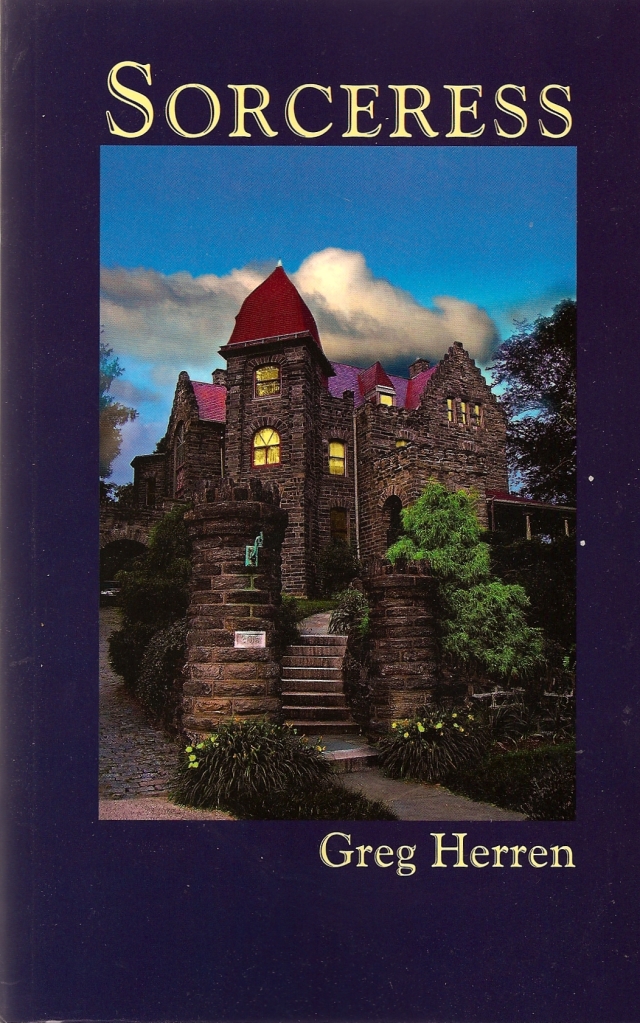
Sorceress

I have always loved the word sorceress.

I also love the word “enchantress.” Go figure. Must be something about the sibilant s.

I moved from Kansas to Fresno, California in February of 1981. It was cold and there was snow on the ground when I boarded an Amtrak train at 2 in the morning with my mother. I fell asleep before the train left the station in Emporia; when I woke up it was gray outside and we were in western Kansas. The trip seemed endless, and our train was delayed because of weather crossing the Rocky Mountains; that part was terrifying, honestly. There were times when there was only enough room on the mountain ledges we rode over for the train tracks, and the wind was powerful enough to rock the train. I’ve always been afraid of heights, so obviously this was completely terrifying for me. I had brought books with me to read on the train, but I’d finished them all by the time we reached Barstow, California–missing our connecting train by half an hour–and thus were stuck there for twelve hours until the evening train to Fresno.

You haven’t lived until you’ve spent twelve hours in a train station in Barstow, California.

(Although reading everything in the magazine rack in that train station completely fueled my soap opera obsession–but that’s a story for another time.)

After I finished writing the first draft that became Sara I put the manuscript aside and started working on another one, which I called Sorceress.

Why was the move on Amtrak to California pertinent to the story of Sorceress and how it came to be? Because it’s one of the few books–in fact, the only book–I’ve written under my own name that is set in California (all the Todd Gregory ‘fratboy’ books are set in California).

It was a beautiful day to die.

The sun was shining and she could hear the birds singing in the trees outside.  Through the window on the other side of the room she could see a gorgeous blue sky with wisps of white cloud drifting aimlessly. The house was silent around her, and she closed her eyes again, biting her lower lip.

Her throat was sore and she was thirsty.

There was a glass pitcher of water sitting on the nightstand just out of her reach. Drops of condensation glistened in the sunlight as they ran down the sides, pooling on the wood. She licked her lips and dry-swallowed again.

“Please.” She’d intended to shout, but all that came out was a hoarse whisper. Tears of frustration filled her eyes.

This can’t be happening to me, she thought as the tears began to run down her cheeks. She felt the wetness against her lips, flicking her tongue out to catch the moisture.

It might not be much, but it was something.

She tugged at the handcuffs again, and moaned as the raw skin around her wrists rubbed against the metal, dull arrows of pain shooting up her arms.

That isn’t going to work. You’ve got to think of something else. There has to be something.

As if on cue, the phone on the other side of the room began ringing.

If only I could reach the phone!

If only I weren’t handcuffed to this stupid bed,” she said aloud.

If only, if only, if only.

A grandfather clock began tolling somewhere in the house.

Five o’clock. Maybe four more hours until the sun goes down.

She was safe until the sun went down.

She heard footsteps coming down the hall towards the closed door.

“I’m thirsty!” she shouted. “Please! I’m so thirsty!”

The footsteps stopped. She was about to shout again when heard the footsteps start again—only now they were moving away from her door.

She closed her eyes.

Not a bad opening, huh?

I started writing the novel Sorceress sometime in 1992 or 1993; I’m not sure which. Sorceress was the easiest of the early manuscripts for me to write, and this was because I knew the story, from start to finish, before I started writing it–which is incredibly rare for me; I even knew the middle, which I always have the most trouble with. I originally wrote Sorceress in the late 1980’s as a novella that originally clocked in at around seventeen thousand words. But even as I wrote that incredibly long short story (at the time all I knew about novellas was that Stephen King sometimes wrote really long stories, like “The Mist”) and had always put it aside, because I knew there was more story there and it needed to be longer–novel length, in fact. So when I finished the first draft of Sara and was ready to move on to something else, I decided to finally expand Sorceress out into a novel.

Fresno wasn’t a pretty city, by any means. It had a desert climate (the entire San Joaquin Valley has a desert climate) that was very dry and climbed to well over 100 degrees in the heart of the summer (sometimes even getting up to over 110) and was all brown, mostly; brown, palm and orange trees, and concrete in the unforgiving sun. My parents bought a house in a subdivision in a city that bordered Fresno yet somehow wasn’t considered a suburb. It had a pool, two orange trees, and several eucalyptus trees. These seemed exotic and cool and fun–until you realized how much fruit one tree, let alone two, could produce, and there was no way to keep up with them, either; inevitably, the back yard was always dank with the sickly-sweet smell of rotting oranges. The eucalyptus trees with their slim, silvery leaves were also a pain in the ass; those leaves would get into the pool, and unless fished out, became water-logged and sank to the bottom, where they would stain and/or discolor the bottom of the pool. It seemed like those little leaves were always fluttering through the air and unerringly landing in the water.

Never again will I live a place where I am responsible for a swimming pool.

But the true beauty of Fresno was its location. It was within a few hours’ drive of many wonderful places: Yosemite, Sierra, and Kings Canyon parks, San Francisco, and Los Angeles. LA was the furthest away–four hours down the Grapevine; and the final descent through the mountains into the plains on the other side was one of the steepest highways I’ve ever driven down–but in college I also made friends with students who came from some of those mountain communities–Sonora, Oakhurst, Coarsegold, Tuolumne–and wound up visiting them at times. I spent most of my time visiting the mounts in either Sonora or Tuolumne. I’d never spent much time in the mountains before or since, and the thing that always stuck in my head was how close the stars in the night sky seemed up there, almost like you could reach up and grab one. I decided to create my own version of these small mountain towns and call it Woodbridge. When I started writing Sorceress as a novel, I set it in the countryside in the mountains outside of “Woodbridge.” By this time, I had already discovered y/a horror, obviously, and so “Woodbridge” was going to be the anchor of all my stories–they were all going to be connected, and in some ways the center of that fictional universe I was building was going to be Woodbridge (Sleeping Angel is also set in Woodbridge). I also put a college there; a campus of the University of California (UC-Woodbridge) which also gave me college students to play with as well as the high school kids. Laura, my main character, was originally from the same area of Kansas where Sara was set; I even mentioned her in passing in Sara, as a friend who’d moved away to California and who had been betrayed after she left by her best friend and her boyfriend…which also figured into the plot of Sorceress.

Sorceress was also the first book I wrote where I followed the Gothic tropes: a young woman all alone in the world after the death of her parents is summoned by an elderly aunt she didn’t know existed to California. The elderly aunt has a huge Victorian mansion in the mountains, a man-servant/housekeeper/butler, and once there Laura begins to suspect that not only are things not the way they seem, but that her own life might be in danger. There’s also a hint of the paranormal here as well…and some of the kids Laura meets in Woodbridge also figured into some of my other books for young adults as well.

When I had the opportunity to write something on spec for Simon and Schuster teen in the summer of 2005, Sorceress was the one I chose to revise and rewrite for them. I felt it was the most complete and needed the least amount of work, plus I loved the entire Gothic mood of the story. Then of course Katrina came along and knocked that right out of my head; I kept trying to revise it but focus was incredibly difficult, and finally I gave up. This is the story I mentioned in conversation with a friend, who was later given a job as an acquisitions editor, and this is the story she wanted me to pitch to her. I did, but they didn’t pick it up, but when she went out on her own later and started her own small press specifically for juvenile and y/a fiction, she wanted Sorceress, so I dragged it back out and went to work on it again. It was released in 2010, I believe; it’s hard to remember dates these days for me. Anyway, this is the book where I told Bold Strokes I was publishing a y/a with a friend’s small press, which got the response “you know, we do y/a too” that led to me giving them both Sara and Sleeping Angel, and led to all the others.

I also wrote another Woodbridge story–a very long novella–that I intend to either revise as a novella or expand out into a novel. This story directly references events in Sorceress and Sleeping Angel, as well as characters…so while it might be entirely too late to release another book in that linked universe I originally intended to create, a good story is a good story. I just am not sure about the ending of that one, which is one of the reasons it remains in the drawer.

Maybe someday.

The Wedding Song (There Is Love)

Thursday morning and my last day in the office of the week–tomorrow I took the day off for miscellaneous appointments and things (and yes, a trip to Metairie is required, sigh) which will be nice. I don’t have to get up super-early to go, for one thing, so I can allow myself to sleep in a bit, and then I can leisurely enjoy my coffee throughout the morning before it’s time to head out there. I am also going to stop at Costco on the way back home, so it’ll be a big day for one Gregalicious. I imagine by the time I get home I will be hot, sweaty, crabby and ready to spend the evening inside with the air conditioning.

Such an exciting life I lead!

I slept really well last night–an enormously pleasant surprise, given the questionable sleep I got the previous two nights–but according to my Fitbit, it was yet another bad nights’ sleep. I am beginning to think my Fitbit doesn’t know what it’s talking about when it comes to my sleep, you know? I feel rested and a bit groggy this morning, which hopefully the coffee will take care of (fingers crossed) but I will say yesterday I felt a bit out of it for most of the day. I didn’t get nearly us much accomplished as I’d intended when I got home from the office last night–I didn’t really do much of anything, to be honest. I wrote for a little while before retiring to the easy chair, where I fell into a spiral of videos about French history, which is always fun for me. When Paul got home we watched Obi-wan Kenobi, which I am really enjoying, on-line haters be damned, and the little girl who plays Princess Leia is fantastic–it’s completely believable she would grow up into Carrie Fisher’s Princess Leia, and props to Disney Plus for pitch-perfect casting. The show is also doing a really great job of filling in some gaps in the story of Star Wars, too.

Today hopefully will be a good one. I want to get some more writing done–for whatever reason, “Never Kiss a Stranger” is finally taking shape the way I want it to, although now I am worried that its going to wind up being far too long, and far too melancholy, than I want it to be. Its a melancholy story, really, so that’s probably a really good thing, but…I don’t suppose melancholy is the right mood; I am thinking I want to go for a Daphne du Maurier tone (which I love); I don’t want to call it gothic either, but if you’ve read du Maurier you know what I mean. Hmmm, perhaps I should dip into her collection Echoes from the Macabre again, to get a better sense of what I am talking about here…that is actually a really good plan, now that I think about it.

You can never go wrong rereading du Maurier.

One thing that is interesting/kind of fun about writing this novella is that it is set in a place that no longer exists–New Orleans in 1994. I was talking to some of my younger co-workers (ha ha ha, they’re all younger now, I am the old man of the department by a LOT now) about how different New Orleans was when I moved here in 1996 than it is now; and I was thinking about that some more last night. Gentrification hadn’t really gotten started in the city yet; it was a crumbling, dying city whose glory days were in the past. The Lower Garden District was considered a bad neighborhood back in those days; we moved in just as it was started to regenerate…but there was still a crack house next door, and of course the Camp Street on-ramp to the Crescent City Connection was still there, about fifty yards of concrete climbing into the sky and just ending (if you ever watch the Brad Pitt/Tom Cruise version of Interview with the Vampire, there’s a scene when Louis–Pitt–leaves a movie theater in New Orleans that is showing Tequila Sunrise. That was the Coliseum Theatre, which was closed but still there when we moved into the neighborhood. It burned to the ground a few years later. Anyway, as Louis/Pitt walks out, the camera pans back and shows a highway on-ramp with cars going up–that was the old Camp Street on-ramp, still in use when the movie was filmed but not when we moved here two or three years after the movie’s release). I also imagine that on-ramp, when it was still connected to Highway 90, was a bitch for traffic in the neighborhood, since the bridge backs up all day now; I imagine there were times when that ramp backed up all the way down Camp to probably the Garden District. Where it was now is a lovely neutral ground that separates Camp and Coliseum Streets, beautifully designed and landscaped so it seems like a perfect extension of Coliseum Square. That’s why I want to write about that time period, when gay bars still occasionally got raided by the cops, when there were still two bathhouses in New Orleans, when many of us could only be openly gay when we went to the bars in the Quarter on the weekend, and how frenetic and wild and crazy those weekends were; all the gay bars in the Quarter were packed every weekend, and of course, deeply closeted gays from the surrounding areas–the rural parishes and Mississippi–would come into the city so they could let go and be free.

But even that wasn’t a guarantee of anything, either. Death stalked the gay bars back in those days–another reason I want to write about that time–and you couldn’t really trust the cops and sometimes it was dangerous to walk back to the lower Quarter or Marigny where you’d parked your car. There was this weird sense of being an outlaw; despite the Lawrence v. Texas decision there’s still a sodomy law on the books here in Louisiana, and once this Supreme Court gets to decide Lawrence v. Texas was wrongly decided (because make no mistake, this Supreme Court is definitely going to dial us back to 1900, and it wouldn’t surprise me if they decided to take the right to vote away from women, too), once again my sex life will become an enforceable crime in Louisiana yet again.

Sigh.

Well, writing that last paragraph certainly made me melancholy. Too bad I don’t have time to work on the novella before heading into the office. Have a great Thursday, Constant Reader! I will chat with you again tomorrow morning.

Lonely Days

The first “Gothic” novel I read was Victoria Holt’s The Secret Woman (technically, it was Mary Stewart’s The Ivy Tree, but I don’t really think of Stewart as a Gothic writer–which is a subject for another time), and I fell in love with them. These were the books, usually from Fawcett Crest in mass market paperback, that became famous for the “young woman running away from a spooky house with a light in the window while wearing a long nightgown and having really long hair” covers. Sometimes those covers didn’t belong on the books that had them (Charlotte Armstrong didn’t write Gothics, for one example), but inevitably, you really couldn’t go wrong picking up a book with that kind of cover. My favorites were of course Mary Stewart, Phyllis A. Whitney, and Victoria Holt; I devoured their books, and also enjoyed Susan Howatch, Dorothy Eden, and any number of others. I miss those books, even if sometimes the heroines were incredibly passive to the point where I wanted to shake some self-esteem into them…and have often bemoaned their disappearance from the paperback shelves.

But there are modern Gothics being published–Carol Goodman is a QUEEN of the modern Gothic–and I’ve turned my hand to them from time to time myself (Timothy, The Orion Mask, Bury Me in Shadows) and would like to do more.

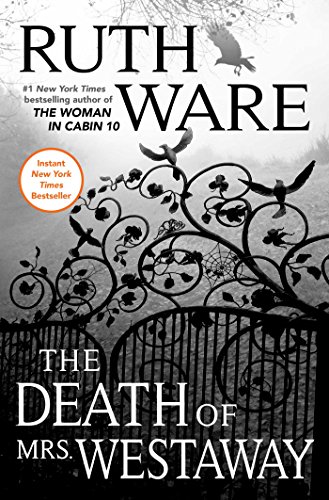
So, you can imagine how delighted I was to read (listen) to The Death of Mrs. Westaway.

The girl leaned, rather than walked, into the wind, clutching the damp package of fish and chips grimly under one arm even as the gale plucked at the paper, trying to unravel the parcel and send the contents skittering away down the seafront for the seagulls to claim.

As she crossed the road her hand closed over the crumpled note in her pocket, and she glanced over her shoulder, checking the long dark stretch of pavement behind her for a shadowy figure, but there was no one there. No one she could see, anyway.

It was rare for the seafront to be completely deserted. The bars and clubs were open long into the night, spilling drunk locals and tourists onto the pebbled beach right through until dawn. But tonight, even the most hardened partygoers had decided against venturing out, and now, at 9:55 p.m. on a wet Tuesday, Hal had the promenade to herself, the flashing lights of the pier the only sign of life, apart from the gulls wheeling and crying over the dark restless waters of the channel.

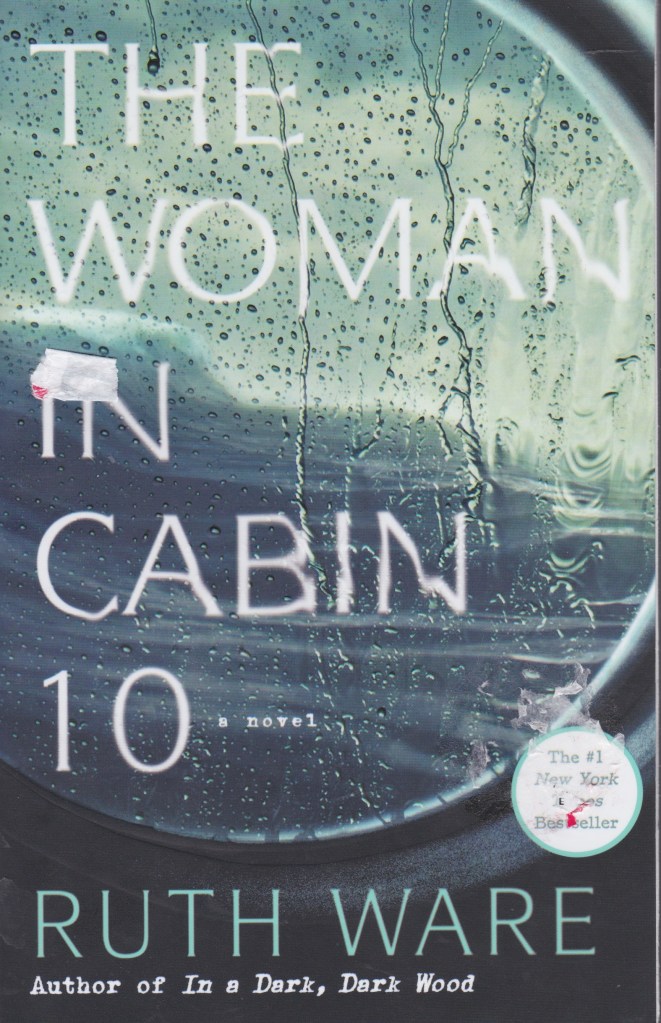
I had heard somewhere that this book had echoes of potentially being a Rebecca homage (hello, Timothy!) so of course I was interested. Ware first exploded on the mystery scene with her The Woman in Cabin 10, which I haven’t read (it’s buried in the TBR pile somewhere) and I had acquired some of her others titles in the years since her debut with In a Dark, Dark Wood (which I also have on hand) and I decided, when picking out audiobooks to listen to on the drive, thought, “Hey, isn’t it about time you checked out Ruth Ware? Overdue, in fact? So I downloaded The Death of Mrs. Westaway and started listening once I pulled away from the curb last Thursday.

Wow.

The main character is Harriet Westaway, who goes by Hal. Hal is poor–very poor. She makes a subsistence-level living by reading tarot cards in a booth on the pier in a seaside resort, and it’s the off-season, where her living is even lower. The book opens with her walking home from a night’s work, trying to figure out how she is going to pay her bills–and which ones can wait, which need immediate attention–and she also owes money to a loanshark, who is getting more threatening with every passing day. Out of the blue she receives a letter from an attorney letting her know she was named in her grandmother’s will, and an invitation to the funeral. Confused–Hal knows that wasn’t her grandmother’s name, and verifies the information by checking her mother’s birth certificate (her mother was killed in a hit-and-run accident when she was a senior in high school–the British equivalent, at any rate–and as such never finished school); it’s a mistake, but…maybe she can fake her way into a bit of an inheritance. She is desperate, after all, and what can it hurt to get away for a little while? And so Hal sets out for the Cornish estate Trepassen–the Westaway fortune has dwindled over the years, and the house is in ill repair, but Hal is very startled after the funeral to discover that her “grandmother” has left everything to her, which now has her on the horns of a dilemma. She knows a mistake has been made about her identity, but doesn’t know how to get out of the pickle she’s now in.

Trepassen reminded me in ways of Manderly, and the Rebecca parallels are there, but this is not a simple homage. Mrs. Warren, the housekeeper, was devoted to the late Mrs. Westaway (whose children despised her) and is perfectly awful to poor Hal. The Westaway family welcomes Hal as the long-last daughter of their long-lost sister Maud, which only adds to her guilt about the deception she is pulling on them. Hal is mousy, like the second Mrs. deWinter, and there were times I wanted to shake her into standing up for herself a bit more…but on the other hand, it kind of fits into the situation she’s in–how do you stand up for yourself when you are literally lying to everyone? There are a lot of family mysteries to explore and unravel. Hal’s arrival at Trepassen starts those threads unraveling, and like any true Gothic heroine, soon her life is in danger…

I enjoyed this book tremendously. It reminded me strongly of Victoria Holt and Phyllis Whitney, and I will certainly be reading more of Ruth Ware going forward.

It Doesn’t Have To Be

Friday, Friday, gotta get down it’s Friday.

I find myself now in the post-launch haze; it’s been awhile since I’ve actually promoted a book–and usually so much else is going on the launch date might get some social media posts from me and not much else (it really is a wonder I still have any career to speak of)–but I actually feel a bit hungover from what little I did. (I admire other writers who hit it so hard; how do they do it? I sure as hell can’t.) I have nothing but the utmost respect for authors who can do the public appearance/promotion stuff and make it look easy and make it seem like they’re enjoying themselves; because that is not my experience with such things. I am always incredibly self-conscious, and inevitably my fallback response to being nervous and feeling uncomfortable is to try to be funny–which is, of course, completely subjective, and amps up the anxiety: what if no one thinks you’re funny? And with these on-line appearance (as opposed to in-person ones) I do not know if anyone laughs and that makes me even more anxious to the point that when it’s over I am a completely nervous wreck, emotionally, physically and emotionally exhausted; and the hangover from that carries over into the next day. I felt very drained and hollowed out yesterday. Today I feel better–I don’t think I slept that great, to be honest, but this morning I feel fairly well rested. Not I can conquer the world rested, but rested. This is a good thing. I don’t have to do anything outside of the apartment today other than go to the gym after I am finished working at home, and I am going to relish that. I have some data entry to do, condom packs to make, and there are also some other on-line trainings for the day job coming due–annual things we are required as a health clinic to take, like HIPAA, blood borne pathogens, biohazard, etc. (In all honesty, my favorite is the emergency training one–what do you do if there’s an electrical fire? What do you do if there’s a regular fire? What do you do if a patient collapses? I don’t know why that’s my favorite, but for some reason it is.)

Yesterday was spent mostly with on-line trainings for the day job; there was time, however, for some condom packing duties before LEG DAY at the gym (and yes, my legs are tired today. But good tired, not bad sore). I decided to keep going with my attempts at a Halloween Horror Film Festival, moving on to Friday the 13th, Part III. (turned out I must have watched the second part last October and completely forgot; my memory has now moved from sieve to a garbage disposal that clearly eats and grinds up each memory before spitting it out, forgotten) What. A. Shitty. Movie. The first one had a kind of “so-cheaply-made-it’s-kind-of-charming” feel to it, but each film cost more money…but the quality didn’t improve. The acting and writing is so incredibly bad, it’s easy to see why audiences started rooting for Jason as a kind of anti-hero; those who are about to die are such shitty, one-dimensional characters, played by actors who’d be lucky to get a supporting role in a bad dinner theater in Sarasota, Florida, you kind of enjoy watching them die horribly. I don’t know that I have the stomach to handle yet another entry in that endless series of sequels; maybe I’ll switch to the Halloween movies. Those, while equally small budget at first, are at least better acted, written, produced, and directed than their counterparts about Jason Voorhees. Paul came home rather late and had some work to do, so we watched the latest episode of Titans, which I really enjoy but this season, while interesting, is dragging a bit.

It also makes me terribly sad that this is a Friday without a new Ted Lasso.

I also need to get back to work on my writing; I got distracted with all the book promo stuff and so forth and well, now I am behind yet again. What else is new, right? When am I not behind on everything? Yes, it makes me crazy, which is partly why I am alway teetering on the edge of a complete breakdown, without question. I’ve been feeling very good about myself lately–which always makes me suspicious. My piece on Gothics for Crime Reads was well received, so was my piece on Superman posted here the other day, and Bury Me in Shadows also appears to be getting a good reception. My royalty statement came the other day and was significantly higher than I was expecting, which is always welcome news…and of course, I need to make a new to-do list. I also have some filing that needs to be done, and the apartment always needs cleaning. I do think our mouse is gone, though. Last week he was very noisy one night–Paul thought it sounded like death throes–and we haven’t heard him since. Scooter also doesn’t stare at the cabinet under the sink and the dishwasher anymore, either, which is the more likely sign that the mouse is gone at last. It’ll take me a while before I am comfortable turning the dishwasher on without putting a towel across the floor in front of it, though–the little bastard chewing through the hose is going to take me a while to get past.

I may also prune the books a little bit this weekend; the books can always be pruned, and I may even get a box of them down from the storage crawlspace today to go through–I really do need to clean out the crawlspace–and the night time lows this weekend may even dip in the high fifties; it’s definitely October in New Orleans. I think next weekend I may drive around taking pictures of Halloween decorations. One of the many things I love about this city is how so many people go all out decorating for holidays–I love the mansion on St. Charles with the annual skeleton theme–plus, A Streetcar Named Murder is set in early October. LSU plays Florida tomorrow at eleven in the morning (!), and I’ll have the game on but I doubt I will watch it from beginning to end. This has been a horribly disappointing season for LSU football–people are calling for the coach to be fired, as it looks like they’ll have their first losing season this century (!)–the last time that happened was 1999, which led to the firing of then coach DiNardo and the hiring of Nick Saban, which rescued and turned the program around to the point they won the SEC in his second season and a national title in his fourth. LSU fans have become very spoiled this century, but it’s been a very good run these last twenty or so years: four SEC titles and three national championships; only Alabama has done better during this run, and that’s a pretty high standard.

And on that note, I am heading into the spice mines. Data ain’t gonna enter itself and the condoms won’t pack themselves, either. Have a lovely Friday, everyone, and I will check in with you again tomorrow.

Chains of Love

Thursday morning coming at you like a burning ball of pitch hurled at the city walls from a catapult by the invading Huns.

I did two entries yesterday, neither of which was blatant self-promotion (I know, right?); one was my regular entry for the day and the other was…well, it was a really old entry I started writing a long time ago, about my love for Superman and how that actually began when I was a kid. I never finished the post–there are about thirty post drafts that I will someday finish, even though some of them are now YEARS old–but when the news broke about Superman’s bisexuality this week, I knew it was time to finish it and put it out into the world. I also knew when I read that piece of shit’s post on Medium that I was going to conclude by mentioning it, and taking a few nasty digs at his sorry, pathetic, will-die-alone-and-unmourned self. Was I perhaps more petty and mean-spirited, even perhaps nastier, than I usually allow myself to be on here over the last twelve or so years? Probably. Am I sorry? Not in the fucking least.

I woke up this morning at five, as I am wont to do every morning, and moaned a little softly to myself, well, at least I have another hour before I have to get up and then it hit me: It’s Thursday, fuckwit, you don’t have to get up before the sun comes up today, and thus happily burrowed back into my blankets and went back to sleep for a bit. It was lovely, frankly; I feel very good this morning and very alive and ready to get to it. I have a bunch of trainings I have to do on-line today around the condom packing and the data entry (the data entry website was updated, one of the trainings is on that); there’s laundry to do; files to file and an inbox to empty; Leg Day to get through; and of course the apartment is, as always, an utter disaster area. Typical Thursday, really, when you think about it. Yesterday was actually relatively lovely, for the most part; my piece on my favorite Gothic inspirations went live on Crime Reads’ website yesterday, and received an absolutely lovely response–and the afore-mentioned Superman blog piece I did yesterday also got a lot of attention and shares, which was also very nice. The event with Murder by the Book went well for the wonderful John McDougall, our wonderful host and moderator, and I really enjoyed listening to David R. Slayton talk. (I am reading his White Trash Warlock and really, it’s quite marvelous; do yourself a favor and pick up a copy.) Paul had dinner plans last night with friends, so I had the apartment to myself for most of the evening; by the time he got home we were both already exhausted–doing public things always drains me on all three levels (physical, emotional, intellectual) and so we both went to bed relatively early.

So, Bury Me in Shadows is out into the world, and it really was a nice, somewhat soft, release; one of the things I hate about the business side of being a writer is the self-promotion. I was raised in the worst possible way when you want to become a writer; I don’t know if my reluctance to promote myself and push myself on people is inherent, or if it was something I was trained from childhood to have. I was always told if you do good work, let others decide rather than telling them; if the work is good it will speak for itself. That doesn’t really work in this business, and while I am always comfortable to talk about books and writing publicly, I am not very comfortable with talking about myself or my own work or trying to convince people to read/buy it; I can sort of do that kind of thing on here because, well, it’s written and I am not speaking in front of an audience or for a camera. It’s always difficult, and I never think quickly enough to come up with good answers for the questions. I also tend to ramble and get sidetracked and go off on tangents when I talk–as anyone who has ever had a conversation with me in person can easily and happily attest to–which, when you are sharing the stage with another writer, isn’t a good thing. So, with much thanks to John and Murder by the Book for setting the entire thing up and for hosting, and to David for being so gracious and fun to chat with; and I will add my deepest apologies for my feral self and my incompetence at presenting myself as a competent publishing professional.

I also suppose I am far too old to get better at it, as well.

I also got my copy of Best American Mystery and Suspense Stories 2021, edited by Steph Cha and guest editor Alafair Burke–you know, the one where I am mentioned in the back for my story “The Dreadful Scott Decision” from The Faking of the President, as “other distinguished work”, which is still an enormous thrill (I may still be picking up the book and opening to that page and marveling at the appearance of my name there)–which I am very excited to start dipping into again. My Halloween Horror Month hasn’t exactly worked out the way I had planned; too much other stuff going on, the release of a book, so on and so on and so on–but that’s okay. Things happen, life happens, and things get thrown off track, but I do always believe things work out the way they are supposed to in the end.

And on that note, I am going to get some things done before it’s time for me to start the endless rounds of training courses and meetings I have to attend virtually today. Have a lovely Thursday, Constant Reader, and I will talk to you again on the morrow.

Heavenly Action

I’ve always been—undoubtedly in part because I love history so much—an enormous fan of books where secrets from the past (even the far distant past) play an enormous part in the present lives of the characters in the story, and that solving those mysteries, learning the truth about the past, is necessary in the present for conflict resolution. As a history buff, the lack of a lengthy history as a nation is something I’ve always thought unfortunate; without ancient buildings and the way that history isn’t sort of always there in our faces the way it is in Italy or other older nations, it’s difficult for many Americans to either grasp, be interested in, or give a shit about our history—we have as a nation the attention span of a goldfish (thanks, Ted Lasso, for that reference).

To make a side by side historical comparison, for example, the Habsburg dynasty dominated central Europe for almost six hundred years, whereas the first European to actually arrive and establish a colony were under the aegis and flag of the Habsburg king of Spain—and that was in the early sixteenth century.

Secrets of the past casting a shadow over the lives of the living is often a theme in Gothics, my favorite style of novel/writing (noir is a close second). Rebecca is of course the master class in secrets of the past; the first Mrs. deWinter might not actually be haunting the halls of Manderley literally, but her ghost is definitely there. Victoria Holt’s romantic suspense novels inevitably were set in some enormous old mansion or castle, with potential ghosts a-plenty everywhere you turn. Phyllis A. Whitney’s one novel set in Britain—Hunter’s Green—also has a classic old British mansion with a potential ghost in it. Maybe it was the childhood interest in kids’ series, with the reliance on secret passages, hidden rooms, and proving that ghosts were frauds; every episode of Scooby Doo Where Are You? had the gang proving something supernatural was quite human in origin.

One of my favorite Nancy Drew books when I was a kid was The Ghost of Blackwood Hall; I don’t really remember much of the story now, other than a fraudulent haunting was involved and a woman—Mrs. Putney—was being swindled by a medium? (Reading the synopses on a Nancy Drew website, apparently part of the story involves Nancy and the gang coming to New Orleans, which I absolutely do not remember; my only Nancy Drew-New Orleans memory is The Haunted Showboat—involving yet another haunting. Interesting.) When I was writing the original short story (“Ruins”) I needed a name for the old burned-out plantation house; I decided to pay homage to Nancy Drew by naming it Blackwood Hall, and naming Jake’s maternal ancestor’s family Blackwood (his grandmother was a Blackwood, married a Donelson; Jake has his father’s last name, which is Chapman). I did think about changing this from time to time during the drafting of Bury Me in Shadows, but finally decided to leave it as it was. It might make Nancy Drew readers smile and wonder, and those who didn’t read Nancy Drew, obviously won’t catch it.

Hey, at least I didn’t call it Hill House.

But writing about ghosts inevitably makes one wonder about the afterlife and how it all works; if there is such a thing as ghosts, ergo it means that we all have souls and spirits that can remain behind or move on after we die. So what does writing about ghosts—or writing a ghost story—mean for the writer as far as their beliefs are concerned?

Religion primarily came into existence because ignorant humans needed an explanation for the world around them, combined with a terror about dying. It is impossible for a human mind to comprehend nothingness (whenever I try, I can’t get past “there has to be something in order for there to be nothing, you cannot have nothing unless you have something” and that just bounces around in my head until it starts to hurt); likewise, whenever I try to imagine even the Big Bang Theory, I can’t get past “but there had to be something to explode” and yeah, my head starts to hurt. Even as a kid in church, studying the Old Testament and Genesis, I could never get past “but where did God come from?” I don’t begrudge anyone anything that gives them comfort—unless it starts to impede on me. I’ve studied religions and myths on my own since I was a kid; the commonalities between them all speak to a common experience and need in humanity, regardless of where in the world those humans evolved; a fear of the unknown, and an attempt to explain those fears away by coming up with a mythology that explains how everything exists, why things happen, and what happens when you die. (I am hardly an expert, but theology is an amateur interest of mine, along with Biblical history, the history of the development of Christianity, and end-times beliefs.)

Ghosts, and spirits, have been used since humanity drew art on cave walls with charcoal to explain mysterious happenings that couldn’t be otherwise explained. I am not as interested in malevolent spirits—ghosts that do harm—as I am in those who, for whatever reason, are trapped on this plane and need to be freed. This was a common theme in Barbara Michaels’ ghost stories (see: Ammie Come Home, House of Many Shadows, Witch, Be Buried in the Rain, The Crying Child) in which the present-day characters must solve the mystery from the past; why is the ghost haunting this house and what happened to them that caused them to remain behind? I used this theme—spirits trapped by violent deaths in this plane whose truth must be uncovered in so they can be put to rest—in Lake Thirteen and returned to it with Bury Me in Shadows. I did, of course, worry that I was simply writing the same book over again; repeating myself is one of my biggest fears (how many car accidents has Scotty been in?), but the two books, I think, are different enough that it’s not the same story.

At least I can convince myself of that, at any rate.

There’s a few more ghost stories I want to write, actually; (it also just occurred to me that there was a ghost in Jackson Square Jazz, the second Scotty book) any number of which come from those legends my grandmother used to tell me as a child. I have this great idea for one I’ve been wanting to write set here in New Orleans for a very long time called “The Weeping Nun;” I have the entire ghost’s story written in my head, I just don’t have a modern story to wrap around it (same issue I have with my New Orleans ghost story book, Voices in an Empty Room) and of course there’s “The Scent of Lilacs in the Rain,” a short story about another Corinth County ghost I started writing and got to about five thousand words before the ghost even made an appearance. That great length is why I shelved the story—and now, of course, I realize I can do it as a novella, which is amazing news and life-changing, really. “Whim of the Wind,” the very first Corinth County story I ever wrote, is also kind of a ghost story, and maybe someday I’ll find the key to making it publishable (although I think I already did figure it out, thanks to the brilliance of an Art Taylor short story).

I’ve always believed part of the reason I was drawn so strongly to New Orleans is because the past is still very much a part of the present here—though not so much as we New Orleanians would like to believe, as several Facebook groups I belong to about the history of New Orleans often show how often and rapidly the cityscape has changed over the years—and you can sometimes even feel here, at times, under the right conditions (fog and/or mist are usually involved) like you’ve gone back in time, through a rip in the time/space continuum; which is something I’d actually like to write someday here—but that’s just an amorphous idea skittering through my brain.

And of course, I have an idea for a paranormal series set in a fictional parish here in Louisiana. I think about it every now and again, but am really not sure how I want to do it. I know doing a paranormal Louisiana town series will get me accused of ripping off Charlaine Harris’ Sookie Stackhouse novels, but that’s fine. I don’t think I would be doing vampire kings or queens or any of the directions Ms. Harris went with her series. (Monsters of Louisiana and Monsters of New Orleans—paranormal/crime short story collections—may also still happen; one never knows, really.)

As hard as it was sometimes to write, I think Bury Me in Shadows turned out better than I could have hoped. I think it captured the mood and atmosphere I was going for; I think I made my narrator just unreliable enough to keep the reader unsure of what’s going on in the story; and I think I managed to tell a Civil War ghost story (it’s more than just that, but that’s how I’ve always thought of it and that’s a very hard, apparently, habit for me to break.

I hope people do read and like it. We shall see how it goes, shall we not?

Hello Hello

Monday morning and here we are again. But the good news is I actually wrote something yesterday that wasn’t this blog and I haven’t done that since Before the Power Went Out. Granted, it wasn’t much of anything; a listicle of books I used as inspiration for Bury Me in Shadows and how their mood, style, voice and point of view helped me develop my own Gothic style for my own book. Bury Me in Shadows isn’t my first Gothic, of course; Sorceress, Lake Thirteen, Timothy, and The Orion Mask could all be considered Gothics (the latter two definitely more so than the first two; but the first two do have touches of Gothic in them).

But writing this listicle (and yes, I do hate that word but it works) got me thinking about Gothics in general, and what is/isn’t considered Gothic when it comes to literature (and no worries, Constant Reader–I refused to take the bait and name The Castle of Otranto, Dracula and all the others that inevitably turn up on these lists; I even left the Brontë sisters off my list); likewise, I often think about noir in the same way and what it is or isn’t (I maintain that Rebecca is noir to the heart of its dark soul), which makes reading Silvia Moreno-Garcia’s Velvet Was the Night such a joy. Yes, I was able to sit down yesterday and spend some time with this delicious noir that is just as velvety in its writing as its title implies; it was after I walked to the gym on a beautiful late September Sunday and worked out, then walked home and had my protein shake, watching the end of the Saints game while sitting in my easy chair and reading. So, yes, yesterday was quite the marvelous day for one Gregalicious. Yes, I slept later than intended; but I made it to the gym, I wrote the listicle piece, and I spent some time reading. I really need to set aside at least an hour every day to spend reading; I’m not sure why I’ve had so much trouble reading since the power came back. But I have some amazing things in my TBR list I want to get to, and I definitely want to hit the horror/spec fic hard for October, to honor Halloween. Definitely want to reread The Haunting of Hill House again, perhaps grab one of those thick Stephen King first editions down from the shelf and dig into it, and there’s a Paul Tremblay on the shelves, waiting for me to read it. I can also get back into the Short Story Project for October–there’s no better short story writer to study than Stephen King, right, and I haven’t even cracked the spine of If It Bleeds.

Yes, that sounds like a great plan.

I also need to start working on the book I just signed a contract for that is now due in January. I haven’t settled on a pseudonym yet, but the book’s title is (pause for effect) A Streetcar Named Murder, and I am really looking forward to getting back into writing this again. I’ve been thinking about it a lot lately and making lots of notes…I do think I am getting to the point where I am going to start writing fiction again, and regularly. I still feel more than a little bit overwhelmed, but it’s not as paralyzing as it has been Since The Power Went Out…but I am also aware, from past experience with this sort of shit, that it also goes from day to day and changes. Today may be a good day; yesterday certainly was, but it can also change on a dime at any moment.

We also finished watching Curse of the Chippendales after the Saints game–the final episode was a bit of a letdown–but the overall story was fascinating. I was more than a little surprised that none of the Chippendales dancers were gay–or certainly not the ones they interviewed, at any rate–because I would have sworn that several of them were; I mean, as I said to Paul while we were watching, “I find it really hard to believe none of these guys were gay–especially with worked out bodies at a time when the majority of men who did work out were gay.” Then again, it could be a stereotype, but I do remember when if someone looked like they worked out, the odds were in favor of them being gay. (While I am aesthetically very happy that gay body culture has crossed over into the mainstream with the result that even straight guys of all ages are working on keeping their bodies in shape, I do miss the days when a hot-bodied guy would catch my eye and I’d be able to think, ‘yeah, one of us most likely.’)

After that, we got caught up on Titans–I cannot emphasize how well Greg Berlanti’s television adaptations of the DC Universe are done–and then we started watching Midnight Mass on Netflix. It’s creepy and weird and sad and more than a little spooky; all I could think while watching was ugh how miserable it would be to live on that island…while I am not a fan of living in enormous metropolitan areas like New York or LA or San Francisco etc, I am also not a fan of living in little communities like the one depicted in this show. There’s such a claustrophobic, insular feel to living in small rural towns or communities that I don’t think I could stand for long. But it was a lovely, relaxing Sunday around the Lost Apartment (and the Saints won!), which was greatly appreciated by me at the very least.

And on that note, I should head into the spice mines. Y’all have a lovely Monday, okay?

Nobody’s Supposed to Be Here

I’ve never been terribly interested in historical mysteries.

It really doesn’t make sense, when I sit and think about it. I love history, I love crime stories; you’d think a novel or short story that combined the two together would be my proverbial catnip. Yet with few exceptions (Elizabeth Peters’ Amelia Peabody series, Laurie R. King’s Mary Russell, and Steven Saylor’s Gordianus the Finder, to namecheck a few) I generally don’t read historical mysteries. I am not sure why that is, to be honest; I used to love historical fiction when I was a kid, and of course, the great Gothic ladies of the mid-century often set their novels in the past–looking at you, Phyllis Whitney and Victoria Holt–and yet…I also love reading books written contemporarily that are now historical in setting (Margaret Millar, Mary Stewart, and Charlotte Armstrong spring to mind, as do Erle Stanley Gardner, Ellery Queen, and Agatha Christie, for that matter).

Paul and I are also huge fans of the German series Babylon Berlin–I really do need to read the books sometime, as well as those of James Benn–but for some reason, I never ever reach for the historical mysteries when I am looking for something to read.

But I am really glad I put my hands on Dead Dead Girls when I was looking for something to read when the power was out.

The wind whips against her face. Snowflakes stick to her hair, her cheeks, her eyelashes.

She’s disoriented as she tries to find her way home. The sun set at four in the afternoon, but it’s much later now. It’s so dark that it feels as if blackness has swallowed up the city. She’s making her way down the streets, relying on streetlamps and muscle memory. It’s impossible to see in the snow.

She knows two things: first, that she’s going to be in big trouble for being so late; second, that it’s not going to be easy to locate her house in this terrible storm. It’s a small home. She’s the oldest of four girls. The youngest are twins–high energy and overly demanding of her patience. It’s exhausting to keep them in line. They don’t behave as they’re supposed to. Even worse, they’re all crammed into one bedroom.

They live with their widowed father and his sister. Her aunt is strict, but her father is ruthless. He works in the church and has high standards for his children. She also suspects he resents all of them for not being boys. He can snap at any time, for ay reason. Anything she can do to protect the twins, she will do.

Nekesa Afia’s debut novel is an absolute pleasure to read. The 1920’s are a great decade for crime novels, with everything that was going on during that post-war, post-plague decade. Prohibition and speak easies; the rebirth of the Klan; grotesque class inequities and racial discrimination codified; it was a period when there was money to be made in bootlegging and investments and everyone was frantically trying to have a good time to make up for the misery of the previous decade. I have often thought a stand alone–or series–set in New Orleans during this time would be interesting; as Storyville was being broken up and broken down, and of course everyone in the city was ignoring Prohibition…but it was also the time of the Harlem Renaissance, and that is the setting for Afia’s impressive debut.

The main character is Louise Lloyd, a young Black woman who works as a waitress at a tea room (which is actually a cover for the nightclub/speak easy on the upper floor. Louise is strong-willed and determined; when she was young she was kidnapped, along with some other girls, and Louise not only got away but helped the others do so as well, and took down the kidnapper, earning her some notoriety as Harlem’s Hero. Years later, she is estranged from her minister father and the rest of her family, is staying at a Harlem boarding house for women and sneaking out at night to go drinking and dancing in the speak easies of Harlem. Young Black women–many of whom are also working as prostitutes, meeting johns at the speak easies and then retiring with them to rooms or apartments–are being murdered; their bodies being left at the doors of the speak easies. Louise knew the most recent victim, and as someone who can get places the cops can’t–and can possibly get others to speak to her in ways they won’t speak to the police–Louise is dragged into the police investigation, at a huge risk to not only her life but those of the people she is closest to-especially a beautiful young woman named Rosa Maria, and Rosa Maria’s brother Rafael.

It’s a fun read; Afia brings the period–and it’s horrible racism, both casual and overt–to life. Her depiction of the most popular of the clubs, the Zodiac, makes you wish you could actually go and dance to the live music and drink the swill of the liquor served, working up a sweat on the dance floor. Louise is an interesting and likable character; with her flaws and foibles and estrangement from her family, you can’t help but root for her as she navigates a path that is made that much more difficult by her gender and her race–and then Afia adds in, like it’s nothing, that Rosa Maria and Louise are actually in love, and Rafael also swings to the beat of his own gender. It was so matter of fact the way these sexualities were introduced into the story, so nonchalantly, and not mentioned on either the cover or the publicity materials–which is really kind of how it should be; it’s just another facet of the character, it’s not that big a deal to them and therefore it shouldn’t be for the reader, either.

I greatly enjoyed this story, and I am hoping that it’s the first in a series. Towards the end of the book Louise gets a pair of pants–and I felt like this was a huge step in her development as a series character…fingers crossed, because I would love to get to know her better and watch the character develop over the years in a series.

And like Babylon Berlin, this could be the basis for a terrific television series. Fingers crossed.

Love on the Rocks

Yesterday was kind of lovely, actually.

I got up early because of that weird stress-inducing dream I’d had, and then spent the morning doing things–organizing the kitchen, doing some laundry, taking out trash, vacuuming (God, what a difference a good vacuum cleaner can make; I am so glad I bit the bullet and spent the money on a good one Saturday–and I am reading the manual AND will be taking care of this one, to make it last), and yes–I actually spent some time writing “Festival of the Redeemer,” which was lovely. I am actually enjoying writing this novella or whatever it is going to be–I can’t get it out of my head, so I keep writing on it, even though I should be working on other things, but there’s no deadline for anything and so why not while I wait for my edits on the two manuscripts I turned in? I am trying for a Daphne du Maurier Gothic style, but am trying very hard not to reread “Don’t Look Now” or “Ganymede”–her two Venice stories, much as I desperately want to because I don’t want it to be derivative; I really like the voice, and I like my untrustworthy narrator a lot. (oops, shouldn’t have said that, I suppose) It’s also interesting writing about a dysfunctional couple, one where there is an enormous power differential as well as an undefined relationship; which helps keep my main character off-balance–he wants to know but then he’s afraid to have that conversation because he is afraid of the answer–and while I know how I want this story to end, I am finding my way there slowly; I am just writing in free form without any real sense of what I am writing and where it is going and you know, just seeing where it is going to wind up as I keep writing. I’m not writing at the pace I generally do–but I am writing, which is kind of nice, and there is an element where I kind of want to get this finished instead of putting it aside; I kind of want to finish something since I’ve had so many false starts since turning in the Kansas book. (I’ve also had a few more ideas while working on this, but am just writing notes and coming back to this.)

We had quite a marvelous thunderstorm last night–which was undoubtedly why it was so oppressively humid yesterday; I think I must have sweated out ten pounds of water walking to and from the gym. Oh yes, I made it to the gym again yesterday and the stretching and weight lifting felt absolutely marvelous. I was actually a little surprised that my flexibility gains hadn’t been lost during the fallow weeks of not going, and as the summer continues to get hotter and more humid daily, there will undoubtedly be days when I won’t want to go. But I also need to remember how good I feel during and after–especially the next morning. I also took a lot of pictures on the walk home for Instagram, which I am really starting to enjoy doing. I don’t know why I never really got into Instagram before, but since I love to take pictures and I live in one of the most beautiful–if not the most beautiful–cities in North America…it seems like it’s only natural that I bring them all together into one user app. I’ve talked about how I’ve felt sort of disconnected from New Orleans for a while now–several years at least; I feel like I’m no longer as familiar with the city as I used to be; the changes and gentrification plus all the working I’ve been doing in the years since Katrina have somehow weakened or lost my connection to the city. Yesterday, walking home and detouring a bit around Coliseum Square, I felt connected to the city again in a way I hadn’t in a long time. I also took and posted a picture of the house where Paul and I first lived when we moved here in 1996; the house, in fact, where Chanse MacLeod lives and runs his business from…we were living there when I wrote Murder in the Rue Dauphine, in fact…and I started remembering things from when we lived there and were new to the city. This is a good thing, making me feel anchored and tethered to the city again, and if I am going to write another Scotty book–well, the strength of my books set in New Orleans is that sense of love for the city I always feel and try to get across in the work.

I also had weird dreams last night. I rested well, but drifted in and out of sleep most of the night. I’m not sure what the deal is with the dreams; I dreamt that someone I went to high school with in the Chicago suburbs came to New Orleans with some of her friends from her current life and wanted to connect again; and I did so, primarily out of curiosity other than anything else. (Maybe it was all the tourists I saw out and about yesterday?) But it was very strange–going to the casino and watching them drink the insane tourist-targeted colored drinks; meeting them at their hotel on the West Bank, listening to them talk about New Orleans to me in the insane and often offensive ways tourists will speak to locals about the place where we live, not even realizing they are being insulting and offensive. I don’t know; I cannot say for certain what is the deal with the weird dreams lately, but I’ve been having them.

We rewatched Victor/Victoria last night–we’ve been talking about rewatching it for a while now, and it recently was added to HBO MAX. I don’t remember what brought it up, or what made us think about it–I know it was Paul who did; I had already added it to my watchlist when it dropped and when he said he wanted to watch it again, I replied, “Its on the HBO app so we can, whenever we want to” and so last night we did–primarily to see if it still worked, if it was still funny, and watching it–a relatively tame movie, really–last night I remembered (rather, we remembered) how incredibly subversive it was at the time it was released in 1982; it depicted homosexuality and drag in a nonjudgmental way years before being gay was less offensive to society at large, as well as bringing drag into the mainstream years before RuPaul’s Drag Race. The performances are stellar–especially Robert Preston and Lesley Anne Warren in supporting roles–and the humor is kind of farcical and slapstick, which never really ages; as Paul said, “that kind of humor is kind of timeless.” It also struck me that it was very Pink Panther-like; the film, not the cartoon–which makes sense since Blake Edwards wrote, directed and produced both. Some of it wouldn’t play today, of course, and the movie probably couldn’t be made today–some of the sex humor was misogynistic, not to mention men trying to spy on “Victor” to find out if he was really a man or a woman, which is incredibly invasive and horrible, plus it was very binary about gender and gender roles. 1982 was also the year of Tootsie, which I also kind of want to rewatch now to see how it holds up as well. It would seem that both films–which were both critical and box office hits , rewarded with scores of Oscar nominations–seemed to signal a new direction for Hollywood when it came to queerness and gender; it was also around this time that the soapy Making Love was released as well. but HIV/AIDS was breaking around this time as well, and soon the repressive politics of the 1980’s would change everything.

Tonight after work I am going to run some errands and then I am going to be guesting on Eric Beetner’s podcast, along with Dharma Kelleher, to talk about three queer writers everyone should be reading year-round, not just during Pride Month. That should be interesting; I am also appearing on a panel for the San Francisco Public Library tomorrow night being moderated by Michael Nava–one of my heroes–which should also be interesting and fun.

And on that note, it is time to go back to the spice mines. Have a lovely Monday, Constant Reader.