Sunday here in the Lost Apartment, and all is well. LSU won, 13-10, not a particularly impressive showing. (Tulane also won, GO WAVE!) The games yesterday weren’t exciting or interesting, so after Paul got up we alternated between games and other things (more on that later). It was a very nice relaxing day, over all. I did run some errands in the morning, but after I got home that was it; no more outside for me this weekend. It was actually in the 80s yesterday, too. I didn’t do much cleaning around here yesterday, either, and the kitchen is a total mess (because I made Shrimp Creole last night for dinner) which I will need to clean up at some point this morning. I also didn’t read much yesterday, either; something I need to rectify this morning. I mean, it is a real messy mess. Yikes.
I dropped off four boxes of books to the library sale yesterday morning, and yes, this pruning of the books had helped de-clutter the living room, and I also came across some books I’d forgotten that I had–juvenile mysteries, amongst other things–which was also kind of cool. I’m planning to do another round of pruning once I get back from the trip (but probably not next weekend; I’m going to spend Sunday recovering from the drive); progress! I also want to start working on the storage attic. I know, the non-stop rollercoaster thrill ride of my life is almost too much to read about, isn’t it?
But I came across copies from a juvenile series, Ken Holt, that I really loved when I was a kid (still one of my favorites; it’s a toss-up between this series and The Three Investigators) and while paging through one of the copies (The Secret of Hangman’s Inn) I remembered how incredibly homoerotic the series was, particularly the relationship between Ken and his best friend, Sandy Allen–they are often around each other in varying stages of undress, including nude, for one example–and often share rooms and beds. There’s definitely an essay for the newsletter about this series, its homoeroticism, and how well the books are actually written. They all have a hard-boiled, noir-ish aesthetic that I loved. They were shot at with real ammunition, had to outwit and out think criminals, and since they were journalists (despite being so young) Ken’s write-ups of their cases and Sandy’s photos often went into syndication. Not bad for a pair of eighteen-year-olds! I also think this series is why I kind of wanted to be a journalist when I first went to college–but that is also a story for another time.
I didn’t write anything on the computer yesterday, but I did spend a lot of time writing in my journal. I also went back and reread my current one from the start, picking up on notes and ideas and thoughts about several things I am working on. I came across some excellent notes for Chlorine, for example, and as I reread my notes (just from this journal) I recognized something–part of the problem I am having with writing further into the book is base premise that starts the book doesn’t really work or make sense; the stakes aren’t high enough for my main character to get involved to begin with, and so I have to amp them up, kill my darlings, and maybe start over. I get very stubborn about throwing stuff out that I’ve already written, but those chapters are salvageable, kind of; I may be able to use the bits and pieces, but I am going to dive into it, headfirst, in December with the goal of getting a first draft finished by the end of the year. Stubbornness about your work is not a good quality for an author to have.
I also got my contributor copy of Celluloid Crimes, which ironically has the short story I adapted from Chlorine’s first chapter, “The Last To See Him Alive,” which is still a good story and I do love that title an awful lot. It’s always nice to see your work in actual print in a book, you know?
Around the games we watched some of the skating from Cup of Finland, this week’s season finale of The Morning Show, and a lot of the news shows. I am still processing the Friday news; the bromance in the Oval with FOTUS basically rolling over on his back and showing Zohran Mamdani his belly, and it may take me a while longer to wrap my head around the devolution of the MAGA movement into fascism and Nazism with the embrace of Nick Fuentes, the gay Latino Nazi, which makes no sense to me but I’ve never understood people who lick the boots on their own throats.
I am also really enjoying Ken Burns’ The American Revolution, which at least is honest and doesn’t really get into any of the weird national mythology we’ve built up around our history–basically to erase any wrong-doing and eradicate any questioning of the endless justifications for stealing an entire continent from its inhabitants. The Americas weren’t discovered and colonized; they were actually conquered, in a mass genocide that lasted centuries. US History and the American Revolution were actually my gateways into my lifelong obsession and interest in history; watching this series is reminding me of how I went from US History to English history to European history, with some dabbling in the ancients (Egypt, Greece, Rome); I really should have majored in History, the primary problem being picking a particular period to specialize in. As I said the other day, I should have majored in History with a minor in creative writing, and I could have become a historian like Barbara Tuchman; her A Distant Mirror remains one of my favorite histories and served as an inspiration for my idea to write a popular history of the sixteenth by focusing on women holding power…that century remains an outlier in Europe when it comes to powerful women and queens. I am probably going to write an essay about my interest in US History, and one about my interest in ancient Egypt.
And on that note, I am going to take my coffee into the living room to see if any more news has broken since I went to bed last night, after which I am heading into the spice mines. Have a marvelous Sunday, Constant Reader, and I’ll be back tomorrow morning.
Wednesday pay-the-bills day has rolled around again (huzzah?). But we’re also halfway through the week and I am not exhausted yet, so that’s a plus? I slept very well last night, and the bed felt very comfortable this morning when Sparky and my alarm started trying to get me out from under my heavy blankets. Yesterday was a fairly good day. I finished the short story and sent it in, and now tonight hopefully I will be able to get back into writing the book again. St. Patrick’s Day is also this weekend, so I’ll be trapped at home because of the Irish Channel parade–traffic will be horrible, so I need to check the time and what day and the route and all that and plan my weekend around it.
There’s nothing more New Orleanian than planning around a parade, is there? Ah, the Crescent City life, right?
Paul got home late again last night, so after I worked on my story and did a few chores, I settled into my easy chair with Sparky for some bonding and to watch the news…which becomes more and more dystopian and insane every goddamned day. Now the government is illegally detaining and disappearing legal residents under the guise of “preventing anti-Semitism.” This is terrifying. This is one of the biggest violations of the First Amendment I’ve seen. If we have to listen to bigotry and prejudice and hatred all under the umbrella of ‘free speech,’ then everyone has to suck it up and hear speech they don’t like. It isn’t “free speech for me, but never for thee.” Everyone in this country, whether they are here legally or not, is entitled to the protections of our Constitution–which include due process. It always amazes me that people miss that part. (It’s the same kind of elitist “us v. them” that Christianity teaches them.)
And now we have someone using the highest office in the land to make car commercials in front of the White House. Talk about cheapening the dignity of the office! But the office was cheapened when he returned to it, wasn’t it? I will give him credit, as he’s accomplished several things no one thought possible in uniting Canada and Europe against us. What a lovely way to repay our allies, right? We’re going back to that horrible period between the world wars, where our economy crashes and the United States are isolated from the rest of the world….and how did that turn out for the world? SPOILER: Not well.
Sigh. I suppose we should be glad it wasn’t a McDonalds or KFC commercial.
I am so tired of living in this, the dumbest timeline of all. It’s been really amazing seeing how fragile our systems and institutions are, and how much people love to cosplay “patriotism” without understanding even the barest minimum of how to be a good citizen in this country. I’m tired of people complaining about paying their taxes but also bitching about how shitty the government is. Why are we so uneducated? Because the Right has always hated free public education and has been doing their damnedest to undermine and underfund it since its inception. The reason why societies always fail under conservatives/libertarians. Libertarians are all about the theory, but subscribing to a theory that is a fallacy will always end up with terrible outcomes. The fact that so many people don’t know how fucking tariffs work (and neither do the current administration) is a stinging indictment of public education–not to mention no longer requiring either a civics or government course. (My US Government course has proven so valuable to me over the years…like 2000, when I was one of the few people aware of what the Electoral College was and its role in elections.) But…an educated populace who knows how the government works and is capable of critical thinking would never vote conservative, so here we are. No Christian should ever vote conservative and show their face in church the following Sunday, but…
Sigh. A lot of people in our society love to cosplay at things they don’t understand.
I still haven’t started reading my next book, and I may try to dive into Moonraker tonight after I get home from my errands (Sparky needs treats!). We shall see.
And on that note, I am heading into the spice mines. Have a marvelous day, Constant Reader, and I will check in with you again later!
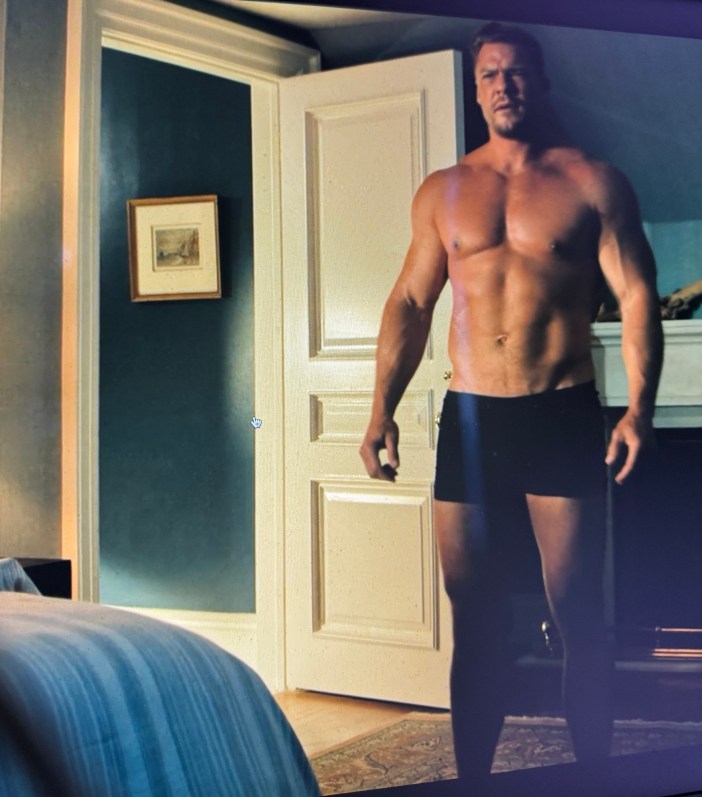
Yeah, Tom Cruise was most definitely NOT the embodiment of Reacher
I love history, and I especially love French history.
I’ve noted before that my favorite centuries (not in this order) are the 1400s, the 1500s, and the 1600s, with the 1700’s and the 1800’s pretty high on the list as well. It was the Renaissance and a time of enormous change. The Eastern Roman Empire finally fell in 1453, when the Ottomans took Constantinople, changing power politics in Europe forever and creating a significant degree of upheaval and fear across the continent. There was the splintering of Christianity and the wars of religion that raged for centuries, that started in the early 1500s when Martin Luther nailed his theses to the cathedral doors. Henry VIII tore England out of allegiance to Roman Catholicism after defending it vigorously for decades. Spain united and drove the Moors out–even though the Spanish nations remained independent, united only in the person of their monarch. Charles V presided over the largest world empire of all time until the British Empire rose after the final defeat of Napoleon. And the sixteenth century, which opened with Queen Isabella the Catholic of Castile proving that a woman could rule as wisely as a man–and could lead an army just as well, too. The sixteenth century saw the highest concentration of royal power being welded by women in history–and a lot of them were Hapsburg women, descendants of Isabella who always looked to her as a role model.
France was no exception in this century of powerful women–beginning with Henri II and his mistress, Diane de Poitiers, and after his death, his widow Catherine de Medici took power. Her youngest daughter, Marguerite de Valois, is one of the forgotten women of history. She too was a queen–Queen of Navarre, married off to the Huguenot leader in an attempt to make peace on the religious question, but her wedding also kicked off the ST. Bartholomew’s Day Massacre. She was also a power player in French politics from the time of her marriage on, but she isn’t really remembered much–and if she is, the calumnies about her sexuality were always used to demean and diminish her, and most of it was slander. She is perhaps best known because Alexandre Dumas wrote about her in Queen Margot. I had a Dumas period as a teen, and I loved Queen Margot.1I had also read about her in Jean Plaidy’s bio of her husband, Evergreen Gallant, which also painted her as a horny slut controlled by her lusts and passions. I’ve never been a fan of slut-shaming–if men could be promiscuous, why not women–and so was always interested in her, just as I was interested in her mother.
Catherine had a rather shitty life until 1559, both her childhood in Italy and the first twenty-five years of her marriage. This colored the rest of her life, when she became ruthless when it came to protecting her family and the throne of her sons. (Afore-mentioned St. Bartholomew’s Day massacre, anyone?) She didn’t seem to much care for her two youngest children–Marguerite and Francois-Hercule–who wound up bonding because no one else cared about them. Catherine wasn’t royal, so the French court and people despised her as “the banker’s daughter,” and there was never any question that this marriage only came about because the French needed the money and her uncle was pope2. For ten years she was hated and ignored, constantly worried about being set aside for a princess–particularly when the Dauphin conveniently died and her husband became heir to the throne. But then she had a son, and then had ten more children over the next fifteen years. Henri II’s sudden and unexpected death caught the entire nation unprepared; Catherine smoothly maneuvered the hated mistress out of his life as he died and, once he was in the grave, seized her jewels and best estates and exiled her from court. Her motto was said to be “hate, and wait.” Jean Plaidy, tireless writer of fictionalized biographies of royalty, devoted a trilogy to Catherine: Madame Serpent, The Italian Woman, and Queen Jezebel, in which she tried to be apologetic about Catherine and her decades of misrule, murder, and conspiracies. Catherine could be weak, and always dissembled, cried and lied as she manipulated her nobles, her people and other heads of state–not always successfully. Catherine, niece of a pope, felt no problem allying herself with heretics if it was in her best interest. Her power and influence faded during the reign of her favorite son, Henri III3.
But perhaps the worst thing Catherine ever did was how she treated her youngest daughter.
The book carries the subtitle Catherine de Medici, Her Daughter Marguerite de Valois, and the Betrayal That Ignited a Kingdom.
The betrayal was an attempt, by Catherine, to put an end to the religious strife in France by marrying her youngest daughter to her cousin, currently third in the line of succession, King Henry of Navarre, who was a Huguenot. Neither Henry nor Margot wanted this marriage–despite her mother’s apparent lack of religious conviction, Margot was very much a devout Catholic–and Catherine tried to use the occasion of the wedding to murder Admiral Coligny, leader of the Huguenots and a trusted advisor to her son, Charles IX. She wanted to remove his influence over her son and take out the enemy leader at the same time. The assassination failed, and resulted in the St. Bartholomew’s Day Massacre, in which Margot herself hid and saved her husband and some of his friends from the mobs killing Huguenots. This threw Margot directly into power politics, and she never trusted her mother or her brothers again. Once she was involved, she proved herself to be not only smart but a very capable conspirator whose life was in danger from that moment on–until her own brother finally was killed in 1589 and her husband became king of France. They had their marriage annulled, and oddly enough, she became very close friends with her former husband, his second wife, and their children. She bore the honorific of queen for the rest of her life, and she was very wealthy and quite beloved; her mother was so hated her funeral was conducted secretly; all of Paris turned out for Margot’s.
It’s a very interesting period, but as I read this, I did take note that in many cases–all this political intriguing and diplomacy and duplicity? Wouldn’t really make for a great novel, because it takes years for things to happen; they spent most of their time sitting around, worrying, waiting for news. This is why shows like Reign and The Serpent Queen inevitably fail; they have to speed things up substantially to maintain suspense and viewer interest. I encountered this before when thinking through a couple of historical espionage thrillers (one having to do with Catherine’s Flying Squadron, beautiful women trained to be seductress spies for the Queen Mother; the other having to do with the Babington Plot in England); these things inevitably take months because of the great distances and medieval ways of traveling and sharing information. The great adventures of Margot’s life took seventeen years to pass. That’s a long fucking time for a suspense narrative, isn’t it?
The book is quite good. Nancy Goldstone is a good writer; the words all flow together and she arranges her researches in an excellent order for a brisk narrative. (She uses Margot’s memoirs, royal letters of her mother’s, and so forth to tell the tale.) The stakes are also very high–the future of France is at stake as the Valois dynasty slowly but surely dies out in the second half of the century.
One of the more interesting aspects of the 1300’s and 1400’s was that most nation’s problems during those years was too many members of the royal family, which led to strife; while the 1500s and 1600s were marred by royal sterility.
Highly recommended for fans of history and those who might be interesting in two women who don’t get nearly as much attention as they should.
There was even a French language film version, starring Isabelle Adjani at her most beautiful. ↩︎
Same pope who refused Henry VIII’s divorce, and thus lost England forever to Catholicism. ↩︎
Today is two things–the start of hurricane season and the start of Pride Month. I have a Pride post that I definitely want to finish and post at some point, and I’ve not really decided what kind of entries I want to do–social media and here–to mark the month. I still think the thirty-four convictions of Greg Stillson was the best gift for Pride American queers have ever been given, to be honest, and I still am a little in shock that it happened–trial and verdict. And of course the traitors have all lost their treasonous little minds, too–my personal favorite is “if they can do this to him they can do it to anyone!”
Um yes, that’s precisely how laws and the judicial system work–no one is above the law in the United States.
Period.
I way overslept this morning, but we stayed up super late last night watching Bodkin (we only have two episodes left to go, and it’s really interesting; much more complex and clever than I’d originally given it credit for) but I wound up not getting into bed until midnight, and I didn’t get up until about nine thirty this morning. While I wanted to sleep in, I didn’t want to sleep in that late; I feel discombobulated and like I won’t be able to get the things done this morning I wanted to get done–but that’s just loser talk, methinks, and a way to give myself excuses for not taking the books to the library sale or washing the car or picking up the mail and dry cleaning or go to the gym. But now that my coffee is kicking in, I’m feeling more alive and awake and like fuck yeah I can get that shit done, get out of my way.
Always nice.
Yesterday was a good day. I worked at home, got all that done while laundering the bed linens, and ran my errands, did some cleaning around the house and later in the day we had a massive and marvelous thunderstorm. I grabbed The Rival Queens (my current nonfiction read) and spent some marvelous time with it in my easy chair. I do love that period of time, and I’ve always wanted to write about an adventurous fictional woman who was a member of Catherine de Medici’s Flying Squadron; an accomplished seductress spy, navigating the complicated politics of France during the Wars of Religion and the decline of the Valois dynasty. It was truly a fascinating period, not only in France, but throughout Europe. My next non-fiction read will probably be The King’s Assassin, the book on which Mary & George was based, and that’s another fun period I would like to write about. Someday. There really was nothing like the sixteenth and seventeenth centuries for upheaval and Game of Thrones-like cutthroat politics.
I also watched LSU’s thrilling baseball win over Wofford in the regionals yesterday, and they play again today at 4. GEAUX TIGERS!
I also looked at the submissions call for the story I am working on–thinking the deadline was May 31 only to discover it was actually June 1, which means I can let the story sit a while longer before revising it one more time to see if I can make it stronger. I am very pleased with how it’s going so far, and looking forward to getting some more writing done today. I am a little behind on my schedule thus far (the one I made earlier this week, remember?), but the deadline being later certainly has made that a bit simpler and easier to navigate without feeling pressure.
And on that note, I am going to get another cup of coffee and head into the spice mines. I’ll most likely be back later–that pride entry I want to write–and I also need to think about what kind of entries to do for Pride Month. Anyway, have a lovely Saturday, and I’ll check in with you again later, okay?
Weeheeheehee dee heeheeheehee weeoh aweem away Weeheeheehee dee heeheeheehee weeoh aweem away
You’re welcome for that hellish ear worm.
Well, here it is Tuesday morning and I feel a lot better, more rested, than yesterday. I was extremely tired when I got home after work last night. I didn’t really do much of anything once I was home, other than cuddling with Sparky and watching this week’s Last Week Tonight with John Oliver, which I always enjoy, as well as two more episodes of Alexander on Netflix, which I am enjoying. I was always interested in Alexander when I was growing up–I liked Egyptian, Greek, and Roman history and culture before moving to United States history, then British, and ultimately European. I also watched some documentaries on forgotten kings and queens of Europe. Sparky mostly slept in my lap for much of the evening, and I retired early. PT was rough yesterday morning, but this Friday I get to go to the gym on my own for the first time in well over a year. YIKES. I only have a few exercises to. do there, and I am a little bit excited about going for the first time and getting back into the swing of working out regularly again.
I am starting to feel acclimated back to my life again, and I am also thinking I am feeling more like myself. I’ve been flooded with story ideas over the last few days (Alabama always does that for me, for some reason), solutions to issues in works in progress that I’ve been struggling with, and book ideas. This is, of course, a relief, as I’ve felt kind of stagnant creatively since the surgery. It’s like my brain is finally waking up again, something I was concerned about, obviously–when your identity and most of your life is wrapped around being a writer, the loss of creative energy in my mind is even scarier than falling from a great height or cutting myself (two of my biggest fears). I suppose it would be okay, but I also can’t imagine never writing again.
I actually have thought about it seriously during this time of forced solitude and recovery. Writing and publishing is like a roller coaster ride–filled with ups and downs and frightening hazards to get past. 2023 was obviously a bad year for me, but I did produce two books I am proud of, Death Drop and Mississippi River Mischief. Is it any wonder that I wasn’t able to get much work done after they were finished and proofed and approved? Bouchercon was at the end of August, and when I got back was when I had my teeth done and went on the soft diet–no surprise I was low energy and not able to write very much–and then came the surgery and the recovery. And of course Scooter died last summer…yeesh, what a shitty year, underscored by the grieving for Mom. So, having not really written much after the books went into production, and not really being able to create while I recovered, made me take some stock and wonder if I wanted to keep doing it–the publishing side, anyway. But now that my overactive imagination has been reignited, all those doubts and self-questioning seem like self-pity. Waaah, I’m not Stephen King. So what? Sure, more money would be nice, but it’s not really the be-all end-all of why I do this, anyway. I love writing, I love telling stories, and I love creating characters I genuinely am interested in and want to get to know better.
I feel good this morning. I woke up and didn’t feel fatigued, either. I got a lot of work done at the office yesterday, which was awesome, and tonight when I head home I am making groceries and have some chores to do around the house, too. And…hopefully will get some writing done, too.
And on that note, I am heading into the spice mines. Have a lovely Tuesday, and I’ll check back in with you later.
Happy Second Class Citizen Independence Day, Constant Reader!
I am so tired of being Cassandra on the walls of Troy, warning people of the impending doom from the consequences of their narcissistic privilege, only to be either ignored or patted on the head condescendingly and told I don’t understand or am being terribly overdramatic. Well, too many of you didn’t listen and here we are.
But I am not going to talk about the fraud perpetrated on this country recently by six illegitimate and corrupt justices on the Supreme Court. This is the date designated as the nation’s birthday, and it’s a day of celebration as well as contemplation.
Despite its flaws and faults; its checkered history and immoral lapses in policy; and the current turmoil of bigotry and hatred and divisiveness, I still love my country. Despite the slanders and slurs hurled against people like me, I am a citizen just like anyone else in this country. I pay taxes like everyone else. There is nothing in the Constitution prohibiting my existence or my life or my reality; yet religious zealots, over and over again throughout our history, keep trying to seize control of the government in order to legislate their version of morality, theoretically based in their religion. I was raised in that religion, read the Bible and went to worship and prayed and Sunday school and all of that–as a child and without my consent. I know the Bible. I’ve read it, many times. I’ve studied it, read religious philosophy and religious studies. I’ve studied and read up on the history of Western civilization, which is forever yoked to the history of the rise of Christianity. I know when doctrine was decided as legitimate and what was heresy; what texts were left out of the Christian Bible and why; as well as the relationship of the New Testament and law to the Old. I’ve read up on the basic messages of many religions, from Islam to Hinduism to what most would call “voodoo” to the mythologies of ancient civilizations. The conclusion that I came to, from my reading and studying and so forth, was that the modern religions I considered all have, at their core, the same fundamental principle: be kind, be helpful, have empathy and compassion for others, and most importantly, do not judge. Judgment is reserved for God, however you choose to see him, and He is very jealous of that privilege. None of us are perfect and we are all sinners–but our sins are between us and God and are none of your fucking business.
Winston Churchill once said about the United States, “You can always count on Americans to do the right thing–once they’ve exhausted every other possibility.” It’s true. In his farewell address George Washington warned of our nation being dragged into “the broils of Europe” (which would make a great title), and that was the cornerstone of our foreign policy for generations. American soldiers did not fight a war in Europe until the first World War–and even then we only came in during the third year of the conflict. Likewise, we stayed out of the second World War, as the world erupted into flames, until we ourselves we attacked two years into the war, and the European allies of Japan also declared war on us. We have been participating in the broils of Europe ever since.
Those are realities. But our entrance into each war changed its course, and enabled the Allies to emerge triumphant. Defeating the Nazis is something we can be proud of, even as we essentially had an apartheid system of our own at home. Defeating the Japanese and putting an end to their war crimes is something we can also take pride in–even though there was a very strong element of revenge to the war–but using nuclear weapons on civilians to bring a close to the war is still morally and ethically questionable. (The horrific racism against the Japanese during the war was also abominable, and that’s doesn’t even take into consideration the horror of the unconstitutional incarceration of thousands of Japanese-Americans, while also robbing them of their belongings and destroying their businesses.)
But the ideals on which this country was founded–freedoms essentially from the potential tyranny of the Federal government–are very high-minded and noble. We have not lived up to those ideals too many times, and the fact that people who are straight, white, and cisgender have always been given priority over everyone who doesn’t fit into that demographic isn’t something we should be proud of–our system is flawed because human beings are flawed. Loving your country doesn’t mean turning a blind eye to its faults and problems, and critiquing and discussing moral, legal and ethical failures in our history, in my mind, is further proof that you do love the country and want it to live up to its ideals of equality and justice for everyone regardless of any adjectives that can be placed in front of the word American. My country has disappointed me, never more so than recently with a renegade Supreme Court discarding precedent, accepted law, and essentially pissing on the very idea of equality while pursuing what can be best be called a completely unAmerican agenda to undermine the basic principles of justice and liberty for all. Patriotism doesn’t require blind obedience and loyalty; which is why the Founding Fathers tried very hard to protect dissent.
I seriously doubt Benjamin Franklin or John Adams would ever agree that corporations are people, entitled to all legal protections of the individual while also not being held accountable legally than the individual; therefore the “citizenship” of corporations is also higher class than that of the individual.
But how can you not love and admire and respect the ideals the country strives to achieve? We haven’t always lived up to those ideals; many times we have failed, horribly.
I have always believed that the arc of justice always bends towards justice, and that we as a country can and should always be looking for ways to make things better, pass legislation to correct flaws and defects in the system, and always keep a wary eye out for corruption. The Founding Fathers also could not conceive of anyone making a career out of politics, either, which is why they established no term limits, which was a huge mistake. We have a presidential term limit now, but none for either house of Congress or the Supreme Court, or any federal bench for that matter. That was a major flaw and oversight in the drafting of our remarkable Constitution, with the end result we have a corrupt system where our politicians are often up for sale, and aren’t even ashamed. How does someone middle class or from a poor background go into politics and retire wealthy?
But, like Churchill, I have faith that my fellow Americans will always, inevitably, do the right thing–once every other possibility is explored and exhausted.
May you have a fabulous fourth of July, Constant Reader. I’ll probably make several posts today; who knows?
One of the most frustrating things about being a queer American is the absence of any kind of history, really. Oh, sure, there’s Stonewall and some other riots/protests in the years leading up to Stonewall; the Mattachine Society and the Daughters of Bilitis. But since historians have done such a marvelous job of erasing us, trying to find our history isn’t the easiest task. You have to look for clues, coding, and signs.
Because, you know, we’ve always been here. We have also always consistently, despite the muzzling of the overarching culture and society’s constant attempts to erase us from the pages of history, managed to sneak traces of our existence and our sensibilities into the art of the times. Ever wonder why so many statues and paintings decorating cathedrals, cemeteries, and palaces in Europe are depictions of well-muscled, physically beautiful men? Because the artists were gay and the only way they could make art celebrating the beauty of the male body was to do so in a religious setting. (The depictions of the martyrdom of St. Sebastian, in particular, are insanely homoerotic; one such painting was used for the cover art of Anne Rice’s Violin, which I think may be her finest novel.)
This entry’s title is also one of those sneaky gay songs passing for straight. Good old Cole Porter, the witty and intelligent composer and songwriter and overall bon vivant. Queer coding is everywhere in old books and movies and television shows and music. (I’m currently reading Matt Baume’s marvelous Hi Honey I’m Homo, which focuses on queer representation on old television series from the 70s and 80s, focusing primarily on comedy shows.)
There have been queer Kings and Queens and Emperors–and two of the greatest military minds of all time were gay Kings: Alexander the Great and Frederick the Great. But our history always gets erased–and homophobic historians will argue till their dying breath that unless there’s definitive proof, those sexualities and identities cannot be named. This is both infuriating and frustrating; take the instance of King James I of England–he of the King James Version of the Bible. He didn’t have female favorites–he had male ones, and he gifted them titles, money, jewels and estates and raised them into high positions of power. But because there’s no diaries where King James admits to taking it up the bum or going down on Robert Carr, there’s no proof. Well, likewise, the only proof the man was straight was because he was married and had children…which was also his duty as King. I know of no women favorites of King James. Likewise, there are no letters or journals written by Frederick the Great where he talks about some soldier having a nice ass or having sex with some hot young ambitious Prussian noble. So, no, there’s no actual proof. There are no photographs, no videos, no nothing. But…while he was married, he had no children; and he would go years without seeing his wife. Women were banned from his court. He also wrote his actually confirmed gay secretary a letter during the course of which he said: “My hemorrhoids affectionately greet your cock.” (The hoops historians will leap through to deny that Frederick the Great was a big ole bottom, and that sentence doesn’t mean what it actually said, are worthy of Ringling Brothers.) There was a lot of gossip, and Frederick’s preference for young men was openly gossiped about at other European courts. And most of his art collection celebrated homoeroticism.
I would love to write a biography of Frederick, seriously.
I also find Louis XIV’s younger brother “Monsieur,” Philippe, duc d’Orléans, fascinating as well–another one who’d be interesting to write about, especially since he is known as the Father of Europe; almost every European monarch from at least 1800 is one of his descendants, despite his sexuality and his predilection for wearing women’s clothes to court.
My story in The Faking of the President addressed this erasure; I chose James Buchanan to write about because he is the only president who never married and he was allegedly in a long-term relationship with Senator Rufus King (Andrew Jackson referred to Buchanan as “Aunt Fancy”). There’s no evidence that Buchanan and King were actually a couple; all of Buchanan’s correspondence was burned, on his instructions, when he died. I wrote my story about a gay historian who firmly believed Buchanan was gay…and after effectively wrecking his academic career, someone contacts him who claims to have the long lost letters to Buchanan from his fiancée when he was a very young man–and the letters will prove his thesis.
Believe me, I get the frustrations he experienced. I don’t think I’d go to the same lengths he did to get that proof, but I empathized.
But this also is an issue in even more recent history. When I was with Mystery Writers of America, at one point I wanted to try to figure out how many queer authors were members…but the impracticality soon became evident. First, you have to start with the question of what precisely counts as queer fiction, and what is a queer book? Is it the sexuality of the author what matters? What if they are openly queer but don’t write queer characters and stories? What about a straight person who writes queer stories and characters? Does that count? Lambda Literary went through hell over this, and there’s literally no way to please everyone. Is it the book, or the author? I’ve always been a firm believer that it’s the book when it comes to awards. Yes, the author gets the award, but it’s for writing the book. So, in my opinion, I would consider Call Me By Your Name a gay novel, despite the author being straight, and my own A Streetcar Named Murder to not be one, despite my being gay. The argument can be made, of course, that being gay gives me a different perspective and point of view that’s more queered than that of straight writers, but I don’t think there’s any “gay sensibility” to Streetcar.
Maybe I’m wrong. I’m not the final word on my books, really.
But this becomes problematic in two regards: one, if someone never officially stated anywhere that they weren’t straight, can it be inferred? Not every man or woman who never married was queer; but marriage itself isn’t proof of heterosexuality because a lot of queer people marry opposite sex spouses and get divorced when they come out later. I was engaged at nineteen; does that serve as proof to future generations that I was straight, despite all of my writings to the contrary? People still don’t feel completely comfortable coming out TODAY, let alone before Stonewall. Take Cornell Woolrich, for example. He never married, lived with his mother for a very long time, and was an alcoholic, pretty much had a miserable, horrible life. He never said he was, but would he have during the time in which he lived? Likewise George Baxt, who wrote a series about an openly gay Black police detective in the 1960’s. Baxt never made any announcements or pronouncements one way or the other; some of his acquaintances have said that he was but Baxt himself never did in any meaningful, definitive way. So, was Baxt or someone else the first gay crime writer? Joseph Hansen was definitely out, and his David Brandstetter series was not only groundbreaking but still remains one of the definitive gay crime series.
Secondly, it also becomes a matter of privacy as well. I know any number of authors who identify as queer but don’t write queer; how do you know how far out of the closet someone actually is in their life? There’s a hugely successful thriller writer who is a gay man, but I won’t say his name here or to anyone else because I don’t know how out he is…and whose business is it, anyway? There’s a hugely successful crime writer that I know for a fact is a lesbian. But if I google her name and lesbian, there are no hits. I generally put myself into their place, really, and ask myself, okay, what if you had somehow managed to start getting published when you were closeted? You wouldn’t have written books or stories about gay men, for one, and for another, I absolutely hated when people speculated about my sexuality–because it never meant anything good formewould come of it.
I’ve never been militant about people’s need to come out, and I also don’t think it’s anyone’s place to out anyone; with the caveat that if you are closeted and actively doing the community harm, you absolutely should be outed. That congressman from Illinois, the über-conservative congressman from Illinois who was outed? Ah yes, Aaron Schock. He deserved it–and while I don’t think he ever repented from his self-loathing brand of conservatism, he certainly has been living the gay high life since it happened. J. Edgar Hoover should have been outed; he was a monster, as was the always disgusting Roy Cohn. But actors and singers? Models? Writers? People who are just navigating their lives and coming to terms with who they are? Everyone should have the time and space to come out when they are ready.
The closet is a horrible place, and it seriously fucks with the people who are living there. I can be empathetic because I know how hard it is, how terrifying it can be. It can twist people (Aaron Schock, for example, clearly felt the need to be über-homophobic just to show he wasn’t one of those people, and yes, that is twisted and sick and sad, and why I am able to feel some empathy–not sympathy–for him as his life must have been hellish, even if it was his choice), and warp them into horrific behavior….but accountability, respect, and atonement are also necessary if the closet turns you into an Aaron Schock. I mean, how much self-loathing had to be there in his mind?
Not everyone has to be a spokesperson. It depends on your level of comfort. And please give people the grace to come out at their own pace and on their own terms. Struggling to accept and love yourself–realizing there’s nothing wrong with you–is a process that isn’t made easier by speculation. I’ve indulged in speculation about actors and singers and other public figures. That kind of speculation usually happens because there are so few queer role models in the public sphere; but I can also understand why people in the public sphere would want their privacy. Being a role model is daunting and full of pressure and potholes and dips and swerves in the road. And it also begs the question–what do we out queers owe to the rest of the community? What is our responsibility? Can we opt out of those things if we aren’t comfortable? I’m certainly not comfortable speaking for the entire community; I always say “in my experience” rather than making my own the community’s.
And we do live in dark times. There is a vast right-wing conspiracy (thank you, Madam Secretary, for that accurate phrase) to wipe queers off the face of the country–and don’t you dare call me an extremist for thinking that. We are being dehumanized and devalued on a daily basis by a bunch of evil people who think they are somehow doing God’s work (that arrogance alone will keep them from Heaven), and if dehumanization isn’t the first step towards eradication, study your Weimar Republic history. This country is at a tipping point–and it wouldn’t take much to tip us over into becoming the 4th Reich, which is terrifying. Oh, Greg, you always look at the worst case scenario!
That may be true, but I’m rarely wrong–and usually the reality is much worse than I imagined.
But I still hold out hope that decent people in this country outnumber the monsters, and that decency will inevitably prevail again. The importance of coming out, because the more of us there are and the more visible we are, cannot be underestimated. This is also where that lack of history bites us in the ass. It’s very easy for haters and bigots to dismiss us as “something new” or “it was better when you were quieter” or the ever-popular “I don’t care just don’t shove it in my face” (which literally has the opposite effect on me–tell me that and I will rub your nose in it) because we’ve been erased from history and a lot of the language around us is new. Language has changed and evolved over the course of my life, as we get more information and learn more, and yes, that means you have to keep up and might actually make a mistake by saying something you didn’t know had become dated or offensive. I am learning all the time, and want to continue to learn because I want to keep growing into the best version of myself that I can be (thank you again, Ted Lasso) and I don’t understand people who don’t want to grow but would rather stagnate and calcify.
If I had to do my life over again–but could keep my memories of this life’s experiences–I would focus on weights more as a teenager and once old enough, looked for a sugar daddy.
Then again, I had absolutely no self-confidence when I was younger (don’t have near enough now for that matter), so yeah–that would have wound up going very wrong.
Here it is Tuesday so I am back up before the dawn and heading back into the office for the last week of work before Labor Day. A week from tomorrow we are leaving for Bouchercon–can’t believe how quickly the summer has passed–and getting to see everyone. I am going to be kept hopping the entire time I am there at Bouchercon, and will no doubt be thoroughly exhausted when I get back a week from Sunday, but them’s the breaks, you know? I haven’t been to a Bouchercon since St. Petersburg in 2018 (I missed 2019, and the next two were virtual), so this should be fun, if exhausting. I’m also pleased with the writing I’ve been doing–not with what’s being written (which needs work) but that I am actually writing again. I’ve got to figure out what to do next with the Scotty–I know what needs to come next, just not sure how to get it done or how to do it–so I’ll probably start futzing around with it tonight when I get home, to at least get a start on it, and of course there’s a three-day weekend coming up…although I am going to try very hard not to get sucked into the US Open.
I did watch Serena WIlliams play last night, and what a joy it was to see her on form on the court again, playing like the Serena of old. I don’t think she’ll win the US Open–much as I would love that kind of Disney ending, they never seem to happen very often in tennis–and it saddens me to think this is the last hurrah of one of the greatest athletes in the history of sport. As Paul and I watched last night, we were thinking back to when she and Venus first exploded onto the scene–and how much has changed since then. Serena won her first US Open in 1999. Bill Clinton was president, Jennifer Capriati was about to make her big comeback in 2000, and Monica Seles was still playing. On the men’s side, Pete Sampras and Andre Agassi were still the two biggest names on that side of the draw. I hadn’t even published my first book yet when Serena hoisted her first slam trophy. As I said to Paul, “we’d only been together four years when Serena won that first US Open title.”
Time has definitely passed, has it not?
In other exciting news, the anthology Magic is Murder, edited by the dream team of Donna Andrews, Barb Goffman, and Marcia Talley; Barb blogs about it here and provides some order links. My story is “The Snow Globe,” which I posted the opening for sometime last week and how the story came to be. I’m very excited to be in the same company as the other contributors, and of course it’s always a bit of a thrill for me to see a story of mine in print.
I did sleep really well last night. I think my body is finally adapting to going to be early and waking up before the sunrise, even if I don’t like it. Even that, I think, is a vestige of hating to being awakened by an alarm clock, in all honesty. Most mornings I wake up before the alarm; sometimes as much as an hour before (this morning I woke up the first time at four, and went back to sleep) but stay in bed until I have hit the snooze button twice. Why does my subconscious want the snooze button to be hit twice? I have no idea, but I’ve been this way as long as I’ve ever had to get up to an alarm. I suppose part of it is knowing that my clock is set fifteen minutes fast, so when it goes off that third time I know it’s a few minutes after six and it’s time for me to get up. Tonight on the way home from work I am going to swing by and pick up the mail–no other errands necessary this evening; I have all my prescriptions refilled so that’s out of the way for awhile, and I don’t think we need any groceries. I’ll probably order a few things to pick up this weekend (oooh, it’s Labor Day, I may actually go inside the store) but since we’re going to Bouchercon next week, not much point in getting a lot of stuff, you know? That will probably be my last trip until Thanksgiving, when i drive up north to see the family, and I probably am not going to do much traveling in the future. I kind of want to save my vacation time for actual vacations, you know? Paul and I have been wistfully thinking about going back to Europe–either Spain or Germany or France (any of the three would work for me, frankly)–but if I keep using my vacation time to go to conferences, that will never happen. I think the only conferences I’ll do going forward with be of course Tennessee Williams here in New Orleans and Bouchercon. I love all the conferences, really; have had a marvelous time at every one I’ve been to…but the nickel and diming of my vacation time, already limited, has proven problematic this year.
And on that note, I am heading into the spice mines.
Everyone has heard of Constantinople at some point in their life, I should think–at least they’ve heard that annoying song “Istanbul (Not Constantinople)”. Some may even know that it fell to the army and navy of the Ottoman Turks under Sultan Mehmet II in 1453, ending the Eastern Roman Empire after a thousand years of existence. The Ottomans relocated the capital of their empire there, renaming it as Istanbul. (Christian Europe continued calling it Constantinople for centuries; it’s only over the last hundred years or so that Istanbul has come into more common usage.) But few know much more about the city and the empire it served as capital for over a millenium. Of those, some may know the basics–the Emperor Constantine, the first Roman Emperor to convert to Christianity, recognizing that the enormous Roman Empire had become impossible to rule or enforce law or protect, split the empire into eastern and western halves, and founded a capital for the east on the site of the village of Byzantium, renaming it Constantinople. The Western Roman Empire collapsed in 473 when the city fell; yet the eastern empire continued until 1453. Western Europe, always trying to reclaim the heritage of the Roman Empire (and ambitiously planning to rebuild it), always referred to the still existing Roman Empire as “Greek” rather than “Roman,” although the citizens of that great city and the vestiges of its empire continued calling themselves Romans until the Turks finally ended it.
But that thousand year history? It’s not easy to find information or books with much information; even the one history of the Empire I did read–Lost to the West by Lars Brownworth, along with his City of Fortune, a history of the Venetian Empire–glossed over centuries and only hit highlights. I’ve always wanted to write something historical set in the new Rome.
The Eastern Empire out-lasted its western counterpart by nearly a thousand years. Constantinople was one of the greatest Christian cities of all time; there was certainly nothing even remotely close to it in western Europe in terms of population, art, culture, education, and trade. It’s location put it in control of access and egress from the Black Sea; it also controlled the trade routes between Europe and Asia. Its fall in 1453 meant that those trade routes were now controlled by the non-Christian Islamic Ottoman Empire–and as such, other ways to reach the far east became necessary to the western Europeans, hence the Portuguese circumnavigating Africa and the Spanish attempt to sail west to find a route, leading to the “discovery” of the Americas. The fall of Constantinople was an incredibly important and necessary piece of the interlocking puzzle that led to European colonization and the global empires that resulted from it (as well as the oppression and enslavement and genocide of native populations); but Western historians–in particular, those monastic scholars in Catholic orders–have always tried to erase and /or lessen the importance of the eastern Empire and its capital, calling them “Greeks”, renaming the Eastern Roman Empire as the “Byzantine Empire,” etc.–and in no small part, this was also because of the Christian Schism of 1054, in which the Eastern Orthodox Church and the Roman Catholic Church split in two over questions of dogma. Therefore, it was in the interest of the Western Europeans to underplay the vital importance to European history of the remains of the Roman Empire because western Catholics considered their Orthodox brethren as heretics; their church was the true one, even if it was in the east that the religion originally came from, and it was in the eastern half of the empire the tenets and dogma of the “true” faith were established. The Pope in Rome always tried to assert his own authority over the Patriarch in Constantinople; the Patriarch considered himself to be the head of the faith and the Pope just another bishop. Thus, when Charlemagne conquered most of central Europe, he and the Pope created the Holy Roman Empire (which wasn’t holy, or Roman, or even really an empire in the traditional sense); the Romans in Constantinople were not pleased. (At the time, through some political machinations and drama, a woman was seated on the throne in Constantinople–the Empress Irene, one of the most interesting women in European history; she was also pretty terrible. The Pope decided there could be no such thing as a female Emperor, and so he crowned Charlemagne.)
The Holy Roman Empire also lasted over a thousand years.
Anyway, I’ve always been interested in the eastern Empire, even though it’s largely neglected in European histories. But one event in its history has always been interesting to me in particular –the fall of Constantinople to the Catholic 4th Crusade in 1204, which essentially set the stage for the second fall of the city, to the Ottomans in 1453. I also have an idea for a Colin book–which I’ve had for a very long time–that would have its beginnings in the 1204 sack of Constantinople.
It’s remarkably hard to find much information–granted, it’s not like I’ve tried very hard, but the fact that you have to try hard to find histories and/or books about the Empire and its capital, let alone the 4th Crusade–even histories of the Crusades themselves gloss over the fact that a Crusader army, blessed by the Pope, allowed itself to be diverted by the Venetians to capture and sack two Christians cities (Zara and Constantinople), and established “Latin” (western European) kingdoms and principalities out of the provinces that were once the Eastern Roman Empire. These Catholic kingdoms were so despised by their subjects that they didn’t last long, with another dynasty of the old empire arising to drive them out. The sack of the city and the pillaging and destruction that followed created such a deep hatred for the Catholic Church and the kings that followed the Pope that they preferred the Ottomans to a reconquest by the Catholic nations–which is saying something. Ernie Bradford’s The Great Betrayal: The Great Siege of Constantinople is a very thorough account of the tragedy and how it came to pass; the destruction of the mighty city–along with the destruction of priceless books and documents and art forever lost to us–was on a par with the burning of the Great Library at Alexandria.
The book itself is very interesting; the siege took nearly a year, and it’s actually kind of shocking that the Crusaders succeeded in taking the city, bearing in mind the strong defenses and so forth. A lot of things had to fit into place for it to happen, and they all did. The city came so close to holding them off successfully; it’s almost as though, as they would have said at the time, it was God’s will for it to happen. The city was also filled with all kinds of priceless Christian relics; after all, the religion was founded in the east, and as city after city fell to foreign invaders, a lot of priceless artifacts and holy relics were moved to the capital. (The great horses from the Hippodrome, for example, are proudly on display in the Piazza San Marco in Venice to this day.) A lot of the art was destroyed, jewels picked out of reliquaries, the gold or silver or bronze melted down for coin, and so forth.
As someone who has always loved history, and also has always loved treasure hunts–especially those that are involved with the history and development of Christianity, many years ago (I will freely confess to being inspired by Indiana Jones movies) I thought about writing such a treasure hunt story–where the ‘treasure’ being hunted was some important document or book or relic from the earliest days of Christianity that would revolutionize the faith as well as show how off-course it had gone since the earliest days…and wouldn’t it have made sense that whatever it was could have been kept in Constantinople, deep in the archives of the Orthodox Church? And with western, Catholic Europeans besieging the city, wouldn’t the Patriarch have wanted to keep it out of the hands of the Pope, and smuggled it out of the city to be hidden somewhere else, safe from the prying eyes of Rome?
And of course, when I created Colin–actually, when I brought him back in Jackson Square Jazz–I loved the character so much that I considered spinning him off; what about the jobs he’s on when he’s not in New Orleans? “Oh,” I thought, “my fall of Constantinople story! That could work for Colin!” And it even occurred to me the other day that I could even do them as “case files,” setting them throughout the past, both before and after he met Scotty and woven in between the Scotty stories. (It also occurred to me that I could do Scotty stories to fill in the years between books, if I wanted to…)
And reading this book–which i recommend if you want to know more about “holy wars” and how corrupt and unholy they actually were–made me think about it even more. I do want to include something about the Empress Irene, too.
Something to brainstorm at some point. Like I have the time to squeeze in another book…but it would be fun; although I don’t know how good I would be at writing action/adventure/thrillers.
It’s a work at home Monday, and it’s also Lundi Gras. Orpheus rolls tonight, and tomorrow is the Mardi Gras holiday. Yesterday was one of those days that started with good intentions, but somehow exhaustion took over at some point and nothing got done. We did end up starting the second season of Toy Boy on Netflix–which is even more insane in its second season; you’ve got to hand it to Spanish Netflix–and I spent most of the day glued to my chair watching war coverage from Ukraine. While all of my sympathies are entirely with the Ukrainian people and their amazingly courageous president, at the same time I am disturbed by scenes from the border where white Ukrainians are being given priority to cross while non-whites are being held back. This doesn’t seem to be an issue with the country they would be crossing into, either–it’s Ukrainian border guards doing this.
But American exceptionalism and white supremacy weren’t born or created on this continent, it’s a disease the European colonizers brought with them, and it has flourished here ever since. It saddens me to see that even in a terrifying time such as this, with their cities under attack and the Russian military within their borders that Ukrainians can still perpetuate such behavior…although it’s really not all that surprising. I don’t know how bad or widespread the problem is; but I believe that it has happened at least on a small scale, and I hope once the situation is better there we can get to the bottom of what happened at the borders.
Today I have errands to get run, data to enter, emails to send and a short story to work on. We may go out for some of Orpheus tonight–it depends on how we feel, how the weather is, and numerous other factors are involved as well, but we’ll see. Orpheus is one of my favorites, and it will feel strange to not see it, but…it will depend on my energy levels, how cold it is, and how much of this story I get finished today. I also need to start editing my manuscript; that’s going to the top of the to-do list I am going to make today (I never got around to it yesterday–I told you I was in a malaise yesterday for some reason I cannot understand) and I am also going to start making notes on it. I think there’s a better way to tell the story–to get the reader involved sooner–and there are other things I need to strengthen in it as well. I have to get to work on the Bouchercon anthology this week, and there’s always MWA stuff to get done. But hopefully I can kick it into gear. I’ve not been eating a lot lately–I usually have been eating things in the morning and perhaps snacking later–and that has to change. A lot of that has to do with Paul’s insane schedule currently; I never know when he’s going to be home or if he is, whether or not he’ll want to eat or not and, as always with me and my eating issues, if I don’t eat when I am hungry the hunger fades and I wind up not eating. That. Has. To. Stop.
If for no other reason than I need to eat for energy.
I have had a bagel with cream cheese already this morning, and I also need to go through the refrigerator as I make a list for the grocery run to come this morning. I have some cheese-stuffed chicken breasts wrapped in bacon to make for tonight’s dinner, and tomorrow I will probably fire up the barbecue and make burgers. I also am feeling weirdly at sea the way I always do during the crank-up of parade season–disconnected from the world–because everywhere else everyone is going about their usual normal Monday while here…it’s an entirely different subject. It’s disquieting, to say the least, but it only lasts until Wednesday. And yes, we have a strangely truncated work week–Wednesday will feel like Monday; making it even more difficult for me to adjust to my new “in the office” schedule, which I still hadn’t quite gotten used to yet. Sigh.
Ah, reality.
And on that note, I am going to start digging through everything and getting my day going. Thanks for checking in, Constant Reader, and I will check in with you again tomorrow.








 Queer and Loathing in America