Sunday in the Lost Apartment and all is quiet here. Today’s four parades start later this morning and literally run all day. I suspect I’m going to skip them all today. I wandered out to Iris, but just can’t stand for very long; I’m just not in good enough physical condition yet to exert myself into anything other than sitting in a chair resting and icing my ankles, which I did for quite some time yesterday. I overslept in the morning–Sparky was cuddled up with me again, with the occasional plaintive “mew” to try to wake me up. The bed did feel marvelous yesterday morning, but the morning was already pretty much over by the time I was caffeinated and finished with yesterday’s blog entry. I read for a while (and this reread of The Secret of Hangman’s Inn is showing me, at long last, the primary flaw in kids’ detective fiction–which is also why The Three Investigators have held up better than most of their contemporaries), and did some here and there chores. I don’t, after all, have to go back to the office until Wednesday morning, so having another day that was mostly for resting my body and my brain didn’t seem like a waste, you know?
I finished rewatching Judgment at Nuremberg and it remarkably holds up still in modern times. Not going to lie, and if the reasons I rewatched it aren’t quite as obvious in this modern time, let me explai it to you: we are, despite all the lessons and warnings from the past, sliding into that same kind of world where “just following orders” is no longer merely about ‘doing your job’ but doing evil. Nuremberg is one of the best films–if American propaganda heavy–dealing with these questions of national guilt and national morality; I remember someone writing (or saying) after 1945 how amazing it was that no German was really a Nazi and how none of them “knew.”
Did people admit shamefacedly to being in the Klan after? Still?
I’ve always given the common German people a bit of slack about being Nazis, simply because, monstrous as Nazism was, they weren’t making the plans and the decisions. So, how much culpability did the rank-and-file people actually bear? The cogs in the killing machine?
For example, how culpable are all Americans in what is going on in the country now? Was it possible for every day Germans to not know what was being done in their name?
We don’t know what’s going on in our own concentration camps, do we? But we know they exist and more are being built, don’t we? As Americans, how much culpability do we have as citizens? It is easy to say “we didn’t vote for this” or “I was opposed to Vietnam” or “dropping nuclear weapons on Japan was necessary to save American lives” or “my ancestors didn’t own slaves/weren’t in the Klan/didn’t benefit from systemic discrimination” but…wasn’t enslavement human trafficking, and on a scale modern minds can scarcely comprehend how big it was, how horrible it was, and historians and American propagandists have done an excellent job of downplaying the horrors and dismissing the immorality of owning other people. Human beings had less rights than animals in the so-called land of the free; and this is not even taking into consideration the genocide of the indigenous peoples and the mistreatment of those survivors for generations. History will not look back and think all of that horror was unknown to most Americans. They will say it was a horrible part of US History, a spreading stain that soaked in and spread for hundreds of years. Is not the whole world responsible for not stopping Hitler when they could have? The Allies knew about the camps as early as 1940, if not sooner, and did not only nothing but actively worked to suppress the information. Why?
And there were American Nazis before the war–lots of them. Still are, in fact. So much for never forgetting, right?
Heavy thoughts on Bacchus Sunday, but Judgment at Nuremberg is a still important and necessary film.
After the movie finished, we watched The Fighting Tiger, the ESPN documentary on D-D Breaux, the legendary LSU Gymnastics coach for over forty years, who single-handedly built the program up from nothing, which was incredibly fun and also reminded me of how long Paul and I have been watching LSU Gymnastics. I had been meaning to check out this most recent season of The Traitors, because Johnny Weir and Tara Lipinski are both on, so I switched over to that. We’d never watched the show before, but MY GOD were we entertained! I was kind of hesitant because I despise Lisa Rinna (a complete turn on her, by the way; I was a fan before she was a real housewife), but this show is perfect for her! She stopped being fun as a housewife, but this is the Rinna I enjoyed in her first seasons on the show. We stayed up much later than we intended because we simply couldn’t turn it off–and there are former seasons to catch up on, too! HUZZAH!!!
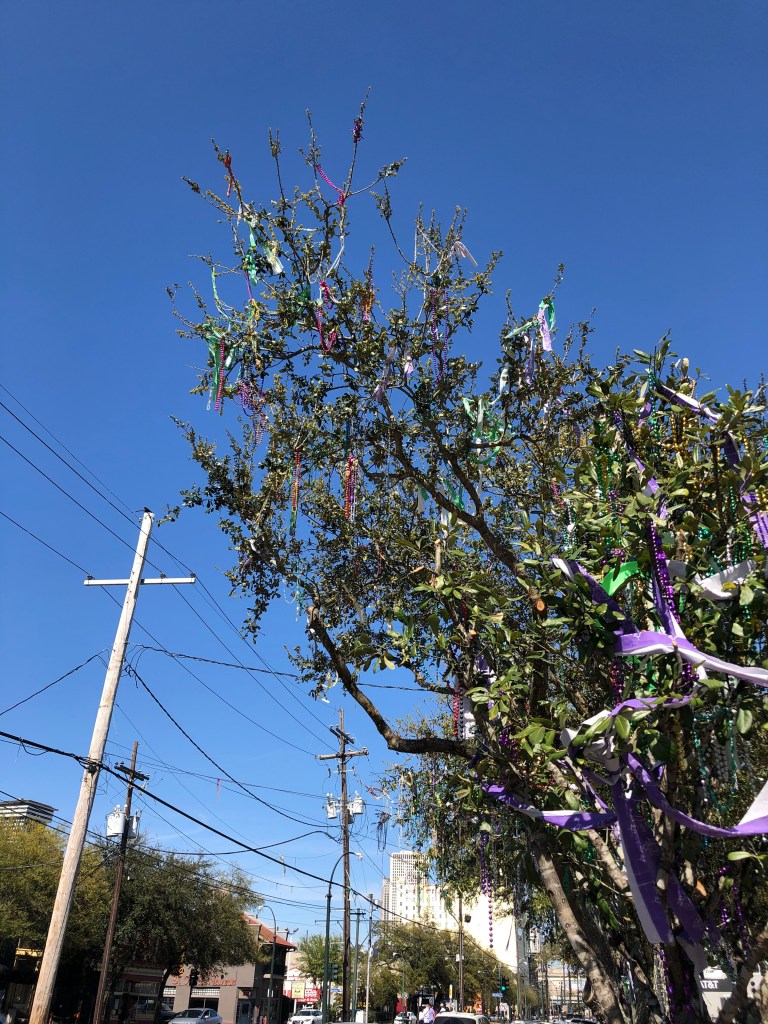
It looks like its going to be another gorgeous day out on the parade route–maybe I’ll wander down there to take some pictures; tomorrow I plan on walking over to Office Depot and take some current pictures of the bead trees; one of the many things I miss about our office on Frenchmen Street is walking to and from there during parade season, and all the bead debris along the way. There was also a racist moment in Tucks yesterday, apparently, with some riders hanging a black doll over the side of the float by the neck with beads–so it looked like a lynching victim, which is completely and totally disgusting and unacceptable. I hope the fucks who did it are publicly named and shamed; they deserve worse. There’s no excuse for that shit ever–let alone during Carnival. They should have been pulled off the float and had the shit kicked out of them.
And on that note, my easy chair and my ice machine are calling me this morning. Seriously, I cannot wait for Paul to get up so we can get back to The Traitors, which is my new addiction! Have a great Sunday wherever you are, and I’ll be back for a Lundi Gras post tomorrow.
We are taking a break from our regularly scheduled blog to talk about US History and current affairs, which is something I don’t do very often here. But since it’s the 4th of July, how can we not reflect on our most imperfect union and the journey to where we are now?
Today’s title is from the musical 1776, which doesn’t get near enough attention. I was thinking about using something from Hamilton, but…I don’t think Lin-Manuel will mind, do you? I saw the film version of 1776 when I was in junior high school (I think it was; we used to go see movies periodically; which is how I saw both Fiddler on the Roof and Jesus Christ Superstar1). But 1776 seems to have been largely forgotten.
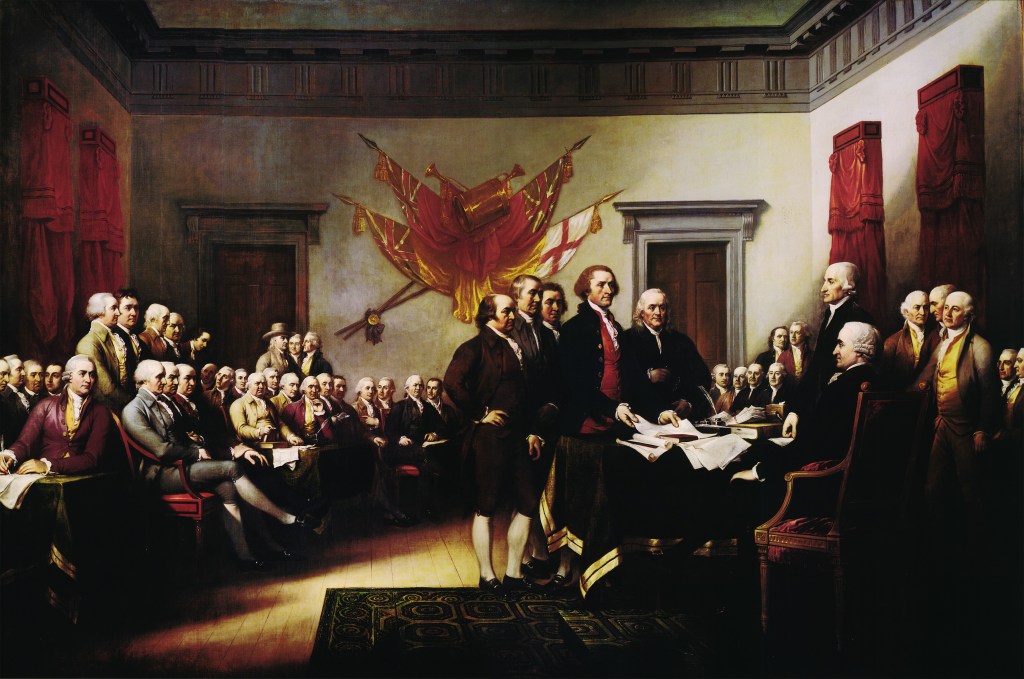
It’s hard to imagine, really, how courageous the American rebels actually were. They were farmers and lawyers and doctors; yet they believed in their cause enough to defy and stand up to, and take on, the mightiest Empire the world has ever seen. 2They were imperfect humans, as we all are; the attempt by the Right to frame them as infallible gods, guided in their work by the Christian god, is offensive and insulting. The greatest of humans are still human, and all humans have frailties and flaws, and enshrining any human as an infallible instrument of God is, at the very least, blasphemy. The Founding Fathers were both racists (more than a few enslaved people) and misogynists (where are the rights for women?), which made them….fallible. They weren’t gods, they were men.
I grew up in the 1960s and 1970s, and my education was tailored to the times. We were in a Cold War with the “evil” Soviet Union, when the possibility of nuclear annihilation was always in the back of our heads. Communists were the enemy, and they were evil; so…we all had to be brainwashed into the mentality of American exceptionalism. The right of white Europeans to the continents of the Americas, despite the fact people already lived there, was never to be questioned…the ends justifying the means, I suppose. The true horrors of enslavement weren’t taught; it was just something that happened, we fought a civil war to end it, and then it was over…we weren’t taught about the racism baked into the country and society from colonial days that continues to the present day.
And a lot of the failures of the Constitution were primarily due to the Founding Fathers being unable conceive of things that are just taken for granted by us today–politics as a profession; primaries and elections as a multi-billion dollar industry, and the levels of corruption in our political class, as well as the failures of the news media to hold the government accountable.
The passage of yesterday’s foul and evil legislation was the final betrayal of the Founders, and I think people are finally waking up to the clear and present danger in Washington. Funny that the people always screaming about their freedom and their liberties are too blind to see how their freedom and liberties are being taken from them–and how happy they are to give them up so long as they think other people will suffer. I see a lot of social media posts since yesterday talking about the new authoritarianism, yet have never noticed how the Right has been building to this point for decades. The police state’s foundational legislation was the PATRIOT Act–which has never been repealed and has been reauthorized by Congress several times.
I don’t see a great future for us over the next ten years, frankly. I do not see a way out of this situation we’re in without it becoming really ugly. MAGA isn’t going to go down in any electoral defeat because, as we have seen, they will not accept the results and are more than willing to use violence to get their way. That will get ugly, don’t you think? And let’s face it, our current situation isn’t much different than the one the country was in during the 1850s–when enslavers controlled the Supreme Court, Congress, and the White House. Losing that control led to the Civil War, because enslavers weren’t willing to give up the power they’d enjoyed for so long because they feared losing their slaves.
How long before the people in the prison camps are contracted to work in the fields and doing the grunt work we’ve pushed off onto immigrants for decades?
I always suspected our system was collapsing, rotting from the inside and spreading the foul disease across the nation. I always hoped I was wrong, but the logical side of me couldn’t deny the evidence of the decay.
My one hope was that if I was correct, I wouldn’t live long enough to see the collapse. Ah, well. That ship has sailed, hasn’t it?
Yeah, not up for celebrating seventeen million people losing their health insurance, or the many millions of children who will go hungry.
But there’s always hope, no matter how bleak it seems. As Winston Churchill once said, “You can always count on Americans to the do the right thing–after they’ve exhausted every other possibility.”
I also believe this will not end well for corporations and billionaires–as it did not for the French and Russian aristocracies.
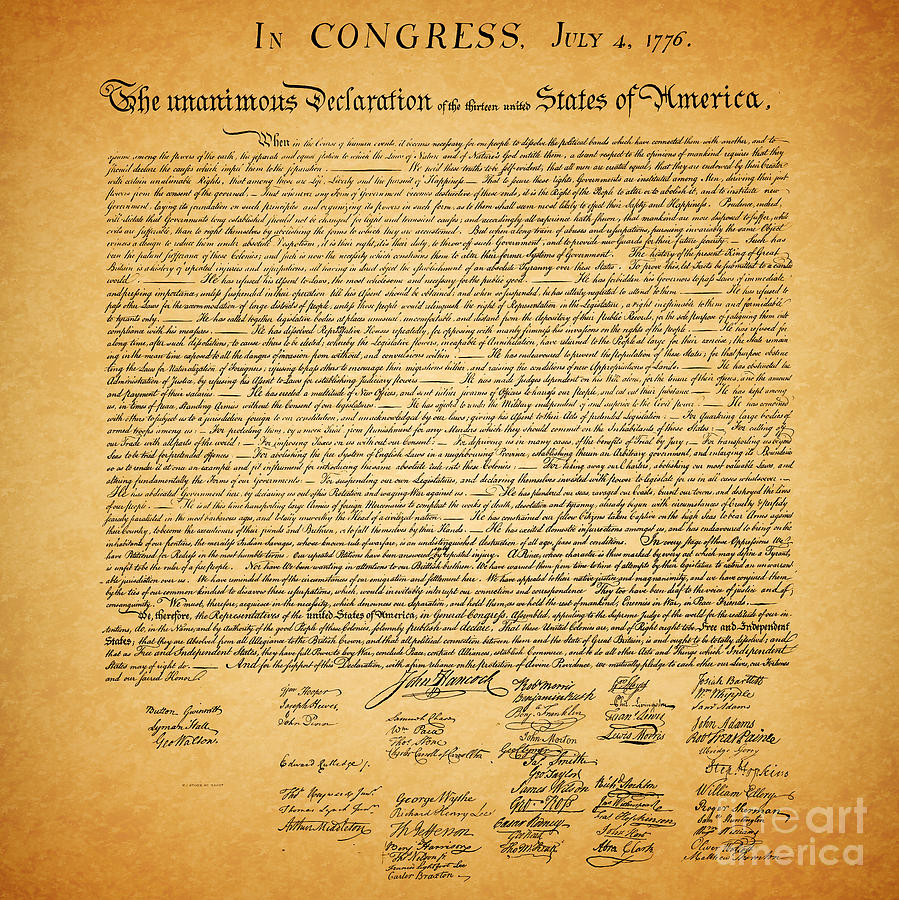
And in case you’ve forgotten (or never knew) the text:
When, in the course of human events, it becomes necessary for one people to dissolve the political bands which have connected them with another, and to assume, among the powers of the earth, the separate and equal station to which the laws of nature and of nature’s God entitle them, a decent respect to the opinions of mankind requires that they should declare the causes which impel them to the separation.
We hold these truths to be self-evident, that all men are created equal, that they are endowed by their Creator with certain unalienable rights, that among these are life, liberty, and the pursuit of happiness. That, to secure these rights, governments are instituted among men, deriving their just powers from the consent of the governed. That, whenever any form of government becomes destructive of these ends, it is the right of the people to alter or to abolish it, and to institute new government, laying its foundation on such principles, and organizing its powers in such form, as to them shall seem most likely to effect their safety and happiness.
Prudence, indeed, will dictate that governments long established should not be changed for light and transient causes; and, accordingly, all experience has shown, that mankind are more disposed to suffer, while evils are sufferable, than to right themselves by abolishing the forms to which they are accustomed.
But, when a long train of abuses and usurpations, pursuing invariably the same object, evinces a design to reduce them under absolute despotism, it is their right, it is their duty, to throw off such government, and to provide new guards for their future security. Such has been the patient sufferance of these colonies; and such is now the necessity which constrains them to alter their former systems of government. The history of the present King of Great Britain is a history of repeated injuries and usurpations, all having in direct object the establishment of an absolute tyranny over these states. To prove this, let facts be submitted to a candid world.
He has refused his assent to laws the most wholesome and necessary for the public good.
He has forbidden his governors to pass laws of immediate and pressing importance, unless suspended in their operation till his assent should be obtained; and when so suspended, he has utterly neglected to attend to them.
He has refused to pass other laws for the accommodation of large districts of people, unless those people would relinquish the right of representation in the legislature; a right inestimable to them and formidable to tyrants only.
He has called together legislative bodies at places unusual, uncomfortable, and distant from the depository of their public records, for the sole purpose of fatiguing them into compliance with his measures.
He has dissolved representative houses repeatedly, for opposing, with manly firmness, his invasions on the rights of the people.
He has refused for a long time, after such dissolutions, to cause others to be elected; whereby the legislative powers, incapable of annihilation, have returned to the people at large for their exercise; the state remaining in the meantime exposed to all the dangers of invasion from without, and convulsions within.
He has endeavored to prevent the population of these states; for that purpose obstructing the laws for naturalization of foreigners; refusing to pass others to encourage their migrations hither, and raising the conditions of new appropriations of lands.
He has obstructed the administration of justice, by refusing his assent to laws for establishing judiciary powers.
He has made judges dependent on his will alone, for the tenure of their offices, and the amount and payment of their salaries.
He has erected a multitude of new offices, and sent hither swarms of officers to harass our people, and eat out their substance.
He has kept among us, in times of peace, standing armies, without the consent of our legislatures.
He has affected to render the military independent of and superior to the civil power.
He has combined with others to subject us to a jurisdiction foreign to our constitution, and unacknowledged by our laws; giving his assent to their acts of pretended legislation:
For quartering large bodies of armed troops among us;
For protecting them, by a mock trial, from punishment for any murders which they should commit on the inhabitants of these states;
For cutting off our trade with all parts of the world;
For depriving us, in many cases, of the benefits of trial by jury;
For transporting us beyond seas to be tried for pretended offenses;
For abolishing the free system of English laws in a neighboring province, establishing therein an arbitrary government, and enlarging its boundaries, so as to render it at once an example and fit instrument for introducing the same absolute rule into these colonies;
For taking away our charters, abolishing our most valuable laws, and altering fundamentally the forms of our governments;
For suspending our own legislatures, and declaring themselves invested with power to legislate for us in all cases whatsoever.
He has abdicated government here, by declaring us out of his protection, and waging war against us.
He has plundered our seas, ravaged our coasts, burnt our towns, and destroyed the lives of our people.
He is at this time transporting large armies of foreign mercenaries to complete the works of death, desolation, and tyranny, already begun with circumstances of cruelty and perfidy scarcely paralleled in the most barbarous ages, and totally unworthy the head of a civilized nation.
He has constrained our fellow citizens, taken captive on the high seas, to bear arms against their country, to become the executioners of their friends and brethren, or to fall themselves by their hands.
He has excited domestic insurrections amongst us, and has endeavored to bring on the inhabitants of our frontiers, the merciless Indian savages, whose known rule of warfare is an undistinguished destruction of all ages, sexes, and conditions.
In every stage of these oppressions, we have petitioned for redress, in the most humble terms. Our repeated petitions have been answered only by repeated injury. A prince, whose character is thus marked by every act which may define a tyrant, is unfit to be the ruler of a free people.
Nor have we been wanting in attentions to our British brethren. We have warned them from time to time of attempts by their legislature to extend an unwarrantable jurisdiction over us. We have reminded them of the circumstances of our emigration and settlement here. We have appealed to their native justice and magnanimity, and we have conjured them by the ties of our common kindred, to disavow these usurpations, which would inevitably interrupt our connections and correspondence. They too have been deaf to the voice of justice and of consanguinity. We must, therefore, acquiesce in the necessity, which denounces our separation, and hold them, as we hold the rest of mankind, enemies in war, in peace friends.
We, therefore, the representatives of the United States of America, in General Congress assembled, appealing to the Supreme Judge of the world for the rectitude of our intentions, do, in the name, and by authority of the good people of these colonies, solemnly publish and declare, that these United Colonies are, and of right ought to be free and independent states; that they are absolved from all allegiance to the British Crown, and that all political connection between them and the state of Great Britain is and ought to be totally dissolved; and that, as free and independent states, they have full power to levy war, conclude peace, contract alliances, establish commerce, and to do all other acts and things which independent states may of right do. And for the support of this declaration, with a firm reliance on the protection of Divine Providence, we mutually pledge to each other our lives, our fortunes, and our sacred honor.
Funny how some of their indictments of George III also apply today…
I still can’t believe we saw Jesus Christ Superstar and no parents complained. That wouldn’t happen today. The show and movie and music were highly offensive to Christians back in the day, but they don’t complain much about it anymore. ↩︎
I’m always amazed at how the people screaming the loudest that they are the REAL American patriots…would never put themselves at risk for their values and beliefs. For the record, conservatives in 1776 were called…Tories. ↩︎
But nobody walks in LA, as the song says. I did a few times, and always heard this song in my head as I strolled down Santa Monica Boulevard. I do miss my annual visits to Los Angeles to sign at A Different Light. I don’t miss the stress and anxiety of signings (will anyone show up? Will I make an utter fool of myself?), but yes, I used to walk down Santa Monica from my hotel and shop on my way to visit the store.
Ah, the good old days…
But it’s Pay-the-Bills Wednesday, always a fun exercise in depression that always ends up with the plaintive cry where did all my money go? At least I can pay them–for now, at any rate. I just really hate paying them and trying to remember all my user names and passwords; nothing makes me feel older than not remembering things.
I was tired when I got off work last night–and actually, was kind of dragging all damned day yesterday. I’m not sure why, either; I was kind of mentally lethargic–and when I am that way, I inevitably come up with new ideas…which is my brain trying to get me to not stress too heavily about not doing any writing: but at least I had some ideas! Insanity, but that’s the way my mind has always worked. I’ve really been wanting to write some more essays for the newsletter; I already have several done that I don’t want to send because I don’t want to become that annoying person dropping into the subscribers’ (I can’t believe I have subscribers!) inboxes all the damned time. I don’t think all my book/movie/television reviews need to necessarily go there? I don’t know. I originally decided to use the newsletter to write longer form essays–ones that were too big to go here–but somehow that evolved into my writing longer reviews of books and movies and television shows there as well. Heavy heaving sigh. I guess I am having a newsletter identity crisis….but now that I am up this morning, I’m thinking I don’t need to write reviews there; I can do shorter ones here and do the longer ones, the ones where I really have something to say about the art, on the newsletter.1
We watched some more of Olympo last night, and there was finally some more gay storyline; Roque, the gay rugby star, is now getting involved with a teammate (Sebas) who is only now beginning to experience same-sex desire, which should be interesting to see play out. Both are gorgeous, too–so was the closeted guy Roque was hooking up with until the closet case turned on him–and as Paul said, “the most interesting characters are the men–the women are unlikable.” He was right, of course, and I don’t think that is gay misogyny at play; they really are unlikable. It’s not as good or as involving as Elité, which took off like a speeding freight train from the opening of the very first episode; this one is more of a slow burn–the primary story of the season is doping, as it would be in most shows about up-and-coming Olympic hopefuls. There are some curiosities about the show–little mysteries that might become bigger story-lines as the show goes on, but for now, the doping is the primary story–as well as the homophobia Roque is experiencing on the rugby team and in the school.
Plus, I love that name: Roque.
I only have one more day of work this week after today thanks to the 4th of July holiday, which seems kind of muted this year. Not surprising, since the entire country is being reshaped in the image Christian Nationalists have been pushing for since Brown v. Topeka Board of Education was decided by a decent Supreme Court, as opposed to the conservative activists currently sitting on our present-day court. I mean, it’s not like the country has ever lived up to its ideals; our country’s sad history of racism, homophobia, and misogyny goes back all the way to Columbus arriving in the West Indies (Spain and Portugal really never get enough credit for kicking off colonization and inventing racism).
I started thinking our empire was beginning to crumble in the 1980’s–I just hoped it would wait to collapse into authoritarianism after I died.
Ah, well. Somber thoughts on this July 4th Eve Eve. I try not to talk about politics or what’s going on in the world; if you come here to read this blog periodically where I fall on the political spectrum shouldn’t come as a surprise to you. I try to leave talking about politics and world events out–I am hardly an expert, and adding to the angry on-line chatter isn’t really appealing to me: there’s no point in preaching to the choir, and anything I say isn’t going to convince someone who disagrees with me that they are incorrect (and vice versa; I don’t engage with conservatives because I will never agree with them on anything, really), and all it does is get me riled up. Sure, I’ll sometimes give in to the urge and go all Julia Sugarbaker here–ignorance and deliberate stupidity get under my skin like nothing else, but I try to resist the urge because I prefer to save my energy and time for productivity. I’m back to not engaging with anyone monstrous on social media–I find blocking trash more satisfying than scoring points off a troll anyway, which is performative in the first place, since all you are doing is showing your followers how witty and smart you are.
Sigh.
Maybe it’s just me, but it seems like this is a more New Orleans-style summer than we’ve had in years. It’s already miserable outside when I leave the house for work, and even more miserable later in the day when I’m running errands. I know it’s worse because my sinuses and allergies are really kicking in this year–wet and humid with the thick heavy air, the heat, and the sun beating down mercilessly from above; we’ve also had a lot more rain (another sign of insane humidity) this year than we’ve had in the last few. I think the weather, coupled with trip recovery (I was in a car for almost twenty hours over four days), is why I’ve been so out of it this week.
I kind of hope we have some delightful thunderstorms this weekend, too; so I can snuggle under a blanket in my chair while reading. Sparky has been very attached to me since I got back–demanding my lap to sleep in when I get home from work every day, wanting to ride on my shoulders while I do things, and being incredibly playful, too. He really is a dear thing.
And on that note, I am heading back into the spice mines. Have a lovely Wednesday, Constant Reader, and I’ll probably check in with you again tomorrow morning. Till then!
Seriously, where were all these muscular pro wrestlers during my adolescence?
Which means I’ll be moving some of those reviews from the drafts on my newsletter page to the drafts here; and deleting some of the ones in the draft files here. ↩︎
I also love to boogie–especially in the disco round, oh yeah, baby.
Sunday morning in the Lost Apartment after kind of a nice, slow and easy day around here. Paul stayed up late working so pretty much slept the entire day away again, and I myself got up late yesterday, too. I didn’t mind, even though I was a little perturbed that I got up so late. But I had a nice morning. I did some things I needed to do and cleaned and organized some more, and I got up pretty early this morning, too. I don’t know how motivated I feel today, but I am hopefully going to get some good writing work done this morning so I can spend the afternoon reading. Sounds like a winner to me. We did finish catching up with Reacher, Abbott Elementary, and Prime Target last night, too. Tomorrow I get to report to Criminal Court for jury duty in Mid-city, so I will be finding out what’s going on with that. I’m hoping to be dismissed before parade days start; I’d rather go to the office and leave early than try to get home at five from Criminal Court in Midcity, which would probably require taking I-10/90, getting off at Tchoupitoulas, and doubling back from there with no place to park. Ah, well, this too shall pass, and as a crime writer, it’s always interesting to see how criminal court–or courts in general–operate up close and personal.
It’s gray outside, and rain is expected, which should put a damper on any and all parades today. There are no night parades, so technically I could make a grocery run after King Arthur ends, but I doubt I’ll want to be out and about at that time anyway. I do have all kinds of things to do today–I want to spend the morning writing and the afternoon reading, if at all possible. It’s always so nice to curl up in my chair with a blanket and read while it’s raining, you know? I like feeling snug and cozy; which is why I am so particular about sleep arrangements. Want to know something weird about me? I sleep with four blankets, because that’s enough weight to make me feel snug and comfortable. I have a soft wool one on the bottom and one really velvety soft one on the top. I need two pillows, always, and also need the ceiling fan on and a little personal fan on my nightstand going. Weird? Just a little bit. But I think we all have things that we do, little rituals, that bring us comfort and joy. Just me? Probably. I always default to me not being normal, I suppose; the product of my youth. Thanks, bully trash!
I did work on an essay yesterday a bit, one called “Try That in a Small Town.” I started writing it when the Jason Aldean nonsense happened last summer, because that “real America” bullshit has always, always pissed me off; and essentially has always been used to demonize cities–you know, the economic engines that fucking drive the country–and reassure provincial types who stay in rural areas that they are more important than the city dwellers. This of course goes back to the lies that were always told to encourage immigration when white people felt the need to “fill the continent” with white people while exterminating the natives. You can be free, you can own land and property, you can prosper because the government will leave you alone to do as you please and not restrict your freedoms. No, the rich people needed more consumers, and they also needed population in the “empty” territories to produce and buy. The United States has always been expansionist; even the Founding Fathers assumed more states would be formed out of native land, after they were pushed out. Anyway, I actually lived in a very small town in a very rural county in an underpopulated state for five horrible years–and I will dispute to my dying breath this notion that small towns are the “real America” (fuck you again and again with razor wire, Sarah Palin)…because everyone acts like they’re like Mayberry when they are really Peyton Place–horribly judgmental with lots of cruel gossip and backstabbing, and the sexual perversions of these “good meat-and-potatoes Americans” not even Grace Metalious could have dreamed up–and Peyton Place was nothing more than a novelization of things she witnessed and experienced in a small town. It always infuriates me, you know, to hear this “real America” shit. Try to make it without Chicago, New York, LA, Boston, and San Francisco. The fucking economy would crater in about two seconds. But…cities are usually Democratic strongholds, so they must be demonized, always.
And there’s the rain! I knew it was coming. It’s just a drizzle but it’s enough for the gutter to drip water on the cat enclosure just outside my laundry room–and it’s only raining on that side of the house. This happens here a lot–it can be raining on one block but not the next; one part of the city can be getting a flooding rain while it’s sunny and bright in another–but I don’t remember the last time it only rained on the other side of the house. New Orleans, always so bizarre.
It also seems that the American people are getting fed up with what’s going on in Washington, and they are starting to push back. I’ve progressed beyond FAFO, to be honest1; the danger to the country’s future is that strong that the mocking and pointing fingers and laughing and atonement can come after the threat has been overcome. I think this is the kind of lesson we needed to learn; we’ve always taken our system for granted and always assumed the government was stable and would hold–forever smug about governments toppling and falling in other countries while we remained stable. The problem is that stability was only achieved through horrific compromises…and human rights should never, ever, under any circumstance, be left to public or government whim. The seeds of self-destruction were planted in the Constitution with the compromise on enslavement. Senators used to be appointed by state legislatures, not the people. BUT it was also designed to be a living document, changed and amended over time to clear up inconsistencies and always, always, intended to protect the people from government overreach. I also agree with something I saw on social media yesterday–every elected official should be required to have regular town halls to meet with their constituents, and they also need to remember they were voted in to work for their district, not the president. Separate but equal branches of government means nothing when elected officials in Congress abdicate their roles for whatever reason.
And really, what is MAGA but the modern Confederacy? Yes, they are also Nazis…but remember–the Germans learned about how to deal with undesirable sub-populations by studying enslavement and Jim Crow. There’s your heritage, rednecks. You were Hitler’s blueprint. And weren’t plantations simply concentration/work camps with a nicer name?
And on that note, I am heading into the spice mines. Have a lovely Sunday, Constant Reader, and I’ll be back tomorrow morning (or night).
I’ve not, and never will, forgive MAGA voters, to be sure–just like I’ll never stop mentally dancing and pissing on Ronald and Nancy Reagan’s graves. But I can put that aside for now to overcome this threat. But there needs to be a reckoning–unlike after the Civil War and 1/6/20. ↩︎
Being Southern hasn’t been as difficult for me as it is for most Southern people, when it comes to forgetting the past and not taking pride in a heritage that includes racism and bigotry and enslavement. Some of the earliest lessons I learned about life in these United States was that I was one of the few people who started recognizing something that I wouldn’t know the name for until I was much older: cognitive dissonance. What I was being told at home was different from what I was being taught in school, and even that, while better balanced, was “patriotism good rah rah rah U!S!A! U!S!A!” all the time, nonstop. I began wondering about how much of an American “hero” Christopher Columbus really was, as all he brought to the New World was genocide, slavery, disease, centuries of oppression and looting the resources of the Americas. I started dealing with more cognitive dissonance as I got older and began seeing the flaws in white American supremacy, the contradictions and conflicts, and I had to think and reconcile all of these differing opinions. As I got older, resolving those cognitive dissonances required abandoning the education I got as a child about our country and its history because it was drenched in white supremacy and American exceptionalism and, well, lies to make white people feel better about themselves1. Reading and studying history made me look at modern Christianity askance–your religion has always been bloody, intolerant and cruel; but I’m supposed to believe the faith that slaughtered non-believers gleefully has changed and learned the errors of its ways?
Likewise, the Civil Rights Movement was in full swing when I was a child, and saw I watched the marches and the horror of the violence on the news. I didn’t understand nor believe the so-called religious justification for bigotry–my view of Christianity was markedly different from what I was learning in Sunday school for sure–but as someone blessed with white privilege I was also oblivious to a lot of what the Black community has dealt with throughout our bloody and horrific national history. My beliefs and values have never stagnated or been chiseled into stone; I appreciate gaining new perspective and examining my own internal biases and prejudices, and changing my mind predicated on the new perspective.
There are some things, however, I will never change my mind about: bigotry and prejudice are evil and have no basis in anything except vile ignorance and emotion.
The “we need diverse books” movement on-line was absolutely wonderful, because it gave me an easy opportunity to find books by diverse authors that either didn’t exist before or did and weren’t given much of a push. I loved the expansion of the crime and horror genres to include these characters and themes and stories; I love their fresh perspectives on society and culture and yes, the genres themselves. Books by S. A. Cosby, Kellye Garrett, Rachel Howzell Hall, Tracy Clark, Cheryl Head, and other racialized authors have not only been revelatory, but so strongly written and brilliant that it’s pushing other authors to better their own work to keep up. I’ve also been reading a lot of non-fiction about the civil rights movement and the history of prejudice and racism in this country, informing not only myself but with my own work, as well.
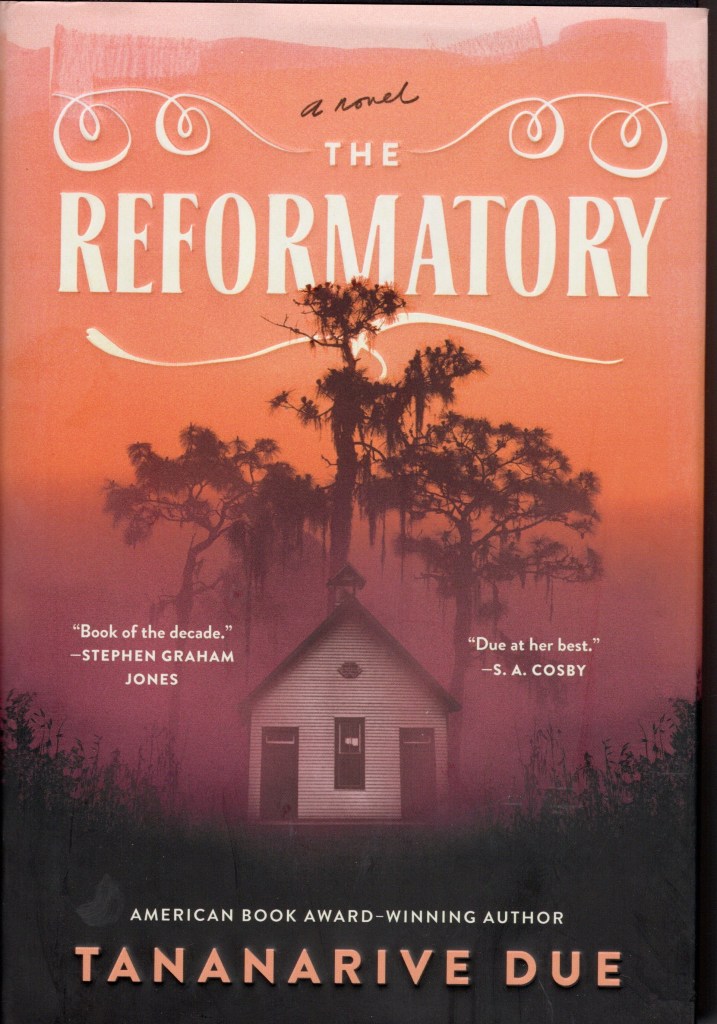
And in a class almost by itself is Tananarive Due’s The Reformatory.
Robert Stephens held his breath and counted to three, hoping to see Mama.
Some mornings his nose tickled with a trace of talcum powder or Madam C. J. Walker’s Glossine hair grease, and he felt…something hovering over him, watching him sleep. His groggy brain would think…Mama? If he gasped or sat up too quickly, or even wiped the sleep from his eyes, it was gone like a dream. But sometimes, when the June daylight charged early through the thin curtain and broke the darkness, movement glided across the red glow of his closed eyelids like someone walking past his bed. He felt no gentle kisses or fingertips brushing his forehead. No whispers of assurances and motherly love. Nothing like what people said ghosts were supposed to be, much less your dead mama. That morning he was patient, counting the way he’d practiced–one one thousand, two one thousand, three one thousand–and slitted his eyes open.
A woman’s shadow passed outside of the window above him, features appearing in the gaps between the sheets of tinfoil taped across the glass. In a white dress, maybe. Maybe. Moving fast, in a hurry.
“Mama?”
This book is a revelation. It is without question one of the most powerful books I’ve read in I don’t know how long.
I knew it was going to be a hard read, because I knew what the book was based on. I also don’t remember when I first became aware of the horrors of the notorious Dozier School for Boys in Florida, but it was a horror to be sure. I’ve read some novels based on that story (I loved Lori Roy’s The Disappearing) already, and so was familiar. Reading about enslavement and the Jim Crow South2 is inevitably a hard slog for me, and not just because of the white guilt it deservedly triggers; it just staggers me that in a country that supposedly is about equality and freedom such things could happen, be taken as normal, and changing the system is so violently opposed…a lot of racist Southerners see nothing wrong with that history and would like it to return, so these kinds of stories of American atrocities against its own citizens are incredibly important. The pen is indeed mightier than the sword, which is why repressive governments always go after journalists and writers; a well-told story that illustrates the injustice for the reader and humanizes it can change minds.
The Reformatory is about the Gracetown School for Boys and a young twelve year old Black boy who is sent there for absolutely nothing; an older white boy was sexualizing his older sister Gloria, and when young Robert stands up for her he gets a brutal shove, and he retaliates with a kick. Alas, the white boy’s father is wealthy and therefore powerful, and he wants this “uppity” behavior punished. In a joke trial that’s not even a trial, the corrupt racist judge sends Robert to the hell of the reformatory. Robert’s story doesn’t become about a search for his own justice, but the hell of surviving a place where boys die regularly but never of natural causes. Young Robbie has a gift, too–he can see ghosts–and there are a lot of ghosts there for him to navigate. Gloria’s story becomes about her desperate drive to get her brother out of there and correct the injustice. Their father was also a union organizer, and was falsely accused of raping and beating a white woman, so he fled north to Chicago. So, the boy in custody is also a pawn for the white power structure who really wants to get their hands on Robert Senior.
The warden, Haddock, is a sadistic predator who enjoys torturing and raping and murdering his charges. He also has a special need for young Robbie’s ghost seeing abilities, wanting to rid the campus of the ghosts of his victims. Due manages to make the horrors of that place absolutely real, with some of the most vivid and powerful images I’ve come across in a novel in years.
But the true horror of the book isn’t the ghosts at the school. The true horror is its horrific and realistic depiction of the Jim Crow south, and the lack of hope for change in the Black characters. It was about halfway through the book that I realized, as much as I was loving this book, that there was no happily ever after for Black people under Jim Crow, before civil rights. They might be able to escape a predicament, but there was no escape ever from the system.
Which is absolutely terrifying.
Definitely check this book out, and I am going to look for my next read from Due.
Manifest destiny? I could write an entire book about that bullshit. ↩︎
Someday I will dismantle To Kill a Mockingbird for the racist lie it is. ↩︎


 Queer and Loathing in America