Sunday morning and all is calm in the house. I feel good, very well-rested and cheerful, which of course is lovely. The Sparkster let me sleep in till almost eight, and now I am finishing my first cup of coffee and have already had this morning’s slice of chocolate marble swirl coffee cake (can’t imagine why I can’t lose weight, can you?), and am about to get another cup of coffee. I did get some things done yesterday, which is cool, and have more things to do today as well. I have one errand to run later this morning, and I’m going to get that out of the way, come home and get cleaned up and get back into working for a bit. Yesterday was a lovely day. I worked some more on the apartment, and delved even more deeply into my renamed main character in the current work. I’m also going to try writing it in the first person present tense, which is going to be really hard for me. (I tend to always use first person past tense.)
The best part of writing a book is this part–even if a lot of this background work never makes it into the finished part.
I’ve been listening a lot to old Fleetwood Mac albums in the car lately, and while they’ve always been my favorite band of all time–every album is a gem, in its own way–when I go for a while without listening I sometimes forget why they are my favorite band of all time. This past week I was listening to their Christine McVie-less recording from the early aughts, Say You Will, which is really good, but kind of Buckingham Nicks 2.0, really. I also like watching Youtube videos of young people listening to their recordings for the first time, and appreciating the artistry, talent, sound, and production values. Rumours will always be my favorite album of all time, and my favorite album of theirs, but the others are also excellent and merit more listening.
We watched this week’s episode of Heated Rivalry, which was probably the best, and most engaging, episode of the show thus far (I loved episode 3, spoiler alert); the first time I cared whether the main characters were just fuck buddies or a couple slowly falling in love. I still have some thoughts about the show, some quibbles as it were, mostly about relationship roles and the feminization of bottoms, but that can wait till I’ve finished watching the show and review it for the newsletter. (I’m still bitter about the cancelation of Boots, but…they also could have seriously fucked up a second season, so I’m choosing to see this cancelation, evil as it was, as a good thing.)
I did have the college football games on yesterday, but the only one we watched was Miami-Texas A&M, which was the only good game of the day. We turned off the later games to watch other things once it was clear they were not going to be competitive. Despite their blowout losses, good for both Tulane and James Madison for having breakout seasons and making it to the playoffs before a lot of name brand schools did. I don’t know if I’ll watch the quarterfinals or not; I don’t care who wins but I am also not a big fan of any school still left in it–although I always pull for underdogs, so I kind of would like to see Indiana do well–so am not sure.
I did finally finish reading The Postman Always Rings Twice yesterday; it’s really a nasty little book, isn’t it? I now can see why it was controversial; for one, it’s told from the villain’s point of view, which may or may not have been shocking to readers in the 1930s. (This particular reread also made me realize I need to delve more deeply into Chlorine and my main character–who he is, what he wants–and very glad I did; this reread was crucial.) Postman also deserves its own newsletter (I need to get some of the others done and out of the way already, don’t I?), where I can talk about this vicious little novella that changed everything in the crime fiction genre (I”m talking out of my ass here, but I would imagine it did challenge the sensibilities of readers conditioned to Christie, Queen, and Sayers, among many others), and its impact on me, both as a writer and a reader. I also generally don’t revisit Postman often; usually I just revisit Double Indemnity and Mildred Pierce, but am very glad I did. It made me see what was wrong with what I had already done on this book.
I also gave my main character a new stage name–because the old one really didn’t work. It was more modern than the weird names movie stars were given in the late 1940s and early 1950s (Tab Hunter, Rock Hudson, Troy Donahue), and so yesterday one of those dopey names came to me as I was cleaning the house; and realized it would work, plus would help define the amorality and narcissism in the character. I will reuse the working name for him in another book, certainly–it’s a good name–but this new one is even better.
And on that note, I am heading into the spice mines. The sun is shining outside (it’s gorgeous out, just as it was yesterday), and I still have some things to do this morning. I’m going to start reading the new Eli Cranor. methinks, while also revisiting a classic juvenile series mystery from one of my favorite juvenile series. I also have some short stories I want to work on, too. Have a lovely Sunday, Constant Reader, and I will be back in the morning before I head in for my last two work days before Christmas.
The gift where they meant well, but didn’t think about the cost-feeding, clothing, cleaning up after him, etc.
Today’s hunk is probably going to get flagged for “sensitive content” on the various prudish social media sites, but so be it.
The roofers came in yesterday and worked on the kitchen ceiling, and of course day one, I was able to close Sparky up in the bathroom until they left. Yesterday, he figured out how to open the bathroom door, which meant I had to crate him and he did NOT like that at all. But apparently, our cat is an evil genius and super smart–not a bad thing, it just means our only option when the apartment is being worked on is to crate him, and I really don’t like doing that…but he’s so curious about everything I fear if he got out we’d never catch him and he’d be so excited by all the new things to explore and investigate…sigh. Hopefully they won’t be here long; they just have to do some caulking and rehang the fixture. We will see.
I survived my first physical therapy session–which wasn’t bad at all. They gave me some exercises to do, which don’t take long, and I go back again tomorrow morning for round two. I will be able to schedule it around my work schedule, so that’s also a plus, and I really like my therapist. I have to say, having not had a lot of experience with medical stuff other than when Paul was having some procedure and my primary care visits (and having heard horror stories from other people about hospitals, treatments, insurance, etc.) this was extremely easy and simple. I have really gotten amazing care on every level, despite the misdiagnosis from my former primary care physician, and the insurance (knock wood) has been easy every step of the way; if there were any issues with it, it was handled by the medical staff and I didn’t have to deal with any of it.
The worst part of this entire thing–once I was able to disconnect all the things I was attached to for 72 hours after the procedure–was the antibiotics, which made me nauseous; they had also giving me an anti-nausea medication so I could handle those. But I absolutely hated them. The anti-nausea medication kept me from vomiting it all back up, but I could also tell when the nausea was occurring. I never had to throw up, but I could tell my body was fighting it with the help of the other pill, and while not as unpleasant as actually throwing up would be, it was unpleasant.
And you know, if that’s the worst thing to experience after this kind of major surgery, that’s pretty impressive. I got amazing care.
So, yesterday from shortly after I got home from PT until about six last night I was exiled from my workspace, and so I simply sat in my easy chair and read this year’s Christmas murder mystery from Donna Andrews, Let It Crow!Let It Crow!Let It Crow! and am enjoying it–Meg participating as a last minute replacement in a television reality competition blacksmithing show (which is actually a brilliant idea) was an excellent way to shut down listening to Sparky howl from upstairs while they worked on the ceiling. I didn’t get as far into it as I should have, or would have under ordinary circumstances, but I was often going upstairs to try to calm him down and there was a lot of sawing, drilling, and hammering noises. I got about a hundred pages in, which wasn’t bad at all, really, given all the distractions, and the book flows so smoothly…that’s one of the things that I love about Donna’s books–they are so smooth, everything flows nearly and cleanly into the next scene, chapter, clue, strange occurence, and that feeling carries back and forth between books. I counted the books listed at the front of this volume, and by my count, this is book thirty-three in the series; how many other series have exceeded that number? Ellery Queen? Nero Wolfe? Perry Mason? And all at the same publisher, too. That’s really a skill that should be respected.
We watched some more of Fellow Travelers last night and the show is very good; high production values, excellent writing, superb acting (Jonathan Bailey deserves at the very least an Emmy nomination, but I doubt he’ll get it; gay men playing gay parts seldom get recognized) and it’s an important story–showing how horrific it was to be gay back during the days of Eisenhower and McCarthy, and working in Washington; I’m glad Thomas Mallon wrote the book and even gladder Showtime made it and clearly spared no expense. But…it’s hard to watch sometimes. I won’t say it’s triggering, because that’s not the right word, but as i told Paul last night, this isn’t going to end well. The story flashes back and forth between the 1950’s and the 1980’s, in AIDS-devastated San Francisco in 1985, so…yeah, not exactly going to end on a high note, is it? As I was watching last night, I couldn’t help but think of Felice Picano’s Like People in History, which similarly flashed back to the past from the present–AIDs-ravaged New York in the early 1990s–through the entire progress of queer rights and the arrival of HIV/AIDS. That would also make a terrific mini-series, and these stories, hard as they are to read and watch and relive, are important because the memories of living through that time, and what it was like, are fading…and as those of us who survived the plague years get older and die from causes other than HIV/AIDS, I worry those stories won’t be told, or remembered, anymore. It’s bad enough that it’ll be thought of as distant history and not as horrific as it was, something that happened to other people a long time ago.
I remember when I first started writing, and in that time period for queer people there was always the question–do I write about HIV/AIDS? Does everything–all of our art–have to center HIV/AIDS? Even now, I wonder about whether I should or not in a book; do I have a responsibility to my readers and my community to talk about HIV, PrEP, undetectable viral loads and so forth? Or is that something people don’t want to read about, would find intrusive to the narrative? I’ve never wanted to write anything that even remotely hinted at that heavy-handed “a very special episode” way so many television shows handled social issues in the 1980s.
Heavy thoughts for a Wednesday morning before heading into the spice mines. Have a great day, Constant Reader, and I’ll be back probably later, depending on the workers.
Monday and a holiday; it’s lovely to have another day at home to work on these edits, which I am hoping against hope to complete today. Yesterday was lovely and relaxing; I worked on the micro edits–the lines/copy edit–which is always a long and tedious process. The macro edit, to me, is more fun if more creatively taxing. I’ll be digging into that a little later, when my mind is more awake and I have more caffeine in my system. It’ll be a weird and short work week for me, and then of course next week I am on vacation. I’ll be taking lots of books with me on that trip, although I’m not sure I’ll have much time to read. I’m not really sure what Dad and I will be doing in Kentucky. I know when I’ve been up there before he’s mentioned going sight-seeing; like to Cassius Clay’s home (the original, the one Muhammed Ali was named for at birth; he was Henry Clay’s brother and one of Kentucky’s leading abolitionists) or to the Kentucky Derby museum. Which is fine, I love history and while horse racing history isn’t something I’ve ever looked into much before, but you never know. I had thought about writing a mystery around the horse racing at the Fairgrounds…I knew a horse trainer back in the day–but never got around to it. I mean, Dick Francis kind of cornered the horse racing mystery market, did he not?
Of course, I’ll come home to another short week because of the 4th holiday, too–so it’s going to be three weeks before i do another full five day work-week. I slept decently last night–not great, but not bad, either–and so this morning feel a little bit dragging around, but that’s fine; coffee, a shower, and some time reading should get me over the hump. We abandoned City on Fire last night; we just had no enthusiasm for watching, and so moved on to The House of Hammer, which is about, of course, the twisted history of the Hammers through the lens of Armie Hammer, the actor, getting canceled for his abusive sexual preferences. It was interesting–I am always fascinated by twisted rich families that hate each other so passionately–but we need to find something meaty, like a good crime series, to dig into. It’s amazing how we can hve so many options yet can never find anything to watch, isn’t it?
I spent some time yesterday with Chris Clarkson’s adorable That Summer Night on Frenchmen Street, which is charming and fun and delightful to read, and may even be able to finish reading it today, with any luck and some strong motivation, at any rate. I think from that I will move on to either Megan Abbott or Eli Cranor; I can’t decide which of the plethora of great 2023 new releases to select from, to be honest. I know I’ll be listening to Carol Goodman in the car next weekend on the way up and I’m not sure who I’ll listen to on the way home.
A quick glance at Twitter has shown me that LSU fans have now surpassed eleven thousand shots in the Rocco’s College World Series Shot Competition, and are well on pace to break the record (just over eighteen thousand) set by Mississippi last year. Oh, how the bars and restaurants in Eauxmaha must love LSU fans! I mean, even if the shots are only a dollar, that’s over eleven grand in receipts on those shots alone, not counting everything else being sold there. LSU is playing Wake Forest tonight, and it will take a strong effort for the Tigers to pull off the win. If they do pull out a win, I’m thinking the shots record will fall tonight.
I also read an old short story yesterday that I remember from when I was a kid. Periodically, Mom let me join a book club. The first one I joined was the Mystery Guild, and those selections i received from the Mystery Guild really kind of shaped my future both as a reader and writer. I still remember the books–still have some of the original copies–and over the years, I’ve tried to replace the ones lost over time to cross-country moves. Recently I repurchased a copy of Alfred Hitchcock Presents a Month of Mystery on eBay, and there was a story in it I read as a kid that I never forgot; and I wanted to reread it. It was called “The Queen’s Jewel” and was written by Robert Golding (I’d forgotten the name of the author). I took the book down yesterday afternoon to reread the story, and it was amazing to me how much of it I still remembered, the details. The main character, Jane Farquhar, owns a small hotel of sorts with guest cabins in the brush in Africa. One of her ancestors was a server for the imprisoned Mary Queen of Scots, and before her execution she gave him the pendant of a ruby set in a heavy gold chain with four carat blue-white diamonds surrounding it. It is very valuable, and Jane’s father raised her to be prepared, always be prepared, because someone will eventually come to try to steal it from her in some way…and thus the story is about her defending herself against a criminal pretending to be an American cousin. The story holds up and works, but it opens with Jane discovering the body of her poisoned guard dog–which did make me wonder, would this story be published today? Opening with a dead dog?
I also didn’t know much about Robert Golding, so after reading the story I used the google to find out he was one of the many Ellery Queen ghostwriters (I only recently found out that many Ellery Queen novels were ghostwritten) and it turned out Golding wrote two of my favorite Ellery Queen novels, The Player on the Other Side and Calamity Town, which is one of my all-time favorite mystery novels; little wonder his short story connected so well with me. I don’t remember The Player on the Other Side other than that it was one of my favorites; but Calamity Town? I remember a lot of that novel, and it was primarily about the Wrights, the first family of Wrightsville–a location so popular that Queen kept returning there for more murder mysteries (The Murderer is a Fox was another great Wrightsville mystery). He also apparently wrote a lot of the juvenile Ellery Queen mysteries–published as Ellery Queen Jr.–which I also enjoyed as a kid; Ellery Queen Jr. and the Jim Hutton 1970’s television series Ellery Queen (which I loved) were what originally brought me to reading the adult Ellery Queens; the first I read was the one they actually filmed for the pilot, The Fourth Side of the Triangle, which was marvelous, and then I started buying his books or checking them out from the library. So thank you, Robert Golding, for being an influence on me and my writing without my knowing it. I’m really looking forward to reading some more of these old short stories. I got another Hitchcock (Alfred Hitchcock Presents Stories to Be Read with the Door Locked) and an old MWA one, edited by Robert L. Fish, With Malice Toward All, which also looks rather fun.
And on that note, I think I am going to head into the spice mines and read for a bit while my brain continues to wake up before tackling the manuscript. Have a lovely holiday, Constant Reader, and I’ll check back in with you later.
Sunday and I slept late this morning and i am not a bit ashamed of it, quite frankly. The opportunities to sleep in are rare these days–getting up early so often for so long has adjusted and shifted my body clock in ways I’m getting used to but don’t like, and chief among those ways is the inability to sleep in. Yesterday I was up before eight, for example, but this morning it wasn’t even nine when I got up, and I could have easily stayed in bed longer. But there’s spice to mine today, and while there is still a lot of it to get done, I am feeling very good about things this morning. I actually felt really good about them yesterday if I am going to be completely honest. I got two chapters done and finished editing a manuscript (not my own) and turned it in to the publisher, which felt marvelous to be finished with that. Deadlines and juggling projects is something I’ve always done, but something I’ve noticed since the pandemic shutdown is deadlines are much more stressful and demanding on me, and take a bigger emotional toll than they used to. Probably part and parcel of the long COVID rewiring of my brain, but whereas before, I relished the pressure and it drove me to work harder, now it shuts me down and/or depresses me, which has the exact opposite reaction it used to have with me: instead of driving me, I think oh I’ll never get this all done so why bother and I end up blowing things off completely. Depression is quite the bitch, you know.
But I am very pleased with the work I got done yesterday and look forward to today’s work. I also did a load of dishes and laundry yesterday, and some cleaning. But after I was finished with work for the day, my brain was too fatigued to read so I watched movies on television, discovered two gems I’ve been wanting to revisit: Cruising and The Last of Sheila. I wanted to watch Cruising because I remember all the controversies about the movie while it was being filmed (yes, even in rural Kansas we heard about the gays being mad about the movie). I eventually watched it in the mid-1990’s. Paul is a huge Al Pacino fan, and when we moved in together he owned almost the entire Pacino filmography on videocassettes, so one night we watched Cruising. I didn’t much care for it when I watched it the first time, but I’ve wanted to watch it again–when I watched I wasn’t yet a published crime writer–because the story itself is interesting to me. A hot young ambitious cop sent undercover into the gay BDSM/leather community to look for a serial killer? The question of identity and sexual confusion that could arise from playing the part, which entailed going out and picking up (or being picked up) by gay men expecting some sex? I mean, you have to admit that’s a great set-up and concept for story. The Oscar winning director William Friedkin (he won for The French Connection but was much better known for directing The Exorcist) failed and ended up with a deeply flawed film. Pacino was also robbed of a far greater performance due to the homophobic cowardice of the either the director or the studio. Rewatching, the film’s flaws are even more apparent, but it’s a shame. It could have been a great film–and it does remain one of the few Hollywood films that actually depicts gay bar culture of the late 1970s the way it was–but I don’t know what went wrong with it, but it’s still a great idea. I also liked seeing New York as dirty and grimy, the way it was during that time period before gentrification came to Manhattan. It’s also fun seeing old movies where people who went on to greater stardom later had bit parts or cameos; Ed O’Neill popped up on screen at one point, as did several others that made me think, hmmmm.
If I had the time or inclination, I would take that basic framework of an idea and turn it into something stronger than the film. There was also a book it was based on, but it’s rare and used copies are insanely expensive. It also reminded me of a gay crime novel I read as a teenager living in Kansas; I may have been in college, I don’t remember, called A Brother’s Touch by Owen Levy. The book was about a brother who comes to New York to look into his estranged brother’s life after he is murdered–they were estranged because the dead brother was openly gay–and begins to question his own sexuality after being enmeshed into the gay community of Manhattan at the time. It was reprinted recently and I got a copy (by recently I mean in the years since Katrina; I have no concept of time and its passage anymore); I should move it closer to the top of the TBR pile. I wish I could still read as voraciously as I used to…something else that has slowed down with getting older.
After watching this I wanted to rewatch a classic old crime film of the old school, The Last of Sheila, which I’ve always loved. Co-written by Stephen Sondheim and Anthony Perkins and directed by Herbert Ross, it’s a whodunit worthy of Christie herself, in which a widowed producer invites some film community members on hard times for a week on his yacht. Everyone invited was at the party a year before where the producer’s wife Sheila wound up being killed by a hit-and-run driver, and the producer, whose known for loving to play games, has come up with a game for his guests to play. Everyone gets a card, and every day they will stop somewhere they will look for clues to the identity of whoever holds the card of the day–the first is a shoplifter, the second is a homosexual–and of course, the game turns dark and ugly when the producer host–played to sadistic asshole perfection by James Coburn, is murdered…and it turns out the game their host was playing had layers none of the guests knew about going in. The cast is a perfect time capsule of early 1970’s stardom: Richard Benjamin, Raquel Welch, Dyan Cannon, James Mason, Joan Hackett, a beautiful young Ian McShane, and of course, Coburn. It has twists and turns and surprises, and is so markedly clever that it’s hard to describe without spoiling anything…and the surprises are what make it such a great and fun film. This was one of our Sunday movie-after-church movies, I think; I do remember seeing it in the theater and being impressed and amazed. One thing I absolutely loved in the rewatch was the books scattered over every set–they are all mystery novels by Agatha Christie, Ngaio Marsh, Ellery Queen, and Erle Stanley Gardner, which should tip the viewer off that you are in for a mystery influenced by the master crime plotters of the time. It’s really a shame the film wasn’t a success, because it would have been amazing if Perkins and Sondheim had collaborated on more scripts like this one. As I was watching, I kept thinking how much I would love to write a puzzle-type mystery like this one; I’ve always feared such a thing was outside of my wheelhouse so I have always been afraid to try. Who knows? Maybe I will.
I feel very rested this morning and I am not dreading diving into the book this morning, which is nice. I don’t think I have the mindspace and bandwidth to work on multiple things all at the same time anymore, if that makes sense. I don’t know if it has to do with the long COVID rewriting of my brain waves or what, but the last few books I’ve written or worked on–going back to Bury Me in Shadows–have been more stressful than fun for me to write. Writing on a deadline is always stressful, and I rarely, if ever, actually make deadlines. But having multiple projects going on at the same time now feels like I am not devoting enough of my time and attention to any of them, let alone all of them, and that makes me feel uncomfortable about the work. Of course, my last three books–and my last anthology–have all gotten a lot of mainstream award attention, which makes it seem weirder. Which, of course, makes me wonder if the stress and the heavy burden pressure of multiple projects going is somehow making me produce somehow better work than before, and do I really want to mess with that at all? It never ceases to amaze me how neurotic I am about being a writer, and how afraid I am that any change or variation means it’s all over for me now.
I do wonder sometimes if other writers have that same secret fear: that the well will eventually run dry or that we’ll forget how to do what we do. People like to call me prolific; I’ve slowly come to the conclusion that I am and that it’s not a bad thing (I always try to figure out if being called something is bad–which goes back to being called a fairy as a child and thinking he was saying ferry and being very confused). John D. MacDonald was prolific; so were Ellery Queen, Agatha Christie, and Erle Stanley Gardner. I think my insecurities came into play when people started calling me prolific; I am so used to being insulted that I assumed it must be an insult as well, like it was something I should be ashamed of or something. I’ve decided to embrace it as a compliment. I am sure there are literary writers who produce one novel every ten years or so who would think it an insult, but I don’t respect them so don’t really care much what they think. And if I am not as prolific as I used to be–which I am not–it’s nothing to be ashamed of; I’ve gotten older, have gone through some things, and I don’t have the energy that I used to have. My imagination still rages out of control at any and all times, of course, but I don’t have the energy to fool myself into thinking every idea I have will turn into a short story, an essay, or a novel. I certainly won’t live long enough to turn all the ideas I already have into longer works of whatever style and kind.
And on that note, I am diving back into the book. I am getting another cup of coffee and putting some bread in the toaster for later, and I may or may not do another Pride month entry later today. Anyway, you have the loveliest Sunday possible, Constant Reader, and I will check in with you again later.
Well, I met quota again last night which was marvelous. It’s still a bit chilly this morning. By the weekend it should be back into the seventies (it was yesterday as I ran my errands after work; it’s sixty-one this morning but it does feel colder outside of my bed and blankets), as the Alabama and Kansas State fans start arriving for the Sugar Bowl. LSU is also playing on New Years’ Day in the Citrus Bowl against Purdue, which will probably be the only game I actually watch that day.
There’s been a conversation going on over at Book Twitter lately that doesn’t really impact me in any way, but it’s been kind of interesting to follow. The conversation has to do with concerns about what is and isn’t considered y/a fiction as well as what is, or should be, considered age-appropriate reading material for teenagers and pre-teens. It doesn’t impact me because no one considers me a young adult writer, for one thing; despite having written numerous books with younger and/or teenaged characters (Sorceress, Sleeping Angel, Sara, Lake Thirteen, Dark Tide, Bury Me in Shadows, #shedeservedit), most people think of me as a gay mystery writer. Everything published under my own name is a mystery novel of some sort, whether it’s one of the series books or one of the stand-alones. I’ve never really marketed myself as a writer of young adult fiction, really; I shy away from that, I think, because of The Virginia Incident and the subconscious fear that one day that controversy might resurrect itself (which is ludicrous, and I know that; it certainly would have by now and it hasn’t, which further proves my belief that The Incident had nothing to do with me or my writing or my career and everything to do with systemic homophobia and othering used for political gain). It just seems weird to me that in less than five years after that happened–when I was deemed a menace to America’s youth–I could publish books for teenagers without a single whiff of complaint or scandal or even the raise of a single eyebrow.
Interesting, isn’t it? Almost like the whole thing was just more smoke and mirrors whose sole intent was to rile the homophobic base.
I just love that my existence is considered by some as a constant and continued threat to children.
One of the things that has always mystified me over the years is what is and isn’t considered age-appropriate. Intellectually I was far more advanced that most of my classmates (my emotional and personal maturity being an entire other subject–I’d say I am still behind on that score) and I started reading early. The library and the Scholastic Book Fairs were my best friends as a child, and I read everything I could get my hands on. I loved history, from which grew an appreciation and love for historical fiction (which I really don’t read much of anymore, which is odd. I really want to read Hilary Mantel’s Cromwell books…) and of course, my grandmother got me interested in “scary” movies and mysteries.
You’d think I’d be a huge fan of historical mysteries, but I actually don’t read many of them. I did love Elizabeth Peters’ Amelia Peabody series, and I’ve become a huge fan of Laurie R. King’s Mary Russell series…I think exploring historical mysteries might be a project for 2023.
But the point was I was reading books far too advanced for most people my age when I was young. I freely will admit that in my first read of Gone with the Wind at age ten I didn’t know Rhett raped Scarlett the night of Ashley’s surprise birthday party–it wasn’t until a reread in my late teens where I thought oh, this isn’t right–let alone that she enjoyed being overpowered and forced. I also read The Godfather when I was ten, and there was no mistaking anything about Sonny Corleone and Lucy Mancini. He had a cock the size of a horse’s and her vagina was apparently the Lincoln Tunnel. (Although the she felt something burning pass between her thighs still mystifies me to this day.) I also read The Exorcist when I was ten and I was also very well aware of what was going on in the crucifix masturbation scene. As a kid, I was fascinated by these sex scenes (aka “the dirty parts”), and it wasn’t until I was older than I began to question the entire Sonny-Lucy thing (and why it was even in the book in the first place); and while the crucifix scene was gross, shocking and basically icky to me at ten–when I reread the book sometime in the past decade it seemed prurient, to be honest–used primarily for shock value and to get people to talk about it.
So, yes, I started reading books for adults when I was around ten. I also read Antonia Fraser’s Mary Queen of Scots and Robert K. Massie’s Nicholas and Alexandra that same year–I remember doing a book report on Mary Queen of Scots and my teacher not believing that I had read the thick volume; he started opening the book at random and asking me questions–which I was able to answer, so he grudgingly accepted the book report and gave me an A. (Teachers have doubted me all of my life; can’t imagine why I am insecure about my intelligence…)
Over the course of my teens I also read books by Harold Robbins, Sidney Sheldon, Jackie Collins, Jacqueline Susann and Gordon Merrick-every last one of them crammed to the gills with racy sex scenes. I was also reading Stephen King, Irving Wallace, Herman Wouk, Agatha Christie, Ellery Queen, Jean Plaidy, Victoria Holt, Phyllis A. Whitney and any number of authors who wrote for adult audiences not teens. Were there things in the books I didn’t understand? Sure there were. Were there things in those books that were probably inappropriate for teenagers? Undoubtedly. (I’ve also never forgotten the scene in Joyce Haber’s The Users where a Liza Minnelli-based character fucked herself with her own Oscar; some images are simply too vivid to forget methinks.)
This is one reason I shy away from calling some of my books with teenagers “young adult” novels. Megan Abbott’s Dare Me centered teenagers, but I would never consider Dare Me a young adult novel. I was thinking about this the other night while watching Sex Lives of College Girls (it’s hilarious, you really should be watching); can I authentically write about teenagers anymore? Have I ever been able to? I don’t speak their language anymore, and I haven’t been one in over forty years (!!!!); I don’t know the technology they use or their slang or what they watch or listen to. I don’t know what today’s teens think about virginity and sexuality these days; do the tired old tropes still exist? Does that whole “good girl/bad girl” dynamic still exist, or are today’s teenaged girls a bit more sophisticated than they were when I was in high school when it comes to sex and sexuality? (Contrasting two high school shows with queer content makes you wonder–there’s the jaded cynicism of the rich kids in Elite vs the wholesome purity and innocence and sweetness of Heartstopper, which also had me wondering–although I feel certain Heartstopper might be closer to reality than Elite…or that’s just my hope?) Of course I have other ideas for more books about young people–I have another in-progress one that’s been sitting around for a very long time that I need to repurpose–and I’d kind of like to write more at some point, but I don’t know. My suburban 70’s serial killer preying on teenaged boys book would be told from the perspective of a twelve year old, but it would definitely not be a young adult novel–but will probably be marketed and sold as one.
And on that note I am heading into the spice mines on my last day in the office for 2022. Check back in with you later, Constant Reader.
Labor Day Monday and I have a nice relaxing day ahead of me of writing and reading and who knows what else? We also leave for Minneapolis the day after tomorrow, which is also kind of exciting. I did make a small run to make groceries yesterday and had a small Costco order delivered. I also watched some tennis (Coco Grauff) and then we watched the LSU Game. Jury’s still out; they played very lackadaisically to me, it seemed; not quite gelled as a team yet, but lots of talented players with some kinks to work out yet. They ended up losing 24-23, could have tied and/or won the game at the end, and rallied from 24-10 down in the closing minutes, so that was promising. I am of course disappointed the comeback failed, but at one point it literally looked like we were going to lose 31-17, and that final drive went ninety-nine yards in sixty-five seconds. So, they could continue to improve and get better, which is a good sign. I impatiently was hoping this could be turned around in one year, but….it even took Saban an off-year before turning Alabama into what it is today. It was a fun weekend of football, to be sure, and I am always happier when it’s football season.
I mean, take away the two fumbled punts, the blocked extra point, and the blocked field goal, and LSU would be 1-0 right now.
I am curious to see how the rest of the season shakes out.
I skim-reread Jackson Square Jazz yesterday, and again, I was very pleasantly surprised at how well the book still reads, roughly nineteen years after release, and again–I really did do a great job with the characters. I am writing an entry about it, of course, and then started skim-rereading Mardi Gras Mambo, too. I really wish I could remember what the plot was in the first two failed attempts to write the book, but maybe it’ll come to me while I skim reread, but I rather doubt it; I forgot those original plots years ago. I am glad that reader asked me about the Scotty books, though. I had figured I’d talked about them often enough that Constant Reader didn’t really need me to write the backstories behind the books in this series, but I am having the most wonderful time revisiting the books and remembering the process that produced each one. And these first three are so far back in my distant past that it’s almost like reading new-to-me books; I always wondered if my own work would ever get to that point, and clearly, they have done so. I’m not sure how to feel about it, but I imagine Philip Roth didn’t spend a lot of time thinking about his first couple of books, nor did Agatha Christie, Ellery Queen, or Erle Stanley Gardner. (Not that I put myself up there with those greats of crime fiction, but you know what I mean.) We write books and we move on from them to write other books, and the farther in the past those old titles get, the more distance I feel from them and the less I remember about them, which makes them much easier to read (at least for me).
And it’s really helping me get back inside Scotty’s brain and his voice, too. Always a bonus, you know?
Today I am going to take it easy but still get things done. I need to write–which I’ve done woefully little of this weekend–and I also need to overhaul the first three chapters of this book before I can move on with it, which should be taken care of today. (I started to do it yesterday but…Coco Grauff was playing!) I also have some other things to get done today–maybe I should make a list of what all I want to get done today; can’t hurt–including making my packing list for the trip (I checked the weather; I think I can get away with taking a sweat jacket with me rather than a coat; every night it’s supposed to dip into the 60’s, which, as we all know, is the dead of winter to me) and some other loose odds and ends. And the skim-rereading of my books is at least getting me to read again–just wait till Wednesday afternoon at the airport though; I’ll be tearing through that Gabino Iglesias novel like it’s going out of style. I don’t think I’ll finish reading the Iglesias, the King, and the Andrews on the trip, but I am taking a book in reserve just in case–A Walk on the Wild Side by Nelson Algren. I also need to prep myself for reading only horror in October, the way I do every year; I know there are some Paul Tremblay and Stephen King and Christopher Golden and some other great horror novels sitting there waiting in my TBR Piles. There’s also some great short stories I should read, too. I am sitting on a Daphne du Maurier novella–“A Border-line Case”–and maybe I should spend some time today reading that?
I do love me some du Maurier (reminder to self: reread My Cousin Rachel).
So, we’re basically sitting on today and tomorrow as interim days. I think the house is in good enough shape as is for us to leave without doing some more cleaning, but I always do some cleaning while I am writing. There’s a load of dishes that need doing, and some other picking up and things needing to be put away, but that’s always the case, isn’t it?
And on that note, I am going to make a to-do list, finish those dishes, and head into the spice mines. Have a lovely Labor Day, Constant Reader, and I will check in with you again later.
As I mentioned yesterday–these blog post titles taken from the Supremes discography sometimes feel a bit off as I do some Blatant Self-Promotion about my new soon-to-be-released novel #shedeservedit.
I got my first ignorant comment on one of those blog posts yesterday; someone posted a link to a video about “toxic femininity” and how it’s “as bad if not worse” than “toxic masculinity.” Needless to say, I not only didn’t approve the comment but marked it as spam and blocked the user from commenting/reading my blog. For those of you who are new here–I don’t engage with trolls, not do I permit them the energy or the oxygen of allowing their ignorance to be seen by anyone here. This is my blog and I pay for it; therefore I will curate the content here and if you want to troll me, well, it’s just going to earn you a comment marked as spam and get you blocked, so don’t waste your time or energy on me. You may, of course–I cannot stop you, but I won’t engage with you nor will I allow Constant Reader to see your ignorance, so there you have it.
I wrote yesterday, and it felt good to get another chapter down. I only have two more to go and the revisions, and I have to say, pantsing this thing on a tight deadline hasn’t been the easiest way to write this book, but it’s working. I’ve got the plot all worked out now, who the killer is and why, and now all I have to do is cram the resolution into the last two chapters and we are finished, done, ready to go off to the editor with prayers that she likes what I’ve done and doesn’t require a complete overhaul, which is also entirely possible and within the realm of probability–one of the reasons, frankly, that I’ve not signed. a contract to dive straight away into another book when this one is finished; I thought it best to leave my time free just in case. (I am going to start working on Chlorine and Mississsippi River Mischief while waiting for my edits; there’s always something to write, after all–I can also work on the revisions of the novellas in the meantime as well.)
There’s always something…
Today’s BSP is going to focus on writing about small towns, rather than what I’ve been covering (toxic masculinity). The first book I remember reading about a small town that really stands out to me–as an examination of small town dynamics, rather than merely a setting for the story–was Ellery Queen’s Calamity Town, which was, if you are an Ellery Queen fan, the first Wrightsville story. There were several of these novels–the second, I believe, was The Murderer is a Fox–and I enjoyed them all; Queen clearly loved writing about Wrightsville, since he kept returning to the scene of the crimes, as it were, but the best, the true standout for me, was the first: Calamity Town. This book–published well over a decade before Grace Metalious scandalized the world with Peyton Place–also covers the same territory as Peyton Place: scandal and hypocrisy and the paralyzing power of gossip in small town America. Calamity Town remains a favorite mystery novel of mine to this day; I should reread it. It’s plot is ingenious and entirely rooted in human psychology, and it also contains one of the best and most clever misdirections in crime fiction history. It was Calamity Town that made me first start thinking about how small town society is actually a microcosm of American society as a whole, all encapsulated in a small package, and also that made me realize, for the first time, how claustrophobic small towns can be; where everyone knows everyone and you can’t really do anything without someone knowing; and how secrets kept can become very damaging over time. Queen is, at first, struck by the apple-pie Americana of Wrightville…and then he begins peeling back the layers.
Peyton Place, which I found to be far less scandalous than either General Hospital or All My Children by the time I got a copy at a secondhand bookstore in Emporia when I was seventeen or eighteen, also showed me again how claustrophobic small town life could be. Sure, there’s some bad to the point of laughable writing in the book (“your nipples are hard as diamonds”, anyone?) but other than those brief moments, overall it’s a very well-constructed book and a damning indictment on the hypocrisy of American small towns. I also read Sinclair Lewis’ Main Street around the same time for an American Literature class (I still think we should have read Elmer Gantry instead, or It Can’t Happen Here, but I was not in charge of the syllabus), which is also about the falseness of keeping up appearances and worrying what the neighbors think. I find it interesting that “small town American values” are frequently–particularly by conservatives–pointed out as what is the backbone of our country and so on and so forth (part of the entire “cities are BAD” thing we have had going on culturally for decades, if not centuries), but when that veil is peeled back, there is just as much rot and decay as in any “wicked” city. As I pointed out on Susan Larson’s radio show the other day, the vast majority of the soaps were originally set in very small towns, rather than urban centers.
Nobody does small towns quite like Stephen King, and the first time he really addressed small town life was in ‘salem’s Lot–although it can be argued he did a masterwork on small town life with Needful Things–and it was in his tale of small town Maine being overrun by vampires, he also did an incredible job of painting the town, it’s working class citizens and the minutiae of their lives; how circumstances trapped some of them and killed their dreams–and how others never had any dreams to be killed in the first place. The way he interweaves the lives of his small town characters, their relationships and histories and how everything is interconnected is masterful; has anyone ever done a critical analysis of King’s work with small towns? It also falls into this group; what King does with Derry is just as exceptional as his work on Castle Rock and Jerusalem’s Lot in the other works.
I based Liberty Center on Emporia, Kansas, geographically; my town is loosely laid out the same way Emporia is; there’s a small college there, as in Emporia, and there’s a meat packing plant on one side of town that reeks of death and stale blood on the south side of town, and of course, the waterfall on the river on the way out of town heading south and the park that goes with it. Other than that, it’s memory and invention; I’ve not set foot in Emporia in nearly forty years and have no plans to ever do so again. (Likewise, when I write about my fictionalized county in Alabama–it’s loosely based on where my family is from, but I haven’t been there in thirty years and will most likely never go visit again, so it’s all memory and invention for me.) I don’t know if I will write another novel about Kansas–I have some other ideas, of course, don’t I always–but it seems weird to create another fictional small city so similar to Liberty Center, but at the same time it seems even weirder to set another book there after having already done so (although i should probably revisit Sara sometime and see how I did it–and what I called the towns in Kahola County–before deciding one way or the other).
Heavy sigh.
Today I need to write another chapter, and I also need to work on revising a short story as well as writing a promotional article–and of course, there’s the horror that is my email inbox which needs to be dealt with this week once and for all (it’s all relative; answering everything and emptying it out inevitably means generating more emails there; my email responses will trigger emails in response which turns it into a Sisyphean task without end), and today is the men’s US figure skating championships, which naturally I plan to watch so I need to get my writing done before then, don’t I?
So on that note, I head into the spice mines. Have a lovely Sunday, Constant Reader.
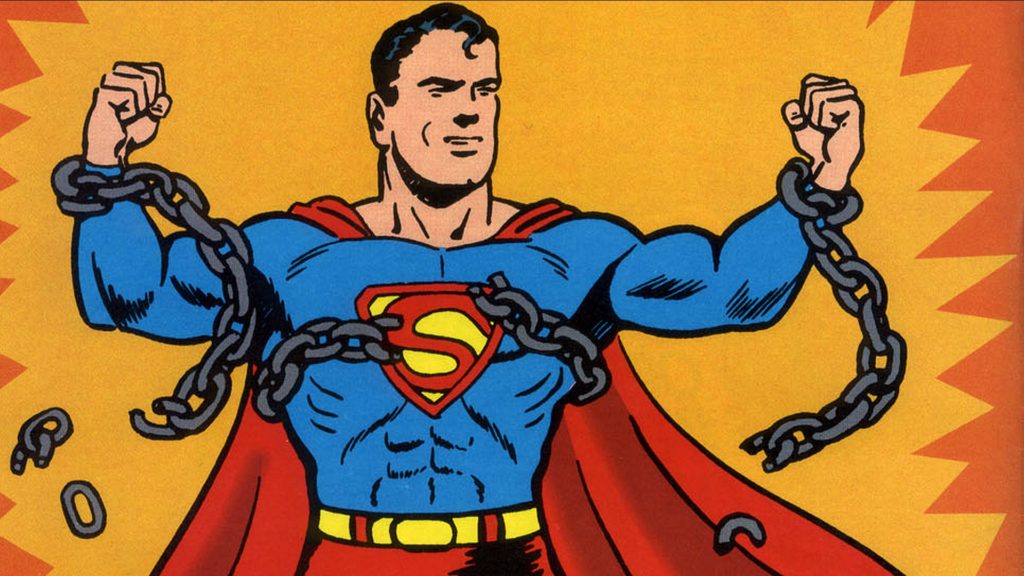
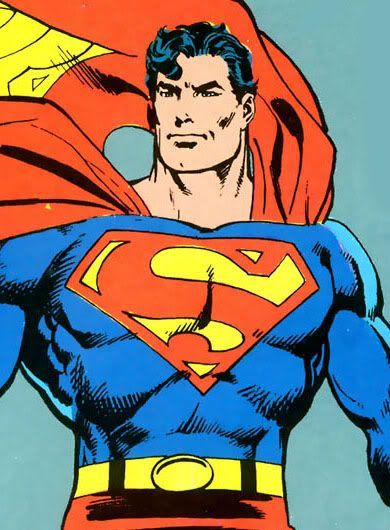
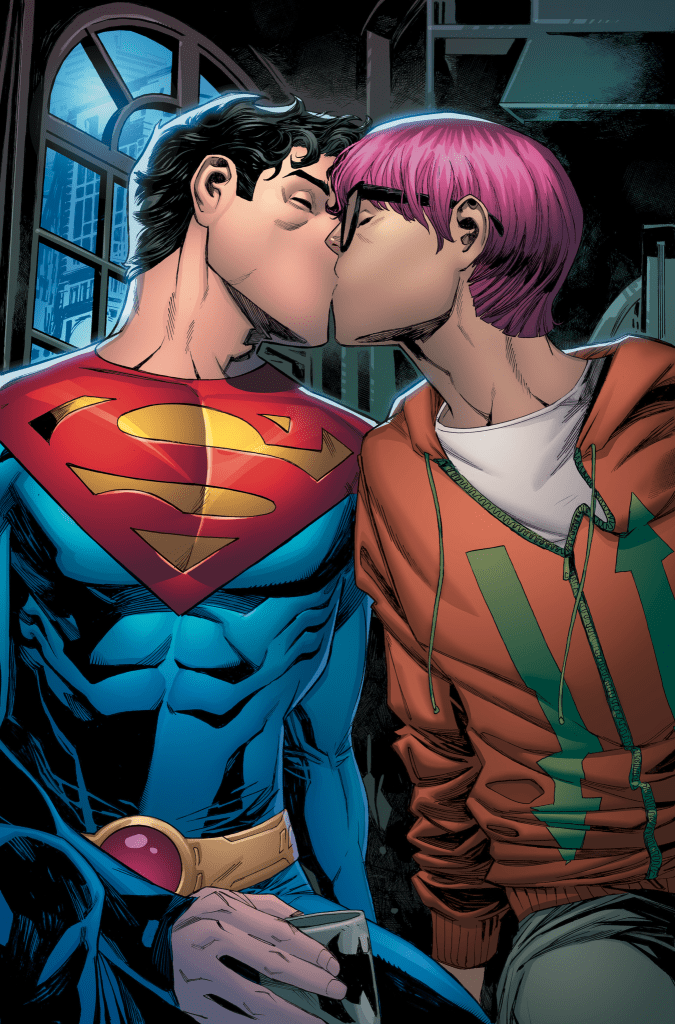
So, on National Coming Out Day this past week, October 11th, the current Superman—Jonathon Kent, son of Lois and Clark—came out as bisexual. When I saw the New York Times piece I literally gasped out loud. This wasn’t some minor character in a team comic; this wasn’t even a second-tier lead of a less-popular title. This was fucking SUPERMAN, the Big Blue Boy Scout, the tentpole character on whom all of DC Comics, and the DC television and film franchises, are built around.
I literally had tears come up in my eyes. This was So. Fucking. HUGE.
I cannot even begin to tell you how much that would have meant to me as a deeply closeted and terrified gay teenager in the Chicago suburbs and later, small town rural Kansas. I really don’t know how best to explain what this meant to me as a sixty-year-old gay man, but here goes.
Oh, Superman. You are the ubiquitous comic book character; since your debut back before the second world war you have become the default; the super-hero every other super-hero is judged against. It’s even right there in your generic name: you are the super man, hence you are Superman.
Superman is kind of the Bill Jones or Joe Smith of comic book heroes: basic, simply named, and the best of them all.
I was a kid when I first started reading comic books about super-heroes. Before I bought my first Action Comics (all I remember is that Lex Luthor was the issue’s villain), I read Archie in all of its iterations; I also read Millie the Model, Dot, Little Lotta, and some others that have faded from memory. The Jewel Osco where my mom used to buy groceries when we lived in Chicago had a comic book vending machine near the entrance, right next to a soda machine dispensing cans of Pepsi and its variants. You put in a dime and two pennies into the appropriate slots, and pushed the appropriate buttons for the comic you wanted; the metal spiral thing holding the comics would spin and drop your comic down, so you could reach in through the door and pick it up. That particular day I wanted a Betty and Veronica, which was A5 but I was in a hurry and accidentally pressed B5 instead; voila, I got an Action Comics instead, much to my bitter disappointment. One of the local independent stations, Channel 32 (which also showed repeats of The Munsters, among other black-and-white classics) aired reruns of the old Superman television show; which I thought, even for my unsophisticated childish palate, was cheesy and silly. I remember grousing about it to my mother—whose response, “Boys read super hero comics anyway” was the kind of thing that usually would guarantee that I would never read a super hero comic book, but I picked it up after we got home and I started reading, certain that I would hate it.
It probably should go without saying that I didn’t hate it.
And it opened an entirely new world for me. Sure, it got a little frustrating from time to time for me (Superman was such a goody two-shoes, but that was kind of his job) and Lois being so desperate (and jealous) to either marry and/or expose his secret identity was annoying; especially because Lois otherwise was such a kick ass woman. There were any number of Superman or Superman-adjacent titles, Lois Lane and Jimmy Olsen had their own titles; Superman often appeared in (and was definitely a charter member of) Justice League of America; there was also Superboy (“Superman as a teenager!”) and Supergirl…it was like the comics readers couldn’t get enough of Superman and his world. I eventually moved on to other DC Comics titles, too—everything Batman (Detective Comics was always my favorite, because there was a mystery to solve) and Flash and Green Arrow and Green Lantern and…yes, my dollar allowance every week for a long time went to comic books (Nancy Drew and the Hardy Boys were $1.50 and my allowance was $1 per week; and no, I couldn’t wait until I had two dollars to get one; I always needed to spend my money as soon I got it on Thursday—Mom’s payday—at either Jewel Osco or at Woolworth’s…because I could always talk Mom into buying me a book if there were Hardy Boys or Three Investigators to be had). When we moved to the suburbs the Zayre’s didn’t carry comics, nor did the grocery store in town; the 7/11 only carried Marvel (I tried with The Mighty Thor, but the continuing story aspect Marvel used irritated me because I would inevitably miss an issue), and when Zayre’s finally started carrying comics, things had… changed. Wonder Woman was no longer an Amazon, and was just an every day modern woman running a boutique (somehow she’d given up her powers). Supergirl had been poisoned, which meant her powers came and went without warning; one moment she’d be super, the next she wouldn’t. It was an attempt to modernize the books, of course, make them appeal to the newer, more sophisticated modern audience of the 1970’s; some of them started addressing social issues and became a lot more adult in theme. (Green Arrow actually became my favorite book during this time; he was drawn naturally—had curly chest hair AND nipples—and he had no powers other than being an expert archer and skill at hand-to-hand fighting). I eventually moved away from comics because I started spending my money on novels—Agatha Christie, Ellery Queen, etc.—and comics were, I thought, really for kids.
Later on, when we moved to Kansas, I got back into comics again, and things had changed yet again. Some of the Legion of Super-Heroes’ costumes made them look like strippers (male and female); the drawing of the characters had become more natural and realistic (Superman, for example, went from being barrel-shaped to having a narrow little waist and abs showing through his skintight costume), and Wonder Woman was an Amazon again. This was my Howard the Duck period, when I also started delving into Marvel a bit more. Comics always remained of interest to me throughout my life, with me going through periods of collecting and reading in large volumes at different times…before moving on from them again. I am not an expert on comics by any means; I know the names of some artists and some writers, but for the most part, I always paid more attention to story and character (go figure). But I’ve always maintained a love for the characters; and yes, the original Christopher Reeve Superman movie (which I rewatched recently for the Cynical 70’s Film Festival) indeed made me believe a man could fly.
I’ve always had, and always will have, a soft spot for Superman.
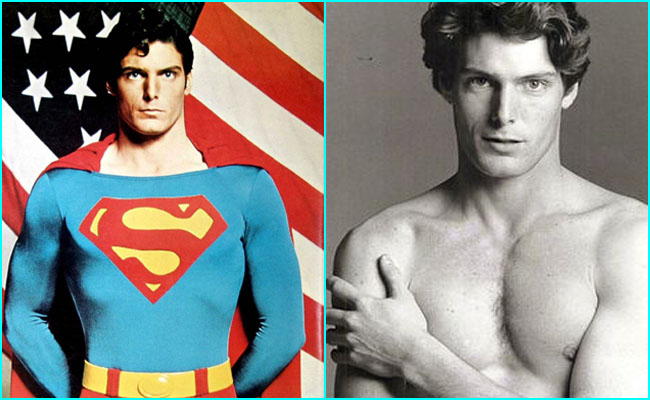
To me, Christopher Reeve was Superman–the prior versions of the character, including the popular television show (which I watched religiously) always seemed, to me, to be an actor playing the part; Reeve somehow just was the character. He was so insanely and ridiculously handsome; the body was just right, and he had the right mix of charm and charisma the part demanded. Reeve’s Superman could never be seen as a threat–and he also made it completely believable that no one could tell Clark was him, with different hair, glasses, and street clothes; he physically changed how he stood, his posture, everything about him that was Superman, when he was playing Clark.
Reeve never got enough credit as an actor, frankly.
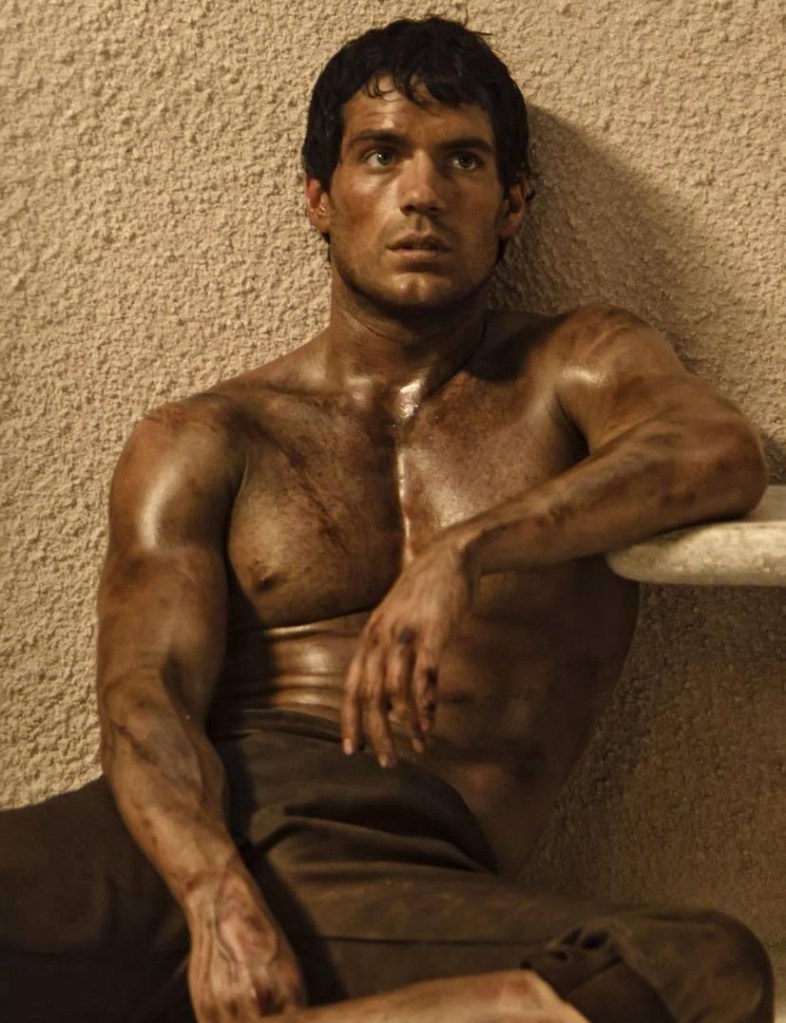
And while my memories of Margot Kidder as Lois Lane aren’t fond ones–I thought she was a fine actress, but miscast–overall, the first two Reeve films were good ones. They could have stopped there, but didn’t–and the last two weren’t good. I enjoyed Lois and Clark (despite what Dean Cain turned into) and Paul and I eventually succumbed to the simple pleasure that was Smallville…but I wanted to see Superman back up on the big screen, where he belonged. I was very excited when they cast Henry Cavill in the part (I’ve been crushing hard on Cavill since first noticing him on The Tudors)….and then came the movies. I enjoyed them for what they were, and I did think some of the changes made to update and modernize the story (how would Americans today react to the discovery of a super being from another planet?)–and you can never go wrong with Amy Adams, either.
But…they forgot the most important thing about Superman: his kindness and genuine concern for people. In the quest to make the DC Film Universe of all that is dark and angsty like the Batman movies–the direction Batman has gone in since the comic mini-series The Dark Knight Returns–was a bad one. Patty Jenkins got Wonder Woman so fucking right–and it was the same basic formula as Superman. Superman used to be derisively called “the world’s oldest Boy Scout”, but that can work with the character, and with the right actor. I think Cavill has the charisma and the charm–and the extraordinarily gorgeous smile–to pull that off; I just wish they would have let him have the chance.
The new show on CW, Superman and Lois, is also excellent; I absolutely love it, and I do think that Tyler Hoechlin is one of the best Supermans of all time, frankly. (The entire cast is stellar, frankly.)
So, as I said earlier, I was pretty fucking jazzed the other day to see the piece in the New York Timesearlier this week about Superman “coming out”–on National Coming Out Day, no less–and even if it turned out to not be Clark Kent, but Lois and Clark’s son Jonathan (in the comics they have the one son; on Superman and Lois they have twin sons, one of whom is named Jonathan), and while I, in my white gay male privilege assumed this meant that he was gay–he’s actually bisexual. But he is attracted to other men, and even has a boyfriend.
There was one particularly noxious piece posted on Medium, which the homophobic piece of trash who wrote it proudly posted on Facebook (I reported his post on Facebook as well as the piece on Medium as hate speech; the Medium piece came down, but the last time I looked, of course Facebook had done nothing about it). I read the whole thing–poorly worded, not grammatical, would have given a C- grade on the construction basics level alone–but the part that I couldn’t get past, the part I can’t forget, was him saying this: But why take one of the few heroes left for the “Straight World” and make him abnormally offensive to us?
Abnormally. Offensive.
I guess I missed the massive closet exodus for the DC and Marvel Universes? Let me see–right off the top of my head, at DC aren’t Batman, Green Lantern, Green Arrow, Nightwing, Cyborg, Aquaman, the Flash, the Martian Manhunter, the Question, Beast Boy, the Elongated Man, and Shazam, all straight? (And that is just off the top of my head., and only DC.) But you know those people who are so afraid of the queers–you know, like the piece of shit who wrote the Medium piece–they just can’t help themselves or keep their fucking mouths shut. Oh, no, Mr. I’ve Never Brought a Woman to Orgasm just can’t let us have anything without letting us know how much it offends their delicate, needle-dicked sensibilities. You know, the same kind of guy who undoubtedly always complains about “cancel culture” and “social justice warriors” and “wokeness” and I don’t have a problem with gay people but why do you have to exist? Those kinds–sad, bitter little men with so little joy in their lives they have to spend their precious time on this planet letting everyone else in the world know how much they object to our existence.
But he has a right to his opinion and we are oppressing him if we call it out for the hateful trash it is…and him for the piece of shit he is.
As my editor at Kensington wrote on a note he included with a copy of a bad review of one of my books, this just reeks with the stench of failed author.
This guy claims to be a crime writer, and claims to work for a publisher (I’ve never heard of it or him before this moment)…but after reading this piece and another one he published on Medium, the real crime is his actual writing.
Fuck off, dude. And know that bisexual Superman is going to have way better sex than you could ever pay for, no matter how long you live.
While it is lovely–it was quite lovely–to not have to get up and go to the office (or make condom packs, or do data entry) this fine morning, it’s also a bit bittersweet: this is the vacation time I took to attend Bouchercon a mere fifteen minute walk from the Lost Apartment. If this was NOT pandemic time, a friend would be arriving at the Lost Apartment around noonish; we’d store her bags in my car and we were going to have lunch and hang out until other friends arrived later, whom we would be joining for a lovely dinner at Coquette. I would also be checking into the Marriott on Canal Street at some point today; probably not staying there tonight, but definitely heading down there tomorrow morning as my first panel would be that afternoon. *sobs softly to self; shakes fist in fury at anti-vaxxers*
Ah, well. Things don’t always work out as they were planned, do they?
I slept in a bit this morning, which was lovely–I feel very rested and not a bit in the least groggy this morning, which is marvelous. The kitchen is a horrifying mess this morning, so once I’ve finished my coffee that’s the first thing on Today’s Agenda, among other things–first is actually making Today’s Agenda, so I can put clean the kitchen on the top of the list. The living room is also a mess; but I am going to make “room by room” the working theory of this lovely if too short vacation. I am starting small, in the laundry room today–the books! Dear God, the books in the laundry room! But if I don’t get everything done that I need to get done over this vacation–the most important thing the corrections and revisions to the book, of course, more on that later–but it feels rather nice to not have to go to the office today, or have condom-packing/data entry hanging over my head as I swill my coffee here at my marvelous new computer. But yes, this mess around my work space is a bit much–and the Lost Apartment itself is a disaster area from top to bottom. I worked on the manuscript last night some more, and am at the halfway point. But as I get deeper into the manuscript I am finding even worse mistakes than in the beginning, and some really atrocious writing. I literally was squirming in embarrassment as I corrected and cleaned up this horrifically sloppy manuscript last night. When I called it a night and started rewatching episodes of Ted Lasso (this show is really amazing; if you haven’t checked it out yet you need to) while waiting for Paul to come home. He was rather late, so after rewatching two of my favorite episodes (“Make Rebecca Great Again’ and “All Apologies”) I switched over to TCM and started rewatching The Way We Were, which is what I was doing when Paul got home and I stopped–Redford and Streisand were still at their unnamed college–and I was thinking, outside of the fact that they were clearly too old to be playing college students, there are other parts of this movie that actually would no longer fly today; I am going to have to finish watching it at some point because I want to review it as part of the Cynical 70’s Film Festival (it’s from 1973). I can’t think why I never activated the TCM app on my Apple TV before; just scrolling through the offerings last night before settling on The Way We Were was very exciting, as there are so many classics there I want to either rewatch or see for the first time (including Nightmare Alley, In a Lonely Place, and some classic Katharine Hepburn films I’ve never seen). Exciting!
Today’s Agenda also includes a short exploration trip for this book I just signed a contract for; I need to explore the particular neighborhood of the city where I am setting the book so I can take pictures and have more of a feel for the book. I’m now creating secondary characters for the regular cast (it always seems so weird to talk about books like they’re films; but blame it on all those Agatha Christie/Erle Stanley Gardner/Ellery Queen novels I read as a kid that had the list of the cast of characters at the beginning with a snide sentence or two defining who they were as people….which I miss terribly!), which I am really enjoying doing. This is maybe the most emotionally and intellectually satisfying part of writing any book–building the foundation for it with the creation of characters and the establishment of place–it’s certainly a lot more fun than rereading a manuscript and finding all the mistakes and fuck-ups, that’s for sure.
And of course I do want to spend some time with Megan Abbott’s The Turnout today, and I have to go to the gym at some point as well. MY DAY IS JAM-PACKED. But I do need to make today’s to-do list, as well as an overarching one of all the things I need to get done so I have a template to follow for my vacation daily agendas. (Rereading that last sentence made me realize how absolutely batshit insane I must come across…but that’s not telling you, Constant Reader, anything you’ve not been able to ascertain already for yourself, is it?) I also need to do some male grooming things–I’ve not shaved my face in days (thank you, mask mandates; which do not get enough credit for relieving men of the necessity to shave every fucking day) for one, and I also need to do some computer file organizing and rearranging and so forth. So many projects….which is why I need that overarching list of things to do.
And on that note, tis time to make lists and buckle down for the day. Have a lovely Wednesday, Constant Reader, and I will chat with you again tomorrow morning.
One of the challenges of being a writer is keeping your work fresh and new and interesting; it becomes easy -for want of a better phrase–to just phone it in and repeat yourself. This is particularly true for crime writers/writers of series; how do you continue writing about the same base foundation of characters without recycling plots or falling into formulaic structure?
One of the primary reasons I stopped writing my Chanse MacLeod series was precisely because of this; as I was writing the last book (thus far) in the series, Murder in the Arts District, I found myself thinking things like okay now it’s chapter five, I need some action here or I need to have a twist in the story before I get to chapter ten…and so on. I didn’t even think about it as I was writing the story–but when I was doing the revisions and edits, I remembered having those thoughts (I generally don’t have them while writing Scotty, but that’s a story for another time…and of course, as a reader pointed out, how many car accidents has Scotty been in, anyway?), and when I turned the book in, I went back and speed-read the entire series over again, and after about the fourth book, the writing pattern became rather obvious to me; and if it was apparent to me, I would imagine it was also fairly obvious to the readers. So, I decided to either end or take a lengthy break from the series unless another great idea for him jumped out at me; I have had several ideas since then, but the longer I go without writing about Chanse the less likely it becomes that I will write about him again. (Caveat: I have written a Chanse short story and have a novella in progress with him as the main character; I guess it is more accurate to say that I am not done with the character completely, yet I cannot see myself writing another novel with him as the point of view character–and will have to go another step forward with that as well to say at least not one set in New Orleans, as I am toying with an idea for a Chanse case in Louisiana but not New Orleans. Yes, that’s me–definitely not definite.)
I have nothing but the utmost admiration for series writers who manage to keep their series going for decades and dozens of books without writing the same book and structure over and over and over again; Ross Macdonald, Ellery Queen, Sue Grafton, Robert B. Parker, and Sara Parestky are just a few of them I can name, and their achievements have made them legends in the field. But other legends who wrote series took a different approach to their careers. Agatha Christie wrote several series–Poirot, Miss Marple, Tommy and Tuppence–but also wrote a lot of stand-alones over the course of the years. (Seriously, when it comes to crime fiction, Christie did everything first) Dennis Lehane and Harlan Coben started out writing series and moved on to stand-alones; as have numerous other authors.
And then there’s Laura Lippman.
Gerry Andersen‘s new apartment is a topsy-turvy affair–living area on the second floor, bedrooms below. The brochure–it is the kind of apartment that had its own brochure when it went on the market in 2018–boasted of 360-degree views, but that was pure hype. PH 2502 is the middle unit between two other duplex penthouses, one owned by a sheikh, the other by an Olympic swimmer. The three two-story apartments share a common area, a most uncommon common area to be sure, a hallway with a distressed concrete floor, available only to those who have the key that allows one to press PH on the elevator. But not even the sheik and the swimmer have 360-degree views. Nothing means anything anymore, Gerry has decided. No one uses words correctly and if you call them on it, they claim that words are fungible, that it’s oppressive and prissy not to let words mean whatever the speaker wishes them to mean.
Take the name of this building, the Vue at Locust Point. What is a vue? And isn’t the view what one sees from the building, not the building itself? The Vue is the view for people on the other side of the harbor, where, Gerry is told, there is a $12 million apartment on top of the residences connected to the Four Seasons Hotel. A $12 million apartment in Baltimore.
Nothing makes sense anymore.
The apartment cost $1.75 million, which Is about what Gerry cleared when he sold his place in New York City, a two-bedroom he bought in the fall of 2001. How real estate agents had shaken their sleek blond heads over his old-fashioned kitchen, his bidet-less bathrooms, as if his decision not to update them was indicative of a great moral failing. Yet his apartment sold for almost $3 million last fall and, as he understood the current was laws, he needed to put the capital gains, less $250,000, in a new residence. Money goes a long way in Baltimore, and it was a struggle to find a place that could eat up all that capital without being nightmarishly large. So here he is at the Vue, where money seems to be equated with cold, hard things–marble in the kitchen, distressed concrete floors, enormous light fixtures.
I’ve been a fan of Lippman’s since I read her debut, Baltimore Blues, mumbledy-mumble years ago. I absolutely loved it; I loved the character of Tess Monaghan, former reporter turned private eye, and the cast of regular characters who she interacted with on a regular basis throughout her amazing series run. Tess remains one of my all -time favorite series characters; the books were always compelling, interesting, and very hard to put down. Lippman is also that writer who can write short stories that are just as powerful as her novels, and over the last few years she has taken up writing personal essays that are also rather exceptional (her collection, My Life as a Villainess, was a bestseller during the pandemic). Her writing is always whip-smart and intelligent; following her on social media one can see how widely and perceptively she reads. About seven years into her career she took the risk to move from her series to stand-alones; a calculated risk, to be sure–but she then spent the next few years alternating between the series and stand-alones (alas, it’s been a while since the last Tess book, Hush Hush, although she has occasionally made guest appearances in her stand-alones when a character needs assistance from a private eye). Her books have explored themes of motherhood, what it means to be a good girl, and have also paid homage to time-honored sub-genres (Sunburn is one of the best noir novels of this century) and classic novels by either flipping the script (for example. Wilde Lake owes an enormous debt to To Kill a Mockingbird, imagining, really, where the characters and story would be decades later). She has also played with form, tense, and character–Lady in the Lake is almost Faulknerian in its use of point-of-view; I lost track of how many different point of view characters were in this book, and every last one of them rang completely true–and she has become, over the years, a true artist.
In my often-benighted first writing class in college (whose scars I still carry to this day),my incredibly pompous professor once berated one of the students for writing a story about a writer. “It’s the laziest form of writing, and character,” he proclaimed from his lectern at the front of the classroom, “and it tells you more about who the writer is more than the character ever will. If you ever start reading anything where the main character is a writer, you should run from it as fast as you can.”
I guess he wasn’t a fan of Philip Roth. (To be completely fair, neither am I. I’ve tried, but have never really got the magic there, but have always accepted that as my failing as a discerning reader rather than his.)
Stephen King often writes about writers; ‘Salem’s Lot has Ben Mears; The Shining has Jack Torrance (and the most deadly and horrifying case of writer’s block in literary history), It has Bill Denbrough, and on and on–but of course the most famous, and best, example would be Paul Sheldon in Misery. While I always have enjoyed King’s writing, and have gleaned things from his writer characters, Sheldon and Misery, for me, has always been the best. Sheldon was perhaps one of the most realistic and compelling writer characters I’ve ever read about–the man with aspirations to becoming a critically acclaimed literary writer, who yet makes a living by writing a bestselling romance series about a character named Misery Chastain whom he has come to hate and despise even as she makes him enough money to live well and focus on simply being a writer (the dream of all of us, really). He has killed her off finally in his most recent book, ending the series at last and finally taking the leap to write what he thinks will be the game changer for his career–until he has a horrific car accident and is rescued by Misery’s biggest fan.
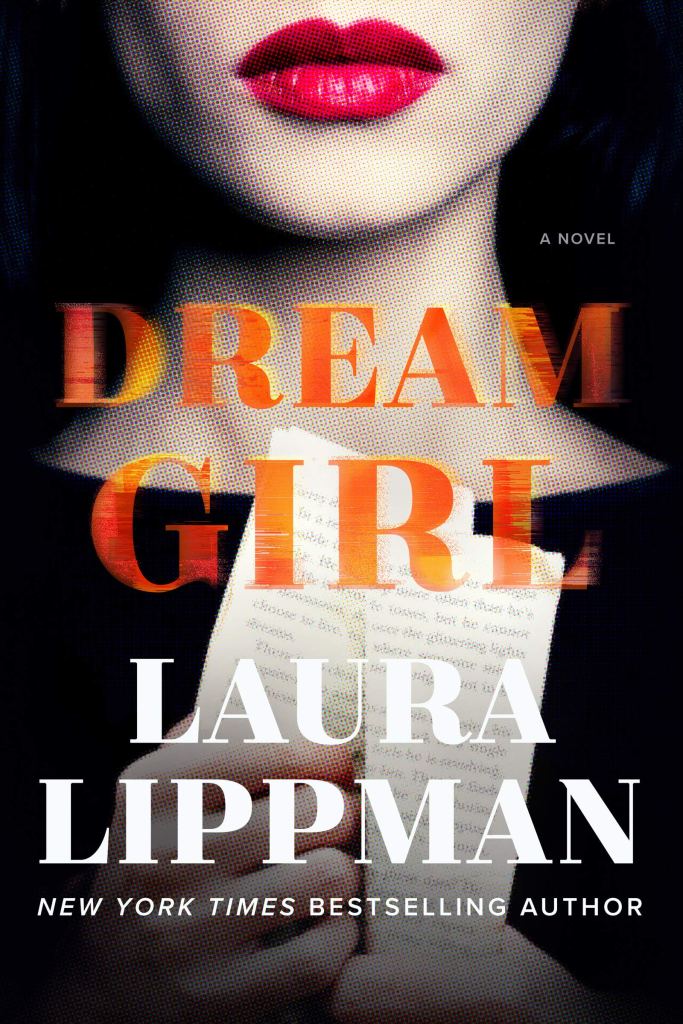
The parallels between Misery and Dream Girl are there, of course, and easy to spot; Lippman’s character Gerry Andersen is an enormously successful literary writer (a la Updike or Roth) who is also kind of a dick in how he has treated the many women who have come through his life, and of course, his ego justifies all of his bad behavior until he, too, has an accident in his home that winds up with him trapped in a hospital bed in his secluded apartment (despite it being in Baltimore; the appeal of the place is its privacy and seclusion). But while Sheldon is being victimized by his sociopathic fan/caregiver in Misery, what is happening to Gerry is very different; he has his original fall that causes his injury because he receives a weird letter from someone claiming to be the real person whom he based the title character in his biggest success, Dream Girl, on, and she wants financial compensation. In his shock and surprise–people have always wondered, and have always asked him, if she was a real person and he has always said no–he falls down his stairs and busts up his leg. Once he is housebound, he has a night nurse AND his personal assistant there–rarely being ever alone in the apartment–but he starts getting strange phone calls from the woman claiming to be the real ‘dream girl’–but there’s never any record of the calls on his called ID, and the original letter disappeared as well. Is his medication playing tricks on his mind, or is there something more sinister at work in his cold, sterile, remote apartment?
As with so many other things, that writing professor was wrong about writing about writers. I’ve stayed away from it myself for most of my career–as I said, the scars are still very much there–but I have started dabbling into it a bit (my Amazon single, “Quiet Desperation,” is one attempt, and I may go even further; I’ve created a character who’s appeared as a minor character in some of my Scotty books who is a writer). The mystery here is quite compelling, and more than enough to keep me turning the pages to see what happens next. But I was also enjoying the insights into another writer’s life, albeit he was a fictional character; I find it incredibly easy to identify with characters who are writers because despite the fact that all writers have different methods and different careers and different mental processes, there are always those little nuggets of oh yes I know that feeling or I thought I was the only person who experienced this or ah yes this is exactly what it’s like.
Dream Girl is an excellent edition to the Lippman canon.







 Queer and Loathing in America