Snakedriver

Ah, Alabama.

Despite everything that is wrong with Alabama culturally, societally, spiritually, and politically, I’m not ashamed of being from there (and never will be). I do shake my head with every new law passage or court ruling there that flies in the face of decency and the Constitution, because it is sad that the majority of people there are not only so lost spiritually and intellectually, but also defiantly cling to their backwardness. My part of the state, where my people are from, used to be very remote and rural; many native Alabamians, when I tell them where I’m from, are often confused, having never heard of it before. It isn’t on any interstate, rooming options are limited, and you really have to drive for about an hour from the nearest interstate to get there. It’s not quite as remote as it used to be; many of the roads that were dirt and/or gravel when I was a kid are paved now…but there are still plenty of unpaved roads up there in the hills and along the countryside. It’s very different there now, too–the country stores are all gone, and there’s definitely a lot more McMansions than there ever was when I was a kid. (Dad and I often marvel at the palatial homes we come across driving around the county, as Dad shows me places from his childhood and when he and Mom were first married.)

And it’s not cheap to buy property there, either, which was also a bit of a surprise.

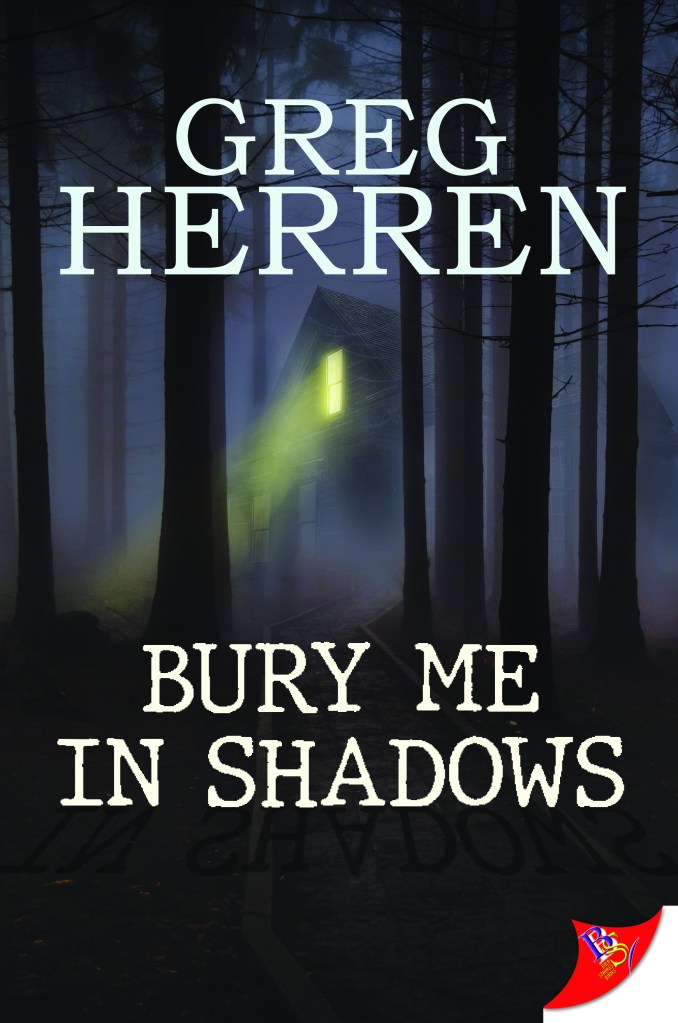
Dark Tide was my first attempt to deal with my history and where I am from, but was cowardly in the end and wound up editing most of the backstory of my main character out. It didn’t really fit and made the book something different from what I was trying to do with the book, but as I edited it all out I also felt that I was being a bit cowardly. I knew I was going to have to deal with the troubled history (and present) of the county and state, so I wrote Bury Me in Shadows to not only try to get a better understanding of the area, but to deal with that troubled past. It wasn’t easy–I often found myself cutting things to a bare minimum in a stupid attempt to not give offense, and there were many times while writing it when I’d wince or skip a scene because I wasn’t sure how to word it properly without being preachy. I wanted to show through the story how refusing to face the past with a realistic and jaundiced eye can cause generational trauma and how that, in turn, perpetuates societal racism and homophobia in an endless cycle that strangles growth.

But writing that book also took me down a research wormhole that I’ve never really climbed back out of, and being there last weekend also reawakened some memories as well as creativity and potential future stories. (Dad and I found a really sad set of graves in the same cemetery as my maternal grandparents and uncle; parents and two small children –one was only four months–who’d died on the same day. We speculated as to how that happened, tornado or car accident or house fire, but a distant relative my father also knew explained that the father killed them all and then himself…which naturally started churning things in my brain again.)

I also discovered, during the pandemic, a horrifying documentary called Alabama Snake, which focused on the snake handling churches of northeast Alabama and a minister who tried to kill his wife with snakes…and then discovered there was also a book about the culture from a reporter who’d covered the trial, and continued investigating and looking into the snake handling churches.

I finally read it last week.
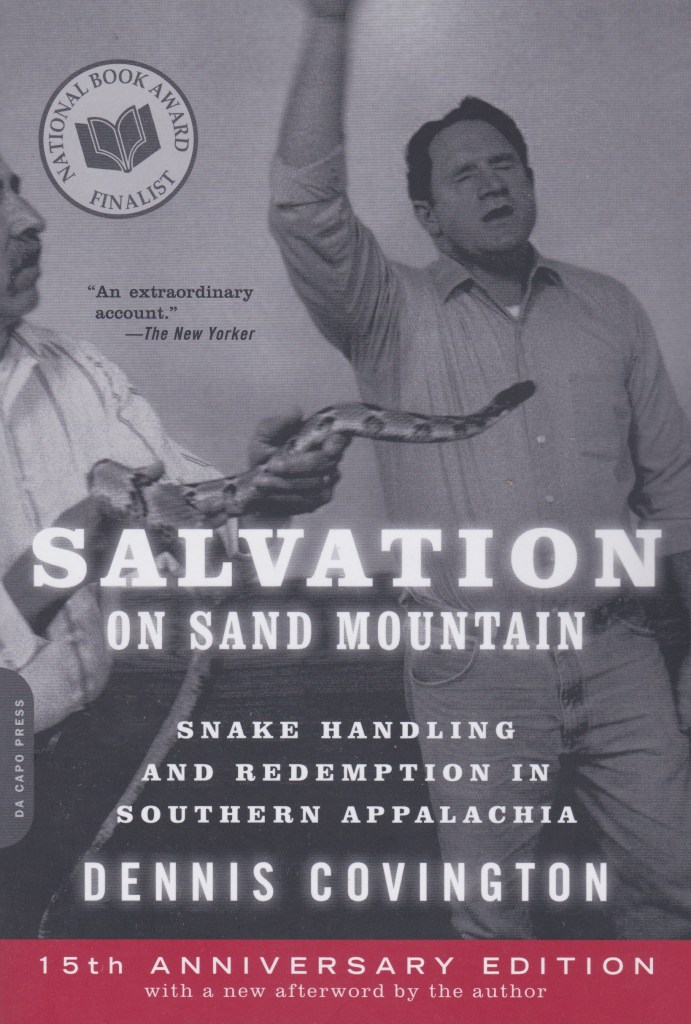
The first time I went to a snake-handling service, nobody even took a snake out. This was in Scottsboro, Alabama, in March of 1992, at The Church of Jesus with Signs Following. I’d come to the church at the invitation of one of the members I’d met while covering the trial of their preacher, Rev. Glenn Summerford, who had been convicted and sentenced to ninety-nine years in prison for attempting to murder his wife with rattlesnakes.

The church was on a narrow blacktop called Woods Cove Road, not far from the Jackson County Hospital. I remember it was a cool evening. The sky was the color of apricots, and the moon had just risen, a thin, silver crescent. There weren’t any stars out yet.

After I crossed a set of railroad tracks past the hospital, I could see the lights of the church in the distance, but as I drew nearer I started to wonder if this was really a church at all. It was, in fact, a converted gas station and country store, with a fiberboard facade and a miniature steeple. The hand-painted sign spelled the preacher’s first name in three different ways: Glenn, Glen, and Glyn. A half dozen cars were parked out front, and even with the windows of my own car rolled up, I could feel the beat of the music.

It’s very difficult to think about Alabama without religion being involved in some way. Alabama is a very religious state, with churches everywhere–one of the things I always comment on whenever I am up there driving around with Dad is “there sure are a LOT of Churches of Christ up here”–you really can’t go anywhere without driving past at least two. Both of my grandmothers were devout (paternal family was Church of Christ; maternal Southern Baptist, although both my mom and uncle married into CoC and joined), but only the CoC was a fanatic with a Bible verse for everything and the uniquely American/Christian methodology of interpreting everything to justify her own behavior and conduct–which wasn’t actually very Christian (memorization doesn’t mean comprehension). I can remember driving around down there once with my grandmother–either in Alabama or the panhandle of Florida, where she wound up after retiring–and driving past a church (I won’t name it because she was wrong) and I said something and she sniffed in disgust. “They speak in tongues and take up serpents,” she replied. “Which is apostasy.”

Apostasy. What a marvelous word, and one that has always snaked its way through my brain, and comes up often whenever I talk about religion. But I digress; I will someday finish the essay in which I talk about my relationship with Jesus and my rejection of dogma.

I also liked the phrase “taking up serpents,” and always wondered why she said that instead of snake-handling.

I had originally thought, when I bought this book, that it was about the attempted murder by rattlesnake and subsequent trial, like the documentary I mentioned; rather it’s an exploration of this sect of Christianity by a curious reporter, and how being exposed to this style of worship made him rethink his own past, his relationship with his own faith, and about Alabama people in general. One of the reasons I enjoyed the book so damned much–even as I was repelled by its subject matter (snakes are the source of some of my worst nightmares; even harmless little garden snakes turn my stomach and engage my flight mechanism)–was because Covington has a very easy, natural and authentic authorial voice, and he really can put you into his mind as he witnesses and experiences this uniquely American brand of Christianity. It was also interesting as he got caught up in the entire experience, as he talked to the members of the various sects (there’s no national structure to the snake-handling churches, as there is with say the Southern Baptists or the Methodists), and watched them actually take up their serpents in the name of the Lord.

There’s also interesting information in the book about how these sects were created–or how they were descended from, surprisingly enough, the Methodists and how that evolved into these Appalachian sects, as well as where the people of the Appalachian regions came from, and that entire Southern mentality of fighting for their traditions and their “way of life” (it was also interesting that it’s a white phenomenon, at least as best I could tell in the book); of how they secluded themselves up in their mountains and hollows and were self-sufficient…but modern technology has forced them into a world that has left them behind.

I’ve always wanted to write about snake handlers…but as I mentioned before, snakes are the stuff of my worst nightmares, so yeah going to witness in person their rites is a big “no” from me, but I feel like I can maybe do that now, or at least make an attempt. I don’t know how much more research I’d need to do to fictionalize snake handlers, but some day it will happen.

I Cried a Tear

Well, it’s back to the office Monday and I am feeling pretty good about the weekend. Did I get everything done I needed to get done? Of course not, I never do. But the house is in good enough shape that if I maintain it every night then next weekend I can move on to some further cleaning/organization/declutter project because I don’t have to start over catching up on the the basics yet again. I also made dinner last night for the first time in forever, actually cooking, and it was kind of nice and the meal was actually quite good. I also was creative this weekend, and maybe very little actual writing was done but a lot of planning and thinking about the projects and so forth that need to be worked on and I also had a lot of really good ideas. I started thinking about the projects in terms of what I was trying to do, what the point of the story was, and how best to get the message across to the readers while also telling a compelling story. This is the kind of thing I miss doing, and am usually so rushed with impending deadlines and so forth that I don’t have enough prep time before I start writing, if that makes any sense? It did to me, and I think that’s another reason I have Imposter Syndrome on a regular basis; I kind of leap blindly into the project and hope that it works out all right.

I slept very well last night and didn’t want to get up this morning (or at least out of bed, which was warm and comfortable), but as I swill this first cup of coffee I am starting to come to life and that’s a good thing. I am not patient-facing today–it’s my in-office administrative day, and I am pretty caught up on my work. The downstairs looks nice and neat and orderly this morning; there’s dirty dishes in the sink, of course, but that’s easily rectified. On the way home tonight I have to stop and get the mail and pick up a prescription. I am leaving for Alabama/Kentucky the week after next, and so that’ll be nice. I’ll take some books to read, and I imagine we’ll do some sight-seeing in Kentucky while I am up there this year. It’s nice visiting Dad, and seeing my sister. Mom’s death brought the survivors closer together, which is nice. They still live too far away for regular visits, but it’s nice to be closer to them both.

Overall, it was a nice weekend. I got some rest and recovery time, and feel much better this morning than I did any morning this weekend–which might be related to staying in bed longer–and we started watching a terrific new show last night called Vigil, which is from the same team that did Line of Duty, which was exceptional. Vigil, which isn’t something I thought I’d be too keen on–a murder mystery on a nuclear submarine that also includes international intrigue on top of the crime–but always trust people who’ve produced another show you liked, really; Vigil is superb (submarines absolutely terrify me–my claustrophobia would drive me insane within an hour of getting on board, and if it didn’t before, it would definitely happen once we submerged; this is why that novel The Chill by Nick Cutter was so unsettling–underwater in a submarine in the dark. No fucking thanks) and absorbing. I cannot wait to watch more of it tonight after writing and doing some more clean-up around here. My writing goals for this week are to make more progress on the book, finish revising “Passenger to Franklin” and “When I Die,” and get a good night’s rest. I also have some emails to reply to, as well as some others I need to generate. I did make progress on finishing some of these draft posts I’ve had in the files forever–some going back as many as four years (I wrote down my initial impressions of January 6, which I do need to finish since we are heading for another precipice)–and it’s nice to get some of this stuff cleaned out. I still have more drafts back there than needed; I think there are numerous ones that can be actually combined, since I started a related topic more than once, methinks–usually because something makes me angry or frustrated enough to forget oh yes, started something on this very subject several times already, maybe should combine them all into one.

I also want to finish the blog posts about my books already published. I am not sure where I left off–I know the last one I did was for Dark Tide, but I think I’ve already done The Orion Mask, which leaves Timothy because I know I did a lot of promotional posts for both Bury Me in Shadows and #shedeservedit. I’ve also already done the most recent Scotty books, too–I think I’ve covered that entire series already. I know the last Chanse book is still there in the drafts, too–I thought I’d need to reread it since it’s been so long since I wrote it, which isn’t a bad idea. I don’t really remember Chanse’s voice, and am not sure I can still hear it if I want to. I know I’ve written a Chanse short story since the series ended, and I have a Chanse novella in progress that went off track and needs to be steered back onto the tracks. I do have another idea for a Chanse book, but I am thinking he might just be a supporting character and I can center the book from another point of view, which could be interesting. See what I mean? My creativity has really come roaring back.

And on that note, I am going to bring this to a close and get cleaned up to head into the spice mines. I hope you have a lovely day, Constant Reader, and I’ll check back in with you again a little later.

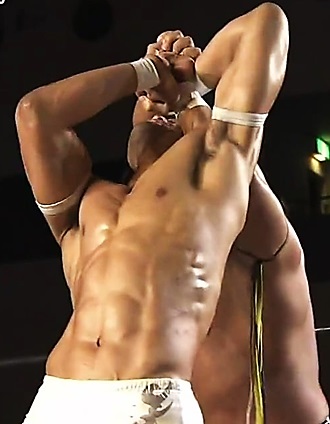
Doesn’t look like he likes the photographer’s direction to “arch your back a little and stick your butt out”, does he?

Under the Boardwalk

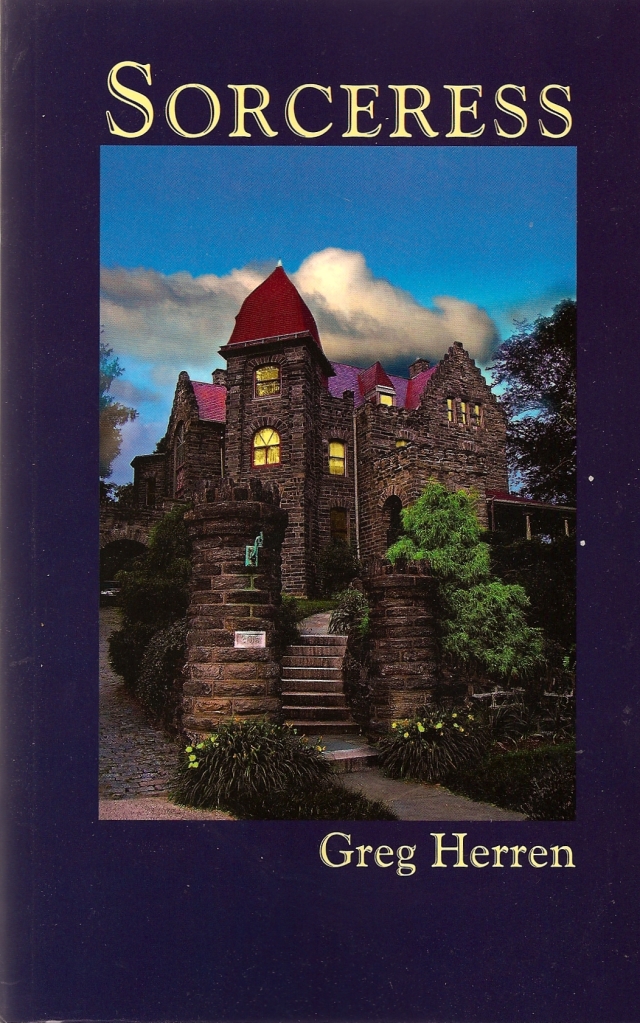
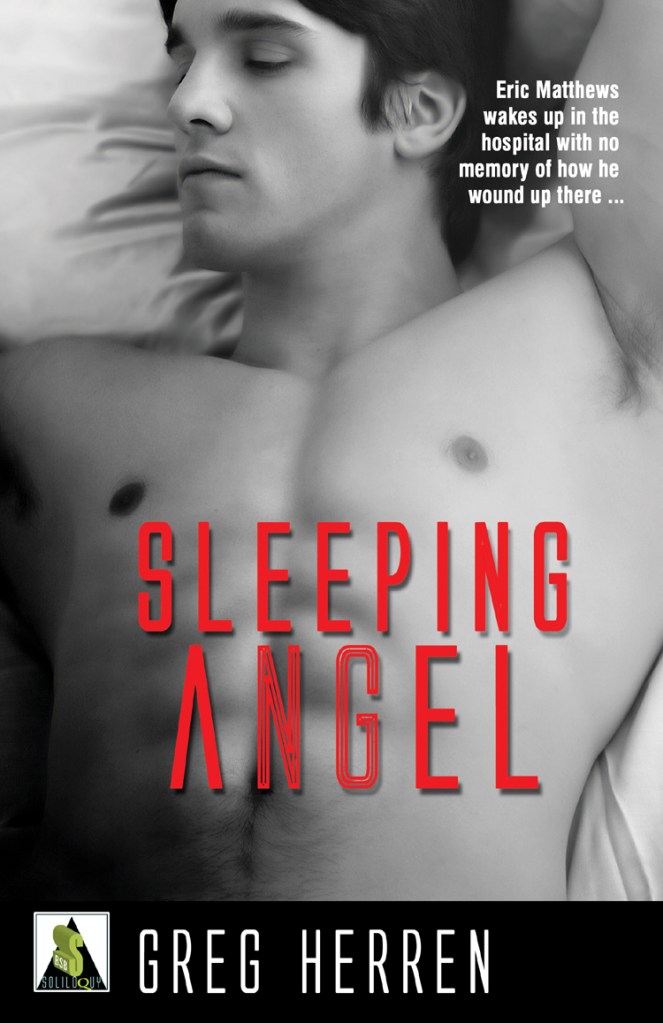
I hadn’t been sure that I would keep writing young adult novels after I revised, rewrote and published the first three (Sorceress, Sleeping Angel, and Sara) I didn’t know if it was a direction I wanted to keep going in. I knew I wanted to do stand-alones–always have wanted to do stand-alones–and I also like writing about teenagers and young adults.

You may remember (doubtful) me talking about a horror novel a while ago that I started writing in the 1980’s called The Enchantress that I only got about three or four chapters into before abandoning (because I didn’t know where to go next with it; and the first chapter I specifically remember rereading at some point in the decades since and shuddering in horror at how badly it was written), but one of the places in the book really stuck in my head–an old family-owned hotel called Mermaid Inn, which sat on the shores of Tuscadega Bay (which was my stand-in for Choctawhatchee Bay–my grandparents retired to a house on that bay and I’d always wanted to write about that area; still do–it’s where “Cold Beer No Flies” was set). After shelving The Enchantress (which I do think about from time to time, and wonder if I should revisit the idea) I kept thinking, you should write a book and call it Mermaid Inn because that is a great title!

I made a folder for it, wrote a few sketchy notes, and then… it sat in my files for a very long time.

If you will remember, I had originally planned to write an entire series of interconnected young adult novels, a la the Fear Street series by R. L. Stine, and one of the varied locations they would be spread out over would be Tuscadega, Florida, in the panhandle on a fictional bay. That was part of the note I scribbled for the folder–set this in the panhandle of Florida, and somehow connect it to the fictional Alabama county you’re going to write about someday.

I decided to write Mermaid Inn sometime after Hurricane Katrina, when I discovered yet again my own ignorance of geography. I was beginning to realize that the panhandle wasn’t the right setting for this book and decided to set it on the Alabama Gulf Coast, which made me realize I had absolutely no clue about that part of Alabama’s geography. I’d just never really given it much thought, to be honest; I knew Mobile was on the bay, and I knew that when you drive on I-10 through Mobile you have to take a tunnel below the Mobile River. I just had always assumed there was nothing south of Mobile in Alabama–I mean, it’s ON the water–and figured that those lower prongs of Alabama that reach down along the sides of the bay were uninhabitable wetlands. I discovered this to not be the case when visiting friends for the first time who lived in Alabama south of Mobile. They told me to take an exit off I-10 and drive south, which I didn’t think was possible.

Turns out it was–and I realized…this will work for my book! So I filed it away and forgot about it again.

I don’t remember precisely why I decided to write Mermaid Inn, but I did, and set in a small town on the prongs, south of Mobile; my friend Carolyn Haines helped me with some background and I know she told me some stories about closeted society men in Mobile and their hijinks and I thought, I could use this for the book and I think that may have been the impetus? And then I created my character, Ricky Hackworth, from Corinth, Alabama–po’ white trash who needs a swimming scholarship to attend the University of Alabama. (Sidebar: alert readers will recognize that Beau’s last name in Bury Me in Shadows–and at one point in the story he mentions he’s only the second Hackworth to go to college; “besides my cousin who got a swimming scholarship.”)

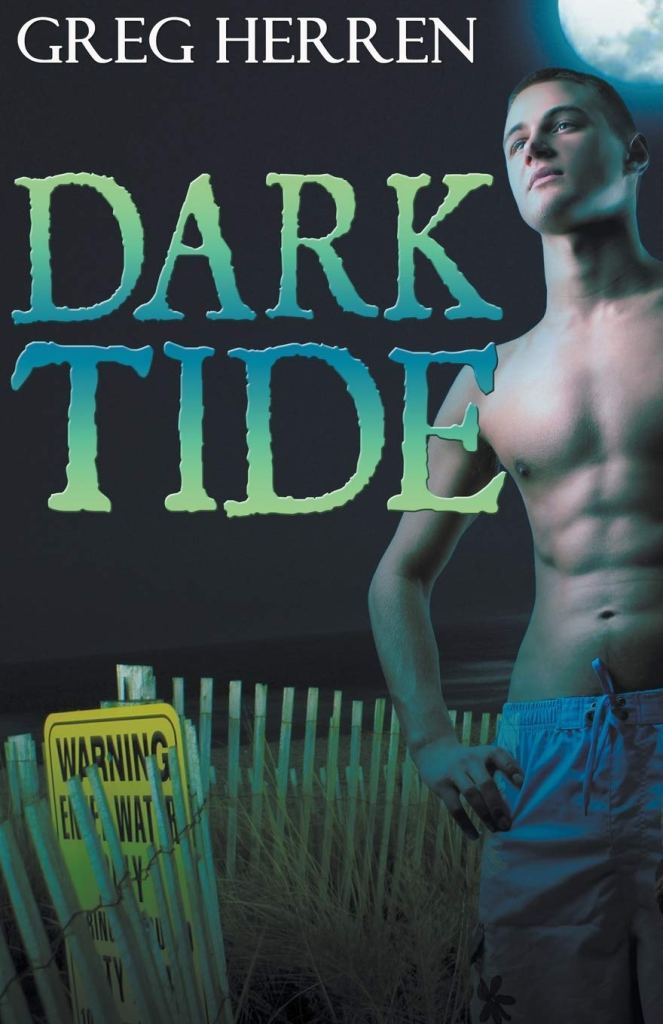
Bold Strokes didn’t like the title, and for perhaps maybe the fourth or fifth time in my career my original/working title didn’t make it on the cover. They recommended Dark Tide, which I really liked because it gave the sense of the book’s mood and tone and voice…and darkness.

The engine of my pickup truck made a weird coughing noise just as I came around a curve in the highway on the Alabama Gulf Coast and I saw Mermaid Inn for the first time.

My heart sank.

That’s not good, I thought, gritting my teeth. I looked down at the control panel. None of the dummy lights had come on. I still had about a half tank of gas. I switched off the air conditioning and the stereo. I turned into the long sloping parking lot of the Inn, pulling into the first parking spot. I listened to the engine. Nothing odd. It was now running smooth like it had the entire drive down. I shut the car off and kept listening. There was nothing but the tick of the engine as it started cooling.

Maybe I just imagined it.

Hope springs eternal.

The last thing I needed was to spend money on getting the stupid old truck fixed. Maybe it just needed a tune-up. I couldn’t remember the last time it had one.

Dad gave me the truck when I turned sixteen. It had been his work truck since before i was born–it was two years older than I was. He’d finally broken down and bought himself a new one. This old one was dependable and had almost two hundred thousand miles on it. Dad had taken good care of it. He’d babied it, gotten an oil change every three thousand miles without fail, and I could count on one hand the number of times it had been in the shop to be repaired.

It still had the original transmission.

It might not have been the nicest or prettiest car in my high school parking lot, but it got me where I needed to go and got good gas mileage. Since I was saving every cent I could for college, that was a lot more important than horsepower and cosmetics and a loud stereo that rattled your back teeth. The swimming scholarship I’d accepted from the University of Alabama wasn’t going to remotely cover anything close to the lowest estimate of what my expenses might be, but it was the best offer I’d gotten.

And I was grateful to have it. If they hadn’t offered, I wouldn’t be going at all.

Swimming was my ticket out of Corinth, Alabama.

That opening scene!

Dark Tide was probably my most hard-boiled young adult title published to that point. It was a dark story, and Ricky was poor–an economic condition I’d touched on with Sara, and something I generally try to avoid when writing. I’ve been poor, and I know how it feels; I don’t like remembering those days of checkbook mistakes and bounced checks and not having enough money from one paycheck to another. Ricky has taken a summer job as the lifeguard at Mermaid Inn in Latona, Alabama (Latona is another name for Daphne, which is actually a town on the prongs below Mobile), to save money to pay for college expenses his swimming scholarship to the University of Alabama wasn’t going to cover, and the water being there meant he could continue training. Once he arrives and is shown to his room on the uppermost floor of the building and meets the owner’s daughter, he learns that his predecessor from the summer before had simply disappeared–and young teenaged boys disappear with an alarming regularity over the past few years. He starts asking questions, mostly out of curiosity, and also starts having horrible dreams, about vicious mermaids beneath the water, and there are a lot of stories about killer mermaids from the days of the indigenous people and the Spanish. I wrote some terrific scenes in this book that I was really proud of–one particular dream sequence was especially chilling–and I was also trying something with the rhythm of the words, which I hadn’t done in a very long time, and I think it worked.

Writing Dark Tide was important to me because this was the book that reminded me again that I was writing stand-alones to help keep the series books fresher, more creative, and less paint by the numbers, too.

It’s Just a Matter of Time

Sunday morning and the last day of Saints & Sinners. It’s been a lot of fun, if tiring. I headed down there yesterday afternoon in a Lyft, hung out in our suite for a bit and practiced for my reading–I read my story “The Ditch” from School of Hard Knox, and I think it went very well. It was a terrific reading session; Rob Byrnes, Jean Redmann, Marco Carocari, David Slayton, David Pederson and one other person whose name I can’t recall off the top of my head; my apologies because I really enjoyed what he read.I then went back up to our suite and came back down for the anthology launch with Paul. Those readings were also fantastic–and I am looking forward to reading the book more than I already was. I am also the judge for next year, so I’ll be reading a lot of stories in the fall. That will suffice as my volunteer work for 2024, so don’t bother to ask; the answer will be no.

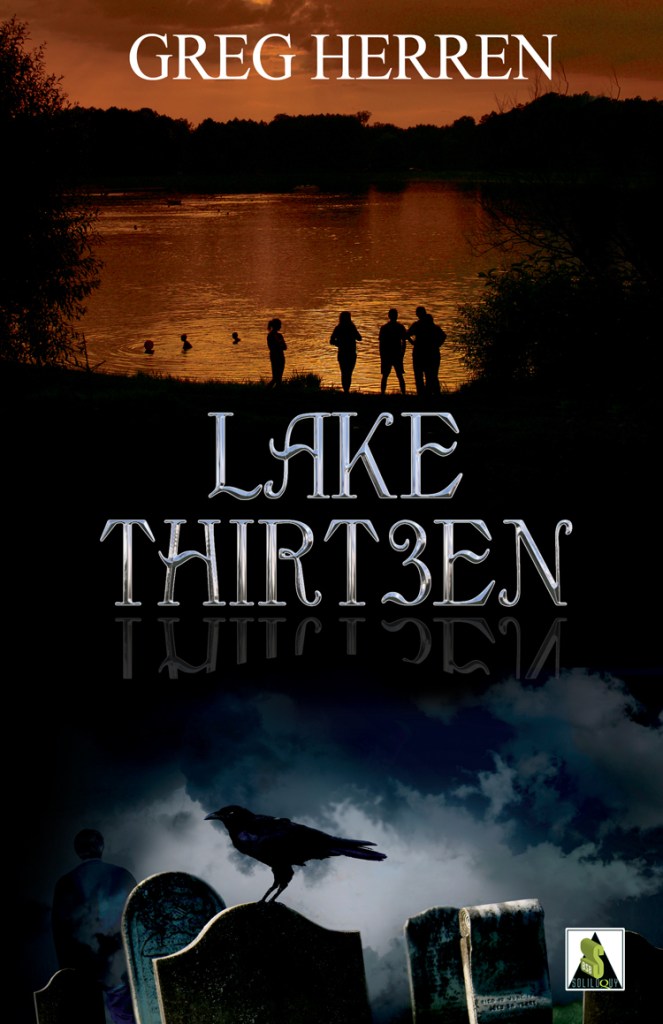
I started reading an old Evan Hunter novel yesterday, Last Summer. It was a book I’d always wanted to read when I was younger, and I was reminded of it sometime during the pandemic, so I got a copy of it and its sequel, Come Winter, from eBay and so I started reading it at long last yesterday. I’ve never seen the film, either; but I do remember Barbara Hershey and Richard Thomas (aka John-Boy Walton) starred in it. It also put me in mind of another trope from that era of publishing; books with teenagers as protagonists (and/or antagonists) were almost always set during the summer, and so many were set on coastal islands–this one, Summer of ’42, A Summer Place, etc. It of course makes sense; teenagers had a lot of free time to get into shenanigans during the summer, especially when they were on a vacation somewhere. I’ve actually fallen into that trope a couple of times myself–Dark Tide, Lake Thirteen–and numerous other stories I would like to tell at some point. I do like the idea of gradually getting rid of all this paper around here by digitizing or disposing of things that I’ll never get around to writing. I don’t want to start writing fast in a frenzied attempt to write everything I want to before I die–and there’s always new ideas, too. But i know I’d really like to eventually get back to that novel where I based the victim on Ann Coulter…hmmm, maybe that could be the next Scotty. That’s actually a very good idea. Hmmmm.

It’s so nice to be around writers. It really is a balm for my soul. I did write some yesterday morning, but I am not going to even try today. I am very tired–I’ve done a lot of walking this weekend–and of course having to be “on” is tiring. The truth is I am not at 100% yet, much as I want to believe that I am, and there’s nothing wrong with that. One exciting development of the weekend is that I experienced no stress, anxiety or stage fright for my reading yesterday. Not only was I calm and not sweating buckets, I was actually able to relax and enjoy the experience. I don’t think I’ve ever done that before? It was wild. I’ve actually been relaxed the entire weekend; I don’t believe I understood before how much my anxiety impacted me at events like this. Having a calm and quiet head is a lovely thing, and now that the creativity has come back, I might actually start enjoying my life again.

I’ve also been spending a lot of time reminiscing about past S&S weekends, too; remembering how it all started, how much of it was done on a fraying shoestring because there was no money for it, and held in donated spaces at gay bars. It also used to be in May, so the weather was a LOT hotter. Paul and I used to always get the pool suite at the Olivier House for our home base, and people always used to wind up in our room later in the evening to drink and socialize and have a lot of fun. I couldn’t do that now–as it is, i stayed up past my usual bedtime Friday night and paid for it all day yesterday (legs are tired today, too). I also came up with a title for my memoir should I ever try to write one: Unreliable Narrator.

And LSU won the SEC women’s gymnastics championships last night in very dominant style. They weren’t as on as they usually are, and still set an incredibly high score and really have the potential to win the national title this year, too. And the US had a great outcome at the World Figure Skating Championships, winning two golds (men’s and ice dance) and a silver (women’s).

And on that note, I am heading into the spice mines. Have a lovely Sunday, Constant Reader, and I’ll most likely see you tomorrow.

Oh Very Young

So, are you ready for some MORE blatant self-promotion?

During the Bold Strokes Book-a-thon, the other panel I was on had to do with writing young adult fiction (the other panelists were amazing, I might add), and once again, I am answering the questions sent to us by the moderator to turn into an interview with JUST me (because it’s all about ME ME ME) but I do urge you to seek out the video of the panel. It was terrific, and I was definitely the most uninteresting person on the panel, seriously; this is NOT self-deprecation. (I bought everyone’s books during the panel, I might add; definitely check out Lauren Melissa Ellzey.)

What is the definition of Young Adult? How does it differ from other genres?

I think it’s primarily an age distinction, to be honest, which is something that always makes me uncomfortable. Growing up I read far above my age level; when I was in seventh grade I was reading at a college level, per the tests and so forth. I mean, I did read The Godfather when I was ten; my parents, despite their conservative religious beliefs and values, let me read whatever I wanted without having to ask permission–I think when I asked Mom if I could read something the last time she replied “Read whatever you want, I don’t care” and after that I never asked again. When I was a kid, there was no such thing as young adult; everything was either for adults or “juvenile.” The juvenile category contained multitudes, beginning with the Little Golden Books and picture books to kids’ mysteries to Judy Blume. I think sometime in the 1980’s the genre was separated into “juvenile” for kids 8-12 and “young adult” for 12-18.

But there are kids like me, who can read above their age/class level and others who can’t read at their age/class level, and I think in some ways that differential could be harmful for those who are below-average readers–reading is the most crucial aspect of education, because if you can’t read…and no matter how many ways they try to make the language around slower readers more accepting and less stigmatizing…it doesn’t really help kids to be told they’re below average or not as smart or quick as the other students. (One of my primary problems throughout my education is I would understand something the first time, while others inevitably didn’t, and as the teacher explained for a second or third or more time, my ADD would kick in and my mind would wander because I didn’t need to listen and then wouldn’t be listening when the teacher moved on.

Ah, well. 

Oh, and all subgenres of fiction also have the middle grade/juvenile and young adult sub-sub-genres.

Why or how did YOU choose YA?

I don’t know that I chose y/a so much as it chose me.

I started writing when I was a child (all my childish scribblings are lost to moves and time passing), and I wrote about kids my age. My first attempts at writing were always some kind of kids’ mystery series, a la The Hardy Boys and The Three Investigators (I’d still like to do this, frankly), and when I became a teenager, I started writing about teenagers. I wrote a bunch of short stories while in high school about the same group of kids going to the same high school. Those stories slowly but surely grew into a sprawling, handwritten novel about the county with plots and subplots and main characters and minor characters and all of this history; a “Peyton Place in Kansas kind of thing”. I worked on it for like five years, and eventually had this enormous sprawling mess that needed to be revised and rewritten and typed…and since I didn’t know how to type, made that part of it a problem. So I shoved it into a drawer and started pulling from it rather than revising it; taking out plots and characters and using them in other books and other stories.

After I finished that, I spent the next five years mostly working on short stories. I started another book, more horror than anything else, but never got further than the third chapter. I finally decided to write a horror novel built from my old manuscript and those short stories from high school. I was about three chapters into it when I discovered two things: there was a big market in y/a horror at the time (Christopher Pike and R. L. Stine were HUGE during this period) and so I bought some of them. When I finished, I thought, “You know, I should turn Sara into a y/a novel” (because I thought somehow that would be easier? Foolish, foolish rookie) and so… I did. I was right in that thinking of it in those terms made it possible for me to finish a draft, but I wasn’t very happy with it so I put it aside and started writing another one, Sorceress, which was also horror but also had some strong Gothic moments in it. When I finished that one, again I wasn’t pleased with it so I started another–Sleeping Angel–which was the one I thought really had potential. I never finished that draft–by this time I’d discovered that gay fiction and nonfiction existed, so I started reading that and trying to write about gay characters instead.

Those manuscripts remained in my drawer for well over a decade, until a friend of mine took a job as a young adult acquisitions editor, and she wanted to work with me. I told her I’d written three (although it was technically two and a half), and gave her a brief synopsis of them. She liked Sorceress the best, so I started revising and editing it and turning it into something publishable. Once it was all done, she’d left that publisher, but started her own small press for y/a books for underrepresented teens, and she wanted to launch the press with Sorceress. I said “okay” and we were off. I eventually realized I needed to let Bold Strokes know, and when I did, I got an email back saying you know we do y/a, too? And so I sold the other two to them, and have never looked back since then.

Are there specific rules for writing YA (things you can’t do)?  Does Bold Strokes add on or impose specific or additional rules?

I don’t pay too much attention to rules, frankly. There’s no graphic sex in my books, but it’s hinted at. I also try to swear less in young adult books than I do in adult fiction, which is probably not as big of a deal as I think it is? The society I grew up in was a lot more puritanical–believe it or not–that the one we live in today. So I always default to that setting, and then have to shake it off. Swearing isn’t as big of a deal as it used to be. No one thinks they’re marrying a virgin anymore, and on and on. And having been attacked for daring to accept an invitation to speak to queer high school students, I tend to tread softly. There have been a couple of times where I’ve had to change language, or how a scene went, because my editor thought it might be problematic; and frankly, I never want to be offensive, so I have no problem with it. I don’t see it as a free speech issue the way so many intentionally offensive writers claim it is. I shouldn’t take offense to someone calling me a faggot? Grow the fuck up. The so-called free speech “crusaders” are always defending hate speech as well as trying to shut up the people who find it objectionable. You do not have a constitutional freedom from consequences or getting a negative response to things you say and do, period. It’s really not hard to understand unless you want to be passive/aggressive and childish and a moron.

How do you remember back to these days, specifically how it felt or feels? (this is coming from your moderator who is much older than you are)

Well, for one thing, I’ve always kept a journal and I still have them all. (I was insufferable when I was younger, seriously.)

My sister has a theory that we forget a lot of the pleasant memories from our childhoods, but remember the traumas in great detail. I believe the truth of that, because school was a nightmare for me from the day we moved to the suburbs until I was done with it. I remember how it felt to read Greg Herren sucks cock on a desk at school. I remember how it felt to be mocked, laughed at, and bullied by assholes. I do remember the good things, though I tend to always focus on the bad.

The first thing I always do is abandon whatever “wisdom” about life I’ve theoretically learned since leaving high school, and put myself into the teenager mindset: they think they are the main characters in everyone they know’s story, and everything is the end of the world or their life is ruined and you are the most horrible parent ever! I’m not entirely sure I’ve escaped thinking that way, to be brutally honest: I am horribly selfish.

How do you come up with your characters?  Your stories? 

I am weird in that I inevitably always start with a title. I hear something or read something and think, that would make a good title. The next question is what story would fit that title? And it kind of goes from there. The title may change, the character names and story might change and evolve, but I can’t write anything that doesn’t have a title. Bizarre, I know. Usually with my young adult stuff it’s an idea I’ve had for a number of years and finally decide to explore whether it’s a novel or a short story, and go from there.

Dark Tide was originally called Mermaid Inn, Bury Me in Shadows was originally Ruins, but the others pretty much stayed the same from beginning to end.

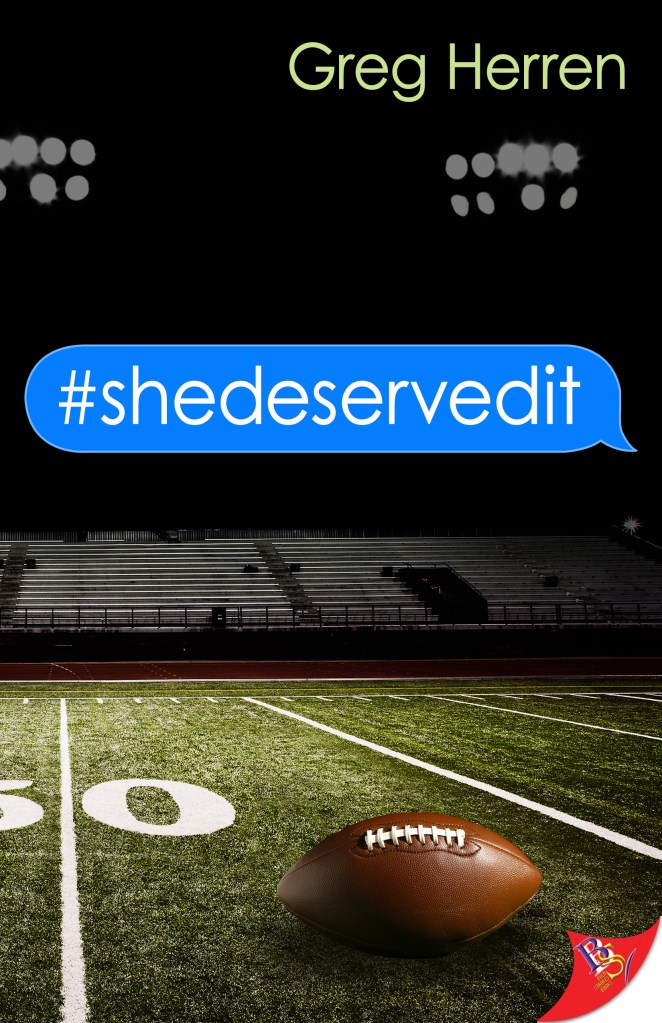
I wrote #shedeservedit because I was angry about the Steubenville/Maryville rape cases, and remembered stories and gossip from when I was in high school and college…and rethinking them through a more evolved brain about women and misogyny… well, it made me angrier. I had already planned on writing a story set in the same town with the same characters and opening with the same murder (I always referred to it as “the Kansas book” for years), but the motive was something I always had trouble grounding in reality. After those cases…it clicked in my head. You need to write this story about small town misogyny, protecting the star jocks from the girls at all cost, and make that the plot. It was easy to write because I was angry. Making it a compelling read was harder, because the subject matter was sickening to me.

I needed to write that book, and I don’t regret doing it, either…but it’s not exactly a feel good story people can escape into, either.

Why do you think YA is so popular?

It’s more accessible, I think. I mentioned reading ability before, and I do think that most readers aren’t into the Great Literary Tomes, hundreds of pages of beautiful writing with no real point or story. People kind of want to escape their cares and worries, and y/a books tend to be really entertaining. We’re competing with phones and tablets and streaming, so we need to write entertaining and engaging books.

Any specific must do-s or must-haves to get your writing each day?

I’m not nearly as anal about that as I used to be, before I returned to work full-time. I am very aware that I have little time to waste when I write, and thus must seize whatever opportunities to write show up. But if pressed, coffee. I can’t write unless I’ve had coffee when I got up.

Don’t Fall in Love With A Dreamer

Yesterday was a little frustrating, I am not going to lie. The day went off the rails early and just never seemed to get back on track. Frustrating news, irritation, depression, and high anxiety all combined to make yesterday a challenge for me to stay on track and balanced, so much so that I just felt overwhelmed and didn’t even try to cope or stay centered because I felt tired all day on top of everything else that was going so irritatingly wrong yesterday.

I did sleep well Sunday night, but I was still worn out from the driving and so forth from the weekend.

So yeah, I was channeling some Major Bitch Energy yesterday, but managed to keep it all inside and not inflict it on anyone else. This was the big win of the day–because I used to just give rein to it and everyone else would just need to get out of my way or else. But I didn’t snap at anyone, I didn’t swear at anyone when I was driving home after work–but I did drive straight home after work, despite needing to run errands. I was smart enough to realize how close I was to snapping at someone or just being a dick in general, so I went home to spare the world and some unsuspecting person my foul mood.

Sigh.

And then I got home to find out that they’d started working on the house today–not really sure what they are doing but it’s an old house in New Orleans so it literally could be anything–and didn’t give any warning–as evidenced by the kitchen wall clock lying in pieces on the kitchen floor (it’s easy to put back together), and then I noticed a lot of the framed pictures in the laundry room were on the floor. The workers didn’t give any warning nor did our landlady; but Sam the handyman knew there were things on the walls so he called Paul. He got five minutes notice, but didn’t think about the clock in the kitchen–and why would he? It’s a whole different room, even if it is connected to the laundry room and one wall is also the back wall of the house.

I also slept wrong or something either Saturday or Sunday night so my neck was sore yesterday (still is this morning, in fact)–turning my head to the left hurt, which of course made driving an absolute joy. I do remember taking good health and not always hurting for granted for way too long. Sigh, I guess there is some truth to that saying you really don’t know how much you’ll miss something until it’s gone; it never even crossed my mind to be grateful I was in good physical condition. I didn’t even know how lucky I was; but I certainly am very well aware that I am a physical wreck at sixty two. Heavy heaving sigh. My neck is still sore this morning, but Ben-Gay has been doing the trick and it’s not quite as bad this morning as it was yesterday.

So, by the time I finally got the laundry started last night, I was already in a mood and said fuck it and repaired to the living room with Tug for some lap time. A purring sleeping kitten in your lap is the best thing for anxiety and stress after a bad day.

Hopefully today will be a good day. I am going to attempt to start eating more “not soft” foods this week at some point. I do still have a lot of that soft food stuff to get rid of anyway, so its just as well I was wrong about how long it would take to get my dentures (I don’t think I ever really told a timeline, which was why I got confused) because all this remaining soft food I’ve not gotten to yet will get used and it won’t just sit in the cabinet for months (years) waiting for me to get fed up at last and start pitching things, right? And I don’t need to have the expensive ice cream–it just has a high calorie count and is very filling and I like it, so I can probably start doing without that; maybe switch to something less expensive and with chunks of stuff in it. I don’t know that I can’t chew so much as I can’t bite into things, which is why I am going to start practicing with other foods. Most of this soft stuff is just carbohydrates, which my body is turning into sugar which is making me pre-diabetic which is also building up my uric acid which is manifesting as gout (everything is connected in your body–everything). I did make it into work, only had to use two hours of my sick time (I get to use two more on Wednesday when I get my sonogram), and managed to get some things done both there and on the home front.

As I was driving both to and back from Panama City Beach over the weekend, I also went down memory lane back to my childhood again. I hadn’t been back to Panama City Beach since the summer I graduated from high school, back in 1978; we went on a trip to visit the relatives and the beach and all for about three weeks that summer, right after I graduated. We never used I-10 back then–was there an I-10 then? Probably–but once I took the exit for 331 south, I knew exactly where I was; Defuniak Springs, and 331 was the road to my grandmother’s old place on Choctawhatchee Bay. And sure enough, 331 took me to the bridge over the bay–no longer a draw bridge or a two lane bridge; now it’s two separate bridges with two lanes crossing in either direction–and the gas station at the corner where you’d turn to go to my grandmother’s is now a park, which I didn’t catch until I was past it. I was going to turn and drive down there on the way home, just to take a look, but by the time I got across the bridge I was deep into The Only Good Indians and I was tired and just wanted to go home. But these old sites–and the incredible beauty of the beach at Panama City Beach–brought back a lot of memories and thoughts about me, my life, and my writing; as did spending time with my aunts and uncle on my father’s side of the family–none of whom I’d seen outside of weddings or funerals since that last trip down there before we moved to California in the the first months of 1981, and that made me go down that road. We spent most of Saturday after I arrived watching football games–Alabama-Texas A&M, and then Notre Dame-Louisville–which reminded me again of how deeply rooted football is as a family thing; we bond over watching football games, pretty much rooting for the same teams while hating the same ones. (They all overlook my LSU fandom, but they’re all Auburn fans who hate Alabama with a passion–my dad and mom and our little branch were the exceptions; rooting for Alabama unless they were playing Auburn. For me, the SEC is now LSU–with Auburn a distant second and Alabama just behind them in third. We all hate Tennessee and Florida–but they hate Georgia; I don’t. Even Dad hates Georgia.) But it made me think more about the panhandle books and the Alabama books I still want to write–and I was also laughing at myself for trying to make the books set there (like the ones in Kansas) so based in fictionalized reality that I feel tied to making the towns almost exactly the same; it’s fiction, lunkhead, so you can change things; it’s okay. (This also kind of dovetails with my “NOLier than Thou” post; because I realized I’ve always created fictional places in New Orleans while still trying to get the city right…it’s really about the mentality than the actual geography.)

But I would like to go back and explore; perhaps Paul and I can find a place over there to rent for a few days–a condo or something so we can eat at home and so forth; Paul would be more than happy to just be given beach access 24/7–and then I could think about the two or three books I want to set there. (I also want to set some books and more stories in the fictional town of Tuscadega, which I invented and based on Freeport, where my grandmother lived. “Cold Beer No Flies” was set there, for example. And driving through Mobile made me think of Dark Tide, too.) It was also interested because the Google Earth views I’d looked at made Panama City Beach look a lot different. It is a lot different than it used to be–more built up, no vacant lots, and yes, there are condos and massive resort hotels built on the beach side of Lower Beach Road (there was only a Beach Road back in the day–now there’s Lower, Middle, and Upper Beach Roads), but there are still public beaches where you can drive up and park right by the dunes and walk a very short distance to the beach, and those tourist-serving little shops that sell gimcracks and souvenirs and beach towels and inflatable rafts and suntan lotion are still there–not as many, but there are some, bearing names like Surfin’ Safari and so forth. I also took some pictures to help me remember things if and when I write about the area again. (It’s where I want to set my Where the Boys Are/slasher novel mash-up that I am calling Where the Boys Die. )

And another story–another one of the ones from back in the day when I was still in college and trying to figure out how to become a writer (which is what I thought those classes were for; they were not) I had written another one that I had turned in with “Whim of the Wind” (the first semester with a good teacher, I had started to feel like I could be a writer again, and by the second semester when I took the class a second time–you were allowed to take it twice–I decided to write a lot of stories to turn in….which was when I first started writing fast, I suppose. Anyway, when I turned in “Whim of the Wind” I turned in another story called “Thunder Island,” which was also set in the panhandle. It was also well received by the class, but not as well as the other, and so I’ve never really thought much about the second. I tried rewriting it once, but to no avail, and since then it’s just kind of been languishing in the files. Ironically, the story was about someone who was returning, after a long time, to the area after a funeral and was remembering a summer when he was a kid, staying on the bay with his grandmother…but while the story was good and worked, now it’s problematic. I’d have to update the story and change some things, and it’s not a crime story at all–although technically in its original problematic form it was an inadvertent crime story. Funny that I completely had forgotten writing a story set in the panhandle almost forty years ago that actually predicted the drive I just took. Maybe I should look it over again? May not be a bad idea.

But the most important thing for me to do today is assess my situations and figure out where I am at with everything, and what I need to get done. I am still in the midst of medical processes–part of yesterday’s problems stemmed from me either never being told or misunderstanding the denture process, which is much longer than I thought and I won’t be getting the final ones for another four to five weeks–and tomorrow morning I am having a sonogram on my heart and Friday an MRI on my shoulder. I need to get a handle on things because all the medical stuff keeps pushing everything else out of my brain; how do people prepare for surgery when they have a gazillion other things to do on top of that? I guess you just endure. I have no control over the situation–which is probably part of my problem with the whole thing–and just have to put my fate in the hands of others, which is something I never like doing and always chafe at; it’s part of the reason why flying is such an issue for me (one of the many reasons, all of which have to do with my faulty brain wiring)–I have no control over anything. You have to surrender control of your fate to the airline once you walk into the airport until you walk out of the airport at your destination and that really chafes at me. Anxiety, of course–on the one hand I know what the general disorder is and that everything else I thought was wrong with my brain’s wiring is just a symptom of the macro disorder, and I am better about controlling it now that I know what it is…but yesterday was one of those days where I felt no control at all over my life and situation and so that started the spiraling and it just got out of control.

But I am happy that I’m better and more balanced (and better rested ) this morning–the neck is still stiff and sore–and on that note, will head into the spice mines. Have a lovely day, Constant Reader, and I will be back later, probably.

Southern Nights

Home alone. Look at that, I’ve not even been home for an hour and already I am sitting at the computer, writing a blog entry to document my first night sans Paul and pet in over twenty years. I got home from the office, emptied the dishwasher and reloaded it, did some laundry (one load in the dryer now, the other in the washer) and cleared off the kitchen counters, wiped down said counters, and then plopped my butt down at my desk, and here we are. I may work on the book a bit; I may not. I haven’t decided, but I think tonight, other than chores (which are mindless), I may just chill and relax and not use my brain very much and let it rest. I wasn’t terribly tired when I got home from work, either; I woke up before the alarm this morning and didn’t stay in bed–a miracle in and of itself–and had a pretty good day at the office. So, I may clean up computer files and do some organizing of my back-ups and files and things; I may just float around the apartment absently picking things up and wiping things down as I think about the fourth chapter of the WIP which is the one I am currently revising, and what precisely I want to do with the fifth chapter and where the story weaves itself next. It’s nice to simply sit and think sometimes, or to think while you do chores that don’t require much attention so your mind can wander while you do them. There’s a lot of clutter and mess in the Lost Apartment, and I’m kind of tired of it.

Everywhere I look there’s dust and clutter. This shall not stand!

This book that I’m currently writing again–because I actually started writing it sometime last year–is something I’ve had the kernel of the idea for now for quite some time. I’ve been wanting to write a straight-up gay noir novel now for I don’t know how long. I’ve had this particular idea longer than I have had the idea for Chlorine, for those of you who are anxiously awaiting that book to happen, and that’s kind of why I want to get this done. Chlorine will be a much bigger challenge than this one, and so I want to write this one as a kind of warm-up. It’s set in a city based on Tampa but isn’t Tampa, and I don’t know why that is but it feels right, like it belongs there for some reason. I haven’t been there in a very long time and the last time I was actually in Tampa (the day of the fateful Bouchercon Target run with my friend Wendy) I didn’t recognize anything and was completely lost–and I used to know that part of the city like the back of my hand. So the city I am writing about is Tampa, but as I knew it in the 1990’s, so it’s not Tampa. (There’s another noir I want to write that would be set in the same city but in 1992–and that one is going to be waaaay too much fun to write! But that’s a few years away–and both noirs are connected to each other.) The working title is Muscles, and Muscles is the name of a gym in my fictional city, that is managed by a has-been former pro wrestler in his later forties (injuries ended his career) who also happens to be gay. The gym is owned by a local criminal operation and money is laundered through it, while the main character is the public face of the gym. A very hot and sexy younger man who is fluid sexually and a bit of a sociopath (and yes, I realize I am playing into the trope of the evil bisexual, but you’ll just have to trust me) who is involved with the crime boss’ daughter and has used the main character to get ahead in the past has now done something–but the main character doesn’t know what it is–that has put his life in danger, and the main character has to decide whether he wants to try to help this stupid kid who’s in over his head but is also a user, or let the chips fall as they may while trying to stay out of it as much as he can…but of course, he can’t. It is soooo much fun to write, Constant Reader, and I’ve been very excited about working on it and the work I am doing on it. I am, of course, having constant doubts about things, but that’s what other drafts are for and I won’t be signing a contract for this until it’s in good enough shape to only need a vigorous and anal-retentive copy edit.

Today was also miserably hot again, but either I’ve gotten used to it or my entire body and soul have been numbed by it. It never gets to be over a hundred here; it was always rare before. Nineties, yes. Feels like over a hundred? Of course. But for the actual temperature to be over a hundred, and the feels like being in the hundred and teens? Mary Mother of God, no one asked for this. But I endured it today without much of a problem, and it was nice to just come straight home from work for the first time this week. My copy of the new Donna Andrews (Birder, She Wrote, which may just be one of the best titles of all time) arrived at the postal service today, so I’ll probably swing by there on the way home from work tomorrow and I’ll stop at a market so hopefully I won’t have to leave the house for the rest of the weekend, which would be oh so lovely.

I am probably being overly ambitious about what all I want to get done around here while Paul is away, but that’s always been my modus operandi, and that will also probably never change. What I can change is feeling like a loser for not getting everything on the list done. That’s self-defeating, which is also my modus operandi, and I need to do that a lot less going forward. I think part of the reason I am high achieving when it comes to productivity is because I always try to do more than any human being is capable of doing, but even getting half or part of it done is an accomplishment. I was looking at something the other day, I don’t quite remember what, but it was stats for this blog for some reason–which isn’t something I care enough about to actively seek out–but I was looking for my tags because I wanted to see if I had ever written about my book Dark Tide (I had) and at some point the list of how many posts I’ve done since moving the blog here whenever the hell that was, and was stunned to see it was in excess of two thousand? I think I moved the blog here in 2015, which was roughly eight years or so ago. So if I write one entry per day every day for eight years, that alone is 2920 entries. There have been days I’ve missed, of course, but there have also been days with more than one entry, and sometimes more than two when I am feeling especially bloggy (I just made up that word, you’re welcome), and assuming that every one is about 500 words (an underestimate, I’d bet), it comes out to…one million four hundred and sixty thousand words.

Holy fuckballs, seriously. And I never count the blog as writing for daily totals or anything.

Yikes?

And I think that’s a good place for me to cut this off. The loads in the dryer and the dishwasher are complete, so time to reload the dryer and dishwasher and fold some clothes.

Try not to let your envy consume you, Constant Reader.

The Wurlitzer Prize (I Don’t Want to Get Over You)

And here we are on yet another Pay-the-Bills Wednesday. Paul is leaving today, and won’t be back until a week from Saturday. I also don’t have Scooter for cuddles and company. Will I go mad living under conditions of absolute reality? Even larks and katydids are believed by some to dream.

Yesterday was a much better day than I’ve had in quite some time, all things considered. I slept incredibly well, so didn’t start off my day either sleepy or groggy or tired, which is always a plus. The work day was relatively low-key; we were slow in the morning but busy in the afternoon, and frankly, I prefer it that way; busy in the morning inevitably means tired in the afternoon, and if we’re so it’s agony. But over all, a good day at the office and an auspicious beginning to the month of August. (I also didn’t note that it was the anniversary of both of our moves to New Orleans; first in 1996, then again on August 1 2001 when we moved back home from That Horrible Year Away.)

I ran errands on my way home–mail, prescriptions, groceries–and then came home to a sink full of dirty dishes which needed attention, so I took care of that as well as another load of laundry, and then sat my ample buttocks into my desk chair and banged out the revision of Chapter 3 I’d been stuck on for a little less than a week (not so much stuck as tired and didn’t want to bother with it, in brutal honesty) and got it finished and under control before moving onto Chapter Four. I also worked on “Whim of the Wind” for a little while, and also did some more research into the history of the city I am fictionalizing for the WIP, which I continue to fail to discuss. Perhaps this weekend? Perhaps. I kind of want to see if I can get past Chapter 4 before I talk about the book publicly, but that’s nothing more than my own superstitions, which is pretty stupid. As a general rule I don’t believe in things like jinxes and curses and so forth, but I do believe you can actually speak things into existence sometimes. The only takeaway I got from Psych 101 in college was the concept of visualization; that picturing something in your mind can make it happen–but not like winning the powerball or anything like that, but more along the lines of why you always spill something full when you’re carrying it no matter how careful you are…because your mind cannot picture a negative–you can’t see yourself not spilling it; so when you think about not spilling it, you will because you see yourself in your mind actually spilling it. (It’s like how you cannot prove a negative–you can rarely prove you aren’t something; but it is incredibly easy to prove you are. I use this example: someone drinks a lot. They don’t think they have a problem, they don’t wake up in the morning feeling like death warmed over twice and wanting another drink. But once someone says, “You have a drinking problem”, you can’t prove that you don’t. You can say you aren’t, but that’s denial. You can stop drinking for a time period—but if you start drinking again, well, there, you see, you were in recovery and then relapsed! You cannot win, so why bother trying?) It is much harder to prove something isn’t true than it is proving something is. Guilt is the same way–how do you convince the cops, who are convinced you are, that you aren’t?

I will say this about the WIP–it’s more hardboiled and noir than what I usually write, I am having a lot of fun with it, and it’s been a long time since I wrote anything set in Florida, if I ever have? Dark Tide started as a Florida panhandle novel, but I moved it to the Alabama coast; “Cold Beer No Flies” was a panhandle story, too. But this is me fictionalizing Tampa–come to think of it, my main character in The Orion Mask lived in a fictional Tampa I am using again for this one–and I’ve not set foot in Tampa, other than flying in and out for Bouchercon in St. Petersburg, since I moved away in December 1995 to once again reboot and restart my life.

I was tired after all my errands yesterday–the thermostat in my car let me know it was 101 when I left the office yesterday; it is insane for it to be that hot, even in New Orleans. It’s exhausting dealing with this insane summer heat this year. But I did get some writing done yesterday, which was a good thing, and of course Paul finished packing. Heavy heaving sigh. Ah, well, I have Superman and Lois to catch up on, and My Adventures with Superman, and so many old classic films to watch, so I shouldn’t have any trouble keeping myself entertained so I don’t feel lonely or bored. And of course I could be writing, which is always difficult in August…I also think about how about eighteen years ago I was finishing (finally) Mardi Gras Mambo at long last in that last, fateful August before Katrina. It really was a completely different world all those years ago; maybe I ‘ll go back and read those old Livejournal entries from August of 2005, so I can remember the world before once again. I also have a lot of reading to get caught up on, as well. I have some errands to run this evening on the way home from work, and then I am going to be inside for the night. We did watch another episode of Gotham Knights last night–very intense, as the season finale moves closer–but now I have to wait for Paul to come home to finish. Heavy heaving sigh.

But perhaps I’ll use all this solitude productively. One never knows, and on that note, I am heading into the spice mines. Have a lovely Wednesday, Constant Reader, and I will check in with you again tomorrow.

Song of the South

I am both of the South and not of the South.

I was born in Alabama but didn’t grow up there. I was two years old when my parents migrated north in search of work, good jobs, and a better life for our family. My parents, however, were very Southern, so I was raised with their values and beliefs (which were very Southern and of their time) but being confronted with very different values and beliefs at school every day opened up my mind in ways that it may not have been had I grown up in Alabama. Our neighborhood in Chicago, near Lawndale Park (our nearest major cross street was 31st and Pulaski), was the perfect representation of America’s vaunted ‘melting pot’; our neighborhood was filled with first or second generation European immigrants; many from eastern Europe, who fled either before or after the war. There were Czechs, Poles, Austrians, Hungarians, and Serbs; in the fourth grade we even had a Muslim girl from Yugoslavia. She had the most delightful first name which I’ve never forgotten–Zlatiça–even as her last name is lost in the clouds of memory. It was also very confusing trying to figure out where the immigrant kids (either they were born in another country or their parents/grandparents were) came from, given that the maps of Europe had been redrawn barely twenty years earlier. The Czech children I knew didn’t identify as Czech but rather as Bohemian; they also called their language that. It took years of study and reading up on history to realizing Bohemia became Czech after the first world war; for many years I believed Bohemia still existed under that name but had somehow been folded into another country or something; I don’t remember. I do remember being confused. Until I finally wrapped my mind around the post WWI renaming of the region, I always just assumed Bohemia was a German region. Reading history didn’t help much in that regard, as Bohemia was part of the Holy Roman Empire for centuries (in fact, the Thirty Years’ War kicked off in Bohemia).

But there was a lot of racism in our neighborhood too; the white European immigrants detested the brown immigrants from Mexico and Central America; I vividly remember the way our babysitter would sneer the word Mexican when referencing anyone brown. There was also a lot of strife in Central America at that time; I think both Guatemala and Nicaragua were enduring civil wars of some sort, hence the influx of Central American refugees and immigrants. I remember Martha, a girl in the sixth grade, telling me about how soldiers came and shot up her village, killing dozens of people she knew and members of her family. She was very calm and unemotional as she told me about it, which is pretty remarkable for a child who couldn’t have been more than ten or eleven, talking about a trauma she witnessed when she was six or seven. (Now I know she was dissociating; and I do remember her telling me calmly that she felt like she wasn’t even there as it happened; like she was watching it all happen from a distance.) Ironically, we became friends because we exchanged Nancy Drew or Hardy Boys mysteries; this conversation came about because we were reading a Hardy Boys book set in Central America; I want to say Footprints Under the Window, but it may have been something else….but she wanted me to know that the depiction of Central America in the book was nothing like the reality.

My grandmother used to tell me wonderful stories when I was a kid about my family history and the history of the county we’re from in Alabama. As a wide-eyed innocent and naïve child, I believed everything she told me, and always wanted to fictionalize those stories. I was in my early twenties when I wrote a short story based on one of those tales; about the Lost Boys and the evil renegade Yankee soldier who burned the house down and presumably murdered the two boys of the house. The story was called “Ruins,” and while I was pleased with the story I felt the story was too short; there was more to the story than I could fit given the length restrictions. I always thought of the story as a kind of an abstract or lengthy synopsis of the novel I would write someday. But it was also a Civil War story, and I wasn’t sure how I could write a Civil War ghost story without being, frankly, offensive. I tucked it away in a drawer and would think about it from time to time–usually when driving through Alabama on my way north–but still couldn’t wrap my mind around it. I worried and fretted and feared and doubted myself constantly. I told the story once to another writer friend of mine, and she urged me to write it…in fact, she hounded me about it for about twelve or thirteen years before I decided to take a deep breath, put on my big boy pants, and take that risk.

“Was this an accident, or did you do it on purpose?”

I opened my eyes to see my mother standing at the foot of my hospital bed, her heart-shaped face unreadable as always. The strap of her Louis Vuitton limited edition purse was hooked into the crook of her left arm. Her right hand was fidgeting, meaning she was craving one of the rare cigarettes she allowed herself from time to time. Her dove gray skirt suit, complete with matching jacket over a coral silk blouse, looked more rumpled than usual. Her shoulder length bob, recently touched up as there were no discernible gray roots in her rigid part, was also a bit disheveled. She wasn’t tall, just a few inches over five feet, and always wore low heels, because she preferred being underestimated. Regular yoga and Pilates classes kept her figure slim. She never wore a lot of make-up, just highlights here and there to make her cheekbones seem more prominent or to make her eyes pop. Looking at her, one who didn’t know better would never guess she was one of the top criminal attorneys in the country or that her criminal law classes at the University of Chicago were in high demand.

I could tell she was unnerved because she’d allowed her Alabama accent to creep slightly back into her speech. She’d worked long and hard to rid herself of that accent when she was in law school, because she said no one took her seriously when she spoke or else thought she was stupid once they’d heard it. The only times she used it now was when she wanted someone to feel superior to her, or she’d been drinking, or she was upset.

It worked like a charm getting her out of speeding tickets.

I hadn’t been asleep, nor had I been awake either, hovering in that weird in-between state where it seemed like I’d been living for the last three or four days.

“It wasn’t on purpose.” I managed to croak the words out. My throat was still raw and sore from having my stomach pumped. My lips were dry and chapped, and my eyes still burned from the aftermath of the insane drug-and-alcohol binge I’d gone on in the aftermath of the break-up with fucking Tradd Chisholm. “It was an accident.” I shifted in the hospital bed, trying to sit up more, the IV swinging wildly. The memory of that last and final fight with Tradd flashed through my head.

The main character in the original short story was only twelve, and the cousin he shares the adventure with was supposed to be fourteen. I was writing a lot of short stories at the time set in Alabama, with the idea to tie them all together in some ways–and was also reading a lot of Faulkner at the time, so yeah, a fictional county in Alabama where all the stories were set and were interconnected was kind of derivative; I kind of smirk to myself now when I think about the hubris of aspiring to be Faulkner-esque, especially at that time, when everything I wrote was pretty much garbage. Ah, the hubris of youth. But I did write a lot of “Corinth County” short stories back in the day, and while the writing may have been atrocious, the idea behind them and the core themes were good and had potential.

When I started thinking about turning the short story into a novel, I soon realized that the characters were too young, so I aged them. I originally aged them to teenagers, and in the first attempt at a rough first draft, I got about two chapters in with my main character, Jake, being banished the summer before his senior year to help take care of his dying grandmother back in rural Corinth County. The original first line was something like The summer before my senior year my mother ruined my life. Properly self-absorbed, narcissistic, everything’s about me teenager, right? My original thought was he was a student at a Catholic all boys’ school, was openly gay, and had a crush on a classmate…and having just found out said classmate had gotten a summer job lifeguarding, managed to get himself and his female best friend jobs at the concession stand at the pool, so he could be around his crush and see him all the time. His banishment for the summer had to do with his lawyer mother accepting a co-counsel role in a major trial in California and being gone; she has also kicked out her fourth husband (a much younger tennis pro) and so she can’t leave him alone in Chicago for the summer. The other option was staying with his father and his second family in the suburbs, which was equally unappealing, so he choses Alabama…and is picked up at the airport in Birmingham by another teenager who’d been taken in by Jake’s grandmother when his own mother died. This character, Kelly Donovan, was originally meant to become close with Jake and participate in all the mysteries Jake encounters at his grandmother’s. I also wanted to play with Jake’s being strongly attracted to Kelly, who is some kind of distant cousin, and straight.

But I scrapped that beginning, too. Would a young senior in high school in rural Alabama, a star athlete, be so accepting and open to Jake’s sexuality? Probably not…and he would also be worried and nervous about his patron’s grandson coming to stay there. As I delved more deeply into Jake’s character and who he was, I started thinking it made more sense for him to be older. Why not have him be a student at Tulane, and living in New Orleans? But if he was living in New Orleans, what would make his mother exile him to rural Alabama for the summer? And the more I thought about Jake…the more I realized there was underlying trauma in his life. I didn’t want his mother to be homophobic, but her mother, the dying family matriarch? Yes, yes, that worked better. I made him a loner, but someone who didn’t want to be a loner. He didn’t ever feel like he had friends at his Catholic school; and coming to Tulane he met his first, real boyfriend…which ended up being a disaster. And then realized, what if he goes on a binge–easy enough to do in New Orleans–after a bad break-up and winds up in the hospital? And if he had tried once before to kill himself…yes, yes, this is a MUCH better backstory and pulls the actual plot of the book together much better.

I also knew I wanted to touch on themes of homophobia in the rural South, as well as the horrors of modern-day Southern racism and the South’s racist past.

When I started doing research for the book, I soon learned that many of the old family/county stories my grandmother used to enthrall me with were all apocryphal; almost every region of the South has some version of the stories she told me; the story of the Lost Boys, a local legend which was the foundation of the book, pops up all over the old South–almost every state and every region of the old Confederacy has a version of the story, complete with renegade Union soldier (think Gone with the Wind), and so I decided to address that trope in the book while also using it. But I also added another layer to the story–the Lost Boys may not be the only ghosts at the old Blackwood place, which has a tragic and bloody and horrifying history, as does the entire county. I also started lessening Kelly’s importance to the story–he’s still there, he’s still a character who also gets a big reveal later in the book–but Kelly’s behavior to Jake is abominable and homophobic, establishing some conflict between the two of them as well. Part of this was because of the change in the story, but then I needed to partner-in-crime as well as potential love interest, so I came up with Beau Hackworth (the Hackworths are a large and poor family in the county; I’ve used that family before in stories; my main character in Dark Tide was a Hackworth from Corinth County).

And of course, when you’re writing about a Southern rural county and the Civil War, you cannot avoid the issues of race, prejudice, Jim Crow, and enslavement. I wanted to make it very clear that this wasn’t some “Lost Cause” romantic fantasy that perpetuates the lies and mythologies that sprang up in the South decades after the actual war ended. Jake’s mother raised him not to be racist or prejudiced, as she tells him several times, “We do not take pride in the fact our ancestors enslaved people. The heritage is hate, and don’t ever forget that.” I did wonder if I was being too generous to white people with this, but on the other hand I wasn’t interested in writing from the perspective of someone racist. I will be the first to admit that I worried about being offensive in this book; the last thing I would ever want to do is be insensitive on the subject of race. But I also knew and trusted my editor enough to know she wouldn’t let me get away with anything, and I also had to trust myself to handle it all sensitively. There were a couple of things she saw in the manuscript that could potentially be considered problematic–but they were also easily fixed.

I was very pleased with the end result, and I do think it is one of my best books. I was absolutely thrilled when it was nominated for two Anthony Awards last year at Bouchercon.

And it also goes to show that you cannot play it safe, and things that scare you are precisely the things you should write about .

(For the record, I will add Cheryl A. Head’s Time’s Undoing is one of the best crime novels ever written about racism in Alabama. Beautifully written and brilliantly told, it should really be required reading.)

Play with Fire

Well, I met quota again last night which was marvelous. It’s still a bit chilly this morning. By the weekend it should be back into the seventies (it was yesterday as I ran my errands after work; it’s sixty-one this morning but it does feel colder outside of my bed and blankets), as the Alabama and Kansas State fans start arriving for the Sugar Bowl. LSU is also playing on New Years’ Day in the Citrus Bowl against Purdue, which will probably be the only game I actually watch that day.

There’s been a conversation going on over at Book Twitter lately that doesn’t really impact me in any way, but it’s been kind of interesting to follow. The conversation has to do with concerns about what is and isn’t considered y/a fiction as well as what is, or should be, considered age-appropriate reading material for teenagers and pre-teens. It doesn’t impact me because no one considers me a young adult writer, for one thing; despite having written numerous books with younger and/or teenaged characters (Sorceress, Sleeping Angel, Sara, Lake Thirteen, Dark Tide, Bury Me in Shadows, #shedeservedit), most people think of me as a gay mystery writer. Everything published under my own name is a mystery novel of some sort, whether it’s one of the series books or one of the stand-alones. I’ve never really marketed myself as a writer of young adult fiction, really; I shy away from that, I think, because of The Virginia Incident and the subconscious fear that one day that controversy might resurrect itself (which is ludicrous, and I know that; it certainly would have by now and it hasn’t, which further proves my belief that The Incident had nothing to do with me or my writing or my career and everything to do with systemic homophobia and othering used for political gain). It just seems weird to me that in less than five years after that happened–when I was deemed a menace to America’s youth–I could publish books for teenagers without a single whiff of complaint or scandal or even the raise of a single eyebrow.

Interesting, isn’t it? Almost like the whole thing was just more smoke and mirrors whose sole intent was to rile the homophobic base.

I just love that my existence is considered by some as a constant and continued threat to children.

One of the things that has always mystified me over the years is what is and isn’t considered age-appropriate. Intellectually I was far more advanced that most of my classmates (my emotional and personal maturity being an entire other subject–I’d say I am still behind on that score) and I started reading early. The library and the Scholastic Book Fairs were my best friends as a child, and I read everything I could get my hands on. I loved history, from which grew an appreciation and love for historical fiction (which I really don’t read much of anymore, which is odd. I really want to read Hilary Mantel’s Cromwell books…) and of course, my grandmother got me interested in “scary” movies and mysteries.

You’d think I’d be a huge fan of historical mysteries, but I actually don’t read many of them. I did love Elizabeth Peters’ Amelia Peabody series, and I’ve become a huge fan of Laurie R. King’s Mary Russell series…I think exploring historical mysteries might be a project for 2023.

But the point was I was reading books far too advanced for most people my age when I was young. I freely will admit that in my first read of Gone with the Wind at age ten I didn’t know Rhett raped Scarlett the night of Ashley’s surprise birthday party–it wasn’t until a reread in my late teens where I thought oh, this isn’t right–let alone that she enjoyed being overpowered and forced. I also read The Godfather when I was ten, and there was no mistaking anything about Sonny Corleone and Lucy Mancini. He had a cock the size of a horse’s and her vagina was apparently the Lincoln Tunnel. (Although the she felt something burning pass between her thighs still mystifies me to this day.) I also read The Exorcist when I was ten and I was also very well aware of what was going on in the crucifix masturbation scene. As a kid, I was fascinated by these sex scenes (aka “the dirty parts”), and it wasn’t until I was older than I began to question the entire Sonny-Lucy thing (and why it was even in the book in the first place); and while the crucifix scene was gross, shocking and basically icky to me at ten–when I reread the book sometime in the past decade it seemed prurient, to be honest–used primarily for shock value and to get people to talk about it.

So, yes, I started reading books for adults when I was around ten. I also read Antonia Fraser’s Mary Queen of Scots and Robert K. Massie’s Nicholas and Alexandra that same year–I remember doing a book report on Mary Queen of Scots and my teacher not believing that I had read the thick volume; he started opening the book at random and asking me questions–which I was able to answer, so he grudgingly accepted the book report and gave me an A. (Teachers have doubted me all of my life; can’t imagine why I am insecure about my intelligence…)

Over the course of my teens I also read books by Harold Robbins, Sidney Sheldon, Jackie Collins, Jacqueline Susann and Gordon Merrick-every last one of them crammed to the gills with racy sex scenes. I was also reading Stephen King, Irving Wallace, Herman Wouk, Agatha Christie, Ellery Queen, Jean Plaidy, Victoria Holt, Phyllis A. Whitney and any number of authors who wrote for adult audiences not teens. Were there things in the books I didn’t understand? Sure there were. Were there things in those books that were probably inappropriate for teenagers? Undoubtedly. (I’ve also never forgotten the scene in Joyce Haber’s The Users where a Liza Minnelli-based character fucked herself with her own Oscar; some images are simply too vivid to forget methinks.)

This is one reason I shy away from calling some of my books with teenagers “young adult” novels. Megan Abbott’s Dare Me centered teenagers, but I would never consider Dare Me a young adult novel. I was thinking about this the other night while watching Sex Lives of College Girls (it’s hilarious, you really should be watching); can I authentically write about teenagers anymore? Have I ever been able to? I don’t speak their language anymore, and I haven’t been one in over forty years (!!!!); I don’t know the technology they use or their slang or what they watch or listen to. I don’t know what today’s teens think about virginity and sexuality these days; do the tired old tropes still exist? Does that whole “good girl/bad girl” dynamic still exist, or are today’s teenaged girls a bit more sophisticated than they were when I was in high school when it comes to sex and sexuality? (Contrasting two high school shows with queer content makes you wonder–there’s the jaded cynicism of the rich kids in Elite vs the wholesome purity and innocence and sweetness of Heartstopper, which also had me wondering–although I feel certain Heartstopper might be closer to reality than Elite…or that’s just my hope?) Of course I have other ideas for more books about young people–I have another in-progress one that’s been sitting around for a very long time that I need to repurpose–and I’d kind of like to write more at some point, but I don’t know. My suburban 70’s serial killer preying on teenaged boys book would be told from the perspective of a twelve year old, but it would definitely not be a young adult novel–but will probably be marketed and sold as one.

And on that note I am heading into the spice mines on my last day in the office for 2022. Check back in with you later, Constant Reader.