If Anyone Falls

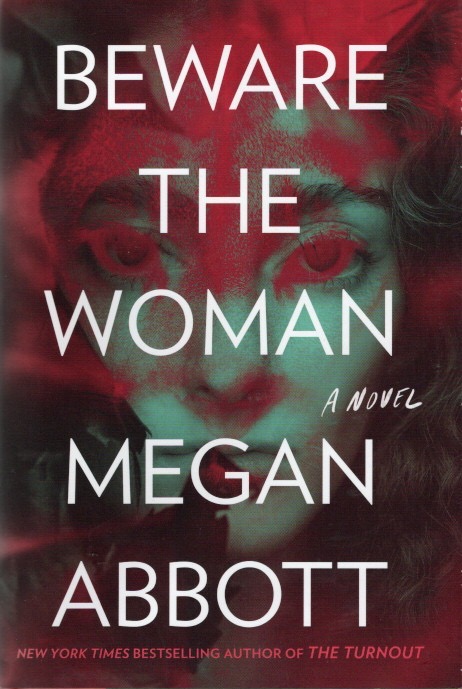
I finished reading the new Megan Abbott novel, Beware the Woman, this morning during a marvelous, raging thunderstorm that filled the gutters and streets of New Orleans with dirty swirling water, cutting the temperature to something bearable for once this summer and cooling the interior of my apartment to the point I needed to put on a sweatshirt and a knit cap on my head. Curled under a blanket with a good book while a thunderstorm rages with a warm cup of coffee on the side table, tendrils of steam rising in curly-cues of white from the creamer-lightened pool of soft brown, is perhaps my happiest of places.

Hell, reading anything new by Megan Abbott is my happiest of places.

My first Megan Abbott novel was Bury Me Deep, which stunned me with its craftsmanship, its voice, its literate choices of words and sentences structures that are short yet lyrical, minimalist strokes painting a broad canvas of human frailty and contradiction, crime and desire that comes from a primal place within, almost inexplicable and unexplainable yet so easily understandable and recognizable. I went on from there to Dare Me and the rest of her all-too-short canon; admiring, loving, respecting and enjoying each book with its magical spell woven by a true master of the literary form, astonishing in its humanity and an exploration of what lengths her characters will go to in order to get the thing (or things) they want, need, desire and hunger for.

Some of the earlier reviews I saw for Beware the Woman painted some parallels between the book and what is perhaps my favorite novel of all time, Rebecca by Daphne du Maurier…which had me intrigued and interested even more than usual.

But more on that later.
“We should go back,” he said suddenly, shaking me out of sleep.

“What?” I whispered, huddled under the thin bedspread at the motor inn, the air conditioner stuck on HI. “What did you say?”

“We should turn around and go back.”

“Go back?” I was trying to see his face in the narrow band of light through the stiff crackling curtains, the gap between every motel curtain ever. “We’re only a few hours away.”

“We should go back and just explain it wasn’t a good time. Not with the baby coming.”

His voice was funny, strained from the AC, the detergent haze of the room.

I propped myself up on my elbows, shaking off the bleary weirdness.

We’d driven all day. In my head, in my chest, we were still driving, the road buzzing beneath us, my feet shaking, cramped, over the gas.

Our main character here is Jacy Ashe, a pregnant wife in her early thirties, married to a neon sign artist, Jed, and working as an elementary school teacher. They are en route when the story opens to the remote upper peninsula of Michigan (primarily known to me from Steve Hamilton’s novels) to visit Jed’s retired doctor father, who lives up there in what used to be the family summer place, with his housekeeper, Mrs. Brandt. This is one of the classic set-ups of one of my favorite subgenres of crime fiction–the Gothic–as well as placing it strongly into another category I love, domestic suspense. This novel has echoes of du Maurier, Phyllis A. Whitney, Dorothy B. Hughes, and Margaret Millar…blended seamlessly together into a classic yet modern novel that updates and reinvigorates both subgenres, bringing them into the modern era and proving they are still just as relevant and important as they have ever been.

(Aside: I do not know where Abbott came up with the name “Jacy,” but it’s one I’ve always liked and wanted to use in my own work since first reading Larry McMurtry’s The Last Picture Show and seeing the Bogdonovich film based on it; I smiled and wondered if that was where Abbott got the unusual name from.)

The Gothic set-up is there, and I can also see the slight echoes from Rebecca: the brooding remote house in the country where tragedy has occurred in the past; the mysterious housekeeper who doesn’t seem to like our heroine very much; the slow-burn of slow revelations of secrets from the past; and the creeping paranoia and potential gaslighting of Jacy…often explained away as her pregnancy hormones or a reaction to the medications after she has a pregnancy complication. One of the strengths of Gothics, for me, is that question of paranoia vs. reality; the gaslighting that is always a hallmark of a Gothic novel. After all, what reason could either Jacy’s father-in-law or husband have for wanting to drive her mad and risking her baby’s health and well-being? She feels her husband slipping away from her and no one seems to believe her…this is probably one of the best depictions of a paranoid pregnant woman in literature since at least Rosemary’s Baby.

Someone once said the Gothic and domestic suspense novels were “women’s noir,” because the danger to them always arose from them being women and doing women’s things; a reaction to the terror of getting married and placing (until very recently) all of your agency into the hands of your husband–and what if you chose poorly?

Abbott takes the best elements of noir and combines them with the foundations of domestic suspense and Gothic to explore what it is like to be a woman, how it is to be a woman, and the trap of societal and cultural expectations for women.

And there’s a reason why the cops always look at the husband first when a woman is killed.

This is a brilliant novel, with many layers to unpack and unravel through its deceptively simple voice and brevity of language. Megan Abbott is a sorceress, a Scheherazade of crime fiction to whom you simply cannot stop listening. Read it, cherish it, love it.

Play with Fire

Well, I met quota again last night which was marvelous. It’s still a bit chilly this morning. By the weekend it should be back into the seventies (it was yesterday as I ran my errands after work; it’s sixty-one this morning but it does feel colder outside of my bed and blankets), as the Alabama and Kansas State fans start arriving for the Sugar Bowl. LSU is also playing on New Years’ Day in the Citrus Bowl against Purdue, which will probably be the only game I actually watch that day.

There’s been a conversation going on over at Book Twitter lately that doesn’t really impact me in any way, but it’s been kind of interesting to follow. The conversation has to do with concerns about what is and isn’t considered y/a fiction as well as what is, or should be, considered age-appropriate reading material for teenagers and pre-teens. It doesn’t impact me because no one considers me a young adult writer, for one thing; despite having written numerous books with younger and/or teenaged characters (Sorceress, Sleeping Angel, Sara, Lake Thirteen, Dark Tide, Bury Me in Shadows, #shedeservedit), most people think of me as a gay mystery writer. Everything published under my own name is a mystery novel of some sort, whether it’s one of the series books or one of the stand-alones. I’ve never really marketed myself as a writer of young adult fiction, really; I shy away from that, I think, because of The Virginia Incident and the subconscious fear that one day that controversy might resurrect itself (which is ludicrous, and I know that; it certainly would have by now and it hasn’t, which further proves my belief that The Incident had nothing to do with me or my writing or my career and everything to do with systemic homophobia and othering used for political gain). It just seems weird to me that in less than five years after that happened–when I was deemed a menace to America’s youth–I could publish books for teenagers without a single whiff of complaint or scandal or even the raise of a single eyebrow.

Interesting, isn’t it? Almost like the whole thing was just more smoke and mirrors whose sole intent was to rile the homophobic base.

I just love that my existence is considered by some as a constant and continued threat to children.

One of the things that has always mystified me over the years is what is and isn’t considered age-appropriate. Intellectually I was far more advanced that most of my classmates (my emotional and personal maturity being an entire other subject–I’d say I am still behind on that score) and I started reading early. The library and the Scholastic Book Fairs were my best friends as a child, and I read everything I could get my hands on. I loved history, from which grew an appreciation and love for historical fiction (which I really don’t read much of anymore, which is odd. I really want to read Hilary Mantel’s Cromwell books…) and of course, my grandmother got me interested in “scary” movies and mysteries.

You’d think I’d be a huge fan of historical mysteries, but I actually don’t read many of them. I did love Elizabeth Peters’ Amelia Peabody series, and I’ve become a huge fan of Laurie R. King’s Mary Russell series…I think exploring historical mysteries might be a project for 2023.

But the point was I was reading books far too advanced for most people my age when I was young. I freely will admit that in my first read of Gone with the Wind at age ten I didn’t know Rhett raped Scarlett the night of Ashley’s surprise birthday party–it wasn’t until a reread in my late teens where I thought oh, this isn’t right–let alone that she enjoyed being overpowered and forced. I also read The Godfather when I was ten, and there was no mistaking anything about Sonny Corleone and Lucy Mancini. He had a cock the size of a horse’s and her vagina was apparently the Lincoln Tunnel. (Although the she felt something burning pass between her thighs still mystifies me to this day.) I also read The Exorcist when I was ten and I was also very well aware of what was going on in the crucifix masturbation scene. As a kid, I was fascinated by these sex scenes (aka “the dirty parts”), and it wasn’t until I was older than I began to question the entire Sonny-Lucy thing (and why it was even in the book in the first place); and while the crucifix scene was gross, shocking and basically icky to me at ten–when I reread the book sometime in the past decade it seemed prurient, to be honest–used primarily for shock value and to get people to talk about it.

So, yes, I started reading books for adults when I was around ten. I also read Antonia Fraser’s Mary Queen of Scots and Robert K. Massie’s Nicholas and Alexandra that same year–I remember doing a book report on Mary Queen of Scots and my teacher not believing that I had read the thick volume; he started opening the book at random and asking me questions–which I was able to answer, so he grudgingly accepted the book report and gave me an A. (Teachers have doubted me all of my life; can’t imagine why I am insecure about my intelligence…)

Over the course of my teens I also read books by Harold Robbins, Sidney Sheldon, Jackie Collins, Jacqueline Susann and Gordon Merrick-every last one of them crammed to the gills with racy sex scenes. I was also reading Stephen King, Irving Wallace, Herman Wouk, Agatha Christie, Ellery Queen, Jean Plaidy, Victoria Holt, Phyllis A. Whitney and any number of authors who wrote for adult audiences not teens. Were there things in the books I didn’t understand? Sure there were. Were there things in those books that were probably inappropriate for teenagers? Undoubtedly. (I’ve also never forgotten the scene in Joyce Haber’s The Users where a Liza Minnelli-based character fucked herself with her own Oscar; some images are simply too vivid to forget methinks.)

This is one reason I shy away from calling some of my books with teenagers “young adult” novels. Megan Abbott’s Dare Me centered teenagers, but I would never consider Dare Me a young adult novel. I was thinking about this the other night while watching Sex Lives of College Girls (it’s hilarious, you really should be watching); can I authentically write about teenagers anymore? Have I ever been able to? I don’t speak their language anymore, and I haven’t been one in over forty years (!!!!); I don’t know the technology they use or their slang or what they watch or listen to. I don’t know what today’s teens think about virginity and sexuality these days; do the tired old tropes still exist? Does that whole “good girl/bad girl” dynamic still exist, or are today’s teenaged girls a bit more sophisticated than they were when I was in high school when it comes to sex and sexuality? (Contrasting two high school shows with queer content makes you wonder–there’s the jaded cynicism of the rich kids in Elite vs the wholesome purity and innocence and sweetness of Heartstopper, which also had me wondering–although I feel certain Heartstopper might be closer to reality than Elite…or that’s just my hope?) Of course I have other ideas for more books about young people–I have another in-progress one that’s been sitting around for a very long time that I need to repurpose–and I’d kind of like to write more at some point, but I don’t know. My suburban 70’s serial killer preying on teenaged boys book would be told from the perspective of a twelve year old, but it would definitely not be a young adult novel–but will probably be marketed and sold as one.

And on that note I am heading into the spice mines on my last day in the office for 2022. Check back in with you later, Constant Reader.

If Anyone Falls

I absolutely loved the tag line for the marvelous television adaptation of Megan Abbott’s equally brilliant novel Dare Me: “There’s something dangerous about the boredom of teenaged girls.” It’s also incredibly accurate; our teen years often impact and influence who we become and can color the rest of our lives. I loved Dare Me; it was lyrically, hauntingly written, and the story it told, while actually pretty simple, showed how the intricacies of relationships between young girls and authority figures who aren’t much older than they are, can become so complicated and complex; layers of love intermingling with hate and jealousy, the power dynamic shifting and changing as the characters themselves shift, change, and grow from their experiences.

I write, sometimes, books where the main characters are young–teenagers, either in high school or college or having just completed college–and those books are often labeled and marketed as “young adult” fiction, even though I generally just consider them novels about young people. I mean, technically novels about young people are young adult novels, and yet while I am resigned to this marketing label I am never certain if my books truly qualify or not. Perhaps that’s some kind of internalized arrogance and a sense of subconscious superiority to what I consider something lesser; it’s definitely something I should unpack at some point. But I think it is also an interesting starting point for one of my endless essay ideas, and perhaps someday–when I am less scattered, less all-over-the-place mentally and creatively–I’ll be able to sit down and write all those essays I want to write.

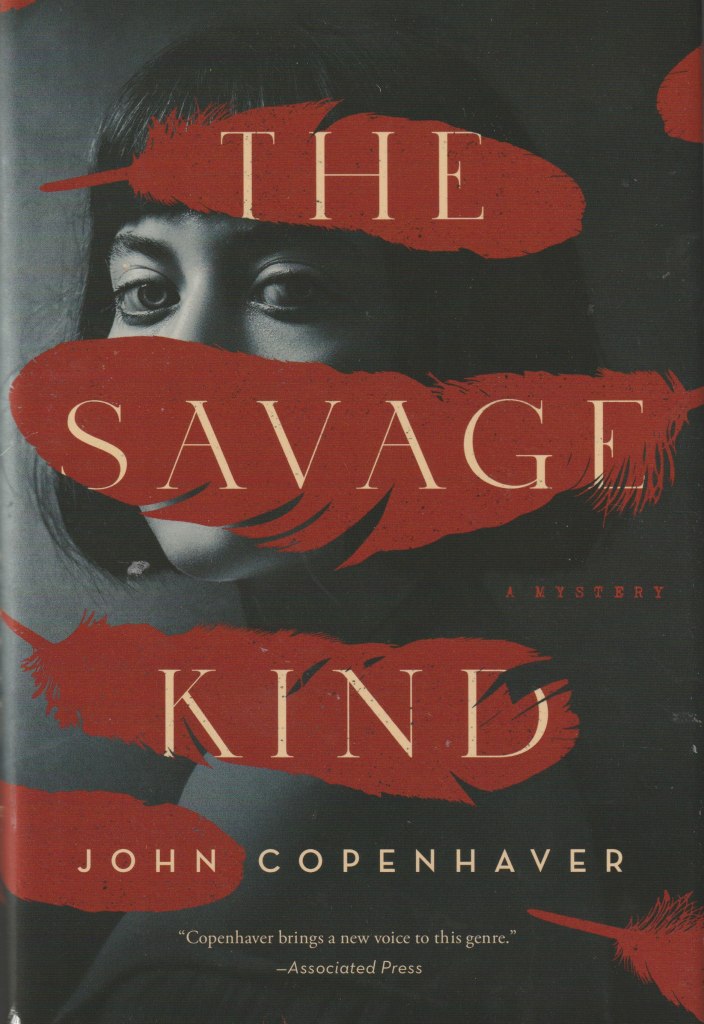
Which brings me to John Copenhaver’s second novel, The Savage Kind, which I just finished reading yesterday.

If I tell you the truth about Judy and Philippa, I’m going to lie. Not because I want to, but because to tell the story right, I have to. As girls, they were avid documentarians, each armed with journals and buckets of pens, convinced that future generations would pour over their words. Everything they did was a performance. Everything they wrote assumed an audience. After all, autobiographers are self-serving, aggrandizing. Memoirists embellish. It’s unavoidable. To write down your memories is an act of invention, to arrange them in the best, most compelling order, a bold gesture. Some of the diary entries that follow are verbatim, lifted directly from the source, but others are enhanced and reshaped. I reserve my right to shade in the empty spaces, to color between the lines, to lie.

You may balk, dear reader, but I don’t care. I need to get this right.

I could take different approaches. I could contrast the teenage girls: the black hat and the white, the harpy and the angel, the cunning vamp and the doe-eyed boob. Or I could draw them together, a single unit: Lucy and Ethel, Antony and Cleopatra, Gertrude and Alice, Holmes and Watson, or even, I dare say, Leopold and Loeb. But neither of those angles would work. The complicated facts are inescapable. These girls are both separate and together, but many times, they followed their own paths and even crossed one another. Things are never that simple, never that black and white, that good or evil, or that true or false. I’m not writing this to assign blame, or to ask forgiveness, or to tie it up in a bow for posterity. It’s not that kind of book.After all, an act of violence committed by one may have originated in the heart of the other. That’s to say, this is a story about sisters, and like many of those dusty and gruesome stories from ancient literature, here sisterhood is sealed in blood.

I should know. I was one of them.

Great opening, right?

John’s debut Dodging and Burning won the Macavity Award*, and was quite the impressive debut. II was completely blown away by the book myself–it showed a maturity and sophistication in theme, writing, and characters that one rarely sees in a debut novel. One of the things I thought was very interesting about the book was that while it did focus on a gay story, the main voices in the book were young straight women; I thought that was a risky thing to try to pull off, but he did a really excellent job.

As good as Dodging and Burning was, I wasn’t prepared for how good The Savage Kind would be.

The heart of the book is the friendship/relationship between two damaged young women in the post-war afterglow of the late 1940’s in Washington DC. (Both of John’s novels are set in the post-war period, when the world was trying to go ‘back to normal’ after the massive paradigm alteration of a global war that left most of Europe and significant parts of Asia in ruins; tens of millions dead, billions in property damage, and the world needed to rebuild from the rubble–and normal was also being redefined; the paradigm shift caused by the war made going back to “the way things used to be” practically impossible–which makes it a very interesting time to write about.) Philippa’s mother died giving birth to her and she has a slightly adversarial relationship with her stepmother, Bonnie. Judy was raised in an orphanage and adopted by a wealthy couple who had lost a daughter in a particularly brutal way–Judy was adopted to replaced their raped and murdered daughter, but her adoptive parents are still too scarred and damaged from the lost of their own child to raise and love another, and this history also colors Judy’s personality and who she is. The two girls find each other and become very close friends; so close that their love for each other might go even deeper than the Platonic ideal of friendship–their teenaged hormones raging out of control, are romantic/sexual feelings also developing between the two of them?

They are also playing girl detectives, trying to get to the bottom of a mystery that they don’t know has anything to do with them beyond the idle curiosity (and their dangerous boredom) but as they look further into the mystery revolving around a classmate, a favorite teacher, and that classmate’s family–as well as their own–they become more and more deeply enmeshed in danger and cling even tighter to each other.

As if that juggling act isn’t tough enough, Copenhaver makes all of these characters realized, fully developed and realistic in their emotions, their feelings, and their reactions. He also tells the story in alternating points of view between the two girls while they are experiencing the events, as well as a narrator voice from the future, telling the story in retrospect as well as talking directly to the reader. This is hard to pull off, particularly the omniscient future narrator–the last time I saw this used so effectvely and memorably was in Thomas Tryon’s The Other (at least, this is the book that popped into my head as I was reading, and it’s a favorite of mine).

The Savage Kind was nominated for a Lefty Award, and it very deservedly won the Lambda for Best Mystery recently. I highly recommend it!

*I may be wrong here, but I think he might be the first openly gay author of a book with gay characters and themes to win the Macavity Award; I know I was nominated once for a short story–but my characters and themes weren’t queer.

The Weight

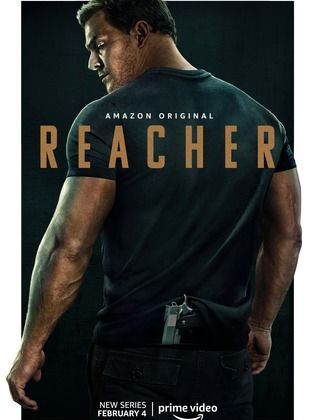
While I am a Reacher fan, I would not go so far as to claim “Reacher Creature” status.

I stopped reading the series after it got into the late teens; I don’t remember why I stopped, but I did and then I got so far behind I couldn’t remember where I left off in the series (even now, looking through a list with synopses I don’t remember where I stopped reading), and while I know I enjoyed each Reacher story I read, I don’t have the time to go back and try to figure out where I stopped. I clearly remember Gone Tomorrow–I remember the set-up with the woman he thinks is a suicide bomber on the subway at the beginning, which is almost the entire synopsis–but the last one I think I read ended up with him in a mansion on an island with a causeway leading out to it; with no other way off the island and it’s basically an armed stronghold (reminded me of Tintagel from Arthurian legends); the synopses of the next two books don’t ring any bells.

Maybe when I retire I’ll have time to revisit the series and get caught up. Lee Child is one of the loveliest men in the crime genre–he was in New Orleans years ago for a romance convention–and Alafair Burke (God, I am namedropping!) had invited me to join her for lunch, as she was also in town for the romance event (I think it was Romantic Times’ conference?), and so I met her at the Marriott on Canal (which was hosting) and as we walked to Green Goddess for lunch, we ran into Lee on the street and Alafair invited him to join us.

I don’t think I spoke much as I sat there at lunch with LEE CHILD and ALAFAIR BURKE, completely starstruck and not believing the incredible luck of my life. (Seriously, am I the luckiest homo on the planet or what?)

But I always remember fondly the first book in the series, The Killing Floor, which set the tone for the entire series, and I fell in love with the character–which was unusual for me. As a gay man, I tend to avoid books with these alpha male types; toxic masculinity and misogyny (as well as homophobia) tends to run in these kinds of books and I ain’t got time for reading that shit. But Reacher wasn’t like that–yes, he was an enormous man (250 pounds of solid muscle, 6′ 5) and he could kill you with his bare hands in less than three seconds, but he was more of a knight-errant; traveling around the country with just the clothes on his back, some money, an old war medal of his father’s, and coming to the rescue of countless people who need help. He had a code of honor that he lived by, and I respected that…not to mention the imagery of what he looked like as I dreamed him up in my head as I read (I’ve always, always, had a thing for big men–but that’s a subject for another time) and yes, he became a bit of a fantasy type for me. (I will not discuss the films based on the novels or the casting of those films, as so many others have inevitably done in the wake of the Amazon Prime series arriving; it’s really not necessary and the show should be judged on its own merits, not how it stacks up against the films–good or bad.)

But when I heard they had cast Alan Ritchson as Reacher, I may have done a fist pump.

I mean….

I first became aware of him when we were binge-watching Smallville. He had a small role as Aquaman in one season (just as the equally gorgeous Justin Hartley was cast in a recurring role as Green Arrow for several seasons–was delighted to see Hartley’s career take off with This Is Us), and I remembered thinking, he should be spun off into his own series (just as I thought about Hartley’s Green Arrow; I was bummed when Arrow was announced with Stephen Amell as Oliver Queen–but was also incredibly wrong about being bummed about that casting), but Aquaman would be a hard television series to produce, particularly budget-wise, since there would inevitably have to be a lot of underwater scenes shot, which also makes dialogue difficult to pull off. I would have watched Titans anyway–Teen Titans was always one of my favorite teams–but was delighted to see Ritchson playing Hawk, and was horribly disappointed when (SPOILER) they killed him off.

But had they not killed him off, he couldn’t have gotten the lead in Reacher, and it’s a star-making turn…so hopefully this will mean more Reacher, and more Alan Ritchson projects.

We’ve only watched the first episode, but we are hooked. Ritchson is perfect at the role, and even if he is a few inches shorter than the character in the novels, the way they shoot the show makes him seem much bigger than he actually is (I also wonder if they deliberately cast shorter actors to make him seem bigger, but it’s an effective optical illusion). The big takeaway for me always about Reacher was his size; he was a physical giant that you couldn’t NOT notice. The script is good, the direction and cinematography great, and the rest of the cast is also good (it includes Willa Fitzgerald, a favorite of mine after her turns on Scream the television show and Dare Me), and it has everything it could possibly need to be a hit.

And now I kind of want to read The Killing Floor again.

Also: while watching, it occurred to me that Ritchson would make a terrific Travis McGee.

Take a Chance on Me

I got my boosters shot yesterday; other than some arm soreness, I seem to be okay–no gills have developed, no wings, and no scales–but the day is young. The weather here turned very cool yesterday, which was incredibly lovely; fall and spring are so divine here, it makes us forget the swampy hell of the summer every year. Yesterday wasn’t a bad day; I managed to get a lot of work-at-home duties done, while watching Foundation (I am all in on the show now) and then started, of all things, Peacock’s original series adaptation of Dan Brown’s The Lost Symbol (more on that later). I have quite the busy day ahead of me now; lots of work at home duties and as always, the Lost Apartment is a disaster area. I am actually up much earlier than I have been getting up on my non-going-into-the office mornings, and it kind of feels good. The light outside is different than it has been–another indication that the world’s turning has shifted and daylight savings is looming on the horizon (next weekend)–and it’s a nice morning here with my coffee here in my kitchen-office.

The house was power-washed this week, and despite the fact we’ve been living here on this property since 2003, I had always thought under all the accumulated grime from the air here (our air quality is something I try not to think about very often, but it’s hard when you see how much of it gets on your car and windshield) the house was painted a pale blue; turns out it is pale coral. Who knew? They also power-washed the concrete sidewalks around the house; the difference is very startling. I am taking the power-washing as a hint that the apartment needs an even deeper dive cleaning. There’s no LSU game tomorrow (thank God, really; I am dreading the Alabama game next week), so I have the entire day free. There are some good games airing, but there’s no need for me to sit in my chair and spend the entire day watching college football, either. There is a Saints game on Sunday–Tampa Bay and Tom Brady–but that’s late enough for me to watch so I can get things done during the day; and a 3:25 start time is also a nice time to call it a day on everything else I am doing around here.

I haven’t started Scott Carson’s The Chill yet, either; ironically I got a copy of his new release. Where They Wait, this week (as well as a copy of Lucy Foley’s The Guest List), so I should probably crack the spine of The Chill at some point today. Scott Carson is the name Michael Koryta (one of my favorite authors) uses now to write horror (he used to write it under his own name. Not sure why the switch/rebrand, but probably has something to do with Koryta being branded for top notch crime fiction; seriously, check out his work if you haven’t. I recommend starting with The Prophet, and if you’ve not read Megan Abbott’s Dare Me, they pair together very nicely).

I also really, really need to write this weekend. I need to write a lot. I also have to do the page proofs for #shedeservedit, but they aren’t due until a week from Monday, and I think the more time I take away from that manuscript the better job of proofing I will do on it. I am a shitty shitty shitty proofreader, which is probably why there are more mistakes in my finished books than there should be in anyone’s printed books. But at least there’s time for me to let them sit and percolate before I jump on them; I am usually so heartily sick of any book at the proofreading stage that I don’t pay as close attention as I might. On the other hand, it’s also entirely possible that I am being too hard on myself, which is something of which I am frequently guilty. No one is as hard on me as I am on myself. At some point in my life I pretty much decided if I was super-critical of myself, other people’s criticisms wouldn’t hurt me as much as they had before–and it became deeply engrained into my psyche, and it’s actually more damaging to me than accepting criticisms from others.

Many years ago I decided to stop being unkind to writers and their books on my blog. If I read a book I didn’t care for, I wasn’t going to dis it on the Internet–because I don’t want to hurt anyone’s feelings, primarily, and I am not always highly receptive to negative nastiness about my own work. (I tend to say “I’m not the right audience for this book” now.) I didn’t want to be become like those professional reviewers who hate everything, and make their reviews about how smart the reviewer is and how bad of a book they are destroying in print. At the time I made that decision, I also decided there were two exceptions to my rule: Stephenie Meyer and Dan Brown. What was my small voice, after all, in the chorus of critics and readers worldwide who loathe their writing? It did strike me as hypocritical from time to time, and so I stopped even doing that. They are, no matter how much success and money they have, still human beings with feelings, and there’s a sense that mocking and insulting their work, no matter how small my platform or voice, is just piling on.

Having said that, I will admit I greatly enjoyed The Da Vinci Code when it was released, enough so that I went back and read the first Robert Langdon novel, Angels and Demons (which I actually thought was better). It was a great ride, and I already had some familiarity with the idea of the Christ bloodline, having read Holy Blood Holy Grail at some point in the 1980’s, with its outlandish (if interesting) claims that were eventually turned out to have been based in a great fraud. It combined a lot of things that tick off boxes for me: treasure hunt based in history, actual historical events, the Knights Templar, the Cathar heresy, the Crusades, and of course, making the Catholic Church the great villain of the story (the only better villains are Nazis, really). Was it greatly written? I honestly can’t say now, it’s been so long since I read it. But I did read The Lost Symbol, his follow-up, when it was released and absolutely hated every word of it. I tried to read the next, Inferno, and gave up after the first chapter. I’ve never watched any of the films–although now I am thinking it might be interesting to do so. When I saw the Peacock was adapting The Lost Symbol, I actually (thank you, faulty memory) thought it was the Brown novel I hadn’t finished. After I got caught up on Foundation but still had at least another couple of hours’ worth of condom packing to do, I decided to try The Lost Symbol. Even as I watched the first episode, none of it seemed familiar to me, and it wasn’t until they mentioned the painting “The Apotheosis of George Washington” (that may not be the actual name; but it’s the painting in a government building ceiling where it looks like Washington is being greeted into heaven as a god) that I began to suspect that I had actually read the book; by the time they descended into the tunnels below the city and met the Architect of the Capital I thought, oh yes I did read this and didn’t much care for it. But the show itself held my attention–it’s an adventure story, after all, and Ashley Zukerman was very well cast as Langdon. I look forward to continuing watching it–at least while I wait for the new episodes of everything else we are currently watching to be loaded for streaming.

And on that note, it’s time for me to head into the spice mines. Have a lovely Friday, Constant Reader–I’ll come back tomorrow to check in.

Californian Grass

I really didn’t want to get up this morning–the bed was incredibly comfortable and loving–but Scooter needs an insulin shot every twelve hours so I hauled myself out of bed to make sure he got his shot when he needed it, and then I was up, so I stayed up. I am feeling incredibly lazy this morning as well–never a good sign, ever–particularly as I have so much to get done today. Our HVAC system was acting strangely yesterday–it didn’t automatically turn off the way it was supposed to when it reached a set temperature; at one point it was 60 degrees downstairs, so I turned it off. This morning it doesn’t feel like it’s freezing downstairs–and that’s not the hot coffee’s effect, either–so maybe it’s working the way it should now. The electricians who installed it are coming by today, so I intend to get some more information about how it works from them–I must have been doing something wrong yesterday, I would imagine. I just looked–the current temperature is what it is set to and it’s not on–so I think maybe I didn’t have it set on fan auto but just on fan, which I think means it will just run and run and run.

Yesterday was a thrilling day of data entry and condom packing; I got the date entry done and so this morning will be reading up on things on-line about developments and so forth with the COVID-19 virus before repairing to my easy chair to make condom packs and watch movies or binge a show (I still am looking at you, Dare Me, for a rewatch all at one time to see what I missed watching weekly). Yesterday I watched Friday the 13th again, and then, as though to punish myself further, I watched Friday the 13th Part II for the first time (I grimly was considering watching the entire series, but I really don’t think I have the patience or fortitude to do so). As I watched the original again, I was struck–just as I was the first time I watched it, right around the time we got our first “smart” television–how cheaply it was made. The entire thing looked like it was filmed with a camcorder as a high school class project (but I don’t think camcorders were readily available when the film was made), the writing and dialogue is terrible, and about the only thing it has going for it is a very young Kevin Bacon (straight from his role on Guiding Light) in a bikini and having a sex scene before getting killed by an arrow coming up from below the bed through the mattress. I always forgot Bacon was in the first one of these…but I decided to watch the second because–well, I still had condom packs to make and Prime suggested it, so here we are. You can tell the first film was an unexpected hit out of nowhere, because while the acting and writing in the sequel are equally as bad as the original–you can see they had a bigger budget. Better lighting, better sets, better cinematography–all the technical aspects of making a film were greatly improved from the first film….if the acting and writing remained as bad and trite and one-dimensional. The story also left something to the imagination–how did Jason survive in the lake all those years? Is he a demon or a ghost or what? It was also interesting to see he hadn’t yet donned the hockey mask yet–apparently, this was added in the third film, which I may watch at some point but certainly don’t have the stomach for today. The cast of the second was also larger than the first, and it also never explains why Camp Crystal Lake becomes, after the last string of murders, a place for camp counselors to go get training for their jobs, and it doesn’t even look it was filmed in the same place…although the nearby town seems to be the same place, and some of the townies from the first movie carry over to the second. I never got into the got slasher movies of the time when they were popular when I was a teen–I later came to appreciate Halloween and Nightmare on Elm Street–but these films were also a bridge from the almost infantile, cheesy teen-targeted movies of the 60’s and 70’s to the teen films of the 1980’s, when John Hughes basically flipped the script on what a teen movie looked like.

Saints and Sinners begins today (well, it actually launched last night) and there’s all kinds of lovely things–panels and so forth–over the course of the weekend that are completely free to watch on the Tennessee Williams Festival’s Youtube channel. Check it out! (I’d post a link to the actual page, but there doesn’t seem to be one, which is odd….here is the link to the opening video, which will take you to the page. ) I am doing a panel on Sunday at 3 CST (don’t forget we lose an hour overnight on Sunday), talking with four women mystery writers (Carrie Smith, Cheryl Head, Carsen Taite, and J. M. Redmann) about crime and romance and inspiration and why do we all write about crimes and justice–or the lack thereof. It’s weird that both it and the Tennessee Williams Festival are both virtual this year; that’s two years in a row I’ve not spent the long weekend living at the Hotel Monteleone in the Tennessee Williams Suite (I look forward to that every year). Next year, though….

I picked up a library book yesterday: Eric Arnesen’s Waterfront Workers of New Orleans: Race, Class, and Politics 1863-1923. Yes, it’s more research into New Orleans history, but that’s a terrific time period to cover, and if I am going to continue to take inspiration from New Orleans history as well as write historical fiction set here, I need to know more about it. My current knowledge of New Orleans and its history is but a mere drop in the Lake Pontchartrain of fact and information that exists out there–I have yet to even get down to the Quarter to use any of the archives and collections housed there–and I haven’t even read all the New Orleans histories I have here in the Lost Apartment…but I am getting there. I also saw a sign that the Friends of the Library were having a book sale, so I walked back to the carriage house of the Ladder Library, and browsed briefly, conscious of time and that I was on my half hour lunch break. I found a nice hardcover copy of John LeCarre’s The Russia House and picked it up, along with a couple of better copies of several Nancy Drew and Hardy Boys mysteries to replace worn copies in my collection (for those who like to keep track of these things, the Nancy Drews were The Clue in the Diary, The Haunted Showboat, and Mystery of Crocodile Island; the Hardy Boys were The Secret of the Old Mill, The Twisted Claw, and The Hardy Boys Detective Handbook, which I’ve never had a copy of and was delighted to pick one up in such good condition, practically mint!), and then as I was rather leaving and feeling rather self-satisfied, I glanced at the “free book giveaway” table, and saw one of the few Elizabeth Peters novels I’ve never read, The Camelot Caper, and believe you me I grabbed it and kept walking. I also learned that I can donate books to the library for their sales (intellectually I knew this in the back of my brain; but only recently have I started seriously thinking about pairing down the vast library I own, and it was good to not only get this confirmation but to learn how the process works–baby steps, Constant Reader, baby steps).

And if you’re ever In New Orleans and are a bibliophile, I do recommend the Ladder Library, housed in what used to be the Ladder estate. The library and its grounds are simply beautiful, and I kind of want to set a story of some kind there.

And on that note, I’m heading into the spice mines. Maybe your Friday be lovely and fulfilling, Constant Reader.

Academic

And just like that, it’s Saturday again, and huzzah to everyone for making it through another week. It’s another beautiful morning here in New Orleans; the sun already high and shining bright, the sky bright blue. I have errands to run and the gym to get to, and then I am planning on spending the rest of the day reading the manuscript and editing it. It will be a full day here in the Lost Apartment, and I relish getting back to work on my book. I hate being behind–this was the month I was supposed to spend getting caught up on everything else and finishing short stories so next month I could focus on Chlorine–but delays and things happen, as always, and sure, I am in that time of life where one is acutely aware of how quickly the sand is slipping through the hourglass–but I have also learned to not beat myself up over things I have little control over. I have no control over whether I sleep well, for example, and I have no control over my energy levels. I can do the best that I can, but I exert only so much control over any of those things.

Not allowing myself to get upset or stressed over things I cannot control is a lesson I am still learning, alas.

I often feel pulled in many directions (and am fully aware that this is probably the case for everyone; it seems as though everyone is having a rough time since the pandemic shut down the world last year–almost a full year ago; we closed down services at my day job on March 16th) with an inevitable amount of endless tasks for everything I am involved in, and usually every day I have an idea of what I want and/or need to get done with every day; and yet I never achieve those goals because inevitably something new pops in and/or pops up that requires attention of some sort from me, and this inevitably results in me not getting to everything that needs getting to, which then makes the to-do list seem even more endless, and on and on. Part of the problem I’ve been having since the pandemic altered everything is my inability to sit down and make an actual to-do list–because the to-do list would inevitably require me to get through all of my emails, and I sometimes have neither the strength nor the patience to work my way through them all. Right now in my primary in-box I have 56 unread emails–I’ve already deleted the trek–and there’s about another 100 or so in there I’ve already read that probably need a response, or an addition to my to-do list.

I also remembered last night, as Paul and I watched the LSU gymnastics team defeat Missouri, that I’ve never finished watching two shows I really liked and was enjoying that he didn’t–Perry Mason on HBO Max and Penny Dreadful: City of Angels on Showtime. So those, along with a rewatch binge of Megan Abbott’s Dare Me, should go on my list of things to watch while I am making condom packs–or when I am done with work for the day and Paul’s not home. I was quite delighted that he came home from the office so we could watch the gymnastics; I am not really seeing a lot of him these days and so those moments when he is home are more to be cherished and enjoyed because of their rarity. I am a Festival widow every March, really; but this year more so than any other I am really looking forward to the Festival being over.

I also would like to get back into reading some more…I’m not sure what in my brain is broken, but for some reason I can’t read anything other than the chapter of so of Gore Vidal’s Lincoln that I get through every morning. I think it’s a combination of all the things I have hanging over my head, quite frankly, that keeps me from reading–and as I’ve also said, watching television or a movie or even just Youtube videos is much more passive than active and requires little to no brain power. I did come up with a couple of great titles yesterday for short stories as I made my condom packs and continued watching videos about queer representation in films and television from the 1960’s through the 1990’s; there was a lovely little video yesterday of how the Queer Cruise videos guy was helped to come out by viewing The Rocky Horror Picture Show when he was in high school; and that got me thinking about my own history with Rocky Horror, and what it meant to me; perhaps yet another essay someday. Is that still shown as a midnight movie? I would imagine not, given the pandemic and the fact that’s been on television and available to purchase on tape or download now for decades; I remember thinking the first time it aired on television well, that’s the end of that and it honestly did feel like the end of an era. I imagine many freaks and weirdos and queer kids no longer need something like The Rocky Horror Picture Show as a gateway to their own worlds and the possibilities that life holds for them…there’s more and more queer rep all the time, in books, movies, plays, and television; although I would imagine in more repressive parts of the country Rocky Horror would still be a revelation.

And now I am thinking about writing a short story or a book about a murder built around a midnight showing of the movie. Oy, it really never ends…

I also like this other idea for a story I came up with yesterday: “The Rites of False Spring.” I scribbled down a lot of notes about that one.

And on that note, the spice won’t mine itself, so I should probably head on into the mines.

All The Way

And now it’s Thursday, and the work-at-home before the weekend part of the weekly cycle begins. It’s beautiful outside my widows this morning; all bright and sunny and clear blue sky as far as the eye can see. It might be cold out there–I’ve not checked–and I am liking the idea that the temperature inside is not an indication any more of what it might be outside. Huzzah for new HVAC system!

I was very tired when I got home from work last evening–I also had to run a few errands on my way home–and I watched the second episode of Superman and Lois (more on that later) before falling into another wormhole on Youtube. There’s a very interesting series of videos on a channel called “Dave Knows Wrestling” (I think) about the history of professional wrestling as well as critiques of current trends and so forth present currently in that world. I don’t know how accurate any of this is–I’ve spotted errors in numerous history videos, and it’s the Internet, so take everything with a grain of salt–and then I found a wonderful Youtube channel which looks at queer representation in the culture back in the day; Matt Baume is the guy who does them, and they are quite lovely, looking at the evolution of how queer people were represented on television back in the day. I watched his videos about gay characters appearing on shows like Cheers, Phyllis, Mary Hartman Mary Hartman, The Golden Girls, and of course Frasier, as well as episodes centering same-sex attractions, kind of like a television version of Vito Russo’s definitive The Celluloid Closet. (I’ve actually been hoping someone would either update Russo’s book or do a sequel. Someone probably has an I just don’t know it; I am hardly the font of all knowledge, no matter how much I would like to consider myself to be exactly that.)

I did wonder, though, while I watching one of his videos about drag artist Charles Ludlam appearing on one of the final episodes of a one-season sitcom starring Madeline Kahn called Oh, Madeline, if he knows about a very short-lived Norman Lear sitcom based on the play The Hot L Baltimore, which was about a seedy residential hotel and the people who lived there–Conchita Farrell played a hooker–and it also had a gay couple. It didn’t last very long and I would imagine it would be difficult to find archival footage of the show; but it was also a great idea for a sitcom or a modern dramedy; it would be interesting to see what someone like Shonda Rimes or even Ryan Murphy could do with an adaptation of the play into a series. (I really should be running a television network.)

As Constant Reader will remember, I enjoyed the premier episode of Superman and Lois and really loved this new take on the Superman mythos. Clark and Lois as parents, moving back to Smallville to become a closer family unit with their twin sons, is pretty terrific, and the casting is absolutely perfect. I worried the quality and likability of the show might begin to siphon off in future episodes, but the storytelling is quite excellent and I love the nuanced look at what is happening in small towns like Smallville–or what has happened to them. I also like they didn’t go with the usual “Lex Luthor is our big bad guy and enemy of Superman” trope; rather there’s a threat from an off-worlder (referred to by his computer as “Captain Luthor”) and the real, Earth big bad is a billionaire named Morgan Edge–who was introduced into the comic books series during the 1970’s. I am enjoying this so much that I am thinking I might want go back and finish watching Arrow, give The Flash another chance, and start watching the other Arrowverse shows. Batwoman looks terrific, and so does Stargirl, and I am also still hoping for a third season of Titans. I never did get to see the second and final season of Krypton; I enjoyed the first season (I always loved whenever the comics would explore something about Krypton, and John Byrne’s mini-series The World of Krypton is still one of my all-time favorite comics) and still hold out some hope that Warner Brothers and HBO might bring it back for another season….there was so much to still be explored.

So I am working from home today, and am about to head into the spice mines. I have some data entry to do and there’s always condom packs to make, of course; not sure what I want to watch while I make them today; not really in the mood for a movie. I was thinking about revisiting Megan Abbott’s wonderful television show Dare Me–hey, I’m writing about high school students currently, and why not watch a show developed and produced by one of our best writers based on one of her amazing novels? I was also thinking, for the times when I am not in the mood for a slasher/horror or a Cynical 70’s or a teen movie, that I should find an old television program and watch it from the beginning and binge it all the way to the end. Paul and I never finished watching The Sopranos, for one example–Katrina interrupted our viewing–and I have never seen The Wire, either, for that matter. Alas, my education in television classics is just as inadequate as my education in film and literature…something to consider, of course.

And on that note, I have data to enter and condoms to pack, so it’s best for me to head back into the spice mines. Have a lovely Thursday, Constant Reader, and I will see you again tomorrow.

On the Road Again

Yesterday was another awful, low energy day. I got something lovely in the mail–thank you again, Penni Jones, that was so incredibly kind and thoughtful of you–and I got caught out running errands in a wonderful thunderstorm; I eventually had to make a mad dash through the pouring rain to the apartment with bags of groceries and the mail. After getting into the house I was very tired and cranky and out of sorts, and looking at Bury Me in Shadows just made my stomach clench and my nerves fray. I wasted some time writing an entry about writing about vampires, which I will post at some point this morning (if I haven’t already) and looked through some of that writing. I was also enormously pleased, despite the frayed nerves and the stomach clenched in knots, to see that the writing of said vampire fiction was actually quite good, which was nice; I have such a tendency to avoid looking at my old work (for any number of reasons, none of which speak well to my self-confidence) that it was kind of a pleasant surprise to read it and think, hey, this was from really early in my career and this isn’t bad at all, well done, earlier-in-his-career Greg!

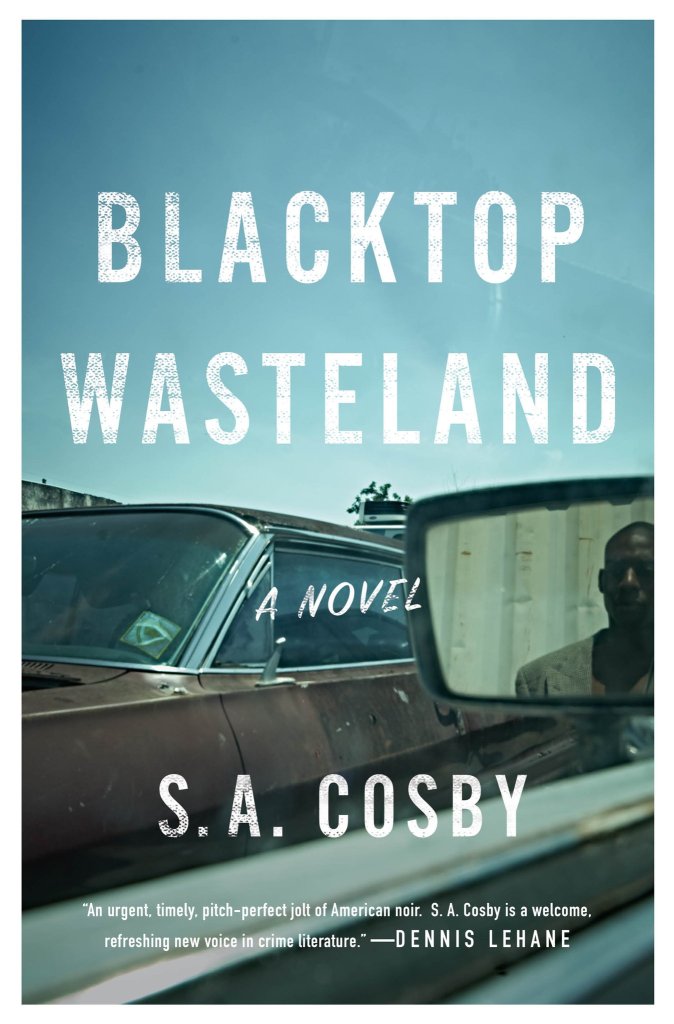
So, tired and with low energy, I decided to retire to my recliner with Blacktop Wasteland, figuring that finishing that book was one of my goals for the weekend, and that was probably the easiest goal to reach.

Nor do I regret one second of the time I spent with the book.

Beauregard thought the night sky looked like a painting

Laughter filled the air only to be drowned out by a cacophony of revving engines as the moon slid from behind the clouds. The bass from the sound system in a nearby Chevelle was hitting him in his chest so hard, it felt like someone was performing CPR on him. There were about a dozen other late-model cars parked haphazardly in front of the old convenience store. In addition to the Chevelle, there was a Maverick, two Impalas, a few Camaros and five or six more examples of the heyday of American muscle. Yhe air was cool and filled with the scent of gas and oil. The rich, acrid smell of exhaust fumes and burnt rubber. A choir of crickets and whippoorwills tried in vain to be heard. Beauregard closed his eyes and strained his ears. He could hear them but just barely. They were screaming for love. He thought a lot of people spent a large part of their life doing the same thing.

The wind caught the sign hanging above his head from the arm of a pole that extended twenty feet into the air. It creaked as the breeze moved it back and forth.

Laura Lippman describes noir as “dreamers become schemers,” and that’s always the closest description of what noir actually is that I’ve ever heard. Like all definitions of noir, it’s not quite everything, but nothing else anyone has written or said about noir comes as close to it, in my mind, as that. For me, noir is like pornography; I maybe can’t tell you what it is, but I know it when I see it. I personally love noir; it’s probably one of my favorite things to read (or styles of film to watch). I try to bring a noir sensibility to almost everything I write, no matter what label it’s given as an important keyword on Amazon. (I still believe that Timothy is the most noir thing I’ve written to date; but I am looking forward to delving more deeply into it with future work.)

Blacktop Wasteland is called a ‘heist’ novel by people who know the genre probably better than I do; and they are not incorrect; it is a heist novel. But it’s also so much more that I feel calling it that is, in some ways, a disservice to it–and I don’t mean to imply by that statement that there is anything wrong with heist novels. I haven’t read many of them, and I haven’t seen many heist films. Rob Byrnes writes truly clever, intricately plotted ones with a wide variety of distinct and well-developed characters that are also witty and funny as well as smart. But Blacktop Wasteland is also noir of the purest sort, the kind that Cain and Thompson and the other greats wrote; about working class people who can’t quite catch the break they need to be upwardly mobile, who believe that in a society and culture where everything is stacked against them, the only answer is criminality–and knowing when to walk away from that life. It’s about wanting more for your kids and your family than you had; it’s about grabbing for the American Dream and the brass ring. It’s also about family, and the damage done by wrong decisions and believing mythology you’ve invented rather than facing harsh and painful truths.

The main character of Cosby’s novel, Beauregard Montage (more commonly known as Bug) has tried, throughout his adult life, to build a better life for his wife and kids, and the child he rarely sees he fathered when he was a young teenager with a white girl whose family keeps her away from him. He’s opened his own business–a garage doing car repair and oil changes, etc–but the opening of a franchise oil change place has eaten into his business and has put him in danger of losing it all. A complication with his mother’s Medicare has resulted in a vast amount of money due to the retirement home where she makes everyone’s life miserable. That oldest daughter needs money for college and is dating a guy who might not be good for her. The bills are all overdue and the mortgage on the garage is so overdue it could lead to foreclosure.

Is there anything more American or relatable in these troubled times than financial distress?

But what Bug is best at is driving; he was in the Life before he decided to walk away from it for the sake of a straight life for his wife and kids. His own father walked away from his family when Bug was a teenager–for their sake, since he couldn’t escape his own criminal past. And the carefully constructed life Bug has put together for his family is slowly coming apart at the seams; and he needs money, and fast. So when a driving job in the life comes available, he grits his teeth and agrees to it. But nothing is ever as easy as it seems, and this job leads to other bills that have to be paid–with blood and bone.

The story alone is riveting, but what makes this novel so strong and powerful is the voice and the development of Bug as a character. The struggle within him between the desire for a normal family life and to do right by his children versus the thrill he gets from being in the life; from getting to flex and use his driving skills to skirt the law and get away with it is what takes this book to another level–and then the realization, the coming to terms with his feelings for his own father and that abandonment, as well as coming to terms with his complicated relationship with his mother, as he tries to do the right thing by his own family was breathtaking in its complexity and how agonizingly real it all seemed.

And those actions scenes are masterfully crafted, and keep you on the edge of your seat the entire time. Even had I wanted to put the book down, to take my time with it and read it more slowly, to draw the pleasure out, I couldn’t have once the kicked into high gear.

The writing is also deceptively simple yet honed to a sharpness and beauty worthy of compare to the grand masters of crime writing.

And while it was an accident of my TBR pile, I am very glad I read Kelly J. Ford’s Cottonmouths and S. A Cosby’s Blacktop Wasteland back to back, as both are surely writing some of the best contemporary rural noir of our time; they should be paired, really, and read back to back, much the same as how Megan Abbott’s Dare Me and Michael Koryta’s The Prophet should be paired together.

What a terrific time to be living in for a fan of crime fiction this is!

I Walk the Line

It’s Thursday. Finally. I swear to God, this has been one of the longest and most bizarre weeks of my life thus far–and I’ve lived through some very strange and bizarre times. This reality, surreal for so long, is finally beginning to sink in somewhat, at least for me. I am someone who is completely dependent on structure and routine to achieve stability, which is required for me to function at a level sometimes (oft times) much higher than my natural tendency toward stasis, laziness, and a remarkable inability to finish things. I can’t be that person, and this sudden alteration of my reality was so quick I didn’t really have time to adjust to it. As such, my wiring has been completely off and my functionality dramatically slowed. But the shock is beginning to wear off, I’m adjusting if not adapting, and I might be able to start finding the order amidst the chaos again.

At least for as long as this new reality holds, at any rate.

It’s absolutely horrible to feel overwhelmed, and I sense that a lot of people are feeling overwhelmed right now. It’s a lot of change, all at once, and with very little warning. For some, the rug was literally pulled out from underneath them in  matter of hours. It’s terrifying to go from I wonder what I’ll do this weekend to oh my god how am I going to pay my rent in a matter of moments. I’ve certainly been feeling overwhelmed for quite some time now, with no end in sight. But if I learned anything from the Time of Troubles, there’s no sense in worrying or being concerned or making one’s self sick from stressing about things over which you have literally no control.

The best way to get through these things–which seem like they may never end–is to focus on micro rather than macro; the big picture is too overwhelming for our minds to grasp, grapple with and process. That’s the sure path to despair and depression–and the D twins don’t need much help gaining purchase in my brain. Your mileage might vary, but I think it’s terribly important to stay focused and stay positive, no matter how bad things are or how much worse they can get.

At some point this afternoon I am going to go for a walk, probably over to Magazine Street, just to get out into the fresh air and the sunshine. It’s overcast here today, but it’s been in the seventies and eighties all  week, so I can’t imagine that it’s not a simply gorgeous day out there. I need to not be inside all the time–tomorrow I am actually working a five hour shift at the office, primarily so I can get out of the house–the change of scenery is going to be crucial for the moment. I don’t know how long, obviously, we’re going to be on lock-down; it could go on for months, quite frankly, and adaptability, as I learned after Katrina, is going to be terribly important as a survival technique.

We picked up Dare Me again last night, on Episode 3, and I am amazed at how amazingly well done this show is; it’s very cinematic, the acting is pinpoint sharp, and this is a feminine point of view we’ve never seen much of before. Just as a visual, it’s a stunning show. I’d like to read the book again at some point–I’ve not read anything in a couple of weeks and I need to get back into reading again; it’s not like I don’t have lots of books on hand for me to sink my teeth and imagination into around here. Maybe I should, as I joked about on Facebook last week, reread The Stand. It has been awhile, and it’s always been one of my favorite King novels. A reread won’t require as much focus as reading something new…hmmm. And I am doing the Reread Project this year–although that seems like I started it a million years ago, doesn’t it?

And on that note, it’s back to the spice mines.

augEdwin-Bermoser1