Chiseled in Stone

And it’s Sunday morning again, and Sparky was rather insistent on being fed this morning, so I am up earlier than I have been the rest of the weekend. Which is fine, I feel rested and good this morning. I didn’t get nearly as much done yesterday as I would have liked, of course; but I did do some chores and read for a little bit, which was nice. It was a mellow day, really, and I ran my errand in the morning, cooked out for the afternoon, and so have some writing and reading and cleaning to do today. I hate when LSU plays a noon game, because the rest of the day afterwards seems so long…LSU did win, beating 2-8 Arkansas by one (!) point in Baton Rouge. The game seemed kind of dull to me, but I wasn’t ensconced in my chair during the game with my blood pressure elevating. I might rewatch it at some point this morning, or have it on while I read. Alabama lost a shocker to Oklahoma at home yesterday, and Georgia humiliated Texas last night–Mississippi depending on a lot of luck to beat Florida. It’s been a hot minute, too, since a team beat Alabama in back-to-back years. I imagine their coach is under fire this morning.

I downloaded another audiobook for the drive to Kentucky next week; I got the third Mary Russell novel by MWA Grand Master Laurie R. King, A Letter of Mary, and I am very excited to listen to it. Her Mary Russell/Sherlock Holmes series is magnificent, and an excellent replacement for one of my favorite series of all time, Elizabeth Peters’ Amelia Peabody1 series. Mary’s voice and character remind me of my beloved Peabody, it’s almost like getting another book by the late Ms. Peters. I’ve loved everything I’ve read that Laurie writes; again, just like Peters. I also have a shit ton of audiobooks on my phone I’ve not listened to (why do I hoard books in every form in which they appear? Why am I like this?); but I like the idea of listening to King on the way up and Donna Andrews (whose Meg also reminds me of Peabody2) on the way back. That sounds like an absolutely delightful plan to me, at any rate. I also need to get braced for the cold.

We also watched the rhythm dance competition for Skate America; we’ll probably watch the free dance and the men’s final this afternoon. I also would love to get back to Lazarus, and am thinking about watching this new Frankenstein. But I also need to get some reading and writing, and get caught up on the news. It’s interesting watching Fox and the White House and their allies turning on each other, isn’t it? Explaining why fifteen isn’t as bad as five or eight for child rape? So much evil and nastiness being exposed to the disinfecting power of sunlight at long last. Can we at least stop ceding the moral high ground to the child rapist party? When this menace and disaster are finally over, there needs to be some serious accountability…or the cycle will begin all over again. There should have been tribunals after the Civil War, and there should have been again after civil rights and integration. It does not speak well of our country that we never want to deal with accountability…and seriously, there should have been hearings after we dropped two atomic bombs on Japan.3

I really get angry when I think about how the public school system of the 1960s indoctrinated me into American exceptionalism, and how it’s taken up so much of my time as an adult unlearning that bullshit. But at least I recognized that I needed to rethink much of everything I was taught to believe growing up; which so many never, ever do.

And that’s another newsletter essay, isn’t it? Heavy sigh.

Sorry this is so brief, but there really isn’t much to report this morning. So I am going to go to my chair with my coffee and read for a bit while catching up on the news, and then I am going to clean and write. Have a lovely Sunday, everyone, and I’ll be back tomorrow.

Pharaoh Akhenaten, the heretic
  1. I really need to do a newsletter about Elizabeth Peters/Barbara Michaels. ↩︎
  2. I really should also do a newsletter about those three women. ↩︎
  3. To this day, we remain the only nation to use weapons of mass destruction on another. We really cannot climb onto the moral high horse with anyone, can we? ↩︎

Suspicions

Thursday, last day in the office blog and while I am looking forward to the three-day weekend, I am dreading Monday–for obvious reasons–and will instead try to get shit done while taking the occasional moment to study Civil Rights some more, maybe even read my current nonfiction tome, White Too Long, about how Christianity and white supremacy have been intertwined for so long. But the week thus far has been a good one, and productive; almost like returning to the gym kicked something else into gear physically. I’ve not been physically tired (stiff, yes) or sore much since going back, and I’ve been feeling more energetic and empowered, too. I’m sleeping better, too–rarely waking up during the night or opening my eyes before Sparky gets into the bed with me right around when it’s time for me to get up. I don’t know if its the endorphins awakening everything up again, but I am more than happy to take it; I’ve certainly missed the joy of endorphin highs. I also got some amazing work done on the book last night, and that also felt good. I am doing the things that give me pleasure again, and turns out that makes me happier and more fulfilled and I enjoy my life more than just endure it.

Go fucking figure. No notes, highly recommend.

I really can be remarkably ignorant sometimes.

But the book is, as I said, coming along swimmingly. I’m starting to get into a rhythm, and I’m starting to hear Scotty’s voice again. I need to buckle down and focus harder on getting the book done–not going to be easy with Carnival on the horizon–but I’ve handled these kinds of situations before (a deadline right after Carnival) and I think as my writing muscles stretch and flex and rebuild and wake up again, hopefully I’ll be able to get back into my high productivity gear again. I know I want to start reading Bemused, maybe even as early as tonight, and spend some time with it this weekend as well.

I am also petty enough to enjoy seeing that Dollar General Anita Bryant, aka Carrie Underwood, is still getting dragged for the piece of excrement that she is. Really funny how some (straight white) people think we need to unify behind white supremacy is a serious tell, y’all. I never forgive bullies and I will never forgive Anita Bryant or her modern day iteration, either. I will never forgive people who think I should “rise above” being a target of hatred, bigotry, and prejudice and join hands with my oppressors. You want to be a doormat for the patriarchy, that’s fine–just know I will never forget or forgive, and I will point and laugh and mock for the rest of my life.

Choices.

It rained all day and all night, and it doesn’t feel that cold this morning–maybe I’m getting used to weather in the forties? AIEEEE! But we have nasty weather (as does everyone else) coming next week. It’ll be a little colder–in the thirties, but the wind chill factor will make it feel like single digits… which could bring us…gulp…snow. SNOWPOCALYPSE!!! I really do have to write about a murder on the day of a snowstorm in New Orleans. Obviously, the city freaks out and shuts down almost completely. I imagine I will have to go into work regardless–we rarely close–but a snow day could be fun, too. It’s going to be horribly cold everywhere on Tuesday, as hell is apparently freezing over. Not very subtle there, Mother Nature, but oh so apropos. Looks like the Senate Republicans are going to knuckle under and do what their Fuhrer demands to approve his terrible cabinet picks–never ever bet on Republicans having a spine or a love for country over party–so, yeah. The future’s so bleak I imagine a terminator is going to be arriving from the future at any moment.

Oddly enough, despite that horrible long dark tunnel the country is entering on Monday, I’m also getting excited about writing my next book, which has me champing to get this one written. I feel confident again, and it’s nice to think hey this is good rather than all of this is garbage why do you even bother? I love having creative thoughts and ideas running through my head all the time again. Researching pop culture and the news from the early 1970s has been fun and interesting, and has brought back a lot of memories. It’s amazing what you’ve forgotten about completely but with a reminder, will have a rush of other memories associated with that one. There were so many magazines in the 1970s, about everything. One of my teens is a car nut rebuilding the engine in a junked car since he can’t afford to buy a new or used one, and he basically wants to work on cars when he grows up, despite his parents’ wanting him to go to college, and oh my God how many car/hot rod magazines existed? How many magazines about the music industry? There were so many magazines you could actually have a comfortable freelance writing career, and when Playboy used to pay $5000 for a short story. Five thousand dollars for a short story. I’d weep with joy to get that kind of payday for a short story.

And on that note, I am heading into the spice mines. Have a lovely Thursday, and I may be back later. One never can be sure.

Sorry, bud, if you’re serving me my morning coffee you need skimpier shorts.

Hell is for Children

Being Southern hasn’t been as difficult for me as it is for most Southern people, when it comes to forgetting the past and not taking pride in a heritage that includes racism and bigotry and enslavement. Some of the earliest lessons I learned about life in these United States was that I was one of the few people who started recognizing something that I wouldn’t know the name for until I was much older: cognitive dissonance. What I was being told at home was different from what I was being taught in school, and even that, while better balanced, was “patriotism good rah rah rah U!S!A! U!S!A!” all the time, nonstop. I began wondering about how much of an American “hero” Christopher Columbus really was, as all he brought to the New World was genocide, slavery, disease, centuries of oppression and looting the resources of the Americas. I started dealing with more cognitive dissonance as I got older and began seeing the flaws in white American supremacy, the contradictions and conflicts, and I had to think and reconcile all of these differing opinions. As I got older, resolving those cognitive dissonances required abandoning the education I got as a child about our country and its history because it was drenched in white supremacy and American exceptionalism and, well, lies to make white people feel better about themselves1. Reading and studying history made me look at modern Christianity askance–your religion has always been bloody, intolerant and cruel; but I’m supposed to believe the faith that slaughtered non-believers gleefully has changed and learned the errors of its ways?

Likewise, the Civil Rights Movement was in full swing when I was a child, and saw I watched the marches and the horror of the violence on the news. I didn’t understand nor believe the so-called religious justification for bigotry–my view of Christianity was markedly different from what I was learning in Sunday school for sure–but as someone blessed with white privilege I was also oblivious to a lot of what the Black community has dealt with throughout our bloody and horrific national history. My beliefs and values have never stagnated or been chiseled into stone; I appreciate gaining new perspective and examining my own internal biases and prejudices, and changing my mind predicated on the new perspective.

There are some things, however, I will never change my mind about: bigotry and prejudice are evil and have no basis in anything except vile ignorance and emotion.

The “we need diverse books” movement on-line was absolutely wonderful, because it gave me an easy opportunity to find books by diverse authors that either didn’t exist before or did and weren’t given much of a push. I loved the expansion of the crime and horror genres to include these characters and themes and stories; I love their fresh perspectives on society and culture and yes, the genres themselves. Books by S. A. Cosby, Kellye Garrett, Rachel Howzell Hall, Tracy Clark, Cheryl Head, and other racialized authors have not only been revelatory, but so strongly written and brilliant that it’s pushing other authors to better their own work to keep up. I’ve also been reading a lot of non-fiction about the civil rights movement and the history of prejudice and racism in this country, informing not only myself but with my own work, as well.

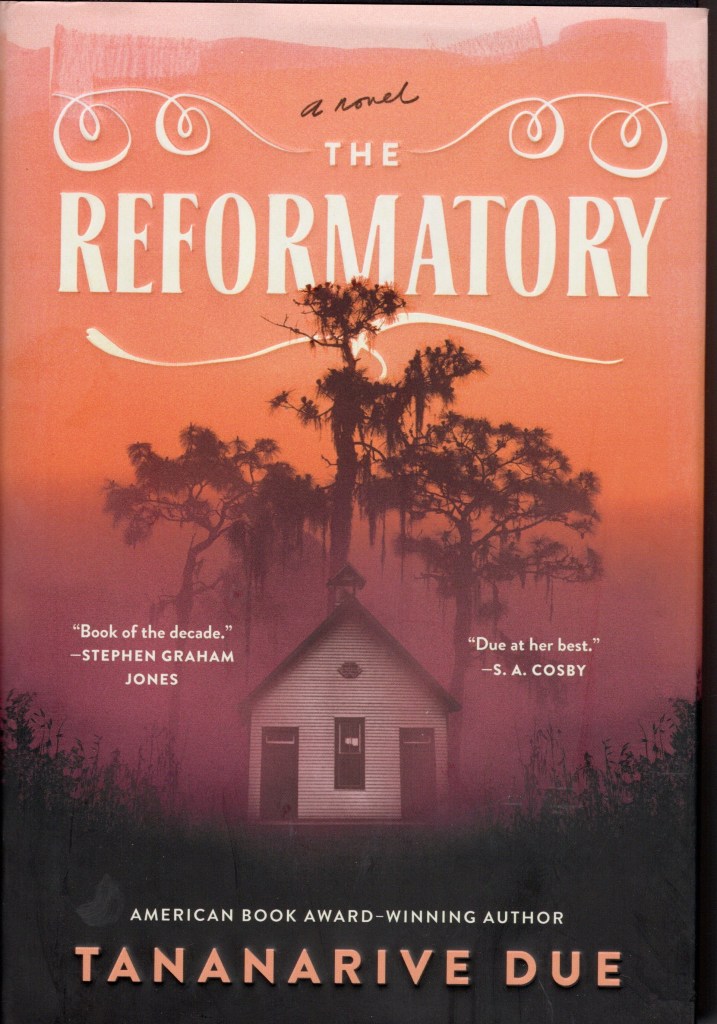
And in a class almost by itself is Tananarive Due’s The Reformatory.

Robert Stephens held his breath and counted to three, hoping to see Mama.

Some mornings his nose tickled with a trace of talcum powder or Madam C. J. Walker’s Glossine hair grease, and he felt…something hovering over him, watching him sleep. His groggy brain would think…Mama? If he gasped or sat up too quickly, or even wiped the sleep from his eyes, it was gone like a dream. But sometimes, when the June daylight charged early through the thin curtain and broke the darkness, movement glided across the red glow of his closed eyelids like someone walking past his bed. He felt no gentle kisses or fingertips brushing his forehead. No whispers of assurances and motherly love. Nothing like what people said ghosts were supposed to be, much less your dead mama. That morning he was patient, counting the way he’d practiced–one one thousand, two one thousand, three one thousand–and slitted his eyes open.

A woman’s shadow passed outside of the window above him, features appearing in the gaps between the sheets of tinfoil taped across the glass. In a white dress, maybe. Maybe. Moving fast, in a hurry.

“Mama?”

This book is a revelation. It is without question one of the most powerful books I’ve read in I don’t know how long.

I knew it was going to be a hard read, because I knew what the book was based on. I also don’t remember when I first became aware of the horrors of the notorious Dozier School for Boys in Florida, but it was a horror to be sure. I’ve read some novels based on that story (I loved Lori Roy’s The Disappearing) already, and so was familiar. Reading about enslavement and the Jim Crow South2 is inevitably a hard slog for me, and not just because of the white guilt it deservedly triggers; it just staggers me that in a country that supposedly is about equality and freedom such things could happen, be taken as normal, and changing the system is so violently opposed…a lot of racist Southerners see nothing wrong with that history and would like it to return, so these kinds of stories of American atrocities against its own citizens are incredibly important. The pen is indeed mightier than the sword, which is why repressive governments always go after journalists and writers; a well-told story that illustrates the injustice for the reader and humanizes it can change minds.

The Reformatory is about the Gracetown School for Boys and a young twelve year old Black boy who is sent there for absolutely nothing; an older white boy was sexualizing his older sister Gloria, and when young Robert stands up for her he gets a brutal shove, and he retaliates with a kick. Alas, the white boy’s father is wealthy and therefore powerful, and he wants this “uppity” behavior punished. In a joke trial that’s not even a trial, the corrupt racist judge sends Robert to the hell of the reformatory. Robert’s story doesn’t become about a search for his own justice, but the hell of surviving a place where boys die regularly but never of natural causes. Young Robbie has a gift, too–he can see ghosts–and there are a lot of ghosts there for him to navigate. Gloria’s story becomes about her desperate drive to get her brother out of there and correct the injustice. Their father was also a union organizer, and was falsely accused of raping and beating a white woman, so he fled north to Chicago. So, the boy in custody is also a pawn for the white power structure who really wants to get their hands on Robert Senior.

The warden, Haddock, is a sadistic predator who enjoys torturing and raping and murdering his charges. He also has a special need for young Robbie’s ghost seeing abilities, wanting to rid the campus of the ghosts of his victims. Due manages to make the horrors of that place absolutely real, with some of the most vivid and powerful images I’ve come across in a novel in years.

But the true horror of the book isn’t the ghosts at the school. The true horror is its horrific and realistic depiction of the Jim Crow south, and the lack of hope for change in the Black characters. It was about halfway through the book that I realized, as much as I was loving this book, that there was no happily ever after for Black people under Jim Crow, before civil rights. They might be able to escape a predicament, but there was no escape ever from the system.

Which is absolutely terrifying.

Definitely check this book out, and I am going to look for my next read from Due.

  1. Manifest destiny? I could write an entire book about that bullshit. ↩︎
  2. Someday I will dismantle To Kill a Mockingbird for the racist lie it is. ↩︎

Only Girl in the World

I saw that John Jakes died yesterday–or they announced he had passed yesterday–which was kind of jolting; primarily because he’d come across my radar again lately. I don’t remember who or how, but I was looking at something or looking up something and a quote from him about reviews and critics and his place in American literature, or he was asked about the literary stars of the day or something (these memory lapses are so aggravating) but I loved what his response was: I don’t remember exactly the comparison, but he compared books to wine: his were an inexpensive wine you could pick up at a grocery store, satisfying but nothing special, while others were the really rare and fine vintages you went down into the cellar to retrieve and had to blow dust off the bottle. (It may have been meats; I can’t remember exactly but the wine analogy seemed more correct and apt, frankly.) I appreciated that, because I spent a lot of my teens and early twenties reading Jakes’ American history novels. They were fun to read but not great, and I wound up reading the entire eight volume Kent Family Chronicles as well as the North and South trilogy (and I think in some weird way the train of thought that led me to the Jakes quote was remembering Kirstie Alley and Patrick Swayze in the mini-series of North and South, because I was also thinking about the Civil War because I was watching Civil War documentaries on Youtube, which led me to abolitionists and a meme I saw reading I don’t argue with people John Brown would have shot and you see how that all goes; the weird and twisted slipperiness of my mind. I hadn’t thought about Jakes in years; and now he’s popped up twice within a couple of weeks. (He was ninety, so had a long and full and vastly successful life. Those books were all bestsellers and the first three of the Kent books were filmed for television; I think the original plan was to film them all but that ended after the third made for television movie.)

I think there were eight books in the Kent Family series; the original plan was to follow the family through American history, but the book series ended in the 1880’s, I think; it ended before the twentieth century–which was smart. How would you cover the world wars and Vietnam? Civil rights? These were very pro-Americana books, too; they were all part of the big Bicentennial Celebration of 1976–which was a very big deal at the time, if you weren’t born yet, and the years leading up to 7/4/76 were a lot of patriotic overkill, frankly. Every business and company had some sort of Bicentennial celebration tie-in, starting in about 1974, I think, so by the time the actual Bicentennial rolled around many of us were already sick and tired of hearing about it. We had just moved to Kansas that summer, and we still only could get one channel–CBS out of Kansas City. (Hard to believe there was a time when you could live somewhere and only get one channel, but it used to be very commonplace, and there were only three networks anyway.) The primary problem, for me, with the Kent series was how plausible is it that every member of this family is a friend or acquaintance of every famous person in our history?

I slept well again last night, which is marvelous. I did laundry and put the dishes away after work, and made a grocery run, picked up a prescription, and got the mail. I was a busy Gregalicious yesterday, and I worked some more on the book as well. I feel a lot better about the book–it’s not nearly as terrible as I had feared; I really do need to work on not hating my work or at least going overboard as far as their condition, frankly. I am looking forward to making some more good progress this weekend as well; now that I am feeling more myself again (I feel good this morning, too) I think I am going to be able to get all of this finished and revised and reworked and handled and improved. This is the part of writing a book that I enjoy; the drudgery is the first draft, and the polishing and improving is the most satisfying, because you see and can feel it taking shape.

I did break down and watch the first episode of the new season of Ted Lasso without Paul last night; it was marvelous, as expected, and just such a delightful show and characters. I decided it was okay to go ahead and watch because I figured I wouldn’t mind a second watch when the Festivals are over. It just might well be my favorite comedy series of all time; definitely up there with Schitt’s Creek and Cheers for sure. Today I also am heading in to see the doctor this afternoon about my toe, which still hurts to bend and twinges when I walk, but I am not limping. Maybe it’s a waste of the doctor’s time, but you never know, and once you’re past sixty you kind of have to take any of these sorts of things that happen seriously. (I have a tendency to ignore it and hope it goes away on its own.) It’s been nearly a month since it all started; I think it was exactly four weeks ago today that it started hurting and initially swelled, but between Carnival and Mom, I didn’t really have a chance to get in, and as soon as I was able to know for sure I could make an appointment and keep it, I did–and this was the first one available. Fingers crossed it isn’t anything more serious than arthritis or (sigh) gout.

It’s amazing what a difference to my overall mood getting back on the writing horse makes, seriously. Now that I am working on the manuscript again, I’m sleeping better and feel more settled and like myself again, which is lovely–I was beginning to wonder. I wasn’t quite as tired yesterday when I left the office, and I have to say, it’s been marvelous feeling rested and being able to work again. Much as I whine and complain about writing–usually, it’s not the writing itself I complain about, but rather deadline stress more than anything else–I do love it, I do love doing it, and it really makes me happy. I recently realized that while my primary identity is author, another identity (and one I’ve held much longer than author) is reader. I have always been, first and foremost, a reader. I love to read, and wish I had more time to do so; hence the not worrying about ever being bored if and when I do get to the point of retirement–there will always be books to read, stories to write, and something to clean around the house. I am only bored if and when I choose to be; and there’s also always some movie I haven’t seen I can stream, too. I’m a homebody, and the older I get the more true that becomes. I am putting off a Costco run until after the Festivals, even though we’re getting low on things and out of others; there’s no point in doing much restocking of the kitchen since Paul will be moving down to the hotel on Wednesday and not coming home until either Sunday or Monday. I need to figure out what I am doing over the weekend myself. I think I have something Saturday morning, a reading that afternoon, and then a panel on Sunday? I don’t know, I’d have to check I suppose, and at some point I should get that all put into my phone calendar.

And on that note, I am heading into the spice mines. Have a lovely Thursday, Constant Reader, and I will check in with you again tomorrow.

What a Shame

One of the great joys of being a voracious reader is discovering a new-to-me talent: a terrific writer capable of creating relatable characters; telling great stories using wonderfully constructed, lyrical prose; and illuminating experiences and lives that are vastly different from my own, using fiction as a method to not only entertain but educate.

Earlier this year, I had the great pleasure of reading Wanda M. Morris’ impressible debut, All Her Little Secrets, which I raved about in a blog entry. Of course, that was her book from last year, so I was very excited to get my hands on a copy of this year’s Wanda M. Morris novel, Anywhere You Run, and it does not disappoint in any way other than coming to an end.

I also had the pleasure of meeting Wanda earlier this year at Left Coast Crime, and she is as lovely a person as she is as a writer.

All four men passed around a bottle of Jim Beam as they peeled up State Route 19, giddy with excitement about what they’d do once they hog-tied those coons and got them to a tree. The engine revved as they hit the crest of the road, doing 80 mph. Getting pulled over was the least of their concerns because Olen’s cousin, Sheriff Bickford, was riding shotgun. Bickford had gotten a tip and rounded up the other three to head from Jackson over to Meridian and then north to Neshoba County.

Olen, sitting there in the back seat, threw back a swig and passed the bottle on, assuring the others they were doing God’s work. “The last thing anybody needs is for them to start votin’. Bad enough the goddamn government wants us to let ’em eat in our restaurants and sit beside us on a bus. If the Lord has meant for whites to mix with coloreds, he woulda’ made the coloreds a hell of a lot smarter. Either we stay all white or we die amongst ’em.”

A couple of the other men nodded in silent agreement.

Anywhere You Run is, in some ways, a kind of prequel to All Her Little Secrets, in that it gives us the backstory on some of the characters in the first novel. Set in the turbulent 1960’s, during the Civil Rights struggle in the old Confederate states and the resistance to racial equality from the Southern bigots, this may be one of the first novels I’ve ever read to show that time from the perspective of a woman of color? (There was a woman of color point-of-view character in William Bradford Huie’s The Klansman, but I’d need to revisit that book to make a comparison, but I know the visceral sense of being othered, of knowing there is no justice for you in this world and society, wasn’t as strong in the Huie novel as it is in this one.) I’m not going to go out on a limb and claim that as fact, but it is likely–and being Southern, and seeing the South of the time through this lens (remember, I was alive then, too, but my perspective was greatly different), was sobering. Morris brings the time to life with a vivid, powerful brush that makes it very clear what it was like to be a second-class citizen in a system designed to keep you there.

The story focuses on two sisters from Jackson, Mississippi–Violet and Marigold. Their parents are dead, as is their older sister, Rose; the two sisters are very different and on different paths, but they love each other very deeply and have a strong sisterly bond. Marigold has been working at a Civil Rights office in Jackson while having an affair with a married lawyer, come south for the summer to work on voting rights, and finds herself pregnant. SHe’s been seeing a man she doesn’t love, Roger Bonny, and decides to marry him and move north with him to Cleveland, leaving the Jim Crow South far behind her. Violet also wants out of Jackson and the book opens with her running–but for different reasons and in an entirely different situation. Violet was raped by a white man, and knowing there was no justice possible for a woman of color under these circumstances, kills him. She’s also been dating a white man, Dewey Leonard, who claims to be in love with her–and wants to run away with her and marry her in Boston. Violet doesn’t love Dewey, but she sees him as her ticket out of town. As the two of them flee, they are stopped by a cop once they’ve crossed the Alabama state line, and the fact Dewey has to act like she’s in his employ to save them both only convinces her that her plan to run away from Dewey the first chance she gets is the right one. She avails herself of the first opportunity that presents itself–ironically, at the same Birmingham Greyhound station where the freedom riders were attacked by a mob and police dogs–and catches a bus to a nowhere little town in rural Georgia–Chillicothe, which is very important in All Her Little Secrets.

But Dewey isn’t ready to let go of Violet, and hires a white-trash no account to track her down for him. He loves her and wants her back–but probably would be willing to let her go except for the wallet, which contains something that puts both Violet and Marigold’s lives in grave danger.

This is an exceptionally good novel, tightly plotted and highly evocative of the period Morris is writing about. It couldn’t have been easy, researching this painful past that we as a nation should be incredibly ashamed of; no writer is powerful or talented enough to truly bring the totality of the horror that was life for people of color in this country, particularly in the South, to life. But Morris does it beautifully; by focusing on how individual lives were affected and impacted, the implications of how truly horrible this time was on a macro level can easily be extrapolated. There are also slurs, accurate to the time and the characters using them, which are jarring to come across in the present day in the printed word.

But I’ve also heard those words used…not in a very long time, but seeing them in print I can hear them again vividly in my head, dripping with venom and hatred and contempt.

This book is fantastic, absolutely fantastic, and I urge you, Constant Reader, to start reading Wanda M. Morris.

Later Tonight

So here we are, on Memorial Day Monday, the final day of the three day holiday weekend, and I’m wondering–without checking social media (I do not intend to go on social media at all today)–how many people are wishing others have a Happy Memorial Day? Memorial Day isn’t a happy day–even though the majority of people don’t have to work today–it’s supposed to be a day of quiet reflection in honor (or memory) of those who have died serving the country in the military. It’s a day when you should visit the graves of the military dead and clean them, bring flowers, and reflect on their service. While I have no one in my family, on either side, who was lost to a battlefield, it’s still a somber day, and wishing others well or to have a happy day is in extremely poor taste.

But then, Americans generally have a tendency to go through their lives blithely, completely unaware of their own history and the meanings behind national symbology, holidays, memoriams, etc.

Yesterday was a blissful day. I quite happily finished reading The Red Carnelian, and then reread a kid’s mystery I remembered fondly, The Secret of Skeleton Island, book one of the Ken Holt series–one of my childhood favorites, and was very pleased to see that it still held up. I wrote for a little while, did some cleaning and organizing (not nearly enough of either, quite frankly), and then we finished watching Outer Banks, which is really quite something. It’s kind of a hodgepodge of story, really; at first, it didn’t seem like it was sure what it wanted to be, but once it decided to kick it up a gear after a few dull episodes of set-up, it really took off. A lost treasure, betrayals and murder, class struggles, the heartbreak of teen romance–it was a non-stop thrill ride, culminating in our hero, John B., and his star-crossed lover, Sarah, taking off to sea while being hunted by the cops and driving their boat directly into the path of a tropical storm. Cheesy, completely ridiculous, and over-the-top, Outer Banks turned to be much more fun than I would have ever guessed, particularly given the first few episodes, which were just tedious. We then moved on to another Netflix series, a joint British/Spanish production of a crime thriller called White Lines, set on Ibiza and focusing on the discovery of the body of Axel Collins, missing for over twenty years–and his younger sister’s determination to get to the bottom of who killed her brother. It’s trash, but ever so entertaining.

I also spent some time with Harlan Ellison’s collection of television columns from the Los Angeles Free Press from the late 1960’s, The Glass Teat. Harlan Ellison was a writing hero of mine, yet at the same time he was one of those people I never wanted to meet. He wrote one of my favorite short stories of all time (“Paladin of the Lost Hour”) and is probably my favorite short story writer of all time; he also wrote the best episode of the original Star Trek series, “The City on the Edge of Tomorrow”; and also wrote the original story that became the film A Boy and His Dog, which was a bit of a cult classic in the 1970’s and 1980’s. All of his stories are really exceptional, and he was very opinionated–if he thought you were a garbage writer and you wrote garbage, he would let you know–but his television writings, while undoubtedly accurate, are really dated. It also got me thinking about the time period, and the struggles that were going on in the country–the Vietnam War, the rise of feminism, the Civil Rights battle–and how much of that period is not only not remembered today, but the specific language of the time has been forgotten: people using words like groovy and squares and the establishment, etc.; I also remember how false those words seemed when filtered through the lens of television producers and writers trying to seem hip and modern and cool….which, naturally, killed the popular usage of the words; after all, after you’ve heard Greg Brady enthuse about something being “groovy” on The Brady Bunch, it’s kind of hard to use the word in any other way than ironic from that point on. But a lot of what he was complaining about, what he was eviscerating, is still true today–that the television networks are all too terrified to put something that actually mirrors people’s realities on; that the whole point of television is to sell products to consumers; and as such, the commercial concerns inevitably will outweigh the artistry and truth of the show.

I’d love to know what he thought of All in the Family, in all honesty.

Today I want to get to some serious work on the multiple projects lying around; I also have two short stories queued up on the Kindle to read–“Rain” by Somerset Maugham, and Cornell Woolrich’s “It Had to Be Murder,” which was adapted into Hitchcock’s film Rear Window. I’ve been aware of Woolrich for quite some time now, but I have yet to read his work. He is considered a noir master, not perhaps as well known today as he should be, considering how many of his stories and novels became famous films, and he was also gay in a time period where being gay was exceptionally difficult–so naturally, I have a growing fascination for him. I started reading his The Night Has a Thousand Eyes a few years ago, but had to put it aside to read something else (prep work for a panel I was moderating) and somehow never got back to it….maybe instead of proceeding with another book in the Reread Project–I’ve yet to select one–I can go back and finish reading that? I looked at the opening of “It Had to Be Murder” last night as I queued it up and was most pleased with how it opened…so am looking forward to reading the story today.

And on that note, it’s time for me to get back to the spice mines.

Nothing’s Going to Change My Love For You

It’s gloomy and gray outside my windows this morning. I slept late–we stayed up late watching Unbelievable, which is so fantastic, and the performances of Merritt Weaver and Toni Collette are amazing–and a little later on I must run out to pick up some prescriptions and the mail. I’m still a bit groggy this morning as I sip my first cup of coffee, so here’s hoping the next cup or two will clear the cobwebs inside my brain and get me going.

I was terribly lazy (again) yesterday; I did get the car serviced (if you’re going to buy a Honda in the New Orleans area, you cannot go wrong with Superior Honda on the West Bank), after which I made groceries, hit the Sonic, and drove back across the river. I did the laundry (still not finished) and started cleaning and organizing, but also got sucked into a really bizarre true crime documentary on Hulu, The Turpin 13: Family Secrets Revealed, which left more questions behind in its wake than it answered. The Turpins were a family of Pentecostal Christians who eventually had thirteen children, whom they isolated and controlled in their various homes over the years, including such traumas as chaining them to their beds; starving them; not allowing them to bathe; and not allowing them to go outside during the day, in fact turning them into nocturnal beings who went to bed at 5 am, slept all day, and got up when the sun went down. It’s an interesting, albeit fascinating, story, but as I said, the couple are still awaiting trial so there aren’t any real answers there. I also watched the start of another World War II documentary of colorized footage on Netflix–very similar to the one I just watched yet different; I mean, obviously World War II documentaries are going to be similar as it’s history and history doesn’t–rarely–change.

Although watching the other colorized one, produced by the British and therefore not quite so interested in maintaining and upholding American mythology was very interesting.

I am also moving along in The Nickel Boys, Colson Whitehead’s latest, and am truly enjoying it. I like the way Whitehead writes, and I am all in for his main character, Elwood, growing up in Tallahassee during the Civil Rights era. As I do like to occasionally remind people, the Civil Rights era was my childhood; it really wasn’t that long ago. (The Second World War was also during my parents’ lifetimes, although they were too young at the time to remember any of it.) One of the many reasons to read diverse, non-white American authors is to see the country, its history, culture and society, through the eyes of the outsider, which challenges the narrative so often put forth, of American exceptionalism…and as I said earlier, those narratives also prop up and perpetuate American mythology. (This is, I think, one of the many reasons I so greatly enjoyed Neil Gaiman’s American Gods when I read it all those years ago–the concept of an American mythology, along with the identities and creation of gods through an American lens of what precisely we do worship in this country makes one start to question our collective societal values, as well as the mythology we are taught as truth.)

I’m also still reading Richard Campanella’s Bourbon Street, which is quite fun and educational, as part of my continued study of New Orleans history. I still have quite a few volumes to get through, and then I plan to move on to general Louisiana history.

But as I said above, the question of what is real and what is American mythology often colors the history we read and study. Reading Robert Tallant’s work, for example, clearly shows that white supremacy colors any of his writings about New Orleans and Louisiana history, and the same goes for Harnett Kane, and probably many other historical writers of the past. And when you consider that most reference materials from our own history are often newspapers–which weren’t exactly beacons of journalistic morality and integrity in the past–one has to wonder what the actual truth of our shared American history actually is.

Which is more than a little disturbing, really.

There’s an essay or a non-fiction book on American mythology–probably not one I will ever write, but it’s something that strikes me as needing to be written; although I would imagine Howard Zinn’s works of “people’s histories” of the United States would certainly qualify. (I do highly recommend Howard Zinn; all Americans should read him, and his People’s History of the United States should be taught, if not at the lower levels than certainly in college.)

And now it is time for me to get on with my day. There are some interesting football games on today, but nothing really strikes my fancy until this evening’s LSU-Arkansas game (GEAUX TIGERS!) and so will most likely will have the television on in the background as I read, write, and clean the rest of the day.

Have a lovely Saturday,  Constant Reader.

55500774_10156774317873855_1975147814665060352_n

Dueling Banjos

Writing about the rural Deep South is difficult.

I’m from the deep south, yes, but I didn’t grow up there. I spent a lot of time there, my parents were Southern, and so a lot of my values and mind-view for a number of years were patterned in the Southern mindset. I draw from my memories of summers in the rural backwoods of the mid-central-western part of the state, about seventy miles from the Mississippi state line or so, but there are also so many attitudes and mentalities and stereotypes and tropes about the rural Deep South that it is easy to become lazy and fall into those. I am trying very hard not to do that, but as I said, it’s hard. Stereotypes and tropes exist for a reason, after all–they weren’t created from nothing; there’s always a core kernel of truth in them, whatever they’ve become once the seeds were planted–but the key is to burrow into them to dig out the core kernel of truth to build upon, so you’re telling the truth. But I worry, as I continue to excavate into this book, that I am relying on negative tropes and stereotypes.

I think I was thirteen when Deliverance was released; we saw it at the drive-in, which was something my parents loved to do with us when we were kids. I didn’t understand a lot of what was going on in the movie–it was the kind of macho bullshit I loathed as a child, a loathing that has only somewhat lessened as an adult, so I stopped paying attention to it and I think I may have even dozed off. But I did see the scene early in the movie which has forever cemented into people’s minds a link between the backwoods South and redneck morons–“Dueling Banjos.” The open notes of the song are all that is needed to reference a joke about passing from civilization into the land of the uneducated, probably inbred, backwoods hillbillies; it has come to symbolize moonshine-makin’, overalls-wearin’, cousin-marryin’, dangerous rural Southern people. I’ve made the joke myself from time to time–driving through the Southern countryside at night, “You can almost hear the banjo notes, can’t you?”

Deliverance and “Dueling Banjos” are such a part of our zeitgeist and popular culture that the book and film have become kind of shorthand Southern references–even for people who don’t know the origins of the references. I’ve never read the book, but I bought a copy a few years ago because I heard one of the references in something–a talk show, a book, a film, a television show; I don’t remember which–but I thought it was time for me to read the book and possibly watch the film in its entirety; that there was a possibly an essay in both about masculinity, rape culture, and the American male. (For those of you who don’t know, many male-on-male rape jokes were born directly of Deliverance.) I never did get around to reading the book or watching the movie; to be honest, I’d completely forgotten about them and the essay idea until recently. I also never got around to reading the book because I’d heard bad things about James Dickey, who wrote the novel. Dickey was primarily a poet, and considered one of the better American ones of the second half of the twentieth century by the Academy, and Deliverance was his only novel. I knew people who knew Dickey, and the reports back on him were terribly unpleasant, if not surprisingly so. (American letters has produced some horrific examples of toxic masculinity with its iconic, deified authors.)

Southern people are masters at grievance; they’ve been aggrieved for quite some time now–probably as far back as when the rumblings in the northern states began against slavery.  Everything is always someone else’s fault; even that language from the 1960’s came back to haunt Alabama during the special election to replace Jeff Sessions in the Senate: “outside agitators.” That was always a favorite fallback of Southern white supremacy; people of color in the South were perfectly happy with the way things were set up, with not voting or having opportunities, and being segregated away from white people, until “outside agitators” stirred them up against their kind, genial white overlords. Outside agitation goes all the way back to slavery; Southern politicians and leaders railed against “Yankee agitation on the slavery issue.” It’s all there, in black and white, in the history books–if you know what to look for.

The politics of race in the South have always been problematic, but nothing is more irritating to me than white apologia fiction set in the South; in which the white people aren’t racists; those nasty lower class white trash people are the real racists, not the educated whites. I’ve seen this in any number of books and it never ceases to irritate me when I come across it; this historical revision that relieves the guilt of Southern white people is kind of like, as my friend Victoria says, how after the Second World War  no Germans had really been Nazis and everyone in France was a resistance fighter.

Bitch, please.

I guess all those southern white civil rights activists were working undercover, because they sure weren’t public in their opposition. (And yes, I know–not all Southern white people; but I sure don’t see any white faces in any of the footage from the civil rights marches and school integrations that weren’t in military uniform…or certainly not as many as novels and fictions would have us believe.) To Kill a Mockingbird is problematic to me in that I don’t believe for a minute that the sheriff and the cops in Maycomb, Alabama, were worried about the rednecks from the county lynching Tom Robinson and gathering up some of the good white people from town to defend the jail; history shows that the police were often Klansmen, or at least more sympathetic to the cause of white supremacy than they were to civil rights. That scene, while powerful, doesn’t ring true to me–it again divides Southern whites into the educated professionals and the uneducated racist rednecks, and I am not certain of the accuracy. The publication of Go Set a Watchman upset a lot of fans of the original work with its depiction of Atticus as a segregationist; they felt betrayed that the heroic white champion of racial tolerance and justice from Mockingbird was turned into a segregationist…but it was honest and real and rang true to me.

And seriously, I highly recommend anyone interested in looking at how Southern white people viewed civil rights during the 1960’s dig up The Klansman by William Bradford Huie.

This is, of course, part of the problem I am having with writing this first draft of a book set in the rural South that deals, in part, with issues of race in the modern rural South. I don’t want to be heavy-handed, nor do I want this to be another oh look another white person discovers how terrible racism is book, nor do I want it to be another “white savior” book; there are plenty of those already. But I also want to be honest; and how does one do that? There are always going to be those who criticize such a book for failing, or trying too hard, or some such. Southern racism, xenophobia, homophobia, and misogyny do exist, and having an openly gay teenager with roots in Alabama spend the summer there helping take care of his dying grandmother, while dealing with some other issues that arise during his visit, seems like a good lens to view all of these things through.

Or at least, seems to be one, at any rate.

I think this is one of the reasons I am having so much trouble writing this book and getting this draft done; I am so worried about being offensive or crossing some line as well as wanting to do it well and do it right that I am overthinking everything, and it’s like I have this incredible overwhelming sense of confidence about my abilities as a writer. But I am going to press on, all the while worrying…but I must needs remember: I can always fix everything in future drafts.

Part of my goals for the weekend are to finish writing a promised essay, to get three chapters of the book written, and to finish reading Steph Cha’s amazing Your House Will Pay. I also need to reread everything I’ve written for Bury Me in Shadows, and make notes as I go.

Heavy thoughts for a Friday morning, Constant Reader.

And now back to the spice mines.

IMG_2015

Cool Change

Saturday morning and I slept late, which felt positively marvelous. I feel rested and ready to kick some ass and take some names–at least for now, at any rate. Paul is going to be out of the house most of the day–appointments and going to the office–and therefore I have the Lost Apartment to myself for most of the day and no excuse not to get a lot of things done. I am still planning on walking over to the AT&T store to replace my phone–who knows how that is going to go?–but other than that, my day is pretty much set for cleaning, revising, and reading.

Last night, we started watching the new Netflix show The Umbrella Academy, based on the Dark Horse comic series–and while I didn’t madly love it, I am curious enough to continue watching. For one thing, it has both Ellen Page and Tom Hopper (who I’ve been crushing madly on since his days as Billy Bones on Black Sails), and it has an interesting premise. We will be continuing with it tonight, I think. I had just started reading Lori Roy’s Gone Too Long when Paul got home last night, and then was distracted by getting caught up on How to Get Away with Murder and then The Umbrella Academy.

And I’ve been dealing with yet another Apple upgrade issue that has fucked with my desktop, laptop, phone and iPad since last night. Now the cloud drive is missing from both my desktop and my laptop (I managed to resolve the handheld device issues last night) and so am trying to get that resolved this morning. Seriously, Apple–when you update/upgrade your systems, is it absolutely necessary to fuck up everything for your customers? 

Seriously, Apple. Do better.

So I am trying to resolve all this before scheduling a call from Apple Support…which I also don’t understand; you used to be able to do this in an on-line chat, but now of course they make you take a phone call. Why, precisely? And how able-ist is this? What about those of us who are hard of hearing, or those who are deaf? Seriously, fuck you in the ass without lubrication, Apple. HARD.

Thank you for allowing me to vent about these issues, Constant Reader. It’s helping me reduce the future body count.

This week I got a copy of Kyle Onstott’s bestselling Mandingo from the 1950’s. As Constant Reader is aware, I’ve been trying to diversify not only my fiction reading but to learn more about the horrible history of race in North America. Part of this has taking an amorphous shape in my head around a lengthy essay, tracing revisionism of slavery and the Old South and civil rights from such novels as The Clansman (which was filmed as Birth of a Nation) to Gone with the Wind to To Kill a Mockingbird and The Klansman, which I recently reread. As I was scrolling through Amazon Prime looking for something to watch the other night, I came across the late 1970’s film Mandingo, and remembered that it was also a novel. I bought a copy from eBay which arrived this week (I wasn’t able to get far in the movie because it was just incredibly bad; not even campy bad, like Showgirls, just bad.) The book arrived this week and….just looking at the note from the publisher in the beginning was horrifying. Yet Mandingo might just be the only novel about slavery and the Old South that actually tears the veneer of respectability and gentility away and exposes the true horror of what the “peculiar institution” was actually like. (Even John Jakes’ dreadful North and South series never delved deeply into the actual horrors; Colson Whitehead’s Underground Railroad was one of the first novels to truly explore this that I’ve read.) Barbara Hambly’s Benjamin January series, set in New Orleans before the Civil War, also does a terrific job of exploring how deeply entrenched and horrible racism/slavery were.

This essay I am thinking about would probably wind up, should I ever have the time to read the books and write it (it would, for example, require a reread of Gone with the Wind and it’s over eleven hundred pages, as well as some in depth reading of actual history) would probably be a part of Gay Porn Writer: The Fictions of My Life…which is a project I really do want to work on someday.  Mandingo takes on an aspect of slavery and the South that is rarely, if ever, touched on in fictions: the sexual abuse of the female slaves by their masters (come on, like it never happened. Really?) as well as the breeding of actual slaves for better, more valuable stock, as well as raising them for fighting–kind of a human version of cock-fighting or dog-fighting. Is it more likely that never happened, or that it did? Slavery, as Harriet Beecher Stowe repeatedly explained in Uncle Tom’s Cabin, debases both slave and master; are we really supposed to believe that slave-owners didn’t abuse their ‘property’?

Given how people of color–theoretically free and equal in the eyes of the law in the twenty-first century–are treated in the present day, I’m not buying the notion of the kind, gracious slave owner.

Take, for example, this passage from the Publisher’s Note to the movie tie-in paperback edition which I just received in the mail:

From today’s vantage point,, almost a hundred years after the cataclysm, the developing situation may be viewed objectively. Actually, the finger of blame should be pointed at no one geographical group of people. Although the factions that promoted the abolition of slavery were ethically in the right (emphasis: mine), Southern planters in general are shown to have been victims of circumstance rather than diabolical tyrants as they have sometimes been painted. (again, emphasis mine.)

Doesn’t get more apologetic than that, does it? Those poor planters. (massive eye roll)

And is it any wonder that we still have so many societal problems of racial injustice today?

And on that note, back to the spice mines.

Bfxx_LRCYAEPj_N

Devil with a Blue Dress/Good Golly Miss Molly

I decided that for 2019 I was going not only to continue, regarding my reading, with the Short Story Project but was also to create and dedicate myself to a new reading project: The Diversity Project, which entailed reading books and stories by marginalized authors. Marginalized authors, of course, can mean anything from authors of color to queer ones to women, for that matter; pretty much anyone other than a straight white cisgender man. I’ve been reading mostly  women authors for the last few years, with the occasional straight man thrown into the mix, and my reading has primarily focused on crime novels, with the occasional horror novel thrown in. Over the years, I’ve been supportive of marginalized writers; I’ve been buying their books and helping to publicize them on social media…but I’ve not been actually reading the books, despite hearing wonderful things about the writers and seeing them win awards. I came to realize this was white privilege in a nutshell and kind of a subconscious bow to white supremacy; whether it was intentional or not I would buy the books but when it came time to select something to read…I always reached for a book by a white writer and justified it with the rationale well, women writers are also marginalized; this is why Sisters in Crime exists in the first place.

But it isn’t enough and it’s definitely the mentality of the limousine liberal–who is all about marginalized people and their rights, but never has anyone from a marginalized community in their home.

If I am going to talk the talk I need to walk the walk.

My adult life has been an education on race, an education that continues as I grow older. As I was saying to one of my younger co-workers the other day, who was telling me about visiting a Civil Rights museum…I remember the Civil Rights Movement. It happened during my lifetime, and I saw it all on television, on the news. The recent blackface scandal in Virginia? I was about the same age as the  governor of Virginia when he did his blackface. I can honestly say I don’t remember anyone in college when I was there doing blackface, but I remember horribly racist “South of the Border” theme parties and “Pimps and Hos” parties which were equally bad. The history of race in America is complex and hideous and horrible; if you haven’t read Howard Zinn, I highly recommend him to you. My elementary school education was an indoctrination into white supremacy and American exceptionalism; it’s taken me years to understand that Columbus wasn’t a hero and that Andrew Jackson committed genocide, among other historical lessons that were not accurate. Gone with the Wind used to be one of my favorite books and favorite films; now I can see how problematic they are, and I question my embrace of both. (At some point, I am going to sit down and reread Gone with the Wind, which, at over a thousand pages, is a gargantuan task. But I think reading it as a more aware adult in my late fifties, with my eyes more open to the barbarities of slavery and plantation life, would be an interesting thing to do; particularly since it, along with Birth of a Nation, did more than anything else to perpetuate the mythology of the genteel Southern plantation way of life. I tried watching Mandingo on Amazon Prime the other day–it was a much more, I think, realistic look at the barbarity of slavery than Gone with the Wind but it was hindered by being a terrible movie.)

So I selected Walter Mosley to kick off the Diversity Project (the actual first book I read for this was William Bradford Huie’s The Klansman, but after reading it decided it didn’t count). And Devil in a Blue Dress, the first Easy Rawlins novel, is quite a gem of private eye fiction.

I was surprised to see a white man walk into Joppy’s bar. It’s not just that he was white but he wore an off-white linen suit and shirt with a Panama straw hat and bone shoes over flashing white silk socks. His skin was smooth and pale with just a few freckles. One lick of strawberry-blond hair escaped the band of his hat. He stopped in the doorway, filling it with his large frame, and surveyed the room with pale eyes; not a color I’d ever seen in a man’s eyes. When he looked at me I felt a thrill of fear, but that went away quickly because I was used to white people by 1948.

I had spent five years with white men and women, from Africa to Italy, through Paris, and into the Fatherland itself. I ate with them and slept with them, and I killed enough blue-eyed young men to know that they were just as afraid to die as I was.

The white man smiled at me, then he walked to the bar where Joppy was running a filthy rag over the marble top. They shook hands and exchanged greetings like old friends.

Easy is a World War II vet originally from Houston who’s moved to Los Angeles to work in a factory–following in the footsteps of any number of people of color who fled the South to the factories of the West Coast and the Midwest in the post-war years, not only to escape Jim Crow but to improve their lives (poor Southern whites also did the same; my parents among them). Easy owns a house, of which he is justifiably proud, but also recently lost his factory job and is worried about losing said house…which makes him more susceptible to an offer of work from DeWitt Albright, the white man in Joppy’s Bar. Basically the job pays a hundred dollars and all Easy has to do is locate a white woman named Daphne Monet…but as ever in a hardboiled/noir novel, there is a lot more going on than that, and this simple task involves Easy in a dangerous world of corrupt racist cops, politics, and gangsters. The hardboiled sensibility of crime fiction is given a brilliant overhaul by Mosley in this novel; invigorating the genre in much the same way Sara Paretsky, Marcia Muller, and Sue Grafton did when they gave a tired genre a shot of adrenalin in the early 1980’s, bringing the genre back from the almost-dead.

Devil in a Blue Dress does much the same, and really, is there anything more noir or hard-boiled than the life of people of color in American society? As I watched the movie last night (after finishing the book I found the film on Amazon Prime, and it’s also quite good), the scenes where Easy is basically the victim of police brutality and has zero recourse come across much more vividly on the screen than on the page–and the scenes in the book were pretty fucking powerful. How do people exist in a society where justice is regularly denied them by the people who are supposed to provide it for them?

And that, I think, is the key. As a gay man, I constantly struggle with the idea that justice and fairness, the two things I was raised to believe are the cornerstones of American society and government, aren’t available to everyone. We are raised to believe as white Americans that the criminal justice system works for everyone, and it is our recourse whenever we are victims of crime. We want to–need to–believe that the police and the system enforce the law equally and fairly for everyone, and realizing, and recognizing, that isn’t true shakes our foundation of belief in everything, so we tend to look the other way and pretend that isn’t true.

But denying there’s a problem means the problem never gets fixed.

And injustice for one means there’s no justice for all.

I highly recommend this book, and can’t wait to read more of Mosley’s work.

devil in a blue dress