Wednesday morning that doesn’t feel like a Wednesday, following close behind a Tuesday that didn’t feel like a Tuesday. Sigh. I have today off to attend a memorial service for a close friend, and so tomorrow is also going to feel a bit off, too–another day in the office before work-at-home Friday and the weekend. Yesterday was weird, you know? I was a bit stiff and sore from Monday’s fender-bender, and my energy just felt off all day. It was very weird, honestly, and probably a hangover from the adrenaline spike on Monday afternoon. That accident could have been so much worse than it was, too. Thank goodness for staying calm in the moment, right? It was a bit cold yesterday morning, too, but it felt okay when I left for the office. I had an errand to run on the way home, and I was back in my chair with a purring kitty before it got terribly dark, which was a very nice outcome. I was very tired when I got home, too, so didn’t really do much of anything last night…and I slept for almost twelve hours! I’m not sure what that was about, but I feel rested and good this morning, the coffee is going down easily, and Sparky is perched on my desk watching the windows.
There was an arson attack in the Bywater the other night–some friends’ home burned, along with eight parked cars and I think maybe one more house? Arson is terrifying in a city with a long history of burning–I don’t even know how many great New Orleans fires there have been, but I do know big swathes of the Quarter burned down several times in the eighteenth century. I also know that under the right conditions the entire city could easily go up in flames again. When we lived on Camp Street in the mid-to-late nineties, there was an arsonist setting fires in the lower Garden District; theoretically, he burned down a house on Coliseum Street as well as the old Coliseum Theater–which I am still not convinced wasn’t an insurance fire–how convenient for the property owner not to have to deal with a historic building and the insane process to tear it down. There’s a big building full of condos there now…and I know at one point I had wanted to write a Chanse book about an arsonist here, but somehow never got around to it…and of course, this recent arson has me thinking about a New Orleans arsonist again; I also wrote two Scotty books about fires–Bourbon Street Blues has a house fire, and Jackson Square Jazz came out of the Cabildo fire…and of course, I also wrote about the fire at the Upstairs Lounge in a Chanse, too. So I have written about fires in New Orleans…funny how you forget things you actually wrote yourself, isn’t it?
I think when I get home from the service (and the errands we are going to run afterwards) I am going to get some chores done around here so I don’t have to do them this weekend. I won’t be as tired as I usually am on Thursday, either, so I should be able to get things done tomorrow night after work, too. I think I am in the clinic alone again, but that’s fine. It’ll be a busy day for me, too–lots of things will need to get caught up for the week, now that I am missing a full day–but it’ll be fine. I can also get some reading done, too–it really is wild how hard it is for me to sit down with a book these days, you know? I was remembering yesterday about how much I used to read–and when I was growing up books were also a lot longer. I spent the summer before my junior year reading Michener–I read Hawaii, Centennial, Tales of the South Pacific, and Chesapeake that summer; I really wish he would have done Louisiana–and the summer before my senior year reading Herman Wouk (Marjorie Morningstar, Youngblood Hawke, The Winds of War, and War and Remembrance) while also reading thick volumes by Taylor Caldwell, Irving Wallace, and many others.
And now it takes me two weeks to reread The Postman Always Rings Twice. How things change.
And on that note I am going to head into the spice mines as the world and country burn to the ground around me. Have a lovely midweek Wednesday, Constant Reader, and I will be back tomorrow morning before work! See you then!
I was a voracious reader from the moment I learned how to read–all things considered, my favorite waking activity was reading. I loved nothing more than those enormous doorstops of books that used to get published (apparently when the cost of ink and paper was considerably less), and during the Bicentennial madness, James A Michener released a book called Centennial, the history of a small town on the Platte River in Colorado that was renamed Centennial in honor of Colorado becoming a state in 1876–the nation’s centennial year. (I’ve always thought it odd that we trace our nation’s birth back to the Declaration of Independence, rather than the ratification of the Constitution, which created the United States government.) I really loved the book, even the several hundred pages about dinosaurs and how the ancient swamps gave way to the Rocky Mountains and the plateaus. Another thing that was big in the 1970’s was the “mini-series”–although at first they were all adaptations of novels and sometimes were called “books for television.” NBC, I believe, filmed Centennial, and I watched and enjoyed it thoroughly.
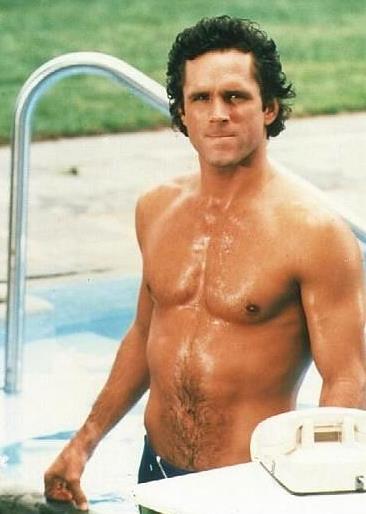
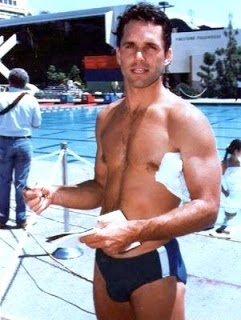
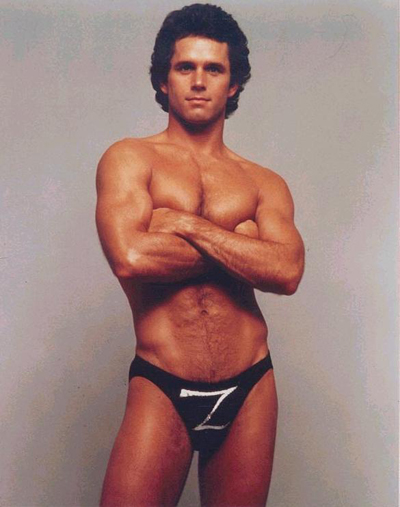
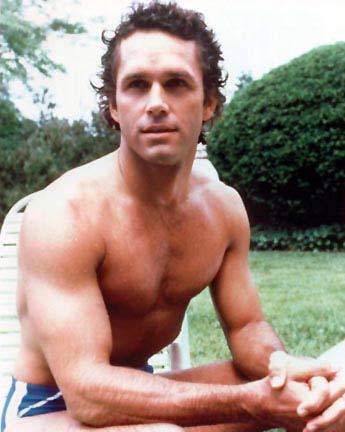
But the standout for me was Gregory Harrison, a young new-to-me actor who played the pivotal character of Levi Zendt, who actually founded the town (it was called Zendt’s Farm before the renaming in 1876) and I could not get over how good looking he was. There was also a shirtless scene, and I became a big fan. He was, looking back, absolutely one hundred percent my type; how many characters have I written about a hot lean muscular man with blue eyes and curly dark hair? Okay, his eyes were gray but that’s close enough for atom bombs and hand grenades, is it not? He then was on Trapper John, MD, which I didn’t watch (outside of General Hospital, I’ve never really watched many medical shows, and not sure why that is), and then he made a made for TV movie in which he played an actor who becomes a successful Chippendales-type dancer, For Ladies Only. It wasn’t a great movie, but he danced in thongs and bikinis and quite lustily, I might add, and that was really all I was watching for–but Marc Singer, player an older, mentor type, kind of stole the movie out from under him (more on Marc Singer another time)
I mean, what’s not to like?
For Ladies Only was an attempt to cash in on the Chippendales craze, and they were everywhere in the early to mid 1980’s–Donahue, Oprah, every talk show during daytime you could imagine–the entire concept of women appreciating men as sex objects, the way they’ve always been seen by men historically–and even The Young and the Restless had a regular cast member who was a male stripper (who mentored Nikki when she became a stripper; yes, Nikki had a rather sordid past on that show). It was the time period when what I call “the gay gayze” really kicked into gear.
The movie For Ladies Only wasn’t the greatest movie ever made, but Harrison was one of the few actors at the time who could pull off playing a male stripper and actually not need a body stand-in or anything (neither did Marc Singer–and if you need to know anything else about Singer, google image search “Marc Singer the Beastmaster”; he was also a big crush of mine after I saw this film). It was one of those sad morality plays that always wins big in the end. Harrison’s character was a struggling actor who gets recruited to join a Chippendales type show, his popularity begins to grow but now when he goes on auditions, no one will cast him because he was a stripper (how did that work out for Channing Tatum, you ask? Three smash hit films about Magic Mike, that’s how). I recorded For Ladies Only, and kept that videocassette for many years, finally discarding it in a purge before leaving California.
Thank you again, Mr. Harrison, for helping to define my taste in men–especially fictional one; how many characters have I written with curly dark hair and blue eyes?–as well as realizing for sure just how not straight I was at heart.
Lonesome is a great word that doesn’t get as much use as it used to; it was a very popular emotion/feeling for songwriters (especially those in the genre then known as “country and western”) to write about back in the 50’s and 60’s. It’s a very evocative word, and I am not sure why I don’t hear it as often as I used to. I love the word, and one of my ideas is to write a book called Kansas Lonesome at some point. The premise would be that there’s a podcast called that, which covers Kansas true crime stories throughout the state’s history; I am not sure how that podcast will play into the story I want to write, but that’s the foundation of that book, whatever it turns out to be. I am currently in the process of writing a short story (one of many, by the way) with a college student investigating a crime site out in the countryside to sus out background information for a podcast episode for the producer/star of the podcast. I do think the book may be inspired (Kansas Lonesome) on a homophobic incident that occurred in my old school district in Kansas; a young lesbian was put off the bus and banned from riding for saying she was a lesbian. The school district tried to cover up everything, but it turned out the girl was the only one telling the truth, the bus driver was fired, and the superintendent lost out on a big career move…and a few months later, she disappeared. Her name was Izzy Dieker, and as best as I can tell, she’s not turned up yet and it’s been over two years since she went missing. There are just some articles noting her disappearance, and then….nothing.
That is a great premise for a crime novel, isn’t it? Kansas Lonesome is becoming what I will soon probably be referring to now as “the Kansas book,” now that the other one was finally finished and published. But I think I will probably write The Crooked Y first; there is so much material in Kansas for prairie noir, isn’t there?
It really is amazing how much crime–specifically brutal murders–have happened in such a sparsely populated, deeply Christian red state. (“But crime only happens in those scary big cities!” Fuck off, trash. And by the way, immigrants aren’t coming for your women or your jobs.) The Benders are another grisly story from Kansas’ blood-drenched past, and I’ve always wanted to write about them, too; and hope to do so before I run out of time on this mortal coil.
And last week I stumbled across another fascinating tale of corruption and illegality involving a district attorney, a judge, and a police chief…a truly horrifying tale about how justice can be (and is all too frequently) twisted to fit the agendas of people who are evil but so convinced of their own righteousness that bending rules and not turning over evidence to defense attorneys, suborning perjury and coercing confessions from people?
Sidebar: Yes, Sarah Palin, that’s the real America, you charlatan snake-oil salesperson. Hope you’re enjoying being completely forgotten, grifter and Grandmother of Bastards.
Anyway, that’s a lot of words to talk about how Kansas is actually a horrific true crime state, with lots of examples of horrible murders and desperate people. I sometimes wonder if has anything to do with how flat the state is, and how sparsely populated. I know sometimes those winter winds off the prairies are brutal, whistling around the house and rattling the windows, trying to find a way into the warm cozy inside. Sometimes that wind can whistle, too–and I can imagine in a time without electricity or much entertainment, listening to that wind and being so lonesome out on the prairie could easily drive you mad1. I could write a book of short stories and simply call it Kansas Lonesome, with the premise that the podcast host and researchers are doing the background research into these old crimes or something. That could be an interesting way of bringing those stories together…but I also think Kansas Lonesome is too good of a book title to not use it for the novel I was thinking about earlier in this entry–the one about Izzy Dieker.
Loneliness, though, while sad and depressing, is a writer’s friend. When you’re lonely, you have to entertain yourself, and I always drag out the journal at those times, or warm up my computer and start writing away. I think a lot of my creativity came from being lonely as a child, the recognition I clocked early that I wasn’t like other kids in many ways so I stayed away from them because I didn’t know if they were going to make fun of me or bully me. and so I retreated very often into my own mind. I read a lot, obviously, and watched a lot of television and movies (while reading), and I just kind of lived in my imagination for lengthy periods of time. I preferred my own world, frankly, and still do; I hate leaving my own world for the real one.
I do wonder sometimes if I would have still wanted to be a writer if I had felt like I belonged, if I was like every other little boy. But even when I was a kid, I looked at the future that was expected of me and found it wanting. A Lot. I hated the very idea of fitting into one of the ticky-tacky houses in the suburbs and the day job that was all-consuming and the wife and the kids and the lawn work and upkeep on the house and…yeah, that sounded always terrible to me, and the older I got the more I resisted that future. Had I followed the path laid out for me by society and family I would have been absolutely miserable by now. Would I have been so attached to books if I had friends, kids in the neighborhood and the comfort of knowing people did actually like me? It was the love of books and wanting to give other people the feeling I got when I read one I enjoyed that made me want to be a writer in the first place, and the more I read the more I wanted to write. I used to write all the time when I was a kid–things I didn’t take seriously at the time, and would completely dismiss…but I was always writing. I made up a world once, with its own countries and lineages and so forth, kind of a fantasy alternate kind of history. I wrote my own versions of the Hardy Boys and Nancy Drew. I wrote short stories in high school. I started writing a novel when I was seventeen, and while I might have gone months without writing at times, I always was writing, always coming up with titles and ideas, and I was always happiest when I was creating.
And now, here I am hurtling toward my sixty-third birthday with a lot of publishing credits to my name and boxes and boxes of ideas…that I want to digitize and throw away the paper files in an attempt to cut back on clutter. I have my next two years’ writing schedule pretty much figured out already. I’m happy. That’s the bottom line of everything, isn’t it? Being happy? I love my life. I love writing. I love connecting with readers and other writers. And I think I am continuing to grow and develop as a writer. I don’t ever want my best work to be behind me, and I don’t think it is. I’m feeling good and optimistic again, and that’s always a good thing.
There was a really great chapter in James Michener’s Centennial that talked about this very thing; how on the prairies in the winter the wind could drive one mad. After I read that book I could never listen to the wind again without remembering that. ↩︎
I know very little about the culture, history, values, and faith of the native American population of this continent. Most of what I do know isn’t reliable; being gleaned from books and histories and television shows and movies and other media, most of which were steeped in racism and white supremacy, and cannot really be depended upon for any kind of accuracy whatsoever.
If anything, it should be looked at with a highly jaundiced and very critical eye.
I’ve been trying to educate myself more about the indigenous natives of Alabama, for example; as I delve more deeply into writing about my fictional Corinth County, I need to learn more about the area and the natives who originally lived there–and what they believed and their spirituality. I do not want to write–or even imagine– anything rooted in white supremacy and racism. I never played “cowboys and Indians” when I was a child–I was never into little boy things, ever–and was never terribly interested in Westerns, but was aware that white people wore thick make-up to play Native-Americans on film and television…which even as a child made me wonder why they didn’t just find Native-Americans who wanted to be in show business (because I found it incredibly hard to believe there weren’t any). I always assumed Cher was at least part Native because of “Half-Breed,” so you can imagine my shock and surprised to find out she’s actually of Armenian descent. The Village People had a non-native in native garb as part of their nod to gay masculine archetypes (probably this came from the book and movie Song of the Loon, plus decades of Hollywood’s sexualization of the loin-clothed Native warrior).
And as you get older, and do more reading and studying on the subject, you begin to see things that were plainly obvious all along, but somehow you never really connected the dots.
The first time I ever read anything that treated the native population with dignity, respect and understanding was James Michener’s Centennial*, which remains my favorite of his works and one of my favorite books of all time. The hit movie Billy Jack, which came out while I was in junior high school, was also about mistreatment of modern-day Natives by bigoted white people and their government, but I think the social message of the movie got lost in white tween boys’ fascination with Billy Jack’s fighting skills, because that was all they talked about. I don’t think I ever heard anyone ever say “It’s terrible how we treat the natives.” The late 1960s and 1970s began to see a change in how we see the native population, as well as the history of the European conquest of the continent–not everyone, of course, but at least with those who were trying to be better about racism and racial issues and the long history of oppression of the native populations.
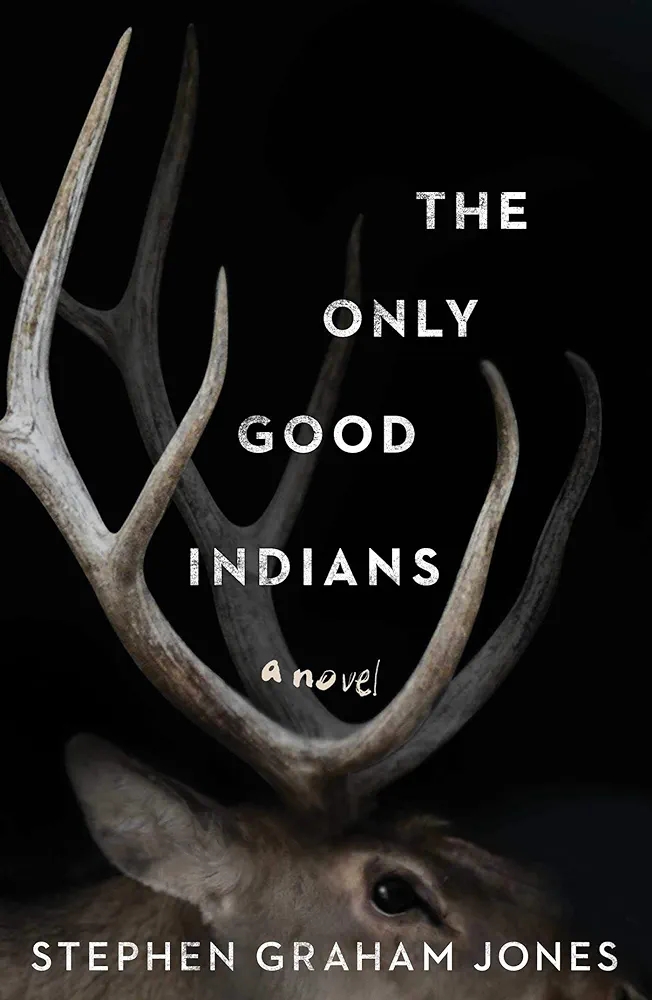
I had heard a lot of great things about Stephen Graham Jones, a native American horror writer who has taken the genre by storm. I’ve been wanting to read him for quite some time, and so I decided to listen to The Only Good Indians on my drive to Panama City Beach and back this past weekend.
And it did not disappoint.
The headline for Richard Boss Rivs would be INDIAN MAN KILLED IN DISPUTE OUTSIDE BAR.
That’s one way to say it.
Ricky had hired on with a drilling crew over in North Dakota. Because he was the only Indian, he was Chief. Because he was new and probably temporary, he was always the one being sent down to guide the chain. Each time he came back with all his fingers he would flash thumbs-up all around the platform to show how he was lucky, how none of this was ever going to touch him.
Ricky Boss Ribs.
He’d split from the reservation all at once, when his little brother Cheeto had overdosed in someone’s living room, the television, Ricky was told, tuned to that camera thay just looks down on the IGA parking lot all the time. That was the part Ricky couldn’t keep cycling through his head: that’s the channel only the serious-old of the elders watched. It was just a running reminder of how shit the reservation was, how boring, how nothing. And his little brother didn’t even watch normal television much, couldn’t sit still for it, would have been reading comic books if anything.
First of all, I want to address what a terrific writer Jones is–although this is hardly ground-breaking news. For me, the strongest part of the story was the authorial voice and the tone set by it. I can’t say whether something like this–like anything written by people outside of my own experience–is authentic or not, but it was completely believable. I truly got a sense of what it is like to be a Native-American living in North America in the present day; the mind-numbing poverty and dealing with the incessant racism from white people. His characters were three-dimensional and fully realized; the dialogue sounded right, the rhythm of the words he used to create a melody of syllables and sounds sang from the page. I felt like I was there in every scene, in the room with the characters and bearing mute witness to what they were experiencing, and what they were going through and experiencing, with the fully-realized life experiences coming into play with every word they said and every action, every thought, every movement. The deceptive simplicity of the prose was powerful and resonated; it sounded like poetry coming through my speakers.
I also found myself really interested in basketball–which is very unusual.
I also realized, as I was listening, spellbound behind the wheel of my car, that there was also commonality of human experience here; the poverty, the worries about money and the future and the bleakness of the helpless acceptance of despair–this is definitely a horror novel, but it’s also a stinging indictment of poverty and societal inaction in the face of it; their resigned acceptance of their fate mirrors the more callous resignation most people feel when thinking about poverty in these United States–“nothing I can do about it.”
While telling a strong story that is almost impossible to step away from, Jones also educates us cleverly with a sentence here and there–I’d never thought about where the term buck naked came from, and there are so many of these sprinkled throughout the book; terms and phrases that white people use without a second thought but come from a long history of racism and prejudice; the title itself is taken from the horrific saying “the only good Indian is a dead Indian.” I myself am always careful not to refer to the native population by the colonizing name assigned to them by the lost Spaniards looking for spices; it was jarring hearing it over and over again, and made me a bit uncomfortable–but I suspect that was the entire point. (I think the worst was when the junior high school basketball prodigy Denora was thinking about playing a game against white schools, and the horrible signs and things their students yelled at her and her teammates–the one that was particularly offensive was Massacre the Indians!, which reminded of the trash Chicago Bears fans holding up signs when playing the Saints in the NFC title game after the 2006 season: “FINISH WHAT KATRINA STARTED!”, which turned me from someone with a nostalgic affection for the NFL team in the city where I spent most of my childhood into someone who wants them to lose every fucking game they play.
Massacre the Indians.
There’s no doubt in my mind reservation kids have to deal with this kind of bullshit all the time, and its embarrassing and infuriating at the same time. The cruelty is always the point.
But I digress.
I really enjoyed this book. I felt like reading it somehow helped me reach a better understanding of a situation I was already aware of, while being incredibly entertaining at the same time. I cannot state that enough: what a great experience this book was from beginning to end. The tension and suspense were ratcheted up with every chapter and sentence; the monster was terrifying and horrifyingly relentless, and the characters were all strongly rendered in both their strengths and their flaws.
When I finished the book, I couldn’t help but wonder if this book, and others by Jones, were being pulled from library shelves because reading them might make white people feel bad. The book made me remember again why controlling access to what anyone can read is about control more than anything; we can’t let people read diverse points of view or see opposing opinion is the underlying message of the banners, and quite frankly, grow a fucking pair already! Seriously, who is calling who a snowflake?
Read this book! You can thank me later. And now I want to read more of Jones’ work.
*Centennial may not have been historically accurate in its depiction of the Arapahoe tribe, but I feel that it showed how the US government broke promise after promise to them, and the depiction of their systemic extermination was not done in a “manifest destiny” way. The ugliness of the US and its racism was right there on full display.
Last night I kept waking up, even though it felt like I was getting good rest, if that makes any sense. I finally got tired of trying to get some more sleep and went ahead and got up before eight–around quarter till, to be precise–because I have work to do and the deadline is ticking. I made some excellent progress yesterday, and have a lot more to do today. I am hoping to get the final chapters of the book completely refinished and rewritten today; so I can do mop up the rest of the week–and there will be lots of mopping up to do. This is maybe the ninth draft of the book since I wrote the first draft in 2015–but in complete fairness, all those revisions were of the first half of the book rather than the second; this is the third draft of the second half–I was struggling to find the right voice, to find the correct tense, and really, trying to figure out who my main character is or was. Most of this work has been, since I first wrote the first draft six years ago, scattered and disorganized and, in retrospect, primarily a case of me not trusting myself or my abilities and be intimidated by what I was writing about–with the occasional dose of imposter syndrome thrown in for good measure.
We watched the ice dancing final last night, and remain completely mystified by the results. Perhaps we’re partisan, but we simply failed to see the same magic in the routine by the Canadian team that resulted in them placing second in the free dance, and capturing the bronze medal somehow. But ice dance has always been controversial, and the judging has never made much sense. The Russian team that won was clearly the best in the competition; no question about that–but I also felt the second place Russian team, that finished fifth, was also better, more athletic, and more artistic, than the Canadians. But yesterday afternoon I also took some time to watch the men’s final, and it was delightful to see Nathan Chen make a comeback from a fall in the short program to win it all, his third world title in a row–the first American to do so since Scott Hamilton–and if he wins the Olympics and a fourth world title next year, he’ll be in even more elite company. The women also managed to earn the US three Olympic spots, which I wasn’t expecting to happen, so at least we’ll have as full a team as possible; I think Nathan winning automatically earns us three men for the team–but the rules may have changed, and I must confess I don’t pay nearly as much attention to figure skating as I used to. I hate this new points system; always have since it was implemented, and I don’t believe it forestalls arrangements between judges the way the old system did–not to mention the guarantee of anonymity so no one knows how any judge scored any competitor; I fail to see how this will stop collusion, but I am not the ISU.
The humidity has been ruinous on my sinuses lately; it’s so weird for it to be so hot and humid already this year. My windows are covered in condensation this morning, which is unusual for this time of year–that new HVAC system clearly works extremely well–an I am going to head to the gym later this morning for my weekend workout. The rain kept me from going earlier in the week, so for the last two weeks I’ve only had two workouts per week; not goo, but better than one and much better than not going at all. I need to get some new workout clothes, though; I haven’t bought workout shorts in well over ten years and thus they not only don’t fit properly but are also a little on the worn out side, and the more hot and humid it gets the less likely I am to want to wear sweat pants to the gym. I found some T-shirts in my T-shirt drawer back from the days when I could squeeze into a medium (I now wear extra large) and so I disposed of them as well. I really would like to get this book finished and turned in on Thursday the 1st (this week!) so I can spend my three day Easter weekend cleaning out books and going through my clothes.
I’d also like to spend some time finishing The Russia House. I read another chapter yesterday and greatly enjoyed it; I am really looking forward to spending more time with LeCarré. I also want to start reading more of these books that I keep buying and adding to my TBR pile, which is mostly out of control these days–I also need to recognize that many essays I have wanted to write about books and authors I enjoyed won’t ever happen because I will never have the time to write them, nor will I ever have the time to go back and reread the books; there simply isn’t enough time for all the reading I want to do, and I have to be more realistic. Some are simply too long–much as I loved Anya Seton’s Green Darkness, Arthur Hailey’s Airport, and Herman Wouk’s Youngblood Hawke, there’s simply no way I can (or will) ever find the time to reread those books; let alone anything by Michener (I’ve been wanting to reread my favorite Michener, Centennial, for quite some time, but probably will never happen).
And once I have this book finished and turned in, I have to do some revisions of Bury Me in Shadows by May 1; I don’t think it’s anything major, really; a much more thorough copy edit, an additional clarifying sentence here and there, and then it will be finished, and then comes the first draft of Chlorine….at long last. There are also some submission calls I want to write for as well; we’ll see how that turns out, won’t we? But I think my stories “Death and the Handmaidens”, “The Blues Before Dawn”, and “Le Feu Follet” might actually have homes I can try to get them into; and there’s another call for a humorous mystery I’d like to take a shot at as well; my stories always seem to turn out to be darkly comic anyway.
And on that note, I am heading into the spice mines. Have a lovely Sunday, Constant Reader, and I will check in with you tomorrow.
 Queer and Loathing in America