Killer Queen

So, Greg, you have a book coming out from a new press in October, and the main character is a drag queen? What the actual hell?

Well, therein lies a tale.

I never thought I would write about a drag queen, in all honesty. It’s not that I’m opposed to drag or anything like that; drag has always been an important part of gay culture (I really wish someone would do a history of drag that’s not academic in tone and therefore accessible to everyone without a PhD) and I’ve always appreciated it as an art form. Yes, some queens are better at it than others, and there are some who are just really tragic…but I admire and respect every single one of them who puts on the dress and wig and heels and make-up and goes out there to perform. My own anxiety manifests itself whenever I have to perform or speak in public (although I managed to successfully control it and get through Boucheron panels swimmingly; I don’t think my stage fright is a thing of the past yet but I’m getting better); I can’t imagine the courage it takes to do drag that first time.

I also never considered doing drag because of my vanity–I wouldn’t look pretty in drag and I would want to be pretty. Shallow, party of one, your table is ready. I’ve seen many performances over the year and even have friends who do it, but my primary interest in drag has always primarily been in it as an art form and political statement critiquing gender roles, masculinity, and femininity; and it holds a very important place in queer culture. I once did drag, for a Showgirls-themed birthday party–I looked like Stockard Channing, which isn’t a bad thing–but it was more of a costume than a real attempt at doing drag. My friend Mark always wanted to make me up for Halloween or Fat Tuesday as Joan Crawford–it was the shoulders, the eyebrows, the narrow hips, and the shape of my face more than any striking resemblance to Ms. Crawford, I think–and while I was interested in being transformed into Ms. Crawford, one of the things I hated the most about doing plays in high school was the make-up. I hated having that shit all over my face, and it never did what it was supposed to in the first place (I inevitably always played old men, so they had to try to age me, and it’s not like we had make-up artists who knew what they were doing in high school.). And the padding? The wig? The dress? Not to mention the lack of pockets and the difficulty in using the bathroom– yeah, not for me. Drag does show up in my work sometimes–not very often–and the most fun thing for me about that is coming up with drag names for the characters. I know I’ve used Floretta Flynn a number of times, to the point where in my New Orleans universe she’s probably one of the bigger and most successful queens in New Orleans. Two of the biggest names in drag came from New Orleans–Varla Jean Merman and Bianca del Rio are both from here. We used to go to Drag Bingo hosted by Bianca and Blanche Debris at Oz on Sundays before she left for New York after Katrina–and Bianca was just as funny and just as big of a bitch then as she is now. She always drew crowds, and of course I met her a few times out of drag (I am quite sure Roy doesn’t remember me).

And believe me, I was very careful not to attract her attention while she was holding a microphone.

I also once wrote a short story that opened with one character saying in the Clover Grill, “You sure see a lot of tragic drag in this town at four a.m.”

Paul and I also were fans of RuPaul’s Drag Race for awhile, too–but like Project Runway, we stopped watching one season when it was obvious that it wasn’t being judged fairly (it was fucking blatantly obvious) and that was it for us. Don’t serve me competition reality when the competition is obviously rigged for a particular competitor. I do love some of the queens we did watch on there–it’s been amazing watching Jinkx Monsoon’s star take flight–and I always liked Tatianna, and just to name a few–Ben de la Creme, Adore Delano, and Manila Luzon are all fabulous. Paul follows a lot of them on Youtube, and of course I do enjoy Trixie and Katya’s We Like to Watch on Netflix.

And naturally, we love Bianca because she’s a New Orleans queen.

But it never crossed my mind to write about one as a main character. It wasn’t my milieu, so to speak (and just typing that made me want to bang my head on my desk. Take risks! I should always take risks in my work!), and so while every once in a while I’d think “maybe I should write a drag queen into this story”, I never did.

Last summer, I am not exactly sure when (2022 was pretty much a blur of misery), I got an email with a request for a ZOOM meeting with two very dear friends, along with another friend of theirs I may have met once over twenty years ago, James Conrad. He wrote Making Love to the Minor Poets of Chicago back in the days when I was a reviewer/worked for Lambda Book Report, and the purpose of the call was they wanted to talk about a possible project for me. You know me, I am always up for a new project and a new possibility…so you can imagine my surprise to find out what they wanted was for me to write a cozy with a drag queen main character. James owns and operates the Golden Notebook bookstore in Woodstock, and decided to start a publishing company through the store and wanted this to be their first venture into crime. I pointed out that I a) knew next to nothing about drag and b) I’m not really a cozy writer (the Scotty series can be classified that way except for a lot of cozy rule-breaking; and yes, I did write A Streetcar Named Murder, which wasn’t out yet and I wasn’t sure if it was even any good), they pointed out that I am a writer who can write anything (this is true, but there are some things I can’t and won’t ever write–and yes, as I typed that I was thinking there you go limiting yourself again–maybe those are the things you should be trying to take on), and then I also remembered a few things–some of my co-workers at the day job do drag, and in fact, my former supervisor had attend a “drag school” here locally, started by a queen who’d retired here from San Francisco after a lengthy and successful career in drag; Paul even knows the queen who runs it. I sent James an early electronic uncorrected proof of Streetcar, so he could get an idea of my writing style, and waited to hear back.

While waiting, I asked some of my co-workers if they’d be okay with me asking them questions–which of course they were more than happy to do–and the more I thought about it, the more it made sense for me to approach this in the same way I approached writing Streetcar–I knew nothing about antiques, so I made my character the same. So, if I am going to write about a drag queen, I needed to write her origin story first–and I decided to make her an accidental drag queen; forced to step in when a queen doesn’t show for a performance. But how would that work? I realized my character had to already know about hair and make-up, so I decided to make him a glam artist, hired to do make-up for women on special occasions and styling them. How did he wind up doing glam? His grandmother, who was from New Orleans, used to have her own Uptown beauty shop on Magazine Street that was frequented by upper class New Orleans women, who would also hire her for special occasions to style them. He spent his childhood summers in New Orleans; his grandmother was the only family member who had no problem with his sexuality, and she taught him all about hair and make-up (and classic Hollywood). He went to cosmetology school instead of college (his grandmother paid for it) and he worked in a high-end salon in Dallas until his grandmother died, leaving him the house and most of her money.

I also had a great idea for the opening, which I quickly wrote up and James liked it…and so we moved forward with the plans for it. I had a Scotty book under contract, and I knew I could juggle the two and get them both done on time.

Of course, I didn’t realize how much work it would be to turn MWA over to my successor, I didn’t know Mom was going to go into the final decline ending with her death during this time, and….well, hindsight is twenty-twenty, isn’t it?
“I don’t know, Jem,” Lauralee Dorgenois said, frowning and raising a perfectly plucked eyebrow as she looked back over her shoulder into the three-way mirror set-up in her dressing room. “You’re sure that this dress doesn’t make my butt look big?

Okay, I’m going to take a sidebar right here to give y’all some free-of-charge advice that is more than worth its weight in gold. There is only one correct answer to be given without pause or hesitation any time a woman asks you if something she is wearing makes her butt look big: “No.”

You always, always, ALWAYS say no.

If that is, in fact, a lie—you say “I don’t know if that cut drapes right” or “I don’t like what that color does to your skin”.

There are literally a thousand other options besides making the incredibly foolish mistake of saying ‘yes’ or the seemingly safe, non-comital ‘maybe.’ Marriages, engagements, friendships, and relationships have all ended over this question being answered incorrectly—and no, it’s not a trap question. Women are bombarded from childhood with images of what they are supposed to look like and what they are supposed to wear. They are taught to fear fat cells and fatty foods, spend millions on diets and gym memberships and personal trainers. They are gaslit into thinking that being any size larger than zero and not having big firm breasts and not having a wrinkle-free face aglow with the dewiness of youth means they are doomed to grow old alone and unloved. So, they try to fight aging—and the fear of being traded in for a younger model—by having poison injected into their faces, excess skin surgically removed, and their hair constantly colored and touched up. Centuries of societal and systemic misogyny, of telling women they don’t measure up, echo in those sad, simple words: does it make my butt look big?

My heart breaks a little every time I hear them.

However, I get paid to make them look good. My opinion must be honest, but I still need to be delicate. Why be hurtful when you don’t have to be?

I tilted my head to one side and brought my eyebrows together as I looked her up and down yet again. “You’re curvy, Lauralee,” I replied finally, fluffing the peacock feathers on her shoulders to spread them out further. It was true. Lauralee was about five seven, and maybe could stand to lose a pound here and there. Her hourglass figure had thickened a slight bit once she hit forty, but it was barely noticeable. I’d picked out a green silk dress for her because the color made her green eyes sparkle like emeralds. It clung perfectly to her hips and was cut low in the front to shove off the ample bosom, highlighted by an emerald pendant handing from a gold chain just above the cleavage. I’d braided her long auburn hair into a French braid that dropped about half-way down her back. I’d woven some extra pieces of auburn into the braid to make it thicker. “And there’s nothing wrong with that, you know. We’d put Marilyn Monroe on a diet today.”

Several years ago, I tried writing a third series set in New Orleans with a gay male protagonist. It was a character I had already created; he showed up in a couple of Scotty books: true crime writer Jerry Channing, who’d gotten rich on a true crime novel about a child murder case in the Garden District in the 1990’s called Garden District Gothic, (which also became a Scotty title when he and the boys got sucked into that ancient cold case) and wound up solving it. I had wanted to write a fictional story based on the very real Jeff Davis Eight murders, and thought who better to center in the story than a true crime writer researching the case for an article or perhaps even a follow-up book than Jerry Channing? But as I started developing the character out from the sketchy details provided in earlier Scotty books, I suddenly realized what I was actually doing was combining Chanse and Scotty into a single person, so I shelved the story–or at least, the new series, because if all I was going to do was just merge two previous characters into one, there was no point in bothering. I had then gone on to create a new series with a straight woman as the main character (A Streetcar Named Murder), and I was determined that, with this new potential series set in New Orleans, the last thing I needed was to just rip-off previous characters.

So meet Jem Richard, twenty-something glam artist and New Orleans home owner. Jem lives in the 7th Ward (not far from my day job office, actually; over on St. Roch Avenue between Claiborne and St. Claude), and the house flooded during Katrina–Jem remembers coming down with his family to help work on the house for his grandmother, Mee Maw of sainted memory–and I gave him a pole-dancing roommate who also works at Crescent Care. (Another Easter egg is the book opens with Jem being enormously disappointed to be ghosted by someone with whom he had several dates –a Tulane grad named Tradd. Bury Me in Shadows readers may remember Tradd as the asshole who broke up with Jake and sent him into the alcohol/drug spiral that landed him in the hospital when that story opens. I also want to use Tradd again somewhere else…but that is indeed a tale for another time.) Jem does well for himself, but has no health insurance and never is guaranteed work–but he also really doesn’t want to go back to working in a salon again, either. (He also sometimes books gigs with film, theater and television companies.) He’s kind of a lost soul, not really sure what he wants or what he wants to do with the rest of his life–but he also is lucky: he owns his own home, for one, and has several marketable skills. He kind of feels like he’s been spinning his wheels and not getting anywhere since coming to live in New Orleans. Jem has considered doing drag before–he’s very into costuming, and has won the Bourbon Street Award for Best Drag Costume on Fat Tuesday the previous two Carnivals–but he (like me) is haunted by stage fright. He did a play while in high school and the stage fright was such a horrible experience he gave up his dream of being a performer and started working as the make-up and hair person for the school productions.

So, when he’s hired to be a back-up glam artist for a fashion show at Designs by Marigny, only to find out the models were drag queens. A little taken aback, he rolls with the challenge, and when one doesn’t show, Jem gets pressed into service (he can fit into the dress). The show is being managed by the same person who runs the local drag school–a sweetheart named Ellis, whose drag name is Mary Queen of THOTS. Jem has a bad history with Marigny the fashion designer–she’d hired him todo the make-up for a previous show, and her check bounced–so the friend who recruited him to do the show makes sure he gets paid in advance. Of course, since the models are drag queens, the show attracts anti-drag protestors–there’s a suspicion that the designer, Marigny, deliberately used queens hoping to attract a protest and more publicity. Throughout the course of the evening Jem overhears Marigny arguing with several different people, and the next morning wakes up to the news she’s been murdered–and somehow Jem is not only a suspect but he’s also a target.

But why?

Jem also has a black cat named Shade.

As I said, while it had never occurred to me previously to write a drag queen character, the more I thought about it, the more I wanted to do so. Drag queens are currently under attack by the forces of bigoted evil. Part of this comes from the right-wing demonization of transwomen, spear-headed by hateful bigoted lying trash like Libs of TikTok (if you’ve ever retweeted the Axis Sally of the Proud Boys, know that’s why I blocked you and we will never, ever be friends again) and Moms for Liberty, who are both so fucking ignorant and clouded with hate that they think drag queens and transwomen are the same thing. The idea that children need to be protected from drag queens at all costs because it’s somehow sexualizing them is disgusting and ignorant and offensive on its face; merely rephrasing Anita Bryant’s vile claim that queers need to recruit children, i.e. all queers are pedophiles. They prove they’re liars on a daily basis and that it really has nothing to do with “concern” for children and everything to do with bigotry and hatred, because they never go after religious organizations, youth pastors, Boy Scout troop leaders, and Republicans–you know, the ones who are being convicted of child rape and child porn on a regular, almost daily basis –but only the queers are their primary concern. First off, not all drag queens are transwomen and not all transwomen were drag queens. Yes, some transpeople start their transition by doing drag, to get a better idea of whether or not they are more comfortable as a woman than as a man. I work with a lot of transpeople, and have for quite some time. I’ve witnessed people transition and evolve, and I’ve also seen the change in demeanor, confidence, and emotional well-being when they do.

What better way for a writer to fight back against ignorance than writing about it? And I loved the deliciousness of fighting homophobic and transphobic bigotry by writing a cozy series.

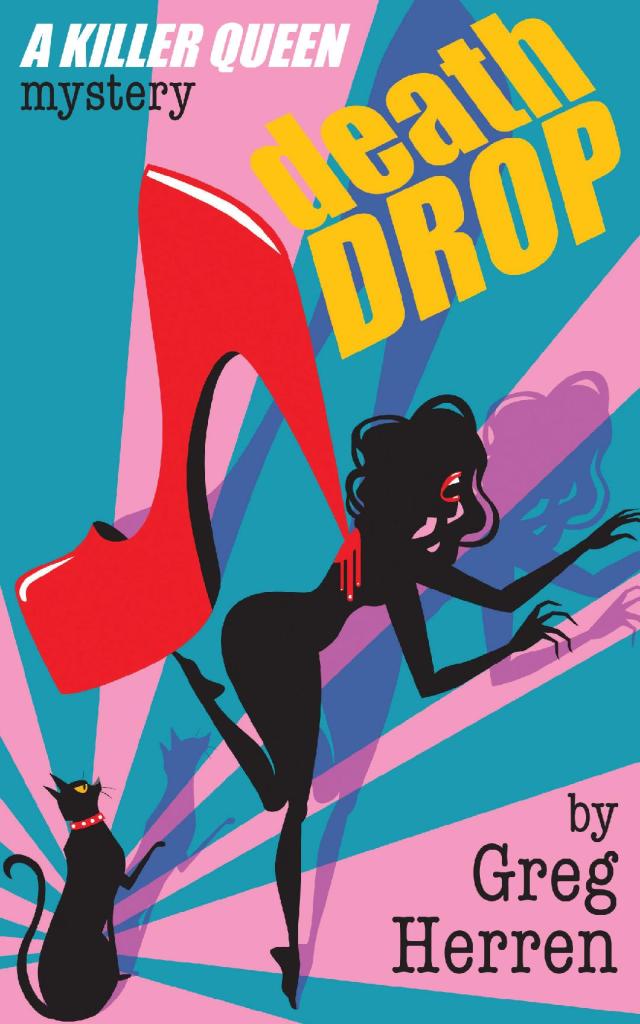
It releases on October 10th, and you can preorder it here, if you would be so kind. I am pretty pleased with it, to be honest, and here’s hoping it does well for James and the press.

Near You

Several weekends ago, I did an on-line panel for Outwrite DC. The moderator was John Copenhaver (whom you should already be reading), and my co-panelists were the always delightful and intelligent Kelly J. Ford, Margot Douaihy, Renee James, and Robyn Gigl. The video is actually up on Youtube, if you would like to watch it. John’s questions were insightful and intelligent (as always), and the conversation was marvelous, inspiring, and fun; there’s nothing I love more than communing with other queer crime writers (or any writers, to be certain), and I always try very hard to not monopolize panels because I do have a tendency to talk too much–especially if and when I get going on a topic I am passionate about. So, I thought it might be fun to take John’s questions and turn them into a long form interview, for thoroughly selfish and totally self-promotional reasons.

The panel blurb claims that “queer characters are riveting and necessary material for crime fiction and how those stories can shape (and perhaps reshape) the landscape of contemporary crime fiction.” Do you agree with this statement—and why do the stories of queer characters have the potential to shape crime fiction?

I completely agree with this statement. Queer crime fiction has a very proud history that was never really recognized or appreciated by the mainstream crime writers, readers, organizations, and conferences. That is changing for the better.

New blood is always necessary for any genre–horror, romance, crime, literary fiction–because genres tend to stagnate after a certain period of time. The cultural shifts of the late 1960’s and 1970’s echoed in crime fiction, for example; you couldn’t write crime in those periods without addressing all the cultural and social shifts; Ross Macdonald’s later novels are a good example of this. The 1970’s saw a lot of anti-hero books being written. The private eye sub-genre had grown quite stale by this time, which was when the women really moved in and gave it a shot of adrenaline–Marcia Muller, Sara Paretsky, and Sue Grafton blazed that trail, and revitalized a sub-genre that had kind of lost its way. Queer writers and crime writers of color are currently doing the same to the entire genre. Voices and perspectives we aren’t used to seeing are now getting into print and changing how we see, not only our genre, but each other. Crime fiction has always given voice to societal outsiders and outliers; queer people and people of color are the ultimate outsiders and outliers in this country. Who better to tell stories of societal alienation?

Why did you choose your sub-genre? How do you think the sub-genre has influenced the types of characters you write?

Well, I write in several different ones. Chanse MacLeod was a straight private-eye series; Scotty Bradley was more of an amateur sleuth/humorous series, but he does have a private eye license in Louisiana. A Streetcar Named Murder was a cozy, with an amateur sleuth heroine who gets caught up in a family mystery. I’ve also done young adult and “new adult,” whatever that is (it’s been described as ages 16-25), and Gothics with a touch of the supernatural. I tend to write things that I like to read, and I have a varied reading taste. I started writing the Chanse series because I wanted to do a harder-edged private eye series with a queer twist and set it in New Orleans. I didn’t know about J. M. Redmann’s Micky Knight series when I started writing Chanse; would I have done something different had I known she’d already covered the hardboiled lesbian private eye in New Orleans? We’ll never know, I suppose. Scotty was meant to be a lark; a funny caper novel and a one-off. And here we are nine books later…

As for Streetcar, I had been wanting to try a traditional mystery with a straight woman main character for a long time. When the opportunity presented itself, I jumped in with both feet. I like trying new things and pushing myself. Having to follow the “rules” of a traditional cozy was a challenge–especially because I have such a foul mouth in real life. I love noir so am working on two different gay ones at the moment.

Why do you think amateur detectives are appealing? Do you think there’s a reason queer characters often find themselves in the role of amateur detective?

I think it’s because we all think we’re smarter than the police? We enjoy seeing a character we can identify with figuring things out faster than the cops, especially without access to all the evidence, interviews, and forensics the cops do. Murder She Wrote has been off the air for about thirty years and yet the books based on the show continue coming out every year. If we start out in mysteries reading the juvenile series–Nancy Drew and the Hardy Boys and Judy Bolton and all the rest were amateurs, so we always cut our teeth in the genre with them to begin with. Scotty is basically an amateur, even though he has a private eye license he rarely uses; he and the boys never get hired (although they kind of do in the new one, coming this November.)

Let’s talk about place. Greg, your books take place in the South. Why is place important to the crime novel—why is it especially important to the queer crime novel?

Place shapes who we are–not just as queer people, but as people in general. There are similarities between growing up in a small town in the Midwest and growing up in one in the South, but the differences are very marked. I’ve lived all over the country–pretty much everywhere but New England or the Northwest–and always felt, as a Southerner (despite no accent and not growing up there) like an outsider. Couple that with being gay in a time when it was still considered a mental illness, and you have someone always on the outside looking in. But I have that Southern pull to write about the South–although many would say that writing about New Orleans and writing about the South are not the same; like me, New Orleans both is and isn’t of the South, and I feel that very strongly. I’ve written books set in California and Kansas, even one in upstate New York, but I very much consider myself a Southern writer.

Place is even more important in a queer crime novel because place shapes the queer people so much. As a writer, I think one of my strengths is setting and place, and I think that comes from being very much a fan of Gothics growing up. Gothics are known for place and mood, and I think those are two things I do well.

All of you write wonderfully flawed characters. Sometimes, as LGBTQ+ writers, we feel the burden of representation and the urge to write only positive LGBTQ+ characters as an attempt to undo history’s (the dominant culture’s) demonization of us. Unfortunately, that can be limiting—even flattening. Clearly, you’ve all struck a beautiful balance with your characters. Talk a bit about how you approached this issue.

The flaws, to me, are what make the characters seem real. Nancy Drew and the Hardy Boys always annoyed me because they were so perfect; no one is that perfect, and anyone that close to perfect in real life would be irritating and insufferable. I am am quite aware that I am flawed (one of my biggest flaws is believing I am self-aware because I most definitely am not), but I am not trying to be perfect; I just want to be the best version of myself that I can be. By showing queer people with all their facets and flaws and failures and blind spots, we’re showing the reader that we are human; despite what those who hate us say or claim, we are human beings just like everyone else, just trying to get through life and do the best that we can. The villain in my first book was a gay man–and the entire book was a commentary on how we, as queer people, tend to overlook flaws and red flags from members of our own community. Just because someone is queer doesn’t mean they are a good person–and queers with a criminal bent do exist, and often take advantage of that sense of camaraderie we feel with each other, especially when we don’t know the person well. I tend to trust a queer person more readily than I will a straight person, and that’s wrong–which is why I think we feel so much more hurt when queer people betray us.

Speaking of the demonization of LGBTQ+ folks … Ray Bradbury of Fahrenheit 451 fame said, “There is more than one way to burn a book. And the world is full of people running around with lit matches.” What do you think about the current tactics to ban queer books from schools, libraries, and even bookstores in places like Florida, Arkansas, and Texas? Why are they targeting queer books?

This is, I hope, the last gasp of the homophobes who’ve never updated their hate speech in over fifty years. What the hate group “Moms for Liberty” are doing and saying is no different than what Anita Bryant said and did in the 1970’s, what Maggie Gallagher and her evil co-horts at the National Organization for Marriage repeated, then came the One Million Moms…all too often it’s the cisgender straight white women who are the real foes of progressive politics who fight to uphold a bigoted status quo. They always claim they’re concerned moms worried about their children–but are perfectly fine with them being shot up at school; working in a meat factory on the night shift at thirteen (have fun in hell, Sarah Huckabee Sanders, when you get there and French-kiss your Lord and Master Lucifer); or shouldn’t have the right to vote…they know better than a child’s actual parents, you see, about what the child needs or wants. Maybe they should spend more time with their own children than worrying about everyone else’s? Phyllis Schlafly, queen skank of the conservative right, ignored her own family while she embarked on her crusade to strip women of their rights and autonomy–all the while shrieking like a hyena into any microphone nearby that she was fighting progress to save the American family while selling some Leave it to Beaver-like nonsense as reality. I always felt sorry for her gay son. Imagine that as your mother.

As for why, it’s about control and power. I actually respected Anita Bryant more, because she truly believed all the vile, horrible, unChristian things she said and espoused. Most of the others, including the unspeakably vile and disgusting Moms for Liberty, are working a grift for money, attention and power. Hilariously, they’ve sold their souls in the worst possible way in the guise of family, religion and God; if they’ve ever actually read their Bibles, they need to work on their reading comprehension skills as they are both apostates and blasphemers who will spend eternity doing the breast stroke in the lake of eternal fire. Hope they enjoy it.

Sorry your husbands and children don’t love you, but who can really blame them?

What are you working on next? What’s coming up?

I have a short story in an anthology called School of Hard Knox from Crippen and Landru (and somehow got a co-editor credit for the book with Donna Andrews and Art Taylor); Death Drop, the first in a new series from Golden Notebook press, drops in October; and the ninth Scotty comes out in November, Mississippi River Mischief. I am writing a gay noir, and may be writing second books for the new series I started with Crooked Lane last year as well as a sequel to Death Drop, and have a couple of short stories I want to finish to submit to anthologies I’d love to be in.

Highway to Hell

I realized the other night that, of all things, I take more pride in my short stories than I do in my novels. Isn’t that strange? Novels are, in theory, much more difficult to write than a short story–even at its barest minimum, a novel should be at least fifty thousand words while short stories generally cut off around a thousand. I think it’s because I still carry the scars from that asshole writing professor in college. I always struggle with short stories, and always have; I used to say that if I wrote a successful short story it was completely and entirely by accident. But writing erotica was an excellent tutorial in short story writing; in what other type of short story is “beginning, middle, end” so clearly delineated?

My first short story that got published outside of the realm of erotica was “Smalltown Boy,” which was published in 2003, I think. It’s still one of my favorite stories of my own; it’s an Alabama story and I am still very proud of it. I used to think I’d never get a short story published anywhere that wasn’t erotica, so when my stories started getting acceptances and published in non-erotica markets, it was very cool.

I like writing short stories because I can encapsulate an idea in that short form rather than writing an entire novel. I can also experiment with voice, style, theme, setting and story. I have any number of stories that don’t work but are completed; I have a lot more than were started and stalled because I didn’t know how to finish them. I think I have around a hundred short stories or so in progress; I actually counted a few years ago because someone asked and I didn’t know the answer.\

Several years ago, an Australian crime writer I’ve known for decades reached out and asked me if I would contribute a story to an anthology her publishing company was producing, The Only One in the World, which was a Sherlock Holmes collection–but the only rule was you couldn’t set the stories in London, period; I had never written anything close to a Holmes story and have never really been much of a Holmesian (I do love Laurie King’s Mary Russell series), but it was a challenge so I said yes–because for me, I love writing challenges because they push me out of my comfort zone and make me try things I might not ordinarily try. That story became “The Affair of the Purloined Rentboy” (still one of my favorite titles of all time) and it was a lot of fun to write, and I enjoyed the hell out of myself writing it…to the point I’ve considered revisiting my Holmes and Watson in 1916 New Orleans, several times.

Last year, the Sherlock editor, Narrelle Harris, reached out to me to see if I’d write something for a new anthology, The Fresh Hell, and there was a list of horror tropes we were given to chose from. Being from Louisiana, how could I not pick “haunted bayou”?

And so I started writing a story that became “Solace in a Dying Hour.”

Madeleine Chaisson opened her eyes and knew that the next time she shut them would be the last.

She cocked her head to listen. Even amongst those few (some say blessed, others cursed) who could hear them, most would describe the strange sounds they made as they danced about the dark, still waters as whistling. But Madeleine was special, different, not like the others.

She heard them clearly. She knew they weren’t whistling. They were singing.

But the sound she heard now was just the gulls over Bayou St Ferdinand shrieking as they swooped and flapped their wings looking for morsels of food. 

Dirty scavengers, she thought with a scowl. She hated the gulls; had since she was a little girl growing up in this very house.

How much gull shit had she cleaned off the dock during her long lifetime? Papa would backhand her if he saw any of the dried white splotches with black pellets on the dock when he brought the boat back in from a day shrimping out in the Gulf.

‘It rots the wood, you lazy cochon,’ he’d say in his sing-song southeast Louisiana Cajun accent while she rubbed her stinging cheek. ‘And who will have to rebuild the damned thing when it collapses? Don’t I already work hard to keep you clothed and fed?’

Even with him years in his grave, after she began wondering if that was even true, she’d still take the bucket out and scrub the gull shit from the weathered old wood.

If I were a witch like they always said, I could have snapped my fingers and cleaned it, she thought with a snort.

The new anthology debuted today, and it is available on Amazon and other sellers here in the United States; here is the link to Bookshop.org : here. This link is to the trade paper; there’s also a much more expensive hardcover edition as well if you disdain paperbacks.

“Solace in a Dying Hour” is another one of my south Louisiana stories. It took me a long while to get to the point where I was comfortable writing about Louisiana outside of New Orleans (don’t ever ask me about the colossal error in geography I made in Bourbon Street Blues…I SAID DON’T ASK!); I think my first was “Rougarou.” I also wrote and published “A Whisper from the Graveyard” since that one, and this is my third. I’ve started building a fictional world of Louisiana outside of the city over the last seven or eight years or so; it could be longer since I no longer have any sense of time anymore. I have revisited rural Louisiana in books like Need, The Orion Mask, and A Streetcar Named Murder; I have more stories and books I am going to write about my fictional rural Louisiana; I’ve also fictionalized the north shore several times already.

“Solace” is an homage of sorts to two other stories I really loved, “Do the Dead Sing?” by Stephen King and “An Unremarkable Heart” by Karin Slaughter. Both involve someone lying in bed dying, and reliving some pretty horrible things that happened over the course of their lives. I had been studying Louisiana folklore and legends for quite some time, but it was around 2017 or 2018 that I started really doing a deep dive into Louisiana history and culture. A co-worker had moved to Houma, which is deep in the bayou country, and she was doing the same. She was who suggested I write about le feu follet, the swamp lights some see. There are numerous definitions and descriptions of who and what le feu follet actually are; I decided I wanted to use the lights and the whistling aspects of their legend, and I wanted the story to focus on a woman who’s lived a very hard life and been through some things…but who could not only see le feu follet for what they actually are and appear, but could tell that they weren’t whistling, but singing. I also kind of based her on my maternal grandmother, a very quiet woman who never showed emotion and never complained about anything; things were what they were and you just dealt with them, period. I wanted to get that sense of quiet strength that you can usually only find in rural Southern women, that practical pragmatism that has gotten them through hard lives and a lot of tragedy.

My maternal grandmother was pretty amazing, really.

I am very proud of the story and how it turned out; the anthology itself is amazing, and the cover is gorgeous. I hope you enjoy it should you choose to check it out.

You’re the Top

One of the most frustrating things about being a queer American is the absence of any kind of history, really. Oh, sure, there’s Stonewall and some other riots/protests in the years leading up to Stonewall; the Mattachine Society and the Daughters of Bilitis. But since historians have done such a marvelous job of erasing us, trying to find our history isn’t the easiest task. You have to look for clues, coding, and signs.

Because, you know, we’ve always been here. We have also always consistently, despite the muzzling of the overarching culture and society’s constant attempts to erase us from the pages of history, managed to sneak traces of our existence and our sensibilities into the art of the times. Ever wonder why so many statues and paintings decorating cathedrals, cemeteries, and palaces in Europe are depictions of well-muscled, physically beautiful men? Because the artists were gay and the only way they could make art celebrating the beauty of the male body was to do so in a religious setting. (The depictions of the martyrdom of St. Sebastian, in particular, are insanely homoerotic; one such painting was used for the cover art of Anne Rice’s Violin, which I think may be her finest novel.)

This entry’s title is also one of those sneaky gay songs passing for straight. Good old Cole Porter, the witty and intelligent composer and songwriter and overall bon vivant. Queer coding is everywhere in old books and movies and television shows and music. (I’m currently reading Matt Baume’s marvelous Hi Honey I’m Homo, which focuses on queer representation on old television series from the 70s and 80s, focusing primarily on comedy shows.)

There have been queer Kings and Queens and Emperors–and two of the greatest military minds of all time were gay Kings: Alexander the Great and Frederick the Great. But our history always gets erased–and homophobic historians will argue till their dying breath that unless there’s definitive proof, those sexualities and identities cannot be named. This is both infuriating and frustrating; take the instance of King James I of England–he of the King James Version of the Bible. He didn’t have female favorites–he had male ones, and he gifted them titles, money, jewels and estates and raised them into high positions of power. But because there’s no diaries where King James admits to taking it up the bum or going down on Robert Carr, there’s no proof. Well, likewise, the only proof the man was straight was because he was married and had children…which was also his duty as King. I know of no women favorites of King James. Likewise, there are no letters or journals written by Frederick the Great where he talks about some soldier having a nice ass or having sex with some hot young ambitious Prussian noble. So, no, there’s no actual proof. There are no photographs, no videos, no nothing. But…while he was married, he had no children; and he would go years without seeing his wife. Women were banned from his court. He also wrote his actually confirmed gay secretary a letter during the course of which he said: “My hemorrhoids affectionately greet your cock.” (The hoops historians will leap through to deny that Frederick the Great was a big ole bottom, and that sentence doesn’t mean what it actually said, are worthy of Ringling Brothers.) There was a lot of gossip, and Frederick’s preference for young men was openly gossiped about at other European courts. And most of his art collection celebrated homoeroticism.

I would love to write a biography of Frederick, seriously.

I also find Louis XIV’s younger brother “Monsieur,” Philippe, duc d’Orléans, fascinating as well–another one who’d be interesting to write about, especially since he is known as the Father of Europe; almost every European monarch from at least 1800 is one of his descendants, despite his sexuality and his predilection for wearing women’s clothes to court.

My story in The Faking of the President addressed this erasure; I chose James Buchanan to write about because he is the only president who never married and he was allegedly in a long-term relationship with Senator Rufus King (Andrew Jackson referred to Buchanan as “Aunt Fancy”). There’s no evidence that Buchanan and King were actually a couple; all of Buchanan’s correspondence was burned, on his instructions, when he died. I wrote my story about a gay historian who firmly believed Buchanan was gay…and after effectively wrecking his academic career, someone contacts him who claims to have the long lost letters to Buchanan from his fiancée when he was a very young man–and the letters will prove his thesis.

Believe me, I get the frustrations he experienced. I don’t think I’d go to the same lengths he did to get that proof, but I empathized.

But this also is an issue in even more recent history. When I was with Mystery Writers of America, at one point I wanted to try to figure out how many queer authors were members…but the impracticality soon became evident. First, you have to start with the question of what precisely counts as queer fiction, and what is a queer book? Is it the sexuality of the author what matters? What if they are openly queer but don’t write queer characters and stories? What about a straight person who writes queer stories and characters? Does that count? Lambda Literary went through hell over this, and there’s literally no way to please everyone. Is it the book, or the author? I’ve always been a firm believer that it’s the book when it comes to awards. Yes, the author gets the award, but it’s for writing the book. So, in my opinion, I would consider Call Me By Your Name a gay novel, despite the author being straight, and my own A Streetcar Named Murder to not be one, despite my being gay. The argument can be made, of course, that being gay gives me a different perspective and point of view that’s more queered than that of straight writers, but I don’t think there’s any “gay sensibility” to Streetcar.

Maybe I’m wrong. I’m not the final word on my books, really.

But this becomes problematic in two regards: one, if someone never officially stated anywhere that they weren’t straight, can it be inferred? Not every man or woman who never married was queer; but marriage itself isn’t proof of heterosexuality because a lot of queer people marry opposite sex spouses and get divorced when they come out later. I was engaged at nineteen; does that serve as proof to future generations that I was straight, despite all of my writings to the contrary? People still don’t feel completely comfortable coming out TODAY, let alone before Stonewall. Take Cornell Woolrich, for example. He never married, lived with his mother for a very long time, and was an alcoholic, pretty much had a miserable, horrible life. He never said he was, but would he have during the time in which he lived? Likewise George Baxt, who wrote a series about an openly gay Black police detective in the 1960’s. Baxt never made any announcements or pronouncements one way or the other; some of his acquaintances have said that he was but Baxt himself never did in any meaningful, definitive way. So, was Baxt or someone else the first gay crime writer? Joseph Hansen was definitely out, and his David Brandstetter series was not only groundbreaking but still remains one of the definitive gay crime series.

Secondly, it also becomes a matter of privacy as well. I know any number of authors who identify as queer but don’t write queer; how do you know how far out of the closet someone actually is in their life? There’s a hugely successful thriller writer who is a gay man, but I won’t say his name here or to anyone else because I don’t know how out he is…and whose business is it, anyway? There’s a hugely successful crime writer that I know for a fact is a lesbian. But if I google her name and lesbian, there are no hits. I generally put myself into their place, really, and ask myself, okay, what if you had somehow managed to start getting published when you were closeted? You wouldn’t have written books or stories about gay men, for one, and for another, I absolutely hated when people speculated about my sexuality–because it never meant anything good for me would come of it.

I’ve never been militant about people’s need to come out, and I also don’t think it’s anyone’s place to out anyone; with the caveat that if you are closeted and actively doing the community harm, you absolutely should be outed. That congressman from Illinois, the über-conservative congressman from Illinois who was outed? Ah yes, Aaron Schock. He deserved it–and while I don’t think he ever repented from his self-loathing brand of conservatism, he certainly has been living the gay high life since it happened. J. Edgar Hoover should have been outed; he was a monster, as was the always disgusting Roy Cohn. But actors and singers? Models? Writers? People who are just navigating their lives and coming to terms with who they are? Everyone should have the time and space to come out when they are ready.

The closet is a horrible place, and it seriously fucks with the people who are living there. I can be empathetic because I know how hard it is, how terrifying it can be. It can twist people (Aaron Schock, for example, clearly felt the need to be über-homophobic just to show he wasn’t one of those people, and yes, that is twisted and sick and sad, and why I am able to feel some empathy–not sympathy–for him as his life must have been hellish, even if it was his choice), and warp them into horrific behavior….but accountability, respect, and atonement are also necessary if the closet turns you into an Aaron Schock. I mean, how much self-loathing had to be there in his mind?

Not everyone has to be a spokesperson. It depends on your level of comfort. And please give people the grace to come out at their own pace and on their own terms. Struggling to accept and love yourself–realizing there’s nothing wrong with you–is a process that isn’t made easier by speculation. I’ve indulged in speculation about actors and singers and other public figures. That kind of speculation usually happens because there are so few queer role models in the public sphere; but I can also understand why people in the public sphere would want their privacy. Being a role model is daunting and full of pressure and potholes and dips and swerves in the road. And it also begs the question–what do we out queers owe to the rest of the community? What is our responsibility? Can we opt out of those things if we aren’t comfortable? I’m certainly not comfortable speaking for the entire community; I always say “in my experience” rather than making my own the community’s.

And we do live in dark times. There is a vast right-wing conspiracy (thank you, Madam Secretary, for that accurate phrase) to wipe queers off the face of the country–and don’t you dare call me an extremist for thinking that. We are being dehumanized and devalued on a daily basis by a bunch of evil people who think they are somehow doing God’s work (that arrogance alone will keep them from Heaven), and if dehumanization isn’t the first step towards eradication, study your Weimar Republic history. This country is at a tipping point–and it wouldn’t take much to tip us over into becoming the 4th Reich, which is terrifying. Oh, Greg, you always look at the worst case scenario!

That may be true, but I’m rarely wrong–and usually the reality is much worse than I imagined.

But I still hold out hope that decent people in this country outnumber the monsters, and that decency will inevitably prevail again. The importance of coming out, because the more of us there are and the more visible we are, cannot be underestimated. This is also where that lack of history bites us in the ass. It’s very easy for haters and bigots to dismiss us as “something new” or “it was better when you were quieter” or the ever-popular “I don’t care just don’t shove it in my face” (which literally has the opposite effect on me–tell me that and I will rub your nose in it) because we’ve been erased from history and a lot of the language around us is new. Language has changed and evolved over the course of my life, as we get more information and learn more, and yes, that means you have to keep up and might actually make a mistake by saying something you didn’t know had become dated or offensive. I am learning all the time, and want to continue to learn because I want to keep growing into the best version of myself that I can be (thank you again, Ted Lasso) and I don’t understand people who don’t want to grow but would rather stagnate and calcify.

Frozen

Yesterday started off really well for me. I woke up, felt a little groggy, brewed a cup of coffee while I washed my face and brushed my teeth (also checking my scalp for sunburn acquired on Sunday) and then sat down at my computer to touch the space bar to wake it up. The first thing I saw was a DM from my friend Kellye, saying, okay double nominee and, as always, replied with “wait what?” She replied, have you not checked your email since last night? so I went to my inbox and there it was: the Anthony Award finalists for San Diego 2023…and I was on it three times. THREE. In all honesty and modesty aside I figured/hoped/thought my best chance to score a nomination was for the 2022 Bouchercon anthology (what kind of monster do you have to be to edit the Bouchercon anthology and NOT get on the short-list for their awards?) but Best Humorous for A Streetcar Named Murder? Best Children’s/Young Adult for #shedeservedit? How absolutely lovely and kind and totally a surprise. It’s kind on unreal. Last year I was nominated twice, which was stunning in and of itself (losing both was no surprise, and seriously there is no shame in losing to Alan Orloff and Jess Lourey; two very talented, funny, and lovely people), but three? I know Shawn A. Cosby was nominated for three I think last year, too? That’s some good company to be in, let me tell you what. I’d be lying if I didn’t say I am thrilled, and how delightful that Streetcar and #shedeservedit are getting some award love. The Anthony nominations announcement sort of derailed my day–but what a nice way to have your day derailed, right?–but I was able to get some things done.

I still can’t believe it. And if I didn’t say thanks or “heart” your congratulations on social media, my apologies. Thanks to everyone, really. It still doesn’t seem real; like always, it never does until I’ve actually not won the night they are presented, but like Paul said, “Three more opportunities to extend your losing streak!”

So, yeah, not much progress was made last night. I wasn’t tired when I got home, but I ran some errands and got home rather quickly–that was a surprise–but did some laundry and a load of dishes, but every time I tried to write anything I’d get more notifications and I am obsessive about thanking people; I never want anyone to think I don’t appreciate their being kind to me. And really, not bad for a queer writer, right? Granted, there’s not much queer about either Streetcar or the anthology, but I am still a queer writer no matter what it is I write, it will come from a queer societal perspective. That’s the thing, you know, about queer writers. Even if we aren’t writing about queer characters and themes, we cannot help but bring an outsider’s perspective towards everything we write, and while perhaps being on the outside colors our viewpoint, it also gives us the opportunity for a different perspective and the ability to sometimes see things a bit more clearly than our straight counterparts, who are all wrapped up in their straightness and their perceived straight world.

Obviously, I am still a bit aglow from the great big hug I just got from my colleagues–and still waiting for the correction email–but today I have to firmly reaffix nose to grindstone. I simply have too much to do to allow myself the ease of indulging in my exhaustion–although it is necessary sometimes for recharging purposes–but time is slipping through my fingers like quicksilver and I’ve got to get all this shit done. I must say, career-wise, this has been a good year so far. But I really am having a good year on the score; it just would be nice if my career wouldn’t only go well during times of trauma so I could enjoy the highs a little bit more? Oy.

But I did have another good night of sleep last night and I do feel rested for the moment–my legs are tired, though; I really need to start stretching daily–so we’ll see how the days goes. I’d like to finish reading my book (Let Me Die in His Footsteps by Lori Roy, which is superb) at some point, and of course there are things to edit and emails to answer and things to write too–and I definitely need to make a to-do list as well as a Costco grocery list as well.

And on that note I am heading into the spice mines. Have a lovely Wednesday Eve, Constant Reader, and I will check in with you again tomorrow.

Deeper and Deeper

Tuesday morning. I slept decently last night, which was lovely, but I did want to stay in bed rather than spring forth from under the covers wide awake and ready to face the day. I mean, I’m not worried about facing the day, but man, I’d rather be back in bed under the covers.

I did make some progress on the book yesterday; every drib and drab helps get me closer to the goal line, so I am taking that as a win-win-win for now. I wasn’t terribly tired when I got home from the office yesterday, either. We started watching The Watchful Eye last night, which is interesting and is obviously from the Only Murders in the Building school of thrillers. There’s all kinds of stuff going on in this building, mostly concerning the family who originally built the building and members of which still live there–and spy on each other and manipulate each other and yeah, it most definitely held our interest until it was time to go to bed. It’s not the greatest thing I’ve ever seen, and it does somewhat come across as a bit derivative (exclusive apartment building in Manhattan filled with rich people! Crime! Money!) but it’s entertaining enough. There seem to be several different storylines running, and trying to keep track of them before they are introduced is a bit of a challenge; apparently our main character, the new nanny, has lied and faked her resume to get the job because for some reason she needs to be in the building. She is working with her boyfriend, who also happens to be a cop, but we don’t find out what that’s about until the second episode. There also appear to be ghosts (or at least one) in the building, too–so it’s maybe kind of a cross between Only Murders in the Building and maybe Rosemary’s Baby?

Overall, yesterday was a good day, I think. I am hoping for a good week, after a bad weekend. I was a little mopey last night, not gonna lie about it, but not as bad as I was over the weekend. I also didn’t get much progress on the book done yesterday either, but what I did was good–it’s interesting how uninspired I can feel and yet still do really good work; I was thinking about this last night actually–how I have really not felt particularly inspired and how the writing itself has felt like drudgery now for going on several years, and yet I am still producing what is probably the best work of my life in this stage of it. How peculiar is that? My last four books (Royal Street Reveillon, Bury Me in Shadows, #shedeservedit, and A Streetcar Named Murder) are works that I am particularly proud of; I am sure at some point when this fucking Scotty I am currently fighting my way through is finished I’ll probably wind up proud of it too–although at the moment that is impossible to imagine or conceive. Some of the short stories I’ve done during this period are also ones of which I am inordinately proud–I am really looking forward to “Solace in a Dying Hour” seeing the light of day in the anthology This Fresh Hell. Go figure, right? I am doing my best work when I am not enjoying doing it? That sounds about like the story of my life, to be sure.

I went down an Internet wormhole over the past few days involving one of my favorite characters from history, Catherine de Medici Queen of France. I’ve always been interested in her and that particular period of French history: the dying out of the Valois branch of the ruling dynasty and the Wars of Religion that sundered France, and especially have always been interested in her Flying Squadron (l’Escadron volant); beautiful women she had trained in the art of conversation and seduction whose primary function was to bed the Queen’s enemies and spy on them, reporting back to her. I’ve always thought it would be interesting to write from the perspective of one of those women–intrigue! Suspense! Danger! Who is a Spanish spy, and who is an English spy? Who is a Huguenot and who is working for the Pope? The French court was rife with intrigue and conspiracy in that period, which would be so much fun to write about.

I still would like to write that popular history of the sixteenth century focusing on all the women who held power in that century, which I would be more than willing to go out on a limb and say was more commonplace in that century than in any other, before or since. (What can I say? When I am down and in the dumps, as I have been these past few days, Internet wormholes about periods of history that fascinate me draw me like honey draws bees) I’ve even been thinking about the introduction to it lately; it’s been in my mind. The more rabbit holes about the sixteenth century I go down the more it interests me, you know?

And on that note, I am heading into the spice mines. I hope you have a lovely Tuesday, Constant Reader, and I will check back in with you again tomorrow.

Shut Up and Drive

Thursday morning and all is quiet and still in the Lost Apartment. Again, I didn’t want to get up this morning, but forced myself out–the constant whining from a hungry cat for the assist, seriously; he hasn’t shut up since I got up even though I have fed him–but that’s okay. I am taking tomorrow off because of Saints and Sinners, so being tired today is okay. I’m always tired by Thursday. I wasn’t that tired when I got home from work yesterday, so I was able to get some work done, which felt great–I also realized that after today I will be over halfway finished, with an end to the revisions in sight. It’s coming along very well and I’m quite pleased with it, and very happy I seem to have been able to get back into the groove after a very difficult period. I stopped by the post office to get the mail yesterday–some things I needed and ordered had arrived–and then came home to work for a glorious couple of hours before I started doing chores around here. I also watched the second episode of Ted Lasso, which I am still loving; I’ve seen some dissatisfaction on social media about the new (final) season; I have no quibbles or concerns with it so far. The show’s heart is still there, the character relationships are just as strong if not even more poignant, and I think they are taking us on a wonderful ride this final season. I love this show so much I don’t even wonder what’s going to happen or even speculate about it; I am more than content to simply enjoy the ride for what it is without looking ahead. (I don’t want to look ahead because I don’t want it to end.)

Tonight when I get off work I get to come home, do some more work on the book, and relax. Tomorrow I’ll move into the hotel for the night–I’m going to come home Saturday night to keep Scooter company, and then will commute back on Sunday before coming home in the evening. I also am probably going to try to do some organizing and cleaning before spending some quality time with Scooter in the easy chair. I also need to figure out what I am going to read from at the reading series on Saturday; but I can think about that tomorrow morning after I’ve slept in and feel a bit more rested than I do this morning. I slept pretty well last night; I pretty much slept through the entire night but I do remember waking up around one thirty in the morning before going back to sleep. But my coffee is jumpstarting my brain and body as I type this, and I am sure I shall make it through this day without a problem. I will probably just come straight home from work tonight; I can run errands tomorrow and get things done around the house before I head down to the hotel.

I’m looking forward to this weekend primarily to see people I’ve not seen in a hot minute. Some terrific crime writers are coming in for the weekend–Jean Redmann, Michael Nava, Cheryl Head, John Copenhaver, Marco Carocari, Shawn Cosby, and Kelly J. Ford, to name a few–and so am looking forward to seeing my crime fiction family as well as the other S&S regulars. I didn’t really do much last year because I was revising A Streetcar Named Murder, but this year I’ve managed to not be as far behind as I usually am at this time of year. (Make no mistake, though–I have a lot of catching up to do before May 1, believe you me.) Maybe when I get home tonight, after working, I can start reading something new. I haven’t decided on my next read yet, which is terrible since I finished reading my last book Sunday, and haven’t started anything new. I am almost finished with my years-long reading of Robert Caro’s The Power Broker, which has kind of turned into an Afghan War of sorts around the Lost Apartment; something that’s been going on forever with no end in sight. I think I am going to read something by David McCullough as my next major-length non-fiction read; either the Johnstown Flood or the Panama Canal one; I’ve not been able to decide but I think I have about another hundred pages or so of the Caro to go anyway so there’s plenty of time for me to decide.

I can’t believe March is almost over already, either.

I need to get my taxes done. Next weekend, for sure.

And on that note, I am going to head into the spice mines. Have a lovely Thursday. Constant Reader, and I will check in with you again tomorrow.

Hate That I Love You

Tuesday and we survived Monday, Constant Reader–that has to count for something, doesn’t it? Actually, it wasn’t that bad, to be honest. I slept decently and woke up without problem with the alarm, and didn’t feel tired for most of the day. I had a highly productive day at the office, and then I came home and worked some more on the manuscript, which I am really starting to feel good about, believe it or not. I like my characters and I like the story, and I like that it isn’t set in either Uptown or the French Quarter or–where I always go–the Lower Garden District is always the default for me. This time out I set the book in the 7th Ward, on what we used to say was the “wrong side” of St. Claude (this is also the neighborhood where my office building is now, on Elysian Fields); even now people say this neighborhood is “unsafe”; and yes, we’ve had some instances where there was gunfire outside and we went into a code and locked down the office. Maybe I just have a false sense of security–which won’t change until something bad happens to me, as usual–but I never feel all that unsafe either going to or from my car before and after work. (I also love that realtors are trying to rebrand the neighborhood as ‘the new Marigny.” Um, no, it’s not and there’s no such thing as the ‘new Marigny.’)

I also slept well last night, which is great. I feel rested and relaxed this morning, but I also have to see clients today. I’ll probably be a bit tired when I get home tonight; seeing clients can drain you a bit, which is why I don’t see clients four days a week instead of three. I got some more work on the book done yesterday, and hope to get further along today as well–no relaxing until I get my work done tonight. I had a ZOOM meeting last night so I wasn’t able to get as much work done as i would have liked–still behind, of course, as always–but I am pretty happy with the work I am doing and how the manuscript is coming together, which is always lovely. I’m not hating the manuscript as I work on it, which is kind of a nice change, overall. Maybe I have finally gotten less self-loathing about my own work, after twenty-odd years? Nah, that can’t be it! Maybe I just feel centered for the first time in a long time? That is more likely.

It’s been a time, there’s no question about that. Mom’s health had been declining for years, so that was always weighing on the back of my mind, no matter how hard I tried to not think about it or even consider the possibilities inherent in recognizing that her health was failing; there was a pandemic and a dramatic shift/change in my day job; and of course I was doing a lot of volunteering around writing and trying to keep my authorial career going at the same time. I’m surprised I didn’t have more mental breakdowns over the last few years, in all honesty. It’s no wonder I was low energy, depressed, and tired all the time. There were paradigm shifts happening everywhere in my life, and I was completely unprepared for any of them, either physically or emotionally or intellectually. I don’t remember writing the books I wrote since the shutdown three years ago; Bury Me in Shadows, A Streetcar Named Murder, #shedeservedit–I remember the young adults because I’ve been working on them for years before I sold them; but the revision process? The editing? I don’t remember a fucking thing. I do worry some about how my brain works now; one thing that has definitely happened over the last three years is a complete loss of remembering how to deal with the ADHD, so focusing is a lot harder than it used to be. I don’t know if that’s related to the ten-day COVID I had last summer, or if it’s because of all the changes and shifts, or maybe it’s even a combination of all those things. I don’t know, but I know I haven’t been functioning at full brain capacity for quite some time now, and I am starting to feel normal (or what passes for that around here) for the first time in a long time. More like myself, I should say, rather than normal; I’ve always taken great pride in not being normal–once I accepted it.

But I also don’t remember much of my life post-Katrina, either; there are years after Katrina that are foggy memories, if that. It shouldn’t come as a surprise (or a shock) that things that occur during times of trauma and stress don’t go into the permanent memory bank (which isn’t as big and powerful as it used to be). I should be used to it by now, right? But I don’t think you ever get used to traumatic events, and your brain just figures out the easiest way to get through it all without causing more trauma, and if that means not remembering things that happen, well, who am I to question how my twisted brain works and functions?

I’m just glad it’s still functioning, really, even if it is all over the place.

And on that note, I am heading into the spice mines. Have a lovely day, Constant Reader, and I’ll check in with you again later.

Little Lies

Sunday morning rolling around like a marble in the Mousetrap game–do they still sell that? We never had that game when we were kids–I remember having Clue, Monopoly, Life, and Chinese checkers, but never Mousetrap. We were a game family, often playing cards–Rook, Hearts, Spades, and Pinochle were enormous favorites within the family–and much later adding Uno and Trivial Pursuit (although no one will pay Trivial Pursuit anymore because I always win; and have even won on my first turn). Yesterday was kind of a lovely day, overall; I slept deeply and late, got up and did some things around the apartment; soaked my toe and slathered topical gel over it all day; read Bobby Mathews’ quite marvelous Living the Gimmick for a while, and worked. (Bobby’s book is really good, y’all) The work wasn’t easy but it also wasn’t difficult; in fact, I was kind of enjoying myself, which for me is lovely and encouraging. I do have to run out to the grocery store at some point today, but I’m not going to get terribly worked up and/or upset about it. I slept decently last night; I feel rested this morning but managed to get up early and am hoping that today will be a good, productive one.

The Lefty Awards were given out last night in Tucson: I lost Best Humorous to Ellen Byron and her delightful Bayou Book Thief; Kellye Garrett won Best Novel for Like a Sister; Wanda Morris won Best Historical for Anywhere You Run; and Ramona Emerson won Best Debut for Shutter. Congratulations to everyone! It was both a thrill and a surprise to be nominated in the first place, completely unexpected, and just a bit sad that the “race” is over. I can’t imagine being nominated another time, to be honest, but am very grateful for everyone who included A Streetcar Named Murder.

I still get to enjoy being an Agatha nominee for another month, though.

Yesterday was pretty good, over all. I did get a lot done, and I was pleased with the work I got done. I’m feeling a lot better these days about everything, really; it’s hard for me to explain but it feels like I’ve been operating on autopilot since even before the pandemic started; like there was a dark cloud inside my head that I somehow managed to get things done, but it was harder than it used to be. I don’t feel like that dark cloud is there anymore, at least not since last weekend, and it’s delightful to be free of that whatever-it-was. Depression and anxiety, most likely; I know I’ve been worrying about Mom in the back of my mind for years now, and I still kind of tense up when I get a text message alert from my phone. I guess a lot of that worry has now transferred over to Dad, but he’s healthy–or at least has been so far. The grief comes and goes still–far less frequently than before–but it still happens from time to time that I’ll get a bit overwhelmed and have to go withdraw from the world for a while.

While I was waiting for Paul to get home and after I had finished working for the day, I decided to watch a movie instead of just endless scrolling through social media and looking for things on Youtube to watch. I couldn’t remember if I had seen Uncharted or not; I like Tom Holland and still kind of enjoy Mark Wahlberg (while admitting that he’s probably not a great person–it’s complicated), so I queued it up and started watching. As I watched, I began remembering things from it, so I had seen it before, just didn’t remember it. It didn’t take long for me to start punching holes in the plot/story, and I remembered that it became so far-fetched that I didn’t enjoy it. I was about forty-three minutes into it when I gave up; the entire premise that Magellan had a fortune in gold that somehow got lost (he didn’t; he didn’t stay anywhere long enough to amass such a treasure) was simply taken for granted without explanation; that’s the legend so we just don’t question it. Props for using an actual historical figure to give it more authenticity, but…it also lost me. We watched the SEC Gymnastics championships (LSU came in third, but it really was a matter of tenths of points), then finished watching Servant, which was interesting and different and strange and very well done before catching this week’s The Mandalorian, which wasn’t a particularly good one. I’m not feeling this season, to be honest; and of course the best part–Baby Yoda–hasn’t really had much to do except just kind of be there.

Such a shame about Uncharted, really. I love treasure hunts, but they are so rarely (outside of Indiana Jones and Romancing the Stone) featured in good movies that I’m always a little hesitant to watch one. I still want to do my Colin treasure hunt book sometime, but God only knows when. The Festivals are this week, so Paul will be moving into the Monteleone Hotel on Wednesday, most likely, and I’ll probably go down there on Friday. I’m going to have to commute, which isn’t going to be easy–the limping toe, for example–so we don’t have to board Scooter, and means I will probably be exhausted by the end of the weekend. So be it, seriously. I definitely need to make a to-do list today; I’ve been operating without one for quite some time and I think it’s necessary for me going forward to stay on track with everything,

And on that note, I am going to read some more Bobby Mathews while my coffee continues to warm me up. I have some chores to do around the house (as always) and I am going to run over to the Fresh Market at some point to get some things (not entirely sure what is needed, to be honest, with Paul going away on Wednesday), and so I must be busy and productive today. Have a lovely Sunday, Constant Reader, and I will check in with you again tomorrow.

Breakin’ Dishes

Well, it definitely is not gout, Constant Reader. The antibiotic cream prescribed by my doctor has made a remarkable difference with my toe since I started using it yesterday; this morning it isn’t even reddish anymore and bending it hardly is noticeably painful. AH, modern medicine, and sorry I doubted you, Doctor. I did get tired eventually last evening; shortly after finally finishing yesterday’s post I repaired to my easy chair where I watched a few more episodes of Netflix’ The Movies That Made Us, primarily the ones about Friday the 13th, Aliens, and Nightmare on Elm Street. It’s always somewhat lovely to revisit pop culture of the 1980’s, even though it was mostly a pretty shitty decade overall. The difference between 80’s movies and 70’s cinema was dramatic, as I learned during my Cynical 70’s Film Festival back during the early days of the pandemic when I was making hundreds of condom packs every day sitting in my living room during what I was never completely convinced weren’t the end times.

I do have some more cleaning and straightening up to do around here today around working on my book. Yes, I am definitely digging into the book today. I slept like the dead last night, and even stayed up later than usual (Paul came home before I went to bed) and slept an extra hour later this morning being a lag-a-bed until nine (the horror!). I’m feeling very well rested this morning on all three planes of existence–physical, emotional, intellectual–so it should be a great and highly productive day. It’s cold this morning–in the forties outside–and yesterday I had to turn the air on because it was stuffy in here and the clothes weren’t drying. Turn the air conditioning on and cool it down a couple of degrees and it made a significant difference. (I’m always interested in that weird range of temperature where it’s really not hot enough to need the air conditioning, but the air is thick enough so that clothes won’t dry unless it’s colder and the damp is taken out of the air; I also always sleep best on the night that I launder the bed linens) But I am going to have some coffee, do some straightening up here in the office, maybe read for an hour or so, and then get cleaned up and parked at my desk for however long I can stand it today. My coffee is tasting pretty marvelous this morning too; always a plus and always a good sign.

I also spent some time last night revisiting Vito Russo’s The Celluloid Closet in what was probably the first time in about thirty years, which is kind of terrifying when you think about it. I discovered Russo back in the day when I was discovering the rich culture and heritage of my community, when I was venturing into gay bookstores and had started reading the gay papers and magazines in search of my people and some sort of definition of what it meant to be a gay man in the United States at that time. The Russo book was the first seminal text in critiquing the entertainment industry and its participatory role in enforcing the homophobic standards of the times (if not helping to create those standards by the erasure of queer people and themes in entertainments). Russo set out to show how Hollywood’s erasure, or stereotypic rendering, of queer people served to enforce those social dynamics and mores that were suppressing our community and relegating those who identified as members of that community as outsiders, a lower caste, and separate from the dominant culture. I’d love to see a popular nonfiction version of Russo’s work that focuses on representation in crime fiction; I have neither the research skills nor the patience to write such a book myself. One of the things I enjoyed the most about the Russo book was finding out what films had queer content erased from their original source material; like the film Crossfire, about anti-Semitism in the military, was based on a book called The Brick Foxhole, which was about homophobia in the military; the murder victim wasn’t a Jewish soldier but a gay one. The alcoholic Ray Milland won an Oscar for playing in the film of The Lost Weekend drank because he had writer’s block; in the book he drank because he couldn’t handle his homosexuality in a homophobic society. The mini-series made from Dress Gray saved the reveal of the dead cadet’s sexuality for a plot twist at the end; in Lucien Truscott IV’s novel it was right there, revealed on page one and treated, really, throughout the entire book as not a particularly big deal (I’ve been meaning to reread Dress Gray; it was one of the few books I read as a teenager that didn’t treat homosexuality as a hideous moral failing, a massive sin, and/or something just revolting and disgusting, just as I’ve been meaning to reread Pat Conroy’s The Lords of Discipline–you just know there had to be a queer or two at Carolina Military Institute).

I also remember discovering queer mysteries for the first time at the gay bookstore in Tampa, and thinking you’ve always wanted to write mysteries, why don’t you write them with gay characters and themes? And thus the seed was planted–by Michael Nava, Richard Stevenson, and Steve Johnson–that grew into my becoming a gay mystery writer in every sense of the term: I’m gay, I’m a gay writer, and I write gay mysteries.

So, that’s where my mind was last night; thinking about the very limited queer rep I’d been exposed to as a reader growing up and how discovering gay fiction by gay writers about gay life and experiences–books–essentially changed my life and the trajectory of my writing. I think my writing began to improve when I started writing what I knew–the tired old trope of write what you know–because I was writing about my truths and experiences and feelings about being a gay man in a homophobic country; that was how I found authenticity and truth in my writing, and was able to extrapolate that outward into writing about other lives, other people, other experiences.

And of course, the Lefty Award banquet is tonight. I’m cheering on my friends and fellow nominees from afar. It’s a pleasure and a thrill to be nominated for Best Humorous Mystery; I never expected in a million years to ever be nominated for a Lefty and then it happened, so A Streetcar Named Murder continues on as my “first” of many things. I’m not sure which of the other four nominees will have their name called tonight, but it’s an honor to lose to any of my fellow nominees. (I also never thought I’d be nominated for an Agatha, and yet here we are; I’ve been having a hell of a twelve month period, am I not? Two Anthony nominations, a Lefty, and an Agatha; who’s a lucky Gregalicious?)

And on that note, I am going to make another cup of coffee and go curl up for a bit with a book for a little reading pleasure this morning before I go to work. Have a lovely Saturday, Constant Reader, and I will check in with you again tomorrow.