Absolutely Fabulous

I’ve been thinking a lot about my friend Nancy Garden lately.

Nancy was seventy-six when she passed in 2014, and I’m still not used to living in a world without Nancy in it. She was wonderful, and one of the most kind people I’ve ever known. She was a small woman with an enormous heart, and she wrote books for children and young adults. Much to my own shame, I didn’t know anything about Nancy until I reviewed her book The Year They Burned the Books for Impact News here in New Orleans. It was a riveting account of censorious parents gone wild, demanding books be removed from schools and libraries; led by a zealot, they even burned the books in a bonfire, The book was told from the perspective of a group of teenaged friends, some of whom were questioning their sexualities (and gender identities) who were outraged and fought back. The kids triumphed in the end, and the book was nominated for a Lambda Literary Award.

But the thing that came out of this read that was transformational for me was reading in the press release that the book was based on real events…and then I wanted to know more.

What happened was Nancy had written a young adult novel in 1982 called Annie on My Mind, which was one of the first young adult romance novels to focus on two teenaged girls falling in love. Intrigued, I got a copy and read it…and loved it. It’s such a beautiful, heartfelt and emotional story, so gorgeously written…the thought that anyone could have objected to this book was, frankly, offensive to me. I started digging around to find out more. It was a suburban Kansas City school district that banned Annie for obscenity; and yes, the angry parents’ group burned the books. In 1992. (Thirty years later and here we are again.) The students and the ACLU sued to get the book back, and it went to trial. Annie and the First Amendment won that fight, but listening to Nancy tell the story about the trial, and being cross-examined–and the scope the judge allowed in her cross–was horrifying to me. Nancy met and fell in love with her partner when they were in college. They were still together when Nancy passed. A long-term, completely monogamous and loving same sex marriage any straight couple would envy…and she had to answer questions about her morality; her sex life; how many partners had she had during the course of her life; what they did in bed together–intimate, private details that had nothing to do with whether the book was obscene but effectively dehumanized Nancy, her partner, and their relationship for the court record.

I read from Annie on My Mind when I participated in my first ever Banned Books Reading, at the House of Blues in 2006. They’d invited me because I had been banned a few years earlier (hello, Virginia!), and I decided to honor Nancy by reading from her book that was actually burned because the one person and the one thing that kept me sane during that entire Virginia situation was Nancy. When it first happened, Nancy called me immediately as soon as she knew. Being the self-absorbed person that I am (that most authors are), I was freaking out for any number of reasons, but it was personal. Talking to Nancy on the phone made me realize that the principle at stake here wasn’t me or my career, but the kids at the school and the queer kids in the area. I had to remove myself and my personal feelings from the situation and look at it in a more broader sense; ignoring it or doing nothing was cowardly. I never wanted to be an activist, really, but there are times…when you don’t have a choice. (I will write more about that incident at another time.)

And whenever I went to the dark side while all of that was going on, all I ever had to do was email or call Nancy. What she went through was so much worse than what I did; I cannot imagine the horror of seeing your own books being burned by zealots, nor being forced to testify in court about the private, most intimate moments of my life.

And maybe, just maybe, for Pride you might want to give Annie on my Mind a look-see? You can order it here: https://bookshop.org/p/books/annie-on-my-mind-nancy-garden/10375680?ean=9780374400118.

Thanks, Nancy. I wish you were still with us to provide wise counsel and advice to us as we battle the latest wave of homophobic banners and censors. But I’m also glad you didn’t live to see have to fight this tiresome battle yet again. Thanks for everything, my friend. I miss you.

Road, River and Rail

Work at home Friday, and all is well thus far in the Lost Apartment. I did make it through the day somehow–don’t ask me how–but I didn’t feel tired for most of the day and it wasn’t until I headed home that I hit a wall of sorts. I had to pick up the mail–yay for my copy of All The Sinners Bleed!–and then picked up a prescription during a massive thunderstorm, which was kind of fun. I actually love when it rains; I just don’t love that no one in New Orleans seems to know how to drive in rain. One would think that, given how much torrential rain we get here, that–I don’t know–that drivers here would have learned how at some point? (I also got some other buys from eBay in the mail; Alfred Hitchcock Presents Stories to Be Read with the Door Locked, which looks fun, and Mary M. Luke’s A Crown for Elizabeth, which picks up the tale of the Tudor dynasty with the continuation of the story from Catherine the Queen, covering the years 1533 thru 1558. I am excited about both, to be honest.) Paul worked on a grant last night while I watched the last extended gay disco remix episode of the Vanderpump Rules reunion, which was remarkable. I do want to write about reality television, particularly the Bravo flavored kind, but I am also trying to do all these extra Pride entries about not just being a queer crime writer but being a queer American trying to navigate an increasingly hostile world. There’s also been so much coverage of the scandalous last season of this show–along with its mother show, Real Housewives of Beverly Hills–that I don’t really have anything new to add to the discourse, other than to make some observations from a cultural and societal perspective? I think it also might not hurt to unpack why I get so caught up in the (usually) manufactured drama of these shows.

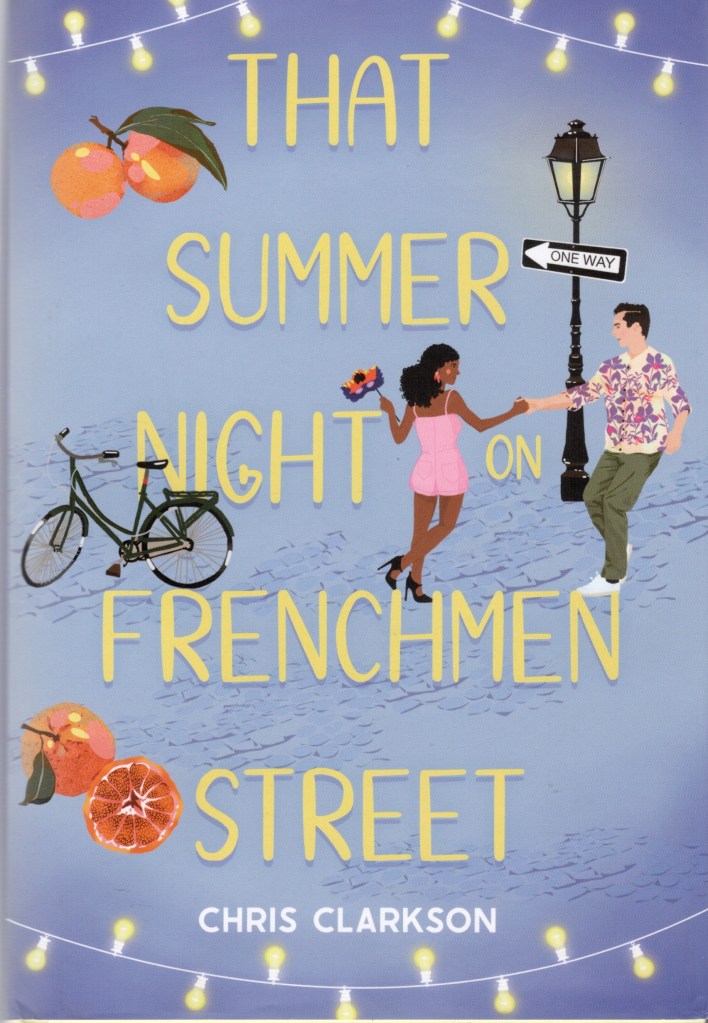
But after I got home and watched, my brain was a bit too fried from the day and the week for the work to be able to make up for the lost time last night and get back on track. It’s getting very close, to the point where I am almost starting to get antsy and have to resist the urge to hurry and finish it as quickly as possible. I am always afraid the endings of my books are rushed because I am so heartily tired of it already and cannot wait to be finished and on to the next thing. I am looking forward to this weekend, primarily for the rest and also for getting things very caught up that have kind of slid this week. I have some chores that have to be done today around the work-at-home duties, and I’d like to finish reading Chris Clarkson’s That Summer Night on Frenchmen Street this weekend, since I now have the latest S. A. Cosby, Megan Abbott, and Christopher Bollen novels to get through. My reading has definitely slid a bid this year, too. I spent some time last night reading the introductions to the Alfred Hitchcock Presents anthology as well as an old MWA one, edited by Robert Fish, that came in Wednesday’s mail, With Malice for All (or something like that). I read the first story in the Fish MWA anthology, and it was very creepy and very short and quite the punch in the face to start off the book.

I really need to get back to the Short Story Project, too.

It was a pleasant week, for the most part. I got a lot of work done this week, which feels great, and I feel pretty confident about moving on and getting this all finished sooner rather than later. I’m looking forward to sleeping in both mornings this weekend, and while I am going to have to leave the house to run errands at some point, at least this morning I can sit here in my chair sipping coffee and thinking I may not have to leave the house all weekend. At one point this week during the office I wandered up to the front desk where some of my co-workers were sitting during the needle exchange (making it Wednesday afternoon, thank you, logic modules in my brain) and they were asking each other icebreaker type questions. When I walked up, the current question was what animal would you want to be so I replied, “My cat, because never leaving the house and sleeping 22 hours a day sounds really appealing.” Scooter has been super-cuddly and affectionate lately, more so than usual, which is saying something because he’s always been super-cuddly and affectionate. I worry about him because we’ve now had him for thirteen years this September, and he was supposedly already two years old when we got him. He’s a sweet boy. I think we’ll probably always have a ginger cat; I suspect when we lose Scooter we may even end up with two of them.

The Strand Critics’ Award nominations came out yesterday, and as always it’s a friend-studded list. Shout out to every finalist. The books nominated that I’ve read are superb, so the choice of a winner isn’t going to be easy–glad the choice didn’t fall into my hands. I am already glad I am not judging any awards this year–I’ve already read so many good books this year that I don’t know that I could chose just the one–and like I said, I’ve not gotten to this year’s releases by some of my favorite authors (and people) and there’s a new Laura Lippman dropping this summer. Woo-hoo! And of course, my TBR pile is already stacked with amazing reads I’d love to make a serious dent in this year.

And on that note, I think I’m going to grab another cup of coffee and put the dishes away and start making a dent in the mess that is the Lost Apartment before I start working for the day. May you have a fabulous Friday, Constant Reader, and I’ll talk to you again later.

Sideshow

One of the fun things you get to deal with when you’re a queer mystery writer is the diversity panel.

What, you may well ask, is a diversity panel?

It’s what used to happen back in the day when well-meaning non-minority people realized they had to do something with non-white non-straight mystery writers coming to mystery conventions. What better way than to wash your hands of working for diversity by throwing all of the non-white non-straight writers at a conference onto a “diversity panel”?

Back when I was getting started and still was doing touring for book store events, I used to joke that signings/readings always made me feel like a sideshow freak hawking snake oil; the mass signings at events like BEA (Book Expo America) were the worst for this. I always wound up sitting next to someone enormously popular or famous (when they’re done alphabetically, I always expect to be seated next to Charlaine Harris, which is quite humbling. The most humbling of all was sitting next to Sharyn McCrumb at the South Carolina Book Festival. Her line literally went out of the room and into the hallway….ao I just started opening the books for her to make it run more smoothly. Might as well be useful since I was just sitting there doing nothing.)

But that was years before I was ever put on a diversity panel. Ah, the well-meaning diversity panel. Make no mistake, it’s always meant well–the path to hell and all that–but inevitably these panels would devolve into let me teach you nice straight white cisgender people about homophobia/racism/misogyny. The problem was always not the intention, which was good (inclusivity is never a bad thing), but the mentality that you could throw everyone outside the straight white cisgender class onto that type of panel and not worry about actually putting those authors onto other panels wasn’t the best. Conference diversity was the goal, and tossing out a “diversity panel’ to check off that box…yeah, no thanks.

As if having your entire writing career reduced to, in my case, who I fuck isn’t a bit disheartening, to say the least. It also very clearly sends the message that the only benefit any audience would ever get out of listening to me speak would be my ability to teach them about what it’s like to be a GAY writer. Not a mystery writer, not a writer, but a GAY writer. When I taught the character/stereotype class for SinC into Good Writing at New Orleans Bouchercon, I opened with “I don’t get up in the morning and shut off my gay alarm and go down my gay staircase and make myself a gay cup of coffee. I shut off my alarm, go downstairs and make a cup of coffee like everyone else does.”

I’m a gay man, and I write (mostly) about gay men. I’ve written and centered characters who were gay men before, and will probably do so again. My driving passion, though, is to write about my community and people like me. I long ago accepted I’d never get rich doing so, but I write what interests me and the concerns and plights of gay men are usually at the top of that list. I bristled whenever I was assigned to a queer panel or a diversity panel at a mainstream community event, but I also felt obligated to do the work–and I’ve always (wrongly) believed that complaining sounds like ingratitude. (Ah, that Christian brainwashing!) If I do sit on the panel and talk about the history of queer crime fiction, writers from the past who influenced me but are out of print today, and talk about why I write what I write, maybe some hearts and minds can be changed, or at least influenced to do some reflection and processing that can lead to effective change.

But…I can also talk about writing, and inspiration, and plotting and character development and dialogue and the mechanics of novel/story construction. I can talk about suspense and cliff-hangers, and how to keep the reader turning the page. I can talk about setting and place, scene and mood and voice, first person v. third or present v. past tense. I mean, I get it. If you want someone to talk about gay crime writing, you should get a gay crime writer; every writer can speak to those things, but not every writer can talk about being a gay crime writer. But it’s so nice when I can talk about something else, you know?

The diversity panel all too often would also be the only panel we “others” would get assigned to, because clearly the only interesting thing about us and our work was it didn’t center straight white cisgender people. They were always scheduled at terrible times–either super-early in the morning or late in the afternoon; and inevitably, there would be panels scheduled against packed with superstars everyone wants to hear. If having your work and career distilled down into simply being about you fuck is disheartening, imagine being assigned to a panel at 4 in the afternoon on Friday to talk about how who you fuck makes you different from the majority of authors to the six or seven people who show up for it (if you were lucky).

If signings or readings made me feel like a sideshow freak hawking snake oil, diversity panels tend to make me feel like some exotic creature behind glass in a zoo somewhere. (There is, however, a defense for these panels, in that they do make marginalized writers easier to find for marginalized readers, but that’s an argument for another day.) I made the conscious decision to start refusing to do them quite a while ago, probably after the St. Petersburg Bouchercon. I did agree to do one at Bouchercon in Toronto, and I only agreed to do that one because Kristopher Zgorski was moderating and he pulled the panel together.

But I will say this: the diversity panel in Toronto was very well attended, and I met not only some writers and readers that were new to me, but those folks have become friends in the time since. I was pleasantly surprised that we had a full room; which I took as an incredible sign because it wasn’t an all-encompassing diversity panel but restricted to queer people, and that many people showed up. (I suspect a lot of that had to do with Kristopher’s blog readership more than any of us who were actually on the panel.) I believe the panel was–and forgive me if my faulty memory leaves someone out–Owen Laukkanen, Stephanie Gayle, John Copenhaver, Jessie Chandler, and me. It was great. We had an amazing conversation, I got to meet Stephanie and John for the first time, and it’s always fun hanging with Owen and Jessie. Kristopher asked great questions. When it was over, I was pleasantly surprised. The audience was receptive and also asked great questions.

When I was helping do the program for Dallas Bouchercon, the local committee really wanted a diversity panel. I agreed to put one together on two conditions: 1, that I would be the moderator so could control the topics under discussion* and 2. it would not be the only panel the participants would be assigned to. I made sure that was the case since I was helping write the program, and knowing I had the power to ensure that happened was the only reason I agreed to organize it. I also asked everyone who was on the Dallas panel if they minded being on the panel, and guaranteed them another panel while asking. I also assured them refusing the diversity panel would not affect any decisions about other panels, either–because you have to worry about that, too! I called it “Not a Diversity Panel” and I had planned on not talking about any of us being writers from the perspective of being marginalized, but at most, how being “on the margins” impacted how, what, and who we chose to write about.

Ironically, I wound up not going to Dallas after all; an inner ear infection kept me in New Orleans.

Diversity panels have come a long way from what they used to be, but that danger is still there. I would urge conference programmers to think long and hard before deciding to put together a diversity panel, and why you think it’s necessary to have one. If you do decide that it’s something needed for the program, remember that the authors on it should have a chance to be on a panel where they can be an author, not just a diverse author. Diversity issues and concerns should be discussed, and diversity panels are often the place for those conversations that are so important and necessary to happen. But they can easily can go down the path to the dark side, very easily, in which the panelists are made to feel like zoo animals being poked, prodded, and observed. It’s great that people will show up in droves to these panels now–but that’s why sensitivity and a moderator who has experience with marginalization is essential, to bar a repeat of that horrible diversity panel where a well-respected and lauded editor, about three quarters of the way through the panel where a very great discussion was being had decided to opine, But it has to be about the writing! The writing has to be good!

Because of course diversity is pushing bad work forward? Because work from non-white non-straight writers usually doesn’t measure up? I was horrified, and lost any respect I had for the editor along with any desire to ever work with said editor.

I will forever feel ashamed for not calling out that comment in the moment, but I was so stunned and shocked I didn’t know what to say.

Iceblink Luck

Well, we’ve made it to my last day in the office of the week, Constant Reader, and isn’t that simply marvelous?

I knocked out another chapter after work and running a couple of errands (mail, needed something from the grocery store), and am starting to feel a lot more relaxed about how this is turning out. I think I’m catching all the discrepancies and errors. At least one can hope at any rate. I’d like to make this as easy as possible for my (long-suffering) editor. But huzzah, there’s an end in sight. I also paid the bills yesterday and am not completely (or morally) bankrupt…but sheesh, I have a lot of bills. Ah, well. Such is life.

With the end of the book closing in–if I focus and work really hard, I could even finish it this weekend (gasp!), but at the same time I don’t want to kill myself, either. But as long as I can stay focused and not get distracted by any of the annoying hateful minutiae that always derails everything, I should be able to make some really good progress. I am also getting excited because finishing this means I can finally work on something else again for the first time in what feels like years. Don’t get me wrong; writing this Scotty book wasn’t as bad as writing some of them have been. It just feels like it’s taken forever, and there are times when it’s felt like my own personal invasion of Afghanistan. But I’m looking forward to spending the rest of June working on “Never Kiss a Stranger,” so I can focus on Chlorine for July. It would be so great to have a viable, working first draft of that completely by the end of July…and then I will try to find an agent. At last. Surely there’s someone out there interested in repping me, right?

So what if I haven’t found anyone in over twenty years? Optimism! That’s the key.

I slept super great last night and feel much better this morning than I have all week, and I didn’t think I’d not slept well. I don’t know what the deal is, quite frankly, but I am just going to roll with it today and see how everything goes. I may hit a wall and be exhausted by noon, who knows? But I do feel like this morning is showing the potential to be a great day. I will need to probably swing by the mail today–it could wait until tomorrow, in fairness; and I’ve ordered a prescription refill…so perhaps I should wait until I can pick up both on the same trip uptown? (My life is so endlessly fascinating, isn’t it?) I spent last evening (after I finished writing; Paul was working on a grant) watching the third part of the Vanderpump Rules reunion, during which I was constantly having to pick my jaw up off the ground. Now that it’s all over, I’m not really sure I want to do a deep dive into as much as I was thinking I might; I had started doing one after the last season of Real Housewives of Beverly Hills, but maybe I could do a compare and contrast of the two together? One is a spin-off of the other, after all–it all comes back to Brandi Glanville, doesn’t it? Which only makes it all the more bizarre, not to mention how current day reality television owes to the OJ trial–without it, we’d have no Kardashians, no Faye Resnick, and that was actually how the Hiltons got involved with the former…and Paris Hilton was one of the original reality stars, let’s not forget that. Maybe once I am finished with this revision…I have so many blog draft entries to finish at some point!

And on that note I am heading into the spice mines. Have a terrific day Constant Reader, and I will check back in with you again tomorrow.

Frou-Frou Foxes in Midsummer Fires

Wednesday Pay-the-Bills day, and I am awake and slurping coffee, which is truly hitting the spot this morning. I slept well last night, and I think I am actually getting used to getting up at this ungodly, abhorrent hour. When I sleep well, I have no problem getting up in the morning (although I always long to stay in bed longer) and I am pretty well conscious, for the most part. (The coffee will do it’s job indubitably before I have to leave the house for the office, which is lovely, as always.) Yesterday wasn’t too bad. I did run uptown to get the mail on the way home (there was exactly one letter; my copy of All the Sinners Bleed, the new S. A. Cosby, won’t arrive until tomorrow), and I wasn’t terribly tired when I got home. I unloaded the dishwasher and cleaned out the sink, revised another chapter, and just chilled out for the rest of the evening. I’ve got a couple of nonfiction reads going at the same time (Hi Honey I’m Homo by Matt Baume and The Way They Were:  How Epic Battles and Bruised Egos Brought a Classic Hollywood Love Story to the Screen by Robert Hofler–I do love books about the making of movies! And of course I am still reading The Johnstown Flood by David McCullough) so I finished the Hofler last night (cannot reiterate how much I love books about the making of classic films. The Way We Were, however flawed it may be, it probably my favorite Barbra Streisand movie–either that or What’s Up Doc.

I have a ZOOM meeting tonight as well, so I’ll probably come straight home from the office today after work. The excitement never stops, does it?

I was also thinking some more about my Pride writings, and whether or not I really want to talk about the homophobia I’ve experienced in my career. I do think these things need to be addressed–absolutely no one should have the false impression this kind of shit doesn’t still go on, isn’t still happening–but at the same time, it’s hard to write about those things without getting angry, or becoming THAT Gay Man (similar in some ways to the Angry Black Woman, I think; a trope that is easily dismissed by the dominant culture rather than examined in the ways it should be; if a Black woman is angry, why not find out why rather than being dismissive?) who people can easily stop listening to. Homophobia sucks, and being on the receiving end of it is no pleasure for anyone. It’s even less pleasant to experience and write about. But these things happen, and not shining a light on these unacceptable behaviors allows them to fester and grow. I like to believe sometimes (when feeling more charitable than usual) that people aren’t aware sometimes that what they are saying or writing is homophobic because that shit is baked so deeply into our society and culture; if you never examine yourself, you never learn and grow.

It amazes me how many people think they already “know enough” and don’t need to continue learning and growing. I always want to keep learning, keep modifying myself into the best version of myself that I can be (thank you, Ted Lasso), and growing into a more compassionate, empathetic person. It would be nice to talk about gay joy, you know?

For me, coming out was like a rebirth of sorts. I was absolutely miserable before I started living out loud as a gay man; I kind of led two different lives in which I had two different sets of friends that knew nothing about the others. But the real life was the closeted one, even though hanging out with other gays and going to gay bars was like a breath of fresh air after being stuck in a smoke-filled room for hours. I was keeping so much from either set of friends that I never really felt super-close to any of them; I loved them all dearly, but felt disconnected from them because they didn’t really know me. I was thirty when I started merging my two lives together, and believe me, coming out didn’t solve much for me, either. I felt freer, but I also had to start learning how to navigate being gay all of the time instead of having a few brief hours of freedom every week. I didn’t make many gay friends, and most of the gay people I knew were my co-workers…and the last thing I ever wanted to do was get physically and emotionally involved with a co-worker. There was still a lifetime of self-loathing and self-flagellation stuffed into my head as I started to reeducate and reevaluate myself and my life. The lovely thing about coming out at thirty meant I wiped the slate clean and had to start really figuring out who I actually was. It also makes sense that my writing never went anywhere while I was closeted; I wasn’t a complete person,. so how could I write and create compelling characters that are fully rounded when I was still under construction?

The weird thing is that thirty-one years later, I still feel like I’m figuring out who I am and what I want from my life…as the sands in the hourglass continue to run out. But while there have certainly been difficult times since I waltzed out of the closet, I’ve also been happier and more content and at peace than I ever was before. It might be age and experience, I don’t know, but I believe that I could have never reached that point while living in the closet. Had I continued to deny my true self, how miserable would my life have turned out? It was already going down a dark path already; the 1980’s and HIV/AIDS still cast a long shadow over my life.

But I’ve also known joy in the second half of my life; joy I never experienced or felt in the first half of it. And I wouldn’t trade that for anything…I’ve never regretted it, not once, not even when all the forces of the religious right and their useful idiots in elected office have arrayed themselves against people like me.

On that note, I think I am going to head into the spice mines. Have a lovely Wednesday, Constant Reader, and I’ll talk to you again soon.

wolf in the breast

Tuesday morning in the Lost Apartment and I feel daunted. I know we have a busy schedule at the office today and I am mentally preparing myself for all those interactions. I love my job (I don’t love getting up at six, never will), and I love that I am helping people (not quite the urgency of the olden days, but still–new HIV infections need treatment and care else it can still prove fatal), but lots of clients have a tendency to wear me out some and thus I am exhausted when I come home at the end of the day. I have to run errands after work today–mail, mostly–and hopefully won’t be so drained by the time I get home that I’ll be able to carve out some revising time. I managed to get through another chapter last night, and I do believe the book is starting to take its final, publishable form, and I should be able to get it in on time.

Last night after writing Paul and I started watching a new bilingual show on Apple Plus called Now and Then. It’s set in Miami, so some of the characters speak Spanish, some speak English, and some speak both. Twenty years ago after a college graduation, six friends partied on a beach; one of them died, and as they were rushing him to the hospital (driving under the influence) there was an accident. The other driver was killed, and to protect themselves they moved the by-now dead friend into the driver’s seat and fled the scene. Twenty years later (there’s a dual time line, which can be a bit confusing at first) the now adult kids are being blackmailed, and of course the same cops are investigating the new murder of one of them…it’s interesting, if a bit confusing, and it took me a while to get used to the characters (as well as figuring out who they all were in each timeline) but it was intriguing and we will most likely continue watching. I am really looking forward to their new Tom Holland show, The Crowded Room, which also looks interesting. Apple is doing interesting things with their television service.

I have some other Pride entries that I’ve started and haven’t quite finished yet. I am hesitant to post them because–well, I don’t really know why. Writing about homophobic treatment within the publishing community, and my experiences with it, shouldn’t make me feel reticent and squirmy. It gets tiring calling this shit out, then having to defend yourself against straight people who question whether or not this stuff happened. It’s a form of gaslighting the mainstream has perfected when it comes to the non-majority; is it homophobia, or is he just an asshole? Why should i feel uncomfortable talking about how I’ve been treated by certain members of the community, when I didn’t do anything wrong? It’s why women who are sexually harassed and/or assaulted at conventions don’t say anything–because for some reason people always want to protect an institution instead of the individual. You become the problem, instead of the person who actually did something wrong in the first place. The casual homophobia at events at Bouchercon etc. always leave you wondering, should I have laughed that off? Should I have said something? There are some straight male writers who’ve made it abundantly clear to me they want nothing to do with me–and can’t even be bothered to be professionally polite. There’s one in particular who’s been especially rude to me at several events. He’s friends with friends of mine, so he will inevitably drift over and join us–pointedly ignoring me. He actually refused to be introduced to me at Sleuthfest one year.

And of course, when I mention this to my straight writer friends, they are very quick to “oh, you must have misunderstood he’s such a great guy” and I always have to bite my tongue to not say, “Great to straight people, sure.” I was a little taken aback when he refused to be introduced to me at Sleuthfest, but I have started being amused by the fact that my existence clearly shakes him to the very core of his being, to the point that now he turns his back to me if we’re in the same area. How can I not be amused by that level of childishness I’ve not experienced since grammar school and the playground? Sure, dude, you’re really punishing me by not meeting me and engaging with me. It keeps me up at night (sarcasm). Sorry about your penis being so small, homophobe.

And of course, there are the lovely ones who think making a joke about diversity concerns along the lines of “I let a guy suck my dick once for drugs, does that count?” Ha ha ha ha, such wit, I can see why you became a writer with that kind of sharp thinking and clever turns of phrase coming so naturally to you that it just rolls off your tongue.

I also wish I had a dollar for every time a straight person has explained to me how someone else saying something horribly homophobic is actually okay because he/she is “nice” and I must have misunderstood. Um, after sixty-one years of dealing with it, I’m pretty fucking sure I know homophobia when I see and hear it, but please, O Wise and Wonderful Straight Person, please explain what is and isn’t homophobic to the gay man from your vast wealth of experience of dealing with it every day, I would never tell a woman something isn’t sexist, nor a person of color what is and isn’t racism.

Sigh. And on that note, back to the spice mines with me.

I Wear Your Ring

Monday and back to the office with me this morning. Woo-hoo! The excitement never stops, does it? I slept pretty well last night–well enough to not want to get up this morning–and so feel a bit groggy this morning. I’m not certain how busy we’ll be at work today, but I am hoping it will be an easy day. Yesterday wasn’t a bad dat; I managed to make progress on the book, got some things done around the house, and we watched the new Arnold Schwarzenegger Netflix show FUBAR, which was entertaining enough. In some ways, the show almost feels like a sequel to True Lies, in which he played a spy whose wife had no idea what he actually did for a living. This show takes that premise to its next logical conclusion, should the wife never find out she’s married to a spy. It had some funny moments, has a really good cast, and high production values. This week the Vanderpump Rules final reunion episode airs, but some of my shows–Ted Lasso, sob–are completed. Not sure what we will be watching next–I imagine I’ll be watching the Randall scandal documentary (more Vanderpump Rules drama) at some point, but not terribly sure that’s something Paul will want to watch.

I didn’t read a lot this weekend; the little writing I was able to do, along with other miniscule irritations over the course of the weekend, managed to tire out my brain to the point where being able to focus on reading wasn’t likely. Progress is progress, after all, and maybe I’m a bit behind my usual schedule, or the one I was trying to keep with it, but it will get completed on time, methinks.

I have my dates and everything all screwed up again; I keep thinking it’s later in June than it actually is. Part of that has to do with the usual “working on a book so not paying attention to dates” thing I inevitably get caught up in, and I imagine the rest has to do with the year being very off-balance for me thus far. I handed over MWA in the middle of January, whilst in the midst of revising two of my own books while editing another, and then Mom died and then it was the festivals and then Malice and now suddenly it’s June, which doesn’t seem real–and I am going back up north the last week of this month. I’d wanted to take a week off this summer just to work on things around the house–purging the attic, for one, and doing a deep, thorough cleaning for another–but looks like that time is going to be burnt being there for my dad. There are, of course, worse things to burn off your vacation time with; and it’s nice feeling closer to my father. I just hate the reason behind it, you know?

At least the Internet is continuing to work for me at home. (Probably just jinxed that.)

It apparently rained overnight; part of the reason I slept so well, probably, and so today is one of those weird mornings where it feels cool because the humidity hasn’t fully recharged yet from the rain.

I’m also trying to decide what my next Pride month entry should be. I’ve got a couple already going–one about being confronted by homophobia within the mystery publishing community–but I find myself hesitant to post it because of not wanting to be “that gay”, which is stupid. If I don’t call out homophobia where and when I see it, I am contributing to the problem. I guess I should be a little less concerned with hurting people’s feelings, or something? I don’t know. But I am heading into the spice mines this morning, and will check in with you later. Maybe there will be a “homophobia in crime fiction” entry posted later, you never know…but one thing for sure, I will be back tomorrow morning.

I Want to Break Free

The don’t say gay laws a rash of frightened sheep in red state legislatures have been passing, or trying to pass, lately are absurd on their face. “We don’t want our children learning about queer people! They’re too young to learn that!” This argument, of course, begs the question, how old is old enough to learn about alternate sexualities?

I say it’s when kids are old enough to start using slurs in a bullying way on their schoolmates.

For the record, I was only eight years old the first time I was called a gay slur, and I didn’t understand anything about it, let alone the word itself meant.

Why, my eight-year-old mind wondered, is he calling me a ferry? That doesn’t make any sense.

But what the older brother of the girl who lived down the street actually meant was ‘fairy,’ and now it amuses me to remember how naïve I was at age eight, how I had no idea what this older boy, who seemed so enormous and grown-up to my younger self (he was in high school) meant. Somehow, I knew he was insulting me, but eight-year-old me didn’t know what he meant.

But I did know, was very aware, that whatever he meant, it was a bad thing.

I already knew I wasn’t like the other kids on the block or in my grade at school. I was a boy who liked to read, who preferred to go off in my own mind on flights of imagination where I was writing stories and creating fictions, inventing characters and how they related to each other. I much preferred that to playing catch or catching bugs or any of the other, more traditionally masculine things little boys were supposed to be doing in their spare time. I liked to sit on our back porch in the shade of the big tree and read my library books or my recent Scholastic Book Club paperback treasures.

I was in the seventh grade when I first heard the word fag hissed at me contemptuously in the hallways of my junior high school, and even then, I still wasn’t sure what it meant, I could tell by the tone used that it wasn’t meant as a compliment, especially when followed by cruel laughter. That was the first time, but it was by no means the last—even now, in these more enlightened times, I doubt that I will go the rest of my life without someone saying it to me another time, because there’s always another time.

I don’t remember when I finally learned what they meant when they called me fairy or fag or faggot, but I do remember this: it was true, and it was something unusual, not normal, something I should be ashamed about. I did my best to change my camouflage, like a good chameleon, to hide it so no one else would know my shameful secret, what I had to disguise from the world: that I was, in fact, a homosexual. A fag. A fairy. A Mary. Faggot. Queen. Homo. Nelly. Pansy. Sissy.

I was ashamed of who I was, because I was taught by the world around me that my sexuality was suspect, wrong, bad.

So, when I see the words politically correct (or more commonly now, woke) used in a sneering way, as a methodology of trying to shut down honest conversation and derail discussion about the realities of what non-white, non-straight, non-cisgender, and non-male Americans experience every day, I get angry. Because none of those people, for one example, who sneered “well, this is just political correctness out of control” about the American Library Association’s decision to change the name of the Laura Ingalls Wilder Award several years ago due to concerns about problematic racial overtones in her work were ever called a fairy when they were eight years old, or had the word fag hissed at them in the halls of their junior high school; were ever called any slur used for non-white people, or non-western European lineage, or been told to go back where they came from, or been called the n-word (which I can’t even bring myself to type out, even for a column about slurs).

Frankly, people who argue against “political correctness” are people I assume want to be able to use slurs with impunity–they aren’t arguing about freedom of speech as an abstract legal principle, but because they want to use slurs and not suffer consequences.

Merriam-Webster.com defines “politically correct” as the following: conforming to a belief that language and practices which could offend political sensibilities (as in matters of sex or race) should be eliminated. Wikipedia goes still further: The term political correctness (adjectivally: politically correct; commonly abbreviated to PC or P.C.) is used to describe language, policies, or measures that are intended to avoid offense or disadvantage to members of particular groups in society. Since the late 1980s, the term has come to refer to avoiding language or behavior that can be seen as excluding, marginalizing, or insulting groups of people considered disadvantaged or discriminated against, especially groups defined by sex or race. In public discourse and the media, it is generally used as a pejorative, implying that these policies are excessive.

So, the next time you want to sneer something about “political correctness being out of control”, here’s what I want you to stop and think about before you say it: an eight year old boy being called a fairy by a high school kid, or a ten year old tomboy being called a dyke, or a seven year old kid told to go back where he came from, or a nine-year-old Native American reading a book where Native Americans are dismissed as “not people, just Indians”—and ask yourself, would I want something like that said about or to me?

I feel pretty confident that the vast majority would say no.

Words have power, and no one should know that better than a writer.

Fotzepolitic

Sunday morning and things went about as well as could be expected yesterday. Friday evening I had some items delivered from Sam’s Club, but hadn’t noticed that one of the items ordered actually had to be shipped; it arrived this morning here at the Lost Apartment. And while I was waiting for my Cox cable technician to arrive (I rearranged the entire morning to accommodate their 10-12 am window), I got a text message at 11:30 informing me that my appointment was cancelled; then came the email stating we know things happen! Reach out and reschedule! I reached out, only to be told that the technician arrived, called, got voicemail, and departed DESPITE MY HAVING GIVEN THE SAME INSTRUCTIONS I ALWAYS GIVE: OUR BUZZER DOESN’T WORK SO YOU HAVE TO CALL OR TEXT WHEN YOU ARRIVE.

Also, I had my phone with me all morning, so I wouldn’t miss the call. No one called, I have no recents, and I have no voicemails.

This obviously threw me off my game yesterday for writing, but I did get some done. I am a bit behind on the schedule I’d given myself, but I think it’s going to go relatively easily from now on. I ran some errands, came home, got cleaned up, and dove into the writing. I wasn’t really able to shake off the mood, so after struggling for a few hours to get the chapter done, I called it a day and repaired to my easy chair. Needing to cleanse my soul, I did a rewatch binge of the first episodes of Ted Lasso, which are even more charming on rewatch because you get to see all the callbacks you might have forgotten about later in the run of the show, like Keeley acknowledging that she “dated a 23 year old footballer when she was seventeen, only now I’m thirty and I’m still dating 23 year old footballers” while talking to Rebecca. You can almost see the light come on in her eyes–what the hell am I doing–which kind of opens the door for her breaking up with Jamie later. Even though they don’t know each other well, she recognizes that it’s time for her to grow-up and start thinking about her own future, while talking to Rebecca–which is the first building block in their close friendship. Then later, when Paul was finished working for the day we watched Bama Rush, which was kind of disappointing. Originally focusing on four girls about to go through sorority rush at the University of Alabama–which I guess is this viral thing on TikTok–it got a bit derailed with the director started seeing similarities in behavior of the girls planning to go through rush as she went through being a lifelong alopecia sufferer…which could have been made a lot more interesting, but I always thought the point of a documentary was the director didn’t make themselves a part of the story? I think the point she was trying to make was valid, but the way the documentary was a edited together simply didn’t work. The focus shifted, and it derailed after that.

But Jesus God in heaven, those sorority houses in Tuscaloosa! The fraternity houses! They’re enormous. I had kind of figured Greek life at universities would be declining, given how old-fashioned and restrictive they can be, especially sororities–and this newer younger generation doesn’t seem as interested as preserving traditions and institutions as previous ones were, but Bama Rush showed me things I didn’t know…that “Rush Consultant” is actually a career, for one thing…and the documentary only briefly touched on the Machine, a supposedly secret society made up of representatives from every fraternity and sorority that controls everything at the University. (I kind of love that shit; I’ve long been an admirer of Pat Conroy’s The Lords of Discipline, which kind of touched on that kind of thing.)

Today I am going to get shit done. Later this morning I am going to make a very brief and short grocery run to the Rouse’s in the CBD, and then I am coming home to spend the rest of the day writing and reading. I didn’t read yesterday, which was a bit disappointing; I’d hoped to finish reading my current book this weekend so I could move along to Megan Abbott’s new one; but anticipation is always lovely, and perhaps I can get along to that next week. One can always hope, can’t one?

But I feel rested and awake this morning. My back and legs are a bit tight and sore, so I think I’m to use that massage roller thing for my back and maybe do some stretching (which I should do every day) to see how it feels. I am planning on getting a chapter finished, maybe doing some reading, and then making my grocery run so I can come back and do more writing. I need to write most of the day, to make up for the last couple of days of irritation and aggravation that kept me out of the proper mindset.

My mind has been all over the place this week, which is weird, but also kind of normal for me. Whenever I am in the weeds with a book my mind goes off in all kinds of directions and produces all manner of thoughts and ideas. I started writing several other entries yesterday, specifically for Pride Month and specifically about being gay–sometimes about being a gay author and what that’s like; I always forget that people never really quite grasp or understand what it’s like to be a queer writer in an intolerant country, of what it feels like to be othered by every community in which you try to find a place where you belong. I’ve never wanted to be THAT gay; the one constantly having to remind people of what is and isn’t homophobia, and is always having to point it out and teach straight people about what it’s like. It’s exhausting, frankly, and sometimes the well-meaning ignorance is highly offensive, but you know they don’t mean it that way so you push down the offense and ignore it while calmly trying to explain to the person why they can’t say or do that…while also not trying to hurt their feelings (although had they put even the tiniest bit of thought into it, would have never said anything offensive in the first place). It’s exhausting having to see trash equate your sexuality with pedophilia and grooming on a daily basis. It’s exhausting having to constantly have to defend your right to exist, having to constantly prove you’re a human being worthy of being treated the same as everyone else…

The mental health of queer people is always under constant assault.

And on that note, I am going to get some more coffee and start working. Either on the book, or on one of these Pride entries. I can’t decide which. We’ll see. Anyway, enjoy your Sunday, Constant Reader, and I’ll check in with you again tomorrow.

But Heaven Knows I’ve Tried

I don’t know if I have enough words to describe how much I love Ted Lasso.

I also am not sure I’ll ever get over the show coming to an end. Okay, that’s extreme. I will miss the show a lot though; the show was topnotch from top to bottom. There was never a bad performance from anyone in the cast; the writing was stellar; the videography terrific; and the story was just wonderful. There haven’t been many ensemble casts this large where everyone had the opportunity to truly dig in and develop identities as their characters; the chemistry between the cast members was astonishing (well done, casting director and production team!). With the exception of Sudeikis and Anthony Head (as the villain of the piece, Rupert), I didn’t recognize anyone in the cast…although you can probably imagine my delight to discover that Hannah Waddingham, so sublime as Rebecca Welton, was the goddamned Shame Nun on Game of Thrones, and the star swimmer’s mother on Sex Education! I thought she was gorgeous in Sex Education, but that didn’t prepare me for the knockout she turned out to be on Ted Lasso (and my God how I hated the Shame Nun and cheered at her final comeuppance).

I literally knew nothing about the show when it first dropped on Apple Plus. It was during the pandemic–perhaps even while we in the midst of the shutdown (forgive me, those years are blurry to me). I’d seen some bits about it on social media, and I remembered the character from the ESPN commercials (which I’d hated and thought were stupid) and it really didn’t seem like anything I’d enjoy. It was a fish-out-of-water comedy, and that is a trope that has been worked to death since the beginning of time…and it just seemed kind of silly, stupid and definitely lowbrow. I was bemoaning the end of Schitt’s Creek on Twitter, and my friend Alafair replied to my tweet, you need to watch Ted Lasso. There’s a lot more to it than you’d think. I like Jason Sudeikis (so does Paul; the movie We’re the Millers, for whatever reason, is a vastly underrated comedy film), and so one night we tuned in.

And by the end of that first episode, we were believers. (Sorry, couldn’t resist.) When the credits rolled I looked at Paul and said, “I quite enjoyed that, did you?” and he agreed, and we went on a binge. How wonderful was that first season? Getting to meet the characters and how they interacted with each other–when Ted first met Keely; when Trent Crimm stood up and started asking asshole-ish reporter questions at Ted’s first press conference; the development of the relationship/friendship between Keely and Rebecca; and of course, that corny, stock, trope of a set-up: Rebecca, having been cheated on and publicly humiliated by her ex-husband, got majority ownership of the AFC Richmond soccer team, and hurt and angry beyond belief, she’s decided that since the only thing Rupert cares about is his soccer team, she’s going to take it and run it into the ground for revenge. We’ve all seen this set-up before, right? How many rom-coms or movies have used this similar insane kind of trope to build around? As I was watching, I kept thinking, okay, Ted is going to win her over and they’re going to become friends and then he’s going to find out what she was up to and be hurt and betrayed and…but the cast was appealing enough for me to care enough to keep watching. There was Jamie Tartt, the cocky young self-absorbed narcissistic star of the team; Sam, the new shy player from Nigeria; Nate, the sweet and shy and timid kit manager, constantly bullied by the players; and of course, Roy Kent (he’s here, he’s there, he’s every fucking where) the aging star who isn’t as fast as he used to be and is slightly resentful of the younger players coming up and taking over. The only people who are genuinely kind and friendly to Ted and his buddy Coach Beard are Keely–they hit it off immediately (I wondered if there was a romance budding there that first season), Nate, and Higgins, Rebecca’s assistant who kept Rupert’s affairs a secret from her and covered for him for years–so she is torturing him.

(And the song playing over the opening credits is a banger.)

And of course, Ted know nothing about soccer. He coached football (the American kind) at Wichita State, and the victory celebration video after they won the national title is what got Rebecca’s attention. But why would Ted accept a job on the other side of the world from his home, away from his wife and son, doing something he knows absolutely nothing about? The offer, as it turns out, came at a time when Ted gradually was becoming aware that his wife was unhappy and wanted out of the marriage. To try to save it, Ted accepted the job so he could give her space–half a planet’s worth. It’s still a bit of a stretch, but as we get to know Ted and Michelle and the rest of the cast through each episode, it becomes obvious that this is exactly the kind of thing Ted would do. His kindness, politeness, and friendliness–often mocked and made fun of by the more cynical characters in the cast–his uncanny gift for compassion, even when he doesn’t really understand, comes from a place of caring but we also learn it’s all a coping mechanism for him as well. His father committed suicide when Ted was a teen, and he’s never really come to grips with the loss, the grief and the pain. Now with his own family unit at risk of breaking up, of course he would do whatever he had to in order to keep the family together and sparing his son the same kind of pain he experienced when his father died.

That’s kind of deep for a comedy. But…Ted Lasso wasn’t just a comedy. It had a lot more layers and depth than I would have ever imagined.

Ted seems almost gimmicky at first. He’s always looking for the best in every person and every situation and has that “aw shucks” kind of cornball Dad humor. But his empathy for others, his ability to see things from their perspective removed from any personal bias, has an overwhelming effect on other people, begins making them rethink their own attitudes and biases and behaviors–encouraging them to be better versions of themselves. At one point in Season 1, Ted explains his entire philosophy of coaching (for want of a better word, it’s holistic) to Trent Crimm…a cynical, skeptical journalist trying to get to the root of who this man is and if he is for real…and spending time with Ted turns Trent himself into a believer. But the empathy, the kindness, the total giving of himself to the betterment of others is actually his coping mechanism. As long as he is helping other people work on themselves, Ted doesn’t have to confront his own demons and issues and problems. This ignoring his own needs for self-care and mental health is damaging him. It damaged his marriage to the point of it breaking. Ted cannot help himself the way he helps others…and as the show progresses he slowly learns and comes to understand that he needs help from others, and that his own vulnerability isn’t a weakness.

And had anyone told me in Season 1 that Season 3 Jamie Tartt would steal my heart, I would have laughed in your face.

Oh my God, what a character arc.

When we first meet Jamie, he’s someone we’ve seen before. Handsome, hot, and an amazing player, he is incredibly full of himself and doesn’t give a shit about anyone else but himself. Somehow he has managed to land Keely Fucking Jones (she will always be that to me, thank you, Roy Kent) as a girlfriend, which I never quite understood; why would Keely put up with this (albeit very hot) man boy? She eventually dumps him mid-season, and he gets sent back to his regular team–he was on loan, something I never really quite understood. He is, in fact, the one who wins the big game for the other team that sees Richmond undergo the humiliation of relegation, by doing something Ted coached him to do that he flatly refused to do when playing for him; making an extra pass to an open teammate rather than scoring himself…and it is in that episode, the finale of Season One, where we discover the key to Jamie’s personality and why he is the way he is (alluded to in an earlier episode, the one about ridding the stadium of ghosts); his alcoholic and highly abusive father–who never gave a shit about Jamie or his mother until he showed prowess at soccer–shows up, and Ted witnesses the abuse in person. Between season one and two, Jamie went a bit haywire, leaving his team to go on Love Island and getting voted off early. No team wants him because of the way he bailed on the team and because he’s a diva, so he has to beg Ted and the team to let him come back to Richmond. And he has to earn it, which he does, by humbling himself and being more of a team player. Watching Jamie grow–and played expertly by Phil Dunster, who deserves an Emmy for Season 3–was an absolute pleasure. He was a standout in Season 3, and it was weird how proud I was of a fictional character.

The scene where he teaches Roy to ride a bike was an absolute joy.

I loved all of these characters, and the talents that played them so beautifully. I could write entire essays about Sam, Roy, Phoebe, Higgins and any number of other characters on the show; I’d be hard pressed to pick a favorite. But I am going to close–since it’s Pride Month, and they gave us such an amazing gift in the finale, which aired on Day One of June.

The last thing I expected to find in Season 3 of Ted Lasso was the story of a closeted gay player on the Richmond team. Colin Hewes, who was just adorable and got a line here and there–often funny ones–got his chance to shine as an actor in the third season. When the team’s sponsor switches from Dubai Air to Bantr in the second season, Keely is telling the team about them and she talks about how it’s spelled…and Colin pipes up with, “oh, like Grindr.” There was a bit of an awkward silence and then the scene moved forward. A throwaway, a little nothing, and I literally was amused by it and promptly forgot it. But there was a pay-off for that little line, as we discover in Season 3 that Colin is gay and deeply closeted, as well as deeply conflicted about keeping the secret from his teammates–who are both friend and family to him. I’ve already written about the beautiful scene in Amsterdam when Trent not only tells Colin that he knows, but comes out to him as well…becoming a kind of mentor for him. The fact that the scene between Colin and Trent was filmed in front of the monument to all the gay lives lost in the Holocaust (our history! No longer being ignored! Oh my heart!)? Bravo, Apple TV and everyone involved with this show. Bravo.

And finally…his best friend on the team finds out and stops speaking to him. Finally, in one of my favorite episodes ever of any television series, Colin finally has to come clean…and is welcomed by one and all. Ted’s speech about them caring about his being gay because they care about him, and how he never has to go through anything alone anymore, was just beautiful and I had tears running out of my eyes.

Hell, just writing about it is making me tear up again.

Representation matters. And having it on one of the most critically acclaimed and award-winning comedy series of the decade?

And the scene above? It’s also a callback to the conversation between Colin and Trent. Colin says he doesn’t want to be a spokesperson, doesn’t want any fuss, just wants to live his life and “be able to kiss my guy after a win, like the other fellas do with their gals.” And after the biggest win in the history of the team, he gets to do just that.

I would have cried had I not already been crying.

Because yes, the final game Ted coached for Richmond was epic. At one point during the game I realized I was just as tense as I get during big LSU games, marveling at the power of the show. The game was a fiction. It wasn’t real. But it mattered to me. I wanted them to win. I wanted my team, my little family of players on a fictional television series, to win because I wanted to see their joy. I wanted them to celebrate, and I wanted to see it. (I’ve watched the game segment several times now.)

And as much as I hate to say it, it is time to say adieu to one of my favorite shows. Thank you for the joy you’ve brought me the last three seasons. Thank you to the cast, the writers, and the crew.

And a big thank you to Alafair Burke, without whom I may have never watched in the first place.