Work-at-home Friday, and what a full day I have in front of me. I have work at home duties to get done, a telephone appointment, and an on-line team meeting today. After I am done with my work duties, I get to head over to the gym to work out on my own for the first time since 2022 (!!!), and at some point we’ll be doing a Costco run. Yesterday was a very good day; it was the first time in years that I woke up feeling rested and awake and good to go–and it lasted all day. I wasn’t tired when I got home, despite picking up the mail and making groceries. I hung out with Sparky, watched this week’s episode of Feud, and made notes for writing to come. I also typed up notes for other stories, so I could create computer files. Paul got home in time for me to spend a little time with him before going to bed, and I slept very well. Apparently, overnight Sparky figured out how to get on top of my dresser and started knocking everything off, so all my stuff was put inside a drawer. Sigh. He really is too smart for our own good. He’s lucky he’s both sweet and adorable.
I also have some thoughts about stuff that’s been going on in the world and in my publishing world lately. They aren’t fully formed and ready to be vocalized as of yet, but I figure those thoughts will come together and written about at some point over this weekend to come. This is my first normal weekend after three straight abnormal ones (two weekends of parades followed by a trip to Alabama), so while I am probably vastly over-estimating how much I can or will get done, I am hopeful that I’ll get a lot of it done. I was pleased yesterday to see how much I had gotten done off my to-do list without consulting it, and I am also already feeling alert and awake and no longer tired, either. This was how yesterday went, so here’s hoping that today will be the same: energy and mental acuity all day.
It would be nice to get all these blog entries in draft form finished, too. We shall see. Tomorrow I’ll be taking books and beads out to donate in the morning, swing past the post office most likely afterwards, and then come home to clean and write. I also want to rewatch Saltburn this weekend so I can finish that entry–which is also more of an essay abstract. And I did write some more on my short story “When I Die,” which is getting longer but has finally started getting to the good part. I also have four more “where the idea for this book come from” entries on the Chanse series to finish as well. I also have some other chores around here this morning I need to take care of during breaks–the dishes, some filing, and some laundry. There’s trash to take out, too, and I kind of want to really start making progress on the apartment. I want to get the floors done this weekend and I want to move furniture in the kitchen for cleaning and so forth, too. As I said, I am feeling ambitious about this weekend, and since I am not going into the weekend exhausted and needing rest…I have high hopes.
I also need to get my entry about Carol Goodman’s River Road finished. I really enjoyed it, and if you aren’t reading her books, the good news is it’s never too late to start and there’s a terrific backlist.
And on that note, a load of laundry is finished and needs to be folded, so I am heading into the spice mines for the day. No worries, I am sure I will be back again later, okay? Have a lovely Friday in the meantime!
If you will recall from my last entry about the Chanse series, I had a new editor for the second book in the series. I had also written a proposal for the follow-up, Murder in the Rue St. Claude, which was going to be about a nursing home and an angel of death. The second book ended with a tragedy for Chanse, and the last scene of the book was Chanse saying goodbye to someone before their life-support was turned off. I did a trickery and was going to have the person be in the nursing home, still living, only a suspicious death happens there and one of the workers talks to Chanse about her fears. The editor wasn’t the most professional or organized person, and I had to send the proposal to her three times on request with no contract offer. I was very irritated by this, but there were also a lot of changes going on there–including moving the offices from LA to New York, which I thought was an incredibly stupid business decision…and I wound up with yet another new editor right before Katrina hit. I honestly wasn’t sure if I would go back to writing ever again–one of the lulls in my career–but things eventually settled down and I started house sitting for a friend in Hammond over on the north shore while I waited for the city to reopen so I could drive into the city and get some more things from the house. I did, my friends’ trip was cut short, and I was going to return to Kentucky to my parents’ after one more swing by the apartment to pick up things. Imagine my surprise that my mail service was open, my grocery store and bank were open, and so was my gym. We’d moved into the main house from the carriage house, which hadn’t been rented yet as it needed some work before the hurricane, and so….I just moved back into the carriage house and cleaned up around the property and kept an eye on the main house, as well as emptying out the water from the machines that were trying to keep the insides of the apartments dry (the roof was gone).
While I was in Hammond, my new editor got me to reluctantly co-edit an anthology about New Orleans called Love, Bourbon Street (a title I hate to this day), and he was trying to talk me into writing a Chanse book about Katrina. I didn’t really want to, but he kept insisting and finally, I gave in and agreed to write it. However, the nursing home I was researching was a place they left people to die in–wasn’t touching that with a ten foot pole–and it occurred to me that I could wrap the case around Hurricane Katrina. He was hired by the client the Friday before Katrina, and obviously he couldn’t do the job now.
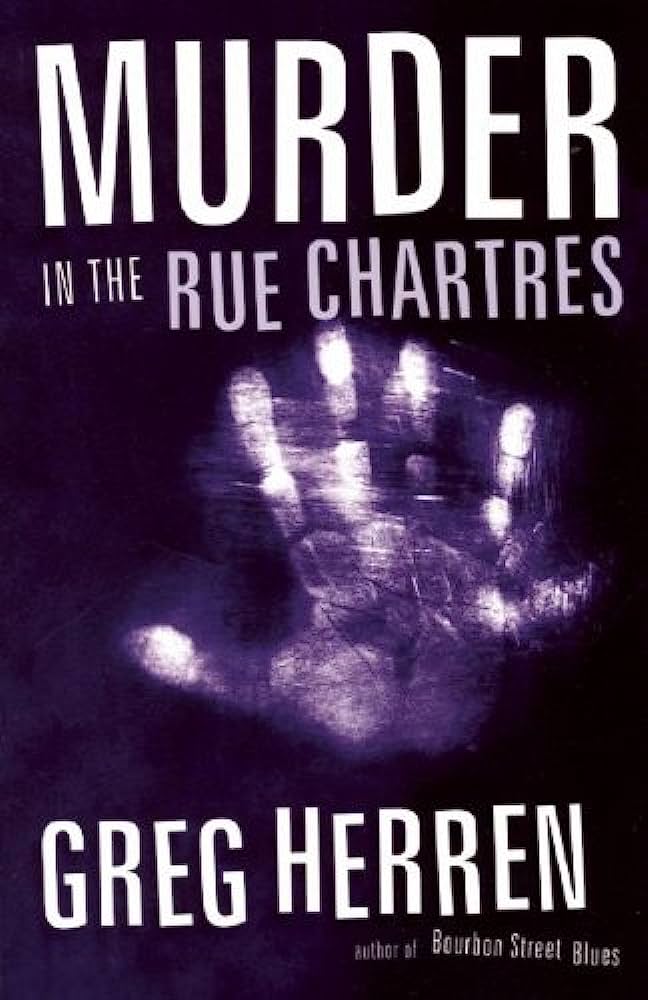
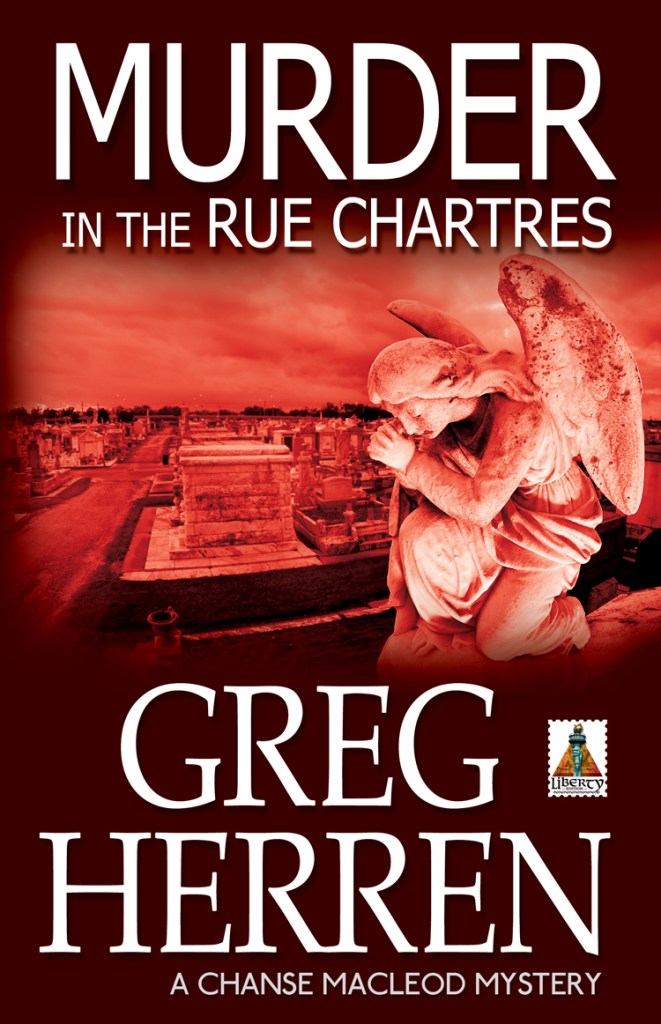
And that was the seed from which Murder in the Rue Chartres (no title at the time of contract) grew.1
This is the original cover from Alyson Books.This is the new cover for the Bold Strokes ebook
It was six weeks before I returned to my broken city.
Usually when I drove home from the west, as soon as I crossed onto dry land again in Kenner, excitement would bubble up inside and I’d start to smile. Almost home, I’d think, and let out a sigh of relief. New Orleans was home for me, and I hated leaving for any reason. I’d never regretted moving there after graduating from LSU. It was the first place I’d ever felt at home, like I belonged. I’d hated the little town in east Texas where I’d grown up. All I could think about was getting old enough to escape. Baton Rouge for college had been merely a way station—it never occurred to me to permanently settle there. New Orleans was where I belonged, and I’d known that the first time I’d ever set foot in the city. It was a crazy quilt of eccentricities, frivolities, and irritations sweltering in the damp heat, a city where you could buy a drink at any time of day, a place where you could easily believe in magic. I couldn’t imagine living anywhere else. Any time I’d taken a trip before, within a few days I’d get homesick and started counting the hours until it was time to come home.
But this time wasn’t like the others. This time, I hadn’t been able to come home, and had no idea how long it would be before I could. Now, I was nervous, my stomach clenched into knots, my palms sweating on the steering wheel as I sang along to Vicki Sue Robinson’s “Turn the Beat Around” on the radio. It was everything I’d feared for the last few weeks when I thought about coming home, the anxiety building as the odometer clocked off another mile and I got closer to home.
It was different.
The most obvious thing was the lack of traffic. Even outside the airport, the traffic was usually heavy, sometimes slowing to a complete standstill. But other than a couple of military vehicles, a cement mixer, and a couple of dirty and tired looking sedans, I-10 was deserted. There was a film of dirt on everything as far as I could see, tinting my vision sepia. Huge trees lay toppled and debris was everywhere. Signs that used to advertise hotels, motels, restaurants, storage facilities, and pretty much any kind of business you could think of were now just poles, the signs gone except for the support skeleton. Buildings had been blown over, fences were wrecked and down, and almost everywhere I looked blue tarps hung on roofs, their edges lifting in the slight breeze. My breath started coming a little faster, my eyes filled, and I bit down on my lower lip as I focused back on the road.
No cars joined at the airport on-ramp, or the one at Williams Boulevard just beyond it. No planes were landing or taking off.
Most of the writing I did in the fall of 2005 was my blog, which at the time was on Livejournal. (The old stuff is still there, but I started making things private after a year because of plagiarism; I guess people thought they could steal my words if they were on a blog.) I documented as much of the experience as I could, so people outside of Louisiana could see that the city wasn’t fully recovered despite no longer being in the news. American attention had moved past New Orleans by the spring of 2006.
When I started writing the book, I was really glad I had done that with the blog, because more than anything else it reminded me of the emotions I was going through, that horrible depression and not remembering things from day to day, the need for medications, panic attacks, depression, and the way the entire city just seemed dead. I did repurpose a lot of stuff that was on the blog–rewritten and edited, of course–and I could tell, as I wrote the book, that I was either doing some of the best work of my life to that point or I was overwriting it mercilessly. You never can be sure.
But I also needed to flesh out the murder mystery I came up with, and I also wanted to write about a historical real life tragedy of the Quarter. The client who hired him that Friday before Katrina roared into the Gulf and came ashore was engaged, and she wanted Chanse to find her father, who’d disappeared from their lives when she and her brothers were very young. But what happened to her father? Who killed her, and why? Was her murder a reaction to her looking for him?
I had started using Tennessee Williams quotes to open my New Orleans novels with the third (Jackson Square Jazz: “A good looking boy like you is always wanted” from Orpheus Descending) and I liked the conceit so much I kept doing it. I knew someone who’d built a crime novel around the basic set up of Cat on a Hot Tin Roof, and I thought, what if the person who knows all the answers has been in a mental hospital for decades? Then what if Mrs. Venable had succeeded in getting Catherine locked up with all of Sebastian’s secrets lobotomized out of her head?
I named the family Verlaine as a nod to the Venables, and aged Mrs. Venable as well as gender swapping her (this was also a bit influenced by The Big Sleep), and I was off to the races.
My editor wrote me when he finished reading the manuscript and told me it was one of the best mysteries he’d ever read. The reviews! My word, I still can’t believe the reviews, and how good they were. I got a rave in the Times-Picayune, Library Journal and Publishers Weekly.
And yes, it won a Lambda Literary Award for Best Gay Mystery.
The irony that two books I wanted nothing to do with, let alone write or edit, ended up with each winning Lambda Literary Awards, does not escape me. ↩︎
Monday morning and up too early for PT before work. Heavy sigh. My body aches this morning–my back is especially tight–which means today will be exhausting. It’s a paperwork/admin day anyway–unless I have to cover for someone–and it’s also terribly cold this morning: 41 degrees, to be exact. I collapsed into bed last night somewhere around nine, and was dead to the world in a matter of minutes. It was a good night’s sleep, but I really need to sleep late sometime soon–probably not till this weekend, alas.
I did listen to River Road by Carol Goodman in the car both ways instead of The Drowning Tree, and as always, loved every minute of it. I still had some time left to listen to something, but only had a short time left, so I went ahead and started an Amazon Short by Zakiya Dalila Harris, “His Happy Place”, which was decidedly creepy but also extremely well done. More on both to come, of course, once I’ve gotten back into (what passes for) a normal routine around here. This will probably be a rough, tiring week, but I hope to manage. This weekend I am going to drop off beads and books for donations, and will also hopefully keep working on the apartment.
The coffee is starting to work, which is nice. My brain and body are starting to wake up, which is great. I’m also a bit hungry, so will probably make something to eat before I leave. I have dry noodles at the office to have for lunch, and will take some breakfast snacky things with me. Tomorrow I know we are going to be super-busy in the clinic, which will make for a rough day as well. Fortunately, I enjoy my job! But this weekend will be the hard reset I need, and I just have to make it through this week, which seems to be stretching out far into the distance and is a bit overwhelming to contemplate. I also need to make a grocery list, and today I have to run some errands after I get off work. Tomorrow I’ll make groceries after work, and hopefully I’ll start feeling more settled in. Sparky was a bit stand-offish when I got home yesterday–just mewed at me reproachfully for a while, but after a few hours he forgave me and was very affectionate, obviously having missed me while I was gone. I do kind of feel like our earlier cats were more Paul’s than mine, but Sparky is kind of mine. Of course, I was chair bound for almost three weeks, so he had a place to cuddle and sleep and hang out all day, and now of course no one’s home with him all day. Once the Festivals are over, he’ll be home more and then he and Sparky can bond some more.
So really, my return to normality after Carnival has been pushed back on the calendar because of the trip over the weekend. My word, how my imagination was out of control while driving and staying in Alabama. I remembered stories and ideas I’d forgotten about as well as having more ideas (just what I need, right?) and I also figured out how to finish off my short story collection. I am hoping to get some more stories finished this week and get off to submissions while working and planning my next book. I also have a shit ton of unfinished drafts here I’d like to get done at some point so I can clear out the drafts folder.
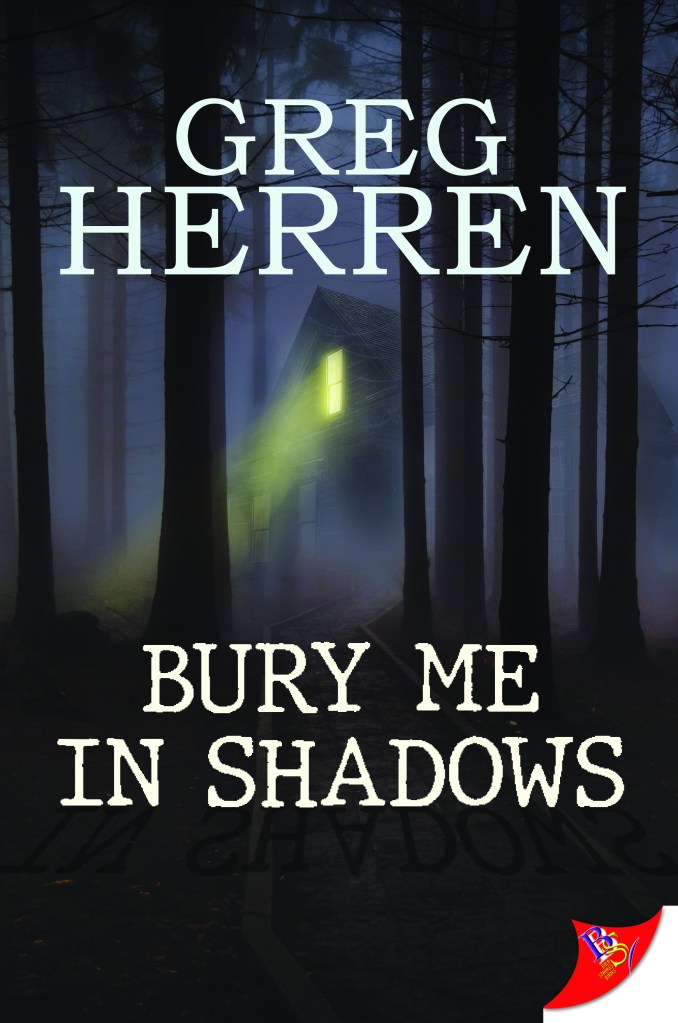
I also took a lot of pictures this weekend, to help me describe places when I write about Alabama some more. I also realized that fictionalizing the place where I was born means it doesn’t have to be exactly the same in my work than it is in real life, you know? But that’s also my own stubborn brain trying to make everything correct when it doesn’t have to be, which happens a lot. It’s not like New Orleans, which appears as it is in my work. Corinth County is based on where we’re from, but it’s not the same. I had an idea for something completely new on my way up there; there was an In Cold Blood-kind of slaying there in the late 1960’s; a couple who ran a corner store were brutally killed and robbed, and so when I got home I started looking for information about it on-line (I’ve done this before, but not for a potential writing project; more out of idle curiosity when I was writing Bury Me in Shadows) and interestingly enough, there have been any number of crimes down there over the last forty or so decades; in fact, in one article about another murder I read a quote from someone at a café in town that the county “seems to be cursed”–which I must have read before because that has always been the underlying theme of the fictional county; it’s even in Bury Me in Shadows with people saying “the history of this county is written in blood.” Anyway, I would be interested in writing about that 1967 shooting–either fictionally or as true-crime.
And on that note, I need to get ready for PT and then heading straight to work from there. Have a lovely Monday; I may be back later as one never truly knows.
Let me tell you about the very rich. They are different from you and me.
So F. Scott Fitzgerald wrote in his short story “The Rich Boys,” and he was, of course, very right in that observation, and that hasn’t changed in the hundred years since he typed the sentence.
It’s been very clear, since I started watching Capote v. the Swans, that my ignoring aspects of Truman Capote’s personal life because of my own internal distaste to his effeminacy (due to both internalized homophobia and self-loathing) was probably a mistake, and what I really needed to do was take a long hard look at myself as well as examine his life in more detail–I will read the Gerald Clarke biography at some point over the summer–and as such, while I was slightly aware of what happened between him and his swans, I didn’t know of the Ann Woodward involvement. When I bought the below book, I actually thought it was fiction, not true crime. Once I started watching the show, I decided to find the book and read it.
And I enjoyed it.
If Ann Woodward had resolved to live a quiet life in Europe, where she could mourn her late husband, Billy Woodward, far from the madding crowd of the American press, the town of Saint Moritz, high in the Swiss Alps, was certainly an unusual place to retreat to. Renowned for its winter sports, popular as a spa hamlet, and exclusive as a community where entertainers, celebrities, and assorted socialites gathered, Saint Moritzwas a lesser European sun around which various society moons revolved. While summer tourism was popular, it was in winter that this small city shined. Luminaries descended in head-to-toe furs inthe daytime and flashy jewels at night, their diamonds and bangles competing with the glittering snow. In the fall of 1956, Ann Woodward was once again the center of attention as she sat down for dinner at one of Europe’s most elite restaurants.
Back in the United States, those familiar with Ann Woodward–and lately there were few who had not heard of her, whether over lunch at the Colony on New York’s Upper East Side, or on the front pages of tabloids–believed that she had been banished to Europe by her formidable mother-in-law, Elsie Woodward, and was now likely leading a lonely life, without family or friends, much less a lover, with plenty of time to reflect on the transgressions that had forced her into exile.
But as Truman Capote watched her from a table across the restaurant, he saw that she was not the solitary widow they expected. Capote was not only surprised to see her in this particular location, but astonished to see her in the company of a man, which was cause for raised eyebrows, considering she had entered her widowhood by her own hand not so very long ago. But Ann Woodward did not seem rattled by the patrons staring with obvious disdain as she exchanged languid looks with her companion.
(The man with her was none other than Claus von Bülow, who would have his own notoriety splashed across newspaper headlines for decades, and about whose alleged attempts to murder his wealthy heiress wife, was the basis for the film Reversal of Fortune.)
I knew about the Woodward case before, but as I have mentioned numerous times, I didn’t know about Truman Capote’s role in her life and eventual suicide. I remember when Dominick Dunne published his first novel, The Two Mrs. Grenvilles, which was a huge bestseller and was made into a television film with Ann-Margret and Claudette Colbert. It was mentioned that the book was based on a real case, which I assumed was the murder of Zack Smith Reynolds, and the suspicion that his actress/wife Libby Holman might have done it and the tobacco rich Reynolds family covered it all up. (This was the basis for the Robert Wilder novel Written on the Wind, which was filmed–and altered–with Rock Hudson, Lauren Bacall, Robert Stack and Oscar-winner Dorothy Malone.) A few years later I heard about the Woodward case, and realized that it was the basis for Dunne’s book (all of his novels were based on actual murders; Dunne himself kind of took Capote’s métier after Capote’s death, writing about gossip and murder in the world of the rich and powerful; I could do another entry on Dunne’s work, and probably will. I downloaded the ebook of The Two Mrs. Grenvilles, as well as anthologies collecting his true crime reporting for Vanity Fair.) but still had no idea of the connection between Capote and Woodward.
I greatly enjoyed Montillo’s book. She covers the story of the Woodwards, and then moves onto the feud between Capote and Woodward; opening the book with the confrontation that made Capote viciously turn on her and nickname her “Mrs. Bang Bang,” and always talking about how she got away with murder. It’s well written and moves fast; it’s a marvelous and very quick read. If you’re interested in either true crime, Mrs. Woodward, or Capote, I do recommend it. I enjoyed it very much, and Montillo is kind to both of her main characters.
(While in one of the many Capote wormholes I’ve gone down, I’ve started getting an inkling of why Capote turned on his wealthy swans, writing about them so cruelly and viciously in that short story but the time is not right for this discussion–but I totally understand why he did, in terms of this explanation; whether it was true or not remains to be seen.)
PT was hard yesterday–it keeps getting harder every time–but I got through it, did very well with it, and then walked outside, my endorphins pumping through my veins and it was simply a beautiful, sunny day in New Orleans. I picked up my prescription before PT, and got the mail afterwards before driving home down Prytania Street. I did have trouble finding a place to park on the way there, so was a few minutes late–it’s close to Napoleon and people were already camping out on the parade route for the night parades–so I was certain I wouldn’t find parking when I got home. My spot was there Thursday night when I got home, so what were the odds I’d have parade parking luck two days in a row? But lo and behold, my spot was waiting for me when I got home.
Needless to say, that also dramatically picked up my spirits! And now the car won’t move again until Monday…which begs the question, will I have parking when I get home after PT Monday morning?
I spent most of my time out on the corner Thursday night just marveling at it, the way I always do at first–so many people, so many costumes, so much partying and so much joy; how dark it is here at night, so it’s like the dark is reaching down from the sky to absorb the lights from the parade and flames of the flambeaux, and everyone is a good mood. It’s so lovely to just go out and hang with friends and neighbors and strangers. You always end up talking to total strangers and having a good time, relaxed and a slightly buzzed (some people do overdo it and become Carnival tragedies) and watchings kids tossing footballs around on the street when there’s a break between parades (or a breakdown in the parade) and of course, the marching bands are fucking amazing. I am going to write about Mardi Gras again soon, so it’s good to drink it all in again and remember fun times of past seasons.
I was too fatigued from the PT yesterday to go out there last night, so we watched LSU Gymnastics beat Georgia last night and then just relaxed for the rest of the night. I did watch the first episode of Abbott Elementary, which I really enjoyed, so we’ll continue watching that, I think. Despite a great night’s sleep, I am still feeling fatigued this morning, which means I’ll be dead tired after Iris today. We’ll see how I feel about Tucks after Iris is over. Sunday is always insane down there at the corner, so we generally skip Sundays, and then it’s Orpheus Monday.
I did get some chores done yesterday, too. I worked on the laundry room and swept the living room, got all the bedding laundered, and rested after getting my work-at-home duties completed. I think since it’s Iris Saturday, all I will do today is read and watch television or some movies or something. I did finish reading Deliberate Cruelty, so I am going to try not to start another one until all the ones I am in the middle of are complete. I also need to make a series of to-do lists: one for the apartment, one for my career, and one for my every day life. I need to snap out of the lethargy, and I really need to dive headfirst into writing again. I want to get these stories finished and I want to get back to work on the book I’m in the midst of and has been stalled for quite some time.
And on that note, I am going to get cleaned up and ready for Iris to roll. See you later, Constant Reader, and may your Saturday be everything you desire in one.
Friday morning after Muses, and I am a little tired–physically. Mentally I am alert as ever and feel great, but I am not used to standing on the sidewalk for so long anymore. Chaos last night was my first parade (the floats were hilariously inappropriate; all I will say is the theme of the parade was “balls” and leave it at that), and we came home to rest before Muses arrived. We didn’t stay out for long, I was tired and sleepy and it got here around ten; we lasted out there for about an hour before I started flagging and came back inside. However, I realized I should have gone to parades to warm up for this weekend; I forgot that it takes a parade day to warm you up and get you in the proper spirit; I should be good to go tonight if my PT this morning isn’t too vicious.
And yes, we got a really cool shoe.
I had a good day at work yesterday, got a lot of things done and caught up and feel confident not being in the office again until Ash Wednesday will not be disastrous for me or put me really behind on things. I came home early (it took me an hour), and I came inside and watched this week’s episode of Capote v. the Swans, which was done in documentary style, which was an interesting take. I’m not quite as obsessed as I was about Capote when I first started watching, but I do want to read the Gerald Clarke bio of him, and maybe even George Plimpton’s Capote. It’s taken me awhile to get interested in Capote, and while I wouldn’t say it’s an obsession anymore, I am still very much interested in this incredibly famous openly gay man in the middle of the twentieth century. I have added Deliberate Cruelty, a true crime narrative about Ann Woodward’s feud with him by Roseanne Mantillo, to the books I am reading and I finished it last night.
And yes, I am beginning to understand precisely why he wrote “La Côte Basque 1965” and why he published it, but more on that when the show is finished and I give it, and Capote, an entry of their own.
As for me and the weekend, I have taken Monday off and so I am hoping that I’ll be able to get some reading and writing done today, Sunday and Monday (I will always take Saturday off from everything to go to Iris). I want to finish editing this one short story and finish writing another, and perhaps get them submitted somewhere. I have laundry going already and a dishwasher to unload and reload. I have PT this morning, a prescription and the mail to pick up, and then the car won’t move again until Monday at the earliest, as I will need to probably make a grocery run. I also should be able to finish reading Deliberate Cruelty so I can focus on Lina Chern’s Playing the Fool, which I am greatly enjoying. I also have some blistering blog entries to write, so this weekend should be fun on that score.
And hopefully I’ll be able to get this place ship-shape and get myself caught up on everything that needs catching up on.
And on that note, I am heading into the spice mines. Have yourself a lovely Friday, Constant Reader, and I may be back later.
So, are you ready for some MORE blatant self-promotion?
During the Bold Strokes Book-a-thon, the other panel I was on had to do with writing young adult fiction (the other panelists were amazing, I might add), and once again, I am answering the questions sent to us by the moderator to turn into an interview with JUST me (because it’s all about ME ME ME) but I do urge you to seek out the video of the panel. It was terrific, and I was definitely the most uninteresting person on the panel, seriously; this is NOT self-deprecation. (I bought everyone’s books during the panel, I might add; definitely check out Lauren Melissa Ellzey.)
What is the definition of Young Adult? How does it differ from other genres?
I think it’s primarily an age distinction, to be honest, which is something that always makes me uncomfortable. Growing up I read far above my age level; when I was in seventh grade I was reading at a college level, per the tests and so forth. I mean, I did read The Godfather when I was ten; my parents, despite their conservative religious beliefs and values, let me read whatever I wanted without having to ask permission–I think when I asked Mom if I could read something the last time she replied “Read whatever you want, I don’t care” and after that I never asked again. When I was a kid, there was no such thing as young adult; everything was either for adults or “juvenile.” The juvenile category contained multitudes, beginning with the Little Golden Books and picture books to kids’ mysteries to Judy Blume. I think sometime in the 1980’s the genre was separated into “juvenile” for kids 8-12 and “young adult” for 12-18.
But there are kids like me, who can read above their age/class level and others who can’t read at their age/class level, and I think in some ways that differential could be harmful for those who are below-average readers–reading is the most crucial aspect of education, because if you can’t read…and no matter how many ways they try to make the language around slower readers more accepting and less stigmatizing…it doesn’t really help kids to be told they’re below average or not as smart or quick as the other students. (One of my primary problems throughout my education is I would understand something the first time, while others inevitably didn’t, and as the teacher explained for a second or third or more time, my ADD would kick in and my mind would wander because I didn’t need to listen and then wouldn’t be listening when the teacher moved on.
Ah, well.
Oh, and all subgenres of fiction also have the middle grade/juvenile and young adult sub-sub-genres.
Why or how did YOU choose YA?
I don’t know that I chose y/a so much as it chose me.
I started writing when I was a child (all my childish scribblings are lost to moves and time passing), and I wrote about kids my age. My first attempts at writing were always some kind of kids’ mystery series, a la The Hardy Boys and The Three Investigators (I’d still like to do this, frankly), and when I became a teenager, I started writing about teenagers. I wrote a bunch of short stories while in high school about the same group of kids going to the same high school. Those stories slowly but surely grew into a sprawling, handwritten novel about the county with plots and subplots and main characters and minor characters and all of this history; a “Peyton Place in Kansas kind of thing”. I worked on it for like five years, and eventually had this enormous sprawling mess that needed to be revised and rewritten and typed…and since I didn’t know how to type, made that part of it a problem. So I shoved it into a drawer and started pulling from it rather than revising it; taking out plots and characters and using them in other books and other stories.
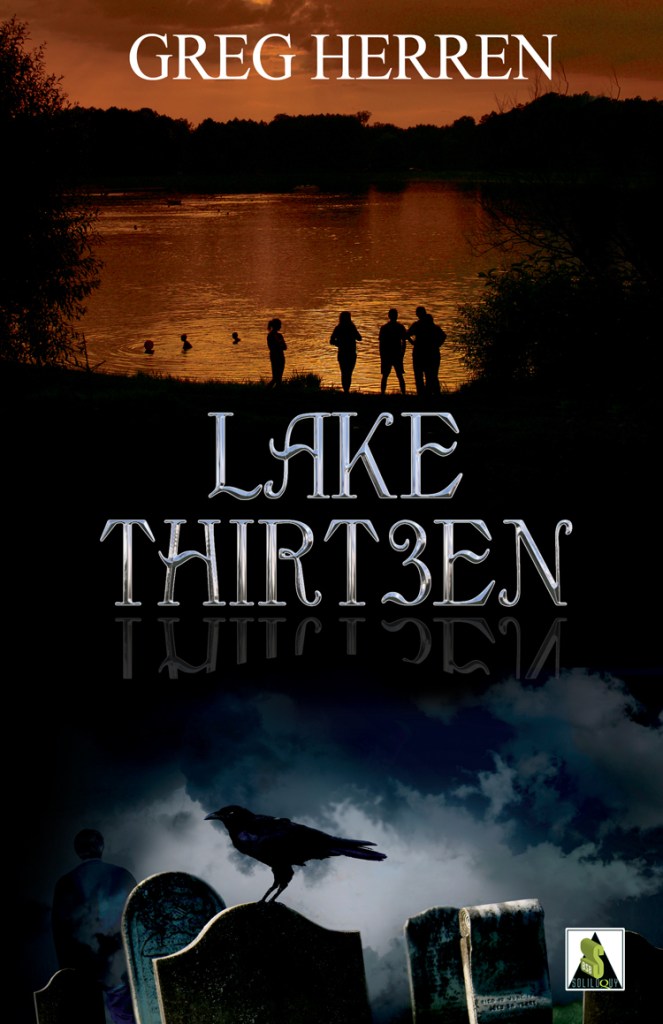
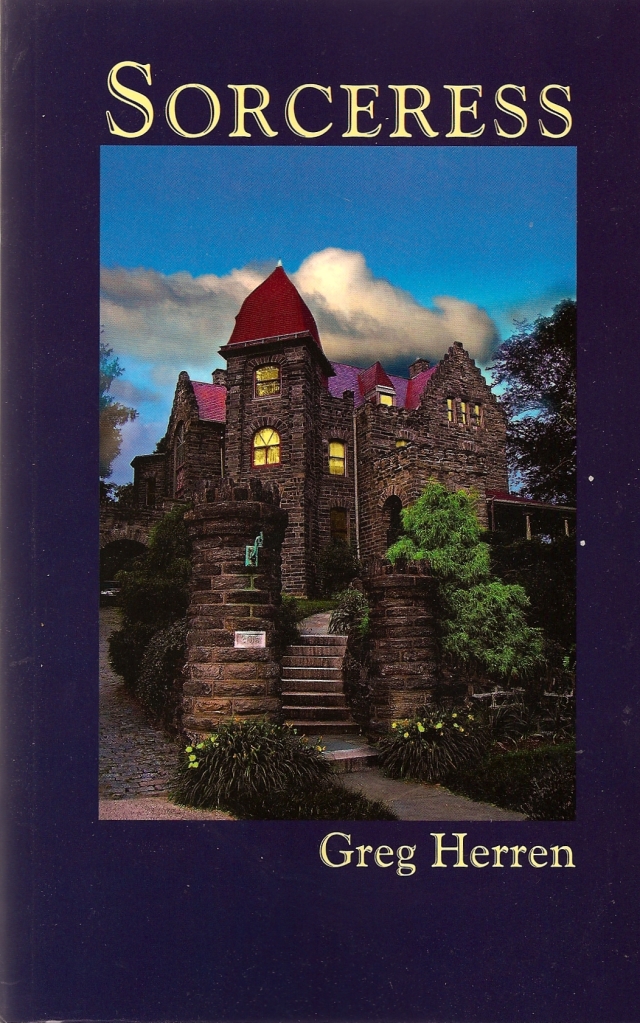
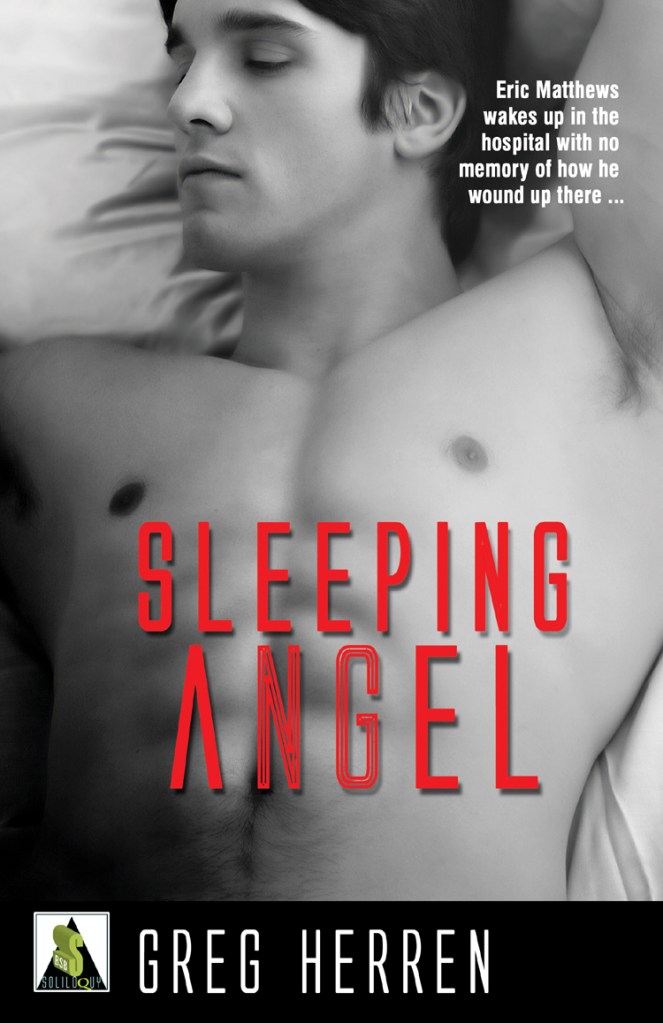
After I finished that, I spent the next five years mostly working on short stories. I started another book, more horror than anything else, but never got further than the third chapter. I finally decided to write a horror novel built from my old manuscript and those short stories from high school. I was about three chapters into it when I discovered two things: there was a big market in y/a horror at the time (Christopher Pike and R. L. Stine were HUGE during this period) and so I bought some of them. When I finished, I thought, “You know, I should turn Sara into a y/a novel” (because I thought somehow that would be easier? Foolish, foolish rookie) and so… I did. I was right in that thinking of it in those terms made it possible for me to finish a draft, but I wasn’t very happy with it so I put it aside and started writing another one, Sorceress, which was also horror but also had some strong Gothic moments in it. When I finished that one, again I wasn’t pleased with it so I started another–Sleeping Angel–which was the one I thought really had potential. I never finished that draft–by this time I’d discovered that gay fiction and nonfiction existed, so I started reading that and trying to write about gay characters instead.
Those manuscripts remained in my drawer for well over a decade, until a friend of mine took a job as a young adult acquisitions editor, and she wanted to work with me. I told her I’d written three (although it was technically two and a half), and gave her a brief synopsis of them. She liked Sorceress the best, so I started revising and editing it and turning it into something publishable. Once it was all done, she’d left that publisher, but started her own small press for y/a books for underrepresented teens, and she wanted to launch the press with Sorceress. I said “okay” and we were off. I eventually realized I needed to let Bold Strokes know, and when I did, I got an email back saying you know we do y/a, too? And so I sold the other two to them, and have never looked back since then.
Are there specific rules for writing YA (things you can’t do)? Does Bold Strokes add on or impose specific or additional rules?
I don’t pay too much attention to rules, frankly. There’s no graphic sex in my books, but it’s hinted at. I also try to swear less in young adult books than I do in adult fiction, which is probably not as big of a deal as I think it is? The society I grew up in was a lot more puritanical–believe it or not–that the one we live in today. So I always default to that setting, and then have to shake it off. Swearing isn’t as big of a deal as it used to be. No one thinks they’re marrying a virgin anymore, and on and on. And having been attacked for daring to accept an invitation to speak to queer high school students, I tend to tread softly. There have been a couple of times where I’ve had to change language, or how a scene went, because my editor thought it might be problematic; and frankly, I never want to be offensive, so I have no problem with it. I don’t see it as a free speech issue the way so many intentionally offensive writers claim it is. I shouldn’t take offense to someone calling me a faggot? Grow the fuck up. The so-called free speech “crusaders” are always defending hate speech as well as trying to shut up the people who find it objectionable. You do not have a constitutional freedom from consequences or getting a negative response to things you say and do, period. It’s really not hard to understand unless you want to be passive/aggressive and childish and a moron.
How do you remember back to these days, specifically how it felt or feels? (this is coming from your moderator who is much older than you are)
Well, for one thing, I’ve always kept a journal and I still have them all. (I was insufferable when I was younger, seriously.)
My sister has a theory that we forget a lot of the pleasant memories from our childhoods, but remember the traumas in great detail. I believe the truth of that, because school was a nightmare for me from the day we moved to the suburbs until I was done with it. I remember how it felt to read Greg Herren sucks cock on a desk at school. I remember how it felt to be mocked, laughed at, and bullied by assholes. I do remember the good things, though I tend to always focus on the bad.
The first thing I always do is abandon whatever “wisdom” about life I’ve theoretically learned since leaving high school, and put myself into the teenager mindset: they think they are the main characters in everyone they know’s story, and everything is the end of the world or their life is ruined and you are the most horrible parent ever! I’m not entirely sure I’ve escaped thinking that way, to be brutally honest: I am horribly selfish.
How do you come up with your characters? Your stories?
I am weird in that I inevitably always start with a title. I hear something or read something and think, that would make a good title. The next question is what story would fit that title? And it kind of goes from there. The title may change, the character names and story might change and evolve, but I can’t write anything that doesn’t have a title. Bizarre, I know. Usually with my young adult stuff it’s an idea I’ve had for a number of years and finally decide to explore whether it’s a novel or a short story, and go from there.
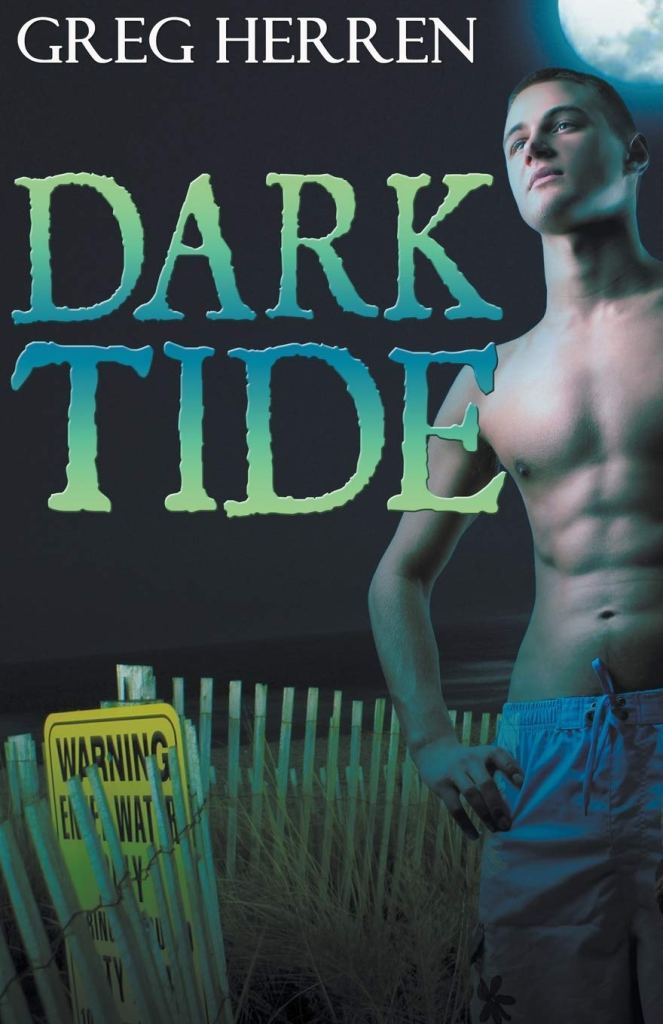
Dark Tide was originally called Mermaid Inn, Bury Me in Shadows was originally Ruins, but the others pretty much stayed the same from beginning to end.
I wrote #shedeservedit because I was angry about the Steubenville/Maryville rape cases, and remembered stories and gossip from when I was in high school and college…and rethinking them through a more evolved brain about women and misogyny… well, it made me angrier. I had already planned on writing a story set in the same town with the same characters and opening with the same murder (I always referred to it as “the Kansas book” for years), but the motive was something I always had trouble grounding in reality. After those cases…it clicked in my head. You need to write this story about small town misogyny, protecting the star jocks from the girls at all cost, and make that the plot. It was easy to write because I was angry. Making it a compelling read was harder, because the subject matter was sickening to me.
I needed to write that book, and I don’t regret doing it, either…but it’s not exactly a feel good story people can escape into, either.
Why do you think YA is so popular?
It’s more accessible, I think. I mentioned reading ability before, and I do think that most readers aren’t into the Great Literary Tomes, hundreds of pages of beautiful writing with no real point or story. People kind of want to escape their cares and worries, and y/a books tend to be really entertaining. We’re competing with phones and tablets and streaming, so we need to write entertaining and engaging books.
Any specific must do-s or must-haves to get your writing each day?
I’m not nearly as anal about that as I used to be, before I returned to work full-time. I am very aware that I have little time to waste when I write, and thus must seize whatever opportunities to write show up. But if pressed, coffee. I can’t write unless I’ve had coffee when I got up.
I think this is all of them, but I could be wrong.
Americans have always been fascinated by rich people.
We all want to be rich, after all; as someone once said, “The United States is a nation of temporarily distressed millionaires.” So, in lieu of actually being rich, we obsess about them. The rich used to be celebrities for no other reason than being rich. It’s always been interesting to me that in our so-called “classless” society (which was part of the point; no class privilege, everyone is the same in the eyes of the law) we obsess about the rich, we want to know everything about them, and we lap up gossip about them like a kitten with a bowl of cream. I am constantly amazed whenever I watch something or read something set in Great Britain, because that whole “royalty and nobility” thing is just so stupid and ludicrous (and indefensible) on its face that I don’t understand why Americans get so into it; the fascination with the not-very-interesting House of Windsor, for one. We fought not just one but two wars to rid ourselves of royalty and nobility…yet we can’t get enough of the British royals, or the so-called American aristocracy. (Generic we there, I could give a rat’s ass about the horse-faced inbred Windsors and their insane wealth, quite frankly.)
I wanted to be rich when I was a kid; I spent a lot of time in my youth fantasizing about being rich and famous and escaping my humdrum, everyday existence and becoming a celebrity of sorts with no idea of how to do so. I was intrigued by the rich and celebrities; I used to read People and Us regularly, always looked at the headlines on the tabloids at the grocery store, and used to always prefer watching movies and television programs about the rich. (Dynasty, anyone?) I loved trashy novels about obscenely wealthy (and inevitably perverted) society types and celebrities–Valley of the Dolls has always been a favorite of mine, along with all the others from that time period–Judith Krantz, Harold Robbins, Jackie Collins, Sidney Sheldon and all the knock-offs. I was a strange child, with all kinds of things going on in my head and so many voices talking to me and my attention definitely had an extraordinary deficit; I always referred to it as the “buzzing.” The only time I could ever truly focus my brain was either reading a book or watching something on television–and even as a child, I often read while I was watching television. (Which is why I read so much, even though that buzzing isn’t there anymore and hasn’t been for decades.)
As I get older and start revisiting my past (its traumas along with its joys) I begin to remember things, little clues and observations that stuck in my head as a lesson and remained there long after the actual inciting incident was long forgotten. I’ve always had a mild loathing for Truman Capote, for example, which really needs to be unpacked. Capote was everywhere when I was a child; there was endless talk shows littering the television schedules those days–Dick Cavett, Merv Griffin, Mike Douglas, John Davidson, and on and on and on–and Capote was always a popular guest on these shows. I wasn’t really sure what he did or who he was, but he was someone famous and he was on television a lot. I saw him in the atrocious film Murder by Death, and I know I knew/had heard that he was a homosexual, a gay; and I also knew I was a gay. It terrified me that I was destined to end up as another Capote–affected high-pitched speech and mannerisms, foppish clothing that just screamed gay at anyone looking; Capote made no bones about who or what he was and refused to hide anything…yet he gained a kind of celebrity and fame and success in that incredibly homophobic time period, and no one had a problem with putting him front and center on television during the day time.
But this isn’t about my own self-loathing as evidenced by my decades of feeling repulsed by Truman Capote; that I will save for when I finish watching Capote v. the Swans.
“Carissimo!” she cried. “You’re just what I’m looking for. A lunch date. The duchess stood me up.”
“Black or white?” I said.
“White,” she said, reversing my direction on the sidewalk.
White is Wallis Windsor, whereas the Black Duchess is what her friends called Perla Apfeldorf, the Brazilian wife of a notoriously racist South African diamond industrialist. As for the lady who knew the distinction, she was indeed a lady–Lady Ina Coolbirth, an American married to a British chemicals tycoon and a lot of woman in every way. Tall, taller than most men, Ina was a big breezy peppy broad, born and raised on a ranch in Montana.
“This is the second time she’s canceled,” Ina Coolbirth continued. “She says she has hives. Or the duke has hives. One or the other.Anyway, I’ve still got a table at Côte Basque. So, shall we? Because I do so need someone to talk to, really. And, thank God, Jonesy, it can be you.”
I do want to be clear that once I started reading Capote, he quickly became a writer whom I admired very much; I don’t think I’ve ever read anything he’s written that didn’t take my breath away with its style and sentence construction and poetry. He truly was a master stylist, and perhaps with a greater output he might have become one of the established masters of American literature, required reading for aspiring writers and students of American literature. In Cold Blood is a masterpiece I go back to again and again; I prefer his novella Breakfast at Tiffany’s to the film without question; and I was blown away by his debut novel, Other Voices Other Rooms, which was one of those books that made me think my childhood, and my being from Alabama, might be worth mining for my work.
I read “La Côte Basque 1965” years ago, and didn’t really remember it very much other than remembering I didn’t care for it very much. I was aware of the scandal that followed its publication and that all of Capote’s carefully cultivated rich society women friends felt betrayed by it and turned on him, which sent him into a decline from which he never recovered, before dying himself. I’ve always seen Capote as an example of wasted talents. Anyway, I read the story but not being familiar with his social set, I didn’t recognize any of the people gossiped about in the story or who the woman he was lunching with represented (Slim Keith, for the record), and so it kind of bored me; it was a short story about someone having lunch and gossiping about people the reader had no way of knowing who they were or anything about. I assumed this was because the story was an excerpt from the novel, and the novel itself would establish who all these women were and their relationships with each other. But I did know it was all thinly veiled gossip about his friends, and they never forgave him for it. (I also didn’t recognize “Ann Hopkins” in the story as Ann Woodward; I hadn’t known until the television series that he was involved in her story. I primarily knew about her from reading The Two Mrs. Grenvilles and articles in Vanity Fair, and I actually thought, when reading that book, that it was based on the Reynolds tobacco heir murder that Robert Wilder based his book Written on the Wind on; it wasn’t until later that I learned about the Woodward incident) so I thought, well, it was an entertaining if confusing read.
It was kind of like listening to two strangers talk in a Starbucks and gossip about people you don’t know; entertaining but nothing serious, not really a story of any kind, and I didn’t at the time see how it would all fit into a novel as a chapter in the first place. What purpose to the overall story did this nasty gossip play? Why was it necessary for Ina to share these stories at this particular lunch (and don’t get me started on White Duchess and Black Duchess)? Were these people she was talking about important to the book as a whole? It was hard for me to tell, and I put it away, thinking at the time probably a good thing he never finished the book.
Watching the show about fallout from the story’s publication, I decided to read the story again.
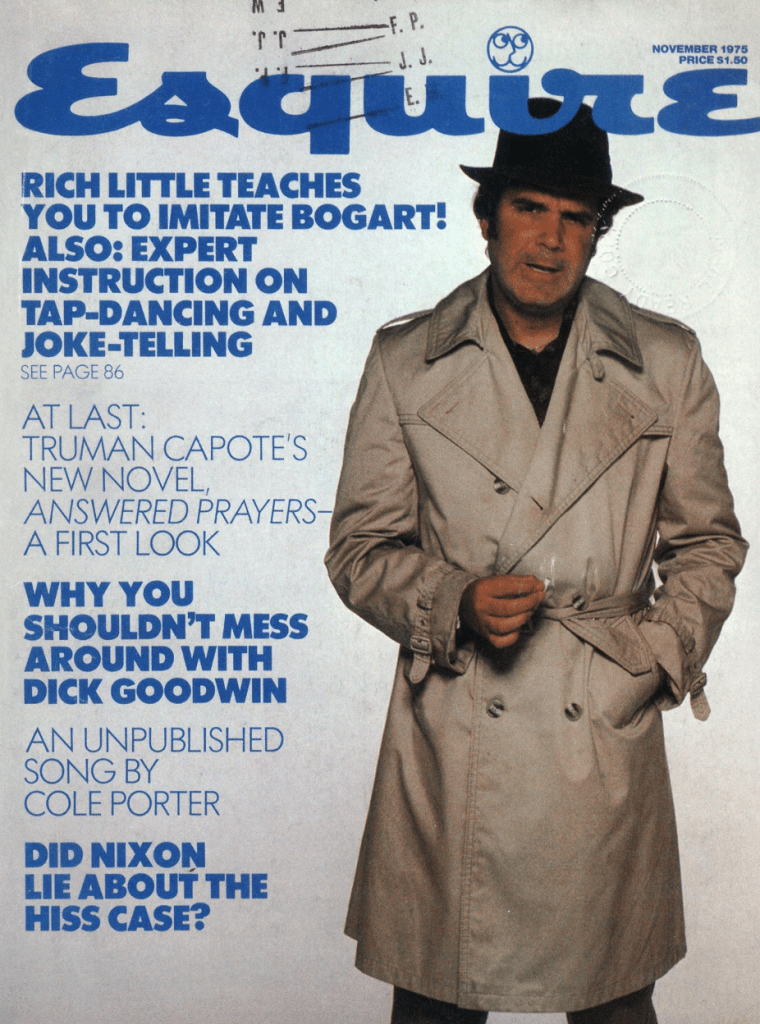
And I still question why Esquire chose to publish it, as well as why Capote thought this chapter was the one to send them. Capote was a genius, of course, and after In Cold Blood was one of the biggest names in American literature (he truly invented the true crime genre); of course they are going to publish whatever he sent them, no matter how bad it was. It wasn’t promoted as a story, after all, it was a novel excerpt.
What I’ve not been able to figure out from any of this is why he thought he could publish this without any fallout from his “swans.” I guess it went to the grave with Capote, who clearly didn’t–and I don’t think ever did–understand why they were so upset with him, which just astonishes me. (Someone once thought I based a character on her–I didn’t–and was very angry with me. I didn’t care, because I neither cared about the person nor her concerns, but I know how careful you have to be as a writer with these sorts of things.)
I wish I could say I liked it better on the reread. I did not. It’s still the same mess it was when I originally read over twenty years ago. It’s just a rich woman being bitchy to her gay friend she feels free to be bitchy about her friends with, and when you have no context (even knowing this time who the actual people were, and yes, he barely disguised them) about the women being discussed or anything about them…it’s just boring, gossip about people you don’t know and you don’t know enough to care about, so it’s just a bitchy little boring lunch. I don’t know what could come before that or after, as an author myself; had I been the fiction editor at Esquire I would have been pissed that was what he sent in, and I would have definitely taken a red pencil to it before I would have published it–and Esquire? Why did Esquire, a men’s lifestyle magazine, publish this when the right place would have been Vogue or Vanity Fair or even The New Yorker. None of it made sense then, none of it makes sense to me now; and if this is the best example we have of Answered Prayers, maybe it’s not such a bad thing that the manuscript–if it ever existed–disappeared.
Sorry, Truman, you were a great writer but this one was a swing-and-a-miss.
Monday morning has rolled around again and no, I didn’t want to get out of the comfortably warm cocoon of blankets yet again today. It was a nice, relaxing weekend. I didn’t go out to see any parades yesterday because I felt exhausted on Saturday and while i felt much better yesterday than I had, I thought it best to stay inside and rest for the day rather than push myself by going to stand on or around the corner for a few hours. This weekend is the big final push (I have to leave work early both Wednesday and Thursday), and I decided it was wisest to take Lundi Gras (Monday) off; Orpheus is that night and there’s no way I’d ever be able to find a place to park anywhere near the house. I do have PT that morning, so I’ll go to that and run some errands before heading back home and parking the car for another two days.
It actually turned out to be the best choice I could have made for the day because a friend called that I hadn’t spoken to in nearly two years (a myriad of reasons, mostly due to health concerns and my own insane rollercoaster life) and had I been out at the corner, i would have missed the call. It was a lovely conversation, and I realized once again how much I’ve missed, not only her, but so many others of my friends. I have always had the misfortune to have the majority of my writer friends not live anywhere near me, so it’s not like I can meet someone for a drink or lunch or anything at any time we so please. This has always been fine with me, but every once in a while it gets a bit lonely, so the few local friends I have are very precious to me. It was absolutely delightful to hear from her, and we were on the phone for nearly an hour, which was marvelous. (I’d been watching the Philip Seymour Hoffman Capote at long last when she called, which was really quite good and Hoffman deserved his Oscar, I think.) So yes, I kind of went down a Truman Capote wormhole yesterday. I am thinking Other Voices Other Rooms needs a reread, and maybe even a dip back into his short stories wouldn’t be a bad thing to do. My former antipathy for Mr. Capote (still processing it) has now turned to fascination; who was he behind that mask, that persona, he developed to hide behind? It’s also been years since I saw the film of In Cold Blood, too; it might be worth another look, too. This newfound obsession with Capote is multi-layered, too; it might take more than one lengthy post once I work my way through the way I’ve always reacted to Capote’s public face. (The self-loathing is coming from inside the house!) But after the call and after the film, I pretty much spent the rest of the night scribbling in my journal while watching an endless stream of Youtube videos, just to see what the algorithm thought I’d be interested in (Constant Reader, I was not interested in most of them, but I wound up watching a series of short histories of Eleanor of Aquitaine, one of my favorite historical women of all time.).
I didn’t write as much as I would have liked this weekend, either, but it’s also Carnival. Very little gets done during Carnival as I am too busy juggling and planning around parades to have much energy left to devote to writing. I did write some really good notes in my journal, though, which was fun; I always forget how much fun it is to freeform scribble in my journal and see where my subconscious mind takes me. It never matters if anything ever comes of it; it’s just playing around with words and ideas and names and form. I’ve been joking with myself that I should write a memoir called I Wouldn’t Normally Do This Kind of Thing, which is a terrific title for something like that (shout out to the Pet Shop Boys, because almost every song title is unabashedly clever and brutally honest and would make for a great title for essays or something), but as I always say, my memories lie to me all the time–which can be a problem when writing a memoir. Maybe personal essays would be a better idea than an actual memoir…and really, has my life been interesting enough for a memoir, anyway?
But I suppose that’s always in the eye of the beholder. I don’t think my life is anything special, or even unusual other than I am out of pace with traditional society with my sexuality and my chosen profession…but then other people will be amazed at some story of my past that I tell (usually after a few drinks) and I guess I never really think of me or anything that happens to me as anything other than normal and I always think everyone else has the same sort of things go on in their lives so it’s nothing out of the ordinary. But I have met a lot of important people and important writers. Larry Kramer used to call me periodically at Lambda Book Report to yell at me, but that was just Larry–he always seemed to be angry about something, but was actually also a really nice man (your mileage might vary, of course, but he also always made me laugh). Barbara Grier also used to call me about once a month to yell and swear at me, but I found her terrifically amusing and I could listen to her all day (and Barbara loved nothing more than a captive audience). There were only a few people in the business, actually, who were terrible to me when I worked there; I always seemed to have the ability to listen to everyone politely and was always pleasant and never argued with anyone….but there were a few I’d rather run over with my car and then back over them again rather than ever deal with them under any circumstance for any reason.
You know who you are, trash.
But I survived the first weekend of Carnival, and I am now thinking I want to watch the other Capote film, the one with Toby Jones–and maybe even revisit Murder by Death, which was another one of those after-church matinee movies Mom used to take my sister and I to. I just need to get through today at the office, and then I need to do my errands and go to PT before settling into my easy chair for the evening. I may go back to Lina Chern’s Play the Fool, which I am really enjoying, or my reread of Edna Ferber’s Saratoga Trunk, or Rival Queens, or even some short stories. I have some of Capote’s, and that might be interesting to reread. My friend who called yesterday afternoon recommended pairing Other Voices Other Rooms with To Kill a Mockingbird, which is a book I have issues with (more on that later at some point), but reading them as parallels to each other; the same childhood from different points of view in the same small Alabama town; it’s been a hot minute since I read the Capote novel but I did love it when I did. I don’t think I still have a copy of it, though.
And on that note, I am heading into the spice mines. It’s a windy, gray wet day in New Orleans, and so I don’t think I’ll have a lot of issues sleeping tonight, either. Have a lovely Monday, Constant Reader, and you never know–I may be back later. Stranger things have indeed happened!
Holiday Monday, and I slept deeply and well again last night. I’d set the alarm, thinking it was probably better to start getting up early again, since it’s back to the office with me tomorrow but Sparky was being super cuddly and sweet in the bed this morning, and it was cold, and so I stayed in bed for another hour or so. I finished reading Tara Laskowski’s The Weekend Retreat, which I greatly enjoyed (more on that later). I made jambalaya, and did some dishes and started a load of laundry. I also reread some of my own unfinished work, trying to decide what to focus on next. I have to say I am regularly pleased with my work now when I go back and reread it; what can I say? I don’t know if that means I am getting rid of the self-deprecation and “not good enough” mentality I’ve struggled with my entire life, but it’s a welcome change to read some of my work and think this is pretty good.
I also worked on the house some more and it’s starting to look like it did before the acquisition of High Energy Kitten and my surgery–cluttered but at least neat. It’s almost there, you know, and maybe putting some finishing touches on it today before I go to my first STRENGTH PT appointment this afternoon. (I’ll be making groceries after that, I might add.) I’ve also decided that my next read with be R. F. Kuang’s Yellowface; I do enjoy a writer-behaving-badly story. I’ve written my own, too–“Quiet Desperation”, which was included in my collection Survivor’s Guilt and Other Stories, as well as a Kindle single–but I don’t think I ever want to write an entire novel about a writer behaving badly. I may write an entire novel with a writer as the main character–I keep circling back to my true crime writer, who’s now appeared in several of the Scotty books, as well as The Orion Mask–but I don’t think I’m quite there yet.
It is interesting to revisit unfinished projects and decide which of them to focus on and finish. I know that my next short story collection will be finished if I finish a novella and throw it in; but I’d kind of wanted to do a novella collection. One of the novellas–the longest one–will be rather easily turned into a novel, which I think is what I may do with it; there are three or four more that I can finish and turn in as a solitary book. “Festival of the Redeemer” is completed in first draft form, and rereading it yesterday made me realize that it’s next draft can be longer, of course, but I don’t think there’s enough story there to turn it into a novel; same with “Fireflies” and “Never Kiss a Stranger,” so maybe those three can be the novella collection (Festival of the Redeemer and Two More Tales–which I am choosing to call it so I can have a Venetian cover, a la du Maurier). “A Holler Full of Kudzu” might be the one I finish to complete the short story collection. There are also a lot of short stories I’d like to rework and/or finish for some calls that I’ve seen, which could always be fun. But the exciting thing here is I am feeling excited about writing again for the first time in I don’t know how long.
It’s also weird to think that the Scotty series is turning twenty-one this year; on May 1st, to be exact. I definitely should write another Scotty this year, and it does look like Hurricane Party Hustle is the one to do–it’ll also give me the opportunity to write about what it’s like to ride out a big storm and live without power, all the while having Katrina flashbacks. I also have the story for that already fleshed out, and yesterday I even figured out how the book opens, and how the mystery comes to Scotty’s attention in the first place, which is more than I usually have when I start, LOL. That one will be followed by the cursed Mardi Gras of 2019, French Quarter Flambeaux, which will be another fun story to write, and then Quarter Quarantine Quadrille, which will cover the shutdown and COVID madness. So, there are at least three more Scotty books for me to write, which will take the series to twelve books, and then I’ll think about it some more. Scotty’s family–parents and grandparents–are getting older, and will soon have to start dying off, which I really don’t want to deal with.
But it’s nice to feel excited about everything again, isn’t it? And normal, after so many years of abnormality?
And on that note I am heading into the spice mines. Have a lovely holiday, everyone, and I’ll probably be back later.









 Queer and Loathing in America