Oh Very Young

So, are you ready for some MORE blatant self-promotion?

During the Bold Strokes Book-a-thon, the other panel I was on had to do with writing young adult fiction (the other panelists were amazing, I might add), and once again, I am answering the questions sent to us by the moderator to turn into an interview with JUST me (because it’s all about ME ME ME) but I do urge you to seek out the video of the panel. It was terrific, and I was definitely the most uninteresting person on the panel, seriously; this is NOT self-deprecation. (I bought everyone’s books during the panel, I might add; definitely check out Lauren Melissa Ellzey.)

What is the definition of Young Adult? How does it differ from other genres?

I think it’s primarily an age distinction, to be honest, which is something that always makes me uncomfortable. Growing up I read far above my age level; when I was in seventh grade I was reading at a college level, per the tests and so forth. I mean, I did read The Godfather when I was ten; my parents, despite their conservative religious beliefs and values, let me read whatever I wanted without having to ask permission–I think when I asked Mom if I could read something the last time she replied “Read whatever you want, I don’t care” and after that I never asked again. When I was a kid, there was no such thing as young adult; everything was either for adults or “juvenile.” The juvenile category contained multitudes, beginning with the Little Golden Books and picture books to kids’ mysteries to Judy Blume. I think sometime in the 1980’s the genre was separated into “juvenile” for kids 8-12 and “young adult” for 12-18.

But there are kids like me, who can read above their age/class level and others who can’t read at their age/class level, and I think in some ways that differential could be harmful for those who are below-average readers–reading is the most crucial aspect of education, because if you can’t read…and no matter how many ways they try to make the language around slower readers more accepting and less stigmatizing…it doesn’t really help kids to be told they’re below average or not as smart or quick as the other students. (One of my primary problems throughout my education is I would understand something the first time, while others inevitably didn’t, and as the teacher explained for a second or third or more time, my ADD would kick in and my mind would wander because I didn’t need to listen and then wouldn’t be listening when the teacher moved on.

Ah, well. 

Oh, and all subgenres of fiction also have the middle grade/juvenile and young adult sub-sub-genres.

Why or how did YOU choose YA?

I don’t know that I chose y/a so much as it chose me.

I started writing when I was a child (all my childish scribblings are lost to moves and time passing), and I wrote about kids my age. My first attempts at writing were always some kind of kids’ mystery series, a la The Hardy Boys and The Three Investigators (I’d still like to do this, frankly), and when I became a teenager, I started writing about teenagers. I wrote a bunch of short stories while in high school about the same group of kids going to the same high school. Those stories slowly but surely grew into a sprawling, handwritten novel about the county with plots and subplots and main characters and minor characters and all of this history; a “Peyton Place in Kansas kind of thing”. I worked on it for like five years, and eventually had this enormous sprawling mess that needed to be revised and rewritten and typed…and since I didn’t know how to type, made that part of it a problem. So I shoved it into a drawer and started pulling from it rather than revising it; taking out plots and characters and using them in other books and other stories.

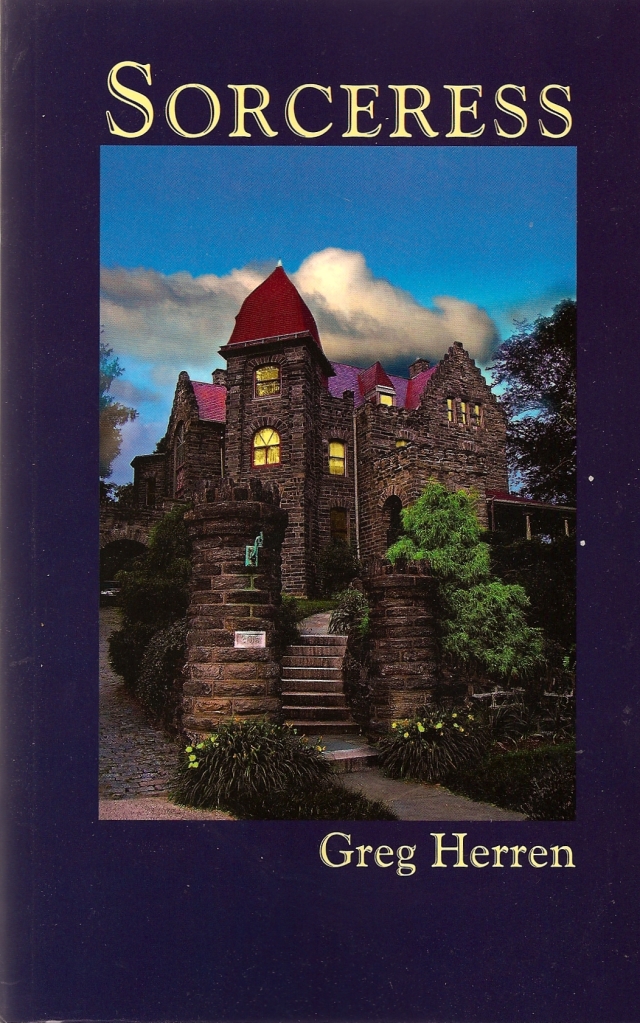
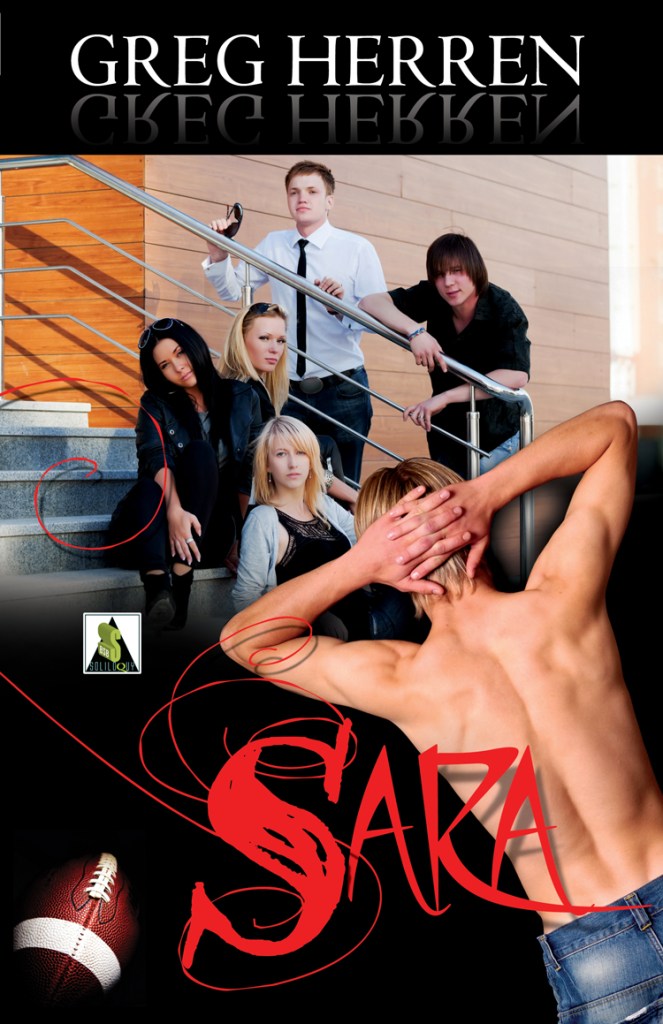
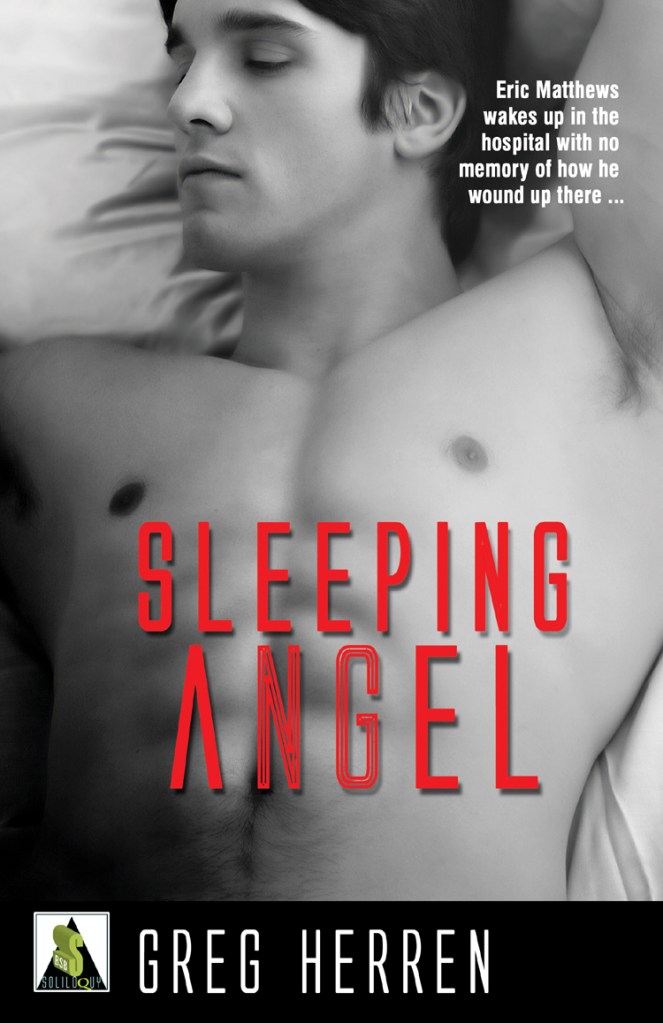
After I finished that, I spent the next five years mostly working on short stories. I started another book, more horror than anything else, but never got further than the third chapter. I finally decided to write a horror novel built from my old manuscript and those short stories from high school. I was about three chapters into it when I discovered two things: there was a big market in y/a horror at the time (Christopher Pike and R. L. Stine were HUGE during this period) and so I bought some of them. When I finished, I thought, “You know, I should turn Sara into a y/a novel” (because I thought somehow that would be easier? Foolish, foolish rookie) and so… I did. I was right in that thinking of it in those terms made it possible for me to finish a draft, but I wasn’t very happy with it so I put it aside and started writing another one, Sorceress, which was also horror but also had some strong Gothic moments in it. When I finished that one, again I wasn’t pleased with it so I started another–Sleeping Angel–which was the one I thought really had potential. I never finished that draft–by this time I’d discovered that gay fiction and nonfiction existed, so I started reading that and trying to write about gay characters instead.

Those manuscripts remained in my drawer for well over a decade, until a friend of mine took a job as a young adult acquisitions editor, and she wanted to work with me. I told her I’d written three (although it was technically two and a half), and gave her a brief synopsis of them. She liked Sorceress the best, so I started revising and editing it and turning it into something publishable. Once it was all done, she’d left that publisher, but started her own small press for y/a books for underrepresented teens, and she wanted to launch the press with Sorceress. I said “okay” and we were off. I eventually realized I needed to let Bold Strokes know, and when I did, I got an email back saying you know we do y/a, too? And so I sold the other two to them, and have never looked back since then.

Are there specific rules for writing YA (things you can’t do)?  Does Bold Strokes add on or impose specific or additional rules?

I don’t pay too much attention to rules, frankly. There’s no graphic sex in my books, but it’s hinted at. I also try to swear less in young adult books than I do in adult fiction, which is probably not as big of a deal as I think it is? The society I grew up in was a lot more puritanical–believe it or not–that the one we live in today. So I always default to that setting, and then have to shake it off. Swearing isn’t as big of a deal as it used to be. No one thinks they’re marrying a virgin anymore, and on and on. And having been attacked for daring to accept an invitation to speak to queer high school students, I tend to tread softly. There have been a couple of times where I’ve had to change language, or how a scene went, because my editor thought it might be problematic; and frankly, I never want to be offensive, so I have no problem with it. I don’t see it as a free speech issue the way so many intentionally offensive writers claim it is. I shouldn’t take offense to someone calling me a faggot? Grow the fuck up. The so-called free speech “crusaders” are always defending hate speech as well as trying to shut up the people who find it objectionable. You do not have a constitutional freedom from consequences or getting a negative response to things you say and do, period. It’s really not hard to understand unless you want to be passive/aggressive and childish and a moron.

How do you remember back to these days, specifically how it felt or feels? (this is coming from your moderator who is much older than you are)

Well, for one thing, I’ve always kept a journal and I still have them all. (I was insufferable when I was younger, seriously.)

My sister has a theory that we forget a lot of the pleasant memories from our childhoods, but remember the traumas in great detail. I believe the truth of that, because school was a nightmare for me from the day we moved to the suburbs until I was done with it. I remember how it felt to read Greg Herren sucks cock on a desk at school. I remember how it felt to be mocked, laughed at, and bullied by assholes. I do remember the good things, though I tend to always focus on the bad.

The first thing I always do is abandon whatever “wisdom” about life I’ve theoretically learned since leaving high school, and put myself into the teenager mindset: they think they are the main characters in everyone they know’s story, and everything is the end of the world or their life is ruined and you are the most horrible parent ever! I’m not entirely sure I’ve escaped thinking that way, to be brutally honest: I am horribly selfish.

How do you come up with your characters?  Your stories? 

I am weird in that I inevitably always start with a title. I hear something or read something and think, that would make a good title. The next question is what story would fit that title? And it kind of goes from there. The title may change, the character names and story might change and evolve, but I can’t write anything that doesn’t have a title. Bizarre, I know. Usually with my young adult stuff it’s an idea I’ve had for a number of years and finally decide to explore whether it’s a novel or a short story, and go from there.

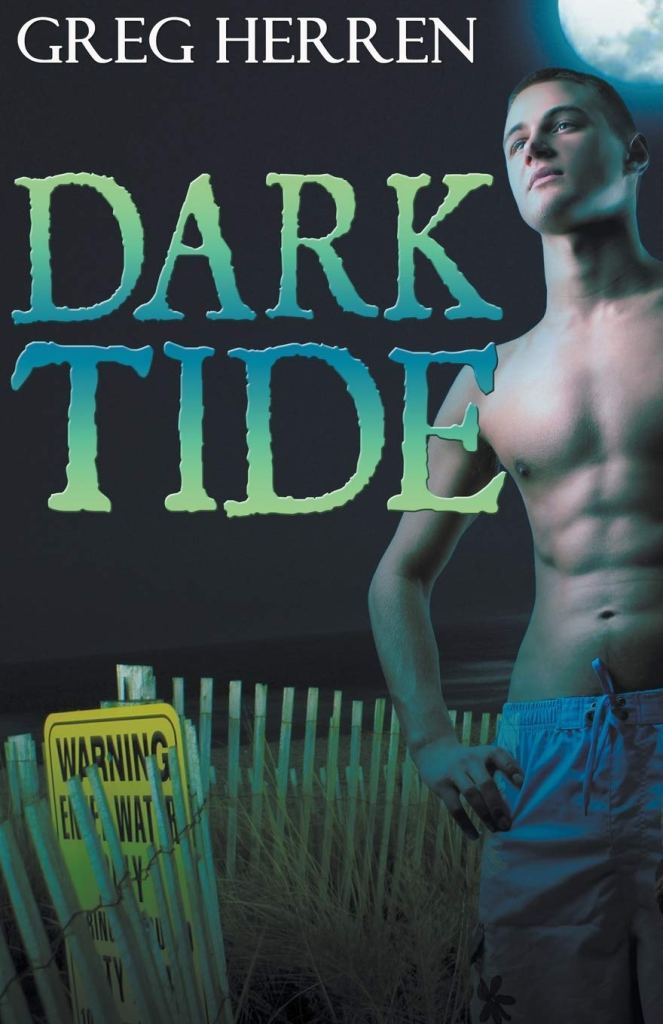
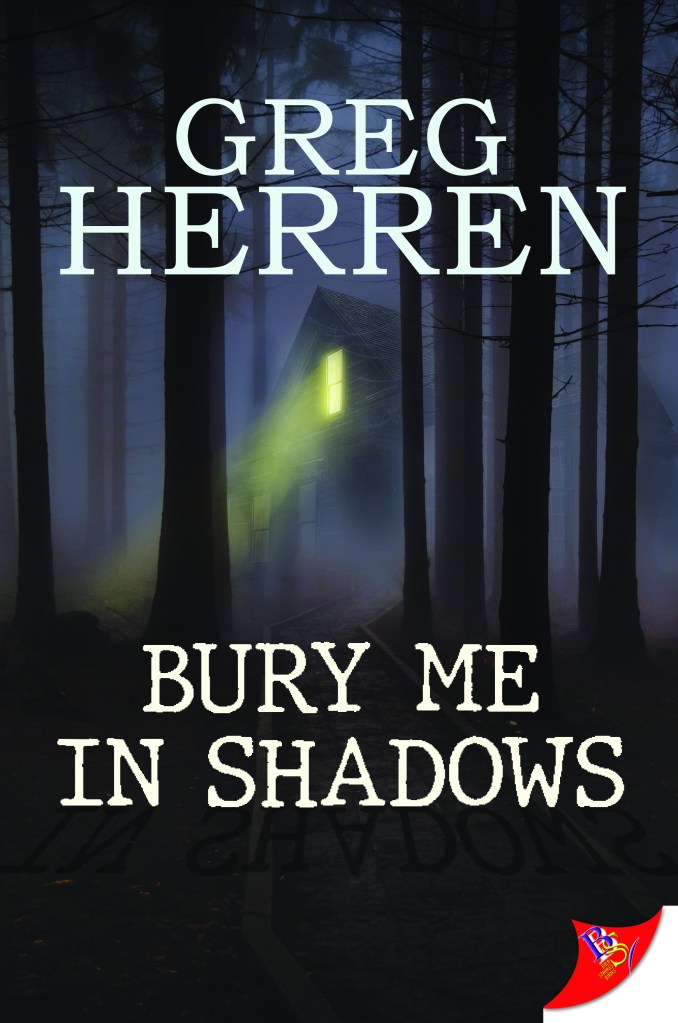
Dark Tide was originally called Mermaid Inn, Bury Me in Shadows was originally Ruins, but the others pretty much stayed the same from beginning to end.

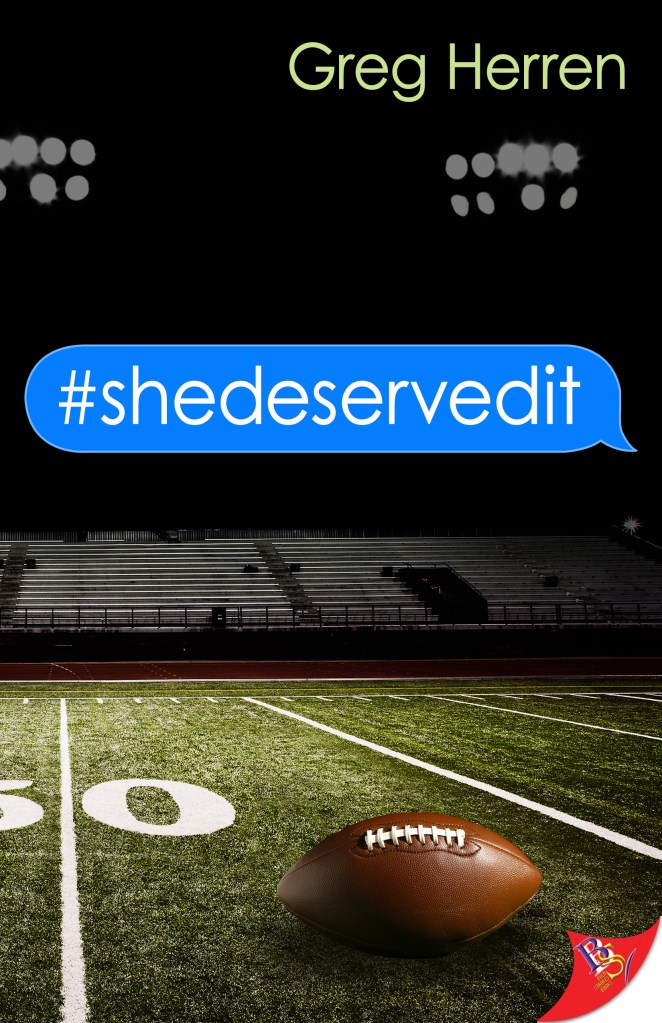
I wrote #shedeservedit because I was angry about the Steubenville/Maryville rape cases, and remembered stories and gossip from when I was in high school and college…and rethinking them through a more evolved brain about women and misogyny… well, it made me angrier. I had already planned on writing a story set in the same town with the same characters and opening with the same murder (I always referred to it as “the Kansas book” for years), but the motive was something I always had trouble grounding in reality. After those cases…it clicked in my head. You need to write this story about small town misogyny, protecting the star jocks from the girls at all cost, and make that the plot. It was easy to write because I was angry. Making it a compelling read was harder, because the subject matter was sickening to me.

I needed to write that book, and I don’t regret doing it, either…but it’s not exactly a feel good story people can escape into, either.

Why do you think YA is so popular?

It’s more accessible, I think. I mentioned reading ability before, and I do think that most readers aren’t into the Great Literary Tomes, hundreds of pages of beautiful writing with no real point or story. People kind of want to escape their cares and worries, and y/a books tend to be really entertaining. We’re competing with phones and tablets and streaming, so we need to write entertaining and engaging books.

Any specific must do-s or must-haves to get your writing each day?

I’m not nearly as anal about that as I used to be, before I returned to work full-time. I am very aware that I have little time to waste when I write, and thus must seize whatever opportunities to write show up. But if pressed, coffee. I can’t write unless I’ve had coffee when I got up.
Ladies Who Lunch

Americans have always been fascinated by rich people.

We all want to be rich, after all; as someone once said, “The United States is a nation of temporarily distressed millionaires.” So, in lieu of actually being rich, we obsess about them. The rich used to be celebrities for no other reason than being rich. It’s always been interesting to me that in our so-called “classless” society (which was part of the point; no class privilege, everyone is the same in the eyes of the law) we obsess about the rich, we want to know everything about them, and we lap up gossip about them like a kitten with a bowl of cream. I am constantly amazed whenever I watch something or read something set in Great Britain, because that whole “royalty and nobility” thing is just so stupid and ludicrous (and indefensible) on its face that I don’t understand why Americans get so into it; the fascination with the not-very-interesting House of Windsor, for one. We fought not just one but two wars to rid ourselves of royalty and nobility…yet we can’t get enough of the British royals, or the so-called American aristocracy. (Generic we there, I could give a rat’s ass about the horse-faced inbred Windsors and their insane wealth, quite frankly.)

I wanted to be rich when I was a kid; I spent a lot of time in my youth fantasizing about being rich and famous and escaping my humdrum, everyday existence and becoming a celebrity of sorts with no idea of how to do so. I was intrigued by the rich and celebrities; I used to read People and Us regularly, always looked at the headlines on the tabloids at the grocery store, and used to always prefer watching movies and television programs about the rich. (Dynasty, anyone?) I loved trashy novels about obscenely wealthy (and inevitably perverted) society types and celebrities–Valley of the Dolls has always been a favorite of mine, along with all the others from that time period–Judith Krantz, Harold Robbins, Jackie Collins, Sidney Sheldon and all the knock-offs. I was a strange child, with all kinds of things going on in my head and so many voices talking to me and my attention definitely had an extraordinary deficit; I always referred to it as the “buzzing.” The only time I could ever truly focus my brain was either reading a book or watching something on television–and even as a child, I often read while I was watching television. (Which is why I read so much, even though that buzzing isn’t there anymore and hasn’t been for decades.)

As I get older and start revisiting my past (its traumas along with its joys) I begin to remember things, little clues and observations that stuck in my head as a lesson and remained there long after the actual inciting incident was long forgotten. I’ve always had a mild loathing for Truman Capote, for example, which really needs to be unpacked. Capote was everywhere when I was a child; there was endless talk shows littering the television schedules those days–Dick Cavett, Merv Griffin, Mike Douglas, John Davidson, and on and on and on–and Capote was always a popular guest on these shows. I wasn’t really sure what he did or who he was, but he was someone famous and he was on television a lot. I saw him in the atrocious film Murder by Death, and I know I knew/had heard that he was a homosexual, a gay; and I also knew I was a gay. It terrified me that I was destined to end up as another Capote–affected high-pitched speech and mannerisms, foppish clothing that just screamed gay at anyone looking; Capote made no bones about who or what he was and refused to hide anything…yet he gained a kind of celebrity and fame and success in that incredibly homophobic time period, and no one had a problem with putting him front and center on television during the day time.

But this isn’t about my own self-loathing as evidenced by my decades of feeling repulsed by Truman Capote; that I will save for when I finish watching Capote v. the Swans.

“Carissimo!” she cried. “You’re just what I’m looking for. A lunch date. The duchess stood me up.”

“Black or white?” I said.

“White,” she said, reversing my direction on the sidewalk.

White is Wallis Windsor, whereas the Black Duchess is what her friends called Perla Apfeldorf, the Brazilian wife of a notoriously racist South African diamond industrialist. As for the lady who knew the distinction, she was indeed a lady–Lady Ina Coolbirth, an American married to a British chemicals tycoon and a lot of woman in every way. Tall, taller than most men, Ina was a big breezy peppy broad, born and raised on a ranch in Montana.

“This is the second time she’s canceled,” Ina Coolbirth continued. “She says she has hives. Or the duke has hives. One or the other. Anyway, I’ve still got a table at Côte Basque. So, shall we? Because I do so need someone to talk to, really. And, thank God, Jonesy, it can be you.”

I do want to be clear that once I started reading Capote, he quickly became a writer whom I admired very much; I don’t think I’ve ever read anything he’s written that didn’t take my breath away with its style and sentence construction and poetry. He truly was a master stylist, and perhaps with a greater output he might have become one of the established masters of American literature, required reading for aspiring writers and students of American literature. In Cold Blood is a masterpiece I go back to again and again; I prefer his novella Breakfast at Tiffany’s to the film without question; and I was blown away by his debut novel, Other Voices Other Rooms, which was one of those books that made me think my childhood, and my being from Alabama, might be worth mining for my work.

I read “La Côte Basque 1965” years ago, and didn’t really remember it very much other than remembering I didn’t care for it very much. I was aware of the scandal that followed its publication and that all of Capote’s carefully cultivated rich society women friends felt betrayed by it and turned on him, which sent him into a decline from which he never recovered, before dying himself. I’ve always seen Capote as an example of wasted talents. Anyway, I read the story but not being familiar with his social set, I didn’t recognize any of the people gossiped about in the story or who the woman he was lunching with represented (Slim Keith, for the record), and so it kind of bored me; it was a short story about someone having lunch and gossiping about people the reader had no way of knowing who they were or anything about. I assumed this was because the story was an excerpt from the novel, and the novel itself would establish who all these women were and their relationships with each other. But I did know it was all thinly veiled gossip about his friends, and they never forgave him for it. (I also didn’t recognize “Ann Hopkins” in the story as Ann Woodward; I hadn’t known until the television series that he was involved in her story. I primarily knew about her from reading The Two Mrs. Grenvilles and articles in Vanity Fair, and I actually thought, when reading that book, that it was based on the Reynolds tobacco heir murder that Robert Wilder based his book Written on the Wind on; it wasn’t until later that I learned about the Woodward incident) so I thought, well, it was an entertaining if confusing read.

It was kind of like listening to two strangers talk in a Starbucks and gossip about people you don’t know; entertaining but nothing serious, not really a story of any kind, and I didn’t at the time see how it would all fit into a novel as a chapter in the first place. What purpose to the overall story did this nasty gossip play? Why was it necessary for Ina to share these stories at this particular lunch (and don’t get me started on White Duchess and Black Duchess)? Were these people she was talking about important to the book as a whole? It was hard for me to tell, and I put it away, thinking at the time probably a good thing he never finished the book.

Watching the show about fallout from the story’s publication, I decided to read the story again.

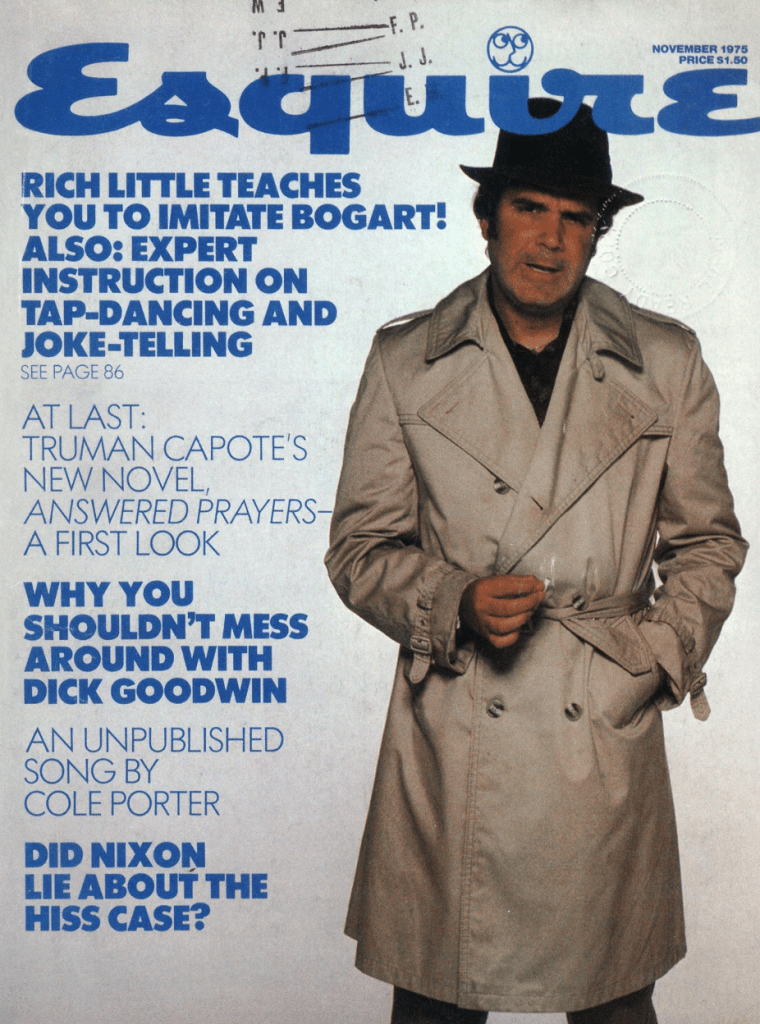
And I still question why Esquire chose to publish it, as well as why Capote thought this chapter was the one to send them. Capote was a genius, of course, and after In Cold Blood was one of the biggest names in American literature (he truly invented the true crime genre); of course they are going to publish whatever he sent them, no matter how bad it was. It wasn’t promoted as a story, after all, it was a novel excerpt.

What I’ve not been able to figure out from any of this is why he thought he could publish this without any fallout from his “swans.” I guess it went to the grave with Capote, who clearly didn’t–and I don’t think ever did–understand why they were so upset with him, which just astonishes me. (Someone once thought I based a character on her–I didn’t–and was very angry with me. I didn’t care, because I neither cared about the person nor her concerns, but I know how careful you have to be as a writer with these sorts of things.)

I wish I could say I liked it better on the reread. I did not. It’s still the same mess it was when I originally read over twenty years ago. It’s just a rich woman being bitchy to her gay friend she feels free to be bitchy about her friends with, and when you have no context (even knowing this time who the actual people were, and yes, he barely disguised them) about the women being discussed or anything about them…it’s just boring, gossip about people you don’t know and you don’t know enough to care about, so it’s just a bitchy little boring lunch. I don’t know what could come before that or after, as an author myself; had I been the fiction editor at Esquire I would have been pissed that was what he sent in, and I would have definitely taken a red pencil to it before I would have published it–and Esquire? Why did Esquire, a men’s lifestyle magazine, publish this when the right place would have been Vogue or Vanity Fair or even The New Yorker. None of it made sense then, none of it makes sense to me now; and if this is the best example we have of Answered Prayers, maybe it’s not such a bad thing that the manuscript–if it ever existed–disappeared.

Sorry, Truman, you were a great writer but this one was a swing-and-a-miss.

A Horse With No Name

Monday morning has rolled around again and no, I didn’t want to get out of the comfortably warm cocoon of blankets yet again today. It was a nice, relaxing weekend. I didn’t go out to see any parades yesterday because I felt exhausted on Saturday and while i felt much better yesterday than I had, I thought it best to stay inside and rest for the day rather than push myself by going to stand on or around the corner for a few hours. This weekend is the big final push (I have to leave work early both Wednesday and Thursday), and I decided it was wisest to take Lundi Gras (Monday) off; Orpheus is that night and there’s no way I’d ever be able to find a place to park anywhere near the house. I do have PT that morning, so I’ll go to that and run some errands before heading back home and parking the car for another two days.

It actually turned out to be the best choice I could have made for the day because a friend called that I hadn’t spoken to in nearly two years (a myriad of reasons, mostly due to health concerns and my own insane rollercoaster life) and had I been out at the corner, i would have missed the call. It was a lovely conversation, and I realized once again how much I’ve missed, not only her, but so many others of my friends. I have always had the misfortune to have the majority of my writer friends not live anywhere near me, so it’s not like I can meet someone for a drink or lunch or anything at any time we so please. This has always been fine with me, but every once in a while it gets a bit lonely, so the few local friends I have are very precious to me. It was absolutely delightful to hear from her, and we were on the phone for nearly an hour, which was marvelous. (I’d been watching the Philip Seymour Hoffman Capote at long last when she called, which was really quite good and Hoffman deserved his Oscar, I think.) So yes, I kind of went down a Truman Capote wormhole yesterday. I am thinking Other Voices Other Rooms needs a reread, and maybe even a dip back into his short stories wouldn’t be a bad thing to do. My former antipathy for Mr. Capote (still processing it) has now turned to fascination; who was he behind that mask, that persona, he developed to hide behind? It’s also been years since I saw the film of In Cold Blood, too; it might be worth another look, too. This newfound obsession with Capote is multi-layered, too; it might take more than one lengthy post once I work my way through the way I’ve always reacted to Capote’s public face. (The self-loathing is coming from inside the house!) But after the call and after the film, I pretty much spent the rest of the night scribbling in my journal while watching an endless stream of Youtube videos, just to see what the algorithm thought I’d be interested in (Constant Reader, I was not interested in most of them, but I wound up watching a series of short histories of Eleanor of Aquitaine, one of my favorite historical women of all time.).

I didn’t write as much as I would have liked this weekend, either, but it’s also Carnival. Very little gets done during Carnival as I am too busy juggling and planning around parades to have much energy left to devote to writing. I did write some really good notes in my journal, though, which was fun; I always forget how much fun it is to freeform scribble in my journal and see where my subconscious mind takes me. It never matters if anything ever comes of it; it’s just playing around with words and ideas and names and form. I’ve been joking with myself that I should write a memoir called I Wouldn’t Normally Do This Kind of Thing, which is a terrific title for something like that (shout out to the Pet Shop Boys, because almost every song title is unabashedly clever and brutally honest and would make for a great title for essays or something), but as I always say, my memories lie to me all the time–which can be a problem when writing a memoir. Maybe personal essays would be a better idea than an actual memoir…and really, has my life been interesting enough for a memoir, anyway?

But I suppose that’s always in the eye of the beholder. I don’t think my life is anything special, or even unusual other than I am out of pace with traditional society with my sexuality and my chosen profession…but then other people will be amazed at some story of my past that I tell (usually after a few drinks) and I guess I never really think of me or anything that happens to me as anything other than normal and I always think everyone else has the same sort of things go on in their lives so it’s nothing out of the ordinary. But I have met a lot of important people and important writers. Larry Kramer used to call me periodically at Lambda Book Report to yell at me, but that was just Larry–he always seemed to be angry about something, but was actually also a really nice man (your mileage might vary, of course, but he also always made me laugh). Barbara Grier also used to call me about once a month to yell and swear at me, but I found her terrifically amusing and I could listen to her all day (and Barbara loved nothing more than a captive audience). There were only a few people in the business, actually, who were terrible to me when I worked there; I always seemed to have the ability to listen to everyone politely and was always pleasant and never argued with anyone….but there were a few I’d rather run over with my car and then back over them again rather than ever deal with them under any circumstance for any reason.

You know who you are, trash.

But I survived the first weekend of Carnival, and I am now thinking I want to watch the other Capote film, the one with Toby Jones–and maybe even revisit Murder by Death, which was another one of those after-church matinee movies Mom used to take my sister and I to. I just need to get through today at the office, and then I need to do my errands and go to PT before settling into my easy chair for the evening. I may go back to Lina Chern’s Play the Fool, which I am really enjoying, or my reread of Edna Ferber’s Saratoga Trunk, or Rival Queens, or even some short stories. I have some of Capote’s, and that might be interesting to reread. My friend who called yesterday afternoon recommended pairing Other Voices Other Rooms with To Kill a Mockingbird, which is a book I have issues with (more on that later at some point), but reading them as parallels to each other; the same childhood from different points of view in the same small Alabama town; it’s been a hot minute since I read the Capote novel but I did love it when I did. I don’t think I still have a copy of it, though.

And on that note, I am heading into the spice mines. It’s a windy, gray wet day in New Orleans, and so I don’t think I’ll have a lot of issues sleeping tonight, either. Have a lovely Monday, Constant Reader, and you never know–I may be back later. Stranger things have indeed happened!

Shakin’

Holiday Monday, and I slept deeply and well again last night. I’d set the alarm, thinking it was probably better to start getting up early again, since it’s back to the office with me tomorrow but Sparky was being super cuddly and sweet in the bed this morning, and it was cold, and so I stayed in bed for another hour or so. I finished reading Tara Laskowski’s The Weekend Retreat, which I greatly enjoyed (more on that later). I made jambalaya, and did some dishes and started a load of laundry. I also reread some of my own unfinished work, trying to decide what to focus on next. I have to say I am regularly pleased with my work now when I go back and reread it; what can I say? I don’t know if that means I am getting rid of the self-deprecation and “not good enough” mentality I’ve struggled with my entire life, but it’s a welcome change to read some of my work and think this is pretty good.

I also worked on the house some more and it’s starting to look like it did before the acquisition of High Energy Kitten and my surgery–cluttered but at least neat. It’s almost there, you know, and maybe putting some finishing touches on it today before I go to my first STRENGTH PT appointment this afternoon. (I’ll be making groceries after that, I might add.) I’ve also decided that my next read with be R. F. Kuang’s Yellowface; I do enjoy a writer-behaving-badly story. I’ve written my own, too–“Quiet Desperation”, which was included in my collection Survivor’s Guilt and Other Stories, as well as a Kindle single–but I don’t think I ever want to write an entire novel about a writer behaving badly. I may write an entire novel with a writer as the main character–I keep circling back to my true crime writer, who’s now appeared in several of the Scotty books, as well as The Orion Mask–but I don’t think I’m quite there yet.

It is interesting to revisit unfinished projects and decide which of them to focus on and finish. I know that my next short story collection will be finished if I finish a novella and throw it in; but I’d kind of wanted to do a novella collection. One of the novellas–the longest one–will be rather easily turned into a novel, which I think is what I may do with it; there are three or four more that I can finish and turn in as a solitary book. “Festival of the Redeemer” is completed in first draft form, and rereading it yesterday made me realize that it’s next draft can be longer, of course, but I don’t think there’s enough story there to turn it into a novel; same with “Fireflies” and “Never Kiss a Stranger,” so maybe those three can be the novella collection (Festival of the Redeemer and Two More Tales–which I am choosing to call it so I can have a Venetian cover, a la du Maurier). “A Holler Full of Kudzu” might be the one I finish to complete the short story collection. There are also a lot of short stories I’d like to rework and/or finish for some calls that I’ve seen, which could always be fun. But the exciting thing here is I am feeling excited about writing again for the first time in I don’t know how long.

It’s also weird to think that the Scotty series is turning twenty-one this year; on May 1st, to be exact. I definitely should write another Scotty this year, and it does look like Hurricane Party Hustle is the one to do–it’ll also give me the opportunity to write about what it’s like to ride out a big storm and live without power, all the while having Katrina flashbacks. I also have the story for that already fleshed out, and yesterday I even figured out how the book opens, and how the mystery comes to Scotty’s attention in the first place, which is more than I usually have when I start, LOL. That one will be followed by the cursed Mardi Gras of 2019, French Quarter Flambeaux, which will be another fun story to write, and then Quarter Quarantine Quadrille, which will cover the shutdown and COVID madness. So, there are at least three more Scotty books for me to write, which will take the series to twelve books, and then I’ll think about it some more. Scotty’s family–parents and grandparents–are getting older, and will soon have to start dying off, which I really don’t want to deal with.

But it’s nice to feel excited about everything again, isn’t it? And normal, after so many years of abnormality?

And on that note I am heading into the spice mines. Have a lovely holiday, everyone, and I’ll probably be back later.

Who Took The Merry Out of Christmas

It’s the Wednesday before Christmas and all through the apartment…the only creature stirring before I got out of bed was one General Touglas McSparkle. He always stays under the bed all night in his fort (Paul calls it his Batcave), but always starts chasing a bottle cap or something right before my alarm goes off, and then will jump into bed and start rubbing against me and purring; when the alarm goes off the first time he curls up next to my head and stays there. Once the alarm goes off for the third time, he jumps down because he knows that’s when I’ll get up, and bee-lines to his food bowl, waiting for me to refill it. He really is smart.

When I got home last night I made some progress on the book, and I also did a load of laundry, emptied the load out of the dishwasher and did another; there’s still a sinkful of dishes, but if I take care of that tonight, I’ll sail into the weekend with a relatively good jump on cleaning things up. I have a follow-up with my surgeon Friday before PT, and I am really hoping the brace, which is becoming more and more cumbersome and inconvenient by the day–I know I have to keep it on, but it’s frustrating because it doesn’t feel like I need it, and its primary purpose is to limit mobility of the arm. Of course, it’s also a constant reminder to be careful; would I lose that mentality once the brace goes and do something to re-injure it or something without the brace? Only time will tell.

It’s cold again this morning ; forty-eight degrees at the moment. I know this is nothing to people up north; but it’s a damp, humid cold, which cuts right through you. (I’m not sure why people are always mocking me for complaining when it gets cold here; I don’t mock people in the summer by mocking them by mentioning how hot it gets here in the summer, either. You acclimate to your climate. And we had probably the most miserable summer of all time this past summer; based on that, I could also point out that the temperature variance here between this past summer and today is between seventy and eighty degrees, which is about the climate difference elsewhere between summer and winter, isn’t it?)

We finished watching the Escaping Twin Flames documentary on Netflix last night, and sorry, Jeff and Shaleih Divine, you are not prophets and you are not God; you are grifters and cult leaders who brainwash your followers. It’s actually a really sad commentary on how lonely some people are; they so desperately want to find their “true love” (“twin flame” in cult-speak) they are willing to go to such great (and awful) lengths to try to find it, and these grifters are just making bank off them. It’s horrible and predatory and not “god-like” at all. And the damage they are doing to queer people is horrifying and off the charts revolting; their definition of divine masculine and feminine (as well as a decided lack of cis-male members) led them to start telling cisgender women that they were spiritually “divine masculine” and needed to start living as transmen–which is what the hateful Right claims that recognizing the gender identity of anyone outside the binary will lead to, proving their disgusting and invalid point that no one truly exists outside that binary: coercive transitioning.

Jeff and Shaleih can just go fuck themselves right off.

And maybe there’s a book in this.

And on that note, it’s time to head into the spice mines. Have a great day, Constant Reader, and I might be back later; one never really knows.

New World Man

I am up earlier than I have been since before the surgery (no, I don’t want a cookie–never been a cookie fan, even as a kid), and feel pretty good this morning. Yesterday was a pretty good day, over all. I didn’t really leave the house at all, but I worked on getting things more under-control around here–the kitchen has been a mess since the ceiling collapse, and the cabinets and drawers need some serious organizing–and also spent most of the day doing other chores around here, while thinking about getting back to work writing. The brace is still awkward to work around, but it feels like I’m getting more used to working with it on–and having a cleared and cleaned off desk surface also helps with that as well. I am going to run some errands this afternoon, but there’s not college football today to distract me or send me to the easy chair for the day, so I have little choice about blowing the day off, methinks, which is not a bad thing. I also did laundry and more dishes yesterday, and I have some other things I need to do here in the kitchen/office today as well. I also spent some time reading the second book in Raquel V. Reyes’ delightful Caribbean kitchen cozy series (Calypso, Cooking and Corpses), which is just as delightful as the first, and then…well, I fell down a Youtube/Twitter wormhole that was eye-opening and shocking before Paul got home from the gym and we watched this week’s Fellow Travelers, which, interestingly enough, kind of tied into the wormhole in some ways; as you may recall, just the other day I was talking about how these stories (Fellow Travelers), while sad and depressing, were necessary to remind people of how awful the past was for queer people not that long ago; we don’t have much of a societal memory for things that happened as recently as twenty years ago. There’s a large gap in our community that was created by the HIV/AIDS pandemic, so the oral traditions within the community of passing along our history was horrifically interrupted and many younger queers–and those that aren’t that young–have no way of connecting to the past, and don’t even know where to start looking.

During the shutdown I spent a lot of time in my easy chair making condom packs for the day job to justify getting paid for being at home–there were other job duties I could do at home, but mostly I made a shit ton of condom packs–and so I spent a lot of time looking through streaming apps on my Apple TV for things to watch while my hands worked. This was how I discovered the endless wormholes of Youtube video essays and documentaries; and of course, algorithms started suggesting other videos and channels of “influencers” similar to the videos I had watched and was finding on my own. Discovering Matt Baume’s delightful channel about queer rep in popular culture was a joy for me; he named sources for his information, was very clear about what was fact, what was unknowable, and what was his opinion–and since most of it was stuff that aired or happened while I was alive, it was a lovely trip down memory lane for me, reminding me of the few things that resonated with me growing up as a lonely queer kid and what shaped my views on what it was like to be a gay man in America. (Also, once I discovered there was such a thing as queer books and queer publishing, spent most of the 1990’s reading mostly queer stuff…and I’ve always been a voracious reader.) Anyway, watching Matt’s videos and subscribing to his channel shifted the algorithms, and I started getting other videos and channels suggested to me….and one of those belonged to a queer video essayist named James Somerton, and one of them–called Evil Queens and having to do with Disney–I don’t remember the actual name of the video, and he has since scrubbed his entire Youtube channel (more on that drama later)–and thought, interesting–a long time ago I read and reviewed a book called Tinker Belles and Evil Queens by Sean Griffin, but you can’t copyright a title and can you talk about queer coding and such in Disney and not use the words “evil queens”? Disney has always fascinated me, since I turned into a Disney queen after The Little Mermaid (I was never a big Disney kid; that waited until my adulthood and coming out, oddly enough), and Griffin’s book was so astonishing and good and insightful that I never forgot it. I watched Somerton’s video, and it all seemed incredibly familiar to me–and I did note he said some things that were wrong; mainly Gay Days/Gay Nights at Disneyworld were never official, Disney-sponsored events…which I know because I lived in Florida and used to go for Gay Day. I also thought it was odd that he left out how the Southern Baptists tried to boycott Disney to stop Gay Days…and were ground completely into the dust by the Mouse. But it didn’t fit the narrative of the video essay–how Disney queer baits us for money then betrays us by not giving us rep in their films1. I also thought it was weird that the book–which so much of the video’s content was dependent on for its facts; the stuff that was wrong I assumed was from Somerton himself–wasn’t credited for anything, or even mentioned as a companion reading piece to the video itself. Periodically, after that, Youtube would suggest other videos to me from him, and I’d watch them, mainly out of curiosity…and began noticing things.

Like how his entire video about queer coding in Hollywood film seemed incredibly familiar–like I’d read it all already in the uncredited The Celluloid Closet by Vito Russo, which had already been made into a documentary in 1996…so much so that I bought an e-book of it to see and yes, it was used almost word for word with no attribution. And some of his other videos…were not only offensive but just bald-faced lies, things he’d made up, or okay, let’s be fair–conclusions he drew were from cherry-picked facts and broad speculations made from those facts; it seemed, in his video on gay body image issues, that he took the old 1990’s term for gym and body culture (the “you have to be a ripped muscle god to have any sexual currency”), which was “body fascism”, and somehow extrapolated from there the bizarre notion that Nazis created body culture and American GI’s brought it back from Europe after the war…and even weirder, somehow we didn’t get it from the Soviets because they were so “bundled up” we couldn’t see their bodies. (Maybe he should have read Michelangelo Signorile’s Life Outside, which explored how body culture morphed into something even bigger after the advent of AIDS because a strong, muscular, defined body was the antithesis of the wasting most people dying from AIDS experienced at the time; fit body= not infected; seriously, dude.) He was also horribly misogynistic at times–he didn’t like lesbians, and he hated straight women, and was also borderline transphobic at times despite trying to champion transpeople? It was all very weird, but I would periodically put on one of his videos that sounded interesting, even as he made claims that didn’t make sense or was simply restating things I’d already read somewhere. I didn’t think much of it, but I was idly curious–the way I often am; periodically I think about influencers and how to write a crime novel around one, and Youtube influencers seemed like the way to go if I were going to do that, and so I always chalked it up to research…and sometimes, the wrong things he said would send me off in search of the actual facts, so it was kind of educational by reminding me of things I’d forgotten about.

Turns out, he plagiarized almost all of his videos, never credited or named sources unless called out for it (he took down the videos about Disney and queer coding and put them back up as “based upon” the books he literally was quoting verbatim); the scandal dropped this week–I only found out yesterday–with two other Youtube influencers making really long videos about the plagiarism and the harmful lies he was spreading, as well as the self-loathing, misogyny, and transphobia. I went down that wormhole yesterday, watching both videos–which were long as the crimes were plentiful–and now his Youtube channel is gone, completely. As I said, I didn’t put a lot of thought into it–but he had a Patreon, and his Youtube channel was monetized, which meant he was profiting from the work of other queer creators that he was plagiarizing and stealing, then playing victim when caught…until he was literally destroyed by these other two Youtubers this week. He was apparently making a shit ton of money–and you know, there’s the plot for an influencer crime novel.

It was very eye-opening.

But it extrapolates further to what I’ve been thinking about since starting to watch Fellow Travelers–dark and sad and depressing as these stories are, they are important because our history is always erased; how are queer kids supposed to feel pride and understand where we’ve come from and what we’ve fought for, if they never hear about it, can’t find it, and are never told? The kids I work with (with an age range from early thirties to early twenties) don’t remember how horrible HIV/AIDS was because they hadn’t been born yet or weren’t old enough to really pay attention before the cocktail and the new meds changed it from a fatal disease to a chronic one (with treatment). There’s SO MUCH bad information out there about sexually transmitted infections, and so little education, that it frightens me on an almost daily basis as I work with my clients.

Obviously, this is what I’ve been wrestling with lately, with myself and my own artistic work (yes, I am starting to think of myself as an artist, which I should have done all along); what responsibility do we have to the younger people who don’t know our history, the history I lived through? It’s part of the reason I started writing “Never Kiss a Stranger”, and set it in 1994; I wanted to show what gay life in New Orleans was like during the time when HIV/AIDS was still a death sentence, and the city was also crumbling and dying itself before the wave of renewal and gentrification that started before Katrina and kicked into high gear; who is going to write that story if I don’t?

And what responsibility do I have to current and future generations of queer people as an artist? Do I have any? Or is my only responsibility as an artist to myself?

Something to think about, at any rate.

And on that somber note, I am heading into the spice mines. Have a marvelous Sunday, Constant Reader, and I’ll probably be back later; I can never stay away for long.

  1. Uh, I guess he never saw the Disney documentary about Howard Ashman, who was partly responsible for the Disney animation renaissance and who died of AIDS before the release of the last film he completed, Beauty and the Beast; to date the only animated film to be Oscar nominated for Best Picture, and won three other Oscars, including two for Ashman? ↩︎

Jambalaya

Louisiana is beautiful.

The state’s nickname is “sportsmen’s paradise,” because all of the macho male outdoor sports–hunting, boating, fishing–are available here in abundance. We’re also called the Pelican State (most prevalent) and several other nicknames, not all of which are complimentary.

Louisiana has always been a conservative state, despite the existence of New Orleans. Originally French then Spanish before becoming American, Louisiana also was a part of the Confederacy and had an economy based on enslavement. We weren’t that far removed from David Duke’s gubernatorial bid (which came all too close to succeeding), and I remember Paul had gone on site visits with his boss at the Arts Council south of the city, and came home saying, completely in disbelief, that “people had yard signs saying ‘this is Duke country’–and me replying, sadly, “in the South they don’t bother to hide the racism–they see it as a positive.” But you cannot really go anywhere in Louisiana without being awed by the natural beauty on display here. I love Madisonville, and the Tchefuncte River area. It’s always a lovely drive to take 90 east when you head north (yes, I am aware I am saying you take an east-west highway to go north; welcome to New Orleans), and head out through the Venetian Isles area and drive along that narrow strip of land separating the lakes, crossing the Rigolets bridge and heading into Slidell.

A while ago, I was following a Twitter conversation about Burt Reynolds movies from the 1970s. Mind you, when I was living in Kansas our movie options were limited. There was a drive-in movie theater on the way from our little town Americus to the county seat of Emporia, and there was a small twin cinema on Commercial Street. The summer before my senior year Smokey and the Bandit opened on a Friday, and the following Friday Star Wars opened in the other theater. Both movies ran for about three months….so I saw them both repeatedly as there was very little else to do. The 1970’s were an interesting time for depictions of rural Southern sheriffs; Jackie Gleason hamming it up and going completely over the top. This was also the same time period that gave us corrupt politician Boss Hogg and the inept sheriff and deputies he controlled. These were always played for laughs, but the thing is–there really wasn’t anything funny about these types of characters in real life. Political and police corruption have always gone hand-in-hand in the Southern states; the police merely existing to enforce and enable the existing power structure. That Twitter conversation, along with reading Ethan Brown’s Murder on the Bayou and the various true crime documentaries about the Jeff Davis 8, put me in mind of writing about that kind of corruption. But I also kept wondering, but is this still true in the South? Do these kind of corrupt power structures still exist in the South? Would this read like a period piece?

And then the Murtaugh scandal broke.

Guess what? It IS still like this in the rural South. Thanks, Murtaughs!

I already had an idea for the next Scotty, and was pulling it all together, using a relatively minor political scandal here locally as the starting point for the story–which involved a conservative politician getting involved with a teenaged boy who worked at the food court at a mall, mostly buying him presents–clothes, underwear, swimsuits–and having the kid send him pictures wearing it. The age of consent in Louisiana is seventeen, and the kid was over seventeen, but while still being an icky thing, it wasn’t illegal–and they never did anything beyond that. It was mostly a harmless flirtation, until the kid, who was gay, realized that the nice man buying him gifts was actually a hardcore far right family values politician, so he went public. I still needed a murder, but I thought it would be simple to come up with one–the politician would have every reason in the world to kill to protect his secret, and he had his parish sheriff’s department to help commit and/or cover up the crime.

I did borrow two of the Murtaugh crimes for the book, but as starting points more than anything else, and came up with my own theories of said crimes for my own story–I wasn’t writing true crime, after all, and I wasn’t interested in proving the guilt of the Murtaughs. What I was interested in was exploring the decline and fall of a politically powerful family that had controlled a parish in Louisiana for well over a hundred years, almost like an absolute monarchy with primogeniture. I had also originally started the story with the kid coming to Scotty and Frank (through Scotty’s old buddy and former workout partner, David, who now teaches at NOCCA) because he gets a text from an unknown number which contains one of the pictures he has sent his older male friend (that he doesn’t know is a family values politician), and is worried about his own future if the information comes out. I wrote an entire draft of this story, but it didn’t work and I didn’t care for it…which was when it clicked into place: use two of the Murtaugh crimes to start with, and built it out from there. I decided that the kid at the mall wasn’t the original target of the politician, and that the original target was killed in a hit-and-run accident the year before; I also used the boat crash, turning it from a boat hitting a bridge to a pick-up truck hitting a bridge and pitching the passengers in the back into the bayou.

I also liked the teenager/older man dynamic, because it had played out with Taylor in the previous book–and Scotty had his own past with an older man when he was a teenager, which I was finally able to circle back around to.

I also invented the parish–surprisingly enough, there is no St. Jeanne d’Arc Parish in Louisiana–but it’s based loosely on what are known as the bayou and river parishes (Terrebone, Lafourche, St. Charles, St. John the Baptist). I already had a fictional parish on that side of the river (Redemption), but I decided Redemption wouldn’t work for this book, so I made it a neighboring parish.

Hold On To Now

Monday and back to the office with me today. Weekends are simply not long enough, ever, and should always be at least three days, methinks. Yesterday I witnessed the dreadful Saints performance, and it was not a good weekend for Louisiana football fans; the only glimmer of light locally was Tulane’s victory. I finished reading Shawn’s book, which was marvelous, and then picked out my first Halloween Horror read: Riley Sager’s Final Girls, and it’s long past time I’ve read this book. It’s rather embarrassing that I’ve not yet gotten to it. I also downloaded the audiobook of The Only Good Indians by Stephen Graham Jones for this weekend’s drive to the Redneck Riviera, and read another Alfred Hitchcock Presents short story, from Stories for Late at Night, “The Ash Tree” by M. R. James, which was delightfully creepy and reminded me of Daphne du Maurier’s “The Apple Tree”–and that in turn made me think about creepy trees as a trope in horror, and thought perhaps I should give the trope a whirl at some point. We watched the Scouts Honor: The Secret Files of the Boy Scouts documentary–which was just as creepy and awful and horrific as I thought it would be, as well as yet another pointed reminder of how straight people have failed to protect children since, oh like forever, and then cover it up as much as possible but then have the nerve to accuse queer people of pedophilia and grooming?

Sure, Jan.

We also watched the Jennifer Garner Apple Plus series The Last Thing He Said, which wasn’t great but wasn’t terrible, either; it just kind of evolved and wasn’t very thriller-ish or suspenseful. I also predicted one of the bigger plot twists in the first episode long before it played out in the show, but it was well done and an interesting story; but it wasn’t very thrilling or suspenseful; it never really seemed like there was any danger or stakes. It ws talked about a lot, but never part of the show’s reality? It was interesting enough to hold our interest–although I think I may have approached telling the story in a different manner than they did. It’s an interesting thought, at any rate.

It’s lovely having a kitten in the house, even if it means being more alert and having to get up more regularly because there was a crashing sound from somewhere else inside the apartment–usually followed by a galloping kitten moving at high speed away from the noise and mayhem he caused. He woke me up this morning by knocking my glasses off my nightstand table and then playfully batting them around on the floor, and once I took those away from him he went for the broom. He’s incredibly sweet, though, and I love that he’s so fearless and feels comfortable and at home enough to play. He slept on me for most of the Saints debacle yesterday, through the Boy Scout movie, and then moved back and forth between me and Paul during the Jennifer Garner show.

I also started writing the opening of a short story or a novel or something at any rate while watching the Boy Scouts documentary–part of it and the scandal was in New Orleans–and had an idea for the opening scene for something so I started writing it down; mainly about a college student away from home for the first time who’s obsessed with true crime and wants to be a true crime writer but isn’t sure how to get started chasing her dream other than majoring in Journalism at Liberty State in Liberty Center, Kansas–the town from #shedeservedit, why not reuse it? I don’t know why I started writing this when there are so many other things I should be working on. But that’s also life, you know, when you’re a writer–at least for me, there are always so many other ideas and thoughts and stories banging around in my head that it’s sometimes hard to focus on what I need to get done.

Heavy heaving sigh.

I never did make that to-do list for the week, so perhaps that should be the first thing on the list (I often do this so I can cross something off the list immediately; it’s satisfying and always seems to keep off working on getting the list completed). I also think that once I finish reading the Riley Sager I am going to reread a classic Stephen King that I’ve not revisited in a long time, The Dead Zone, which used to be one of my favorites and is still one that I think about a lot–especially during the rise of the former president, who eerily reminded me of the character of Greg Stillson, written thirty or forty years or so before the rise of the reality host/failed real estate mogul. (I’d considered rereading it in the wake of the 2016 election, but didn’t have the strength; I think now would be a good time.) I liked the opening of the Sager; which was encouraging. I hope to be able to get several books read this month…I think my reading is going to start picking up again, hallelujah. I think having a cat sleeping my lap while I read was what I was missing, and why it was hard for me to read since we lost Scooter. (I promise not to turn this into a Tug stan blog, seriously.) Today is going to be his first day left at home on his own for a while; we’ll see how he handles that.

And on that note, I am heading into the spice mines. Have a lovely Monday, Constant Reader; I’m sure I’ll be around again later on.

10 Out of 10

Paul went out Sunday evening to have dinner with a friend Sunday night, leaving me home to my own devices, and after he departed I pulled up Youtube and did a search I’ve not done in a very long time: for Friday the 13th, the television series. Imagine my delight when I found a playlist of almost every episode from it’s three year run in the late 1980’s in syndication! (It had been briefly up on Amazon Prime a few years ago, so I tagged it for Watch Later…so of course it was “unavailable in your area” when I went back to watch it.) I watched the pilot episode, “The Inheritance,” Sunday night. The video quality wasn’t great; it looked like someone had recorded it with a VCR off the broadcast and then digitized it for upload years later, and of course, the entire show had been done on a shoestring budget for syndication in the first place, so it didn’t hold up as well as I would have liked, but the show was terrific at the time. The premise of the show is that Lewis Vendredi had made a deal with the devil: immortality in exchange for selling cursed objects out of his antique shop. Lewis goes back on the deal and so the devil summons him to hell, and his niece Micky and nephew Ryan inherit the shop. Not knowing things are cursed, they have a big sale to clean out most of the inventory before Jack Marshack shows up, fills them in on the curse, and now they have to get all the cursed objects back before people start dying.

Great concept, isn’t it? In the first episode the object is a doll that can come to life and speak to its owner, and will kill people that harm the child. The little girl’s mother had died and her father has married a horrible second wife (the proverbial evil stepmother), and of course the doll ends up dispatching the evil stepmother before Ryan and Micky can get it back from her. The next three seasons explore the attempts to get the objects back. I know of two enormously successful writers who also loved the show, so there are some of us fans still out there–and this is a show I would love to reboot and modernize; same concept, but with different stories. I also have a book about the show somewhere I always meant to read; perhaps I should dig it out and read it for my Halloween Horror Month celebration–and I should watch the show whenever I am home alone again if I am too tired to read or write anything. Now that sounds like a good plan.

Everything is proceeding apace for my arm surgery. It is scheduled now for the week of Thanksgiving; my MRI is scheduled; and I am going through all of the pre-surgery hoops that need to be cleared. I am getting fitted for the new dentures this Friday, and I have my new glasses and my hearing aids. Not bad for someone who hates dealing with this sort of thing, wouldn’t you say?

We had a heavy rain last night–apparently in the early afternoon through the early evening–so of course, Cox Internet (piece of shit that it is) was spotty for the rest of the evening. Shocking, I know. Cox? Failing to live up to their end of the pay-for-service bargain? Who would have ever thought such a thing possible? It really galls me how bad their service had gotten over the last year. They were completely reliable for years. I never had a single complaint about Cox; when I returned to the apartment after Hurricane Katrina the cable was still working. Now? After a strong storm, it’s garbage. Garbage.

I went back to work on the sequel to Death Drop yesterday, but didn’t get much done on it, alas. Perhaps the jolt of diving back into writing so hard on Sunday strained the muscles, depleting the creative reserves or something because they were out of shape from not being used in so long. So, the evening wasn’t productive–primarily because of the spotty in-and-out internet frustration. I mostly watched another episode of Friday the 13th-the Series (“Hellowe’en”, if you want to know specifics) which kept freezing as the Internet went in and out, and then started watching a documentary I thought I’d seen before, Keep Sweet, that documentary about fundamentalist Mormons (it really is staggering how misogynist even the more modern versions of that religion are); I had seen it before, but when I pulled up Netflix…the Internet was spotty and Netflix recommended it to me like I hadn’t seen it before.

But I was sleepy-tired, and went to bed just around nine as i was nodding off again. I slept well last night–feel rested and good this morning–but am finding it more than a little hard to believe that September is about to be over and it will be October this weekend. So, I need to get Shawn’s book finished before this weekend, and I think I will put off my Halloween Horror Month reading until after finishing Lou Berney’s new one, which actually looks shortish, and Lou’s books always read fast. I should have read last night when the Internet started getting spotty, but my brain was already tired by then. I swung by the post office to get the mail yesterday–my shoes and zipper LSU hoody arrived, as well as a copy of The Adventures of Ellery Queen. I don’t think I’ve read any of the Queen short stories, but have read most of the novels, but can now correct that oversight. I think maybe if it isn’t raining when I get home from work tonight I may take a walk around the neighborhood; the exercise certainly can’t hurt me none, and I want to start looking for Halloween decorations. I also need to swing uptown and check out the skeleton house’s decorations this year. Halloween is such a marvelous season in New Orleans, and I love how we were ll talking about how much cooler it’s been–high eighties–after the brutality of this summer.

Ugh, so stupid, I should have started rereading Jackson Square Jazz last night. Lesson learned; before I leave the house this morning I’m putting a copy in my easy chair so I’ll remember tonight.

Another one of those tiresome women-penned essays about “gay” romance surfaced yesterday, but I’m not going to talk about that now; but it was the usual bullshit about straight women inventing gay romance and how gay men can’t/don’t write it–in general (per the essay), straight women don’t like gay fiction written by gay men because it usually will tackle social issues and/or how difficult it is to be gay in modern America but straight women don’t want to read about that. The essay itself mentions this…but the writer doesn’t see it as a problem? It’s more of the same bullshit it always is; gay men can’t write romance the way the straight ladies like it because it’s too real when they write it (this despite the fact that they also don’t want realistic gay sex scenes, either). There will definitely be more on this later.

And on that note, I am staggering back to the spice mines. Y’all have a great day, okay?

Hell is for Children

Years ago, there were things you’d never write about in books for teens and pre-teens. Now, though, many more topics are fair game. BUT are there some things you’d never write about? Because of your own feelings, or because you don’t think your audience is ready for it?

On the panel I said I’d never write about cannibalism, but of course ever since then I can’t stop thinking about cannibalism–and that’s entirely on me. I can’t even imagine writing about that.

I’m not going to say there’s anything I won’t write about because I don’t want to limit myself. If I can think of some way to write about something that isn’t pandering or exploitative or offensive, I will. I was recently reading some of my short stories because I am pulling together another collection and one of the stories–I was like, oh yeah, you can’t publish this without a major revision.

I don’t think I would ever write from the perspective of a person of color or a trans-identified individual because while I know I have a very vivid imagination and am capable of empathy, I am also a sixty-two year white cisgender male. I think I could probably do it, with help from a sensitivity reader and my editor, sure; but we need more trans writers and writers of color, not another old white man writing from their perspective. I will include those characters in my work, but not as point of view characters, because we need to make room for those with the lived experience to write those stories. I may not live long enough to see it, but hopefully in about thirty years we’ll have reached the point where exclusion of non-white non-straight non-cisgender writers will no longer be an issue, and what a wonderful world tht will be.

No offense, but none of you is in your target demographic any longer. What challenges does that present and how do you overcome them? How do you ensure that the language your characters speak is reflective of how teens and pre-teens speak today?

How very dare you! I am still a sprightly young man of…um, sixty-two. Point taken. I try to avoid slang and current language because it becomes dated very quickly; akin to how, when I was a child, I saw books and movies and television shows that tried to appeal to the youth market by trying to use current slang and it never turned out well. I mean, once The Brady Bunch kids are saying “groovy” excitedly every other sentence…it kind of killed the word and I never heard it in real life ever again. The time between when a book is written and when it’s released is long enough for current kids’ language to change. My sister’s grandkids are always saying things I don’t understand…but the next year they are speaking a different language, so I don’t try. It’s hard enough keeping up with technology, which also gets dated very rapidly.

What percentage of your readers do you think are adults? Do you consider these crossover readers when writing?

I honestly don’t know, but I wouldn’t be surprised if mine were primarily adults. I don’t set out to write books for kids, really; I write novels where the characters are teenagers. They get marketed as young adult books, which is something I have no control over. I’d like to think both adults and younger readers can enjoy my books that are so classified. If I think about the audience I am writing for when I am writing, it makes the writing more stressful and harder. I trust my editor to make sure I don’t write anything offensive or way off-base or too adult for a young adult audience–which is where my books would be shelved in the library. No one’s complained about mine yet.

Greg, your book tackles multiple contemporary societal problems. How do you balance writing about such tough topics with ensuring that your work is compelling and hits the right mystery/suspense notes?

The objective, for me, when writing about societal problems and issues is to put a human face on them, by making it personal. Societal problems are easily dismissed or ignored when they are simply abstract principles. If my characters are fully rounded, are relatable and seem real to the reader, then the reader will see, through the characters, what it is like to experience and go through these issues; and to develop a sense of empathy, so we aren’t so quick to judge and blame and not try to understand. #shedeservedit was very important to me, because with the Steubenville/St. Marysville rape cases, it made me look back over the course of my own life and remember situations I witnessed or heard about in a completely different light. For example, one of the cheerleaders at a nearby town had an experience similar to what the girls in Steubenville and St. Marysville went through…but in the 1970s, the blame solely went on the girl. When I heard the story she was a willing participant–the story was told to me in hushed whispers by another girl–and all the elements of the modern stories were there: pretty and popular cheerleader; a party with alcohol and football players; the town football team was successful and beloved in the town; and a bitter ex-boyfriend. As the story was told to me, she got drunk and “pulled a train” (a disgusting phrase, really) with five of the football players, including her ex. I was shocked at the time– to think she’d done this willingly, at a party where it was bound to get around (as it obviously did). But now, looking back–how willing was she, really? But that was how things were back then. I’d like to think things are changing, that we are valuing young girls and women as human beings more now…but are we?

Technology changes very rapidly, and teens—and younger children—are often at the forefront of these changes. How do you handle that in your writing?

Like slang, I try to use as little of it as possible. I do realize everyone is addicted to their phones now, and spend most of their lives texting and facetiming and everything else, but while I will use some basic technology–texting, emails, DM’s–I try not to get into the entire app/social media weeds too much because it may change before the book is published and I don’t want to publish a book that’s already dated. I think that if the reader really cares about your characters and the story…they won’t care so much about the slang and tech.

How has your writing evolved since you first got published? If a reader is new to your work, which book would you recommend starting with?

I’d like to think I am a better writer than I was back then. I know I’m a different writer than I was when I started; more life experience, with the concomitant increased empathy, understanding, and sympathy that comes with it. I try to push myself with every new work; it’s the challenge of doing something new and different I really enjoy.

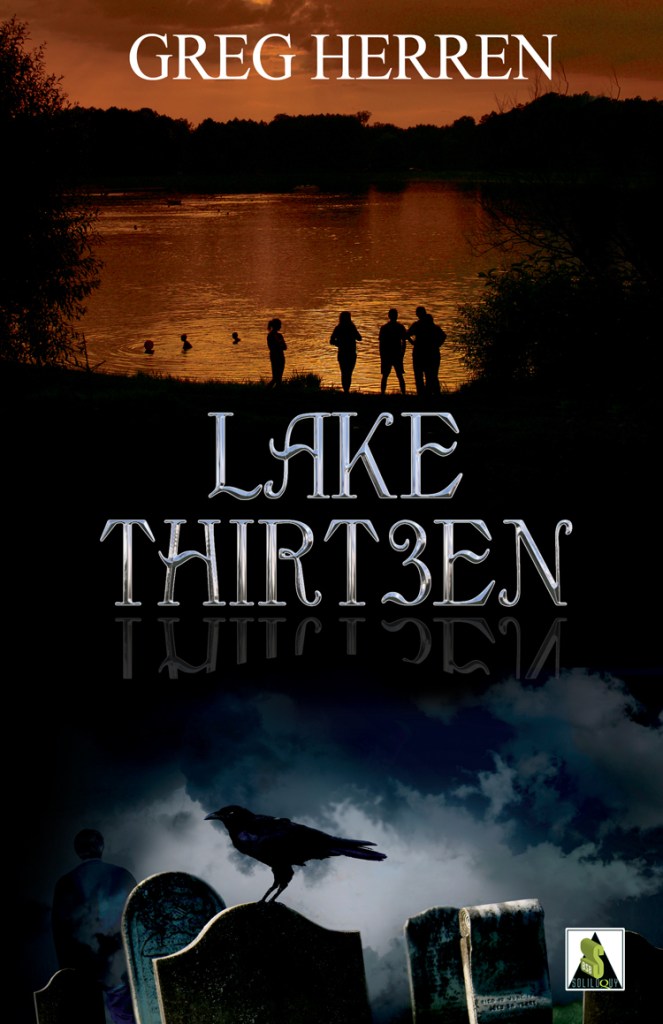
If we’re talking my y/a, I’d started with the first, Sleeping Angel, and go from there. If we’re talking my career in general, I’d say Bourbon Street Blues or Murder in the Rue Dauphine. It’s always good to start at the beginning. If the length of both series is daunting, try either A Streetcar Named Murder or Death Drop (drops October 31!) and then move into the stand alones.

There are a small number of popular writers who spark controversy in their “real” lives. How do you reconcile a great writer with a bad person? Do you read that writer’s work?

Ah, the old “artist vs their work” question. There are writers with enormous talent whose books I’ve loved that social media has exposed as incredibly horrific people with “values” (I have a hard time using that word in reference to such abhorrent beliefs) and I have stopped reading them. I will never have time to read all the books I want to read, and if I’m able to prune my stack by removing racists and homophobes and misogynists and transphobes? Thank you for making my choices easier. I’ve always believed one should be widely read–I used to read nonfiction books about politics and social issues by conservatives because I thought it was important to listen to and evaluate their positions. After we were lied to as a government and a nation to drive popular support for a war we didn’t need to be fighting in order to drive more profits for military suppliers and oil corporations, I no longer needed those perspectives. I don’t need to read excuses and rationalizations for bigotry and prejudice and other indefensible positions for any human being to hold.

The vast majority of my one-star reviews on-line are from conservatives deeply offended by the “politics” of my books. Yes, because a book about gay men by a gay male author is where you should go to get your bigoted world-view validated. If you want that, read Andrew Sullivan. His nonfiction diatribes about social and political issues is some of the best fantasy being published currently.

Who are some of your biggest writing influences?

God, there are so many. I think my y/a is very strongly influenced by Lois Duncan, Christopher Pike, R. L. Stine, Caroline Cooney, and a long forgotten y/a crime writer named Jay Bennett. He won two Edgars for Juvenile, and was nominated a third time. His work is extraordinary; I’ve not read many other writers with that same extremely tight, terse, and taut style. Jay’s books put teenagers in terrible situations where they had to decide what is right and wrong and what to do. They read very quickly, too. I describe him as the y/a James Cain.

As for adults, everyone I read is an influence; even the books or writing styles I don’t care for, because they make me think how would I have done that differently? But definitely John D. Macdonald, James M. Cain, Charlotte Armstrong, Daphne du Maurier, Phyllis A. Whitney, and the old Alfred Hitchcock Presents anthologies, which I am revisiting. The old Three Investigators and Encyclopedia Brown series for kids, too.

Latest trends in Middle Grade and YA fiction?

Diversity, which is fantastic, and hot social issues!

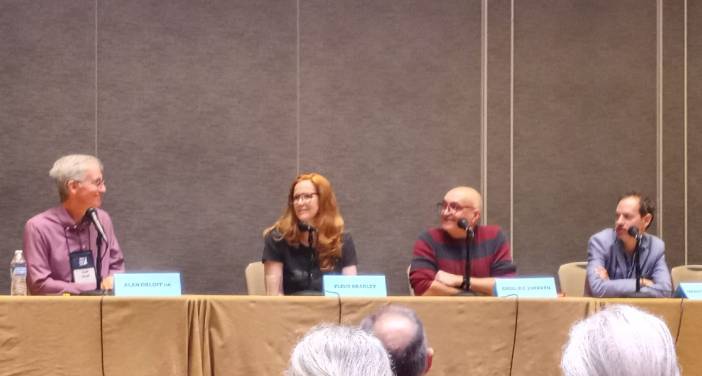
The Anthony nominees panel for Best Children’s/ Young Adult panel at Bouchercon, with moderator Alan Orloff, Fleur Bradley, your humble author, and Lee Matthew Goldberg.