I didn’t sleep well last night, for the first time since getting the new night meds, and as I sit here blearily this morning drinking my coffee it occurs to me that anticipation of this day probably had a lot to do with it.
Yesterday was a nice day. I slept super-well and even a bit late, came downstairs, posted three blog entries throughout the day, and managed to get a lot done. I got some laundry done, cleaned out the sink and ran a load in the dishwasher, straightened up around my desk some, did some filing and organizing, worked on cleaning up computer files, and so came downstairs to a relatively clean kitchen. Huzzah! I also started making lists of things I need to write this year as well as the things I need to write this year. I am also trying to sort my short stories predicated on submission calls I’d like to send work to and establish some kind of timeline (just the remotest suggestion of one, knowing mood and energy levels will affect that and I won’t make all of them) for getting them done and keeping myself on track. I also want to finish this y/a novel that’s been languishing in the files for quite some time, and I even started thinking about Scotty X, Hurricane Party Hustle1 , which was kind of nice, too.
In other words, yesterday was one of the best days I’ve had since the surgery, and today will probably not be one of my better ones. I don’t feel grief-stricken or anything, but it’s still difficult. I’m glad I am meeting Dad in Alabama this weekend2. I feel good now that the caffeine is percolating through my veins and my body is responding to it. I don’t feel fatigued, but then again it’s also still early in the morning and I haven’t yet had the inevitable caffeine crash that will come this afternoon. I do have to make groceries again today (it really never ends), but I think after that I can just go straight home, which is great. Any other errands can wait until after PT on Friday, before I head up north to Alabama. I know I’ll be sad once I am around Dad, and it’ll be hard saying goodbye on Sunday and heading back south, but that is a lot easier than having to live in her house.
And really, I had my mother for sixty-one years. Thank God they started young, right?
We also watched The Last Voyage of the Demeter yesterday afternoon, and it was very entertaining, although it’s very hard to maintain suspense once you know it’s based on the captain’s log entries from Dracula, and the movie opens with the ship wrecked on the shore with no survivors. SPOILER. right? But it was a clever idea–I’m always a fan of expanding the mythology from books that weren’t addressed fully in the book, especially for movies and television (like Castle Rock and Chapelthwaite built out from the Stephen King universe), because I think it’s cool, it doesn’t take away from my enjoyment of the originals, and I’ve done some homage work myself (Timothy).
And on that note, I am heading into the spice mines. Have a lovely day!
I’m not sure of this wisdom of this title, honestly. It was supposed to be the fourth Scotty, and I had sent the proposal to my editor the week before Katrina. Certainly, there’s a lot of superstition involved in that kind of thinking, but at the same time I feel kind of squeamish and may come up with something else. ↩︎
I was thinking about my next Alabama book, too. ↩︎
Oddly enough, the second Chanse was the fourth novel I published, and therein lies a tale.
Funny how with these earlier books there’s always a story, isn’t it?
So, I sold Murder in the Rue Dauphine to Alyson in September of 1999–but the pub date wasn’t until February 2002. I saw no point in writing a sequel to the book immediately; primarily because there was a nearly two and a half year wait between signing the contract and when they were able to schedule me in. So, I figured I had about a year and a half before I needed to get it finished (everyone told me it would be released a year after the first, and in all honesty, what was the point of writing two or three books while waiting for the first to come out so the others could be scheduled?), and so, with time to spare and a lengthy period of time to “waste”, I decided to start thinking about the “what ifs”–what if the book sells super-well and is popular? What if this isn’t just a one-off standalone and could be turned into a series? The more I thought about it, the more I liked the idea and I liked letting my mind roam.
So, what would I do if the series took off and I needed to write more?
Being creative and full of energy in my late thirties, and thrilled to death that now I wouldn’t die without having published a novel, I reread the manuscript and my analysis of who Chanse was and why he was who he was, and I started mapping out a personal journey for him, that lasted several books. He was a cynical loner, with a couple of friends, and he was still really not adjusted to being gay when the first book opens. He was estranged from his immediate family of younger sister and brother and his parents; he never returned to Cottonwood Wells after leaving for LSU. He’s ashamed of his family but he also knows they will never accept his sexuality, either, so it’s very easy for him to cut them off almost entirely. So, his journey was going to be like that of the main characters of the show Moonlighting; each case would teach himself something about life and himself, and he would grow from the lesson learned in each book. Each book going forward would have a life lesson for him (Rue Dauphine did as well; the lesson was ‘you can’t just trust someone automatically because they’re queer.’); and the one he’d learn in the second book would be about love and trust (the third would be about sacrifice, the fourth would deal with his family, the fifth would have him fall in love with someone else, the sixth would deal with him dealing with losing his best friend to her husband and realizing he does need other people, and the seventh, the swan song for the story, would find him ready to finally commit to someone and live with them, so the series would be seven books long).
Shortly after I sold the first book, I again learned that lesson myself–the case in the first book was inspired by a gay con artist who’d gotten involved with a non-profit here in the city and then blew out of town overnight, having stolen/embezzled a shit ton of money and leaving a pile of debts behind. I had written to a local color magazine for the gay community (I can’t remember the name!) about writing for them. I wrote something for them, and they hired me to be editor of the magazine, as the business was expanding and it would free up the founder to focus on the new directions while I ran the magazine. It was fun, I got to work with a lot of fun new friends, and…then it all blew up in our faces. It was very similar to the earlier situation–a gay con artist blows into town, makes a lot of promises, runs up a lot of debt and then it just blew up completely. Turns out the guy was a con artist with a record of credit card fraud, and he was on the FBI watchlist so yes, I did get interviewed several times by the local office of the FBI.
The second book, which had the working title Murder in the Rue Royal, was based on that story, but I had already been playing around with a stalker storyline, and then I realized how I could cross the two stories into one seamlessly and write the book. I managed to get another first draft finished when a two-book deal to write the Scotty series for Kensington and Alyson dropped the option for the second book, saying “two mystery series with a gay main character in the same city by the same author are too similar to each other”–which I took as a challenge to make Bourbon Street Blues and Scotty as different as I possibly could to prove them wrong. So, the manuscript went into a drawer and I started happily working on Scotty instead…and again, it was a stand-alone that morphed into a series.
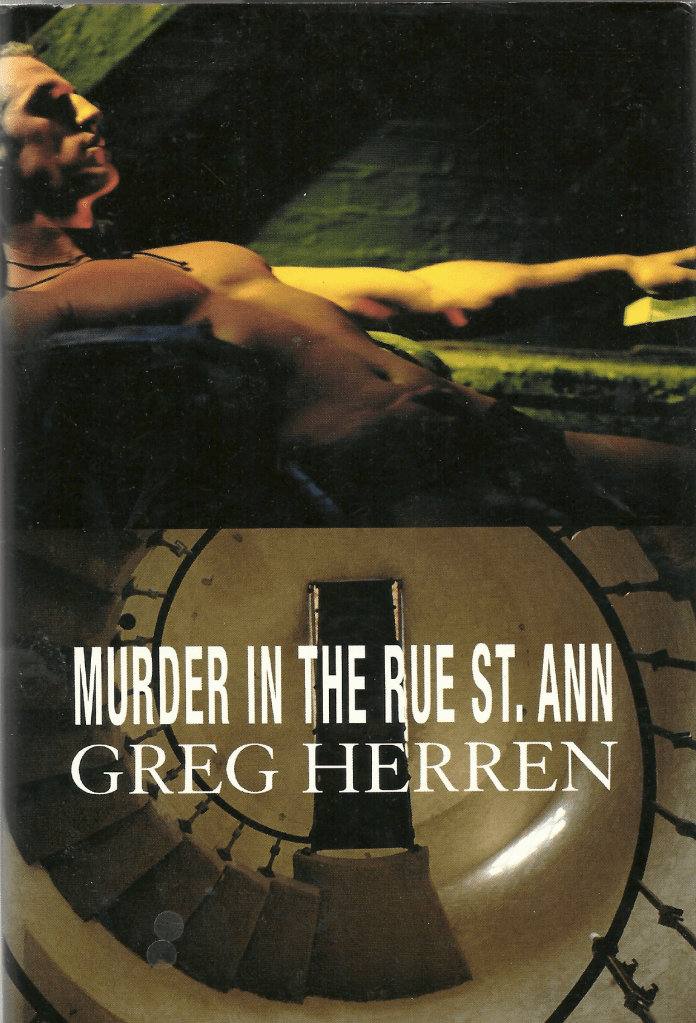
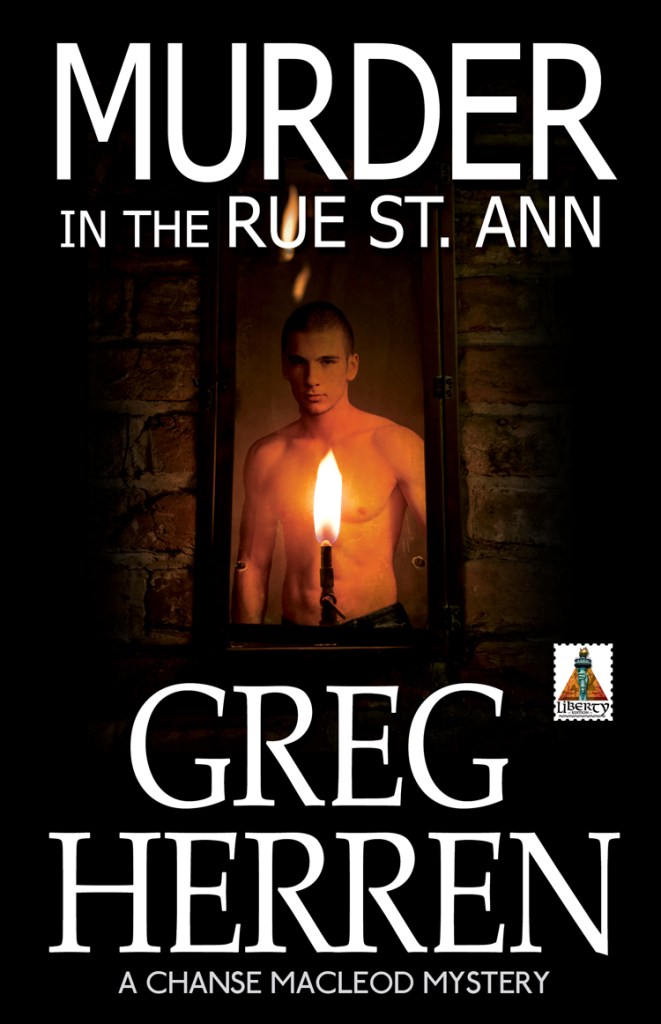
This was the Insightoutbooks edition cover of Murder in the Rue St. AnnThis is the new cover the book got when Bild Strokes Books republished the book as an ebook.
I took a streetcar named St. Charles down to Canal, crossed the street and walked down to Royal.
It was eleven o’clock in the morning on one of those splendidly sunny September days that makes you glad to be alive. Taking the streetcar had been a good idea. The long heat of summer had broken, and the air was crisp and in the mid-seventies. The sky was that blue unique to New Orleans, with wispy white clouds scattered across its expanse. There was just a hint of cool moisture in the air. There were a lot of people milling around the sidewalks on Canal— a good sign for the tourist season. Canal used to be the main shopping drag of the city, with huge department stores like Maison Blanche and D. H. Holmes. Those were long gone. They had either gone out of business or fled to the suburbs— now it was mostly hotels, fast food, and Foot Lockers.
There were hopes that putting the Canal streetcar line back in place would stimulate a recovery for the street. So far, all the construction work had simply made the Quarter difficult to get to from uptown. Add to that the chore of trying to find a place to park that would get me a ticket in two hours or cost ten dollars, and I was kind of glad I was having car trouble—the streetcar down and a cab home was very simple.
Not that riding the streetcar didn’t bring its own set of aggravations. If the cars ran on any fixed schedule, I’d never been able to figure it out. You could wait for one for half an hour and then three in a row, all packed to the gills, would show up. The streetcar ostensibly operated as public transportation, but was also a de rigeur tourist attraction. There was no way of telling when you’d be able to catch one with a place to sit. But when you did, it was nice to find a window seat on a sunny day and enjoy the city clacking by.
So, when Alyson chose to drop the Chanse series after I signed with Kensington, Murder in the Rue Royal went back into a drawer, which was fine–it wasn’t a good book–and I moved on with my life. The advance for signing with Kensington paid for our move back to New Orleans from Washington, and moving back here was absolutely worth ending the Chanse series for, seriously. I still didn’t have an agent, but I’d been signed to book contracts by two publishers already, and I figured it might be easier now. We accomplished the move, get our new apartment set up on Sophie B. Wright Place, and started putting our lives back together. I don’t remember the timeline of how it came to be, but I was still working with Alyson on my first and second erotic anthologies (Full Body Contact and FRATSEX), so I was aware when my editor left and a new person, that I knew slightly, moved from assistant editor to senior editor. We were talking on the phone one day about Full Body Contact and she casually mentioned, “I don’t see your second Chanse book here on the schedule, what’s going on?” and I told her the story, “Oh for fuck’s sake, when can you get it done by?” and that became the second contract for Chanse.
So, after finished Jackson Square Jazz and turning it in, I broke out Murder in the Rue Royal (the title had already been changed on the contract to Murder in the Rue St. Ann; my new editor didn’t like the alliteration) from the drawer, blew the dust off it, and reread the manuscript. I looked at my timeline for the series, and saw that this was the one where he was supposed to fuck up his relationship, but I didn’t see it in the manuscript. I reread the first book, thought long and hard about Chanse and who he was at this point in his life and after several long days of musing it hit me, between the eyes: jealousy. Jealousy would be what fucks up his relationship, and it only made more sense to me that Chanse would be the jealous one. Paul had a loving, accepting family and was more secure in and of himself as a gay man and what he wanted out of life. Paul was considering becoming ground-based at the New Orleans airport so he could settle down and have more of a life with Chanse, which also has Chanse very alarmed and makes the jealousy even more intense….so what would be the thing that would set Chanse’s jealousy off? Something from Paul’s past that Chanse didn’t know but finds out about in the worst possible way?
I had had some issues, believe it or not, with stalkers over the years. I had always wanted to write about a stalker, so what if Paul had a stalker? Why would Paul have a stalker? And then it occurred to me that Paul had a past he wasn’t ashamed of, but had never mentioned to Chanse. Not out of a fear that Chanse wouldn’t understand, but mainly because he had no need to tell him because it wasn’t anything dark. He had done some nude modeling when he was younger and he had also done some soft-core wrestling fetish porn, which is where the stalker came from. And what if I could work the con man he’s been hired by was someone Paul knew from the soft-core fetish porn? What if the guy contacted Paul because he’d been getting threatening notes on top of everything else going on in his life? And what if Chanse ran into Paul when he was leaving the con man’s offices, which brings all this out about Paul’s past? What if it shook a jealous, possessive, insecure Chanse enough for them to fight about it? And what if Paul disappears after the con man is murdered?
That was something I could work with, and so I did.
I’ve always called Murder in the Rue St. Ann my most under-appreciated work. By the time the book had come out, Paul had lost his eye to the muggers and we were in recovery mode. I didn’t do much of anything to promote the book (other than a signing at Outwrite in Atlanta, where I signed all of my books until they closed), and it kind of came and went quickly. I felt it was the most unappreciated of all my books. Jackson Square Jazz had come out earlier in the year before Paul was attacked, and it sucked all the oxygen up that year intended for me–it was the Lambda nominee, not Rue St. Ann–and I didn’t pay much attention to the book after it came out, either. The ‘christians” came for me a few months after the book’s release as well, and then Katrina…so yeah, Rue St. Ann got no press, got no attention, but somehow still managed to sell well.
I did have the next one planned, Murder in the Rue St. Claude, which there was a proposal in for, but Alyson was also going through other, deeply concerning changes that showed how little the higher-ups knew about anything, let alone publishing. But that’s a tale for another time, I think.
So, are you ready for some MORE blatant self-promotion?
During the Bold Strokes Book-a-thon, the other panel I was on had to do with writing young adult fiction (the other panelists were amazing, I might add), and once again, I am answering the questions sent to us by the moderator to turn into an interview with JUST me (because it’s all about ME ME ME) but I do urge you to seek out the video of the panel. It was terrific, and I was definitely the most uninteresting person on the panel, seriously; this is NOT self-deprecation. (I bought everyone’s books during the panel, I might add; definitely check out Lauren Melissa Ellzey.)
What is the definition of Young Adult? How does it differ from other genres?
I think it’s primarily an age distinction, to be honest, which is something that always makes me uncomfortable. Growing up I read far above my age level; when I was in seventh grade I was reading at a college level, per the tests and so forth. I mean, I did read The Godfather when I was ten; my parents, despite their conservative religious beliefs and values, let me read whatever I wanted without having to ask permission–I think when I asked Mom if I could read something the last time she replied “Read whatever you want, I don’t care” and after that I never asked again. When I was a kid, there was no such thing as young adult; everything was either for adults or “juvenile.” The juvenile category contained multitudes, beginning with the Little Golden Books and picture books to kids’ mysteries to Judy Blume. I think sometime in the 1980’s the genre was separated into “juvenile” for kids 8-12 and “young adult” for 12-18.
But there are kids like me, who can read above their age/class level and others who can’t read at their age/class level, and I think in some ways that differential could be harmful for those who are below-average readers–reading is the most crucial aspect of education, because if you can’t read…and no matter how many ways they try to make the language around slower readers more accepting and less stigmatizing…it doesn’t really help kids to be told they’re below average or not as smart or quick as the other students. (One of my primary problems throughout my education is I would understand something the first time, while others inevitably didn’t, and as the teacher explained for a second or third or more time, my ADD would kick in and my mind would wander because I didn’t need to listen and then wouldn’t be listening when the teacher moved on.
Ah, well.
Oh, and all subgenres of fiction also have the middle grade/juvenile and young adult sub-sub-genres.
Why or how did YOU choose YA?
I don’t know that I chose y/a so much as it chose me.
I started writing when I was a child (all my childish scribblings are lost to moves and time passing), and I wrote about kids my age. My first attempts at writing were always some kind of kids’ mystery series, a la The Hardy Boys and The Three Investigators (I’d still like to do this, frankly), and when I became a teenager, I started writing about teenagers. I wrote a bunch of short stories while in high school about the same group of kids going to the same high school. Those stories slowly but surely grew into a sprawling, handwritten novel about the county with plots and subplots and main characters and minor characters and all of this history; a “Peyton Place in Kansas kind of thing”. I worked on it for like five years, and eventually had this enormous sprawling mess that needed to be revised and rewritten and typed…and since I didn’t know how to type, made that part of it a problem. So I shoved it into a drawer and started pulling from it rather than revising it; taking out plots and characters and using them in other books and other stories.
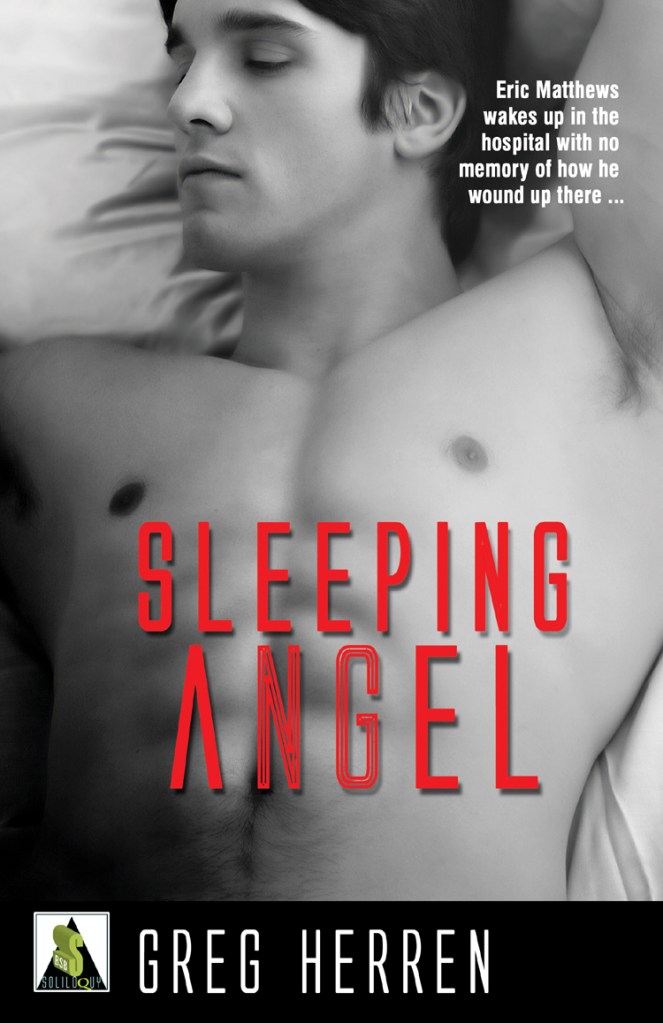
After I finished that, I spent the next five years mostly working on short stories. I started another book, more horror than anything else, but never got further than the third chapter. I finally decided to write a horror novel built from my old manuscript and those short stories from high school. I was about three chapters into it when I discovered two things: there was a big market in y/a horror at the time (Christopher Pike and R. L. Stine were HUGE during this period) and so I bought some of them. When I finished, I thought, “You know, I should turn Sara into a y/a novel” (because I thought somehow that would be easier? Foolish, foolish rookie) and so… I did. I was right in that thinking of it in those terms made it possible for me to finish a draft, but I wasn’t very happy with it so I put it aside and started writing another one, Sorceress, which was also horror but also had some strong Gothic moments in it. When I finished that one, again I wasn’t pleased with it so I started another–Sleeping Angel–which was the one I thought really had potential. I never finished that draft–by this time I’d discovered that gay fiction and nonfiction existed, so I started reading that and trying to write about gay characters instead.
Those manuscripts remained in my drawer for well over a decade, until a friend of mine took a job as a young adult acquisitions editor, and she wanted to work with me. I told her I’d written three (although it was technically two and a half), and gave her a brief synopsis of them. She liked Sorceress the best, so I started revising and editing it and turning it into something publishable. Once it was all done, she’d left that publisher, but started her own small press for y/a books for underrepresented teens, and she wanted to launch the press with Sorceress. I said “okay” and we were off. I eventually realized I needed to let Bold Strokes know, and when I did, I got an email back saying you know we do y/a, too? And so I sold the other two to them, and have never looked back since then.
Are there specific rules for writing YA (things you can’t do)? Does Bold Strokes add on or impose specific or additional rules?
I don’t pay too much attention to rules, frankly. There’s no graphic sex in my books, but it’s hinted at. I also try to swear less in young adult books than I do in adult fiction, which is probably not as big of a deal as I think it is? The society I grew up in was a lot more puritanical–believe it or not–that the one we live in today. So I always default to that setting, and then have to shake it off. Swearing isn’t as big of a deal as it used to be. No one thinks they’re marrying a virgin anymore, and on and on. And having been attacked for daring to accept an invitation to speak to queer high school students, I tend to tread softly. There have been a couple of times where I’ve had to change language, or how a scene went, because my editor thought it might be problematic; and frankly, I never want to be offensive, so I have no problem with it. I don’t see it as a free speech issue the way so many intentionally offensive writers claim it is. I shouldn’t take offense to someone calling me a faggot? Grow the fuck up. The so-called free speech “crusaders” are always defending hate speech as well as trying to shut up the people who find it objectionable. You do not have a constitutional freedom from consequences or getting a negative response to things you say and do, period. It’s really not hard to understand unless you want to be passive/aggressive and childish and a moron.
How do you remember back to these days, specifically how it felt or feels? (this is coming from your moderator who is much older than you are)
Well, for one thing, I’ve always kept a journal and I still have them all. (I was insufferable when I was younger, seriously.)
My sister has a theory that we forget a lot of the pleasant memories from our childhoods, but remember the traumas in great detail. I believe the truth of that, because school was a nightmare for me from the day we moved to the suburbs until I was done with it. I remember how it felt to read Greg Herren sucks cock on a desk at school. I remember how it felt to be mocked, laughed at, and bullied by assholes. I do remember the good things, though I tend to always focus on the bad.
The first thing I always do is abandon whatever “wisdom” about life I’ve theoretically learned since leaving high school, and put myself into the teenager mindset: they think they are the main characters in everyone they know’s story, and everything is the end of the world or their life is ruined and you are the most horrible parent ever! I’m not entirely sure I’ve escaped thinking that way, to be brutally honest: I am horribly selfish.
How do you come up with your characters? Your stories?
I am weird in that I inevitably always start with a title. I hear something or read something and think, that would make a good title. The next question is what story would fit that title? And it kind of goes from there. The title may change, the character names and story might change and evolve, but I can’t write anything that doesn’t have a title. Bizarre, I know. Usually with my young adult stuff it’s an idea I’ve had for a number of years and finally decide to explore whether it’s a novel or a short story, and go from there.
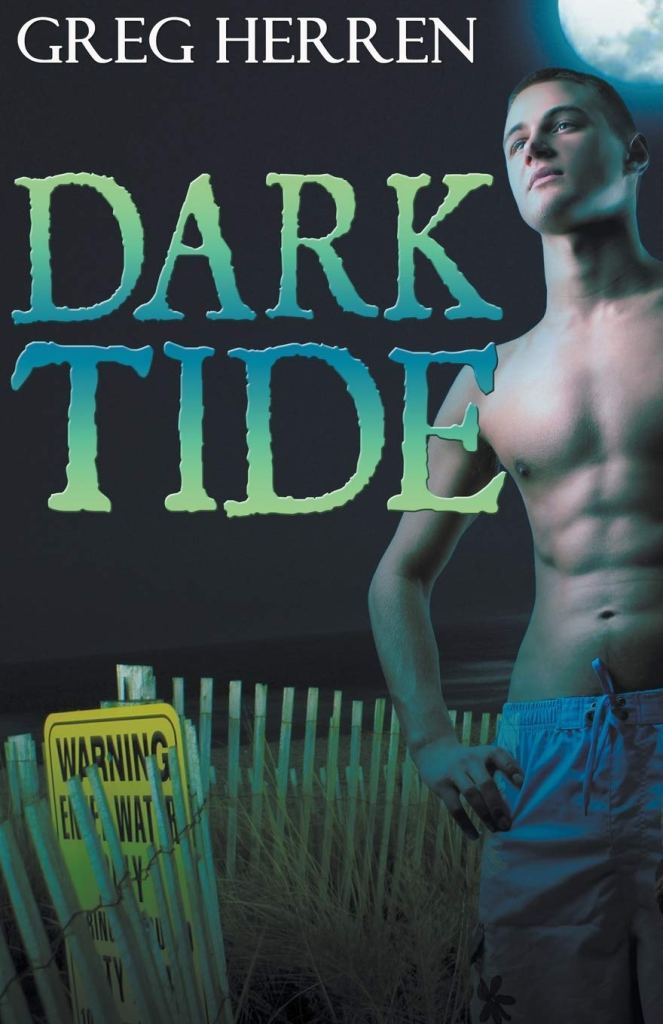
Dark Tide was originally called Mermaid Inn, Bury Me in Shadows was originally Ruins, but the others pretty much stayed the same from beginning to end.
I wrote #shedeservedit because I was angry about the Steubenville/Maryville rape cases, and remembered stories and gossip from when I was in high school and college…and rethinking them through a more evolved brain about women and misogyny… well, it made me angrier. I had already planned on writing a story set in the same town with the same characters and opening with the same murder (I always referred to it as “the Kansas book” for years), but the motive was something I always had trouble grounding in reality. After those cases…it clicked in my head. You need to write this story about small town misogyny, protecting the star jocks from the girls at all cost, and make that the plot. It was easy to write because I was angry. Making it a compelling read was harder, because the subject matter was sickening to me.
I needed to write that book, and I don’t regret doing it, either…but it’s not exactly a feel good story people can escape into, either.
Why do you think YA is so popular?
It’s more accessible, I think. I mentioned reading ability before, and I do think that most readers aren’t into the Great Literary Tomes, hundreds of pages of beautiful writing with no real point or story. People kind of want to escape their cares and worries, and y/a books tend to be really entertaining. We’re competing with phones and tablets and streaming, so we need to write entertaining and engaging books.
Any specific must do-s or must-haves to get your writing each day?
I’m not nearly as anal about that as I used to be, before I returned to work full-time. I am very aware that I have little time to waste when I write, and thus must seize whatever opportunities to write show up. But if pressed, coffee. I can’t write unless I’ve had coffee when I got up.
I think this is all of them, but I could be wrong.
And now its Muses Thursday. How we got here so quickly is a mystery, but here we are. I am slowly waking up, the coffee is helping, and yesterday was actually a very good day, perhaps one of the best I’ve had in a long time. It was the first time in a very long time (several weeks, at least) where I was alert and awake and felt good. I was also in a good mood all day…all of which added up to a very productive day. I ran my errands after work (I left early because parades) and managed to get everything done AND find a place to park close to the house when I got home. I put the laundry away and started working on chores, getting things cleaned up and taken care of. It was nice to wake up on a Thursday and come down the stairs to a tidy kitchen. I watched my reality television shows (Vanderpump Rules, which is actually boring this season, and Real Housewives of Beverly Hills) and then Paul got home. We got to hang and chat for about half an hour before it was time for me to go to bed, and I went out almost immediately. I like this new sleep pattern, and having the right kind of medication that helps me not only sleep deeply but feel very rested when my body and brain finish waking up–it’s much easier than before, that’s for damned sure.
In honor of Muses, I switched to a new pair of every day shoes this morning, and it’s always quite an adjustment. I should probably change every-day shoes more regularly; I have flat feet and my feet (the technical/medical term for it is overpronation; eventually my shoes will reflect that and need to be changed out) roll inward. Shoe inserts have helped dramatically with my ankles, knees, and hips; before using inserts I needed to get new shoes every six weeks. They last longer now, but I still need to change out my shoes more regularly than most…which is why I always buy at least two pairs of shoes every time, so I have the next pair ready to go when I change them out, always buying two pair when I start wearing the second pair and thus no longer have a pair of shoes “on deck”. I also don’t have to walk to the office and home, or stand out on the corner hawking condom packs to partying people all weekend–which of course will help my shoes last longer. (I still miss my old office, though.)
I’m just fascinating this morning, aren’t I?
The Krewe of White Supremacy and the Lost Cause rolled again last night, but once again New Orleans said nix to Nyx and their dying, pathetic parade needs to have its fucking permit pulled once and for all. Let them parade in Metairie or the North Shore where their deeply offensive and archaic values would be more appealing. New Orleans doesn’t forget and holds a grudge forever. You racist skanks and your Confederate flag throws aren’t welcome in New Orleans, and you know it, so why do you bitches keep parading to empty streets and the utter contempt of New Orleans? To prove a point? Think of all the money they waste to prove a point. I can’t wait to write my book about the murder of an all-female all-racist krewe captain. I had no difficulty finding a place to park on my block last night after four, which doesn’t happen on days when the popular parades that everyone goes to–no matter how minor it may be–roll. I could have probably left the office at the usual time yesterday and still been able to find a place to park on my street (note for next year if this year wasn’t their death rattle). Tonight I will drive straight home and probably won’t be able to find a place to park, Sigh.
I am going to Alabama the weekend after Fat Tuesday to meet Dad. I’m really glad to spend the time with him, but I hate the reason for it.
There’s controversy brewing again in the mystery community, and while I generally don’t opine on these kinds of things, I kind of am feeling my oats and I may just have to voice an opinion. I always forget that I had anxiety with my commentary and observations about controversies in publishing because of my volunteer work on the MWA board; I never wanted anyone to ever think I was speaking for the organization when I was not and didn’t want to have to deal with any controversies for the org things I said may have caused. But my anxiety is gone now, I have very few (if any) fucks left to give about anything or anyone, and I have a voice and a platform (no matter how small it may be in the overall scheme of things) so I should make better use of it than introspective navel-gazing about my life and career and so forth. So what if I piss off a few people? No one cares if they piss me off, do they? And I’ve been the target of other people’s bullshit far too many times and for far too long to worry about offending people who find my very existence offensive, so they can fuck right off. I’m not saying I’m going back to channeling my inner Julia Sugarbaker regularly or anything, but I will probably be speaking out more in the future…and I have some definite thoughts about the current one. LOTS of them, in fact.
So, buckle up, buttercup. 2024 is a whole new mentality for me.
Wednesday and the parades are rolling again tonight. I don’t think I’m ready to deal with this, to be honest. I can’t believe it’s the final weekend of Mardi Gras madness already, can you? I have to run a couple of errands today after leaving work, trying to get it all accomplished and get my ass home while it’s still possible to find a place to park. Much as I don’t want to deal with the errands tonight, tomorrow would be even more difficult as it’s Muses Thursday, and going straight home from work is no guarantee I can park within a mile of the house. Sigh. The pleasure of living inside the box, right?
I was super tired when I got home yesterday, and I never did feel like I was fully awake all day, to be honest. I was finally able to get my night time prescription refilled again, after the first pill bottle mysteriously disappeared (all fingers point at Sparky, and it’s probably under the dishwasher or the couch), and so I had to adjust back from one medication (I still had my old night time medication) to the right one again, which would explain why yesterday I never felt like my brain escaped the fog. Today is, in fact, the first day in a long time where I’ve felt mentally alert again, which is great. It’s terrible when you’re not on your game, and you aren’t sure why; now that I am in my sixties mental things are much more alarming than they used to be–and some memories I’ve forgotten are so forgotten even when I am reminded, in great detail, I don’t remember anything about it. That’s disturbing on a very deep level; my mental acuity is something I do worry about as I get older. We don’t have any mental deterioration diseases in the family as far as I can remember–I need to ask Dad about that, along with any other genetic conditions he and Mom might have or know about within the family (we aren’t a family that talks about that sort of thing much; I think it’s mostly because we have so much genetic tendency to faulty wiring in our brains to begin with)–but I think I’d know about it if it was in the immediate family.
Anyway, tonight when I get home from work I need to do some laundry and the dishes. I don’t know if I’ll go out to the corner tonight or not, but all signs point to not. Nyx is the final parade tonight, and as far as I know, Nyx is still a horrific white supremacy krewe (last year my mind was not on Carnival), so I don’t know if I’d want to go to that even if I didn’t have to get up so early in the morning tomorrow. I do need to write about that at some point, don’t I? The great thing about being a crime writer is you never run out of prejudice, bigotry and hate to write about.
It looks like I’ll be going to Alabama to see family and visit Mom’s grave next weekend; Dad is going down for the anniversary of losing her, and I’ll go up and meet him up there for the weekend. It’s just easier, really, for me to go instead of my sister, and I don’t think Dad should do these grave visits without one of us there for him. It’s also kind of for me; it’s just easier mentally and emotionally to focus on Dad’s loss rather than my own. It’s probably not the healthiest way to deal with it, but this is how I generally deal with any kind of personal loss or tragedy in my life: focus on the grief of others. I also suppose that the impending anniversary (today, I think, is the anniversary of her final stroke? It’s all murky to me other than knowing she died on Valentine’s Day) has probably also been working on me subconsciously (subconscious BASTARDS!!!) and could have something to do with the foggy funk I’ve been in lately, in addition to the unfortunate medication change of the last couple of weeks.
I didn’t watch the Grammys the other night, but I did watch the Tracy Chapman/Luke Combs “Fast Car” performance on Youtube, which brought back a lot of memories. “Fast Car” was a very important song in the development of my life and my adulthood; the lyrics of feeling trapped and needing to escape a toxic life situation resonated very deeply with Double Life Gregalicious, and helped start the process of finally merging those two very separate mentally unhealthy existences, which is something else I should blog about–but it was amazing seeing the audience reaction to a middle-aged out Black lesbian, and I’m going to have to listen to her album again; it’s been a hot minute. But thanks again, for your voice and your music and your soul, Ms. Chapman.
I did edit a short story–or started editing, at any rate–last night, and it really is amazing what you don’t see when you’re in the midst of writing it and when you come back to it again after a lengthy period of time. “How the hell did I not see how clunky that sentence is?” was constantly running through my mind, and I also realized what the point of the story was–he’s reached his breaking point, and I need to communicate that to the reader more clearly than in the original draft. It felt good, you know, to work on something, and feel like I was doing some good polishing work on it. I really do love writing.
And on that note, I am heading into the spice mines. Have a great Wednesday, Constant Reader, and I will most likely check in again with some more blatant self-promotion later.
Up ungodly early on a Saturday because I have to cross the river to the West Bank to get my oil changed. One of the most interesting things about this surgery recovery is it seems to have wiped my memory banks or something–kind of like an Apple OS update. Yesterday on my way to PT I checked the car’s systems and was stunned to see that I was due for an oil change. It seemed like I’d just had it done, but now that I think about it, it may have been as far back as June, when I went to Alabama and Kentucky and back. I’ve done a lot of driving since then, including a weekend drive over to Panama City Beach in October, and so it’s not really surprising that it’s due again–and thank God I checked, right?
But I continue to sleep well, and I am really looking forward to sleeping late tomorrow and just lazing around until I feel like getting up. Monday morning I have PT early, and then have to head into the office for my paperwork day. It’ll be a great and interesting week of trying to get everything caught up so I can take my four day Christmas break with a clear conscience–at least as far as work is concerned. My PT visits continue to go well, and I like both therapists I’ve worked with so far. (If you’re local to New Orleans and need physical therapy, I highly recommend Physiofit in Uptown on Magazine Street.) I am hoping I won’t need the brace after I see my surgeon again next Friday, and what a lovely Christmas gift that would be, wouldn’t it? It’s just cumbersome and awkward now, and the greater dexterity I get with my hand the more annoying it is to have to type around having it on. I also have noticed how easily I tire now, too–but I also know my body had a major trauma that it hasn’t completely recovered from just yet, and three weeks of being sedentary wasn’t a huge help; I have to build my stamina back up.
We watched the final episode of Fellow Travelers last night and while it was terribly sad, there was a kind of release at the end as well. It’s an incredible show, and both Matt Bohmer and Jonathan Bailey deserve to be nominated for Emmys next time around. I doubt that it will get a lot of Emmy nods–It’s a Sin, which was also brilliantly done and brilliantly acted, was completely snubbed by the Emmys. Twenty years ago it would have not only gotten a lot of nominations, it would have probably run a clean sweep on award night, but sadly, the history of AIDS and gay suffering simply doesn’t have the cachet it did when everyone wore red ribbons to awards shows and red carpets. I do recommend the show, and I want to move the book up in my TBR pile. (I am taking Raquel’s Calypso, Corpses and Cooking with me this morning and I am hoping I’ll be able to finish it while I wait to get the car back.)
We also started watching the second season of Reacher, which is very fun. Alan Ritchson, who was already huge in the first season, used the time between filming to bulk up even more. He certainly embodies the character physically far better than Tom Cruise could ever hope to, with no offense to Cruise; he’s just not the right physical type, and since one of the best known facts about the character is his enormous size, well…he was never going to please fans of the books. I stopped reading the series about ten or so years ago–I have no grasp of the passage of time, so you’ll have to give me some grace on that, nor do I recall why I stopped reading it. Obviously, Lee Child isn’t missing my money, but I was a big fan of the series and still remember it fondly; there were some terrific books in that series, and The Killing Floor may be one of the best series-launch novels of all time.
I have to work today when I get home from the oil change and other errands this morning; I really need to spend some time with the book today and I also need to work on the house a lot more. The apartment has really slid, and allowing Sparky free range to do as he pleases has resulted in a lot of debris on the floor–and all of my good pens are missing. Paul’s cigarette lighters, highlighters, scissors, spoons, plastic wrap, plastic bags, dryer sheets, and a lot of other miscellaneous stuff is scattered all over the floors both up and downstairs…and he’s also wreaked havoc in the laundry room and the bathroom. The kitchen floor has never really been completely cleaned up since the ceiling collapse, either. I have decided, though, that this year’s Christmas present to myself is going to be a new microwave. My current one is well over ten years old, and it works fine…but I never read the manual and so am never sure how to use for anything than reheating something. Paul uses it more than I do, and he also never cleans it, so it’s always a filthy mess. Since I never really use it, I tend to not pay attention and then I always notice it when I don’t have time to clean it, and then forget. They had a great one on-line at Costco, so I think next weekend I’ll go pick it up, and then donate the old one (after a thorough cleaning) to work so we have one in our department.
And that’s how I know I am officially old: appliances are my preferred gift.
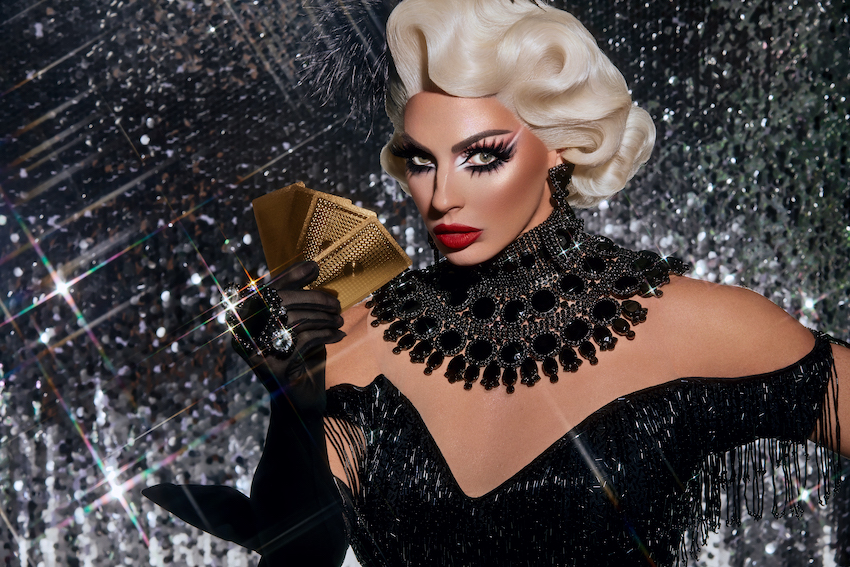
I love Alyssa Edwards. She’s the perfect reality star; a completely delusional human living in her own reality, yet also funny and witty with a highly expressive and thoroughly meme-able face, and basically harmless. I’ve always meant to catch her reality show on Netflix about her dance studio–which is so fricking cool that she does that–but have never gotten around to it. I was amused by her on her initial season, but really hated her feud with Coco Montrese, and of course that was also the season won by the marvelous Jinkx Monsoon. Alyssa was also terrific on All Stars 2, which made the rigging of the season all that much more disappointing. (We also gave up on Project Runway after one season where it was clear they’d already decided who was going to win at the start of the season. Don’t give me a rigged competition, thank you very much; if I want that, I’ll watch professional wrestling, thank you very much.)
Which makes it interesting for me to write a book about a drag pageant. I already have tons of ideas for the book, and it’s going to be very brutal in how it approaches the homophobes who have wrested control of Florida from the sane people (hey Moms4Liberty, how’d those elections turn out for you, you pathetic soulless pieces of shit? Your tears are as delicious as mimosas at a gay Sunday drag bunch, you miserable fucking bitches.) and have taken the state, once a beautiful place with scenic beaches and lovely weather, on its final steps to a complete and utter hellhole. Bravo, by the way; nicely done.
Anyway, back to drag; sorry about that sidebar. But that kind of shit will always enrage me. Nothing makes me angrier than misplaced self-righteousness. I may no longer be a practicing Christian, but I know that faith far better than many–if not most–of its most ardent public proselytizers and purveyors.
Gender-bending, of course, is nothing new. For centuries, women weren’t allowed on the stage so female roles were always played by men. This was certainly true in Shakespeare’s day, and often he wrote plays with characters pretending to be the other gender. So there’s a long, proud history of men doing drag in theater and performance art. Who decides what is masculine and what is feminine, anyway? As I have said numerous times, I love this new young generation of leading men and actors who are abandoning traditional black-tie male drag for new and inventive outfits that showcase their youth, beauty, creativity, and personal style; there’s nothing quite so stifling as toxic masculinity and it’s regular insistence that there is only one way to be a man–which is not only stultifying but incredibly limiting. Film and television (and theater, to a far lesser degree) have long influenced what is considered masculine in this country–the prototype being, of course, John Wayne. (Probably the funniest scene in both La Cage aux Folles and it’s American version The Birdcage is when the more butch of the gay couple tries to get the more feminine partner to be more masculine–telling him to walk like John Wayne…which was the first time I ever noticed how peculiarly John Wayne walked. Also amusing is that Mr. American Macho Man John Wayne–and Mr. Patriotism Ronald Reagan–didn’t serve in World Was II…but played war heroes in movies about it. Style over substance.)
But the history of the colonizing of this continent is very queer. Do we really believe those frontiersmen, trappers, hunters and explorers simply went for months and even years without having sex? There weren’t enough women to satisfy the need–and cattle drives? Pshaw. In any purely male society like that–the cattle drive, the explorations, etc.–there is always male/male sexual contact; “helping a buddy out.” This has been erased from history as effectively as if it had never happened–as though homosexuality is some modern thing that never existed before.
It’s always struck me as odd that the masculine ideal (as shown to us by Hollywood, at any rate) inevitably is depicted in all male environments–war movies, cattle drive movies, Westerns–with the occasional token female thrown in as a supporting love interest. These women are often set up to be abused–spanking was often popular in these films; how many times did John Wayne spank a woman in a movie?–and mocked and made fun of; if they had any kind of mind of their own, well, they had to be tamed.
Anyway, I digress.
I also know there are women who despise drag, see it as mocking women and misogynistic. I can actually see how they could feel that way, and far be it from me to tell a woman–any woman–how she should or shouldn’t feel about something, particularly when it comes to misogyny. (I sure don’t want anyone telling me what to think is homophobic or not.) I don’t think drag is misogynistic; if anything, it’s critiquing the misogyny of society. Dolly Parton also exaggerates femininity to the point of being a drag queen–she even says it about herself. Mae West was so good at this exaggeration that people believed she was an actual drag queen for years. Marilyn Monroe, Jayne Mansfield, and Jane Russell became sex symbols (and stars) by exaggerating their bodies and the way they dressed and their make-up and hair; how is that not female-drag as the converse of over-exaggerated masculinity (John Wayne, Charles Bronson, Clint Eastwood); establishing exaggerated norms of masculine and feminine that subconsciously altered what the over-all culture thought in terms of gender roles.
If I had a dollar for every time someone has told me to be more manly…
But the reason gender roles exist are because they are more comfortable for most people than thinking about it at any great length. You were born with a penis, so you should be interested in sports and guns and hunting and wear pants; your parents don’t have to think about it and neither do you. But for those of us who weren’t comfortable in those comforting boxes society so gladly constructed for us all to fit into–it’s not quite that easy. I hated having to do “boy” things and hated the expectations that since I was a boy I should like something in particular–and being incredibly stubborn, being told that I should like something was much more likely to make me disdain it. I didn’t want to play sports or even watch them when I was a kid; I just wanted to read. My struggles with wrapping my head around my gender and my sexual identity as a child were difficult, and those scars are still there–some of them are still scabbed over and not healed. All the messages I was being sent through popular culture, school, and society were telling me that something was wrong with me–and you don’t get over that overnight. I’m still unpacking a lot of that to this very day.
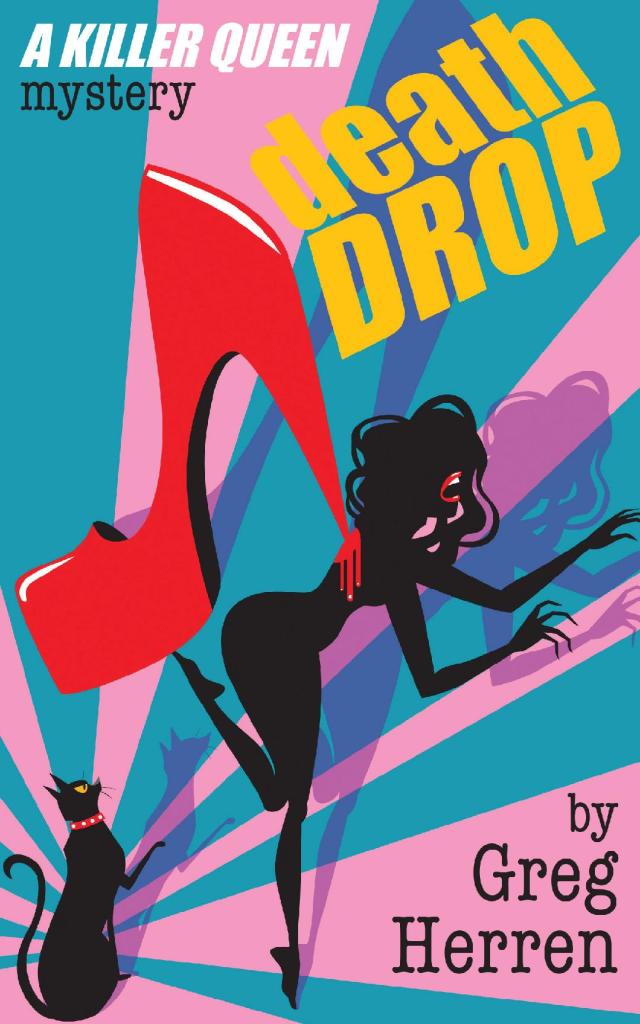
Writing Death Drop forced me to start thinking about these things again–gender markers, gender identities, the duality of our natures (no one is 100% one or the other, I think; I will always believe that gender and sexuality are a lot more fluid than anyone thinks)–and what makes one male and what makes one female. I hope, in writing more about Jem in the future, that it will help me understand myself better as well as society.
The state’s nickname is “sportsmen’s paradise,” because all of the macho male outdoor sports–hunting, boating, fishing–are available here in abundance. We’re also called the Pelican State (most prevalent) and several other nicknames, not all of which are complimentary.
Louisiana has always been a conservative state, despite the existence of New Orleans. Originally French then Spanish before becoming American, Louisiana also was a part of the Confederacy and had an economy based on enslavement. We weren’t that far removed from David Duke’s gubernatorial bid (which came all too close to succeeding), and I remember Paul had gone on site visits with his boss at the Arts Council south of the city, and came home saying, completely in disbelief, that “people had yard signs saying ‘this is Duke country’–and me replying, sadly, “in the South they don’t bother to hide the racism–they see it as a positive.” But you cannot really go anywhere in Louisiana without being awed by the natural beauty on display here. I love Madisonville, and the Tchefuncte River area. It’s always a lovely drive to take 90 east when you head north (yes, I am aware I am saying you take an east-west highway to go north; welcome to New Orleans), and head out through the Venetian Isles area and drive along that narrow strip of land separating the lakes, crossing the Rigolets bridge and heading into Slidell.
A while ago, I was following a Twitter conversation about Burt Reynolds movies from the 1970s. Mind you, when I was living in Kansas our movie options were limited. There was a drive-in movie theater on the way from our little town Americus to the county seat of Emporia, and there was a small twin cinema on Commercial Street. The summer before my senior year Smokey and the Bandit opened on a Friday, and the following Friday Star Wars opened in the other theater. Both movies ran for about three months….so I saw them both repeatedly as there was very little else to do. The 1970’s were an interesting time for depictions of rural Southern sheriffs; Jackie Gleason hamming it up and going completely over the top. This was also the same time period that gave us corrupt politician Boss Hogg and the inept sheriff and deputies he controlled. These were always played for laughs, but the thing is–there really wasn’t anything funny about these types of characters in real life. Political and police corruption have always gone hand-in-hand in the Southern states; the police merely existing to enforce and enable the existing power structure. That Twitter conversation, along with reading Ethan Brown’s Murder on the Bayou and the various true crime documentaries about the Jeff Davis 8, put me in mind of writing about that kind of corruption. But I also kept wondering, but is this still true in the South? Do these kind of corrupt power structures still exist in the South? Would this read like a period piece?
And then the Murtaugh scandal broke.
Guess what? It IS still like this in the rural South. Thanks, Murtaughs!
I already had an idea for the next Scotty, and was pulling it all together, using a relatively minor political scandal here locally as the starting point for the story–which involved a conservative politician getting involved with a teenaged boy who worked at the food court at a mall, mostly buying him presents–clothes, underwear, swimsuits–and having the kid send him pictures wearing it. The age of consent in Louisiana is seventeen, and the kid was over seventeen, but while still being an icky thing, it wasn’t illegal–and they never did anything beyond that. It was mostly a harmless flirtation, until the kid, who was gay, realized that the nice man buying him gifts was actually a hardcore far right family values politician, so he went public. I still needed a murder, but I thought it would be simple to come up with one–the politician would have every reason in the world to kill to protect his secret, and he had his parish sheriff’s department to help commit and/or cover up the crime.
I did borrow two of the Murtaugh crimes for the book, but as starting points more than anything else, and came up with my own theories of said crimes for my own story–I wasn’t writing true crime, after all, and I wasn’t interested in proving the guilt of the Murtaughs. What I was interested in was exploring the decline and fall of a politically powerful family that had controlled a parish in Louisiana for well over a hundred years, almost like an absolute monarchy with primogeniture. I had also originally started the story with the kid coming to Scotty and Frank (through Scotty’s old buddy and former workout partner, David, who now teaches at NOCCA) because he gets a text from an unknown number which contains one of the pictures he has sent his older male friend (that he doesn’t know is a family values politician), and is worried about his own future if the information comes out. I wrote an entire draft of this story, but it didn’t work and I didn’t care for it…which was when it clicked into place: use two of the Murtaugh crimes to start with, and built it out from there. I decided that the kid at the mall wasn’t the original target of the politician, and that the original target was killed in a hit-and-run accident the year before; I also used the boat crash, turning it from a boat hitting a bridge to a pick-up truck hitting a bridge and pitching the passengers in the back into the bayou.
I also liked the teenager/older man dynamic, because it had played out with Taylor in the previous book–and Scotty had his own past with an older man when he was a teenager, which I was finally able to circle back around to.
I also invented the parish–surprisingly enough, there is no St. Jeanne d’Arc Parish in Louisiana–but it’s based loosely on what are known as the bayou and river parishes (Terrebone, Lafourche, St. Charles, St. John the Baptist). I already had a fictional parish on that side of the river (Redemption), but I decided Redemption wouldn’t work for this book, so I made it a neighboring parish.
Research is always important for a writer, always.
I will generally spend years doing research for books before I start writing them; my scattershot approach to research usually goes something like hey this sounds interesting I should look it up which then takes me down wormholes and I’ll become obsessed with something, I’ll come up with a story idea that I can use the research for, and then it may sit in the files for years, occasionally striking my fancy sometime when I come across something else that might fit in with that, and so on. A lot of my research never makes it onto the pages of my books, either–I could have written chapters on glass-making and the Murano style of Venetian glass in The Orion Mask, but finally decided that, while I thought it was all interesting–Phyllis A. Whitney used to use her books to educate her readers about the area she was writing about, which I loved–but it definitely bogged down the story because there was no way I could figure out to tie the glassmaking to the modern day story.
That was very disappointing, I don’t mind saying.
Likewise, I didn’t have as much time to research drag the way I should have before I started writing Death Drop. Ordinarily, I would have wanted to actually talk to the local who runs the drag school; I would have talked to any number of queens about performing, how they got into it in the first place; and there are so many aspects of drag culture and so many levels and layers to it that it was impossible for me to get the research done and write the book at the same time. Ideally, I would have liked to have actually paid someone–preferably my former supervisor, who went to the drag school and now works full-time in drag as Debbie with a D (check out her Instagram, seriously)–to do the full drag on me–wig, make-up, pads, dress and shoes. (I kind of still need to do this, so I know how it feels; I relied on memories of high school plays for the make-up and wearing a Minuteman costume with real buckled and heeled shoes for walking in heels; I didn’t care for that one bit and have nothing but the deepest sympathies for women or anyone who has to wear any kind of heel on a daily basis. I can still feel how sore my calves were the next day.)
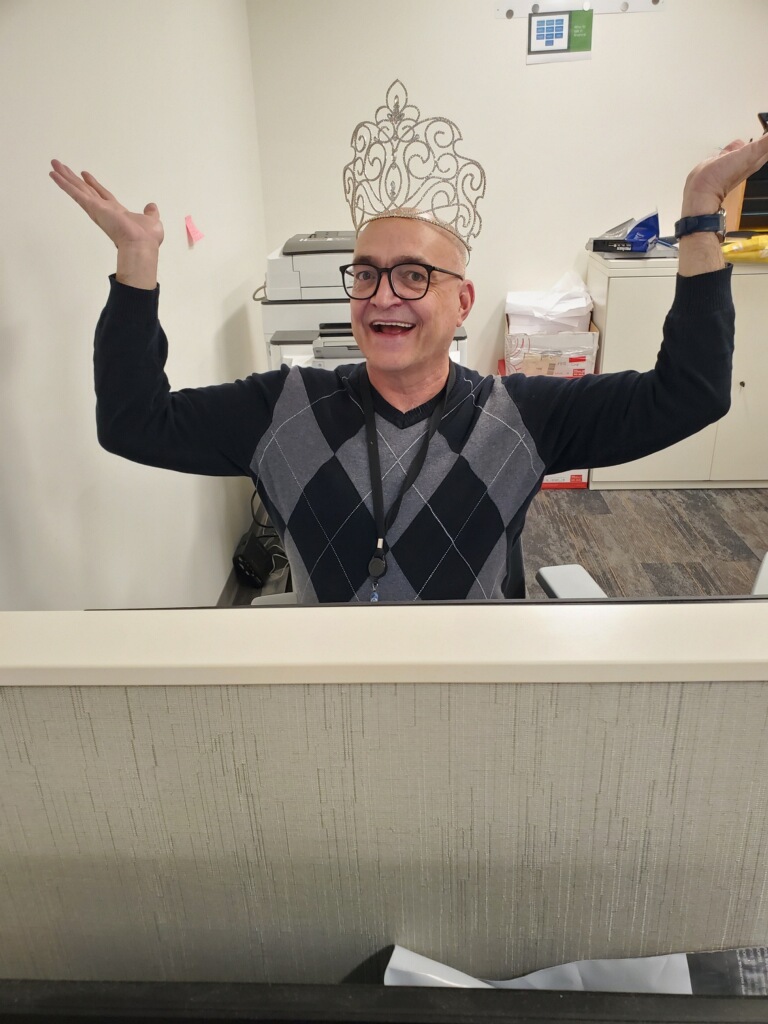
Me with my supervisor’s pageant crown
That was part of the reason I made the book an origin story for Jem and “Joan Crawfish,” the drag name he is christened with at the last minute as he sent down the runway at the Designs by Marigny fashion show. I don’t know drag lingo or slang–outside of whatever I’ve picked up from watching RuPaul‘s Drag Race and having co-workers who do drag and the occasional drag show I’ve caught over the years–and so neither does Jem/Joan. And the second book–set in Florida at the Miss Queer America pageant–will include some of that, as it will have to as he’s already finished the drag school he was considering entering at the end of Death Drop.
It doesn’t hurt that my current supervisor does pageants and was even Miss Gay Mississippi USofA; so I have a good source of information that I see at the office every day, which is….kind of cool, actually.
I do feel pressure to drag it up a bit more in this second book (You Gone, Girl) than I did in the first, but the pageant itself makes for a lot of drama and comedy, and that’s not even taking into consideration all the protests and bomb threats and things and other shenanigans that the evil witches from Moms4Freedom are throwing at the pageant.
And I am going to have some serious fucking fun with those Moms4Freedom bitches, believe you me.
Drag is a part of queer culture I’ve always known about but has also been something primarily on the periphery of my gay life and world; I’ve only occasionally ever thought about perhaps doing it–as a gag or as a costume at some point; a very dear friend has always wanted to dress me up as Joan Crawford (narrow waist, big shoulders, enormous eyebrows), which is something I would consider doing if it wasn’t so much work–I am way too lazy to ever do drag properly and respectfully. I did a very poor attempt at drag many years ago, for a Showgirls themed birthday party for a friend; the result was far from pretty. I did sometimes used to use mascara and eye liner when I would go out; it emphasized my enormous and expressive eyes which most people have always considered my best feature (although aging has deprived me of my eyelashes). Drag was just another part of the community and culture, like leathermen, bears, and gym queens–another patch on the quilt that makes up our queer world.
My primary interest in drag has always been historical and cultural; drag culture has always been a part of the gay bar scene, since time immemorial, it seems. I have always been interested in every aspect of gay culture since coming to terms with my own sexuality and recognizing that not coming to terms with it meant a lifetime of guaranteed misery, and shouldn’t I really take a chance on being happy? There was always a lot, for me, of misunderstanding about drag culture and its place in the gay community; but that also primarily came from people outside of the community and therefore didn’t have the slightest grasp of it–i.e. ignorant slurs that all gay men dressed like women whenever they had the chance, you know–not “real men.”
But seriously, who wants to buy into the cult of toxic masculinity? No fucking thanks.
I don’t know the history of drag, but I did know–from the very beginning–that there was a significant difference between drag and the trans experience; there’s definitely crossover, but the Venn diagram of drag and trans is not a complete circle. I understood this always, even when I knew very little of either. This was always the issue I had with To Wong Foo Thanks for Everything Julie Newmar–the queens in the movie didn’t just do drag for performance or pageants, but dressed as women in their everyday life…which made them transwomen who also did drag. The failure of that film to define the difference between the two, I think and believe, has a lot to do with the current-day conflation by the Right of drag queens with transwomen. Likewise, was the Nathan Lane character from The Birdcage (and the French original) a transwoman or a drag queen?
And the fact that I, knowing as little about gay life and culture as I did in 1994, knew that the Wong Foo movie was conflating two completely different things as the same certainly means that other, better-educated people should have, as well.
But it’s also important to remember that the movie wasn’t made for the queer community–no Hollywood studio film with queer characters is intended for a queer audience, and thus there’s a falseness to them that rings hollow to me (don’t even get me started on Philadelphia); what Sarah Schulman once (paraphrasing) described as “the creation of a fake public homosexuality that will play in Peoria.”
There’s an essay in that, methinks.
The first time I went to a gay bar in Houston is my first true memory of seeing someone in drag performing on the bar in person. She was doing Liza as Sally Bowles from Cabaret, and as I walked in the door with some co-workers from That Airline, the first thing I saw was her up on the bar, with a musclebound dancer on either side of her in bikinis or thongs, and I can remember thinking wow this is decadent like Isherwood’s Berlin–but I liked it. I felt at home there, in a way I never did in gay bars in Fresno (or anywhere else I was able to sneak away and visit one), and felt like that night was when my gay life actually began: I was with co-workers, I was going to a gay bar openly, and the co-workers knew I was gay but had never really experienced being gay as anything but misery and depression and a curse. I don’t remember the name of the queen, but ever since then, “Mein Herr” always brings a nostalgic smile to my face.
But again, I didn’t go out much or do much during those two years in Houston as I still wasn’t completely comfortable being totally out. I moved to Tampa in 1991 and started living as an out gay man…and started spending more time in gay bars. A popular night for airline employees as Tuesday Nights at Tracks, where cocktails were only fifty cents and no cover before ten. There was also a drag show at midnight, with an actual stage in a show room, and that was my first real experience watching drag queens perform. There was a gay paper there–I cannot remember what it was called to save my life; I know the one in Texas was This Week in Texas, called TWIT by everyone–but it often had information about performances and other night life ads and so forth. I began to get a better understanding of drag, its place in the community, and its importance to gay culture, period.
And of course, once I moved to New Orleans, there was Bianca del Rio.
The mainstreaming of drag actually began in the early 1990’s, with RuPaul having a surprise hit record out of nowhere, “Supermodel (You Better Work)”, which started exposing more people to drag who ordinarily would have never seen one. RuPaul was everywhere in the early 1990’s, and even had her own talk show on MTV for a while. The Adventures of Priscilla Queen of the Desert and its homogenized American version To Wong Foo, Thanks for Everything, Julie Newmar were both incredibly popular. (I enjoyed Priscilla, and I’ve already touched on my issues with Julie Newmar–which will probably become an essay at another time.)
There were, of course, other successful queens out there before RuPaul’s big breakthrough and later, comeback with Drag Race, but few had as large a profile in the culture as RuPaul. Lady Bunny, Miss Coco Peru, Miss Richfield 1998, and Varla Jean Merman were all making a pretty decent living as performers before the drag explosion that followed the launch of Drag Race.
I’ve met numerous drag queens on the local scene both in and out of drag–I’ve always been fond of Princess Stephaney and Blanche Debris (who is retired now), and the drag community of New Orleans was always incredibly supportive of the NO/AIDS Task Force. I met Bianca out of drag a couple of times, but I doubt he remembers me…but Drag Bingo at Oz on Sundays with Bianca and Blanche (I just realized their first names both translate into English as white) was always a blast–and I made a point of never trying to get Bianca’s attention because she was always quick and that tongue was sharp as a scalpel always.
I also work with several co-workers who either did drag or have started doing it while I’ve known them, which indirectly helped me with the writing of Death Drop and my original story for a drag queen. Jem is sort of patterned in some ways on one of my former co-workers who actually went to a drag school here in New Orleans–and eventually quit his full-time job to do drag full-time. He’s been in Queer as Folk and numerous other shows filmed here, and has been booking gigs all over the country–check out his Instagram, isn’t he fucking gorgeous? So that gave me the idea to make the first book with Jem his drag origin story.
Learning about drag to write this book–and its sequel–has been an enjoyable learning experience for me. At some point I know I am going to have to do a transformation; I need to know how it feels to have the make-up and the padding and the wig and the dress and shoes on. I can imagine it all from doing theater in high school, but it’s not the same.
And yes, I will share the pictures when and if it does happen.








 Queer and Loathing in America