Sliding into Sunday with two storms heading this way, less that two days apart. Ah, 2020, you just keep 2020-ing, don’t you? We are in a flash flood warning from today through Thursday, as I see over at nola.com, and are in a hurricane warning as well. Parking restrictions have been lifted, and I am feeling fairly certain that this time around our street will likely flood again–as it has done only once before, and not during a hurricane–because the fucking two empty lots have a stupid condo building going up on it, so there’s no place for water to go this time. I’ll probably have to move my car this afternoon to get it up higher than where it is parked right now. I checked my phone this morning but there’s nothing from work; which is in and of itself interesting: with so few people actually working in the office, what exactly is the policy and procedure during a hurricane? Monday is supposed to be clinic hours, of course, but since the hurricane could be hitting us smack dab in the middle of those, are we really going to have our clinic? Although–looking at the latest track, it appears to have slowed down some and is now predicted to cross over us around seven pm on Monday–whereas last night before I went to bed it was one pm.
May we live in interesting times, indeed.
I just hope we don’t lose power–although the two storms will indubitably amp up the humidity, I don’t think it will be as hot. That was what saved us that week when Ike knocked out our power and hovered over the city for a couple of days; the cloud cover made it cooler, otherwise it would have been completely unbearable.
Yesterday was a rather relaxing one. I did run an errand–which I may regret, as I wound up buying more perishables, and–sigh–my freezer is full–and then came back home to relax some more. I worked on Bury Me in Shadows a bit, finishing Chapters Two and Three and pulling up Chapter Four before going to bed, and it’s coming along rather nicely. We watched Jojo Rabbit last night–didn’t really care that much for it, to be honest; I guess it was just too smart for me–and then started watching Warrior Nun, which really didn’t engage us very much after the first episode, but we are intrigued enough to give the second episode a chance–you can never really judge a show competently by its first episode (although the first episode of Lovecraft Country was off the chain amazing), and sometimes it takes an episode or two to get going (hey, Outer Banks took four episodes to hit the ground running), but our standards have been set pretty high this year–we’ve watched some amazing programs this year.
I also decided to treat myself to cappuccinos this morning because why not? Marco tomorrow, Laura Wednesday; the potential of living a week in August without power; yeah, who cares about the mess and all the moving parts of the espresso machine to clean this morning? Besides, the jolt I’ll get from two cups will power me through the rest of this morning and I’d like to get more chapters finished today–since who knows how long we’ll have power this week–and I am busily charging up all of my devices; granted, as long as the car isn’t under water and will start I can always go out there, turn the air conditioning up as high as it can go, and sit there while my phone recharges, like during Ike.
I also managed, from the looks of things, to get some organizing and cleaning done around the kitchen/office yesterday, which was not only necessary but needed. There are still some things I need to get straightened up, of course, and some things to get filed, but it’s not nearly as messy as it has been lately. I also tend to get neater the more into writing a book I get, so there’s that. I am really feeling my characters now, and I think I am doing some very good work on this book now. Ideally, it will be finished by the end of the month–that was the goal, and while it no longer seems likely anymore–am I really going to revise 21 chapters in eight days?–at least I am on track to get it finished and turned in sometime in September, which is lovely; and then I can get to work on the Kansas book and finally get that fucking albatross from around my neck.
I also gassed up the car yesterday just in case. And the lovely thing about a Honda is that IF we do need to suddenly have to evacuate, a full tank will get me pretty damned far. Although I am not worried about a sudden evacuation, of course; no one seems to be leaving New Orleans today and the storm will be here tomorrow.
It’s weird looking outside my windows this morning, which is definitely a sign that a storm is coming–that weird eerie stillness and surreal glow to the light.
And so, I need to put hurricane warnings and thoughts aside, otherwise my obsessive personality will find me sitting here, refreshing weather.gov every few minutes looking for updates, and waiting to hear from work whether I actually have to go into the office tomorrow. I am going to put all those worries and anxieties aside–as worrying and being anxious will solve nothing, it never does–so that I can be as productive as I possibly can this morning.
I think I’m going to have another cappuccino and curl up with Lovecraft Country for awhile.
So, it’s Monday of a short week–I did decide to go ahead and take the celebratory four day birthday weekend, in case you were wondering–and I am very pleased with myself for making said decision. It’s been a while since I had a long relaxing weekend, and what better gift can I give myself than a long weekend? And it just didn’t make sense to take Thursday off and then work from home on Friday, so huzzah! Decision made.
I only got one more chapter of Bury Me in Shadows done yesterday, but I’m good with it. Am I thrilled that the pace I set for myself isn’t being kept up with? Not in the least. Am I going to beat myself up over it? Not in the least. I need time to rest and decompress, after all, and the last thing in the world I need to do is burn myself out. The work I am doing is good work, and I’d rather go slowly and do good work rather than rush through it and then have it come out and think, oh I wish I would have spent more time with that.
Which. Always. Happens.
We finished Never Have I Ever last night, which is quite funny and charming and moving, all at the same time, and then watched the first episode of Lovecraft Country on HBO MAX, which was stunning–well produced, well acted, and well written, and just beautifully filmed–and it also kept us on the edge of our seats once the action got going. I also spent some time with the book yesterday afternoon once I got the one chapter of the book finished–I am changing my plans on how to schedule finishing it, turning it into getting a chapter done per day, with more to come on my upcoming four day weekend–and also worked on organizing better. I also got some filing out of the way–my actual inbox this morning has literally nothing in it at all, which is unbelievable, extraordinary progress–and I also cleaned out another one of my inboxes (I have four stacking ones; one has a print out of Jackson Square Jazz, which needs copy editing before the ebook can be finalized and put up for sale at long last; the other contains all my folders for the Secret Project, which is pending an offer; and I am going to put my “short stories currently working on’ folders in the newly emptied out one.) I still have not finished working on my file cabinet–remember that burst of organizational energy I had earlier this summer? Yeah, I never finished that project–but I think that is a project for one of my four days this coming weekend.
Heavy heaving sigh. But the better organized I am, the more likely I am to stay on top of things and get everything finished that I need to get finished.
Or so the theory goes, at any rate.
And on that note, it’s time for me to get ready to head into the office. Have a lovely Monday, Constant Reader!
Sunday sliding in like a surprise guest at your birthday party.
Hope all is well with everyone out there this morning. I stayed up later than I intended last night; Paul and I finished The Alienist: Angel of Darkness and greatly enjoyed it, then moved on to Never Have I Ever on Netflix, which is both funny and sweet at the same time. It’s a Mindy Kaling show, so I knew it would be both, and I’m looking forward to more of it.
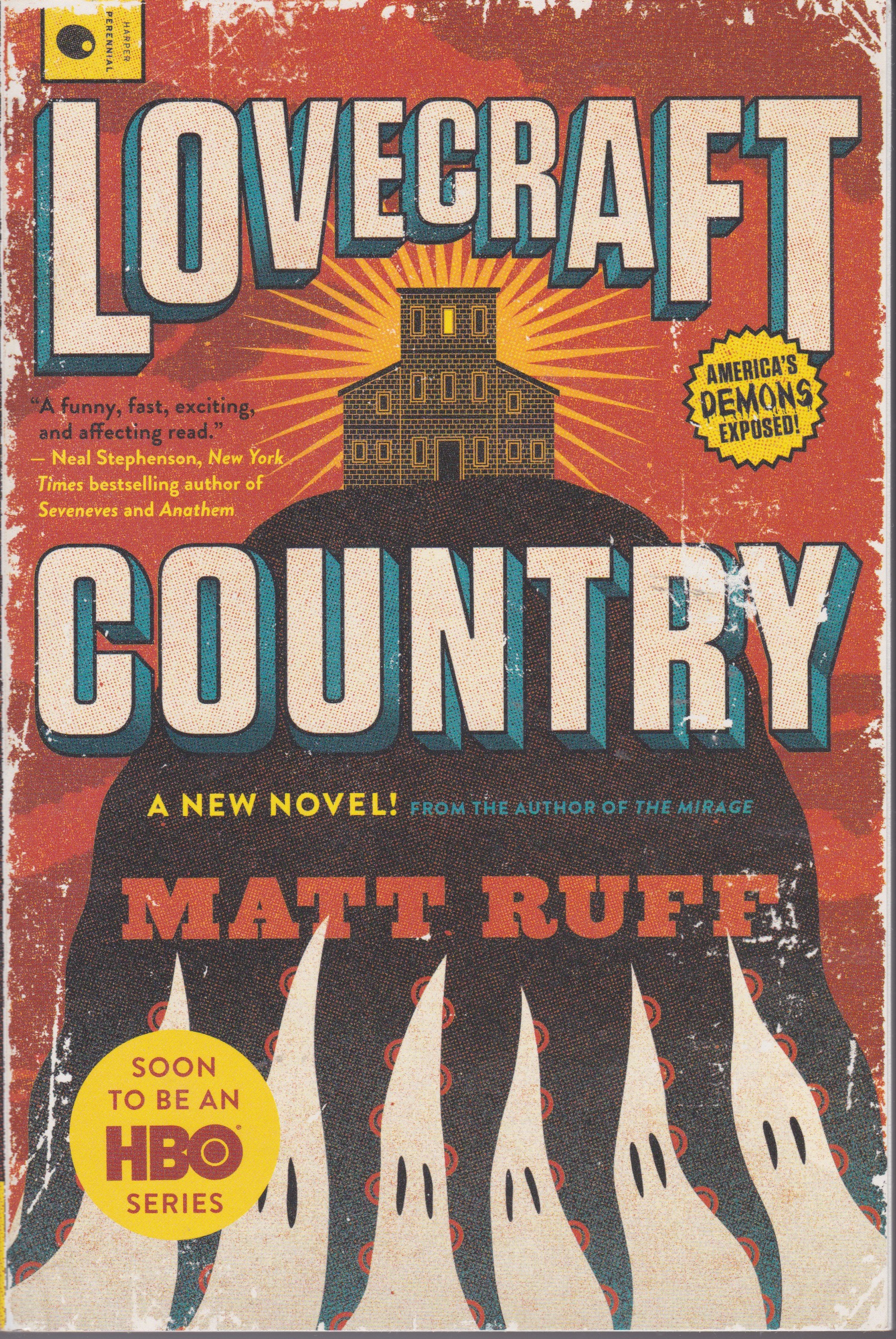
I also started reading Lovecraft Country yesterday, and am enjoying it thus far. I’m not going to lie, I wince and recoil from its undoubtedly accurate depictions of how horrific 1950s racism was (not that any racism is ever non-horrific, regardless of time period) but while I would have probably stopped reading it ten years ago precisely because of that discomfort, now I keep reading because that’s the purpose of it; to make white people uncomfortable and we need to be made to feel that way from time to time. And I can handle a little discomfort during my reading–it’s nothing compared to the discomfort non-white people feel living their lives every damned day. And since a lot of the first part of the book has to do with dealing with racism while moving around the country–yup, there’s another privilege I never even was aware of that I enjoy for the most part; not having to fear moving around the country because I might drive through a place where not being white would get me killed. (I do have some fears about being gay while driving through the rural South; but on some levels I can pass for straight, whatever that means…maybe I can’t and just think I do, but that fear is always there in the back of my mind, and the more rural the area where I stop the bigger the fear) Oddly enough, the author of the book appears to be white–and the descriptions of his other works in the back of the book sound intriguing. There’s one called The Mirage, which apparently is an alternative-history type thing that reverses the United States and the Middle East, so that 9/11 happened to Baghdad and not New York…so the author often tackles difficult subjects in his books.
I did get some work done on Bury Me in Shadows yesterday; I managed to redo the first chapter. One down, nine to go to hit my goal for the weekend. YIKES. But I also spent some time cleaning and organizing yesterday–a scattered, disorganized workspace makes me feel scattered and disorganized, which makes writing even harder–and I feel as though today I will be able to get much further along in the story than I did yesterday. The living room is still a complete mess, but the chores yesterday as well as some time spent reading in my easy chair have me feeling relaxed and rested this morning–which bodes well for the writing today. I may even get to do some organizing of the books and cleaning of the living room. IMAGINE THAT.
This coming week holds my birthday, and I am leaning towards taking a four day weekend–my birthday is Thursday–which will enable me to get a lot of rest, do some reading, and get further caught up on my writing. I’ve not decided completely as to whether I should take both days off as of yet, but am leaning towards it. I always take my birthday off–I can think of no less pleasant way to spend one’s birthday than at work–but even though I can simply work from home and save my vacation time, I think I’d rather just have the days off, if I am going to be completely honest with myself.
I’ve also, truth be told, having some doubts and imposter syndrome about the book I’m currently writing. It’s not that I don’t think I can write it–I know I can, for fuck’s sake I have a completed sloppy first draft–but some of the issues I wanted to address in it I pretty much left out of the entire first draft. I know I can get them into this next draft, but one of my biggest issues about writing about important issues is not wanting to come across as preachy, or ABC Afterschool Special-ish. I do like the changes I’ve made to it so far, and I think I’ve slid some messaging into this first chapter the proper way…but who knows? I’m not sure why I am having so much doubt–so much more doubt–with this book than I have had with others. But I really really want to get this right, and I’m worried about it, which I guess is a good thing.
I suspect if I ever felt good about something I was writing and working on, I’d be even more worried.
And on that note, I am heading back into the spice mines. Sorry if I’ve bored you this morning, but sometimes that’s just the way it goes.
Last evening was the first night in quite some time where Paul and I didn’t have an episode of Babylon Berlin to enjoy rapturously; it was quite a devastating moment as we retired to our posts in the living room at the usual time and I pulled up Netflix with a sad, sigh knowing there were no further episodes of Gereon and Lotte to watch and enjoy. But then I remembered that I thought I had seen that season two of The Alienist had either aired or was airing; and yes, there it was, waiting for us on Hulu: The Alienist: Angel of Darkness, and so we settled in for the first two episodes. It’s a very well done and well acted show; but there are some things I don’t understand about it’s apparent liberties with actual history–which is something I generally am willing to simply side-eye and overlook for the most part, unless it is especially egregious, and I fear that these liberties might indeed wind up being terribly unforgivable to mine eyes. But I do love Luke Evans, and Dakota Fanning is tres magnifique as Sarah Howard, so I am going to try to pretend it’s simply all fictional.
Although it does put me in mind of writing about the first New Orleans policewoman, from the days of Storyville, who was known as “Mrs. Officer,” which I think you will agree, is a terrific title for a series and would also work well as the title of the first book in said series.
We had another marvelous thunderstorm yesterday afternoon, with the usual flood warnings for Orleans Parish; fortunately I was working from home so I was busily making condom packs while talking on the phone for business purposes, and when I wasn’t on the phone (multi-tasking, as it were) I watched Alien on HBO MAX, which I had actually never seen before. I’d seen Aliens, and I think the fourth one, and both of the prequels, but I had never actually seen the movie that started them all–but everyone has seen the classic “penis-like alien bursting out of John Hurt during dinner” scene, and I also knew, from watching the sequel, that Ripley was the only one getting out of there alive. It’s actually quite a marvelous film, especially for its time, and all I could think about, as I watched, was how incredibly creative and inventive the screenwriter was. And despite some obvious things that look dated now–the computer screens and controls for the ship, not to mention the body-cameras on the crew as they explored the crashed, dead ship on the planet sending the “distress” signal would have been digital, not analog (but how could they have known that in 1979?)–it overall holds up very well. I can’t imagine why I didn’t go see it in the theater, but I never actually saw it until yesterday.
I must say, it’s kind of nice to do the condom packing at home and catch up on films I’ve never seen and educate myself more on film in general. On the whole, I’d rather be at the office seeing clients; but if I have to make condom packs all day, it’s nice to broaden my knowledge of film.
And Sigourney Weaver is quite fantastic as Ripley–I still think she deserved an Oscar for Aliens, and probably should have been nominated for Alien.
I also started reading a wonderful biography of Rock Hudson (research for Chlorine) called All That Heaven Allows by Mark Griffen, and am enjoying it tremendously. The story of Chlorine is really beginning to take shape in my mind, and I am really itching to get to writing it. But I’ve got to find the time to finish both Bury Me in Shadows and the Kansas book before I can sink my teeth into it–and even then, I am postponing other things that are in progress…I am just going to content myself for now doing the research and making notes.
And on that note, I need to head back into the spice mines. Have a lovely Thursday, Constant Reader.
And here we find ourselves, yet again, on the dawning of a new work week; the oft-despised and maligned Monday.
I’m feeling tired this morning–it’s not groggy; just kind of dragging, if that’s a thing. More like I should have slept for at least another hour kind of thing. But it’s a “to-the-office” morning, and we have a full schedule both today and tomorrow, which is great, actually–I really enjoy working with clients–and just wish I was a little more awake this morning.
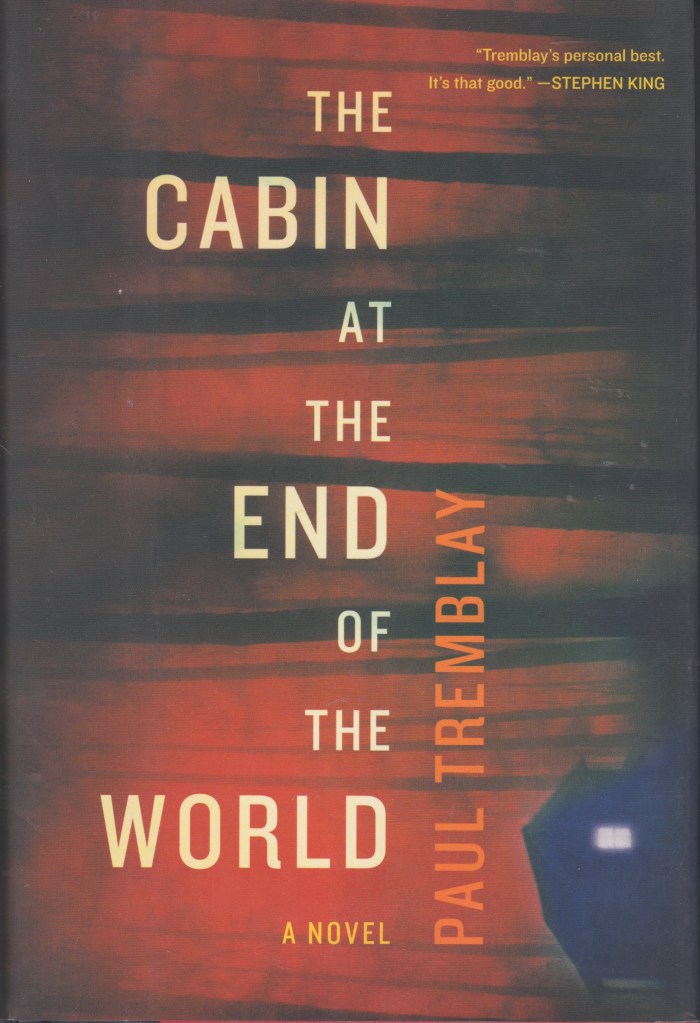
Paul and I blasted through eight (!!!) episodes of Season 3 of Babylon Berlin last night; the third season is just as high quality as the previous two, and I am now thinking I might want to move the book higher in the TBR pile. I had planned on reading Lovecraft Country next, preparatory to the show airing on HBO this month–it’s nice to mix a different genre in every once in a while–and I do love horror, when it’s well done. This one explores racism and Jim Crow through a reimagining of the notorious racist H. P. Lovecraft’s horror, (Lovecraft has been the subject of a raging battle in the horror genre for the last decade or so; he was an enormous influence on the genre and is still quite widely read to this day–but was also a horrific racist. I’ve actually never read Lovecraft–I tried when I was a teenager and it didn’t hold my interest–so I cannot comment on his influence, other than what others say about it) and the trailers for the show look terrific.
I also have some anthologies and short story collections to start digging into; I have Sara Paretsky’s short story collection and Lawrence Block’s The Darkling Halls of Ivy sitting on my end table. (I would love to have a story in one of Block’s anthologies; they are inevitably terrific, and I’ve enjoyed every one of them I’ve read thoroughly.) I’ve kind of been diverted away from the Short Story Project during these dark times; and since they can be gulped down relatively easily and quickly, I may be taking the Block with me to work today for reading during my lunch break; the lovely thing about short stories are they are short and can be finished in a short period of time, without the sadness that comes with having to set aside a truly fabulous novel one is reading.
I’ve read some very good books thus far this year; as I said in my entry about S. A. Cosby’s quite marvelous Blacktop Wasteland, these are terrific times to be a fan of crime fiction because so much wonderful stuff is being published these days. I honestly think the move towards greater diversity and publishing more diverse voices is pumping new blood and new life into our genre; this needs to happen every so often, I think–and with no offense intended towards anyone, there’s a tendency for creative fiction to stagnate, to continue upholding the status quo–and new voices are vital for our genre to survive.
I spent a good portion of yesterday going over the first ten chapters of Bury Me in Shadows, and yes, I was correct; a lot of work needs to be done on them still. But I made some good progress, and if I can get these first ten whipped into shape the second ten, and the final five, will be much easier to work on and correct and fix. It took me about five hours to get through everything, as well as realize what all needs to be done to pull this all together; I am hoping to find the time to do it all during this week so I can spend the weekend working on the next ten, hopefully getting them all finished so I can have the entire book ready to be turned in by the first of September.
Ironically, yesterday when I was talking about vampires, I buried my own lede; I actually have done some vampire fiction myself. (Clearly, I am terrible at this self-promotion/marketing thing.)
When I first moved to New Orleans, the city was somehow synonymous in my mind with vampires, which was primarily due to Anne Rice’s novels. This doesn’t, on its face, make that much sense; the novels are, for the most part, set in various other places around the world more so than in New Orleans. Louis, the main character of Interview with the Vampire, is from Louisiana, and he encounters Lestat and is turned originally in New Orleans–and while there are passages in the book set here and in Louisiana, the story itself is being told to the reporter in San Francisco. The Vampire Chronicles themselves occasionally return to New Orleans; but for the most part the stories themselves rarely take place here. (It would actually make more sense for me to have had that association from Anne Rice’s work made between New Orleans and witches; as most of The Witching Hour takes place in New Orleans.) After moving here I also discovered local author Poppy Z. Brite; his novel Lost Souls might actually be the definitive New Orleans vampire story. Since that well–New Orleans vampires–had been drawn from so often, so well, and so memorably by other authors already, I never really thought about writing vampire stories set in New Orleans. How could I compete with either Rice (with her legions of adoring fans) or Brite (with his smaller but equally adoring fan base)?
I was writing the Scotty series for Kensington when my editor there suggested I write a vampire novella for a collection they were doing called Midnight Thirsts; they had already done one volume of gay-themed erotic vampire stories that did very well for them, and I was enormously flattered to be asked to write one. As is my wont, when I started writing “The Nightwatchers” I began to slowly create an entire universe of supernatural beings, with rules; it actually grew from an original story I had written several years earlier with a female main character that was set in a theater group; more talented than the woman who always got the lead roles, she and her other actors believed that the woman getting the leads was sleeping with the director; one night at rehearsal a mysterious man shows up in the back of the theater, later approaches the main character and somehow–I don’t remember this part–shows her that her suspicions are true, and promises her eternity; she accepts his gift and then uses her new power to kill the director and the lead actress. It wasn’t a very good story, frankly, and was poorly thought out and poorly written, but it contained a structure that I wanted to use for “The Nightwatchers.” Several thousand words into the rewrite/adaptation I realized it didn’t work, so I got rid of the theater company and turned my gay male lead into a hustler who lived in one of those wonderful old decaying buildings in the Quarter, where you used to be able to get cheap rent if you didn’t mind rotting and tilted floors, insects, poor insulation, cracks in the walls, gaps around the windows, and staircases on the verge of collapse. His best friend, Rachel, lived in the same building in the apartment across the landing from his; she worked at a coffee shop on Frenchmen Street in the Marigny. One night while Rachel is working–one of those wonderful foggy winter nights in the city–an older man with a foreign accent is in the shop and she’s waiting for him to leave so she can close. Philip, meantime, is off to a regular client in Uptown New Orleans. Philip is, unbeknownst to him, being stalked by a vampire; the old man is a “Nightwatcher,” who is aware the vampire is after Philip and is enlisting Rachel’s help to save him.
It’s actually not a bad story, really; (I was rereading it because I couldn’t remember many of the details, like character names and so forth) I had even considered writing an entire novel based on the premise, in which this would serve as the introduction..but I never got around to it. Life has a habit of interrupting my plans.
A few years later, when I was asked to write another novella, this time using the Todd Gregory name, for Midnight Hunger, I wrote “Blood on the Moon,” and used a lot of the same concepts I had originally used for “The Nightwatchers.” (I had originally planned on having Philip, who was turned in “The Nightwatchers,” be the vampire my main character encountered in the Quarter during Carnival; but since I was using a different name, didn’t see any point in trying to link them other than using that same universe.) And since I was writing the “fratboy” books as Todd Gregory, I made the guys down in New Orleans for Carnival fratboys from my fictional fraternity’s Ole Miss chapter. Cord Logan was the main character, and he falls in with a fraternity of vampires when he “gets separated” from his buddies and explores the gay end of Bourbon Street. He also winds up getting targeted by a male witch, having to be rescued, etc etc etc, and the story ended with Cord being completely turned, and joining his new brotherhood. I brought Cord and his best buddy from the actual fraternity back in the story, “Bloodletting,” which eventually became the first chapter of my one and only vampire novel, Need–which I’d hoped to be the first in a series of supernatural erotic gay novels; the next was going to be Desire, and I was going to get deeper into the mythology I had created with that one, as well as bring in the rest of the characters from “The Nightwatchers” (Rachel and the old man were a part of Need).
Cord was a special breed of vampire because he not only had become a vampire but had also drank the blood of the male witch–which to some of the other vampires made him an abomination; and he certainly was one to the witches, which meant the Council of Thirteen, which oversees all the supernatural creatures of the world, wanted him dead–as well as his fraternity brother, whom he’d had to turn. That was going to be the primary plot thread of Desire, which alas never came to be.
Here’s how “The Nightwatchers” opened:
Gohome, old man, Rachel thought, tapping her black fingernails on the counter.
It was quarter till nine, fifteen minutes before she could lock the doors. Everything was clean, and the cash register was already counted down. All she really had left to do was dump the remains of the day’s coffee down the sink, lock the cash drawer in the safe, and turn everything off. She’d be gone by ten minutes after at the latest.
She glanced out the big windows fronting the coffee shop. The streetlight just outside cast a yellowish glow in the thick mist pressing against the glass. She shivered and looked back at the old man. He was sitting in one of the tables in the far corner, with the same cup of coffee he’d ordered when he came in around seven thirty. He hadn’t touched it. It was still as full as when she’d filled the cup, only no steam was coming off the black surface now. He didn’t seem to be watching for anyone, or waiting. He never glanced at his watch, which she’d spotted as a platinum Tag Heuer, nor did he ever look out the window. Every once in a while he would look up from his newspaper and catch her staring. He’d smile and nod, then go back to his reading.
Apparently, he was determined to read every word.
She stood up, bending backwards so her back cracked. The night had been really slow. The Jazz Café, even on weeknights, usually was good for at least thirty to forty dollars in tips. Tonight, when she’d counted out the tip jar, yielded less than seven dollars. Just enough to get her a pack of cigarettes and a twenty ounce diet Coke at Quartermaster Deli on her way back to her apartment. It wasn’t, she thought, wiping down the counter down yet again, even worth coming in for.
See what I mean? Not bad.
Although talking about this stuff has made me intrigued by it again; it really is amazing how many book ideas went nowhere for me. Maybe someday I will write Desire.
And now you see why I never get anything done. I call it creative ADHD.
And now we found ourselves at the dawn of a Saturday, the first day of a new weekend, which are always, inevitably, far too short.
I have requested a book from the library which is the beginning of my research into Chlorine; and I will be picking that up today as I run a couple of errands in the heat of the day. My goals for the weekend are to finish reading Blacktop Wasteland and get Chapters 1-10 of Bury Me in Shadows completed; which of course is preparatory to getting the next ten chapters revised and redone and rewritten over the next week. It is a rather ambitious program, to be sure–and I am also certain at some point I’ll get tired and stop, then berate myself all week that I’m not further along with it than I am. You know, second verse, same as the first.
Yesterday–hell, this entire past week–was not a particularly pleasant one, and my usual go-to when I am not having a good week–being kind to people and trying to help them–also blew up in my face, which, while incredibly unpleasant, is actually fine. Usually, when there’s not a pandemic, I get to be kind and caring and helpful to my clients pretty much every day of the week, and that, inevitably, always makes me feel better about the world (and people) in general. I miss having that daily release of kindness and caring, of being sympathetic to people and listening to their concerns and helping them to feel better about things, but…I also need to recognize that outside of my job, in the real world other people don’t necessarily give a shit about my help, or need it, or particularly want it, and that the people I help at work are actually my clients, and they want help, they’re worried and need someone to be empathetic and kind and ease their fears. I also need to remember that people in my every-day-not-coming-in-for-an-appointment life might actually see my offers of help and caring as something else entirely, and not receive it well. I also need to remember that people I only know through pleasant enough internet interactions actually aren’t people I know, and I should save my empathy, caring, and kindness for people who actually are my friends–of whom there are, in fact, a lot.
It was, all in all, a stressful week, an up and down rollercoaster of emotions and triggers and psychological distress. As I tell my clients at the office, it’s normal to feel stress and worry and fear about getting any kind of diagnostic medical test, even when you’re absolutely mostly certain there’s nothing to worry about–there’s always that gnawing fear that this will be the time the news is bad, and being who I am, I inevitably try to prepare myself for the news to be bad. This is no doubt the psychological residue of years of getting HIV tests and nervously waiting the two or more weeks to get the results back while people I knew were going into the hospital and not coming back out; of going in and having the blood drawn and going through the entire session of data gathering and demographics and behavioral risks that always –while not the intent of the counseling, of course–left me feeling like an irresponsible drunken whore who deserved to die. One of the reasons I went into this line of work was to make sure that everyone who comes in to get tested knows that the person testing them cares about them, doesn’t judge them, and is doing everything in their power to make them more comfortable and relaxed. I treat all my clients with dignity and respect and empathy, and I have found that actually works, for the most part, in the world outside of my testing office as well.
I really miss doing my job every day.
And yesterday, of course, I had to take Paul out to Metairie to get his eye cleaned, and while it’s been sixteen years, being reminded by something as innocuous as an eye cleaning appointment inevitably still weighs heavily on me emotionally. Some years I make it through the anniversary without thinking about it; most days it doesn’t cross my mind, and sometimes can go for great stretches of time without thinking about or being reminded of it; it’s now mostly a part of the distant past. Yet it still lives on in my memories, even if they are pushed to the back most of the time, they are still there, and when something like yesterday’s appointment rolls around those memories will crowd their way up to the front of my mind, and even though I try not to allow them to affect (for fuck’s sake, it’s been sixteen years) me emotionally, they still somehow weigh heavily on me and drag me down. All the way to Metairie yesterday I was snapping and cursing out other drivers–okay, I do that every time I drive because New Orleans seriously has the worst and stupidest and most careless drivers of anywhere I’ve ever lived–but yesterday I felt particularly angry with them all for putting our lives at risk with their carelessness and stupidity.
Which is why I never understand how people are amazed about the anti-vaxxers and the anti-maskers; all you ever have to do to see how little most people care about anyone else’s lives or safety is go for a drive. I saw a meme months ago about the “shopping cart test” being an excellent way of determining what kind of person someone is; do you leave the cart abandoned in the middle of the parking lot, blocking a parking space, or do you return it to the front of the store or to a cart corral which is a short walk, at most, from wherever you are parked? (It should come as no surprise to anyone that most people just abandon the carts where they are once they’ve finished using them–which means a low wage employee has to walk around the entire parking lot retrieving the carts, sometimes in the broiling sun. I always either put the cart in the corral or walk it back to the front of the store–but with the caveat being that in college I worked at Toys R Us and sometimes, in the broiling heat of 115 degree summer days, had to go on cart duty. I know firsthand how shitty of a job that is, and so I try to do my little part to make it easier for the unfortunate soul whose job it is. On the rare occasions when I eat fast food I always throw my trash away and leave the tray on the space provided in every fast food place for them, usually on top of the actual trash bin. I honestly don’t think it’s mean-spirited; I think it’s thoughtlessness for the most part–someone else will take care of this for me. And sure, it is someone’s job–but there’s no rule that says we can’t make things easier for someone doing their job by doing something as simple and easy as dumping your trash or returning a shopping cart to a corral–just like I don’t understand why people don’t drive with a concern for the safety of themselves, let alone others.
We finished the second season of Babylon Berlin last night with a massive binge of almost the entire season in one sitting, beginning at seven pm and finishing just after eleven–I hesitate to think we actually watched as many as seven episodes, but I really think we must have, because I seem to recall finishing Season One and watching the first episode of Season 2 on Thursday night. I cannot praise the show nearly enough–Paul and I are getting to the point where we have very little interest in watching American television programs anymore, because the foreign ones are so much better. There are about, on a quick check, three or four books in the series; I do have the first one on hand, and I may move on to it when I finished Blacktop Wasteland, hopefully this weekend.
So, my plan is to shake off yet another shitty week and get my head cleared and back on straight and dive back into my work. I am treating myself to making cappuccinos this morning rather than having my usual coffee; grinding beans and frothing milk and making espresso–it’s really not a lot of trouble, honestly; it’s more about the mess it makes more than the process–a lot of moving parts that need to be cleaned afterwards more than anything else. (I love the smell of beans being ground!) The kitchen/office is, as always on a Saturday morning, messy and in need of being put in order; the ongoing battle to get organized rages on.
Yesterday, after making my phone calls and while making my daily quota of condom packs, I discovered that the old ABC Movie of the Week The Night Stalker was available on Youtube –a lot of those old made for television movies from the early 1970’s/late 1960’s are on Youtube–. but not particularly good copies; whenever I try to watch one I am inevitably disappointed by the poor quality of the film. It seems like someone used their VCR to record them as a general rule, and then uploaded them–with all the usual glitches and scratchiness and poor reproduction one would expect from an old VCR tape (this was the case with some I have watched, like Go Ask Alice and The House That Would Not Die, which was based on Barbara Michaels’ brilliant novel Ammie Come Home); I was delighted to see that this was not the case with The Night Stalker–it was almost like the film had been digitized before uploading. The picture was very clear, the colors bright, and absolutely no fuzziness. The sound quality was also very high. The Night Stalker, and its sequel, The Night Slasher, were two of the more popular ABC Movies of the Week, and wound being the basis for a series, Kolchak: The Night Stalker, which was kind of a mid-to-late 1970’s version of The X Files. The series didn’t do very well, was pretty roundly mocked for cheesiness and poor quality, and didn’t last more than a season, but surprisingly enough, The Night Stalker holds up pretty well, despite being obviously dated and produced on a shoestring budget (the producer was Dan Curtis, of Dark Shadows fame); but the heart of the movie is Darren McGavin’s brilliant portrayal of Carl Kolchak, a world-weary, down on his luck investigative journalist who has been fired from many major newspapers in his career and had wound up working at a paper in Las Vegas, which at the time was kind of a backwater casino town (its still a casino town, but a much bigger city now; I don’t know if one would consider it a backwater or a comedown from Boston or Chicago or Washington anymore; maybe). The premise of the film is young women are being murdered, and their bodies drained of most of their blood; the second body is found in a dried out gulley with no footprints around it; which means it must have been thrown quite a distance to get where it was. Kolchak begins to slowly believe that there’s a vampire in Vegas (Vampire in Vegas is actually a great title), despite resistance from both the higher-ups at the paper and the police, and he begins to gather the evidence. He tracks down the vampire finally, and kills it by driving a stake through it’s heart just as the police arrive–and of course, his story is spiked and he is threatened with prosecution for murder if he doesn’t leave town. The girl he is seeing, who works in a casino, is played by Carol Lynley; she is also forced to leave town without even getting a chance to say goodbye to him. The story holds up pretty well–and it is interesting seeing Las Vegas as it was in the early 1970’s, which is vastly different than it is now; and watching it made me a little sad–the death of print journalism for the most part over the last twenty years has forced that kind of character, once so integral to the crime genre–the crusading, world-weary journalist–into retirement. Journalists and journalism was also a popular genre of television and film, too–remember Lou Grant? I had always wanted to write a book about a newspaper and how it operates, a kind of Arthur Hailey type thing, with characters at every level, from the publisher down to the copy clerks. Maybe it could still be done today; I don’t know. It’s an interesting idea, but one that has languished in my files for decades and will probably continue to do so.
I also think a study of the evolution of the vampire story would be an interesting read, going back to pre-Dracula writings and then tracing its evolution through modern times; how Dark Shadows and Chelsea Yarbro Quinn changed the face of the vampire tale and made Anne Rice’s novels possible; and all the other vampire stories, like ‘salem’s Lot and Poppy Z. Brite’s Lost Souls. Maybe someone already has? I know Stephen King covered some of this material in Danse Macabre, but that is nearly forty years (!) out of date, and I doubt he will be doing an updated version anytime soon.
And on that note, tis back to the spice mines with me. Have a lovely Saturday, Constant Reader.
So I had a new and interesting experience yesterday: a mammogram.
Yes, that’s correct, I said a mammogram. I’ve had a lump in my right pectoral for years now, and two others just below. I had asked my doctor about them several times over the years during routine exams, but they always kind of blew it off, saying it was nothing to worry about, and so I never did…although, occasionally during Breast Cancer Awareness Month, I’d touch it thoughtfully, and wonder. As I said, this last time when I went to for my check-up, and she was so relentlessly thorough, she came across it while examining me and said, “How long has that been there?” and I replied, “well, a long time, frankly. I’ve always been told not to worry about it.” She frowned back at me. “Well, if it hasn’t grown or been painful, it’s probably just a fatty cyst, which is a genetic thing and nothing to worry about, but by the look on your face you’d prefer to know for sure, wouldn’t you?”
And so the mammogram was yesterday. And it was precisely that, a fatty cyst which is genetic (note to self: thank parents for that, along with tendency for high cholesterol and high blood pressure), and not only that–there were two more in my left pectoral I wasn’t even aware of. They aren’t harmful or dangerous in any way, and I was advised against having them removed–“it just leaves an ugly scar, and no one will ever notice them unless they fondle your chest”–and so made the decision not to bother with them. And yet–I felt an enormous relief when the radiologist told me all of this, so clearly on some levels it was stress and worry I was retaining.
As we tell our clients at Crescent Care, you really need to advocate for yourself. Going forward, I am not going to let my doctors with their silly medical degrees pooh-pooh a concern that is actually very real to me. There’s no reason I couldn’t have had this subconscious worry put to rest years ago. Lesson learned.
And now I can officially tell you, Constant Reader, that I have placed another short story! “The Snow Globe” will be this coming year in Chesapeake Crimes: Magic is Murder, edited by Barb Goffman, Donna Andrews, and Marcia Talley. I am quite thrilled by this–as I always am whenever I place a story somewhere–and have had to sit on the news for a few days before the official announcement. I still have two out on submission that are pending, but I’m having a fairly lovely year when it comes to placing short stories thus far. “The Snow Globe” has an interesting genesis; a thread on a friend’s wall about Hallmark Christmas Movies and an enchanted snow globe that featured in one, and I commented “I’d be more interested if it were CURSED”, and this was around the same time a publisher was doing a War on Christmas anthology, so I decided to write about a cursed snow globe for it. I messed up the story on that iteration; the notes I got with the rejection note showed me that I had, indeed, made the wrong decision with the story (which I had suspected) and so even though it wasn’t being included (that anthology would up not happening, either), I went ahead and revised it based on those notes and changed it to the way I had originally thought it should be before I second-guessed myself and changed it. And now it has found a home.
The funny part is the opening line was actually lifted from an idea I had for a Halloween story for an anthology the Horror Writers Association was doing (I never wrote this story). One night, years ago, I was standing on the balcony at the Pub/Parade during Halloween weekend (in my usual slutty whatever costume; my costume default always involved slutty in the title and involved lots of exposed skin) and someone came out of Oz across the street as Satan–horns and a wig and goat legs, but also a bare torso body painted red–and I thought, wow, Satan has a great six pack and laughed, thinking that’s a great opening line for a story. I was going to use it for my Halloween story, along with the Gates of Guinee; I never wrote the story, but when I was figuring out my cursed snow globe story, I thought, You know, “Santa has a great six-pack” is also a great opening line, and you can work Guinee into this, and thus “The Snow Globe” was born.
And yes, it’s a story about a gay man placed in a mainstream anthology, which pleases me even more. (I mean, an opening line like that would have to be the start of a story about a gay man, wouldn’t it?)
I watched two movies while making condom packs yesterday: 2001 A Space Odyssey and Altered States, which, while they may not seem similar at first glance, after watching them they kind of are. I’ve never really been a huge fan of Stanley Kubrick (I hated his version of The Shining; Barry Lyndon was probably the most boring film ever made; and while I enjoy A Clockwork Orange…it’s not something I’d care to watch again, frankly), and when I watched 2001 for the first time, years ago, when it debuted on television, all I could think was I don’t understand this movie at all. I went on to read the book, by Arthur C. Clarke (who co-wrote the screenplay with Kubrick), which sort of explained what was happening better, but it wasn’t until I saw and read the sequel, 2010, that it all began to make sense. Visually and sound-wise, it’s an exceptional film, particularly for when it was made; no science fiction space movie had looked so realistic before, and would Star Wars have been possible without 2001? But as with other Kubrick films I’ve seen, the acting wasn’t terrific (although Keir Dullea is stunningly gorgeous to look at; he came to the Tennessee Williams Festival a few years ago, and has aged spectacularly well), and there was a distinct coldness to the movie, a distance that I felt was deliberate–to show how vast and empty and cold space is. It was also kind of funny in that the flight out to the Moon in the beginning was a Pan American flight, and on the station there was a Howard Johnson’s restaurant; they had no way of knowing that either, at the time the movie was made, would be no longer in business by the actual year 2001. It was also interesting that women were still in subservient roles in this fantasy 2001, except in the case of the Soviets (also no way of knowing there would be no Soviet Union by the actual year 2001); which always makes futuristic films interesting time capsules once the future they depict has come and gone in actuality. The basic plot of the movie–sandwiched in between the strange appearances of the monolith at the dawn of mankind and encountered again at the end by Dave–is a horror/suspense tale, told unemotionally and rather coldly–about the malfunction of the computer, HAL 9000, who controls the spaceship and begins trying to kill the astronauts aboard, which undoubtedly also influenced Alien.
Altered States is a Ken Russell film, starring a very young William Hurt and Blair Brown. Hurt is still in the full flush of youthful male beauty, and like in his other early films I’ve watched lately (Eyewitness, Body Heat) his body and looks are highly sexualized; he’s naked a lot in this, and there’s even a brief view of his penis in one shot, which I am sure was quite shocking for the time. Like Kubrick, I’ve never been a particular fan of Ken Russell as an auteur; Altered States is a deeply flawed film that could have been so much more. Hurt and Brown play highly educated academics at the top of their field who eventually become professors at Harvard. Hurt is primarily interested in his field of research; he believes that in a heightened sense of consciousness, one can tap into the millions of years of human development that is locked into our brains and DNA. He is conducting experiments into altered consciousness in the beginning of the movie, by putting himself into a sensory deprivation tank (remember those?), which is part and parcel of the times in which the film was made. Eventually, he discovers there’s a remote native tribe in the mountains of Mexico that still performs, and lives in the same manner, as their Toltec ancestors; they also have visions and regress when taking a type of brew made from a certain kind of mushroom only grown where they live during a mystical ritual. (Interesting aside: Greek actor Thaao Penghlis, who gained fame playing Tony DiMera for decades on Days of Our Lives, plays the Mexican anthropologist who not only tells Hurt about this tribe, but takes him there–because he was dark-skinned with dark eyes and dark hair, of course he was convincingly “Mexican” to play the part) As expected, things go terribly wrong and he becomes more and more obsessed; by taking the drug concoction made by this tribe while using a sensory deprivation tank he is able to unlock primordial memory as well as regress physically as well, until his friends intervene and his love for Brown somehow manage a strangely weird happily ever after. It’s really just another film warning about the hubris of scientists and playing God, in the long line of tradition dating back to Shelley’s Frankenstein and Stevenson’s Dr. Jekyll and Mr. Hyde. Blair Brown is also naked a lot, for no apparent reason other than to show off her body, and it was, as I said, flawed. But the climactic scene where he changes again physically and has to fight off regressing to early man is also reminiscent of both the beginning and end of 2001–which shows the birth of mankind and intelligence, and how Dave (Keir Dullea) becomes, thanks to the strange monolith, also regresses and changes and evolves, into what was called the Starchild. (You really have to read or watch–or both–2010 for any of that to make sense.)
We also continue to watch Babylon Berlin with great enjoyment; we have but one more episode to go in Season 1.
God, it was miserably hot yesterday. I know, it’s New Orleans in July; the dog days of summer (I’ve never really quite understood what that meant, honestly; probably something about how a dog pants or something–so hot I was panting like a dog, or something along those lines anyway–it always makes my think about my grandmother’s mutt dog, Shag, lying down in the shade and panting) as it were, but it still does bear comment periodically about how motherfucking hot it is here sometimes in the summer.
I slept deeply last night, and didn’t really want to get out of bed this morning. I’ve been feeling tired again lately–not that horrible exhaustion I had for those months earlier this year, thank the heavens–and yesterday was one of those days again. It may be the heat, which is the most likely explanation, but I am not wanting to go back out into it today either–I am debating the wisdom of waiting to go to the grocery store until tomorrow or even seeing if it can be put off until next week sometime–which is probably self-defeating in some ways; but I also need to write this weekend (since I didn’t do much of that this past week) and I worry that going out into the heat and lugging bags of food into the house will defeat me for the rest of the day (which is always a possibility).
Decisions, decisions.
During our The Faking of the President on-line promotional appearance the other night we were talking about the 1970’s–if I considered myself a child of the that decade, and I actually do; I do remember bits and pieces of the 1960’s, but I turned nine in 1970 and that decade more shaped who I am rather than the 1960′–and as I mentioned yesterday, I’ve kind of started looking into the films of that decade a bit more. I kind of wanted to watch more Hitchcock movies yesterday–I was going to go for some of his 1970’s work, Frenzy and Family Plot, to be exact–but they are no longer on Amazon Prime for free (they were for quite a while) and that interface has also changed again and become even more user unfriendly; I cannot understand why Amazon cannot get its shit together on their streaming service, but came across the original film version of The Stepford Wives, either on Prime or the TCM app on HBO MAX, and settled in to watch that again. It’s a film (and novel) that is firmly anchored in the paranoid zeitgeist of the 1970’s, and fits very well into a reexamination of what was going on in that decade.
As I mentioned on the live stream the other night, the 1970’s were still a decade where wives were still defined as people in terms of their husbands; it was still very difficult for women to get credit on their own (this was actually how the subject came up–student loans and student credit cards), and I mentioned that my mom’s first credit wasn’t actually in her name, but as Mrs. (Dad) Herren. She had been working as long as I can remember, but her financial identity was still as the spouse of my father. The Women’s Liberation Movement began in the late 1960’s–espousing the radical concept that women were actual human beings in their own right and didn’t solely exist in terms of the man in their lives–and the 1970’s was when the stigma of divorce began to lessen; women no longer stayed in bad marriages or with abusive husbands. Rape was still basically a misdemeanor; spousal abuse was accepted and almost expected, and women were very much second class citizens, primarily defined as wives and mothers (this has changed somewhat, but really, not enough). Ira Levin wrote The Stepford Wives as a sort of social satire, but it was no less terrifying as a result; the revenge of men against women’s liberation. (You never hear the terms Women’s Lib or ‘libbers’ anymore) The Stepford Wives basically took the concept of how dehumanized women were to the nth degree; men really only want beautiful women who don’t think for themselves, think they’re wonderful lovers, live for their men and children, and should primarily focus on making sure their homes are spotless and perfect so their men don’t have to worry about anything but their jobs. The film leaned into this fully; I think the best part of the book was the fact that it never really explained what was going on in Stepford; it was alluded to, of course, but the truth was so terrible that the women–main character Joanna and her friend Bobbie–couldn’t possibly imagine what it was.
But seeing the actual Stepford wives, played by actresses, up on screen, truly epitomized not only how horrible what was happening in Stepford was, but how strange it was for Joanna and Bobbie to deal with, strangers who had only recently moved into town. Paula Prentiss played Bobbie–and why she was never a bigger star was something I never fully understood–and of course, stunningly beautiful Katherine Ross played Joanna–which made it all the more terrifying; she was so perfectly stunning and beautiful, how could you possibly improve on Joanna? The film of course couldn’t leave the truth ambiguous and merely hinted at; which was part of the power of the book…you never were completely sure if Joanna was simply going crazy because the truth of Stepford was presented so casually and normally. (Don’t bother with the remake; despite a stellar cast, it’s truly a terrible movie.)
The Stepford Wives, book and movie, both also fit perfectly into the paranoia of the decade; the 1970’s was a time where conspiracy theories abounded; there was a lot of interest in UFO’s and the Bermuda Triangle and Revelations/the end of the world, not to mention after Vietnam and Watergate mistrust of the government and elected officials were higher than ever before. But I also see The Stepford Wives as part of another literary trend/trope of the decade; the 1970’s was also a time when, as I mentioned on-air the other night, that white flight from the cities to the suburbs and rural eras began in earnest (although it was never, in the books, attributed to its real root cause: integrated public school systems and neighborhoods). There are at least three novels I know of that take the white flight to the rural areas (better schools! clean air! zero crime!) and turn them into horror novels–Burnt Offerings, The Stepford Wives, Thomas Tryon’s Harvest Home– where the urbanites discover far greater horrors out in the country than they ever encountered in the city; there are probably more (I am not certain The Amityville Horror fits into this category), but those three would make a great starting point for a thesis/essay. (Interesting enough, both book and movie of The Stepford Wives ends with a throwaway bit about the first black family moving into Stepford; I would absolutely LOVE to see a reimagining of the film by Jordan Peele from the perspective of the black family moving in, because the paranoia of the wife beginning to suspect that all is not right with all these white women who are devoted to housework and their families could also be played with from a racial as well as gender perspective.)
And as I watched the film again yesterday, I realized that my mother, with her obsessions with cleanliness and order, kind of was/is a Stepford wife.
I plan on spending the rest of this morning getting my kitchen/office–horribly out of control yet again–into some semblance of order before diving back into Bury Me in Shadows. I’d like to get the changes necessary done to the next three to four chapters today, and perhaps another four to five tomorrow, which would get me almost to the halfway point. I also need to compile a comprehensive to-do list for the coming week. I also want to spend some time with Blacktop Wasteland today as well.
We started watching a new series last night–Curon, which is an Italian show set in the Tyrol, in a region that changed hands between the Austrians and the Italians numerous times. The town is built on the shores of a lake, where the original town was submerged when the river was dammed; all that remains of the old town is the church’s bell tower, jutting up out of the water. There’s a story that if you hear the bells ringing, you’re going to die–and some seriously weird shit is going on in this town. The show opens with a flashback to the past, when a seventeen year old Anna is hearing the bells ringing and her father orders her out of the massive luxury hotel they live in; she’s not sure but she thinks she sees herself shooting her mother–a nightmare that haunts her the rest of her life. Flash forward to the present, and Anna is coming back to Curon, after leaving an abusive (it’s hinted at) husband with her twin children, now seventeen–Mauro and Daria–from Milan. Her father makes it clear they aren’t welcome there–but when Anna disappears the next day the twins are there to stay. It’s filmed very well, and there are apparently tensions still in the village from the olden days of the war between Austrians and Italians; Mauro is also hard of hearing and wears a hearing aid; Daria is boisterous, outgoing, and kind of a badass; and the teenagers they encounter, both outside of school and in it, are also kind of weird. There’s all kinds of history there, slowly being revealed to the viewer, while the tension continually builds. What is the dark secret of the town of Curon?
I also, while typing that last sentence, realized Curon also fits in with the trope of the urbanites coming from the big city to the country, and discovering far greater horrors there than they left behind in the city.
I’ve always enjoyed a good mystery with a supernatural edge to it; the line between crime fiction and horror is often blurred. Take, for example, The Silence of the Lambs. It’s often lauded as the first horror film to win an Oscar–but there’s no supernatural beings involved, no ghosts or vampires, or anything like that; the protagonist is an FBI agent trying to catch a serial killer…so is it really horror? Are slasher films/books actually horror or crime? (I think it depends on whether or not the slasher is actually something not human–like Freddy Krueger and Michael Myers, or just crazed human killers, like the Scream movies or even the first Friday the 13th, which is the only one I’ve actually seen.)
But then it’s really hard to define and delineate what work falls into what genre; and oft-times, there’s crossover between the various ones–there’s western horror, for example, just like romantic suspense bridges the line between romance and mystery. So where precisely on the spectrum of genre does the work of Barbara Michaels lay? There are often supernatural elements to her fiction; sometimes there aren’t. Ammie Come Home is my favorite ghost story of the many I’ve read–and I enjoy it just as much every time I reread it–but it’s also a mystery, and there’s also some romance in the book. The romance itself is rarely the focus of her books, but it is there and cannot be ignored; likewise, most stories that have supernatural elements (ones that are actually supernatural in origin or man-made frauds) inevitably have some mystery to them; what do the supernatural forces want–or in the case of fraud, what are those who are committing the fraud after? What do they want?
House of Many Shadows was the second Barbara Michaels novel I read, and remains one of my favorites to this day.
The sounds bothered Meg most. Calling them auditory hallucinations helped a little–a phenomenon is less alarming when it has a proper technical name. Meg had always thought of hallucinations as something one saw. She had those, too, but for some illogical reason it was easier for her to accept visual illusions as nonreal than to ignore the hallucinatory sounds. When you were concentrating on typing a letter, and a voice says something in your ear, it was impossible not to be distracted.
The problem was hard to explain, and Meg wasn’t doing a good job of explaining. But then it had always been difficult to explain anything to Sylvia. Sylvia knew all the answers.
“The dictaphone was absolutely impossible. I couldn’t hear what Mr. Phillips had said. Voices kept mumbling, drowning out his voice. Once the whole Mormon Tabernacle Choir cut out the second paragraph of a very important memo.”
She smiled as she spoke. It sounded funny now, but at the time it had not been at all amusing.
Sylvia didn’t smile. “The Mormon Tabernacle Choir? Why them?”
Meg shrugged helplessly. “No reason. That’s the point; they are meaningless hallucinations. The doctor says they’ll go away eventually, but in the meantime…Mr. Phillips was very nice about it, he said he’d try to find an opening for me when I’m ready to work again, but I couldn’t expect him to keep me on. I had to listen to some of those tapes three times before I got the message clear, and there was always the chance I’d miss something important. And I’d already used up all my sick leave. Three weeks in the hospital…”
“You should be thankful you weren’t killed,” said Sylvia. “To think they never caught the man who was driving the car! New York is an absolute jungle. I don’t know how you can stand living here. May I have another cup of tea?”
Meg poured, biting back an irritated retort. She couldn’t afford to offend Sylvia, especially now, when she was about to ask a favor, but the cliches that were Sylvia’s sole means of communications had never annoyed her more. Why should she be thankful she hadn’t been killed? She might as well be thankful she didn’t have leprosy, or seven-year itch; or thank God because she had not been born with two heads. It was just as reasonable, and a lot more human, to feel vexation instead of gratitude. Why me, God? The old question, to which there was never any answer…Why did it have to be me in the path of that fool driver; why did I have to land on my head instead of some less vulnerable part of my anatomy; and why, oh, why, God, did Ihave to have these exotic symptoms instead of a nice simple concussion? Why do I have to be the poor relation, with no savings to fall back on, while Sylvia…
Sylvia’s close-set gray eyes were intent on the teapot. “Such a nice piece of silver,” she murmured.
I love Barbara Michaels’ work, and one of the happiest days of my reading life was the day I discovered she also wrote as Elizabeth Peters, which meant even more reading joy for me (and eventually, I came to prefer the Peters books to the Michaels; but make no mistake, I love all the books). The set-up for House of Many Shadows is right there in the beginning; poor Meg’s life has been upended by being hit by a driver who didn’t stop, and because of the hallucinations she suffers from as a result–with no idea of how long she will suffer through them–she is unable to work, and her distant relative Sylvia–whom she doesn’t seem to care much for–is her only hope. Sylvia–we all know people like Sylvia; without a sense of humor and whose response to any crisis is to come up with a plan and make it work–has a house in the Pennsylvania Dutch country, she’s not sure what she wants to do with it, but Meg can stay there rent-free, and Sylvia even comes up with a “make-work” solution so Meg won’t feel like she’s freeloading (it isn’t until much later she realizes that is what Sylvia was doing; at the time she kind of resents it); doing an inventory of the contents of the house and its attic, as Sylvia is thinking of donating the house to the local historical association. Sylvia’s stepson from the previous marriage that wound up with her owning the house is living on the property as a caretaker, in a cottage behind the main house–Meg remembers him from their childhood as a horrible tease she couldn’t much stand–and soon she is off to the wilds of the Pennsylvania country side.
At the end of the second chapter-the first after she arrives at the house–Meg experiences a hallucination in front of Andy, the stepson, and their relationship hasn’t changed much, apparently–which rattles Andy terribly; when it happens again a chapter or so later is when Andy confesses that he, too, has seen the same hallucinations she did–so are they hallucinations? Or are they seeing ghosts?
This set-up, of course, is absolutely brilliant: what better heroine for a supernatural story than a woman who’s had a brain injury that causes her to see hallucinations? The chilling touch that Andy has also seen the same hallucinations in the house that she has is terrifying; and as she slowly gets to work in the attic, she and Andy start discovering things about the history of the house, including the fact that the original property owners, back before the American Revolution, were brutally murdered in the original house that stood on the property; the current one was built over it. So, what happened 250 years earlier? Both Meg and Andy become a bit obsessed with the ancient murders, and as they continue to see things in the house, they slowly but surely start putting together the truth of what happened to the original property owners–while falling in love, of course.
One of the great things about the Michaels books is that she brooks no foolishness with her supernatural elements; it’s clear Dr. Mertz (her real name) was well read on the subject of the occult and other belief systems–they pop up, again and again, throughout the Michaels novels, and in many instances, I first heard of certain occult books and cults from reading them. I know I first read of The Golden Bough in a Michaels novel; Dr, Mertz knew her folklore and occult religions, and made very good use of that knowledge, not just in this book but in others–Prince of Darkness comes to mind–and of course, she was an excellent, excellent writer.
House of Many Shadows also holds up; despite the dated quality of the book–no Internet or computers or cell phones–it’s still a great story.