Something’s Wrong

At some point over the past decade, a movement started on-line to promote the voices of minority writers writing about their experience in fiction, called “#ownvoices”. The focus of the tag was primarily for non-white writers, whose work has been so long marginalized and kept out of the mainstream of publishing; forcing those writers to either not see print or go with either a small press or self-publishing. It brought up some interesting conversations about who gets to tell what story, the importance of representation in fiction, and the need for greater diversity in the popular culture.

Recently, the “who gets to tell what story” debate took on an entirely new meaning and went in an entirely different direction with the publication of a piece in the New York Times that became known as, for simplicity’s sake, “Bad Art Friend.” Who owns a story, and who gets to tell that story? Both women on either side of the conversation appeared, to me, to be kind of assholes; but when it comes down to brass tacks, I strongly believe that if you feel your own story—the story of your own life—belongs to you and only you, then you need to write it; not tell the story to other writers (or other people in general, really) and expect them not to use it. Writers are thieves, every single one of us; anything we ever are told, read, see, and hear goes into the computer of our mind and at some point, might come back out in a fictional form. The fact that the “kidney story” was used as a jumping off point for a short story by a writer fascinated by the story of the woman who donated said kidney—and her need for attention predicated on the ownership of that story—shouldn’t surprise any writer; as I read the piece in the Times myself I kept thinking, I don’t know that I could have resisted writing about this woman either—it’s such a fascinating place to start an examination of both altruism and narcissism, how could anyone resist? I also started, in fairness, to think of the story in terms of crime fiction—how would I build a crime story out of this?

I do know, however, how shitty it feels to have my story taken and told in a way I didn’t much care for; yet that doesn’t mean I couldn’t tell my story how I wanted to, if and when I choose to. Everyone’s take on this has been interesting to watch on social media–you can certainly tell how personal experience effects other writers’ opinions on things–but I think the bottom line of it all is, don’t be a shitty person. Everyone involved in that whole mess was kind of a shitty person, at least in how it was reported–and again, those people involved in the group chat/email or text chain or whatever the hell it was and were actually named in the Times piece? Their story is now being told by someone else. Karma? Serendipity? The arc of justice? Who knows? Who gets to decide?

So, who does get to tell whose story?

Most of my work is fiction, and the majority of it is also set in New Orleans. New Orleans is one of the few cities in the United States with a majority minority population (at least it used to be; I’m not as certain post-Katrina of that fact as I was pre-Katrina) and it would be impossible to write about New Orleans without including non-white characters; that would be science fiction. It might be possible to live in New Orleans and never, ever come across a non-white person; I don’t see how, frankly, but, on the other hand, I’ve read any number of lily-white books set here. The casts of my two series contain one person who is non-white; police detective Venus Casanova, a character I love deeply and have always wanted to write more about. I had two ideas for Venus novels over the years—Stations of the Cross is one, and more recently, Another Random Shooting—but I always held back from writing either of them because I am not a Black woman. I don’t know what it’s like to grow up as a Black woman in New Orleans or in the South, let alone the struggles faced with being a Black woman working for the New Orleans Police Department—the racism, the micro-aggressions, the misogyny—and while I still believe both books would be good ones, I still am not entirely comfortable writing from that point of view—nor am I comfortable taking a publishing slot (if it came to that) from an actual Black woman crime writer, of which there aren’t enough as it is.

Bury Me in Shadows didn’t present the same kind of issue that I have with writing from Venus’ perspective (I also started writing a short story once with her as the main character; I revised it to be from the point of view of her white gay partner on the force, Blaine Tujague), the issue here was that I was going to be looking at and examining the racist history of the South and issues of race themselves…from the point of view of a twenty year old white gay kid. Just what the world needs, right, another white take on racial injustice in the southern United States? The possibilities for offending people were endless; do I have blind spots in my white privilege when it comes to racial injustice? Would those blind spots come across in the book? (I don’t care if I offend Confederate apologists, none of whom would be reading anything I write to begin with for fears of gay contagion.)

One thing my main character Jake’s mother always emphasizes to him is “the heritage is hate, Jake—never forget that.”

Jake has no pride in the fact his ancestors enslaved people, or in the family history of what was once a plantation that has now dwindled to a small amount of acreage that is mostly wooded; his mother refused to raise him that way, and I wanted to show how possible and effective—and important– breaking the generational link passing white supremacy along for centuries can be. Like most white people, Jake really hasn’t thought much about the history or his own privilege—there’s a part in the book where he thinks about how many students of color there were in his elite, private Catholic school—and being there, on the ground soaked in blood and perspiration and oppression, he has no choice but to face up to it, think about it, and be appalled by it all. I didn’t want to write something that could be called, or considered, an oh look another white guy explains racism or even worse, oh look another white person discovers racism is actually a thing and is horrified book; but the land is definitely haunted by its past.

Another theme I worked on within the book is the history of this county is written in blood. That’s a recurrent theme within any of my Alabama fictions; I tend to always write about my fictional Corinth County, and its history is actually very heinous. There’s a short story I’ve been working on for years called “Burning Crosses,” about a lynching that happened there many years ago; during the horrors of the Jim Crow era—in which a young white girl, a student at the University of Alabama, comes to Corinth to research the lynching for the Justice Project—a fictional group at the University that researches all racially motivated killings in the South since Appomattox, to name the victims and so the memories never fade with time. Again, not sure if I am the right person to tell this story, and the possibilities for giving offense with it are endless; so, I continue to work on it, tweaking here and there, and maybe someday I will try to get it published. But Corinth County’s bloody history is very real in my mind, and there are countless book and story ideas (and in-progress stories) I have for continuing to write about it.

Whether I will or I won’t remains to be seen, of course, but there are files and files and files…

Because of course there are.
 

Take Good Care of Her

As the launch date for my book draws nearer and nearer, I find myself not experiencing the kind of stress and anxiety that I usually feel as the clock winds down. Maybe it’s because I am making the effort to promote the book this time around? Finding the time to do so? Paying more attention than I usually do when I have a book coming out? I don’t know why I am feeling so much more relaxed than I ordinarily do in the final days before this release, but it’s nice to have some awareness—other than the usual stopping in the middle of something to think, oh yes, I have a book coming out—is it today or tomorrow? I should probably do something about that, shouldn’t I?

It really is a wonder that I have any career of any kind, seriously.

And maybe it’s just the swing back from the twenty months or so of nightmarish existence, but I do feel like I am doing good work when I am writing these days. I don’t really remember much of the final push to get Bury Me in Shadows finished and out of the way, but I do remember doing the page proofs and thinking, you kind of did what you wanted to with this, well done! One of my big worries whenever I start writing something new is the fear I’ve already written the story, albeit in a different form; I was worried, almost constantly, that I was plagiarizing Lake Thirteen, my other ghost story, in this book. But the stories are very different, and the main character in each are quite different from each other. I think the mood in both books—the atmosphere I was creating—are very similar to each other, but I was trying to do something Gothic and almost dream-like with both.

As I mentioned the other day, I’ve always worried about writing about the South, and Alabama, in particular. How does one write about the South without dealing with the racism, present and past, of the region? How do you write honestly, with realistic Southern characters, without touching on that third rail of enslavement and war? Not all Southerners are racists, of course, just as not all Southerners are homophobes (I do make that point—about them not being all homophobes—in the second or third chapter of the book). But you cannot write about the South without mentioning that whole “Lost Cause/states’ rights” nonsense; that misplaced pride in something that was, at its core, evil. I was not educated in the South; I started school in the Chicago public education system; we moved out to the suburbs for junior high and my first two years of high school, finishing in Kansas. I was never taught in school that the root cause of the Civil War was anything other than slavery; and in all my extensive outside reading of American history, I never came across any of that. (I knew that the Southern politicians were all shouting “states’ rights!” in the lead-up to secession; but this was subterfuge. They couldn’t win the argument about slavery on moral grounds, so they fought against emancipation on Constitutional grounds. And, as I often note whenever someone trots out the tired states’ rights canard, the only right they cared about was the right to own slaves, and they sure as hell wanted the Fugitive Slave Act enforced against the will of the free states, didn’t they?)

I also like to point out that all those lovely, wonderful society ladies in Gone with the Wind—Melanie, Mrs. Meade, Mrs. Elsing, Mrs. Merriweather, etc.—would all be full-on Trump voters today. (I’ve not read the book in years, but while I do remember that in several places, Ashley talks about how he would have freed the enslaved people at Twelve Oaks had the war not come; but Melanie talks about the Lost Cause with all the fervor of a believer at a revival meeting in a tent…which makes Melanie, theoretically the moral center of the book, the biggest racist of the main characters in the story—and yes, I know, Margaret Mitchell did a great job of propagandizing the “Cause” as the Confederacy rather than slavery; but there’s an awful lot of racism and “they were better off enslaved” in that book, which, along with the movie, has done a great job of romanticizing something hideous and ugly )

I could write volumes about Gone with the Wind and how problematic both book and movie are (not the least of which is that Rhett rapes Scarlett but she enjoys it), but that’s an entirely different subject, deserving of its own entry (or two or three) or an essay—but I will say this one last thing on the Gone with the Wind subject: since the movie was released, for decades it imprinted on the minds of white Americans “this is what the antebellum South, and enslavement, was like”—when it was actually nothing of the sort and bore no resemblance to anything true or right.

One of the things I wanted to make clear with Bury Me in Shadows is that the shadow of white supremacy can be overcome and the continuing link, from generation to generation (parents teaching it to their children, who teach it to their children) can be broken by a person not blinded to realities or brainwashed by romantic fantasies; that character in this book for me is Jake’s mother, Glynis Chapman. Glynis rejected the white supremacy/racism she was raised with and did not pass that on to her son. I’ve always felt—and this was best exemplified with that Miss California who all those years ago blamed her homophobia on “It’s how I was raised”; it’s how I was raised is perhaps the laziest, most disgraceful, and embarrassing excuse ever given for perpetuating hatred and discrimination. It essentially states that you are incapable of thinking logically and rationally for yourself; you are incurious, and your parents are God-like, with beliefs and values that are above question. At least own your bigotry and don’t blame it on your parents because at some point, you must become your own person; you either continue to blindly believe everything your parents told you, or you actually become a functional human being capable of making up your own mind rather than simply blindly parroting what you were taught. I began questioning everything quite young, frankly; more so than most, but still to a far lesser degree than I should have. I didn’t question American mythology as young as I should have, but I did start questioning religion quite young–and I am also happy that I never fossilized my beliefs and values but rather kept them fluid and receptive to change based on new information, or more in depth thought.

Racism, and white supremacy, are evil. Period. Race theory has no validity or origin in actual science—the genetic differences between white people and non-white people are so infinitesimal as to be practically non-existent—and were created for no other reason than to justify western European colonialism, exploitation, and looting the resources of the rest of the world for power and money. Originally cloaked in religious fervor (if there was gold and riches for the crown, there were souls to be won for the cross), even American expansionism at the expense of the indigenous people of this continent was called manifest destiny, which gave mass genocide and the theft of land a cloak of holiness: it is the destiny of the white man to rule over others and expand his empire.

And it can’t get more white supremacist than that, can it?

I’ve never understood the notion of racial pride, frankly; likewise, I’ve never really grasped the mentality behind ancestor-worship, as evidenced by Confederate apologists. Regardless of reason, the truth is, and always has been, that the Southern states tried to destroy the union, period. They fired on the flag. The great irony that the Confederate apologists also consider themselves to be more patriotic Americans than those who think the Confederates were traitors–talk about cognitive dissonance–is something that always amuses me. How do you chant USA! USA! during the Olympics or other international sporting events of any kind when you have a Confederate flag decal on your car? Why are you do defensive about the crimes of your ancestors, when you have no more control over what they did during their lifetimes than they have over yours? No one can help who they are descended from and no one pays for the crimes of their ancestors. Confederate monuments never should have been erected (again, the groups that raised the money for them and put them up were run by women like Melanie Wilkes and Mrs. Meade and the other society women from Gone with the Wind) so there should have been no need for discussion, debate, or confrontation over their removal; as I always say, “Where are the statues of Benedict Arnold or the other Tories from the Revolutionary War? Weren’t they just standing behind their values and beliefs? They also saw themselves as patriots–just for the King.” I am incredibly happy not to see the statue of traitor Robert E. Lee every time I drive home from work–I hated having to try to explain the existence of the statue and the circle named for him to visitors…I used to say, “And here’s one of our monuments to treason, Lee Circle” every time I drove around it with a visitor in the car.

So, no, Bury Me in Shadows is definitely not a Lost Cause narrative that romanticizes the antebellum Southern states or the Civil War–and is definitely not the place to look for one.

Love Is All That I Ever Needed

And now it’s Tuesday and the world keeps turning.

Hilariously, Facebook flagged yesterday’s hunk as being against their “community standards” and removed the posts from both my main page AND my author page. I protested this ruling and won–yet despite not doing anything wrong, they left the 24 hour ban on me in place. Um, why am I banned when you admitted you were wrong about my posts? Ah, Zuckerberg. You make me want to believe hell is real…and while it is highly irritating to have to protest a suspension and get the “yeah you right our bad” while the suspension remains in place, it’s kind of amusing as well.

I really do miss a world without Facebook. Seriously. And honestly–those four or five days without Internet would have been lovely if we’d had air conditioning and power.

Getting up early is beginning to already become tiresome–so that means things are getting back to sort of normal for one Gregalicious here. I was also relatively tired when I got home last night, so didn’t get much of anything accomplished after getting home from work last evening. I’d intended to get some things done, and made a good start, but once I parked myself into the easy chair the day was essentially over, really. I don’t feel sleepy this morning, or like I had to force myself up and out of bed this morning or anything; I actually feel more awake than I usually do, and the coffee is quite tasty this morning as well. I also keep forgetting that I have a doctor’s appointment tomorrow at one, and therefore only have to work in the morning. I also need to take my car in the have a tire repaired; it’s always had a bit of a slow leak, which has only gradually gotten worse….in the beginning I needed to air it up maybe once every few month, if that often, but it’s becoming a much more regular thing, and so…might as well get it fixed and/or replaced now before it becomes an actual issue somewhere along the line. Heavy heaving sigh. I hate having to get these things taken care of myself, you know–I’d much rather let someone else come along and handle it all for me, or to be able to simply toss the car keys to someone and say, yes, can you get this handled for me today?

Then again, I’d probably not enjoy having someone work for me.

I don’t think I would make a good boss.

I did try to write last night, so don’t get me wrong on this. I just couldn’t think of anything to say, really, which isn’t good. I guess that means the depression is still there, insidiously working on my brain subconsciously. Outside of this blog I’ve not really been able to write anything other than emails for quite some time, and that doesn’t exactly made me thrilled in the least, you know. I am always worried about losing the ability to write–it’s always there, in the back of my mind–but I inevitably can get through it, you know, and eventually will force myself to write something, anything, and the words will start coming and I am over it and the fears recede for a while. But it was really sad last night; I just stared at the words on the essay I had already started quite some time ago and maybe added one sentence to it…if that…and still wasn’t entirely certain it was even much of a sentence, let alone a good one. I know I need to push myself as I go–part of the reason I am so worried about how the next two books are going to be received is because I pushed myself for one and I took on difficult subjects that I generally try to avoid as a rule (or at least that’s what I think, at any rate)…so I am not really sure how the books will be received, which makes me nervous. Working on something new also always makes me nervous, and so this newly contracted book has me a little terrified to work on it, too.

I don’t know why I allow these things to prey on my mind, I really don’t. I really wish I could get past the fear that I am eventually going to dry up; that the next time I go to the well of creativity the bucket will come up empty. It hasn’t yet–although there have been plenty of misfires over the years (just look inside the “short stories in progress” folder in my computer sometime, if you want to see how often it does happen)–but the fear is always there that one day, it will just go away. I can’t imagine ever retiring from writing, or stopping doing it ever (unless the aforementioned fear comes true) until I die, but stranger things have happened and one truly never can say never about anything, really (other than eggs; I will never eat an egg again); I shall certainly, per the filing cabinets and stacked-up notebooks, never run out of ideas before I die, at any rate. There’s always that wealth of ideas to pull from, after all….and of course, there’s always the news, which never fails. I read a news report this morning about the sexual abuse of a bullied teenage boy at a private school in a small town in Louisiana; and as I read it my mind filled with how to present that as a novel; which characters to use for pov, what the point of the story would be, etc etc etc.

I suppose I will only ever stop writing on the day when I no longer want to type anymore.

Tonight after work I am hoping to get the kitchen cleaned, finish the laundry I started last night, and read and/or write for a little while before Paul comes home. I will also probably make dinner while I am doing all of these things; it’s weird knowing tomorrow I only have to work half-a-day, and that I can go to the gym in the afternoon after my doctor’s appointment; and then I will have the rest of the day. I did make a to-do list yesterday, but am not really certain that I have everything on it that needs to be on it, frankly; always a problem and always a possibility.

We also watched some more episodes of Sex Education last night, which is actually an incredibly good show that isn’t getting near the attention it deserves. I can’t remember ever seeing a show addressing teenage sexuality so frankly (Paul and I both wondered if everyone we went to high school with was having this much sex in high school, since neither one of us was having any); and the romance between Maeve and her disabled neighbor Isaac, including a love scene last night where they explored each other and he was telling her what he could feel, what he could experience, and what he was capable of doing, was so sweet and tender and honest; I don’t think I’ve ever seen the sexuality of people with disabilities ever talked about before, let alone so honestly and frankly and intimately. Seriously, check it out–plus there’s amazing gay representation on the show, and the romance between Eric and Adam (while slightly problematic in how it all began) is actually incredibly sweet and charming.

Honestly, there’s so much wonderful queer representation happening in film and on television these days I cannot possibly list them all, let alone watch them all. To be sure, there is still problematic representation, of course; but I also cannot help but think what a difference watching something like this Sex Education would have made for me as a teenager….likewise, I love seeing how men are changing it up and taking risks for their red carpet/awards show looks, as evidenced in part at the Emmys the other night. I’ve always hated that men were always stuck in suits or tuxedos, with very little creativity in anything other than color combinations. I loved that the actor who plays Coach Beard wore a top hat and a walking stick; it was really very cool (I had already decided that should I ever need to dress up again, I wanted a top hat, a walking stick, and tails).

It really is such a completely different world from when I was a kid, seriously.

And on that note, tis time for me to head into the spice mines. Have a lovely day, Constant Reader.

The Boss

Probably one of the most annoying, if not downright irritating, thing about being considered a marginalized author–no matter the cause of the marginalization–are the inevitable diversity panels one is almost always required to participate in; diversity is a topic worthy of discussion on panels at conferences or for libraries or bookstores or round tables for websites, newspapers, and magazines, after all; and what better way for people to learn about the challenges non-straight and non-white writers face all the time than public forums where they can talk about those things?

But it’s also a double-edged sword, too: as Steph Cha once put it, very wisely, “diversity panels inevitably turn into let’s teach the nice white people about racism panels.”

She’s right, although in my case, as a general rule, it becomes let’s teach the nice people about homophobia as a general rule.

It’s frustrating, and it’s tiring, frankly, and more than a little bit on the insulting side to realize programmers only see you as being of value because you’re different from the majority of the pool of writers they are programming for; why, for example, can’t I talk about character or plot or story or setting or all the plethora of subjects straight white people get to talk about? I am not just a gay writer; I’m a writer, and the adjective gay shouldn’t overrule or overpower any noun that comes after it.

But…I accept the invitations to do these panels because other invitations to do other panels, other readings, other events, aren’t forthcoming. I only get invited to do “diversity” readings and “diversity” panels; but I do them, even as I gnash my teeth a bit as I read the invitation.

I do them because my hope is that by doing them, queer writers of the future won’t have to do them. It’s a long haul, and a long game to play, but the recent movement of the crime fiction community in the right directions regarding diversity, and diverse authors, has been absolutely lovely.

But I also realized, several years ago, that I myself have no high horse to mount and ride in this game; because I myself wasn’t reading books by other queer and/or non-white writers. I set out to correct this, and an entirely new world of reading opened up to me; other experiences, other points of view, different ways of seeing society and culture and the world–and using these new points of view to breathe new life into a genre that was beginning to get a little stagnant again.

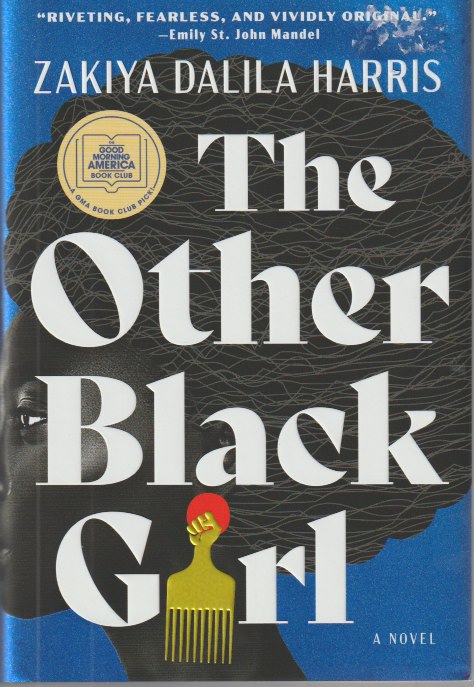
And I hate the thought that I might have, because of ingrained prejudices of a lifetime lived in a culture rooted in white supremacy, missed out on reading authors like Zakiya Dalila Harris.

Stop fussing at it, now. Leave it alone.

But my nails found my scalp anyway, running from front to back to front again. My reward was a moment of sweet relief, followed by familiar flood of dry, searing pain.

Stop it. Stop it.

I’d already learned the more I scratched, the more it’d resemble the burn of a bad perm–a bad perm that had been stung by fifty wasps and then soused with moonshine. My small opportunity for reprieve would come only after the trains started moving, when I could finally close my eyes and take comfort in the growing distance between me and New York City. Still, I continued to scrape at the itch incessantly, my attention shifting to another startling concern: we weren’t moving yet.

My eyes darted to the strip of train platform visible through the open doors, my mind moving faster than I’d moved through Grand Central Terminal just minutes earlier. What if someone followed me here?

The Other Black Girl is a riveting novel of suspense; workplace noir rather than domestic noir–and really, is there any place more noir than the office workplace? I’ve always been fascinated by group dynamics; how individuals behave in groups, and even in the smallest of workplace, office politics inevitably come into play–unfair bosses, under-appreciated employees; the suck-ups who don’t work as hard or aren’t as competent but somehow always get the plum gigs and promotions because they play the game properly; the underminers….the first workplace drama I ever remember reading about was, of course, also set in publishing: Rona Jaffe’s The Best of Everything, which is vastly overdue for a reread (but I barely have time to read as it is). While the workplace and the drama swirling around the coffee machine or the break room wasn’t the center of the novel–it was more about the girls who worked there’s outside lives, and trying to maintain the balance between what they wanted with their ambitions and what is expected of them as women in American society–it’s always remained in my brain as a book about the workplace. The Devil Wears Prada also took a look at a workplace–that of a fashion magazine–and I personally thought the deeply flawed film version was far better than the deeply flawed book–but also firmly established in American culture the character of Miranda Priestley, the monstrous boss from hell; but Miranda was also the most interesting character in both book and film to me. I wanted to know more about her, who she was; Andie was neither original nor interesting enough, in my mind, to center a book or a film around.

The Other Black Girl also takes places at a prestigious publishing company, Wagner’s, and our main character is Nella–and a fascinating, well-rounded, and deeply developed character is she–one it is easy to sympathize with, to become vested in, and root for. Nella is a young woman of color–the only Black employee in editorial at Wagner’s, and her own drive and activism is being gradually worn down by the micro-aggressions and games and politics played in that workplace, only to be further complicated by the arrival of another Black girl, Hazel. At first, Nella is excited to have another Black girl in the workplace with her…until she slowly begins to realize that everyone responds to Hazel better; listens to her more; and sees her own not exactly rock-solid position at Wagner’s slowly being undermined by the other Black girl…is it deliberate undercutting of a fellow Black girl (‘there can only be one”) or is Nella being paranoid, the every day stressors of working in a mostly white environment making her paranoid, her grip on sanity beginning to slip a little bit? And then she starts getting threatening notes left on her desk….

This is a terrific read, and I loved Nella (although I would have loved to see more of her best friend, Malaika); Nella was fascinating to me. Raised in a mostly white upper middle class world, Nella often questions herself about whether she is “Black enough”–she has a white boyfriend, Owen, and has spent most of her life in mostly white spaces, and has for the most part found herself comfortable–if micro-aggressed–there; she’s ambitious and has a role model–a Black female editor who worked at Wagner before disappearing–and you can’t help but root for her to achieve her ambitions. Hazel is more of a mystery, but she is developed as well as can be for someone who isn’t the point of view character; and this mystery helps drive the story. What exactly is Hazel up to? Is she even up to something?

And the book also–spoiler alert–has a huge shift about 2/3rds of the way through that the reader will NOT see coming…and after that point, you won’t be able to stop reading.

Brilliant, absolutely brilliant. I loved it.

Walking on Broken Glass

Sometimes I try to remember the first time I saw or heard or watched or read something, anything, that made me feel less weird, less like an outsider…often to no avail. I can never remember if it was That Certain Summer (a very SPECIAL ABC Movie of the Week), or reading Larry McMurtry’s The Last Picture Show, or discovering The Front Runner on the paperback racks at the News Depot on Commercial Street in Emporia; and then I will remember something else, some vague memory of something–hints about Richard the Lion-Hearted in Norah Lofts’ The Lute Player, or subtle hints here and there throughout history (Edward II and Piers Gaveston; Louis XIV’s brother Phillippe Duc D’Orleans; James I and Robert Carr; Achilles and Patroclus)…Mary Renault’s Alexander the Great series…I can never remember precisely the first time I was exposed to who and what I am in popular culture, nor can I remember if it was positive or negative. I do know that in my own life, it was made very clear to me when I was very young that what I am was not normal, was unacceptable, wasn’t what I was supposed to be. My earliest memories are of me not being like other boys, and it took me a while to realize that the others were just playing at being boys (something I was never very good at) and were actually like that; that they weren’t, underneath, just like me, just better at pretending than I was.

This is why we have emphasized, as a community, the importance of representation in popular culture; kids needs to see themselves reflected in the culture they consume so they don’t feel like they don’t belong. Queer kids aren’t raised queer; we don’t learn how to be queer by interacting with our peers (who are mostly straight when we are kids), nor do we learn anything about being queer while we are inside the educational system in this country. I’ve always firmly believed that queers take longer–at least in the olden days–to form lasting romantic relationships because we don’t have “trial runs” when we are kids; we don’t get to date, we don’t get to “go steady”, etc. We don’t get to play House with other kids of the same gender, we don’t learn societal and cultural expectations about relationships and how they work when we are actually kids. Our queer adolescence doesn’t actually start until we come out–admit it to ourselves without shame, and then start telling our family and our friends and our co-workers that we aren’t wired the same way they are. It’s very tricky, and very complicated and sometimes very messy.

Representation absolutely matters.

And we cling to that representation when it shows up. When a prime time show like SOAP introduces the first long-running gay character to the world in Jody Dallas (does anyone even remember this was Billy Crystal’s big break, playing gay on a sitcom in the 1970’s/early 80’s?), we watch–even if the depiction is problematic to the extreme (you also learn very early that your hunger for representation will also force you to turn a blind eye to some things). Steven Carrington on Dynasty, the terrible film Making Love from the early 1980’s, as well as some other problematic depictions and films along the way–we took what we got, and always had to remember that these characters and stories also had to be palatable to straight people…that, in fact, these characters and stories were created with straight people in mind.

As they used to say, “but will it play in Peoria?”

As i stare down sixty this month, I am very happy to see that representation becoming common-place. It’s lovely to see gay books–THRILLERS, even–being published by major presses with queer characters in them. It’s lovely seeing straight writers including sensitive depictions of queer characters and their stories in their books.

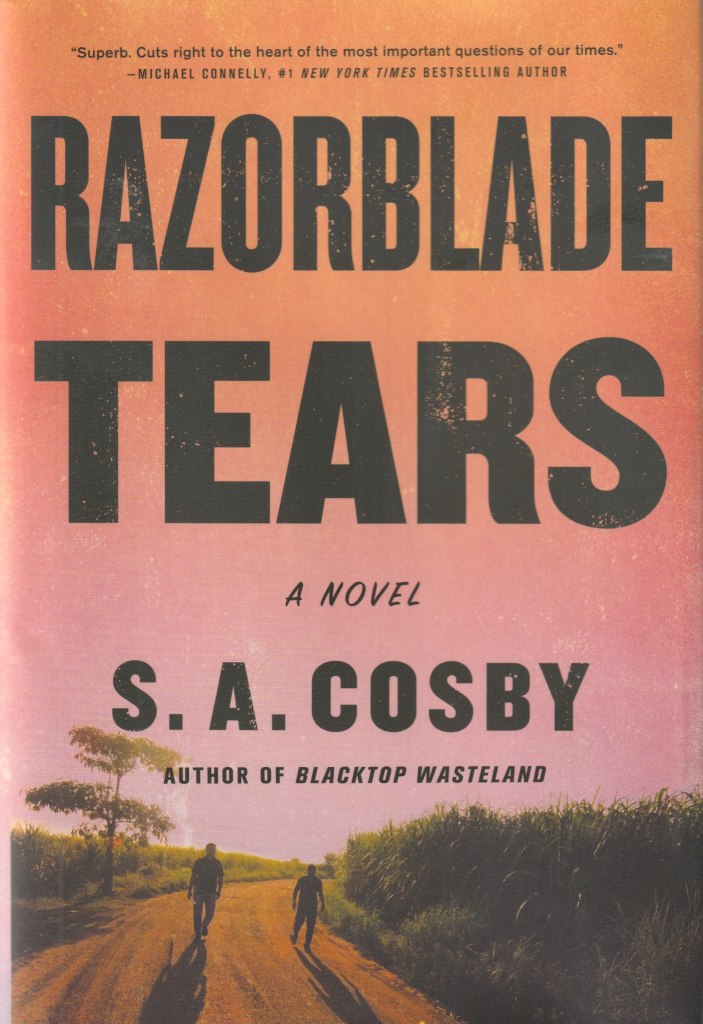
And over the year, yes, problematic tropes that can make you very, very tired have also developed–which makes me wary every time I approach a book by a non-queer person that takes on a trope without hesitation, as S. A. Cosby’s Razorblade Tears does, and that trope is one of the biggest and most hated by the queer community: bury your gays.

Ike tried to remember a time when men with badges coming to his door early in the morning brought anything other than heartache and misery, but try as he might, nothing came to mind.

The two men stood side by side on the small concrete landing of his front step with their hands on their belts near their badges and guns. The morning sun made the badges glimmer like gold nuggets. The two cops were a study in contrast. One was a tall but wiry Asian man. He was all sharp angles and hard edges. The other, a florid-faces white man, was built like a powerlifter with a massive head sitting atop a wide neck. They both wore white dress shirts with clip-on ties. The powerlifter had sweat stains spreading down from his armpits that vaguely resembled maps of England and Ireland respectively.

Ike’s queasy stomach began to do somersaults. He was fifteen years removed from Coldwater State Penitentiary. He has bucked the recidivism statistics ever since he’d walked out of that festering wound. Not so much as a speeding ticket in all those years. Yet here he was with his tongue dry and the back of his throat burning as the two cops stared down at him. It was bad enough being a Black man in the goo ol US of A and talking to the cops. You always felt like you were on the edge of some imaginary precipice during any interaction with an officer of the law. If you were an ex-con, it felt like the precipice was covered in bacon grease.

“Yes?” Ike said.

My faulty memory doesn’t remember how and when I first became aware of S. A. Cosby. What I do remember is that I bought and read one of his earlier works (perhaps his debut?) My Darkest Prayer, and enjoyed it thoroughly. Hard-boiled with a healthy dose of noir, I had a great time reading it–and was thrilled when his Blacktop Wasteland debuted to raves and attention and lots of recognition. Cosby can write like a house afire; and while he keeps up a rat-a-tat pace of story, he also manages to construct sentences and paragraphs beautifully, with a poet’s gift for language–spare and tight, yet poetic and beautiful at the same time (Megan Abbott is the Galactic Empress of this).

So, when I heard the “elevator pitch” for Razorblade Tears, I inwardly winced a bit, even as I had to admit Shawn’s guts; taking on bury your gays is a ballsy move–and also a bit of a dangerous one. If you don’t stick the landing…you’re fucked.

For those of you who don’t know what bury your gays means, it’s very simple: a show, or a book, or a movie, will introduce gay characters (lesbians, queers, whatever initial in the all encompassing umbrella those characters might choose for their identity), get the audience (and especially the queer viewers) deeply vested in them–and then kill them off suddenly and unexpectedly, all so the other queer characters (but usually the straight ones) will experience some kind of personal growth…in other words, you introduce a gay man into your narrative simply to later use him as a plot device, so the other characters can mourn and experience personal growth.

That’s probably explained badly, but you get the gist: gays will inevitably die. A good example of this is the so-called groundbreaking AIDS movie, Philadelphia–but the Tom Hanks character in that movie existed so that Denzel Washington’s character could grow and develop and move on from his own homophobic beliefs and fears about HIV/AIDS; as Sarah Schulman, one of our community’s finest minds, once said, “the entire point of Philadelphia is to make straight people feel better about HIV/AIDS and the gay men dying from it.” (Sections of her book Stagestruck: Theatre, AIDS, and the Marketing of Gay America are absolutely brilliant; it should be required reading for any Queer Studies course.)

The plot of Razorblade Tears is so deeply steeped in “bury your gays” that the gays are already dead when the book opens. The gays in question–Derek and Isiah–were brutally murdered, and the police don’t seem to care too much about looking into who killed them. Their homophobic fathers–both ex-cons–decide to look for their son’s killers. Both Ike and Bobby Lee feel a lot of guilt about their sons and how they rejected them both–their relationship, their eventual marriage, their child–while they were alive; finding their killers isn’t just about revenge but also a matter of atonement. In some ways, it’s like this book is borne from the anger every queer child rejected by their parents feels–you’ll be sorry when I’m dead.*

Ike and Bobby Lee are, indeed, sorry now that their sons are dead.

This also falls into another long-existent fictional trope: don’t fuck with a father. How many films (I’m looking at you, Liam Neeson), books or television shows are about a father’s rage, a father’s revenge, what a father will do to save or avenge their children?

Ike and Buddy Lee aren’t supermen, though. Cosby’s strength (besides his ability with words and images) is how well he creates characters and makes them human through their faults and frailties. Ike and Buddy Lee don’t much like each other as the story begins to move along–I kept thinking of the old Sidney Poitier/Tony Curtis movie, The Defiant Ones–but their ability to look past their own internal prejudices to see the commonalities between them as they unite in this foolhardy crusade to avenge their murdered sons is the real strength of the book here. (As well as the language.) You eventually start to understand them, care about them, want them to get their vengeance…even as you know it will bring them no peace.

I have to admit, I was hesitant to start reading this. I really was concerned I wasn’t going to be able to read it with the empathy necessary for Ike and Buddy Lee and their suffering–that I would think, yeah, well, maybe you should have thought about that when he was alive–but the book ultimately isn’t about their redemption, either; which is a genius move by Cosby. He makes their pain all too real–I cannot imagine the pain any parent should feel when their child dies–but he makes it clear there’s no easy answers here for Ike and Buddy Lee, and that pain will go on even if they get justice for their sons.

Shawn is also a master of writing about the Southern working class–about the poverty, the lack of opportunity, the societal neglect and how those factors all combine to keep those already mired in it trapped with little chance of escape; he clearly loves the rural South but not so much that he can’t expose the tragedy and ugliness that exists there.

It’s a powerful book, and I do recommend it….although the people who probably should read it inevitably won’t. I can recommend it, and do, enthusiastically; it’s a very powerful book, and it made me think–and what more can you want from art?

*sadly, I have seen all too often that a lot of those parents aren’t sorry when their rejected child dies; far too regularly they will say something along the lines of “So-and-so died for me years ago.”

Waiting for Tonight

I don’t remember his name. All I now for sure is it started with a K.

Kevin, maybe? Keith? Kerry? Kenny? Maybe Kelly; for some reason the name Kelly-for-a-boy has always been stuck in my head, to the point that sometimes, frequently, when I need a name for a male character Kelly always pops into my head. So maybe that’s it. I never recorded his name anywhere–mainly for fear someone would find it in my journals or diaries (I’ve always kept some sort of written record of my life and my various emotional breakdowns over the years)–and I was also certain I would never forget it. And yet I have; the first openly gay man I ever knew, and also the first casualty to HIV/AIDS that I knew personally–that was more than just another name in the paper.

I’ve never really dissected my past as thoroughly as I probably should have; as I’ve said before, when I turned thirty-three I decided to never look back, stop having regrets, and not let the past continue to influence my present and my future. There was never anything but pain back there, so why revisit that? Now as I hurtle towards sixty at an ever increasing speed (less than two months now!), I do find myself, for some reason–maybe the sixty milestone? Being equally distant from twenty as one hundred?–allowing my mind to drift back to the past. I think it also has something to do with the two most recent books I’ve written (Bury Me in Shadows is dealing, in some ways, with my past by forcing me to remember stories my grandmother told me as a child and the legacy of being from rural Alabama; #shedeservedit takes me back to my teens in Kansas–and basing the main character in that book so deeply into my own psyche forced me to relive things and emotions and feelings I experienced as a teen in Kansas, even if the book is set in the recent present), as well as watching It’s a Sin earlier this year, and seeing the story of HIV/AIDS told from the perspective of young people who were my age when it all began. I’m not sure, really; but whatever the reason, my mind has been going through the file cabinet where I have locked all my memories from before 1994.

Kelly (I decided to call him Kelly, didn’t I?) was the first openly gay guy I ever met. I’d met guys who were attracted to men before; and I am sure guys I knew from my high school in Chicago were, even if they weren’t out (I did remember one’s name recently; I knew him only slightly but was certain back then he was like me; I looked him up recently on-line and sure enough, he’s out and proud and–thank God–alive). I wasn’t sure when I first met Kelly if he was or he wasn’t–he was effeminate and queeny, though; the stereotype–and we worked together at a fast food place on Blackstone Avenue in Fresno. He was already working there when I was hired; we both worked the closing shift on Fridays and Saturdays and our manager was a really hot muscular straight guy with a porn-stache that I stole glances at whenever I could; managers wore the same polyester pants the rest of us had to wear, but got to wear T-shirts with the company name and logo on the front–his were extremely tight, and so were his pants, for that matter–but he was also juggling three women at the same time (no surprise, really) and was clearly straight. I did notice Kelly also was stealing glances at him from time to time. Kelly was flamboyant, funny and friendly; I would have liked him even if I didn’t suspect he was also gay. He was certainly not as deeply closeted as I was, and certainly not as determined to keep it hidden. He was taller than me, and slender. He wasn’t what I was physically attracted to at the time–when I was younger I was a lot more narrow in my definition of what I thought was attractive, and what I was attracted to–but he did have a nice ass.

I don’t remember how or when he told me he was gay, but he did. He was also the first person to take me to an actual gay bar; there were two in Fresno at the time. It was the Express, and it was also on Blackstone Avenue, near Olive, I think; I don’t remember exactly where it was, to be honest, but I know there was an off-ramp for a highway right there as well (I recently tried to locate it on Google Maps, but Fresno has changed a lot since I left over thirty years ago, and it no longer exists). I don’t remember how he talked me into going–you can imagine how reluctant I was (what if someone I know sees me going in? What if someone sees my car parked there? What if what if what if what if…what if someone I KNOW is there–this last is hilarious, of course; obviously, if they were there…) but I remember walking in that first time and realizing, everyone here is into men. There were no women, the music was loud and there were some incredibly hot guys there. Kelly got us both a drink–vodka and cranberry; I drink I have ever since always regarded as a ‘gay’ one–and then he dragged me out onto the dance floor because he loved the song–it was the first time I’d ever heard “It’s Raining Men”, and it’s always been special for me since then; the first song I ever danced to in a gay bar–and I, who’s always loved to dance but always got made fun of for enjoying it at school dances and in straight clubs–felt free for the first time in my life.

As Madonna sang in “Into the Groove”: only when I’m dancing can I feel this free…

It became a weekly thing: every Friday and Saturday night after work we’d go over to his apartment, sponge off sweat and grease from work, change, and go dancing. There were so many hot guys–but I would never approach anyone; that social anxiety thing and fear of rejection has always hung over my life–and Kelly’s roommate was also really beautiful. Kelly had a lot of friends I was attracted to, but no one ever showed any interest in me–at the bar or at any of the after-parties we went to.

And yes, eventually, we did go to bed together. I wasn’t in love with him, nor he with me; he was the first time I became aware of the “friends-with-benefits” thing. I wasn’t his type, either–and I’ll never forget him saying, “just because we aren’t each other’s types and we’re not interested in being boyfriends doesn’t mean we can’t help each out, you know? It doesn’t always have to mean something. Stop thinking that way! It’s very Christian of you.”

I was slowly starting to come into myself when he got fired, for allegedly stealing money. I didn’t think it was true–it may have been, I could have been wrong about him and his character (it wouldn’t have been the first or last time I misjudged someone’s character) but I always suspected it was because he told me once that he’d given the hot straight manager a blowjob in the office a couple of times. I didn’t believe him, but I also don’t think I was the only person who worked there he’d said that to, and well, that just wouldn’t fly, you know. But he told me, through tears, that he was leaving Fresno and moving to San Francisco because “Fresno was really just Topeka in the valley, when you think about it.”

I’ve used that description numerous times since then.

He gave me a big hug, and told me to trust myself, and stop being afraid to be myself.

I didn’t see him again for years. It was a few years later when I ran into his roommate at the mall. I was high, had gone there with friends to waste time and get an Orange Julius, and was sitting on a bench just enjoying my drink and being high at the all and watching people when someone said my name. I didn’t recognize his roommate–whose name is also lost to time–because he didn’t look the same. He’d lost a lot of weight–he’d been lean but muscular, but was now barely more than skin and bones. He had to tell me who he was, and how I knew him, and I’ve never had much of a poker face–still don’t, actually. He smiled at the look on my face, and told me he had AIDS. Not only did he have it, but Kelly did as well, he was back in Fresno, and he was actually dying. “You should go see him,” he said, “I think it would mean a lot to him. He doesn’t get a lot of visitors. Anyway, it’s nice seeing you.”

I was, at the time, trying really hard to be straight again–still having furtive encounters with other guys, of course–and terrified that I was going to get infected myself. I didn’t have a car at the time, and the last thing in the world I was going to do was ask one of my straight friends to take me to see someone dying of AIDS in a hospital. I had met other gay men since Kelly, and considered them friends…but it was something we were all afraid of; made gallows humor jokes about; and I didn’t want to involve any of them in this, either. (All the gay men I knew at the time didn’t know my straight friends–and any gay man I met through a straight friend I kept at a distance because I still wasn’t ready for those separate lives to have crossover.)

I took a city bus to the hospital. I remember they put me in a hospital gown, gave me a mask and rubber gloves to wear before I could go see him. I remember how bad he looked, how labored his breathing was; and I don’t think he knew who I was; I don’t think he ever did know who I was or why I was there. I sat with him for a while and held his hand, and we didn’t talk much. It didn’t seem important then to try to get him to remember me. I remember being afraid, and to this day i wonder if I would have held his hand if I didn’t have the gloves, and even having that doubt fills me with shame; and no matter how much I remind myself I am far better educated now than I was then–even then there was so much misinformation and unknowns I couldn’t have been as educated as I am now–I still feel a bit ashamed. There were several people on that ward; guys i recognized from those nights at the bar, guys I’d been attracted to but never acted on, guys I met after after-parties, whose names I don’t remember now. I went back as often as I could, as often as I thought I could get away with, sitting not just with Kelly but those other guys, too. Kelly’s old roommate eventually ended up there, too, and I sat with him sometimes. Every time I went back I was never sure who’d be alive, who would still be on the ward, or if someone else i recognized or had known would be there this time. I don’t remember how many times I visited before Kelly died; I just remember I came back and his bed had someone else in it. I know I went to some memorial services and I know I went to some funerals, and I know I kept going back there periodically; I wasn’t worried about getting infected and dying because I had begun to believe it was inevitable. I know I went numb at some point during that period, and I also know it was when my college career went off the rails for the last time and I began losing myself in drugs and alcohol to stop feeling anything. I knew I couldn’t make myself straight because I would be miserably unhappy if I tried; I was miserable trying. I also believed I couldn’t be myself because I would lose everything and end up dying all by myself in that ward–also knowing that when the inevitable day came when I wound up in that ward, I’d die alone.

There were times I wish it would happen so I could get it over with–the horrible death–because my life was so miserable I often didn’t want to go on living.

And yet, no matter how many times I wished I were dead, no matter how many times I wanted to die, I never could end my own life. I couldn’t do that, for some reason.

So on I lived, somehow getting through my days, letting life happen to me rather than making my life happen, until I shook myself off and decided to take control–death is inevitable for everyone, after all, so why not live until then?

Here I am, on the cusp of sixty, still alive when everyone gay I knew from back then, from my first baby steps into living my life as myself, died. I wasn’t there for all of them. I wasn’t there when many of them died, and I felt guilty about that, guilty about not getting sick, guilty about living, guilty about somehow still being here when so many of them have gone. I feel guilty about not remembering their names.

I fought a long hard battle with myself and who I am, and somehow came out on the other side of it slightly wiser, definitely wounded, and still struggling from time to time.

This is how I remember it, through the fog of time and the prism of my own narcissistic self-absorption. I have things wrong, I’m sure–it’s been over thirty years–and I’ve never tried to remember before. I’ve certainly never talked about it before to anyone and I certainly have never written about it before. My memory, once so sharp and perfect, has become fogged and befuddled the older I get and the more time passes. Watching It’s a Sin, frankly, made me start to remember–so much of it brought back memories–and I also realized I never mourned, never really dealt with any of it. Was that the right coping mechanism? I don’t know. I just know I went numb and decided never to talk about it; when I left California I closed the door on that part of my life and knew I had to change my life. It took another four years before I was able to also change my mentality and got a new attitude towards life and love and well, everything; not only closing that door into my past again but sealing it hermetically and walling those memories off in my brain, never to remember, never to relive, never to examine.

And I realize now that while I never stopped mourning them, I also never allowed myself to experience the grief…and in order to finally heal, I need to finally grieve.

Baby steps, always.

Believe It or Not

I picked up a copy of Sarah Schulman’s Let the Record Show: A Political History of New York 1987-1993, this week at the Latter Library. I imagine it’s going to be a rather painful read, and probably difficult at times, but I also feel that it’s important for me to read it. I am pleased that she, one of our community’s best writers and brightest thinkers, has written it. Sarah, whom I have known now for over twenty years plus, has written extensively about HIV/AIDS, both in her fiction and non-fiction; her non-fiction work is always thought-provoking, incredibly well thought out, and written beautifully. Her fiction is always fascinating; she always tackles enormous and important themes in her work–and often plays with form and style, in innovative and creative ways that would never occur to me, let alone attempt (Empathy is one of the most creative novels I’ve ever read; she reminds me of Faulkner in her willingness to experiment with styles and narrative form). She’s always incredibly fun to talk to–I have greatly enjoyed every conversation we’ve had; she is fiercely intelligent and yet has the remarkable ability to not make you feel stupid, or incapable of understanding what she is saying. (As someone whose intellect has always been somewhat less than, or been made to feel less than, I’ve always appreciated her speaking to me as an equal and peer; even though I am inevitably humbled and awed by how her mind works.)

Lately, I have found myself worrying that the truth and actual history of the HIV/AIDS epidemic, and the societal neglect and systemic homophobia that made it so much worse than it could have, should have, been would be erased from history and forgotten. I am reminded of this every day at work, really; as I’ve aged in my job, the people I test and see regularly become younger and younger. At first, I was always a little taken aback by clients born in the 1980’s; now those people are nearing forty. As we move into the third decade of the twenty-first century, I am now starting to see people born after the turn of the century; 2000 babies are turning twenty-one this year, which is stunning to me. Those born in the 1990’s don’t remember a time when infection was a death sentence; and slowly but surely the horrors of the height of the plague seem as distant as the Spanish flu epidemic of the World War I era, or the bubonic plague in the Middle Ages.

This month was the fortieth anniversary of the New York Times article announcing the discovery of the first cases of what was soon to be called the “gay cancer”, eventually renamed GRID (gay-related immune deficiency) before it was finally labeled as HIV/AIDS (human immunodeficiency virus/acquired immune deficiency syndrome)–this is a vast over-simplification of the history of the disease and its naming; you can find an excellent timeline for it here:

https://www.avert.org/professionals/history-hiv-aids/overview

1981 was the year I turned twenty; it was also the year I moved to California, putting Kansas in my rearview mirror once and for all (I’ve never returned); and I can remember the feeling, the excitement, of moving to a more progressive state (or so I saw it at the time) from one that was deeply mired in conservative values and Christianity. I already knew I was a gay boy before we moved to Kansas when I was fourteen, but that short period of time spent there (short in the overall scheme of my life; at this point as I stare down sixty rapidly approaching on the road ahead, I spent about a twelfth of my life there) was warping. (Then again, what part of my life wasn’t warping?)

It’s also very weird to think HIV/AIDS has now shadowed two-thirds of my life.

I tend not to look back at the plague years before 1994 very much; it’s all a part of my “never look back” mentality. I made some great friends in college–the ones who didn’t give a shit when I finally came out to them; I relish and love those memories made with them during the 1980’s, but the shadow always falls over that part of my life too; I was, as I said on the San Francisco Public Library panel the other night, trying everything I could think of to make myself straight (or able to push my true self so deeply into the closet that it would never ever see daylight) and yet there was still the other part of my life my straight friends knew nothing about; the sneaking out at night to gay cruising areas where other closeted types like myself met up; the furtive visits to gay bars and hoping no one from my other life saw me coming or going or saw my car parked nearby; the trips to hospitals to visit the always held at arm’s length gay friends who tried so hard to help me be myself, even when they were dying alone and unvisited in their quarantined hospital beds. The specter of HIV hung over me at all times; the shame of what would happen if I got infected, and the certainty that my family and straight friends would turn away and leave me, too, to die alone and unmourned, getting what I deserved.

And even when I moved to Florida, getting away from Texas and California and trying to get my life and act together, trying to be who I was, to live openly and honestly for once on my life, the phantom was always there, just out of my line of sight: the death sentence we were all sentenced to by fate, by timing, and by the callous indifference of the mainstream American community.

By some strange twist of fate I survived the plague years, never got infected, never got the bad news I expected was my inevitability.

I merely served witness, and even then, I was never anywhere that saw the worst of the decimation: New York, San Francisco, Los Angeles, and even New Orleans; this small Southern city’s community was ravaged and decimated; that shadow was over this city too. I can remember coming to New Orleans every month after I discovered its magic, and seeing the evidence of the plague here in the disappearances of people from previous visits; a waiter at the Clover Grill, a bartender here or a bar back there–service people who made me feel welcomed, made me feel like a part of the family, helped convince me that my gut feeling New Orleans was the right place for me, helped me believe that gut instinct was correct. Now, years later, I don’t remember their names and maybe, if I try hard enough and come up with other memories, I can also summon up their faces but the names are gone–just like those I lost in the 1980’s, names I never recorded in my journals for fear someone might find and read them, experiences and joy and laughter gone forever because I was too afraid of leaving a record behind if and when the plague came for me.

Never look back was the theme of my life from 1994 on; a maxim or motto that should have been cross-stitched onto a sampler for me; the only words I ever thought about having tattooed on my body: NEVER LOOK BACK. There was only pain in the past, and I wanted to move beyond that pain, forget the scars, and try to live in the now and for the future–whatever it might hold, if I was even fated to have one.

I always thought, even as a child, that I was destined to die young. When I became aware of HIV/AIDS, I assumed that was the ticket to the hereafter I would eventually punch. And yet here I am, nearing sixty, and the last twenty-seven years of my life have held more joy than I ever dared to dream were possible for me, and the dreams I held wrapped so tightly to my chest, those dreams that got me through even the most difficult of times, eventually did come to pass, and came true for me.

Watching It’s a Sin earlier this year brought it all back to me; as I have mentioned to friends, it hit me much harder than any other HIV/AIDS film or series; primarily because in films like Longtime Companion and in the fiction that has come to be known as “witness” or “survivor” fiction inevitably the story began in the pre-HIV hedonism of the 1970’s before the change; and while the lives were always cut dramatically short, they were somewhat older. It’s a Sin was the first time I saw it all through the eyes of characters who were the same age I was when it all started; and while their experiences and what they went through was so different than my own, it was impossible not to watch and remember and think my God, we were all so young when it hit. Watching the show allowed me, for the first time, to grieve; I know at some point back then I simply went numb. I know where my aversion to funerals comes from; I’ve always known, really, just never faced up to it before.

I’ve never wanted to write about the plague years, never wanted to write about what I witnessed and what I saw, the unbearable sadness I lived with for so many years. Others had it so much worse than I did, and so I never really felt like it was my story to tell; there was always a sense, a feeling, a fear, that I would make it all about me when it wasn’t, and sometimes I do wonder–since watching the show–if the work I do at my day job is, in some ways, an atonement for still being alive when so many are not. Survivor’s guilt is very real, and something I think about on those days when the pendulum of my moods swings too far in the wrong direction, when despite my best efforts not to look back, I do. I also think I don’t ever want to write about that time because my memories are so untrustworthy; and I am not entirely certain that I can tell those stories without centering myself…because it’s not my story but theirs.

So, I am both looking forward to and dreading reading this book, but no matter what, I am very grateful that it exists and that the record of the times, the anger, and the way the community rose up to challenge authority and thus changed the world will not be lost to the passage of time.

There is still, to this date, no vaccine for HIV–and yet, one was developed in less than a year for COVID-19.

Rather telling.

Plastic

Sunday and a gray morning here in New Orleans. We’re supposed to have thunderstorms (some severe) throughout the day; of course I have to make groceries and go to the gym at some point–which means watching the weather to see when I can make a break for it. But other than that, I have the entire day relatively free; I finished the revisions of Bury Me in Shadows and turned them in yesterday to my editor. I think I caught everything; it’s a tricky manuscript. But as I revised and edited yesterday, I was pretty pleased with it, overall; which is a switch from the usual. I also realized one of my problems with reading my work once it’s finished is that I am rarely, if ever, able to turn off editor-mode; because I generally read my work with an eye to editing and fixing and making it stronger–and I use that mindset when I go back and read things after they’ve been published. I don’t know if there’s a switch in my head I can flip to make that change, but here’s hoping.

Paul went to a party last night–I could have gone, but was a little worn down from finishing the edits, so I stayed home and watched a documentary series on the Smithsonian Channel called Apocalypse: The Second World War, which was quite interesting to watch. Almost all of the footage used in the series was shot either by professional documentarians or journalists covering the war, or amateurs…I never cease to be amazed when I see how young the American military were during this conflict. World War II is endlessly fascinating to me, because it was such an enormous turning point for the world and civilization; the world was a vastly different place after the Axis surrender than it was before the Nazis invaded Poland in 1939. It’s been a while since I read any fiction about the war–when I was a teenager I read a lot of it, as well as a lot of post-war fiction–and I realized I’d rarely read any fiction from the point of view of soldiers actually fighting on the ground or in the air (other than The Young Lions by Irwin Shaw, for the most part I read things like Herman Wouk’s The Caine Mutiny, The Winds of War/War and Remembrance, etc.). I’ve never read Norman Mailer’s The Naked and the Dead, for example, or any of the post-war novels that sort of glutted the market in the decades following. I got down James Jones’ From Here to Eternity–I bought a copy of the unabridged version, which was released by the estate sometime in the last decade, with all the parts the publisher originally removed restored–and I think I am going to take that with me to read when I go visit my parents later this month. It’s one of my father’s favorite books and movies–it’s also been a hot minute since I’ve seen the movie–and since my main character in Chlorine served, it’s probably not a bad idea for me to read it. I read the first couple of pages yesterday evening before I went to bed, and it’s actually quite good…so I am looking forward to reading it. After I finish the things I need to get done today, I am going to curl up and read The Butcher’s Boy with an eye to finishing it today, so I can dive into A Letter of Mary by Laurie R. King.

One of the more interesting things about having all these streaming services and apps is the ability to find treasures like the Smithsonian Channel buried inside of them. As Constant Reader has undoubtedly noticed, I love documentaries, and now that we have such a glut of streaming services we pay for, I am now searching through them for documentary channels and so forth, and have been enormously pleased with what I have found thus far. (I also took advantage of a special deal for Shudder yesterday–two months at 99 cents each, before reversion to regular pricing, so am going to up my horror game for a while) There’s really never a reason to be bored, is there, with the wealth of streaming services out there? I can certainly always find something, no matter how obscure–which is also why I refuse to “rent” something to stream–although I am thinking about biting the bullet and paying to stream The Last Picture Show, which I really do want to see again.

I cleaned and organized and filed yesterday as well, which has left the kitchen looking–well, if not tidy, certainly in much better shape than it had been in–and I also started another donation box of books. I also want to start clearing out the storage attic here in the Lost Apartment, which isn’t going to be easy, and will certainly make a mess in the living room–which still looks like a storm struck it–but I really do want to start getting rid of things we don’t really need anymore, and there are a shit ton of boxes up there of unnecessary things. Progress may be incremental, but progress is progress.

And I should probably, at some point, start revising and editing the Kansas book, but I think I am going to take this week off from novels.

I started writing a short story this past week–really, just the opening sentence and a second paragraph–which also came from a novel idea. The book idea arose from a joke with some writer friends about noir fiction and noir covers, with their scantily clad sex bomb femme fatales; I joked that someone should write a noir about a strip club in the French Quarter and call it Girls! Girls! Girls! so the cover could have poll dancers and so forth on it; which then of course started the wheels in my creative brain turning and meshing the gears. A character I introduced in the later Chanse books–who eventually got her private eye license and he took her on as a partner–had worked as a stripper in the Quarter to put herself through UNO; I liked her a lot (even though her name is escaping me at the moment) and had even thought about making her the main character in a series, with Chanse as part of her supporting cast. But this was different, and called for a different character–for a while, when thinking about this, I toyed with the notion of an undercover cop or FBI agent; but then thought, in this time, could a woman be assigned to go undercover as a stripper? Maybe, but it could prove problematic. And then I remembered an intern from years ago, when I worked at the Community Center, who worked part time at the Hustler Club as a “shot girl”–her job was walking around with a tray with shots in test tubes. When someone bought one, she’d place the test tube in her cleavage and have to lean forward to dump the shot in his mouth. She hated it–she was a lesbian–but the money was so damned good she only had to work two nights a week and made enough to pay the rent and the bills and so forth. Someone could easily go undercover a shot girl–which, while still demeaning, wasn’t as demeaning as stripping. But the other day for some reason I was thinking about this again, and the thing that made the most sense was that one of the shot girls gets picked up by Vice and is forced to become an informer….which would make her walk the line between the cops and her crooked, organized crime employers, as well as with her co-workers. So, when the opening occurred to me the other day, I wrote it down and saved the file as a short story called “Shot Girl” (thereby adding yet another file to the “unfinished short story” list). I think maybe this week I’ll work on one of the unfinished stories in the drawer.

And on that note, it’s time to head into the spice mines. Have a lovely day, Constant Reader, and I will check in with you again tomorrow morning.

Evil Dust

The sun is actually out today and there aren’t many–if any–clouds in our beautiful blue sky this morning, which is lovely. It’s rained pretty constantly ever since Tuesday afternoon, and everything outside is still wet from nearly a week of rain. I love rain–especially thunderstorms–but even I thought five straight days of them was a bit extreme. I wound up running my errands in the rain yesterday–I dropped off another five boxes of books to the Ladder Library sale yesterday (you actually can tell now that I’ve gotten rid of books)–and made groceries and got the mail. It was pouring while I did all of this, so my plans to go to the gym yesterday were finally scrapped. I also wound up taking the day off from almost everything yesterday–I think I needed a brain-free day, frankly–and so we watched a lot of television–we binged all the way through a delightful comedy called The Other Two, watched the Tom Holland movie Cherry on Apple Plus, and then switched over to Acorn for a riveting crime show called The Cry.

Yes, I was a slug all day and I am not a bit ashamed of it.

Oh, sure, I had my journal with me and scribbled notes freeform all day–my favorite is that I came up with a short story title I now HAVE to use, “To Live and Die in La.”, while having absolutely no idea what the story would actually be, but I laughed at the title and now want to. use it–so I did do something. But today I have to start revising/copy editing/making notes on Bury Me in Shadows–due to be returned to my editor no later than the first of May–and so, if I do go to the gym today (leaning towards it, since it’s sunny out) I can curl up in my easy chair to do it, so that’s a start. I really need to work on my story–the deadline for that submission call is May 15, I believe–and so I need to kick everything up a notch this week. I am getting caught up on a lot of other things as well–it’s never-ending, and have also accepted that I only have so much bandwidth for things. The emails, for example…I’ll never get caught up on those, ever…so I need to prioritize and so forth in order to get through everything that absolutely needs to be responded to immediately.

I also need to spend some time getting organized and cleaning a bit this morning. There’s filing to be done, of course–always–and somehow the kitchen looks like a tornado ripped through here (not completely an exaggeration, to be honest) and I need to get that taken care of this morning. I have a load of laundry to do, and there’s always dishes–always. I also want to organize the refrigerator a bit more this morning. Since the sun is out, I’ll probably grill hamburgers later on this afternoon, which is always an absolute treat (I really prefer all meat to be cooked over hot charcoal, frankly–or at least, most). I am also a bit excited that the next step of book decluttering (and yes, I am aware I am completely Marie Kondo-ing my apartment) is to go up into the storage attic and start clearing the boxes up there. This will, of course, be more complicated than the bookcases and the hidden boxes in the living room, since I’ll have to bring them down and go through them, combining the ones to keep (I can’t imagine there will be many of those) while putting aside the ones to donate. The goal is to clear out enough space in the storage attic so I can clean out my storage rental and close that account; most of the books in the storage are copies of my own books (and my kids’ series collection) along with some other things–mostly papers–and it would be nice to either no longer have that bill every month, or to use that space for other things…but at the moment I can’t think of anything that we’d need to keep it for.

But it would be great to lose that bill by the end of the summer.

Not as great as paying off the car, but still pretty good.

I think I’m going to add Semi-Tough to the donate pile. The first three pages are nothing but racial slurs as well as justifications for using them, and how the main character–it’s a first person narrative–isn’t really racist and the slurs are just words that don’t mean offense and so on–and yeah, I really don’t feel like spending any of my time with that kind of character. I certainly wouldn’t in real life–imagine being at dinner or a cocktail party and the person you are talking to says, and this is a direct quote from page one: Just because I may happen to say (the n-word) doesn’t mean I’m a racist.

Um, actually it does. It says a lot about you, who you are, and how you were raised, as well as how you see people and the world.

And I really have no desire to read a book filled with racial slurs…because you KNOW its also full of gay slurs, too–and most likely without the caveat justifying the racial slurs: Now listen, just because I say “faggot” doesn’t mean I’m homophobic.

Sure, Jan.

There are so many other good books to read, why reread something I originally read as a teen that plays on racism and homophobia and misogyny for humor? I stopped rereading The Last Picture Show, a book I absolutely loved, a few years ago when it got to the part about bestiality, and how it was perfectly normal for the teen boys to fuck animals…I closed the book and put it away. I may go back and reread the entire thing at some point–the reason I was rereading it in the first place was to examine how it handles homosexuality–which I distinctly remembered it doing–but I don’t think I was able to get far enough into it to get to that part. I know that Coach Popper–long-suffering Ruth’s awful husband–was a deeply repressed one, who favored one of the more athletic boys primarily because of his attraction to him; that the preacher’s son Billy Bob Blanton was often mocked and teased and bullied and humiliated for being a “four-eyed queer” (before he molests a little girl, after which he’s taken away as a pervert); and that the heterosexual English teacher, who was cultured and sensitive and kind, was accused by the coach of impure thoughts and fired (everyone, of course, would never suspect the manly football coach of anything, or question him); and I remembered a particular poignant scene between the fired English teacher–who’s been fired, whose wife has left him and taken their daughters and filed for divorce–and Ruth, where he’s just so beaten down and defeated that it’s heartbreaking. But yeah–that whole “boys will be boys” attitude towards bestiality was too much for me to get through again.

The Last Two is a terrific show, and quite funny. Paul and I really enjoyed it; the premise of the show is the two older children are in their late twenties–one is a struggling actor whose most recent audition was for a commercial in which he would play “Party-goer who smells a fart”; the daughter had wanted to become a dancer until she broke her ankle and dropped out of dance school and cannot figure out what she wants to do with the rest of her life–when suddenly, their thirteen year old brother puts up a video of him singing a ridiculous song (“Marry Me at Recess”) and becomes an overnight viral sensation with a record deal and a manager under the name “Chase Dreams”; which makes them feel even more like losers. The older brother, Cary, is also gay and in a weird relationship with his straight roommate; the daughter has broken up with her boyfriend and is now homeless at the beginning of the show. I thought it was terrific, frankly, and look forward to season two.

My primary takeaway from Cherry is that Tom Holland is an amazingly talented actor–he really gives a stunning performance as a poor young man who falls in love, gets his heart broken and joins the military, serves as a medic in Iraq and comes home to nothing but PTSD and drug addiction, which leads him to a life of crime. It’s a very dark story–but also weirdly a love story at the same time–and I don’t think the film, worked overall; the Russo Brothers, who directed, turned it into this big grand opera style thing in the way they shot it; to the point where the beautiful imagery is almost intrusive. It’s a very real story–based on a true story–and it highlights, very powerfully, how we abandon our troops completely after their service is over (since they’re no longer the troops….”support the troops” makes me angry because it is used primarily as a political prop and the actual soldiers themselves suffer in silence and neglect while we give billionaires and corporations every break in the world), but it’s worth watching for Tom Holland’s performance–he was also fantastic in The Devil All The Time–and it’s really nice to see him pushing himself in his non-superhero roles (he’s also the best, in my opinion, Spider-Man).

And on that note, I am heading back into the spice mines. Have a lovely Sunday, Constant Reader!

Ecstasy

It’s gray again this morning in New Orleans, and I have about six boxes of books to take to the library sale today. I also have five or six boxes of condom packs that will have to go back to the office on Monday; which, I suppose, is the easiest way to say that my living room currently looks incredibly cluttered and desperately in need of organizing and cleaning and so forth. I also have a lot of errands to do–the mail, groceries, etc. and need together to the gym today as well. I would also like to get some writing done today–at least a revision of a short story or something–so tomorrow I can primarily focus on the edits of Bury Me in Shadows….and maybe do a bit on Chlorine as well.

I was ridiculously productive yesterday–as mentioned before, I really did a great job of paring down the books last night while laundering the bed linens; Paul was out having dinner with a roommate for college (who was indirectly responsible for our meeting, actually) and so while I watched Smithsonian documentaries on World War II (The Battle of Midway, The Battle of Okinawa, The Fall of Japan, Normandy: 85 Days After D-Day) Started going through the boxes of books I have cleverly concealed beneath blankets so they sort of look like tables, in way, with more books and decor on top of them (we have far too much bric-a-brac in this house, seriously), and when Paul got home we watched the second part of the Aaron Hernandez documentary. (I think perhaps the saddest thing–other than the victims, of course–was how exploited he was for his ability; he was clearly trouble at the University of Florida, so they covered for him for three years and once they’d gotten their use out of him, told him he wasn’t welcome back on the team for his senior year and to enter the draft early; as soon as he was arrested and charged the Patriots–and their fans–turned their backs on him immediately as did their fans…which tells me everything I needed to know about how his coaching staff and teammates felt about him–that was an almost lightning like 180, and considering how many other players have committed crimes and not been abandoned….and while murder is pretty extreme, of course, they clearly knew there were issues there and yet no one did anything.)

I also watched two movies yesterday while making condom packs, and both were kind of terrible. The first, The Getaway, starring Steve McQueen and Ali McGraw, was so unbelievably bad I came very close to turning it off numerous times, but figured you finished Carnal Knowledge, you can finish this. Directed by Sam Peckinpah, known for his violent and bloody films, and based on the novel by Jim Thompson (whom I’ve never read, and I need to correct that at some point), it basically is a dark story about a criminal whose wife gets him paroled by appealing to a corrupt businessman (with her body), so that they can commit a bank robbery and share the money with the businessman. Of course, there are all kinds of double crosses, and the bad guys are after them, as are the cops as well as one of their other accomplices they assumed was dead; there’s a weird subplot with him taking a veterinarian and his wife along with him on the chase for no reason (other than he’s banging the wife); interestingly enough, the vet is played by Howard fro The Andy Griffith Show and the wife/girlfriend (never clear) by Sally Struthers. It’s a mess, really; its only saving grace the chemistry between McQueen and MacGraw (who became involved) and that they are both ridiculously good looking; neither can act their way out of a paper bag (if they can. there’s no evidence of it here), and the score is also terrible and jarring. I know it was remade in the 90’s, I think; but as a noir film, or Neo-noir, it fails. I didn’t care about any of the characters and breathed a sigh of relief when the credits rolled. It’s a definite Cynical 70’s Film Festival entry; that was the time of the anti-hero and anti-establishment thinking…but I couldn’t help but think how much better the film would have been had it starred, say, Paul Newman and Ellen Burstyn, or Clint Eastwood and Natalie Wood, or even Robert Redford and Jane Fonda.

In fairness, they were done no favors by the script.

The second part of my double feature was John Huston’s Reflections in a Golden Eye, based on the Carson McCullers novel and boasting a cast including Elizabeth Taylor, Marlon Brando, Julie Harris and Brian Keith. I read the book several years ago and didn’t much care for it, to be honest–again, maybe I simply missed the point, but I didn’t care about any of the characters and that also translated into the film. There’s never any sense of why they do the things they do, and it’s kind of just a story about sexual hang-ups and frustrations, set around a military base somewhere in the South. Both Taylor and Brando sport really bad Southern accents, and Julie Harris is the only one who really pulls off her role–that of a sad woman who never got over the death of a child and has formed an unnatural attachment to her (incredibly racist and homophobic depiction of a) Filipino houseboy. She also apparently cut off her nipples with garden shears; she’s clearly not well, and yet all around her no one, especially her husband (Brian Keith), who’s sleeping with Elizabeth Taylor. Taylor is married to Brando, who chews the scenery at every opportunity (as I watched I couldn’t stop thinking considered the greatest actor of his generation, wow) who is an extremely repressed gay man who becomes obsessed with a young enlisted man who likes to ride horseback in the nude as well as lay out in the sun in the nude. The enlisted man is obsessed, in his turn, with Taylor, breaking into their house at night and watching her sleep while he paws through her underwear and nightgowns, sniffing them but never touching her. Brando becomes convinced the young man feels the same attraction to him, and at the end, sees the young man sneaking up to the house in the dark out a window. Thinking the young man is coming to him, he becomes enraged when he sees the young man–Elgee–sneak into his wife’s room, so he gets a gun and shoots him dead. The credits roll as Elizabeth Taylor screams. The movie is pretty true to the book, which kind of goes to show how not every book needs to be made into a movie. Most of the book is internal, which doesn’t translate to film very well–and I didn’t much care for the book. The movie could have been good–great cast after all–but overall, it fall flat for much the same reasons The Getaway did; I couldn’t muster up even a little bit of investment in any of the characters, other than Julie Harris, who is the only one who comes across well in the film. It did make me want to revisit the novel again, though, so that’s something. And while this is from 1968 or 1969, I do include it in the Cynical 70’s Film Festival–as there were many films in the late 1960’s that actually began what I consider the cynical period in American film, where the heroes were now who would have been the villains under the old Hays Code–neither Bonnie and Clyde nor The Graduate (both from 1967) could have been made under the code; certainly Who’s Afraid of Virginia Woolf? (1966) couldn’t have been.

I may have to take a break from the Cynical 70’s Film Festival for a bit. The last three films were terrible, and while I am kind of glad I saw them–always wanted to–I don’t know if I can stand watching another dated bad movie.

Maybe it’s time to go back to the Halloween Horror Film Festival.

And since I finished The Man with the Candy, now it’s time to pick something new to read. I came across a copy of Dan Jenkins’ Semi-Tough, of all things, while pruning the books. I read it when I was a teenager, along with Peter Gent’s North Dallas Forty, which are two completely different books about the same subject: pro football. Semi-Tough is comic; North Dallas Forty (which I preferred) is dark and almost noirish; the two books came up in conversation on Twitter recently; someone tweeted asking for people’s favorite sports film. I responded with Brian’s Song, and Laura Lippman professed her love for North Dallas Forty. I would really like to revisit the Gent novel and was also thinking I should reread the Jenkins; so having it turn up while pruning the books seemed to me like a sign. I’ll probably hate it–just looking at the first page there are some racial slurs already, and there’s nothing I hate more than the contract sumbitch, which was prevalent in the 1970’s; in theory, it’s how Southern people say “son of a bitch” with their accent. It annoyed me because everyone in my family, excepting my sister (and her children and grandchildren) and I, has a very thick accent…and not one of them ever says sumbitch. It became extremely popular in the 1970’s because Jackie Gleason, playing a corrupt Southern sheriff, says it all the time in Smoky and the Bandit…and I’ve always hated it, and never minded that it went gently into that dark night and no one bothers with it anymore. Being reminded of it sets my teeth on edge, frankly.

I may not, in fact, be able to get through the book. I know it’s meant to be funny and satirical, but….I just opened it at random and the narrator was talking about how it’s very important that we understand that he’s white because most running backs aren’t and….

Yeah.

I can only imagine the misogyny. Sigh.

All right, I need to get this mess under control so I can get everything done. Have a lovely Saturday, Constant Reader.