Under the Bridge

 Sunday morning, and I must confess that other than doing the errands and some slight cleaning yesterday, I fear the day was mostly a bust for getting things done. But that’s fine; I am off today and tomorrow as well–tomorrow should include both the gym and a Costco run–and I intend to get a lot of writing done today. The kitchen and living room are still in need of some straightening as well, and I assume that I shall get to that as I pass the day. I was thinking about going to the gym this morning, but I think I shall go tomorrow instead, and then have a Monday-Wednesday-Friday workout schedule to try to stick to; with perhaps going in on the weekends simply to stretch and do cardio. I have now discovered a new show to watch for cardio–The Musketeers, and there’s at least three seasons, I believe–which will makes things ever so much easier. I certainly did a lot of cardio while I was watching and enjoying Black Sails, so The Musketeers might just do the trick. (I had high hopes for Netflix’ Troy: The Fall of a City, but it was so boring I had to give up. HOW DO YOU MAKE THE TROJAN WAR BORING?)

While I was goofing off yesterday and watching things on Amazon/Netflix/Hulu/Youtube–yes, I know–I was also reading through Bertrand Russell’s brilliant and informative The History of Western Philosophy, and I came across this:

The last dynastic pope was Benedict IX, elected in 1032, and said to have been only twelve years old at the time. He was the son of Alberic of Tusculum, whom we have already met in connection with Abbot Odo. As he grew older, he became more and more debauched, and shocked even the Romans. At last his wickedness reached such a pitch that he decided to resign the papacy in order to marry. He sold it to his godfather, who became Gregory VI.

I do find it interesting that Russell chose to word it that way: that the height of his wickedness was his decision to resign and marry.

This led me into an Internet wormhole, looking up Benedict IX, the dynastic papacy, and the Tusculan popes. As you know, Constant Reader, history always has fascinated me; I would love one day to write historical fiction, as there are so many historical figures that fascinate me, from Catherine de Medici to Cardinal Richelieu to the Byzantine empress Irene to now, Benedict IX; and the century before him, where a woman named Marozia had enormous influence not only over the papacy but on who was elected pope (Marozia, in fact, founded the dynasty of popes called the Tusculans; which concluded with Benedict.) The Fourth Crusade, which wound up sacking Constantinople, also interests me, as do the histories of Venice and Constantinople.

And one can never go wrong with the Borgias and the Medici.

Anyway, one of the debaucheries of Benedict IX was sodomy, and it appears that the historical record holds that he was homosexual; how can I not be fascinated by a gay Pope, the way I am interested in Louis XIV’s gay brother Philippe duc d’Orleans?

So, of course I am making notes for a historical fiction novel called Benedictine, the tale of the gay pope.

Am I nothing if not predictable.

Next up in Florida Happens is Eleanor Cawood Jones’ “All Accounted For at the Hooray for Hollywood Motel”.

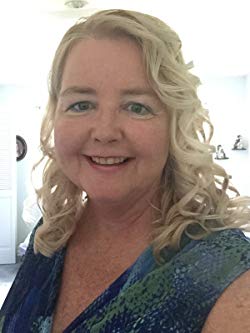
Eleanor Cawood Jones began her writing career in elementary school, using a #2 pencil to craft short stories based around the imaginary lives of her stuffed animal collection. While in college at Virginia Tech, she got her first paid writing job as a reporter with the Kingsport Times-News in Kingsport, Tenn., and never looked back. Eleanor now lives in Northern Virginia and is a marketing director and freelance copywriter while working on more stories as well as her upcoming mystery novel series. She’s an avid reader, people watcher, traveler, political news junkie, and remodeling show addict. She spends her spare time telling people how to pronounce Cawood (Kay’-wood).
eleanor jones

Mona, lingering over a third cup of coffee, flipped through her collection of vintage postcards while the all-consuming sound of crunching cereal across the table grated increasingly on her nerves.

She took a sip of lukewarm coffee, gritted her teeth, and reminded herself of her husband’s many good qualities—of which turning mealtime into crunchtime was not one. Things were easier when she had to dash off her to accounting job. In those days, there was never time for another cup of coffee, much less prolonged crunching noises.

“Rodney!”

Rodney looked up from the Racing Times. “Mmmm?” At least he wasn’t speaking with his mouth full.

“I wonder if this hotel is still around?” She held up a ’50s postcard with a modestly clad bathing beauty posing in front of a diamond-shaped, brightly painted sign advertising the Hooray for Hollywood Motel. In the photo, an appealing, pink-painted building featuring a bright blue swimming pool practically beckoned vacationers. A single story structure in a horseshoe shape provided easy access to drive in and unload luggage. The fine print mentioned another pool in the back of the motel as well, as well as an onsite restaurant. Nothing about ocean front, but Mona knew the area well enough to know the motel would be right between the coastal road A1A and highway 95 in the heart of Hollywood, Florida.

Rodney perked up. “Alexa, phone number for Hooray for Hollywood Motel in Hollywood, Florida.”

Mona shuddered, once again, at having to share her vintage, mid-century kitchen with Alexa the interloper. But Rodney had retired two years before her and had spent his spare time acquiring gadgets, of which this conversational internet talkie was the latest.

This charming little story tells the tale of Mona and Rodney, a retired couple from Ohio who impulsively decide to take a trip to Florida, based on finding an old postcard. They’d honeymooned in Florida years earlier, and now that they’re retired, why not? But once they arrive at the vintage old motel, Mona finds herself helping out the crotchety owner, and soon Mona and Rodney are helping revitalize and bring the old motel back to life…until one morning they find the owner floating in the swimming pool.

And then things get interesting.

Very pleased to have this charming tale in Florida Happens, and now I must get back to the spice mines.

Life in a Northern Town

Today is our twenty-third anniversary.

It sometimes seems hard to believe we’ve been together that long, but there it is, you know? When I think back to what my life was like back then, and how much things have changed, not just for me personally but for the culture and country, it seems like a million years ago.

Bill Clinton was president. Same-sex marriage was something we didn’t even dare dream about. I was getting to the stage of my life where I was sort of settled emotionally; figuring out what I wanted from life and realizing I wanted a lot more than working at a ticket counter for an airline in Tampa. I was starting to think about making a serious run at pursuing writing, and boy did I ever weigh a lot less than I do now! It’s been an amazing twenty-three years so far, and it just gets better all the time. We’ve certainly weathered some hard times (levee failure, anyone?), but we are still happy, still together, and every day I wake up grateful that I was lucky enough to find him. Or he found me. Our mutual friend Lisa was the one who thought we’d make a good couple, and I have to hand it to her–she was right. “I know someone who would be perfect for you,” I remember her saying to me, and of course, I took it with the proverbial grain of salt.

Boy, was she right.

I also woke up this morning to discover I am the BOLO Books composite sketch! How fun is that?

What a lovely anniversary!

But I should get started making our anniversary dinner and cleaning this messy apartment. Sigh.

Today’s short story is “The Book Thing” by Laura Lippman,  which is one of the Bibliomysteries published by Mysterious Press:

Tess Monaghan wanted to love the funky little children’s bookshop that had opened almost two years ago among the used bookstores that lined Twenty-Fifth Street in North Baltimore. There was so much to admire about it–the brightly painted miniature rockers and chairs on the converted sun porch, the mynah bird who said “Hi, hon!” and “Hark, who goes there!” and–best of all–“Nevermore!”

She coveted the huge Arnold Lobel poster opposite the front door, the one that showed the bearded man-beast happily ensconced in a tiny cottage that was being overtaken by ramshackle towers of books. She appreciated the fact that ancillary merchandise was truly a sideline here; this shop’s business was books, with only a few stuffed animals and Fancy Nancy boas thrown into the mix. Tess was grateful that gift-wrapping was free year-round and that the store did out-of-print searches. She couldn’t wait until her own two-year-old daughter, Carla Scout, was old enough to sit quietly through the Saturday story hour, although Tess was beginning to feat that might not be until Carla Scout was a freshman in college. Most of all, she admired the counterintuitive decision to open a bookstore when so many people seemed to assume that books were doomed. She just thought it would be nice if the owner of The Children’s Bookstore actually liked children.

Lippman is one of my favorite writers, and has been for quite some time now. Her short stories are also amazing–this one, which is about a book thief, manages to be both smart and clever and touching at the same time. Highly recommended.

And now, back to the spice mines.

34162949_10214084442958222_2617324714808311808_o

Perfect Way

I submitted a story to Cemetery Dance yesterday, and felt very accomplished after having done so. As I have said before, getting a story published in Cemetery Dance is a bucket list item for me, and I am reasonably proud of the story; we’ll see what happens. But I’m glad I did it; glad I spent the morning and early afternoon revising and polishing it. And hopefully,  if they don’t use the story I’ll get a chance to submit to them again at some point.

To celebrate, I went to the gym and did cardio, continuing my iPad screening of Troy: Fall of a City–which is starting to, sadly get a little boring. I’ll keep watching, though–I want to see how they play the story out, plus it’s helping me with my pronunciation of all their names; most of which I’ve been saying wrong my entire life, since I was a kid and read The Windy Walls of Troy.

I also spent some time last night with my journals; basically going through them and marking the pages where I wrote notes on the Scotty book, which should make the next revision much easier. Huzzah! I am also glad that I did this because not only did I find some ideas for short stories I’d forgotten, as well as how some of the short stories I have written since the first of the year were born, but I also discovered that I had roughly sketched out a couple of scenes for Bury Me in Satin, which I typed up last night–remember, I’d started writing the opening on the 4th, but was incredibly pleased to see that I’d actually handwritten not only the opening but some other scenes from the first and second chapter that needed to be transcribed. So, I am pretty far ahead on this one already, which is kind of awesome. I’m having lunch today with a friend, which will be lovely, and then I am going to run a couple of errands before coming home and doing some more writing.

I may even (gasp) return to the gym for the third consecutive day: madness.

I also spent part of the day reading about the Dreyfus Affair in Barbara Tuchman’s book The Proud Tower, which takes a look at life and the issues confronting the great powers from 1895-1914; basically, the set-up for World War I. I’d heard of the Dreyfus Affair, of course, and Emile Zola’s participation; but I didn’t know the entire story, and, well, you really can’t go wrong with reading Barbara Tuchman on a subject you want to know about.  I love reading history, and I always make a point of trying to read some around the 4th of July (I also took down Catherine Drinker Bowen’s history of the Constitutional Convention Miracle at Philadelphia, which should be required reading for all Americans); Tuchman is the kind of historian I would have liked to have been, writing the kinds of things I would have liked to have written had my career path gone in that direction (I still toy with The Monstrous Regiment of Women, a history of the sixteenth century, built around all the women who held power–more women held power in that century than any before or since). The Dreyfus Affair was really something, and even more horrific, in many ways that time in France is reflected in modern day American society as well.

The next story in Promises in Every Star and Other Stories is “The Porn King and I”:

He is beautiful.

He is everything I want in a lover.

Thick curly black hair.

Blue eyes.

Muscles rippling under tan skin.

A hard, round, beautiful ass.

The cock of Apollo.

I first saw him in a poster in the adult book store on Decatur Street. The poster was black with just a picture of him, hands on hips, wearing a jock strap. His face was smiling, a warm, inviting smile that would melt anyone’s heart and stir their groin. His tanned skin gleamed. At the bottom of the poster in red capital letters it said: CODY DALLAS IN THE SEX SENSE. I stood, staring for a few moments, my glance going from that pretty face down the neck to the beautifully shaped chest, smooth and silky, down the abs that looked carved out of stone, to the top of the jock. His hard-on was unmistakable beneath the white cloth. I walked over to the counter. “Do you have that film?” I pointed back over my shoulder with my thumb.

The counter boy was just that; a boy. He didn’t look old enough to be working in a sex shop. Hell, he didn’t look old enough to have hair on his balls. Bleached blonde hair standing up spikily over black roots. A straggle of hair on his chin that was supposed to be a goatee. He weighed maybe 130 pounds. His baggy jeans hung off his hips. A black Marilyn Manson t-shirt. Pierced nose and eyebrow. Tattoos on both arms. He grinned at me. Braces.

“Yeah. Only $59.95 or did you want to rent?”

“I’ll buy.”

I walked home to my apartment on Chartres Street. Opened the door. Switched on the television with the remote. Opened the box and popped the video in. Hit play as I pull off my shirt, kick off shoes, strip naked. Reach underneath the couch for the fresh bottle of poppers and the lube. Fast forward through the opening credits. First scene.

It’s him. He is wearing Daisy Dukes and work boots. No shirt. The sun glistens on the muscles in his back. He is trimming a bush with garden clippers. Every movement he makes causes muscles to ripple. Someone is watching from the house. Behind the curtains a face appears. Cut away to from behind the curtains. He looks beautiful, oh so beautiful. Camera pulls back. The man at the window is naked. Thinner. Not as muscled as Cody. Lean wiry muscle.

Cody looks up at the window and smiles. The man in the window beckons. Cody puts the clippers down and walks to the door. It opens.

I open the bottle of poppers. My eyes are glued to the screen. I lift it up to my right nostril. I close off the left and start inhaling. Deeply. The scent fills my nose, my sinuses, my lungs. I shift it to the other nostril. Inhale.

“The Porn King and I” was, ironically, inspired by something that actually happened; I was walking into the Quarter on a warm early summer evening. I walked past a house right on the sidewalk with its enormous windows open–anyone could have climbed into the house; something that has always amazed me about the Quarter and those that live there–and on the wall was a framed and mounted poster of a porn star (I do not recall, all these years later, precisely which porn star it was; I am thinking Kris Lord but that might be wrong). It inspired a story about a lonely man who talks to the poster, like it’s real, and eventually there’s a scene where a young man catches him talking to the poster, climbs in through the window, and they have nasty hot passionate sex. When I was asked to write this story for one of the Best Gay Erotica volumes, I stripped out the poster and the guy walking by on the street, leaving the main character’s obsession with a porn star, and renting the video from Tower Videos on Decatur Street (which is, sadly, no longer there); the sex scene thus became three-sided: there’s the main character watching the video and masturbating; what he’s imagining in his head as he masturbates; and, of course, what is actually happening on the television screen. I thought it was a clever take.

And the stuff I stripped out? I eventually used in a story about a lonely guy who lives in the Quarter and how a gorgeous young man talks to him through the window, and what transpires then. The story was called “Mr. Lonely” and was published in the original Saints and Sinners anthology.

And now, back to the spice mines.

35955028_10214570345151125_1878586835202998272_o

Nasty

I was writing notes in my journal the other day when this thought came to me : social media is actually neither. You aren’t really being social, or socializing with anyone; and it’s not really media either. If anything, it’s anti-social media, because people tend to spend their time looking at their phones and spending time on their computer on social media sites rather than actually talking to, or engaging with, actual human beings.

When I was a kid I was taught that there were three things you never discussed, at parties, dinner, bars, etc: politics, money, and religion. Your politics, your income, and your religion were no one else’s business; likewise, everyone else’s were none of mine. At the time, I was told it was simply manners; you weren’t supposed to know or care about anyone else’s politics, money or religion–nor were you supposed to hold that against them. This is why we vote in booths with a curtain closed, because our politics are supposed to be private. Likewise, so is our religion, so is our income.

The rise of social media, however, has broken down those barricades of politeness and what used to be known as minding your own business. It’s very difficult, you know, to find out someone you’ve been friends with for a very long time might hold a belief or a value that is not just not in line with your own, but might even be repugnant to you. I’ve long recognized that simply because my core values and beliefs are my own doesn’t necessarily make them right; but I have also always been willing to change my mind, to learn and grow, from talking to other people, from reading, and from occasionally questioning my beliefs and values. 

What I often find astonishing is that people not only do not want to rethink or analyze their beliefs and values, but how quickly they are to not only take offense at the very idea but also how quickly they will get defensive and immediately go on the attack. Asking for a careful reevaluation of what you believe is neither telling you you’re a horrible person nor does it mean the other person is attacking you; it simply is ‘hey, have you ever thought about it this way?’ I have often enjoyed my exchanges with friends who believe differently than I do; sometimes it has actually changed or altered my opinion in some way, even if it’s minor: I don’t understand why anyone would not be interested in personal growth, or would want to shy away from intellectual stimulation.

As a writer, I long ago realized two things: I always need to listen, and it is very rare to actually change someone’s mind in a social media exchange about anything. Social media discussions quickly descend into vitriol, condescension, and name-calling; I have the privilege of knowing people who have far higher degrees of celebrity than I can ever hope to achieve and when I see the venom and vitriol directed at them in the public sphere, it makes me recoil quite a bit. Why do people have to be so nasty? I wonder, and then of course the inevitable “what-about-isms” and “your side started it” and all of that nonsense that deflects and derails what could actually be constructive conversation is tossed aside, and beliefs and values become more deeply hardened, the brain more callused.

I have evolved on many issues throughout the course of my lifetime; many. I was raised in a society that believed many terrible things, and I was raised to believe many things that I now find abhorrent. But as a gay male who always knew he was different, even when he didn’t know what precisely it was that made him different, I had to question everything. It was hard–my teens and my twenties were horrific and I often thought about suicide–before I finally realized that the problem wasn’t me but rather the values and beliefs that had been drilled into me for as long as I remembered. Once I realized that I could reject those values and beliefs because they didn’t stand up under scrutiny, my life changed and I continued to grow and evolve and achieve all the things that I wanted in life.

This is why I find the trope that’s just the way I was raised to not only be tired but the sign of intellectual laziness; a mental atrophying that I neither understand nor sympathize with. But I also recognize that being an outsider, someone consigned by the dominant culture and society to the margins, has also created a higher sense of empathy and sympathy for the others out here on the margins; and all we are interested in, really, is being allowed to be on the actual page; why I am willing to always listen rather than react–no matter how tempting it may be to simply react.

This past week, I saw a lot of people proudly showing how mentally atrophied they were, and how much they preferred remaining in a state of atrophy rather than listen to other people. This was, of course, in regards (in this example) to the American Library Association’s unanimous vote to change the name of the Laura Ingalls Wilder Award to the Children’s Literature Legacy Award, because of some racist tropes and language used in her books.  What was even more shocking was that a lot of this appeared on a list-serve for a writer’s organization I belong to whose entire purpose is to focus on diversity in literature. 

Not just atrophied brains, but ones also incapable of irony, apparently.

It wasn’t the first time something like that has exploded on the list-serve; several months ago there was a, to me, shocking outbreak of homophobia on the list. The situations weren’t the same, of course; no one had decided to change the title of an award because the person it was named after was homophobic. No, in this instance a writer had simply posted a question about a manuscript she’d submitted to her agent, who’d told her no one would publish it because of its depiction of a gay character as well as HIV. I started to reply to her, explaining precisely why her plot was problematic and also incredibly ill-informed about HIV when the list exploded with a bunch of wonderful straight white women who completely missed the point, called the agent’s remarks censorship (they most emphatically were NOT) and advised the writer that ‘she needed to find another agent who wasn’t so worried about political correctness.’

I was so horrified by these comments and remarks by writers who belong to a writer’s organization committed to diversity that I almost resigned from the organization.

Instead, I decided to keep writing my quarterly diversity column (which these women clearly never read) and keep fighting the good fight; because the marginalized never get the chance, no matter how tired we are, to just sit back and let things develop or run their course. If we want anything, if we want to move in from the margins, we have to keep fighting because they simply aren’t going to give it to us unless we make them.

And you know what? There’s still a lot of fight left in this tired old queen.

Be fucking warned.

The next story in Promises in Every Star and Other Stories is “The Pool Boy”:

I waited until I heard Jason’s car back out of the driveway before I got out of bed. I was being a coward, I knew, but I still wasn’t ready to face him with what I knew. I didn’t want to have that argument, that confrontation. I wasn’t sure I was ready yet to talk calmly and rationally. It still hurt too much. I wasn’t sure I could discuss this with him without getting angry, without saying something that shouldn’t be said, words in anger that couldn’t be taken back. I wasn’t sure I was quite ready yet to turn my back on ten years of loving and laughing and fighting, of good times and bad, of sleeping in the same bed with him and drawing comfort from the warmth of his body.

I called in sick to work. I might not have been physically ill, but I was certainly an emotional basket case. There wasn’t any way that I could help my clients in this state. Their needs and concerns and problems all seemed so unimportant, so completely pointless to me, that going in to the office was probably a bad idea. I brushed my teeth and took a shower, then put on my robe and went downstairs for a fresh pot of coffee. While I waited for it to brew I got the notice out of the bill drawer, the notice that proclaimed his guilt to the world, the indisputable proof of his guilt; that he’d betrayed me, lied to me,  ignored how I felt and did what he wanted to anyway.

Funny that a twenty dollar parking ticket could mean so much more than what it was on the surface.

I stared at it. Yes, that was Brent’s address on the ticket. The time of the offense was four thirty in the morning. The date was that weekend I’d gone home to my nephew’s wedding. Jason had been illegally parked in front of Brent’s house at four thirty in the morning while I was out of town. There was absolutely no logical explanation for Jason’s car to be there at that hour.

He was still fucking Brent. Even though we’d talked about it. Even though he’d promised me he would end it. Even though he assured me he still loved me and he didn’t love Brent.

This just happened to be the one time he was caught.

How many other times had he gone over there without me knowing, fucking Brent’s pretty little ass?

I don’t remember which anthology I wrote this for; but it was pre-Katrina, and I’ve always liked this story. It’s basically about a guy whose partner is cheating on him, has promised to stop, but he’s caught him in yet another lie. Hurt and devastated and not knowing how to deal with the whole situation (do I leave him? Do I forget it? Do I pretend I don’t know? How do I even approach discussing this with him?), he calls in sick to work and stays home…and then the pool boy shows up; a beautiful, sexy young man and yes, before long, they are hooking up…and that hook up is what heals his soul; reminds him that despite this betrayal he’s still an active, vital, attractive, sexual human being who deserves better; sexual healing, if you will.

I really like this story.

6a00e54ecca8b98833017c328e11de970b

Papa Don’t Preach

So, for Pride Month, on Facebook I am posting a queer book every day that impacted me in some way; whether it’s personally or professionally or both. It’s actually been kind of fun tracking down book covers on the Internet, remembering these books and how I felt when I read them. My teen years were sort of a barren desert; the 1970’s in rural areas wasn’t exactly where the we’re here, we’re queer, get used to it chants were ringing across the prairies.

And, as always, I found solace and comfort and joy in books.

As I write the afterword to the short story collection, I find myself reflecting more and more on my life and my past; how things have changed for society in so many ways over the many decades, how far we have come and how far we have yet to go. The afterword hasn’t quite gelled in my mind yet; there are so many thoughts to process and put together and work out; I’ve already tried to get started on it several times, but I am going to knock it out this weekend.

I’m also going to finish reading that damned Roth novel if it kills me.

I want to get some work on the manuscripts done this weekend as well; and maybe even a short story or two. I feel so crazy talking about yet another mental breakthrough I’ve had about short stories. For some reason I’ve always thought they needed to be written about and set in the present; why, I don’t know. I realized with “Never Kiss a Stranger” one night this would work so much better if it was set in the 1990’s and BOOM.

Why can’t it be set in the 1990’s?

And there it was. I started revising the story so it’s set in 1994 and it flowed and worked and made more sense; and I realized how silly I had been. I really am stubbornly focused sometimes, and then when I realize how silly and stubborn about something I am being, I feel so freed and relieved once I get past it. No, no, this is how I have to do this. Um, no, you don’t have to do anything this way. This was, you know, the primary problem with the WIP. I’d become so adamant that it had to play out the way I originally envisioned it, and then tried to force the story to fit the structure I envisioned…well, that’s why I never could figure out how to end it. And then I realized that I’d pretty much tagged every single cliche in the manuscript, the beginning as I’d seen it wasn’t the beginning and actually was yet another horrible cliche, and thought, hey, why don’t you start the story HERE and see how that goes? 

And there it was.

So simply, really. And I am never sure if it’s laziness (ugh, I’ve already written an entire draft and that’s a lot of work) or stubbornness (the way I originally envisioned the story is the only way it can possibly be written) or something else…but it’s a lesson I never seem to learn, even after all these years of writing and editing and rewriting and revising and so forth. I never seem to learn the trick to step outside of myself and the story and looking at it in a different way. Is it any wonder that writing makes me crazy?

Sigh.

And now back to the spice mines.

IMG_4110

Sledgehammer

We have rain forecast again for today, but right now it’s gorgeous and sunny and blue skies as far as the eye can see outside my windows. Alberto has sped up and shifted east; we are no longer in the Cone of Uncertainty, but Monday evening could be rather unpleasant; the whole day in fact could be rather unpleasant.

Yesterday I broke down and read the first fourteen chapters of the Scotty book. I’d been putting it off–avoidance  having always been one of my top methods of dealing with something I’d rather not–and am pleased to report that while the draft is, in fact and as I’d suspected–terribly rough. But while the writing itself needs to be improved on, and the scenes made better and the dialogue strengthened and the characters deepened; the bare bones of the story are there and they are working precisely the way I wanted them to. Chapter Fourteen is, indeed, terrible and off-track; which means I shall simply have to correct it before moving on to Chapter Fifteen. This was such an enormous relief to me, you have no idea, Constant Reader! I also finally figured out the plot as well, which was equally lovely. Now, I have eleven or so chapters more to do and the first draft is finished; and then it’s just clean-up work.

Huzz-fucking-ah!

I also continued making notes on both “Never Kiss a Stranger” and “A Holler Full of Kudzu,” as well as notes for the y/a I want to write later this year, Bury Me in Satin. I have to say, having this stay-cation has been absolutely necessary and needed; I should probably take these lengthy weekends every few months or so, just to get caught up and reconnect with my writing, rather than just trying to get it done.

I’ve also continued reading Roth’s When She Was Good. Roth is a spectacularly good writer, and he definitely understands character and what to do with it; which is, of course, another way of saying that I am really enjoying reading this book, which I didn’t expect. There is, of course, some casual homophobia in the book, but unfortunately it also fits into the time period and therefore kind of works with the characters…but still kind of jarring to read, while kind of important to remember it wasn’t that long ago that blatant homophobia was so deeply and systemically woven into the fabric of our society that it’s a wonder we’ve made it this far already.

I continue to watch The Shannara Chronicles, and was saddened to see a main character killed off in Episode 8 of Season 2 last night. Shannara is similar to Game of Thrones in that regard; everyone’s life is on the table. I only read the first novel in the series, but it might be interesting to go back and reread the first one and the next two in the series at some point (because I have so much free time).

I also watched the season finale of Krypton, which was terrific. Krypton, which started out kind of ‘meh,’ really hit its stride as the season got going. I rewatched the 1940’s version of And Then There Were None last night, which is terrific other than changing the end of the novel, and the 1974 version of Murder on the Orient Express, which was not as good as I remembered.

I am currently reading two non-fiction books: The Republic of Pirates and The Golden Age of Murder. As my watching of Black Sails no doubt tipped you off, Constant Reader, I am fascinated by pirates and one day hope to write about pirates; whether actually about pirates during their heyday, or about pirate treasure in the present (there’s a Scotty idea in my head somewhere about Jean Lafitte’s treasure I just can’t get my hands on, but someday!), so I am reading The Republic of Pirates as sort of research/for pleasure. Likewise, The Golden Age of Murder is about the Detection Club, and the rise of the British writers who made up the “golden age”: Christie, Sayers, Chesterton, etc. It’s interesting and informative; while I’ve read many of these writers–many of them when I was a teenager–it’s kind of fun finding out what they were like as people; what they thought of their own writing and each other; how they came up with their ideas, and what they did for marketing purposes (Sayers was apparently a tireless self-promoter).

I’ve decided that I have to do more promotion going forward; I am not exactly sure how to do that, but it’s something I need to be more pro-active about. Facebook and Twitter certainly can’t be the be-all end-all of my marketing efforts; however, the gay bookstores are gone as are the gay newspapers, and the mystery bookstores seem to be closing at an equally alarming rate as well. I’ve also come to the conclusion this year, as I’ve mentioned so many times before in past entries this year already, that I need to stop being so self-deprecating and take pride in my work. This is very against my nature; my default is to self-deprecate so I don’t have to worry about other people being deprecating. I’ve always feared that if I say something like I’m really proud of this story someone else will say, well, being proud of THIS isn’t difficult given what you’ve written before; you see how defeating this all can be? Reprogramming my mind isn’t easy, but it is definitely something I need to work on for this year. At the same time I detest arrogance…so it’s a tightrope I have to walk, proud but not arrogant. And I’m not sure I can navigate either properly.

But I am enjoying creating again; enjoying working with my characters and coming up with plots and dialogue and images. Hopefully I’ll do some actually writing–last night I was writing scenes in my journal in long-hand while the television blared in the background; fortunately with the Christie films I’d seen them before and read the novels, so I didn’t miss anything; I may not have been paying as close attention to The Shannara Chronicles as I may have needed to.

Today, I am going to reread the first four chapters of the revision of the WIP (which I have already started revising yet again). I may do some computer-writing today, but then again we’ll see where the day goes, shall we?

I also have been reading some short stories. I’d forgotten that The New Yorker was doing these decades books; showing the decade through collected pieces published in the magazine during that decade. I had purchased the volume for the 1940’s, and forgotten about it. I started paging through it the other day, and came across some great essays as well as some short stories…

The first inThe New Yorker’s The 40’s: The Story of a Decade is”The Second Tree from the Corner” by E. B. White.

\”Ever have any bizarre thoughts?” asked the doctor.

Mr. Trexler failed to catch the word. “What kind?” he asked.

“Bizarre,” repeated the doctor, his voice steady. He watched his patient for any slight change of expression, any wince. It seemed to Trexler that the doctor was not only watching him closely but creeping slowly toward him, like a lizard toward a bug. Trexler shoved his back an inch and gathered himself for a reply. He was about to say “Yes” when he realized that if he said yes the next question would be unanswerable. Bizarre thoughts, bizarre thoughts? Ever have any bizarre thoughts? What kind of thoughts except bizarre had he had since the age of two?

It’s interesting, for one thing, to switch from the crime/horror stories I usually read to read something that’s more along the literary fiction lines; I’ve heard of E. B. White before but never read him other than his collaboration with William Strunk, The Elements of Style, which has become a Bible of sorts, if not to writers then definitely to writing students. So, it was kind of nice to read some of his fiction.

The story itself is rather clever; it’s about the relationship between a psychiatrist and a patient, primarily drawn from the patient’s–Mr. Trexler’s–point of view, and how he sees his own neuroses and if his doctor is actually helping him or not. Mr. Trexler begins to slowly question his therapist during their sessions, which inevitably shifts the dynamic between the two, and Mr. Trexler also has some keen insights into his doctor’s personality. Ironically, this ‘reverse-therapy’ seems to have the most positive effect on Mr. Trexler, and after a session–which may or may not be his final session with this doctor–he’s kind of helped himself; on his walk home from the therapist he is quite buoyant and happy and seeing the world with almost new eyes, seeing everything in a new way.

So, the therapy worked…but just not how it’s intended to work, but does it matter when the final end is the desired outcome?

Interesting.

And now back to the spice mines.

IMG_4108

Never

Wednesday. I am working only a half-day today, and then I am taking a short vacation. I don’t have to be back at the office until Tuesday of next week, so I am going to try to relax, get caught up on some things–without any pressure to do any of those things–and recalibrate my head, my heart and my soul.

And do something about how disgusting I’ve allowed my apartment to get in the meantime. I do think a thorough clean will help purge my soul; when my apartment isn’t clean and organized, it weighs on me.

I worked a little on the WIP and the Scotty yesterday, and primarily worked on another short story, “Never Kiss a Stranger.” One of the funny things about me, and my stubbornness, and my tendency to get caught up in tunnel vision, is my regular insistence that I am writing everything in the present day. Part of my struggle with “Never Kiss a Stranger” in the past was trying to make it work in the present; yesterday it occurred to me you can set this in the past, you know, and presto! By moving the story from 2018 to 1994, it clicked into place and started working. My main character is a gay man with twenty years in the military; at age thirty-eight, in those days before “Don’t Ask Don’t Tell” being gay was grounds for a dishonorable discharge; after the Gulf War he finds out he is on a ‘to-be-investigated’ list and so puts in his retirement papers. His parents dead and not having a relationship with anyone else in his family, he comes out into the general world and decides to move to New Orleans to start his life anew; it’s also his first opportunity as an adult to live openly as a gay man. As I revised what had already been written, the character’s voice clicked in my head and I was able to remember New Orleans in that time period; when I was visiting and falling in love with the city, as well as remembering what a different time period it was, even though it was only slightly more than twenty years ago. No cell phones or Internet, HIV/AIDS was still pretty much a death sentence (or rather, just a matter of time once infected), and New Orleans was riddled with crime everywhere and inexpensive to live; a beautiful old city decaying in her splendid, rotting beauty in the sun.

And it’s kind of fun writing about the past sometimes, being able to  use my own memories (and my journals) to remember things. And at the same time, incredibly freeing to finally realize something so obvious; that everything needn’t be in the present.

We finished watching both The Terror and Thirteen Reasons Why last night; The Terror, while unsettling, ended inevitably in the only way that it could; I am sorry to be finished with it, and will, when it’s free for streaming, probably watch it again to understand it better. It should be a leading contender for all the Emmys; the question only being which stellar member of the cast should take the trophy home. Thirteen Reasons Why’s second season was…interesting, yet incredibly disappointing in its third season. The resolution of some story lines, which had long since been played out, ended in unsatisfying ways that were, while bitter, realistic and honest and true to life. Rapists get away with slaps on the wrists far too often and our judiciary often lets female victims know that their lives really have no value and there is no justice for them. The final episode, with its bittersweet closure, worked in that respect while at the same time set the stage for a third season with horrifyingly depicted brutality, showing that the damage that was caused by the incidents that triggered the first two seasons have deeper and far more lasting consequences; when damage isn’t repaired and the systems that allowed that damage to occur aren’t corrected, far worse damage can occur. The close of the episode, I felt, was a bit of a cop-out; but I understand why they didn’t see that story through, and it did leave me curious to see where it can go next. There hasn’t been an announcement, as far as I know, that there will be a third season; I’d like to see it, if for no other reason than curiosity to see how these newly planted seeds will grow.

And now, back to the spice mines.

IMG_4381

Secret Lovers

I slept so well last night that I didn’t want to get up this morning, which is perhaps the greatest feeling of all. Huzzah! It also means I am not heading into the weekend feeling tired, which will be yet another great feeling. Hurray! Huzzah! Of course, the kitchen’s a disaster area, but I may have the time to correct that this morning before I head into the office. One can always hope, at any rate.

I do think “Burning Crosses” is ready for a read aloud; there’s one more paragraph I need to add, and maybe a sentence here and there, but other than that, it’s close to done. I have also made progress on “This Thing of Darkness,” and I think, as far as short stories go, I am ready to get back to finish/polish/read out loud “Once a Tiger” and “The Problem with Autofill.” I also want to get back to the WIP and the Scotty; I need to read Scotty from the beginning and make notes; and likewise, Chapter Two of the WIP needs to be rewritten, may even need to be a completely newly written chapter because I need to add a scene. But I am hopeful I am setting myself up for an incredibly productive weekend. I am going to a book signing on Saturday afternoon for Bryan Camp’s The City of Lost Fortunes at Tubby and Coo’s (hello, Five Guys!) and I am also supposed to go to a party on Saturday evening, but we’ll see how that all plays out. I may just make Saturday an errand day and try to spend Sunday focusing on writing.

We shall see.

The Terror continues to enthrall, as it moves along to its inevitable end. The ninth episode, which we watched last night, was just non-stop misery and powerful acting from everyone involved. After we finished watching, Paul and I talked about how much we’re enjoying it and The Handmaid’s Tale, and I made the curious realization that the two shows we’re enjoying the most right now are horrific stories of human beings caught up in the most terrifyingly horrible of circumstance, and how interesting is it that we are so enthralled by what basically are, thematically, stories of survival and how much can you take, how much can you handle without giving up entirely?

The writing, and the acting, always stellar, is Master Class worthy in this heartbreaking episode. I fear The Terror will be overlooked for awards, when that season is upon us; which is absolutely wrong. It should win all the awards; I would be hard-pressed, though, to decide on which actor to vote for; there are all that good.

I have to say, yesterday was a lovely day for me professionally. The table of contents for the Murder-a-Go-Go’s anthology I am in was released, and it’s quite stellar. It was lovely to see the social media response; all the likes and retweets and excitement. I am very pleased to be in this book, and I am equally pleased with the story I wrote for it. The book won’t be available until 2019, alas; but it’s going to be a truly good one.

And on that note, it’s back to the spice mines.

32293383_1843901179237450_7087727290112540672_o


Born in the USA

Were I to ever write a memoir, I suppose the easiest thing to do would be divide my life into chapters of every ten years or so; my life has sort of been divided that way, almost corresponding with the calendar decades. I was born in 1961; ten years later one chapter of my life closed and another opened when we moved from the city to the suburbs; ten years later we left Kansas for California; 1991 marked my move to Florida, and 2001 was the return to New Orleans from a year in Washington D.C. (what I often refer to, in my head, as ‘the lost year of misery’). 2011 was the year I turned fifty, the aughts being my first full decade of living in New Orleans. Those chapters could then be divided into smaller brackets; the years in the suburbs, the years in Kansas, the bridging year in Houston, the transitional months in Minneapolis, the pre-published years in New Orleans; the pre-Katrina time as a published author, the post Katrina recovery years; I supposed I could mark 2011 as the beginning of another time, the manic productive years when I wrote so many novels and edited so many anthologies and so many short stories. 2017 was the year I took off, to catch my breath and relax and recharge and recover; it was also the year of paralyzing self-doubt and terror that I was never going to write again. Sometimes I wonder if the manic years were precisely what they were because of that fear: the fear that if I ever stopped I would never start again, that I would never start again.

One would think now, after the prodigious output of the last seventeen years or so, I would never doubt myself anymore, would never fear the fount might run dry; but I am just as worried and nervous and as full of doubts as I was in the years I dreamed of making this my reality and wrote and wrote and wrote. It never gets easier, the doubts and fears never go away. At least not for me; I cannot speak for other writers. But I do define myself as a writer. That has been my identity since I signed that first contract all those years ago; above every other identity I can be labelled, be it male or gay or American or New Orleanian or Southern; above and beyond all else I identify as author. 

In an interview recently about Lindsey Buckingham’s departure from the band and Fleetwood Mac’s decision to continue, and tour, without him, Stevie Nicks said, This is terribly sad for me, but I want to be happy and enjoy the next ten years. That may not be the exact quote, but its very close to what she said, and it hit me right at the core of my being. She–and the others–have always been about writing and creating and performing their music; but now they are getting older and wondering how much more time to do they have to do this thing they love so much? I would imagine Tom Petty’s death weighed pretty heavily on her; they were very close. It also made me feel my own age, and wonder about my own future. How many more years do I have to write the books and stories that I want to? What will I do if the day ever comes when I cannot do this anymore, when people don’t want to read what I’ve written, when no publisher wants to invest in getting my work out to readers?

Heavy thoughts, indeed, my own mortality isn’t something I’ve ever cared enough about to think about. But I would imagine, that no matter what else happens in my life, as long as I can type, as long as I can sit up in my chair and see my computer screen, I will keep writing. This compulsion will probably never go away; I know the stories will most likely never stop coming to my mind. Even when I wasn’t writing last year, the ideas were still coming; characters and stories and plots and those stray thoughts that always begin wouldn’t it be interesting if or I wonder what would make a person do such a thing or I wonder what would happen if…

My conscious decision at the beginning of this year to focus on writing, on rediscovering the joy I once always felt when I was creating, the sense of satisfaction felt upon finishing my work for the day, was perhaps the smartest thing I’ve ever done. I do enjoy doing this, even when it frustrates me, when the words won’t come, when I get behind, when I procrastinate and don’t do it even when I know I must, and that the best way to fight off those horrible self-doubts and fears and insecurities is to just fucking do it.

Nothing else matters, really, when it all comes down to it.

Misled

Saturday morning, and everything is dripping outside. A thunderstorm woke me up in the middle of the night, but the rain lulled me back to sleep almost immediately. I feel very rested this morning, which is a good thing. Today I am going to write and edit and clean and go to the gym; it’s been a while–I haven’t been to the gym since before the Tennessee Williams Festival, which is not only shocking but scandalous–and I have to make sure this mess of an apartment is under control. I also want to do some reading today; I am rather behind on the Short Story Project, and I really want to finish that Bryan Camp novel. (Preorder it, seriously.)

I reached the halfway point of the Scotty novel yesterday, which was both a relief and a little off-putting. It’s not very good so far, but it’s also a messy first draft; first drafts are supposed to be messy. This weekend i am going to reread it, as well as track the various plots while doing an outline of the first half; this will hopefully help me to catch mistakes and errors, and places where the story may have gotten off track. Sigh. The drudgery that must be done. It’s lovely to not be on a deadline, though, so I don’t that horrible pressure, that sense of time running out. I think that’s all part of the reason I have never felt satisfied with anything I’ve ever published; I always feel like I ran out of time.

So last night I watched the end of Jesus Christ Superstar, and then, bored, scrolled through all of my Apple TV apps until I found Red Dawn–not the remake, but the 1984 original–and thought, Hmmm, I wonder how this holds up, particularly in reading Molly Ringwald’s piece about The Breakfast Club, so I watched that, and have some thoughts. (And yes, I know it was remade recently, and perhaps that might be worth a watch at some point–Chris Hemsworth–but I was more curious to see the 1984 version as a time capsule of its original period).

So, Jesus Christ Superstar. I remember when it originally surfaced in the late 1960’s, a new take on the New Testament and the ubiquitous Christ story. It’s hard for people who weren’t alive during that time to understand how different the world was then than it is now; the changes that the 2016 election was a reaction to were beginning. Christians felt Jesus Christ Superstar was an abomination, a heresy, an attack on their faith; a modern day reinterpretation of the story, an attempt to make all the characters of the New Testament human was seen as an attack on their faith. Telling the story from the viewpoints of Judas and Mary Magdalen was even more offensive; the betrayer and the fallen woman? An attempt to justify and understand Judas, who committed the biggest crime in the history of the Christian faith? And well, the whore?

It was, regardless, incredibly popular; it made Tim Rice and Andrew Lloyd Webber stars (paving the way for everything they’ve done since; so in some ways we can blame Cats on Jesus), and the music was everywhere. “I Don’t Know How To Love Him” and “Superstar” played on Top 40 radio incessantly; even Helen Reddy recorded the former and had a hit with it. Ben Vereen was the original Judas and it made him a star. It was made into a film by Norman Jewison, which sparked more outrage and yet the soundtrack was a huge seller, with Yvonne Elliman playing the Magdalen again, with Carl Anderson as Judas and Ted Neeley as Jesus. I loved the film soundtrack–those vocals by Ted Neeley are intense–and listened to it all the time. I think I know the score by heart; but I also remember being criticized by classmates when I moved to Kansas for loving it so much.

I was rather dreading this live concert staging, to be honest; I like John Legend, but just wasn’t sure he had the vocal power to hit those intense notes. I also liked that they had cast a man of color as Jesus; Judas has always been a role for a man of color, and knowing that Brandon Victor Dixon, who’d played Burr on Broadway in Hamilton and Sara Bareilles was playing the Magdalen was reassuring. I didn’t watch it as it aired; we were watching something else Sunday evening, but I was following the live tweets and Facebooking, and the reviews were definitely mixed. But when I watched it myself, despite my misgivings and how much I associated the roles/vocals as already having been definitely performed, I thought it was very powerful and beautifully done.

Even as a child, certain tenets of Christianity, and the mentalities that went with it, made no logical sense to me (I know, trying to find logic and reason in religion is a fool’s game; which is why it’s called faith). The vilification of Judas, for example, never made sense to me. If Jesus is venerated, not just as the son of God but because his sacrifice made our salvation possible, didn’t it stand to reason that had he not be crucified our salvation through faith and Christ wouldn’t be possible? So, to me, it only made sense that Judas also should be venerated; without his betrayal the rest of it wouldn’t have happened. Likewise, the anti-Semitism reverberating through the century, based in the Jews being Christ-killers; if Christ hadn’t been crucified there would be no Christian faith, and no salvation. 

No one I ever asked these questions of were ever able to give me an answer that made sense to me.

So, my watching Jesus Christ Superstar as an adult who no longer considers himself to be Christian was vastly different from the twelve-year-old who saw the film after church on a Sunday. As I watched this time, I was able to see it from a new perspective, a new appreciation of the story; how would people see something like this happening in their lives, in their reality today? Over the centuries Jesus’ Jewishness has been whitewashed out of him; images of the blond blue-eyed Jesus are everywhere (Ted Neeley in the original film is one of those great examples) and I also realized that all the fiction about the mythology of the Christ (and there are a lot of them, from Ben-Hur to The Robe to Quo Vadis and on and on and on; the enormously successful mid-twentieth century author Taylor Caldwell wrote enormous, bestsellers taken from these stories–Dear and Glorious Physician about Luke, Great Lion of God about Paul of Tarsus, and I, Judas) always played up the supernatural and religious aspects of the story; Jesus Christ Superstar is one of the very few I am aware of that actually tells the story from a human perspective. Who were these human beings, these apostles, who listened to the message of Jesus and saw religion and faith and the world in a new light? Who witnessed the events described in the contradictory gospels of Matthew, Mark, Luke and John?

To me, looking at the story from that perspective–“he’s a man, he’s just a man”–is a lot more interesting, and can provide fresh insight; make it relatable to newer generations. I always thought the resistance of organized Christianity to Jesus Christ Superstar, which made the story more accessible to younger generations, was kind of strange. But times, as I said, have changed. In 1970, the possibility of a live broadcast of Jesus Christ Superstar was unthinkable. And yet here we are today.

Red Dawn, in its 1984 original version, is a whole other ball of wax. And yet, as a historical document, watching it again now was an interesting experience. We forget the paranoia of the Cold War years, and people now in their thirties don’t remember the Cold War, the Soviet Union, the anti-Russia anti-Communist sentiment that was, in truth, the precursor to the prejudices of today. The fall of the Soviet Union and eastern European communism, the fear of world domination by Communism and the end of “Western freedom” as understood by Americans, was a serious thing; and while it heightened after the end of the Second World War, it existed since the Romanovs fell and the old Tsarist Russian empire became the USSR. Cuba was a huge part of that, too, and the anti-Castro hatred; a Soviet outpost just ninety miles from Florida, the fall of Central American countries under the sway of Cuban Communism…the geopolitical world of that time is incredibly hard to imagine today if you didn’t live through it, and even I forget…yet watching Red Dawn brought it all back vividly.

This is not to say it’s a good film, because it’s not. As a film it fails on many levels, not the least of which is acting and the script itself.

At the time of its original release, the movie was a big deal. People my age–early twenties, teenagers–made it into a hit, and also saw themselves as the characters in the movie, which even then I was all, yeah, right. (We always identify with the heroes in movies; we never see ourselves as the quislings.) The movie is about the outbreak of World War III and a Soviet invasion of the United States; it opens with Patrick Swayze dropping off his younger brother (an incredibly young Charlie Sheen) and his best friend (C. Thomas Howell) at the local high school. The score from the last football game is still up on the scoreboard; a loss for the local team, some good natured joshing about how it’s a disgrace and an embarrassment, the usual straight boy ribbing, and then it’s time for school. During History class soldiers start dropping in from the sky; when the African American teacher goes out to see what’s going on, he becomes the first casualty of the invasion (and my first thought was, of course the only black character in the movie is killed in the first five minutes). There is chaos, a group of the boys escape when Swayze comes back for them–why they drive past any number of commandos and soldiers who are killing everyone in sight and blowing shit up and aren’t targeted or killed themselves is move magic) and then rush out to hide out in the nearby mountains and forests, armed and dangerous, with no idea of what’s going on. Eventually two sisters join them–Lea Thompson and Jennifer Grey–and again, there’s really not much development of the characters; ‘something happened’ to the Lea Thompson character which is never discussed, but it’s changed her. Eventually, the kids become the Resistance, calling themselves Wolverines after their high school mascot, fighting back against the invaders.

There’s also a rather telling shot in the opening of the film, where you see the bloodstained back of a pick-up truck, with a close up of the bumper sticker reading You can have my gun when you pry it from my cold dead fingers. The camera then pans down to the dead body holding a gun; a commando reaches down and literally pries the gun from the cold dead fingers.

Eventually, they hook up with an American soldier who teaches them strategy, tactics, and they become an impressive teen fighting unit; he also explains to them how it all happened (paraphrasing): “All our allies in Europe stayed out of it because they’ve forgotten how to fight especially when they’re not the ones being invaded” and “Cubans infiltrated the country, coming in through Mexico pretending to be refugees from Central America or workers, and were able to get into our bases, ready for the signal.”

You can connect all those dots for yourself. All I will say was I sat there, watching and listening to all of this, and was like, really? And they talk about Hollywood’s liberal agenda?

There’s also a scene where the invaders have lined up a bunch of Americans who refuse to be re-educated, to be machine gunned, and they start singing “America the Beautiful” just before the Wolverines take the invaders out.

I also found myself wondering if anyone in 1984 saw this film as problematic, but I also rather doubt it. I know all my friends thought it was amazing, imagined themselves as freedom fighters, etc.

I know I thought about writing a book about an invasion of the United States; a seed of an idea that over the years has encompassed many themes and realities. Rewatching Red Dawn when my imagination had already been triggered by Jesus Christ Superstar  was an interesting experience.

But the most interesting thing was to see how much my own perspectives have changed over the last thirty or so years.

And now, to get some shit done.

IMG_1913