Gold

Everyone has heard of Constantinople at some point in their life, I should think–at least they’ve heard that annoying song “Istanbul (Not Constantinople)”. Some may even know that it fell to the army and navy of the Ottoman Turks under Sultan Mehmet II in 1453, ending the Eastern Roman Empire after a thousand years of existence. The Ottomans relocated the capital of their empire there, renaming it as Istanbul. (Christian Europe continued calling it Constantinople for centuries; it’s only over the last hundred years or so that Istanbul has come into more common usage.) But few know much more about the city and the empire it served as capital for over a millenium. Of those, some may know the basics–the Emperor Constantine, the first Roman Emperor to convert to Christianity, recognizing that the enormous Roman Empire had become impossible to rule or enforce law or protect, split the empire into eastern and western halves, and founded a capital for the east on the site of the village of Byzantium, renaming it Constantinople. The Western Roman Empire collapsed in 473 when the city fell; yet the eastern empire continued until 1453. Western Europe, always trying to reclaim the heritage of the Roman Empire (and ambitiously planning to rebuild it), always referred to the still existing Roman Empire as “Greek” rather than “Roman,” although the citizens of that great city and the vestiges of its empire continued calling themselves Romans until the Turks finally ended it.

But that thousand year history? It’s not easy to find information or books with much information; even the one history of the Empire I did read–Lost to the West by Lars Brownworth, along with his City of Fortune, a history of the Venetian Empire–glossed over centuries and only hit highlights. I’ve always wanted to write something historical set in the new Rome.

The Eastern Empire out-lasted its western counterpart by nearly a thousand years. Constantinople was one of the greatest Christian cities of all time; there was certainly nothing even remotely close to it in western Europe in terms of population, art, culture, education, and trade. It’s location put it in control of access and egress from the Black Sea; it also controlled the trade routes between Europe and Asia. Its fall in 1453 meant that those trade routes were now controlled by the non-Christian Islamic Ottoman Empire–and as such, other ways to reach the far east became necessary to the western Europeans, hence the Portuguese circumnavigating Africa and the Spanish attempt to sail west to find a route, leading to the “discovery” of the Americas. The fall of Constantinople was an incredibly important and necessary piece of the interlocking puzzle that led to European colonization and the global empires that resulted from it (as well as the oppression and enslavement and genocide of native populations); but Western historians–in particular, those monastic scholars in Catholic orders–have always tried to erase and /or lessen the importance of the eastern Empire and its capital, calling them “Greeks”, renaming the Eastern Roman Empire as the “Byzantine Empire,” etc.–and in no small part, this was also because of the Christian Schism of 1054, in which the Eastern Orthodox Church and the Roman Catholic Church split in two over questions of dogma. Therefore, it was in the interest of the Western Europeans to underplay the vital importance to European history of the remains of the Roman Empire because western Catholics considered their Orthodox brethren as heretics; their church was the true one, even if it was in the east that the religion originally came from, and it was in the eastern half of the empire the tenets and dogma of the “true” faith were established. The Pope in Rome always tried to assert his own authority over the Patriarch in Constantinople; the Patriarch considered himself to be the head of the faith and the Pope just another bishop. Thus, when Charlemagne conquered most of central Europe, he and the Pope created the Holy Roman Empire (which wasn’t holy, or Roman, or even really an empire in the traditional sense); the Romans in Constantinople were not pleased. (At the time, through some political machinations and drama, a woman was seated on the throne in Constantinople–the Empress Irene, one of the most interesting women in European history; she was also pretty terrible. The Pope decided there could be no such thing as a female Emperor, and so he crowned Charlemagne.)

The Holy Roman Empire also lasted over a thousand years.

Anyway, I’ve always been interested in the eastern Empire, even though it’s largely neglected in European histories. But one event in its history has always been interesting to me in particular –the fall of Constantinople to the Catholic 4th Crusade in 1204, which essentially set the stage for the second fall of the city, to the Ottomans in 1453. I also have an idea for a Colin book–which I’ve had for a very long time–that would have its beginnings in the 1204 sack of Constantinople.

It’s remarkably hard to find much information–granted, it’s not like I’ve tried very hard, but the fact that you have to try hard to find histories and/or books about the Empire and its capital, let alone the 4th Crusade–even histories of the Crusades themselves gloss over the fact that a Crusader army, blessed by the Pope, allowed itself to be diverted by the Venetians to capture and sack two Christians cities (Zara and Constantinople), and established “Latin” (western European) kingdoms and principalities out of the provinces that were once the Eastern Roman Empire. These Catholic kingdoms were so despised by their subjects that they didn’t last long, with another dynasty of the old empire arising to drive them out. The sack of the city and the pillaging and destruction that followed created such a deep hatred for the Catholic Church and the kings that followed the Pope that they preferred the Ottomans to a reconquest by the Catholic nations–which is saying something. Ernie Bradford’s The Great Betrayal: The Great Siege of Constantinople is a very thorough account of the tragedy and how it came to pass; the destruction of the mighty city–along with the destruction of priceless books and documents and art forever lost to us–was on a par with the burning of the Great Library at Alexandria.

The book itself is very interesting; the siege took nearly a year, and it’s actually kind of shocking that the Crusaders succeeded in taking the city, bearing in mind the strong defenses and so forth. A lot of things had to fit into place for it to happen, and they all did. The city came so close to holding them off successfully; it’s almost as though, as they would have said at the time, it was God’s will for it to happen. The city was also filled with all kinds of priceless Christian relics; after all, the religion was founded in the east, and as city after city fell to foreign invaders, a lot of priceless artifacts and holy relics were moved to the capital. (The great horses from the Hippodrome, for example, are proudly on display in the Piazza San Marco in Venice to this day.) A lot of the art was destroyed, jewels picked out of reliquaries, the gold or silver or bronze melted down for coin, and so forth.

As someone who has always loved history, and also has always loved treasure hunts–especially those that are involved with the history and development of Christianity, many years ago (I will freely confess to being inspired by Indiana Jones movies) I thought about writing such a treasure hunt story–where the ‘treasure’ being hunted was some important document or book or relic from the earliest days of Christianity that would revolutionize the faith as well as show how off-course it had gone since the earliest days…and wouldn’t it have made sense that whatever it was could have been kept in Constantinople, deep in the archives of the Orthodox Church? And with western, Catholic Europeans besieging the city, wouldn’t the Patriarch have wanted to keep it out of the hands of the Pope, and smuggled it out of the city to be hidden somewhere else, safe from the prying eyes of Rome?

And of course, when I created Colin–actually, when I brought him back in Jackson Square Jazz–I loved the character so much that I considered spinning him off; what about the jobs he’s on when he’s not in New Orleans? “Oh,” I thought, “my fall of Constantinople story! That could work for Colin!” And it even occurred to me the other day that I could even do them as “case files,” setting them throughout the past, both before and after he met Scotty and woven in between the Scotty stories. (It also occurred to me that I could do Scotty stories to fill in the years between books, if I wanted to…)

And reading this book–which i recommend if you want to know more about “holy wars” and how corrupt and unholy they actually were–made me think about it even more. I do want to include something about the Empress Irene, too.

Something to brainstorm at some point. Like I have the time to squeeze in another book…but it would be fun; although I don’t know how good I would be at writing action/adventure/thrillers.

It would be fun to find out, though.
Thousand Days

Last night was definitely the best night’s sleep I’ve had since I left for Florida last week, which was really nice. I still didn’t want to get up this morning, of course, but the weird thing is I feel very rested; I actually have every morning this week, which should say something about how well i’ve been sleeping, right?

Yesterday after work I had to head uptown to run an errand before heading home to the Lost Apartment, where I cleaned the kitchen and did a load of laundry before settling in with a grilled cheese sandwich (with bacon, guacamole, and two slices of Creole tomato–marvelous, simply marvelous) to watch some more episodes of Stranger Things, and I think we should finish it tonight. We also caught up on Only Murders in the Building, which I am enjoying–but not so sure how I feel about the latest plot twist in the story, but I am enjoying the show this season; the cast is top-notch, of course, and the writing is still strong, but the plot does seem to be dragging a bit this season. Not a complaint, merely an observation. We also have some episodes of Becoming Elizabeth to get caught up on; I love me some Tudor drama, and it’s funny how we very rarely see the incredibly turbulent times between the death of Henry VIII and the coronation of Elizabeth I on film or in novels (one exception: Anya Seton’s marvelous Green Darkness), so it’s nice seeing the years of Edward VI being dramatized; I’ve always felt the younger years of Elizabeth before she became Queen were just as interesting as those of her reign, particularly since the lessons she learned during those years held her in good stead when she did mount the throne…I wonder, now that I think about it, whether Sansa Stark on Game of Thrones was sort of based on Elizabeth Tudor?

I am starting to feel sort of back to normal again, so I am recovered fully from the trip this past weekend; and since I am not going anywhere again until September for Bouchercon (provided any of our current pandemics don’t suddenly worsen between now and then) I can get settled into a routine and hopefully–hopefully–start making it back to the gym again as well as settling into a routine of writing and editing. It’s not with the slightest hesitation that I can happily state that I am pretty much finished with all editing for A Streetcar Named Murder (all that is left is the page proofing), and all Imposter Syndrome aside, it’s actually not a bad book. After going through the copy edits and doing some slight tweaking, it actually holds together pretty well; I think my main character is likable enough; and I think I may have actually done a good job with the New Orleans stuff. Suffice it to say, I am pleased with it and hope that everyone who does read it will be as well.

Huzzah!

I have one other major chore on my list to get done by Monday, and then once it’s completed I can go ahead and get down to work on the new Scotty and everything else I am working on. Everything is a process, of course; but once I get the errands I need to run done tomorrow (which I am taking off) I should be able to sit around and focus on everything I need to get done in the meantime. I am excited about getting my new glasses tomorrow (the ability to see clearly is vastly underrated) and at some point I need to run by Costco as well as make a significant grocery run–there’s literally so little food in the house we would be hard-pressed to get through an entire weekend, quite frankly–and perhaps part of my “straight home from work” night chores should include a thorough cleaning out of the refrigerator (I may make grilled cheese again tonight; Creole tomato season doesn’t last forever after all) as well as reorganizing things in there to utilize the space better. I have a load of clothes in the dryer that will need fluffing and folding once I am home, as well, and I have a short story to edit before turning it in tomorrow for a submission call I’d like to make it past the cut–but on the other hand, I won’t be terribly upset if I don’t. I am not sure my story actually fits within the perimeters of the actual call, so it’s already a long shot before taking into consideration whether the writing or anything is any good.

I also need to figure out where I am with a lot of other things. This weekend will be good, methinks, for centering myself. I also want to finish reading Devil’s Chew Toy this weekend, and I also have a blog post or two about some things I’ve read I need to finish and post. It’s always something….

Until tomorrow, Constant Reader!

The Highwayman

And he is home in the Lost Apartment, swilling coffee after having a good night’s sleep for the first time since, well, last Tuesday night, really; I had to get up at five on Thursday, after all. I got home around nine last night; I got a ride to the airport many hours before my flight–which I don’t mind, as long as I have something to read and an Internet connection, I am more than capable of entertaining myself. The flight home was uneventful, I retrieved the car and there wasn’t any traffic to speak of on I-10 so the drive home was practically nothing. Now I have to adjust back to my normal reality, which is also fine–it can be very tiring and exhausting being at a conference for the weekend, but as I mentioned yesterday, I had a marvelous time. Sleuthfest is a lovely event (kudos to the Florida chapter of Mystery Writers of America, with an especial shout out to president Alan Orloff and chairs Michael Joy and Raquel Reyes) I’ve always enjoyed when I’ve had the opportunity to attend; I certainly hope it works out for me to go again next year. I met some new people and reconnected with others I’ve not seen since pre-pandemic (some of course I’ve met and seen since the pandemic started), and over all, it was truly a lovely weekend. I also managed to get some writing done over the course of the weekend, which is always a pleasant surprise when it happens.

But there’s also something quite lovely about being home, in my own desk chair drinking my own coffee and looking at my big desktop screen instead of the laptop. I have a million emails to get through and try to answer; data to enter for my day job; and at some point later today I have to run errands and finish re-acclimating to New Orleans and my usual, ordinary, day to day existence. I did manage to finish reading my friend’s manuscript (which I greatly enjoyed), as well as The Great Betrayal, and got about half-way through Rob Osler’s debut Devil’s Chew Toy, which I hope to finish this week. I have some stories to finish polishing to get out into the world this month, and I need to get back to the writing, of course. I’m also still a little reeling from how well my reading from Chlorine went at Noir at the Bar; yesterday people were still coming up to me to tell me how much they enjoyed it and how much they were looking forward to reading it when it’s finished. I suspect Chlorine might be the breakout book I’ve been waiting to write most of my career…it certainly seems like it, doesn’t it?

I am feeling a bit better about where I am at with everything and my writing, I have to say. That’s the lovely thing about events like Sleuthfest–writers with careers like mine often are operating in a vacuum. Sure, people say nice things to us about our work on social media or in Amazon or Goodreads reviews, but for the most part we don’t get many opportunities to engage with readers or other authors in person. I doubt, for example, that I will ever be so popular that my signings or readings or appearances will be ticketed events. It’s always possible, of course, but at this point hardly likely. having in person interactions with other writers and readers. Writing is different from other jobs; you mostly do it by yourself and it’s not like you have an office filled with other co-worker authors to go to every day. I never am overly concerned about how good of a job I am doing at my day job; I know my job inside out and I provide good care and education to my clients every day. But writing is an entirely different animal. You work on something by yourself for quite some time and polish it and edit it and rewrite it and you have no idea what’s going on with it–if it’s any good or not, because you’re not a good judge of your own work, and then you send it out and wait and wait and wait to find out if it’s any good or remotely publishable. And even then, you don’t get any feedback outside of your editor for months and months and months after you wrote it–and in some cases, by the time the book or story comes out, you’ve completely forgotten what it was about and who the characters were and so on.

Heavy sigh.

That’s why, at least for me as an author, going to events like Sleuthfest are so important. I need that reinvigoration every once in a while; it inspires me and pushes me and gets me back to feeling like an author again. It’s really nice.

But now I have to get back to reality–balancing day job with writing and volunteer work and keeping the house–and I know my next event will be Bouchercon in September, at the end of the dog days of summer and as football season once again kicks into gear. So for now, I am going to make another cup of coffee, put some things away and start doing some chores around here before I dive back into the duties of my day job. Have a lovely Monday, Constant Reader, and I will talk to you again tomorrow.

Of Thee I Sing

This is a weird 4th of July for me.

It’s always been a strange holiday for me, having grown up as an outsider drenched in Americana and taught American mythology rather than US history. (The more I use the word American to describe things that really only involve the US the less comfortable I am with it, particularly as I grow older. It’s simply a shorthand, obviously, for the much more awkward “US citizens,” but its use erases the fact that Canadians, Mexicans, and those from Central and South America are also Americans, and others them to US citizens. USAmericans also is an awkward construction. And can people of non-indigenous descent have a right to call themselves Americans in the first place? Once you start parsing, it’s a bottomless well.) It isn’t really our nation’s birthday, either–it’s Independence Day; the anniversary of the day the Declaration of Independence was ratified. Our actual national birthday is the date the Constitution was ratified and we actually became the United States from the thirteen colonies–and after the British defeat at Yorktown and the Peace of Paris, we actually were thirteen independent states in a loose alliance with each other for self-protection, and it was entirely possible those states might not have ever unified into a single nation. That was the real miracle of our nation’s founding–that, and the fact that thirteen disunited colonies who agreed on very little somehow took on the largest and most powerful global empire the world have ever seen and managed to defeat them–without checking I cannot be entirely sure, but it might be the only war the British Empire lost before it’s post-World War II collapse.

So, this year’s celebration is a bit muted. We are losing our freedoms and our rights–losing them to a bizarre political coalition that claims they are the real Americans, what they believe is the only way to believe and/or think about politics and the country, who scream and whine and protest about their freedoms and their liberties as cover for the fact they want to steal the freedoms and liberties–and citizenship–of people who do not agree with them. We have a “supreme court” that uses the Constitution, and almost 250 years of precedent and decided law, to wipe their asses with because it doesn’t really fit their vision of a theocratic nation ruled by a minority that forces the majority to put up with their bullshit because they have gerrymandered, legislated, and ruled in such a way as to entrench their power. This has happened before, of course–it always has happened before (which is why our lack of interest and education about our short national history is so deliberately encouraged; so we won’t learn from the mistakes of the past)–and I feel like we are living in a situation very similar to that in which the country was in between 1850 and 1861: an extremely loud and belligerent minority had been controlling and running the country since almost the beginning, in defense of a completely indefensible belief that it was okay for white Americans to either own people with differently hued skin, or to kill them with impunity. The slavery supporters had packed the Supreme Court with their supporters, and the compromises over the admissions of MIssouri and Kansas to the union were fraught because the slave states saw they were in danger of being outnumbered and thus losing their hold on the government.

And now this illegitimate body currently sitting on our highest court–deciding law for a majority even though most of them were appointed by presidents who didn’t win the popular vote–has started legislating from the bench under the guiding conservative principle that “it’s for each state to decide”–abortion rights, same sex marriage, racial equality, etc.

Because that worked so well with slavery?

The entire point of a federal, centralized government is to have the final say on law and rights; the Constitution also makes it very clear that the laws of one state should be honored by the others. But the framers of the Constitution also knew that there would be times when one state’s laws would come into conflict with another’s, and the federal government would have to decide which law was Constitutional–as they both might or might not be; but the idea was the law that restricted or prohibited rights more would be the one thrown out. This balancing act, naturally, was already in trouble because of slavery; a free state could not be forced to recognize the property rights laws of a slave state, and a slave state would never recognize the laws of a free state that outlawed slavery outright. The conflict and battle between states’ rights and the Federal government was baked into the document from the beginning, because the Southern states refused to give up their right to own people in a nation that was predicated on freedom and equality of all men.

The notion that a state like Texas could criminalize abortion (or anything) to the extent they have, and that they expect pro-choice states to not only comply with their laws but turn over documents and accused violators of said law is just the Fugitive Slave Act all over again: conservative states are all about federalism when it comes to enforcing their own laws…but will scream “States’ rights!” to protect their own.

The cognitive dissonance it must require to be a conservative astounds me sometimes.

I’ve spent most of my life with my sex life making me a criminal in almost every state in which I lived. Lawrence v. Texas guaranteed that the government had no right to tell me who I could sleep with and what I could do in my bedroom with that consenting adult. I remember the day that decision came down; it was something I never thought I would see in my own lifetime. One of the things I was trying to recapture (am trying to recapture, really) in “Never Kiss a Stranger” is that sense of criminality; of how it felt to be a sexual outlaw; how every time you went into a gay bar you knew there was a chance the place would be raided by the police–or that every time you left a gay bar you were in danger from the police until you made it safely home. It wasn’t something conscious you’d think about back in those days, but it was always there in the back of your mind. Gay bars inevitably (with the exception of the French Quarter in New Orleans, the Castro on San Francisco, West Hollywood, and the village, among others) were in a sketchy part of town, and often they were own by the Mob for money-laundering purposes. The marriage between the gay bars and the Mob was an uneasy one, of course–a marriage of convenience. The Mob needed to launder their money, bars are an excellent way to do so, and the Mob could also pay off the cops to prevent raids–a corruption-go-round, if you will. (Gay bar raids inevitably wound up being extortion for corrupt cops to get more bribe money from the mob…this weird marriage between criminals–gay men and the Mob–is something I want to explore in fiction more. And the police, for the record, have never been friends or allies to my community; quite the obverse, in fact.)

I should make a note to reread this next year on the 4th of July. Will things be better or worse? My money’s on worse.

And on that note, I am heading into the spice mines.

If Anyone Falls

I absolutely loved the tag line for the marvelous television adaptation of Megan Abbott’s equally brilliant novel Dare Me: “There’s something dangerous about the boredom of teenaged girls.” It’s also incredibly accurate; our teen years often impact and influence who we become and can color the rest of our lives. I loved Dare Me; it was lyrically, hauntingly written, and the story it told, while actually pretty simple, showed how the intricacies of relationships between young girls and authority figures who aren’t much older than they are, can become so complicated and complex; layers of love intermingling with hate and jealousy, the power dynamic shifting and changing as the characters themselves shift, change, and grow from their experiences.

I write, sometimes, books where the main characters are young–teenagers, either in high school or college or having just completed college–and those books are often labeled and marketed as “young adult” fiction, even though I generally just consider them novels about young people. I mean, technically novels about young people are young adult novels, and yet while I am resigned to this marketing label I am never certain if my books truly qualify or not. Perhaps that’s some kind of internalized arrogance and a sense of subconscious superiority to what I consider something lesser; it’s definitely something I should unpack at some point. But I think it is also an interesting starting point for one of my endless essay ideas, and perhaps someday–when I am less scattered, less all-over-the-place mentally and creatively–I’ll be able to sit down and write all those essays I want to write.

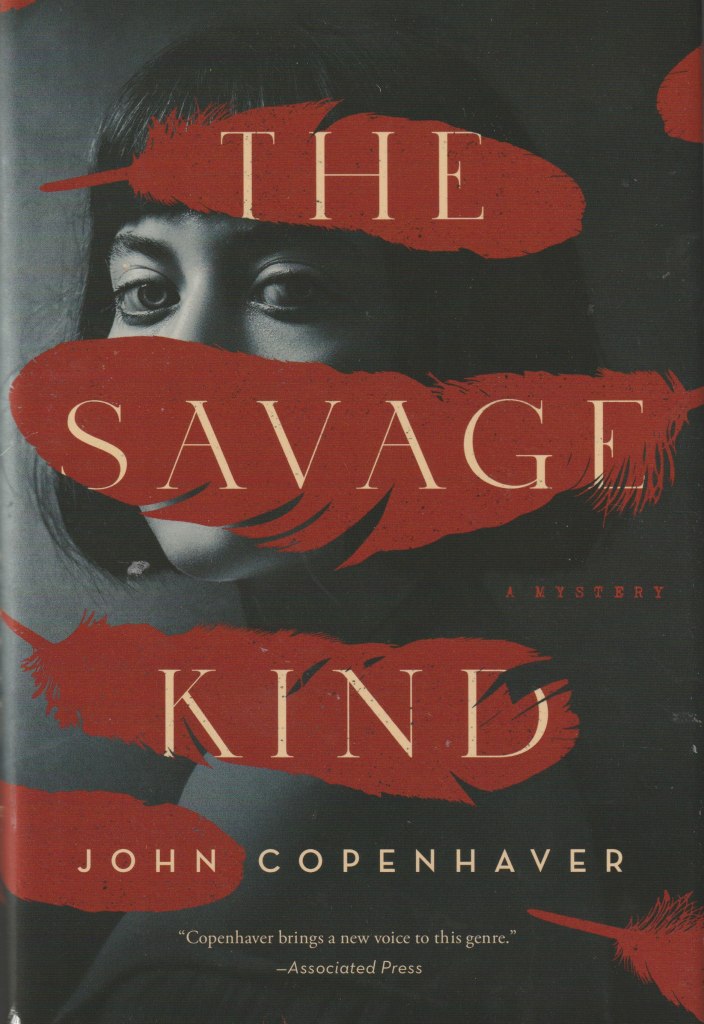
Which brings me to John Copenhaver’s second novel, The Savage Kind, which I just finished reading yesterday.

If I tell you the truth about Judy and Philippa, I’m going to lie. Not because I want to, but because to tell the story right, I have to. As girls, they were avid documentarians, each armed with journals and buckets of pens, convinced that future generations would pour over their words. Everything they did was a performance. Everything they wrote assumed an audience. After all, autobiographers are self-serving, aggrandizing. Memoirists embellish. It’s unavoidable. To write down your memories is an act of invention, to arrange them in the best, most compelling order, a bold gesture. Some of the diary entries that follow are verbatim, lifted directly from the source, but others are enhanced and reshaped. I reserve my right to shade in the empty spaces, to color between the lines, to lie.

You may balk, dear reader, but I don’t care. I need to get this right.

I could take different approaches. I could contrast the teenage girls: the black hat and the white, the harpy and the angel, the cunning vamp and the doe-eyed boob. Or I could draw them together, a single unit: Lucy and Ethel, Antony and Cleopatra, Gertrude and Alice, Holmes and Watson, or even, I dare say, Leopold and Loeb. But neither of those angles would work. The complicated facts are inescapable. These girls are both separate and together, but many times, they followed their own paths and even crossed one another. Things are never that simple, never that black and white, that good or evil, or that true or false. I’m not writing this to assign blame, or to ask forgiveness, or to tie it up in a bow for posterity. It’s not that kind of book.After all, an act of violence committed by one may have originated in the heart of the other. That’s to say, this is a story about sisters, and like many of those dusty and gruesome stories from ancient literature, here sisterhood is sealed in blood.

I should know. I was one of them.

Great opening, right?

John’s debut Dodging and Burning won the Macavity Award*, and was quite the impressive debut. II was completely blown away by the book myself–it showed a maturity and sophistication in theme, writing, and characters that one rarely sees in a debut novel. One of the things I thought was very interesting about the book was that while it did focus on a gay story, the main voices in the book were young straight women; I thought that was a risky thing to try to pull off, but he did a really excellent job.

As good as Dodging and Burning was, I wasn’t prepared for how good The Savage Kind would be.

The heart of the book is the friendship/relationship between two damaged young women in the post-war afterglow of the late 1940’s in Washington DC. (Both of John’s novels are set in the post-war period, when the world was trying to go ‘back to normal’ after the massive paradigm alteration of a global war that left most of Europe and significant parts of Asia in ruins; tens of millions dead, billions in property damage, and the world needed to rebuild from the rubble–and normal was also being redefined; the paradigm shift caused by the war made going back to “the way things used to be” practically impossible–which makes it a very interesting time to write about.) Philippa’s mother died giving birth to her and she has a slightly adversarial relationship with her stepmother, Bonnie. Judy was raised in an orphanage and adopted by a wealthy couple who had lost a daughter in a particularly brutal way–Judy was adopted to replaced their raped and murdered daughter, but her adoptive parents are still too scarred and damaged from the lost of their own child to raise and love another, and this history also colors Judy’s personality and who she is. The two girls find each other and become very close friends; so close that their love for each other might go even deeper than the Platonic ideal of friendship–their teenaged hormones raging out of control, are romantic/sexual feelings also developing between the two of them?

They are also playing girl detectives, trying to get to the bottom of a mystery that they don’t know has anything to do with them beyond the idle curiosity (and their dangerous boredom) but as they look further into the mystery revolving around a classmate, a favorite teacher, and that classmate’s family–as well as their own–they become more and more deeply enmeshed in danger and cling even tighter to each other.

As if that juggling act isn’t tough enough, Copenhaver makes all of these characters realized, fully developed and realistic in their emotions, their feelings, and their reactions. He also tells the story in alternating points of view between the two girls while they are experiencing the events, as well as a narrator voice from the future, telling the story in retrospect as well as talking directly to the reader. This is hard to pull off, particularly the omniscient future narrator–the last time I saw this used so effectvely and memorably was in Thomas Tryon’s The Other (at least, this is the book that popped into my head as I was reading, and it’s a favorite of mine).

The Savage Kind was nominated for a Lefty Award, and it very deservedly won the Lambda for Best Mystery recently. I highly recommend it!

*I may be wrong here, but I think he might be the first openly gay author of a book with gay characters and themes to win the Macavity Award; I know I was nominated once for a short story–but my characters and themes weren’t queer.

One More Big Time Rock and Roll Star

And now it’s Friday, Three Day Weekend Eve.

It rained again yesterday, so it wasn’t terribly awful while running my errands after work last night. I came home, put away dishes and did some laundry, provided a lap for Scooter–who stayed there all night, and even when I would get up he would just jump back into my chair and go back to sleep (Paul didn’t get home from work until after I’d gone to bed, so he was feeling abandoned the way he always does when there’s only one of us at home), and did some more brainstorming and plotting for the stuff I am working on. I feel good and rested again this morning (I did get a bit tired yesterday afternoon), and hope springs eternal for another productive long weekend at home. The theme for the weekend is clearly editing, since i have copy edits for two manuscripts to start working through, and two short stories to edit–I also need to go through my “call for submissions” folder and see what is possible and what is not ( as well as tossing the ones that have already passed).

It seems weird to be celebrating Independence Day this year, since the radical, highly politicized “supreme” court continues to demolish every right and protection anyone non-white and not male have fought for and earned since the second World War–even going back as far as JOHN FUCKING MARSHALL to overturn decisions–as they work to establish a Fascist state once and for all. I was thinking about this last night while watching Real Housewives Ultimate Girls’ Trip 2 and remembering why I didn’t miss seeing Jill Zarin on my television, and I was also thinking about memoirs and memories and writing about my life. One of the primary reasons I’ve always backed away from it (and yes, I am aware that I am talking about being reluctant to write personal essays about my past and life in MY FUCKING BLOG) is not only because I know my memory to be faulty, but also because I know that–like most other people–I also have a tendency to rewrite my memories to make me look better or to justify bad behavior on my own part, and that isn’t fair to the other people in said memories who don’t have a platform (no matter how small) to tell their side of the story (which has also been undoubtedly rewritten in their own minds to make themselves look better). No two people ever see the same situation exactly the same; our interpretations and reactions to things are often predicated and formed by our life experience, our education, our opinions, and our beliefs and values that have also developed over a lifetime. An event that may have seemed completely throwaway and inconsequential to one person can be life-changing to another.

I’ve also begun recognizing and finding holes in my memory. For some reason I had always believed we’d moved, for example, from the south side of Chicago to the suburbs in the winter of 1969. That was firmly cemented in my brain as fact…until a year or so ago when I realized I was ten when we moved to the suburbs, which means we didn’t move out there until the winter of 1971. That’s a significant difference, which has skewed the order of memories in my head.

Some friends have been encouraging me to write personal essays, but I’m not really sure I should or not. For a long time I shut the door on my past as much as I could; it was painful to remember and it was simply easier for me to shove everything into a corner of my brain and lock the door behind them. When I started rebooting my life at age thirty-three, I still looked back a lot with sadness and heartbreak and bitterness–but I also began trying to put it all behind me at the same time because it was sad and heartbreaking and I didn’t want to be trapped into that quagmire of negativity. After Paul and I had met and we’d moved to New Orleans and my new life was beginning to take shape–the life I’d always wanted and had dreamed of for years; those dreams sustaining me through even the darkest of times–I decided to put it all behind me once and for all, deciding that I loved my life and was very happy with it, which meant that everything that had happened–no matter how terrible–was necessary to put my feet firmly on the path that led to my happiness and so therefore I should have no regrets about anything. It was helpful to distance myself from my past and never look back, so I tried never to do so. But now that I’ve reached sixty–I’ve started reflecting about the past a lot more over these past few years, plus writing my last two books (Bury Me in Shadows and #shedeservedit, respectively) required me to start digging around in those inner rings of the giant redwood of my life, as did watching It’s a Sin, which, despite being set in London, took me back to the 1980’s and brought a lot of painful memories back. It made me realize that while that coping mechanism of “no regret, not looking back” was necessary for my growth into who I am now, and for me to build a writing career, it wasn’t long-term healthy because a lot of unprocessed pain, anger and grief (and joy and laugher, as well) had never been recognized, processed, dealt with, and moved on from. I think part of the reason I decided to finish those two in-progress-for-years books was precisely so i could start processing and dealing with my past…and sometimes that means revisiting painful memories. It’s also part of the reason I moved “Never Kiss a Stranger” up on the lengthy list of things I want to write and finish and get out there; I want to remember the mentality of what it was like to be a gay man in New Orleans in 1994, just really coming to terms with your sexuality after being closeted at least most of the time for most of your life, and beginning to explore what it means to be gay while the specter of AIDS hung over your head like a death sentence just waiting to be pronounced. As prevention and treatment options continue to lower the risk of infection as well as the threat of death over the last decade or so, people are slowly beginning to forget what it was like back then–and the literature of the period is going out of print and disappearing. I now have clients who don’t remember what it was like because they weren’t alive then, and while it is so wonderful and lovely that they didn’t come out and experience life with that shadow hanging over their heads, periodically I feel a bit of pang remembering all those wonderful bright lights that were extinguished so cruelly, and the old embers of white-hot anger at the societal and governmental neglect, often deliberate and intentionally cruel, that allowed them all to die returns.

Which is why unveiling a commemorative stamp honoring Grendel’s mother, aka Nancy Reagan, during Pride Month was tone-deaf as well as a slap in the face to those of us who survived in spite of that miserable bitch and the raw sewage she married.

I also think this most recent pandemic and the memories it stirred up, timed with watching It’s a Sin and some other things, is why I am so exhausted all the time (well, that plus being sixty); it’s a sign of depression from all of the unprocessed emotions and feelings from locking away my past and turning away from it. It may have been necessary in 1995 to move forward, but it wasn’t healthy, and the longer I kept those memories locked away without dealing with them the worse it became. So I am going to set a goal of trying to write an essay every two weeks about something from my past, unlocking a memory and trying to find the meaning in it, how it impacted and affected my life–and not with regret, but with the cold, unflinching eye of the non-fiction writer. I also feel like something snapped inside my head this past week–I know how weird that sounds–but Wednesday I was really down. Memories flashing through my head, triggered by the reversal of Roe (I remember a pre-Roe United States, and also remember when the decision came down) and what that meant for other decisions revolving around personal privacy/freedom and government overreach. The four or five days following the Dobbs decision were dark ones for me (I cannot imagine what they were like for women), and yet, somehow, in writing something Wednesday afternoon something snapped in my head and I got past it all–and I realized I’d been dealing with a lot more anxiety and depression than I thought I was (and I thought I was dealing with a lot as it was). I have felt much better since getting over that hump on Wednesday, but I am also not foolish enough to think I am past it all, either–it will come back.

If I learned anything from Hurricane Katrina, it’s that trauma and depression come in waves. There will be good days, and there will be bad days. I usually deal with darkness by writing–not writing makes the darkness even darker–which is something I also need to remember: writing always makes things better for me.

And on that introspective note, I am heading into the spice mines.

Street Angel

Ugh, another toxic Tuesday.

I mean, if Monday is manic, Tuesday can be toxic; Wednesday can be woeful; and Thursday can be…something. Regardless, I am awake at the usual Tuesday morning godawful toxic time, swilling coffee and getting ready to head into the office. Huzzah.

I didn’t feel well this morning when I got up, but I took my weekly return-to-work COVID test and it was negative. I am not really sure why or how I ‘ve managed to go this entire pandemic without getting infected (particularly when you take into consideration how many possible exposures I have had with my job since this all began), but I also managed to get through the entire (and ongoing) HIV/AIDS pandemic without getting infected, either. Just one of the lucky ones, I guess? But as my coffee sinks in and courses through my veins–and the Claritin-D kicks in–I am feeling a lot better. Still a bit tired, but can definitely make it through the day, which was questionable when I first got up this morning. I’m not sure what that was about, but am glad it is passing (or is past).

I have so much to do it’s a bit overwhelming, but when I got up this morning I didn’t have the strength and/or energy to even face up to everything that I have to do, but I am starting to get that necessary second wind and maybe–just maybe–the strength and brain focus necessary to start plowing through this massive to-do list, which also needs to be updated. SO much to do this week, but I also have a three day weekend looming so maybe I’ll be able to actually get some things done this weekend rather than trying to recover from an exhausting week? My energy levels is something that I’ve been very concerned about for quite some time; by the time I generally get home from work the day–from getting up early to being out in the heat to running errands–I am so tired that I have trouble working on my writing and my to-do list, and giving into Scooter’s demands that I sit in my easy chair and provide a lap for him in which to sleep while I watch documentaries or go down Youtube wormholes is way too easy and tempting to avoid–and once I am in that chair, it’s game over for the night.

Paul didn’t get home until late last evening so I watched some documentaries, including Scream Queen, about Mark Patton, the closeted gay lead of what is considered the gayest horror movie of all time–A Nightmare on Elm Street II: Freddy’s Revenge. I remember seeing it and not liking it when it first was available to rent–I rented a lot of movies back in the day–but primarily because the connecting thread from the first movie wasn’t there other than Elm Street and Freddy. Now that I’m hearing about all the gay subtext–some of which was apparently overt–I kind of want to see it again; I’ve never wanted to watch it again because I didn’t enjoy it when I was in my twenties (a foul, horrible decade and probably one of the worst of the seven–yes, seven, this is my seventh decade on the planet–decades of my life. I do have fond memories of the 1980’s, but I also have a lot of horrific memories of that same decade) but now I am thinking I’d kind of like to see it one more time, looking at it with a fresher perspective than I had in my twenties.

And I really need to finish reading John Copenhaver’s The Savage Kind. I’ve agreed to read a friend’s manuscript with a gay character in it, but I can’t read two new-to-me pieces of fiction at the same time. (This is not true for non-fiction; I am reading both Robert Caro’s The Power Broker and The Great Betrayal now, and I am trying not to start reading Paul Monette’s Becoming a Man) I need to work some more on all my various writing projects; there are some short stories coming due, deadline-wise, relatively soon that I’d like to write something for, and so I can’t just not be writing in the evenings consistently the way I have not been doing since the summer weather arrived.

Heavy heaving sigh. And on that note, tis off to the spice mines I go. Have a lovely Tuesday, Constant Reader, and I will check in with you again tomorrow.

Edge of Seventeen

Just like the white winged dove….

Sing it, Stevie!

So I managed to get some writing done yesterday–not only did I get some writing done yesterday but it actually flowed; it wasn’t nearly as painful or forced as it has been when I’ve been writing lately, which is lovely. I also read for a little while yesterday; I am moving into the final act of The Savage Kind and am really enjoying it; I hated put it aside yesterday when my allotted reading time had finally run out. I slept very well last night–didn’t want to get up this morning, or more precisely, didn’t want to get out of bed which felt unusually comfortable to me this morning–but I do feel well rested. I am working at home today, which is nice–I really don’t want to go out into the heat–but things change. We watched the first few episodes of Condor last night–it’s not bad, a more modern-day version of Three Days of the Condor, which was one of my Cynical 70’s Film Festival movies during the pandemic–and I do feel relaxed this morning….probably because I am still in denial about everything I have to do and get done.It just keeps building….

My anger has finally cooled over the so-called “supreme court” rulings of last week; but I still have a lot of righteous indignation and outrage left that can easily be fanned into red-hot flames. Louisiana, of course, had just passed its very own trigger law, which our piece-of-shit governor signed. Of course, my own rights will soon be overturned by this joke of a court; as I tweeted on Friday, “Somewhere in hell Roger Taney is smiling because his supreme court may no longer be the worst in our history.” I mean, when you are passing out rulings that are about on the same level as Dred Scott, you really should sit back and reflect on your life choices. It’s bad enough we have four perjurers on the court along with a sexual harasser, a probable rapist, and a woman whose religion has brainwashed her into a Stepford wife–someone on Twitter said yesterday “if the founding fathers could see us now they’d say ‘You let Catholics on the court?'” I love to point out that despite all evangelical claims that this is a Christian country, they never specify which brand of Christianity they mean. Pentecostal? Quaker? Lutheran? Catholic? Missouri Synod? Latter Day Saints? No two sects of Christianity agree on anything; it was precisely this division of belief within the same theoretical faith that led to centuries of war and oppression in Europe, and the very American standard of the separation of church and state. You also have to remember that originally nearly every colony since the Europeans decided they were taking over this continent from its natives followed a different sect: Maryland was Catholic; Massachusetts Puritan; Rhode Island was founded by Roger Williams upon the very principle of religious freedom and became a haven for persecuted religious minorities; Virginia was Episcopal; and so on. Christianity isn’t a monolith where everyone believes the same thing–they can’t even agree on the basic principles of their religion or how to pray or who can preach or teach.

Although they do all have the symbolic cannibalism ritual–but again, all different versions.

But the “supreme court” has a long and tragic history of incredibly bad and damaging rulings–see Dred Scott, Plessy v. Ferguson, Citizens United, etc.

There’s another Alabama story brewing inside my head–you know, that non-stop creative ADHD thing I have going–about a small town in Corinth County trapped and controlled by it’s radical fundamentalist religion. I know I had the idea for the town years ago–it’s called Star of Bethlehem–but this idea for using that town is vastly different than the original one I had (in which the town’s water supply was deliberately tampered with as a corporate experiment in which the townspeople began developing strange abilities; I can still make that work into this–imagine a small remote town in the grips of a maniacal controlling religious sect where this happens; are these miraculous abilities a gift from God or the work of the devil? Which, really, was kind of the point of the superb mini-series Midnight Mass) but it keeps nagging at me as I sit down to work on other things. I scribbled some notes in my journal last night while watching Condor–again, it’s an interesting modern take on the original story–and so we’ll see how it goes.

I also started writing Mississippi River Mischief yesterday. I was going back and forth, wondering how to open the book, and finally just decided to say fuck it and start writing it. I wrote 173 words on it, which while not much is certainly something. Hopefully after work today I can work on it some more. I’ve started figuring it out a bit more–I already know who the victim is, I already know what’s going to be going on in Scotty’s life during the course of this book–but there’s all kinds of things left for me to get figured out. But–as with every Scotty book–I usually tend to just jump into it headfirst and see what happens.

So, all in all, a relatively productive weekend and very few regrets. I still have a ridiculous amount of work to do, but…progress is all that matters and I refuse to allow myself to get stressed out.

And on that note, it’s Data Entry time. Have a lovely Monday, Constant Reader. Hope we all have a better week this time around.

I Sing for the Things

Sunday morning and it looks a bit overcast out there. I have a lot to do today–writing, reading, cleaning–and I slept deeply and well–so much so that I didn’t want to get out of bed this morning, it felt soooo comfortable under the covers. Scooter’s anguished demands for breakfast finally got me out of that marvelous cocoon of sheets and blankets, and now I am enjoying a cup of coffee and wondering how bad the weather will be today. We had lots of thunderstorms rolling through last evening, and overall, it wasn’t a terribly bad day yesterday, if not as productive.

I did spend some time with John Copenhaver’s The Savage Kind (which I also hope to do today), and then headed out to Metairie for my eye appointment. I go to the Target in Clearview Mall, just off the corner of Clearview Parkway and Veterans Boulevard. After my new glasses were ordered, I shopped a bit–found some aromatherapy oils I needed, got a new Brita water-filter pitcher, and a few other things, including a copy of Casey McQuiston’s Red White and Royal Blue.On my way home I hit the drive-thru at Atomic Burger (expensive, but I do love their burgers), and came home to do some more things around the house. I finished watching The IPCRESS File, which was very twisty and surprising and incredibly well done (I’ve never read the Len Deighton novel on which it was based, but the original film of this, which starred Michael Caine, was clearly the basis for the Austin Powers movies, only played for real); I thought one of its primary strengths was showing that even allies spy on each other and steal talent, as well as how beautifully yet casually it indicted the British class system as well as its ingrained misogyny. I also watched the Fall River documentary (didn’t finish, Paul came home and I was on the final episode) about the supposed “Satanic cult ritual murders” that took place there in the late 1970’s/early 1980’s; my primary takeaway and memory of living through those peculiar “Satanic panics” that seemed to be everywhere in that decade was people really think Satan is real and exists? I thought we were more rational a nation than that….which was one of the first steps on my journey to seeing my country, society and culture as it actually was rather than the mythology I was taught in elementary school and other levels of public education as a child.

Even when I was a child being taught the Bible was literal history I knew better than to believe it was literally true. It was quite an eye-opening shock and jolt that people not only believed the Bible was literal truth, but they also believed in Satan (Elaine Pagels’ The Origin of Satan should seriously be taught in high school) as an actual being working to undermine humanity and lure us into sin. It was quite a shock, and only the first of many to come as I began reeducating myself on everything.

And yes, I am bitter that I was miseducated, and that I had to waste so much of my adulthood reeducating myself.

But I do love to learn; it’s one of the many reasons I love to read so much. I am always reading something non-fiction at the same time as I am reading fiction (although the non-fiction often takes longer for me to get through). I have been reading Robert Caro’s massive The Power Broker: Robert Moses and the Fall of New York for over a year now; it’s long and I am finally past the half-way point–but it’s an absolutely terrifying look at how power can be amassed and how it corrupts even those who go into public service with the purest and brightest of motives; and how that accumulation of power turns personality flaws in individuals into horrific public policy that causes more damage than good in the long run. I think after I finally finish this epic biography and study of public works in New York for most of the previous century, I may dive into some true crime to cleanse my palate and prepare me for another non-fiction tome. I of course read The Borgias while I was in Kentucky on my last trip, and I also have The Medicis to read as well as other history, but I think I want to read about true crimes for a bit once the palate has been cleansed. I have Sarah Weinman’s marvelous collection of true crime reporting on hand, as well as her recent Scoundrel, which cries to me from the TBR pile; there are several other true crime books I have on hand as well that are always fun to read for insight into my fellow (depraved) citizens and why they do the things they do (part of the reason I really was enjoying Fall River was due to getting some insight into why people turn out the way they do when they go bad), and there’s some other interesting histories I have on hand that i would like to read, too.

Someday I will have enough time to read as I would like.

My to-do list for today and this week is quite ambitious. The heat and humidity have been serious drawbacks to my energy levels and my ability to get things done (I just got the power bill and recoiled in horror), but I need to adapt and adapt quickly else the entire summer will have passed and suddenly it’s fall and I have only a few months to work on the Scotty book. (I did work on it a bit yesterday; I had some really good ideas to jot down, and I do think I am beginning to get a grasp on the story and what it’s going to be.) I want to work on the secret project I wanted to have finished by the end of the month (so not happening) and I also have to work on some short stories I want to submit and get out there. I’ve been feeling defeated lately, primarily I think by the heat (since my sleep has been really good for the most part since I got back from Kentucky, fingers crossed this will continue), and I need to get beyond that. Yes, the world is a dumpster fire raging out of control, but all I can control is me and how I react and I can feel the need for control building inside my head….so I imagine at some point relatively soon I am going to stop watching the fire blazing and work on the things I can control, while still being aware of the fire and doing whatever small things I can to pitch in to keep the blaze as under control as I am capable.

It’s getting gloomier as I type, so I am going to bring this to a close, make another cup of coffee, and retire to my easy chair for some more The Savage Kind. Have a lovely Sunday, Constant Reader.

Rock a Little

Well, here we are on Saturday after a rage-infested Friday during which my anger burned with the white hot heat of a dozen burning suns. I somehow managed to get things done–the world keeps turning, no matter how shitty whatever is going on that day might be–and yet succumbed to the need to rage-tweet and retweet; Twitter is such a horrible place and it just feeds on itself.

The other day I was talking about #shedeservedit and why I wasn’t entirely comfortable promoting the book–but the abomination of the ‘supreme court’ and its rulings of this past week have completely changed my position about that entirely. I am very glad that I wrote that book, because part of its story also addresses the need for legal abortion. YES I AM PRO-CHOICE AND I ALWAYS HAVE BEEN, even when I was a child. I remember when the Roe decision originally came down; I was twelve years old, and everyone was talking about it. My sister wrote an anti-abortion piece for our high school newspaper, so I knew where she came down on the issue; my parents never really talked about it but I felt pretty safe in assuming, based on their upbringing and their faith, where they came down on the issue. It seemed kind of wrong to me, but the more I read about it and the more I understood the position of those who argued in favor of it, the more I came around to the pro-choice side. No one should have to carry a child to term against their will, period. I don’t know why that is so difficult for so many men to understand or grasp; if men could get pregnant Planned Parenthood would have drive-thru service. And the right to privacy these judicial activists just struck down? The ripples of government intervention into personal life choices that are none of the government’s or anybody else’s decisions is the epitome of government intervention and overreach that conservatives are always screaming about. The abominable sexual predator Clarence Thomas* even specifically named other decisions regarding privacy and government overreach he felt were ‘wrongly decided.’ Hey, if I was married to one of the biggest traitors in American history this side of Benedict Arnold I’d probably have all the seats and keep my mouth shut, but you do you, predator.

Sigh. I’ll probably never stop being angry about this.

I did manage to get some things done yesterday. I did my day job duties. I also took a short break to go wash and vacuum out my car (I finally found a do-it-yourself car wash that is easy to get to); I also got my brake tag renewed, which was marvelous. (It expired during the shutdown of 2020, and there were no places open to have it done. Naturally, I forgot all about it until a conversation at the office the other day.) I don’t have to worry about that again until 2024. I also picked up the mail and came back home to do more work. After my work duties were finished, I made three binders for working projects–yes, this is something that I do. I print out every draft, three hole punch it, and put into a three-ring binder used specifically for that purpose. I had recently emptied out the binder for A Streetcar Named Murder, and so I am reusing that one of Mississippi River Mischief. I also made a new one for Chlorine, one for “Never Kiss a Stranger ” (and the other novellas), and one for another project I am slowly but surely working on for some reason that doesn’t really make sense to me; someone has shown an interest in it and so I am writing it when I can’t make any progress on what I am currently focused on working on. Today I have an eye appointment in Metairie at noon; I’m debating as to whether to donate books to the library today to get the boxes out of the living room before heading out there. I am probably going to treat myself to Atomic Burger on the way home–I was thinking Sonic, but I’ve not had Atomic Burger since pre-pandemic times so that sounds like more of a treat for me than going to Sonic. (it’s also been a hot minute since I’ve had Five Guys…)

We watched this week’s episode of The Boys last night (thoroughly enjoyed the season finale of Obi-wan Kenobi the night before) before catching another episode of Loot (seriously, Maya Rudolph is killing it on this show; one of the best female comedy performances since Veep–she and Jean Smart will be definitely fighting it out for the Emmy this year, and the entire cast is actually quite good. Very sharp comedic writing, as well, and then once we were caught with that we moved on to First Kill, which we are still enjoying, weird as it is. I also want to spend some time today with The Savage Kind by John Copenhaver–it’s quite wonderful–before I head out to the burbs. (I also laundered the bed linens and got caught up on the dishes as well.) I do want to finish reading it this weekend, so I can find out where it’s going and enjoy every page as well as to move on to my next read before Pride Month runs out. I have all these marvelous books just collecting dust here in the Lost Apartment, and just begging to be read.

On that note, I am going to make myself another cup of coffee and head over to the easy chair with my book before I have to start getting ready to head out to the eye appointment. Have a great Saturday, and remember–channel your rage into action. To quote Game of Thrones, “there is no justice in this world unless we make it.” I intend to spend the rest of my life, as I have spent so much of it already, fighting for justice. I’d kind of hoped that I wouldn’t have to anymore, but letting your guard down just gives the Fascists an opportunity to regroup.

“Henceforth I shall only refer to him in this manner, just as Kavanaugh will always be “the rapist Brett Kavanaugh.”