You’re the Top

One of the most frustrating things about being a queer American is the absence of any kind of history, really. Oh, sure, there’s Stonewall and some other riots/protests in the years leading up to Stonewall; the Mattachine Society and the Daughters of Bilitis. But since historians have done such a marvelous job of erasing us, trying to find our history isn’t the easiest task. You have to look for clues, coding, and signs.

Because, you know, we’ve always been here. We have also always consistently, despite the muzzling of the overarching culture and society’s constant attempts to erase us from the pages of history, managed to sneak traces of our existence and our sensibilities into the art of the times. Ever wonder why so many statues and paintings decorating cathedrals, cemeteries, and palaces in Europe are depictions of well-muscled, physically beautiful men? Because the artists were gay and the only way they could make art celebrating the beauty of the male body was to do so in a religious setting. (The depictions of the martyrdom of St. Sebastian, in particular, are insanely homoerotic; one such painting was used for the cover art of Anne Rice’s Violin, which I think may be her finest novel.)

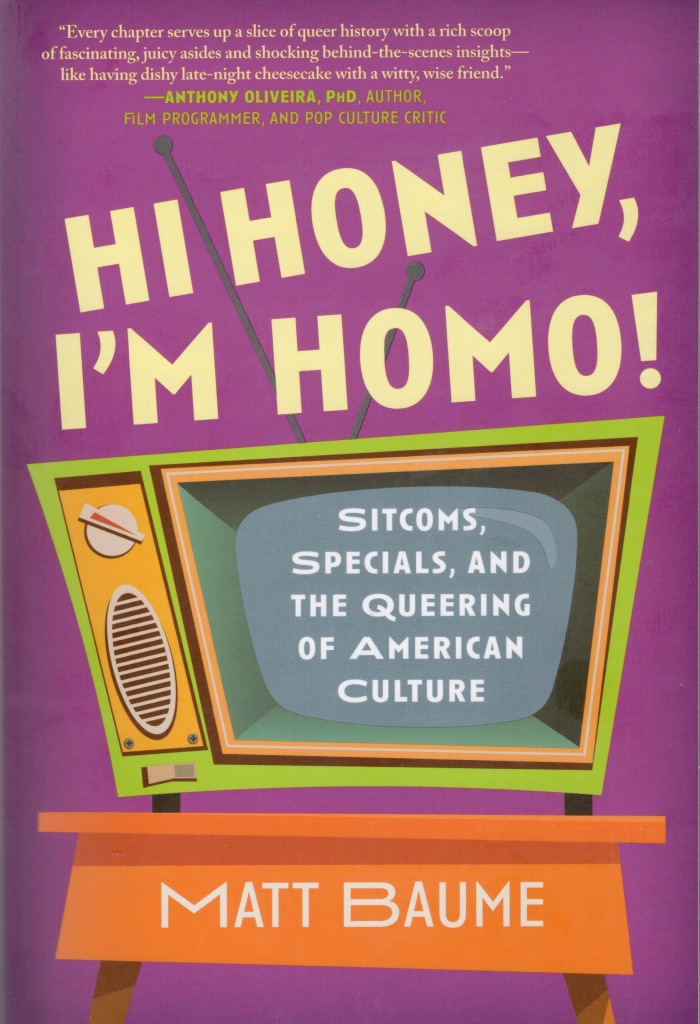
This entry’s title is also one of those sneaky gay songs passing for straight. Good old Cole Porter, the witty and intelligent composer and songwriter and overall bon vivant. Queer coding is everywhere in old books and movies and television shows and music. (I’m currently reading Matt Baume’s marvelous Hi Honey I’m Homo, which focuses on queer representation on old television series from the 70s and 80s, focusing primarily on comedy shows.)

There have been queer Kings and Queens and Emperors–and two of the greatest military minds of all time were gay Kings: Alexander the Great and Frederick the Great. But our history always gets erased–and homophobic historians will argue till their dying breath that unless there’s definitive proof, those sexualities and identities cannot be named. This is both infuriating and frustrating; take the instance of King James I of England–he of the King James Version of the Bible. He didn’t have female favorites–he had male ones, and he gifted them titles, money, jewels and estates and raised them into high positions of power. But because there’s no diaries where King James admits to taking it up the bum or going down on Robert Carr, there’s no proof. Well, likewise, the only proof the man was straight was because he was married and had children…which was also his duty as King. I know of no women favorites of King James. Likewise, there are no letters or journals written by Frederick the Great where he talks about some soldier having a nice ass or having sex with some hot young ambitious Prussian noble. So, no, there’s no actual proof. There are no photographs, no videos, no nothing. But…while he was married, he had no children; and he would go years without seeing his wife. Women were banned from his court. He also wrote his actually confirmed gay secretary a letter during the course of which he said: “My hemorrhoids affectionately greet your cock.” (The hoops historians will leap through to deny that Frederick the Great was a big ole bottom, and that sentence doesn’t mean what it actually said, are worthy of Ringling Brothers.) There was a lot of gossip, and Frederick’s preference for young men was openly gossiped about at other European courts. And most of his art collection celebrated homoeroticism.

I would love to write a biography of Frederick, seriously.

I also find Louis XIV’s younger brother “Monsieur,” Philippe, duc d’Orléans, fascinating as well–another one who’d be interesting to write about, especially since he is known as the Father of Europe; almost every European monarch from at least 1800 is one of his descendants, despite his sexuality and his predilection for wearing women’s clothes to court.

My story in The Faking of the President addressed this erasure; I chose James Buchanan to write about because he is the only president who never married and he was allegedly in a long-term relationship with Senator Rufus King (Andrew Jackson referred to Buchanan as “Aunt Fancy”). There’s no evidence that Buchanan and King were actually a couple; all of Buchanan’s correspondence was burned, on his instructions, when he died. I wrote my story about a gay historian who firmly believed Buchanan was gay…and after effectively wrecking his academic career, someone contacts him who claims to have the long lost letters to Buchanan from his fiancée when he was a very young man–and the letters will prove his thesis.

Believe me, I get the frustrations he experienced. I don’t think I’d go to the same lengths he did to get that proof, but I empathized.

But this also is an issue in even more recent history. When I was with Mystery Writers of America, at one point I wanted to try to figure out how many queer authors were members…but the impracticality soon became evident. First, you have to start with the question of what precisely counts as queer fiction, and what is a queer book? Is it the sexuality of the author what matters? What if they are openly queer but don’t write queer characters and stories? What about a straight person who writes queer stories and characters? Does that count? Lambda Literary went through hell over this, and there’s literally no way to please everyone. Is it the book, or the author? I’ve always been a firm believer that it’s the book when it comes to awards. Yes, the author gets the award, but it’s for writing the book. So, in my opinion, I would consider Call Me By Your Name a gay novel, despite the author being straight, and my own A Streetcar Named Murder to not be one, despite my being gay. The argument can be made, of course, that being gay gives me a different perspective and point of view that’s more queered than that of straight writers, but I don’t think there’s any “gay sensibility” to Streetcar.

Maybe I’m wrong. I’m not the final word on my books, really.

But this becomes problematic in two regards: one, if someone never officially stated anywhere that they weren’t straight, can it be inferred? Not every man or woman who never married was queer; but marriage itself isn’t proof of heterosexuality because a lot of queer people marry opposite sex spouses and get divorced when they come out later. I was engaged at nineteen; does that serve as proof to future generations that I was straight, despite all of my writings to the contrary? People still don’t feel completely comfortable coming out TODAY, let alone before Stonewall. Take Cornell Woolrich, for example. He never married, lived with his mother for a very long time, and was an alcoholic, pretty much had a miserable, horrible life. He never said he was, but would he have during the time in which he lived? Likewise George Baxt, who wrote a series about an openly gay Black police detective in the 1960’s. Baxt never made any announcements or pronouncements one way or the other; some of his acquaintances have said that he was but Baxt himself never did in any meaningful, definitive way. So, was Baxt or someone else the first gay crime writer? Joseph Hansen was definitely out, and his David Brandstetter series was not only groundbreaking but still remains one of the definitive gay crime series.

Secondly, it also becomes a matter of privacy as well. I know any number of authors who identify as queer but don’t write queer; how do you know how far out of the closet someone actually is in their life? There’s a hugely successful thriller writer who is a gay man, but I won’t say his name here or to anyone else because I don’t know how out he is…and whose business is it, anyway? There’s a hugely successful crime writer that I know for a fact is a lesbian. But if I google her name and lesbian, there are no hits. I generally put myself into their place, really, and ask myself, okay, what if you had somehow managed to start getting published when you were closeted? You wouldn’t have written books or stories about gay men, for one, and for another, I absolutely hated when people speculated about my sexuality–because it never meant anything good for me would come of it.

I’ve never been militant about people’s need to come out, and I also don’t think it’s anyone’s place to out anyone; with the caveat that if you are closeted and actively doing the community harm, you absolutely should be outed. That congressman from Illinois, the über-conservative congressman from Illinois who was outed? Ah yes, Aaron Schock. He deserved it–and while I don’t think he ever repented from his self-loathing brand of conservatism, he certainly has been living the gay high life since it happened. J. Edgar Hoover should have been outed; he was a monster, as was the always disgusting Roy Cohn. But actors and singers? Models? Writers? People who are just navigating their lives and coming to terms with who they are? Everyone should have the time and space to come out when they are ready.

The closet is a horrible place, and it seriously fucks with the people who are living there. I can be empathetic because I know how hard it is, how terrifying it can be. It can twist people (Aaron Schock, for example, clearly felt the need to be über-homophobic just to show he wasn’t one of those people, and yes, that is twisted and sick and sad, and why I am able to feel some empathy–not sympathy–for him as his life must have been hellish, even if it was his choice), and warp them into horrific behavior….but accountability, respect, and atonement are also necessary if the closet turns you into an Aaron Schock. I mean, how much self-loathing had to be there in his mind?

Not everyone has to be a spokesperson. It depends on your level of comfort. And please give people the grace to come out at their own pace and on their own terms. Struggling to accept and love yourself–realizing there’s nothing wrong with you–is a process that isn’t made easier by speculation. I’ve indulged in speculation about actors and singers and other public figures. That kind of speculation usually happens because there are so few queer role models in the public sphere; but I can also understand why people in the public sphere would want their privacy. Being a role model is daunting and full of pressure and potholes and dips and swerves in the road. And it also begs the question–what do we out queers owe to the rest of the community? What is our responsibility? Can we opt out of those things if we aren’t comfortable? I’m certainly not comfortable speaking for the entire community; I always say “in my experience” rather than making my own the community’s.

And we do live in dark times. There is a vast right-wing conspiracy (thank you, Madam Secretary, for that accurate phrase) to wipe queers off the face of the country–and don’t you dare call me an extremist for thinking that. We are being dehumanized and devalued on a daily basis by a bunch of evil people who think they are somehow doing God’s work (that arrogance alone will keep them from Heaven), and if dehumanization isn’t the first step towards eradication, study your Weimar Republic history. This country is at a tipping point–and it wouldn’t take much to tip us over into becoming the 4th Reich, which is terrifying. Oh, Greg, you always look at the worst case scenario!

That may be true, but I’m rarely wrong–and usually the reality is much worse than I imagined.

But I still hold out hope that decent people in this country outnumber the monsters, and that decency will inevitably prevail again. The importance of coming out, because the more of us there are and the more visible we are, cannot be underestimated. This is also where that lack of history bites us in the ass. It’s very easy for haters and bigots to dismiss us as “something new” or “it was better when you were quieter” or the ever-popular “I don’t care just don’t shove it in my face” (which literally has the opposite effect on me–tell me that and I will rub your nose in it) because we’ve been erased from history and a lot of the language around us is new. Language has changed and evolved over the course of my life, as we get more information and learn more, and yes, that means you have to keep up and might actually make a mistake by saying something you didn’t know had become dated or offensive. I am learning all the time, and want to continue to learn because I want to keep growing into the best version of myself that I can be (thank you again, Ted Lasso) and I don’t understand people who don’t want to grow but would rather stagnate and calcify.

Wax and Wane

Thursday and last day in the office for the week. I was very tired yesterday, despite not working on Tuesday, and so when I got home I didn’t do a whole lot of anything. No chores, nothing of that sort. I didn’t even read anything! The heat and humidity have returned and it was so miserable when I went out to the car after work yesterday that I felt drained by the time I got into the coolness of the Lost Apartment. I slept decently last night–not great, but restful, waking up a couple of times throughout the evening, but I feel a bit groggy this morning, which is also fine. I think we have a fairly light schedule today at the office and I have some other things I need to get done around seeing my clients. But I’ve almost made it through another week, survived it all, and now we’re at another three-day weekend, which is lovely. I have a lot of work to get done around here this weekend, so the extra day is going to be super great to have.

I need to get caught up on my emails–which won’t take nearly as long as it used to, because I don’t get nearly as much as I once did, which is kind of nice. It’s not that I consider email to be an odious chore or anything, and it’s not like I get problem emails anymore (thank God; I no longer cringe and cower and have to steel myself before pulling up my email), but there’s also not as much urgency with them anymore, either. The decline in the amount as well as the not-quite-as-urgent sensibility of it has resulted in my being pretty lazy about it. (My email provider also recently changed a lot, which is irritating because I don’t like the way it looks now and it wasn’t an improvement to make it easier to use; the Spotify app on my phone recently did the same thing. The lovely thing about technology is the constant need to have to relearn how to fucking use it. That was sarcasm font, by the way.)

So, rather than being my usual lazy self and wasting time finding things on Youtube (primarily to see if they are there), lately as I sit in the easy chair with a purring kitty in my lap I’ve been trying to do some research, that hopefully will stick in my head. Mostly I’ve been looking up videos about the HUAC and Confidential magazine in the 1950s, among other things for that period–also beefcake and peplum–as research for Chlorine. I’m also digging into the 1970’s–mostly music and pop culture, along with historical stuff from the decade–because I want to write a book called The Summer of Lost Boys, which has been simmering in my head since the earliest days of the pandemic. I’m leaning towards setting it in 1975–the summer I turned fourteen and started my sophomore year of high school. It has some potential I think, and while the idea is still amorphous up there in the clouds in my brain, I really like the idea and think it could be a really good book…but I really want to get these two noirs done in first draft this summer. If the heat and humidity doesn’t wear me down too much, I should be able to get both drafts finished by the end of summer.

Unless I get lazy, which is always a possibility. The heat seriously doesn’t help, either. But the thing I always forget is the best thing to do when you get home from work in New Orleans in the summer is take another shower and get cleaned up. I sleep better and I feel better and it generally results in me being a lot more productive. I need to do laundry tonight, put away dishes, and reload the dishwasher, and I am going to start rereading this book that I am about to revise per my editorial letter (I still will be getting one for Mississippi River Mischief, too) and I want to finish reading my book, which I’ve stalled out on now for a couple of weeks…but I need to finish it if I want to move on to my AMAZING TBR pile. I have some errands to run tomorrow morning, too, before starting in on my work-at-home duties, and after that–I am hoping to not leave the house again until Tuesday when I return to work. It would be nice to get some more de-cluttering done this weekend, but I also want to relax, write, and read a lot.

And on that note, I am heading into the spice mines. May you have a lovely Thursday, Constant Reader, and I will see you again tomorrow.

It’s Raining Men

The first song I ever danced to in a gay bar was, quite naturally, “It’s Raining Men.”

I never said I wasn’t a stereotype, did I?

I was twenty-one the first time I ever set foot in a gay bar. (If there were gay bars anywhere near me in Kansas, I had no idea) It was in Fresno, California, of all places; where I spent the 80’s and which I often lovingly refer to as “Topeka in the Valley.” It wasn’t much of anything, really; a small building on Blackstone Avenue, I think just past Olive, and near the off-ramp for the new cross-town highway in an attempt to alleviate traffic on the main streets of the city (it may have been further north). The bar was called the Express, and someone I worked with–the first obviously gay man I ever knew, and certainly the first one who was out and proud and not ashamed of it–took me one night after work. I was nervous as hell. I had no idea what I was getting myself into, and I remember it was dark and crowded. There was a bigger front room with the bar, and there was a smaller dance floor further in the back. We arrived–I didn’t recognize the song that was playing–got a beer (he got a vodka and cranberry), and then the next song started up. I didn’t know it, had never heard it before, but he dragged me out onto the dance floor and yes, the song was quite a jam. I loved it, and rather self0-consciously danced my ass off (I always loved to dance). My friend later told me the song was by the Weather Girls, who used to sing back-up for Sylvester, and it was called “It’s Raining Men.” The song was utterly ridiculous–it still is–but those powerhouse vocals, the driving beat, and the absolute joy in the idea that all you had to do was “rip off the roof and stay in bed” so a hot man will drop in from the sky for you? How could gay men not embrace the song? I bought the single at Tower Records a few days later, and every time that song played, I’d be out on the dance floor. Even now, when I hear it, I always think back to that first night I went to a gay bar.

HIV/AIDS was already a thing, but we didn’t know much about it in Fresno; it seemed like something new and scary but maybe no worse than some other new diseases that had been discovered in the 1970’s/early 1980’s. The rare yet terrifying information and reporting on it referred to it as GRID. It eventually claimed that co-worker who took me to my first gay bar, and his roommate, who was the one who told me years later that the co-worker (whose name I cannot recall, I just know it started with a K) was in the hospital, dying. “It’s Raining Men” always reminds me of him; always takes me back to that first time when I so nervously paid my cover charge and flashed my ID and walked into my first ever gay bar. There was another gay bar in Fresno, the Red Lantern, that was in a much shoddier (“dangerous”) part of town. (Gay bars, back in the day, were never in the best neighborhoods. Tracks in Ybor City in the early 90’s–when I lived in Tampa–was also not in the best neighborhood. Ybor City did begin gentrifying before I moved away, but originally? Yeah, not the best neighborhood.) I went there a few times as well–made friends there, made friends in the other bar, too. I lost all those friends, of course, and their names and faces are also gone, more lives lost to the mists of time in my memory. It seems a bit shameful to not be able to remember the names and faces of the first people who knew a part of me I’d never let anyone see before, but they also didn’t know me in that I kept the other part of my life secret from them.

It’s very strange, because I decided to google the gays bars of Fresno while I was writing this and apparently the Express closed in 2013? I don’t think it stayed in the same location–according to the site I found it had also been called “708” before becoming the Express again; who knows what that was all about. But the Red Lantern is still there on Belmont Avenue, in the same location; how wild is that? That’s a pretty long-lived gay bar for a place like Fresno, really. I remember in Houston there was JR’s, and Heaven, and maybe another one there in the Montrose district. But I didn’t start spending a lot of my weekend evenings in gay bars until I moved to Tampa. Tracks in Ybor City and Howard Avenue Station were the two primary gay bars when I lived there; and there was Bedrox on Clearwater Beach–which was the gay section.

And of course, there are gay bars everywhere in New Orleans. I haven’t set foot in one in a number of years, and may never do so again. I’m old; spending the night dancing would end with me in the hospital, or needing days to recover.

I don’t know what gay bars are like now because I’ve not been a part of that culture for a very long time–we haven’t even done condom outreach during special weekends in the bars in years anymore–which is why it’s hard for me to write about Scotty being still a party-boy. His age in the book I just finished and turned in is roughly forty-three or forty-four; after Katrina when I had to actually pick a time for the books to have been set (Katrina couldn’t be ignored), I decided that the Southern Decadence where Scotty met both Frank and Colin was in 2004, Jackson Square Jazz was that Halloween, and Mardi Gras Mambo was Carnival 2005. Scotty had just turned twenty-nine in Bourbon Street Blues, which meant he was roughly born in 1976, which works with the other timelines, making him twelve or thirteen when the Cabildo caught fire the last time. While the other books can be more amorphous, obviously Who Dat Whodunnit was set in January of 2010, right before the Saints won the Super Bowl. With the pandemic starting in 2020–which I will deal with at some point–this one had to take place before the world shut down, so I am thinking it’s May of 2019. I don’t want to skip ahead a year to the pandemic, so Quarter Quarantine Quadrille will be further in the future. I kind of want to do Decadence again in another book–with Scotty older but not much wiser–but am not entirely sure. I also would like to really do a Scotty Halloween book, and maybe even a hurricane evacuation one, I don’t know.

I am, however, very glad that I did write those first three Scotty books, when I was enmeshed in gay bar culture, because I’m glad it’s preserved in fiction. That world is gone now–washed away when the levees failed and the city rebuilt. Someone once told me I was the only person to document that pre-Katrina gay male existence, of going out to bars and being promiscuous and dancing all night long and drinking too much and occasionally dipping into party drugs.

I’m also kind of glad modern gays don’t have to use the weekends and gay bars as a place to let loose and be as free and gay as possible, which they couldn’t do during the week. Friday nights were always a relief, a respite from a cold and unloving world that judged us harshly and wished us harm.

I don’t miss the bright lights, the cigarette smoke (that’s how long it’s been), the stench of male sweat and the smell of poppers in the air as the deejay spins another banger. I mean, I do, but not in a sad kind of way; those memories are lovely and they make me a little wistful for the days when gay bars weren’t clogged with bachelorette parties and obnoxious drunk straight girls. But those weren’t the good old days, really; we had no rights and our sex lives were against the law; the few legal protections we have now were goals back then, something we could strive to achieve sometime in the distant future. I certainly never thought Lawrence would decriminalize my sex life and Obergefell would make it legal for Paul and I to marry; I never thought those things would happen during my lifetime. I didn’t expect to see an openly gay member of the Presidential cabinet; out queer characters as leads in television shows and movies–none of these things seemed possible to that closeted twenty-one year old who walked wide-eyed into the Express and went out to dance to “It’s Raining Men.”

I had no idea what the future held for me or for my community that night. In some ways I wish I could let that kid know everything would be okay and his life would turn out so much better than he ever dared dream…but knowing might change things, and I wouldn’t want to change anything that would take away the life I live now, because I love it.

But I’m Not

Sunday and I slept late this morning and i am not a bit ashamed of it, quite frankly. The opportunities to sleep in are rare these days–getting up early so often for so long has adjusted and shifted my body clock in ways I’m getting used to but don’t like, and chief among those ways is the inability to sleep in. Yesterday I was up before eight, for example, but this morning it wasn’t even nine when I got up, and I could have easily stayed in bed longer. But there’s spice to mine today, and while there is still a lot of it to get done, I am feeling very good about things this morning. I actually felt really good about them yesterday if I am going to be completely honest. I got two chapters done and finished editing a manuscript (not my own) and turned it in to the publisher, which felt marvelous to be finished with that. Deadlines and juggling projects is something I’ve always done, but something I’ve noticed since the pandemic shutdown is deadlines are much more stressful and demanding on me, and take a bigger emotional toll than they used to. Probably part and parcel of the long COVID rewiring of my brain, but whereas before, I relished the pressure and it drove me to work harder, now it shuts me down and/or depresses me, which has the exact opposite reaction it used to have with me: instead of driving me, I think oh I’ll never get this all done so why bother and I end up blowing things off completely. Depression is quite the bitch, you know.

But I am very pleased with the work I got done yesterday and look forward to today’s work. I also did a load of dishes and laundry yesterday, and some cleaning. But after I was finished with work for the day, my brain was too fatigued to read so I watched movies on television, discovered two gems I’ve been wanting to revisit: Cruising and The Last of Sheila. I wanted to watch Cruising because I remember all the controversies about the movie while it was being filmed (yes, even in rural Kansas we heard about the gays being mad about the movie). I eventually watched it in the mid-1990’s. Paul is a huge Al Pacino fan, and when we moved in together he owned almost the entire Pacino filmography on videocassettes, so one night we watched Cruising. I didn’t much care for it when I watched it the first time, but I’ve wanted to watch it again–when I watched I wasn’t yet a published crime writer–because the story itself is interesting to me. A hot young ambitious cop sent undercover into the gay BDSM/leather community to look for a serial killer? The question of identity and sexual confusion that could arise from playing the part, which entailed going out and picking up (or being picked up) by gay men expecting some sex? I mean, you have to admit that’s a great set-up and concept for story. The Oscar winning director William Friedkin (he won for The French Connection but was much better known for directing The Exorcist) failed and ended up with a deeply flawed film. Pacino was also robbed of a far greater performance due to the homophobic cowardice of the either the director or the studio. Rewatching, the film’s flaws are even more apparent, but it’s a shame. It could have been a great film–and it does remain one of the few Hollywood films that actually depicts gay bar culture of the late 1970s the way it was–but I don’t know what went wrong with it, but it’s still a great idea. I also liked seeing New York as dirty and grimy, the way it was during that time period before gentrification came to Manhattan. It’s also fun seeing old movies where people who went on to greater stardom later had bit parts or cameos; Ed O’Neill popped up on screen at one point, as did several others that made me think, hmmmm.

If I had the time or inclination, I would take that basic framework of an idea and turn it into something stronger than the film. There was also a book it was based on, but it’s rare and used copies are insanely expensive. It also reminded me of a gay crime novel I read as a teenager living in Kansas; I may have been in college, I don’t remember, called A Brother’s Touch by Owen Levy. The book was about a brother who comes to New York to look into his estranged brother’s life after he is murdered–they were estranged because the dead brother was openly gay–and begins to question his own sexuality after being enmeshed into the gay community of Manhattan at the time. It was reprinted recently and I got a copy (by recently I mean in the years since Katrina; I have no concept of time and its passage anymore); I should move it closer to the top of the TBR pile. I wish I could still read as voraciously as I used to…something else that has slowed down with getting older.

After watching this I wanted to rewatch a classic old crime film of the old school, The Last of Sheila, which I’ve always loved. Co-written by Stephen Sondheim and Anthony Perkins and directed by Herbert Ross, it’s a whodunit worthy of Christie herself, in which a widowed producer invites some film community members on hard times for a week on his yacht. Everyone invited was at the party a year before where the producer’s wife Sheila wound up being killed by a hit-and-run driver, and the producer, whose known for loving to play games, has come up with a game for his guests to play. Everyone gets a card, and every day they will stop somewhere they will look for clues to the identity of whoever holds the card of the day–the first is a shoplifter, the second is a homosexual–and of course, the game turns dark and ugly when the producer host–played to sadistic asshole perfection by James Coburn, is murdered…and it turns out the game their host was playing had layers none of the guests knew about going in. The cast is a perfect time capsule of early 1970’s stardom: Richard Benjamin, Raquel Welch, Dyan Cannon, James Mason, Joan Hackett, a beautiful young Ian McShane, and of course, Coburn. It has twists and turns and surprises, and is so markedly clever that it’s hard to describe without spoiling anything…and the surprises are what make it such a great and fun film. This was one of our Sunday movie-after-church movies, I think; I do remember seeing it in the theater and being impressed and amazed. One thing I absolutely loved in the rewatch was the books scattered over every set–they are all mystery novels by Agatha Christie, Ngaio Marsh, Ellery Queen, and Erle Stanley Gardner, which should tip the viewer off that you are in for a mystery influenced by the master crime plotters of the time. It’s really a shame the film wasn’t a success, because it would have been amazing if Perkins and Sondheim had collaborated on more scripts like this one. As I was watching, I kept thinking how much I would love to write a puzzle-type mystery like this one; I’ve always feared such a thing was outside of my wheelhouse so I have always been afraid to try. Who knows? Maybe I will.

I feel very rested this morning and I am not dreading diving into the book this morning, which is nice. I don’t think I have the mindspace and bandwidth to work on multiple things all at the same time anymore, if that makes sense. I don’t know if it has to do with the long COVID rewriting of my brain waves or what, but the last few books I’ve written or worked on–going back to Bury Me in Shadows–have been more stressful than fun for me to write. Writing on a deadline is always stressful, and I rarely, if ever, actually make deadlines. But having multiple projects going on at the same time now feels like I am not devoting enough of my time and attention to any of them, let alone all of them, and that makes me feel uncomfortable about the work. Of course, my last three books–and my last anthology–have all gotten a lot of mainstream award attention, which makes it seem weirder. Which, of course, makes me wonder if the stress and the heavy burden pressure of multiple projects going is somehow making me produce somehow better work than before, and do I really want to mess with that at all? It never ceases to amaze me how neurotic I am about being a writer, and how afraid I am that any change or variation means it’s all over for me now.

I do wonder sometimes if other writers have that same secret fear: that the well will eventually run dry or that we’ll forget how to do what we do. People like to call me prolific; I’ve slowly come to the conclusion that I am and that it’s not a bad thing (I always try to figure out if being called something is bad–which goes back to being called a fairy as a child and thinking he was saying ferry and being very confused). John D. MacDonald was prolific; so were Ellery Queen, Agatha Christie, and Erle Stanley Gardner. I think my insecurities came into play when people started calling me prolific; I am so used to being insulted that I assumed it must be an insult as well, like it was something I should be ashamed of or something. I’ve decided to embrace it as a compliment. I am sure there are literary writers who produce one novel every ten years or so who would think it an insult, but I don’t respect them so don’t really care much what they think. And if I am not as prolific as I used to be–which I am not–it’s nothing to be ashamed of; I’ve gotten older, have gone through some things, and I don’t have the energy that I used to have. My imagination still rages out of control at any and all times, of course, but I don’t have the energy to fool myself into thinking every idea I have will turn into a short story, an essay, or a novel. I certainly won’t live long enough to turn all the ideas I already have into longer works of whatever style and kind.

And on that note, I am diving back into the book. I am getting another cup of coffee and putting some bread in the toaster for later, and I may or may not do another Pride month entry later today. Anyway, you have the loveliest Sunday possible, Constant Reader, and I will check in with you again later.

Free, Gay, and Happy

Probably the first clue that I wasn’t like other guys was that I loved to dance. There’s nothing like that feeling of freedom when you’re out on the dance floor and the deejay is playing one of your favorite songs to dance to, and you’re in a crowd of gay men, all moving to the same music but in vastly different stages of reality diminishment, from total sobriety to tipsy to buzzed to wasted to fried on a drug of some sort (you always could tell the difference between the drunks, those fried on a stimulant, and those on Ecstasy), and many of them with their shirts off and passing around bottles of poppers. Dance floors in gay bars always have a musty smell to them when they’re crowded, as though the man-musk from dozens and dozens of sweaty men has somehow seeped into the walls, the floor, the speakers.

That interesting mix of sweat, musk, cologne, cigarette smoke, and poppers that lets you know you’re in a gay bar, and pheromones are everywhere.

And of course, there’s today’s title, which was a great dance hit back in the mid-90’s; 1995, I think, to be exact?

Click here to hear the song.

God, how I used to love to dance.

I had no idea how to actually dance, of course. All I had was years of watching American Bandstand, Soul Train, and various teams of cheerleaders and pom-pon girls. The first time I went out onto the dance floor was when I was a junior in high school. It was a victory dance after we won a football game, and someone asked me to dance. And oh look, Greg actually can find a backbeat and knew instinctively to move to it–and that your upper body could move differently than your lower body. It was fun, I loved it, and people actually thought I was good at it, which made it even more fun. My junior and senior years of high school saw the rise of disco, and my first few years of college were during the height of the disco era. The little clubs and bars in Kansas I was able to get into, where I could drink beer till I was drunk and the music played and I could dance, weren’t Studio 54 or anything like that, but I could dance, and I would spend the whole night out there on the dance floor, sweating through my shirt and my bangs plastered to my scalp with sweat. I missed dancing, when we moved to California and I was no longer old enough to go out to bars, and when I was, I did want to go out dancing, but the 80’s weren’t a great time for dance music (in straight bars, any way), and the few times I was able to get to a gay bar, the music was much better and the dancing was way more fun…

The dance floor was, for a long time, the only place in a gay bar where I felt comfortable. This remained true even after I came out and merged my two separate lives into a single whole. Coming out was really just the first step towards accepting myself and figuring out who I was. I’d spent most of my life thinking there was something wrong with me, and that manifested itself in incredibly unhealthy ways for me emotionally and mentally. I’d always believed that coming out would solve all of my problems, but it didn’t; instead it created new problems to replace the old. I felt unattractive, overweight and unlovable. Every experience I had with another man only added to that sense of discomfort, that self-loathing that was still there in my head. I used to go to gay bars with co-workers, who would disappear as soon as we got there, out prowling for a cute boy for the night’s comfort while I just stood somewhere in a corner. I had a crush on this really hot bartender at a gay bar in Ybor City, Tracks, which is where we always used to go. He was always so friendly and polite and I naïvely thought he might be interested…which was when I learned all gay bartenders are friendly and nice because they want to get tipped (and I never made that mistake again). The only time I ever felt comfortable or at ease was on the dance floor. I also convinced myself that I was unappealing, which was why no one ever approached me–or it was rare that someone did (I am too shy to ever approach anyone). I had an extremely unpleasant experience the summer I turned thirty-three, and that motivated me to reevaluate everything in my life and start over. I essentially burned myself to the ground and started over.

I still had the same shitty job, but if people thought I was out-of-shape and unattractive, well, I couldn’t change my face but I could change my body. I radically altered my life and started eating healthy and exercising. I even stuck to it. I lost a lot of weight in a very short period of time (which probably wasn’t healthy) and figuring (hilariously) that the possibilities of finding love and a relationship were already gone because I was thirty-three and still single (just goes to show what I know, right?), but everything changed. I also began to realize over the years that followed that I wasn’t ever approached back in the day because I wasn’t attractive but because I was giving off a bad vibe–how can you help but give off a bad vibe when you’re insecure and feel uncomfortable? It’s amazing what a difference a friendly, open smile makes. But it’s hard to look friendly and inviting when you don’t feel friendly or inviting or good about yourself. The on-going struggle with my self-esteem really started in earnest during this time of my life, and while those self-esteem issues have never truly been conquered, I started enjoying my life a lot more. I no longer felt like my life was something that just happened to me. I felt like I was making things happen for myself. And as my self-esteem continued to grow, I also found myself figuring out how to make the big dream–becoming a writer–come true.

And I also managed to find my true love in the process of finding myself.

I do miss dancing, but I don’t think I am capable of staying out late at night to dance. But I remember those days of dancing till dawn fondly, trying to flag down a cab in the cold gray morning light, drenched in sweat and shivering. It would probably take me a week to recover from dancing all night…and let’s face it, dancing all night was the best way for me to get cardio.

Absolutely Fabulous

I’ve been thinking a lot about my friend Nancy Garden lately.

Nancy was seventy-six when she passed in 2014, and I’m still not used to living in a world without Nancy in it. She was wonderful, and one of the most kind people I’ve ever known. She was a small woman with an enormous heart, and she wrote books for children and young adults. Much to my own shame, I didn’t know anything about Nancy until I reviewed her book The Year They Burned the Books for Impact News here in New Orleans. It was a riveting account of censorious parents gone wild, demanding books be removed from schools and libraries; led by a zealot, they even burned the books in a bonfire, The book was told from the perspective of a group of teenaged friends, some of whom were questioning their sexualities (and gender identities) who were outraged and fought back. The kids triumphed in the end, and the book was nominated for a Lambda Literary Award.

But the thing that came out of this read that was transformational for me was reading in the press release that the book was based on real events…and then I wanted to know more.

What happened was Nancy had written a young adult novel in 1982 called Annie on My Mind, which was one of the first young adult romance novels to focus on two teenaged girls falling in love. Intrigued, I got a copy and read it…and loved it. It’s such a beautiful, heartfelt and emotional story, so gorgeously written…the thought that anyone could have objected to this book was, frankly, offensive to me. I started digging around to find out more. It was a suburban Kansas City school district that banned Annie for obscenity; and yes, the angry parents’ group burned the books. In 1992. (Thirty years later and here we are again.) The students and the ACLU sued to get the book back, and it went to trial. Annie and the First Amendment won that fight, but listening to Nancy tell the story about the trial, and being cross-examined–and the scope the judge allowed in her cross–was horrifying to me. Nancy met and fell in love with her partner when they were in college. They were still together when Nancy passed. A long-term, completely monogamous and loving same sex marriage any straight couple would envy…and she had to answer questions about her morality; her sex life; how many partners had she had during the course of her life; what they did in bed together–intimate, private details that had nothing to do with whether the book was obscene but effectively dehumanized Nancy, her partner, and their relationship for the court record.

I read from Annie on My Mind when I participated in my first ever Banned Books Reading, at the House of Blues in 2006. They’d invited me because I had been banned a few years earlier (hello, Virginia!), and I decided to honor Nancy by reading from her book that was actually burned because the one person and the one thing that kept me sane during that entire Virginia situation was Nancy. When it first happened, Nancy called me immediately as soon as she knew. Being the self-absorbed person that I am (that most authors are), I was freaking out for any number of reasons, but it was personal. Talking to Nancy on the phone made me realize that the principle at stake here wasn’t me or my career, but the kids at the school and the queer kids in the area. I had to remove myself and my personal feelings from the situation and look at it in a more broader sense; ignoring it or doing nothing was cowardly. I never wanted to be an activist, really, but there are times…when you don’t have a choice. (I will write more about that incident at another time.)

And whenever I went to the dark side while all of that was going on, all I ever had to do was email or call Nancy. What she went through was so much worse than what I did; I cannot imagine the horror of seeing your own books being burned by zealots, nor being forced to testify in court about the private, most intimate moments of my life.

And maybe, just maybe, for Pride you might want to give Annie on my Mind a look-see? You can order it here: https://bookshop.org/p/books/annie-on-my-mind-nancy-garden/10375680?ean=9780374400118.

Thanks, Nancy. I wish you were still with us to provide wise counsel and advice to us as we battle the latest wave of homophobic banners and censors. But I’m also glad you didn’t live to see have to fight this tiresome battle yet again. Thanks for everything, my friend. I miss you.

Sideshow

One of the fun things you get to deal with when you’re a queer mystery writer is the diversity panel.

What, you may well ask, is a diversity panel?

It’s what used to happen back in the day when well-meaning non-minority people realized they had to do something with non-white non-straight mystery writers coming to mystery conventions. What better way than to wash your hands of working for diversity by throwing all of the non-white non-straight writers at a conference onto a “diversity panel”?

Back when I was getting started and still was doing touring for book store events, I used to joke that signings/readings always made me feel like a sideshow freak hawking snake oil; the mass signings at events like BEA (Book Expo America) were the worst for this. I always wound up sitting next to someone enormously popular or famous (when they’re done alphabetically, I always expect to be seated next to Charlaine Harris, which is quite humbling. The most humbling of all was sitting next to Sharyn McCrumb at the South Carolina Book Festival. Her line literally went out of the room and into the hallway….ao I just started opening the books for her to make it run more smoothly. Might as well be useful since I was just sitting there doing nothing.)

But that was years before I was ever put on a diversity panel. Ah, the well-meaning diversity panel. Make no mistake, it’s always meant well–the path to hell and all that–but inevitably these panels would devolve into let me teach you nice straight white cisgender people about homophobia/racism/misogyny. The problem was always not the intention, which was good (inclusivity is never a bad thing), but the mentality that you could throw everyone outside the straight white cisgender class onto that type of panel and not worry about actually putting those authors onto other panels wasn’t the best. Conference diversity was the goal, and tossing out a “diversity panel’ to check off that box…yeah, no thanks.

As if having your entire writing career reduced to, in my case, who I fuck isn’t a bit disheartening, to say the least. It also very clearly sends the message that the only benefit any audience would ever get out of listening to me speak would be my ability to teach them about what it’s like to be a GAY writer. Not a mystery writer, not a writer, but a GAY writer. When I taught the character/stereotype class for SinC into Good Writing at New Orleans Bouchercon, I opened with “I don’t get up in the morning and shut off my gay alarm and go down my gay staircase and make myself a gay cup of coffee. I shut off my alarm, go downstairs and make a cup of coffee like everyone else does.”

I’m a gay man, and I write (mostly) about gay men. I’ve written and centered characters who were gay men before, and will probably do so again. My driving passion, though, is to write about my community and people like me. I long ago accepted I’d never get rich doing so, but I write what interests me and the concerns and plights of gay men are usually at the top of that list. I bristled whenever I was assigned to a queer panel or a diversity panel at a mainstream community event, but I also felt obligated to do the work–and I’ve always (wrongly) believed that complaining sounds like ingratitude. (Ah, that Christian brainwashing!) If I do sit on the panel and talk about the history of queer crime fiction, writers from the past who influenced me but are out of print today, and talk about why I write what I write, maybe some hearts and minds can be changed, or at least influenced to do some reflection and processing that can lead to effective change.

But…I can also talk about writing, and inspiration, and plotting and character development and dialogue and the mechanics of novel/story construction. I can talk about suspense and cliff-hangers, and how to keep the reader turning the page. I can talk about setting and place, scene and mood and voice, first person v. third or present v. past tense. I mean, I get it. If you want someone to talk about gay crime writing, you should get a gay crime writer; every writer can speak to those things, but not every writer can talk about being a gay crime writer. But it’s so nice when I can talk about something else, you know?

The diversity panel all too often would also be the only panel we “others” would get assigned to, because clearly the only interesting thing about us and our work was it didn’t center straight white cisgender people. They were always scheduled at terrible times–either super-early in the morning or late in the afternoon; and inevitably, there would be panels scheduled against packed with superstars everyone wants to hear. If having your work and career distilled down into simply being about you fuck is disheartening, imagine being assigned to a panel at 4 in the afternoon on Friday to talk about how who you fuck makes you different from the majority of authors to the six or seven people who show up for it (if you were lucky).

If signings or readings made me feel like a sideshow freak hawking snake oil, diversity panels tend to make me feel like some exotic creature behind glass in a zoo somewhere. (There is, however, a defense for these panels, in that they do make marginalized writers easier to find for marginalized readers, but that’s an argument for another day.) I made the conscious decision to start refusing to do them quite a while ago, probably after the St. Petersburg Bouchercon. I did agree to do one at Bouchercon in Toronto, and I only agreed to do that one because Kristopher Zgorski was moderating and he pulled the panel together.

But I will say this: the diversity panel in Toronto was very well attended, and I met not only some writers and readers that were new to me, but those folks have become friends in the time since. I was pleasantly surprised that we had a full room; which I took as an incredible sign because it wasn’t an all-encompassing diversity panel but restricted to queer people, and that many people showed up. (I suspect a lot of that had to do with Kristopher’s blog readership more than any of us who were actually on the panel.) I believe the panel was–and forgive me if my faulty memory leaves someone out–Owen Laukkanen, Stephanie Gayle, John Copenhaver, Jessie Chandler, and me. It was great. We had an amazing conversation, I got to meet Stephanie and John for the first time, and it’s always fun hanging with Owen and Jessie. Kristopher asked great questions. When it was over, I was pleasantly surprised. The audience was receptive and also asked great questions.

When I was helping do the program for Dallas Bouchercon, the local committee really wanted a diversity panel. I agreed to put one together on two conditions: 1, that I would be the moderator so could control the topics under discussion* and 2. it would not be the only panel the participants would be assigned to. I made sure that was the case since I was helping write the program, and knowing I had the power to ensure that happened was the only reason I agreed to organize it. I also asked everyone who was on the Dallas panel if they minded being on the panel, and guaranteed them another panel while asking. I also assured them refusing the diversity panel would not affect any decisions about other panels, either–because you have to worry about that, too! I called it “Not a Diversity Panel” and I had planned on not talking about any of us being writers from the perspective of being marginalized, but at most, how being “on the margins” impacted how, what, and who we chose to write about.

Ironically, I wound up not going to Dallas after all; an inner ear infection kept me in New Orleans.

Diversity panels have come a long way from what they used to be, but that danger is still there. I would urge conference programmers to think long and hard before deciding to put together a diversity panel, and why you think it’s necessary to have one. If you do decide that it’s something needed for the program, remember that the authors on it should have a chance to be on a panel where they can be an author, not just a diverse author. Diversity issues and concerns should be discussed, and diversity panels are often the place for those conversations that are so important and necessary to happen. But they can easily can go down the path to the dark side, very easily, in which the panelists are made to feel like zoo animals being poked, prodded, and observed. It’s great that people will show up in droves to these panels now–but that’s why sensitivity and a moderator who has experience with marginalization is essential, to bar a repeat of that horrible diversity panel where a well-respected and lauded editor, about three quarters of the way through the panel where a very great discussion was being had decided to opine, But it has to be about the writing! The writing has to be good!

Because of course diversity is pushing bad work forward? Because work from non-white non-straight writers usually doesn’t measure up? I was horrified, and lost any respect I had for the editor along with any desire to ever work with said editor.

I will forever feel ashamed for not calling out that comment in the moment, but I was so stunned and shocked I didn’t know what to say.

Frou-Frou Foxes in Midsummer Fires

Wednesday Pay-the-Bills day, and I am awake and slurping coffee, which is truly hitting the spot this morning. I slept well last night, and I think I am actually getting used to getting up at this ungodly, abhorrent hour. When I sleep well, I have no problem getting up in the morning (although I always long to stay in bed longer) and I am pretty well conscious, for the most part. (The coffee will do it’s job indubitably before I have to leave the house for the office, which is lovely, as always.) Yesterday wasn’t too bad. I did run uptown to get the mail on the way home (there was exactly one letter; my copy of All the Sinners Bleed, the new S. A. Cosby, won’t arrive until tomorrow), and I wasn’t terribly tired when I got home. I unloaded the dishwasher and cleaned out the sink, revised another chapter, and just chilled out for the rest of the evening. I’ve got a couple of nonfiction reads going at the same time (Hi Honey I’m Homo by Matt Baume and The Way They Were:  How Epic Battles and Bruised Egos Brought a Classic Hollywood Love Story to the Screen by Robert Hofler–I do love books about the making of movies! And of course I am still reading The Johnstown Flood by David McCullough) so I finished the Hofler last night (cannot reiterate how much I love books about the making of classic films. The Way We Were, however flawed it may be, it probably my favorite Barbra Streisand movie–either that or What’s Up Doc.

I have a ZOOM meeting tonight as well, so I’ll probably come straight home from the office today after work. The excitement never stops, does it?

I was also thinking some more about my Pride writings, and whether or not I really want to talk about the homophobia I’ve experienced in my career. I do think these things need to be addressed–absolutely no one should have the false impression this kind of shit doesn’t still go on, isn’t still happening–but at the same time, it’s hard to write about those things without getting angry, or becoming THAT Gay Man (similar in some ways to the Angry Black Woman, I think; a trope that is easily dismissed by the dominant culture rather than examined in the ways it should be; if a Black woman is angry, why not find out why rather than being dismissive?) who people can easily stop listening to. Homophobia sucks, and being on the receiving end of it is no pleasure for anyone. It’s even less pleasant to experience and write about. But these things happen, and not shining a light on these unacceptable behaviors allows them to fester and grow. I like to believe sometimes (when feeling more charitable than usual) that people aren’t aware sometimes that what they are saying or writing is homophobic because that shit is baked so deeply into our society and culture; if you never examine yourself, you never learn and grow.

It amazes me how many people think they already “know enough” and don’t need to continue learning and growing. I always want to keep learning, keep modifying myself into the best version of myself that I can be (thank you, Ted Lasso), and growing into a more compassionate, empathetic person. It would be nice to talk about gay joy, you know?

For me, coming out was like a rebirth of sorts. I was absolutely miserable before I started living out loud as a gay man; I kind of led two different lives in which I had two different sets of friends that knew nothing about the others. But the real life was the closeted one, even though hanging out with other gays and going to gay bars was like a breath of fresh air after being stuck in a smoke-filled room for hours. I was keeping so much from either set of friends that I never really felt super-close to any of them; I loved them all dearly, but felt disconnected from them because they didn’t really know me. I was thirty when I started merging my two lives together, and believe me, coming out didn’t solve much for me, either. I felt freer, but I also had to start learning how to navigate being gay all of the time instead of having a few brief hours of freedom every week. I didn’t make many gay friends, and most of the gay people I knew were my co-workers…and the last thing I ever wanted to do was get physically and emotionally involved with a co-worker. There was still a lifetime of self-loathing and self-flagellation stuffed into my head as I started to reeducate and reevaluate myself and my life. The lovely thing about coming out at thirty meant I wiped the slate clean and had to start really figuring out who I actually was. It also makes sense that my writing never went anywhere while I was closeted; I wasn’t a complete person,. so how could I write and create compelling characters that are fully rounded when I was still under construction?

The weird thing is that thirty-one years later, I still feel like I’m figuring out who I am and what I want from my life…as the sands in the hourglass continue to run out. But while there have certainly been difficult times since I waltzed out of the closet, I’ve also been happier and more content and at peace than I ever was before. It might be age and experience, I don’t know, but I believe that I could have never reached that point while living in the closet. Had I continued to deny my true self, how miserable would my life have turned out? It was already going down a dark path already; the 1980’s and HIV/AIDS still cast a long shadow over my life.

But I’ve also known joy in the second half of my life; joy I never experienced or felt in the first half of it. And I wouldn’t trade that for anything…I’ve never regretted it, not once, not even when all the forces of the religious right and their useful idiots in elected office have arrayed themselves against people like me.

On that note, I think I am going to head into the spice mines. Have a lovely Wednesday, Constant Reader, and I’ll talk to you again soon.

I Will Survive

First I was afraid, I was petrified…

Every gay man of a certain age knows all the lyrics to that song–and can (and will) belt it out while on the dance floor. The minute that piano intro begins coming through the speakers is one of those moments when everyone in the bar pauses and makes the “wooooo” sound as the dance floor fills. One year during Southern Decadence we stopped into the Louisiana Pizza Kitchen for lunch. Every table had a rainbow flag on it, which was cool. One of my friends picked up the flag and started raising it while singing “I Will Survive” because it was, in his words, “the gay national anthem.” I laughed really hard–we all did–but it also stuck in my head. That was in 1995, and almost thirty years later I always hear the opening piano riff and think ah, the gay national anthem! All rise!

I also always smile when I remember it.

Being queer in America means surviving, adapting a protective coloring, as it were, so that you could pass without question during your work life (or people might question it, but not to your face). The one nice thing about being a gay man is the fact that, in theory, we can navigate through the world and “pass”; there are very few of us that someone can look at and think, definitively and definitely, without question oh he’s a homo. I have never thought i presented as particularly masculine; certainly when I was a child other kids sniffed it out about me. I don’t know if that means they had some sort of “bullying gaydar” operating at a high level, or if I was so obviously gay that it was noticeable. (I’ve always wondered.) The way we think other people see us is so vastly different from how they actually do see us; none of my friends were either surprised or shocked when I came out to them at long last. I think that’s part of the reason “I Will Survive” is a gay anthem; for one thing it’s extremely adaptable, for another it’s defiant–oh no, bitch, YOU’RE not bringing me and my life down–(has anyone ever done a study about why gay men are drawn to Black women singers with powerful voices?) and that’s a message all gay men can easily identify with: survival. Back in the day we used to have to develop powerful camouflage (no, I never did) and keep the gay personal life and the non-gay professional life divided by a clear line of demarcation.

That’s why going to gay bars was so important for so many of us; the ability to have a place where you could unabashedly be yourself amongst other people like you was so freeing, so life affirming. After I left the travel industry, I was tired of working for straight businesses and having to play down who I was. I was tired of two separate lives, so after I made the decision to leave that job, start working as a personal trainer and focus my energies on writing, I also made the conscious choice to not ever work in a straight office environment ever again. The gyms I worked at were different, despite being owned and operated by straight people, because I never spent a lot of time there. I came in, trained my clients or did my own workout, and then bailed to come home to write. I have not really had a job in the straight world ever since, managing to work in queer spaces most of my life since.

With the community so hatefully under attack again, it takes me back to those olden days before Lawrence v. Texas was decided; when our sex lives made us criminals. I cannot emphasize this enough–before Lawrence, any time any member of my community indulged in sexual relations, they were breaking the law. Our very existence was outlawed. Legally, it was okay to be gay so long as you never acted on it. Which was very similar to the “don’t ask don’t tell” thing, or the strictures passed along by religious hierarchies to their memberships about being queer–it’s okay, as long as you never act on it. Hate the sin, love the sinner–that whole nonsensical thing that automatically relegates all queer people to a lower level existence in society.

Last night we watched the Amazon Prime documentary series on the Duggar family and their entire religious cult (not based in anything scriptural or Christian, really), Shiny Happy People, and it’s actually very chilling. I never watched their show, but it was during the time that TLC went from The Learning Channel to Touching Little Children; the Duggars anchored the channel’s reality program about abusive religious cults that demeaned women and celebrated over-fertility; it was around this same time TLC began promoting and broadcasting shows about beauty pageants for little girls–essentially, the sexualization of little girls for trophies and checks and tiaras. So, on the one hand they had shows with the Duggars and other families like them–abusive cults where children are often molested and it’s covered up–while also promoting and publicizing the sexualization of little girls in shows like Toddlers and Tiaras. Add in the fact that Josh Duggar–the predator groomed by his parents to be a predator–was going to work for the religious zealots known as the American Family Association (long known for it’s homophobia and misogyny) and pursuing a career in politics as a right-wing zealot and homophobe with direct ties to the Huckabee family, including Governor Sarah Huckabee Sanders. (An unholy alliance forged in hell that no one talks about at all anymore. I’d ask that bitch at every press conference if she and her father condoned the Duggars covering up their son’s molestation of children, including his sisters, and why they never spoke out against the Duggars, and just how close were the two families?)

The sheer misogyny of their beliefs and values–women have no value outside of the home and bearing children; if a male molests girls he is to be protected and the girls sacrificed–and women must obey their husband who is also their Lord and Master.

And they call queers perverts?

Take the sty from thy own eye, evangelicals. Seriously. But thank you, Amazon Prime, for releasing this documentary during Pride Month; let’s remind everyone of how foul homophobes are on every level.

The Internet saga continues. It was out when I got home from the office yesterday, and so Cox is coming out again this morning. If this continues to be an issue, we are definitely going to switch providers. There’s a local company our landlady uses that works well, and of course, since they’re local they are a lot easier to deal with–no text or on-line conversations with “support staff” needed. It eventually came back on after a couple of hours, but I am really getting terribly sick of this shit, you know? I have things to do today and messing with Cox isn’t helpful. Ah, well, there are worse things. I want to work on the book today, I need to run some errands, and I want to get some reading done–I want to finish the book I am reading and enjoying so I can move on to the new Megan Abbott, which I cannot wait to read.

And on that note, I am heading into the spice mines. Have a lovely Saturday and I’ll check back in with you later.

Pride (In The Name of Love)

I had a revelation last night.

I’d been feeling sour lately; the constant hate attacks leveled at me and my community relentlessly; the bigotry and hatred against us so naked in its hostile resentment. I was also feeling sour about Pride and its co-opting by corporations eager for queer dollars but who cower before the bigots (here’s looking at you, Target and Anheuser-Busch), and I actually started writing an A Charlie Brown Christmas-type diatribe about how the meaning of Pride has changed and been demeaned and devalued and lost over the last few decades. I may still write it, I don’t know. But last night it occurred to me the best thing I could do to fight the bigots this month is to celebrate my joy in who I am, in my community, and in my country. Because yes, it’s my country, too–and don’t you ever fucking forget it.

I wasn’t meant to have the traditional American male life trajectory. There was never going to be a wife or children, even if I had been born straight. I realized very early on in life that I would be a terrible parent–I don’t pay enough attention to be a good one–and so I ruled that possibility out. I also always wanted to be a writer, and I honestly think being one is the only thing that could have possibly made me happy in this life, gay or straight; but it was such an overwhelming piece of who I am that I could have never committed to a white collar salaried job for a corporation. For me, the day job just needed to be enough to cover life’s necessities; it was never going to get my entire attention and dedication and energy. But not being straight, and not seeing any kind of representation of people who were like me in any medium–television, film, books, comic books–and seeing only the dominant societal paradigm modeled repeatedly, and knowing I didn’t fit comfortably into that paradigm, made me believe there was something wrong with me, something dark and horrible and shameful that couldn’t ever be public knowledge. Couldn’t ever be admitted. The overwhelming shame at being something different, something unusual, was engrained deep into my soul. I was miserable for many reasons for a very long time, but the primary was denying who I was: a gay male writer. Recognizing, and accepting, that truth has gone a long way towards helping me heal, become a better person, a better adult, and has certainly brought me a great deal of joy.

I love my writing career. I do. I’m very proud of it, every last bit and piece of it, whether it was crime or horror or suspense or sports journalism or erotica or romance or whatever it may have been that I created, that I wrote, that I put a piece of myself into. I’ve had some absolutely amazing highs in my career, and I also know that I don’t actually give myself enough credit (any credit, usually) for what I have done and accomplished. I’ve been nominated for a shit ton of awards. I complain about it a lot–there are many days when I don’t want to do it, times when I have to force myself to do it, and yet…I am never happier than I am when I am writing, creating, getting my daily word count, and rereading the book when going over the page proofs..which is when I usually realize (for the first time since starting to write the damned thing) that hey, I’m not so bad at this as I always think I am and then of course, there’s the day the box of books arrives.

I also got to interview the marvelous Margot Douaihy for Saints and Sinners’ Pride Month celebration, which you can find right here: https://youtu.be/RQ2e22mRFqw. I think it went pretty well, and is yet one another example of how wonderful and lucky my life is and how I should always be grateful. My last three novels accounted for some of the best reviews of my career, and accounted for seven (!) award nominations for me over the last couple of years–mainstream awards, at that. (I supposed it’s really only six; one of the nominations is for an anthology I edited, and I don’t really count that as one of my books; editing an anthology is an entirely different animal than writing a book. It’s still work, it’s still a lot to get through, and I am proud of my anthologies just as I am of the novels…but I don’t think of those as being wholly mine; the anthologies also primarily belong to the contributors, really.

This last year or so has actually been, despite all the personal drama and trauma, has actually been lovely for me on many levels. Over the past year, I’ve reconnected with the queer crime publishing community. I walked away from it over a decade ago; tired of people pretending to be my friend while driving the knife in and twisting it, tired of always being made to feel like my work wasn’t worthy or meant to be taken seriously, and so on. As I moved into and toward the more mainstream mystery community and trying to carve out a space for myself in that world, there were setbacks and pitfalls…and homophobia. As tiring as it is to have to deal with that kind of shit every day, I also recognized that the only way queer crime writers were going to get their due in the mainstream is if some of us went out there and made room at the table for us. That was why I joined various mainstream mystery organization’s boards of directors, not only to do work that would benefit the entire crime writing community but also to make space for queers, too–if by doing nothing more than showing up and being noticed. Presence makes an enormous difference, and sometimes…it helps to have a queer face and voice there to pipe up every once in a while. Over the last two years, thanks to making some terrific new friends who are also queer crime writers, and amazingly gifted and talented at what they do (John Copenhaver, Marco Carocari, Kelly J. Ford, Robyn Gigl, and so many more), and they are looking to form a queer crime writing community to organize and help the organizations and conferences be more inclusive and welcoming. It was lovely spending time with other queer crime writers at Bouchercon in Minneapolis. John and Marco also went out of their way to include me in things at Left Coast Crime and Sleuthfest last year, which was also marvelously kind.

So, yes, I am proud. I am proud to be a gay American, and I am proud to be a queer crime writer. I’m sorry that my existence bothers you, but my life is also none of your fucking business. It’s hilarious to me that the people who obsess about sex lives and genitals are the “christians”–you know, I spend absolutely zero time every day obsessing about the sex lives and genitals of other people…because it’s none of my fucking business.

And I am going to continue to be proud here, every fucking day of this motherfucking month. Fuck you, homophobes and haters.

And on that note, I am heading into the spice mines. Have a lovely Friday, Constant Reader, and I’ll talk to you again later.