Tuesday and back to the office with me today blog.
Yesterday was a bit of an off day for me; I didn’t feel good for most of the day. Paul’s been sick since Thursday–coughing, lots of congestion and post nasal drip–to how crappy I felt yesterday was at least not as bad as he was at his worst; and this morning I feel fine. Not sure if it was some twenty-four hour thing, but hope that feeling better lasts through the rest of the day. We had some amazing thunderstorms last night while I was sleeping; it’s kind of gray and icky looking outside right now. The forecast is the usual–hot, humid, chance of thunderstorm–so I’m hoping my sinuses remain under control for the rest of the day as well.
Yesterday morning I finished reading Chris Clarkson’s delightful That Summer Night on Frenchmen Street, which I really enjoyed, and have selected Megan Abbott’s Beware the Woman as my next read. I’m not sure when I’m going to have the time to actually spend reading it thoroughly and enjoying it–probably will go with me to Kentucky as my “before I go to sleep” read. LSU lost a heartbreaker to Wake Forest yesterday 3-2, so now have to fight their way back out of the losers’ bracket if they want to win the College World Series. Hope springs eternal for an LSU fan–we did break the Jello Shot Record at Rocco’s yesterday–but I’m just delighted they made it to the World Series this year. GEAUX TIGERS!
I have some more work to do on this manuscript before I turn it in. This is the revising/fixing phase of the edits; where I have to do the more macro things. I had hoped to get this done yesterday but I wasn’t feeling well, and as such couldn’t really focus the way I needed to–I did try, of course–so tonight after I run my errands on the way home from work (there’s always something, really) I hope to sit down and bang out the rest of this to get it finished and out of my hair and out of my way. We started watching a documentary series about the history of Warner Brothers last night, which is always fun; I always like learning more about Hollywood history. The documentary didn’t really provide me with anything new or insightful about the history of the studio, other than further confirmation that Jack Warner was an asshole. There are two more parts, so that takes care of our television watching needs for this evening, at the very least. I figure with show episodes dropping this week and me being gone next week will help our shows build up back episodes to watch.
It’s also weird that it’s Tuesday already. I feel like I am going to be off this entire week because of it, then I’m out of the office for a week, and then I come back to the abbreviated 4th of July holiday week. As much as I love having extra time off, it’s always a weird week when the work week is truncated this way; I always feel kind of somehow off my game no matter what. But it’s a short week, I’m off next, and I need to get organized. I need a to-do list, most importantly, and to figure out where I’m at with everything. I always have this tendency to be as laser-focused as someone with (undiagnosed) ADHD can be; which means the book is the biggest priority and everything else is an incredible inconvenience that I don’t pay much attention to other than the occasional yeah yeah I know I need to work on you, but give me a minute.
Despite not feeling well yesterday–I also was feverish most of the day–I was able to get chores done around the house so it looks a little neater and a little less fraternity dorm room. I do want to drop books off for the library sale this coming weekend before leaving town, and I also want to get the car washed and cleaned out–chores for Saturday! Huzzah! I think we’re doing an escape room team bonding thing on Friday morning and then having lunch, then I can go home and do data entry–woo-hoo! It doesn’t get much more exciting than that, does it? And then of course Sunday it’s up to Alabama to meet Dad. I had a bad day one day last week about Mom; when the grief came back and I wasn’t able to reason or breathe or mind-clear my way out of it, so I just gave in and had a nice, good cry for a few minutes, and then I was able to get moving again. It’s been four months since we lost Mom, and I don’t think it’s something I’ll ever get used to but rather something I will gradually just be able to live with. I don’t think any of us can expect more than that, really.
And on that note I am heading out in the thick heavy air of a hot summer day in June. I’ll catch you later, Constant Reader; hope you have a lovely day.
Monday and a holiday; it’s lovely to have another day at home to work on these edits, which I am hoping against hope to complete today. Yesterday was lovely and relaxing; I worked on the micro edits–the lines/copy edit–which is always a long and tedious process. The macro edit, to me, is more fun if more creatively taxing. I’ll be digging into that a little later, when my mind is more awake and I have more caffeine in my system. It’ll be a weird and short work week for me, and then of course next week I am on vacation. I’ll be taking lots of books with me on that trip, although I’m not sure I’ll have much time to read. I’m not really sure what Dad and I will be doing in Kentucky. I know when I’ve been up there before he’s mentioned going sight-seeing; like to Cassius Clay’s home (the original, the one Muhammed Ali was named for at birth; he was Henry Clay’s brother and one of Kentucky’s leading abolitionists) or to the Kentucky Derby museum. Which is fine, I love history and while horse racing history isn’t something I’ve ever looked into much before, but you never know. I had thought about writing a mystery around the horse racing at the Fairgrounds…I knew a horse trainer back in the day–but never got around to it. I mean, Dick Francis kind of cornered the horse racing mystery market, did he not?
Of course, I’ll come home to another short week because of the 4th holiday, too–so it’s going to be three weeks before i do another full five day work-week. I slept decently last night–not great, but not bad, either–and so this morning feel a little bit dragging around, but that’s fine; coffee, a shower, and some time reading should get me over the hump. We abandoned City on Fire last night; we just had no enthusiasm for watching, and so moved on to The House of Hammer, which is about, of course, the twisted history of the Hammers through the lens of Armie Hammer, the actor, getting canceled for his abusive sexual preferences. It was interesting–I am always fascinated by twisted rich families that hate each other so passionately–but we need to find something meaty, like a good crime series, to dig into. It’s amazing how we can hve so many options yet can never find anything to watch, isn’t it?
I spent some time yesterday with Chris Clarkson’s adorable That Summer Night on Frenchmen Street, which is charming and fun and delightful to read, and may even be able to finish reading it today, with any luck and some strong motivation, at any rate. I think from that I will move on to either Megan Abbott or Eli Cranor; I can’t decide which of the plethora of great 2023 new releases to select from, to be honest. I know I’ll be listening to Carol Goodman in the car next weekend on the way up and I’m not sure who I’ll listen to on the way home.
A quick glance at Twitter has shown me that LSU fans have now surpassed eleven thousand shots in the Rocco’s College World Series Shot Competition, and are well on pace to break the record (just over eighteen thousand) set by Mississippi last year. Oh, how the bars and restaurants in Eauxmaha must love LSU fans! I mean, even if the shots are only a dollar, that’s over eleven grand in receipts on those shots alone, not counting everything else being sold there. LSU is playing Wake Forest tonight, and it will take a strong effort for the Tigers to pull off the win. If they do pull out a win, I’m thinking the shots record will fall tonight.
I also read an old short story yesterday that I remember from when I was a kid. Periodically, Mom let me join a book club. The first one I joined was the Mystery Guild, and those selections i received from the Mystery Guild really kind of shaped my future both as a reader and writer. I still remember the books–still have some of the original copies–and over the years, I’ve tried to replace the ones lost over time to cross-country moves. Recently I repurchased a copy of Alfred Hitchcock Presents a Month of Mystery on eBay, and there was a story in it I read as a kid that I never forgot; and I wanted to reread it. It was called “The Queen’s Jewel” and was written by Robert Golding (I’d forgotten the name of the author). I took the book down yesterday afternoon to reread the story, and it was amazing to me how much of it I still remembered, the details. The main character, Jane Farquhar, owns a small hotel of sorts with guest cabins in the brush in Africa. One of her ancestors was a server for the imprisoned Mary Queen of Scots, and before her execution she gave him the pendant of a ruby set in a heavy gold chain with four carat blue-white diamonds surrounding it. It is very valuable, and Jane’s father raised her to be prepared, always be prepared, because someone will eventually come to try to steal it from her in some way…and thus the story is about her defending herself against a criminal pretending to be an American cousin. The story holds up and works, but it opens with Jane discovering the body of her poisoned guard dog–which did make me wonder, would this story be published today? Opening with a dead dog?
I also didn’t know much about Robert Golding, so after reading the story I used the google to find out he was one of the many Ellery Queen ghostwriters (I only recently found out that many Ellery Queen novels were ghostwritten) and it turned out Golding wrote two of my favorite Ellery Queen novels, The Player on the Other Side and Calamity Town, which is one of my all-time favorite mystery novels; little wonder his short story connected so well with me. I don’t remember The Player on the Other Side other than that it was one of my favorites; but Calamity Town? I remember a lot of that novel, and it was primarily about the Wrights, the first family of Wrightsville–a location so popular that Queen kept returning there for more murder mysteries (The Murderer is a Fox was another great Wrightsville mystery). He also apparently wrote a lot of the juvenile Ellery Queen mysteries–published as Ellery Queen Jr.–which I also enjoyed as a kid; Ellery Queen Jr. and the Jim Hutton 1970’s television series Ellery Queen (which I loved) were what originally brought me to reading the adult Ellery Queens; the first I read was the one they actually filmed for the pilot, The Fourth Side of the Triangle, which was marvelous, and then I started buying his books or checking them out from the library. So thank you, Robert Golding, for being an influence on me and my writing without my knowing it. I’m really looking forward to reading some more of these old short stories. I got another Hitchcock (Alfred Hitchcock Presents Stories to Be Read with the Door Locked) and an old MWA one, edited by Robert L. Fish, With Malice Toward All, which also looks rather fun.
And on that note, I think I am going to head into the spice mines and read for a bit while my brain continues to wake up before tackling the manuscript. Have a lovely holiday, Constant Reader, and I’ll check back in with you later.
One of the biggest amusements I get in life is from looking back at my past and marveling at my incredible, almost child-like naïveté. Sometimes I shake my head in embarrassment, wondering, how could I have been so naïve? From the perspective of an over twenty-year career in publishing (technically we could say twenty-seven years, because I was first paid to write in Minneapolis in 1996), and being an openly out queer man now for thirty-three years or so, how did I ever expect to be treated as an equal member of the mainstream mystery community in 2002? I suppose there’s something to be said for my innocent, almost child-like belief that being gay wouldn’t impact my writing career–beyond not making as much money as my straight colleagues–in any meaningful way. Constant Reader, I was very wrong. In the months before my first book came out, my publisher’s publicist tried to set up signings for me in mystery bookstores (bless his heart, he didn’t think it would be an issue, either).
I don’t carry those kinds of books in my store.
That was what one mystery bookstore owner told the publicist my publisher assigned to me when my first book came out, when he was trying to arrange appearances for me to promote the book. Those might not have been the exact words, but the gist was the same.
I don’t carry those kinds of books in my store.
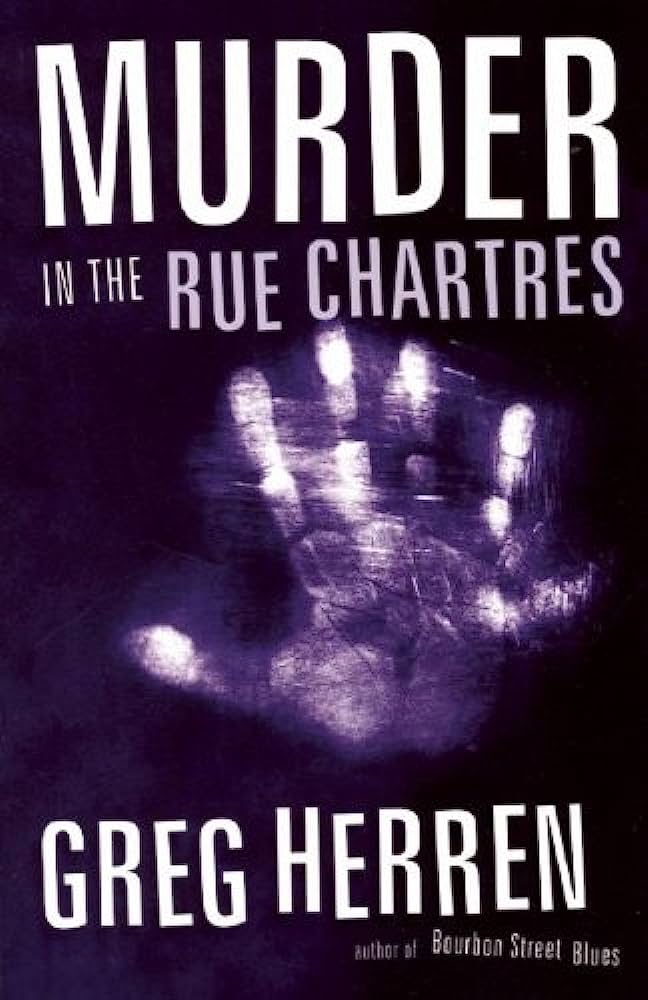
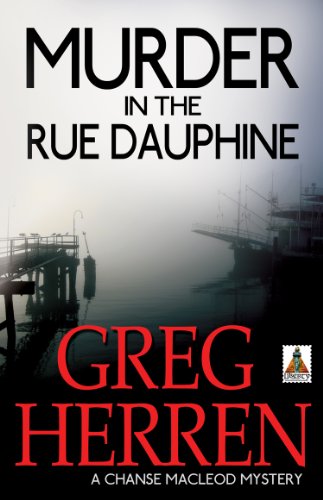
I think I may have actually reeled back from my computer in shock when I read those words, forwarded to me by said publicist, who had no reason to lie to me about why this particular store didn’t want me to come sign my debut crime novel, Murder in the Rue Dauphine, in the sacrosanct, apparently holy sanctum of her precious mystery bookstore.
I don’t carry those kinds of books in my store.
Perhaps, to paraphrase Poppy Z. Brite, she was afraid “the other books in the store would catch the gay” from mine.
I don’t carry those kinds of books in my store.
After the shock and hurt and offense wore away, I got angry. And I got angrier as every single mystery bookseller in the continental United States recommended to me by other mystery writers for potential events refused to allow me to sign in their store—the sole exception being Murder by the Book, in Houston. Some had the decency to say things like well, debut authors generally don’t draw well, and I’d hate for you to waste your budget coming here rather than the blatant homophobic responses others had no problem sharing. I mean, as a gay man, how did I even dare to think I would be welcome in independent mystery bookstores?
I don’t carry those kinds of books in my store.
Ultimately, no matter what the reason, a bunch of heterosexual white bookstore owners and managers were letting me know, in no uncertain terms, that I wasn’t worthy of being in their store; that they would never carry anything I wrote, and that no matter the quality of my work and how hard my publisher and I worked on my books, I needed to know my place, and the mainstream mystery world wasn’t it.
I don’t carry those kinds of books in my store.
And like a good boy, I took the hint and stayed away from their stores, other than Murder by the Book in Houston. I didn’t bother going to mystery conventions or conferences; there was no need for me to join writers’ organizations, either—a friend had bought me a membership in one as a gift, which was incredibly exciting…until I started seeing things in their newsletter and on their list-serves (dating myself; remember list-serves back before social media?) that were not just horribly homophobic but misogynistic and racist as well. I quit the list-serves, threw the newsletter in the trash the day it arrived in the mail unopened, and didn’t renew my membership when it came due. I only did mainstream conferences and events and conventions if they were held in New Orleans. When my books came out, I did signings at queer bookstores, Murder by the Book, and Garden District Books here in New Orleans (I also signed a few times at the late lamented Maple Street Books as well). I never bothered contacting, or having the publicist contact, mainstream mystery bookstores again…
I don’t carry those kinds of books in my store.
Let me state here for the record, before someone comes at me, that I do love independent bookstores, and try to support them whenever I can. (Whenever I do a signing in a store, I inevitably lose money because I buy more books than I made from whatever was sold.) But–and this is a very important but–most independent bookstores that aren’t specialty stores (i.e. mystery bookstore, queer bookstore, SFF bookstore, etc.) generally have a rather jaundiced and condescending attitude towards genre fiction, and carry very little of it outside of bestsellers. Add queer to crime as adjectives before my books and that is two very big strikes for most independent bookstores.
I don’t carry those kinds of books in my store.
And that’s fine; I get it. I am a niche writer, and niche writers aren’t going to sell enough books in your store to make it worth your while to stock them. That’s a business decision, and businesses have to do what they have to do to keep their doors open. That isn’t personal. But…if you never have events for queer authors or mystery writers in your store, that’s sending a very loud and clear message to those of us who fit those descriptions.
I don’t carry those kinds of books in my store.
I guess in retrospect it’s funny that I didn’t expect to deal with homophobia in the publishing world. I knew I wouldn’t make as much money writing about gay men as I would if I wrote about straight ones, but I was fine with that: I knew that going in. People only have so much time to read and most readers do it strictly for the pleasure of reading, for the escape; I certainly have any number of times in my life. So, if someone is straight or has no interest whatsoever in gay men, why would they pick my book off the shelf rather than something that won’t challenge their life paradigms? But I didn’t expect the nastiness from mystery booksellers (lesson learned; again, Murder by the Book is the exception) and outright homophobia. Sorry not sorry, when one of those stores go out of business I do feel bad for their customers, who liked to browse their aisles, but I don’t feel sorry for the store owners and/or managers; as far as I’m concerned, if you’re homophobic, enjoy your well-deserved bankruptcy.
You didn’t have to be homophobic when saying no to an event. Period.
And what I’d been expecting really was nothing more than simple professionalism. One store manager did tell me that she’d love to, but she was having trouble drawing audiences for events and she was going to be closing the store gradually. I appreciated the honesty and I sent her a card when her store closed for good. It’s really interesting to me, who’s been to so many classes and trainings and seminars on professionalism in the workplace or in dealing with the public, that people allow things like racism, misogyny and homophobia to take precedence over being professional? Why would you ever make potential customers–people willing to give you money and patronize your business–feel unwelcome or unwanted?
I’ve no doubt that the world has changed in that regard, too–I see queer writers doing bookstore events all the time, and being invited to speak at literary festivals and conference, which is amazing progress from twenty years ago. We’re getting nominated for mainstream awards now, too, which is also cool (and incredibly good for my ego–seven Anthony noms to date; along with a Lefty, an Agatha, a Macavity, and a Shirley Jackson)–and even winning here and there (John Copenhaver deservedly won a Macavity a few years back, and Mia Manansala won several awards for her debut novel, also deservedly so). This is enormous progress, and change for the better within the community. It’s been lovely to see the mystery and crime fiction community working so hard to be more inclusive and welcoming to non-white, non-straight, non-cisgender writers.
But I do think it’s important to remember the not-so-distant past–so we can always say, with assurance, when someone says they want to go back to the good old days…they weren’t that good for all of us, no thank you. I also know I was luckier than a lot of other queer writers at the time I started; I had the support of my local newspaper, which always reviewed my books and I also had the support of the local literary community, which was crucial. I was also lucky in that there were still queer bookstores I could do events at; queer publications that would review my work and interview me; and even more crucially, Insightoutbooks existed–a queer Book of the Month Club, pretty much–which was always hugely supportive of me and my career. Had it not been for those things, I may not be here today writing this entry; or I would have had to rebrand myself and written mainstream years ago.
We’re not all the way there yet…but we’re much closer than we were in 2002.
Well, if there was any doubt left, summer has returned in full force to New Orleans. It’s a heat wave; in which the heat index has been over 110 for several days. When I ran my errands yesterday I was completely exhausted after getting back home and the groceries inside; this kind of heat saps your strength and your energy and sometimes, even your will to live. Opening the apartment door was like opening a preheated oven. I managed to get all my work-at-home duties taken care of, but tried to spend the rest of the day battling feeling tired and getting chores done. This is a three-day weekend, and I have a lot of work to try to get through over the course of this holiday weekend. I am also hoping to not set foot outside at any time until I have to go back to work Tuesday morning. It’s nice having another short work week, and then of course the next week I am heading north to spend some time with Dad. It’s hard to believe this year is nearly half over, isn’t it?
I was thinking yesterday that Elmore Leonard’s most famous piece of writing advice was “never start with the weather,” which is a “rule” that I break all the fucking time. The weather, especially in New Orleans, is almost a character here; it tells you everything you need to know about the time of year the story is set, for one thing. You can’t set a book or story in New Orleans in the summer time and not mention the weather; you just can’t. The weather impacts everything here, because we have what I lovingly and sort-of-jokingly refer to as “aggressive.” The heat and humidity is aggressive; hurricanes and thunderstorms here certainly are, and even the cold spells we get every winter (brief, always brief) can be also considered aggressive. It impacts people’s moods and what happens, really; so that advice cannot be followed when writing about New Orleans. I was primarily thinking about this yesterday when I was out in the heat and losing my will to live, mostly, which was completely understandable. Paul walked to the gym to ride the bike for a while yesterday and went through two bottles of water. So, yes, the weather here is aggressive and oppressive, and impacts story and character and setting and scene and place in New Orleans.
We started watching an ID true crime documentary series about the serial killers in Baton Rouge around the turn of the century and just after, Butchers on the Bayou, which is kind of interesting. I remember when it was happening–yes, a serial killer in Baton Rouge will make the news in New Orleans–and I remember when the first one was caught; I didn’t remember there was a second one operating at the same time. No wonder the police were overwhelmed; especially with all the crossing of jurisdictions and so forth–it’s the same problem they had with trying to solve the murders of the Jeff Davis Eight (eight women murdered over a several year period in Jefferson Davis Parish). And yes, I do at some point want to base a novel on the Jeff Davis Eight case; I keep thinking it fits more as a Chanse story but I’m not really sure I want to write another Chanse book. It wouldn’t really work as a Scotty story, and I have wondered and considered writing a new series–I have a character, Jerry Channing, who writes true crime and is a gay man that has appeared in several different books of mine; the problem with Jerry was when I was fleshing him out I realized what I was doing was combining Chanse and Scotty into a single person, and that wasn’t working for me. This also probably had something to do with me trying to come up with something whilst I was immersed in numerous other projects and not really being able to give it my full attention. I still might just go ahead and do it once I have all these current projects off my plate once and for all.
It is a good story, and it makes sense for him to be the one to investigate it–since he writes true crime. My primary concern about this is, obviously, there’s tons of novels about true crime podcasts and true crime writers and bloggers–Only Murders in the Building, anyone?–but it does make sense and works better. I guess there’s naught to do but give it a try and see.
I’m hoping to be able to spend some time reading this morning, too, before i head into the spice mines. I want to finish writing this and maybe write another Pride post over the course of the weekend; I’ve started several, but am trying to decide if I want to be Angry or if I want to be up-lifting. Some of the posts are angry–it’s hard to write about homophobia you’ve experienced without getting angry; and in one of them I am calling out homophobia I’ve personally experienced from the mainstream crime community. Sometimes I wonder if I should call this stuff out; there’s a part of me that sees talking about it and calling it out as vengeful–like ha ha ha, you were awful to me so now I am calling you out years later–and there’s a part of me that worries that I’ll come across as self-serving. (There’s nothing I hate more than the narcissistic activist; those who are only in it for themselves and don’t care about the broader picture and the macro.) I’ve known and seen some of this over the years more times than I’d care to–like the author who was all over #ownvoices, until she won a major award and now no longer mentions it at all, or “we need diverse books”–so, now that you’ve made it the work no longer needs to be done? Way to pull up the ladder behind you, sister! I certainly don’t want anyone to think that my primary concern is revenge or for me to become more successful; my mentality is “this happened to me and I don’t want it to happen to anyone else because it really sucked for me.” But times have changed, and while there are still instances of it that pop up from time to time within the community, it’s becoming a thing of the past and people are starting to call it out when they see it–which is a huge switch from when I was first getting started. The crime fiction community is a lot more welcoming to queer people in 2023 than it was in 2002. It’s lovely, of course, but I do think we should never forget our less progressive past–particularly since it wasn’t that fucking long ago.
Some things for me to ponder, I suppose.
And on that note, I am going to drink some more coffee and do some chores around the kitchen before I read for a bit and then work. Have a lovely Saturday, Constant Reader, and I will check in with you again at some point.
One of the most frustrating things about being a queer American is the absence of any kind of history, really. Oh, sure, there’s Stonewall and some other riots/protests in the years leading up to Stonewall; the Mattachine Society and the Daughters of Bilitis. But since historians have done such a marvelous job of erasing us, trying to find our history isn’t the easiest task. You have to look for clues, coding, and signs.
Because, you know, we’ve always been here. We have also always consistently, despite the muzzling of the overarching culture and society’s constant attempts to erase us from the pages of history, managed to sneak traces of our existence and our sensibilities into the art of the times. Ever wonder why so many statues and paintings decorating cathedrals, cemeteries, and palaces in Europe are depictions of well-muscled, physically beautiful men? Because the artists were gay and the only way they could make art celebrating the beauty of the male body was to do so in a religious setting. (The depictions of the martyrdom of St. Sebastian, in particular, are insanely homoerotic; one such painting was used for the cover art of Anne Rice’s Violin, which I think may be her finest novel.)
This entry’s title is also one of those sneaky gay songs passing for straight. Good old Cole Porter, the witty and intelligent composer and songwriter and overall bon vivant. Queer coding is everywhere in old books and movies and television shows and music. (I’m currently reading Matt Baume’s marvelous Hi Honey I’m Homo, which focuses on queer representation on old television series from the 70s and 80s, focusing primarily on comedy shows.)
There have been queer Kings and Queens and Emperors–and two of the greatest military minds of all time were gay Kings: Alexander the Great and Frederick the Great. But our history always gets erased–and homophobic historians will argue till their dying breath that unless there’s definitive proof, those sexualities and identities cannot be named. This is both infuriating and frustrating; take the instance of King James I of England–he of the King James Version of the Bible. He didn’t have female favorites–he had male ones, and he gifted them titles, money, jewels and estates and raised them into high positions of power. But because there’s no diaries where King James admits to taking it up the bum or going down on Robert Carr, there’s no proof. Well, likewise, the only proof the man was straight was because he was married and had children…which was also his duty as King. I know of no women favorites of King James. Likewise, there are no letters or journals written by Frederick the Great where he talks about some soldier having a nice ass or having sex with some hot young ambitious Prussian noble. So, no, there’s no actual proof. There are no photographs, no videos, no nothing. But…while he was married, he had no children; and he would go years without seeing his wife. Women were banned from his court. He also wrote his actually confirmed gay secretary a letter during the course of which he said: “My hemorrhoids affectionately greet your cock.” (The hoops historians will leap through to deny that Frederick the Great was a big ole bottom, and that sentence doesn’t mean what it actually said, are worthy of Ringling Brothers.) There was a lot of gossip, and Frederick’s preference for young men was openly gossiped about at other European courts. And most of his art collection celebrated homoeroticism.
I would love to write a biography of Frederick, seriously.
I also find Louis XIV’s younger brother “Monsieur,” Philippe, duc d’Orléans, fascinating as well–another one who’d be interesting to write about, especially since he is known as the Father of Europe; almost every European monarch from at least 1800 is one of his descendants, despite his sexuality and his predilection for wearing women’s clothes to court.
My story in The Faking of the President addressed this erasure; I chose James Buchanan to write about because he is the only president who never married and he was allegedly in a long-term relationship with Senator Rufus King (Andrew Jackson referred to Buchanan as “Aunt Fancy”). There’s no evidence that Buchanan and King were actually a couple; all of Buchanan’s correspondence was burned, on his instructions, when he died. I wrote my story about a gay historian who firmly believed Buchanan was gay…and after effectively wrecking his academic career, someone contacts him who claims to have the long lost letters to Buchanan from his fiancée when he was a very young man–and the letters will prove his thesis.
Believe me, I get the frustrations he experienced. I don’t think I’d go to the same lengths he did to get that proof, but I empathized.
But this also is an issue in even more recent history. When I was with Mystery Writers of America, at one point I wanted to try to figure out how many queer authors were members…but the impracticality soon became evident. First, you have to start with the question of what precisely counts as queer fiction, and what is a queer book? Is it the sexuality of the author what matters? What if they are openly queer but don’t write queer characters and stories? What about a straight person who writes queer stories and characters? Does that count? Lambda Literary went through hell over this, and there’s literally no way to please everyone. Is it the book, or the author? I’ve always been a firm believer that it’s the book when it comes to awards. Yes, the author gets the award, but it’s for writing the book. So, in my opinion, I would consider Call Me By Your Name a gay novel, despite the author being straight, and my own A Streetcar Named Murder to not be one, despite my being gay. The argument can be made, of course, that being gay gives me a different perspective and point of view that’s more queered than that of straight writers, but I don’t think there’s any “gay sensibility” to Streetcar.
Maybe I’m wrong. I’m not the final word on my books, really.
But this becomes problematic in two regards: one, if someone never officially stated anywhere that they weren’t straight, can it be inferred? Not every man or woman who never married was queer; but marriage itself isn’t proof of heterosexuality because a lot of queer people marry opposite sex spouses and get divorced when they come out later. I was engaged at nineteen; does that serve as proof to future generations that I was straight, despite all of my writings to the contrary? People still don’t feel completely comfortable coming out TODAY, let alone before Stonewall. Take Cornell Woolrich, for example. He never married, lived with his mother for a very long time, and was an alcoholic, pretty much had a miserable, horrible life. He never said he was, but would he have during the time in which he lived? Likewise George Baxt, who wrote a series about an openly gay Black police detective in the 1960’s. Baxt never made any announcements or pronouncements one way or the other; some of his acquaintances have said that he was but Baxt himself never did in any meaningful, definitive way. So, was Baxt or someone else the first gay crime writer? Joseph Hansen was definitely out, and his David Brandstetter series was not only groundbreaking but still remains one of the definitive gay crime series.
Secondly, it also becomes a matter of privacy as well. I know any number of authors who identify as queer but don’t write queer; how do you know how far out of the closet someone actually is in their life? There’s a hugely successful thriller writer who is a gay man, but I won’t say his name here or to anyone else because I don’t know how out he is…and whose business is it, anyway? There’s a hugely successful crime writer that I know for a fact is a lesbian. But if I google her name and lesbian, there are no hits. I generally put myself into their place, really, and ask myself, okay, what if you had somehow managed to start getting published when you were closeted? You wouldn’t have written books or stories about gay men, for one, and for another, I absolutely hated when people speculated about my sexuality–because it never meant anything good formewould come of it.
I’ve never been militant about people’s need to come out, and I also don’t think it’s anyone’s place to out anyone; with the caveat that if you are closeted and actively doing the community harm, you absolutely should be outed. That congressman from Illinois, the über-conservative congressman from Illinois who was outed? Ah yes, Aaron Schock. He deserved it–and while I don’t think he ever repented from his self-loathing brand of conservatism, he certainly has been living the gay high life since it happened. J. Edgar Hoover should have been outed; he was a monster, as was the always disgusting Roy Cohn. But actors and singers? Models? Writers? People who are just navigating their lives and coming to terms with who they are? Everyone should have the time and space to come out when they are ready.
The closet is a horrible place, and it seriously fucks with the people who are living there. I can be empathetic because I know how hard it is, how terrifying it can be. It can twist people (Aaron Schock, for example, clearly felt the need to be über-homophobic just to show he wasn’t one of those people, and yes, that is twisted and sick and sad, and why I am able to feel some empathy–not sympathy–for him as his life must have been hellish, even if it was his choice), and warp them into horrific behavior….but accountability, respect, and atonement are also necessary if the closet turns you into an Aaron Schock. I mean, how much self-loathing had to be there in his mind?
Not everyone has to be a spokesperson. It depends on your level of comfort. And please give people the grace to come out at their own pace and on their own terms. Struggling to accept and love yourself–realizing there’s nothing wrong with you–is a process that isn’t made easier by speculation. I’ve indulged in speculation about actors and singers and other public figures. That kind of speculation usually happens because there are so few queer role models in the public sphere; but I can also understand why people in the public sphere would want their privacy. Being a role model is daunting and full of pressure and potholes and dips and swerves in the road. And it also begs the question–what do we out queers owe to the rest of the community? What is our responsibility? Can we opt out of those things if we aren’t comfortable? I’m certainly not comfortable speaking for the entire community; I always say “in my experience” rather than making my own the community’s.
And we do live in dark times. There is a vast right-wing conspiracy (thank you, Madam Secretary, for that accurate phrase) to wipe queers off the face of the country–and don’t you dare call me an extremist for thinking that. We are being dehumanized and devalued on a daily basis by a bunch of evil people who think they are somehow doing God’s work (that arrogance alone will keep them from Heaven), and if dehumanization isn’t the first step towards eradication, study your Weimar Republic history. This country is at a tipping point–and it wouldn’t take much to tip us over into becoming the 4th Reich, which is terrifying. Oh, Greg, you always look at the worst case scenario!
That may be true, but I’m rarely wrong–and usually the reality is much worse than I imagined.
But I still hold out hope that decent people in this country outnumber the monsters, and that decency will inevitably prevail again. The importance of coming out, because the more of us there are and the more visible we are, cannot be underestimated. This is also where that lack of history bites us in the ass. It’s very easy for haters and bigots to dismiss us as “something new” or “it was better when you were quieter” or the ever-popular “I don’t care just don’t shove it in my face” (which literally has the opposite effect on me–tell me that and I will rub your nose in it) because we’ve been erased from history and a lot of the language around us is new. Language has changed and evolved over the course of my life, as we get more information and learn more, and yes, that means you have to keep up and might actually make a mistake by saying something you didn’t know had become dated or offensive. I am learning all the time, and want to continue to learn because I want to keep growing into the best version of myself that I can be (thank you again, Ted Lasso) and I don’t understand people who don’t want to grow but would rather stagnate and calcify.
Thursday and last day in the office for the week. I was very tired yesterday, despite not working on Tuesday, and so when I got home I didn’t do a whole lot of anything. No chores, nothing of that sort. I didn’t even read anything! The heat and humidity have returned and it was so miserable when I went out to the car after work yesterday that I felt drained by the time I got into the coolness of the Lost Apartment. I slept decently last night–not great, but restful, waking up a couple of times throughout the evening, but I feel a bit groggy this morning, which is also fine. I think we have a fairly light schedule today at the office and I have some other things I need to get done around seeing my clients. But I’ve almost made it through another week, survived it all, and now we’re at another three-day weekend, which is lovely. I have a lot of work to get done around here this weekend, so the extra day is going to be super great to have.
I need to get caught up on my emails–which won’t take nearly as long as it used to, because I don’t get nearly as much as I once did, which is kind of nice. It’s not that I consider email to be an odious chore or anything, and it’s not like I get problem emails anymore (thank God; I no longer cringe and cower and have to steel myself before pulling up my email), but there’s also not as much urgency with them anymore, either. The decline in the amount as well as the not-quite-as-urgent sensibility of it has resulted in my being pretty lazy about it. (My email provider also recently changed a lot, which is irritating because I don’t like the way it looks now and it wasn’t an improvement to make it easier to use; the Spotify app on my phone recently did the same thing. The lovely thing about technology is the constant need to have to relearn how to fucking use it. That was sarcasm font, by the way.)
So, rather than being my usual lazy self and wasting time finding things on Youtube (primarily to see if they are there), lately as I sit in the easy chair with a purring kitty in my lap I’ve been trying to do some research, that hopefully will stick in my head. Mostly I’ve been looking up videos about the HUAC and Confidential magazine in the 1950s, among other things for that period–also beefcake and peplum–as research for Chlorine. I’m also digging into the 1970’s–mostly music and pop culture, along with historical stuff from the decade–because I want to write a book called The Summer of Lost Boys, which has been simmering in my head since the earliest days of the pandemic. I’m leaning towards setting it in 1975–the summer I turned fourteen and started my sophomore year of high school. It has some potential I think, and while the idea is still amorphous up there in the clouds in my brain, I really like the idea and think it could be a really good book…but I really want to get these two noirs done in first draft this summer. If the heat and humidity doesn’t wear me down too much, I should be able to get both drafts finished by the end of summer.
Unless I get lazy, which is always a possibility. The heat seriously doesn’t help, either. But the thing I always forget is the best thing to do when you get home from work in New Orleans in the summer is take another shower and get cleaned up. I sleep better and I feel better and it generally results in me being a lot more productive. I need to do laundry tonight, put away dishes, and reload the dishwasher, and I am going to start rereading this book that I am about to revise per my editorial letter (I still will be getting one for Mississippi River Mischief, too) and I want to finish reading my book, which I’ve stalled out on now for a couple of weeks…but I need to finish it if I want to move on to my AMAZING TBR pile. I have some errands to run tomorrow morning, too, before starting in on my work-at-home duties, and after that–I am hoping to not leave the house again until Tuesday when I return to work. It would be nice to get some more de-cluttering done this weekend, but I also want to relax, write, and read a lot.
And on that note, I am heading into the spice mines. May you have a lovely Thursday, Constant Reader, and I will see you again tomorrow.
The first song I ever danced to in a gay bar was, quite naturally, “It’s Raining Men.”
I never said I wasn’t a stereotype, did I?
I was twenty-one the first time I ever set foot in a gay bar. (If there were gay bars anywhere near me in Kansas, I had no idea) It was in Fresno, California, of all places; where I spent the 80’s and which I often lovingly refer to as “Topeka in the Valley.” It wasn’t much of anything, really; a small building on Blackstone Avenue, I think just past Olive, and near the off-ramp for the new cross-town highway in an attempt to alleviate traffic on the main streets of the city (it may have been further north). The bar was called the Express, and someone I worked with–the first obviously gay man I ever knew, and certainly the first one who was out and proud and not ashamed of it–took me one night after work. I was nervous as hell. I had no idea what I was getting myself into, and I remember it was dark and crowded. There was a bigger front room with the bar, and there was a smaller dance floor further in the back. We arrived–I didn’t recognize the song that was playing–got a beer (he got a vodka and cranberry), and then the next song started up. I didn’t know it, had never heard it before, but he dragged me out onto the dance floor and yes, the song was quite a jam. I loved it, and rather self0-consciously danced my ass off (I always loved to dance). My friend later told me the song was by the Weather Girls, who used to sing back-up for Sylvester, and it was called “It’s Raining Men.” The song was utterly ridiculous–it still is–but those powerhouse vocals, the driving beat, and the absolute joy in the idea that all you had to do was “rip off the roof and stay in bed” so a hot man will drop in from the sky for you? How could gay men not embrace the song? I bought the single at Tower Records a few days later, and every time that song played, I’d be out on the dance floor. Even now, when I hear it, I always think back to that first night I went to a gay bar.
HIV/AIDS was already a thing, but we didn’t know much about it in Fresno; it seemed like something new and scary but maybe no worse than some other new diseases that had been discovered in the 1970’s/early 1980’s. The rare yet terrifying information and reporting on it referred to it as GRID. It eventually claimed that co-worker who took me to my first gay bar, and his roommate, who was the one who told me years later that the co-worker (whose name I cannot recall, I just know it started with a K) was in the hospital, dying. “It’s Raining Men” always reminds me of him; always takes me back to that first time when I so nervously paid my cover charge and flashed my ID and walked into my first ever gay bar. There was another gay bar in Fresno, the Red Lantern, that was in a much shoddier (“dangerous”) part of town. (Gay bars, back in the day, were never in the best neighborhoods. Tracks in Ybor City in the early 90’s–when I lived in Tampa–was also not in the best neighborhood. Ybor City did begin gentrifying before I moved away, but originally? Yeah, not the best neighborhood.) I went there a few times as well–made friends there, made friends in the other bar, too. I lost all those friends, of course, and their names and faces are also gone, more lives lost to the mists of time in my memory. It seems a bit shameful to not be able to remember the names and faces of the first people who knew a part of me I’d never let anyone see before, but they also didn’t know me in that I kept the other part of my life secret from them.
It’s very strange, because I decided to google the gays bars of Fresno while I was writing this and apparently the Express closed in 2013? I don’t think it stayed in the same location–according to the site I found it had also been called “708” before becoming the Express again; who knows what that was all about. But the Red Lantern is still there on Belmont Avenue, in the same location; how wild is that? That’s a pretty long-lived gay bar for a place like Fresno, really. I remember in Houston there was JR’s, and Heaven, and maybe another one there in the Montrose district. But I didn’t start spending a lot of my weekend evenings in gay bars until I moved to Tampa. Tracks in Ybor City and Howard Avenue Station were the two primary gay bars when I lived there; and there was Bedrox on Clearwater Beach–which was the gay section.
And of course, there are gay bars everywhere in New Orleans. I haven’t set foot in one in a number of years, and may never do so again. I’m old; spending the night dancing would end with me in the hospital, or needing days to recover.
I don’t know what gay bars are like now because I’ve not been a part of that culture for a very long time–we haven’t even done condom outreach during special weekends in the bars in years anymore–which is why it’s hard for me to write about Scotty being still a party-boy. His age in the book I just finished and turned in is roughly forty-three or forty-four; after Katrina when I had to actually pick a time for the books to have been set (Katrina couldn’t be ignored), I decided that the Southern Decadence where Scotty met both Frank and Colin was in 2004, Jackson Square Jazz was that Halloween, and Mardi Gras Mambo was Carnival 2005. Scotty had just turned twenty-nine in Bourbon Street Blues, which meant he was roughly born in 1976, which works with the other timelines, making him twelve or thirteen when the Cabildo caught fire the last time. While the other books can be more amorphous, obviously Who Dat Whodunnit was set in January of 2010, right before the Saints won the Super Bowl. With the pandemic starting in 2020–which I will deal with at some point–this one had to take place before the world shut down, so I am thinking it’s May of 2019. I don’t want to skip ahead a year to the pandemic, so Quarter Quarantine Quadrille will be further in the future. I kind of want to do Decadence again in another book–with Scotty older but not much wiser–but am not entirely sure. I also would like to really do a Scotty Halloween book, and maybe even a hurricane evacuation one, I don’t know.
I am, however, very glad that I did write those first three Scotty books, when I was enmeshed in gay bar culture, because I’m glad it’s preserved in fiction. That world is gone now–washed away when the levees failed and the city rebuilt. Someone once told me I was the only person to document that pre-Katrina gay male existence, of going out to bars and being promiscuous and dancing all night long and drinking too much and occasionally dipping into party drugs.
I’m also kind of glad modern gays don’t have to use the weekends and gay bars as a place to let loose and be as free and gay as possible, which they couldn’t do during the week. Friday nights were always a relief, a respite from a cold and unloving world that judged us harshly and wished us harm.
I don’t miss the bright lights, the cigarette smoke (that’s how long it’s been), the stench of male sweat and the smell of poppers in the air as the deejay spins another banger. I mean, I do, but not in a sad kind of way; those memories are lovely and they make me a little wistful for the days when gay bars weren’t clogged with bachelorette parties and obnoxious drunk straight girls. But those weren’t the good old days, really; we had no rights and our sex lives were against the law; the few legal protections we have now were goals back then, something we could strive to achieve sometime in the distant future. I certainly never thought Lawrence would decriminalize my sex life and Obergefell would make it legal for Paul and I to marry; I never thought those things would happen during my lifetime. I didn’t expect to see an openly gay member of the Presidential cabinet; out queer characters as leads in television shows and movies–none of these things seemed possible to that closeted twenty-one year old who walked wide-eyed into the Express and went out to dance to “It’s Raining Men.”
I had no idea what the future held for me or for my community that night. In some ways I wish I could let that kid know everything would be okay and his life would turn out so much better than he ever dared dream…but knowing might change things, and I wouldn’t want to change anything that would take away the life I live now, because I love it.
Sunday and I slept late this morning and i am not a bit ashamed of it, quite frankly. The opportunities to sleep in are rare these days–getting up early so often for so long has adjusted and shifted my body clock in ways I’m getting used to but don’t like, and chief among those ways is the inability to sleep in. Yesterday I was up before eight, for example, but this morning it wasn’t even nine when I got up, and I could have easily stayed in bed longer. But there’s spice to mine today, and while there is still a lot of it to get done, I am feeling very good about things this morning. I actually felt really good about them yesterday if I am going to be completely honest. I got two chapters done and finished editing a manuscript (not my own) and turned it in to the publisher, which felt marvelous to be finished with that. Deadlines and juggling projects is something I’ve always done, but something I’ve noticed since the pandemic shutdown is deadlines are much more stressful and demanding on me, and take a bigger emotional toll than they used to. Probably part and parcel of the long COVID rewiring of my brain, but whereas before, I relished the pressure and it drove me to work harder, now it shuts me down and/or depresses me, which has the exact opposite reaction it used to have with me: instead of driving me, I think oh I’ll never get this all done so why bother and I end up blowing things off completely. Depression is quite the bitch, you know.
But I am very pleased with the work I got done yesterday and look forward to today’s work. I also did a load of dishes and laundry yesterday, and some cleaning. But after I was finished with work for the day, my brain was too fatigued to read so I watched movies on television, discovered two gems I’ve been wanting to revisit: Cruising and The Last of Sheila. I wanted to watch Cruising because I remember all the controversies about the movie while it was being filmed (yes, even in rural Kansas we heard about the gays being mad about the movie). I eventually watched it in the mid-1990’s. Paul is a huge Al Pacino fan, and when we moved in together he owned almost the entire Pacino filmography on videocassettes, so one night we watched Cruising. I didn’t much care for it when I watched it the first time, but I’ve wanted to watch it again–when I watched I wasn’t yet a published crime writer–because the story itself is interesting to me. A hot young ambitious cop sent undercover into the gay BDSM/leather community to look for a serial killer? The question of identity and sexual confusion that could arise from playing the part, which entailed going out and picking up (or being picked up) by gay men expecting some sex? I mean, you have to admit that’s a great set-up and concept for story. The Oscar winning director William Friedkin (he won for The French Connection but was much better known for directing The Exorcist) failed and ended up with a deeply flawed film. Pacino was also robbed of a far greater performance due to the homophobic cowardice of the either the director or the studio. Rewatching, the film’s flaws are even more apparent, but it’s a shame. It could have been a great film–and it does remain one of the few Hollywood films that actually depicts gay bar culture of the late 1970s the way it was–but I don’t know what went wrong with it, but it’s still a great idea. I also liked seeing New York as dirty and grimy, the way it was during that time period before gentrification came to Manhattan. It’s also fun seeing old movies where people who went on to greater stardom later had bit parts or cameos; Ed O’Neill popped up on screen at one point, as did several others that made me think, hmmmm.
If I had the time or inclination, I would take that basic framework of an idea and turn it into something stronger than the film. There was also a book it was based on, but it’s rare and used copies are insanely expensive. It also reminded me of a gay crime novel I read as a teenager living in Kansas; I may have been in college, I don’t remember, called A Brother’s Touch by Owen Levy. The book was about a brother who comes to New York to look into his estranged brother’s life after he is murdered–they were estranged because the dead brother was openly gay–and begins to question his own sexuality after being enmeshed into the gay community of Manhattan at the time. It was reprinted recently and I got a copy (by recently I mean in the years since Katrina; I have no concept of time and its passage anymore); I should move it closer to the top of the TBR pile. I wish I could still read as voraciously as I used to…something else that has slowed down with getting older.
After watching this I wanted to rewatch a classic old crime film of the old school, The Last of Sheila, which I’ve always loved. Co-written by Stephen Sondheim and Anthony Perkins and directed by Herbert Ross, it’s a whodunit worthy of Christie herself, in which a widowed producer invites some film community members on hard times for a week on his yacht. Everyone invited was at the party a year before where the producer’s wife Sheila wound up being killed by a hit-and-run driver, and the producer, whose known for loving to play games, has come up with a game for his guests to play. Everyone gets a card, and every day they will stop somewhere they will look for clues to the identity of whoever holds the card of the day–the first is a shoplifter, the second is a homosexual–and of course, the game turns dark and ugly when the producer host–played to sadistic asshole perfection by James Coburn, is murdered…and it turns out the game their host was playing had layers none of the guests knew about going in. The cast is a perfect time capsule of early 1970’s stardom: Richard Benjamin, Raquel Welch, Dyan Cannon, James Mason, Joan Hackett, a beautiful young Ian McShane, and of course, Coburn. It has twists and turns and surprises, and is so markedly clever that it’s hard to describe without spoiling anything…and the surprises are what make it such a great and fun film. This was one of our Sunday movie-after-church movies, I think; I do remember seeing it in the theater and being impressed and amazed. One thing I absolutely loved in the rewatch was the books scattered over every set–they are all mystery novels by Agatha Christie, Ngaio Marsh, Ellery Queen, and Erle Stanley Gardner, which should tip the viewer off that you are in for a mystery influenced by the master crime plotters of the time. It’s really a shame the film wasn’t a success, because it would have been amazing if Perkins and Sondheim had collaborated on more scripts like this one. As I was watching, I kept thinking how much I would love to write a puzzle-type mystery like this one; I’ve always feared such a thing was outside of my wheelhouse so I have always been afraid to try. Who knows? Maybe I will.
I feel very rested this morning and I am not dreading diving into the book this morning, which is nice. I don’t think I have the mindspace and bandwidth to work on multiple things all at the same time anymore, if that makes sense. I don’t know if it has to do with the long COVID rewriting of my brain waves or what, but the last few books I’ve written or worked on–going back to Bury Me in Shadows–have been more stressful than fun for me to write. Writing on a deadline is always stressful, and I rarely, if ever, actually make deadlines. But having multiple projects going on at the same time now feels like I am not devoting enough of my time and attention to any of them, let alone all of them, and that makes me feel uncomfortable about the work. Of course, my last three books–and my last anthology–have all gotten a lot of mainstream award attention, which makes it seem weirder. Which, of course, makes me wonder if the stress and the heavy burden pressure of multiple projects going is somehow making me produce somehow better work than before, and do I really want to mess with that at all? It never ceases to amaze me how neurotic I am about being a writer, and how afraid I am that any change or variation means it’s all over for me now.
I do wonder sometimes if other writers have that same secret fear: that the well will eventually run dry or that we’ll forget how to do what we do. People like to call me prolific; I’ve slowly come to the conclusion that I am and that it’s not a bad thing (I always try to figure out if being called something is bad–which goes back to being called a fairy as a child and thinking he was saying ferry and being very confused). John D. MacDonald was prolific; so were Ellery Queen, Agatha Christie, and Erle Stanley Gardner. I think my insecurities came into play when people started calling me prolific; I am so used to being insulted that I assumed it must be an insult as well, like it was something I should be ashamed of or something. I’ve decided to embrace it as a compliment. I am sure there are literary writers who produce one novel every ten years or so who would think it an insult, but I don’t respect them so don’t really care much what they think. And if I am not as prolific as I used to be–which I am not–it’s nothing to be ashamed of; I’ve gotten older, have gone through some things, and I don’t have the energy that I used to have. My imagination still rages out of control at any and all times, of course, but I don’t have the energy to fool myself into thinking every idea I have will turn into a short story, an essay, or a novel. I certainly won’t live long enough to turn all the ideas I already have into longer works of whatever style and kind.
And on that note, I am diving back into the book. I am getting another cup of coffee and putting some bread in the toaster for later, and I may or may not do another Pride month entry later today. Anyway, you have the loveliest Sunday possible, Constant Reader, and I will check in with you again later.
Probably the first clue that I wasn’t like other guys was that I loved to dance. There’s nothing like that feeling of freedom when you’re out on the dance floor and the deejay is playing one of your favorite songs to dance to, and you’re in a crowd of gay men, all moving to the same music but in vastly different stages of reality diminishment, from total sobriety to tipsy to buzzed to wasted to fried on a drug of some sort (you always could tell the difference between the drunks, those fried on a stimulant, and those on Ecstasy), and many of them with their shirts off and passing around bottles of poppers. Dance floors in gay bars always have a musty smell to them when they’re crowded, as though the man-musk from dozens and dozens of sweaty men has somehow seeped into the walls, the floor, the speakers.
That interesting mix of sweat, musk, cologne, cigarette smoke, and poppers that lets you know you’re in a gay bar, and pheromones are everywhere.
And of course, there’s today’s title, which was a great dance hit back in the mid-90’s; 1995, I think, to be exact?
I had no idea how to actually dance, of course. All I had was years of watching American Bandstand, Soul Train, and various teams of cheerleaders and pom-pon girls. The first time I went out onto the dance floor was when I was a junior in high school. It was a victory dance after we won a football game, and someone asked me to dance. And oh look, Greg actually can find a backbeat and knew instinctively to move to it–and that your upper body could move differently than your lower body. It was fun, I loved it, and people actually thought I was good at it, which made it even more fun. My junior and senior years of high school saw the rise of disco, and my first few years of college were during the height of the disco era. The little clubs and bars in Kansas I was able to get into, where I could drink beer till I was drunk and the music played and I could dance, weren’t Studio 54 or anything like that, but I could dance, and I would spend the whole night out there on the dance floor, sweating through my shirt and my bangs plastered to my scalp with sweat. I missed dancing, when we moved to California and I was no longer old enough to go out to bars, and when I was, I did want to go out dancing, but the 80’s weren’t a great time for dance music (in straight bars, any way), and the few times I was able to get to a gay bar, the music was much better and the dancing was way more fun…
The dance floor was, for a long time, the only place in a gay bar where I felt comfortable. This remained true even after I came out and merged my two separate lives into a single whole. Coming out was really just the first step towards accepting myself and figuring out who I was. I’d spent most of my life thinking there was something wrong with me, and that manifested itself in incredibly unhealthy ways for me emotionally and mentally. I’d always believed that coming out would solve all of my problems, but it didn’t; instead it created new problems to replace the old. I felt unattractive, overweight and unlovable. Every experience I had with another man only added to that sense of discomfort, that self-loathing that was still there in my head. I used to go to gay bars with co-workers, who would disappear as soon as we got there, out prowling for a cute boy for the night’s comfort while I just stood somewhere in a corner. I had a crush on this really hot bartender at a gay bar in Ybor City, Tracks, which is where we always used to go. He was always so friendly and polite and I naïvely thought he might be interested…which was when I learned all gay bartenders are friendly and nice because they want to get tipped (and I never made that mistake again). The only time I ever felt comfortable or at ease was on the dance floor. I also convinced myself that I was unappealing, which was why no one ever approached me–or it was rare that someone did (I am too shy to ever approach anyone). I had an extremely unpleasant experience the summer I turned thirty-three, and that motivated me to reevaluate everything in my life and start over. I essentially burned myself to the ground and started over.
I still had the same shitty job, but if people thought I was out-of-shape and unattractive, well, I couldn’t change my face but I could change my body. I radically altered my life and started eating healthy and exercising. I even stuck to it. I lost a lot of weight in a very short period of time (which probably wasn’t healthy) and figuring (hilariously) that the possibilities of finding love and a relationship were already gone because I was thirty-three and still single (just goes to show what I know, right?), but everything changed. I also began to realize over the years that followed that I wasn’t ever approached back in the day because I wasn’t attractive but because I was giving off a bad vibe–how can you help but give off a bad vibe when you’re insecure and feel uncomfortable? It’s amazing what a difference a friendly, open smile makes. But it’s hard to look friendly and inviting when you don’t feel friendly or inviting or good about yourself. The on-going struggle with my self-esteem really started in earnest during this time of my life, and while those self-esteem issues have never truly been conquered, I started enjoying my life a lot more. I no longer felt like my life was something that just happened to me. I felt like I was making things happen for myself. And as my self-esteem continued to grow, I also found myself figuring out how to make the big dream–becoming a writer–come true.
And I also managed to find my true love in the process of finding myself.
I do miss dancing, but I don’t think I am capable of staying out late at night to dance. But I remember those days of dancing till dawn fondly, trying to flag down a cab in the cold gray morning light, drenched in sweat and shivering. It would probably take me a week to recover from dancing all night…and let’s face it, dancing all night was the best way for me to get cardio.
I’ve been thinking a lot about my friend Nancy Garden lately.
Nancy was seventy-six when she passed in 2014, and I’m still not used to living in a world without Nancy in it. She was wonderful, and one of the most kind people I’ve ever known. She was a small woman with an enormous heart, and she wrote books for children and young adults. Much to my own shame, I didn’t know anything about Nancy until I reviewed her book The Year They Burned the Books for Impact News here in New Orleans. It was a riveting account of censorious parents gone wild, demanding books be removed from schools and libraries; led by a zealot, they even burned the books in a bonfire, The book was told from the perspective of a group of teenaged friends, some of whom were questioning their sexualities (and gender identities) who were outraged and fought back. The kids triumphed in the end, and the book was nominated for a Lambda Literary Award.
But the thing that came out of this read that was transformational for me was reading in the press release that the book was based on real events…and then I wanted to know more.
What happened was Nancy had written a young adult novel in 1982 called Annie on My Mind, which was one of the first young adult romance novels to focus on two teenaged girls falling in love. Intrigued, I got a copy and read it…and loved it. It’s such a beautiful, heartfelt and emotional story, so gorgeously written…the thought that anyone could have objected to this book was, frankly, offensive to me. I started digging around to find out more. It was a suburban Kansas City school district that banned Annie for obscenity; and yes, the angry parents’ group burned the books. In 1992. (Thirty years later and here we are again.) The students and the ACLU sued to get the book back, and it went to trial. Annie and the First Amendment won that fight, but listening to Nancy tell the story about the trial, and being cross-examined–and the scope the judge allowed in her cross–was horrifying to me. Nancy met and fell in love with her partner when they were in college. They were still together when Nancy passed. A long-term, completely monogamous and loving same sex marriage any straight couple would envy…and she had to answer questions about her morality; her sex life; how many partners had she had during the course of her life; what they did in bed together–intimate, private details that had nothing to do with whether the book was obscene but effectively dehumanized Nancy, her partner, and their relationship for the court record.
I read from Annie on My Mind when I participated in my first ever Banned Books Reading, at the House of Blues in 2006. They’d invited me because I had been banned a few years earlier (hello, Virginia!), and I decided to honor Nancy by reading from her book that was actually burned because the one person and the one thing that kept me sane during that entire Virginia situation was Nancy. When it first happened, Nancy called me immediately as soon as she knew. Being the self-absorbed person that I am (that most authors are), I was freaking out for any number of reasons, but it was personal. Talking to Nancy on the phone made me realize that the principle at stake here wasn’t me or my career, but the kids at the school and the queer kids in the area. I had to remove myself and my personal feelings from the situation and look at it in a more broader sense; ignoring it or doing nothing was cowardly. I never wanted to be an activist, really, but there are times…when you don’t have a choice. (I will write more about that incident at another time.)
And whenever I went to the dark side while all of that was going on, all I ever had to do was email or call Nancy. What she went through was so much worse than what I did; I cannot imagine the horror of seeing your own books being burned by zealots, nor being forced to testify in court about the private, most intimate moments of my life.
Thanks, Nancy. I wish you were still with us to provide wise counsel and advice to us as we battle the latest wave of homophobic banners and censors. But I’m also glad you didn’t live to see have to fight this tiresome battle yet again. Thanks for everything, my friend. I miss you.