Weeheeheehee dee heeheeheehee weeoh aweem away Weeheeheehee dee heeheeheehee weeoh aweem away
You’re welcome for that hellish ear worm.
Well, here it is Tuesday morning and I feel a lot better, more rested, than yesterday. I was extremely tired when I got home after work last night. I didn’t really do much of anything once I was home, other than cuddling with Sparky and watching this week’s Last Week Tonight with John Oliver, which I always enjoy, as well as two more episodes of Alexander on Netflix, which I am enjoying. I was always interested in Alexander when I was growing up–I liked Egyptian, Greek, and Roman history and culture before moving to United States history, then British, and ultimately European. I also watched some documentaries on forgotten kings and queens of Europe. Sparky mostly slept in my lap for much of the evening, and I retired early. PT was rough yesterday morning, but this Friday I get to go to the gym on my own for the first time in well over a year. YIKES. I only have a few exercises to. do there, and I am a little bit excited about going for the first time and getting back into the swing of working out regularly again.
I am starting to feel acclimated back to my life again, and I am also thinking I am feeling more like myself. I’ve been flooded with story ideas over the last few days (Alabama always does that for me, for some reason), solutions to issues in works in progress that I’ve been struggling with, and book ideas. This is, of course, a relief, as I’ve felt kind of stagnant creatively since the surgery. It’s like my brain is finally waking up again, something I was concerned about, obviously–when your identity and most of your life is wrapped around being a writer, the loss of creative energy in my mind is even scarier than falling from a great height or cutting myself (two of my biggest fears). I suppose it would be okay, but I also can’t imagine never writing again.
I actually have thought about it seriously during this time of forced solitude and recovery. Writing and publishing is like a roller coaster ride–filled with ups and downs and frightening hazards to get past. 2023 was obviously a bad year for me, but I did produce two books I am proud of, Death Drop and Mississippi River Mischief. Is it any wonder that I wasn’t able to get much work done after they were finished and proofed and approved? Bouchercon was at the end of August, and when I got back was when I had my teeth done and went on the soft diet–no surprise I was low energy and not able to write very much–and then came the surgery and the recovery. And of course Scooter died last summer…yeesh, what a shitty year, underscored by the grieving for Mom. So, having not really written much after the books went into production, and not really being able to create while I recovered, made me take some stock and wonder if I wanted to keep doing it–the publishing side, anyway. But now that my overactive imagination has been reignited, all those doubts and self-questioning seem like self-pity. Waaah, I’m not Stephen King. So what? Sure, more money would be nice, but it’s not really the be-all end-all of why I do this, anyway. I love writing, I love telling stories, and I love creating characters I genuinely am interested in and want to get to know better.
I feel good this morning. I woke up and didn’t feel fatigued, either. I got a lot of work done at the office yesterday, which was awesome, and tonight when I head home I am making groceries and have some chores to do around the house, too. And…hopefully will get some writing done, too.
And on that note, I am heading into the spice mines. Have a lovely Tuesday, and I’ll check back in with you later.
Monday morning and up too early for PT before work. Heavy sigh. My body aches this morning–my back is especially tight–which means today will be exhausting. It’s a paperwork/admin day anyway–unless I have to cover for someone–and it’s also terribly cold this morning: 41 degrees, to be exact. I collapsed into bed last night somewhere around nine, and was dead to the world in a matter of minutes. It was a good night’s sleep, but I really need to sleep late sometime soon–probably not till this weekend, alas.
I did listen to River Road by Carol Goodman in the car both ways instead of The Drowning Tree, and as always, loved every minute of it. I still had some time left to listen to something, but only had a short time left, so I went ahead and started an Amazon Short by Zakiya Dalila Harris, “His Happy Place”, which was decidedly creepy but also extremely well done. More on both to come, of course, once I’ve gotten back into (what passes for) a normal routine around here. This will probably be a rough, tiring week, but I hope to manage. This weekend I am going to drop off beads and books for donations, and will also hopefully keep working on the apartment.
The coffee is starting to work, which is nice. My brain and body are starting to wake up, which is great. I’m also a bit hungry, so will probably make something to eat before I leave. I have dry noodles at the office to have for lunch, and will take some breakfast snacky things with me. Tomorrow I know we are going to be super-busy in the clinic, which will make for a rough day as well. Fortunately, I enjoy my job! But this weekend will be the hard reset I need, and I just have to make it through this week, which seems to be stretching out far into the distance and is a bit overwhelming to contemplate. I also need to make a grocery list, and today I have to run some errands after I get off work. Tomorrow I’ll make groceries after work, and hopefully I’ll start feeling more settled in. Sparky was a bit stand-offish when I got home yesterday–just mewed at me reproachfully for a while, but after a few hours he forgave me and was very affectionate, obviously having missed me while I was gone. I do kind of feel like our earlier cats were more Paul’s than mine, but Sparky is kind of mine. Of course, I was chair bound for almost three weeks, so he had a place to cuddle and sleep and hang out all day, and now of course no one’s home with him all day. Once the Festivals are over, he’ll be home more and then he and Sparky can bond some more.
So really, my return to normality after Carnival has been pushed back on the calendar because of the trip over the weekend. My word, how my imagination was out of control while driving and staying in Alabama. I remembered stories and ideas I’d forgotten about as well as having more ideas (just what I need, right?) and I also figured out how to finish off my short story collection. I am hoping to get some more stories finished this week and get off to submissions while working and planning my next book. I also have a shit ton of unfinished drafts here I’d like to get done at some point so I can clear out the drafts folder.
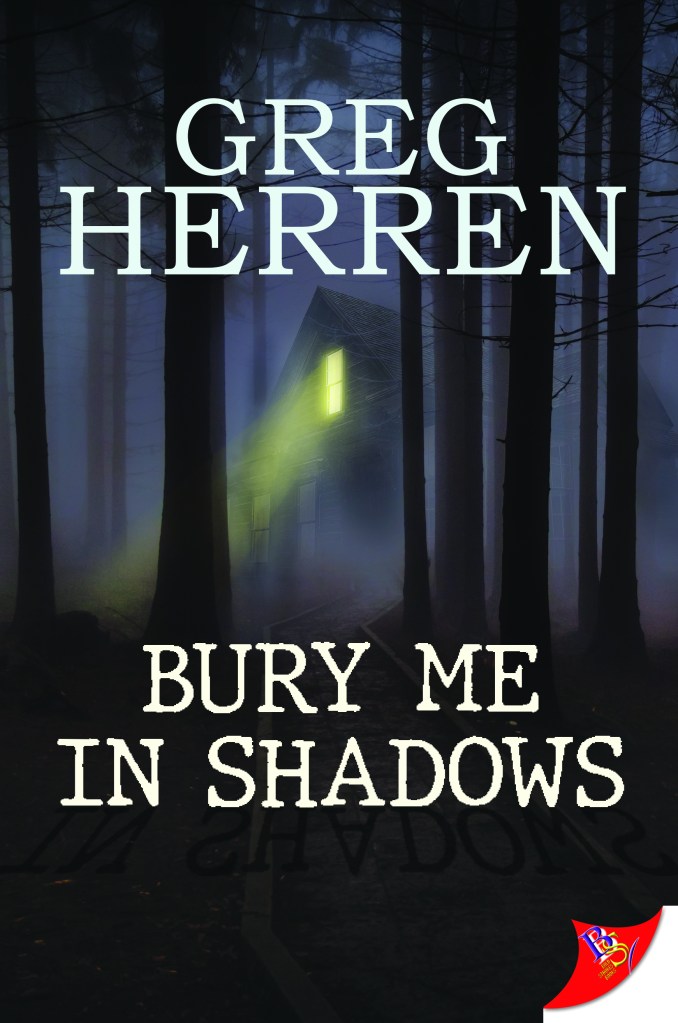
I also took a lot of pictures this weekend, to help me describe places when I write about Alabama some more. I also realized that fictionalizing the place where I was born means it doesn’t have to be exactly the same in my work than it is in real life, you know? But that’s also my own stubborn brain trying to make everything correct when it doesn’t have to be, which happens a lot. It’s not like New Orleans, which appears as it is in my work. Corinth County is based on where we’re from, but it’s not the same. I had an idea for something completely new on my way up there; there was an In Cold Blood-kind of slaying there in the late 1960’s; a couple who ran a corner store were brutally killed and robbed, and so when I got home I started looking for information about it on-line (I’ve done this before, but not for a potential writing project; more out of idle curiosity when I was writing Bury Me in Shadows) and interestingly enough, there have been any number of crimes down there over the last forty or so decades; in fact, in one article about another murder I read a quote from someone at a café in town that the county “seems to be cursed”–which I must have read before because that has always been the underlying theme of the fictional county; it’s even in Bury Me in Shadows with people saying “the history of this county is written in blood.” Anyway, I would be interested in writing about that 1967 shooting–either fictionally or as true-crime.
And on that note, I need to get ready for PT and then heading straight to work from there. Have a lovely Monday; I may be back later as one never truly knows.
I’ll be driving back to New Orleans in a little bit, and I am exhausted. I went to bed last night ridiculously early–so early that I don’t want to admit to it publicly. I was very tired when I got here Friday afternoon. I made very good time despite some highway construction stupidity in Mississippi (which is always) but for the most part it was a nice drive and I got up here relatively easily. I stopped to get gas and eat in Toomsuba, which I’ve not done in a long time, and as I feared, once I slowed down and sat down to eat lunch, fatigue set in. I did have PT yesterday morning and left afterwards (and a few errands for good measure) and so, like always, was worn out by the time I got here.
It’s also cold here, which is hard for me to get used to as I haven’t been here during the winter very often in my life, so I always think of home as being hot and humid and muggy and miserable (going to Murder in the Magic City and Murder on the Menu doesn’t count because that doesn’t involve my kin in any way). It was bitterly cold here today as we drove around with Dad showing me places from his and my childhood. We went down to the bottoms of the Sipsey River on what used to be my grandfather’s land, which I hadn’t been to since I was a kid, and the river was really high and rushing quickly because of all the rain. (It rained really hard on Friday night). I actually slept well–which should be an indication of how tired I was, as sleeping in a hotel isn’t usually easy for me. Maybe the new drugs have helped in that regard too? I was very calm as I drove and didn’t feel the pressure of the ticking clock or the need to get there as fast as I could and feeling frustrated and irritated by any delays en route. I do not miss my anxiety in the least.
But, oh the memories that came back to me as we drove past my grandmother’s house (now crumbling and in disrepair) which was an indelible part of my childhood. My grandfather’s house, where my dad was born and raised, is also gone. I was also getting all kinds of ideas, as I always do when I come to or through this part of the state, and started really getting into this idea of a sequel to Bury Me in Shadows, only with Beau Hackworth was the main character. I really do want to write more about Alabama, and several other ideas of stories that are either in progress or exist in a very rough draft. It even occurred to me that I could do an entire collection of short stories set in Alabama. I have already published a couple of them, and I have enough ideas for another collection just for those alone–but I suppose I should finish my next one first before I think about another one, right?
This place will always have a hold on me, and it does worry me a bit that once Dad goes, my last connection to the county and my childhood summers here. And yes, I am aware that I am looking back through the nostalgic rose-colored glasses of sentiment. But summers here–how to describe them? Hot and humid, dragonflies and dirt daubers and five o’clocks, fried baloney sandwiches and buttermilk, sweat tea and cobblers, mosquitoes and watermelon and fresh blackberries from the woods, trips to town to the Piggly Wiggly and the library, long rows of cotton and corn and watermelon vines, red dust and orange clay roads, heat shimmering up from blacktop roads and how everything was so still in the lazy heat of the mid-afternoon, ghost stories and Civil War legends and lost treasure.
I miss my mom. It’s hard to wrap my mind around the idea that she’s buried here, that her remains are there under the ground between the big HERREN headstone and the foot-stone with her name and the dates underneath. It was such a cruel twist of fate for her to go on Valentine’s Day, which was also the anniversary of their first date sixty-six years ago. But in this time since she died I’ve also spent a lot more time with Dad and have gotten closer to him, which is really nice. I’ve also spent more time with the rest of the family, too, which is even nicer.
I know I’ll be exhausted tomorrow and I am starting the day with PT, so I will be really tired when I get home tomorrow night. I guarantee when the weekend rolls around again, I am sleeping as late as I feel like on Saturday, period.
Well, I didn’t get to post this before Dad called my room to get me to come downstairs for breakfast, after which I helped him load up his truck, I loaded my car, and we said our goodbyes and I headed for New Orleans while he made a detour on his way to Kentucky to say goodbye to Mom again.
The drive back to New Orleans was easy, little traffic, and I made it in slightly under four and a half hours, which is excellent time. I was exhausted once I got home, and then Paul and I got caught up on Abbott Elementary, we watched an unsettling documentary (but really, aren’t they all?) and then I started watching Alexander. Paul went upstairs to work, and so I did some chores and then remembered I never posted this. Not really sure what I’ll write about tomorrow morning, if anything at all. It’s going to be a long, tiring day.
And on that note, I am going to go sit in my chair and finish watching Alexander on Netflix. Maybe I can talk about that tomorrow? Have a lovely evening.
Thursday morning and I could have slept later for sure, LOL. But I did sleep well, which was nice despite being so rudely interrupted by my alarm. I have to get up early again tomorrow for PT before I drive to Alabama, but now I can listen to The Drowning Tree by Carol Goodman in the car (I started it when I drove to Florida last fall, but the drive was too short for me to finish, sadly), so hurray! And it’s better than driving to Kentucky, which I will be doing later this spring probably (unless airfares dramatically drop by then, which I rather doubt).
Yesterday was a weird day, obviously. I wasn’t feeling like myself yesterday. I didn’t sleep as deeply Tuesday night as I would have liked, and of course, it was probably sublimated grief. I managed to get my work done at the office, saw all my appointments and made groceries on the way home. The store was crowded, of course, because men were there buying flowers and chocolates and things for their significant others, which always makes me snicker to myself. I have a lot of thoughts about Valentine’s Day, most of them negative, but it’s going to always be the anniversary of Mom’s death from now on, and probably best to not talk about the so-called holiday going forward. The day will probably always be melancholy and sad going forward, and I really need to let go of the “stiff upper lip” thing and grieve. I have sublimated a lot of it by worrying about Dad, which I don’t think is all that healthy for me. Something else to work on for this year, I guess.
I was pretty tired when I got home, and so didn’t do a whole lot of anything. I had intended to empty the dishwasher and finish the laundry (it just needs to be folded and put away) but once I sat down, there was no getting back up again other than for necessities. Sparky is a bad influence, of course; all he wants from me when I get home is attention and it’s so easy to give in to quality time with my cat. He’s getting bigger and bigger every day, and getting smarter, too. Remember how I thought he turned the washing machine on by accident? Not an accident. If the washing machine lid is up, he’ll turn it on to watch it fill up with water, and stands on the dryer watching. So, not an accident, but deliberate. He’s also learned how to open the freezer, so I had to blockade the top of the refrigerator so he can’t climb or jump up there from the counter, which explains all those times I’ve found the freezer slightly open and not sealed and just thought need to be better about closing that.
Nope, it’s just Sparky. He is so lucky he’s adorable.
I also woke up this morning to yet another scandal about the Hugo Awards lighting up social media, making me glad my creativity doesn’t loan itself to the writing of science fiction. We do have our blow-ups in the crime fiction community (see Bouchercon 2024), but at least it’s never about the awards. Probably be more on that later–I’ve been itching to write about the Bouchercon 2024 kerfuffle and some other things going on in my corner of publishing, but it’s something that needs a gentle, delicate touch and probably needs to be more of an essay written off-line than an off-the-top of my head blog entry.
We finished season two of Abbott Elementary and started season three last night, which means we’ll be looking for something else to watch. I am intrigued by The New Look, which seems to be bent on portraying Coco Chanel as a resistance heroine, while ignoring her closeness to the Nazi occupation leaders during the actual war. It’s never been proven she was a collaborator, but it definitely tarnished her reputation a bit, and glossing over it doesn’t seem to be the right answer. I could be wrong, but I’ve never cared enough about clothes and fashion or Chanel to bother to read up on it and “do my own research”, as they say all over social media.
And on that note, I am going to get cleaned up and head into the spice mines. Have a great Thurday, Constant Reader, and I’ll chat at you probably later on.
Let me tell you about the very rich. They are different from you and me.
So F. Scott Fitzgerald wrote in his short story “The Rich Boys,” and he was, of course, very right in that observation, and that hasn’t changed in the hundred years since he typed the sentence.
It’s been very clear, since I started watching Capote v. the Swans, that my ignoring aspects of Truman Capote’s personal life because of my own internal distaste to his effeminacy (due to both internalized homophobia and self-loathing) was probably a mistake, and what I really needed to do was take a long hard look at myself as well as examine his life in more detail–I will read the Gerald Clarke biography at some point over the summer–and as such, while I was slightly aware of what happened between him and his swans, I didn’t know of the Ann Woodward involvement. When I bought the below book, I actually thought it was fiction, not true crime. Once I started watching the show, I decided to find the book and read it.
And I enjoyed it.
If Ann Woodward had resolved to live a quiet life in Europe, where she could mourn her late husband, Billy Woodward, far from the madding crowd of the American press, the town of Saint Moritz, high in the Swiss Alps, was certainly an unusual place to retreat to. Renowned for its winter sports, popular as a spa hamlet, and exclusive as a community where entertainers, celebrities, and assorted socialites gathered, Saint Moritzwas a lesser European sun around which various society moons revolved. While summer tourism was popular, it was in winter that this small city shined. Luminaries descended in head-to-toe furs inthe daytime and flashy jewels at night, their diamonds and bangles competing with the glittering snow. In the fall of 1956, Ann Woodward was once again the center of attention as she sat down for dinner at one of Europe’s most elite restaurants.
Back in the United States, those familiar with Ann Woodward–and lately there were few who had not heard of her, whether over lunch at the Colony on New York’s Upper East Side, or on the front pages of tabloids–believed that she had been banished to Europe by her formidable mother-in-law, Elsie Woodward, and was now likely leading a lonely life, without family or friends, much less a lover, with plenty of time to reflect on the transgressions that had forced her into exile.
But as Truman Capote watched her from a table across the restaurant, he saw that she was not the solitary widow they expected. Capote was not only surprised to see her in this particular location, but astonished to see her in the company of a man, which was cause for raised eyebrows, considering she had entered her widowhood by her own hand not so very long ago. But Ann Woodward did not seem rattled by the patrons staring with obvious disdain as she exchanged languid looks with her companion.
(The man with her was none other than Claus von Bülow, who would have his own notoriety splashed across newspaper headlines for decades, and about whose alleged attempts to murder his wealthy heiress wife, was the basis for the film Reversal of Fortune.)
I knew about the Woodward case before, but as I have mentioned numerous times, I didn’t know about Truman Capote’s role in her life and eventual suicide. I remember when Dominick Dunne published his first novel, The Two Mrs. Grenvilles, which was a huge bestseller and was made into a television film with Ann-Margret and Claudette Colbert. It was mentioned that the book was based on a real case, which I assumed was the murder of Zack Smith Reynolds, and the suspicion that his actress/wife Libby Holman might have done it and the tobacco rich Reynolds family covered it all up. (This was the basis for the Robert Wilder novel Written on the Wind, which was filmed–and altered–with Rock Hudson, Lauren Bacall, Robert Stack and Oscar-winner Dorothy Malone.) A few years later I heard about the Woodward case, and realized that it was the basis for Dunne’s book (all of his novels were based on actual murders; Dunne himself kind of took Capote’s métier after Capote’s death, writing about gossip and murder in the world of the rich and powerful; I could do another entry on Dunne’s work, and probably will. I downloaded the ebook of The Two Mrs. Grenvilles, as well as anthologies collecting his true crime reporting for Vanity Fair.) but still had no idea of the connection between Capote and Woodward.
I greatly enjoyed Montillo’s book. She covers the story of the Woodwards, and then moves onto the feud between Capote and Woodward; opening the book with the confrontation that made Capote viciously turn on her and nickname her “Mrs. Bang Bang,” and always talking about how she got away with murder. It’s well written and moves fast; it’s a marvelous and very quick read. If you’re interested in either true crime, Mrs. Woodward, or Capote, I do recommend it. I enjoyed it very much, and Montillo is kind to both of her main characters.
(While in one of the many Capote wormholes I’ve gone down, I’ve started getting an inkling of why Capote turned on his wealthy swans, writing about them so cruelly and viciously in that short story but the time is not right for this discussion–but I totally understand why he did, in terms of this explanation; whether it was true or not remains to be seen.)
Oddly enough, the second Chanse was the fourth novel I published, and therein lies a tale.
Funny how with these earlier books there’s always a story, isn’t it?
So, I sold Murder in the Rue Dauphine to Alyson in September of 1999–but the pub date wasn’t until February 2002. I saw no point in writing a sequel to the book immediately; primarily because there was a nearly two and a half year wait between signing the contract and when they were able to schedule me in. So, I figured I had about a year and a half before I needed to get it finished (everyone told me it would be released a year after the first, and in all honesty, what was the point of writing two or three books while waiting for the first to come out so the others could be scheduled?), and so, with time to spare and a lengthy period of time to “waste”, I decided to start thinking about the “what ifs”–what if the book sells super-well and is popular? What if this isn’t just a one-off standalone and could be turned into a series? The more I thought about it, the more I liked the idea and I liked letting my mind roam.
So, what would I do if the series took off and I needed to write more?
Being creative and full of energy in my late thirties, and thrilled to death that now I wouldn’t die without having published a novel, I reread the manuscript and my analysis of who Chanse was and why he was who he was, and I started mapping out a personal journey for him, that lasted several books. He was a cynical loner, with a couple of friends, and he was still really not adjusted to being gay when the first book opens. He was estranged from his immediate family of younger sister and brother and his parents; he never returned to Cottonwood Wells after leaving for LSU. He’s ashamed of his family but he also knows they will never accept his sexuality, either, so it’s very easy for him to cut them off almost entirely. So, his journey was going to be like that of the main characters of the show Moonlighting; each case would teach himself something about life and himself, and he would grow from the lesson learned in each book. Each book going forward would have a life lesson for him (Rue Dauphine did as well; the lesson was ‘you can’t just trust someone automatically because they’re queer.’); and the one he’d learn in the second book would be about love and trust (the third would be about sacrifice, the fourth would deal with his family, the fifth would have him fall in love with someone else, the sixth would deal with him dealing with losing his best friend to her husband and realizing he does need other people, and the seventh, the swan song for the story, would find him ready to finally commit to someone and live with them, so the series would be seven books long).
Shortly after I sold the first book, I again learned that lesson myself–the case in the first book was inspired by a gay con artist who’d gotten involved with a non-profit here in the city and then blew out of town overnight, having stolen/embezzled a shit ton of money and leaving a pile of debts behind. I had written to a local color magazine for the gay community (I can’t remember the name!) about writing for them. I wrote something for them, and they hired me to be editor of the magazine, as the business was expanding and it would free up the founder to focus on the new directions while I ran the magazine. It was fun, I got to work with a lot of fun new friends, and…then it all blew up in our faces. It was very similar to the earlier situation–a gay con artist blows into town, makes a lot of promises, runs up a lot of debt and then it just blew up completely. Turns out the guy was a con artist with a record of credit card fraud, and he was on the FBI watchlist so yes, I did get interviewed several times by the local office of the FBI.
The second book, which had the working title Murder in the Rue Royal, was based on that story, but I had already been playing around with a stalker storyline, and then I realized how I could cross the two stories into one seamlessly and write the book. I managed to get another first draft finished when a two-book deal to write the Scotty series for Kensington and Alyson dropped the option for the second book, saying “two mystery series with a gay main character in the same city by the same author are too similar to each other”–which I took as a challenge to make Bourbon Street Blues and Scotty as different as I possibly could to prove them wrong. So, the manuscript went into a drawer and I started happily working on Scotty instead…and again, it was a stand-alone that morphed into a series.
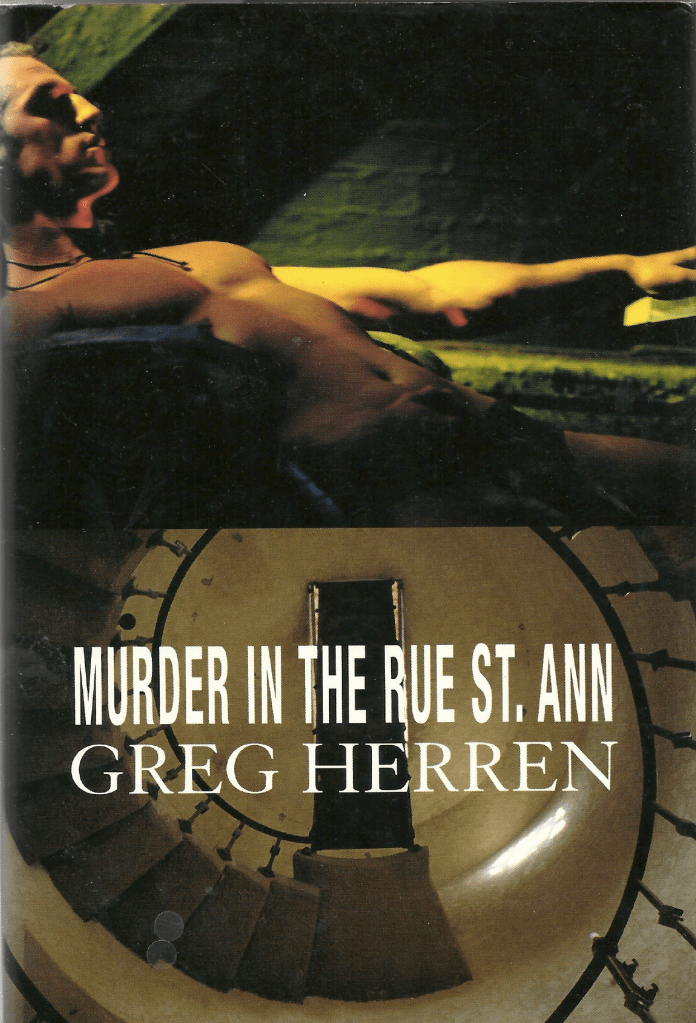
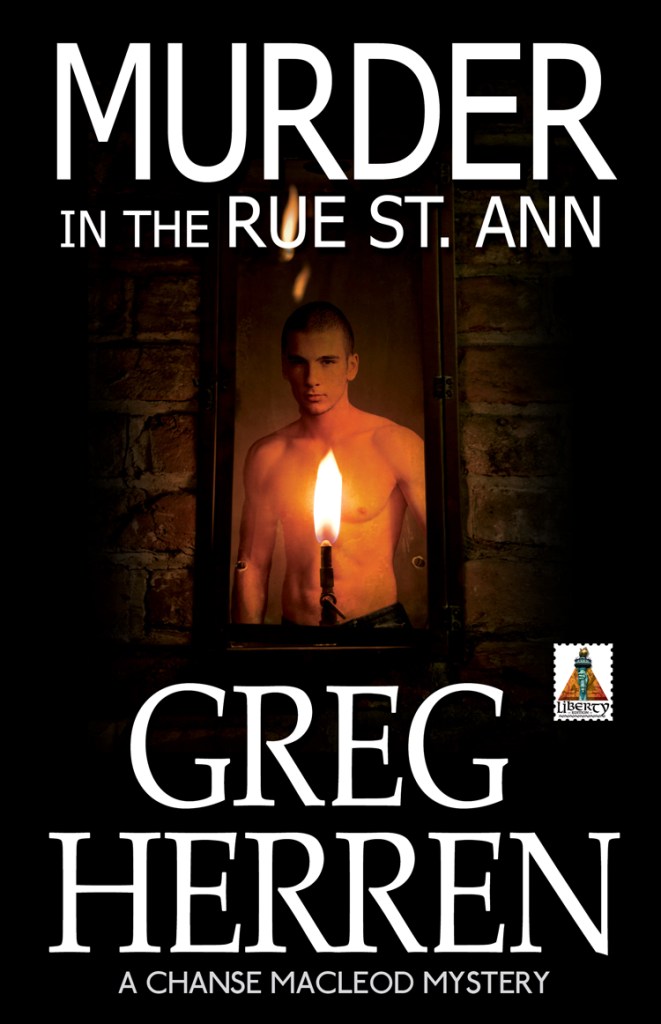
This was the Insightoutbooks edition cover of Murder in the Rue St. AnnThis is the new cover the book got when Bild Strokes Books republished the book as an ebook.
I took a streetcar named St. Charles down to Canal, crossed the street and walked down to Royal.
It was eleven o’clock in the morning on one of those splendidly sunny September days that makes you glad to be alive. Taking the streetcar had been a good idea. The long heat of summer had broken, and the air was crisp and in the mid-seventies. The sky was that blue unique to New Orleans, with wispy white clouds scattered across its expanse. There was just a hint of cool moisture in the air. There were a lot of people milling around the sidewalks on Canal— a good sign for the tourist season. Canal used to be the main shopping drag of the city, with huge department stores like Maison Blanche and D. H. Holmes. Those were long gone. They had either gone out of business or fled to the suburbs— now it was mostly hotels, fast food, and Foot Lockers.
There were hopes that putting the Canal streetcar line back in place would stimulate a recovery for the street. So far, all the construction work had simply made the Quarter difficult to get to from uptown. Add to that the chore of trying to find a place to park that would get me a ticket in two hours or cost ten dollars, and I was kind of glad I was having car trouble—the streetcar down and a cab home was very simple.
Not that riding the streetcar didn’t bring its own set of aggravations. If the cars ran on any fixed schedule, I’d never been able to figure it out. You could wait for one for half an hour and then three in a row, all packed to the gills, would show up. The streetcar ostensibly operated as public transportation, but was also a de rigeur tourist attraction. There was no way of telling when you’d be able to catch one with a place to sit. But when you did, it was nice to find a window seat on a sunny day and enjoy the city clacking by.
So, when Alyson chose to drop the Chanse series after I signed with Kensington, Murder in the Rue Royal went back into a drawer, which was fine–it wasn’t a good book–and I moved on with my life. The advance for signing with Kensington paid for our move back to New Orleans from Washington, and moving back here was absolutely worth ending the Chanse series for, seriously. I still didn’t have an agent, but I’d been signed to book contracts by two publishers already, and I figured it might be easier now. We accomplished the move, get our new apartment set up on Sophie B. Wright Place, and started putting our lives back together. I don’t remember the timeline of how it came to be, but I was still working with Alyson on my first and second erotic anthologies (Full Body Contact and FRATSEX), so I was aware when my editor left and a new person, that I knew slightly, moved from assistant editor to senior editor. We were talking on the phone one day about Full Body Contact and she casually mentioned, “I don’t see your second Chanse book here on the schedule, what’s going on?” and I told her the story, “Oh for fuck’s sake, when can you get it done by?” and that became the second contract for Chanse.
So, after finished Jackson Square Jazz and turning it in, I broke out Murder in the Rue Royal (the title had already been changed on the contract to Murder in the Rue St. Ann; my new editor didn’t like the alliteration) from the drawer, blew the dust off it, and reread the manuscript. I looked at my timeline for the series, and saw that this was the one where he was supposed to fuck up his relationship, but I didn’t see it in the manuscript. I reread the first book, thought long and hard about Chanse and who he was at this point in his life and after several long days of musing it hit me, between the eyes: jealousy. Jealousy would be what fucks up his relationship, and it only made more sense to me that Chanse would be the jealous one. Paul had a loving, accepting family and was more secure in and of himself as a gay man and what he wanted out of life. Paul was considering becoming ground-based at the New Orleans airport so he could settle down and have more of a life with Chanse, which also has Chanse very alarmed and makes the jealousy even more intense….so what would be the thing that would set Chanse’s jealousy off? Something from Paul’s past that Chanse didn’t know but finds out about in the worst possible way?
I had had some issues, believe it or not, with stalkers over the years. I had always wanted to write about a stalker, so what if Paul had a stalker? Why would Paul have a stalker? And then it occurred to me that Paul had a past he wasn’t ashamed of, but had never mentioned to Chanse. Not out of a fear that Chanse wouldn’t understand, but mainly because he had no need to tell him because it wasn’t anything dark. He had done some nude modeling when he was younger and he had also done some soft-core wrestling fetish porn, which is where the stalker came from. And what if I could work the con man he’s been hired by was someone Paul knew from the soft-core fetish porn? What if the guy contacted Paul because he’d been getting threatening notes on top of everything else going on in his life? And what if Chanse ran into Paul when he was leaving the con man’s offices, which brings all this out about Paul’s past? What if it shook a jealous, possessive, insecure Chanse enough for them to fight about it? And what if Paul disappears after the con man is murdered?
That was something I could work with, and so I did.
I’ve always called Murder in the Rue St. Ann my most under-appreciated work. By the time the book had come out, Paul had lost his eye to the muggers and we were in recovery mode. I didn’t do much of anything to promote the book (other than a signing at Outwrite in Atlanta, where I signed all of my books until they closed), and it kind of came and went quickly. I felt it was the most unappreciated of all my books. Jackson Square Jazz had come out earlier in the year before Paul was attacked, and it sucked all the oxygen up that year intended for me–it was the Lambda nominee, not Rue St. Ann–and I didn’t pay much attention to the book after it came out, either. The ‘christians” came for me a few months after the book’s release as well, and then Katrina…so yeah, Rue St. Ann got no press, got no attention, but somehow still managed to sell well.
I did have the next one planned, Murder in the Rue St. Claude, which there was a proposal in for, but Alyson was also going through other, deeply concerning changes that showed how little the higher-ups knew about anything, let alone publishing. But that’s a tale for another time, I think.
It’s always weird for me to talk about my writing and my books and so forth on here; I always worry that I am either contradicting and/or repeating myself. When you’re as self-obsessed as I am, that can be a problem; talking about myself is probably my favorite thing to do–on here, at least. And I feel like I’ve told the story of where Chanse came from and how the series developed from the very beginning many, many times.
It was when I was living in Houston that I rediscovered crime fiction, and the old love was even deeper once it was rediscovered. This was the period when I read most of the Perry Mason novels, discovered Paretsky and Grafton and Muller, and decided to give Travis McGee and John D. MacDonald another try. (I had read The Dreadful Lemon Sky when I was a teenager, but I hadn’t liked it; I was more into the classic detective mystery, with lots of suspects and a denouement with everyone gathered in a drawing room as the identity of the killer was unveiled–the McGee series was definitely not that. But MacDonald had written a superb introduction to Stephen King’s first short story collection, Night Shift, and I had always wanted to give him another chance–pun fully intended.) I devoured the McGee series this time around; and I really admired the character and how fully rounded and developed he was (I should give the series a reread; I’d be curious to see how they hold up now)…and armed with all these new private eye novels and Perry Mason puzzles, so I started coming up with my own version. Even the name was a shout out to McGee. My character was also tall with sandy/dirty blond hair, a former college football player, and he lived in Houston, with an office downtown and a secretary named Clara. The title of the first book was going to be The Body in the Bayou, and I started basing the case on the tragic Joan Robinson Hill case, immortalized in Tommy Thompson’s Blood and Money (the premise of the story was that the character representing Joan’s father hires Chanse after Joan’s death to find dirt on John–and then John is murdered; fictionalized, of course.) I wrote about six or seven really bad chapters long hand before giving up. I didn’t know how to write a novel then nor did I understand the concept of rewrites and revisions and drafts. (My ignorance was truly astounding.) The hurdle I couldn’t clear was typing. I was a terrible typist. I’d had a job in California working for an insurance brokerage that was computerized, and had a word processing program that I used to write short stories on; it made such an incredible difference that I knew I would have a much better shot at actually making my dreams come true if I only had a word processor…
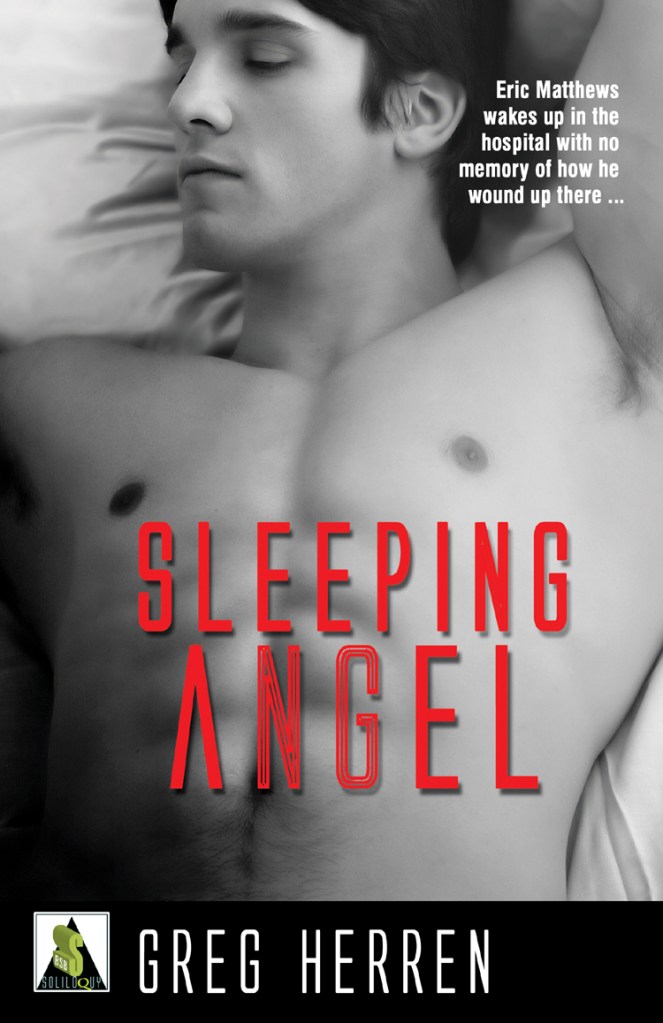
In 1991, after I moved to Tampa, I managed to get a word processor, and that was what I wrote my first two and a half young adult novels on–the original drafts of Sara, Sorceress, and Sleeping Angel–and used it happily for several years until it finally died on me. But by then, I was living with Paul and had swung back around to wanting to write adult crime fiction again, and I wanted to write the Chanse character that I’d already created…so I picked back up on The Body in the Bayou, moved it from Houston to New Orleans, got rid of the office and the secretary, and made Chanse gay. I kept the title, but threw away the story; I wanted it to be a gay story, too. I don’t really remember the plot, but it had to do with the murder of a beautiful boy-toy for a wealthy closeted gay man in New Orleans…and Chanse knew the boy-toy from his days working as an escort before he landed the rich man, I wrote about six or seven chapters of this before we moved to New Orleans….and I realized I’d have to throw it all out again because it was all wrong; I’d made the classic mistake so many writers make when writing about New Orleans: writing about it having never lived here, I only had tourist experiences–which are vastly and dramatically different from the actually “living here” experiences. So, once again, I threw it all out and started over, this time calling it Tricks instead of The Body in the Bayou.
The title morphed again to the less saleable Faggots Die after the first draft; and I remember talking to Felice Picano–he was coming into town for the Tennessee Williams Festival, and I picked him up at the airport. As we drove back into the city from Kenner, we talked about my book and the series, and he nixed the new title as well as the old one. “No one, ” he wisely said, “will pick up a book called Faggots Die, and Tricks sounds like a pornographic memoir of your sex life.” Felice was actually the one who suggested I mimic titles for the series from a classic writer…and we were throwing titles around in the car when I said, “You know, the streets in the Quarter are technically rues–Rue Bourbon, Rue Royale, Rue Dumaine–and the murder happens on Dauphine. Maybe Murder in the Rue Dauphine?”
“That’s perfect,” Felice said, and then we played with Poe titles the rest of the way into the city–incidentally, one of them was The Purloined Rentboy, which became my short story “The Affair of the Purloined Rentboy”, so never throw anything away.
And thus was Murder in the Rue Dauphine titled; and the plan for the series titles was also devised–the branding was changed by the publisher, but I can honestly say my first book was titled by Felice Picano.
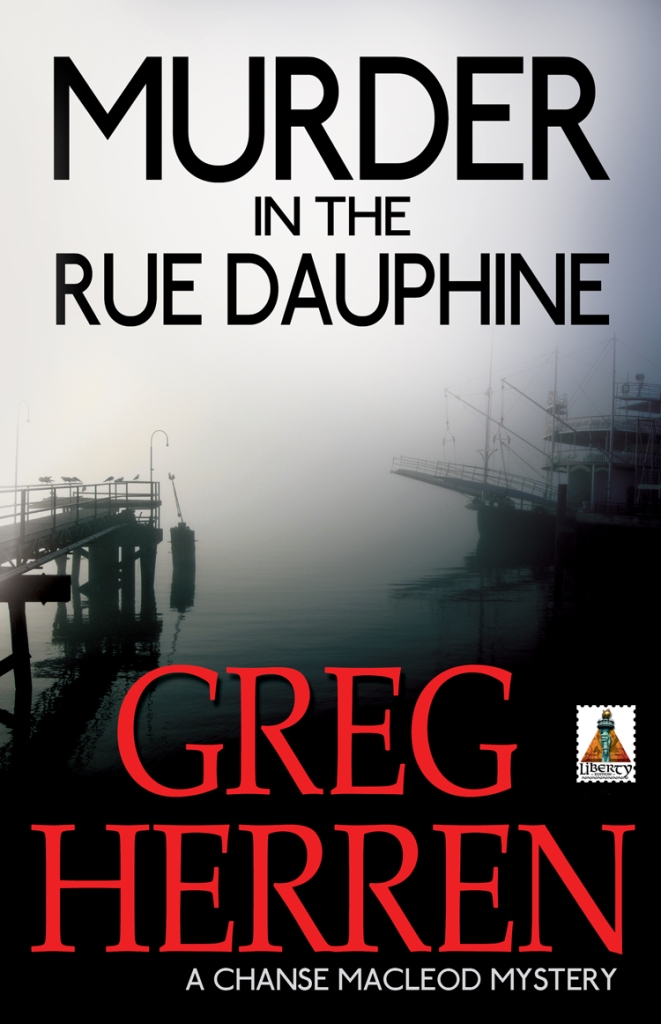
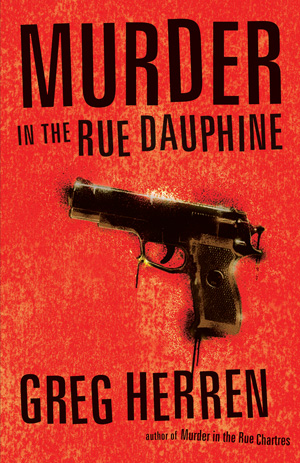
Murder in the Rue Dauhoine has had three covers in its 21 years of existence. This center one is the current.
Never come to New Orleans in the summer. It’s hot. It’s humid. It’s sticky. It’s damp. It’s hot. Air conditioners blow on high. Ceiling fans rotate. Nothing helps. The air is thick as syrup. Sweat becomes a given. No antiperspirant works. Aerosols, sticks, powders, and creams all fail. The thick air just hangs there, brooding. The sun shows no mercy. The vegetation grows out of control. Everything’s wet. The buildings perspire. Even a simple task becomes a chore. Taking the garbage out becomes an ordeal. The heat makes the garbage rot faster. The city starts to smell sour. The locals try to mask the smell of sweat with more perfume. Hair spray sales go up. Women turn their hair into lacquered helmets that start to sag after an hour or so.
Even the flies get lazy.
My sinuses were giving me fits as I left the airport and headed into the city. It was only 7 o’clock in the morning but already hotter than hell. The air was thick. I reached for the box of tissue under my seat and blew my nose. The pressure in my ears popped. Blessed relief.
As I drove alongside the runways I could see a Transco Airlines 737 taxiing into takeoff position. I saluted as I drove past, thinking it might be the flight that my current lover was working. Paul looked good in the uniform. It takes a great body to look sexy in polyester. He does.
He’d be gone for four days on this trip. I was at loose ends. I’d wrapped up a security job for Crown Enterprises the previous Wednesday. The big check that I’d banked guaranteed I wouldn’t have to worry about money for a while. I like when money’s not a concern.
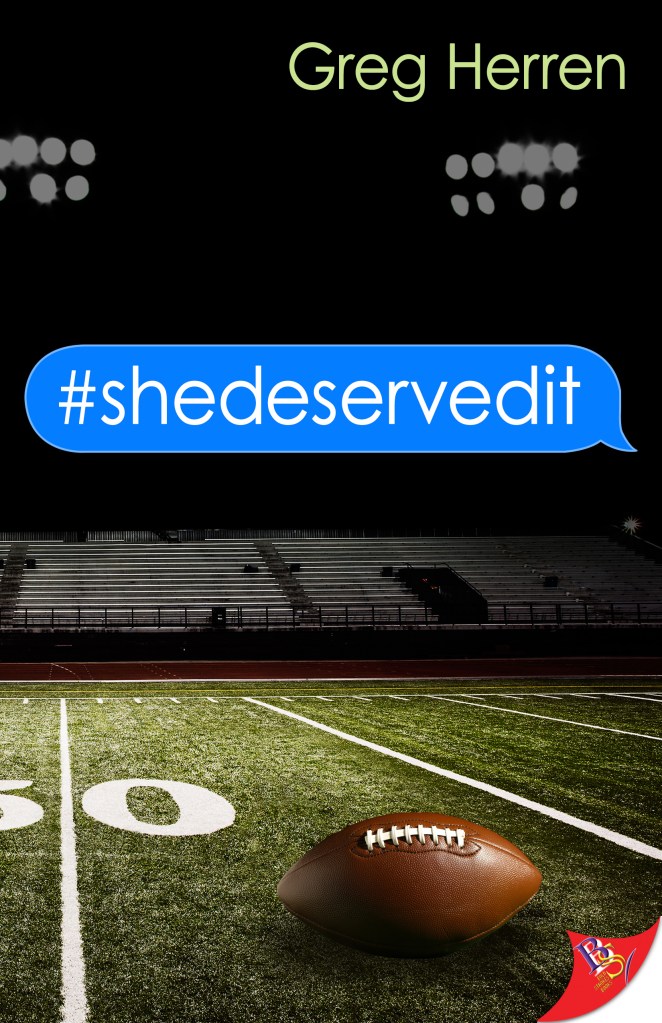
And so began a series that lasted for seven titles and about twelve years or so; I don’t remember what year the last book in the series was published. I never expected anyone would publish it; it was intended to be a “practice novel” so I would get used to rejections and learn. It was also the first manuscript I ever wrote that went through multiple drafts before I thought it was finished enough to send out on query. It was supposed to be an exercise in learning humility and getting experience with the business while I wrote the book I did expect to get an agent with and sell–which was what I’d always called “the Kansas book” for over a decade at this point. (It eventually morphed into #shedeservedit.) But you never really learn what you’re supposed to when you’re stubborn, thin-skinned, and used to being demeaned and talked over and not taken seriously, for any number of reasons. I sent the manuscript to three agents: two sent me lovely but form rejections, which was disappointed but not surprising. I took this well, put the manuscripts away to send to three more once the final rejection came.
It came on a Friday, if I recall correctly. I went to pick-up the mail and my manuscript was there. Not a surprise, of course, but still a little disappointing. I went out to my car and opened the package…and paper-clipped to the title page of the rubber-band bound manuscript was a torn piece of used paper, with a note in ink reading I find this manuscriptand characters neither interesting or compelling with the agent’s initials at the bottom.
It was like being slapped in the face.
By the time I got home I was in a raging fury. I was literally shaking with rage when I came inside. How fucking unprofessional, I thought as I sat down at my computer to check my emails, trying to decide how I would enact my vengeance on this rude piece of shit.1 There was an email there from the editor I was working with on an anthology which had taken my first-ever fiction short story and thus would be my first publication. I had never read the signature line–mainly because I was so excited for my first fiction sale (NARRATOR VOICE: it was porn). This day, he concluded his email with Please send us more work. We definitely want to see more from you and as my ego preened, slightly soothed from the insulting agent note from earlier in the day2, I also looked down at the signature line and realized I was communicating with the senior editor at Alyson Books! I immediately wrote him back a very short note: I’ve written a novel with a gay private eye set in New Orleans, would you be interested in that? and before I could talk myself out of it, hit send.
He wrote back immediately and said please send it to me ASAP!
I put the same manuscript back in a new envelope, and drove back to the postal service to get it in the mail before I changed my mind, and breathed a sigh of relief once I got back to the car–and immediately forgot all about it.
Six weeks later I came home to a phone message from the editor. I called him back, he made me an offer, and my career leapt forward much faster than I expected…and it started a roll of good luck and “being in the right place at the right time” that has kept me publishing almost non-stop since Murder in the Rue Dauphine was released in 2002.
It sold really well, got mostly favorable reviews, and scored me my first Lambda Literary Award nomination.
Not bad for a manuscript and characters who were neither interesting or compelling, right?3
It also took me a long time to realize–or rationalize–that the note wasn’t meant for me. (I was most offended that I wasn’t even worthy of an actual form rejection letter; that was the truly insulting part for me.) I realized when telling this story on a panel somewhere, that the note was probably meant for an intern or a secretary or an assistant, who just shoved the whole thing in an envelope to do the rejection and through some wild Lucy-and-Ethel office shenanigans, it went out without the rejection letter and with the note intended for internal eyes only…and made me wonder, how different would my career and life be had that fuck-up not happened?
We’ll never know, I guess.
Not really proud of this reaction, but I did get the last laugh. ↩︎
Said agent died a few years later. I may have smiled and said good, a la Bette Davis vis a vis Joan Crawford’s death. ↩︎
I may be more forgiving about a lot of things these days, but I will always be petty about that hateful agent. ↩︎
Friday morning after Muses, and I am a little tired–physically. Mentally I am alert as ever and feel great, but I am not used to standing on the sidewalk for so long anymore. Chaos last night was my first parade (the floats were hilariously inappropriate; all I will say is the theme of the parade was “balls” and leave it at that), and we came home to rest before Muses arrived. We didn’t stay out for long, I was tired and sleepy and it got here around ten; we lasted out there for about an hour before I started flagging and came back inside. However, I realized I should have gone to parades to warm up for this weekend; I forgot that it takes a parade day to warm you up and get you in the proper spirit; I should be good to go tonight if my PT this morning isn’t too vicious.
And yes, we got a really cool shoe.
I had a good day at work yesterday, got a lot of things done and caught up and feel confident not being in the office again until Ash Wednesday will not be disastrous for me or put me really behind on things. I came home early (it took me an hour), and I came inside and watched this week’s episode of Capote v. the Swans, which was done in documentary style, which was an interesting take. I’m not quite as obsessed as I was about Capote when I first started watching, but I do want to read the Gerald Clarke bio of him, and maybe even George Plimpton’s Capote. It’s taken me awhile to get interested in Capote, and while I wouldn’t say it’s an obsession anymore, I am still very much interested in this incredibly famous openly gay man in the middle of the twentieth century. I have added Deliberate Cruelty, a true crime narrative about Ann Woodward’s feud with him by Roseanne Mantillo, to the books I am reading and I finished it last night.
And yes, I am beginning to understand precisely why he wrote “La Côte Basque 1965” and why he published it, but more on that when the show is finished and I give it, and Capote, an entry of their own.
As for me and the weekend, I have taken Monday off and so I am hoping that I’ll be able to get some reading and writing done today, Sunday and Monday (I will always take Saturday off from everything to go to Iris). I want to finish editing this one short story and finish writing another, and perhaps get them submitted somewhere. I have laundry going already and a dishwasher to unload and reload. I have PT this morning, a prescription and the mail to pick up, and then the car won’t move again until Monday at the earliest, as I will need to probably make a grocery run. I also should be able to finish reading Deliberate Cruelty so I can focus on Lina Chern’s Playing the Fool, which I am greatly enjoying. I also have some blistering blog entries to write, so this weekend should be fun on that score.
And hopefully I’ll be able to get this place ship-shape and get myself caught up on everything that needs catching up on.
And on that note, I am heading into the spice mines. Have yourself a lovely Friday, Constant Reader, and I may be back later.
So, are you ready for some MORE blatant self-promotion?
During the Bold Strokes Book-a-thon, the other panel I was on had to do with writing young adult fiction (the other panelists were amazing, I might add), and once again, I am answering the questions sent to us by the moderator to turn into an interview with JUST me (because it’s all about ME ME ME) but I do urge you to seek out the video of the panel. It was terrific, and I was definitely the most uninteresting person on the panel, seriously; this is NOT self-deprecation. (I bought everyone’s books during the panel, I might add; definitely check out Lauren Melissa Ellzey.)
What is the definition of Young Adult? How does it differ from other genres?
I think it’s primarily an age distinction, to be honest, which is something that always makes me uncomfortable. Growing up I read far above my age level; when I was in seventh grade I was reading at a college level, per the tests and so forth. I mean, I did read The Godfather when I was ten; my parents, despite their conservative religious beliefs and values, let me read whatever I wanted without having to ask permission–I think when I asked Mom if I could read something the last time she replied “Read whatever you want, I don’t care” and after that I never asked again. When I was a kid, there was no such thing as young adult; everything was either for adults or “juvenile.” The juvenile category contained multitudes, beginning with the Little Golden Books and picture books to kids’ mysteries to Judy Blume. I think sometime in the 1980’s the genre was separated into “juvenile” for kids 8-12 and “young adult” for 12-18.
But there are kids like me, who can read above their age/class level and others who can’t read at their age/class level, and I think in some ways that differential could be harmful for those who are below-average readers–reading is the most crucial aspect of education, because if you can’t read…and no matter how many ways they try to make the language around slower readers more accepting and less stigmatizing…it doesn’t really help kids to be told they’re below average or not as smart or quick as the other students. (One of my primary problems throughout my education is I would understand something the first time, while others inevitably didn’t, and as the teacher explained for a second or third or more time, my ADD would kick in and my mind would wander because I didn’t need to listen and then wouldn’t be listening when the teacher moved on.
Ah, well.
Oh, and all subgenres of fiction also have the middle grade/juvenile and young adult sub-sub-genres.
Why or how did YOU choose YA?
I don’t know that I chose y/a so much as it chose me.
I started writing when I was a child (all my childish scribblings are lost to moves and time passing), and I wrote about kids my age. My first attempts at writing were always some kind of kids’ mystery series, a la The Hardy Boys and The Three Investigators (I’d still like to do this, frankly), and when I became a teenager, I started writing about teenagers. I wrote a bunch of short stories while in high school about the same group of kids going to the same high school. Those stories slowly but surely grew into a sprawling, handwritten novel about the county with plots and subplots and main characters and minor characters and all of this history; a “Peyton Place in Kansas kind of thing”. I worked on it for like five years, and eventually had this enormous sprawling mess that needed to be revised and rewritten and typed…and since I didn’t know how to type, made that part of it a problem. So I shoved it into a drawer and started pulling from it rather than revising it; taking out plots and characters and using them in other books and other stories.
After I finished that, I spent the next five years mostly working on short stories. I started another book, more horror than anything else, but never got further than the third chapter. I finally decided to write a horror novel built from my old manuscript and those short stories from high school. I was about three chapters into it when I discovered two things: there was a big market in y/a horror at the time (Christopher Pike and R. L. Stine were HUGE during this period) and so I bought some of them. When I finished, I thought, “You know, I should turn Sara into a y/a novel” (because I thought somehow that would be easier? Foolish, foolish rookie) and so… I did. I was right in that thinking of it in those terms made it possible for me to finish a draft, but I wasn’t very happy with it so I put it aside and started writing another one, Sorceress, which was also horror but also had some strong Gothic moments in it. When I finished that one, again I wasn’t pleased with it so I started another–Sleeping Angel–which was the one I thought really had potential. I never finished that draft–by this time I’d discovered that gay fiction and nonfiction existed, so I started reading that and trying to write about gay characters instead.
Those manuscripts remained in my drawer for well over a decade, until a friend of mine took a job as a young adult acquisitions editor, and she wanted to work with me. I told her I’d written three (although it was technically two and a half), and gave her a brief synopsis of them. She liked Sorceress the best, so I started revising and editing it and turning it into something publishable. Once it was all done, she’d left that publisher, but started her own small press for y/a books for underrepresented teens, and she wanted to launch the press with Sorceress. I said “okay” and we were off. I eventually realized I needed to let Bold Strokes know, and when I did, I got an email back saying you know we do y/a, too? And so I sold the other two to them, and have never looked back since then.
Are there specific rules for writing YA (things you can’t do)? Does Bold Strokes add on or impose specific or additional rules?
I don’t pay too much attention to rules, frankly. There’s no graphic sex in my books, but it’s hinted at. I also try to swear less in young adult books than I do in adult fiction, which is probably not as big of a deal as I think it is? The society I grew up in was a lot more puritanical–believe it or not–that the one we live in today. So I always default to that setting, and then have to shake it off. Swearing isn’t as big of a deal as it used to be. No one thinks they’re marrying a virgin anymore, and on and on. And having been attacked for daring to accept an invitation to speak to queer high school students, I tend to tread softly. There have been a couple of times where I’ve had to change language, or how a scene went, because my editor thought it might be problematic; and frankly, I never want to be offensive, so I have no problem with it. I don’t see it as a free speech issue the way so many intentionally offensive writers claim it is. I shouldn’t take offense to someone calling me a faggot? Grow the fuck up. The so-called free speech “crusaders” are always defending hate speech as well as trying to shut up the people who find it objectionable. You do not have a constitutional freedom from consequences or getting a negative response to things you say and do, period. It’s really not hard to understand unless you want to be passive/aggressive and childish and a moron.
How do you remember back to these days, specifically how it felt or feels? (this is coming from your moderator who is much older than you are)
Well, for one thing, I’ve always kept a journal and I still have them all. (I was insufferable when I was younger, seriously.)
My sister has a theory that we forget a lot of the pleasant memories from our childhoods, but remember the traumas in great detail. I believe the truth of that, because school was a nightmare for me from the day we moved to the suburbs until I was done with it. I remember how it felt to read Greg Herren sucks cock on a desk at school. I remember how it felt to be mocked, laughed at, and bullied by assholes. I do remember the good things, though I tend to always focus on the bad.
The first thing I always do is abandon whatever “wisdom” about life I’ve theoretically learned since leaving high school, and put myself into the teenager mindset: they think they are the main characters in everyone they know’s story, and everything is the end of the world or their life is ruined and you are the most horrible parent ever! I’m not entirely sure I’ve escaped thinking that way, to be brutally honest: I am horribly selfish.
How do you come up with your characters? Your stories?
I am weird in that I inevitably always start with a title. I hear something or read something and think, that would make a good title. The next question is what story would fit that title? And it kind of goes from there. The title may change, the character names and story might change and evolve, but I can’t write anything that doesn’t have a title. Bizarre, I know. Usually with my young adult stuff it’s an idea I’ve had for a number of years and finally decide to explore whether it’s a novel or a short story, and go from there.
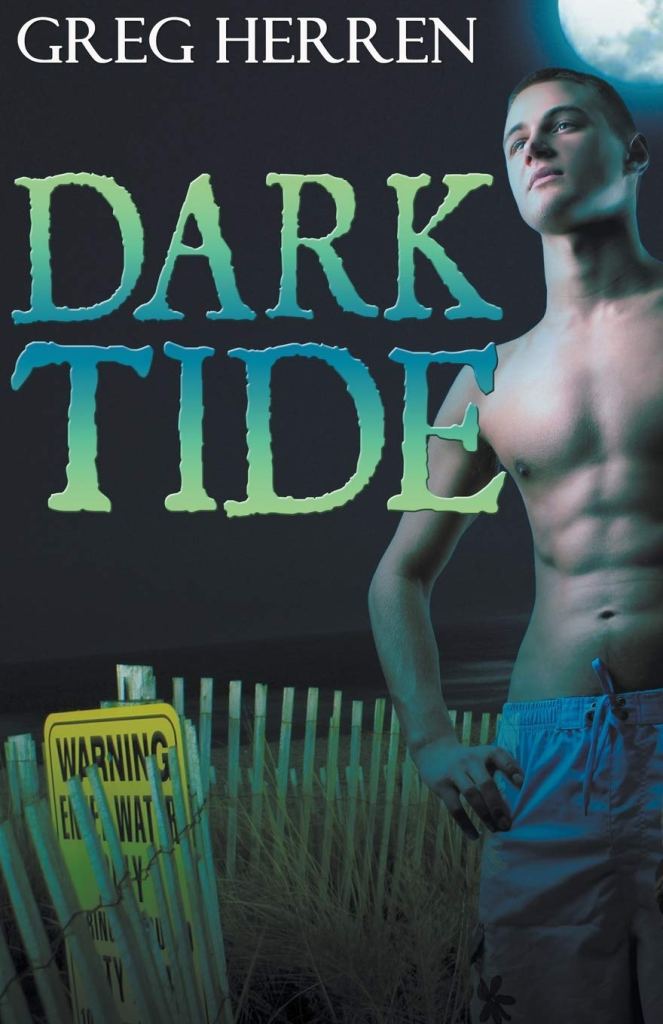
Dark Tide was originally called Mermaid Inn, Bury Me in Shadows was originally Ruins, but the others pretty much stayed the same from beginning to end.
I wrote #shedeservedit because I was angry about the Steubenville/Maryville rape cases, and remembered stories and gossip from when I was in high school and college…and rethinking them through a more evolved brain about women and misogyny… well, it made me angrier. I had already planned on writing a story set in the same town with the same characters and opening with the same murder (I always referred to it as “the Kansas book” for years), but the motive was something I always had trouble grounding in reality. After those cases…it clicked in my head. You need to write this story about small town misogyny, protecting the star jocks from the girls at all cost, and make that the plot. It was easy to write because I was angry. Making it a compelling read was harder, because the subject matter was sickening to me.
I needed to write that book, and I don’t regret doing it, either…but it’s not exactly a feel good story people can escape into, either.
Why do you think YA is so popular?
It’s more accessible, I think. I mentioned reading ability before, and I do think that most readers aren’t into the Great Literary Tomes, hundreds of pages of beautiful writing with no real point or story. People kind of want to escape their cares and worries, and y/a books tend to be really entertaining. We’re competing with phones and tablets and streaming, so we need to write entertaining and engaging books.
Any specific must do-s or must-haves to get your writing each day?
I’m not nearly as anal about that as I used to be, before I returned to work full-time. I am very aware that I have little time to waste when I write, and thus must seize whatever opportunities to write show up. But if pressed, coffee. I can’t write unless I’ve had coffee when I got up.
I think this is all of them, but I could be wrong.
And now its Muses Thursday. How we got here so quickly is a mystery, but here we are. I am slowly waking up, the coffee is helping, and yesterday was actually a very good day, perhaps one of the best I’ve had in a long time. It was the first time in a very long time (several weeks, at least) where I was alert and awake and felt good. I was also in a good mood all day…all of which added up to a very productive day. I ran my errands after work (I left early because parades) and managed to get everything done AND find a place to park close to the house when I got home. I put the laundry away and started working on chores, getting things cleaned up and taken care of. It was nice to wake up on a Thursday and come down the stairs to a tidy kitchen. I watched my reality television shows (Vanderpump Rules, which is actually boring this season, and Real Housewives of Beverly Hills) and then Paul got home. We got to hang and chat for about half an hour before it was time for me to go to bed, and I went out almost immediately. I like this new sleep pattern, and having the right kind of medication that helps me not only sleep deeply but feel very rested when my body and brain finish waking up–it’s much easier than before, that’s for damned sure.
In honor of Muses, I switched to a new pair of every day shoes this morning, and it’s always quite an adjustment. I should probably change every-day shoes more regularly; I have flat feet and my feet (the technical/medical term for it is overpronation; eventually my shoes will reflect that and need to be changed out) roll inward. Shoe inserts have helped dramatically with my ankles, knees, and hips; before using inserts I needed to get new shoes every six weeks. They last longer now, but I still need to change out my shoes more regularly than most…which is why I always buy at least two pairs of shoes every time, so I have the next pair ready to go when I change them out, always buying two pair when I start wearing the second pair and thus no longer have a pair of shoes “on deck”. I also don’t have to walk to the office and home, or stand out on the corner hawking condom packs to partying people all weekend–which of course will help my shoes last longer. (I still miss my old office, though.)
I’m just fascinating this morning, aren’t I?
The Krewe of White Supremacy and the Lost Cause rolled again last night, but once again New Orleans said nix to Nyx and their dying, pathetic parade needs to have its fucking permit pulled once and for all. Let them parade in Metairie or the North Shore where their deeply offensive and archaic values would be more appealing. New Orleans doesn’t forget and holds a grudge forever. You racist skanks and your Confederate flag throws aren’t welcome in New Orleans, and you know it, so why do you bitches keep parading to empty streets and the utter contempt of New Orleans? To prove a point? Think of all the money they waste to prove a point. I can’t wait to write my book about the murder of an all-female all-racist krewe captain. I had no difficulty finding a place to park on my block last night after four, which doesn’t happen on days when the popular parades that everyone goes to–no matter how minor it may be–roll. I could have probably left the office at the usual time yesterday and still been able to find a place to park on my street (note for next year if this year wasn’t their death rattle). Tonight I will drive straight home and probably won’t be able to find a place to park, Sigh.
I am going to Alabama the weekend after Fat Tuesday to meet Dad. I’m really glad to spend the time with him, but I hate the reason for it.
There’s controversy brewing again in the mystery community, and while I generally don’t opine on these kinds of things, I kind of am feeling my oats and I may just have to voice an opinion. I always forget that I had anxiety with my commentary and observations about controversies in publishing because of my volunteer work on the MWA board; I never wanted anyone to ever think I was speaking for the organization when I was not and didn’t want to have to deal with any controversies for the org things I said may have caused. But my anxiety is gone now, I have very few (if any) fucks left to give about anything or anyone, and I have a voice and a platform (no matter how small it may be in the overall scheme of things) so I should make better use of it than introspective navel-gazing about my life and career and so forth. So what if I piss off a few people? No one cares if they piss me off, do they? And I’ve been the target of other people’s bullshit far too many times and for far too long to worry about offending people who find my very existence offensive, so they can fuck right off. I’m not saying I’m going back to channeling my inner Julia Sugarbaker regularly or anything, but I will probably be speaking out more in the future…and I have some definite thoughts about the current one. LOTS of them, in fact.
So, buckle up, buttercup. 2024 is a whole new mentality for me.