Wishing on a Star

I prefer not to speak in anger, and always try not to do so. I am not always successful, to my great shame, and I am still tortured by memories of times when I let my anger get the best of me and yelled at a stranger. I will never have the opportunity to apologize to those people, and I know I ruined their day for them; they may also remember being made to feel anger of their own, or shame, or whatever bad emotion my anger caused them. I don’t like it when I lose my temper with Paul, or with friends, or with co-workers. Nothing positive ever comes of it, and I always, always feel bad afterwards; even if it was satisfying at the time.

But anger is also different from outrage, and I will speak out when I am outraged. Outrage and anger are similar but not the same; I will say things in anger I would never say when I am not angry, and will often try to contain those angry sentences to my brain. Outrage comes from a different place, a place that doesn’t burn hot, but is icy; the freezing coldness that comes from utter moral contempt. What I call my Julia Sugarbaker moments come from a place as cold as outer space; my words may be strong, my voice might even quiver with emotion, but make no mistake about it: there is no heat in my outrage.

Injustice outrages me more than anything else; the notion that fairness and decency should only be allowed to the select and denied the rest is one of my many triggers. Over the course of my life I’ve been cold in outrage far more times than I would like, far more times than I wish were necessary, far more times that I ever wanted. There were many points in my life that I thought, ah, this is it. This is the place where fairness and decency is going to kick in, and going forward things are going to be better.

Instead…on and on and on it goes, world without end, amen.

I’m tired from fighting. It seems like I’ve been fighting my entire life. I’ve made mistakes, I’ve paid for them, I’ve done stupid things and embarrassing things and things I wish I hadn’t.

But I never regret being wrong. I don’t like being wrong, but I never regret it completely.  You learn from being wrong. You grow and you change and you see life, the world, people, in a different way when you realize you’re wrong. I’ve grown and changed, I continue to grow and change, and I hope I never stop growing and changing.

But you have to want to grow and change, and one of the sadder things I’ve seen and had to grow accustomed to is seeing how many people have no desire to grow, to learn, to change. I don’t understand it. I try to wrap my mind around it but I can’t. I can’t imagine not questioning, not wondering, not researching, not learning.

I don’t ever want to stop growing and evolving. I can’t imagine wanting to stop, and resisting it stubbornly.

As a writer I tell stories. To tell stories I have to have characters, setting, place and plot  and dialogue. To write about them honestly I have to understand them, and writing sometimes is my way to try to come to understanding. I sometimes funnel my outrage and my anger into my writing as ways of divesting myself of that energy; writing is always where I go when I want to make sense of an insensible situation, a problem, something I can’t quite understand. In my stories I know my characters intimately, who they are and what they like and what they don’t like and whether they are ticklish or not and whether they know how to swim or not and why and if they can cook and if they have a clean house and do they enjoy grocery shopping. You can never know another human being as completely as you know the characters you write about.

I have always thought that my Chanse series was the darker toned one and more political by nature. I’ve tackled hate crimes and murder and homophobia and self-loathing and politics in the Chanse series. I’ve always thought of the Scotty series as fluffy and fun and entertaining; the books enjoyable entertainments for an afternoon or two at the beach and nothing more. But as I address some issues in this current Scotty manuscript, I found myself wondering is this more of a Chanse book than a Scotty? Scotty books aren’t supposed to be dark and heavy.

And then…I start remembering the previous Scotty books. The neo-Nazis allied with the far right politician in Bourbon Street Blues, and what their plan for the Southern Decadence weekend in the French Quarter was. The difficulty of being a world class athlete who has to stay in the closet and having a homophobic mother in Jackson Square Jazz. The inhumanity of the Russian mob in Mardi Gras Mambo. Religious fanaticism and the corruption of the Vietnam War in Vieux Carre Voodoo. The homophobic hysteria of the religious right over same-sex marriage in Who Dat Whodunnit. The corruption of Louisiana state politics in Baton Rouge Bingo. The horror of being tried in the court of public opinion in Garden District Gothic.

I’ve been doing it all along.

Even now, I laugh at my naivete. The Scotty series is about a gay male ex-stripper in the French Quarter whose parents are far-left progressives and is in a three way relationship with a former FBI agent and an international gun-for-hire. They took in the ex-Fed’s gay college-aged nephew after he came out to his parents and they disowned him in Baton Rouge Bingo.

When you write gay characters, tell gay stories, focus on gay themes and ideas, when you show the world what it looks like through the prism of the gay gaze, it absolutely is an act of politics, of defiance, of seeing the society mainstream heterosexual has been building since Romulus and Remus founded Rome from an outside glance.

This makes the work political. It’s very existence is political.

My existence is political. People who don’t know me hate me for simply existing, for not fitting into the world the way they want it to be. My existence challenges core beliefs for some people: those who think we should all be drones living a cookie-cutter existence in the suburbs with 2.5 children, a dog, and a white picket fence.

But got some bad news for you folks: I ain’t going back in the closet. I’m not done fighting. I may be old and tired now, but I’m not finished.

I’ll still be fighting as they shove my body into the crematorium.

And now, back to the spice mines.

IMG_2454

Nasty

I was writing notes in my journal the other day when this thought came to me : social media is actually neither. You aren’t really being social, or socializing with anyone; and it’s not really media either. If anything, it’s anti-social media, because people tend to spend their time looking at their phones and spending time on their computer on social media sites rather than actually talking to, or engaging with, actual human beings.

When I was a kid I was taught that there were three things you never discussed, at parties, dinner, bars, etc: politics, money, and religion. Your politics, your income, and your religion were no one else’s business; likewise, everyone else’s were none of mine. At the time, I was told it was simply manners; you weren’t supposed to know or care about anyone else’s politics, money or religion–nor were you supposed to hold that against them. This is why we vote in booths with a curtain closed, because our politics are supposed to be private. Likewise, so is our religion, so is our income.

The rise of social media, however, has broken down those barricades of politeness and what used to be known as minding your own business. It’s very difficult, you know, to find out someone you’ve been friends with for a very long time might hold a belief or a value that is not just not in line with your own, but might even be repugnant to you. I’ve long recognized that simply because my core values and beliefs are my own doesn’t necessarily make them right; but I have also always been willing to change my mind, to learn and grow, from talking to other people, from reading, and from occasionally questioning my beliefs and values. 

What I often find astonishing is that people not only do not want to rethink or analyze their beliefs and values, but how quickly they are to not only take offense at the very idea but also how quickly they will get defensive and immediately go on the attack. Asking for a careful reevaluation of what you believe is neither telling you you’re a horrible person nor does it mean the other person is attacking you; it simply is ‘hey, have you ever thought about it this way?’ I have often enjoyed my exchanges with friends who believe differently than I do; sometimes it has actually changed or altered my opinion in some way, even if it’s minor: I don’t understand why anyone would not be interested in personal growth, or would want to shy away from intellectual stimulation.

As a writer, I long ago realized two things: I always need to listen, and it is very rare to actually change someone’s mind in a social media exchange about anything. Social media discussions quickly descend into vitriol, condescension, and name-calling; I have the privilege of knowing people who have far higher degrees of celebrity than I can ever hope to achieve and when I see the venom and vitriol directed at them in the public sphere, it makes me recoil quite a bit. Why do people have to be so nasty? I wonder, and then of course the inevitable “what-about-isms” and “your side started it” and all of that nonsense that deflects and derails what could actually be constructive conversation is tossed aside, and beliefs and values become more deeply hardened, the brain more callused.

I have evolved on many issues throughout the course of my lifetime; many. I was raised in a society that believed many terrible things, and I was raised to believe many things that I now find abhorrent. But as a gay male who always knew he was different, even when he didn’t know what precisely it was that made him different, I had to question everything. It was hard–my teens and my twenties were horrific and I often thought about suicide–before I finally realized that the problem wasn’t me but rather the values and beliefs that had been drilled into me for as long as I remembered. Once I realized that I could reject those values and beliefs because they didn’t stand up under scrutiny, my life changed and I continued to grow and evolve and achieve all the things that I wanted in life.

This is why I find the trope that’s just the way I was raised to not only be tired but the sign of intellectual laziness; a mental atrophying that I neither understand nor sympathize with. But I also recognize that being an outsider, someone consigned by the dominant culture and society to the margins, has also created a higher sense of empathy and sympathy for the others out here on the margins; and all we are interested in, really, is being allowed to be on the actual page; why I am willing to always listen rather than react–no matter how tempting it may be to simply react.

This past week, I saw a lot of people proudly showing how mentally atrophied they were, and how much they preferred remaining in a state of atrophy rather than listen to other people. This was, of course, in regards (in this example) to the American Library Association’s unanimous vote to change the name of the Laura Ingalls Wilder Award to the Children’s Literature Legacy Award, because of some racist tropes and language used in her books.  What was even more shocking was that a lot of this appeared on a list-serve for a writer’s organization I belong to whose entire purpose is to focus on diversity in literature. 

Not just atrophied brains, but ones also incapable of irony, apparently.

It wasn’t the first time something like that has exploded on the list-serve; several months ago there was a, to me, shocking outbreak of homophobia on the list. The situations weren’t the same, of course; no one had decided to change the title of an award because the person it was named after was homophobic. No, in this instance a writer had simply posted a question about a manuscript she’d submitted to her agent, who’d told her no one would publish it because of its depiction of a gay character as well as HIV. I started to reply to her, explaining precisely why her plot was problematic and also incredibly ill-informed about HIV when the list exploded with a bunch of wonderful straight white women who completely missed the point, called the agent’s remarks censorship (they most emphatically were NOT) and advised the writer that ‘she needed to find another agent who wasn’t so worried about political correctness.’

I was so horrified by these comments and remarks by writers who belong to a writer’s organization committed to diversity that I almost resigned from the organization.

Instead, I decided to keep writing my quarterly diversity column (which these women clearly never read) and keep fighting the good fight; because the marginalized never get the chance, no matter how tired we are, to just sit back and let things develop or run their course. If we want anything, if we want to move in from the margins, we have to keep fighting because they simply aren’t going to give it to us unless we make them.

And you know what? There’s still a lot of fight left in this tired old queen.

Be fucking warned.

The next story in Promises in Every Star and Other Stories is “The Pool Boy”:

I waited until I heard Jason’s car back out of the driveway before I got out of bed. I was being a coward, I knew, but I still wasn’t ready to face him with what I knew. I didn’t want to have that argument, that confrontation. I wasn’t sure I was ready yet to talk calmly and rationally. It still hurt too much. I wasn’t sure I could discuss this with him without getting angry, without saying something that shouldn’t be said, words in anger that couldn’t be taken back. I wasn’t sure I was quite ready yet to turn my back on ten years of loving and laughing and fighting, of good times and bad, of sleeping in the same bed with him and drawing comfort from the warmth of his body.

I called in sick to work. I might not have been physically ill, but I was certainly an emotional basket case. There wasn’t any way that I could help my clients in this state. Their needs and concerns and problems all seemed so unimportant, so completely pointless to me, that going in to the office was probably a bad idea. I brushed my teeth and took a shower, then put on my robe and went downstairs for a fresh pot of coffee. While I waited for it to brew I got the notice out of the bill drawer, the notice that proclaimed his guilt to the world, the indisputable proof of his guilt; that he’d betrayed me, lied to me,  ignored how I felt and did what he wanted to anyway.

Funny that a twenty dollar parking ticket could mean so much more than what it was on the surface.

I stared at it. Yes, that was Brent’s address on the ticket. The time of the offense was four thirty in the morning. The date was that weekend I’d gone home to my nephew’s wedding. Jason had been illegally parked in front of Brent’s house at four thirty in the morning while I was out of town. There was absolutely no logical explanation for Jason’s car to be there at that hour.

He was still fucking Brent. Even though we’d talked about it. Even though he’d promised me he would end it. Even though he assured me he still loved me and he didn’t love Brent.

This just happened to be the one time he was caught.

How many other times had he gone over there without me knowing, fucking Brent’s pretty little ass?

I don’t remember which anthology I wrote this for; but it was pre-Katrina, and I’ve always liked this story. It’s basically about a guy whose partner is cheating on him, has promised to stop, but he’s caught him in yet another lie. Hurt and devastated and not knowing how to deal with the whole situation (do I leave him? Do I forget it? Do I pretend I don’t know? How do I even approach discussing this with him?), he calls in sick to work and stays home…and then the pool boy shows up; a beautiful, sexy young man and yes, before long, they are hooking up…and that hook up is what heals his soul; reminds him that despite this betrayal he’s still an active, vital, attractive, sexual human being who deserves better; sexual healing, if you will.

I really like this story.

6a00e54ecca8b98833017c328e11de970b

Talk to Me

I slept well last night, yet am still tired this morning; it’s the summer malaise, no doubt. It’s weird for me to drive around the city and still see hordes of tourists gamboling around; at this time of year New Orleans used to become a ghost town, locals fleeing the heat and humidity to beach houses (if they had them) and those who could not leave staying inside in the air conditioning as much as possible. It still concerns me, more than a little bit, that just going out into the heat on two separate occasions this weekend and then going to a dinner party on Monday had done such a thorough job of draining and depleting my energy, not to mention made it so difficult for the batteries to recharge. But I only have two days in the office next week before my 4th  of July based vacation; here’s hoping that somehow I’ll be able to get rested and manage to get things done in the meantime.

I spent nine hours yesterday testing in the CareVan; it was National HIV Testing Day and as usual, the day job partnered with Walgreens stores all over New Orleans for us to reach out and test people who might not otherwise get tested. I wasn’t, frankly, too thrilled about doing anything Walgreens-related, after the scandalous behavior of the Walgreens pharmacist in Arizona this past week, but as always in this life, one has to compromise one’s principles, and choose the battles one wants to fight. Identifying new HIV positives is my job and my calling; to help them get treatment and medical care so they don’t infect other people as well as so they remain healthy. I’ve seen too much death from HIV in my lifetime to choose moral principles over assisting those who may be in need.

It’s been, frankly, an incredibly tiresome week. First the Walgreens pharmacy nonsense, where a pharmacist was somehow allowed, by the company and the law, to put a person’s life at risk because of his “sincerely held religious beliefs”, to the Kennedy announcement and the other horrific Supreme Court decisions of this past week. I think the combination of spending so much time out in the heat did the physical damage while the other things did the emotional and intellectual draining. I slept well but still feel drained and tired, tired of having to fight, tired of having to stand up and be counted. It sometimes feels like I’ve been fighting–for my right to exist, to be who I am, to be heard–for most of my life.

It’s exhausting.

This blog began during the Bush administration after a truly terrible year that I didn’t know was simply the beginning of a run of a terrible few years; it was a way to get me to start writing again over on Livejournal and was never meant to be anything other than me being able to have a place to record my feelings, my thoughts, my observations. It was therapeutic, and it also helped to vent out a lot of anger about the injustice in the world that I saw every day; whether those injustices directly affected me or whether they did not. As I’ve gotten older I’ve stayed away from politics and policy; either from mellowing with time or just not wanting to waste the energy on arguing about things with, frankly, human garbage. I stay off Twitter most of the time because I already have to take medicine for high blood pressure; the horrible things I see on there often make my blood boil.

But while I continue to refuse to engage with the sewage, that neither makes it go away nor does it put a stop to it, and what I see going on in this country, as filtered through my marginalized gay eyes, is terrifying.

So, going forward, I will still talk about writing and books I love; about New Orleans and writers I admire. I will continue, I will go on. But I am also going to have what used to be called “Julia Sugarbaker moments”–and if that is going to offend your delicate little sensibilities, stop reading my blog and feel free to abandon me on social media.

My next story in Promises in Every Star and Other Stories was called “Son of a Preacher Man”:

The air was sticky, damp and hot as I carefully slid the screen out of my window. The only sounds in the night was the electrical humming from the street light out in front of my house and the every-present chirping of crickets. Before I climbed through the window, I stuck my head out to see if the light in my parents’ window was still out. They’d gone to bed about an hour before, but better safe than sorry. I’d been sneaking out all summer and they hadn’t caught me once. 

I jumped down into the damp grass and ran as quietly as I could down to the line of trees at the back of our property. I ducked into the trees and walked along the dry creek bed to the little dilapidated wood bridge behind the Burleson house, and sat down with my legs dangling over the side. It wasn’t midnight yet, and Andy was always late. My parents were strict, but his made mine look like—well, I didn’t know what, but something. His daddy was the preacher, and he thought his kids had to set an example for the rest of the Youth for Christ. Andy always had to help serve the Lord’s Supper at least once a week, and instead of playing summer baseball like the rest of us, he spent his summer days working on his grandpa’s farm out in the county. Preacher Burleson was a hard man whose eyes blazed with the power of the Lord who didn’t let his wife or daughters wear make-up or curl their hair.

Andy hated his daddy.

Nobody knew, except me. In front of everyone else, Andy was a good son, never contradicting his daddy, doing what he was told, minding. He studied and got good grades, knew his Bible inside and out, and had never been any trouble. But I was the only one who knew he cribbed cigarettes whenever he had the chance,  could swear like a sailor,  and hated every last adult in Corinth—probably in the whole state of Alabama, for that matter. All he ever talked about was running away, getting the hell out of Corinth, Alabama, the south. He never said where he wanted to go, but I was pretty sure anywhere else would do.

I sat there on the bridge, swatting at mosquitoes and listening to the sounds of the night. August in Alabama was like living in hell, I heard my mama say once, and she was right. The air was like a big hot wet towel pressing down on my moist skin. My armpits were already damp. I dangled my legs over the edge, swinging them like a little kid. My whole summer had revolved around sneaking out at night and meeting Andy. School was going to start in another month, football practice in two more weeks, and then these nights were going to end. I didn’t like to think about that. I wanted to believe that the summer would go on forever, and every night I’d be sneaking out to meet Andy again—

As you can tell, this was also written during that period of time when I was at war with the evangelical right. And what better way to tell them to fuck off than to write a gay erotica story about having sex with the preacher’s son? IN THE FUCKING CHURCH (literally)?

It’s another one of my Corinth stories, like “Smalltown Boy” and so many others I’ve written; even my main character in Dark Tide was from Corinth. But I love the voice of this character; the same voice I’ve used whenever I’ve written a first person short story about teens in that town, and I really think I should write an entire book using that voice.

And now back to the spice mines.

IMG_2369

Mad About You

Summer has returned, and while expected always, it’s return always, somehow, catches me off-guard; I forget what it’s like to always have damp socks, to have that slick feeling of sticky dried sweat on your skin, the way the sweat affects the corners of your eyes and your eyelids, the way the heavy wet heat drains all of your energy from you. Even after twenty-two years here, every summer there’s an adjustment period of getting used to it. The heat index is in the high nineties now every day, regardless, and life comes about making it from one air conditioned place to another as quickly as possible.

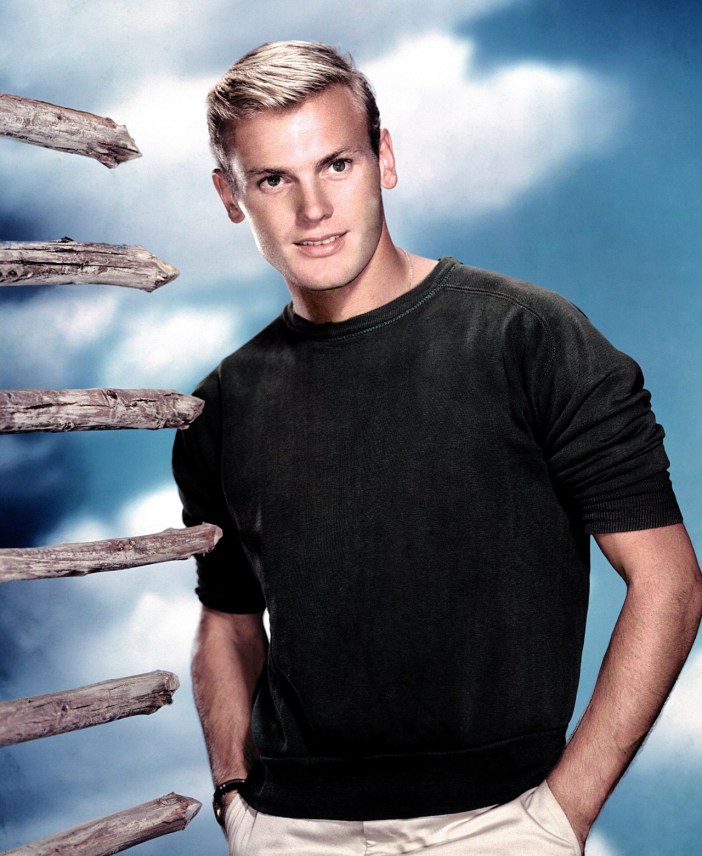
Thursday night Paul stayed at the office late working on a grant that was due yesterday, so I was at home with Scooter and at loose ends. I wasn’t able to get much writing done that day–one of those days–and as I sat in my easy chair with my journal and a cat asleep in my lap, I decided to watch the documentary Tab Hunter Confidential on Prime. In all honesty, I don’t think I’ve ever seen a Tab Hunter film (other than Polyester and Lust in the Dust), but I knew he’d been around since the 1950’s. I knew he was a teen idol/heart throb. I also knew he’d been involved with Tony Perkins, and that he’d come out in a memoir also titled Tab Hunter Confidential. As the documentary started, I realized with a start, I’ve met Tab Hunter–several times, in fact and so as the documentary played I kept thinking, wow, I’m one or two degrees of separation from everyone in this, including everyone he co-starred with.

And, I knew how handsome he was because I’d met him in person.

I was completely blown away by how beautiful he was when  he was young.

I mean, wow.

m3 Tab Hunter 3 11 18

I mean, don’t get me wrong–he’s still an incredibly handsome man, which should have given me some idea of just how breathtakingly beautiful he was when he was young.

It’s also very weird to be watching a documentary and realize, oh, yeah, I’ve met Tab Hunter a couple of times.

My life is so weird.

It’s an interesting documentary, about being a closeted star in the Hollywood system and having the studio “fixers” cleaning up messes and keeping you out of the papers and so forth. There’s a terrific gay noir novel just waiting to be written about 1950’s gay Hollywood, and I am almost there coming up with the story in my mind.

I already have the two books I am writing though, and once they are finished, I know what the next two are going to be…so Hollywood gay noir will have to be after that, I guess.

I have to work today; I am doing testing all day at Gay Pride, but have Monday off. So, I am going to hopefully finish reading the Roth today between clients, and maybe, maybe, finally get to start reading Alex Segura’s Blackout.

And now, back to the spice mines.


Papa Don’t Preach

So, for Pride Month, on Facebook I am posting a queer book every day that impacted me in some way; whether it’s personally or professionally or both. It’s actually been kind of fun tracking down book covers on the Internet, remembering these books and how I felt when I read them. My teen years were sort of a barren desert; the 1970’s in rural areas wasn’t exactly where the we’re here, we’re queer, get used to it chants were ringing across the prairies.

And, as always, I found solace and comfort and joy in books.

As I write the afterword to the short story collection, I find myself reflecting more and more on my life and my past; how things have changed for society in so many ways over the many decades, how far we have come and how far we have yet to go. The afterword hasn’t quite gelled in my mind yet; there are so many thoughts to process and put together and work out; I’ve already tried to get started on it several times, but I am going to knock it out this weekend.

I’m also going to finish reading that damned Roth novel if it kills me.

I want to get some work on the manuscripts done this weekend as well; and maybe even a short story or two. I feel so crazy talking about yet another mental breakthrough I’ve had about short stories. For some reason I’ve always thought they needed to be written about and set in the present; why, I don’t know. I realized with “Never Kiss a Stranger” one night this would work so much better if it was set in the 1990’s and BOOM.

Why can’t it be set in the 1990’s?

And there it was. I started revising the story so it’s set in 1994 and it flowed and worked and made more sense; and I realized how silly I had been. I really am stubbornly focused sometimes, and then when I realize how silly and stubborn about something I am being, I feel so freed and relieved once I get past it. No, no, this is how I have to do this. Um, no, you don’t have to do anything this way. This was, you know, the primary problem with the WIP. I’d become so adamant that it had to play out the way I originally envisioned it, and then tried to force the story to fit the structure I envisioned…well, that’s why I never could figure out how to end it. And then I realized that I’d pretty much tagged every single cliche in the manuscript, the beginning as I’d seen it wasn’t the beginning and actually was yet another horrible cliche, and thought, hey, why don’t you start the story HERE and see how that goes? 

And there it was.

So simply, really. And I am never sure if it’s laziness (ugh, I’ve already written an entire draft and that’s a lot of work) or stubbornness (the way I originally envisioned the story is the only way it can possibly be written) or something else…but it’s a lesson I never seem to learn, even after all these years of writing and editing and rewriting and revising and so forth. I never seem to learn the trick to step outside of myself and the story and looking at it in a different way. Is it any wonder that writing makes me crazy?

Sigh.

And now back to the spice mines.

IMG_4110

Some Like It Hot

Our weather forecast for today is grim; thunderstorms and downpours and flash flooding. Happy Saturday! Right now, even at this early hour, it’s already grim and gray outside; yesterday my sinuses were bothering me–another sign, not only of impending heavy weather but that I’m getting old because I am predicting the weather with my body–and I was incredibly tired when I got home. I repaired to my easy chair and read some more of Bryan Camp’s The City of Lost Fortunes (it’s wonderful, preorder it now), and then watched the first episode of two Netflix series, the Lost in Space reboot and Troy: The Fall of a City. I enjoyed both–although of course with Troy, I know how it ends–and there was a moment when Helen was telling Paris the myth of Actaeon and mentioned the goddess Diana and I was all “wrong! Helen would have called her Artemis!” which then sent me into another spiral because Wonder Woman is also from Greek mythology yet her name is Diana…and did the Greeks have the name Diana, or was it Roman? Yeesh, my mind.

It’s getting darker and the wind is picking up.

The plan for today is to do some writing, do some cleaning, and finish reading Bryan’s book. I also need to catch up on Riverdale and Krypton. Heavy sigh. I am really happy with some of the work I’ve been doing this week, and need to stay focused. I want to get “Don’t Look Down” finished, and I need to write an introduction to the short story collection, and there’s another story that needs to be done, and I still haven’t work on that revision based on editorial notes on another story. As you can see, it never ends for one Gregalicious. But as I said, I’m enjoying the work–which I couldn’t say last year–and that’s always a plus. I think the direction in which I am taking the Scotty novel in Chapter Eleven is quite fun and different; whether I am right in that assumption or whether it’s more a symptom of my creative ADHD, I suppose we’ll see once we have the first draft completed. But I have to have a completed first draft in order to see, don’t I?

Heavy heaving sigh.

Anyway I’ve got two more stories read for The Short Story Project. First up is “Office at Night” by Warren Moore,  from Lawrence Block’s anthology In Sunlight and In Shadow:

Margaret heard the train rumble by as Walter looked at the papers on the desk. The cord on the window shade swung, whether from the trains’s vibrations or from the breeze through the window, she didn’t know. She couldn’t feel either, nor did she feel the blue dress–her favorite–clinging to her curves. All she saw was Walter, and all he saw were the files in the pool of light from the desk lamp.

She had put the papers in the file cabinet and rested her arm atop the folders for seemed like–could have been–a lifetime ago. The phrase brought a slight smile to Margaret’s face. Any time could be a lifetime, depending on how long you lived. And she had thought from time to time that she and Walter might have had a lifetime together. Before she had died.

I really enjoyed this story; which is about lost opportunities and melancholy. Margaret was a large woman while alive; tall and big boned, tauntingly called Large Marge by the cruel children in the small town where she grew up. This made her withdrawn and shy. As soon as she was able she moved to New York, moved into a rooming house, and got a job, slowly starting to build a life for herself and leave “Large Marge” behind. Then she accidentally is killed–not in a crime or anything, just an accident–and her ghost visits the office where she worked, and loved her boss–but that past history made her unable to speak up, unable to say anything, unable to make a try for happiness. Like I said, it’s more about that sense of sadness and melancholy than a story with beginning, middle and end; but it’s incredibly well written and that melancholy…wow.

The next story was “Still Life 1931” by Kris Nelscott, also in Lawrence Block’s  In Sunlight and in Shadow.

She first noticed outside Memphis: they didn’t ride segregated in the box cars. At the time, she was standing outside yet abotehr closed bank. The line of aggrieved customers wrapped around the block–men in their dusty pants, stained workshirts, caps on their heads; women wearing low heels, day dresses, and battered hats.

Lurleen looked just different enough to attract attention. Her green cloche hat was a bit too new, her coat a little too heavy. Her shoes were scuffed like everyone else’s. but hers were scuffed from too much travel, not age and wear.

This story is absolutely amazing, and one of the most powerful in this collection, which is saying a lot. Set in the early 1930’s, Nelscott captures the era perfectly; the failing banks and the desperation of people losing their savings; the racial issues in the deep South; and Lurleen’s own sense of who she is, of right and wrong. When the story opens, Lurleen, recently widowed, is taking the train to small towns and cities all over the South, closing bank accounts she’d opened years earlier and withdrawing all the cash. The story opens with her in line at one bank where a run has happened; the bank has closed “temporarily”, but the sign on the door doesn’t indicate any time when the bank might reopen. As the story progress, we learn that Lurleen, before her marriage, worked for the NAACP, going around the South and interviewing witnesses and survivors, documenting lynchings and racial violence in the South. The story is powerful; Lurleen is well developed, and I was sorry when the story ended because I wanted to know more about Lurleen and the work she had done, the work she was going to begin doing again. According to the author bio, Nelscott is planning to write more about Lurleen, which is kind of exciting; I certainly hope she does.

And now back to the spice mines.

IMG_4188

Obsession

I’ve slept well this entire weekend, which is mostly unusual, but lovely. I generally don’t sleep well during conference/festival weekends; and yet here I am. I’ll be walking down to the Quarter later for my genre panel at Saints and Sinners; then watching some other panels before the closing. It’s always so lovely listening to smart people talk. Yesterday’s highlights, for me, were the Baby Boomer Lesbians panel with Judith Katz, Jewelle Gomez, and Elana Dykewomon; listening to the wisdom of our lesbian elders is absolutely wonderful. This was followed by a great panel on LGBTQ rights, the movement for equality and where we currently stand; it was invigorating, and reminded me that we, as writers, whether we want to or not, do have responsibilities to our community and society. We as queer writers have a particular responsibility; we tend to forget that everything we write, by virtue of who we are as a marginalized people the mainstream tends to try to make invisible, is ultimately political.

I also read from “Quiet Desperation” yesterday; merely a fragment, no more than a few minutes, but the audience reacted perfectly to it, which pleases me to no end. I am very pleased with this story, and can’t wait to make everyone fully aware of it as soon as the revised file is available.

I’m starting to feel excited about writing again; looking forward to the challenges of finishing novels, writing short stories, doing edits, getting shit done, you know? It’s lovely; I can’t tell you how much better I feel and how incredibly awesome this year has been so far already. Self-care is optimal, and I need to remember that; I also need to remember that when it becomes a slog…that talking to other writers about writing is always the tonic that works. Probably in the future I should look into writing events and schedule attendance at one every quarter, so I get my reinvigoration on a regular basis.

All right, I am going to get some things done around here before it’s time to head down to the Quarter.

IMG_4096

Suddenly

Yesterday I finished revisions on four stories, took a deep breath, and submitted them. Now, we wait. I’m not entirely certain the stories were right for the markets I sent them to, but you know what? Letting them just sit in my computer wasn’t getting them out there. Better to try and fail than not to ever try at all.

As I said yesterday, my confidence in my writing, which, despite all appearances to the contrary has never been strong, was dramatically shaken in the last year; I am only now starting to come out of it, and I am coming back out of it by working. I’ve written well over a hundred thousand words thus far in 2018; most of it short stories, some of it work on a new Scotty novel, still other the manuscript I intend to try to lure the ever elusive agent into my web with; and since sitting down and actually taking stock, I am realizing what I’ve accomplished, and am very proud of myself. The stories I worked on again this week, revising and editing and reading aloud, were quite strong; the two I am struggling with perhaps not as strong–although I do like their titles. Forcing myself to continue working on them is futile at this moment; much as I am loath to put them to the side, I am going to; there is nothing more self-defeating and depressing than trying to force yourself to write something that just isn’t coming. The stories are there, of course; I just haven’t yet worked out how to get them down onto paper yet. I think very often we, as writers, get so bogged down in our stubborn determination to finish something we are working on that we just keep fighting, pounding our head determinedly against an immovable wall–when the smart thing is to take a break from it and work on something else; then come back to the wall with fresh eyes and a rested forehead.

A vanity project that I have always had in the back of my mind was to put together a short story collection of my crime stories. I first had the idea several years ago, but didn’t have enough stories and was going to combine my horror and crime together: the folder and table of contents I created at the time was for Annunciation Shotgun and Other Stories. I’ve never forgotten this vanity project; and even now, when I should be preparing the manuscripts of Bourbon Street Blues and Jackson Square Jazz for their long overdue ebook editions, I go back to the vanity project again and again: well, I’ve published THESE stories since then, maybe I can just go ahead and remove these others that don’t fit as well–take these horror stories out, since my horror is clearly not as strong as my crime fiction. I made another table of contents, just the other day; only now I am calling it Survivor’s Guilt and Other Stories. Whenever I’ve been stuck this past week or so, for want of anything else to do, I’ve started pulling the stories together into a single document to get a word count. The realization the other day of how many stories I’ve done so far this year already, and adding them casually to the table of contents–today it hit me: the manuscript is already publishable length, is over eighty thousand words, without an introduction  and without all of the stories I’ve done so far. I removed all the horror–goodbye, “Crazy in the Night” and “Rougarou” and “The Snow Queen” and “The Troll in the Basement”–and added some more of the newer material. It was astonishing to realize how much there actually was; that I cannot add much more because there simply isn’t room, and that I might have enough for a second volume in a couple of years.

Mind-blowing, really.

Short story collections don’t sell as well as novels, of course; short stories are the bastard stepchildren of publishing, and crime stories even more shunned at the family holiday dinner table. I don’t know if my publisher will want this collection, and I may end up having to self-publish it. Whereas I would have shrank in horror from that possibility a few years ago, it doesn’t matter as much to me now as it did then to have a traditional publisher pull the book together; although I would like another pair of eyes on it, some copy editing, a cover design and packaging done for me. But I am very proud of all of these stories; each one of them means something to me in some way. And if my fears about crime stories with gay characters in them not being acceptable to mainstream short story publications, well, I can always get them seen this way. And I am proud of the new crime stories I’ve written with gay characters in them.

I didn’t write crime stories for the longest time because of that fear; the fear that no matter how high the quality of the story, gay characters would make them unpublishable. The two stories I published in Ellery Queen’s Mystery Magazine, “Acts of Contrition” and “The Email Always Pings Twice,” were mainstream–not a gay character in either story. I did publish two stories in Novelists Inc. anthologies with gay characters, “A Streetcar Named Death” and “An Arrow for Sebastian.” My stories in New Orleans Noir and Sunshine Noir (“Annunciation Shotgun” and “Housecleaning”, respectively) were about gay characters. My story in Blood on the Bayou, nominated for the Macavity Award last year, “Survivor’s Guilt,” wasn’t gay in any way, nor was my story “Keeper of the Flame,” published in Mystery Week. Some of the new stories are gay, some are not. Two that went out today were about gay characters, two of them were not. I was originally not intending to write any crime stories with gay characters this year; it just sort of happened. I think the Chanse story I’ve written–which needs a new title–is pretty decent; but am I limiting my chances of getting the stories into print by writing about gay characters? It’s already a difficult haul finding markets that still take short stories, and the competition is obviously fierce.

And again, as I said yesterday, you never can be certain your story was rejected because you wrote honestly about gay characters. It’s all part and parcel of the insanity of being a gay writer, or a writer who is gay, or whatever the hell label fits on my sash as I walk across the stage at the beauty pageant of publishing.

But I’ve got more than enough stories for a collection now, and I am going to keep playing with the manuscript; what is the proper mix of previously published stories versus new material? Should it all be new material, or should it all be previously published material?

Decisions, decisions.

Therein, indeed, lies the path to madness.

I also read some short stories. First was “Still Life with Teapots and Students”, by Shirley Jackson, from the  Let Me Tell You collection.

Come off it, kids, come off it, Louise Harlowe told herself just under her breath. SHe smiled graciously at her husband, Lionel’s, two best students, noticing with an edge of viciousness that they both held their teacups exactly right, and said lightly, “You’re going to have a pleasant summer, then?”

Joan shrugged perfectly, and Debbi smiled back, as graciously as Louise had smiled, but with more conviction. “It will be about the same as the others, I guess, ” Debbi said. “Sort of dull.”

They’re both too well bred to tell me what they’ll be doing, Louise thought, and asked deliberately, “You’ll be together, of course?”

Jackson is one of my favorites, and while she is mostly known for “The Lottery” and The Haunting of Hill House and macabre, Gothic work, she wrote a lot more than people think and not everything she wrote was macabre. This nasty little tale, in which a professor’s wife has two of his students over for tea–during the course of which she lets the rich little bitches she knows about their affair with her husband, and what’s more, doesn’t care because they are nothing more than something of the moment, is quite rich and layered and textured. From a modern day perspective the wonder is why she doesn’t leave him, as it becomes clear this happens regularly; they politely discuss another faculty wife who wasn’t quite as calm in confronting the student her husband was messing around with, and it’s all very polite and reserved…yet, in this modern era of #metoo and power differentials, the agency both Jackson and the wife in the story give the students–and the contempt and hatred for them the wife feels, but never reveals–makes me wonder. I’m still unpacking this story, several days after reading it; which is how amazing it–and Jackson–are.

And then it was time for “The Doll” by Daphne du Maurier, The Doll: The Lost Short Stories.

I want to know if men realize when they are insane. Sometimes I think my brain cannot hold together, it is filled with too much horror–too great a despair. And there is no one; I  have never been so unutterably alone. Why should it help me to write this?…Vomit forth the poison in my brain.

For I am poisoned, I cannot sleep, I cannot close my eyes without seeing his damned face..

If only it had been a dream, something to laugh over, a festered imagination

It’s easy enough to laugh, who wouldn’t crack their sides and split their tongues with laughing. Let’s laugh till the blood runs from our eyes–there’s fun, if you like. No, it’s the emptiness that hurts, the breaking up of everything inside me.

DuMaurier’s story often have a polite, observational distance and formality to them; much like her novels, even in the first person. This story, of obsession and lust and desire, all of which are thwarted, is not only reminiscent of My Cousin Rachel, but also, as I was reading, made me wonder. We never learn the name of the first person narrator, but the object of his obsession is a woman named Rebecca–you see where my mind was going with that, don’t you? And in some ways, it works as an almost prequel for the novel; the deep obsession and need; the mysterious woman who plays out her cards slowly. What of course doesn’t fit is the doll itself; the woman owns a male doll she has a strange attachment to, a doll our narrator despises, hates, is jealous of; it’s a terrific story of darkness and deep passion and obsession and perhaps, madness….a great example of why I love du Maurier so much.

And now, back to the spice mines.

IMG_2256


Out of Touch

As a general rule, my blog is something that I simply sit down and write while I drink my morning coffee and wake up in the morning. It’s part of my waking up process, so not only is it unfiltered, it’s unedited; I rarely go back and reread it with an eye towards fixing mistakes, sentences where I’ve left out a word, spelling mistakes that spell check  didn’t catch as I write, etc.

But every once in a  great while, I’ll start writing a blog post and am not entirely comfortable with discussing the subject matter publicly. I’ve said things before publicly that later were removed from their proper context and thus twisted by someone with an agenda determined to make me look bad; so when I am talking about a sensitive topic, I tend to either shelve the blog post entirely, or put it aside to read over again at a later date, or post it so that only I can see it. I worry about posting things because the last thing I ever want to do is deal with an angry on-line lynch mob, or say something that, taken out of context years later, will be used to bludgeon me; lynch mobs don’t care about either context or nuance, alas, and once the torches are lit and the pitchforks hoisted, no one listens.

This has happened to me more than once, as I said, so I tend to be careful.

So, in some ways I’ve become self-censoring; but this self-censoring has also saved me a lot of stress, aggravation, and worry. I also rarely, if ever, go off on one of what my friend Jeffrey used to call my Julia Sugarbaker rants. This has helped lower my blood pressure, for one thing; I still do it, of course, I just don’t make it public anymore. My opinion on anything and everything isn’t so amazing and profound that I feel it needs to be shared because it will change minds and make the world a better place. Simply because I can speak my mind freely on-line doesn’t mean that I should. I have a right to my opinion, as does everyone, but I also have a right to keep my own counsel and I also don’t have to argue with anyone I disagree with publicly; and the reality is, I am never going to be convinced that I as a gay man am not entitled to equality; that transfolk have no right to human dignity; that women are lesser than men; or that white people by virtue of being white are somehow superior to people who are not. I also will never be convinced that people do not have the right to be seen as individuals, rather than any subgroup they might be put into by other people. There is nothing worse than being judged by preconceptions you have no control over.

As you know, Constant Reader, I’ve been engaged in something I call The Short Story Project since the beginning of the year; in which I am focusing most of my fiction reading on short stories rather than novels. I’ve not read any novels since the first of the year; I am still reading nonfiction. The reasoning behind this was twofold; because I don’t think short stories get nearly enough attention from readers, myself included, and because I have always struggled with writing them; this was, for me, a self-improvement exercise as a writer. It has helped in that regard; I have written more short stories in the first few months of this year than I have in any year since I decided to pursue this.

One of my favorite writers from the past is Ross Macdonald; he’s a favorite, but he isn’t up there with James M. Cain and John D. Macdonald and Daphne du Maurier and Shirley Jackson and Faulkner and some others than I consider not only to be iconic but also consider to be major influences on me and my work; Ross Macdonald is an influence, but not as much as the others I named and some others unnamed as well. But I do love Ross Macdonald (I love his wife Margaret Millar more, but that’s another blog entry, methinks), and several years ago I bought a compendium called The Archer Files, in which Macdonald’s short stories, some of which were unpublished, were pulled together in one volume and the editor did some academic discussion of them.

I am still kind of processing one of his short stories; “Strangers in Town.”  I have to give Macdonald credit for writing a short story in that time period (early 1950s)  with characters who were people of color who also drove the story, but…yeah, the casual racism of the period slapped me in the face. That story today most likely would not be published as written, but it has value historically since it stands as an example of how casual and easy systemic racism was in that period. He used parts of it in the next story in The Archer Files, and it also apparently structurally was important to his novel The Ivory Grin, which I think I’ve read; I miss my old ability to recall plots and characters and details of every book that I’d read. It would be a lot more helpful now than it ever was when I retained the skill, you know? Heavy sigh.

One of the issues of this new century involves separating the art from the artist; in other words, can you enjoy art by someone whom, as a private citizen, is problematic? The best examples of this, to name merely two, are Woody Allen and Roman Polanski. I am not a fan of Allen’s art nor have I ever been; but Roman Polanski? He fled the United States to avoid jail on charges of statutory rape. Yet I love his films Rosemary’s Baby and Chinatown; films I saw and enjoyed before he committed his crime.  Distaste has certainly kept me from seeing anything he has done since. But I still love those two films, and rewatch them on occasion; perhaps someday I will rewatch them to look for problematic tropes to unpack.

Likewise, other works from the American past are rife with tropes of sexism, homophobia and racism; the society and culture were sexist, racist, and homophobic; how can the art from that time not be? Yet but it’s how things were back then seems like a feeble response and defense; but I do think it’s possible to enjoy the art as long as one recognizes the presence of things which would never pass muster in today’s society and culture; there is a wonderful essay/book to be done about homophobia in crime fiction of the past, and how gay characters were seen/depicted/represented. I used to want to write that book, but I will undoubtedly never have the freedom and luxury of time to do the necessary research and writing of a book that would prove, ultimately, to have an exceptionally limited audience.

You can’t truly equate racism with homophobia; while there are similarities in oppression and bigotry, both systemic and personal, faced by the two communities, they aren’t the same thing; the differences can be, and are, as significant as the similarities. As a white gay man, I have systemic privilege of skin; unless my car has bumper stickers denoting it as belonging to a gay man I can feel relatively safe in my car from ‘driving while gay’; and while there are certainly levels of homophobia within law enforcement, just walking down the street I don’t need to be worried about being either harassed by law enforcement or profiled. Reading works, or seeing films, that are blatantly homophobic or have stereotypical queer characters who are there to be laughed at, mocked, or held in contempt, while somewhat jarring doesn’t feel the same to me as reading or seeing something current with those same metrics. I am not willing to judge a writer from the pre-Stonewall culture as harshly as I am someone from the present day; it is how things were. You cannot write a realistic novel or short story today about queer characters in the 1950’s, for example, without including homophobic characters and a certain degree of self-loathing in the queer characters themselves: they were outlaws, held in contempt by the society as a whole.

Yet Macdonald’s story bothered me; despite being written in a time when he was undoubtedly considered brave for writing characters of color who weren’t criminals or the kind of “Stepin’ Fetchit” stereotypes so prevalent in films of the time. And yet…and yet…

“Strangers in Town,” by Ross Macdonald, The Archer Files

“My son is in grave trouble,” the woman said.

I asked her to sit down, and after a moment’s hesitation she lowered her weight into the chair I placed for her. She was a large Negro woman, clothed rather tightly in a blue linen dress she had begun to outgrow. Her bosom was rising and falling with excitement, or from the effort of climbing the flight of stairs to my office. She looked no older than forty, but the hair that showed under her blue straw hat was the color of steel wool. Perspiration furred her upper lip.

“About your son?” I sat down behind my desk, the possible kinds of trouble that a Negro boy could get into in Los Angeles running like a newsreel through my head.

That last sentence! Referring to an adult young man of color as a “Negro boy”! And the story goes on with this sentence: She leaned towards me with the diffident and confiding charm of her race.

Yikes. Yup, no stereotyping going on there.

The murder victim was a “light-skinned brown woman.” Another “had straight black hair, trimmed short, and black-rimmed harlequin spectacles that gave her face an Asiatic cast.” Throughout the story, the word “Negro” is used; this is also jarring, because with all due respect, it’s the word that was used politely, rather than the other “n” word. But…no one said “African-American” back then…the police are also willing to view the murder of the light-skinned woman as a possible suicide–which would mean she’d slit her own throat; I can’t imagine anyone ever committing suicide that way–but the white cops’ willingness to believe that a woman of color could or would is also telling.

Other than these issues, it’s a good story; the way it twists and turns and moves away from the original crime and suspects makes for a great detective yarn; the cops never would have solved this, and the son of the woman who hired Archer most likely would have taken the fall for the crime. So, there’s that.

But the next story in The Archer Files, “Gone Girl”,  a different version of the same story, without the people of color, is also a much stronger story.

It was a Friday night. I was tooling home from the Mexican border in a light blue convertible and a dark blue mood. I had followed a man from Fresno to San Diego and lost him in the maze of streets in Old Town. When I picked up his trail again, it was cold. He had crossed the border, and my instructions were to go no further than the United States.

Halfway home, just above Emerald Bay, I overtook the worst driver in the world. He was driving a black fishtail Cadillac as if he were tacking a sailboat. The heavy car wove back and forth across the freeway, using two of its four lanes, and sometimes three. It was late, and I was in a hurry to get some sleep. I started to pass it on the right at a time when it was riding the double line. The Cadillac drifted towards me like an unguided missile, and forced me off the road in a screeching skid.

Rather than being hired by a mother whose son is being accused of murder, Archer now happens onto a strange situation while driving home from a case. He decides to stop for the night at a hotel, and becomes involved in another murder investigation. The basic story after this is the same, both structurally and thematically, but the casual racism is gone and it’s now about white people, and interestingly enough, not nearly so problematic as “Strangers in Town.” The second story works better as well; I’m not sure why that is; did it work better because he didn’t use the people of color, and thus without the stereotyping it worked better?

I am still processing this. As I said, I love Ross Macdonald, and his writing is extraordinary. He’s one of the greats. But what, and where, is that line?

I don’t know the answers; I don’t think anyone does, nor do I think there even is one answer. I don’t recall ever getting any racist vibe from Macdonald’s work before, but on the other hand, I may not have been looking for it, either; the subtleties of systemic prejudices aren’t always apparent at first glance, or even second. Sometimes it takes someone else to point them out.

While I can’t speak to whether racism in American art from the past should not be seen, viewed or read, I can speak, for myself, about art from our homophobic past (while recognizing they are not the same things). Seeing casual homophobia in American art from the past, while jarring, doesn’t bother me as much because that’s the way things were. I don’t think it should be glossed over, or censored out of existence; if we forget the past and how things were, we can’t make things better for the future nor can we understand not only how far we’ve come but how far we have to go; we cannot truly understand the present without understanding our past–and, for want of a better term, in stark black-and-white; we have to understand and appreciate the shades of gray.

And on THAT note, it’s back to the spice mines with me.

Here’s your Monday hunk.

IMG_2015

Things Can Only Get Better

It’s Friday, and I have the morning off in order to once again have an eye appointment. Here’s hoping nothing goes wrong with that one, right? Oy. But…it’s also Friday. Hooray!

I managed to finish the first draft of my story “The Carriage House,” clocking in another 2500 words or so; the story in first draft now sits at about 5350 words, most of them written over the last two days. I had hoped to finish my Italy story yesterday as well, and get started on another Scotty chapter, but alas, that was not to be. It also occurred to me last night that I’ve written a lot of short stories so far this year; certainly more this year than I have in any previous year, and it’s early March only. Three were written to submit to anthologies, and the others were simply written because I wanted, felt the need, to write them. I’ve written a Chanse short story, which is also a first; and that’s kind of cool. I know how to fix it; I actually know how to fix all of the stories that now sit in a first draft form, which is also a first. Usually I have nary a clue on what to do with these stories once the draft is written. I also know how to fix another story that’s just been sitting in my files for years; mayhap I shall work on fixing it this weekend, who knows? I also can’t help but think that all these short stories are happening now because of the Short Story Project.

So, today it’s off to Metairie for the eye doctor, then it’s to the office for testing, and then it’s time to come home (it’s my short day) and hopefully to the gym for a workout. I’d like to spend the evening cleaning the Lost Apartment as well, so I can spend the weekend writing (other than the errands that must be run tomorrow).

Well, I never finished that, did I? Nope; my bad. Before I finished it was time to go, and off I went. I am now home, it’s later on in the day, and I’m a bit tired.

I’ll finish in the morning; sorry, Constant Reader!

I didn’t want to get up this Saturday morning, but I did–I have things to do today, errands and such, and must go to the gym–so I’ll sleep in tomorrow, which is when we lose an hour of sleep anyway. It’s not light out; it’s cloudy. I am not sure if that means it’s going to rain or something, but whatever it means…I’ll be out there dealing with it soon enough.

I also have some chores around here that I have to complete before heading out to face the day.

I am going to take today off from writing, despite being behind. I am very pleased with “The Carriage House,” as I said earlier in this missive, and I am relatively pleased with the Chanse story. It needs some more work, of course–there’s at least one scene missing that I need to put into it, as well as some more layers–but overall, I am quite well pleased with it, as well. I am more pleased, I think, that I’ve written a private eye story; I may write more now that I know I can actually do it. I doubt if I’ll do Scotty stories–there’s just way too much backstory necessary–but I have an idea for another Chanse story, this time set on the LSU campus in Baton Rouge. Oh! The title just came to me! “Once a Tiger.” I kind of like that. (The Chanse story needs not only revision but a new title; “Glory Days” doesn’t work with the story as it wound up. I originally set it at a reunion of sorts, but wrote that out of the story.) I do want to finish my Italy story, and perhaps work on a revision of either “The Weight of a Feather” or “The Problem with Autofill.” I also would like to get another Scotty chapter finished. We’ll see.

I’ve done quite a few short stories this year, as I mentioned earlier; even more than I originally thought I had done. I am thinking more about placement for said stories; I worry that some of the better paying markets–there aren’t many of those any more–won’t want a story with a gay male lead, even if the story itself isn’t particularly gay; “The Carriage House,” while not having anything particularly gay about it’s story line, also has gay character and involved murders of gay men. And you know, that’s really the thing about writing gay stories and novels; when you get rejected, when you don’t get reviewed or recognized–you always wonder. Was it really not good enough to get published/reviewed/recognized, and was it because of the gay factor? If I assume it’s the gay thing, am I not being honest with myself as a writer and rather than accepting that it needed more work or wasn’t good enough, am I using that as a crutch/excuse?

Heavy sigh.

All right, back to my chores. Here’s a Saturday hunk for you.

pec9-335x600