Sunday morning and I slept really well again. I woke up, as always, at just before seven, but stayed in bed lazily until nearly eight–when nature’s call became too much to be ignored for longer. But I have a nice fresh hot cup of coffee, a long Sunday with a lot to do and/or get done today (I also need to run to the grocery store this morning, which is always so exhausting) but I suspect that i can get everything I need to get done, done. Yesterday morning I spent some time with the Carol Goodman novel (which is really and truly spectacularly well done), went to do my self-care (which was lovely) and then picked up the mail and headed home to spend some time doing things. I did the bed linens, emptied the dishwasher and did another load (that needs to be emptied this morning) and also got some things organized for my next writing project. I did the Spirit of Ink interview at 2, as scheduled, and then when I was finished with that I was drained, as I knew I would be, so I did some more file organizing before retiring to my easy chair with my journal to make notes for Mississippi River Mischief, which I am also starting to get excited about writing (which is a lovely change from the usual, where I dread writing any and every thing).
So, overall, I was quite pleased with my Friday. Since we’d finished or gotten caught up on everything else we had started watching, we decided to binge through season two of The Hardy Boys on Hulu, which I am enjoying. Is it the Hardy Boys of my childhood? No, but neither was the 1970’s show with Parker Stevenson and Shaun Cassidy. I belong to several kids’ series groups on Facebook (they are very interesting people; I’ve always wanted to write a book about kids’ series fandom) and they were, of course, quite unhappy with this adaptation (but not NEARLY as up-in-arms as they were about the Nancy Drew television series, in which Nancy actually has sex with Ned–who’s Black in the show–in the very first episode). Maybe it’s because I’m a writer, but I don’t expect adaptations to match us precisely to the source material, and whether people in their fifties and sixties want to admit to it or not, both series in their original forms are horribly dated today. I did enjoy the show’s nods to the canon series throughout–one of the villains was named McFarlane (Leslie McFarlane ghost-wrote many of the original books) and the bad company is Stratemeyer Global (the Stratemeyer Syndicate created and owned both series, among many others), and there was also a single throwaway line at one point about “what happened at midnight” (which is one of the titles of the original canonical series); so that was all a bit fun for me. Even as I watched, I kept remembering all the dog-whistles of the fan group–disguised as “dedication to the original canon” of course–but when you use words like woke and so forth, your bigotry and personal biases are kind of put right out there on display.
And I can only imagine how upset they are that Aunt Gertrude (Trudy on the show) is a lesbian…which actually makes canonical sense, to be honest.
But it was a very pleasant way to waste the rest of the day, frankly, and I felt pretty marvelous when I went to bed last evening. I am really enjoying my sleep lately, which is marvelous, and lately I am feeling very–I don’t know, optimistic?–about my career and my future as a writer, which is always a plus. I am still waiting for my edits on A Streetcar Named Murder, and to hear back about my short story, but I am feeling pretty good about myself this morning (let’s see how long that lasts, shall we?) and tomorrow evening i am going to make a semi-triumphant return to the gym. This morning I am going to spend some time with The Lake of Dead Languages, and then I am going to head out to the grocery store, probably around elevenish, so I can come home and do some more writing and organizing and so forth. I am going to try to bang out a draft of a new manuscript by mid-June, and then I want to spend until August 1 finishing a first draft of Chlorine, at which point I will most likely have to start really working on Mississippi River Mischief. That’s a pretty good schedule, if I can stick to it–and then of course there are any number of short stories I want to get written in the meantime. There are two submission calls I saw recently (with very tight deadlines) I’d like to get something submitted to–but then it always comes down to time and motivation–both of which I am good at failing at–so it’s all going to depend, I suppose. But I am going to get organized here in my office space before retiring to read for the rest of the morning, which hopefully will mean productivity. We also need something new to watch, since we’ve binged our way through everything already–but there are any number of shows that dropped since the beginning of the year that we’d like to see that we never got around to, and more are coming out all the time.
I also want to rewatch Heartstopper at some point, so I can finish my post about it at some point. I really need to get those old unfinished posts finished and posted at some point, don’t I? I also have a bad review of Hemingway’s To Have and Have Not to finish as well as a review of Marco Carocari’s marvelous Blackout, as well as some ruminations about the resurgence of anti-queer political homophobia which hs reared its ugly head again.
And on that note, I am heading back into the spice mines. Have a lovely Sunday, Constant Reader!
Thursday morning at last, and the last day of the week in the office for Gregalicious. I didn’t have the greatest sleep last night–I seemed to wake up or be half-asleep a lot–but I don’t feel tired or sleepy this morning. I’m quite delighted by this, but we’ll see how I feel later this afternoon during that “day coming to an end” stretch. I also seem to have injured my foot yesterday. I don’t know how, and it doesn’t make any sense. Best I can figure I had my shoe insert not properly placed and walked on it till the heel bruised slightly, so I started limping yesterday afternoon. I reset the insert–I don’t understand how I didn’t notice that my heel was getting bruised until it was, it seems insane to me this morning–and that made it easier, but this morning it still hurts. Stupid, stupid, stupid. Now I have to stay off it as much as possible until it gets better, which means no walking to the gym in the meantime. Sure I could drive, but that just seems kind of silly, since the gym is actually so close: yes, my gym is about a ten minute walk from my house but I drive to work out instead.
Yeah, not a lot of sense there.
The editing continues to go rather smoothly and am still making progress. I hope to have the whole thing re-edited by Saturday at the latest, and it’s a much stronger book now I think than when I turned it in. I also managed to get a lot of other work done yesterday–this has been actually a very good week for productivity–and I think I am close to being back on track and back to my old self (which always seems to jinx it, doesn’t it?). Yesterday I came dangerously close to zero email in my inbox; I am hoping to make that a definite reality come this weekend.
I got a copy of Cain by Roy Hoopes, the definitive biography of James M. Cain (one of my writing idols) for a project I had in mind–with books being banned and laws being passed to get books removed from libraries or access from those under eighteen, I thought it might be a good time to do a little research into the obscenity trial (attempted banning) of Cain’s The Postman Always Rings Twice, which is not only a great (if incredibly short) book, but incredibly influential for many modern day crime writers. Cain is one of my favorite writers, even if I don’t talk about him much, but I do; I love his work. Imagine my surprise to not be able to find out much information on the Internet about this banning; I believed it was “banned in Boston” (does anyone else remember that phrase? Just me? okay then). I found ONE link to a website discussing it, so naturally I reached out to my friends who are either aficionados or steeped in the history of our genre. The book arrived yesterday, and so I started looking through the index. Nothing. But there was a chapter about two court cases involving Cain that happened around the same time: an accusation of plagiarism from a woman who claimed he stole Mildred Pierce from her, and an obscenity trial for Serenade. And this morning I was able to find some things on line about the trial for Serenade…which also reminded me that I couldn’t believe Serenade hadn’t been controversial at the time it was published; I remember even thinking how did Postman get banned but this one didn’t? I just figured the failed attempt to ban the one resulted in the other getting a pass.
But I also have to say I am a lot more interested in researching the banning of Serenade than I ever was about the banning of Postman. Stay tuned!
So, today I get to come straight home from work (yay!) and I can do some chores around the house so I don’t to have to worry about that this weekend. The Lost Apartment is starting to look better–still messy and there’s still a lot of touching up to do–but if the more overall macro stuff gets done on the weekdays, on the weekends I can do the touching up. I really need to do the shutter doors to the laundry room and the ceiling fans (I hate to do this because I hate ladders and the fans hang so far down from the ceiling you can’t really use one of those long-reach blade cleaners because it inevitably makes them swing and I am afraid one of these days I will put the whole fucking thing down), and of course the windows around my desk need to be done again.
Heavy heaving sigh.
But on that note, I am heading into the spice mines. Have a lovely Thursday, Constant Reader! And I wil check in with you again tomorrow morning on my work-at-home Friday!
I got up again before seven this morning–despite staying up an hour or so later last night than I usually do; I was waiting, hoping Paul would be coming home, but he didn’t get home again until after I went to bed. I didn’t get nearly as much done yesterday as I would have liked because I got distracted by reading Kellye Garrett’s marvelous Like a Sister, and by the time I finished the book it was late afternoon and the tiredness I was feeling yesterday morning–I mentioned it, remember? I wasn’t as awake and alert as I had been the day before–I decided to just kick back and relax for the rest of the day. I watched a lot of history documentaries on Youtube; watched a lot of news worried about Ukraine; and then last night I decided to watch The Drowning Pool, a 1970’s film version of Ross Macdonald’s book–with significant changes made to the book–moving it to Louisiana for one (more on this later). When the movie was finished I went to bed, and woke up early again this morning (body clock has reset, for good or ill). I have to make groceries this morning, as well as gas up the car (can’t wait to see how much gas costs today; but I am more than willing to pay more to save Ukrainian lives, frankly) and head home for some more editing work. I am going to work on my manuscript today; and I have a manuscript from Bold Strokes I need to get edited this week as well. Lots of heavy lifting to get done this week, but I think I can manage.
I also need to select my next book to read. I’ve narrowed it down some; the leading contenders include Harlem Shuffle by Colson Whitehead, The Twelve Jays of Christmas by Donna Andrews, The Prophets by Robert Jones Jr., and All Her Little Secrets by Wanda M. Morris. A plethora of treasures in my TBR pile, no? There’s also some short story collections and anthologies I want to start working my way through–not to mention a short story I need to write by the end of the month (see why I need lists?)–so I think once I get home from the grocery store I will most likely have to make this week’s to-do list. I also have some emails to write for sending tomorrow. But I don’t feel as paralyzed this morning as I usually am by a daunting pile of work that needs doing. We’ll see how I feel when I get home from the grocery store, though, I suppose. Usually dealing with the groceries wears me out and I am pretty much useless afterwards; I don’t know if that is actual physical or mental exhaustion or laziness settling in. I know that my energy levels have significantly decreased over the past pandemic years, and sometimes I do wonder if it’s maybe Long COVID; exhaustion and loss of energy seems to be one of its leading symptoms, and of course, both tend to trigger depression, which creates a massive downward spiral. But I keep testing negative for it, so what do I know?
So, The Drowning Pool starring Paul Newman as Lew Archer, renamed Lew Harper in the movie, and the location was moved from southern California to Louisiana for some reason. The movie is very cynical, so it definitely fits into my Cynical 70’s Film Festival, but it’s not a very good movie. (I’ve read the book, and while the family structure of the film seemed familiar, there’s a lot of significant diversion from the book.) One of my favorite parts of the movie is one of those things Louisiana/New Orleans people always point out in movies and television shows: the geography makes no sense. Harper is summoned to New Orleans by an old flame, whom he meets in a Royal Street antique shop for some reason. She doesn’t anyone to know she’s hired him, so why would you meet in the Quarter? The airport is in Kenner; why would you make him drive all the way into the heart of the city when you could have simply met him at a lounge or bar out near the airport, where they would be a lot more anonymity? Anyway, the old flame (Joanne Woodward, wasted in a role far beneath her talents) has gotten him a room at a motel in the small town she lives in, and she runs off, promising to be in touch…and here is the weird Louisiana geography part. He leaves the Quarter, takes the causeway across Lake Pontchartrain, eventually crossed the river in Baton Rouge, and then winds up somewhere in swampy Acadiana. That’s all fine…but why would you take the causeway to the north shore to get to Baton Rouge when I-10 heads directly there from New Orleans? He added at least another hour to his trip by crossing the lake. There’s another scene where he’s tracking someone down, following his girlfriend as she gets off the St. Charles streetcar, crosses the street, and enters a home. Harper later refers to the man’s “apartment in the French Quarter”–um, the streetcar doesn’t run through the Quarter, it didn’t in 1975, and it was clearly St. Charles Avenue (there are several more of these, in fact; the bayou area near the town was clearly filmed in the Manchac Swamp). The plot is convoluted and didn’t make a lot of sense–blackmail, Joanne Woodward’s husband is a closet case, someone has stolen an account book from a local oil baron’s company that exposes their pay-offs and bribes and other illegal activities–and Newman, while handsome and charming, doesn’t really put a lot of effort in the role. Your mileage might vary, of course, but I found it to be disappointing. The only thing about the film of note was very young Melanie Griffith playing Woodward’s nymphet teenage daughter…and I kept wondering how old IS she to be so sexualized in a film? But it was also the 1970’s…in catching up on the 1970’s films I’m constantly amazed at how much unnecessary nude scenes for women there are, or gratuitous sex scenes that add nothing to the plots in these films. But I also appreciate the grittier, more realistic if cynical point of view of the films; there’s nothing pretty or noble about humanity in these movies…which also kind of explains how “hopeful” movies like Rocky and Star Wars were so enormously successful during the latter part of the decade.
And on that note, i think I am going to head into the spice mines. Have a lovely Sunday, Constant Reader, and I will check in with you again tomorrow.
The late Joan Didion famously said we tell ourselves stories in order to live. I’ve parsed the statement any number of times–it’s most commonly taken to mean that it’s important we tell stories of the human experience (the good, the bad, the mediocre and all the varieties in between) to better understand ourselves, our society and culture. I had never read Didion myself until several years ago; of course I knew who she was and what she had written–although if asked before reading her work, I would have only been able to name Play It as It Lays, which I still haven’t read. One of my co-workers had a library copy of her Miami in his officer a few years ago, and I idly picked it up when I was in his office. He recommended very strongly that I read Didion, and so it was with Miami I started; the opening line (Havana dreams come to dust in Miami) sold me on the book. I enjoyed it, and went on to read other works of hers: A Book of Common Prayer, Slouching Toward Bethlehem, and After Henry, among others. I loved the way she wrote; that the complexity of her work came from her poetic use of language and words rather than on complicated sentences. It was reading Didion’s essays (and Laura Lippman’s) that made me start thinking about writing essays myself; I started one trying to use a similar style to Didion–which was interesting–but think it’s rather more important to stick to my own voice, for better or for worse; there was only one Didion, and there should only be the one.
As I was being interviewed the other night I was talking about my re-education; about having to unlearn and relearn things from when I was a kid. I’ve been thinking about this a lot lately; part of it was turning sixty this past year, part of it was writing two books back-to-back that are sort of based in my own personal history–so remembering what Alabama and Kansas were like for me meant exploring a lot of my past, reliving and rehashing it with the perspective of time having passed and with a coldly sober, unemotional eye. I remembered, as I was talking about the Lost Cause and other American mythology we are taught as children (Washington and the cherry tree; Honest Abe the rail-splitter; and so many other Americans of the past we have deified) , the Didion quote and found a new meaning in it. When I was a child, I remember that in the South, for some reason, my cousins and their friends and the adults never would refer to someone as a liar; etiquette, perhaps, or politeness being behind this oddity. What they said instead of saying you were lying was “Oh, you’re telling stories.” If someone was a liar, you’d say “he tells stories.”
We tell ourselves stories in order to live.
Given this weird rural Southern thing about “telling stories”, this can be reinterpreted as we tell ourselves lies in order to live–and it all falls into place, because we do tell lies to ourselves in order to live with ourselves, within this culture, within this society. Never has this been more evident than is this strange battle the right has started about Critical Race Theory–which wasn’t being taught in any American public school below the collegiate level. If there’s nothing in American history that we should be ashamed of, why is there so much opposition to the truth? Why are we taught lies in order that we may live?
The war cry of the white Southerners who want to keep their monuments to white supremacy and treason has been “Heritage not hate!” But the heritage is hate, which was the entire point of Bury Me in Shadows. You cannot have it both ways: you cannot celebrate a history of treason against the United States, while claiming to be “more patriotic” that other Americans who do not celebrate the killing of American soldiers (ask Jane Fonda about how posing on an enemy gun goes over). The bare facts of the matter are that some (not all) of the states where it was legal to enslave people were afraid they would lose their right to enslave people, and as such they decided they were better off starting their own country. They wanted a war they couldn’t possibly win, and the fact that it didn’t end quickly has more to do with the incompetence of the Union generals and their political ambitions (there are reasons there are no statues of George McLellan anywhere to be found) than the righteousness of the Confederate cause and the brilliant leadership of Robert E. Lee. They abhor Sherman as a war criminal (“he waged war on civilians!” Um, we also firebombed Dresden during the second world war, and what were Nagasaki and Hiroshima if not the obliteration with atomic weapons of civilian populations? Sherman said “war is hell”–you cannot start a war and then complain about how the other side chooses to fight it.). They claim it had nothing to do with slavery and everything to do with “states’ rights”…when the reality is the only state right they were concerned about was the right to enslave people–they certainly wanted the federal government to enforce the Fugitive Slave Act against the wills of the free states, didn’t they? Their end game in Congress and the courts was to force the federal government to permit enslavement in every state of the union and every territory; this was the crux of the Dred Scott Decision of the Supreme Court, which more than anything else set the stage for the war.
If there’s nothing terrible about the actual history, why so much fear around the truth?
We tell ourselves lies in order to live.
If the truth is too terrible to be faced, then it absolutely needs to be.
There’s nothing quite so romantic as a lost cause, is there? Whether it’s the Jacobites in England with their toasts to “the King across the water”; the emigres from the French Revolution; or the Confederacy, losing sides inevitably always romanticize their defeat and the loss of a better world their victory would have created. An entire industry has developed in this country around the mythology of the Lost Cause; how could it not when one of the most successful American films of all time portrays the Lost Cause so sympathetically? The opening epigram of Gone with the Wind reads “There once was a land of Cavaliers and cotton fields known as the Old South…” And yet the movie depicts an incredibly classist society, predicated on the enslavement of Africans; the entire idea behind the founding of this country was the elimination of class distinctions–the equality of all.
But even Margaret Mitchell, when asked if the Tara in the movie was how she pictured it as she wrote about it, scoffed and said, “Tara was a farm.”
And not everyone in the old South was rich or owned a plantation. Not everyone was an enslaver, and not everyone was on board with the Lost Cause. But we rarely hear about the Southerners who fought on the Union side in the war; we never hear about Southerners who were abolitionists; and we never hear about the atrocities inflicted on those loyalist Southerners by the rebels, either.
And speaking of war crimes, what about Andersonville?
We tell ourselves lies in order to live.
We cannot celebrate our achievements without acknowledging our failures. It is far worse to not learn from a mistake than making the mistake in the first place. It is not unpatriotic to look at our history, culture, and society critically, to examine and evaluate how we are failing to live up to the ideals upon which our country was founded. The Founding Fathers were not mythical gods of infallibility; they were all too human, with all the concomitant jealousies, pettiness, arrogance and ego that comes with it. They were, for one thing, mostly unable to conceive of a society where women and non-white people were deserving of equality under the law. But they also knew they were not perfect, which was why they created a system that could adapt to the changing tides of history.
George Santayana’s famous quote, “Those who cannot learn from history are doomed to repeat it” is something I think about every day. I also love the George Bernard Shaw quote, “What we learn from history is that we learn nothing from history.“
We need to stop telling ourselves lies. The truth might seem to be too much to be faced; it might be ugly and hideous and shameful…but it will also set us free.
Sunday morning and reality again looms on the horizon. No more long weekends, no more extra days off from work for a while, and back to the regular grind of living this life, which is–you know, fine, as a general rule, but don’t mind me if I whine a bit about it, you know?
I mean, I wouldn’t be me if I didn’t whine, would I?
I got some work done on the book yesterday, and I plan to do even more today. I also need to spend some time reading what’s already written and trying to figure out how to fix the mess that the manuscript has become–it’s really all over the place, but everything I want the book to say and do it does; it’s just going to need some serious editing. The deadline looms to get it all fixed and decent and publishable; which means I am going to be revising and editing my ass off next weekend. Which is fine, and do-able, just an enormous pain in the ass, but as long as I am sleeping well and getting rested, that’s really all that matters, isn’t it?
I spent yesterday afternoon writing my book, and then spent some time doing what I usually do; puttering around and trying to get organized, which will also encapsulate most of today as well. I also have an article to write, and a short story to revise/edit…it’s really endless, isn’t it? And of course this week is a work week, and I have other things on the agenda to get done as well. We also watched Landscapers on HBO MAX last night, which was interesting. Olivia Colman and her co-stars are amazing, as always, but at the same time the producers/directors made some interesting artistic choices that didn’t always, at least in my mind, pay off completely. We then moved on to the second season of Control Z, a Spanish language show whose first season we greatly enjoyed, and this second season is also pretty interesting, once you get the hang of what’s going on again; the problem with bingeing so many shows over the course of time is that it’s impossible to remember the plots and subplots when the show comes back around for another season….supporting actor Andres Baida is also incredibly good looking. But finishing Gossip Girl means needing to find new things to watch regularly, and this is quite the pain in the ass now…maybe we need to find another show from that same period that ran for years so there’s plenty for us to watch without having to think too hard or make a false start with watching something else. (I do want to watch the new John Cena super-hero show, if and when it finally premieres; also, there’s all those Marvel shows over on Disney to watch; we’ve never seen WandaVision, for one, and of course there are others now, too; I greatly enjoyed Loki, despite its slow start, and I think there are other shows coming back that we enjoyed as well.)
I also watched bits and pieces of some of the college football games that were on yesterday, many of which were highly entertaining.
Right now, of course, I feel a bit groggy from the sleep hangover; I slept late again this morning and so am a bit behind on the waking up thing. The coffee, as always, is helping enormously, which is a good thing–as a general rule–and as my brain slowly but certainly comes back to life again, and into consciousness, I am beginning to think I am going to be able to get a lot done today as long as I stay focused. I’ve been mostly ignoring my emails since this long weekend began; deleting spam and junk, of course, and noting bill reminders on my calendar. I am also kind of excited because Paul bought me a datebook–the first one I’ve had in an eternity–because using the digital calendar–while it works perfectly for paying the bills, it’s not so great for to-do lists and deadlines. (note to self: make notes on everything you’ve agreed to write and revise and put it in the date book for now) I know I have some stories to get done, and I’ve got to get this book done, and yes, I need to stop saying yes to things.
But the new book is dropping next week too–yeesh, how quickly this seems to happen!–and I’ve not been doing any Blatant Self-Promotion, have I? Seriously, it’s a wonder how I still manage to have a career; imagine were I to focus my inconsiderable energies directly on my career–then again I could do that and have it turn out to make not the slightest bit of difference whatsoever. That is this kind of life, where it is so incredibly easy to feel defeated and give up without trying very hard. I’ve been thinking about retirement–still five years into the future–and yes, well aware that I am late getting started on retirement planning (when a sprightly young girl, fresh out of college and doing one of those benefits fairs at the office said “well, you’ve certainly waited much too long to start this!”–and yes, I know it’s awful, and yes, I should NOT have said it–but I really couldn’t resist replying, “I didn’t think I’d live to see my retirement”) but I think writing was always intended to be a part of my retirement; I’ll keep writing as long as someone will keep publishing me, and as long as my brain continues to function properly in order for me to do so. My career has always been, from the very first, about writing the kind of books I want to write with no thought as to whether it would become a huge seller or not; I’ve always felt that’s kind of a fool’s game. No one really knows what will sell, no one knows what makes a book climb the bestseller lists or capture lightning in a bottle otherwise everyone would be doing it, you know? Who knows what will capture the imagination of the public? I’m always amazed when another writer will say something like, “So I looked at what was selling and decided, ‘okay I’ll write this’.” I like to think I’m not cantankerous when it comes to writing, but I know when I agree to write something for money, I always struggle more writing that than something I came up with on my own, that I wanted to write about.
#shdeservedit was written because I wanted to take a stand against societal misogyny and the notion that boys’ lives are of more value to society than girls’. Sexual assault and sexual harassment, while hand in glove with each other, aren’t the same thing–but they do accomplish the same thing; the devaluing of female lives, making women feel like they are less than; that they don’t enjoy the same rights and privileges that males do in our culture and our society. I’ve spent most of my writing career writing about homophobia–no real surprise, as it directly impacts me and my life on a daily basis and has for most of my life–but now that I am getting older, I am wanting to expand my writing out to address societal issues that may not directly affect me (although the argument can be made that toxic masculinity is the common denominator in all oppression in this country) but injustice for one is injustice for all, which is something I firmly believe.
And on that note, I have a kitchen to clean, floors to vacuum and some filing to do before I get to work on the short story, the chapter I need to write, and that pesky article I need to get written.
Have a lovely first Sunday of 2022, Constant Reader!
Tuesday morning and the year continues to wind down in the inimitable way that every year does, with a whimper rather than a bang, like the last of the helium escaping from the leaky balloon.
My new book will be out in sixteen days; slightly more than two weeks. Those who preordered from my publisher (as well as those who requested ARC’s–advance review copies)will be getting them within a few days, actually, which is panic-inducing as well as more than a little bit terrifying. I am not so certain that I am more nervous about the release of this book than I have been around the release of any others in my past, or if this is the same nervous condition I always experience when a book is about to be released with my name (or whatever name I chose to use at the time I signed the contract) on the spine. I don’t remember; I am not certain if that is symptomatic of me aging or if it’s some kind of protective thing the brain does to spare my psyche; much as how one forgets how painful a teeth cleaning or a blood draw is between the last time it was done and the next time such things are scheduled; if we don’t forget how awful or painful or uncomfortable those experiences actually are, we would most likely never schedule another. (It is most fortunate that it will be years before I need another colonoscopy; that is an experience I would prefer to never live through another time, quite frankly.)
But I am nervous about the book. This one, as I have mentioned tirelessly (tiresomely?) takes on a societal and cultural problem for which I have no solution–well, that’s not entirely true, I always have a solution, but it’s never one people are willing to actually adopt–but it’s also kind of shameful that it has actually taken me so long to address this actual social problem; it’s also kind of shameful for me to admit that it took me so long to realize it was actually a problem. I mean, I knew intellectually it was, but I never realized how extant and/or extreme the problem actually was until the last decade or so. Now I am hyper-aware of sexual assault and it’s plainer, but just as ugly sibling, sexual harassment.
When I became aware that I was different from other boys–from other males–I also became aware of strange disparities that caused some cognitive dissonance in my young, unformed mind; why is sexual expertise, and experience, for men something to be lauded and applauded while the same thing is a source of shame for women?
This never made sense to me; how could men get experience and expertise without women? Why was one thing something to be admired in one gender but must be shamed in the other? In order for men to get the “conquests” and “experience” they needed to be admired and respected (the word that so often pops up in older books is “cocksman,” a word I loathed when I first read it and still do to this day), there had to be women to accommodate those needs and desires…which, I guess, was my first introduction to the “madonna/whore” concept. Societal expectations on women were, frankly, ridiculous; they were supposed to be pure and chaste while at the same time doing nothing to inspire passion or desire in a man; to not attract his attention this way; in other words, if a man became overcome with desire to the point that he stopped listening to a woman telling him to stop…it was her fault, not his; men were clearly slaves to their own passions, while women needed to always keep theirs in check, or else.
Boys, after all, will be boys.
I knew the word rape before I actually knew what it meant–from reading history; barbarian hordes and invading armies inevitably “raped and pillaged.” There was the very famous story, part of the founding myth of Rome involving the “rape of the Sabine women”; I think that was around the time where I began thinking rape meant abduction. The 1970’s, and the burgeoning women’s movement, brought with it a discussion of rape into the public sphere; how it actually affected women and how the judicial system essentially punished women for daring to accuse a man of forcing himself on her; this was the horror known as stranger rape, which belied the sad truth that most sexual assaults inevitably are ones where the assailant and the victim knew each other: aka date rape.
Usually, when the subject was brought up on a daytime soap, it was a date rape situation; star-crossed lovers being kept apart for one reason or another until the man at some point becomes carried away and forces himself on his “true love” against her wishes. This played out on Days of Our Lives–later, and more notoriously, on General Hospital and as late as the 1990’s on One Life to Live (ironically, the story as depicted on One Life to Live was brutal and honest and horrible; the storyline went off the rails later as the lead rapist became redeemed and an anti-hero star of the show).
Rape was often used as a plot device in romance novels (horrifying, isn’t it?); who can ever forget the night Rhett get drunk and in his jealous rage rapes Scarlett in Gone with the Wind–which is also the first time in her life she actually enjoys sexual relations with a man? What precisely is the message being sent here to the readers?
One of the things that struck me the most about the Marysville and Steubenville cases–besides the horrific similarities–was the reaction of the girls in the towns about what happened. Rather than feeling solidarity with the victims–and realizing there but for the grace of God go I–the general reaction was the opposite: the victims deserved what happened to them. There are few crimes where the automatic default is to blame the victim–in fact, outside of sexual assault/harassment I can’t think of any–and the level of blaming and shaming in both of these cases was appalling. Steubenville, the more famous of the two cases, resulted in convictions (and notoriously several reporters editorializing the “waste” of the lives of the convicted rapists; my sympathy is with the victims, frankly); no charges were ever filed in the Marysville case, and the victim, Daisy Coleman, eventually committed suicide (that was still years in the future when I first started writing my book).
I couldn’t get past it. I tried to think about it in terms of my own sister: what if this had happened to MY sister? My niece? My mom?
And the hashtag from Marysville haunted my mind: #shedeservedit.
I knew the hashtag was going to be my title, and that I was going to change the Kansas book one last time; my quarterback was still going to disappear at the beginning, but the story wasn’t going to solely be about that. My fictional town already had a decades-long successful high school football program and was already dying economically; with a growing addiction epidemic and declining population as employment possibilities also dried up. And with all that success, with the town’s identity entirely subsumed by its high school football team (ironically, the Trojans), it stood to reason that the town would rally behind its team and the players–and woe be to anyone who stood against any of the team’s abuses.
But…the question remained: could a man–even a gay one, or especially a gay one–write such a book? Was it my place to do so? Was writing this book an attempt to atone for not being aware of the problem for so fucking long? Could I approach it with the proper amount of sensitivity?
I guess there’s nothing left for me to do than wait and see, I suppose. I have my author copies, ARC’s are going out, and soon those who want to read it will be reading it.
And on that cheery note, I am heading into the spice mines. Have a happy Tuesday, Constant Reader.
Well, I am officially on Christmas holiday. No working at home this Thursday; I do have some errands to run and I am hoping–really hoping–that once I return from these errands I won’t have to go outside for anything other than going to the gym over the next few days. I also am hoping to be incredibly productive: to get some writing, cleaning and organizing done; and some serious and intense reading. Here’s hoping!
Huzzah!
This cold snap (go ahead and sneer, all those who live north of I-10) has been wonderful for my sleep. I slept well again last night and thus feel very well-rested this morning. There’s just something about a warm, comfortable bed and piles of blankets that make sleeping much better for me. (The problem in places that get super cold is that I never want to get out of the bed–well, one of many problems I have with cold weather.) As I mentioned, I have some errands to run today and other than that, this is a free day at home for me, and I hope to use my time wisely. I never did pay the bills yesterday–they aren’t due until next week at any rate–so I should probably go ahead and get that out of the way at some point today or tomorrow; I also need to get some things from the store and pick up the mail, and let’s face it; today will be better to do that than any other day this weekend. The book continues apace; it’s halfway done now and hopefully by the end of the weekend will be much deeper into it and closer to being finished. Huzzah!
So, back to the blatant self-promotion. Part of the reason I am so bad at self-promotion is because promotion, in theory, is about beating the drum and shouting your name from the rooftops and trying to engage people into being interested in buying, or at least thinking about buying, your latest book. I tend to constantly question myself about everything–was this my place to write this book; could I have done a better job of it; and so on. I hate begging people to review my books, let alone read them; and of course I am never comfortable bragging about myself or feeling secure in myself and with my work (that “humility” part of my upbringing) that I inevitably always default to self-deprecation, which is also self-defeating, which is also a part of my own personal psychosis that I need to either control or cure myself from–it’s hard to be successful when you are constantly undermining yourself.
One of the major difficulties about writing for teenagers is that, well, I don’t really know any. I do remember being a teenager–the best advice someone gave me while writing my first y/a many years ago was “just remember everything is the end of the world to them”–but the world is dramatically different for teens today than it was back in the Pleistocene era when I was one. (So much for “write what you know,” right?) But I don’t think the emotional lives of teenagers are any different than they used to be; sure, they grew up with the Internet and smart phones and communicating through apps become obsolete and passé between first and second drafts–and trying to decipher the abbreviations and emojis and so forth would need Champollion and the Rosetta Stone–but being a teenager today, with it’s technological differences, doesn’t mean their interior lives have changed that much. Sure, the bullying and it happening on-line are significantly different than it was when I was a teenager–I am so glad we didn’t have social media and smart phones when I was in high school–but like I said, trying to be accurate about the apps they use to communicate can quickly date your book, so I try to leave as much of that out of them as possible. One of the things I absolutely hated about young adult/juvenile fiction when I actually was one myself was it never seemed real to me; the characters weren’t anyone I actually knew–I remember one book where the teenagers were into Gilbert & Sullivan and this was completely alien to me. There also seemed to be a sort of Hayes-like code for these books; and while I know that the 1970’s was also a period of change and more explosive topics for books for kids (Judy Blume, anyone?), the vast majority of books targeted at me didn’t interest me. I also always hated preachy books; and so avoided ones that dealt with “controversial” topics because they inevitably had A Very Valuable Lesson to Teach, something I try to avoid when I myself am writing about something controversial.
Following the stories of what happened in Steubenville and Marysville, and other stories like the Stanford Rapist and this recent one about the kid who was drugging and raping girls on Long Island and will serve no time, deeply offended my own personal sense of justice, fairness, and equality. As a gay man who has been directly discriminated against as well as passively (the micro-aggressions and daily reminders from a culture and society riddled with systemic homophobia are endless), I never like to see other people treated unfairly, either individually or as a group. For many years, I was so focused on homophobia and concern about HIV/AIDS that I basically had tunnel vision and was unable to see how what I experienced personally and as a part of a minority group extrapolated to other marginalized groups. This was partly because I was raised in a society where that marginalization was the norm; my gender and skin shielded me from it for the most part and the loss of privilege experienced as a result of my own sexuality was outrageous in some ways to my sense of justice and fairness, therefore that was the priority of any and all activism from me.
But as I slowly undid the conditioning and lessons of my childhood, and given the reckoning triggered by the aforementioned cases as well as the #metoo and #timesup movements, I felt toxic masculinity and its companion rape culture needed to be something I addressed in my writing. I started with some short stories–“The Silky Veils of Ardor” for one, and “This Town” for another–all the while the Kansas book was being developed and worked on in the background and around other contacted manuscripts. Homophobia is, after all, deeply rooted in toxic masculinity; and I began to realize how interconnected all forms of discrimination are; what theorists refer to as ‘Intersectionality.’ I’ve always, after all, written about homophobia and discrimination of some sort, so why not expand myself and where I am mentally, extrapolate everything I’ve experienced to other similar situations and issues involving other marginalized groups? The Diversity Project I’ve embarked on over the past few years, reading other voices that are non-white, has broadened my mind in so many ways that I wish had not been necessary, and I am rather resentful that my own education was so narrow and so exclusionary. But at least I am aware of its failures, and my own that resulted from this lack; although it can be frustrating from time to time to see something much more clearly that I should have always been conditioned to see clearly; and I hate that I had on blinders that I wasn’t aware I was wearing.
I am trying to do better. I am trying to be better. And I am getting better at noticing defaults that are problematic, that are a result of the cultural and societal conditioning of my childhood and most of the first half of my life that it took me far too long to start questioning.
And you now see why I am so shitty at self-promotion.
Tuesday morning, with the dark pressed against my windows and the overhead light necessary in order to see; it’s also very chilly this morning and I didn’t want to get out of the bed. I slept extremely well last night–much deeper than Sunday night (without checking the Fitbit to see)–but it was a very deep restful sleep the alarm jarred me out of this morning; the bed and blankets were marvelously comfortable and welcoming, and I deeply resented the alarm going off. I think today will be a better day than yesterday–the sleep alone is a vast improvement over yesterday already–and I also don’t have an event tonight after work. Last night I did an event on diversity via ZOOM for the Chessies chapter of Sisters in Crime; I believe it was for a library in Alexandria, Virginia. These things always cause me stress, and I think with it hanging over me all day yesterday that put me into a stressful mood; like the sword of Damocles was hanging over my head all day. But it was lovely–and informative. Moderated by Cathy Wiley, my co-panelists included the wonderful Sherry Harris, Kristopher Zgorski, and Smita Harish Jain (I hope I spelled that correctly), and it was a very pleasant hour talking about writers and diversity and how to increase diversity in your work.
And yes, sure, it gets old sometimes always being asked to diversity stuff, but it needs to be done. Maybe in my lifetime we’ll reach the point where diversity conversations and panels will be no longer necessary; wouldn’t that be lovely? A lot has changed in our country and society during the course of my many years on this planet; that one would be more than welcome, certainly.
Paul was working last night as I finished the ZOOM panel, and I was literally exhausted. I sat in my easy chair and watched some videos on Youtube. I tried to read for a bit to see if I wasn’t too tired to focus–I was–and wound up going to bed very early. On the way home from work tonight I need to stop and get the mail as well as make groceries; tomorrow is procedure prep day, so I am working at home as my system cleans itself out (such a revolting thought, really) and I can stay close enough to a bathroom so it’s not going to be an issue. That means I can sleep a little later than usual tomorrow (although I need to stay up late that night and get up ridiculously early the morning of the procedure) and relax around the house, making condom packs and doing data entry.
I am also starting to feel like I am caught up a bit, and this is always a dangerous thing. Getting caught up inevitably winds up with me thinking about other things oh now I have plenty of time so it can wait which inevitably leads to me getting behind again. I will never, I think, learn the lesson to stop taking down time until everything is finished so I can do it relatively guilt-free, and when other things need my attention again I don’t have to worry about feeling overwhelmed or buried…however, this is how I’ve been my entire life, and I don’t think sixty is when I am going to effect sincere and successful behavior change.
Stranger things, however, have happened.
And always seem to, for one reason or another.
I did manage to spend some time revising the first chapter of A Streetcar Named Murder, the latest thing I am terribly behind on. I was trying to do this while I waited for the ZOOM panel time; while also moving everything off my kitchen counters and hiding them so no one can see the condition the Lost Apartment is in during the early part of the week. (For the record, my washer and dryer currently have a shit ton of stuff sitting on top of them; I’ll have to do something about that tonight) I am hoping to work on the book some more tonight after work–before or around watching the season (series?) finale of Only Murders in the Building, which we are enjoying tremendously. I’d like to get the first four chapters revised by the weekend, so I can focus on writing the next two or three this weekend. (Note to self: check what time the LSU game is on Saturday; the Saints play Monday night) Ah–the game is at 2:30; so I have the morning to go run errands, go to the gym, and write. That will make for a busy morning, methinks. Maybe if I run the errands on Friday after work I won’t have to go out on Saturday other than the gym?
We’ll see how it all goes.
And on that note, it’s time for me to get ready for work. Check in with you again tomorrow morning, Constant Reader. Have a lovely Tuesday!
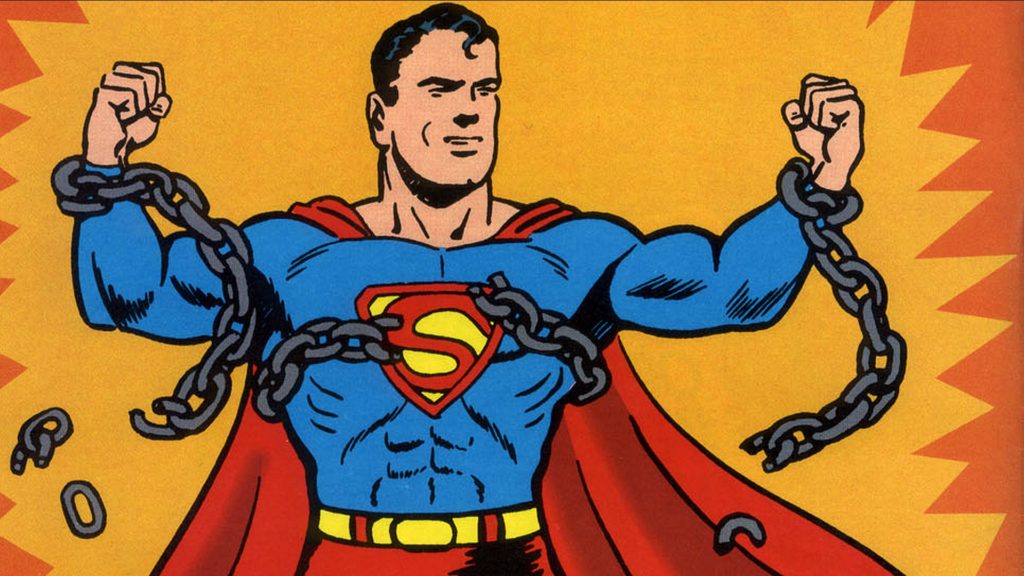
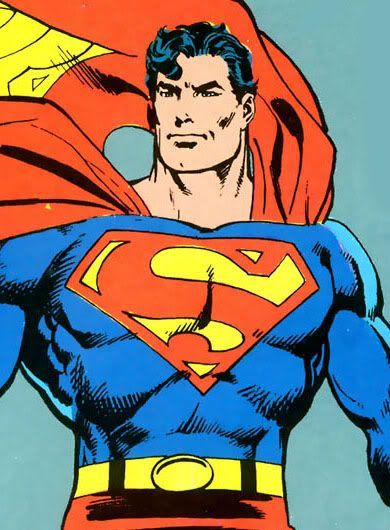
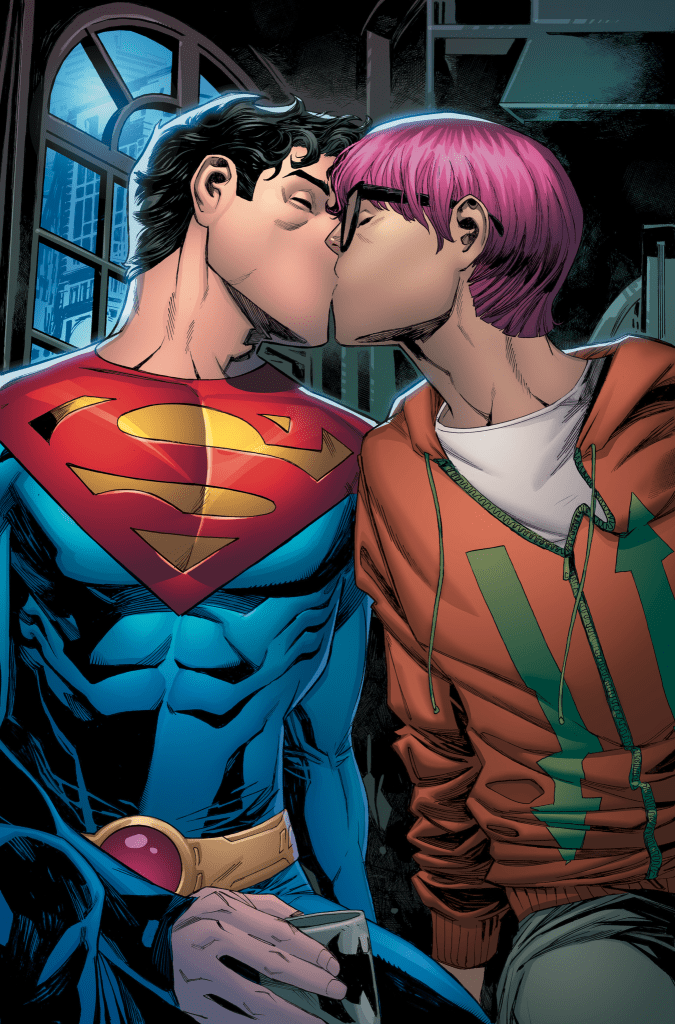
So, on National Coming Out Day this past week, October 11th, the current Superman—Jonathon Kent, son of Lois and Clark—came out as bisexual. When I saw the New York Times piece I literally gasped out loud. This wasn’t some minor character in a team comic; this wasn’t even a second-tier lead of a less-popular title. This was fucking SUPERMAN, the Big Blue Boy Scout, the tentpole character on whom all of DC Comics, and the DC television and film franchises, are built around.
I literally had tears come up in my eyes. This was So. Fucking. HUGE.
I cannot even begin to tell you how much that would have meant to me as a deeply closeted and terrified gay teenager in the Chicago suburbs and later, small town rural Kansas. I really don’t know how best to explain what this meant to me as a sixty-year-old gay man, but here goes.
Oh, Superman. You are the ubiquitous comic book character; since your debut back before the second world war you have become the default; the super-hero every other super-hero is judged against. It’s even right there in your generic name: you are the super man, hence you are Superman.
Superman is kind of the Bill Jones or Joe Smith of comic book heroes: basic, simply named, and the best of them all.
I was a kid when I first started reading comic books about super-heroes. Before I bought my first Action Comics (all I remember is that Lex Luthor was the issue’s villain), I read Archie in all of its iterations; I also read Millie the Model, Dot, Little Lotta, and some others that have faded from memory. The Jewel Osco where my mom used to buy groceries when we lived in Chicago had a comic book vending machine near the entrance, right next to a soda machine dispensing cans of Pepsi and its variants. You put in a dime and two pennies into the appropriate slots, and pushed the appropriate buttons for the comic you wanted; the metal spiral thing holding the comics would spin and drop your comic down, so you could reach in through the door and pick it up. That particular day I wanted a Betty and Veronica, which was A5 but I was in a hurry and accidentally pressed B5 instead; voila, I got an Action Comics instead, much to my bitter disappointment. One of the local independent stations, Channel 32 (which also showed repeats of The Munsters, among other black-and-white classics) aired reruns of the old Superman television show; which I thought, even for my unsophisticated childish palate, was cheesy and silly. I remember grousing about it to my mother—whose response, “Boys read super hero comics anyway” was the kind of thing that usually would guarantee that I would never read a super hero comic book, but I picked it up after we got home and I started reading, certain that I would hate it.
It probably should go without saying that I didn’t hate it.
And it opened an entirely new world for me. Sure, it got a little frustrating from time to time for me (Superman was such a goody two-shoes, but that was kind of his job) and Lois being so desperate (and jealous) to either marry and/or expose his secret identity was annoying; especially because Lois otherwise was such a kick ass woman. There were any number of Superman or Superman-adjacent titles, Lois Lane and Jimmy Olsen had their own titles; Superman often appeared in (and was definitely a charter member of) Justice League of America; there was also Superboy (“Superman as a teenager!”) and Supergirl…it was like the comics readers couldn’t get enough of Superman and his world. I eventually moved on to other DC Comics titles, too—everything Batman (Detective Comics was always my favorite, because there was a mystery to solve) and Flash and Green Arrow and Green Lantern and…yes, my dollar allowance every week for a long time went to comic books (Nancy Drew and the Hardy Boys were $1.50 and my allowance was $1 per week; and no, I couldn’t wait until I had two dollars to get one; I always needed to spend my money as soon I got it on Thursday—Mom’s payday—at either Jewel Osco or at Woolworth’s…because I could always talk Mom into buying me a book if there were Hardy Boys or Three Investigators to be had). When we moved to the suburbs the Zayre’s didn’t carry comics, nor did the grocery store in town; the 7/11 only carried Marvel (I tried with The Mighty Thor, but the continuing story aspect Marvel used irritated me because I would inevitably miss an issue), and when Zayre’s finally started carrying comics, things had… changed. Wonder Woman was no longer an Amazon, and was just an every day modern woman running a boutique (somehow she’d given up her powers). Supergirl had been poisoned, which meant her powers came and went without warning; one moment she’d be super, the next she wouldn’t. It was an attempt to modernize the books, of course, make them appeal to the newer, more sophisticated modern audience of the 1970’s; some of them started addressing social issues and became a lot more adult in theme. (Green Arrow actually became my favorite book during this time; he was drawn naturally—had curly chest hair AND nipples—and he had no powers other than being an expert archer and skill at hand-to-hand fighting). I eventually moved away from comics because I started spending my money on novels—Agatha Christie, Ellery Queen, etc.—and comics were, I thought, really for kids.
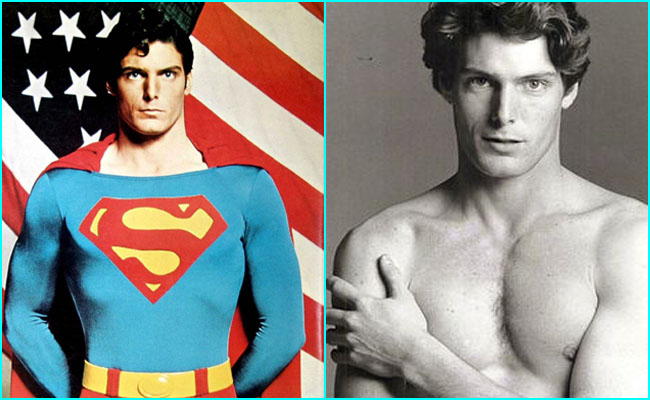
Later on, when we moved to Kansas, I got back into comics again, and things had changed yet again. Some of the Legion of Super-Heroes’ costumes made them look like strippers (male and female); the drawing of the characters had become more natural and realistic (Superman, for example, went from being barrel-shaped to having a narrow little waist and abs showing through his skintight costume), and Wonder Woman was an Amazon again. This was my Howard the Duck period, when I also started delving into Marvel a bit more. Comics always remained of interest to me throughout my life, with me going through periods of collecting and reading in large volumes at different times…before moving on from them again. I am not an expert on comics by any means; I know the names of some artists and some writers, but for the most part, I always paid more attention to story and character (go figure). But I’ve always maintained a love for the characters; and yes, the original Christopher Reeve Superman movie (which I rewatched recently for the Cynical 70’s Film Festival) indeed made me believe a man could fly.
I’ve always had, and always will have, a soft spot for Superman.
To me, Christopher Reeve was Superman–the prior versions of the character, including the popular television show (which I watched religiously) always seemed, to me, to be an actor playing the part; Reeve somehow just was the character. He was so insanely and ridiculously handsome; the body was just right, and he had the right mix of charm and charisma the part demanded. Reeve’s Superman could never be seen as a threat–and he also made it completely believable that no one could tell Clark was him, with different hair, glasses, and street clothes; he physically changed how he stood, his posture, everything about him that was Superman, when he was playing Clark.
Reeve never got enough credit as an actor, frankly.
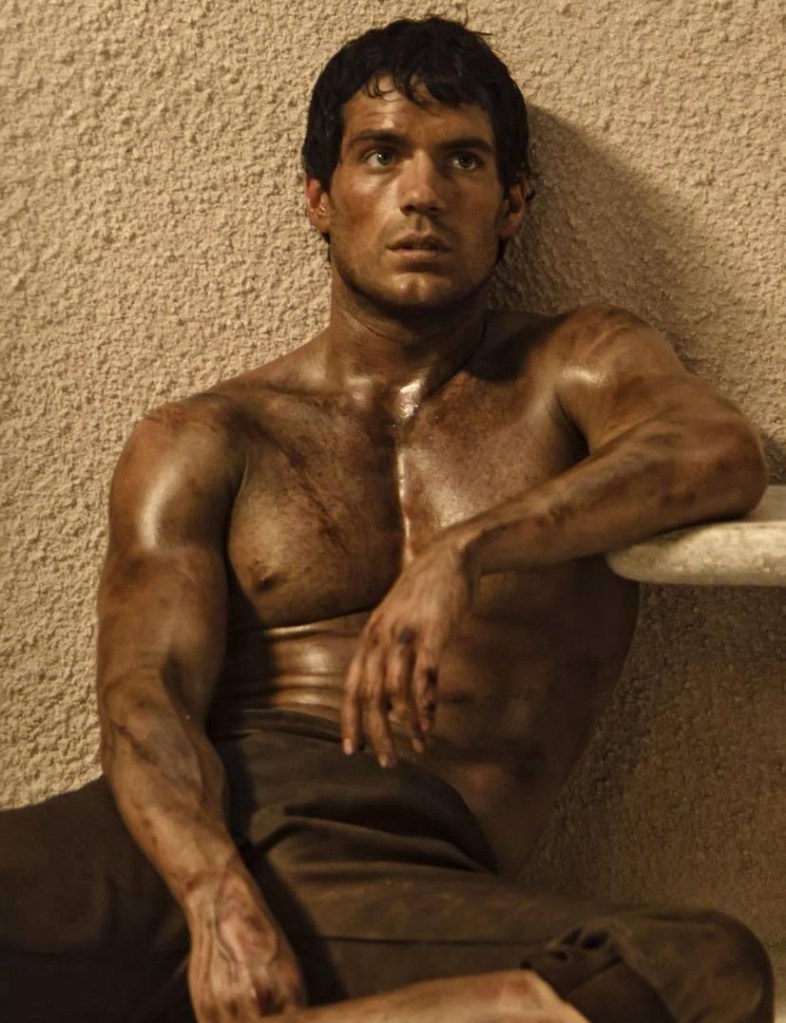
And while my memories of Margot Kidder as Lois Lane aren’t fond ones–I thought she was a fine actress, but miscast–overall, the first two Reeve films were good ones. They could have stopped there, but didn’t–and the last two weren’t good. I enjoyed Lois and Clark (despite what Dean Cain turned into) and Paul and I eventually succumbed to the simple pleasure that was Smallville…but I wanted to see Superman back up on the big screen, where he belonged. I was very excited when they cast Henry Cavill in the part (I’ve been crushing hard on Cavill since first noticing him on The Tudors)….and then came the movies. I enjoyed them for what they were, and I did think some of the changes made to update and modernize the story (how would Americans today react to the discovery of a super being from another planet?)–and you can never go wrong with Amy Adams, either.
But…they forgot the most important thing about Superman: his kindness and genuine concern for people. In the quest to make the DC Film Universe of all that is dark and angsty like the Batman movies–the direction Batman has gone in since the comic mini-series The Dark Knight Returns–was a bad one. Patty Jenkins got Wonder Woman so fucking right–and it was the same basic formula as Superman. Superman used to be derisively called “the world’s oldest Boy Scout”, but that can work with the character, and with the right actor. I think Cavill has the charisma and the charm–and the extraordinarily gorgeous smile–to pull that off; I just wish they would have let him have the chance.
The new show on CW, Superman and Lois, is also excellent; I absolutely love it, and I do think that Tyler Hoechlin is one of the best Supermans of all time, frankly. (The entire cast is stellar, frankly.)
So, as I said earlier, I was pretty fucking jazzed the other day to see the piece in the New York Timesearlier this week about Superman “coming out”–on National Coming Out Day, no less–and even if it turned out to not be Clark Kent, but Lois and Clark’s son Jonathan (in the comics they have the one son; on Superman and Lois they have twin sons, one of whom is named Jonathan), and while I, in my white gay male privilege assumed this meant that he was gay–he’s actually bisexual. But he is attracted to other men, and even has a boyfriend.
There was one particularly noxious piece posted on Medium, which the homophobic piece of trash who wrote it proudly posted on Facebook (I reported his post on Facebook as well as the piece on Medium as hate speech; the Medium piece came down, but the last time I looked, of course Facebook had done nothing about it). I read the whole thing–poorly worded, not grammatical, would have given a C- grade on the construction basics level alone–but the part that I couldn’t get past, the part I can’t forget, was him saying this: But why take one of the few heroes left for the “Straight World” and make him abnormally offensive to us?
Abnormally. Offensive.
I guess I missed the massive closet exodus for the DC and Marvel Universes? Let me see–right off the top of my head, at DC aren’t Batman, Green Lantern, Green Arrow, Nightwing, Cyborg, Aquaman, the Flash, the Martian Manhunter, the Question, Beast Boy, the Elongated Man, and Shazam, all straight? (And that is just off the top of my head., and only DC.) But you know those people who are so afraid of the queers–you know, like the piece of shit who wrote the Medium piece–they just can’t help themselves or keep their fucking mouths shut. Oh, no, Mr. I’ve Never Brought a Woman to Orgasm just can’t let us have anything without letting us know how much it offends their delicate, needle-dicked sensibilities. You know, the same kind of guy who undoubtedly always complains about “cancel culture” and “social justice warriors” and “wokeness” and I don’t have a problem with gay people but why do you have to exist? Those kinds–sad, bitter little men with so little joy in their lives they have to spend their precious time on this planet letting everyone else in the world know how much they object to our existence.
But he has a right to his opinion and we are oppressing him if we call it out for the hateful trash it is…and him for the piece of shit he is.
As my editor at Kensington wrote on a note he included with a copy of a bad review of one of my books, this just reeks with the stench of failed author.
This guy claims to be a crime writer, and claims to work for a publisher (I’ve never heard of it or him before this moment)…but after reading this piece and another one he published on Medium, the real crime is his actual writing.
Fuck off, dude. And know that bisexual Superman is going to have way better sex than you could ever pay for, no matter how long you live.
At some point over the past decade, a movement started on-line to promote the voices of minority writers writing about their experience in fiction, called “#ownvoices”. The focus of the tag was primarily for non-white writers, whose work has been so long marginalized and kept out of the mainstream of publishing; forcing those writers to either not see print or go with either a small press or self-publishing. It brought up some interesting conversations about who gets to tell what story, the importance of representation in fiction, and the need for greater diversity in the popular culture.
Recently, the “who gets to tell what story” debate took on an entirely new meaning and went in an entirely different direction with the publication of a piece in the New York Times that became known as, for simplicity’s sake, “Bad Art Friend.” Who owns a story, and who gets to tell that story? Both women on either side of the conversation appeared, to me, to be kind of assholes; but when it comes down to brass tacks, I strongly believe that if you feel your own story—the story of your own life—belongs to you and only you, then you need to write it; not tell the story to other writers (or other people in general, really) and expect them not to use it. Writers are thieves, every single one of us; anything we ever are told, read, see, and hear goes into the computer of our mind and at some point, might come back out in a fictional form. The fact that the “kidney story” was used as a jumping off point for a short story by a writer fascinated by the story of the woman who donated said kidney—and her need for attention predicated on the ownership of that story—shouldn’t surprise any writer; as I read the piece in the Times myself I kept thinking, I don’t know that I could have resisted writing about this woman either—it’s such a fascinating place to start an examination of both altruism and narcissism, how could anyone resist? I also started, in fairness, to think of the story in terms of crime fiction—how would I build a crime story out of this?
I do know, however, how shitty it feels to have my story taken and told in a way I didn’t much care for; yet that doesn’t mean I couldn’t tell my story how I wanted to, if and when I choose to. Everyone’s take on this has been interesting to watch on social media–you can certainly tell how personal experience effects other writers’ opinions on things–but I think the bottom line of it all is, don’t be a shitty person. Everyone involved in that whole mess was kind of a shitty person, at least in how it was reported–and again, those people involved in the group chat/email or text chain or whatever the hell it was and were actually named in the Times piece? Their story is now being told by someone else. Karma? Serendipity? The arc of justice? Who knows? Who gets to decide?
So, who does get to tell whose story?
Most of my work is fiction, and the majority of it is also set in New Orleans. New Orleans is one of the few cities in the United States with a majority minority population (at least it used to be; I’m not as certain post-Katrina of that fact as I was pre-Katrina) and it would be impossible to write about New Orleans without including non-white characters; that would be science fiction. It might be possible to live in New Orleans and never, ever come across a non-white person; I don’t see how, frankly, but, on the other hand, I’ve read any number of lily-white books set here. The casts of my two series contain one person who is non-white; police detective Venus Casanova, a character I love deeply and have always wanted to write more about. I had two ideas for Venus novels over the years—Stations of the Cross is one, and more recently, Another Random Shooting—but I always held back from writing either of them because I am not a Black woman. I don’t know what it’s like to grow up as a Black woman in New Orleans or in the South, let alone the struggles faced with being a Black woman working for the New Orleans Police Department—the racism, the micro-aggressions, the misogyny—and while I still believe both books would be good ones, I still am not entirely comfortable writing from that point of view—nor am I comfortable taking a publishing slot (if it came to that) from an actual Black woman crime writer, of which there aren’t enough as it is.
Bury Me in Shadows didn’t present the same kind of issue that I have with writing from Venus’ perspective (I also started writing a short story once with her as the main character; I revised it to be from the point of view of her white gay partner on the force, Blaine Tujague), the issue here was that I was going to be looking at and examining the racist history of the South and issues of race themselves…from the point of view of a twenty year old white gay kid. Just what the world needs, right, another white take on racial injustice in the southern United States? The possibilities for offending people were endless; do I have blind spots in my white privilege when it comes to racial injustice? Would those blind spots come across in the book? (I don’t care if I offend Confederate apologists, none of whom would be reading anything I write to begin with for fears of gay contagion.)
One thing my main character Jake’s mother always emphasizes to him is “the heritage is hate, Jake—never forget that.”
Jake has no pride in the fact his ancestors enslaved people, or in the family history of what was once a plantation that has now dwindled to a small amount of acreage that is mostly wooded; his mother refused to raise him that way, and I wanted to show how possible and effective—and important– breaking the generational link passing white supremacy along for centuries can be. Like most white people, Jake really hasn’t thought much about the history or his own privilege—there’s a part in the book where he thinks about how many students of color there were in his elite, private Catholic school—and being there, on the ground soaked in blood and perspiration and oppression, he has no choice but to face up to it, think about it, and be appalled by it all. I didn’t want to write something that could be called, or considered, an oh look another white guy explains racism or even worse, oh look another white person discovers racism is actually a thing and is horrified book; but the land is definitely haunted by its past.
Another theme I worked on within the book is the history of this county is written in blood. That’s a recurrent theme within any of my Alabama fictions; I tend to always write about my fictional Corinth County, and its history is actually very heinous. There’s a short story I’ve been working on for years called “Burning Crosses,” about a lynching that happened there many years ago; during the horrors of the Jim Crow era—in which a young white girl, a student at the University of Alabama, comes to Corinth to research the lynching for the Justice Project—a fictional group at the University that researches all racially motivated killings in the South since Appomattox, to name the victims and so the memories never fade with time. Again, not sure if I am the right person to tell this story, and the possibilities for giving offense with it are endless; so, I continue to work on it, tweaking here and there, and maybe someday I will try to get it published. But Corinth County’s bloody history is very real in my mind, and there are countless book and story ideas (and in-progress stories) I have for continuing to write about it.
Whether I will or I won’t remains to be seen, of course, but there are files and files and files…






 Queer and Loathing in America