Shame

I have really come to love Bouchercon, and it’s always a highlight of my year.

Things have seriously changed for the better.

Queer Crime Writers after a dinner out in San Diego, with Marco’s lovely husband Mark Gutkowski

Bouchercon last week was a marvelous, marvelous experience. I had such an amazing time, saw some people I’ve not seen in quite some time (and quickly remembered why I love them so much), and stayed up way later every night than I should have–one of my many neuroses is FOMO, of course; I still regret not going to Dallas in 2019–but I laughed a lot, had some great panels, and made some new friends, too. I ate great meals, had some marvelous cocktails, and I really liked the hotel (once I figured out the shortcuts to the meeting spaces). It also made me think about my own history with the event, how things have changed for the better, and how I hope it keeps changing for the better. There were so few of us queer writers who used to go back in the day; now we have enough of us to have a happy hour where we get together and drink and chat about writing and the business and oh, how we all laugh. It’s wonderful.

When I first got started in this business, publishing was different. I had to explain this recently to someone I am hiring to do the ebook for Jackson Square Jazz for me; why I didn’t have a pdf file, because back then there were no ebooks and you got your page proofs in the mail, as well as your marked up manuscript for the editing process. So all I have on hand is the unedited version of the book I turned in. But what also was nice back then was there was a support system for queer writers that we no longer have–there were queer newspapers, queer magazines, and queer bookstores. We had a queer book of the month club–Insightoutbooks–and their influence in shaping and developing my career cannot be underestimated. After Hurricane Katrina and the six months spent touring for Mardi Gras Mambo, I kind of withdrew back into myself. I don’t remember much of 2006-2008, to be perfectly honest; I just know that I went back to work full time in 2008 and after adjusting my writing/editing schedule to that, it was around 2009 or 2010 that I resurfaced and started thinking about promotion and marketing again.

And what I found was that during those lost years (I call it the Hibernation) everything had changed. The queer newspapers and bookstores were mostly gone. ISO shut down. And I realized, with a sinking heart, that I was going to have to start going to mainstream conferences to promote myself. After working so hard in the mid to late 1990’s ensuring I could exist in almost entirely queer or queer-friendly places, I found myself having to essentially start over. Queer writers never mattered to the mainstream crime organizations and conferences, and I braced myself, knowing I was going to encounter homophobia yet again.

It didn’t take very long–although in retrospect, I’m actually surprised it took as long as it did.

I joined Mystery Writers of America, and later, Sisters in Crime. I also went to Bouchercon in Indianapolis and San Francisco. I didn’t know more than a handful of people and tended to glom onto the people I did know (sorry about that, guys; social interactions at events where I don’t know anyone ramps up my anxiety, so I glom onto the people I know). Indianapolis I wasn’t in the host hotel, I was across the street–and it was cold. It was the weekend of the Ohio State-Purdue game, I can remember that because my hotel was full of OSU fans, so I found myself mostly hanging out in my hotel room and reading, while braving the cold to go across the street for my panels and events. It was nice, and decided to go to San Francisco for it the next year. There I was in the host hotel and realized oh you really need to stay in the host hotel in the future, because it made everything easier. I was starstruck most of that weekend–I rode in the elevator with S. J. Rozan once and another time with Laurie R. King, which was incredible. I only had one panel, at 4 pm on Friday afternoon that no one came to, but I had a really good time—and even decided to put together a bid to host it in New Orleans (and that is a whole other story), before yet another person decided that it was time for a Bouchercon programmer to put the fag back in his place, letting me know that I and my books weren’t important enough (the exact wording was “surely you have to understand that someone who’s edited a couple of anthologies doesn’t really deserve to be on panels”–despite the fact that my tenth novel had just been released…and of course, the greatest irony of this was that I went on to edit three of their anthologies) to grace any panel, and that any panel I’d been given in the previous two years should be considered a gift.

Should be considered a gift.

A fucking GIFT.

(For the record, Paul is an event planner by trade. He is executive director of both the Tennessee Williams/New Orleans Literary Festival as well as Saints & Sinner, a queer litfest. Just to be certain I wasn’t overreacting and being a diva-bitch, I let him read the email. His response? “If one of my staff, interns or volunteers wrote an email like that to an attending author I would fire them on the spot.” And before anyone starts up with the “programming a Bouchercon is hard” I will remind you that Margery Flax and I wrote over one half of the program for Dallas in three fucking days and contacted everyone with their assignments and then reorganized and redid the program to accommodate schedules and wrong panel assignments for about two weeks before it was done–with the local chair constantly throwing things at us that made us start pulling threads and weaving it back together again….nothing like “oh, sorry, I forgot that I promised these people a panel for this” after you’ve redone it for the fourth time. That happened a lot. And the entire time, we were incredibly polite and friendly and did whatever we could to accommodate people; apologizing and fixing it repeatedly. NOT ONE PERSON RECEIVED A FUCKING EMAIL TELLING THEM TO CONSIDER ANY PANEL THEY GOT AS A GIFT.

But then, I’m not an unprofessional piece of shit whose pathetic ego sees programming as power to abuse, either.

I wasn’t saying (and was very respectful) oh I am such a big deal how could you not give me an assignment, all I asked was hey, I know how hard your job is, but I don’t understand how you get on a panel and what can I do differently in the future to get one? What am I doing wrong? I approached them with kindness and respect for the work they were doing and got bitch-slapped, demeaned, and insulted in response. No author who is paying their own way to a conference and essentially providing the event with free entertainment for its audience should ever be treated so contemptuously by event organizers, period. The fact that when I expressed these concerns to the national board all I got back was mealy-mouthed excuses and “we’re sorry you’re offended” told me everything I needed to know about the organization and its board; the way they were treating me about the New Orleans bid (I had planned on having Susan Larsen–former chair of the National Books Critic Circle, chair of the Pulitzer Prize for fiction twice, long time programmer for the TW Fest and a nationally respected book reviewer–help out along with Pat Brady, long time publications chair of the Historic New Orleans Collection, huge mystery fan, and also a long time programmer for TWFest only to be told their vast knowledge and experience wasn’t “good enough” and I needed to get the homophobic trash who told me I was nothing to program New Orleans–yeah, like that was ever going to happen) was also egregiously horrible, condescending, insulting, and unprofessional.

Needless to say I cancelled my trip to St. Louis and never considered attending Cleveland; I tend to not go where I am not welcome. I am not taking my hard-earned money from my “nothing career” and giving it to a homophobic organization, where I then get to beg for scraps and get treated like shit. I have better ways to spend my money, thank you. (And yes, I know who the programmers were and yes, I will carry that grudge to the grave.)

I withdrew my bid to host for New Orleans, and I washed my hands of the mainstream mystery community. Who needs it? They were never going to accept me or my work, they were never going to read my work, they didn’t give a shit about me, and it was pretty clear they never would. I was kind of at sea for a few years, there. There were no more queer newspapers, no more queer bookstores, no more gay Insightoutbooks.com book club, nothing. Outside of the TWFest and Saints & Sinners, I had no conference outlets to promote myself and my work. The mainstream mystery world clearly wanted no part of me, so what was I supposed to do? So, I just kept writing. I operated my social media pages as a promotional outlet for my work, and I kept writing this blog. I did finally return to Bouchercon when it went to Albany; friends convinced me to go, and one powerful friend requested me for a panel she assembled–and it came through. Having friends made a huge difference, really, and through my friends I met and made more friends, and Bouchercon slowly became a must-go event for me every year…eventually reaching the point where I never had to be concerned about getting on a panel, while at the same time no longer caring whether I did or not. It became more about seeing my friends and being around other writers than a work/promotional thing for me. Ironically, once I no longer cared or worried so much about being on things…I started getting put on more and more things, with bigger and increasingly more important co-panelists (I still can’t get over the fact that I was on a panel with ATTICA LOCKE in Minneapolis. I was too nervous to say anything to her; I spent that entire panel looking at my co-panelists and listening to them speak and wondering why the fuck I was on that panel).

And now, of course, we have a group: the Queer Crime Writers, and a core group of us have been showing up together at conferences ever since we bonded at Left Coast last year (and bonded even more with more of us at Bouchercon Minneapolis last year): John Copenhaver, Marco Carocari, Kelly J. Ford, and Robyn Gigl–who’ve all become very dear to me over the last year or so. Teresa Cain/Carsen Taite joined us in San Diego, and became my con-wife; what a great time we had!

And somehow, I am getting nominated for mainstream awards, an outcome I could have never predicted. I won the Anthony for Best Anthology for editing Blood on the Bayou, and was nominated for Best Short Story at the Dallas event for “Cold Beer No Flies” (I lost to S. A. Cosby, no disgrace there). Last year Bury Me in Shadows was nominated for Best Paperback Original (losing to Jess Lourey) and Best Children’s/Young Adult (losing to Alan Orloff); neither of those losses were devastating because Jess and Alan are also friends of mine, and I couldn’t have been happier for them both. This year I had three nominations in three categories for three different books–Best Anthology for Land of 10000 Thrills (losing to S. J. Rozan for MWA’s Crime Hits Home); Best Children’s/Young Adult (losing to Nancy Springer for the latest Enola Holmes, hello, no disgrace there); and Best Humorous for A Streetcar Named Murder (losing to Catriona McPherson for Scot in a Trap)–again, with the exception of Springer, I lost to very talented friends I like very much (I’ve not met Springer). That’s seven Anthony nominations in total, to go along with the Macavity, the Agatha, the Lefty, and the Shirley Jackson nominations. Not bad for a queer writer, wouldn’t you say? Ten mainstream award nominations? I certainly never would have dreamed all those years ago when I was told “any panel you get should be considered a gift” by Bouchercon programming.

That doesn’t mean the community is free from homophobia; it’s still there. I have mentioned before the mainstream cisgender male author who is clearly afraid to acknowledge my existence and always beats a hasty retreat whenever I walk up; I find his homophobia amusing. You’re not hurting me, bro, because I don’t want to know you, either. It doesn’t mean that I can’t be sitting in a booth in the hotel bar with a bunch of friends only to have a straight man look at me, smirk and say “faggy” in a sentence, as though daring me to call his ass out because he’s so much more important than I am; no worries, asshole, I don’t even have to repeat the story to anyone because since then you’ve shown all the big names you’re buddies with that you’re actually a piece of shit, and yes, I’ve watched it all with the same fucking smirk you had on your face when you thought you’d pull out your micro-penis and slap it down on the booth table in Toronto, and when I hear stories about you, I am delighted to pull out “Well, I’ve known he was trash since he said faggy in front of me, looking me in the face and smirking as he said it”.

Assholes will always out themselves, at least in my experience–and I’m very patient. I store the receipts and pull them out to corroborate horrific behavior when the timing is right.

I’ll save the racism, sexual harassment, and homophobia I faced in Albuquerque at Left Coast for another time.

I’m very pleased with the progress that has been made in our community over the last five or six years–I mean, the Rainbow Diversity panel about queer crime writing in Toronto was packed, when such panels in the past only drew maybe four or five audience members. Codes of conduct have been implemented to protect attendees from sexual harassment and pervy conduct, as well as racism and homophobia.

Progress is often slow, and it is easy to get impatient. I don’t know if my involvement with Bouchercon has made things better for queer writers there, but I do know the award nominations show other queer writers that such things are possible for them. Nothing says you’re welcome here than seeing members of your community nominated for the awards. The more of us that attend also means that more of us will get nominated, be on panels, and be able to talk about our work to readers who might open their minds and read our books. Being visible at these events is crucial and important.

And like water wearing down a stone, we have to keep relentlessly pushing.

(John, Marco, Kelly, and Rob Osler have all been nominated for mainstream awards over the last year, along with me. Edwin Hill and PJ Vernon have also been recognized for their brilliant work, too. This is so wonderful to see–I’d be delighted even if I weren’t with them in this grouping. And if you’ve not read any of us, there’s not a single person I’ve mentioned by name you can go wrong with. It’s also exciting seeing the new queer talent rising in writers like Margot Douaihy.)

I was torn about going to Nashville next year; their anti-trans and anti-queer laws have me not really wanting to spend my queer money there. But the point was made that going and being very present was an act of defiance…and Lord knows I love defying homophobes, so I guess I am probably going to go. I can visit Dad either before or after, so it actually makes sense for me to go. I’ve decided to write a very gay story to submit to their anthology (which means I need to get back to work on it), and so yeah…I think defiance is the way to go.

Plus….I love my Queer Crime Writers. I can’t imagine not being around them next year, and I would absolutely go nuts from FOMO.

So, in closing, thank you, Queer Crime Writers. I love you all, and thank you for letting me into your group. Let’s keep making a difference, shall we?

Near You

Several weekends ago, I did an on-line panel for Outwrite DC. The moderator was John Copenhaver (whom you should already be reading), and my co-panelists were the always delightful and intelligent Kelly J. Ford, Margot Douaihy, Renee James, and Robyn Gigl. The video is actually up on Youtube, if you would like to watch it. John’s questions were insightful and intelligent (as always), and the conversation was marvelous, inspiring, and fun; there’s nothing I love more than communing with other queer crime writers (or any writers, to be certain), and I always try very hard to not monopolize panels because I do have a tendency to talk too much–especially if and when I get going on a topic I am passionate about. So, I thought it might be fun to take John’s questions and turn them into a long form interview, for thoroughly selfish and totally self-promotional reasons.

The panel blurb claims that “queer characters are riveting and necessary material for crime fiction and how those stories can shape (and perhaps reshape) the landscape of contemporary crime fiction.” Do you agree with this statement—and why do the stories of queer characters have the potential to shape crime fiction?

I completely agree with this statement. Queer crime fiction has a very proud history that was never really recognized or appreciated by the mainstream crime writers, readers, organizations, and conferences. That is changing for the better.

New blood is always necessary for any genre–horror, romance, crime, literary fiction–because genres tend to stagnate after a certain period of time. The cultural shifts of the late 1960’s and 1970’s echoed in crime fiction, for example; you couldn’t write crime in those periods without addressing all the cultural and social shifts; Ross Macdonald’s later novels are a good example of this. The 1970’s saw a lot of anti-hero books being written. The private eye sub-genre had grown quite stale by this time, which was when the women really moved in and gave it a shot of adrenaline–Marcia Muller, Sara Paretsky, and Sue Grafton blazed that trail, and revitalized a sub-genre that had kind of lost its way. Queer writers and crime writers of color are currently doing the same to the entire genre. Voices and perspectives we aren’t used to seeing are now getting into print and changing how we see, not only our genre, but each other. Crime fiction has always given voice to societal outsiders and outliers; queer people and people of color are the ultimate outsiders and outliers in this country. Who better to tell stories of societal alienation?

Why did you choose your sub-genre? How do you think the sub-genre has influenced the types of characters you write?

Well, I write in several different ones. Chanse MacLeod was a straight private-eye series; Scotty Bradley was more of an amateur sleuth/humorous series, but he does have a private eye license in Louisiana. A Streetcar Named Murder was a cozy, with an amateur sleuth heroine who gets caught up in a family mystery. I’ve also done young adult and “new adult,” whatever that is (it’s been described as ages 16-25), and Gothics with a touch of the supernatural. I tend to write things that I like to read, and I have a varied reading taste. I started writing the Chanse series because I wanted to do a harder-edged private eye series with a queer twist and set it in New Orleans. I didn’t know about J. M. Redmann’s Micky Knight series when I started writing Chanse; would I have done something different had I known she’d already covered the hardboiled lesbian private eye in New Orleans? We’ll never know, I suppose. Scotty was meant to be a lark; a funny caper novel and a one-off. And here we are nine books later…

As for Streetcar, I had been wanting to try a traditional mystery with a straight woman main character for a long time. When the opportunity presented itself, I jumped in with both feet. I like trying new things and pushing myself. Having to follow the “rules” of a traditional cozy was a challenge–especially because I have such a foul mouth in real life. I love noir so am working on two different gay ones at the moment.

Why do you think amateur detectives are appealing? Do you think there’s a reason queer characters often find themselves in the role of amateur detective?

I think it’s because we all think we’re smarter than the police? We enjoy seeing a character we can identify with figuring things out faster than the cops, especially without access to all the evidence, interviews, and forensics the cops do. Murder She Wrote has been off the air for about thirty years and yet the books based on the show continue coming out every year. If we start out in mysteries reading the juvenile series–Nancy Drew and the Hardy Boys and Judy Bolton and all the rest were amateurs, so we always cut our teeth in the genre with them to begin with. Scotty is basically an amateur, even though he has a private eye license he rarely uses; he and the boys never get hired (although they kind of do in the new one, coming this November.)

Let’s talk about place. Greg, your books take place in the South. Why is place important to the crime novel—why is it especially important to the queer crime novel?

Place shapes who we are–not just as queer people, but as people in general. There are similarities between growing up in a small town in the Midwest and growing up in one in the South, but the differences are very marked. I’ve lived all over the country–pretty much everywhere but New England or the Northwest–and always felt, as a Southerner (despite no accent and not growing up there) like an outsider. Couple that with being gay in a time when it was still considered a mental illness, and you have someone always on the outside looking in. But I have that Southern pull to write about the South–although many would say that writing about New Orleans and writing about the South are not the same; like me, New Orleans both is and isn’t of the South, and I feel that very strongly. I’ve written books set in California and Kansas, even one in upstate New York, but I very much consider myself a Southern writer.

Place is even more important in a queer crime novel because place shapes the queer people so much. As a writer, I think one of my strengths is setting and place, and I think that comes from being very much a fan of Gothics growing up. Gothics are known for place and mood, and I think those are two things I do well.

All of you write wonderfully flawed characters. Sometimes, as LGBTQ+ writers, we feel the burden of representation and the urge to write only positive LGBTQ+ characters as an attempt to undo history’s (the dominant culture’s) demonization of us. Unfortunately, that can be limiting—even flattening. Clearly, you’ve all struck a beautiful balance with your characters. Talk a bit about how you approached this issue.

The flaws, to me, are what make the characters seem real. Nancy Drew and the Hardy Boys always annoyed me because they were so perfect; no one is that perfect, and anyone that close to perfect in real life would be irritating and insufferable. I am am quite aware that I am flawed (one of my biggest flaws is believing I am self-aware because I most definitely am not), but I am not trying to be perfect; I just want to be the best version of myself that I can be. By showing queer people with all their facets and flaws and failures and blind spots, we’re showing the reader that we are human; despite what those who hate us say or claim, we are human beings just like everyone else, just trying to get through life and do the best that we can. The villain in my first book was a gay man–and the entire book was a commentary on how we, as queer people, tend to overlook flaws and red flags from members of our own community. Just because someone is queer doesn’t mean they are a good person–and queers with a criminal bent do exist, and often take advantage of that sense of camaraderie we feel with each other, especially when we don’t know the person well. I tend to trust a queer person more readily than I will a straight person, and that’s wrong–which is why I think we feel so much more hurt when queer people betray us.

Speaking of the demonization of LGBTQ+ folks … Ray Bradbury of Fahrenheit 451 fame said, “There is more than one way to burn a book. And the world is full of people running around with lit matches.” What do you think about the current tactics to ban queer books from schools, libraries, and even bookstores in places like Florida, Arkansas, and Texas? Why are they targeting queer books?

This is, I hope, the last gasp of the homophobes who’ve never updated their hate speech in over fifty years. What the hate group “Moms for Liberty” are doing and saying is no different than what Anita Bryant said and did in the 1970’s, what Maggie Gallagher and her evil co-horts at the National Organization for Marriage repeated, then came the One Million Moms…all too often it’s the cisgender straight white women who are the real foes of progressive politics who fight to uphold a bigoted status quo. They always claim they’re concerned moms worried about their children–but are perfectly fine with them being shot up at school; working in a meat factory on the night shift at thirteen (have fun in hell, Sarah Huckabee Sanders, when you get there and French-kiss your Lord and Master Lucifer); or shouldn’t have the right to vote…they know better than a child’s actual parents, you see, about what the child needs or wants. Maybe they should spend more time with their own children than worrying about everyone else’s? Phyllis Schlafly, queen skank of the conservative right, ignored her own family while she embarked on her crusade to strip women of their rights and autonomy–all the while shrieking like a hyena into any microphone nearby that she was fighting progress to save the American family while selling some Leave it to Beaver-like nonsense as reality. I always felt sorry for her gay son. Imagine that as your mother.

As for why, it’s about control and power. I actually respected Anita Bryant more, because she truly believed all the vile, horrible, unChristian things she said and espoused. Most of the others, including the unspeakably vile and disgusting Moms for Liberty, are working a grift for money, attention and power. Hilariously, they’ve sold their souls in the worst possible way in the guise of family, religion and God; if they’ve ever actually read their Bibles, they need to work on their reading comprehension skills as they are both apostates and blasphemers who will spend eternity doing the breast stroke in the lake of eternal fire. Hope they enjoy it.

Sorry your husbands and children don’t love you, but who can really blame them?

What are you working on next? What’s coming up?

I have a short story in an anthology called School of Hard Knox from Crippen and Landru (and somehow got a co-editor credit for the book with Donna Andrews and Art Taylor); Death Drop, the first in a new series from Golden Notebook press, drops in October; and the ninth Scotty comes out in November, Mississippi River Mischief. I am writing a gay noir, and may be writing second books for the new series I started with Crooked Lane last year as well as a sequel to Death Drop, and have a couple of short stories I want to finish to submit to anthologies I’d love to be in.

East Bound and Down

Labor Day Monday, and time to readjust from “Greg Herren Author” back to my everyday life here in New Orleans. There’s really nothing like your own bed–but the bed I had at the Marriott Marquis in San Diego was probably the most comfortable bed I’ve had in a hotel to date. I had trouble sleeping the whole time I was there, but the bed was so comfortable that I always slept some and always managed to feel, if not completely rested, but at least recharged. But oh what a lovely time it was!

I flew home yesterday from San Diego, where I’ve been since Wednesday. My apologies for being lax in posting while I was away, and I hope you didn’t miss me too much, Constant Reader. But it was also nice being in a bubble for several days practically cut off from the outside world. I didn’t write a single email since Wednesday morning; I only deleted junk. I didn’t write anything, nor did I read anything once I’d checked into the hotel. But what a marvelous time it turned out to be. I love going to Bouchercon–it’s a marvelous escape from the everyday and being around writers (so many writers!) and readers (so many readers!) and it’s just so much fun. There are so many marvelous people in this business that I so rarely get to see in person, and I never have the opportunity to spend time with everyone that I would like to.

There’s also this weird thing about Bouchercons. You can go the entire time without seeing some of your friends who are there; and you never seem to bump into them. Last year in Minneapolis I hardly ever saw Christa Faust, and even then only in passing or from across a very crowded room. This year I bumped into her almost every time I turned around, and it was an absolute delight because I adore Christa. You also get to make new acquaintances and discover new writers, too. I love debut authors! It’s always amazing to find new authors and make new friends, see old friends–and yet there were so many people I only saw fleetingly in passing, or didn’t see at all. But it was incredibly lovely, really. I resisted temptation in the book room (some of the collectible booksellers had some old editions of the kids’ series–including the super-rare ones no one’s heard of–but I knew if I bought any books I’d have to pay to have them shipped home, and so that extra step was enough to trigger my laziness (and miserliness–I can be extravagant to a fault when I really shouldn’t be) to step in and say, no, you don’t need more copies for your collection even if you can replace some damaged ones with ones that look pretty new for a reasonable price. And I don’t regret not buying those books, either. (I will probably get the ones by new acquaintances, though.) I also had four tickets to get free books in the book room, so I picked up Death by Bubble Tea by Jennifer J. Chow; Her Last Affair by John Searles (who I interviewed for Lambda Book Report back when his first novel came out, and that leads to a great story I will save for another time); The Quarry Girls by Jess Lourey (whom I adore); and one other that I can’t remember, and I can’t seem to find it this morning. Oh, well. Mindy Carlson, who was on the panel I moderated, gave me a copy of her debut, Her Dying Day (which has the best ever opening!) when I ran into her in the lobby on my way to the airport. I can’t wait to read it!

I finished reading Kelly J. Ford’s marvelous The Hunt on the flight home to Dallas yesterday, and then moved on to Laura Lippman’s Prom Mom, both of which are superb. I am almost finished with the Lippman, and when I am finished with this I am going to my chair so I can finish it.

I am pretty much taking the day off from everything and resting. I had planned on going to the grocery store–I still might; it depends on how I feel later–but I am going to relax today. I did get home last night in time to watch LSU embarrass itself on national television last night, but it’s okay. It’s nice to have any expectations for the season gone after the first game, and now I can watch the national title race with idle curiosity while watching LSU get through it’s season with no expectations from them. I was very concerned that they were being over-hyped (everyone seemed to forget that after the big win over Alabama last year, we barely beat Arkansas and lost to Texas A&M before being embarrassed in the SEC title game by Georgia), but this is yet another example of when being right isn’t what you want and brings absolutely no satisfaction–Cassandra was hardly smug as Troy burned around her, after all. I am exhausted, despite the fantastic night’s sleep I got last night, so I think resting up is indeed the way to go for today. We have shows to catch up on, after all, and maybe I’ll even splurge on a movie.

It was a wonderful time. I love my friends in the crime fiction community, and I love that I am sort of known in it now more than I was? I had several people come up and ask about my books, or tell me how fun I am to watch on panels, but I am also beginning to think that I need to be maybe a bit more professional when talking about my own work on panels. Something to ponder as I move into the adulthood of my career (it turned twenty-one this year, after all, which is staggering). I am inspired, reinvigorated, and ready to prove myself worthy to be a part of the community again. I want to get back to my writing and dig into it and keep going and do really good work. Reading Kelly and Laura’s books are inspiring because they remind me to work harder, do better, dig deeper, and aspire for greatness more. I have broken down the barrier that was keeping me from reading novels, or at least was making me unable to focus, and now I hunger to read more. Once I finish Laura’s book I am moving on to S. A. Cosby’s new one, with Alison Gaylin’s marvelous new take on Robert Parker’s Sunny Randall series. (I will never stop marveling that I am friends with, or at least know, my writing heroes.)

And definite shout-outs to all the people who won Anthonys this year, and were nominated. It’s surreal to me to see how many nominees are friends; and it’s absolutely lovely to see that. Only a few winners weren’t friends–and how can you not be happy for friends to get recognition? I adore Catriona McPherson and S. J. Rozan; how delighted was I to lose to writers whose work I’ve admired for years and how thrilling to be in the same category with them? I don’t know Nancy Springer, the other to whom I lost, but I love Enola Holmes. And Kellye Garrett and Wanda Morris are not only incredible writers but wonderful women I am very proud to know. I love Barb Goffman, who has always been so kind and lovely to me ever since the first time I met her. I don’t know Martin Edwards, but from all accounts he is a very kind and lovely and generous person, and I share the TOC of School of Hard Knox with him. The Debut winner, Nita Prose, wasn’t there and I don’t know her, but I do have her book The Maid, and I hope to read it before the end of the year.

So no, I didn’t win any of the Anthonys I was nominated for. What a fucking honor for a gay man to be nominated for three (mainstream, MAINSTREAM not queer-specific) Anthony Awards in the same year for three different books, for anyone, really. I think the only other person to ever be up for three in the same year is S. A. Cosby (and what amazing company to be in, right?); others have been up for two in the same year before (as I was last year; this year Catriona McPherson was a double nominee). I have been nominated for seven Anthonys in total now, and so what if I have lost six times in a row? Awards are lovely, but I honestly don’t mind losing. I love to act like a bitter loser because, well, it’s funny to me. I did start realizing sometime during the pandemic that my “bitter loser” shtick might be insensitive–some people would kill to lose six times; some are never nominated once–and maybe the “bitter loser” shtick doesn’t play as well now as it used to? I don’t know, but it’s such a thrill for me to be nominated, and retrospectively, I’ve had a pretty amazing run: fifteen nominations from Lambda Literary nominations, seven-time Anthony nominee, and once each for the Lefty, the Agatha, the Macavity, and the Shirley Jackson. That’s pretty fucking amazing, and maybe I should finally recognize that maybe, just maybe, I’m pretty damned good at this writing thing? I do need to be better about the other aspects of the business–marketing and promotion and so forth–and since my brain doesn’t juggle as well as it used to, I need to start getting focused and figuring some things out. The rest of this year is going to be taken up mostly with dealing with medical issues (I get my new hearing aids tomorrow!) and I don’t know how much I am going to be able to do or what I can and can’t do; and everything is kind of up in the air now for the rest of the year.

That would have triggered my anxiety before, but I am at peace with it. My decision to override the anxiety and remain calm while traveling worked in both directions, and it was lovely to not get worked up or upset or irritated about anything. I managed to even get my bag from baggage claim, the shuttle to the parking lot, and then drive home without losing my cool–I didn’t even swear at a single driver–and I kind of want to keep that level of calm and cool going forward. I did experience some anxiety before I moderated the Humor and Homicide panel yesterday; I was brought in–not at the last minute, but far too late for me to get copies of the panelists’ books and read them to prepare–late but my word! What a group of amazing professionals I was blessed to moderate! You need to read their books; they are talented and funny and marvelous and I was totally blown away by them–and three of them were debut authors! There was J. D. O’Brien, whose debut novel Zig Zag, about a marijuana dispensary employee who plans to rob her employer, only for Westlake-like hijinks to ensue; the delightful Mindy Carlson, whose debut novel I already mentioned; the always wonderful Wendall Thomas, a seasoned pro whose latest, Cheap Trills, sounds incredible and I can’t wait to read; the witty and charming Jo Perry, who has a marvelous series from the point of view of a dead man and whose latest, Cure, sounds great; and Lina Chern, whose debut novel Play the Fool is about a tarot card reader trying to solve her best friend’s murder and sounds amazing. I had them read their book’s opening few sentences, and once I heard them, I knew it was going to be a breeze. It was wonderful! What a great break for me to get to moderate this panel and find even more great books to read. I could have talked to them about their books for hours. Afterwards, I realized I hadn’t even used half of the questions I had–always the sign of a great panel!

Speaking in public has always been difficult for me and always ramps up the anxiety (which I always thought was just stage fright). But now that I know what it is, I can sort of control it. I can’t control the adrenaline spike and what comes with it–the shaking hands, the talking too fast, the shakiness of my brain, the upset of my stomach–but I can control the mental part and not allow the anxiety to take over. It was very strange knowing I can’t control the physical response to the chemical imbalance but I can control the mental/emotional response, so instead of freaking the way I usually do before going on–I focused on making sure pre-panel that they were all comfortable, that I wanted them to talk themselves up with the goal of selling a book to everyone in the room, and basically, asked questions and got out of the way and let them shine like the stars they are–and did they ever! Especially when you remember I hadn’t sent them questions in advance to prepare; they each were speaking extemporaneously, which is impressive as hell. The nervous energy I handled by walking around briskly before the panel and talking to each of my panelists individually and staying hydrated. Yes, I drank water, limited myself to one cappuccino per day, drank iced tea for lunch instead of Coke, and tried very hard to remember to slow down and get over the FOMO I always feel. I did have some cocktails every night, but never enough to get more than a bit tipsy and paced myself more.

And now, I am going to head back to my chair and finish reading the new Lippman and maybe start reading the new Cosby. I have laundry to do, a dishwasher to empty, and basically, I am just going to relax as much as humanly possible today. I should probably make at least a minor grocery run; maybe not. But what a marvelous, marvelous time I had.

I am truly blessed.

I’ll Be Leavin’ Alone

…on a flight to Dallas this afternoon. However, in delightful news, I am sharing the Dallas-San Diego legs of the trip in both directions with none other than the Lady H, aka Lady Hermione, aka Carsen Taite. That is always fun. I don’t have enough time changing planes in Dallas on the way out to get Whataburger on the way (I’ll get Shake Shack at New Orleans airport before I leave) but here’s hoping I can get it on the way home, because I know I will be starving by the time I get to Dallas. (I just checked; I have two hours in Dallas on the way back so Whataburger fer shur! The departure flight is at eleven something California time, so I probably won’t eat anything before boarding….unless there’s donuts or something at the San Diego airport, which I am sure there is.) It’s truly sad how excited I can get about food options that I don’t normally have access to, isn’t it?

But I am all packed and ready to head to Metairie for my eye appointment on the way to the airport. It would probably be more accurate to say I overpacked–I really don’t know why every time I go to something like this I have to take so much with me, including books–what if I run out of something to read!?!?!? Um, bitch, you’re going to a convention for mystery readers. There will be free books in my conference book bag. Books will be given away at various times over the weekend. There’s a book room and several book sellers.

But yes, by all means, Greg, weight yourself down bringing coal to Newcastle.

My supervisor and I were looking around yesterday for pictures of our old office on Frenchmen Street for a presentation she is doing at the US Conference on AIDS (she’ll leave the day I return to work), and we couldn’t find any, anywhere. I knew I probably had some in my archive of photographs on the back-up hard drive (which is horribly horribly disorganized), and so I went digging around in those files after I finished packing last night. Oh, the memories–and oh, the fucking receipts! Apparently–not really a surprise to anyone who knows me–I’ve been keeping receipts for decades. Old assholish behavior from people who should know better that I’d completely forgotten about–both the person and the behavior. Also, some people have been assholes for a very long time. Stick with what you’re good at, I guess? But yes, at some point I am going to have to organize those picture files–and there are tons of duplicates.

So.

Many.

Duplicates.

Nevertheless it was a fun way to pass an hour or so while the laundry laundered and the dishes washed in their respective machines. There are so many things I need to be better about–the picture files, for example, could be incredibly useful for inspirations and/or putting me into the mood to write a particular kind of story. I found the photo file of the pictures I used to help me visualize and write Timothy; I did do this for Mississippi River Mischief, but never took the time to look at the photos before diving into writing or trying to get the work done. It probably would have helped some, and therefore I need to remember the value of visual aids for my writing going forward. I am taking stuff with me to edit over coffee, or to muse over and/or think about; I always take my journal with me when I go to panels because people say things I want to remember later, or make me think about something I am working on, sometimes solving a puzzle I’d be trying to untangle. I love being around other writers, I really do. It’s always fun, and I get to hang around smart people and listen to them tell funny stories and laugh and be amazed that I get to know all these amazingly brilliant and smart and witty people and get to call them friends? The teenaged kid in Kansas whose house had a corn field across the street and dreamed big dreams in that bedroom with the ugly beige walls and brown shag carpeting would have slept well and gotten through life a little easier had he known his life would turn out even better than he’d ever dared to dream. I complain a lot. I whine a lot. I get irritated easily and my temper frays and flares a little more lately than I’d prefer, frankly. It’s also so, so easy to go down the dark path to depression and who cares and why bother and all that morose self-pitying nonsense that doesn’t make anything any better but certainly can make everything seem worse. But I do know how incredibly lucky and blessed I am. People also seem to think I’ve led an interesting life. I don’t think so, but it’s also all I know so it just seems normal to me. I get to write books and stories and get them published. People read them, seem to like them, and want me to write more of them. I even get nominated for awards here and there and now and again…quite a lot of times, actually.

And while it may not seem like it most of the time when I’m complaining, I’m pretty happy with my life and how it’s all turned out. I’ve also realized that I’m incredibly lucky and blessed with my writing career. I’ve been nominated for the Anthony Award seven times now–twice for Best Anthology, once for Best Short Story, once for Best Paperback/Ebook Original, twice for Best Children’s/Young Adult, and once for Best Humorous. That’s really not a bad haul, you know. I’ve also been nominated for a Lefty and an Agatha and a Shirley Jackson and a Macavity–not bad for a big old queer writer of queer books, you know? It’s also lovely seeing these mainstream awards starting to slowly recognize queer writers and our books. I also found, you see, a lot of pictures of conferences and signings and readings and book events and conferences from throughout the length of my varied and odd career. It’s been a lovely ride so far, and I really wish I would allow myself the luxury of enjoying myself and enjoying my career.

My goal for this weekend is to have as much fun as possible, hug as many people as I can, and relax and enjoy the ride as a three-time Anthony nominee. That’s pretty amazing, and something that queer teenager back in Kansas couldn’t have dared to dream.

And on that note, I am going to head into the spice mines. I need to do one more load of dishes before i depart and the kitchen will be thus clean. Have a lovely day, Constant Reader, and as always I will probably be updating social media with today’s travel shenanigans. Don’t know if or when I will be back here, but will do my best.

I’m Just a Country Boy

Thursday and my last day in the office for the week. I have a lot to get done over the weekend–errands and chores and things, oh my! I’ve arranged for medical appointments and examinations, have gathered everything I need for the OMV, and I even spent a little time writing yesterday. Who am I, and what have I done with Gregalicious?

I slept better on Tuesday night than the previous nights, and it felt great. I didn’t feel tired or worn out or dragged out–and of course, while it was still fucking hot here, it was normal August hot, not Satan’s taint hot. I can handle normal August hot. Sure, I’ll complain, but if this summer thus far has proven anything to me, it’s that I’ll be grateful for a regular Louisiana summer from now on. Yesterday was a good day at work as well; I feel like I helped some people and was able to be a good listener for some others who needed to get some things worked through. I love my job because I get to feel like I’ve made a difference in someone’s life, and there’s always at least one client per day who makes me feel that way. It’s a good feeling. I know I am helping everyone I see, but the ones where you have to go a bit deeper than is usually necessary are really special for me. That’s what I really needed from a job all along, and if I didn’t find that out until I was in my forties, at least I finally did find out. I’ve been at my day job longer than any job I’ve had previously, and by the time I retire at sixty-seven (roast in hell for all eternity, Ronald Reagan) I will have worked there longer than I worked at all my other jobs combined. (I’m not counting writing or editing in this, by the way; those are contract jobs, not a regular paycheck with benefits, which also includes fitness instruction. No benefits nor regular paycheck there, either.)

I also loved being a personal trainer because I enjoyed helping people feel better–so much of fitness training is mental, and reshaping mindsets and attitudes and mentalities, you have no idea. I used to actually write a syndicated queer-specific fitness column, which took a holistic approach to fitness and well-being, and so sometimes I would get into the mental health/self-image stuff. I always wanted to write a holistic health and fitness book targeted to a queer audience, but the performance aspect of promoting a health and fitness book wasn’t anything I was interested in; it would mean staying in shape constantly, watching everything that I put into my mouth and limiting myself, cutting out alcohol., and above all else, quitting smoking. Once I got myself back into shape, in 1994 and then again in 2001 (after that Horrible Year That We Never Discuss), I gradually became less obsessed about the regimen I needed to maintain to continue to work toward underwear model-type body and decided I was okay with a slight roll around the middle, and not having a six pack, or veins bulging out from under the skin everywhere. Fitness instruction, and fitness writing, weren’t my passion though; I wanted to be a fiction writer and I didn’t want to use my discipline and self-control and will to push myself into trying to compete for dollars and eyes and influence in the fitness world–I wanted to use that to write the best fiction I could and get it published so people could read it.

I was also thinking that I might want to think about doing something to mark Scotty’s turning twenty-one next year (I honestly cannot believe I’ve been writing this series this long. It was supposed to a stand alone!) I am thinking I should probably write another Scotty book, so the tenth will come out during his twenty-first year of existence, but I am not quite sure what I want to do with the boys next. I have some titles and possibilities–French Quarter Flambeaux about a Mardi Gras murderer; Quarter Quarantine Quadrille which of course takes place during the quarantine; and Bywater Bohemia Bougie, which would be a long look at real estate, gentrification, and how New Orleans has lost some of its soul since Katrina. I probably should write a Scotty every year. But I don’t want him or the series to get stale; that’s what happened with Chanse and I’d originally planned to only do seven, and I was on book seven so I said, fine, we’ll end it here. I do think there are more Chanse novellas to be written at some point; I think the shorter form will force me out of the “paint by numbers” way I was feeling with that series by the end. (For the record, I think the last two books of the series are just as strong, if not stronger, than the books that came before them. The quality wasn’t slipping, but the challenge of writing them wasn’t there anymore.)

The last thing I want to feel when I’m writing something is bored. Sick of it is one thing and is perfectly acceptable to feel; by the time you’re doing the page proofs you should be so fucking sick of your book and those characters that you don’t ever want to think about them again….and the time between turning in those final corrections and the release/promotion is just long enough of a time to pass so you don’t want to slit your wrists when the subject of the book comes up. I have yet to feel boredom with writing Scotty; the fact that the stories can be insanely ridiculous and completely over-the-top helps a lot in that regard. And yet…I’ve noticed things, looking back at the older books in the series, while I was writing Mississippi River Mischief, that I need to pay more attention to in the future. A reader asked me, sometime after the release of Royal Street Reveillon, “how many car accidents has Scotty been in?” And when I started thinking about it….was like yeeesh, quite a few–to the point where I probably wouldn’t get into the same car with him. I noticed that there are books where Frank and Colin’s presence is so minimal that they aren’t even supporting characters but rather cameos; and I don’t use Scotty’s family nearly as much in the later books as I did in the earlier ones. So, when I write the next Scottys, going into them I am going to be more conscious of these things, and I am going to try to work them out organically through the manuscript. Scotty’s getting older, as are the others (my editor was very enthusiastic about how much she loved that Scotty ages in real time), and I’ve started addressing that. I do think the next case is going to have to heavily involve Scotty’s family; I’m thinking it’s about time his sister Rain took center stage in one of his cases. I love Scotty’s entire family, to be honest, and I am really glad I brought his best friend David–missing from the last four or so books–back into this one.

As you can probably tell, I was a bit concerned about my editor’s response to this one. Someone who has anxiety to the degree I do probably shouldn’t be a fiction writer, but it’s too late now, over forty novels in. But….it’s never too late to enter a new chapter of my career, either.

I slept great again last night–the slight cooling off this week has been marvelous; the air conditioning finally caught up, and I was laughing last night because I was taking some stuff out to the recycling and realized…it was chilly enough in the apartment for me to wear a sweatshirt and sweatpants (which means the temperature inside is correct), and when I was walking the stuff out I didn’t break a sweat and thought it was actually pleasant outside…and it was 94. Today I have to get through, run some errands on the way home (post office mostly–I can’t decide about the grocery store but I don’t think we need anything; I have developed the habit of making groceries whenever I get the mail since I’m already uptown) and then settle in for the night. Paul was late last night working on a grant, so when he got home we watched the first episode of Only Murders in the Building, which was a very pleasant surprise (we weren’t wild about season two, but season three got off to a great start, and of course, Meryl Streep!), and finished the evening off with an episode of Awkwafina is Nora from Queens, which is just hysterically funny. It’s nice to feel rested before the last day of getting up early and going into the office.

And on that note, I am heading into the spice mines. Have a lovely day, Constant Reader, and I’ll check in with you again later.

You Make Me Feel Mighty Real

Growing up as a queer kid in the 1960’s and the 1970’s wasn’t the easiest path to trod. First came the realization that my wiring was different from everyone else’s, followed quickly by the shame from being different and of course, the ever-popular feeling among queer kids when they recognize their queerness that I was the only one in the world and no one, under any circumstances, could ever know. I honestly don’t remember the first time I came across a gay character anywhere–it had to be in a novel, though–and I slowly became aware that it wasn’t just me, but there weren’t any others like me anywhere around me. (I do sometimes wonder how differently my life would have turned out had we never left the Chicago suburbs for the empty plains of Kansas; I certainly would have met other gay men much earlier in my life but….being an out gay man in Chicago in the 1980’s might not have boded well for me otherwise in the long term, if you catch my meaning.) I do remember the first gay characters I saw in film and television; I remember being highly entertained and feeling connected, in some way, to celebrities like Paul Lynde and Charles Nelson Reilly; but Liberace’s flamboyance repelled me. The few times I’d seen gay characters they were horrific stereotypes, and I can remember being confused, thinking I’m not like that, though. I can remember TV movies like That Certain Summer which was about a gay man coming out to his son and his son having to deal with it; I didn’t watch because I was afraid that watching it, even though it was an ABC Movie-of-the-Week, would tip off my parents and my sister that I was like that–or even just curious about it, which wouldn’t fly.

It was Billy Crystal as Jodie Dallas on SOAP that gave me my first real exposure to a continuing regular series character who was a gay man–and his confusion (which had a lot to do with the writers fighting with the network censors and trying to appease the gay community) about his gender and sexuality in that first season struck me as a bit on the absurd side–but I also understood his thinking well had I been born a woman this would have been all a lot easier.

Of course, now, as an adult gay man with years of living the life behind me as well as writing about it, I see how incredibly absurd on its face was that story-line.

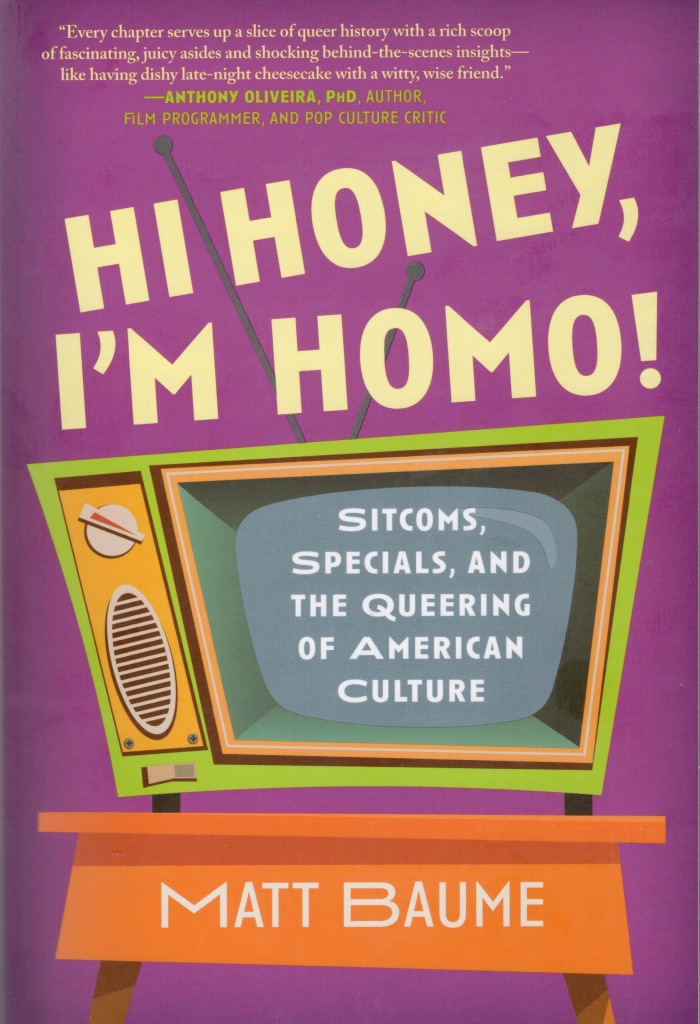
I first found Matt Baume’s Youtube channel during the pandemic, as I was scrambling to find things to watch while i made condom packs and did other make-work at home duties to maintain my paycheck. I may have found him through James Somerton’s channel? But while Somerton is often very dour and doom-and-gloom and “this is how they betray us” (don’t get me wrong, there’s a place for that and it’s needed), Baume is much more cheerful and positive about representation: he presents queer rep in popular culture in the context of the time; what the show/movie creators were trying to do with the rep; why they chose to do the rep in the first place; and the battles and struggles they had to make sure their rep made it to the viewers the way they wanted it to–and how that representation may have helped change hearts and minds when it comes to queer representation in art and culture. So when I found out Baume had written a book about queer representation in network sitcoms–written versions of his Youtube channel most likely–I had to have it.

I’m really glad I read it, too.

The essays contained within are well-written in a light, easy to read and comprehend way, without all the academic language that inevitably drags these kinds of things into the impenetrable territory that gets cited in other academic papers but otherwise never get read. Each chapter, from Bewitched through Modern Family, also contextualizes the queer representation in its time and place within the sociopolitical climate of each show, as well as the queer influences. Bewitched was probably the queerest show to ever air, be a hit and win Emmy Awards before Will and Grace; which makes it all the more memorable is that it was all coding and subtext, with witches standing in for queer people–and the similarities were obvious: they had to hide who they were from mortals for fear of persecution, bigotry, and violence. Sound familiar?

Baume also names and shames all the anti-queer activists of my lifetime, from Anita Bryant to Donald Wildmon (my own personal nemesis) to A Million Moms and so forth; Wildmon himself is probably the worst of them all; much as I loathe Bryant, I think she sincerely believed that queer people were a danger and sinful. I also think Bryant and Phyllis Schlafly were the last true-believer homophobes to lead movements; everything since has been a cynical grift for money and political power. Ronald Reagan and the Republicans saw, in 1980 and with the evangelical turnout in 1976 that carried an actual Christian to the White House (Carter was perhaps the most truly Christian president we’ve ever had; his religious values colored his policy. It’s ironic that Christians hate him as a general rule and always point to him as an example of a failed presidency rather than what his presidency actually proved; a true Christian believer isn’t pragmatic enough to lead a country; because sometimes, as The West Wing noted in an episode title, sometimes you have to kill Yamamoto; things for the greater good that are horrific on a personal level) and noted that “lip-service” to “Christian ideals” was all it took to get “Christians” to vote for you.

And this is a good place to serve as your regular reminder that the “party of family values” elected our only divorced presidents, yet are the same people who tried to remove Bill Clinton from office for lying about a blow job because it was evidence of his poor character and someone with such poor character shouldn’t be president.

I recommend this book, not only because it’s an interesting look at the evolution of queer representation in television comedy series, but because it also is educational by tracing the opposition to queer equality during the same time period.

I also learned by reading the book that Baume was the Communications Director for AFER, an organization that fought for marriage equality. So, buying and reading his book is also an excellent way to say thank you for his advocacy.

The Man of Metropolis Steals Our Hearts

I have always loved Superman, ever since I accidentally pressed the wrong button on the comic book vending machine at the Jewel Osco on Pulaski Avenue in Chicago as a child and got Action Comics instead of the Betty and Veronica I wanted. I was disappointed, and asked my mom for some more change so I could get what I actually wanted, which was when my mom decided to teach me a valuable life lesson: if you hurry and don’t pay attention you won’t get what you want–and sometimes that’s the end of it. So always, always make sure you’re picking the right thing. (I still do, to this day, and whenever I “forget” and rush–it inevitably ends badly.)

I wasn’t happy about it, but made the best of it. I had a comic book, after all, and while I had never shown any interest in super-heroes and their comics before, I decided to read it when I got home.

Once I did, I was done with the Archie and the world of Riverdale for good. I started reading DC Comics–I already knew about Batman from the television show, which we watched every week with its epic cartoonish campiness–and all the other titles that involved Superman even if only in a peripheral way. Both Jimmy Olson and Lois Lane also had their own titles, there were at least three titles alone devoted to Superman, and of course, Justice League of America. There was a Superboy title, too, and of course we can’t forget Linda Danvers, Supergirl. I read them all, and finally stopped buying them when they reached the (to me then) insane price of a dollar per issue. But I never lost my sentimental attachment to DC Comics and their heroes. I was also terribly bummed when the peripheral titles, like Superboy, Jimmy Olson–Superman’s Pal, and Superman’s Girlfriend, Lois Lane–were cancelled. For the most part, Lois’ adventures that didn’t involve Superman–when she was actually doing her job as an investigative reporter–often involved her in mysteries she had to solve, which were a lot more interesting to me than her schemes to expose Clark as Superman, or to get Superman to marry her. The old television series, with George Reeves, was often shown in reruns on alternative non-network local channels, and while I of course watched, I was kind of disappointed with how bad and cheap the effects looked. Batman’s television show was campy, of course, and highly entertaining–but campy. Wonder Woman was also campy and cheesy, but had Lynda Carter, who personified both the super-hero and her alter-ego, Diana. (When I was watching Superpowered: The DC Story the other night Carter said something I thought was very perceptive and explained thoroughly her role on the show: “I didn’t play them as separate characters–I just played her as Diana, the Amazon Princess, with a strong belief in equality and that there’s a better way than fighting.”)

So, when they Superman movie was announced sometime in the mid-1970’s, I knew I’d go see it, but didn’t have a lot of high hopes. But the tagline was fantastic.

You’ll believe a man can fly.

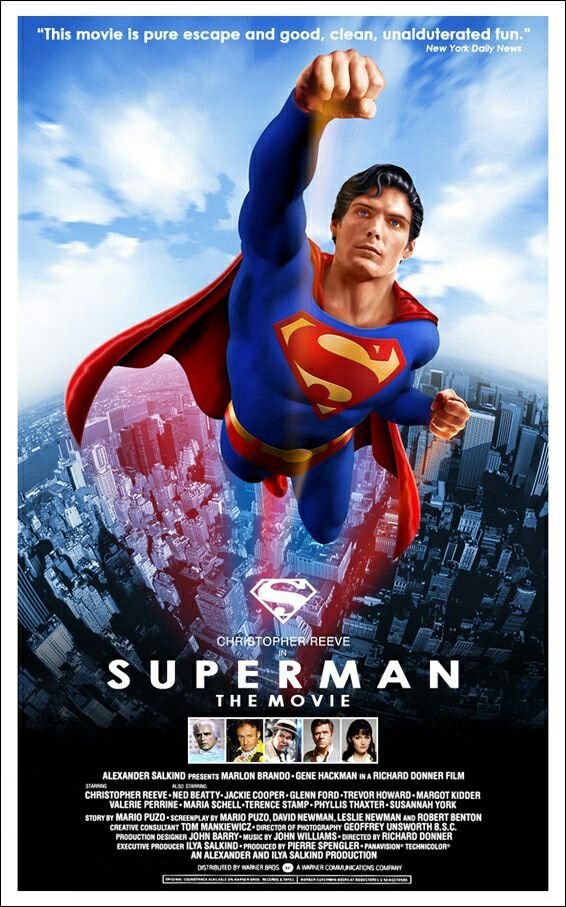
I think I was at the theater, waiting to watch either The Deer Hunter or Animal House, when they played the preview for the upcoming December release Superman The Movie, starring Christopher Reeve and Margot Kidder (among many other major names in supporting roles–from Marlon Brando to Gene Hackman to Ned Beatty to Valerie Perrine). I knew they were making the movie, and I had allowed myself to get a little excited about it as a Superman fan. I’d always found previous Superman adaptations–mostly the television show–to be so inexpensively done that it was almost comical. But special effects had been changed forever by the one-two punch of 1977’s Star Wars and Close Encounters of the Third Kind, and I also knew they were spending a LOT of money on this adaptation, so when the screen and theater went dark, and you just heard a voice saying “You’ll believe a man can fly” and then…there he was, flying. I caught my breath because it looked so real. And when Christopher Reeve turned his face to the camera, smiled, saluted and somehow got his eyes to twinkle, I also knew the movie was perfectly cast. I couldn’t wait for the movie to finally open (I think I also saw the sequel on its opening weekend), and yes, when it finally came to the Petite Twin Theater (apparently still there? No, no movie theater on Commercial Street anymore, alas) I saw it on that first weekend.

I’ve always loved Superman, and Christopher Reeve was fantastic in the part; the bar every actor who puts on the suit has to clear.

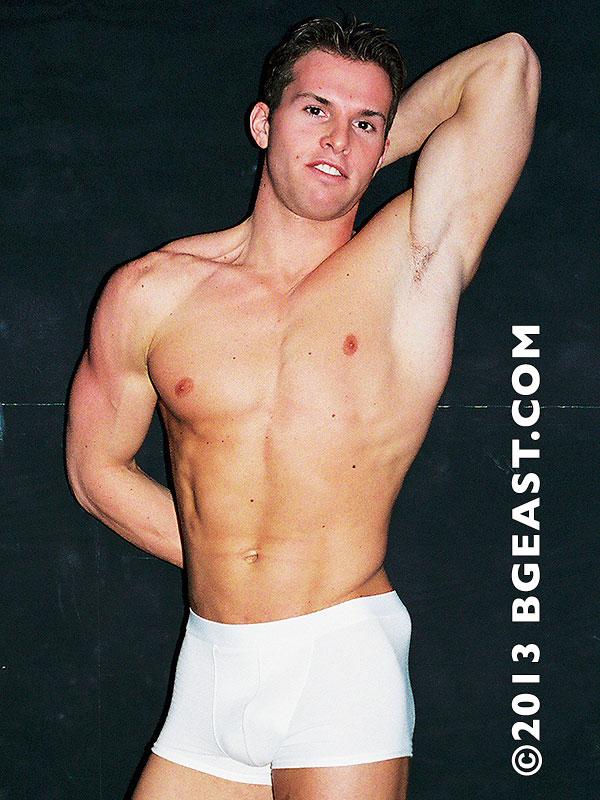
Obviously, the recent announcement that David Corenswet has been cast to play Clark/Superman in the new reboot of the film franchise, replacing Henry Cavill, has me thinking about Superman again. I was very pleased, frankly, when Cavill was originally cast; I’d first noted him playing Charles Brandon on The Tudors and thought, “that is one fine-ass man.” I thought he was the perfect choice to play the dual roles of Clark and Superman; he is drop dead gorgeous, for one, and his eyes have the ability to twinkle when he smiles and the dimples? Just take me now, Henry.

Mr. Cavill fills out the suit rather nicely, does he not?

The Henry Cavill version of Superman, which followed on the heels of a failed reboot with Brandon Routh (who returned to the televised DC Universe–the Arrowverse–in Legends of Tomorrow. I always felt bad for Routh, who I didn’t think got a fair break, either), wasn’t the best interpretation of the character but that wasn’t Cavill’s fault; that was the vision of the director and writers and the studio; and while I think I can understand the need to update Superman, the need to darken his story a la The Dark Knight 1980’s Batman reboot was a mistake. Superman is the World’s Biggest Boy Scout; he stands for hope and truth and all those things we used to believe embodied the United States; if anything, Superman was the personification of the idea of American exceptionalism.

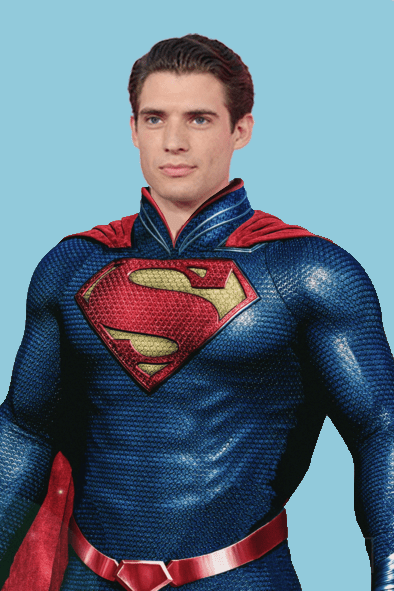
David Corenswet certainly has the right look for the part; he’s from the Ryan Murphy stable of dark-haired blue-eyed square jawed hunks who regularly appear on his television series. I first saw Corenswet in The Politician, and then again in Hollywood. I found the following fan art through a Google search, as there are no available official images of him as the Big Blue Boy Scout. James Gunn’s vision for the DC Universe is one I am interested in seeing; while I didn’t enjoy the second and probably won’t watch the third (I’ve come to detest everything about Chris Pratt over the last few years), I did think the first Guardians of the Galaxy movie was pitch-perfect for a popcorn super-hero type movie.

But I do hope they move away from the dark broodiness of the Cavill version. I enjoyed them (and love Henry Cavill for reasons that should be obvious; look at the posted picture above again), but they didn’t feel right for Superman movies. The underlying theme and element of all the Superman stories is his positive energy and determination to protect people from harm and most importantly, lead by example. One of the core elements of the original Superman series (before the first of many DC reboots of their universe) was that Superman’s most sacred vow was that he would never take a life, no matter who or how much they deserved death. That didn’t matter to Superman, whose pursuit of justice was limited to capturing the bad guys and turning them over to the judicial system. It wasn’t his job to determine justice and punishment.

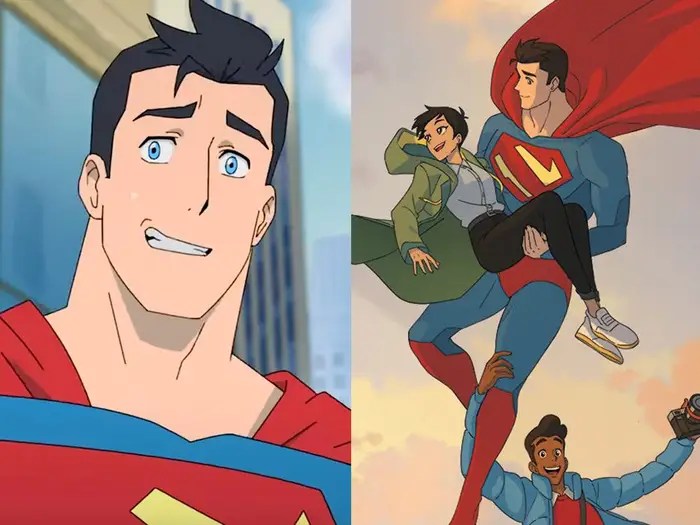
I keep hearing good things about the animated DC movies and series, but have yet to really watch any of them. I don’t know why I have this automatic resistance to animated super-hero shows/movies; I love Disney animation, and there are literally hours of DC animated entertainment available for streaming. I’d been hearing good things about a new DC animated series on MAX called My Adventures with Superman, so while I was waiting for Paul the other night (and was tired of LSU football highlight videos) I decided to give My Adventures with Superman a chance.

Constant Reader, I am so glad I did.

The show is utterly charming. It’s very well animated, for one–Clark/Superman is handsome, which is weird to say about a cartoon–and it’s refreshingly well-written with more emphasis on the characters and who they are, as well as their relationships with each other, over the adventure aspects of it, which makes it all the more likable and enduring. The premise is that Clark, Lois, and Jimmy Olson are all interns at the Daily Planet; Clark and Jimmy are just starting, and Lois is given the job of breaking them in and showing them the ropes. Lois is ambitious and determined to become a star reporter, and her impetuosity and ambition quickly leads them all into trouble–not only with the bad guys, but with Perry White back at the paper. Fortunately, Clark is, well, Superman, so all turns out for the best and Lois gets the scoop of all time: there’s a super-man amongst us! Which gets all three of them hired on staff. Clark is exactly the way he should be: kind, thoughtful, empathetic, a little bit shy–and the cold open of episode 1, which has young Clark suddenly discovering that he can, actually, fly; and his excitement and wonder at discovering this sudden new ability slowly begins to fade–imagine learning at age ten or eleven that you have super-powers–and he begins to wonder not only who he is, but what he is….then after the opening credits it flashes forward to Metropolis and Clark and Jimmy–roommates–getting ready for their first day as interns. The chemistry between the three of them–truly the Holy Trinity of the Superman stories is Clark, Lois and Jimmy (it’s so nice to see Jimmy Olson finally getting something to do and being included as something more than just a bit part, which is a nice nod to Superman history), and I am really looking forward to watching more of it.

And the art is fantastic.

Well done, DC. I hope this series lasts and is a hit–and I hope James Gunn is watching so he can see how to do the Big Blue Boy Scout properly.

Violaine

Oh, I got my final panel schedule from Bouchercon over the course of the weekend; as expected, I got my Anthony nominee panels only–but there are three of them, he typed modestly.

You can find me at:

Thursday, 2 pm: Best Humorous Mystery panel, moderated by Janet Rudolph, with Catriona McPherson, Jennifer Chow, Raquel Reyes, and Ellen Byron.

Friday, 9 am: Best Anthology panel, moderated by Holly West, with Art Taylor, Josh Pachter, and Mysti Berry.

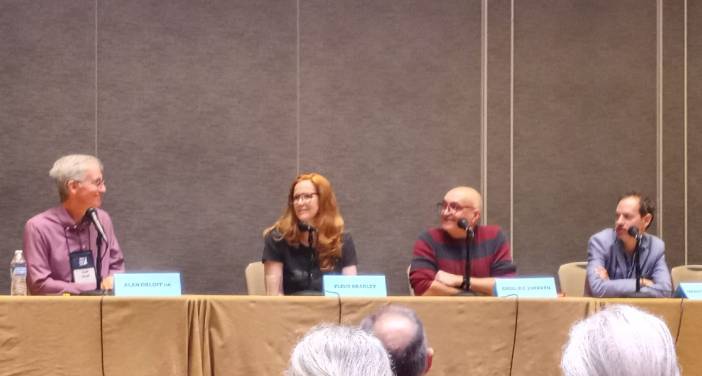
Friday 1 pm: Best Children’s/ Young Adult Panel, moderated by Alan S. Orloff, with Fleur Bradley and Lee Matthew Goldberg.

Not bad. I have to get up early on Friday morning, but the others are at times when I am usually coherent and functional, which will be incredibly cool. I also am finished with everything by Friday afternoon, so I had all day Saturday free until the Anthony Awards presentation that night. This year, I get to lose three times, as opposed to my two losses at last year’s. There is, however, no disgrace in losing to any of my fellow finalists, as I like and respect them all very much; they all are great people who do phenomenal work and they all deserve much more recognition than even this will give them. And that Best Humorous panel? I think I shall say nothing and simply sit there being entertained by the quick wits of the four comic geniuses I will be on stage with.

Coming home from work last night was just as sad as I thought it would be. I ran errands after work–mail, grocery, gas–and had bags to carry and so forth. I was putting the groceries away when I realized I was listening for Scooter to come downstairs. I shook that off, put everything away, and then went to sit in my easy chair like always to rest for a moment before doing something else productive–I have a sink full of dishes–and as I flipped through Youtube channels I was bored out of my skull…and then realized there wasn’t any need to sit in my chair because Scooter didn’t need or want my lap anymore. That made me tear up, so I watched highlights of the College World Series, but watching Florida lose (almost as much fun as watching LSU win, which makes the College World Series final from this year almost more than I could hope for as a happy place for me) but it didn’t shake off the gloom… and I also realized I was staying in the chair so as not to disturb sleeping Scooter, who wasn’t there. I cried a bit and got up to start doing some more things around the kitchen. Paul came home from the office, and he was sad because Monday was a work-at-home day for him as a general rule, but he spent the morning missing Scooter so he went to the office after his trainer. I’ve been looking at adoptable cats on-line, but of course I want them all. There’s a gorgeous fourteen-year-old ginger that I am sure is going to be hard to adopt, but much as I would love to give his final years a good home losing another one so soon would be too hard on both of us. We need a cat that’s going to give us at least thirteen years!

But then I think do I have another thirteen years? Which I don’t like to do, because it will talk me out of having a cat because I don’t want to die on my cat. Sigh.

Yesterday turned out to be okay at the office, in case you were wondering how that went. There’s no telling, of course, what is to come down that road, so as Mom always said, why borrow trouble worrying about it? I’ll be coming straight home from work tonight; I have tomorrow off for doctor’s appointments so I don’t have to get up early and there’s certainly no need to run any errands since I can run them tomorrow. It’s a bit weird and awkward around there–I think the entire department is a bit in shock–but we’ll see how it all goes. The only constant is change, right?

I started doing some more research for a short story I want to write about an urban legend–it’s for my Sisters’ chapters next anthology–and I realized yesterday that I don’t have to do something Louisiana based, and it’s not like there aren’t plenty of urban legends in Alabama. I got another Alabama history book in the mail yesterday, Hidden History of North Alabama by Jacquelyn Procter Reeves, which is mostly about urban legends and secrets from the past of the north part of the state. Where we’re actually from is more central than north; the foothills of the Appalachians, if you will. There were some horrible atrocities committed on Union sympathizers in that part of Alabama by the Home Guard–I’ve heard and read some truly horrific stuff, seriously–which might be a good urban legend to write about. I’m having the best time looking into both Louisiana and Alabama history; it’s so much easier to write about a place once you know more about it; the more you know the easier it gets, hence research.

I’ve also been reading Matt Baume’s Hi Honey I’m Homo, which is about sitcoms of the 1970’s and their fledgling attempts at gay representation. I already have been enjoying Baume’s Youtube channel for years–queer rep in culture–and I’m also really loving his book. It’s fun revisiting these shows and remembering how closeted gay teenaged me watched the shows for their queer content, eager to see if that was, indeed, who I was as a human being. I’ll talk about that more when I blog about the book–some of the rep was good, some of it was confusing–but it is fun revisiting these shows from a present day point of view and perspective.

And on that note, I am heading into the spice mines. Have a lovely day, Constant Reader, and I’ll check in with you again later.

Suckling the Mender

Work-at-home Friday! Woo-hoo! It’s almost the weekend! I felt funky yesterday; more than just my usual end-of-the-getting-up-at-six-every-day tireds. My stomach started bothering me on Wednesday night, and I chose to eat breakfast and lunch yesterday with soft foods–yogurt, cereal, mozzarella salad–as I had the day before and that didn’t seem to be much help, as my stomach ached all afternoon. This continued throughout the evening, and I also was terribly tired when I left the office. I felt so bad–the combination of the exhaustion and the stomach issue–that I did something I never do; I laid down on the couch. I floated for about three hours in the in-between sleep and awake state of consciousness, which was where I was when Paul came home. I ate a little bit and felt better, but it’s still odd. I think it’s not eating enough, maybe? This was how I felt on Sunday after getting home from the trip–so I must eat solids and more regularly. My bad eating habits catching up to me at long last, and I really need to focus on eating regularly and more healthy. (I lost twelve pounds in Kentucky.) It’s also achy and sore this morning, too, but not nearly as bad as it was yesterday. I’ll try to eat more today than I have the last few days.

I have some errands to run after work-at-home duties are completed today, which will probably suck the life right out of me. Running errands in New Orleans in the summertime is always a draining chore, but if I can get all of that done today I won’t have to leave the house at all until Monday morning when I go back to work. It doesn’t look too bad out there this morning, but a quick check of my phone tells me it’s 82, which is practically a cold spell for July down here.

We finished watching Red Rose last night, and what a ride that was. Intense suspense, wild out of nowhere plot twists, and all the young British actors were very appealing and good in their roles. I do recommend it; it’s a new trope for horror (maybe it’s already tired, I don’t know, but it’s my first experience of it) by using apps and your phone to terrorize you. It was also a terrifying commentary on how careless we all can be about our online security. Now, of course we have to start watching something new–often a challenge to decide–

I kept waking up a lot last night–pretty much every hour on the hour–and of course, was wide awake at six. I fed and watered Scooter, since he expects it at that time every day now, and went back to bed for a little while longer. I don’t know whether iI actually slept any more, but I don’t feel spacy-tired or loopy-tired this morning, so that’s something, I suppose. Hopefully it will turn out to be a most productive day for me. I do have laundry and lots of dishes and cleaning and straightening up around here to get done, too.

I joined Threads, the new Instagram version of Twitter, last night and I have to say, I like it so far. It was nice that your followers and who you follow from Instagram transferred over, and if any of those folks aren’t there, it will automatically follow them when they join and if they follow me, it will follow them automatically, too. That was kind of cool, and it was also kind of cool to go onto social media and not have bigotry and hatred shoved into my face every time I turn around. It also made me think about something else–Pride is more than just June, and why should I only write about my experiences as a gay male and as a gay male writer during that month? Firing off snarky tweets in response to bigotry is a nice little dopamine rush, but I also feel like I’m not doing enough to counter the rise of the Fascists; what better way for a writer to do that than write about it? There is an element of “preaching to the choir” to blogging about homophobia and bigotry, but if it changes one mind…then it was all worth it, was it not? I know there are people who think of me as one of the “good ones”–if you don’t know what that means, congratulations on your privilege–because I am, in person, usually very conciliatory and understanding (conflict-averse, and a trained counselor, remember) and because I generally don’t go on my old Julia Sugarbaker rants much anymore, if at all. That doesn’t mean that I don’t have them in my head anymore; barely a day passes without me seeing something, either on social media or in the news or both, that raises my blood pressure and makes me want to strangle someone. So, I am going to try to channel that anger and rage into something productive; blog posts. I don’t worry about offending potential readers of my books because all anyone ever has to do is look at my social media or even this blog to get a sense of my politics. I probably should have developed a public persona who is just charming and funny and apolitical, but that really just opens you up to more homophobia when you’re a gay man.

I can never decide if its worse for someone to be homophobic to me because it is so ingrained in them that they don’t ever realize it, or if it’s deliberate. I guess it depends on how you call out the homophobia and how they react to it. I do, however, generally always default to “doesn’t know any better” and correct them; I also don’t ever say someone is a homophobe unless I am 100% certain it was deliberate. I just say, “that’s a homophobic thing to say” or “that’s a homophobic comment” rather than saying “you’re a homophobe”–but if you continue to not do better, well, then you’re a homophobe. The thing that I never understand is how people react to things they don’t understand automatically with dislike bordering on hatred; it’s actually okay to not understand. I don’t completely understand every experience in the world, but that doesn’t mean I can’t be sympathetic, empathetic, and respectful. One of the wonderful side effects of my day job is that training and experience as a counselor, and recognizing that experiences should be met with respect and sympathy and empathy instead of judgment. Who am I to judge anyone? The only people I don’t respect and I will judge are racists, sexists, homophobes or transphobes; anyone who uses lies, deceptions, and stereotypes to categorize any one group as lesser and less worthy. I will judge you for judging others–and I will judge very harshly.

This weekend will be about tying up loose odds and ends, working on my page proofs, and trying to straighten up around here. I want to prune the books some more, and maybe even take another box down from the attic to go through. I also want to look through that box of clippings and other Greg memorabilia from my past career to see what can be kept, what can be scanned, and what can be tossed. I really want to get that attic cleaned out this year.

And on that note, I am heading into the spice mines. Have a lovely Friday, Constant Reader, and I’ll check in with you later.

Song of the South

I am both of the South and not of the South.

I was born in Alabama but didn’t grow up there. I was two years old when my parents migrated north in search of work, good jobs, and a better life for our family. My parents, however, were very Southern, so I was raised with their values and beliefs (which were very Southern and of their time) but being confronted with very different values and beliefs at school every day opened up my mind in ways that it may not have been had I grown up in Alabama. Our neighborhood in Chicago, near Lawndale Park (our nearest major cross street was 31st and Pulaski), was the perfect representation of America’s vaunted ‘melting pot’; our neighborhood was filled with first or second generation European immigrants; many from eastern Europe, who fled either before or after the war. There were Czechs, Poles, Austrians, Hungarians, and Serbs; in the fourth grade we even had a Muslim girl from Yugoslavia. She had the most delightful first name which I’ve never forgotten–Zlatiça–even as her last name is lost in the clouds of memory. It was also very confusing trying to figure out where the immigrant kids (either they were born in another country or their parents/grandparents were) came from, given that the maps of Europe had been redrawn barely twenty years earlier. The Czech children I knew didn’t identify as Czech but rather as Bohemian; they also called their language that. It took years of study and reading up on history to realizing Bohemia became Czech after the first world war; for many years I believed Bohemia still existed under that name but had somehow been folded into another country or something; I don’t remember. I do remember being confused. Until I finally wrapped my mind around the post WWI renaming of the region, I always just assumed Bohemia was a German region. Reading history didn’t help much in that regard, as Bohemia was part of the Holy Roman Empire for centuries (in fact, the Thirty Years’ War kicked off in Bohemia).

But there was a lot of racism in our neighborhood too; the white European immigrants detested the brown immigrants from Mexico and Central America; I vividly remember the way our babysitter would sneer the word Mexican when referencing anyone brown. There was also a lot of strife in Central America at that time; I think both Guatemala and Nicaragua were enduring civil wars of some sort, hence the influx of Central American refugees and immigrants. I remember Martha, a girl in the sixth grade, telling me about how soldiers came and shot up her village, killing dozens of people she knew and members of her family. She was very calm and unemotional as she told me about it, which is pretty remarkable for a child who couldn’t have been more than ten or eleven, talking about a trauma she witnessed when she was six or seven. (Now I know she was dissociating; and I do remember her telling me calmly that she felt like she wasn’t even there as it happened; like she was watching it all happen from a distance.) Ironically, we became friends because we exchanged Nancy Drew or Hardy Boys mysteries; this conversation came about because we were reading a Hardy Boys book set in Central America; I want to say Footprints Under the Window, but it may have been something else….but she wanted me to know that the depiction of Central America in the book was nothing like the reality.

My grandmother used to tell me wonderful stories when I was a kid about my family history and the history of the county we’re from in Alabama. As a wide-eyed innocent and naïve child, I believed everything she told me, and always wanted to fictionalize those stories. I was in my early twenties when I wrote a short story based on one of those tales; about the Lost Boys and the evil renegade Yankee soldier who burned the house down and presumably murdered the two boys of the house. The story was called “Ruins,” and while I was pleased with the story I felt the story was too short; there was more to the story than I could fit given the length restrictions. I always thought of the story as a kind of an abstract or lengthy synopsis of the novel I would write someday. But it was also a Civil War story, and I wasn’t sure how I could write a Civil War ghost story without being, frankly, offensive. I tucked it away in a drawer and would think about it from time to time–usually when driving through Alabama on my way north–but still couldn’t wrap my mind around it. I worried and fretted and feared and doubted myself constantly. I told the story once to another writer friend of mine, and she urged me to write it…in fact, she hounded me about it for about twelve or thirteen years before I decided to take a deep breath, put on my big boy pants, and take that risk.

“Was this an accident, or did you do it on purpose?”

I opened my eyes to see my mother standing at the foot of my hospital bed, her heart-shaped face unreadable as always. The strap of her Louis Vuitton limited edition purse was hooked into the crook of her left arm. Her right hand was fidgeting, meaning she was craving one of the rare cigarettes she allowed herself from time to time. Her dove gray skirt suit, complete with matching jacket over a coral silk blouse, looked more rumpled than usual. Her shoulder length bob, recently touched up as there were no discernible gray roots in her rigid part, was also a bit disheveled. She wasn’t tall, just a few inches over five feet, and always wore low heels, because she preferred being underestimated. Regular yoga and Pilates classes kept her figure slim. She never wore a lot of make-up, just highlights here and there to make her cheekbones seem more prominent or to make her eyes pop. Looking at her, one who didn’t know better would never guess she was one of the top criminal attorneys in the country or that her criminal law classes at the University of Chicago were in high demand.

I could tell she was unnerved because she’d allowed her Alabama accent to creep slightly back into her speech. She’d worked long and hard to rid herself of that accent when she was in law school, because she said no one took her seriously when she spoke or else thought she was stupid once they’d heard it. The only times she used it now was when she wanted someone to feel superior to her, or she’d been drinking, or she was upset.

It worked like a charm getting her out of speeding tickets.

I hadn’t been asleep, nor had I been awake either, hovering in that weird in-between state where it seemed like I’d been living for the last three or four days.

“It wasn’t on purpose.” I managed to croak the words out. My throat was still raw and sore from having my stomach pumped. My lips were dry and chapped, and my eyes still burned from the aftermath of the insane drug-and-alcohol binge I’d gone on in the aftermath of the break-up with fucking Tradd Chisholm. “It was an accident.” I shifted in the hospital bed, trying to sit up more, the IV swinging wildly. The memory of that last and final fight with Tradd flashed through my head.

The main character in the original short story was only twelve, and the cousin he shares the adventure with was supposed to be fourteen. I was writing a lot of short stories at the time set in Alabama, with the idea to tie them all together in some ways–and was also reading a lot of Faulkner at the time, so yeah, a fictional county in Alabama where all the stories were set and were interconnected was kind of derivative; I kind of smirk to myself now when I think about the hubris of aspiring to be Faulkner-esque, especially at that time, when everything I wrote was pretty much garbage. Ah, the hubris of youth. But I did write a lot of “Corinth County” short stories back in the day, and while the writing may have been atrocious, the idea behind them and the core themes were good and had potential.

When I started thinking about turning the short story into a novel, I soon realized that the characters were too young, so I aged them. I originally aged them to teenagers, and in the first attempt at a rough first draft, I got about two chapters in with my main character, Jake, being banished the summer before his senior year to help take care of his dying grandmother back in rural Corinth County. The original first line was something like The summer before my senior year my mother ruined my life. Properly self-absorbed, narcissistic, everything’s about me teenager, right? My original thought was he was a student at a Catholic all boys’ school, was openly gay, and had a crush on a classmate…and having just found out said classmate had gotten a summer job lifeguarding, managed to get himself and his female best friend jobs at the concession stand at the pool, so he could be around his crush and see him all the time. His banishment for the summer had to do with his lawyer mother accepting a co-counsel role in a major trial in California and being gone; she has also kicked out her fourth husband (a much younger tennis pro) and so she can’t leave him alone in Chicago for the summer. The other option was staying with his father and his second family in the suburbs, which was equally unappealing, so he choses Alabama…and is picked up at the airport in Birmingham by another teenager who’d been taken in by Jake’s grandmother when his own mother died. This character, Kelly Donovan, was originally meant to become close with Jake and participate in all the mysteries Jake encounters at his grandmother’s. I also wanted to play with Jake’s being strongly attracted to Kelly, who is some kind of distant cousin, and straight.

But I scrapped that beginning, too. Would a young senior in high school in rural Alabama, a star athlete, be so accepting and open to Jake’s sexuality? Probably not…and he would also be worried and nervous about his patron’s grandson coming to stay there. As I delved more deeply into Jake’s character and who he was, I started thinking it made more sense for him to be older. Why not have him be a student at Tulane, and living in New Orleans? But if he was living in New Orleans, what would make his mother exile him to rural Alabama for the summer? And the more I thought about Jake…the more I realized there was underlying trauma in his life. I didn’t want his mother to be homophobic, but her mother, the dying family matriarch? Yes, yes, that worked better. I made him a loner, but someone who didn’t want to be a loner. He didn’t ever feel like he had friends at his Catholic school; and coming to Tulane he met his first, real boyfriend…which ended up being a disaster. And then realized, what if he goes on a binge–easy enough to do in New Orleans–after a bad break-up and winds up in the hospital? And if he had tried once before to kill himself…yes, yes, this is a MUCH better backstory and pulls the actual plot of the book together much better.

I also knew I wanted to touch on themes of homophobia in the rural South, as well as the horrors of modern-day Southern racism and the South’s racist past.

When I started doing research for the book, I soon learned that many of the old family/county stories my grandmother used to enthrall me with were all apocryphal; almost every region of the South has some version of the stories she told me; the story of the Lost Boys, a local legend which was the foundation of the book, pops up all over the old South–almost every state and every region of the old Confederacy has a version of the story, complete with renegade Union soldier (think Gone with the Wind), and so I decided to address that trope in the book while also using it. But I also added another layer to the story–the Lost Boys may not be the only ghosts at the old Blackwood place, which has a tragic and bloody and horrifying history, as does the entire county. I also started lessening Kelly’s importance to the story–he’s still there, he’s still a character who also gets a big reveal later in the book–but Kelly’s behavior to Jake is abominable and homophobic, establishing some conflict between the two of them as well. Part of this was because of the change in the story, but then I needed to partner-in-crime as well as potential love interest, so I came up with Beau Hackworth (the Hackworths are a large and poor family in the county; I’ve used that family before in stories; my main character in Dark Tide was a Hackworth from Corinth County).

And of course, when you’re writing about a Southern rural county and the Civil War, you cannot avoid the issues of race, prejudice, Jim Crow, and enslavement. I wanted to make it very clear that this wasn’t some “Lost Cause” romantic fantasy that perpetuates the lies and mythologies that sprang up in the South decades after the actual war ended. Jake’s mother raised him not to be racist or prejudiced, as she tells him several times, “We do not take pride in the fact our ancestors enslaved people. The heritage is hate, and don’t ever forget that.” I did wonder if I was being too generous to white people with this, but on the other hand I wasn’t interested in writing from the perspective of someone racist. I will be the first to admit that I worried about being offensive in this book; the last thing I would ever want to do is be insensitive on the subject of race. But I also knew and trusted my editor enough to know she wouldn’t let me get away with anything, and I also had to trust myself to handle it all sensitively. There were a couple of things she saw in the manuscript that could potentially be considered problematic–but they were also easily fixed.

I was very pleased with the end result, and I do think it is one of my best books. I was absolutely thrilled when it was nominated for two Anthony Awards last year at Bouchercon.

And it also goes to show that you cannot play it safe, and things that scare you are precisely the things you should write about .

(For the record, I will add Cheryl A. Head’s Time’s Undoing is one of the best crime novels ever written about racism in Alabama. Beautifully written and brilliantly told, it should really be required reading.)