Glory Days

God, there’s nothing more depressing than paying the bills, is there?

Yesterday was a good writing day; I should be able to finish off Chapter Nine today, which is absolutely lovely. If I can get Chapter Ten done by the weekend–which I should be able to do, no problem–then I’ll be halfway finished with the first draft. Huzzah! All downhill from there, too. Although there’s an awful lot to cram into the last ten chapters…I may have to plan that out a little better. Heavy sigh. But I can also work on outlining it, to have a general idea of what direction I’m going in, which will be enormously helpful. I don’t ever stick to the outlines–ever–but it helps give me a general idea of what direction to go in.

I was also going over an editor’s note on one of my short stories, which were absolutely lovely, in all honesty. I want to get that done over this weekend–I’ve taken Monday as a vacation day, so I have a three day weekend this weekend, the intent to get as much cleaning and writing and editing done as I possibly can; Paul left yesterday morning to visit family for a week, and hey, why not use the time as effectively as possible?

I also read some more of The City of Falling Angels last night; I am really enjoying John Berendt’s views on Venice, and also kept thinking, wow, I’d love to take an apartment in Venice for a couple of months, how awesome would that be?

I intend to finish Bryan Camp’s debut novel this weekend as well, since it’s pub date is coming up, so I can get a review posted on here.

It never ends, really.

I read some short stories, too! First up was “Nighthawks” by Michael Connelly, from Lawrence Block’s seminal In Sunlight or in Shadow:

Bosch didn’t know how people in this place could stand it. It felt like the wind off the lake was freezing his eyeballs in their sockets. He had come totally unprepared for the surveillance. He had layers on but his top layer was an L. A. trench coat with a thin zip-in liner that wouldn’t keep a Siberian husky warm in the Chicago winter. Bosch wasn’t a man who gave much credit to cliches but he found himself thinking: I’m too old for this.

The subject of his surveillance had come down Wabash and turned east toward Michigan and the park. Bosch knew where she was going because she had headed this way on her lunch break at the bookstore the day before as well. When she got to the museum she showed her member pass and was quickly admitted entrance. Bosch had to wait in line to buy a day pass. But he wasn’t worried about losing her. He knew where she would be. He didn’t bother to check his coat because he was cold to the bone, and he didn’t expect to be in the museum much more than an hour–the girl would have to get back to the bookstore.

I’ve not read a lot of Connelly, but I remember meeting him many years ago at the Virginia Book Festival and liking him a lot. I read the first Bosch novel sometime in the last seven or eight years and greatly enjoyed it; I’ve not watched the Amazon series but probably will at some point. There are just so many Connelly novels to get caught up on, it just overwhelms me to even consider reading them all. But this is a Bosch short story, and a good one. In this story, Bosch has retired (or quit) the police force and has become a private eye; which is cool. The story is terrific; he was hired to find a Hollywood bigshot’s daughter, he finds her–and then finds out why she disappeared in the first place…and then faces a moral dilemma. Truly a terrific story!

The next story was “The Incident of 10 November” by Jeffery Deaver, also from In Sunlight or in Shadow:

December 2, 1954

General Mikhail Tasarich, First Deputy Chairman of the Council of Ministers of the Union of Soviet Socialist Republics

Kremlin Senate, Moscow

Comrade General Tasarich:

I, Colonel Mikhail Sergeyivich Sidorov, of recent attached to the GRU, Directorate for Military Intelligence, am writing this report regarding the incident of 10 November, fof this year, and the death associated therewith.

I am way behind on my Deaver reading as well; I greatly enjoyed the Lincoln Rhyme series, but as I said, I fell behind and now am SO far behind on him that I despair of ever catching up; same with Lee Child. This is the second story of Deaver’s I’ve read that has dealt with the Cold War Soviet Union, from the point of  view of one of their agents; the other was in the MWA anthology Ice Cold. I don’t know if this is an interest of Deaver’s, or if one story begot the other, or if he’s written novels around this subject, but my interest was piqued. It’s a great story, flows really well, and has to do with a German scientist who was absorbed into the Soviet Union after the end of the Great Patriotic War…and I really enjoyed.

Now, I best get back to the spice mines.

28467762_1815115152116053_4842812587806162278_n

We Don’t Need Another Hero

Monday morning; the typical post-Festival weekend exhaustion. I am so tired this morning, but what a lovely weekend of talking to people and reconnecting with friends and listening to smart people talk. It’s so wonderful to get to listen to smart people talk about books, especially, and politics and being queer and writing. The weekend was a whirlwind, and not being as young as I used to be, I am more tired and drained than I used to be afterwards. But it was a glorious experience, as always, I have some new books to read and new writers to read and my mind is all a-whirl this morning; too many thoughts to really put into words this morning. I definitely am inspired to write again, which, having rediscovered how much I actually love to do it, is wonderful.

I am still waiting for all the Amazon updating to take place on my new story, “Quiet Desperation”, my first-ever ebook single, or Kindle Short, or whatever the hell it’s called; I am very excited about this as a way to get my short stories out there from now on. Will anyone buy or read them? Maybe not, but at least I know that if people want to, they can. I know there are a lot of issues–and legitimate ones–that people have with Amazon, but if Amazon is making it possible for writers to make even a little bit of money for short stories, maybe it’s possible for Amazon to revive the form and more people will write them. My appreciation for the short story has obviously grown exponentially with the Short Story Project this year, and all the short story writing I’ve actually been doing. I really am pleased with “Quiet Desperation” and how it turned out; as I said yesterday, I read a piece of it on Saturday to the audience and everyone seemed to like it, and formatter extraordinaire Erin Mitchell also seemed to like it. It’s not for everyone, of course; nothing is, and of course I am not thinking oh I am going to sell thousands of copies of this. I’m not crazy, even if I am a dreamer; I’m a little too pragmatic to think that way. But…it’s always fun to try something new, and now that I am writing again, it’s also time to think about the business side of things as well.

But today is about getting over the weekend, and recovering, and getting mu equilibrium back. I don’t remember what I was working on before the weekend started–I know I revised some short stories last week; not really sure which ones, and I think I am going to start finalizing that short story collection and get back to working on Scotty again. I am going to have to go over what’s already written and done on it because I can’t remember where I was and what was happening and where it was going because I’ve been away from it for so long, but I want to get this all under control and harness all this writing energy I have again and put it to good use.

And on that note I am going back to the spice mines.


26173986_10211336891434951_5874287886577038711_o

One Night in Bangkok

A friend advised me the other day that due to the issues and problems with finding home for short stories about queer characters, that I should consider putting them up as Kindle Shorts, ebooks for sale for a low price. Ah, technology. Is there another word that strikes more terror in my heart than technology? No, I don’t think so.

So, last night I played around with making my story “Quiet Desperation” into an e-single. It was ridiculously easy, of course..I just used a stock image from Amazon, used their converter program and voila! An ebook of “Quiet Desperation” was all loaded into Amazon, for sale for ninety-nine cents, and I would get an email from them as soon as it was live–which could take up to seventy-two hours, depending on the complexity of the file itself. As it wasn’t particularly complex, I didn’t think it would take long; and sure enough, when I woke up this morning there was the congratulatory email from Amazon, letting me know that it was live.

Of course, since I had simply been playing around with the file to see hey, is this something a moron like me can actually pull off, I didn’t go over the document before submitting it, and there were some errors in it I discovered last night after hitting the publish button. Ah, well, I thought to myself, this is another learning experience for you. Once the file is live, you can then walk yourself through the steps of correcting it and republishing it.

Which I did this morning. So as soon as I get the notification that the file is live again, I’ll start sharing it so I can start raking in those quarters, dimes, and nickels.

Again, it was ridiculously easy. Frighteningly so. Let’s face it, I am not the most technologically proficient person in the world, and the fact that I was able to do this so easily–and granted, it was simply a short story; a novel or collection of stories would undoubtedly be a lot more complex and would require a much greater attention to detail.

I am curious to see if this will actually help drive sales of my other books; will giving away a short story or doing promotions for it on Amazon actually do anything? I cannot control the cost of the ebook editions of my novels that are already up; that is the publisher’s call. But when I put up Bourbon Street Blues and Jackson Square Jazz at some point, I can control the price points on those. Will that start driving my sales? Or has the world of the ebook boom come to an end after being flooded?

I am curious about this, as I am curious about so many other things. And now I have a lot to get done today before the opening parties tonight.

I did read some short stories for the Short Story Project. First up was  “Film at Eleven,” by S. J. Rozan, from her limited edition collection of short stories, A Tale about a Tiger.

I had followed the case long before I became a part of it because the dead woman was Chinese. Not Chinatown Chinese, like me: Patricia Lin had been uptown Chinese, a doctor’s daughter raised on ballet lessons and music classes, summer camps and private schools. When she’d enrolled in The College of Communication Arts, where she’d met the man alleged to have murdered her, Patricia Lin had been slumming.

I hadn’t known Patricia Lin. I wasn’t tied to her by blood or marriage, home province or village, but she was Chinese, so I followed the case.

It seemed over, of course, before I ever got involved. There was the finding of the body, the arrest, the trial. There was Mitch Ellman, with his gloating, victorious grin, his short blond hair lifting in the wind outside the courthouse as reporters crowded near him. When we’d seen his arrest on the eleven o’clock news his hair had been shoulder-length, tied in a pony tail. I wondered if he would grow it again, now that he’d been found not guilty of murder.

I am a huge fan of S J. Rozan, and I got a copy of this collection from a promotion she did raising money for the Boston Marathon bombing victims. I love her Lydia Chin/Bill Smith series; some of my favorite private eye novels are from this series, particularly the brilliant, Edgar Award winning  Winter and Night. This is a Bill and Lydia story; primarily told from Lydia’s point of view, and it is a master class in writing a private eye story–particularly when it comes to character. Rozan’s major strength is her ability to create characters, and Lydia Chin is one of the best out there.

I also read “Magic” by Katherine Anne Porter, from The Collected Stories of Katherine Anne Porter.

And Madame Blanchard, believe that I am happy to be here with you and your family becaise it is so serene, everything, and before this I worked for a long time in a fancy house–maybe you don’t know what is a fancy house? Naturally…everyone must have heard sometime or other. Well, Madame, I work always where there is work to be had, and so in this place I worked very hard all hours, and saw too many things, things you wouldn’t believe, and I wouldn’t think of telling you, only maybe it will rest you while I brush your hair. You’ll excuse me too but I could not help hearing you say to the laundress maybe some had bewitched your linens, they fall away so fast in the wash.

After rereading, and appreciating, “The Jilting of Granny Weatherall,” I thought I should give Katherine Anne Porter another go. But this story, which is about  something that happened in a whorehouse when the character telling the story worked there–the premise is the maid is telling her mistress the story while she brushes her hair–and there is literally no point. None. If someone worked for me and was telling me this story while brushing my hair and it got to the end and there was no point, I would fire the person on the fucking spot for wasting my time. Are there good things here? Sure, the voice of the maid is pretty well done and compelling, but the story she is telling has no point, and there is absolutely no reason to tell the story. I’ll  try Porter again, but color me unimpressed here.

IMG_1910

The Boys of Summer

I finished watching Netflix’ amazing series Seven Seconds last night, and it is some of the best, smartest television I’ve ever seen; it takes on so many issues, and handles them so incredibly brilliantly. The acting and writing is razor sharp; the show is moving and heartbreaking and so incredibly complicated. What is has to say about race and justice and family is just…I will be processing this show for several days. It reminded me very much of American Crime in how it realistically and powerfully presented every side of an issue, and how flawed everyone is, and how it makes you question your own assumptions and thought processes and basically, everything you think and believe. American Crime was an exceptional show; I honestly believe that it was low-rated because it was too complex and real for viewers to handle. Seven Seconds is at that same level of expertise and complexity; it also makes me question what I do within my own work; the layers I don’t peel away, and how my own work might be too simple.

Jean Redmann always says–and I shamelessly steal this at every opportunity–that we become crime writers because we have a desire to find justice in a world where justice isn’t always served, and this, as members of a marginalized community who rarely find justice, makes us want to write stories in which victims find justice–we want to create art in which justice is always served and is an absolute and is available for everyone, accessible, even as we know that it is, in fact, not. I know that I was enormously disappointed by the end of season 2 of American Crime; but it was much more realistic with its ending than it would have been had it been emotionally satisfying. We want to see the bad guys get punished, we want the circle that opened with the commission of the crime to close, be wrapped up and packaged with a neat little bow; we want order to be restored.

But we live in a world, and a society, in which order is an illusion; we pretend, just like we like to pretend we have control over our lives. There’s a wonderful quote which I can’t recall exactly, but it goes something like man  plans and the gods laugh. I know, after the Time of Troubles, I focused on working out and my body; because that was something I had control over. Even now, as I write and plan what I want to do with my career as a writer, I ignore the obvious: I can’t control whether an editor wants to publish my story or whether an agent believes they can sell my manuscript; I can’t control whether someone will buy my books and like them. But thinking about those things is part of what destroyed my will last year; I have to not worry about that, not worry about whether people will get what I am doing or whether I am going to get one-star reviews or whether enough copies of the books will sell so my publisher will continue to invest in my career. I can only do the best that I can and focus on the work itself and push all of that other stuff to the back of my mind. Just like I can’t control whether I am going to be killed in a car accident on the way to the grocery store or any myriad number of other things.

All I can do is make plans and try to control what variables I can. I can drive carefully and pay attention to what I am doing and remain alert to the other drivers and try to anticipate what they are going to do and be prepared for eventualities that I can foresee, while recognizing I cannot foresee everything.

As you can tell, Seven Seconds is a powerful viewing experience.

And Regina King is a goddess.

I think the reason the two stories I am currently failing at telling–“Once a Tiger” and “Don’t Look Down”–are failing because I don’t know the story I am trying to tell nor the characters I am writing about. In both cases, I worry that there’s no market for them; why write them if they have no future? But that’s again out of my control; that’s the kind of second-guessing that is fatal for an author. There are things that are within my control, after all, and my entire career has been guided by choices that I’ve made; I chose to write about gay characters, knowing that made break-out success next to impossible. I don’t regret those choices in any way; there’s no guarantee that writing something more mainstream would have brought greater success. And despite my tendency to overthink and self-deprecate, I am proud of all of my books. Every. Single. One. Of. Them. Some are better than others; some have flaws that I wish I hadn’t missed in the process of writing them. It’s difficult to evaluate one’s own work, no matter how clear-eyed one can be; I tend to always be my own worst critic. And as I get older and my memory begins to fail me more, I don’t remember what I meant to do, what was my goal when I was writing some books–hell, many of them. It never occurred to me, as I was writing the Scotty books, that I was writing a series with what is now called a throuple at the heart of it; that Scotty’s personal story was how a non-monogamous, promiscuous gay man came to be in  a relationship with two men, and how that has changed his life. Now, as I write the eighth in the series, they have gotten older and wiser and even have a young “son”–and not in the sexual way; they all look on Taylor, Frank’s nephew, as their child; kind of like My Three Dads–and I don’t even think about how unusual that is to write about. The series has become about aging as a gay man; moving from being that hot guy everyone wants to have sex with to an older guy not quite as motivated to slut around anymore but to help and mentor a younger gay guy, to make his life and his journey easier. I have to push my worries about these changes in Scotty aside and remember it is the character that people relate to, not him being young and hot and beautiful and going out dancing or doing drugs or picking up strangers; but the fact that he is so unapologetically himself.

And that’s what I’ve forgotten over the last few Scotty books; maybe it’s there, but that sense of who Scotty is as a person is something I feel like I’ve forgotten over time; maybe it’s in my subconscious, but I have to remember that: I need to remember the core of who Scotty is.

Anyway, I should probably get back to the spice mines. I am thinking a lot today, obviously.

IMG_1242

Suddenly

Yesterday I finished revisions on four stories, took a deep breath, and submitted them. Now, we wait. I’m not entirely certain the stories were right for the markets I sent them to, but you know what? Letting them just sit in my computer wasn’t getting them out there. Better to try and fail than not to ever try at all.

As I said yesterday, my confidence in my writing, which, despite all appearances to the contrary has never been strong, was dramatically shaken in the last year; I am only now starting to come out of it, and I am coming back out of it by working. I’ve written well over a hundred thousand words thus far in 2018; most of it short stories, some of it work on a new Scotty novel, still other the manuscript I intend to try to lure the ever elusive agent into my web with; and since sitting down and actually taking stock, I am realizing what I’ve accomplished, and am very proud of myself. The stories I worked on again this week, revising and editing and reading aloud, were quite strong; the two I am struggling with perhaps not as strong–although I do like their titles. Forcing myself to continue working on them is futile at this moment; much as I am loath to put them to the side, I am going to; there is nothing more self-defeating and depressing than trying to force yourself to write something that just isn’t coming. The stories are there, of course; I just haven’t yet worked out how to get them down onto paper yet. I think very often we, as writers, get so bogged down in our stubborn determination to finish something we are working on that we just keep fighting, pounding our head determinedly against an immovable wall–when the smart thing is to take a break from it and work on something else; then come back to the wall with fresh eyes and a rested forehead.

A vanity project that I have always had in the back of my mind was to put together a short story collection of my crime stories. I first had the idea several years ago, but didn’t have enough stories and was going to combine my horror and crime together: the folder and table of contents I created at the time was for Annunciation Shotgun and Other Stories. I’ve never forgotten this vanity project; and even now, when I should be preparing the manuscripts of Bourbon Street Blues and Jackson Square Jazz for their long overdue ebook editions, I go back to the vanity project again and again: well, I’ve published THESE stories since then, maybe I can just go ahead and remove these others that don’t fit as well–take these horror stories out, since my horror is clearly not as strong as my crime fiction. I made another table of contents, just the other day; only now I am calling it Survivor’s Guilt and Other Stories. Whenever I’ve been stuck this past week or so, for want of anything else to do, I’ve started pulling the stories together into a single document to get a word count. The realization the other day of how many stories I’ve done so far this year already, and adding them casually to the table of contents–today it hit me: the manuscript is already publishable length, is over eighty thousand words, without an introduction  and without all of the stories I’ve done so far. I removed all the horror–goodbye, “Crazy in the Night” and “Rougarou” and “The Snow Queen” and “The Troll in the Basement”–and added some more of the newer material. It was astonishing to realize how much there actually was; that I cannot add much more because there simply isn’t room, and that I might have enough for a second volume in a couple of years.

Mind-blowing, really.

Short story collections don’t sell as well as novels, of course; short stories are the bastard stepchildren of publishing, and crime stories even more shunned at the family holiday dinner table. I don’t know if my publisher will want this collection, and I may end up having to self-publish it. Whereas I would have shrank in horror from that possibility a few years ago, it doesn’t matter as much to me now as it did then to have a traditional publisher pull the book together; although I would like another pair of eyes on it, some copy editing, a cover design and packaging done for me. But I am very proud of all of these stories; each one of them means something to me in some way. And if my fears about crime stories with gay characters in them not being acceptable to mainstream short story publications, well, I can always get them seen this way. And I am proud of the new crime stories I’ve written with gay characters in them.

I didn’t write crime stories for the longest time because of that fear; the fear that no matter how high the quality of the story, gay characters would make them unpublishable. The two stories I published in Ellery Queen’s Mystery Magazine, “Acts of Contrition” and “The Email Always Pings Twice,” were mainstream–not a gay character in either story. I did publish two stories in Novelists Inc. anthologies with gay characters, “A Streetcar Named Death” and “An Arrow for Sebastian.” My stories in New Orleans Noir and Sunshine Noir (“Annunciation Shotgun” and “Housecleaning”, respectively) were about gay characters. My story in Blood on the Bayou, nominated for the Macavity Award last year, “Survivor’s Guilt,” wasn’t gay in any way, nor was my story “Keeper of the Flame,” published in Mystery Week. Some of the new stories are gay, some are not. Two that went out today were about gay characters, two of them were not. I was originally not intending to write any crime stories with gay characters this year; it just sort of happened. I think the Chanse story I’ve written–which needs a new title–is pretty decent; but am I limiting my chances of getting the stories into print by writing about gay characters? It’s already a difficult haul finding markets that still take short stories, and the competition is obviously fierce.

And again, as I said yesterday, you never can be certain your story was rejected because you wrote honestly about gay characters. It’s all part and parcel of the insanity of being a gay writer, or a writer who is gay, or whatever the hell label fits on my sash as I walk across the stage at the beauty pageant of publishing.

But I’ve got more than enough stories for a collection now, and I am going to keep playing with the manuscript; what is the proper mix of previously published stories versus new material? Should it all be new material, or should it all be previously published material?

Decisions, decisions.

Therein, indeed, lies the path to madness.

I also read some short stories. First was “Still Life with Teapots and Students”, by Shirley Jackson, from the  Let Me Tell You collection.

Come off it, kids, come off it, Louise Harlowe told herself just under her breath. SHe smiled graciously at her husband, Lionel’s, two best students, noticing with an edge of viciousness that they both held their teacups exactly right, and said lightly, “You’re going to have a pleasant summer, then?”

Joan shrugged perfectly, and Debbi smiled back, as graciously as Louise had smiled, but with more conviction. “It will be about the same as the others, I guess, ” Debbi said. “Sort of dull.”

They’re both too well bred to tell me what they’ll be doing, Louise thought, and asked deliberately, “You’ll be together, of course?”

Jackson is one of my favorites, and while she is mostly known for “The Lottery” and The Haunting of Hill House and macabre, Gothic work, she wrote a lot more than people think and not everything she wrote was macabre. This nasty little tale, in which a professor’s wife has two of his students over for tea–during the course of which she lets the rich little bitches she knows about their affair with her husband, and what’s more, doesn’t care because they are nothing more than something of the moment, is quite rich and layered and textured. From a modern day perspective the wonder is why she doesn’t leave him, as it becomes clear this happens regularly; they politely discuss another faculty wife who wasn’t quite as calm in confronting the student her husband was messing around with, and it’s all very polite and reserved…yet, in this modern era of #metoo and power differentials, the agency both Jackson and the wife in the story give the students–and the contempt and hatred for them the wife feels, but never reveals–makes me wonder. I’m still unpacking this story, several days after reading it; which is how amazing it–and Jackson–are.

And then it was time for “The Doll” by Daphne du Maurier, The Doll: The Lost Short Stories.

I want to know if men realize when they are insane. Sometimes I think my brain cannot hold together, it is filled with too much horror–too great a despair. And there is no one; I  have never been so unutterably alone. Why should it help me to write this?…Vomit forth the poison in my brain.

For I am poisoned, I cannot sleep, I cannot close my eyes without seeing his damned face..

If only it had been a dream, something to laugh over, a festered imagination

It’s easy enough to laugh, who wouldn’t crack their sides and split their tongues with laughing. Let’s laugh till the blood runs from our eyes–there’s fun, if you like. No, it’s the emptiness that hurts, the breaking up of everything inside me.

DuMaurier’s story often have a polite, observational distance and formality to them; much like her novels, even in the first person. This story, of obsession and lust and desire, all of which are thwarted, is not only reminiscent of My Cousin Rachel, but also, as I was reading, made me wonder. We never learn the name of the first person narrator, but the object of his obsession is a woman named Rebecca–you see where my mind was going with that, don’t you? And in some ways, it works as an almost prequel for the novel; the deep obsession and need; the mysterious woman who plays out her cards slowly. What of course doesn’t fit is the doll itself; the woman owns a male doll she has a strange attachment to, a doll our narrator despises, hates, is jealous of; it’s a terrific story of darkness and deep passion and obsession and perhaps, madness….a great example of why I love du Maurier so much.

And now, back to the spice mines.

IMG_2256


Raspberry Beret

I am afraid that the last two short stories I am writing, “Once a Tiger” and “Don’t Look Down,” have stalled for the moment. “Once a Tiger” I just need to step away from for a moment; I am definitely having some issues with that story, and it’s just getting harder. I did start it over yesterday, and do think the changes I made to the beginning make the story stronger, but…yeah, not really sure how to not only end it, but how to get it there. So, I am going to let it sit for a while before getting back to it.

Likewise, “Don’t Look Down”, previously known as the Italy story, isn’t so much that I don’t know how to end it; I do. I really need to go back to the beginning of it and start it over; I didn’t know the ending when I started writing and now that I actually do, I need to go back to the start and weave that story into it. But I opened the file yesterday, looked at it for a hot minute, and then went, not feeling this right now, and closed it again. So, rather than writing anything new, I decided to start editing and rewriting other stories. I also did something that a friend of mine does; I read them out loud to make sure the sentences spoke properly. I do not do that nearly enough, and I found a lot of mistakes in the wording, and I also found a lot of mistakes in the stories that needed correcting. One still needs some more work, but the others are close to being ready for submission. Whether there’s an audience for them or not remains to be seen…because, you see, two of the stories have gay characters.

One of the major problems one faces as a gay author is how limiting writing about gay characters, plots, and themes can be. Yes, we need to tell our stories, but when they are short stories–there’s not really a market for them anywhere. And when you send them to mainstream markets…you’re never sure if they are simply going to be rejected because, you know, gay characters, or if the rejection is because the story’s just not up to snuff. I fucking hate that. Part of the bipolarity of being a gay writer is just that; is my work not good, or is it the gay thing?

But as I was editing the stories and reading them out loud last night, I actually started thinking, you know, you’re actually pretty good at this writing thing. Last year was kind of a bad year for me; it started off with my confidence in my abilities as a writer being shaken to their very core–and let’s be honest, that confidence level has never been particularly high. My parents raised me to always be humble, to never accept compliments without being self-deprecating, to never talk about being good at anything: “if you are, let other people point this out.” As such, the promotional part of being a writer, of having a writing career, has always been difficult for me. Teaching classes about writing has always made me feel like an impostor, always waiting for someone in the back of the room to stand up and scream fraud!

But part of the goals for this year are to stop doubting myself, to stop doubting my abilities, and to believe in myself more. I always tell other writers that rejections don’t necessarily mean you suck, all it means is for whatever reason your work wasn’t right for that editor–as a former editor and an anthologist, I am very well aware that can mean any number of different things, none of which are you suck.

I don’t know why, but reading those stories out loud did something for me, made me recognize that I can, in fact, do this.

And I think the smart thing to do from now on is read my work out loud while editing it.

Thank you, Laura Lippman, for that brilliant advice.

As for the Short Story Project, first up today is  “After Georgia O’Keeffe’s Flower,” by Gail Levin, from Alive in Shape and Color,   Lawrence Block’s anthology I am absolutely loving.

I am so excited that Georgia O’Keeffe has finally agreed to meet with me! Getting her to come around wasn’t easy. At first she wouldn’t even reply to my letters. I kept at it. You know, persisted. Finally I reached her secretary on the phone. When I did get word from O’Keeffe, she complained there had been too many interviewers over the years. When I asked, she admitted that most of them were male journalists.

This story kind of threw me for a loop; it’s really not a crime story at all. It’s about a young feminist art historian meeting one of her idols, and finding that the idol isn’t what she imagined her to be. It’s a poignant story, and one I can certainly relate to: is there anything worse than meeting someone whose work you adore and then discovering that person is nothing like you imagined? That somehow disappoints you, and then you can never enjoy or view their work in the same way again? A really good, thought-provoking story.

Next up is “The Day After Victory,” by Brendan DuBois, from Manhattan Mayhem, edited by Mary Higgins Clark.

It was seven a.m. in Times Square, New York, on Wednesday, August 15, when Leon Foss slowly maneuvered the trash cart–with its huge wheels and two brooms–along the sidewalk near the intersection of Seventh Avenue and West Forty-sixth Street, shaking his head at the sheer amount of trash that was facing him, and the other street sweepers from the Department of Sanitation. He had on the usual “white angel” uniform of white slacks, jacket, and cap–which was stiff and felt new–and never had he seen so much trash. It was almost up to his knees.

Brendan DuBois is one of our genre’s top short-story writers, and his novels are pretty damned good as well. This story, set the day after V-J Day in 1945, is incredibly clever. DuBois gets the period right; I actually felt like I was there on the street with his protagonist that day, and the character is so beautifully drawn that everything he does makes complete and utter sense. He tackles something that I’ve not seen much in WW2 fiction, frankly; how were people who got out of serving viewed? Great, great story; and I would love to see it paired with Joe R. Lansdale’s “Charlie the Barber,” which I talked about earlier this week.

And now, back to the spice mines.

IMG_1092

You Give Good Love

It’s a gorgeous morning here in New Orleans; glorious because I had a deep and restful sleep overnight; relaxing because I am going to run some errands and do a favor for a friend a little later on. I was exhausted yesterday when I got home; I did some laundry, the dishes and some light cleaning, then settled down into the easy chair to watch this week’s Riverdale, and then ran a few episodes of Versailles on Netflix; as the Affair of the Poisons kicks into higher gear the show is becoming more interesting. We have also been introduced to the Duc d’Orleans’ second wife, Elisabeth Charlotte (Liselotte), the Princess Palatine; whose gossipy letters and diaries about life at Versailles are a treasure trove. Madame Scarron has also shown up as governess to the bastard children of Louis XIV and Madame de Montespan; those familiar with Louis’ story will know precisely who she is, and how important she is going to be.

I also watched Peggy Scott Laborde’s WYES show, Steppin’ Out, last night, because Paul made his debut on it talking about Saints and Sinners, alongside Susan Larson, who talked about the Tennessee Williams Festival. It’s hard to believe the events begin in just a few days; I’ve been so wrapped up in my short story writing that the time has simply flown and I was unaware that they were looming so near until some time this past week.

I also read some short stories last night.

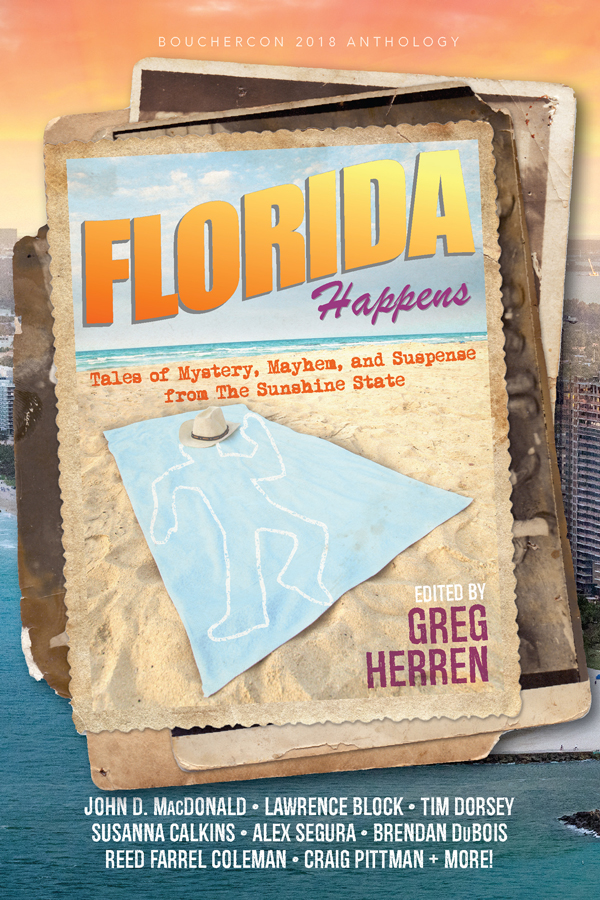
Speaking of short stories, I’m trying to develop a plan and a working schedule for myself over the next few months. I was talking to a friend yesterday over lunch–the same friend I am doing a favor for this afternoon–which was more thinking out loud than anything else. The market for short stories has really dried up so much; there are very few paying markets for short stories out there any more–at least ones that pay decently–so that writing them has to be primarily for the love of the form; and of course, crime stories, being genre, have an even more limited marketability; crime stories about gay men even less so. When I started writing these stories back in January I purposely wasn’t writing about gay characters, themes or tropes for precisely this very reason. But the Chanse stories…well, Chanse is gay, even if the stories I am writing aren’t about gay themed; I will be curious to see how that plays out, as I intend to , once they are finished and polished, submit them to mainstream markets. Two of the other stories also have a gay male main character; so we shall see how that plays out. My story in the Bouchercon anthology is also about a gay character and the sexuality plays a factor in the story. Will it be as well received as “Survivor’s Guilt” was two years ago? We shall see; but that is what makes the writer so crazy, you know; maybe the story simply isn’t as good. There’s no way of ever knowing for sure, which, of course, is the path to madness.

So, anyway, the plan is to wrap up all of these stories by the end of this month, which will require focus and work; April I am devoting to the two novels, before diving back into something else for May. I’d love to start writing this noir novel that’s brewing in my head for years; perhaps with focus and hard work I can get it done in May. This does sound terribly ambitious, and I am very much aware of that. And see–if my under-caffeinated fog this morning I forgot all about the y/a manuscript I need to get revised; that was my original plan for May. Heavy sigh.

I also have read two more of the Lew Archer stories by Ross Macdonald collected in The Archer Files. First up was “The Sinister Habit.”

A man in a conservative dark gray suit entered my doorway sideways, carrying a dark gray Homburg in his hand. His face was long and pale. He has black eyes and eyebrows and black nostrils. Across the summit of his high forehead, long black ribbons of hair were brushed demurely. Only his tie had color: it lay on his narrow chest like a slumbering purple passion.

The sharp black glance darted around my office, then back into the corridor. The hairy nostrils sniffed the air as if he suspected escaping gas.

“Is somebody following you?” I said.

“I have no reason to think so.”

“The Sinister Habit” is the more than slightly sordid tale of the Harlans, brother and sister, who have some money and run a private school in Chicago. It is the brother who engages the services of one Lew Archer. His sister has eloped with a man he feels is going to rob her blind and steal all of their money; the sense is given that the brother–who is fussy and prim– is probably gay but it’s never addressed or talked about; it’s that casual homophobia thing I’ve mentioned before. Their mother ran out on them when they were children with another man as well; the mother lives in Los Angeles. The story becomes twisty and turny after that; the man the sister has run off with is one Leonard Lister, who may or not be a four-flusher, as they used to say. People switch sides, Archer keeps digging, there’s a murder and then a gunfight at the conclusion when the true murderer is finally revealed.

This not the strongest story, not one of Macdonald’s best,  but still a pleasant read; while the characters may not always work and the plot itself gets resolved far too neatly at the end, it is a fun read due to Macdonald’s writing style; there are excellent word choices and incredibly clever phrases.

Next came “The Suicide.”

I picked her up on the Daylight. Or maybe she picked me up. With some of the nicest girls, you never seem to know.

She seemed to be very nice, and very young. She had a flippant nose and wide blue eyes, the kind that most men liked to call innocent. Her hair bubbled like boiling gold around her small blue hat. When she turned from the window to hear my deathless comments on the weather, she wafted spring odors towards me.

She laughed in the right places, a little hectically. But in between, when the conversation lagged, I could see a certain somberness in her eyes, a pinched look around her mouth like the effects of an early frost. When I asked her into the buffet car for a drink, she said: 

“Oh, no. Thank you. I couldn’t possibly.”

The vast majority of the Archer short stories begin with someone walking into his office and engaging his services. “The Suicide” is one of those rare cases when a chance encounter somewhere draws Archer into a complicated investigation; in this case, it’s on a train from San Francisco back to Los Angeles where Archer meets a very beautiful young woman who appears to be in some distress. She doesn’t accept the drink offer because she’s not old enough to drink; but when he offers her food, she is more easily persuaded. She winds up eating two sandwiches and pouring out her tale of woe to Archer; she’s worried about her older sister. She is a student at Berkeley, and her weekly check from her sister hasn’t arrived; she has also called and called to no avail. No one seems to know where her sister is, or what has happened to her. Archer decides to help out this damsel-in-distress, and thus begins a wickedly twisting tale that includes a brutal ass of an ex-husband; Las Vegas mobsters; a fortune in missing money; and a horrific, disfiguring beating of a woman. It’s a clever tale; it works better than “The Sinister Habit,” and all of Macdonald’s writing strengths are here; great brief staccato sentences, whip-like descriptions, the world-weary cynicism. Perfection,

And now, back to the spice mines.

IMG_1995

Never Surrender

’tis Wednesday already; the week is already half over. Next week is the combination Tennessee Williams Festival/Saints and Sinners weekend (AIEEEEE!), which is going to be, literally, insane. But I can hang; it’ll be lovely seeing everyone, but I can’t believe it has come up upon us all again so suddenly. It’s like I wasn’t paying any attention and the next thing you know, BOOM, there it is.

As I continue to work on this plethora of short stories (I started ANOTHER fucking one yesterday), I am, however, pleased to announce that one of the ones I’ve done since the beginning of the year will be appearing in the anthology Murder-a-Go-Go’s. The book’s theme is crime stories inspired by songs of the Go-Go’s, and will be edited by the amazing Holly West, and published by the crew at Down and Out Books. My story was inspired by the song “This Town” and is also, coincidentally enough, titled “This Town.”

Our IDs were fake, but no one seemed to care. Even when a burly bouncer asked to see them, bare meaty arms adorned with tattoos, bored eyes flicking over the laminate before waving us inside. Celia was right about that, like she was right about everything. She could always find someone with coke to share or sell, or who was happy to share their blunt with us. She was a golden girl, the kind I used to think only existed in books or movies, the girl that’s too perfect to exist, the one every other girl wants to be friends with, wants to be. The one all the guys notice first, their eyes wide open and their jaws gone slack.

 She always had the trendiest new make-up, the first to try out a daring new look we were too cowardly to try but quick to copy, always the first, the one everyone else imitated. She seemed to glow from inside, drawing everyone’s eyes to her effortlessly, and she somehow managed to always look perfect, even when she was drunk, even after dancing for hours when our make-up was running down our cheeks and perspiration dampened our armpits. Her skirts were just the tiniest bit shorter than everyone else’s, her tops seemed to fit her in a way they didn’t fit anyone else, her hair thicker and shinier and bouncier. She pulled in guys like night insects to a white light, caught up in her magic, wanting her. They only noticed the rest of us once she’d turned her attention elsewhere. We didn’t mind taking second place to her because it seemed like the natural order of things. She always knew the right thing to say—whether kind or insulting—and we all gravitated to her, wanting to be her friends, to be her. She was our pledge class president, organized, efficient, determined we be the best pledge class our Omega Psi chapter had ever seen. Even the sisters seemed to be a little in awe of her, grateful she’d picked Omega Psi out of all the offers she’d had—every sorority had offered her a bid, I’d overheard one sister telling another at Monday night dinner, her voice awed as she went on to say that had never happened in the history of the Greek system at Tulane.

And she made us all feel special, whispering “Sisters” to us as we hooked our pinkie fingers and whispered the word back to her, committing to a lifelong bond with her.

I am so glad they liked this story, because I loved it. It’s soooo dark. When I was going through Go-Go’s lyrics to choose a song, I was really surprised; I knew all the songs by heart–if I heard one I can sing every word–and danced like crazy to them, always thought they were these upbeat cheerful songs…and then yikes! Reading the lyrics without hearing the music? JFC, are these songs dark. I mean, check out this verse from “This Town”:

Change the lines that were said before 
We’re all dreamers – we’re all whores 
Discarded stars 
Like worn out cars 
Litter the streets of this town 
Litter the streets of this town

I mean, we’re all dreamers – we’re all whores? As soon as I read that line, the story just jumped into my head; a group of girlfriends, on Fat Tuesday,  wandering around in the Quarter getting wasted…and then the first line of the story popped into my head: Our ID’s were fake but no one seemed to care. That was how it started, and the next thing I knew I had over four thousand words and a very rough first draft.

I love when that happens. And the editor liked it! YAY! Huzzah for good news! It gives me hope for these other short stories I’m writing.

And I also have read some more stories for the Short Story Project. First up is “Damage Control” by Thomas H. Cook, from the MWA anthology Manhattan Mayhem.

She’d been found in the dilapidated Bronx apartment where she’d lived for the past seventeen months. It was a basement apartment and had only a couple small windows, but she’d make it darker still by drawing the curtains. It was so dim inside that the first cop to arrive had stumbled about, looking for a light switch. He’d finally found one only to discover that she’d unscrewed all the light bulbs, even the ones in the ceiling and the fluorescent ones on either side of the bathroom mirror. Neighbors later told police that they hadn’t seen a single sliver of light coming from her apartment for well over a month. It was as if the terrible capacity for destruction that I’d glimpsed in her so many years before had at last grown strong enough to consume her entirely.

This is a truly sad story; in which a man is forced to look back on a painful decision made years earlier, when his family took in a foster child to give their only child a sister. The two girls got along well at first, but the foster child became a problem child, possibly even dangerous, and for the sake of their blood daughter they gave the foster child back to the system. Now an adult, she has died, and he is having to reflect, remember, what happened all those years ago, wonder if things could have been different, if maybe he had tried a little harder maybe things wouldn’t have ended so badly for her. There’s a horrible twist at the end as well, which makes the story all the more poignant and sad; about how a life can be so easily wasted and thrown away, based on a perception that ma or may not be correct.

I then moved on to a Shirley Jackson story, from the recent collection Let Me Tell You. The story is titled “Paranoia.”

Mr. Halloran Beresford, pleasantly tired after a good day in the office, still almost clean-shaven after eight hours, his pants still neatly pressed, pleased with himself particularly for remembering, stepped out of the candy shop with a great box under his arm and started briskly for the corner. There were twenty small-size gray suits like Mr. Beresford’s on every New York block, fifty men still clean-shaven and pressed after a day in an air-cooled office, a hundred small men, perhaps, pleased with themselves for remembering their wives’ birthdays. Mr. Beresford was going to take his wife out to dinner, he decided, going to see if he could get last-minute tickets to a show, taking his wife candy. It had been an exceptionally good day, altogether, and Mr. Beresford walked along swiftly, humming musically to himself.

I absolutely, positively love love LOVE Shirley Jackson. The other night, as I was trying to decide which story to read next, I suddenly realized that I have three short story collections by one of my favorite authors and haven’t read any of them. I immediately grabbed Let Me Tell You and sat down with it. “Paranoia” is brilliant, positively brilliant; to tell you why would spoil it, and if its spoiled the effect is ruined, but it is, with every word and sentence, the perfect fictional story representation of defining the word paranoia. It reminded me, as I kept reading, of precisely why I love Jackson so much. God, what a great story!

And now, tis back to the spice mines with me.

IMG_1984

Out of Touch

As a general rule, my blog is something that I simply sit down and write while I drink my morning coffee and wake up in the morning. It’s part of my waking up process, so not only is it unfiltered, it’s unedited; I rarely go back and reread it with an eye towards fixing mistakes, sentences where I’ve left out a word, spelling mistakes that spell check  didn’t catch as I write, etc.

But every once in a  great while, I’ll start writing a blog post and am not entirely comfortable with discussing the subject matter publicly. I’ve said things before publicly that later were removed from their proper context and thus twisted by someone with an agenda determined to make me look bad; so when I am talking about a sensitive topic, I tend to either shelve the blog post entirely, or put it aside to read over again at a later date, or post it so that only I can see it. I worry about posting things because the last thing I ever want to do is deal with an angry on-line lynch mob, or say something that, taken out of context years later, will be used to bludgeon me; lynch mobs don’t care about either context or nuance, alas, and once the torches are lit and the pitchforks hoisted, no one listens.

This has happened to me more than once, as I said, so I tend to be careful.

So, in some ways I’ve become self-censoring; but this self-censoring has also saved me a lot of stress, aggravation, and worry. I also rarely, if ever, go off on one of what my friend Jeffrey used to call my Julia Sugarbaker rants. This has helped lower my blood pressure, for one thing; I still do it, of course, I just don’t make it public anymore. My opinion on anything and everything isn’t so amazing and profound that I feel it needs to be shared because it will change minds and make the world a better place. Simply because I can speak my mind freely on-line doesn’t mean that I should. I have a right to my opinion, as does everyone, but I also have a right to keep my own counsel and I also don’t have to argue with anyone I disagree with publicly; and the reality is, I am never going to be convinced that I as a gay man am not entitled to equality; that transfolk have no right to human dignity; that women are lesser than men; or that white people by virtue of being white are somehow superior to people who are not. I also will never be convinced that people do not have the right to be seen as individuals, rather than any subgroup they might be put into by other people. There is nothing worse than being judged by preconceptions you have no control over.

As you know, Constant Reader, I’ve been engaged in something I call The Short Story Project since the beginning of the year; in which I am focusing most of my fiction reading on short stories rather than novels. I’ve not read any novels since the first of the year; I am still reading nonfiction. The reasoning behind this was twofold; because I don’t think short stories get nearly enough attention from readers, myself included, and because I have always struggled with writing them; this was, for me, a self-improvement exercise as a writer. It has helped in that regard; I have written more short stories in the first few months of this year than I have in any year since I decided to pursue this.

One of my favorite writers from the past is Ross Macdonald; he’s a favorite, but he isn’t up there with James M. Cain and John D. Macdonald and Daphne du Maurier and Shirley Jackson and Faulkner and some others than I consider not only to be iconic but also consider to be major influences on me and my work; Ross Macdonald is an influence, but not as much as the others I named and some others unnamed as well. But I do love Ross Macdonald (I love his wife Margaret Millar more, but that’s another blog entry, methinks), and several years ago I bought a compendium called The Archer Files, in which Macdonald’s short stories, some of which were unpublished, were pulled together in one volume and the editor did some academic discussion of them.

I am still kind of processing one of his short stories; “Strangers in Town.”  I have to give Macdonald credit for writing a short story in that time period (early 1950s)  with characters who were people of color who also drove the story, but…yeah, the casual racism of the period slapped me in the face. That story today most likely would not be published as written, but it has value historically since it stands as an example of how casual and easy systemic racism was in that period. He used parts of it in the next story in The Archer Files, and it also apparently structurally was important to his novel The Ivory Grin, which I think I’ve read; I miss my old ability to recall plots and characters and details of every book that I’d read. It would be a lot more helpful now than it ever was when I retained the skill, you know? Heavy sigh.

One of the issues of this new century involves separating the art from the artist; in other words, can you enjoy art by someone whom, as a private citizen, is problematic? The best examples of this, to name merely two, are Woody Allen and Roman Polanski. I am not a fan of Allen’s art nor have I ever been; but Roman Polanski? He fled the United States to avoid jail on charges of statutory rape. Yet I love his films Rosemary’s Baby and Chinatown; films I saw and enjoyed before he committed his crime.  Distaste has certainly kept me from seeing anything he has done since. But I still love those two films, and rewatch them on occasion; perhaps someday I will rewatch them to look for problematic tropes to unpack.

Likewise, other works from the American past are rife with tropes of sexism, homophobia and racism; the society and culture were sexist, racist, and homophobic; how can the art from that time not be? Yet but it’s how things were back then seems like a feeble response and defense; but I do think it’s possible to enjoy the art as long as one recognizes the presence of things which would never pass muster in today’s society and culture; there is a wonderful essay/book to be done about homophobia in crime fiction of the past, and how gay characters were seen/depicted/represented. I used to want to write that book, but I will undoubtedly never have the freedom and luxury of time to do the necessary research and writing of a book that would prove, ultimately, to have an exceptionally limited audience.

You can’t truly equate racism with homophobia; while there are similarities in oppression and bigotry, both systemic and personal, faced by the two communities, they aren’t the same thing; the differences can be, and are, as significant as the similarities. As a white gay man, I have systemic privilege of skin; unless my car has bumper stickers denoting it as belonging to a gay man I can feel relatively safe in my car from ‘driving while gay’; and while there are certainly levels of homophobia within law enforcement, just walking down the street I don’t need to be worried about being either harassed by law enforcement or profiled. Reading works, or seeing films, that are blatantly homophobic or have stereotypical queer characters who are there to be laughed at, mocked, or held in contempt, while somewhat jarring doesn’t feel the same to me as reading or seeing something current with those same metrics. I am not willing to judge a writer from the pre-Stonewall culture as harshly as I am someone from the present day; it is how things were. You cannot write a realistic novel or short story today about queer characters in the 1950’s, for example, without including homophobic characters and a certain degree of self-loathing in the queer characters themselves: they were outlaws, held in contempt by the society as a whole.

Yet Macdonald’s story bothered me; despite being written in a time when he was undoubtedly considered brave for writing characters of color who weren’t criminals or the kind of “Stepin’ Fetchit” stereotypes so prevalent in films of the time. And yet…and yet…

“Strangers in Town,” by Ross Macdonald, The Archer Files

“My son is in grave trouble,” the woman said.

I asked her to sit down, and after a moment’s hesitation she lowered her weight into the chair I placed for her. She was a large Negro woman, clothed rather tightly in a blue linen dress she had begun to outgrow. Her bosom was rising and falling with excitement, or from the effort of climbing the flight of stairs to my office. She looked no older than forty, but the hair that showed under her blue straw hat was the color of steel wool. Perspiration furred her upper lip.

“About your son?” I sat down behind my desk, the possible kinds of trouble that a Negro boy could get into in Los Angeles running like a newsreel through my head.

That last sentence! Referring to an adult young man of color as a “Negro boy”! And the story goes on with this sentence: She leaned towards me with the diffident and confiding charm of her race.

Yikes. Yup, no stereotyping going on there.

The murder victim was a “light-skinned brown woman.” Another “had straight black hair, trimmed short, and black-rimmed harlequin spectacles that gave her face an Asiatic cast.” Throughout the story, the word “Negro” is used; this is also jarring, because with all due respect, it’s the word that was used politely, rather than the other “n” word. But…no one said “African-American” back then…the police are also willing to view the murder of the light-skinned woman as a possible suicide–which would mean she’d slit her own throat; I can’t imagine anyone ever committing suicide that way–but the white cops’ willingness to believe that a woman of color could or would is also telling.

Other than these issues, it’s a good story; the way it twists and turns and moves away from the original crime and suspects makes for a great detective yarn; the cops never would have solved this, and the son of the woman who hired Archer most likely would have taken the fall for the crime. So, there’s that.

But the next story in The Archer Files, “Gone Girl”,  a different version of the same story, without the people of color, is also a much stronger story.

It was a Friday night. I was tooling home from the Mexican border in a light blue convertible and a dark blue mood. I had followed a man from Fresno to San Diego and lost him in the maze of streets in Old Town. When I picked up his trail again, it was cold. He had crossed the border, and my instructions were to go no further than the United States.

Halfway home, just above Emerald Bay, I overtook the worst driver in the world. He was driving a black fishtail Cadillac as if he were tacking a sailboat. The heavy car wove back and forth across the freeway, using two of its four lanes, and sometimes three. It was late, and I was in a hurry to get some sleep. I started to pass it on the right at a time when it was riding the double line. The Cadillac drifted towards me like an unguided missile, and forced me off the road in a screeching skid.

Rather than being hired by a mother whose son is being accused of murder, Archer now happens onto a strange situation while driving home from a case. He decides to stop for the night at a hotel, and becomes involved in another murder investigation. The basic story after this is the same, both structurally and thematically, but the casual racism is gone and it’s now about white people, and interestingly enough, not nearly so problematic as “Strangers in Town.” The second story works better as well; I’m not sure why that is; did it work better because he didn’t use the people of color, and thus without the stereotyping it worked better?

I am still processing this. As I said, I love Ross Macdonald, and his writing is extraordinary. He’s one of the greats. But what, and where, is that line?

I don’t know the answers; I don’t think anyone does, nor do I think there even is one answer. I don’t recall ever getting any racist vibe from Macdonald’s work before, but on the other hand, I may not have been looking for it, either; the subtleties of systemic prejudices aren’t always apparent at first glance, or even second. Sometimes it takes someone else to point them out.

While I can’t speak to whether racism in American art from the past should not be seen, viewed or read, I can speak, for myself, about art from our homophobic past (while recognizing they are not the same things). Seeing casual homophobia in American art from the past, while jarring, doesn’t bother me as much because that’s the way things were. I don’t think it should be glossed over, or censored out of existence; if we forget the past and how things were, we can’t make things better for the future nor can we understand not only how far we’ve come but how far we have to go; we cannot truly understand the present without understanding our past–and, for want of a better term, in stark black-and-white; we have to understand and appreciate the shades of gray.

And on THAT note, it’s back to the spice mines with me.

Here’s your Monday hunk.

IMG_2015

You’re the Inspiration

Ah, another week.

I finished watching Black Sails this weekend, and wow. Wow. WOW. That was, without a doubt, one of the best series finales I have ever seen. I cried. Yup, I did. There was a twist there at the end that I did not see coming, and it was so incredibly moving and emotionally satisfying…I mean, wow.

I cannot recommend this show highly enough.

kinopoisk.ru

I love pirates, which was part of the reason why the Pirates of the Caribbean movies were so innately disappointing; sure, I enjoyed Johnny Depp’s performance in the first one, but after that they just seemed like parodies of the first, and the plots, such as they were, were ridiculous. I think I was very young when I saw Treasure Island in two parts on The Wonderful World of Disney, and around that same time A High Wind in Jamaica also aired. I became all about the pirates–there were even Nancy Drew (The Haunted Showboat) and Hardy Boys (The Secret of Pirates’ Hill) and Three Investigators (The Secret of Skeleton Island) adventures revolving around pirate treasure; and any number of Scholastic Book Club mysteries about searching for treasure left behind by pirates. I read Robert Louis Stevenson’s Treasure Island when I was around ten; it was an illustrated version, and I remember the pictures as if I just saw them yesterday.

So, yeah, I’ve always loved pirates.

387

I started watching Black Sails a year or so again, and it just didn’t catch on with me. I don’t know why, nor do I remember why. I gave it two episodes and stopped, and I do remember thinking, meh, it’s visually stunning, but I don’t care. But earlier this year, needing something to keep me entertained whilst on the treadmill, I decided to give it another whirl, and got sucked right in.

1200x630bb

Visually, it is an absolutely stunning show. Set in the Bahamas in the early eighteenth century, Nassau in particular, the scenery is spectacular. The visuals are breathtakingly beautiful; the ships at sail, the water, the island, the beach, the town, the costumes. Visually, it’s a sumptuous feast.

In the first episode we meet Captain Flint, John Silver, and Billy Bones; as soon as I heard the names (I only knew it was a pirate show) I knew what it was: a prequel to Treasure Island. This time around, that really got my interest going. But what was strange was that there were also characters who actually existed in history: Charles Vane, Jack Rackham, Anne Bonny, Edward Teach. The lines between the real characters and the fictional soon became so blurred that I forgot I was watching a prequel to Treasure Island most of the time, and was watching a fictionalized version of history; Nassau and the Bahamas were  a failed British colony basically taken over by pirates; the British Empire was too busy dealing with the War of the Spanish Succession to be bothered with doing anything about Nassau; and Captain Flint’s plan to set up a republic of pirates and escaped slaves was actually based in history; I have a book about it called The Republic of Pirates that I haven’t gotten to read yet (but I’ve moved it up the TBR pile).

And of course, the cast is stunningly beautiful.

I mean, Tom Hopper as Billy Bones:

black-sails-tom-hopper-content_1

Toby Stephens as Captain Flint:

2016 Winter TCA Portraits

Luke Arnold as John Silver:

2OLPGFFd_400x400

Zach MacGowan as Charles Vane:

Zach-McGowan2

And my favorite character turned out to be Jack Rackham, played by Toby Schmitz.

Black Sails Season 4 2017

What was also enjoyable to me was that the cast was also diverse; and the women weren’t there simply to look pretty, be ogled, or be used as sexual pawns. They were integral parts of the cast, and drove a lot of the action on the show, and were incredibly strong. Eleanor Guthrie ran Nassau; Max moved from being a mere worker in the brothel to major position of power; Madi was Queen of the Maroons and spoke for/led her people, and of course, Anne Bonney was just a badass.

black sails women

I also loved that the show included the Maroons; escaped slaves who made their own community and resisted being recaptured.

ships-in-black-sails-season-4-produced-by-micheal-bay

All of the characters were fully realized; and the plot was so intricate as each character formed friendships/romances/alliances, and betrayed others, as they tried to gain the ascendancy, not only in Nassau but also over the treasure of the Spanish galleon Urca de Lima. It was interesting watching the characters change and evolve based on their experiences, what they went through, and what they suffered. The relationships, the friendships, completely made sense–even when it came to the betrayals. I was so caught up in the story that it wasn’t until the fourth season that I started remembering, “oh, no, this is the prequel to Treasure Island, and the pirate republic eventually collapsed,” which meant, to my fear and horror, that most of the cast wasn’t going to get out alive.

v1

Also, serious props to the characterization of Woodes Rogers, the British man who comes to the Bahamas determined to solve the piracy problem with a good heart and good intentions; watching him slowly evolve into one of the best villains on the show as his ideals are slowly stripped from him by circumstance and reality was mesmerizing.

160120-sponsored-starz-article-tease_rb5zob

All of the characters evolved and changed, which is a rarity in any television series, but the acting and writing in Black Sails was so superb it never hit a false note.

Black Sails Key Art Shoot 2015

And it was interesting in that not only were women shown nude, but there was full frontal male nudity as well.

In the first season there was a lesbian relationship–which I figured, of course there is, gotta give the fanboys some hot girl-on-girl action–but again; while there were sex scenes, the relationship wasn’t prurient and was depicted as honestly and as importantly as any of the heterosexual romances.

I don’t want to give spoilers, and I won’t–because some of the most powerful surprises in the show have to come as a surprise, or will lose their impact–but in Season 2 as we get the back story on one of the principle male leads….he’s gay, and that changes, not only the character, but everything that came before. And his story is absolutely heartbreaking, and played brilliantly.

And the ending! Again, no spoilers, but I cried. And I don’t think I’ve ever seen a series finale that felt so right, so perfect, as an end for a story. Where Black Sails succeeded was in making you care about the characters and understanding their relationships, rather than just focusing on story and the size and scope of the show–which, don’t get me wrong, is also pretty amazing.

Bravo, Starz. This is the second series of yours I’ve watched all the way through–the first being Flesh and Bone, which was also brilliant–and I have to say, Starz is kicking ass on the series front. Wow. Loved it.

19bbpt1nmp93zjpg