Human

And it’s back to work.

What a lovely time the last five days were; probably the best stay-cation (I do really hate how we are making up words these days) I’ve ever had, and I think I am probably going to need to do this periodically; perhaps every couple of months or so. Don’t get me wrong, I do love traveling and visiting places, but having time to relax, catch up on rest, and focus on not only cleaning the house but getting some important writing work done cannot be over-estimated in importance. I also managed to get a lot of other loose ends tidied up, which was also equally lovely. This morning I need to send a bunch of emails, and then it’s back to normal; or what passes for normal around here.

I finished watching The Shannara Chronicles yesterday, and kudos to them for an excellent ending to Season 2 and a terrific cliff-hanger. Should the show be renewed, it’s essentially rebooted; if it isn’t, well, it had a lovely run for two seasons. It was originally on MTV, where it was almost as highly rated as Teen Wolf, but moved to Spike for its second season (MTV moving away from higher-cost scripted series), where it lost a significant chunk of audience. If it is popular in streaming, though, it’s entirely possible either Netflix or Hulu could continue it. It’s very well done; a glossier, prettier Game of Thrones, and it’s not like there aren’t over twenty Shannara novels by Terry Brooks to use as source material.

As I said, it would be an enormous shame should the series not continue.

I also did some writing yesterday; again, not so much actual writing as making notes for the stuff I am working on; my creativity has been raging out of control lately, which is fantastic, of course. I made notes for an old story called “The Trophy Boy,” which I think could be redone as a crime story, and came up with some ideas for another short story that’s been floating around in the outer reaches of my creativity, “Head Shot.” I also made notes for a noir novel idea I had, centered around a French Quarter strip club, Girls Girls Girls, and of course, more notes on both the Scotty AND the WIP, which is very exciting. I think the thing I am enjoying the most about not being on deadline is the freedom to not stress about free-associating something else without being slavishly devoted to, or stressed about, whatever the contracted piece might be.

It’s kind of a lovely feeling to embrace the creative ADHD for a change, rather than trying to fight it.

Then again, if giving into the ADHD makes the work I am focusing on (supposedly) better (which I think it is), this is good.

And now back to the spice mines.

33221542_1848752302085671_5741669550110277632_n

Holding Back the Years

Yesterday was rather dreary, weather-wise, and I feel fairly confident we are still under a flash-flood warning; but this morning all I see is blue sky and sunshine. Things still look a little damp out there, but over all, much better than one could have hoped. And in checking the project path for Alberto, the cone of uncertainty has narrowed to New Orleans in the west to Panama City in the east; much, much smaller cone; but we are on the outside of the western edge. As storms also tend to turn to the east–even Katrina did before landfall–I’ve breathed a slight sigh of relief this morning.

It is, I suspect, going to be a long hurricane season–particularly since it doesn’t officially start until June 1.

I slept deeply and well last night, and my back–which was aching–no longer hurts, which is a good thing. I wish I could figure out what the hell I am doing to it to make it hurt in the first place, so I can be more careful, but I am more than happy to take the pain being gone as a win this morning. Huzzah!

Yesterday I was scribbling away in my journal as I continued to read Philip Roth’s When She Was Good. The writing is very good, and the characterizations are also quite good; all that remains is the plot/story, and I am intrigued enough with it to continue reading it. Maybe I should dial it back for a while on the crime fiction and read outside my genre for a little while; not just for a break but to come up with better ideas for my own writing, which can never hurt.

I wrote all kinds of notes in my journal yesterday; notes for the WIP, notes for the short stories “Never Kiss a Stranger” and “A Holler Full of Kudzu” and “The Brady Kid” (I’ve not even thought about the latter for months now), so I am feeling all kinds of productive here in the Lost Apartment this morning. I am going to actually write today for a while; I also intend to do some reading–not just the Roth, but I am going to read everything I’ve written on the Scotty thus far and make notes. I also don’t know my characters in the Scotty book as much as I should, and I need to get the plot figured out so I can get the goddamned draft done. I also have a few other things I need to get done as well.

And there’s always cleaning, of course. I am currently working on washing the bed linens, and the living room of course needs to be vacuumed. I also need to clean out my car a bit; and Armor-all the inside of my car now that summer is looming. I also need to put the recycling out. But I have to say, this well-rested thing is actually working out quite beautifully. I could easily get very used to it, I must say. I must also say that I’m greatly enjoying this creative phase I am currently experiencing. I am thinking about character, and why I write the things I write, and how to broaden my reading audience. I’ve been thinking about moving forward with the agent search, how best to approach an agent, how to put my best foot forward, not only with industry professionals but also with the readers of my genre.

I’ve also come to realize that, over the last few days, as I’ve put my finger precisely on why I wasn’t getting anywhere with “A Holler Full of Kudzu” is because I was trying to not be subversive; the write from the gay male point of view without rubbing people’s faces in the sexuality. But WHY? Why would I do that? The point of the story, the theme, if you will, has everything to do with the point of view character’s sexuality; of beginning to understand what your sexuality is and that is partly why you feel different from everyone else, and also, learning how people feel about people who are like you, and how dangerous those feelings are, can push you deeper into the closet. I think the theme may be larger than the story itself, to be completely honest with you; which is why I am tending to think this story may actually be a novel a-borning in my mind rather than the lengthy short story I was thinking it would be. As I plug in some of the story pieces today that I brainstormed in my journal last night, I will come to a better understanding of the story and how long it is going to be.

Likewise, “Never Kiss a Stranger” is becoming much longer than I originally thought it would turn out to be; it’s going to come in far longer than the six or seven thousand words I originally had planned. That will make it harder to place, of course–not that it’s not already hard to place stories with gay characters and themes; it’s almost impossible–but I’ve also decided that I simply have to stop writing things that are specifically intended for markets. I have to write the story the best I can and then try to find a market for it. And I can always, always, always, simply do another collection of stories.

I also like that “The Brady Kid” is starting to shape in my mind; mainly, who the point-o-view character is. Part of the issue with some of my stories is that maybe I don’t define the characters enough; it’s hard to write a good story when you don’t know who your characters are.

I’m also finding that experimenting with voice and style and tone and place is much easier to do in a short story rather than in a novel. I think writing these stories is making me a much better writer, to be honest, which is ultimately going to be more helpful to me in the long run than I’d possibly thought. During my brainstorming last night I also figured out some of the problems I am having with the Scotty novel; not solutions, per se, but actually diagnosing the problems, which is key to figuring out how to solve those problems.

Which is fun, actually, and I have to say, it’s so awesome that writing is fun again.

I also read some short stories. Here’s one: “Crazy Margaret” by Jack Fredrickson, from Ellery Queen’s Mystery Magazine, September/October 2017 issue.

The gravestone had room for only the first name, but it was the largest he could carry up the hill. He set in on ground covered now, as then, with curled brown leaves.

He’d meant to slip into town quietly, place the stone, and slip out again. There was no one from his old life he wanted to see. But a voice had called his name when he was gassing up the rental, a guy he’d known in high school. They’d chatted for a moment before Dave, acting casual, asked about her.

The old classmate had scratched his head, surprised. Crazy Margaret, he said; that’s what the kids sneaking out there called her after she dropped out of school. But new kids came along, kids who didn’t know her, and soon enough, nobody gave her any mind at all. “Hell, it’s been at least twenty years,” he said. “She could be dead.”

I enjoyed this story; which is told from the perspective of someone coming home to their small town and remembering something that happened years earlier, something criminal; this is something I often do in my own stories–in fact, “This Thing of Darkness” is sort of one of these stories. The Margaret of the title is a beautiful young woman who sunbathes out at the lake where she lives in skimpy bikinis; luring young boys out there to watch her and possibly, just possibly, killing some of them. It’s sort of a retelling of the siren myth, from the Greeks: the beautiful woman who lures men to their deaths. Although…really, should the boys be out there spying on her in the first place? Isn’t that a form of harassment?

Don’t get me wrong, I enjoyed the story; it’s very well done and how Margaret gets her own punishment for what she’s doing is very Tales from the Crypt or House of Mystery; crime is always punished in a macabre, ironic way and so it is for the Crazy Margaret of the title.

And now, back to the spice mines.

31646767_1839316516362583_230809837385023488_n

Friends and Lovers

Well, I wrote practically nothing yesterday; maybe a couple of hundred words on “This Thing of Darkness.” I did reread Chapter 2 of the WIP, and realized it needs a complete overhauling, but that’s fine. There’s an endgame in sight, and now I kind of know how to get there, so I don’t mind the massive work that will be required to get me there. Huzzah! And I know that, when it is completed, I will be enormously happy with it.

It’s weird because this story; these characters, have been brewing inside my brain for a very long time; I’ve used this fictional town in Kansas for aborted novels and short stories before. I’ve always wanted to write about this town–I cannot deny that it is based on/inspired by Emporia, Kansas, the seat of the county where I spent five years of my life. When you said you were going to town you meant Emporia, even if you lived in a one of the small hamlets scattered throughout the county. My particular hamlet, Americus, was one of the larger ones; I believe with a population of approximately 932. I do know it was more than nine hundred and less than a thousand. I know that the main crossroads of the town had a flashing red light suspended on wires over it’s center, the town park was right on one corner and the bank was on another. I’ve gone back to the well with Kansas and that area several times in my writing career, but it never really ever seems to get anywhere. Sara was set in Kansas, in a county based on the real one,  in a high school based on the one I attended, but very loosely.

I’ve always wondered if it’s because I’ve not been back there since leaving in 1981 that the stories are so hard, so difficult, to write; the place so hard to envision. And then again, of course it’s ridiculous because any inconsistencies, or changes in my fictional town, might not matter simply because I am writing about a fictional place.

But this manuscript, which I’ve really been working on, in one shape or another, since about 1982 (!), is hard for me because I’ve been trying to write this book for over thirty years. The story and plot has changed dramatically over those years, the names of the characters have been changed, and I’ve blatantly stolen or adapted plots that were originally thought up for this book for others (Murder in the Garden District being one of them; the murder in the back was originally set in my fictional city in Kansas in its original version; for a Chanse novel I had to pare back the literal dozens of suspects and adapt it into New Orleans). For years in the aughts I called this “the Kansas book” as it went through different iterations and ideas and how the story worked; it was originally intended to be a two different time line novel, with a crime that was committed back in the 1970’s with the wrong person convicted and going to prison and dying there; a chance encounter between two people who knew each other back there and then in New York City–one now a successful realtor, the other a successful journalist–and a casual conversation in which the realtor reveals to the journalist that the wrong person was convicted and the murder was a lot more complicated than anyone knew, gets her to thinking. Then she finds out the realtor went back there and also turns up dead; this brings her back as well, as she investigates the current murder and the old one at the same time. I thought it was a very clever idea, but I could never get the story to work for me properly; and I still like the idea; I may write it someday. But I’ve taken the characters and the town from that idea and used it for this one. I also then tried another version, where it was the same town and the same characters and the same set up from the past, only with a dramatically different storyline for the present.

And now, I am using the town and the characters for something completely different.

As I have said numerous times, I am nothing if not stubborn, and apparently I am determined to someday publish a novel about this fucking town and these fucking characters.

“This Thing of Darkness”, the short story I am currently working on, while set in New Orleans, also harkens back to Kansas in some ways. I like this short story, I like the idea behind it, and now it’s really just a matter of seeing whether or not I can pull it off the way I want to. I’ve also realized that my own satisfaction with my short stories is the most important thing, not whether they get published by a magazine or not. I also need to expand my scope of where I submit short stories to; not everything works for the major crime magazines, and who knows? Maybe some of these stories are more  correct for other markets. I’d love to have something in some of the Southern magazines, for example.

Anyway. I am looking forward to this weekend, and hope you all have a lovely, pleasant one as well.

And now, back to the spice mines.

32831365_1845850449042523_4356301928657846272_n

Dress You Up

I started writing another book yesterday.

Please note I didn’t say worked on the book, but started writing another book. Yes, that’s right; I am working on a Scotty book (I did start writing Chapter Fifteen yesterday), have the WIP as well that I’ve not touched in a while, and am trying to whip the last two stories for my short story collection into shape–but I started writing another book yesterday.

I am clearly completely insane.

I’ve been toying with an idea for a noir novel for awhile, with a gay main character; kind of a Hard Case Crime-style novel with a gay male protagonist. I know who my main character was; I knew who the young, sexy young man and young woman who would be the focus of the cover were, and even had a slight, amorphous idea of the plot of the book; I even knew the opening scene of the book would take place in a deserted alley late at night behind the gym the main character owned; the gym was simply called Muscles, and that was also the name of the book. But as I finished polishing “My Brother’s Keeper” for it to be read aloud for its final polish, an idea kept nagging at me. And as I started writing Chapter Fifteen, it began taking shape in my mind. And I knew it was the opening of Muscles, which I’ve never known quite how to structure. It came to me yesterday while I was working on other things, so I decided–in my Greg is completely crazy way, that the smart thing to do was go ahead and write it down, before I forgot it–I’ve done that so many times–and so I started writing it. Next thing I knew I was a thousand words in, and I ran out of words–but I know where it needs to go from that opening, and I even know how chapter two is going to play out. I really have this wonderful idea for the continuation of the chapter that I really want to try to do–weaving back story in around action–which is going to be hard to pull off, but I am very excited to try it.

I can’t wait for this weekend to get here so I can seriously work on all of this stuff!

I’ve also had three more ideas for short stories pop up lately–all amorphous, all thoughts simply swirling around inside my head, without form, without fully formed characters, without a cohesive plot or story–but the titles are there: “Malevolence,” “Headshot”, and “One Night at Brandy’s Lounge.” It feels so good to be creative again, you have no idea, Constant Reader; last year was such a barren, fallow experience creatively that, while it’s frustrating in some ways to have so many ideas swirling around inside my head, making it hard for me to focus the way I need to on the stuff that needs to be focused upon, it’s also kind of a blessed relief to know my creativity is still there. It’s also weird, because I’d forgotten that it’s always like this when I am writing a book; my creative ADD kicks in and I am all over the place, and every time I have to re-discipline myself, keep it under control and focus it on the work at hand. I think this is also why I never like my novels very much and am never very satisfied with them; because the entire time i am working on them I want to be working on something else and it feels forced.

WHY DIDN’T I FIGURE THAT OUT THIRTY BOOKS AGO?

Sigh.

At least I’m still capable of learning, which is something.

So, in honor of me learning something, here’s the opening of the first Chanse MacLeod short story EVER, “My Brother’s Keeper”:

It had been twenty-five years but Cottonwood Wells still stank.

I’d forgotten about the smell from the oil refinery just outside of town, near the oil fields where my father had worked. It hung over the town like a shroud, poisonous and foul. When the wind blew from the north the stench was almost unbearable. The trailer park where we lived was on the side of town closest to it so there was no escaping it, but I never got used to it. I tolerated it, like so many other things I tolerated growing up in that town, but I was always aware of it.

There was a Best Western now at the exit from I-10, and a Days Inn across the street. I pulled into the Best Western parking lot because it was easier. I got my briefcase and rolling suitcase from the hatch of my Subaru Forrester. In the distance, on the other side of town, I could see the flaming stacks where they burned off excess gas at the refinery. What used to be fields just on the way into town from the highway was now the enormous parking lot of a sprawling Wal-Mart Super Center, a Lowe’s on the other side. Like everywhere else in America, Cottonwood Wells had fallen victim to the plastic commercialization of the chain stores. There was a Whataburger and a McDonalds on the other side of the highway, and gas stations. I could see the line of fast food signs on the way into town past the Wal-Mart: Burger King, Arbys, KFC, Taco Bell, Pizza Hut. All we’d had when I was a kid was a Sonic Drive-in downtown on the main drag, and a McDonalds.

And now, back to the spice mines.

30171497_151853328989314_1784543801178865197_o

Born in the USA

Were I to ever write a memoir, I suppose the easiest thing to do would be divide my life into chapters of every ten years or so; my life has sort of been divided that way, almost corresponding with the calendar decades. I was born in 1961; ten years later one chapter of my life closed and another opened when we moved from the city to the suburbs; ten years later we left Kansas for California; 1991 marked my move to Florida, and 2001 was the return to New Orleans from a year in Washington D.C. (what I often refer to, in my head, as ‘the lost year of misery’). 2011 was the year I turned fifty, the aughts being my first full decade of living in New Orleans. Those chapters could then be divided into smaller brackets; the years in the suburbs, the years in Kansas, the bridging year in Houston, the transitional months in Minneapolis, the pre-published years in New Orleans; the pre-Katrina time as a published author, the post Katrina recovery years; I supposed I could mark 2011 as the beginning of another time, the manic productive years when I wrote so many novels and edited so many anthologies and so many short stories. 2017 was the year I took off, to catch my breath and relax and recharge and recover; it was also the year of paralyzing self-doubt and terror that I was never going to write again. Sometimes I wonder if the manic years were precisely what they were because of that fear: the fear that if I ever stopped I would never start again, that I would never start again.

One would think now, after the prodigious output of the last seventeen years or so, I would never doubt myself anymore, would never fear the fount might run dry; but I am just as worried and nervous and as full of doubts as I was in the years I dreamed of making this my reality and wrote and wrote and wrote. It never gets easier, the doubts and fears never go away. At least not for me; I cannot speak for other writers. But I do define myself as a writer. That has been my identity since I signed that first contract all those years ago; above every other identity I can be labelled, be it male or gay or American or New Orleanian or Southern; above and beyond all else I identify as author. 

In an interview recently about Lindsey Buckingham’s departure from the band and Fleetwood Mac’s decision to continue, and tour, without him, Stevie Nicks said, This is terribly sad for me, but I want to be happy and enjoy the next ten years. That may not be the exact quote, but its very close to what she said, and it hit me right at the core of my being. She–and the others–have always been about writing and creating and performing their music; but now they are getting older and wondering how much more time to do they have to do this thing they love so much? I would imagine Tom Petty’s death weighed pretty heavily on her; they were very close. It also made me feel my own age, and wonder about my own future. How many more years do I have to write the books and stories that I want to? What will I do if the day ever comes when I cannot do this anymore, when people don’t want to read what I’ve written, when no publisher wants to invest in getting my work out to readers?

Heavy thoughts, indeed, my own mortality isn’t something I’ve ever cared enough about to think about. But I would imagine, that no matter what else happens in my life, as long as I can type, as long as I can sit up in my chair and see my computer screen, I will keep writing. This compulsion will probably never go away; I know the stories will most likely never stop coming to my mind. Even when I wasn’t writing last year, the ideas were still coming; characters and stories and plots and those stray thoughts that always begin wouldn’t it be interesting if or I wonder what would make a person do such a thing or I wonder what would happen if…

My conscious decision at the beginning of this year to focus on writing, on rediscovering the joy I once always felt when I was creating, the sense of satisfaction felt upon finishing my work for the day, was perhaps the smartest thing I’ve ever done. I do enjoy doing this, even when it frustrates me, when the words won’t come, when I get behind, when I procrastinate and don’t do it even when I know I must, and that the best way to fight off those horrible self-doubts and fears and insecurities is to just fucking do it.

Nothing else matters, really, when it all comes down to it.

Solid

It still feels chilly this morning, after a weekend of lowered temperatures. But the sun is shining, and all feels well with the world. I wrote yesterday; a lot, in fact, well over three thousand words; which is a lot for me to do on a weekend day. I even did it all by two pm, so I had the rest of the day to putz around. I finished a very weak first draft of “Burning Crosses,” worked on “Don’t Look Down” some more, and finished a very weak Scotty Chapter 11. But i know how to fix “Burning Crosses,” so that’s not a problem, and I know what I need to do with “Don’t Look Down,” which I just can’t seem to focus on. I also recognize that my feelings about the Scotty manuscript are the usual loss of faith I always have somewhere mid-manuscript; and I just need to ignore it and soldier on, with the mantra I can always fix this later! I can always fix this later!

Which I seem to be using a lot lately. I’m not quite sure what that says about the quality of what I’ve been writing.

I’m in this weird place right now with my writing; trying to feel more confident in it and my ability, while at the same time my insecurity is undermining me while I am actually writing. I need to ignore the things that pop up in my head as I work on the Scotty book, the slings and arrows hurled at me over the years that I can’t seem to get out of my mind and try to remember all the positive things that have been said about me and my work; which I don’t tend to take as seriously as the negative.

Honestly.

We started watching Lost in Space and Troy: The Fall of a City; we stopped because Paul didn’t like them–I was, so it gives me something to watch when I’m on the treadmill at the gym. We also gave Siren on Freeform a try; neither one of us was terribly sold on it, although I’d be willing to give it another episode or two before giving up on it entirely. Then we moved on to The Alienist, and yes, we are both committed to it. I never read the novel when it came out, but I do remember it made quite a stir when it did, and that the queer publishing community stood up and took note of it as well. I never could grasp why, but now that I am watching the show, I see why; there is a serial killer praying on boy prostitutes in 1890’s New York, and the ‘alienist’, Dr. Kreuzler, is rare in that time that he doesn’t see homosexuality or trans issues as either sinful or mental illness; it’s very queer positive, if you can get past the slaughter of the boy-prostitutes, which are particularly gruesome. But it’s very well done and interesting; we’ll keep going.

I also read some short stories. First up is  “Les Beaux Jours” by Joyce Carol Oates, from Lawrence Block’s Alive in Shape and Color:

Daddy please come bring me home. Daddy I am so sorry.

Daddy it is your fault. Daddy I hate you.

Daddy, no! I love you Daddy whatever you have done.

Daddy I am under a spell here. I am not myself  here.

The place in which I am a captive–it is in the Alps, I think. It is a great, old house like a castle made of ancient rock. Through high windows you can see moors stretching to the mountainous horizon. All is scrubby gray-green as if undersea. The light is perpetual twilight.

Dusk is when the Master comes. I am in love with the Master.

Daddy no! I do not love the Master at all, I am terrified of the Master.

I’d not read Joyce Carol Oates before a few years ago; I read her short story that was a Macavity finalist the same year I was, and was blown away by it. I always thought Oates was more of a literary writer, but she writes crime and horror and dark stories, and she does it incredibly well. This story is Oates at her best; disturbing and creepy and horrifying. She manages to get the voice of the trapped girl perfectly; that strange mix of Stockholm syndrome and desperation to get away; the fear that she might die there. Very disturbing.

“Truth Comes out of Her Well to Shame Mankind,” by Thomas Pluck,  also from Alive in Shape and Color:

The cracking of the skulls was performed by a practiced hand. The bowl separated from the eye sockets and teeth. These were no virgin cannibals like the lost colonists of Roanoke, with their hesitation marks. Whatever people had done this had been done before, and had perhaps been doing it for a very long time.

Devin cupped the skull in his palm, reminded of how Danes toasted before a drink.

Thomas Pluck is one of the better writers we have in the crime fiction world right now, and I hope this appearance in the Block anthology is a sign that he’s beginning to get his due. He wrote a story for Blood on the Bayou that was superb; I have his novel Bad Boy Boogie, in my TBR pile. This story, about an arrogant ass of a man who visits an archaeological site, being led by a woman he didn’t get along with in college, is not only chilling but timely; men all so frequently are unaware of the damage they leave in their wake, aren’t they, and this story is about that very thing; carelessness, just as The Great Gatsby was about the carelessness of the Buchanans. Very well done.

And now, back to the spice mines.

30595147_10156310071713256_742405299911118398_n

Summer of 69

I turned eight years old in the late summer of 1969. That was the summer a man walked on the moon, when the Manson family murdered Sharon Tate and her friends, and when the number one song of the summer, and later the entire year, was by a cartoon band, The Archies. It was also the summer I realized I wanted to be a writer.

I wasn’t a normal child; I wasn’t interested in being a fireman or a sheriff or a cop or a cowboy or any of the things little boys were supposed to be interested in. I wanted to go looking for dinosaur bones, or dig for lost tombs in Egypt, or study history. I was interested in Greek and Roman mythology; the history of our country; the kings and queens of Europe. I couldn’t decide between being a paleontologist or an archaeologist or an Egyptologist or an historian.

But in the summer of 1969, I realized the way I could do everything I wanted, to study everything I wanted, to learn about the things that interested me, was to become a writer. I also discovered Nancy Drew and the Hardy Boys and the Three Investigators and the Dana Girls and Biff Brewster and Ken Holt and Rick Brant that summer; the first series books I’d ever read. So, that summer was kind of my turning point; where, if I had to pick a time when I decided, when I wanted to be a writer, it was that summer. That was also the summer I started writing; when I wrote my first “book.” From that point on, whenever someone asked me what I wanted to be when I grew up, I said “writer.”

And now I am one; and have been, officially since 2002; at least that was when my first book came out. The first time I was paid to write was in 1996; the first time I sold fiction was in the summer of 1999, when I was thirty-eight years old. It took me, as you can see, a very long time to get there. But get there I did, and I never ever let go of that dream, no matter how impossible or distant or hard it seemed. It eventually happened.

I first met Bryan Camp, a young writer, when I was filling in for Bev Marshall at Southeastern Louisiana University in Hammond, after Katrina. She was doing events for her novel, Right as Rain (which you should also read), and needed someone to fill in for her writing class (she was writer-in-residence there). She asked me if I would, so I did. It was fun and interesting–plus I didn’t have to read anything or grade anything; I was just a guest speaker so I spoke about writing and making a living as a writer. Bryan was in that class, and I’ve sort of known Bryan ever since then. Flash forward a couple of years and he gave me a novel manuscript to read, to see what I thought. What I thought was I’ve never read anything like this before and this is publishable. 

And now, several more rewrite and revisions, that book is being released this week the John Joseph Adams imprint of Houghton Mifflin Harcourt; and as luck would have it, I won a Twitter contest for an ARC. I finished reading it yesterday.

And it’s extraordinary.

the city of lost fortunes

In the Beginning, there was the Word, and the Void, and Ice in the North and Fire in the South, and the Great Waters. A universe created in a day and a night, or billions of years, or seven days, or a cycle of creations and destructions. The waters were made to recede to reveal the land, or the land was formed from the coils of a serpent, or half of a slain ocean goddess, or the flesh and bones and skull of a giant, or a broken egg. Or an island of curdled salt appeared when the sea was churned by a spear. Or the land was carried up to the surface of the waters by a water beetle or a muskrat, or a turtle, or two water loons. However the world was made, it teemed with life; populated by beings who evolved from a single cell, or who were molded from clay or carved from wood or found trapped in a clam shell. They wandered up from their underworld of seven caves, or fell through a hole in the sky, or they crawled out of the insect world that lies below. All of these stories, these beginnings, are true, and yet none of them are the absolute truth; they are simultaneous in spite of paradox. The world is a house built from contradictory blueprints, less a story than it a conversation. But it is not a world without complications. Not without conflicts. Not without seams.

One of those complications was a man named Jude Dubuisson…

To quote that grandfather from The Princess Bride, “isn’t that a wonderful beginning?”

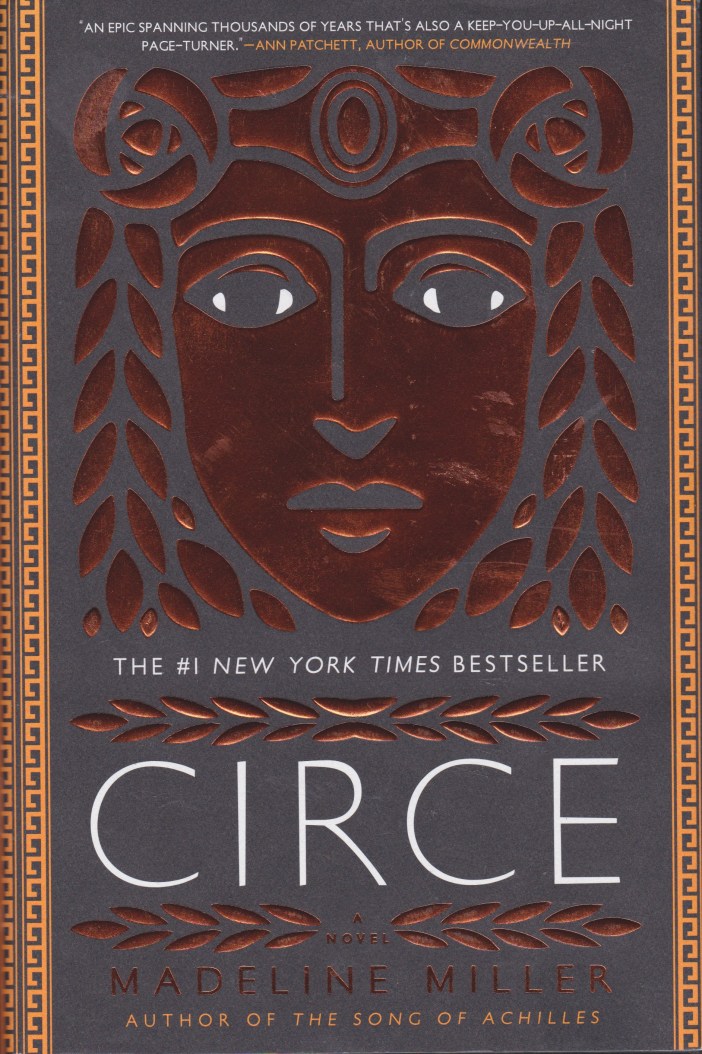
The City of Lost Fortunes is many things all at once; it’s a mystery story that is also a myth that is also a story of redemption, rebirth, and rediscovery. Jude doesn’t know who his father is but he can do magic; he has always danced between this world and that realm. But after the storm, after Katrina, his gift for finding lost things was too overwhelming for him; too much had been lost, and so he turned away from magic, turned away from his power, turned away from the realm of magic. He is unwillingly dragged back into that world by an invitation to a card game, where the other players are Thoth, an angel, a vampire, and Dodge, the fortune god. And Jude is forced to play, and to bet…but his cards are blank, and everything around him changes. Dodge is murdered,, and Jude has to find the killer, because his fortune is still being determined  and the game must be played.

I am often considered an expert on all things New Orleans, but nothing can be further from the truth. I have written extensively about my home city, and I have read a lot of the fiction about her—the nonfiction, too; but I am hardly an expert. I consider myself to be, at best, a place to start; someone who can point another in the right direction, a point on the compass that is New Orleans.  Bill Loefhelm has a hilarious saying about an attitude that can develop around that: being NOLIER than thou. I know I have sinned in that regard before; nothing irritates me further than books and television shows and movies that not only don’t get New Orleans right but don’t even try. (An excellent example of this is available on Amazon Prime currently; a terrible TV series from the late 1990’s called The Big Easy, based on the movie of the same name. It’s comically terrible.)

The City of Lost Fortunes does not fall into that category, either. New Orleans is not only gotten right here, but it lives and breathes in these pages in a way that it doesn’t even in my own, despite my best efforts. This book is about and of New Orleans; just as its a detective story and a mystery and magic realism and fantasy all rolled up into a beautifully written package; its characters are alive, the inter-connectedness of the characters and the plots and the subplots all mesh together, intertwined in the same way that everyone’s lives here are intertwined; and it all comes together beautifully, as Jude realizes who he is really is, and what is really going on, and what his destiny, his own lost fortune, is–and how much depends on his finally waking up to it.

And it is also a fable, a welcome addition to the literature of our city; one that I will happily reread and remember and cherish.

I cannot wait to read Bryan’s next book.

You should read this book. I cannot recommend it highly enough.

Some Like It Hot

Our weather forecast for today is grim; thunderstorms and downpours and flash flooding. Happy Saturday! Right now, even at this early hour, it’s already grim and gray outside; yesterday my sinuses were bothering me–another sign, not only of impending heavy weather but that I’m getting old because I am predicting the weather with my body–and I was incredibly tired when I got home. I repaired to my easy chair and read some more of Bryan Camp’s The City of Lost Fortunes (it’s wonderful, preorder it now), and then watched the first episode of two Netflix series, the Lost in Space reboot and Troy: The Fall of a City. I enjoyed both–although of course with Troy, I know how it ends–and there was a moment when Helen was telling Paris the myth of Actaeon and mentioned the goddess Diana and I was all “wrong! Helen would have called her Artemis!” which then sent me into another spiral because Wonder Woman is also from Greek mythology yet her name is Diana…and did the Greeks have the name Diana, or was it Roman? Yeesh, my mind.

It’s getting darker and the wind is picking up.

The plan for today is to do some writing, do some cleaning, and finish reading Bryan’s book. I also need to catch up on Riverdale and Krypton. Heavy sigh. I am really happy with some of the work I’ve been doing this week, and need to stay focused. I want to get “Don’t Look Down” finished, and I need to write an introduction to the short story collection, and there’s another story that needs to be done, and I still haven’t work on that revision based on editorial notes on another story. As you can see, it never ends for one Gregalicious. But as I said, I’m enjoying the work–which I couldn’t say last year–and that’s always a plus. I think the direction in which I am taking the Scotty novel in Chapter Eleven is quite fun and different; whether I am right in that assumption or whether it’s more a symptom of my creative ADHD, I suppose we’ll see once we have the first draft completed. But I have to have a completed first draft in order to see, don’t I?

Heavy heaving sigh.

Anyway I’ve got two more stories read for The Short Story Project. First up is “Office at Night” by Warren Moore,  from Lawrence Block’s anthology In Sunlight and In Shadow:

Margaret heard the train rumble by as Walter looked at the papers on the desk. The cord on the window shade swung, whether from the trains’s vibrations or from the breeze through the window, she didn’t know. She couldn’t feel either, nor did she feel the blue dress–her favorite–clinging to her curves. All she saw was Walter, and all he saw were the files in the pool of light from the desk lamp.

She had put the papers in the file cabinet and rested her arm atop the folders for seemed like–could have been–a lifetime ago. The phrase brought a slight smile to Margaret’s face. Any time could be a lifetime, depending on how long you lived. And she had thought from time to time that she and Walter might have had a lifetime together. Before she had died.

I really enjoyed this story; which is about lost opportunities and melancholy. Margaret was a large woman while alive; tall and big boned, tauntingly called Large Marge by the cruel children in the small town where she grew up. This made her withdrawn and shy. As soon as she was able she moved to New York, moved into a rooming house, and got a job, slowly starting to build a life for herself and leave “Large Marge” behind. Then she accidentally is killed–not in a crime or anything, just an accident–and her ghost visits the office where she worked, and loved her boss–but that past history made her unable to speak up, unable to say anything, unable to make a try for happiness. Like I said, it’s more about that sense of sadness and melancholy than a story with beginning, middle and end; but it’s incredibly well written and that melancholy…wow.

The next story was “Still Life 1931” by Kris Nelscott, also in Lawrence Block’s  In Sunlight and in Shadow.

She first noticed outside Memphis: they didn’t ride segregated in the box cars. At the time, she was standing outside yet abotehr closed bank. The line of aggrieved customers wrapped around the block–men in their dusty pants, stained workshirts, caps on their heads; women wearing low heels, day dresses, and battered hats.

Lurleen looked just different enough to attract attention. Her green cloche hat was a bit too new, her coat a little too heavy. Her shoes were scuffed like everyone else’s. but hers were scuffed from too much travel, not age and wear.

This story is absolutely amazing, and one of the most powerful in this collection, which is saying a lot. Set in the early 1930’s, Nelscott captures the era perfectly; the failing banks and the desperation of people losing their savings; the racial issues in the deep South; and Lurleen’s own sense of who she is, of right and wrong. When the story opens, Lurleen, recently widowed, is taking the train to small towns and cities all over the South, closing bank accounts she’d opened years earlier and withdrawing all the cash. The story opens with her in line at one bank where a run has happened; the bank has closed “temporarily”, but the sign on the door doesn’t indicate any time when the bank might reopen. As the story progress, we learn that Lurleen, before her marriage, worked for the NAACP, going around the South and interviewing witnesses and survivors, documenting lynchings and racial violence in the South. The story is powerful; Lurleen is well developed, and I was sorry when the story ended because I wanted to know more about Lurleen and the work she had done, the work she was going to begin doing again. According to the author bio, Nelscott is planning to write more about Lurleen, which is kind of exciting; I certainly hope she does.

And now back to the spice mines.

IMG_4188

Too Late for Goodbyes

Well, we made it to Friday, didn’t we? I do feel sometimes as though wishing for the weekend, or counting the days until payday, is kind of wishing my life away. (My mother used to tell me that when I was younger, and it’s one of those things I’ve never forgotten. Whether or not that’s a good thing, I’m not sure. Most of my mother’s sayings are like that; my favorite being always expect the worst and you’ll never be disappointed. I’m never sure if that means lower your expectations to avoid disappointment, or if it means the opposite–if you always think the worst is going to happen you’ll make it happen? So confusing. But most of these came from her incredibly pragmatic mother, so I tend to think the former rather than the latter in this case.)

I wrote close to three thousand words yesterday; and yet felt disappointed with my output. Two thirds of them were my short story “Burning Crosses,” which I am enjoying but again am struggling to write and the rest were on the next chapter of the Scotty book, which I actually enjoyed writing. I am hoping to get both this story and maybe two chapters of the Scotty finished this weekend; I want to do some cleaning as well (quelle surprise) and I want to finish reading my Bryan Camp novel so I can blog about it before the release next week. It’s really good, and you NEED to preorder it. Seriously.

I’ve gone back to streaming The Shannara Chronicles, and have seriously gotten sucked into the show. I’ve now watched the first episode of Season Two, and am liking the direction it’s taking. I don’t remember the books; I only read the first two–The Sword of Shannara and The Elfstones of Shannara–and I think the show was culled from the second book on. Paul’s back home now, so it’s going to be tricky watching shows he’s not watching; the Festivals are over and he won’t be home late anymore or working on the weekends.

For the Short Story Project, I offer the following two stories:

First up is “Orange is for Anguish, Blue for Insanity” by David Morrell,  from Lawrence Block’s Alive in Shape and Color.

Van Dorn’s work was controversial, of course. The scandal his paintings caused among Parisian artists in the late 1800s provided the stuff of legend. Disdaining conventions, thrusting beyond accepted theories, Van Dorn seized upon the essentials of his craft to which he’d devoted his soul. Color, design, and texture. With those principles in mind, he created portraits and landscapes so different, so innovative, that their subjects seemed merely an excuse for Van Dorn to put paint upon canvas. His brilliant colors, applied in passionate splotches and swirls, often so thick that they projected an eighth of an inch from the canvas in the manner of a bas-relief, so dominated the viewer’s perception that the person or scene depicted seemed secondary to technique.

Impressionism, the prevailing avant-garde theory of the late 1800s, imitated the eye’s tendency to perceive the edges of peripheral objects as blurs. Van Dorn went one step further and so emphasized the lack of distinction among objects that they seemed to melt together, to merge into an interconnected, pantheistic universe of color. The branches of a Van Dorn tree became ectoplasmic tentacles, thrusting toward the sky and the grass, just as tentacles from the sky and the grass thrust toward the tree, all melding together in a radiant swirl. He seemed to address himself not to the illusions of light but to  reality itself, or at least his theory of it. The tree is the sky, his technique asserted. The grass is the tree, and the sky is grass. All is one.

David Morrell is a long time best selling author, and I’ve met him several times; he’s an incredibly nice man. He’ll always be known as the author of First Blood–he calls himself “Rambo’s Father,” but he’s enjoyed a lot of success throughout his career. This story is one of my favorites from this collection, and perhaps one of the top five new stories I’ve read for the Short Story Project. It’s fan-fucking-tastic; a story about art and obsession and madness and genius; I could devote an entire entry to simply unpacking and deconstructing the themes and symbols and metaphors in this fucking brilliant story. Alive in Shape and Color is a fantastic collection, frankly, that if you like short stories you should definitely read; but this story is so good I would tell you this book is worth the cover price in order to read this story alone. I fricking loved it. LOVED it.

Next up was “The Preacher Collects,” By Gail Levin, from Lawrence Block’s In Sunlight and In Shadow:

They call me “Reverend Sanborn.” I was born Arthayet R. Sanborn, Jr., in Manchester, New Hampshire, sone of Arthayer and Annie Quimby Sanborn. I graduated from Gordon College, a good Christian school in Wenham, Massachusetts, and in Woonsocket, Rhode Island, before I went to Nyack, New York, where I led the First Baptist Church, located on North Broadway. My job came with the security of a home, just next to the church, where I lived with my wife, Ruth, and our four children.

Before long I met at church our neighbor and long-time parishioner, Marion Louise Hopper. An aging spinster, she lived alone in her family’s old house next door to the church. She liked to boast that her younger brother, and only sibling, was a famous artist, named Edward. Edward Hopper, however, appeared to want as little as possible to do with Nyack and his sister.

I didn’t care for this story as much as some others, but it’s well written. It’s about a minister who basically robs Edward Hopper’s work from his sister, who still lives in the family home, but we never really get a sense of why he does this, his justifications for it, and it just moves from this to that to there to this to that to there; it was kind of emotionally flat for me. Of course, I also read this right after the Morrell story in the other collection, and it may very well be that affected my perception of this story. I’ll give it another go at some point, which would be only fair.

And now, back to the spice mines.

1e3769b75af0e60ee6016d9974644998

Walking on Sunshine

Wednesday. I found my missing copy of The City of Lost Fortunes, which ironically was in my backpack the entire time in a pocket I didn’t check because I wouldn’t have put it in there. Yes, sometimes I wonder about what’s left of my sanity.

Paul returns sometime today; he never tells me his itinerary when he travels, so unless I absolutely pin him down and make him tell me, or forward the itinerary to me, I have no clue when he gets home. It’s usually late in the evening–he is one of those who, no matter how many times I tell him to never do this–always takes the last flight of the day. Rule Number One of traveling is never to take the last flight of the day because disruptions in service can trap you overnight somewhere. And since visiting his family always requires a connection somewhere, it happens almost every single time.

I also finished reading The City of Falling Angels last night; John Berendt’s tome about Venice, and enjoyed it very thoroughly. I have some thoughts about the book, and Venice in general, but I am going to let them percolate for a day or so before talking about them on here.

Yesterday I worked some more on “Don’t Look Down”–again, it is like pulling teeth–and started another short story. I shouldn’t have started writing another story, in all honesty, but “Burning Crosses” has been a story I’ve wanted to write for a really long time, and it starting taking form in my head yesterday so I just kind of dove in headfirst. I also started “Feast of the Redeemer,” my Venice story, which I blame entirely on John Berendt. Today I don’t know what I’m going to write, but I think I am going to start trying to outline the rest of the Scotty book. It may not actually be actual writing,  but it counts as work.

I read two more short stories. First up: “The Daemon Lover” by Shirley Jackson, from The Lottery and Other Stories:

She had not slept well; from one-thirty, when Jamie left and she went lingeringly to bed, until seven, when she at last allowed herself to get up and make coffee, she had slept fitfully, stirring awake to open her eyes and look into the half-darkness, remembering over and over, slipping again into a feverish dream. She spent almost an hour over her coffee–they were to have a real breakfast on the way–and then, unless she wanted to dress early, had nothing to do. She washed her coffee cup and made the bed, looking carefully over the clothes she planned to wear, worried unnecessarily, at the window, over whether it would be a fine day. She sat down to read, thought she might write a letter to her sister instead, and began, in her finest handwriting, “Dearest Anne, by the time you get this I will be married. Doesn’t it sound funny? I can hardly believe it myself, but when I tell you how it happened, you’ll see it’s even stranger than that…”

Sitting, pen in hand, she hesitated over what to say next, read the lines already written, and tore up the letter. She went to the window and saw that it was undeniably a fine day. It occurred to her that perhaps she ought not to wear the blue silk dress; it was too plain, almost severe, and she wanted to be soft, feminine. Anxiously she pulled through the dresses in the closet, and hesitated over a print she had worn the summer before; it was too young for her, and it had a ruffled neck, and it was very early in the year for a print dress, but still…

This story, which is sad and tragic and, like so many Shirley Jackson stories, a real mystery where it’s left up to the reader to interpret what is really is about, is terrific. It resonated with me because I am one of those people who is too excited and restless to sleep the night before something I am looking forward to; and I can never wait until it’s time on that day, having to make myself busy doing things and keeping myself occupied and then, when the appointed time arrives…yeah. One of my neuroses is being stood up; having someone make a date with me for anything, something I am excited about doing, and then never hearing from the person. With this story, we are never entirely sure if this is something she imagined or it was only in her head or if it was real, and this makes it all the more poignant and sad and heartbreaking. There was something of Raymond Carver in this story; in its ordinariness and sadness and poignancy; but Jackson was far superior to Carver–although this story made me want to read something of his again.

Next was “Ampurdan” by Warren Moore, from Lawrence Block’s Alive in Shape and Color.

Alan Bowling was walking again. The golden light of the Colorado autumn played across the rusts and browns of the ground beneath him. Behind him, the city. The air was cool here, away from the shops, the school, the fringes of the city of Ampurdan.

Alan didn’t know why the city–pfft, city. Don’t put on airs; at most, a town, really–was named Ampurdan. He had read that the word was an old name for a place in Spain now called Emporda. He himself privately called it “Ampersand,” a place between two other places, connecting them by force of…by force of what? How did an ampersand connect things, other than by force of will and in the mind of the person connecting them? The and of the ampersand the conjunction, was between whatever two things the speaker, the thinker, chose to conjoin. And since in Alan’s life, the only conjunctions he saw were the compounding of day upin day, there seemed to be little sense of a period to this place, to this life. Merely a string of days becoming ellipsis, until one day each inhabitant reached an end of words.

“Ampurdan” is a perfectly fine story, and similar to the Jackson in its depiction of sadness, loneliness, and poignant in telling the story of lonely Alan Bowling, who goes through his life missing opportunities to be happy through no fault of his own. He knew love once and it wasn’t returned; he was also the kind of person who only loves once. There’s also a bitter horror at the center of the story, but rather than being horrified by what Bowling did, we are sympathetic and understanding because Moore does such an amazing job of painting the picture of who Alan is, what drives him, that aching sadness and loneliness at the core of his being. This isn’t one of my favorite stories in this collection, but it’s certainly a strong story, and an indication of how terrific the entire collection is, honestly.

And now, back to the spice mines with me,

milo ventigmilglio