Violence

So I had a new and interesting experience yesterday: a mammogram.

Yes, that’s correct, I said a mammogram. I’ve had a lump in my right pectoral for years now, and two others just below. I had asked my doctor about them several times over the years during routine exams, but they always kind of blew it off, saying it was nothing to worry about, and so I never did…although, occasionally during Breast Cancer Awareness Month, I’d touch it thoughtfully, and wonder. As I said, this last time when I went to for my check-up, and she was so relentlessly thorough, she came across it while examining me and said, “How long has that been there?” and I replied, “well, a long time, frankly. I’ve always been told not to worry about it.” She frowned back at me. “Well, if it hasn’t grown or been painful, it’s probably just a fatty cyst, which is a genetic thing and nothing to worry about, but by the look on your face you’d prefer to know for sure, wouldn’t you?”

And so the mammogram was yesterday. And it was precisely that, a fatty cyst which is genetic (note to self: thank parents for that, along with tendency for high cholesterol and high blood pressure), and not only that–there were two more in my left pectoral I wasn’t even aware of. They aren’t harmful or dangerous in any way, and I was advised against having them removed–“it just leaves an ugly scar, and no one will ever notice them unless they fondle your chest”–and so made the decision not to bother with them. And yet–I felt an enormous relief when the radiologist told me all of this, so clearly on some levels it was stress and worry I was retaining.

As we tell our clients at Crescent Care, you really need to advocate for yourself. Going forward, I am not going to let my doctors with their silly medical degrees pooh-pooh a concern that is actually very real to me. There’s no reason I couldn’t have had this subconscious worry put to rest years ago. Lesson learned.

And now I can officially tell you, Constant Reader, that I have placed another short story! “The Snow Globe” will be this coming year in Chesapeake Crimes: Magic is Murder, edited by Barb Goffman, Donna Andrews, and Marcia Talley. I am quite thrilled by this–as I always am whenever I place a story somewhere–and have had to sit on the news for a few days before the official announcement. I still have two out on submission that are pending, but I’m having a fairly lovely year when it comes to placing short stories thus far. “The Snow Globe” has an interesting genesis; a thread on a friend’s wall about Hallmark Christmas Movies and an enchanted snow globe that featured in one, and I commented “I’d be more interested if it were CURSED”, and this was around the same time a publisher was doing a War on Christmas anthology, so I decided to write about a cursed snow globe for it. I messed up the story on that iteration; the notes I got with the rejection note showed me that I had, indeed, made the wrong decision with the story (which I had suspected) and so even though it wasn’t being included (that anthology would up not happening, either), I went ahead and revised it based on those notes and changed it to the way I had originally thought it should be before I second-guessed myself and changed it. And now it has found a home.

The funny part is the opening line was actually lifted from an idea I had for a Halloween story for an anthology the Horror Writers Association was doing (I never wrote this story). One night, years ago, I was standing on the balcony at the Pub/Parade during Halloween weekend (in my usual slutty whatever costume; my costume default always involved slutty in the title and involved lots of exposed skin) and someone came out of Oz across the street as Satan–horns and a wig and goat legs, but also a bare torso body painted red–and I thought, wow, Satan has a great six pack and laughed, thinking that’s a great opening line for a story. I was going to use it for my Halloween story, along with the Gates of Guinee; I never wrote the story, but when I was figuring out my cursed snow globe story, I thought, You know, “Santa has a great six-pack” is also a great opening line, and you can work Guinee into this, and thus “The Snow Globe” was born.

And yes, it’s a story about a gay man placed in a mainstream anthology, which pleases me even more. (I mean, an opening line like that would have to be the start of a story about a gay man, wouldn’t it?)

I watched two movies while making condom packs yesterday: 2001 A Space Odyssey and Altered States, which, while they may not seem similar at first glance, after watching them they kind of are. I’ve never really been a huge fan of Stanley Kubrick (I hated his version of The Shining; Barry Lyndon was probably the most boring film ever made; and while I enjoy A Clockwork Orange…it’s not something I’d care to watch again, frankly), and when I watched 2001 for the first time, years ago, when it debuted on television, all I could think was I don’t understand this movie at all. I went on to read the book, by Arthur C. Clarke (who co-wrote the screenplay with Kubrick), which sort of explained what was happening better, but it wasn’t until I saw and read the sequel, 2010, that it all began to make sense. Visually and sound-wise, it’s an exceptional film, particularly for when it was made; no science fiction space movie had looked so realistic before, and would Star Wars have been possible without 2001? But as with other Kubrick films I’ve seen, the acting wasn’t terrific (although Keir Dullea is stunningly gorgeous to look at; he came to the Tennessee Williams Festival a few years ago, and has aged spectacularly well), and there was a distinct coldness to the movie, a distance that I felt was deliberate–to show how vast and empty and cold space is. It was also kind of funny in that the flight out to the Moon in the beginning was a Pan American flight, and on the station there was a Howard Johnson’s restaurant; they had no way of knowing that either, at the time the movie was made, would be no longer in business by the actual year 2001. It was also interesting that women were still in subservient roles in this fantasy 2001, except in the case of the Soviets (also no way of knowing there would be no Soviet Union by the actual year 2001); which always makes futuristic films interesting time capsules once the future they depict has come and gone in actuality. The basic plot of the movie–sandwiched in between the strange appearances of the monolith at the dawn of mankind and encountered again at the end by Dave–is a horror/suspense tale, told unemotionally and rather coldly–about the malfunction of the computer, HAL 9000, who controls the spaceship and begins trying to kill the astronauts aboard, which undoubtedly also influenced Alien.

Altered States is a Ken Russell film, starring a very young William Hurt and Blair Brown. Hurt is still in the full flush of youthful male beauty, and like in his other early films I’ve watched lately (Eyewitness, Body Heat) his body and looks are highly sexualized; he’s naked a lot in this, and there’s even a brief view of his penis in one shot, which I am sure was quite shocking for the time. Like Kubrick, I’ve never been a particular fan of Ken Russell as an auteur; Altered States is a deeply flawed film that could have been so much more. Hurt and Brown play highly educated academics at the top of their field who eventually become professors at Harvard. Hurt is primarily interested in his field of research; he believes that in a heightened sense of consciousness, one can tap into the millions of years of human development that is locked into our brains and DNA. He is conducting experiments into altered consciousness in the beginning of the movie, by putting himself into a sensory deprivation tank (remember those?), which is part and parcel of the times in which the film was made. Eventually, he discovers there’s a remote native tribe in the mountains of Mexico that still performs, and lives in the same manner, as their Toltec ancestors; they also have visions and regress when taking a type of brew made from a certain kind of mushroom only grown where they live during a mystical ritual. (Interesting aside: Greek actor Thaao Penghlis, who gained fame playing Tony DiMera for decades on Days of Our Lives, plays the Mexican anthropologist who not only tells Hurt about this tribe, but takes him there–because he was dark-skinned with dark eyes and dark hair, of course he was convincingly “Mexican” to play the part) As expected, things go terribly wrong and he becomes more and more obsessed; by taking the drug concoction made by this tribe while using a sensory deprivation tank he is able to unlock primordial memory as well as regress physically as well, until his friends intervene and his love for Brown somehow manage a strangely weird happily ever after. It’s really just another film warning about the hubris of scientists and playing God, in the long line of tradition dating back to Shelley’s Frankenstein and Stevenson’s Dr. Jekyll and Mr. Hyde. Blair Brown is also naked a lot, for no apparent reason other than to show off her body, and it was, as I said, flawed. But the climactic scene where he changes again physically and has to fight off regressing to early man is also reminiscent of both the beginning and end of 2001–which shows the birth of mankind and intelligence, and how Dave (Keir Dullea) becomes, thanks to the strange monolith, also regresses and changes and evolves, into what was called the Starchild. (You really have to read or watch–or both–2010 for any of that to make sense.)

We also continue to watch Babylon Berlin with great enjoyment; we have but one more episode to go in Season 1.

And on that note, tis back to the spice mines.

My October Symphony

At this point in the summer, the cool warmth of October seems a distant futuristic dream. It’s always that way in August, and I no longer have Southern Decadence to look forward to; and haven’t in years. There’s no Decadence this year, of course, thanks to the pandemic, but I have also not participated in the madness of wild partying over the course of that weekend in over a decade. My participation has been primarily limited to passing out condoms on Friday night before escaping to the deep cool of my air conditioned home for the rest of the long weekend.

But my, did I used to have a great time during Southern Decadence! (See: Bourbon Street Blues.)

We started watching Babylon Berlin last night, at long last, and are already quite mesmerized. It’s a fascinating period–pre-Nazi/post first war Berlin was quite decadent, if you believe freedom from repression of all kinds is decadent. I’ve read very little about this period, although I have read Isherwood and of course I’ve seen Cabaret about a million times, but other than as a prologue to the rise of Hitler and Nazism in histories of the second World War, I’ve not really read a lot about that period of Germany’s past; certainly not anything that goes to any great depth. I also have a copy of the book somewhere; I’ve always meant to get to it as well as other books set in Europe during the same period. I don’t read nearly as much historical fiction anymore as I used to, or as much as I would like; I’m not really sure why that is. I love to read, I love to write, and I love history, so one would think art forms that combine those things would be something I would be all over, and yet–I’ve written precisely two short stories set in the past, and not even that distant. “The Weight of a Feather” is set in the 1950’s during the gay purge of the government, and of course, “The Affair of the Purloined Rentboy” (which might be my favorite title of anything I’ve ever written), is set in 1915 or thereabouts; a nebulous period of time during which the Great War was raging in Europe but the United States had yet to get involved. I have some things in progress that are historicals, or period pieces, or whatever may have you; the one I am really itching to sink my teeth into is a story set in Black Death era Rome, “The Arrow in the Cardinal’s Cap.” But I really need to be focusing as much creative energy on Bury Me in Shadows as I can right now, and so everything else isn’t going to get any real attention for the next few weeks or so. My plan is to, of course, do my day job to the best of my abilities, try to keep treading water as far as emails and everything else is concerned, and focus as much as possible on the manuscript. It’s in decent shape but very rough; the skeleton is there, but there are bones that need to be removed and replaced, others that simply need to be reset, and I also somehow have to manage a soul-transplant; replacing the one I originally created for the book with a completely new one–and these are all tricky things to manage that will require focus and energy.

And of course, one of the best things for stoking my creativity is to read really good writing, and I have Blacktop Wasteland to not only read and savor, but take inspiration from as well.

Then again, you never know.

We also finished I’ll Be Gone in the Dark, which was really quite lovely; I’m not certain that I want to read the book now, but I might. I’m not a huge reader of true crime–which doesn’t, when you think about it, make a lot of sense–and there’s so much else for me to read that I am behind on–oy, the ever-growing TBR pile in my house is as out of control as kudzu in rural Alabama–but I know I really need to start reading more of it. I think one of the main reasons I avoid it is fear that I’ll want to adapt it into fiction–just as Ethan Brown’s Murder in the Bayou sort of inspired what might eventually become another Chanse novel–and I’m not really all that interested in serial killers or rapists, if I’m going to be completely honest. I’ve toyed with the idea for a serial killer novel for quite some time now–and it has occurred to me that setting it in the past, when people weren’t quite as aware of them as we are now and before the creation of profilers (although I wanted to include a profiler who was wrong about everything in this one) might be a better way to go with it–but I’m not really sure I am the right person to write such a book.

And on that note, tis back to the spice mines.

The Theatre

Shakespeare said “all the world’s a stage”–a quote I even used as a title for a Todd Gregory erotic story–and he wasn’t wrong, really. Sometimes it feels like we’re speaking lines and have no real control over what is happening or going on in our lives; and believe you me, I would love to get my hands on the sociopath who’s writing the play that is my life sometimes.

Yesterday was a lovely day. I slept very well on Friday night, and woke up in the morning feeling like I could conquer the world–if I could only find the spare parts. I got up and did my morning writing exercise (aka you are reading it right now, hi there!) before starting to get some things done around here. I straightened up the kitchen/office and made serious progress on sorting and organizing and finally trying to get a grasp on everything I have to do and get done. While I was sorting and organizing and so forth I watched a 1980’s Clint Eastwood movie, Tightrope, which I originally saw in the theater–which is odd, as I was never a big enough fan of his to actually go see one of his films at the theater. In fact, Tightrope might be the only I have. (I saw High Plains Drifter and Play Misty for Me at the drive-in when I was a kid.) I cannot recall why I actually went to see it, and the only explanation my befuddled mind can come up with now is it most of been one of those stoner afternoons when someone suggested a movie and I tagged along. I do remember not being terribly impressed with it, and that it was about a serial killer, and it also had Genevieve Bujold, of all people, in it as his love interest. It was also filmed in New Orleans, and set here–and I thought, when coming across it recently on the HBO MAX TCM app, that I should watch it again. Interestingly enough, it was just as bad on second viewing–Eastwood and Bujold have absolutely no chemistry together whatsoever, the plot has some promise but the script was bad, and the acting was terrible. I always think of Bujold fondly because she was a great Anne Boleyn in Anne of the Thousand Days, but between this and Earthquake, for the most part American cinema did her wrong.

The most interesting part of the movie was seeing New Orleans as it was in the 1980’s; early to mid, I think, was when this was filmed. The Crescent City Connection’s second span was under construction (and I realized this must have been around the time that the Camp Street on-ramp was most likely targeted for tear down, as a part of this new building project) and it was also seeing how Tulane Avenue looked, the Quarter, and so forth. Jax Brewery was still a decaying ruin when this was filmed, and there was one interesting moment where they were working out at the Superdome YMCA, where I used to teach aerobics before the New Orleans YMCA system imploded once and for all. (I also taught at the Lee Circle Y, which is now a luxury hotel and parking lot–and I guess we don’t call it Lee Circle anymore, do we? The statue is finally gone, but I don’t think it has been officially renamed yet–I used to always tell visiting friend “And this is politically incorrect Lee Circle”) It made me think of the novella in progress set in 1994 that I hope to get back to someday.

The plot of Tightrope was simple, really; a serial killer is targeting New Orleans prostitutes (of course), and with the bodies, there is evidence of some BDSM play–handcuffs, bondage, that sort of thing. Eastwood plays a divorced New Orleans police detective whose case it is; Bujold plays a rape counselor who thinks she can help solve the case. Eastwood’s character is into this kind of kink; in fact, some of the victims were prostitutes he had frequented. Some of them worked out of the Canal Baths, which was apparently a bath house style bordello. (It was located right across Rampart Street from Armstrong Park, which is where I think the Voodoo Bar used to be?) Eastwood also has custody of his two daughters, because for some reason his wife left him for a wealthier man and left the kids behind, which happened all the time in the 1980’s. It soon becomes apparent that the killer is specifically targeting Eastwood, if not trying to frame him for the serial murders. The Eastwood/Bujold romance follows the usual “can’t stand each other at first but somehow find common ground and of course fall in love” tedious romance that is inevitably the only type of romance that happens, or perhaps is possible, in this type of movie–it doesn’t make any sense, it’s just spoon-fed to the audience, and they have the chemistry of two mannequins stuck in a store window together. The ending was also ridiculous.

It could have been a good movie, had anyone put any effort into it. Shame, because the New Orleans locations were perfect.

I then spent some time savoring the first few chapters of S. A. Cosby’s Blacktop Wasteland, which is just as marvelous as I thought it would be, more marvelous than everyone who’s already read it has said it is (and given the raves it’s gotten, that is saying something) and decided, after four or five chapters, to let it simmer rather than gobbling it down in one sitting, which was what I desperately wanted to do. But good writing always inspires me, and so I headed to the spice mines to get my chapters of Bury Me in Shadows finished, which I did. This pass through I am simply changing tense and switching his age from seventeen to early twenties–21 or 22–and from high school to college student. I am catching inconsistencies and a lot of repetition, and I am also seeing some simply tragic writing, but the story is there and the story does work. There’s a very strong foundation, and while I am certain it is going to be more work than I am thinking it is going to be at this moment (it always invariably is), I think when it is done it’s going to be one of my better works.

We finished watching Curon last night as well, and were riveted; it will undoubtedly get its own entry, but I do recommend it highly. The season finale was quite good, and the entire season relatively well done; and they did an excellent job of setting up the second season. It’s funny to me how much we’ve embraced foreign television series, and now I like to watch shows that are subtitled more so than anything American-made. Just think, before the pandemic we wouldn’t watch anything subtitled, and now it’s our preference.

The world has indeed gone mad.

But I slept really well again last night, which was absolutely lovely–hope this signals a new trend, frankly–and I do have to run an errand this morning; I need a few things from the Rouse’s, and I need/want to do it before the heat gets too extreme. Which of course means it’s probably too late already, since it’s nine a.m., but still haven’t had enough coffee to be completely functional enough to be out in public. Heavy heaving sigh.

And on that note, I totally need to get another cup of coffee. Have a lovely Sunday, Constant Reader, doing whatever it is you need to do

Why Don’t We Live Together?

Saturday, I think, right?

God, it was miserably hot yesterday. I know, it’s New Orleans in July; the dog days of summer (I’ve never really quite understood what that meant, honestly; probably something about how a dog pants or something–so hot I was panting like a dog, or something along those lines anyway–it always makes my think about my grandmother’s mutt dog, Shag, lying down in the shade and panting) as it were, but it still does bear comment periodically about how motherfucking hot it is here sometimes in the summer.

I slept deeply last night, and didn’t really want to get out of bed this morning. I’ve been feeling tired again lately–not that horrible exhaustion I had for those months earlier this year, thank the heavens–and yesterday was one of those days again. It may be the heat, which is the most likely explanation, but I am not wanting to go back out into it today either–I am debating the wisdom of waiting to go to the grocery store until tomorrow or even seeing if it can be put off until next week sometime–which is probably self-defeating in some ways; but I also need to write this weekend (since I didn’t do much of that this past week) and I worry that going out into the heat and lugging bags of food into the house will defeat me for the rest of the day (which is always a possibility).

Decisions, decisions.

During our The Faking of the President on-line promotional appearance the other night we were talking about the 1970’s–if I considered myself a child of the that decade, and I actually do; I do remember bits and pieces of the 1960’s, but I turned nine in 1970 and that decade more shaped who I am rather than the 1960′–and as I mentioned yesterday, I’ve kind of started looking into the films of that decade a bit more. I kind of wanted to watch more Hitchcock movies yesterday–I was going to go for some of his 1970’s work, Frenzy and Family Plot, to be exact–but they are no longer on Amazon Prime for free (they were for quite a while) and that interface has also changed again and become even more user unfriendly; I cannot understand why Amazon cannot get its shit together on their streaming service, but came across the original film version of The Stepford Wives, either on Prime or the TCM app on HBO MAX, and settled in to watch that again. It’s a film (and novel) that is firmly anchored in the paranoid zeitgeist of the 1970’s, and fits very well into a reexamination of what was going on in that decade.

As I mentioned on the live stream the other night, the 1970’s were still a decade where wives were still defined as people in terms of their husbands; it was still very difficult for women to get credit on their own (this was actually how the subject came up–student loans and student credit cards), and I mentioned that my mom’s first credit wasn’t actually in her name, but as Mrs. (Dad) Herren. She had been working as long as I can remember, but her financial identity was still as the spouse of my father. The Women’s Liberation Movement began in the late 1960’s–espousing the radical concept that women were actual human beings in their own right and didn’t solely exist in terms of the man in their lives–and the 1970’s was when the stigma of divorce began to lessen; women no longer stayed in bad marriages or with abusive husbands. Rape was still basically a misdemeanor; spousal abuse was accepted and almost expected, and women were very much second class citizens, primarily defined as wives and mothers (this has changed somewhat, but really, not enough). Ira Levin wrote The Stepford Wives as a sort of social satire, but it was no less terrifying as a result; the revenge of men against women’s liberation. (You never hear the terms Women’s Lib or ‘libbers’ anymore) The Stepford Wives basically took the concept of how dehumanized women were to the nth degree; men really only want beautiful women who don’t think for themselves, think they’re wonderful lovers, live for their men and children, and should primarily focus on making sure their homes are spotless and perfect so their men don’t have to worry about anything but their jobs. The film leaned into this fully; I think the best part of the book was the fact that it never really explained what was going on in Stepford; it was alluded to, of course, but the truth was so terrible that the women–main character Joanna and her friend Bobbie–couldn’t possibly imagine what it was.

But seeing the actual Stepford wives, played by actresses, up on screen, truly epitomized not only how horrible what was happening in Stepford was, but how strange it was for Joanna and Bobbie to deal with, strangers who had only recently moved into town. Paula Prentiss played Bobbie–and why she was never a bigger star was something I never fully understood–and of course, stunningly beautiful Katherine Ross played Joanna–which made it all the more terrifying; she was so perfectly stunning and beautiful, how could you possibly improve on Joanna? The film of course couldn’t leave the truth ambiguous and merely hinted at; which was part of the power of the book…you never were completely sure if Joanna was simply going crazy because the truth of Stepford was presented so casually and normally. (Don’t bother with the remake; despite a stellar cast, it’s truly a terrible movie.)

The Stepford Wives, book and movie, both also fit perfectly into the paranoia of the decade; the 1970’s was a time where conspiracy theories abounded; there was a lot of interest in UFO’s and the Bermuda Triangle and Revelations/the end of the world, not to mention after Vietnam and Watergate mistrust of the government and elected officials were higher than ever before. But I also see The Stepford Wives as part of another literary trend/trope of the decade; the 1970’s was also a time when, as I mentioned on-air the other night, that white flight from the cities to the suburbs and rural eras began in earnest (although it was never, in the books, attributed to its real root cause: integrated public school systems and neighborhoods). There are at least three novels I know of that take the white flight to the rural areas (better schools! clean air! zero crime!) and turn them into horror novels–Burnt Offerings, The Stepford Wives, Thomas Tryon’s Harvest Home– where the urbanites discover far greater horrors out in the country than they ever encountered in the city; there are probably more (I am not certain The Amityville Horror fits into this category), but those three would make a great starting point for a thesis/essay. (Interesting enough, both book and movie of The Stepford Wives ends with a throwaway bit about the first black family moving into Stepford; I would absolutely LOVE to see a reimagining of the film by Jordan Peele from the perspective of the black family moving in, because the paranoia of the wife beginning to suspect that all is not right with all these white women who are devoted to housework and their families could also be played with from a racial as well as gender perspective.)

And as I watched the film again yesterday, I realized that my mother, with her obsessions with cleanliness and order, kind of was/is a Stepford wife.

I plan on spending the rest of this morning getting my kitchen/office–horribly out of control yet again–into some semblance of order before diving back into Bury Me in Shadows. I’d like to get the changes necessary done to the next three to four chapters today, and perhaps another four to five tomorrow, which would get me almost to the halfway point. I also need to compile a comprehensive to-do list for the coming week. I also want to spend some time with Blacktop Wasteland today as well.

We started watching a new series last night–Curon, which is an Italian show set in the Tyrol, in a region that changed hands between the Austrians and the Italians numerous times. The town is built on the shores of a lake, where the original town was submerged when the river was dammed; all that remains of the old town is the church’s bell tower, jutting up out of the water. There’s a story that if you hear the bells ringing, you’re going to die–and some seriously weird shit is going on in this town. The show opens with a flashback to the past, when a seventeen year old Anna is hearing the bells ringing and her father orders her out of the massive luxury hotel they live in; she’s not sure but she thinks she sees herself shooting her mother–a nightmare that haunts her the rest of her life. Flash forward to the present, and Anna is coming back to Curon, after leaving an abusive (it’s hinted at) husband with her twin children, now seventeen–Mauro and Daria–from Milan. Her father makes it clear they aren’t welcome there–but when Anna disappears the next day the twins are there to stay. It’s filmed very well, and there are apparently tensions still in the village from the olden days of the war between Austrians and Italians; Mauro is also hard of hearing and wears a hearing aid; Daria is boisterous, outgoing, and kind of a badass; and the teenagers they encounter, both outside of school and in it, are also kind of weird. There’s all kinds of history there, slowly being revealed to the viewer, while the tension continually builds. What is the dark secret of the town of Curon?

I also, while typing that last sentence, realized Curon also fits in with the trope of the urbanites coming from the big city to the country, and discovering far greater horrors there than they left behind in the city.

Interesting.

Country Roads

I am from the South, which is probably something Constant Reader is sick of hearing about–but I feel like I always need to make that clear. While I grew up in Chicago and Kansas, I have always identified as Southern, as being from Alabama. It’s where I was born, and it’s where, as we say down here, my people are from. I was raised and shaped by natives of Alabama, who were raised and shaped and became who they were in Alabama, because of Alabama, and who identify completely as Alabamians.

I’ve now lived in the south for twenty five years this coming August 1st; even though many Southerners don’t think of New Orleans as Southern. (I would not dispute that thought, either; New Orleans is of the South but is not the same as the rest of the South…but once you cross the Orleans Parish line you are definitely back in the South, but southern Louisiana, while still similar, isn’t the same because of Acadiana.)

My relationship with the South, and with being Southern, is a complicated one, and one that I am constantly evaluating and examining, over and over again. I have pride of region, which is definitely a Southern trait; woe be to those who might condemn or stereotype or insult the region to my face. I am aware of the faults, and the flaws, and the horrors; I don’t need anyone to tell me or lecture me about its history and how it came to be the way that it is now., or of it’s racist history or of the current racism which still seems to be the majority opinion here. I’ve heard all the inbreeding jokes, and jokes about toothless people and hillbillies and white trash and people of Wal-mart and so forth; so by all means, keep them to yourselves. I also have always understood the difference between heritage and hate; I may have been very young but I remember the Civil Rights Movement vividly.

I was never a fan of Confederate statues, for example; I never understood the insistence on venerating men I didn’t consider heroes but traitors, even when I was young. I remember always thinking, but they lost, and they hated the United States, why should we revere that? The cognitive dissonance of being “patriotic Americans” while venerating those who fired upon the flag and tried to start their own country disturbed me when I was a kid and it never made sense to me, and no matter how many times the mythology of the happy slave was spoon-fed to me, whether it was Gone with the Wind (both book and movie), or any of the many other examples from fiction, film and television. The Biblical example of Pharaoh and Egypt (beyond their reject of the one God), holding the Hebrews in bondage as slaves was always right there, too.

And if might equals right, hadn’t the complete and utter defeat of the Confederacy, in such an incredibly humiliating fashion, a complete defeat that left the rebellious slave states in smoking ruins and their economy wrecked (much as Germany was after World War II), further proof that slavery and secession were wrong?

And yet it is an incredibly beautiful part of the country, whether it’s the gorgeous Smoky Mountains in Tennessee and North Carolina or the massive live oaks of New Orleans, the swamps of Louisiana andthe pine forests of Mississippi and Alabama, the lower Ozarks in Arkansas, the beaches of Alabama and Florida’s Gulf Coast. Savannah and Charleston and New Orleans are beautiful cities; the college campuses of the Southern states are breaktaking in their beauty.

Driving through Mississippi and Alabama, the countryside is so beautiful, the , with the pine tree forests and the red earth, the sloping hills and flowing rivers, that it always inspires my creative brain to think about stories and writing and books. I love the South, despite all the things that are wrong with it, because it’s also a part of me, of who I am. I love its contradictions–like how when you drive through the Smoky Mountains at night you will come across three enormous crosses rising out of the fog that announce the presence of a megachurch…and the same highway exit also plays host to Triple X Super Store.

It’s also interesting that I am returning to my first real manuscript about Alabama, set in a fictional recreation of the part of Alabama from which I came originally, while reading Kelly J. Ford’s debut novel, Cottonmouths–because even though Ford’s book is about Arkansas, the small country town and its surrounding rural area is very similar to my Alabama.

From behind, the woman standing with a guy next to the Love’s Truck Stop air pump looked like any other woman: long hair, too skinny, big purse, big sunglasses. But when the woman turned and smiled, Emily’s chest tightened and her insides tingled in a forgotten but familiar way. Rumors of Jody’s return had come as whispers around town, but until now Emily had lacked proof.

A warm breeze blew petroleum fumes and cigarette smoke into her face while she sought further confirmation of who she’d seen. Gas spilled onto her hand. Startled, she released the trigger on the pump and swiped her hand across her jeans. She sheltered her eyes from the sun to scan the parking lot. But the woman and the guy were gone.

Back on the highway, Emily tried to keep her mind as empty and barren as the farmland that rolled by. When that didn’t work, she turned up the radio and hit scan, unable to settle on the station offerings from the nearest town–country or Christian or the same four pop songs on repeat interspersed with commercials for pawn shops and car lots. Midway through the miles she punched the radio off and tried to tell herself that her new fast food job and her time at home were temporary, though she’d been back a month already.

Cottonmouths is many things, all wrapped up into a compelling story told with gorgeous language. Emily, the main character, has essentially flunked out of college and is wrestling, as so many Southern queers do, with the bipolarity of a deeply Christian small town/rural upbringing struggling against her deepest secret of desire for other women. She’s an outsider, which gives her the ability to see everyone and everything around her with brighter clarity than the insiders have the chance to see–she can see the hypocrisy in her deeply Christian town, and the abhorrence of difference, which makes her feel not only like an outsider but horribly, terribly lonely. It is this lesbian desire within her that ultimately led to her flunking out of college, an inability to come to terms with who she actually is despite being raised in a way that makes her loathe who she actually is. So she has returned to the dying little town of Drear’s Bluff, with its explosive boredom, feeling like a failure for flunking out of college and terrified to admit to people outside her parents that she has failed. She can only find a part time job working fast food in nearby Fort Smith–a job she is too ashamed to admit to her parents she has had to take.

And more than anything, she feels trapped. She wants to escape this town, escape its suffocating claustrophobia, and be free–but she needs money to do that, and without money–as is all too true for most people, she cannot escape.

The return of her best friend from high school, Jody, whom she sees at the Love’s Truck Stop, is the trigger that starts the story in motion. Jody, whom the good people of Drear’s Bluff consider “white trash”, has a baby and is unmarried and living in the old trailer parked on her family’s land. Emily’s past with Jody is also fraught; her family took Jody in when she was a teenager when her mother took off, and one night Emily made a move on her–and the next day Jody was gone, back to her mother and out of her life. This guilt has always plagued Emily; wrapped up in the strict confines of the narrow-minded Christianity she was raised with, and with Jody back now, Emily isn’t so sure what she wants or needs–but those unresolved feelings of first love and desire have now bubbled back up to the surface again.

Cottonmouths is what I would call “rural Southern noir;” while crime and criminal activity is a driving force to the story, it’s also more than that–it’s a compelling portrait of a slice of American life so many Americans it doesn’t affect do not want to face: the death of the small town way of life, the loss of employment opportunity, the collapse of hope for something better. It’s about different kinds of yearnings, and how hope can be twisted into seeing criminality as the only way out. Like Daniel Woodrell and Tom Franklin, Flannery O’Connor and so many others, Ford shows us the reality of rural Southern life; how the deep religious belief can go hand in hand with smug superiority and class warfare–how those who theoretically follow Christ, who ministered to the poor and sick, can somehow hate the poor and look down on them.

There are so many little touches here that ring so true–Love’s Truck Stops, which are scattered throughout the south along its highways and byways; the prayer circles where they drink Virgin Bloody Mary mix; the judgment for not attending church twice on Sundays and for Bible study on Wednesdays; and the viciousness of gossip and the fear that everyone will talk about you, and judge you, and laugh at you–or rather, passive-aggressively shake their heads while murmuring Christian platitudes while the gleam of enjoyment shines in their eyes.

I enjoyed this, and I am really looking forward to what comes next from Kelly J. Ford.

Tonight is Forever

Well, it’s more like weeks are forever in this pandemic-riddled world in which we live these days, but onward we go.

As I often say–and you may perhaps be tired of hearing–the best writing and the best television/films always somehow give me inspiration–whether it’s to do better as a writer myself, or with story ideas. I’ll Be Gone in the Dark, as previously mentioned, has flooded me with memories of life in suburbs and in California ones, specifically. I’ve never done a lot of writing about California–the Frat Boy books are my primary novels set in California, and both Sorceress and Sleeping Angel are also set there (the latter, though, are set in a small town in the mountains rather than a small city, like Fresno, which is what I converted to the small city of Polk in the first two Frat Boy books; the coastal small city in the final Frat Boy novel is based on Santa Barbara)–so maybe I’ve done more writing than I would have initially thought about California. But I’ve never done anything suburban in California, I guess, which is the correct way of phrasing that.

And as I said to my friend Megan once, what is more noir than the suburbs?

I did finish reading Cottonmouths finally last night; more on that later, but for now I will say it is wonderful. I greatly enjoyed it, and I am really excited to sink my teeth into Blacktop Wasteland now.

I also decided to change the title of “After the Party” to “A Dirge in the Dark,” which is creepier. I didn’t like that original title, and this was a most unusual story for me in that I had started writing something that not only didn’t have a title, but one didn’t leap out at me–and for me to save the document I needed to name the file. I know, it’s insane, but that’s just how my mind works around here in the Lost Apartment; I think I have two folders in my entire computer that are “untitled noir story” and “untitled haunted house story”; which really tells me nothing so when I go in search of the files to work on them some more I would never find them–especially if I had about a million other folders with “unnamed” in the title somewhere.

Today is my work at home day–one of two–which is nice, which means I don’t need to shave or even shower, if I don’t want to–but I probably should, as it always makes me wake up and feel better just in general. I’m a bit groggy this morning, certainly more groggy than I have been the last two mornings–which is NOT a good sign by any means–but I am hoping the coffee will take care of that. I’ve not had a good deep sleep now for several nights running–I have slept, but I’ve not gone deep into the sleep; I wake up sporadically and then it takes me a while to get back to sleep, and I noticed, for example, yesterday that my legs were tired when I was climbing the steps in the house. I am sure a lot of this had to do with lack of physical activity since my gym closed, but with our cases going up again here in New Orleans (thanks, stupid people!) I am pretty confident the city is going to be shutting back down almost completely again soon, and it simply doesn’t make a lot of sense to spend the money to join a gym that may only be open again for a few days.

I guess I can start stretching here at home, doing crunches and pushups and weightless squats. It’s a thought–and seriously, anything that will help me to sleep better is certainly going to be welcomed.

It’s just so disappointing because I was really making progress at the gym before it closed for good.

And on that note, I am heading back into the spice mines. Have a lovely Wednesday, one and all.

Suburbia

So, of course rather than working on Bury Me in Shadows, yesterday I spent some time writing the opening scene of a short story inspired by watching I’ll Be Gone in the Dark. This is why nothing ever gets done around here, seriously. It’s called “After the Party,” and I’m not really sure where to go with it from where I got to with it–about nine hundred words in, actually, which isn’t bad, really. But I always have to write these snippets down; they nag at my brain the way your tongue will worry a loose tooth, and nothing will get it out of my head other than to write it down.

I don’t know if it’s the show that haunts me so much as it is seeing those suburban middle class cookie cutter houses where so many of the victims of the East Area Rapist–later upgraded to the Golden State Killer–lived; having lived in a similar style house in Clovis, a suburb of Fresno, and of course, our suburb of Chicago was essentially housing developments all in the same area; Bolingbrook was never a town but was rather incorporated as a “village”; the “village of Bolingbrook”–which always struck me as a little too cutesy for words. The developments all had model houses that were “modern”–split levels, ranch houses, etc–and they had folksy names; the original one was Westbury , and I honestly don’t recall what ours was called; there was another that was townhouses and I don’t recall its name either. But the newer ones had names like Winston Woods (more expensive) and Indian Oaks (same area, less expensive) and then the newest, which start going up down the street from us a few years after we moved there: Ivanhoe, which was fancier and the most expensive of them all; the 1970’s version of McMansions, I suppose. The village of Bolingbrook grew up so fast with all those working class and middle class white people fleeing the city to get away from “crime” (read: desegregated school systems) that parents were willing to commute an hour or so up the Dan Ryan Expressway to get to work. We were bussed ten miles or so over to Romeoville for junior and senior high school; the “village” grew so quickly that Romeoville High School couldn’t accommodate everyone, and even my junior high school went to a split schedule: kids from Romeoville started junior high at 7 and classes ran till 12; the Bolingbrook kids had class from 12-5–no lunch period, homeroom, or study hall. My freshman year we got our own high school but it wasn’t finished in time for school to open; so the high school went to the same schedule: RHS from 7-12 in the morning; BHS from 12-5. It was rough for sports teams and after-school activities for both schools; pretty much everything but sports was suspended until BHS was ready for us–the gym wasn’t finished, and neither was the cafeteria and an entire wing of the school, so some classes had to make do.

It was very strange, and made even stranger because we were on a “track” system of schooling as it was, so the school could handle the student load; the village was divided into four sections, and where you lived determined which track you were on; either A, B, C, or D. Three tracks were in at all times, one track was out. You went to school for nine weeks, then rotated out for three, then back in for another nine. We were in B Track, which was kind of the best–the school system shut down for two weeks at Christmas and two weeks in the summer, and those two weeks always began right as we cycled out–so B track got five weeks in the summer and five weeks in the winter.

It was different, and for the most part, I didn’t thrive in that educational environment.

But it would also be interesting to write about.

I spent some time with Cottonmouths yesterday and am really, as I have said all along, enjoying it. But that story was nagging at my brain, and I finally had to put the book aside to write it. But I think I am willing to put aside at least an hour or so a day for reading going forward, and I look forward to not only finishing the book but giving you all the glowing book report it so richly deserves.

I’ll Be Gone in the Dark continues to enthrall–we watched another two episodes last night–and I’m already, with two episodes to go, wondering about what we will watch next. Hopefully, there’s insanely fabulous Spanish-language show just waiting for us on Netflix; perhaps something else German or French; there’s bound to be something on there somewhere.

And on that note, it’s back to the spice mines with me. Have an awesome Tuesday, everyone.

Sexy Northerner

So, who had “this revision won’t be as easy as Greg thought it would be” on their Gregalicious trials-and-travails bingo card?

Well, congratulations, you were correct. This reminds me of the time when I thought, oh I’ll just turn this Scotty manuscript into a Chanse, it’ll be easy and no, it really wasn’t. It was actually a nightmare, but eventually, after much anguish, stress, and aggravation, I did get it done and I was pretty pleased with the final outcome. I got up early yesterday morning and wrote an entirely new first chapter of Bury Me in Shadows, and one that was much better than any of the original attempts, so there’s that. Chapter Two was more of a slog, since I was trying to save more material so I wouldn’t have to write new material, but it’s going to need some going over again to make sure the transition from the old original story to the new is seamless. On the plus side–there’s always a plus side, even if I have to really dig deep down for it–the new material I am writing is good, and I like this iteration of the character much better than I did in the previous drafts; and his backstory is much better than it was originally. I also love the new opening. And making these changes actually eliminates a big hole in the story–something I could never really quite figure out–it was one of those things that had to happen for the story to happen, but it only made sense in THAT context, and that was driving me completely insane.

You can’t do that. It’s called “contrivance,” and there’s nothing that makes me more irritated or annoyed with a writer (or a movie or a TV show) where something happens only because it’s necessary for the story and only makes sense in that particular context. (I mean, obviously you can, and plenty of writers do, but it’s fucking lazy, and you shouldn’t, and if you do, and your editor doesn’t stop you…yeah, well.)

I also spent some time with Kelly J. Ford’s Cottonmouths, which I am really enjoying. I just wish I had more time to read, you know? I am so fucking far behind on my reading.

We also started watching HBO’s I’ll Be Gone in the Dark, which is very well done and very creepy. One of the things that terrifies me–which therefore also interests and fascinates me–is the concept of not being safe in your own home; that we all have this incredible illusion of security and safety in our homes–and neighborhoods, for that matter–and so we often are caught off-guard or by surprise by violence, or, as the theorists would say, the introduction of a Dionysian element into our safe, secure worlds. “The Carriage House” is that kind of story; so is “Neighborhood Alert” to a degree, as is the one I just sold, “Night Follows Night,” which is about not being safe in a supermarket because that was something I thought was interesting; you never think you aren’t safe in a bright public place full of employees and other shoppers until you actually aren’t. This is something Stephen King does very well; the introduction of something Dionysian into an ordinary, sedate, everyday kind of environment, and how normal everyday people react in those kinds of situations; some rise to the challenge, others do not.

Anyway, I’ll Be Gone in the Dark is just that–a true crime documentary based on the book by the late Michelle McNamara about her investigation into the Golden State Killer, and how that all came about. When you listen to the stories of the victims, and remember what it was like in in the 1970’s for women who were raped (not that things have gotten much better since then, but at least as bad as it is now it’s not as bad as it was then–not a laurel we as a society should be resting on any time soon, frankly), but how the rapes and murders happened in these quiet middle class suburban type enclaves where no one ever expected anything bad to ever happen (I’ve always wanted to write a book based on a murder that happened in the suburb of Chicago I lived in during my early teens; the killer and one of the accomplices were students at my high school; I knew the accomplice’s two younger sisters quite well); and I also lived in Fresno during the later part of the Golden State Killer’s run–but he had moved on to Southern California by then. I was stuck by the old footage of these neighborhoods in Sacramento, and how like our neighborhood in Fresno (Clovis, actually; a suburb of Fresno) and how closed off the houses were from their neighbors and the street–with small front yards and an enormous garage in the very front of the houses, which were in U shapes. My bedroom was the other side of the U from the garage and there were bars on the windows so no one could ever come in. My curtains were always closed so I could never see out onto the street or no one could see in; every once in a while on nights when I couldn’t sleep I would scare myself by thinking if I opened the curtains someone would be there–because it was very easy to get to, even if the bars precluded anyone from getting inside. Sliding glass doors were also very popular in houses back then, if not the most secure thing to have in your house, really.

And naturally, I started writing a short story in my head while I watched, about a bickering couple who come home early from a party because they got into a fight and are still fighting as they pull into their driveway and arguing still as they go into the house where they find their fifteen year old daughter bound and gagged in the living room with the sliding glass door to the backyard and pool area open, the curtains blowing in the night breeze. I don’t know the whole story, or how it ends, or even where it goes from there–which is why I have so many unfinished short stories in my files.

Heavy sigh.

There’s a tornado watch in Terrebonne and Lafourche parishes this morning, which probably means rain for most (or part) of the day here as well. It seems kind of gloomy and overcast out there, but brighter than it has been the last three mornings–when it rained a lot–so we’ll see how this day goes.

But it’s Monday, the start of a new week, and here’s hoping that I’ll be able to find time to not only read this week but time to work on the manuscript. Perchance to dream, I suppose.

Have a lovely week, Constant Reader!

Vulnerable

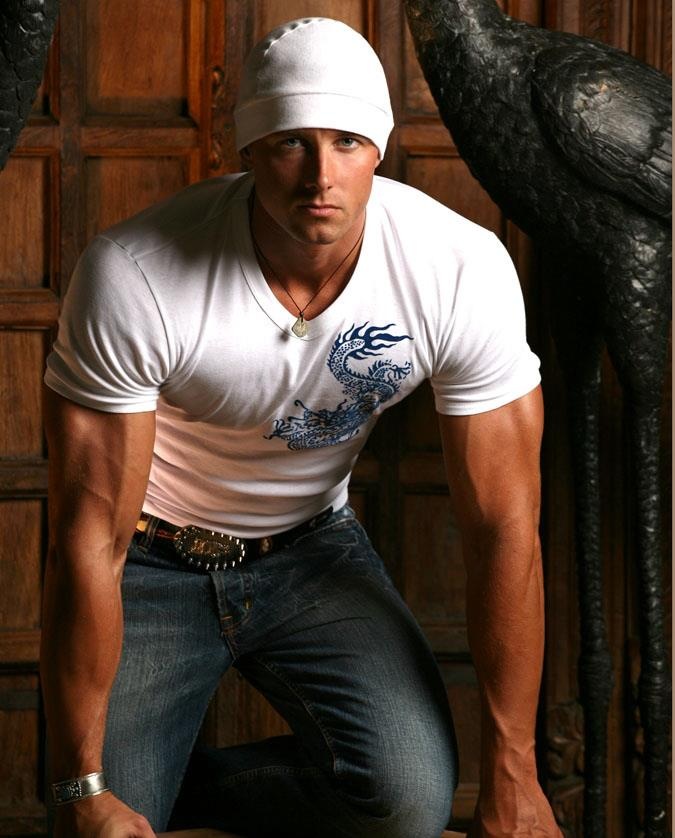
Today’s sexy man objectification photo certainly doesn’t seem like the right illustration for today’s title, does it?

He kind of looks like the alternate world Flash from the television show and turned out to be the villain of Season 2, Zoom, Teddy Sears, and I think he is in the second season of Netflix’s The Politician, as part of the throuple relationship Judith Light’s character is involved in. He is really pretty, even if he is not the guy in today’s picture, who is also really pretty.

But then assuming that a big muscular handsome man can’t be vulnerable as well is misandry, I suppose. Everyone, after all, can and should be–and definitely shouldn’t be afraid to be–vulnerable.

Yesterday was a good day–which seems to be par for the course lately, which is absolutely lovely. I got a lot of work done yesterday–granted, most of the day was spent making condom packs, which is my lot in life when it comes to working from home these days–but they are needed and necessary for the works kits we pass out during syringe access, and it’s hard to keep up with the demand. One of the nice things about making condom packs is I can watch something while I make them; the last two Wednesdays I’ve been watching The Mickey Mouse Club production of the Hardy Boys serial, The Mystery of the Applegate Treasure, which is loosely based on the first Hardy Boys adventure, The Tower Treasure. It was interesting to see the changes Disney made to the Hardy Boys to appeal more to their young audience–the Hardy Boys weren’t seventeen and eighteen, as they were in the books (I don’t recall how old they were in the original texts; Nancy Drew went from sixteen in the originals to eighteen in the revisions), and of course, Mrs. Hardy doesn’t exist in the serials. In fairness, their mother was never much of a character in the series–her name even changed from Martha in the original texts to Laura in the revisions–and their father’s sister, Aunt Gertrude, was more of an adult parental figure in their lives than even their father, and she replaces Mrs. Hardy in the Disney serials completely. The basic premise of the book is that the Tower Mansion is robbed, and suspicion falls on the father of their friend, Perry Robinson, who worked there; the burden of being fired means Perry has to drop out of school and of course, everyone in Bayport believes his father is guilty. Even in the revised texts, where a lot of the characterizations and color is dropped from the plot and the Hardys themselves become more two-dimensional, the way the Robinsons are shamed and ostracized by the town is very well-done; naturally, the Hardy boys, who want to be detectives like their famous father, go to work to clear the Robinsons.

In the serial, Perry is a juvenile delinquent from “the city” who is sent to Bayport to get away from bad influences, and works for crazy old Silas Applegate (in the book, his name was Hurd and he had a sister; both were known as “eccentrics”); soon Perry is framed for stealing tools and the Hardys, taking sympathy on him, take him on as a client. The Applegate treasure is an old pirate treasure of Jean Lafitte’s that was stolen from the mansion some ten years before; and no one really believes that it ever existed as Silas isn’t exactly mentally stable. It’s actually not a bad adaptation, and two of Disney’s biggest child stars, Tim Considine and Tommy Kirk, play the Hardys; any flaws it has are flaws of the time and the need for Disney (and pretty much all television shows) to sanitize and clean up small towns (well, life in general); what i always call the “Mayberritization” of American life. (Peyton Place, which was published during this same period, is far more accurate–which is partly why it was so scandalous.)

I started watching the second Hardy Boys serial, The Mystery of Ghost Farm–but I can also see why the Hardy Boys serials ended with this second one. It’s not as well done or as well plotted as the first; primarily because it isn’t based on one of the books and is wholly original…and while I can certainly understand why they didn’t base it on the second boo, The House on the Cliff (the plot of which centers on the boys looking for their father, whose been kidnapped by a gang of smugglers), they could have just as easily used Book Three, The Secret of the Old Mill.

These are, oddly enough, on Youtube rather than Disney Plus, as are some of the other serials, like Annette, and some of the two-part mysteries that originally aired on The Wonderful World of Disney.

And, as I’ve talked about recently, I’m thinking about reviving my middle-grade mystery series that I’ve been tinkering around with ever since I was about eight years old and started reading the kids’ series in the first place.

We also finished Dark Desire last night, and there were a lot of surprising plot twists in those final four episodes, and a great season cliffhanger at the end as well. I do recommend it, because it’s great fun and trashy yet engaging; and of course Alejandro Spietzer is gorgeous and charismatic. It’s apparently been renewed for a second season; Paul discovered this yesterday while searching for other series and/or films starring this gorgeous Mexican actor. Yes, we’re fan, and yes, we’re just that shallow.

And on that note, I am heading back into the spice mines. Have a lovely Thursday, Constant Reader, and I’ll shout at you again tomorrow morning.

To Face the Truth

Friday afternoon and I am taking a bit of a break. Non-stop emails, it seems, today, along with laundering the linens and doing some cleaning and about five minutes ago I realized dude, you’ve not had anything to eat today, so maybe take a break and eat something.

There’s been a watermelon sitting on the kitchen counter for a few days now, and it sounded like the right thing, so I went ahead and cut that sucker open and am currently in the process of eating an enormous slice. I’ve always loved watermelon, and one of the (few) things I miss about spending the summers in the back country of Alabama was watermelon right off the vine. There’s just nothing better on a hot, sticky summer afternoon in the Alabama countryside, really. I was also remembering the other day about how we used to go into the woods behind my grandmother’s house to pick wild blackberries.

Ah, for simpler times, when I didn’t have to worry about cleaning the house or paying the bills or cooking.

You know what, though? I prefer my life now. I’ve never really understood nostalgia for the past, really.

But I’ve gotten a lot done today, although I kind of feel like I’ve run out of steam. I took out the recycling; cleaned my new milk frother (now I can’t wait to use it; my old one wasn’t working right, in other first world problem news); I am laundering the linens; I shaved and showered; and like I said, I got a lot accomplished via email. I’m also feeling fairly rested–my shoulder is still sore from the vaccination, but that too shall pass. I also have a massive bruise from where they drew blood from me yesterday; but hey, I’m happy to settle for a bruise. My veins always used to roll; maybe that’s changed as I’ve grown older and the veins have gotten too lazy–and just lay there now with a “fuck it, go ahead and pierce me” attitude. But seriously, they used to have to dig around trying to get the needle in the vein, and trust me, I can live with them going right in and just leaving a bruise.

Such as the ways my mind meanders on a restful vacation day at home.

But I signed the contract for my Sherlock story and emailed it off (I just love my title: “The Affair of the Purloined Rentboy”) and I am now working on the filing, trying to resist the siren song of my easy chair.

But the watermelon and memories of summers in Alabama also put me in mind of Bury Me in Shadows, which has been languishing while I should be working on the Secret Project; which must be finished this weekend so I can get back to work on that book, else I may not have a book out again next year. THE HORROR! And I know how to fix it now, which makes all the difference in the world.

And now I am heading to the easy chair and taking an email/social media break other than blogging all weekend.