Half of My Heart

And now it’s Friday. It’s hard to imagine that it’s almost Thanksgiving already, but the initial pandemic shutdown also seems like it was more than a million years ago–when dinosaurs roamed the earth–rather than a mere eight months or so ago. Eight months we’ve been dealing with this; even though it seems more like eight fucking decades. But I’ve noticed that time has sped up lately–for the longest time it felt like time was dragging and was taking forever to pass, but now…now time is flying.

I suspect it’s the looming deadlines and being behind on everything, quite frankly.

The sun is bright this morning in my eyes and I cannot find my baseball cap–it’s probably stashed somewhere I thought I’d remember where it was–so I’ve had to move my chair and I am writing this while sitting at a weird angle to my desk. I’m working at home again today, and will be walking to the gym for today’s workout when I am finished with this afternoon’s work. Yesterday for the Cynical 70’s Film Festival I watched The Boys from Brazil and The Towering Inferno–more on those later–and I think that for today I might just dip back into some more Halloween horror. We also started streaming Mr. Mercedes, which is now available on Peacock for free–I am actually impressed with everything they are offering; it’s very similar to HBO MAX, but am still not willing to pay for another premium service yet–and I have to say, I am enjoying this adaptation. It’s fairly true to the books–at least as I remember, although I don’t remember the neighbor Ida, played by the amazing Holland Taylor–and I have to say, the three Bill Hodges novels (Mr. Mercedes, Finders Keepers, End of Watch) have been my favorite Kings of this century thus far; Mr. Mercedes very deservedly won the Edgar for Best Novel some years back, and as much as I loved the books, I was very sad when I reached the end. King himself was an executive producer, and the television series adaptation was written by David E. Kelley, who has also been responsible for a lot of good television over the years, including Big Little Lies and The Undoing, which we are greatly enjoying as well. There are three seasons of this adaptation, and I assume each season covers one of the books.

The Boys from Brazil is an interesting film, and very much of its time. Based on the novel by Ira Levin, both book and film were very much of the 1970’s, and also encapsulated that cynicism and paranoia of the decade perfectly. It was also one of those stories that permeated the zeitgeist; everyone knew what”the boys from Brazil” were without reading the book or seeing the movie. The movie is a very close adaptation of the book–Ira Levin was known for his brevity as a writer, so rarely did things need to be cut out of the books for the screenplay. The Boys from Brazil was actually Levin’s longest novel–I could be wrong, but I don’t think so–and the film has some impressive star power, with Laurence Olivier, Gregory Peck, and James Mason in leading roles, and an incredibly impressive supporting cast, including Rosemary Harris, Anne Meara, and Uta Hagen. The film also opens with a focus on a young character played by an extremely beautiful young Steve Guttenberg (whatever happened to him? He was a big deal in the 1980’s and then just kind of faded away) as a young Jewish-American man who goes Nazi hunting in Paraguay, and is actually the one whose investigation tips off the big Nazi hunter played by Laurence Olivier about what’s going on and kicks the film into gear before he is, of course, caught and murdered by the Nazis.

It’s hard to imagine now that the 1970’s were forty years or so ago now; the world has changed so much…but the 1970’s were also only a few decades removed from the second world war and Nazi war criminals were still being hunted down worldwide by the Israeli secret police. (The Germans were also hunting them down for trials; the Israelis were killing them.) The Lieberman character played by Olivier (he got an Oscar nomination; ironically, he also got one for playing an escaped Nazi war criminal in Marathon. Man a few years earlier) was based on Simon Weisenthal; does anyone even remember Weisenthal today? (Weisenthal was one of the people who helped track down Eichmann.) It’s no secret that many Nazis escaped to South America after Berlin fell, and Brazil, Argentina and Paraguay in particular; so much so that it was so much a part of the zeitgeist that everyone knew and a casual reference was easily picked up on. Levin took that, decided to make Josef Mengele, the escaped Nazi “angel of death”, and put him at the center of the story. And the scene where Leibermann finally realizes what Mengele’s plans are–that is the scene that earned Olivier the Oscar nomination. The film doesn’t pack the same emotional wallop that the book does–probably because by the time the film was released, most people knew what the title referenced and what it was about (Levin was a master of the huge surprise twist), which killed some of the suspense. Gregory Peck isn’t very good as Mengele, either; paired with his listless performance in The Omen, Peck was clearly phoning it in for the most part in the 70’s and cashing the checks.

And as I always say, you can never go wrong with Nazis as your villains. The two best Indiana Jones movies have him fighting Nazis; you just can’t come up with better villains–having the opposition be Nazis alone immediately makes your hero pure of heart and decent and makes you root for him. (The Vatican, however, is an excellent fallback choice.)

There’s also an excellent essay to be written about The Boys from Brazil, comparing and contrasting it to Robert Ludlum’s The Holcroft Covenant, which is also about an attempt to resurrect the Third Reich, with the the seeds planted in the waning days of the war.

The Towering Inferno was part of the big wave of disaster movies that was a thing in the 1970’s, spawned by the huge success of Airport and The Poseidon Adventure. Like all disaster films, it boasted an all-star cast chock full of award winners and household names–Paul Newman, Steve McQueen, William Holden, Faye Dunaway, Jennifer Jones, Fred Astaire, Robert Wagner, Susan Blakely, and Richard Chamberlain, to name a few–and a terrible script that was focused more on the adventure than the actual characters. (It’s also jarring to see O J. Simpson in a supporting role; and to remember he had a fledgling acting career before he murdered two people) Disaster movies inevitably fit into the Cynical 70’s Film Festival because they are always about preventable disasters that wind up happening because of greed and people in positions of power that invariably shouldn’t be; there’s always one scene where the person in charge of cleaning up the mess and solving the problem sanctimoniously lectures the person they feel is responsible for it: in this case, fire chief Steve McQueen lectures architect Paul Newman about the irresponsibility of building skyscrapers from a firefighter’s point of view (and having witnessed 9/11….yeah, watching the scene made me squirm more than a little bit)–but Newman, you see, is the hero; the fire and the building’s failure to be properly prepared isn’t his fault; construction manager Richard Chamberlain cut corners on the electrical wiring and so forth to stay on schedule and under budget to please building owner (also his father-in-law) William Holden. I watched the movie for the first time several years ago–and couldn’t make it all the way through on a rewatch. The acting is too bad, the writing too awful, and the story not compelling enough. It was nominated for like seven Oscars, including Best Picture–which should give you an idea of what a bad year that was for film. It was based on two novels, published around the same time, that covered the same ground–a fire in a new skyscrape–so the rights to both had to be secured to prevent lawsuits: The Tower by Richard Martin Stern, and The Glass Inferno, by by Thomas Scotia and Frank Robinson, with their titles blended into The Towering Inferno.

Around the time I originally watched The Towering Inferno I rewatched three other big disaster movies of the time–Airport, The Poseidon Adventure and Earthquake–and none of them really hold up. There were scores of other disaster movies of the time too–several Airport sequels, a movie about killer bees, etc.–but if the BEST of the time don’t hold up, the ones that weren’t considered good at the time must be really horrific.

And on that note, it is back into the spice mines with me. Have a lovely Friday, Constant Reader, and I’ll catch you tomorrow.

The Way I Loved You

I feel so much better that I’m almost afraid to trust it, frankly.

Last night I fell back into the Internet wormhole about the protective forts built to safeguard New Orleans years ago–there are more of them than you might think, and sadly, most of them are either unsafe to visit or hard-near-impossible to reach (Fort St. Philip particularly; only accessible by helicopter or boat). I’m thinking of debuting my fictional interest in Fort St. Philip in a short story–the idea came to me last night, and while it’s not fully formed, it’s there–but while making notes (as I did madly yesterday, and not just about Fort St. Philip but about the other forts protecting the city) it started coming together for me. We’ll see–I still have to work on the revisions of “The Snow Globe” and I still need to finish writing “A Dirge in the Dark”–and I am not entirely certain how one would define the story in the first place.

I slept really well again last night, which was lovely I am apparently adapting (at long last) to this “get up early” schedule, which is, while emotionally an unappealing thought, rather satisfying. I am hoping to be really productive today–have to go to the gym tonight after work–and then back to the story. We got caught up last night on this week’s episode of The Undoing, which I am finding more and more interesting with each episode–although my initial suspicion was the plot twist at the end of this week’s episode.

I’m feeling better now than I have in a very long time. I’m not entirely certain why that is–perhaps I am finally getting used to life in a pandemic? And while I am not entirely on board with the idea that I am used to life in a pandemic–it’s not something I think any of should have to get used to, intellectually–it is what it is, and I of all people need to get out of this weird stasis feeling I’ve had since March and get back to working on my writing and getting this apartment back under control. I also would like to get back into my reading groove; I’ve not read anything in novel form in quite some time and I really do need to get back into reading again. Reading always inspires me and helps get me into my writing groove, and The Hot Rock, cleverly written and intricately plotted, should prove inspiring.

I have several other books on hand that I am interested in getting to read soon–which I will not do until I am finished with The Hot Rock–including a reread of The Bad Seed, which I’ve not read since I was a teenager, in addition to an old Fletcher Knebel story, Night of Camp David, and I do want to reread Shirley Jackson’s Life Among the Savages–and of course, there are short stories everywhere.

The LSU-Alabama game this weekend is in question because of COVID positivity amongst the LSU team; if the game is cancelled, it’s just going to be cancelled, as LSU is out of bye weeks and has already had to reschedule the Florida game, and there simply is no more time in this abbreviated schedule to reschedule this game. I am not saying this wouldn’t be an enormous relief for LSU fans, but the way they team is playing, and the way Alabama is playing this year–well, it would be an extremely excruciatingly painful experience for the team and fans. It’s already questionable whether I would inflict such pain on myself by watching–the collapse of the LSU program this season has already been horrific enough to witness–but what kind of fan would I be if I gave up on them? I never gave up on the Saints–even in 2005–so it would be wrong for me to bail on this benighted season.

Yesterday, the preview trailer for the Hulu series adaptation of The Hardy Boys dropped, and as expected, right on cue, all the “fan pages” I belong to on Facebook went insane. IN-fucking-sane. (However I always find the collective outrage of fevered fan boys and girls most amusing.) My personal favorite was the person who stated that he “hates adaptations that don’t follow the book(s) strictly”–which made me laugh out loud.

Um…has any book ever been filmed and adhered strictly to the original text? Outside of Rosemary’s Baby and a handful of others….yeah, he must not watch a lot of adaptations.

I really need to write a Scotty book about kids’ series fans.

And on that note, tis back to the spice mines.

Innocent

Sunday morning, and I feel good.

Yesterday was quite marvelous. As a general rule, I refrain from talking about politics, primarily because I feel I don’t really need to; anyone who knows me knows where I stand. Anyone who has ever read one of my books knows my politics, or they do if they’ve read anything I’ve ever written–essay, blog, short story, etc.. I only talk about equality when I do talk about our country or our system; and my feelings about equality should make it abundantly clear that I am pretty far to the left, and move even further left the older I get. So, when the presidential election was finally called yesterday morning, I ran upstairs with tears in my eyes to tell Paul the great news, and I pretty much realized three hours later, after viewing as much of the celebrations and reading as many articles and so forth as I could in my thirst to make it finally all seem real to me, that I was going to get absolutely nothing done yesterday. And I didn’t, either. I didn’t cook anything, didn’t wash a dish, didn’t write a word; I didn’t read my book, I did nothing constructive at all other than joy-scroll through my social media. I watched football games that meant nothing to me, since LSU wasn’t playing–Indiana beat Michigan for the first time since the Reagan administration; Florida beat Georgia; Notre Dame beat Clemson–but it was all just background noise, really, as I kept going through social media and sometimes would switch over to the news while the games were on.

Could I really afford to take the day off and do nothing? Of course not, but I did precisely that very thing. I figured that since we won’t be electing the first biracial female vice president of the United States ever again, I was allowed to take the day off and bask in the knowledge that this was another historic election.

If someone would have told me, back when I was casting my first presidential election ballot back in 1980, that one day I would be voting for the first black man to become president (and doing it twice), and another day I’d be voting for the first black/Indian woman to become vice president, I would have laughed really hard, as such a thing was completely unimaginable back in those days. (Four years later, Geraldine Ferraro became the first major party female candidate for vice president; it would only take another twenty two years for another one to be a candidate, and another thirty-six years for one to actually win. And yes, much as I am loathe to give the loathsome Sarah Palin credit she does actually count as a historic nominee–even if she is now essentially a political pariah and yet another “Christian values” candidate whose marriage has crumbled into divorce. #Palinfamilyvalues.)

And watching the international celebrations of our election results was also a reminder that, no matter what anyone thinks, despite all of our flaws and mistakes and judgment errors, the rest of the world looks to us for leadership; and despite all the inequality built into our system by imperfect men who were well aware of their flaws and prejudices, we are what they aspire to–our political stability, our peaceful transitions of power, and yes, our freedoms. (Although when they think about our freedoms I rather seriously doubt the right to bear arms is at the top of their list…)

I’ve always believed that history was taught incorrectly; our history shouldn’t be taught as dates and places and battles–those are important, don’t get me wrong, but they are not as important as the progress, throughout history, of human rights and human freedoms. As for the battles and the wars, those should be seen through the prism of whether they pushed forward (or held back) human rights and freedoms. As interesting as kings and queens and emperors and tsars might be…what was life like under their rule? Did the people suffer, or did they prosper, or were they merely seen as sub-humans not really worth the divinely appointed King’s time or consideration?

Heavy thoughts on a Sunday morning. I need to get to the gym today, and I also need to make groceries–I don’t really need to get groceries, really–there’s only a few things we need and it could conceivably wait till next weekend–but I am all about getting things over and done with and out of the way. The Saints play later tonight–an evening game with the Buccaneers–and I’ll undoubtedly watch that until around ten, when I’ll need to go to bed to wake up in time for clinic tomorrow morning–but that also gives me this afternoon to try to get to all the things I never really got around to yesterday–Westlake’s The Hot Rock, any number of short stories that need writing, the book I should be writing, and lots and lots of cleaning–but I feel good today. I feel like I can breathe again. I also am aware the results of the election simply means the start of the great work required to right this ship–and it’s going to be a struggle–and there are going to be disappointments along the way, but I am going to allow myself to ride this wave of optimism and hope as long as I can….it’s been in far too short supply these last four years.

We finished watching The Murders at White House Farm last night, and it was really most marvelously done. There was also enough ambiguity left in the crime itself to leave the viewer wondering if justice truly was done–as is the case unless there are eyewitnesses or a confession–and this ambiguity is what makes these types of shows so interesting to watch for a crime writer. In our fictions, we cannot leave our readers with that kind of complex ambiguity–we can allow killers to go free, but the reader has to understand completely that there is a miscarriage of justice occurring. Most of criminal justice is shades of gray in reality; our fictions are allowed some shades but cannot be completely gray over all.

I did spend some time wondering about the short stories I am writing, and of course came up with the idea for another one, called “The Oracle on Orange Street” (Orange Street is one of those secret streets in New Orleans that only exist for a few blocks; it was named for the orange groves that lined it back in the day–the street I live on is another one of those, and so is Camp Place, which only exists for two blocks near Coliseum Square; Camp Place is the setting for another novel I want to write some day called Voices in an Empty Room) and while I am not certain what that story is actually going to be, I kind of would like to write about a psychic (yes, Scotty is also one, but I want to write about one who makes her living as one; I’ve considered resurrecting the psychic who told Scotty’s parents that he had the gift to be the lead character; Madame Xena. But, as I mentioned the other day, it’s really a matter of age. If Madama Xena was already a psychic with a good reputation when she spotted Scotty’s gift when he was a child…how old would she be now?), but on the other hand, I kind of also want to write about a phony psychic being used in a noir fashion to convince a believer of something that isn’t true…decisions, decisions. But I like that title, and at some point I’ll figure out who and what “The Oracle on Orange Street” is about and who she actually is as a person.

But for now, I will continue savoring that title. Hell, for that matter, Voices in an Empty Room is also a really good one.

I also spent some time wondering about the next Scotty book–I know, I know, finish the two you’re already writing–and trying to figure out how best to write about this accursed 2020 Carnival season. There are also some things left over from Royal Street Reveillon that will need resolving in this book, and then I have to deal (in the next one) with the pandemic. It also begs the question, can’t you just pretend in Scotty’s world that it never happened?

It’s an interesting possibility, but in some ways for me it feels like copping out; like not writing about Katrina, or having it happen in Scotty’s world was just too easy an out. I get that people may not want to remember what it was like, or relive the horrible experience of 2020, but on the other hand I don’t see how, as series writers, we can simply pretend it never happened. I recognize that my world is fictional, and therefore theoretically in “my” world I can simply decide “no pandemic” and it never happened in this particular alternate universe; I’ve certainly never mentioned the Afghan or Iraq wars in a Scotty book, or 9/11 either for that matter (although the PATRIOT Act and Homeland Security have come up, without explaining how they came to be in existence). There’s also some reluctance in actually tying a book to a certain year–although I did that with some of the earlier ones; after all, the Saints only won the Super Bowl for the first time one time–but again, sometimes when it comes to this sort of thing I am literally spinning my wheels and being indecisive because that leaves me in my inertia…always remember: a Greg at rest tends to stay at rest.

This morning my natural inclination is to blow off both the gym and making groceries, even though I know that neither is an option. The gym is only open until one today, and since the Saints game isn’t until much later, there’s no need for me to make the grocery run so early–gym first, groceries and gas up the car afterwards. I can spend the rest of the day writing or reading or playing intellectual games about my works in progress.

But last week I started feeling the old Gregalicious–the Type A one who gets a ridiculous amount done in a remarkably short period of time–starting to break through the cloud cover and start elbowing his way out to the front of my consciousness. This morning, I strongly feel like I can breathe and sleep and rest again….and soon I’ll be writing up a storm again.

And on that note, tis time to head into the spice mines and get this kitchen cleaned up before I head to the gym. Have a lovely Sunday, Constant Reader.

Cornelia Street

I read a piece yesterday on Crime Reads about aging your characters over a series, and have to say it was interesting; certainly, it make one Gregalicious stop and think–muse, really.

I was–doubtless like any number of Agatha Christie readers–already aware that Poirot was already elderly and retired from the police force in his first case, The Mysterious Affair at Styles; by the 1960’s when he was still solving cases he would have had to have been, per the piece, about 130 years old. Likewise, Miss Marple was already an elderly woman when she debuted in the 1930’s in Murder at the Vicarage, and while later Marple stories talked about how old and frail she was, by the time her last case–Sleeping Murder–rolled out in the 1970’s she also would have been well past one hundred. (The piece also discussed how old Nero Wolfe would have been by the time his final case was published, if the fiction matched reality.)

This is something that has been preying on my mind for quite some time, because of course, Scotty was only twenty-nine in Bourbon Street Blues (published in 2003), which, if we follow linear time, would make him around forty-six now. That’s not terribly bad–he typed as he eyes his own sixtieth birthday coming the following year–but it’s not Scotty’s age that concerns me so much as the age of everyone else in the series. If Scotty is forty six and the youngest Bradley child, and Storm was old enough to be a senior in high school when Scotty was in eighth grade–that puts Storm firmly at around fifty-one, which would put Scotty’s parents into their seventies and his grandparents in their nineties–at the very least. Scotty is actually younger–I didn’t follow linear time in the series (Katrina forced me to start aging him; I had intended for him to be twenty-nine forever)–and so he actually was 29 in 2004 and turned thirty just before Katrina–but that only shaves about a year off his age. I’ve not wanted to deal with the deaths of his grandparents or his parents becoming frailer with age, so I just pretend when I write about them that they’ve not aged. Scotty has, but they haven’t–and also, Frank is pushing sixty himself now no matter how I arrange the ages and timing of the series, and still wrestling professionally. Again, I’ve not really wanted to deal with the age issues–he retired after twenty years of service with the FBI, as a matter of fact–retiring in the period between Jackson Square Jazz and Mardi Gras Mambo, but I have intellectually accepted the fact that Frank is probably going to have to step away from the ring and the bright lights; it’s just a matter of when. I’ve always wanted to do a Scotty case built around the professional wrestling promotion Frank works for and will need to be retiring from; this was always going to be the premise behind Redneck Riviera Rhumba…but a Scotty book not set in New Orleans?

Anyway, I’ve really not wanted to deal with the deaths of Scotty’s grandparents, but I also know I am eventually going to have to–I can’t keep having them be just an amorphous age known as “old” and live to be over a hundred (although people do live that long, but it’s patently absurd that all four of his grandparents are remarkably long-lived; perhaps I’ll start killing off the Bradley side of the family first. I never liked the Bradley side, but have always had a soft spot for the Diderots.)

I can probably get away without killing the grandparents off for another couple of books, but…the clock is ticking. Although a Bradley death being the springboard for another case would be interesting. Hmmmm. *makes notes*

I also discovered an interesting location in Louisiana yesterday, Fort St. Philip. And yes, while that may not be completely factually correct–I’d heard of it vaguely before as one of the Mississippi River forts below New Orleans that were built to help defend the city–I’d never really learned much about it, but yesterday I discovered this weird abandoned location was actually home to a religious cult from 1978-1989, when they all moved away. Interesting, no? I could easily do a Sherlock story back in the 1910’s set there, or even have it be a weird Scotty story, or even simply a stand alone; an abandoned fort once home to a religious cult is like the perfect setting for a horror novel as well, isn’t it? Hmmm. I could also do all three, frankly; a Sherlock story in 1916; a Scotty story in the present; and a horror novel at any time. SCORE.

I did watch The Conversation while I was making condom packs yesterday, and am really glad I did. The film was incredibly timely when it was released back in 1974; the Nixon administration was crumbling because of it’s illegal electronic surveillance of the McGovern campaign, and the ensuing cover-up–although Francis Ford Coppola knew none of that would be the case when he wrote and directed the film. It was also overshadowed by his other film release that year–The Godfather Part II–which is really a shame. The Conversation has a plot, of course–and a pretty decent one–but the film is really a character study of Harry Caul, a surveillance expert who works pretty much alone and is legendary in his field–which few people really know about. The entire film hinges on the performance of Gene Hackman in the lead, and it’s one of Hackman’s best performances, understated and nuanced and completely immersive; I don’t think he got an Oscar nomination for this but he definitely should have–and it should have been a very close race for him. The film opens with Harry and his team–mostly hirelings, as he prefers generally to work alone–following and recording a young couple (Frederic Forrest and Cindy Williams) as they walk around a crowded Union Square. Harry is also haunted by one of his greatest achievements–he managed to eavesdrop and record a conversation between a corrupt union boss and an accountant about their embezzling of union funds; the boss assumed the accountant had talked and had people kill not only him, but his wife and children in a particularly brutal way. Harry looks at every job as a challenge, and his particular genius is conquering jobs most experts reject as impossible. But after those murders, Harry is beginning to question his own morality and his own ability to distance himself from what results from him doing his job…and as the film progresses, he begins to distrust his own client, and suspects the client (played by Robert Duvall and only ever known as “the Director”) is going to murder the young couple–the woman happens to be his wife. (A beautiful, very young pre-Star Wars Harrison Ford plays the Director’s assistant, and Harry’s contact–and his motivations are also murky and peculiar.) Harry is already paranoid–he refuses to have a phone in his apartment, and early in the film gets a post office box so no one will have his address–and watching the paranoia and fear build in him throughout the film is very impressive. It really captures the cynicism and paranoia of the 1970’s; it could be considered a defining film of the decade, and is definitely an excellent addition to your own Cynical 70’s Film Festival.

I also watched an old horror movie from the 1980’s called Witchboard, which I had enjoyed at the time but now–well, calling it “terrible” is actually a complement. The script is bad, the dialogue is bad, the cast has no chemistry together, and none of the relationships make any sense. The cast, led by Todd Allen (who is supposedly hot and sexy–okay, 1980’s straight masculinity), Tawny Kitaen (perhaps best known for the Whitesnake music video for “Here I Go Again”, for dancing erotically on the hood of a car; this film definitely answers any questions anyone might have about Kitaen’s acting abilities–they are virtually non-existent) and Stephen Nichols, who would go on to great fame on soaps like Days of Our Lives (as Patch) and General Hospital (as a Cassadine in love with Genie Francis’ Laura Spencer), but is frankly terrible in this. It came in late for the Halloween Horror Film Festival, but dear Lord, it is terrible. I have yet to decide which films to watch during today’s condom packing adventures, but I did find some more interesting looking 70’s films–along with some really terrible-looking horror movies from the 1970’s on.

And of course, there is always a lot of writing for me to do; volunteer work, and so forth….but I intend to really enjoy this weekend as much as I can. Have a lovely Friday, Constant Reader, as I put on my helmet and once again head to the spice mines.

Enchanted

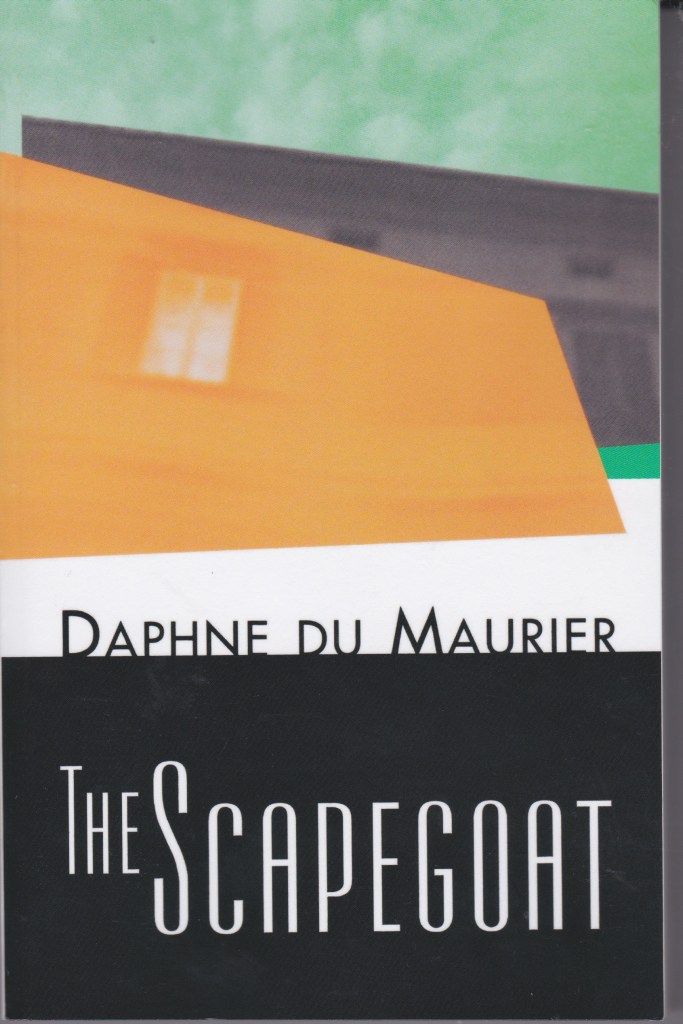
Daphne du Maurier has long been one of my favorite authors–ever since I discovered her short story collection Echoes from the Macabre when I was eleven or twelve; the first story in that collection, “Don’t Look Now,” remains one of my all time favorites; later in my teens I finally read Rebecca, and it has remained one of my favorite novels of all time, getting the periodic reread. One of the things I loved about du Maurier, as I tore through several of her other novels in the wake of Rebecca (The King’s General, The Flight of the Falcon, Jamaica Inn, and Frenchmen’s Creek) was that her novels subverted expectation; her books were marketed, or at least so it seemed to me, as romantic suspense novels and/or historical romances; yet the books were anything but that (whenever someone refers to Rebecca as romantic suspense it’s all I can do not to laugh in their face). The King’s General, for example, based on actual history, does not have a happy ending at all; and even the others aren’t exactly warm and fuzzy. About seven or eight years ago I finally read My Cousin Rachel, at the recommendation of a friend who couldn’t believe I’d never read it; once I had, it immediately shot to the top of my list of all-time favorites.

I’ve not finished the du Maurier canon–not because I don’t want to, but primarily because she’s dead and I know at some point, I will run out of du Maurier fiction. I know this is silly; I should, now that sixty is just on the horizon, start finishing the canons of my favorites because it would really suck to die and not be finished with them. (But then we always think we have more time than we actually do, don’t we? It’s sometimes very difficult for me to wrap my mind around the fact that I am, indeed, as old as I am.)

But watching the film of The Other made me think of this particular du Maurier, and I decided to give it a shot.

I left the car by the side of the cathedral, and then walked down the steps into the Place des Jacobins. It was still raining hard. It had not once let up since Tours, and all I had seen of the countryside I loved was the gleaming surface of the route nationale, rhythmically cut by the monotonous swing of the windscreen wiper.

Outside Le Mans, the depression that had grown upon me during the past twenty-four hours had intensified. It was inevitable, always, during the last days of holiday; but this time, more than ever before, I was aware of time having passed too swiftly, not because the days had been overfull but because I had achieved nothing. The notes I had written for the lectures I was to give during the coming autumn were scholarly, precise, with dates and facts that I should afterwards dress up in language designed to strike a spark in the dull minds of inattentive students. But even if I held their flagging interest for a brief half hour, I should know, when I had finished, that nothing I had said to them was of any value, that I had only given them images of history brightly coloured–waxwork models, puppet figures strutting through a charade. The real meaning of history would have escaped me, because i had never been close enough to people.

It was all too easy to lose oneself in a past half real, half imaginary, and so be blind to the presesnt. In the cities I knew best, Tours, Blois, Orleans, I lost myself in fantasy, seeing other walls, older streets, the crumbling corners of once glittering facades, and they were ore live to me than any real structure before my eyes, for in their shadows lay security; but in the hard light of reality there was only doubt and apprehension.

There are very few writers who can write so poignantly about depression and dissatisfaction with life; the dark night of the soul, as it were. This is where the hero of The Scapegoat finds himself at the opening of the novel. John, our thirty-eight year old hero, is an Englishman who teaches French history, is fluent in French, and is becoming incredibly dissatisfied with his life. Although his French is flawless and spoken like a native, his fascination and love for France has slowly become disaffecting for him–he feels like he doesn’t belong there and doesn’t quite fit in as he is not actually French; his life is humdrum and routine and lonely; he has no family, few friends, no loves. He has stopped in Le Mans on his way to visit a monastery, and as he walks around the rain-drenched city, he feels his difference very deeply; and then something strange happens: someone mistakes him for someone else, and then very shortly thereafter he runs into his mirror image–and his life is never going to be the same again.

The double, Jean, the Comte de Gue, is also dissatisfied and bored with his own life, and the two men have a few drinks. Eventually they repair to a disreputable looking hostel for another drink–and then our hero, John, passes out, only to wake up more than fourteen hours later to find that “his” driver is there, waiting for him to take him home. He soon realizes all of his things–passport, wallet, ID, car keys–are gone; he has two choices open to him. He can either tell this fantastic story of his to the police and to the driver, who will most likely judge him insane….or go along with the pretense, and slip into the life of his double.

Naturally, since this is a du Maurier tale, he chooses the latter.

In the hands of a lesser writer this contrivance–obviously, without making this decision the rest of the novel cannot happen–would be too glaring, too crazy, too much, really; but du Maurier does such a magnificent job of capturing his own boredom, ennui, dissatisfaction with the dull, plodding life he has made for himself that it actually almost makes sense for him to made this insane decision, for how can he possibly hope to pull off such an imposture? The look-alike story has been done to death over the years, and its overuse on soap operas–generally used when a popular actor has left the show, was killed off, and wants to return; or the double is evil and is taking over the good character’s life (they did this on Dynasty, poorly, with a Krystle look alike)–has made it seem trite and boring and over-used, as well as ridiculous. But Dickens used it for A Tale of Two Cities (even making his dopplegangers English and French, as du Maurier did), and of course, Mary Stewart’s brilliant The Ivy Tree also used the look-alike trope quite ingeniously. (Apparently Josephine Tey did the same with Brat Farrar.) Du Maurier does make this work–ironically, the only creatures who doubt that the Comte is actually the Comte are dogs; but then again, even when he behaves out of character for his look-alike or doesn’t know something he should, no one has any reason to doubt him or believe that a double has replaced their Jean. Would you suspect someone you love and know quite well has been replaced by a twin? There are also some wonderful subplots, regarding the real Comte’s relationships with his family, and while there really wouldn’t be much consequence if he is caught out, a lot of the thrill of the book comes from him not just uncovering the truths behind the fraught relationships with his relatives and the darkness of the past, but also figuring out ways out of situations where he would be found out.

And du Maurier’s writing style itself is the real star. There’s a hypnotic, dream-like quality to her voice; she weaves her words and sentences and paragraphs together softly but beautifully; there’s a melancholy to her style that always hypnotizes her readers into buying into the conceits of her stories and plots.

I greatly enjoyed this read, and am now looking forward to finishing the du Maurier canon.

Like I said, limited time.

Come In With The Rain

And just like that, we somehow made it to Friday yet again. Good for us all! Seriously, at this point survival is about all we can hope for these days–what with the world aflame, all the hatred and divisiveness in our society and culture, a pandemic, and all this economic uncertainty. I’ve noticed on social media a tendency for people to be hesitant about terrific things that are happening for them, whether personal or professional or both, and to them I say shout it out from the rooftops! We all need to find some joy in this life and world these days, and for heaven’s sakes, don’t feel guilty because good things are happening for you during tough times!

And anyone who looks at your good news and finds it inappropriate or whatever–really should take a long, hard look at themselves and their values, because if you have reached a point in your life where you cannot be happy for other people’s good news….maybe you shouldn’t be on social media at all and need to withdraw to heal yourself for a while.

I’ll take any joy or happiness I can find anywhere in this year 2020.

We all should, frankly.

Wednesday I saw a notice on social media–link, post, whatever–about a television reboot of the old Burt Reynolds/Sally Field film Smokey and the Bandit, which was the second biggest money-making film of 1977 (behind Star Wars). I can’t imagine this happening, to be honest; Burt Reynolds and Jackie Gleason were fairly definitive, and if we’ve learned anything from the Adam Sandler remake of The Longest Yard, Burt Reynolds is kind of hard to replace. Smokey and the Bandit was a surprising hit–I don’t think anyone involved thought it was going to be as huge as it was–and it was fairly definitive of my senior year. We only had two movie theaters in Emporia, Kansas–one was the Twin Cinema, with two screens, which showed new releases (albeit months behind their arrival in major cities and markets; Star Wars opened in June but didn’t get there until August) and another, old classic theater style place, the Granada; one of those wonderful old movie theaters with the marquee that came out over the sidewalk. It was primarily used for art films and special occasion films and things like that; midnight showings of The Rocky Horror Picture Show, that sort of thing. Anyway, Smokey and the Bandit opened at the Twin the weekend before Star Wars, and both stayed for months, rather limiting teenage high school weekend dating options for kids in town and from the rural surrounding counties. I think I saw each of them about eight times each, at a minimum; there was literally nothing else to do. (There was also a late, after prom showing of Smokey the following spring, which, of course, my date and I attended because I clearly hadn’t seen the movie enough times.) I never saw any of the sequels, primarily because I was so burned out on the movie after my senior year; I rewatched it recently–several months ago, I think–and it was kind of a weird time capsule. Burt Reynolds was the sex symbol of the 1970’s for women–he never really did much for me, but I always conceded he was incredibly charismatic and probably a lot more talented than anyone gave him credit for–the open shirts, revealing a thick mane of chest hair; the mustache; the tight jeans; the big warm inviting smile that, whether he actually meant it or not, indicated a sly amusement at life and the world in general. It also reminded me that back in the day sales of Coors beer was illegal east of the Mississippi; that illegality was the driving force of the film’s plot. (Whenever we drove from Kansas to Alabama for our annual visit to the relatives and home, we always ‘smuggled’ cases of Coors for relatives–who primarily only wanted it because they didn’t have access to it.) Everyone drank Coors in Kansas; it was usually the beer on tap in bars, and there was never any question about, when making a beer run, what beer you’d get. I used to drink Coors all the time, and thinking about Coors reminded me that Coors was the first business I ever boycotted because of an anti-gay stance. I don’t exactly remember what it was–I think Colorado passed a horrific anti-gay law; Coors helped bankroll it; and the company itself was deeply homophobic. I stopped drinking Coors and have never had it since–even though Colorado has long since stopped being the ‘hate state’ and Coors may have even apologized and become more gay-friendly; I don’t know, I don’t remember, and I don’t drink beer at all anymore so it really no longer matters anyway. But boycotting Coors was my first-ever personal activism against homophobia, and thus kind of a step in my own growth and acceptance of who I am.

Wow, I really digressed there, didn’t I? Anyway, Smokey and the Bandit actually fits into the Cynical 70’s Film Festival because it is, after all, essentially a “fuck the law” comedy; if ever a spirit inhabited films of the 1970’s if was definitely fuck the law. The movie is about bootlegging, essentially; smuggling beer illegally across country, while breaking all speeding laws along the way–including being chased, and evading, the police. There’s actually an essay in there somewhere…it was also a time when CB radios were enormously popular, or at least they were in Kansas. Practically everyone had one in their car or truck (we didn’t) and I was always amazed that anyone could understand anything being said; whenever I was in a car with a CB and the driver would talk on it, I could never understand what was being said in answer over the radio.

Maybe that was the first sign of my hearing issues. It’s certainly the first time in my life I remember not being able to comprehend what I was hearing.

My lovely Apple adapter arrived yesterday and yes, it works and yes, I can now access my back-up hard drive again…which makes me so incredibly happy, Constant Reader, you have no idea. I feel settled again, if that makes sense, and now everything at my home work station is back the way it was, even if the screen is tiny and I keep getting annoying messages about my memory being depleted. But I can now make an appointment to take it in and have them look at it, and tell me what I need to do–or do it with an on-line Apple rep–and now all feels right in Gregalicious-world again. I also picked up my library books–Montgomery Clift: Queer Star and Confidential Confidential: The Inside Story of Hollywood’s Most Notorious Scandal Magazine–both of which are research for Chlorine.

Quite marvelous, really.

While making condom packs yesterday, I watched the original Fright Night for the first time. It may have been good when it was released, but it really hasn’t aged well–despite a clever concept. Chris Sarandon is great as the vampire next door, and Roddy McDowell as the horror actor/vampire hunter is terrific (despite some bad aging make-up; but in fairness, Roddy McDowell was good in everything), but everyone else is….meh. I was interested to see Amanda Bearse playing the female lead/love interest/reincarnation of the vampire’s old love (shades of Dark Shadows!); she was fresh off her role as Amanda, Liza Colby’s sidekick on All My Children, and years away from coming out as a lesbian. But yeah, it doesn’t hold up. I am wondering if that was why it was remade in 2011? But I’m not going to bother with watching the remake. Also–weirdly enough, in looking up information on the film, one of the supporting actors, playing the character of Evil, apparently went on to be in gay porn…an interesting career choice.

I also discovered full episodes of the syndicated Friday the 13th–the series on Youtube; the first season used to be on Amazon Prime but was unceremoniously yanked before I could finish rewatching. Back when the show was airing in the 1980’s it was great fun–Ryan and Mickey inherit an antique shop from their long lost uncle Lewis Vendredi; only then his old friend Jack Marshak shows up, tells them Lewis made a deal with the devil and everything in the shop was cursed–and they need to get every object back. It’s a great idea for a horror anthology series. It ran for three seasons and yes, it’s clearly made on a low-budget in the 1980’s, but it’s entertaining enough and I watched the first two episodes while finishing the condom packs yesterday.

Today I have to focus and get things done. When I was finished with work yesterday, Paul also finished with work and came downstairs, and we started watching another series on Apple Plus, Servant, directed by M. Night Shyamalan, and it’s creepy and weird and dark and interesting and we definitely were sucked in. It’s plot is kind of complicated and weird–but essentially a nanny with a lot of secrets comes to work for a couple who also have a lot of secrets…and each secret as it is revealed is an eye-opener and changes the story almost completely; Lauren Ambrose is extraordinary as the mom/newscaster/wife. It apparently aired the first season last year; the second season is coming in December. It’s weird and off-putting and perfect for October viewing, really.

And on that note, best to get to work. May your Friday be marvelous and wonderful.

Afterglow

And just like that, here we are at Friday again. It’s going to be a very strange fall weekend, since we have no LSU game, but they do occasionally have bye weeks, so I guess that’s how I should look at this particular weekend. The Saints have an early game on Sunday, though, so that should be relatively normal. The question is, should I wait to run my errands until Sunday during the Saints game? I mean, Sunday mornings are the best for making groceries already because everyone’s at church, so the one-two punch of church and the Saints playing should mean abandoned aisles and a quick, easy trip. Decisions, decisions.

We’ve been having a quite marvelous cold spell this week–cold for New Orleans, of course, which means June-type weather for most of you–and so I’ve been sleeping most marvelously, which has been lovely, and of course the three-day-per-week getting up early thing has been sending me to bed earlier than I usually go, and the getting up early hasn’t been quite as awful as it once was. Is this a permanent, lasting change to my body clock? We shall have to see how it goes from now on, but it’s not a bad thing. Maybe even on the days when I don’t have to get up that early I should go ahead and get up if I wake up organically at six; more time in the morning to get things done, really, and going to bed early isn’t a terrible thing.

Remember me talking about flexibility? Maybe it’s time to start getting up every morning at six, getting emails answered, and then move on to doing some writing. Adaptability–something I’ve stubbornly been resisting all the time–is never a bad thing, and maybe part of the issues I’ve been having this year have affected me, mentally, in ways I didn’t even think about. Usually I do exactly that; I adapt to my situation and figure out ways to get everything done and stay on top of things. I’ve really not been doing a very great job of that this year, and why have I been so resistant to adapting and changing my habits and routines? Sure, I’m fifty-nine, and it’s a lot easier when you’re younger to change your habits and routines, but you shouldn’t become so mired in them at any age that you can’t change.

Yesterday’s entries in this month’s horror film festival were a rewatch of Christine (adapted by John Carpenter from one of my favorite Stephen King novels) and a wonderful old British 1970’s horror film, The House That Dripped Blood.

Christine is one of those King novels that made me roll my eyes when I first heard about it; “really? A haunted car?” (For the record, after reading Christine, I vowed I would never roll my eyes at the concept of a King novel again–because not only did it work, it was fucking terrifying.) Christine is another King novel that could be classified and sold as a y/a; it’s about teenagers, and the special kind of hell life can be for some teenagers. The empathy with which he wrote Arnie Cunningham, and the obvious love his best friend Dennis had for him, was the primary force that drove the book, and I also owe Christine an enormous debt of gratitude (but that’s a story for another time) as a writer myself. I saw the film version in the theater when it was released, and to this day, the book remains one of my favorite Kings and the movie, which had to take some liberties with the novel, is one of my favorite King adaptations. It’s flawed, of course, and isn’t nearly as good as the book, but it also holds up after all this time as well. It was directed by John Carpenter, and while it’s not one of his better movies, it’s a good one. Keith Gordon plays Arnie, John Stockwell plays Dennis, and Alexandra Paul plays Leigh, the girl who both boys wind up interested in–all three are fresh-faced and appealing, and I never really understood why none of them had bigger film careers. (The only other film of Keith Gordon’s I recall is him playing Rodney Dangerfield’s son in Back to School, which undoubtedly hasn’t aged well.) The primary difference between film and novel is in the movie, it is the car, Christine, herself that is evil; there’s an opening as she is coming off the line in Detroit in 1957 and already has a taste for blood; in the book, it was never really clear whether the car itself was evil, or if Roland LeBay, the first owner, somehow infused the car with his rotted soul–in either case, the reader comes away from the book unsure of what the source of evil was, and I think that was better served; also, in the book we could see Arnie’s point of view, and Arnie himself, like Carrie in Carrie, was much more of a victim than it appeared in the film.

The House That Dripped Blood was from Amicus Studios in the UK, rather than a Hammer Studios picture, and was written by the great Robert Bloch, best known for writing the novel Psycho. It’s an anthology film–I really miss the terrific old horror anthology films; Amicus and Bloch teamed up for another one of my favorites, Asylum; Stephen King and George Romero tried to revive the form in the 1980’s with their Creepshow collaborations–and includes both Peter Cushing and Christopher Lee in its cast. There are four stories included in the film–I don’t know if Bloch based them on his own short stories or not–about tenants in this particular large country house in England. The film opens with the arrival of an inspector from Scotland Yard, investigating the disappearance of a film star who’d been renting the house, and the rental agent for the house tells the inspector the stories. The first is about a novelist writing about a psychopathic killer named Dominick that he starts seeing everywhere; the second is about a man who becomes obsessed with a wax figure in a wax museum in the nearby town; the third is about a father and daughter who engage a governess, but are harboring a dark secret; and the final story is about the actor, who is major horror film star (and a bit of a diva) who buys a cloak for the vampire film he is making and becomes convinced that the cloak belonged to a vampire–and is also turning him into one. I had never seen this film before, and had always wanted to; I remember it being advertised in the paper when I was a kid, and it’s now free for streaming on Prime. It’s not bad–the production values were low (hilariously, the diva actor in the fourth segment complains about how low budget is on the film he is making, which is why he is going looking for a cloak in the first place), and the acting isn’t bad; you can really never go wrong with either Cushing or Lee, frankly. Asylum is definitely a better film, but I enjoyed The House That Dripped Blood but probably won’t watch it again.

As for the debt I owe Christine, that’s a little bit more complicated. I moved to Tampa in 1991 for two reasons: to restart my life and start living openly as a gay man, and to get away from my old life after a two-year transition in Houston and to start a new one, one that included me pursuing writing seriously for the first time. I had been writing all of my life at this point–I still have the first novel I completed, in long hand and never typed up, and had had bursts of short story writing throughout the 1980’s–but I wanted to start really taking it seriously, and trying to get better, and actually trying to get published. I bought an inexpensive word processor that summer–not a computer, it’s only functionality was as a word processor, and you could save your documents to a floppy disc as well as print them out on what was essentially a typewriter–and since I was at the time thinking about writing horror, I decided to take some of the framework of the handwritten book (and some of the characters, and the town) and write a horror novel about teenagers, from the perspective of an adult looking back at what happened in high school. The book opened with the main character getting an invitation to the ten year reunion, and we learn he left for college and never went back. He starts remembering high school–and the course of the novel is the story of what happened and why he’s never gone back (a concept I’ve returned to numerous times). And while the bulk of the story was going to be about high school and teenagers, I didn’t see it as a book for teens–and I was following the same book structure as Christine, right down to the framing device of the memory chapters bookending the beginning and the end. I was even going to write the first part in the first person, before switching to multiple third person points of view in the second half. I was about five or so chapters into the book when I discovered young adult horror fiction, notably Christopher Pike, and realized this book–and the two I was planning to write after–would work better if written for teens and removing the framing device. I did do the first part in first person, and switched halfway through to multiple third person POV; this was what later served as the first draft of Sara. I started remembering all of this as I rewatched Christine yesterday; as well as a lot of other things I had thought about and planned back in the early 1990’s when I wrote the first drafts of Sara, Sorceress, and Sleeping Angel.

It’s chilly in New Orleans this morning–we’re having that vaunted cold spell, which means it’s a frigid 68 degrees–and I am taking a vacation day today to try to get caught up on things, plus errands. Scooter has to go to the vet for a blood glucose level test, and I have to take Paul to Costco so he can order new glasses, and then I have prescriptions to pick up and on and on and on. I need to proof my story in Buried, I need to revise my story “The Snow Globe,” the Lost Apartment is a scandalous disaster area, and I need to get back to work on Bury Me in Shadows. There’s also about a gazillion emails I need to read and answer…it seriously never seems to end, does it?

But Scooter clearly feels better–he’s back to knocking over the trash cans and pushing things off surfaces to the floor, his eyes are brighter and more alert, and he seems more energetic; he’s running up and down the stairs rather than meandering, like he had been–and I am hopeful we will soon be able to take him off the insulin. But I’ve gotten so used to giving him the shot twice a day I don’t really notice it that much anymore, and it doesn’t phase either of us at all. He’s also a lot more cuddly than he has been, and more affectionate–which is also kind of hard to believe; I hadn’t really noticed that he wasn’t as affectionate as he had been.

It’s so lovely that it’s cold enough for me to wear sweatshirts again! I love sweatshirts, frankly; my favorite attire is sweats, and I hate when it’s too warm or humid for me to wear one. I am even thinking I might need to turn off the ceiling fans (!!!). Madness! I am really looking forward to getting home from these errands, getting into my sweats, and relaxing as I get things done all day–and I”m really looking forward to tonight’s sleep.

And now it’s off to the errands. Have a lovely day, Constant Reader.

Never Grow Up

Being an adult is seriously overrated.

I was never really one to look ahead when I was younger; I don’t ever remember wishing I was older when I was a kid, or wanting time to go by faster so I could become an adult more quickly. I generally tend to remember my pre-adult life as miserable and unhappy, and while that’s an over-exaggeration to be sure–I often had fun when I was young, even if it was overlaying sadness–but as a queer kid who knew he didn’t fit in anywhere and never truly belonged (part of this was also being a child drawn to artistic pursuits and interests as opposed to everyone else; it wasn’t just the gay thing), I kind of didn‘t want to grow up and become an adult–I didn’t want to get married, I had no interest in having children, and any career options or choices that were being presented to me as desirable by the adults in my family all sounded horrific to me; the only thing that even seemed remotely possible was teaching, and even that was fraught (I have never been fond of standing up in front of a room full of people and speaking–although it wasn’t until later in life that it became such a horrific source of anxiety for me).

And while I may have turned fifty-nine in this most bizarre year of my life thus far, I still don’t feel like I’ve ever completely become a grown-up; God knows I’m certainly not the most mature person you’re ever going to meet.

And if I am the most mature person you ever meet, God help you.

So here it is Wednesday, mid-week, and we’re chugging right along. I got blindsided by a family crisis late Monday evening, which took most of my emotional energy yesterday, but while it is still in process the situation was somewhat better last night–still serious, but not as potentially terrifying as it was originally. Needless to say, by the time I was finished with work and came home yesterday I was exhausted, but I kept up this new routine I started on Monday night–when I get home from work, I take a shower and wash the day off me, and this gives me a boost of energy to get some things done. It is rather nice to get laundry done and getting the kitchen under control each evening, you know, and I’m sleeping better, which is always a lovely plus. I didn’t want to get up this morning–which was to be expected; it’s my first week of getting up early three days in a row, and of course this week has already worn me down to a bit of a nub. I get to work from home on Thursday and Friday, so it’s all okay, but it’s going to take me a while to get used to this new schedule.

They never tell you that being an adult is really just moving from one crisis to another.

I must stay flexible, must keep bending to the wind rather than breaking.

As far as mantras go, it’s the one that seems to be working–at least so far.

And I also realized last night that we’re actually almost midway through October already–yikes! This is what comes from wishing your life away, really; you keep pushing to get through every week and you’re not really paying attention to dates and suddenly it’s the 14th, which really leaves you with only slightly less than three weeks before the month ends, which is when you need to get things done by. YIKES. But I think it will be okay, everything is going to work out and be all right, but damn–there are times when it feels like getting caught up is a completely hopeless, Sisyphus-with-the-rock sort of task. But that’s why I make lists, why I try to pay attention to those lists, and today’s goal is to try to get back to work on this week’s list, all the while trying to monitor and keep tabs on the family crisis.

If it’s not one thing, it is most definitely another.

It’s also Payday this morning; or as I call it, Pay-the-Bills day. While it’s always delightful to see the amount of money still owed on the car slowly but surely getting lower and lower–at the rate I am going it will be paid off sometime around next summer, which is earlier than the loan’s end, but Christ it is so hard to get that damned thing paid off–and I can see financial daylight again; an end to this constant worry about paying the bills and buying groceries. And hopefully, this car will last me for the rest of my life so I never have to buy another one or go this far into debt ever again.

One can hope, at any rate.

The sun is rising in the east–which is always weird here in the Lost Apartment, because it always seems like the sun is coming up over the West Bank, but in my neighborhood the west bank (which simply means the west bank of the river) is actually due south of New Orleans; trying to untangle directions here is something I’ve written about any number of times. Part of the off-balance feeling New Orleans gives you subconsciously is from the lack of sense of direction; the North Shore means the north shore of the lake but the south shore–New Orleans/Metairie/Kenner–is also crescent-shaped, just like how the original city was nestled inside a crescent-shaped curve of the river (hence Crescent City)…so to get to the North Shore on I-10, for example, to Slidell and Mississippi, you have to head east on the highway–and west is how you get to Baton Rouge, not the West Bank. It looks like it’s going to be a sunny day with a cerulean sky with some cloud scattered across its expanse; I’ll take sunny over gloomy any day of the week. I’ve not had the heart to look at the tropical weather forecast yet this week, so if there’s anything struggling to form out there somewhere, it has yet to appear on my radar and I’m not terribly sorry about that, either. We still have a month and a half left of hurricane season; while it’s not that common for storms to form in November it’s also not outside the realm of possibilities.

And on that note, I need to start getting ready for work. Have a lovely day, Constant Reader–Lord knows I am going to try.

Paper Rings

And now it’s Tuesday again, huzzah! One day down, four to go.

Don’t mind me–I’m just over here wishing my life away.

The Saints managed to eke out a win last night, and it wasn’t pretty, frankly; 30-27 in overtime over the Chargers. I actually went to bed when the game went into overtime; I had to get up early and I really couldn’t justify staying up any later and risking being tired all day today, with so much that needs to get done. I was very tired and drained when I got home from work last night, to be honest; but after sitting in my easy chair for a little while and cuddling with Scooter, I put the dishes away and did another load; took a shower to wash the day off me and did a load of laundry, and basically took some time to clean and organize the kitchen with the end result that I came downstairs this morning to a clean kitchen, a dishwasher filled with newly washed and clean dishes, and feeling pretty awake and not tired. I also set out my clothes for today last night, and packed today’s lunch last night as well. I may have been too mentally tired to read or write anything last night, but overall, it was a much smarter way to spend the evening than i usually do on a day when I had to get up at six.

We’ll see if I can continue to be that smart tonight, shall we?

Highly unlikely, given my past history, but we shall see.

One never knows.

I emailed the essay off for another round of edits yesterday, and hopefully today will have time to start working on the edits for my story “The Snow Globe.” I have a shit ton of other things I need to get to–odds and ends, here and there, now and then–I am very behind on everything, as always, and trying to get caught up. But my email inbox is getting emptied, slowly but surely, and that’s always a good thing.

Over this past weekend, I was paging through my journal from two years or so ago or whenever St. Petersburg Bouchercon was; there are notes in there from St. Petersburg, so I know that’s when the journal was from (Dana Cameron and I stood around in the lobby near the hospitality suite, talking about a Nancy Drew spoof that someone needs to write called Escape from Canyon Ranch, and we literally laughed until we were in tears; I wrote some of it down in my journal, and rereading those notes reminded me of the good times I used to have when I could travel and go to conferences), and it was quite illuminating. I realized, while looking through it, that I really need to go back through old journals; there may be notes and ideas scribbled down that have completely escaped my mind, and some of it might be good, usable stuff. (My last two have pages with notes on Bury Me in Shadows marked by post-it notes; but there were also notes in this particular journal as well.) One of the lovely things about journals is the memories they can spark, and of course, there’s also the notes on works in progress or ideas that can spark even more inspiration…which is also lovely.

I’ve been reading Gore Vidal’s Lincoln, bit by bit; Vidal’s work is very well written but it’s not compulsive reading–it’s rather easy to put it down and walk away from it for a few days or so–but for some reason on Sunday I picked up my copy of Edna Ferber’s A Peculiar Treasure, which is a kind of memoir about her writing life (do people even remember Ferber today? She was kind of a big deal in her time, was a member of the Algonquin Round Table, and wrote a lot of successful novels and plays, including Giant, Show Boat, Cimarron, So Big, and many others), and it’s interesting to view her style of memoir-writing; slightly whimsical and self-deprecating while somehow at the same time kind of boastful? I was interested to see that she had a connection to Emporia, Kansas; she began as a journalist and was friends with Emporia’s most famous son, William Allen White, and visited there often; he was, in fact, the person who gave her the idea to write Cimarron. Ferber has always interested me–she never married, for example, which of course always made me wonder about her sexuality (as one always does with historical figures who died unwed) but I’ve never really been able to find out much about her, which is why I bought this used copy of her memoir, to see if there were any hints in it. She’s very good at deflection, and from the bits and pieces I’ve been able to read over the years since getting the book, she never really talks much about her personal life at all, other than in a whimsical, almost magic realism way, and mostly focuses on her professional life once you get past her childhood–but there are no stories about dates or crushes or teen heartbreaks or anything like that, alas.

And now, on that note, I am heading back into the spice mines. Have a lovely Tuesday, everyone.

Call It What You Want

Well, LSU lost, which certainly cast a pall over my day yesterday. The game was also early–11 am start time–and after that sucked all the air out of my day I struggled, frankly. I know, it’s silly to put so much emotional energy into being a fan of any sport, but I can’t remember ever seeing LSU play as badly on defense as they have so far this year. I feel bad for the kids, and I don’t know what the problem is–I didn’t expect them to have another record-breaking season, but I certainly didn’t think they’d have a very strong shot at going 1-9, either.

Heavy sigh. It seems to be a very weird year for college football–the Alabama-Ole Miss score was 63-48, with Ole Miss gaining over 600 yards; that’s the most points ever scored on a Nick Saban Alabama team–and Mississippi State lost to Kentucky, with Florida falling to Texas A&M; Arkansas almost beat Auburn, so clearly defense is no longer a thing in the SEC, a conference once known and respected for it. Georgia and Alabama are the only unbeatens left in the conference, and they play next weekend…yes, a very strange year in college football.

I did manage to get some work done yesterday–not enough, of course–but progress was certainly made, and I feel confident I’ll be able to get it all taken care of tomorrow. The Saints are playing on Monday night, so there’s absolutely no need for me to turn on the television at all during the day tomorrow, and the French Open final will be on so early I doubt Paul will get up to watch. This year is seriously shit, you know? All the joy from sports has been sucked out of them, and crowd noise, it turns out, increases the enjoyment of the game significantly when you’re watching at home–who knew?

So, I licked my wounds and thought about the things I need to write, and how to get them done, and how to improve everything I have currently in progress. That’s a win, frankly, and I refuse to feel guilty about not getting everything done yesterday. Sure, it means I have to get it all done today–but as I said, I am certain I can bang it all out and get it all done, and then I can go into the first three day work week of the clinic since March with my head held high and start focusing on the other things I need to get done–the manuscript for Bury Me in Shadows, a couple more short stories–and of course, getting the email situation back under control. I feel like this final quarter of the year, no matter what else happens in the rest of the world, is a time when I can turn this ship around and set to rights.

I especially hate that I somehow fucked around and managed to go a year without having a book out. How in the holy hell did I allow that to happen? What was I doing in 2019 that I didn’t get a book written? I turned Royal Street Reveillon in around Carnival of 2019, and it came out last October, a year ago. What in the name of God was I doing the rest of the year? I know I was working on Bury Me in Shadows, but seriously? I honestly don’t remember, but whatever the hell it was I was doing, one thing for sure I wasn’t doing was writing. Sure, I sold some short stories, but I honestly think most of the story sales were this year, not last. Part of the reason I signed contracts with deadlines so tightly on top of each other was partly to ensure I wasn’t going to go another year without a novel out.

Gregalicious, you need to start getting more focused.

I saw the trailer for the new version of The Stand, and I have to say it looks good. I liked the original mini-series from the early 1990’s–that chilling opening when Campion runs and “Don’t Fear the Reaper” plays over the opening credits as the camera moves through the Army base and all the dead bodies within still gives me chills (it’s on Youtube). I love The Stand, and generally consider it my favorite Stephen King novel. It used to be one of my primary comfort reads; I think I’ve read the original dozens of times. Despite some issues, overall I approved of that initial attempt at filming it; the final episode was the weakest, overall, but they did a pretty good job. This version has a terrific cast, and it looks like CBS All Access spared no expense on putting together a great show…but–the whole Mother Abagail thing really doesn’t hold up well after all this time. At least they’ve added other people of color to the cast this time–in the book and the original TV version, apparently most people of color succumbed to the pandemic.

It’s also interesting that when I was reading plague fictions and histories earlier this year, I didn’t pick up either The Stand or Richard Matheson’s I Am Legend, which are both favorites. I think both–which feature almost the entire human population dying–were probably more than I could handle earlier this year.

And I do think that was probably the wisest course.

I read two more stories by Nathan Ballingrud, from his collection North American Lake Monsters: Stories yesterday while the Alabama-Ole Miss game played on the television–“Wild Acre” and “S.S.”–and both were superbly written. Ballingrud does a truly great job writing about desperate people–financially desperate, emotionally desperate–and his use of the supernatural and how it affects/impacts the desperate people he writes about it is stellar. “S.S.” isn’t really a supernatural story; it’s set in New Orleans and is more about a desperate young man, a loser, who turns to white supremacy to try to find a place where he belongs, and it’s an ugly little story, yet compelling at the same time. The horror of his own life–he’s a dishwasher at a small restaurant in the Quarter, his mother was severely injured in an accident, can’t work, and is now mentally deranged; their power has been turned off for non-payment–makes him an easy target for white supremacy and hate; it’s terribly sad, and makes a surprising turn towards the end. The interesting thing I am learning from reading Ballingrud is that the premise of his work is the real horror comes from humans, not the paranormal or supernatural.

So, today is the day I am going to get a lot of work done, trying to start getting caught up on everything. I slept deeply and well last night, which is always a plus, and so am feeling relatively well rested this morning. Once I’ve had my coffee and finished writing this, I am going to get cleaned up and dig into finishing my essay and then move on to the website writing before the revision of my short story. This will possibly–probably?–take most of the day, so I doubt that I will get around to Bury Me in Shadows today (but one never knows; I could go into the zone and get a ton of shit done today). We watched three episodes of The Boys last night, and I have to say, the primary problem we (Paul agrees with me on this) have with the show is the character of Butcher. He’s really supposed to be the character we root for, leading the resistance against the proto-fascist tendencies of the super-heroes and Vought, the company they work for, but he’s so routinely unpleasant and unlikable it’s difficult to care–and if you excise him and his personal story from the show you wouldn’t really be missing anything; I don’t care about his him or his wife or their situation, frankly, and the fact that almost every sentence he utters includes the words “cunt” and/or “twat” doesn’t help. I realize the words are more commonly used in England and don’t have the unpleasant misogynist implications they do in the United States, but the constant usage is like the writers were all “Oh, he’s British so he can say cunt and twat all the time!” like junior high school boys rubbing their hands together in glee about getting away with something. I do like that the show subverts and looks at super-heroes with a wary eye, exploring the dangers of super-powered beings who are arrogant and don’t really care much about people, but Watchmen also explored the ethics of this, and did it much, much better. Still…for the most part, we are enjoying it, and will continue watching. We only have three episodes left, and so will probably either finish it tonight or tomorrow–there’s also a new episode of The Vow dropping tonight; even though we are slowly losing interest in it, we’ll probably continue watching and see it all the way through.

Although I have to give props where it’s due; The Boys has gotten me thinking about Superman, and why the DC films with Henry Cavill about Superman have been disappointing, despite a stellar cast, because they really don’t get the essence of Superman–and why on earth would you make a movie about the greatest comic book hero of all time when you don’t understand the purpose of the character and why he is a hero? Hero is the key word there; and if Marvel could manage to do Captain America and make him believable, Warner certainly could have done the same with Superman. Watching the first two Christopher Reeve Superman movies would have been a huge help, frankly; Superman isn’t angsty or tortured the way Batman is, and using the film version of Batman as a blueprint for Superman, I think, was the first mistake.

Look at Wonder Woman, for that matter.

And on that note, it’s time for me to get back to the spice mines and get this day off and running. Have a lovely Sunday, Constant Reader.