Sentimental Street

It’s Saturday morning! Lots to do today; Chapter Fifteen, read “My Brother’s Keeper” aloud, work on “Don’t Look Down,” revise “Burning Crosses,”–the list goes on and on. It’s supposed to rain today as well; not sure if that’s going to actually be a thing today, but it does look sort of gloomy-esque outside my windows this morning.

And the Apartment is, of course, a complete and total mess.

I was thinking last night, as I started reading Megan Abbott’s extraordinary Give Me Your Hand, about my own writing (reading amazing writers always makes me contemplative) and putting into some perspective. Megan is one of our best writers, and the crime genre is very lucky to have her writing within our boundaries. Reading her work is always very humbling for me, whether it’s a novel or one of her jewels of a short story (hello, publishers! A Megan Abbott short story collection is way overdue! Get! On! It!), as I find myself wondering how does she think of putting these words together? Her sentences are never overly complicated and yet she manages to put them together in such a way as to create a very vivid and complex image, not to mention how she uses her sentence structure to create these characters that are so nuanced and real and complicated…she really is a master of the written word. I will dive back into her novel today, when I am finished with all of the things I must, I have to, do today; it’s always lovely when there’s a wonderful reward waiting for you at the end of tedious writing and editing and cleaning. (I also have ARC’s of Lori Roy’s The Disappearing and Alex Segura’s Blackout; I cannot wait to dive into those as well.)

And while I should be thinking, of course, about where the Scotty novel needs to go in Chapter Fifteen and going forward from there, I was thinking last night about short stories. I always abhorred writing short stories before, thought them incredibly difficult to write, and a discipline of writing that I was not particularly good at (I am also horrible at writing horror fiction, for example). I always believed that whenever I was actually successful at writing a short story, it was purely by accident; not anything conscious that I managed because I wasn’t good at the form. But in writing these reams of short stories this year, I am finding that not to be true; I am having to revise my thinking about so many things I once believed true about me as a writer. Yes, a short story might fail; everyone makes false starts. The Archer Files, with its final section of short story fragments that Ross Macdonald had started yet never finished, taught me that. My own files are filled with fragments of short stories that I began yet never finished; first drafts of stories I never finished because I wasn’t sure, I wasn’t convinced, that I knew how to fix and repair, how to edit and revise to make right. But that doesn’t mean I am a failure at writing short stories. It simply means those stories are ready to be finished; that I, for whatever reason, am simply not ready to finish them. And there’s nothing wrong with that, of course.

This is, and has always been, just another way my lack of self-confidence in my ability to write manifests itself.

I started writing another story last night, currently untitled; I’m not sure what its title will be but I do have a vague idea of what it’s about. There’s a great little place to eat in my neighborhood, in the same block as my gym, called simply Tacos and Beer; I am meeting someone in town for an early dinner there on Sunday. That, of course, got me thinking about that great simple name for the place, and what a wonderful opening that would make for a story; someone going there to meet someone for dinner and choosing that place because it’s simple, straightforward name pleases them so much. The story is still amorphous, of course. But perhaps I’ll be able to work on it today. I’m also thinking I might even get to work on Muscles  a little bit today.

Who knows? The day is fraught with possibilities still. I may wind up being lazy and not doing a fucking thing.

Here’s the raw opening of “Burning Crosses”:

“Population four thousand four hundred and thirty two,” Leon said as they passed the Welcome to Corinth sign. There were a couple of bullet holes in it, as there had been in every official green sign they’d passed since crossing into Corinth County. “I guess it’s not hard to imagine lynching here.”

“I can come back with someone else,” Chelsea Thorne replied. Her head ached. She needed coffee. Her Starbucks to go cup was long empty. “Can you check on your phone and see if there’s a Starbucks in town?”

Leon laughed. “I don’t have to look to know the answer is no,” he shook his head. “There’s not even five thousand people in this town, girl. There ain’t no Starbucks. I’ll bet there’s a McDonalds, though.”

“It’ll have to do.” The throbbing behind her temple was getting worse. It didn’t help they’d gotten lost trying to find this little town, the county seat of a county she’d never heard of, let alone knew where to find. It wasn’t even near a highway. They’d had to take a state highway out of Tuscaloosa and drive about an hour or so, depending on the roads and depending on traffic. It took longer to get out of Tuscaloosa than they’d planned, thanks to some road work and then another delay because of Alabama Power cutting down some tree limbs, but they’d finally gotten out of town when she was halfway through her latte. Leon had dozed off, snoring slightly with his head against the window as they got out of town on the state road, passing through fields of cotton and corn and orange-red dirt. The state road was stained orange on the edges, the white lines looking like her fingertips after eating a bag of Cheese Puffs. It was supposed to be an easy drive; she didn’t need to make any turns, just keep following the state road that would take them straight to Corinth. But a bridge over a stream was being worked on and there was a detour, taking them down an unpaved road with cotton fields on either side, barely room for her Cooper Mini, and God help them if they met a truck or something coming the other way. Ten minutes down that dirt road and her latte was gone, finished, nothing left. Then she’d turned the wrong way when she’d reached the other state road—but it wasn’t her fault. She’d thought the sign was wrong—how could a right turn take her back to Tuscaloosa? But then she’d figured there must have been more twists and turns on the back road than she’d thought, and turned left. She’d gone almost seven miles before she say the TUSCALOOSA 7 miles sign, and had to make a U-turn in someone’s driveway.

She knew it was wrong, she knew it was stereotyping, but she hated driving on country roads in rural parts of the South.

You can see how rough the story is in its initial stage; it definitely needs work. There are also things missing from it in this draft; things I need to add in to make it stronger, to add nuance, to make the sense of dread and discomfort the characters feel more clear; I want the reader to feel that same sense of unease.

And I do think writing all these short stories this year has been enormously helpful to me, not only as a short story writer but as a writer in general; short stories give you the opportunity to stretch and try things you can’t try in a novel; different themes and voices and styles.

And now back to the spice mines.

IMG_4241

Valotte

Tuesday!

It’s supposed to get up to a high of eighty-one degrees today, which would be lovely, considering how cold it was when I woke this morning. Shiver.  Of course, it didn’t snow here and all things considered, I should be grateful that I live somewhere that snow is an anomaly rather than the norm.

We’re still enjoying The Alienist, and I am now rather curious about the book. I’m not going to have time to read it anytime soon, of course, and it’s not like my TBR pile isn’t higher than Mount Everest, but I am curious about it. I know it was extremely popular, and as I said, we are greatly enjoying the show.

I also watched Southern Charm New Orleans last night. I watch reality television; always have, beginning with The Real World back in the early 1990’s. It was…interesting. I will say this; New Orleans looked absolutely beautiful on the show, but…I will probably continue to watch; and I will say this for it: it’s not as bad as the execrable show The Big Easy was. If you have Amazon Prime and want to watch a truly awful show about New Orleans, The Big Easy is just sitting there, free, on Prime.

Yesterday I managed to work on both “Burning Crosses” and “My Brother’s Keeper”; the latter is getting very close to being finished. I also worked a little bit on “Don’t Look Down,” but I think I am going to focus on working on Chapter Eleven of the Scotty next. I am terribly unhappy with it, and while there’s a big part of me urging me to keep moving forward on the book, I am so eminently dissatisfied with this chapter that I don’t know that I’ll be able to. So, I may just give it a light going over before moving on to Chapter Twelve. Plus, the light going over might help me with Chapter Twelve.

Ah, rationalization.

First up today in the Short Story Project is “The Great Wave” by S. J. Rozan, from Lawrence Block’s Alive in Shape and Color:

The water’s cool silk slipped past her shoulders, her breasts, her hips. Terence permitted her to swim whenever and for however long she wanted, in the tiled pool in the basement just outside her suite. He required her to swim nude, as she had done at the beginning, when she was here by choice and the smooth sluicing delight of her swims always brought her out joyful, aroused, and aching for him. Arousal, ache, certainly joy, were no more, but she was she grateful for the sensation, however temporary, of fluid, enveloping protection.

She drew breath and dove. Powerful kicks and strong strokes propelled her through this underground underwater world, and though she still, always, felt a stab of despair when her fingers found the slick hard wall where the water ended, once she kicked off and turned she was again alone and almost free. Terence couldn’t swim. Her life, her body, the place she now lived, he had and would continue to invade; but in the water she could be without him. She knew he was sitting forward in his rattan chair, watching her, and so when she resurfaced to swim laps she alternated the side of her breathing as she changed direction. The whole time she was in the pool she never saw him.

I’ve said it before, and I will say it again: S. J. Rozan is one of my favorite crime writers–writers in general, really. This is a terrific story; like the Oates from yesterday, it’s about a woman who is being held prisoner by a man, but while it explores the same themes as the Oates story from yesterday, it tackles them in a completely different way, and the story ends perfectly. Two definite thumbs up here, but I have to say I am getting a little weary of “women being held captive” stories–nothing to do with this story, it just seems like I’ve read a lot of them lately. Or perhaps because the Oates and Rozan stories resonated so strongly, I don’t see how another writer could possibly do a better job? The bar definitely has been set pretty high for this theme.

And then there’s “Like Mother Used to Make” by Shirley Jackson, from The Lottery and Other Stories:

David Turner, who did everything in small quick movements, hurried from the bus stop down the avenue to his street. He reached the grocery on the corner and hesitated; there had been something. Butter, he remembered with relief; this morning, all the way up the avenue to his bus stop, he had been telling himself butter, don’t forget butter coming home tonight, when you pass the grocery remember butter. He went into the grocery and waited his turn, examining the cans on the shelves. Canned pork sausage was back, and corned-beef hash. A tray full of rolls caught his eye, and then the woman ahead of him went out ans the clerk turned to him.

“How much is butter?” David asked cautiously.

No one mastered the small short story quite like Shirley Jackson; and what I mean by small is the poignant sadness of a quiet life. David Turner is one of those Milquetoast-y people, but at the same time he is incredibly happy with the quiet, peaceful little life he has made for himself. He is overly fond of a female neighbor, thinks there’s more to the relationship than there really is–and as it turns out, she is actually quite awful–but David is one of those people whose interaction with other people is so limited, so timid, so shy, that he doesn’t even recognize how horrible she really is; and maybe the fact that she treats him so contemptuously when we are seeing everything from his point of view makes her seem much more monstrous. It’s a sad, melancholy little tale, and I couldn’t stop thinking about for quite a while after I finished reading it; wondering about David and where this was going to go from here. Jackson was such a genius.

And now, back to the spice mines.

26904063_2066803340016325_8735152679423967153_n

Solid

It still feels chilly this morning, after a weekend of lowered temperatures. But the sun is shining, and all feels well with the world. I wrote yesterday; a lot, in fact, well over three thousand words; which is a lot for me to do on a weekend day. I even did it all by two pm, so I had the rest of the day to putz around. I finished a very weak first draft of “Burning Crosses,” worked on “Don’t Look Down” some more, and finished a very weak Scotty Chapter 11. But i know how to fix “Burning Crosses,” so that’s not a problem, and I know what I need to do with “Don’t Look Down,” which I just can’t seem to focus on. I also recognize that my feelings about the Scotty manuscript are the usual loss of faith I always have somewhere mid-manuscript; and I just need to ignore it and soldier on, with the mantra I can always fix this later! I can always fix this later!

Which I seem to be using a lot lately. I’m not quite sure what that says about the quality of what I’ve been writing.

I’m in this weird place right now with my writing; trying to feel more confident in it and my ability, while at the same time my insecurity is undermining me while I am actually writing. I need to ignore the things that pop up in my head as I work on the Scotty book, the slings and arrows hurled at me over the years that I can’t seem to get out of my mind and try to remember all the positive things that have been said about me and my work; which I don’t tend to take as seriously as the negative.

Honestly.

We started watching Lost in Space and Troy: The Fall of a City; we stopped because Paul didn’t like them–I was, so it gives me something to watch when I’m on the treadmill at the gym. We also gave Siren on Freeform a try; neither one of us was terribly sold on it, although I’d be willing to give it another episode or two before giving up on it entirely. Then we moved on to The Alienist, and yes, we are both committed to it. I never read the novel when it came out, but I do remember it made quite a stir when it did, and that the queer publishing community stood up and took note of it as well. I never could grasp why, but now that I am watching the show, I see why; there is a serial killer praying on boy prostitutes in 1890’s New York, and the ‘alienist’, Dr. Kreuzler, is rare in that time that he doesn’t see homosexuality or trans issues as either sinful or mental illness; it’s very queer positive, if you can get past the slaughter of the boy-prostitutes, which are particularly gruesome. But it’s very well done and interesting; we’ll keep going.

I also read some short stories. First up is  “Les Beaux Jours” by Joyce Carol Oates, from Lawrence Block’s Alive in Shape and Color:

Daddy please come bring me home. Daddy I am so sorry.

Daddy it is your fault. Daddy I hate you.

Daddy, no! I love you Daddy whatever you have done.

Daddy I am under a spell here. I am not myself  here.

The place in which I am a captive–it is in the Alps, I think. It is a great, old house like a castle made of ancient rock. Through high windows you can see moors stretching to the mountainous horizon. All is scrubby gray-green as if undersea. The light is perpetual twilight.

Dusk is when the Master comes. I am in love with the Master.

Daddy no! I do not love the Master at all, I am terrified of the Master.

I’d not read Joyce Carol Oates before a few years ago; I read her short story that was a Macavity finalist the same year I was, and was blown away by it. I always thought Oates was more of a literary writer, but she writes crime and horror and dark stories, and she does it incredibly well. This story is Oates at her best; disturbing and creepy and horrifying. She manages to get the voice of the trapped girl perfectly; that strange mix of Stockholm syndrome and desperation to get away; the fear that she might die there. Very disturbing.

“Truth Comes out of Her Well to Shame Mankind,” by Thomas Pluck,  also from Alive in Shape and Color:

The cracking of the skulls was performed by a practiced hand. The bowl separated from the eye sockets and teeth. These were no virgin cannibals like the lost colonists of Roanoke, with their hesitation marks. Whatever people had done this had been done before, and had perhaps been doing it for a very long time.

Devin cupped the skull in his palm, reminded of how Danes toasted before a drink.

Thomas Pluck is one of the better writers we have in the crime fiction world right now, and I hope this appearance in the Block anthology is a sign that he’s beginning to get his due. He wrote a story for Blood on the Bayou that was superb; I have his novel Bad Boy Boogie, in my TBR pile. This story, about an arrogant ass of a man who visits an archaeological site, being led by a woman he didn’t get along with in college, is not only chilling but timely; men all so frequently are unaware of the damage they leave in their wake, aren’t they, and this story is about that very thing; carelessness, just as The Great Gatsby was about the carelessness of the Buchanans. Very well done.

And now, back to the spice mines.

30595147_10156310071713256_742405299911118398_n

Some Like It Hot

Our weather forecast for today is grim; thunderstorms and downpours and flash flooding. Happy Saturday! Right now, even at this early hour, it’s already grim and gray outside; yesterday my sinuses were bothering me–another sign, not only of impending heavy weather but that I’m getting old because I am predicting the weather with my body–and I was incredibly tired when I got home. I repaired to my easy chair and read some more of Bryan Camp’s The City of Lost Fortunes (it’s wonderful, preorder it now), and then watched the first episode of two Netflix series, the Lost in Space reboot and Troy: The Fall of a City. I enjoyed both–although of course with Troy, I know how it ends–and there was a moment when Helen was telling Paris the myth of Actaeon and mentioned the goddess Diana and I was all “wrong! Helen would have called her Artemis!” which then sent me into another spiral because Wonder Woman is also from Greek mythology yet her name is Diana…and did the Greeks have the name Diana, or was it Roman? Yeesh, my mind.

It’s getting darker and the wind is picking up.

The plan for today is to do some writing, do some cleaning, and finish reading Bryan’s book. I also need to catch up on Riverdale and Krypton. Heavy sigh. I am really happy with some of the work I’ve been doing this week, and need to stay focused. I want to get “Don’t Look Down” finished, and I need to write an introduction to the short story collection, and there’s another story that needs to be done, and I still haven’t work on that revision based on editorial notes on another story. As you can see, it never ends for one Gregalicious. But as I said, I’m enjoying the work–which I couldn’t say last year–and that’s always a plus. I think the direction in which I am taking the Scotty novel in Chapter Eleven is quite fun and different; whether I am right in that assumption or whether it’s more a symptom of my creative ADHD, I suppose we’ll see once we have the first draft completed. But I have to have a completed first draft in order to see, don’t I?

Heavy heaving sigh.

Anyway I’ve got two more stories read for The Short Story Project. First up is “Office at Night” by Warren Moore,  from Lawrence Block’s anthology In Sunlight and In Shadow:

Margaret heard the train rumble by as Walter looked at the papers on the desk. The cord on the window shade swung, whether from the trains’s vibrations or from the breeze through the window, she didn’t know. She couldn’t feel either, nor did she feel the blue dress–her favorite–clinging to her curves. All she saw was Walter, and all he saw were the files in the pool of light from the desk lamp.

She had put the papers in the file cabinet and rested her arm atop the folders for seemed like–could have been–a lifetime ago. The phrase brought a slight smile to Margaret’s face. Any time could be a lifetime, depending on how long you lived. And she had thought from time to time that she and Walter might have had a lifetime together. Before she had died.

I really enjoyed this story; which is about lost opportunities and melancholy. Margaret was a large woman while alive; tall and big boned, tauntingly called Large Marge by the cruel children in the small town where she grew up. This made her withdrawn and shy. As soon as she was able she moved to New York, moved into a rooming house, and got a job, slowly starting to build a life for herself and leave “Large Marge” behind. Then she accidentally is killed–not in a crime or anything, just an accident–and her ghost visits the office where she worked, and loved her boss–but that past history made her unable to speak up, unable to say anything, unable to make a try for happiness. Like I said, it’s more about that sense of sadness and melancholy than a story with beginning, middle and end; but it’s incredibly well written and that melancholy…wow.

The next story was “Still Life 1931” by Kris Nelscott, also in Lawrence Block’s  In Sunlight and in Shadow.

She first noticed outside Memphis: they didn’t ride segregated in the box cars. At the time, she was standing outside yet abotehr closed bank. The line of aggrieved customers wrapped around the block–men in their dusty pants, stained workshirts, caps on their heads; women wearing low heels, day dresses, and battered hats.

Lurleen looked just different enough to attract attention. Her green cloche hat was a bit too new, her coat a little too heavy. Her shoes were scuffed like everyone else’s. but hers were scuffed from too much travel, not age and wear.

This story is absolutely amazing, and one of the most powerful in this collection, which is saying a lot. Set in the early 1930’s, Nelscott captures the era perfectly; the failing banks and the desperation of people losing their savings; the racial issues in the deep South; and Lurleen’s own sense of who she is, of right and wrong. When the story opens, Lurleen, recently widowed, is taking the train to small towns and cities all over the South, closing bank accounts she’d opened years earlier and withdrawing all the cash. The story opens with her in line at one bank where a run has happened; the bank has closed “temporarily”, but the sign on the door doesn’t indicate any time when the bank might reopen. As the story progress, we learn that Lurleen, before her marriage, worked for the NAACP, going around the South and interviewing witnesses and survivors, documenting lynchings and racial violence in the South. The story is powerful; Lurleen is well developed, and I was sorry when the story ended because I wanted to know more about Lurleen and the work she had done, the work she was going to begin doing again. According to the author bio, Nelscott is planning to write more about Lurleen, which is kind of exciting; I certainly hope she does.

And now back to the spice mines.

IMG_4188

Too Late for Goodbyes

Well, we made it to Friday, didn’t we? I do feel sometimes as though wishing for the weekend, or counting the days until payday, is kind of wishing my life away. (My mother used to tell me that when I was younger, and it’s one of those things I’ve never forgotten. Whether or not that’s a good thing, I’m not sure. Most of my mother’s sayings are like that; my favorite being always expect the worst and you’ll never be disappointed. I’m never sure if that means lower your expectations to avoid disappointment, or if it means the opposite–if you always think the worst is going to happen you’ll make it happen? So confusing. But most of these came from her incredibly pragmatic mother, so I tend to think the former rather than the latter in this case.)

I wrote close to three thousand words yesterday; and yet felt disappointed with my output. Two thirds of them were my short story “Burning Crosses,” which I am enjoying but again am struggling to write and the rest were on the next chapter of the Scotty book, which I actually enjoyed writing. I am hoping to get both this story and maybe two chapters of the Scotty finished this weekend; I want to do some cleaning as well (quelle surprise) and I want to finish reading my Bryan Camp novel so I can blog about it before the release next week. It’s really good, and you NEED to preorder it. Seriously.

I’ve gone back to streaming The Shannara Chronicles, and have seriously gotten sucked into the show. I’ve now watched the first episode of Season Two, and am liking the direction it’s taking. I don’t remember the books; I only read the first two–The Sword of Shannara and The Elfstones of Shannara–and I think the show was culled from the second book on. Paul’s back home now, so it’s going to be tricky watching shows he’s not watching; the Festivals are over and he won’t be home late anymore or working on the weekends.

For the Short Story Project, I offer the following two stories:

First up is “Orange is for Anguish, Blue for Insanity” by David Morrell,  from Lawrence Block’s Alive in Shape and Color.

Van Dorn’s work was controversial, of course. The scandal his paintings caused among Parisian artists in the late 1800s provided the stuff of legend. Disdaining conventions, thrusting beyond accepted theories, Van Dorn seized upon the essentials of his craft to which he’d devoted his soul. Color, design, and texture. With those principles in mind, he created portraits and landscapes so different, so innovative, that their subjects seemed merely an excuse for Van Dorn to put paint upon canvas. His brilliant colors, applied in passionate splotches and swirls, often so thick that they projected an eighth of an inch from the canvas in the manner of a bas-relief, so dominated the viewer’s perception that the person or scene depicted seemed secondary to technique.

Impressionism, the prevailing avant-garde theory of the late 1800s, imitated the eye’s tendency to perceive the edges of peripheral objects as blurs. Van Dorn went one step further and so emphasized the lack of distinction among objects that they seemed to melt together, to merge into an interconnected, pantheistic universe of color. The branches of a Van Dorn tree became ectoplasmic tentacles, thrusting toward the sky and the grass, just as tentacles from the sky and the grass thrust toward the tree, all melding together in a radiant swirl. He seemed to address himself not to the illusions of light but to  reality itself, or at least his theory of it. The tree is the sky, his technique asserted. The grass is the tree, and the sky is grass. All is one.

David Morrell is a long time best selling author, and I’ve met him several times; he’s an incredibly nice man. He’ll always be known as the author of First Blood–he calls himself “Rambo’s Father,” but he’s enjoyed a lot of success throughout his career. This story is one of my favorites from this collection, and perhaps one of the top five new stories I’ve read for the Short Story Project. It’s fan-fucking-tastic; a story about art and obsession and madness and genius; I could devote an entire entry to simply unpacking and deconstructing the themes and symbols and metaphors in this fucking brilliant story. Alive in Shape and Color is a fantastic collection, frankly, that if you like short stories you should definitely read; but this story is so good I would tell you this book is worth the cover price in order to read this story alone. I fricking loved it. LOVED it.

Next up was “The Preacher Collects,” By Gail Levin, from Lawrence Block’s In Sunlight and In Shadow:

They call me “Reverend Sanborn.” I was born Arthayet R. Sanborn, Jr., in Manchester, New Hampshire, sone of Arthayer and Annie Quimby Sanborn. I graduated from Gordon College, a good Christian school in Wenham, Massachusetts, and in Woonsocket, Rhode Island, before I went to Nyack, New York, where I led the First Baptist Church, located on North Broadway. My job came with the security of a home, just next to the church, where I lived with my wife, Ruth, and our four children.

Before long I met at church our neighbor and long-time parishioner, Marion Louise Hopper. An aging spinster, she lived alone in her family’s old house next door to the church. She liked to boast that her younger brother, and only sibling, was a famous artist, named Edward. Edward Hopper, however, appeared to want as little as possible to do with Nyack and his sister.

I didn’t care for this story as much as some others, but it’s well written. It’s about a minister who basically robs Edward Hopper’s work from his sister, who still lives in the family home, but we never really get a sense of why he does this, his justifications for it, and it just moves from this to that to there to this to that to there; it was kind of emotionally flat for me. Of course, I also read this right after the Morrell story in the other collection, and it may very well be that affected my perception of this story. I’ll give it another go at some point, which would be only fair.

And now, back to the spice mines.

1e3769b75af0e60ee6016d9974644998

Walking on Sunshine

Wednesday. I found my missing copy of The City of Lost Fortunes, which ironically was in my backpack the entire time in a pocket I didn’t check because I wouldn’t have put it in there. Yes, sometimes I wonder about what’s left of my sanity.

Paul returns sometime today; he never tells me his itinerary when he travels, so unless I absolutely pin him down and make him tell me, or forward the itinerary to me, I have no clue when he gets home. It’s usually late in the evening–he is one of those who, no matter how many times I tell him to never do this–always takes the last flight of the day. Rule Number One of traveling is never to take the last flight of the day because disruptions in service can trap you overnight somewhere. And since visiting his family always requires a connection somewhere, it happens almost every single time.

I also finished reading The City of Falling Angels last night; John Berendt’s tome about Venice, and enjoyed it very thoroughly. I have some thoughts about the book, and Venice in general, but I am going to let them percolate for a day or so before talking about them on here.

Yesterday I worked some more on “Don’t Look Down”–again, it is like pulling teeth–and started another short story. I shouldn’t have started writing another story, in all honesty, but “Burning Crosses” has been a story I’ve wanted to write for a really long time, and it starting taking form in my head yesterday so I just kind of dove in headfirst. I also started “Feast of the Redeemer,” my Venice story, which I blame entirely on John Berendt. Today I don’t know what I’m going to write, but I think I am going to start trying to outline the rest of the Scotty book. It may not actually be actual writing,  but it counts as work.

I read two more short stories. First up: “The Daemon Lover” by Shirley Jackson, from The Lottery and Other Stories:

She had not slept well; from one-thirty, when Jamie left and she went lingeringly to bed, until seven, when she at last allowed herself to get up and make coffee, she had slept fitfully, stirring awake to open her eyes and look into the half-darkness, remembering over and over, slipping again into a feverish dream. She spent almost an hour over her coffee–they were to have a real breakfast on the way–and then, unless she wanted to dress early, had nothing to do. She washed her coffee cup and made the bed, looking carefully over the clothes she planned to wear, worried unnecessarily, at the window, over whether it would be a fine day. She sat down to read, thought she might write a letter to her sister instead, and began, in her finest handwriting, “Dearest Anne, by the time you get this I will be married. Doesn’t it sound funny? I can hardly believe it myself, but when I tell you how it happened, you’ll see it’s even stranger than that…”

Sitting, pen in hand, she hesitated over what to say next, read the lines already written, and tore up the letter. She went to the window and saw that it was undeniably a fine day. It occurred to her that perhaps she ought not to wear the blue silk dress; it was too plain, almost severe, and she wanted to be soft, feminine. Anxiously she pulled through the dresses in the closet, and hesitated over a print she had worn the summer before; it was too young for her, and it had a ruffled neck, and it was very early in the year for a print dress, but still…

This story, which is sad and tragic and, like so many Shirley Jackson stories, a real mystery where it’s left up to the reader to interpret what is really is about, is terrific. It resonated with me because I am one of those people who is too excited and restless to sleep the night before something I am looking forward to; and I can never wait until it’s time on that day, having to make myself busy doing things and keeping myself occupied and then, when the appointed time arrives…yeah. One of my neuroses is being stood up; having someone make a date with me for anything, something I am excited about doing, and then never hearing from the person. With this story, we are never entirely sure if this is something she imagined or it was only in her head or if it was real, and this makes it all the more poignant and sad and heartbreaking. There was something of Raymond Carver in this story; in its ordinariness and sadness and poignancy; but Jackson was far superior to Carver–although this story made me want to read something of his again.

Next was “Ampurdan” by Warren Moore, from Lawrence Block’s Alive in Shape and Color.

Alan Bowling was walking again. The golden light of the Colorado autumn played across the rusts and browns of the ground beneath him. Behind him, the city. The air was cool here, away from the shops, the school, the fringes of the city of Ampurdan.

Alan didn’t know why the city–pfft, city. Don’t put on airs; at most, a town, really–was named Ampurdan. He had read that the word was an old name for a place in Spain now called Emporda. He himself privately called it “Ampersand,” a place between two other places, connecting them by force of…by force of what? How did an ampersand connect things, other than by force of will and in the mind of the person connecting them? The and of the ampersand the conjunction, was between whatever two things the speaker, the thinker, chose to conjoin. And since in Alan’s life, the only conjunctions he saw were the compounding of day upin day, there seemed to be little sense of a period to this place, to this life. Merely a string of days becoming ellipsis, until one day each inhabitant reached an end of words.

“Ampurdan” is a perfectly fine story, and similar to the Jackson in its depiction of sadness, loneliness, and poignant in telling the story of lonely Alan Bowling, who goes through his life missing opportunities to be happy through no fault of his own. He knew love once and it wasn’t returned; he was also the kind of person who only loves once. There’s also a bitter horror at the center of the story, but rather than being horrified by what Bowling did, we are sympathetic and understanding because Moore does such an amazing job of painting the picture of who Alan is, what drives him, that aching sadness and loneliness at the core of his being. This isn’t one of my favorite stories in this collection, but it’s certainly a strong story, and an indication of how terrific the entire collection is, honestly.

And now, back to the spice mines with me,

milo ventigmilglio

The Heat Is On

Ash Wednesday, and Valentine’s Day, to boot.

Another Carnival is in the books, and a good time was had by all. We didn’t do as much parading as we usually do; me being in Alabama for the first weekend had a lot to do with that, and I was a lot more tired, physically, than I usually am during parade season. I suspect I am getting to that sad place in life where I am too old to handle the walk to and from the office all of those days in a row. I am, however, going to continue with my new workout routine and hopefully that will make a difference the next time Carnival rolls around.

Fingers crossed, at any rate.

Today an anthology I contributed a story to drops; The Trouble with Cupid. I was very happy and thrilled to be asked to contribute a story–I always am thrilled and happy when I’m asked to contribute to anything, frankly–but therein lay a conundrum for me: what would I write about? I still struggle to write crime short stories, and this call was for romantic suspense, or some combination of romance and crime, possibly; and I was frankly absolutely clueless what to write or how to go about writing something.

So, I decided instead to write a sequel to my story “Everyone Says I’ll Forget In Time,” which I wrote a long time for the Fool for Love anthology, edited by R. D. Cochrane and Timothy J. Lambert. In that story, Terry, my main character, was still coming to terms with the death of his partner; his best friends have decided it’s time for him to move on and set him up with a sort-of-blind-date thing; and the blind date turns out to be a guy he had a crush on before; that he met when he and his partner had briefly separated during a rough patch. I’d always wanted to do a sequel to the story, and even had the title picked out: “Passin’ Time,” which is a phrase we here in New Orleans use to describe waiting when you have no other choice; it’s most frequently used to talk about waiting for a parade during Carnival; what we do on the street while waiting for a parade to show up is passin’ time.

the trouble with cupid -%0D%0A final2.jpg

I OPENED THE front door and Trouble wasn’t there.

The food bowl I’d set out for him was empty. The water bowl was upside down next to the cement step. He had a habit of doing that, I’d noticed. I wasn’t sure why, but it was just one of his quirks. I picked it up and walked it over to the sink and refilled it. I set it down and sat down on the step, looking around. This was the first morning since he’d shown up that he wasn’t out there, waiting for me with his eager eyes and twitching black tail.

And it made me sad.

You need a pet of your own, I said to myself, looking up at the blue sky. It was a gorgeous morning, not even ten yet, and already warm. The ladies of Iris and the gentlemen of Tucks had lucked out this fine Saturday before Fat Tuesday. Fat Tuesday was early this year, so I’d worried my favorite parade day might be cold—or worse, rainy. There had been a downpour on Iris Saturday a few years earlier, but the parades still rolled—the floats speeding past at breakneck speed, the marching bands and dance groups sitting out the parades—and I’d stood out there, soaked through and having the best time, even if my glasses were covered with beads of water and it was also cold out there. It had taken me a while to warm up again after that, curled up on my loveseat under woolen blankets and drinking hot chocolate spiked with peppermint Schnapps while I watched Endymion roll through mid-city on television.

Endymion.

I hadn’t been to Endymion since Paul died.

Trouble is a crime-solving black cat, I should probably add; Carolyn Haines has gathered an extraordinary group of writers together to write a series of books about Trouble; I hung out with the Mad Catters in Alabama at Murder in the Magic City and Murder on the Menu, and even agreed to try my hand at writing a Trouble book, when I have the time. Every story in the anthology had to include Trouble (hence the title The Trouble with Cupid), and all proceeds from the book are going to the Best Friends Animal Sanctuary; if you know Carolyn, you also know she’s all about helping the animals, and I can certainly get behind that–given that we have somehow wound up with five outdoor cats and one indoor rescue.

I hope you’ll check out the anthology, Constant Reader, and I also hope you like my story.


Think of Laura

Zulu is passing now; I can hear the drums of the marching bands. It’s a gorgeous morning, the sun is shining and I am betting the crowds up at the Avenue are deep; they certainly were last night for Orpheus. Paul and I both have to work tomorrow, so we’re ending our Carnival early; taking today to rest and recover so we can hit the ground running on Ash Wednesday. I also have a lot of things to do today; emails to answer, things to write, things to edit, things to read, a kitchen to clean. Even though it was abbreviated this year (I was in Alabama for the first weekend of parades), I enjoyed every bit of Carnival this year; and am already melancholy to see it end as always.

I’ve also been enjoying the hell out of the Winter Olympics, and like millions of people worldwide I am–what’s the word kids use now? Oh yes–stanning Adam Rippon. As a long time figure skating fan, I’ve known of Adam long before these games; I remember when he had a mop of floppy curls; when gossip websites were pairing him and Ashley Wagner as a couple (I rolled my eyes every time I saw the photos), and I remember when he came out. I blogged about homophobia in figure skating a while back; when Adam came out while still on the Olympic eligible circuit I thought to myself you’re never going to win anything now; so I was pleasantly surprised to see him win US Nationals and make the world team in 2016; he missed last season with a broken foot, and this season he is full-on out: his short program is to gay club music, and his long program, as everyone saw the other night, is breathtaking. I’m so happy for both him and Mirai Nagasu, who became the first American woman to land a triple axel at the Olympics that same night; they earned bronze medals as part of the team competition, and I couldn’t be happier for both of them–all of the Americans on the team, to be honest. Adam is so funny and refreshingly himself; a big personality and a natural wit he doesn’t try to hold back, and that honesty…I just can’t get enough. I had tears in my eyes when he finished his long program the other night; Paul and I both screamed when Mirai landed the triple axel. Seeing the trashy homophobes on Twitter trashing him or going after him makes my blood boil; I’ve resisted the urge to reply to them He’s got an Olympic medal and you’re a fifth-rate Twitter troll. Congratulations.

So. There’s that.

And in other news of the fabulous, the lucky world of readers can look forward to the upcoming release of a new Laura Lippman novel, Sunburn. I got an ARC at Bouchercon and read it in one sitting on a rainy Saturday back in October.

sunburn

It’s the sunburned shoulders that get him. Pink, peeling. The burn is two days old, he gauges. Earned on Friday, painful to the touch yesterday, today an itchy soreness that’s hard not to keep fingering, probing, as she’s doing right now in an absentminded way. The skin has started sloughing off, soon those narrow shoulders won’t be so tender. Why would a redhead well into her thirties make such a rookie mistake?

And why is she here, sitting on a barstool, forty-five miles inland, in a town where strangers seldom stop on a Sunday evening? Belleville is the kind of place where people are supposed to pass through and soon they won’t even do that. They’re building a big by-ass so the beach traffic won’t have to slow for the speed trap on the old Main Street. He saw the construction vehicles, idle on Sunday, on his way in. Places like this bar-slash-restaurant, the High-Ho, are probably going to lose what little business they have.

High-Ho. A misprint? Was it supposed to be Heigh-Ho? And if so, was it for the seven dwarfs, heading home from the mines at day’s end, or for the Lone Ranger, riding off into the sunset?  Neither one makes much sense for this place.

Nothing about this makes sense.

Laura Lippman has been one of my favorite writers since I read Baltimore Blues years and years ago. I tore through her Tess Monaghan series, and she very quickly became one of my buy in hardcover authors. I’ve never regretted making that switch, and as she has expanded her skills and pushed herself with her exceptionally brilliant stand alone novels, I’ve never once quibbled but I want another Tess novel! (I do, always, but the stand alones are so fucking fantastic that it doesn’t matter–I really just want a new Lippman, and wish she was on a yearly schedule rather than an eighteen month one.)

Laura’s career trajectory has been most impressive from a writing perspective; because as a writer of stand alones, she has gone from being a literary crime writer to a literary writer about crime, if that makes sense. Each of her stand alones are unique and different from the others; about as far removed from her series as any novels can be and still be by the same author. Each one of these novels are rare pearls, individual and vastly different from the others; different themes, different explorations, different everything. The one common thread that runs through these novels is that they are, for the most part, about women, and what women face in their lives; how they deal with crimes and tragedies that take them out of the ordinary and into the extraordinary. Laura also regularly experiments with form and voice and tense; enormous, dangerous risks as a writer that she somehow always manages to pull off, make engaging and enjoyable, and always manages to tell a story that makes a very compelling point.

Sunburn,  her latest, is as different from anything she has done before as it could be unless she decided to write about vampires or a zombie apocalypse; but she also brings her incredibly powerful sense of empathy to this tale of murder, vengeance, and oh-so-careful planning. The book opens with the main character, Polly Costello, walking away from her husband and child on a beach vacation and winding up in the hard-knock town of Belleville; she is being observed by Adam, who is being paid to keep an eye on her, follow her–but not to become obsessed by her, which is what happens. Their story is told in a very limited third person point of view, alternating between them, and as we slowly get to know them, watch their physical attraction expand and develop into something more, the questions remain: why did Polly walk away from her family and child? How could she do such a thing? Who is this enigmatic redheaded bar waitress?

And just how fucking good does Adam’s grilled cheese sandwich taste?

The prose in this book is lean; not an extra word to be found anywhere, and it is an homage of sorts to the kind of lean, tight, dark noir that the great James M. Cain wrote. (Cain is a hero of mine, and I have always wanted to write something that dark and lean and tight…ironically, one of the ideas I had for such a noir–gay, of course–was also titled Sunburn) I’ve seen, in some of the early reviews, comparisons to Cain’s Double Indemnity and The Postman Always Rings Twice, which seem obvious; there’s an insurance scam buried deep in the plot, it’s set in a bar/diner, it’s about an unexpected, explosive attraction between a man and a woman; there are side plots that end in mysterious deaths… but if anything, I’d say Sunburn is more reminiscent of Cain’s The Cocktail Waitress than anything else.

The book is extraordinary, and probably Laura Lippman’s best work to date; that wisecracking, tight prose; a complicated and complex plot that grows even more complicated as you read another page; fully developed characters you can help but root for, even if their motivations aren’t exactly pure; and ultimately, the book is about a woman with everything stacked against her all of her life, who  never gives up, and makes plans…risky plans; where she gambles everything, including her own happiness and desire, for her future, yet is flexible and smart enough to always adapt.

Polly Costello is a heroine Cain would have been proud to call his own.

Easy Lover

And lo and behold, my Facebook banning has now ended. Will I go back to wasting a ton of time on there? I am not sure; right now I am feeling doubtful. Although I have to say…I’ve spent a lot of time on there since the ban ended, trying to get caught on everything I’ve been behind on in the meantime. Heavy sigh. And I have so much to do today!

But I will get it all done, you just watch and see! I am feeling confident! I can do anything!

LOL. The deadline for the Bouchercon anthology, Sunny Places Shady People, has ended, and I am doing all the editorial work–logging stories, trying to stay organized, and I have to create a tracking spreadsheet so I know where every story is in the process of reading and being judged by the blind readers–and hopefully by next Monday I’ll have some stories in place to be contracted. Exciting, no? I am pretty jazzed about it. We got well over two hundred stories this time–a lot more than we had for New Orleans–and we also have a tighter turnaround then we did for New Orleans, so I’ll be working my ass off this month–and it’s Carnival. YIKES!

I also agreed to write another book–which I’ll talk more about when I am back on top of things again; which I am hoping to be sometime this week. We’ll see, though; it’s been a crazy month and a crazy weekend.

As I said, I did have the best time in Alabama this past weekend.

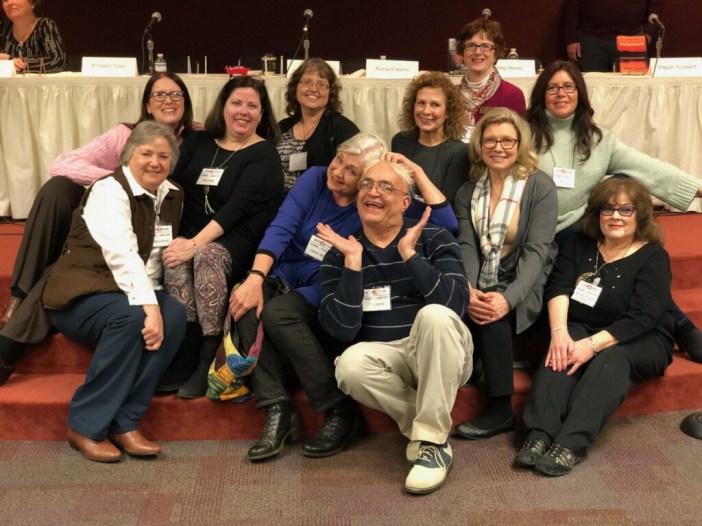
And before I head back to the spice mines, I’m going to leave you with one of the more fun pictures from the weekend:

mad catters

Everytime You Go Away

There really is nothing like your own bed.

My inability to sleep in a hotel bed is becoming increasingly problematic the older I get; it’s hard for me to do public speaking events when I have trouble sleeping. I can rest; I just don’t fall deeply asleep and instead wind up in that half-sleep all night. In the morning I feel rested physically but not mentally, and I start getting tired. I also wind up drinking a lot more caffeine than I need to stay alert and focused, which then further complicates the inability to fall asleep. Heavy heaving sigh.

But the two events I did in Alabama this weekend–Murder in the Magic City on Saturday in Birmingham at the Homewood Library; Murder on the Menu in Wetumpka Sunday at the Civic Center–are wonderful events. They draw lovely crowds, all of whom love to read and also buy books, and are incredibly well organized. A special shout out to Margaret Fenton, who organizes Murder in the Magic City, and to Tammy Lynn Rushing and Fran Holland, who put together the Wetumpka event. If you ever get invited to speak, or have the chance to attend, you really should. Despite my inability to sleep, I always feel creatively invigorated as well as personally rewarded. I also really love the little town of Wetumpka; as weird as it sounds, I would like to go back there and spend a weekend exploring. I’ve always wanted to write about a small town in Alabama; and there’s lots of material, I suspect, there. I love that there’s a casino and a meteor crater there; one of the only concrete suspension bridges in the country; and two rivers. Driving from Birmingham to Wetumpka is always interesting; as at least a third of the trip is on state highways and not interstates, and as I drove, listening to my music and observing my surroundings, again I had many flashbacks to my own childhood and my own memories of Alabama. I also got re-inspired on a short story idea I had a couple of months back, and serendipitously an anthology it would be perfect for just popped up on my radar. Huzzah!

I took today off from work–a wise move–so I can get caught up on everything that slid while I was away this weekend. I have errands to run, some cleaning to do, some writing and editing, and a lot of organizing. *Whew*. Just thinking about it makes me feel very very tired. But I slept really well last night–there’s really nothing like your own bed, as I mentioned before–and I also need to get to the gym. I missed both Friday and Sunday workouts this weekend; I can make up the Sunday workout today but Friday’s, alas, is gone. I do miss it, and my body is all, what the hell man? And with Carnival getting back into full swing on Wednesday; it’s not going to be easy. I am going to skip cardio these next few workouts; I have to walk to and from work every day from Wednesday thru Friday, so those cardio workouts aren’t as necessary. I can go lift weights today, Wednesday, and Friday; I have Lundi Gras off so can replace the Sunday workout with one on Monday, and then get back to my regular schedule after Fat Tuesday. Huzzah!

And maybe I should start looking into eating healthier, too….sob.

I did manage to keep going on the short story project while I was in Alabama; I took Laura Lippman’s Hardly Knew Her collection with me and read the stories “Femme Fatale,” “Honor Bar, ” and  “A Good Fuck Spoiled.” (There were other stories there, like “Pony Girl” and “ARM and the Woman”, which I’d already read in their original publications; I even reprinted “ARM and the Woman” in my co-edited –with J. M. Redmann–anthology Women of the Mean Streets.) I loved these stories, and one of the things I love the most about Lippman’s short stories is how dark they are; they are most definitely hard-boiled and noir. I also love that the stories are about women who aren’t what would typically be called ‘nice girls;’ these are women with shady pasts who aren’t sorry about their pasts and will do what they need to do.

“A Good Fuck Spoiled” though, isn’t about a woman, although in some ways it is; it actually spins the tired trope of the older man/younger woman adulterous affair on its head. This is one of those stories where someone who is basically your average, every day husband and father is pushed over the edge into doing something dark in order to get out of a bad situation his own apathy kind of allowed him to drift into. It’s also exceptionally clever by playing with the entire concept of ‘betrayed wife’ against ‘golf widow,’ and of course, the husband, once he does what he needs to do–sees it exactly that way; I love how Lippman shows how someone can do something amoral and then completely justify it. God, this collection is amazing. Laura Lippman is definitely respected as one of our best crime writers today–but I don’t think she gets near enough credit as a short story writer.

And on that note, I need to make a list and start checking things off it.

IMG_1924