Tuesday night as I talked with Jean, Candice and Harry about my two latest books I suddenly realized–towards the end of the conversation–that technically I have a third book out in current release with my name on the spine.
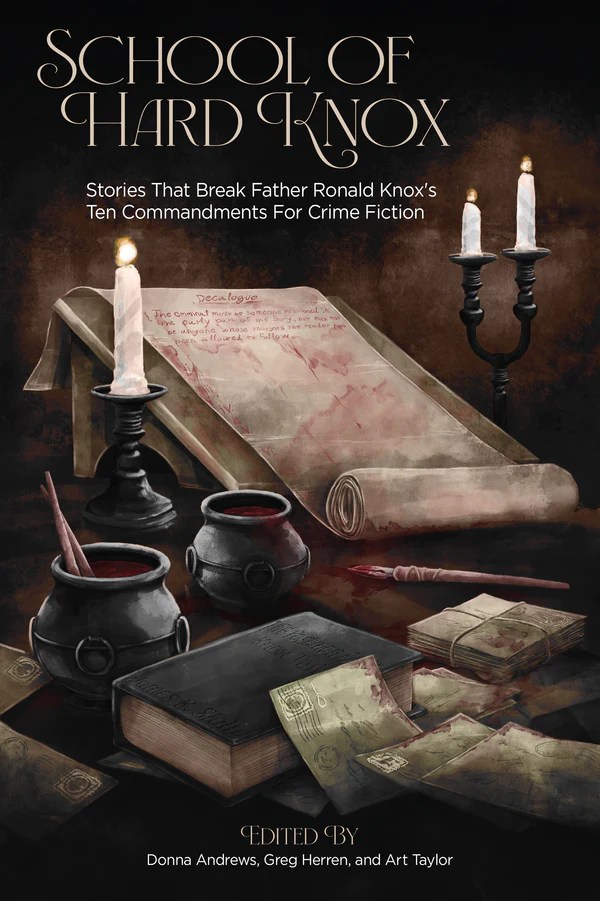
To wit, this marvelous anthology:
Which, if you like, you can order right here! There are two options to choose from–the clothbound special edition with the cover page signed by all three of us, or the less expensive paperback. I believe there’s also an ebook option.
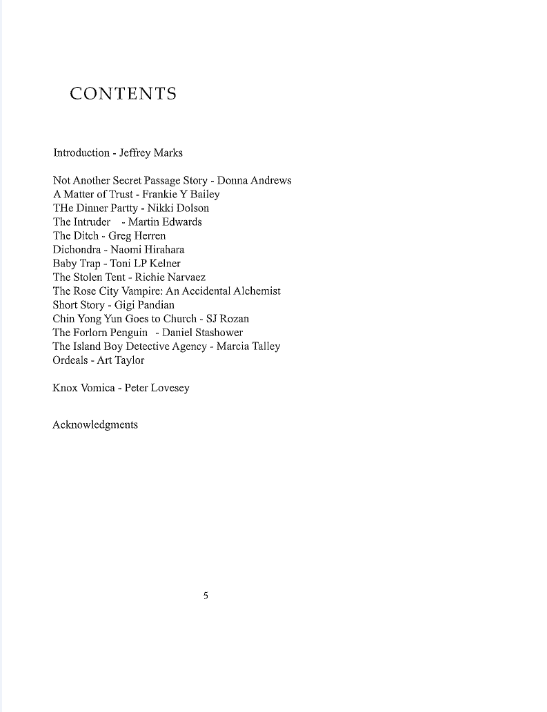
And look at this table of contents:
How is that for some amazing company to be in, eh? Not to mention the co-editor credit with Art Taylor and Donna Andrews, who are as equally lovely as people as they are insanely talented writers (and highly intelligent people). I mean, my story is sandwiched in between stories by Martin Edwards and Naomi Hirahara, for fuck’s sake.
Rarified air, indeed.
So, who is this Father Knox, and what are these commandments that had to be broken?
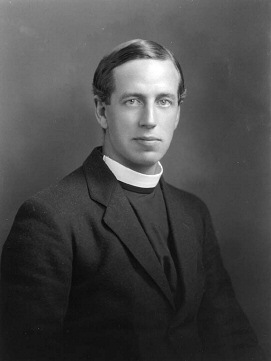
Father Knox himself
Father Knox was an early twentieth century mystery writer, who was also a member of the Detection Club, along with contemporaries like G. K. Chesterton and Agatha Christie–speaking of rarefied air–and he came up with the ten commandments for mystery novels:
The Criminal must be someone mentioned in the early part of the story but must not be anyone whose thoughts the reader has allowed to follow.
All supernatural or preternatural agencies are ruled out as a matter of course.
Not more than one secret room or passage is allowable.
No hitherto undiscovered poisons may be used, nor any appliance which will need a long scientific explanation at the end.
No (outdated racist term for someone of Chinese ancestry) must figure in the story.
No accident must ever help the detective, nor must he ever have an unaccountable intuition which proves to be right.
The detective must not himself commit the crime.
The detective must not light on any clues which are not instantly produced for the inspection of the reader.
The stupid friend of the detective, the Watson, must not conceal any thoughts which pass through his mind; his intelligence must be slightly, but very slightly below that of the average reader.
Twin brother, and doubles generally, must not appear unless we have been dully prepared for them.
I mean, how fun would it be to write a story breaking any of these rules, let alone a book doing so (hmmm, tempting–this would be a great fun thing for a Scotty adventure)?
I chose commandment two: all supernatural or preternatural agencies are ruled out as a matter of course, so I wrote a suspense story that may (or may not) have a supernatural agency involved; “The Ditch,” which is also a Corinth County story and one I am particularly pleased with.
I am going to begin reading the anthology, perhaps a story a day, as part of my Short Story Project (always ongoing) as well as to help promote the anthology, which has as fine a collection of contributors as I’ve ever been associated with.
The time change is always so weird to me, really. I always understood it had something to do with kids and not catching the bus in the dark in the mornings or something like that, but if they’re all walking home after school in the dark, how does that make sense? I always appreciate the extra hour, but always resent giving it back (or having it taken away?) in the spring. I kept finding clocks I hadn’t reset in the apartment (after thinking, wow, time has flown–wait a minute), and I did do some things. I did manage to make it to the West Bank, but it was really a wasted trip; Sundays are clearly not the day to do shopping over there as almost every place was out of almost everything. I got my wagon but couldn’t get the wheels to lock in place (I am so not handy) and I also got the wrong size blinds–so I get to go back. Hurray. But I did get some things for lunch this week, and I made ravioli last night for dinner for something different (I even managed to eat some bread softened with red gravy), which was nice. I watched the end of the Saints game–which they tried very hard to lose–and then another episode of Moonlighting. I found a much later and much more revised version of one of the novellas, “Fireflies”–which needs a lot of work, but is a very good idea and the kernel of a terrific novellas is there, if I can stick the landing–and also was put in mind of Chlorine yet again by coming across Matt Baume’s Tab Hunter1 documentary on Youtube (another great job, Matt!)–and I had a germ of an idea for how a part of the plot would work–another piece fell into place, as it were, and so I scribbled it down in my journal (huzzah for journals!) to wait for the day and time I can get back to work on it and give it my full attention.
I realized yesterday–once again astonishing myself with my own obtuseness–that part of what’s going on with me lately–the moodiness, the surliness, the self-destructive inability to get anything done, and the anxiety that comes with all of the above–has everything to do with my coming surgery. The compartmentalization doesn’t always work, you see, when something is creating a lot of anxiety for me. I have very little idea of what to expect and what it’s going to be like–or how restricted I am going to be as far as movement and so forth or for how long. I know I shouldn’t consult Dr. Google, but in lieu of any other information that I can recall, what else is there to do? And Dr. Google was right when I looked up the information on the injury when it was finally correctly diagnosed, after all. So I can look at about three weeks out of the office on medical leave, and then possibly some limited mobility after that. It sounds like if I am going to be able to type at all it will be one-handed, which is limiting, so I am hoping that if I am not drugged out to the gills I can spend time getting caught up on my reading as well as doing a lot of editing work on my own stuff. I am not going to be able to lift or carry things, which is going to make the whole grocery situation interesting for a couple of weeks, but I guess I can have things delivered. Probably the best way to compartmentalize all of the concern and anxiety about the surgery would be to start planning and preparing so I can be as ready as I can, right? It’s been a year, really. I suppose my end of the year round-up blog post on New Year’s Day will be a bit morose and melancholy.
I think one tends to be a bit more morose and melancholy as one gets older.
I also started watching A Haunting in Venice and while it was shot beautifully and had a great cast–it didn’t really hold my interest. The Agatha Christie novel it’s loosely based on–and I do mean loosely–is not one of the more better known ones; Halloween Party was a perfectly adequate Christie novel but it wasn’t anything spectacular. I do remember it, and I do have a hardcover book club edition of it, too. It probably belonged to my grandmother, or else I picked it up at a second hand store or a flea market or somewhere like that. I took a break about halfway through and then went back…and kind of dozed a bit through the second half. It’s a shame; I watched because I had Venice on the brain after rereading “Festival of the Redeemer” Saturday afternoon, and rethinking how to rewrite and revise and improve it. But it was beautifully shot, and made me wish I could live, even if for a brief month or so, in Venice for a while. I did go back and finish it–but I found it disappointing. Beautifully shot, yes, and Venice is always beautiful on film, but such a waste of so much remarkable talent.
I went to bed early–it was a struggle staying up until ten, which felt like eleven, and slept really well. I feel rested enough to actually face the day and potentially be productive–crazy, I know–but I generally feel well rested on Monday; it’s the rest of the week when my ass starts dragging. I also have to keep pushing forward on some things, too–progress must always be made, even when I don’t feel like making progress on anything. (Watching Tug get used to having his nails trimmed and not being able to use thing to climb–me, in particular–has been rather cute, but then again he is world’s most adorable kitten.) I didn’t read very much this weekend, either, more’s the pity; but I am thinking I’ll be doing a lot of reading once the surgery has taken place and I am no longer living on pain medications–maybe I can even read while on painkillers; I know they are going to give me oxycontin or some version or derivative of it, which makes watching all those movies and documentaries and mini-series based on the crimes of the Sackler family against the American public perhaps not as smart as it seemed at the time; I am terrified of becoming addicted to a pain medication–but that’s also an excellent time to wean myself off the Xanax, too.2
And on that note I am heading into the spice mines for the morning. Have a great Monday, Constant Reader, and I’ll be back to check in on you again later with undoubtedly more blatant self-promotion.
I actually met Tab Hunter, which is something that amazes me to this very day; I actually met him and his husband several times. How cool is my life, really? ↩︎
While I’ve been taking it to control mood swings all these years, it’s really not something you’re supposed to take on a daily basis but rather as needed; now that I know it’s anxiety I can treat it appropriately. Most of my medications are now wrong, and need to be changed. ↩︎
Today already feels off. That’s the time change, no doubt; it’s hard to believe I slept as well as I did last night–I went to bed early so I could get up earlier by the clock than by the body, figuring that was the easiest way to transition into getting up early for work this week. The weekend, which held such promise, was derailed by having to deal with getting my delivery items that were supposed to come Friday night delivered yesterday; they finally did come and it was taken care of–but the delivery window was 1-3, which fucked up the rest of the day for me to run the other errands I wanted to get done, which now have to be done this morning. It’s fine, but any change to routine triggers the anxiety so I am trying to not let it defeat me this morning. But the change in plans did kind of end up wasting my Saturday; the delivery came around two-thirty, and it was already too late for me to go out running errands. Of course this morning I am thinking no it wasn’t too late for you to start your errands but my mind works a certain way and usually I can’t see these things except in highsight.
I did read some of the novellas I have partially finished that have been lying around for years, which begs the question I could have sworn I’ve worked on these things more recently than the files I am finding, so have I lost track of all time completely? But for the one I am thinking of, it absolutely makes the most sense, as I now remember I’d actually submitted it to an anthology, which meant trimming it down from the length that it originally was. I have found a call for submissions which includes novellas–which was why I was looking at them again yesterday–which has me thinking about revisions and rewrites and what can be done with these manuscripts. One is slightly longer than forty thousand, and only needs a minimum of twenty-five thousand more to become an actual novel. I reread it yesterday, and it does center a bad trope that would have to be super-creatively pulled off to work, but I also think recentering the main character from a straight cisgender white high school girl to a gay teenager could easily help with that. (It also needs a name change, “Spellcaster” doesn’t really work and was also a drawback to what I had done.) The one I was looking for was “Fireflies,” which is another Corinth County story (I feel like I should always explain that the locals pronounce it “carnth”) and is one of the more disturbing county stories I’ve done, but I also think it’s one that works for the submission call. Or not; we shall see.
The other one I was able to read was “Festival of the Redeemer,” which is another attempt at a du Maurier-like story set in Venice. Rereading “Don’t Look Now” recently, of course, put me in mind of this story, which is one of the few novellas that has an actual full draft done. (Several of the others are incomplete–“The Scent of Lilacs in the Rain,” “A Holler Full of Kudzu,” and “Once a Tiger”.) Rereading it yesterday reminded me of what I was doing with it–or trying to, at any rate–and I could see where I lost the thread and the voice, which was the most important thing about the novella. I also need to get organized on the next book project I am going to work on, but I need to write a proposal first. That’s the big goal for today; get better organized, run those errands, get the proposal organized, and start pulling the next book together. One step to getting things better organized is to complete a thorough to-do list and actually pay attention to it; these lists do no good if you don’t consult them at least once a day. I had gotten a great start on one this past week, so I think I am going to work on pulling that together.
I also need to measure the workstation windows before I head to Lowe’s.
The Saints are playing today at noon, but I think that’s the best time for me to be running errands and potentially hanging window blinds, so I think that’s enough stress and anxiety for me today–I can follow the Saints game on social media. A Haunting in Venice is streaming now, so we may go ahead and watch some movies later on, as we are all caught up on the shows we are watching (I am episodes behind on Foundation, but the beauty of streaming is you can always catch up at some point), and there’s another movie streaming now I am interested in seeing even if I can’t think of its name at the moment. I’ve already made a grocery list for today–I am making ravioli for dinner tonight and need to pick up some bread to go with it–and am hopeful that sometime either this week or next I will get my teeth at last and I can bid adieu to the soft diet…just in time for my surgery. I’ve done some research–which I’d been avoiding–on the recovery time from this type of surgery and mine is more complicated than the basic one I am finding out about on-line, so this is bare-minimums I am looking at–probably at least three weeks on medical leave from the office, which I will need to go talk to Admin and HR about at some point this week so I can get it taken care of, or at least get the process started. I will also need physical therapy for three to four months. Yay. Ah, well, at least I have the resources that this won’t bankrupt me, which is a good thing.
And on that note, I am going to get to work on things this morning and take advantage of this extra hour I have this morning rather than wasting it. So, have a lovely Sunday, Constant Reader, but be warned–there’s more blatant self-promotion coming along at some point.
Sunday and I slept late this morning and i am not a bit ashamed of it, quite frankly. The opportunities to sleep in are rare these days–getting up early so often for so long has adjusted and shifted my body clock in ways I’m getting used to but don’t like, and chief among those ways is the inability to sleep in. Yesterday I was up before eight, for example, but this morning it wasn’t even nine when I got up, and I could have easily stayed in bed longer. But there’s spice to mine today, and while there is still a lot of it to get done, I am feeling very good about things this morning. I actually felt really good about them yesterday if I am going to be completely honest. I got two chapters done and finished editing a manuscript (not my own) and turned it in to the publisher, which felt marvelous to be finished with that. Deadlines and juggling projects is something I’ve always done, but something I’ve noticed since the pandemic shutdown is deadlines are much more stressful and demanding on me, and take a bigger emotional toll than they used to. Probably part and parcel of the long COVID rewiring of my brain, but whereas before, I relished the pressure and it drove me to work harder, now it shuts me down and/or depresses me, which has the exact opposite reaction it used to have with me: instead of driving me, I think oh I’ll never get this all done so why bother and I end up blowing things off completely. Depression is quite the bitch, you know.
But I am very pleased with the work I got done yesterday and look forward to today’s work. I also did a load of dishes and laundry yesterday, and some cleaning. But after I was finished with work for the day, my brain was too fatigued to read so I watched movies on television, discovered two gems I’ve been wanting to revisit: Cruising and The Last of Sheila. I wanted to watch Cruising because I remember all the controversies about the movie while it was being filmed (yes, even in rural Kansas we heard about the gays being mad about the movie). I eventually watched it in the mid-1990’s. Paul is a huge Al Pacino fan, and when we moved in together he owned almost the entire Pacino filmography on videocassettes, so one night we watched Cruising. I didn’t much care for it when I watched it the first time, but I’ve wanted to watch it again–when I watched I wasn’t yet a published crime writer–because the story itself is interesting to me. A hot young ambitious cop sent undercover into the gay BDSM/leather community to look for a serial killer? The question of identity and sexual confusion that could arise from playing the part, which entailed going out and picking up (or being picked up) by gay men expecting some sex? I mean, you have to admit that’s a great set-up and concept for story. The Oscar winning director William Friedkin (he won for The French Connection but was much better known for directing The Exorcist) failed and ended up with a deeply flawed film. Pacino was also robbed of a far greater performance due to the homophobic cowardice of the either the director or the studio. Rewatching, the film’s flaws are even more apparent, but it’s a shame. It could have been a great film–and it does remain one of the few Hollywood films that actually depicts gay bar culture of the late 1970s the way it was–but I don’t know what went wrong with it, but it’s still a great idea. I also liked seeing New York as dirty and grimy, the way it was during that time period before gentrification came to Manhattan. It’s also fun seeing old movies where people who went on to greater stardom later had bit parts or cameos; Ed O’Neill popped up on screen at one point, as did several others that made me think, hmmmm.
If I had the time or inclination, I would take that basic framework of an idea and turn it into something stronger than the film. There was also a book it was based on, but it’s rare and used copies are insanely expensive. It also reminded me of a gay crime novel I read as a teenager living in Kansas; I may have been in college, I don’t remember, called A Brother’s Touch by Owen Levy. The book was about a brother who comes to New York to look into his estranged brother’s life after he is murdered–they were estranged because the dead brother was openly gay–and begins to question his own sexuality after being enmeshed into the gay community of Manhattan at the time. It was reprinted recently and I got a copy (by recently I mean in the years since Katrina; I have no concept of time and its passage anymore); I should move it closer to the top of the TBR pile. I wish I could still read as voraciously as I used to…something else that has slowed down with getting older.
After watching this I wanted to rewatch a classic old crime film of the old school, The Last of Sheila, which I’ve always loved. Co-written by Stephen Sondheim and Anthony Perkins and directed by Herbert Ross, it’s a whodunit worthy of Christie herself, in which a widowed producer invites some film community members on hard times for a week on his yacht. Everyone invited was at the party a year before where the producer’s wife Sheila wound up being killed by a hit-and-run driver, and the producer, whose known for loving to play games, has come up with a game for his guests to play. Everyone gets a card, and every day they will stop somewhere they will look for clues to the identity of whoever holds the card of the day–the first is a shoplifter, the second is a homosexual–and of course, the game turns dark and ugly when the producer host–played to sadistic asshole perfection by James Coburn, is murdered…and it turns out the game their host was playing had layers none of the guests knew about going in. The cast is a perfect time capsule of early 1970’s stardom: Richard Benjamin, Raquel Welch, Dyan Cannon, James Mason, Joan Hackett, a beautiful young Ian McShane, and of course, Coburn. It has twists and turns and surprises, and is so markedly clever that it’s hard to describe without spoiling anything…and the surprises are what make it such a great and fun film. This was one of our Sunday movie-after-church movies, I think; I do remember seeing it in the theater and being impressed and amazed. One thing I absolutely loved in the rewatch was the books scattered over every set–they are all mystery novels by Agatha Christie, Ngaio Marsh, Ellery Queen, and Erle Stanley Gardner, which should tip the viewer off that you are in for a mystery influenced by the master crime plotters of the time. It’s really a shame the film wasn’t a success, because it would have been amazing if Perkins and Sondheim had collaborated on more scripts like this one. As I was watching, I kept thinking how much I would love to write a puzzle-type mystery like this one; I’ve always feared such a thing was outside of my wheelhouse so I have always been afraid to try. Who knows? Maybe I will.
I feel very rested this morning and I am not dreading diving into the book this morning, which is nice. I don’t think I have the mindspace and bandwidth to work on multiple things all at the same time anymore, if that makes sense. I don’t know if it has to do with the long COVID rewriting of my brain waves or what, but the last few books I’ve written or worked on–going back to Bury Me in Shadows–have been more stressful than fun for me to write. Writing on a deadline is always stressful, and I rarely, if ever, actually make deadlines. But having multiple projects going on at the same time now feels like I am not devoting enough of my time and attention to any of them, let alone all of them, and that makes me feel uncomfortable about the work. Of course, my last three books–and my last anthology–have all gotten a lot of mainstream award attention, which makes it seem weirder. Which, of course, makes me wonder if the stress and the heavy burden pressure of multiple projects going is somehow making me produce somehow better work than before, and do I really want to mess with that at all? It never ceases to amaze me how neurotic I am about being a writer, and how afraid I am that any change or variation means it’s all over for me now.
I do wonder sometimes if other writers have that same secret fear: that the well will eventually run dry or that we’ll forget how to do what we do. People like to call me prolific; I’ve slowly come to the conclusion that I am and that it’s not a bad thing (I always try to figure out if being called something is bad–which goes back to being called a fairy as a child and thinking he was saying ferry and being very confused). John D. MacDonald was prolific; so were Ellery Queen, Agatha Christie, and Erle Stanley Gardner. I think my insecurities came into play when people started calling me prolific; I am so used to being insulted that I assumed it must be an insult as well, like it was something I should be ashamed of or something. I’ve decided to embrace it as a compliment. I am sure there are literary writers who produce one novel every ten years or so who would think it an insult, but I don’t respect them so don’t really care much what they think. And if I am not as prolific as I used to be–which I am not–it’s nothing to be ashamed of; I’ve gotten older, have gone through some things, and I don’t have the energy that I used to have. My imagination still rages out of control at any and all times, of course, but I don’t have the energy to fool myself into thinking every idea I have will turn into a short story, an essay, or a novel. I certainly won’t live long enough to turn all the ideas I already have into longer works of whatever style and kind.
And on that note, I am diving back into the book. I am getting another cup of coffee and putting some bread in the toaster for later, and I may or may not do another Pride month entry later today. Anyway, you have the loveliest Sunday possible, Constant Reader, and I will check in with you again later.
I did not want to get out of bed this morning. I didn’t sleep as deeply or restfully last night as I have been, but it was still a good night’s sleep–at least, one that wasn’t riddled with insomnia, so I’ll take it and be grateful. I mean, I don’t feel fatigued or anything. I’m still fighting this cold I caught in New York (the COVID tests have been consistently negative since my return, but I haven’t taken one this morning yet, either) which is miserable, and means I’ll probably continue masking at work. They lifted the masking requirement yesterday, which was kind of a surprise, but…making those kinds of decisions is way above my pay grade. I don’t know why people were so hateful and nasty about the masks, but I know I’ve kind of enjoyed not getting sick (other than COVID) over the last three years–which is why I hate this cold even more than I ordinarily would because I haven’t had one in three years.
Sigh.
I made more than quota yesterday, which was also nice–the deadline looms, which makes every word more important–and I hope to do so again tonight. I also managed to get some dishes done last night, some cleaning up around the kitchen, and even made dinner, which I rarely do on weeknights (mainly because Paul gets home so late, but yesterday was his work-at-home day, so he was here and it wasn’t an issue). I need to do some more dishes tonight and more clean-up/organizing around the kitchen. I have to do that signing event for two hours at ALA on Saturday at the Convention Center (which I keep forgetting about, like I keep forgetting about my doctor’s appointment tomorrow, which isn’t good or smart), so getting ahead of the game is better for me and I should take advantage of the writing being easy and write as much as I can when its flowing, right?
We also started watching Jack Ryan on Amazon Prime last night. I like John Kasinski, but have never been much of a fan of Tom Clancy’s. I did read The Hunt for Red October when it was the “it” book of the year, but didn’t much care for it and never went back to Clancy afterwards. It’s just not my thing. I preferred Alistair MacLean, to be honest–no one really talks about him anymore, but I read a lot of his canon; I think if there’s any one book he might be known for it’s either The Guns of Navarone or Where Eagles Dare. My personal favorite was the one whose name I cannot recall right now, but it was about a lifeboat full of people escaping Singapore in December 1941; their ship is torpedoed and sinks, and they are trying to make it to Australia. South by Java Head! I also enjoyed Circus and Bear Island. I’ve been meaning to revisit MacLean again now that I’m an older and more sophisticated (!) reader, just as I’ve been meaning to revisit Robert Ludlum (the actual Ludlum) in the last few years. I’ve also been meaning to revisit Helen MacInnes–her The Salzburg Connection is one of my favorite espionage thrillers (you can never go wrong with Nazis as your villains, seriously). I’ve also wanted to reread Ian Fleming for the first time since I was a teenager as well; I think I would appreciate the books more than I did then. Anyway, we weren’t terribly engrossed by Jack Ryan and I don’t think we’ll be continuing with it.
This morning’s COVID test is negative, as I had suspected and hoped, so I know this is just a cold. Is it annoying that I still have it? You bet your ass it is. I can’t believe I used to get colds and think nothing of it and just went about my day and business like it was nothing. Clearly, I am out of practice with being ill. I don’t think it’s just me, either; I finished off my DayQuil yesterday so it was on my list on the way home from work and they didn’t have much in stock–either DayQuil or NyQuil, and none of the extra strength kind I always use. Supply chain issues? One thing I’ve really been noticing over the last year or so is how empty the shelves in the grocery stores are, and things that I used to pick up regularly without concern sometimes aren’t there. I don’t know if this is a New Orleans issue–it really became noticeable after Hurricane Ida, and the stores here never have seemed to bounce back from having to toss all that food back then–or if it’s across the board, but it’s strange and one of those things that makes you wonder about how serious the decline of the American democracy actually must be. (It also goes to show how spoiled we are–do other countries even have supermarkets? They didn’t in the village in Italy we vacationed in all those years ago–and I never saw one in either Florence or Venice, but wasn’t looking either. Or is even thinking that part of American exceptionalism? It’s hard to know anymore.)
And on that note, I am heading into the spice mines. Have a lovely Tuesday, Constant Reader!
And now it’s Christmas morning, with tidings of great joy and all that. It’s thirty-six degrees in New Orleans and our Hard Freeze Warning doesn’t let up until nine this morning, but it’s still not exactly going to be warm or anything. But that’s fine. I have lots to do today and I slept in again (it’s been marvelous, sleeping late this long weekend but it’s going to make getting up Tuesday morning in the cold difficult, I fear) and feel rested this morning. Which is a very good thing, don’t get me wrong on that. But when I finish this I need to clean up the dishes from yesterday before I dive back into my Donna Andrews Christmas read for a bit before I dive headfirst back into the book. I did get some writing done yesterday–didn’t make the quota, so will have to make up for that today as well as meet today’s–and I am enjoying Donna’s book tremendously. After Paul got home from his trainer, I gave up on reading and we settled in to watch some movies: See How They Run (great cast, clever concept, not completely executed properly); The Banshees of Inisherin (not seeing how that was nominated for comedy Golden Globes, unless it’s such dark humor that I completely missed it. There are some terrific performances in it, though); All Quiet on the Western Front (a remake of the Oscar winning classic; perhaps one of the grimmest and darkest looks at how miserable war really is and definitely an Oscar contender); and finally–well, I don’t remember the fourth film we watched last night before going to bed, which is probably not a good sign of either its memorability or my memory. Maybe it’ll come to me as I write this, who knows?
I made pulled turkey for Christmas Eve, with an eye to not having to cook anything today, and I bought too much. I usually get one of those small boneless turkey breasts from Butterball, but I couldn’t find one anywhere this week, but Friday they had turkey breasts at Rouse’s, so that’s what I got. It was twice the size of what I usually get–and we can never really finish eating–and it had bones. It barely fit into the crockpot but…it was delicious when it was finished, much better than those boneless ones, and I can’t help but wonder if the bones somehow make a difference? It was a time shredding the meat (since there were bones), and I made some Stove Top to go with it (I can make real cornbread dressing from scratch like my mom makes, but it’s a shit ton of work and it makes a shit ton of dressing, which we would never be able to completely eat). But today I shouldn’t have to cook anything, other than maybe a grilled cheese for lunch or something, and once I finish this I am going to clean the kitchen and read for a little while before getting cleaned up and diving back into the book.
It’s also a very short work week at the office, since tomorrow I have off as a holiday and so only have three days in the office this week preparatory to another three day weekend this coming weekend. There will be football games to watch over that weekend, which will make it much harder to get writing done, but the book must be turned in on January 1. I am trying not to feel guilty about not getting any more writing done yesterday and for leaving the apartment in such a mess, but one of the things I’ve become more aware of as I get older is that I need more down time to recover and regroup and recharge. There’s nothing wrong with it, of course, other than I think I used to not need the recovery time nearly as much as I do now. Then again, it’s also entirely possible I simply don’t remember and it’s merely yet another memory lie my mind is telling me, allowing me to look backward through rosy lenses to see things as markedly better in the past than they are in the present. That’s always the trick of getting older–your mind always wants you to believe that things were better or easier or made more sense in the past, when that wasn’t true; the struggle was simply different back then than it is now, but there’s always some kind of struggle going on in people’s lives. We are also masters at hiding our struggles from other people–I know there have been many times in the past when I wondered how other people managed to do so well while I was doing so poorly; now with the “wisdom” of age and experience I know they were probably all struggling too, I just didn’t know it or was too self-absorbed to notice.
Probably more of that latter part, actually.
The Saints did win yesterday, which was lovely–I had the game on in the background while I read, and then once Paul and I started watching See How They Run I followed it on my iPad and Twitter–but I am finding I am not caring much about the post-season for college football. I’ll watch LSU’s bowl game with Purdue, but other than that, I don’t care very much. I always say that, but inevitably always end up watching the national title game, regardless. I have no stake in the game, other than wanting SEC dominance to continue, and quite frankly, I’ve turned a bit on Georgia–their decision to go for two when up thirty against LSU in the conference title game so they could hit fifty left a sour taste in my mouth; enjoy your run while it lasts, Bulldogs, because your day will come again. And if you think LSU’s players, coaches and fans won’t remember that for the rest of time, think fucking again.
Then again, Joe Burrow did make the Dogs look like a high school second string in 2018 and 2019, so maybe there was some payback there from them, I don’t know. But Cajuns and Louisianans have long memories and will carry a grudge to the grave; and on that score I am definitely an honorary Cajun. (I said to a friend the other day, “I may not remember the reason, but I remember the grudge.”)
So, on that cheerful holiday note, I bid you adieu as I head into the spice mines, Constant Reader. Have a lovely day, whether you celebrate the holiday or not; at least have a lovely free day from worry or care, and I’ll check in which you again later.
Christmas Eve! It’s warmer today than yesterday by a full six whole degrees; it’s 32 degrees instead of 26, as it was yesterday. The The apartment is over all toasty and warm–but the kitchen and upstairs bathroom are not. They are a bearable degree of cold, but I do have the space heater going this morning in here as I type this and swill coffee and wake-up gradually. I slept magnificently last night, and feel very rested and relaxed this morning, which is quite marvelous. I hit my word count somehow yesterday–three thousand words–and hope to do the same today. Today has a higher goal–I’m feeling rather ambitious this morning–and Paul has his trainer this afternoon and is working on a grant proposal, so I should have the solitude I need to bang out the count I need to achieve today. I picked up the mail and ran some other errands yesterday–including taking Paul to Michaels on Claiborne to pick up a gift for me. You’d think by now I’d know he’s going to flout the “no gift” rule every year, because he has and yet every year I think he’s going to stick to it. I think it’s part of that failing memory thing I have going. Anyway, he had the front page of the New Orleans Times-Picayune/Advocate from the morning after the 2020 National Championship game framed and mounted; it’s a full page shot of Joe Burrow running downfield holding up both hands with his forefingers extended, with the headline PERFECT. It’s mounted on gold paper and the frame is purple, and I absolutely love it. Paul always won Christmas when we used to get plan on getting each other gifts, primarily because he pays attention to things I say and takes notes all year to plan for Christmas; I’ll never forget that marvelous year he got us tickets to see the Monte Carlo Ballet Company’s Romeo and Juliet, which I absolutely loved–all because I’d casually mentioned once that I loved ballet and wanted to write about it one day, despite knowing next to nothing about it. (Aside: I keep thinking I want to write a Sherlock Holmes story built around a Nijinsky performance in New Orleans; someday perhaps.)
We also watched, and greatly enjoyed, Glass Onion last night. I actually liked it better than Knives Out, in all honesty, and I love that this is turning into a film series. It reminds me so much of Agatha Christie at her best, and is there a better compliment to give a mystery film than a Christie comparison? I think not. I think Daniel Craig (whom I’ve loved since he emerged from the surf in that square cut swimsuit in Casino Royale, and quickly became one of my favorite James Bonds) is simply fantastic. The Southern accent grated a bit on me at first in Knives Out, but by the end of the movie it didn’t bother me anymore and it didn’t even make me recoil the first time I heard it last night. I think I’d like to write something along the lines of these films sometime–the big cast of suspects, the great detective unraveling the case–because I’ve always wanted to do an Agatha Christie style/classic vintage mystery type house party murder mystery. (Note to self: reread The Affair of the Blood-stained Egg Cosy)
But mother of God, it was cold yesterday when we were out in it. As I said to Paul–the entire world was out shopping yesterday because of course it was; we had to park a very long way from Michaels–“I can hang with this cold for a couple of days, but months of it would make me homicidal.” My grocery pick-up order ended up being canceled; they were unable to get it together for the time I’d selected, and the message was up to two hours minimum delay. At first I was a bit stunned, but then realized everyone and their mom is ordering groceries for pick-up today, and I bet the orders are a lot larger than usual. So I stopped by Rouses, they had a turkey breast in the freezer section, so I picked it up and carried it to the small order register, canceled my pick-up order (all I really needed with the turkey breast; everything else could wait) and then when I got home, put in another order for pick-up on Monday, since I have the day off.
Picking up the mail also ended up with a great gift to the Lost Apartment from the President: there was a stack of envelopes in the mailbox from the IRS for Paul, thirty in all. Turns out his student loans had all been forgiven, retroactively to 2017; the stack of envelopes were refund checks for every payment he’s made since then. So, yes, only more proof that our votes for President Biden and Democrats down the line was the right choices (and always have been for queer people). So keep your “how fucking dare you forgive student loan debt” shit to your fucking selves, you selfish assholes. This did, and will continue, to make a significant difference in our lives going forward; and can I just say, I can’t remember the last time any government policy had such an impact on us directly? Obviously, the Lawrence v. Texas and Obergefell Supreme Court decisions had a macro impact on us, but this is an intimate micro effect that made us both very happy yesterday. And what lovely timing, too–right before Christmas. Let’s go, Brandon indeed.
I get a text from Entergy this morning warning of potential brownouts because of high demand for energy with the cold weather; I would imagine this is because the cold is effecting everywhere, so there’s nowhere Entergy can borrow power from if the supply runs low. That’s kind of scary, really, because people could literally freeze to death down here; imagine that! How weird would it be for someone to freeze to death down in southeastern Louisiana? It does make me a bit concerned about the homeless population here–we have a considerable one–so I hope they all found shelter and a place to stay warm.
And I think as soon as I finish this I am going to get the turkey started in the slow cooker, and curl up in my easy chair with my coffee, a blanket, and Dashing Through the Snowbirds by Donna Andrews. I think my new Christmas tradition every year will be just that; I’ll read Donna’s Christmas mystery for Christmas every year.
The world shut down in March of 2020, in the face of a deadly new virus that was spreading around the world, and spreading quickly. It was a major paradigm shift; everything changed and the world would never be the same as it was before. As everyone locked down and adapted (or decided it was all a hoax and chafed against the intrusion), the question began being asked of writers: how will you handle the pandemic in your work, or will you address it at all? A lot of authors said that they wouldn’t address it, because they couldn’t imagine anyone wanting to read about it, or revisit it again after it was over. I came down firmly on the side of “we have to address it”; pointing out that Hurricane Katrina was a paradigm shift for New Orleans and Louisiana authors, and we all had faced the same issue and question. Some writers chose not to deal with it at all, some stopped writing entirely, and others–like me–addressed it. I found it incredibly cathartic to write about the disaster by viewing it through someone else’s eyes, and of course, much of what Chanse saw and dealt with was taken directly from my own experience. Writing the book in some ways helped me to heal from the emotional trauma and deep depression I was experiencing, and I don’t think I would have possibly gotten over it had I not written it out of my system. I will undoubtedly deal with the pandemic in a Scotty book at some point–I already have the title for it picked out and a folder created to keep my notes and ideas in–but I am not quite there as yet.
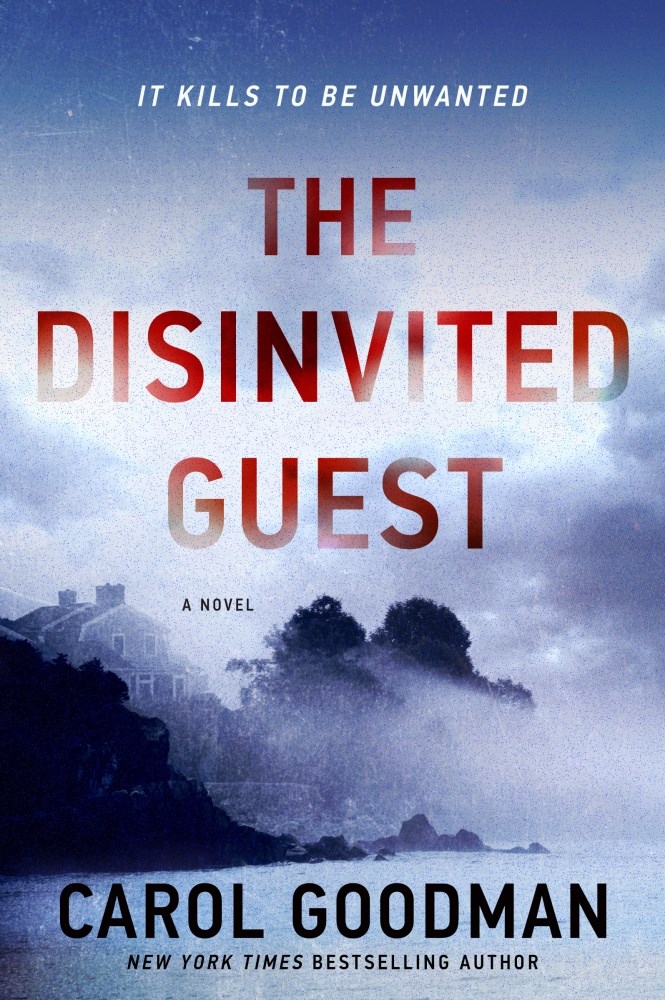
Leave it to Carol Goodman to not only do it, but do it incredibly well.
“We’re here.”
Reed’s voice wakes me from the fitful sleep I’d fallen into somewhere north of Portland, the slap of wipers and the sluice of tires accomplishing what bourbon and sleeping pills had failed to do for the past two weeks. I open my eyes to a wall of sodden gray the color of wet cement. I can feel it pressing down my throat–
I cough.
Reed swivels his head toward me, blue eyes feverish in the gloom above his white surgical mask.
“I’m fine.” I reach for the water bottle and swig lukewarm water that tastes like copper. “The others–“
“Behind us. Crosby’s driving like an old woman, trying to protect his precious Volvo’s paint job. Honestly, for a supposed socialist he likes the trappings of the bourgeoisie.” He grins, his bones sharpening under sallow skin. With all the stress of the recent news and preparations to come to the island, neither of us has been eating much for the past few weeks.
“They could have gotten lost.”
I’ve been a huge fan of Carol Goodman’s since my first dip into her canon, The Sea of Lost Girls. I have since been dipping back into at times as a reward to myself; she’s easily moved into my top ten list of current writers and won’t be dislodged anytime soon. She’s won numerous awards–deservedly–and is, to me at least, the modern incarnation of the great Mary Stewart. Goodman’s novels are decidedly Gothic and extremely smart and literate, with strong characters that are sharply defined and well rounded that the reader can easily identify with as well as like or dislike.
The premise of The Disinvited Guest is that another pandemic has descended upon the world after the 2020 COVID-19 one. Wealthy Reed Harper has decided to quarantine on an island his family owns–Fever Island, off the coast of Maine and near the mouth of the St. Lawrence River–since his wife Lucy has residual health problems since the first pandemic. Invited along are his lesbian sister Liz, a painter; Nico, Liz’ partner, a photographer; Ada, an old college friend of both Reed and Lucy who works now as an ER nurse; and her husband, also a medical professional in hospital administration, Crosby–who’s a bit of a dick. The remaining character is Mac, whose mother was a housekeeper for the Harper family working on the island. Mac knew Reed and Liz as children, and now he lives on the island as a caretaker. Reed, who also suffers from OCD, has carefully planned out every last aspect of this quarantine adventure–and while the quarantine and safety is the primary issue at stake here, any reader of crime or suspense knows that having seven people living together on a remote, isolated island is the perfect set-up for personality clashes and battles and intrigues and, of course, for murder. How many horror films or murder mysteries are set in such locales? (Goodman of course is wise enough to make an Agatha Christie/And Then There Were None reference in the text; the geographic elements of the island–the Dead Pool, the bog, Dead Man’s Cove, etc.–also sound like something out of the Hardy Boys, and she acknowledges that several times as well.)
There’s also some excellent backstory. Fever Island is named this because during the Irish immigration period of the late 1840’s–the potato famine and typhus epidemic–the ships with ill passengers were sent to Fever Island to quarantine before being admitted into Canada. A makeshift hospital is set up on the island, nuns come out to operate it along with several doctors–including a Harper ancestor–and so there is also a makeshift cemetery on the island. There’s also another legend, going back even further than the quarantine days; the earliest settlers believed a woman was a witch and essentially buried her alive on the island. The story claims she placed a curse on the island and summoned the devil. This is enough of a horrible backstory to make easily the possibility of supernatural forces at work on the island completely believable, which only adds to the suspense. There’s also the backstory of Reed and Liz’s own experiences spending their summers on the island with their horrible father and alcoholic mother; Reed’s dead former girlfriend, who died on the island during the first pandemic, along with his parents; and of course the diary of Dr. Nathaniel Reed Harper, who details life on the quarantine island and the growing suspicion amongst the superstitious fever victims and a group of sailors stranded their by a shipwreck that the witch’s curse is haunting them and that maybe even one of their party has been possessed by the witch and has summoned the devil.
Ada and Lucy were best friends and roommates in college, with Reed as the third side of their triangle. Lucy has also written one well-received novel, but hasn’t written anything since…and her discovery of the diary begins to inspire her to write about the island. Goodman is quite excellent at weaving the multiple storylines and multiple time-lines–Lucy is flashing back to the original pandemic, which is what brought her and Reed together as a couple; the incidents from the 1840’s as revealed in Dr. Harper’s journal; and of course, what happened on the island during the original pandemic.
Strange things start happening once they are all safely ensconced on Fever Island, and of course there are the inevitable personality clashes, which amp up the tension and then, of course, the deaths begin. At first Lucy can’t help but wonder if the island is indeed cursed–but slowly begins to realize that there is a very clever murderer on the island pursuing a definite agenda, but who?
And I love how Goodman chose to deal with the COVID-19 pandemic. Rather than setting the book during that shutdown, she instead chose to write about a future quarantine/shutdown, with the COVID-19 one in the distant past (ten years or so) but having a lot of impact on what is happening in the present.
I loved every minute and every word of The Disinvited Guest, and I cannot recommend it highly enough.
It is quite impossible to have heard of every writer and every book, even in a subgenre; there are simply too many books published in the past, with new ones coming out every day and new ones getting signed for future release every day. When it comes to my own reading, I like to draw from a wide and deep pool of styles, genres, and authors. Most of my reading is generally confined to the crime genre–and I do confess that I need to broaden that pool even further. I need to read more literary fiction, science fiction, horror, romance, and fantasy; more true crime and biography and criticism; and even within my own crime genre I tend to not read as much of some sub-genres as others.
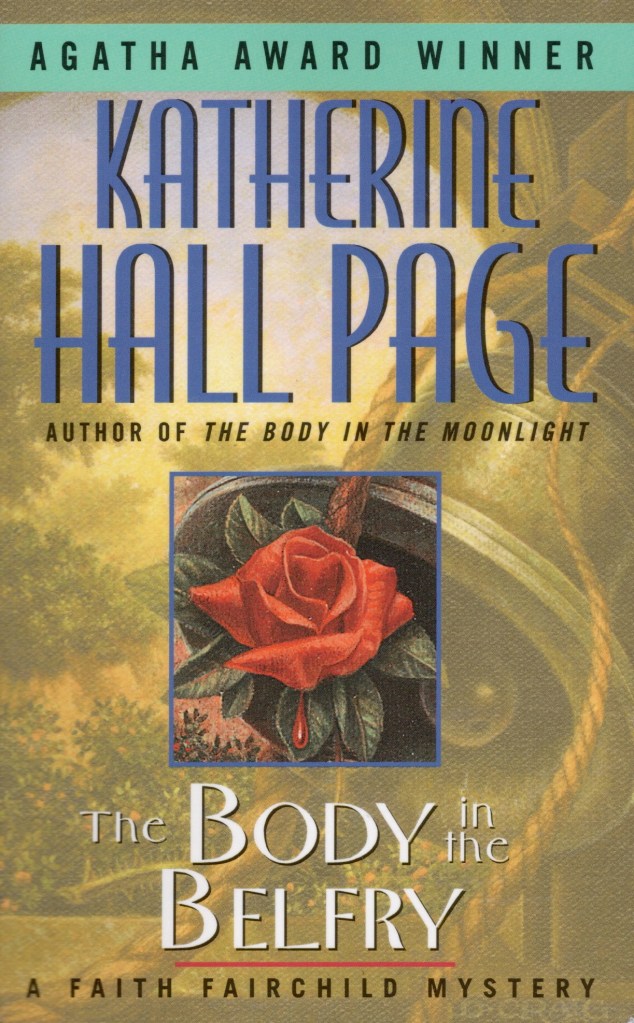
I’ve always liked cozies, and have never understood why they get so much grief and are so readily dismissed by those who neither write nor read them. I don’t read enough of them, to be honest, but again, there are so many terrific cozy writers and there’s only so much time. But recently in a review of my A Streetcar Named Murder, the reviewer mentioned that it was perfect “for fans of Katherine Hall Page.” This intrigued me, because I didn’t know her nor was I familiar with her work. I quickly checked in with some cozy writer friends, who all assured me it was a great compliment, so I decided to check out her Faith Fairchild series.
Faith Fairchild, recently of New York City, paused to catch her breath. Benjamin, her five-month-old son, was sound asleep, securely strapped to her chest in his Snugli. Her aching shoulder blades and the fact she has been focusing on the own path beneath her feet instead of the autumnal splendor to either side reminded Faith that Benjamin was definitely getting a bit too chunky for this mode of transportation. She straightened up and looked around.
It was New England with a vengeance: riotous orange and scarlet leaves beneath enormous, puffy white clouds suspended in a Kodacolor blue sky. A calendar maker’s dream. And of course brisk, clear air as crisp as a bite of a McIntosh apple just off the tree.
Faith hated McIntosh apples.
She walked up the Belfry Hill path a bit farther to a small clearning, which gave her an unobstructed view of the Aleford village green far below. She sat down and sighed heavily.
Her life was becoming terribly quaint, Faith thought. Time was when “village” meant “the Village” and “town” was up or down. And when did she start using phrases like “time was”? She let another sigh escape into the pollution-free landscape and longed for a whiff of that heady combination of roasted chestnuts and exhaust fumes that meant autumn to her.
It didn’t take me very long in reading the book to realize just what an incredible compliment that comparison actually was.
I pointed out in one of my entries about cozies–probably a blatantly self-promotional entry, if I recall correctly–that often-times there’s a “fish out of water” element to a cozy series; the main character is often someone from the big city who has, for whatever reason, found him or herself in a new small town environment that has its charms but at the same time they miss their big city. Faith Sibley Fairchild is no exception to this. Born and raised in Manhattan as the child of a minister and a wealthy heiress, Faith has her own trust fund and her interest in food led her to start her own, hugely successful catering company, Have Faith. But she has since fallen in love with a small-town minister, married him, temporarily shuttered her business and moved to pastoral Aleford in Massachusetts, having now had a baby and is trying to adjust to small town life as the minister’s wife. (I was reminded frequently of the Vicar’s wife in St. Mary Mead in Agatha Christie’s Murder at the Vicarage; the younger woman whom the villagers aren’t quite sure what to make of other than she’s not like any vicar’s wife they’ve ever known.)
On this particular morning she is heading up to the town belfry to just relax and have a little picnic with her baby son–only to discover the body of Cindy Shepherd, a perfectly awful young woman whom no one in the village of Aleford likes very much. Suspicion immediately falls on her long-suffering fiancé, who doesn’t have much of an alibi–and Faith finds herself intrigued by the case and starts asking around. She found the body, after all, and as she starts asking questions and bouncing from villager to villager, she finds herself learning more about her town and the intricate yet almost invisible threads that tie everyone in Aleford together–and soon finds that not only was Lucy unpleasant, she was an outright villain, who only cared about herself and was not above using whatever means at her disposal necessary to get what she wants. The investigation itself is also an excellent way for Page to introduce Aleford (as well as Faith’s own backstory) to the reader in a very organic way that is not only easy to follow but keeps the reader turning the page. Ms. Page also has a lovely, easily accessible and slyly witty voice that engages the reader, and you can’t help liking Faith and rooting for her–as well as looking forward to your next visit. There are currently twenty-six volumes in the series–daunting, to be sure–but I’m excited about that lengthy canon; I won’t be running out of Katherine Hall Page novels to read any time soon.
I first discovered Laurie R. King when I was editor of Lambda Book Report.
We’d received a review copy of her latest Kate Martinelli series, Nightwork, and the then-editor generally assigned mysteries/crime novels to me to review, since I had written one (that hadn’t been released yet) so ergo, I was an expert. Obviously, there were too many of them released each month for me to review, and so some got farmed out, but I held on to this one because I was very conscious that my reading was very gay male-heavy and I had a responsibility, not just to readers but to the community as a whole, to read works by women. The theory was at the time that gay men only read gay men and only lesbians read lesbians; I could hardly criticize this exercise in literary misogyny if I were doing the same thing. I read the book, loved it, wrote a glowing review, and then traipsed over to Lambda Rising on Connecticut Avenue (or was it Massachusetts? My memory is for shit) and bought the first books in the series. I devoured them, loved them, and recommended them to anyone who would listen.
You can imagine my shock, surprise, and delight to discover that King was not, in fact, a lesbian.
The Martinelli series ended shortly thereafter, and King moved on to her Mary Russell/Sherlock Holmes series, which I got a mistaken idea about and thus never read. I’ve never been much of a Sherlockian, primarily because Dr. Watson got on my nerves (I felt much the same about Agatha Christie’s version, Colonel Hastings) and I assumed that “Mary Russell” was the “Mary” whom eventually became Mrs. Watson. Ugh, no thanks, I thought, ignoring the series to my own detriment for years (I eventually discovered that I was not only mistaken about whom Mary Russell was, but that the series itself is an absolute delight and has become one of my favorites).
I also had the pleasure and delight of working with Laurie a lot over the past few years, and as we spoke and became more and more friendly she told me about this book she was currently working on, and I couldn’t wait for its release.
And the day finally came.
The man in the dripping Army poncho paused to shove back his hood and stand, head cocked, trying to make out the half-heard sound. A minute later, a car came into view, half a mile or so down the hill–a big white Pontiac, struggling to keep on the road. The man leaned on his shovel, judging the contest between the treacherous surface–the way up to the commune was unpaved, rutted, steep, and slick with the endless rain–and the determined car, which obviously had good tires.
The car slithered and flirted with disaster, but managed to avoid going off the cliff or getting bogged down in the section where the culvert had washed out last month. When it came to the end of the clear section and vanished behind the trees, the man bent over to shake the rain from his long hair and beard, like a dog coming out of a river, then slopped the last shovelfuls of mud from the blocked ditch before walking down to see what the invader wanted.
The mud-spattered Pontiac eased into the farmyard, hesitating over the choice of targets: ancient woodshed or shiny new greenhouse? Psychedelic school bus up on blocks or geodesic dome layered in tarpaulins? In the end , the driver chose the aging farmhouse in the middle, pulling up close to the steps. The engine shut off, the music died–had to be a tape player; a radio would get nothing but static this far out. The person inside leaned over to roll up the passenger-side window, then sat, staring through the smeared windshield at the house as if expecting someone to come out.
The man in the poncho stayed where he was.
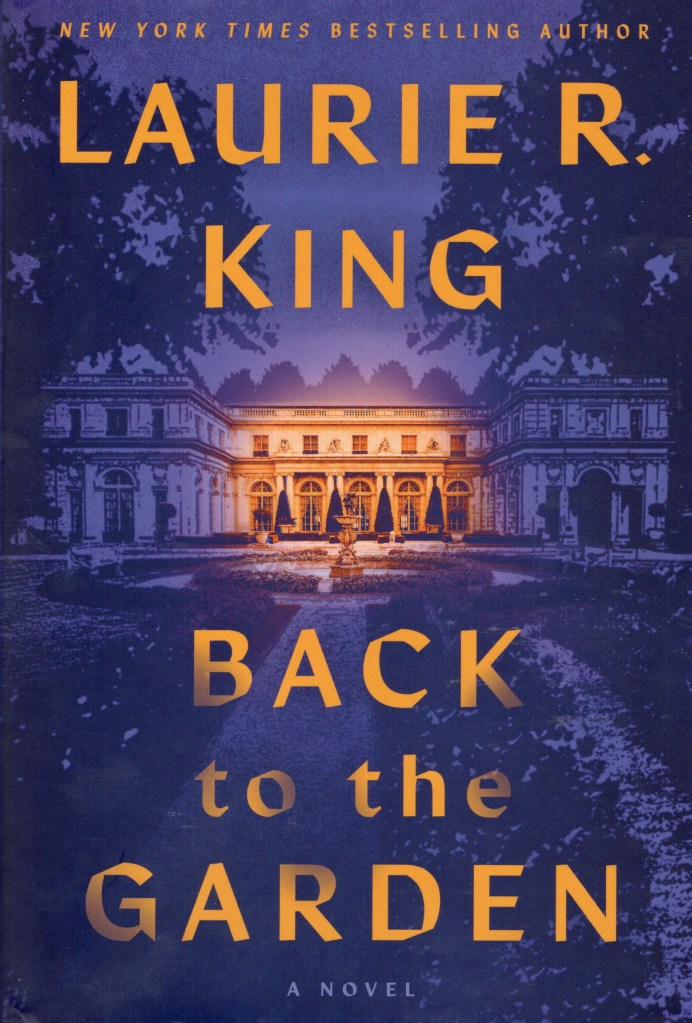
Back to the Garden couldn’t be more different than the Mary Russell series (or the Kate Martinelli for that matter) than if a different writer had written them. The primary character of the book, suspended police detective Raquel Laing, is working a cold case assigned to her by her retired mentor, as DNA has unmasked the identity of a serial killer who operated along the California highway system in the 1970’s and early 1980’s and became known as the Highwayman. His victims were found missing a shoe and usually buried in concrete. The Highwayman knows who all of his victims are and where he buried them; now that he is dying and incarcerated, he is playing a game with the police: find one of my girls, and I’ll tell you where you’ll find another.
It’s sick, it’s twisted, and it’s extremely brilliant, particularly as they are now racing the clock to get the answers before he dies.
Yet there’s another wrinkle in the story: at the Gardener Estate (think San Simeon) the moving of an enormous statue by a famous artist has uncovered skeletal remains buried in concrete. Is this another of the Highwayman’s victims? Laing has to go to the Estate and dig through its bizarre and curious history to try to link the Highwayman to the commune that occupied the palatial estate in the second half of the 1970’s, which enables King to balance two separate time-lines (one telling the story of the commune and how it came to be on the estate before the sect disintegrates, which also provides the reader with plenty of potential victims and killers; the other the present day as Laing tries to piece together what happened on the Gardener Estate back in the day) and build up suspense in multiple directions and involving multiple stories.
I was around in the 1970’s, of course; I turned eighteen in 1979 and while the time of the flower children and the height of the commune movement had already passed by the time I was old enough to partake (if I so chose), I do remember those times. I remember as a child thinking the youth movement had the right idea about a lot of things–the rot and unfairness inherent to capitalism; conservation and preserving the earth and its resources; moving away from the monetary trade concept and ownership–all of these things sound marvelous and utopian; they still do, but now with the advantage of age and the cynicism that comes with, they seem very naïve and not very aware of how human nature and the world actually work; their innocence is almost endearing as they try to recreate Eden…
..but there’s always a snake in the garden.
The book is vivid and real; the characters three-dimensional; the story compelling; and of course, the writing is stellar. This book puts yet another jewel in the Grand Master crown King so deservedly wears already.
And I do hope for more novels centering Inspector Laing.





 Queer and Loathing in America