Iris Saturday! And it looks like a beautiful day out there outside my windows. I also don’t feel sick this morning, which is also wonderful. After working yesterday I felt very sick and very tired, so I just decided to shut my brain off and just mindlessly drift through news clips on Youtube, as well as whatever my brain decided for me to look for (the temple destruction scene at the end of Samson and Delilah, for one example) as I finished laundering the sheets and went to bed. I slept great last night, too, and feel pretty good this morning. That’s awesome because it is, after all, IRIS SATURDAY! I probably won’t stay out for Tucks after Iris, but I am not missing my ladies! I also feel like I can get some things done around here today, too. I’ve been slacking on the house (and on, well, everything) for a while now–being sick didn’t help matters much–and so I should be getting it all under control today. I want to get some reading done, catch some beads, do some cleaning and some writing, while I’m at it.
I also watched a couple of 1970s movies last night while Paul worked (I got tired of the news; I can only watch American elected officials embarrass the country in front of the world so many times. What a fucking disgrace) and watched a Gene Hackman hard-boiled private eye movie (Night Moves) and a classic I’ve never seen (that no one ever talks about anymore either–The China Syndrome) and I enjoyed both. There’s really something different about the movies of the late 1960s and 1970s, a kind of gritty realism that showed the world as it was–dirty, graffitied, muted colors–that went away with movies in the 1980s, where everything was prettied up for the movies and departed from realism. It put me in mind of my Cynical 70s Film Festival that I did during the shutdown, and how so many movies were about paranoia and not trusting the government; which, after Vietnam, civil rights, and Watergate was very much a leftist thing. (Weird how that’s shifted–it’s the right that doesn’t trust the government anymore; that would be an interesting study, wouldn’t it? How that changed and shifted over the years? Another thing I hate about the right is that they’ve made the left defend the government rather than critiquing it.) Night Moves was okay–the mystery itself wasn’t terribly interesting but the thing that was interesting was Gene Hackman’s performance. The film was an excellent character study, even though we never really learned much about him. My primary takeaway from the film was that Gene Hackman would have made a great Travis McGee. Talk about missed opportunities. (Although it would also be a great role for Alan Ritchson…)
The China Syndrome was born out of the 1970’s paranoia about using nuclear reactors to create energy. After all the lies before, during and after Vietnam–not to mention Watergate–people weren’t really into trusting government reassurances, and weird things were happening with the nuclear power plants anyway (Karen Silkwood’s story would also be filmed, Silkwood, which was another one of those “paranoia/can’t trust the government or corporations” movies); they were building one fairly close to where we lived in Kansas–Wolf Creek, I think was the name–and there were protests about it (Kansas folks just saw as it as a place to work and no more thought into it than that) and I also remember in the classifieds in the Emporia Gazette some group always ran a little ad that said “NEVER FORGET KAREN SILKWOOD” so I already knew that story before the movie was made. Michael Douglas produced the movie, and of course Jane Fonda was in it–they were both very anti-nuclear energy; so of course it was seen as a “Hollywood liberals trying to scare people” film. But shortly after it was released, Three Mile Island (our almost Chernobyl) happened–and the movie became a huge hit. The movie ended positively–the news about the accidents at the plant in question gets out finally at the end1–which goes to show how hopeful these kinds of movies sometimes ended; when we all know the reporter and her cameraman, as well as the nuclear engineer played by Jack Lemmon, would have all either disappeared or been found dead under mysterious circumstances.
I really should watch an old movie when I’m too tired to write or read, rather than doomscrolling news clips on Youtube.
I’ve also been terribly remiss on my newsletter; I’ve started several that are in progress that I really should finish and share with the world–and should send out one before it’s time to do my review of The Bell in the Fog (Lev AC Rosen). I am trying not to overdo it–I mean, I pretty much write this every day so I don’t need to be sending out newsletters more than once a week; there’s only so much Greg people can take, after all. And I also expect you all to read my books and short stories, too. What can I say? I really enjoy writing.
And on that note, I am going to get cleaned up and get to work around here. Have a lovely Iris Saturday, Constant Reader, and who knows? I may be back later.
Sorry-not sorry for not putting up a spoiler warning for a forty-six year old movie. ↩︎
It’s always weird for me to talk about my writing and my books and so forth on here; I always worry that I am either contradicting and/or repeating myself. When you’re as self-obsessed as I am, that can be a problem; talking about myself is probably my favorite thing to do–on here, at least. And I feel like I’ve told the story of where Chanse came from and how the series developed from the very beginning many, many times.
It was when I was living in Houston that I rediscovered crime fiction, and the old love was even deeper once it was rediscovered. This was the period when I read most of the Perry Mason novels, discovered Paretsky and Grafton and Muller, and decided to give Travis McGee and John D. MacDonald another try. (I had read The Dreadful Lemon Sky when I was a teenager, but I hadn’t liked it; I was more into the classic detective mystery, with lots of suspects and a denouement with everyone gathered in a drawing room as the identity of the killer was unveiled–the McGee series was definitely not that. But MacDonald had written a superb introduction to Stephen King’s first short story collection, Night Shift, and I had always wanted to give him another chance–pun fully intended.) I devoured the McGee series this time around; and I really admired the character and how fully rounded and developed he was (I should give the series a reread; I’d be curious to see how they hold up now)…and armed with all these new private eye novels and Perry Mason puzzles, so I started coming up with my own version. Even the name was a shout out to McGee. My character was also tall with sandy/dirty blond hair, a former college football player, and he lived in Houston, with an office downtown and a secretary named Clara. The title of the first book was going to be The Body in the Bayou, and I started basing the case on the tragic Joan Robinson Hill case, immortalized in Tommy Thompson’s Blood and Money (the premise of the story was that the character representing Joan’s father hires Chanse after Joan’s death to find dirt on John–and then John is murdered; fictionalized, of course.) I wrote about six or seven really bad chapters long hand before giving up. I didn’t know how to write a novel then nor did I understand the concept of rewrites and revisions and drafts. (My ignorance was truly astounding.) The hurdle I couldn’t clear was typing. I was a terrible typist. I’d had a job in California working for an insurance brokerage that was computerized, and had a word processing program that I used to write short stories on; it made such an incredible difference that I knew I would have a much better shot at actually making my dreams come true if I only had a word processor…
In 1991, after I moved to Tampa, I managed to get a word processor, and that was what I wrote my first two and a half young adult novels on–the original drafts of Sara, Sorceress, and Sleeping Angel–and used it happily for several years until it finally died on me. But by then, I was living with Paul and had swung back around to wanting to write adult crime fiction again, and I wanted to write the Chanse character that I’d already created…so I picked back up on The Body in the Bayou, moved it from Houston to New Orleans, got rid of the office and the secretary, and made Chanse gay. I kept the title, but threw away the story; I wanted it to be a gay story, too. I don’t really remember the plot, but it had to do with the murder of a beautiful boy-toy for a wealthy closeted gay man in New Orleans…and Chanse knew the boy-toy from his days working as an escort before he landed the rich man, I wrote about six or seven chapters of this before we moved to New Orleans….and I realized I’d have to throw it all out again because it was all wrong; I’d made the classic mistake so many writers make when writing about New Orleans: writing about it having never lived here, I only had tourist experiences–which are vastly and dramatically different from the actually “living here” experiences. So, once again, I threw it all out and started over, this time calling it Tricks instead of The Body in the Bayou.
The title morphed again to the less saleable Faggots Die after the first draft; and I remember talking to Felice Picano–he was coming into town for the Tennessee Williams Festival, and I picked him up at the airport. As we drove back into the city from Kenner, we talked about my book and the series, and he nixed the new title as well as the old one. “No one, ” he wisely said, “will pick up a book called Faggots Die, and Tricks sounds like a pornographic memoir of your sex life.” Felice was actually the one who suggested I mimic titles for the series from a classic writer…and we were throwing titles around in the car when I said, “You know, the streets in the Quarter are technically rues–Rue Bourbon, Rue Royale, Rue Dumaine–and the murder happens on Dauphine. Maybe Murder in the Rue Dauphine?”
“That’s perfect,” Felice said, and then we played with Poe titles the rest of the way into the city–incidentally, one of them was The Purloined Rentboy, which became my short story “The Affair of the Purloined Rentboy”, so never throw anything away.
And thus was Murder in the Rue Dauphine titled; and the plan for the series titles was also devised–the branding was changed by the publisher, but I can honestly say my first book was titled by Felice Picano.
Murder in the Rue Dauhoine has had three covers in its 21 years of existence. This center one is the current.
Never come to New Orleans in the summer. It’s hot. It’s humid. It’s sticky. It’s damp. It’s hot. Air conditioners blow on high. Ceiling fans rotate. Nothing helps. The air is thick as syrup. Sweat becomes a given. No antiperspirant works. Aerosols, sticks, powders, and creams all fail. The thick air just hangs there, brooding. The sun shows no mercy. The vegetation grows out of control. Everything’s wet. The buildings perspire. Even a simple task becomes a chore. Taking the garbage out becomes an ordeal. The heat makes the garbage rot faster. The city starts to smell sour. The locals try to mask the smell of sweat with more perfume. Hair spray sales go up. Women turn their hair into lacquered helmets that start to sag after an hour or so.
Even the flies get lazy.
My sinuses were giving me fits as I left the airport and headed into the city. It was only 7 o’clock in the morning but already hotter than hell. The air was thick. I reached for the box of tissue under my seat and blew my nose. The pressure in my ears popped. Blessed relief.
As I drove alongside the runways I could see a Transco Airlines 737 taxiing into takeoff position. I saluted as I drove past, thinking it might be the flight that my current lover was working. Paul looked good in the uniform. It takes a great body to look sexy in polyester. He does.
He’d be gone for four days on this trip. I was at loose ends. I’d wrapped up a security job for Crown Enterprises the previous Wednesday. The big check that I’d banked guaranteed I wouldn’t have to worry about money for a while. I like when money’s not a concern.
And so began a series that lasted for seven titles and about twelve years or so; I don’t remember what year the last book in the series was published. I never expected anyone would publish it; it was intended to be a “practice novel” so I would get used to rejections and learn. It was also the first manuscript I ever wrote that went through multiple drafts before I thought it was finished enough to send out on query. It was supposed to be an exercise in learning humility and getting experience with the business while I wrote the book I did expect to get an agent with and sell–which was what I’d always called “the Kansas book” for over a decade at this point. (It eventually morphed into #shedeservedit.) But you never really learn what you’re supposed to when you’re stubborn, thin-skinned, and used to being demeaned and talked over and not taken seriously, for any number of reasons. I sent the manuscript to three agents: two sent me lovely but form rejections, which was disappointed but not surprising. I took this well, put the manuscripts away to send to three more once the final rejection came.
It came on a Friday, if I recall correctly. I went to pick-up the mail and my manuscript was there. Not a surprise, of course, but still a little disappointing. I went out to my car and opened the package…and paper-clipped to the title page of the rubber-band bound manuscript was a torn piece of used paper, with a note in ink reading I find this manuscriptand characters neither interesting or compelling with the agent’s initials at the bottom.
It was like being slapped in the face.
By the time I got home I was in a raging fury. I was literally shaking with rage when I came inside. How fucking unprofessional, I thought as I sat down at my computer to check my emails, trying to decide how I would enact my vengeance on this rude piece of shit.1 There was an email there from the editor I was working with on an anthology which had taken my first-ever fiction short story and thus would be my first publication. I had never read the signature line–mainly because I was so excited for my first fiction sale (NARRATOR VOICE: it was porn). This day, he concluded his email with Please send us more work. We definitely want to see more from you and as my ego preened, slightly soothed from the insulting agent note from earlier in the day2, I also looked down at the signature line and realized I was communicating with the senior editor at Alyson Books! I immediately wrote him back a very short note: I’ve written a novel with a gay private eye set in New Orleans, would you be interested in that? and before I could talk myself out of it, hit send.
He wrote back immediately and said please send it to me ASAP!
I put the same manuscript back in a new envelope, and drove back to the postal service to get it in the mail before I changed my mind, and breathed a sigh of relief once I got back to the car–and immediately forgot all about it.
Six weeks later I came home to a phone message from the editor. I called him back, he made me an offer, and my career leapt forward much faster than I expected…and it started a roll of good luck and “being in the right place at the right time” that has kept me publishing almost non-stop since Murder in the Rue Dauphine was released in 2002.
It sold really well, got mostly favorable reviews, and scored me my first Lambda Literary Award nomination.
Not bad for a manuscript and characters who were neither interesting or compelling, right?3
It also took me a long time to realize–or rationalize–that the note wasn’t meant for me. (I was most offended that I wasn’t even worthy of an actual form rejection letter; that was the truly insulting part for me.) I realized when telling this story on a panel somewhere, that the note was probably meant for an intern or a secretary or an assistant, who just shoved the whole thing in an envelope to do the rejection and through some wild Lucy-and-Ethel office shenanigans, it went out without the rejection letter and with the note intended for internal eyes only…and made me wonder, how different would my career and life be had that fuck-up not happened?
We’ll never know, I guess.
Not really proud of this reaction, but I did get the last laugh. ↩︎
Said agent died a few years later. I may have smiled and said good, a la Bette Davis vis a vis Joan Crawford’s death. ↩︎
I may be more forgiving about a lot of things these days, but I will always be petty about that hateful agent. ↩︎
My first series will always be special to me, even though I’ve retired Chanse MacLeod…at least for now, at any rate; I’ve learned (sometimes the hard way) that I shouldn’t ever say never when it comes to my writing career. Chanse will always be special for me in that he was the main character in my first book to be published as well as the first series of mine to see print. I originally created Chanse in 1989–can you believe that? Thirteen years from the time I first started constructing the character and him getting into print.
When I left California and moved to Houston that year, I decided to put the miseries of the 1980’s behind me, forget the past, and try to move on to the future I wanted for myself. I still had no idea what I wanted to do to make a living, but I knew I was never going to become a writer unless I actually, you know, wrote. When I moved to Houston, I moved away from reading mostly epic fantasy and horror to reading crime and horror. Sue Grafton’s F is for Fugitive had just been released, and the bookstore–Bookstop?–I frequented in Houston had a store catalogue that had book reviews and author interviews, and Sue Grafton was on the cover. I thought the alphabet titles was a great idea, so I bought the first three and took them home. I loved them, and started diving back into the crime fiction genre headfirst. I also started reading the Erle Stanley Gardner Perry Mason novels again–I’d read some when I was a kid–and I also started reading the rest of the Travis McGee series (I’d read, and not liked, The Dreadful Lemon Sky when I was thirteen; I wasn’t old enough to appreciate the series) and absolutely loved them. I loved McDonald’s writing style more than anything else, and the descriptions of McGee sounded, well, hot.
I started creating Chanse MacLeod as a blend of Kinsey and Travis McGee, really; I was driving to work one day and crossed a bayou. noticing the sign for the first time, and thought “The Body in the Bayou would be a great title for his first book” and so i started constructing the character and his world. He was a former cop turned private eye in Houston; he’d played college football at Auburn but suffered a career-ending injury his senior year and so he went into law enforcement, eventually going out on his own. He had a secretary named Clara that he shared with a couple of lawyers in an office suite in downtown Houston, and most of his work involved trying to get evidence of adultery for wealthy and suspicious spouses. In 1994. after I fell in love with New Orleans, I moved Chanse to New Orleans and his college experience to LSU; I also was discovering gay crime novels around this same time, so I decided to make Chanse a gay man; from a small town in Texas with homophobic parents and family, playing a sport where homophobia is rife, and he too discovered and fell in love with New Orlean…so he became a cop when his football career ended, eventually becoming a private eye. I started rewriting the four or five chapters I’d written with the story set in Houston…but once I moved to New Orleans and began to grasp what it was actually like to live here, I threw the entire thing out and started over.
That manuscript I started over became Murder in the Rue Dauphine, and the first place I submitted it to offered me a contract six weeks after I mailed them the manuscript. Alyson was home for the first five books in the series…before Alyson Books went belly-up, without paying me the advance for the fifth book and no longer paying me royalties on the others (the entire series was still in print when Alyson folded).
Burn in hell, corporate trash who bought Alyson.
(The company had been doomed for a while, and the unfortunate last minute attempt to rescue it failed, which I thought was horrifically unfair to the person who they brought in to save it. The final collapse was hardly his fault; his predecessors had made so many unbelievably stupid mistakes there was no saving the business, really. And ebooks and so forth started eroding away at the reader base, at the same time the business began to crumble. I’ve always felt bad for the poor dude who was the last to hold the title of publisher. I don’t think he had any staff and he was the only person working there by the bitter end.)
But when Alyson went belly-up and chose to stop honoring their contractual obligations to pay their writers, I’d already moved the Scotty series to Bold Strokes Books and was doing not only anthologies for them but also editorial work for them, so moving the Chanse series there was a no-brainer.
The last two books in the series were done with Bold Strokes Books.
As with anything with my career, I had a plan for the Chanse series but of course, man plans and the gods laugh. I had always intended the series to be seven books, from the very beginning, and I had this emotional journey for him all mapped out: the series would chart his progression from lonely, damaged and scarred loner with a snide sense of humor to more centered, more grounded, more mature and more settled into his life. So, when the series opened, he was–against his better judgment–seeing a hot flight attendant, and wondering if he was actually falling in love and had the opportunity to be happy for once in his life. I really did give him a miserable backstory; alcoholic mother, abusive drunk redneck father, grew up living in a trailer park in a snotty small Texas town where no one would let him forget he was trash until he showed some football playing ability–and he was just cynical enough to understand they still considered him trash, but trash with a skill they appreciated. He went to LSU and joined a fraternity in a final attempt to banish the homosexuality from his brain (it didn’t work), and then was injured in a bowl game so his career was over–he’d been considering going for the NFL draft. He was a big man, as such; and spent a lot of time in the gym working out and keeping fit. I also had to make a horrific decision while writing the second book–with every intention of walking that ending back in the third.
And then Katrina happened, and everything changed.
My editor at Alyson Books at the time, Joe Pittman, was new. He had come on board shortly after my previous editor was let go (I had a different editor for each of the first three Chanse books, and in fact had a different for the last two–so the Chanse series went through five editors at Alyson…now I would see that as a sign), and I was assigned to him as a gay mystery writer. He got in touch with me after Katrina to check in on me and of course, to encourage me to write about Katrina, which I did NOT want to do whilst I was in the middle of experiencing the aftermath still. I was still unhoused at the time, staying with my parents in Kentucky, before moving back to Hammond, Louisiana, just before Rita to housesit. Paul and I talked on the phone one morning and suggested we do a fundraising anthology for Katrina victims…but I wasn’t interested. Joe called me that afternoon and with the same suggestion, so I told him Paul wanted to do one and that was how Love, Bourbon Street came to be. Joe also kept insisting to me that I should write a post-Katrina book as the next Chanse book, and despite my reluctance I decided to go ahead and do it. Part of the problem, as I saw it, was, how do you end a book on a hopeful note when the city is still in ruins and most of the population still displaced? Joe kept pushing me, and I finally agreed to write Murder in the Rue Chartres–and I really don’t remember anything about writing the book other than I did actually write it, and it turned out to be one of my best books. It won the Lambda, for one thing, and got great reviews everywhere.
The fourth Chanse novel was, in my opinion, the weakest of the series. They’d fired my editor before I signed a contract for the fourth book, and when that finally happened, they needed me to write in like eight weeks. I asked for a two book contract so I would never have to write another book in eight weeks again (LOL at my naivete), and they were so desperate for the fourth they agreed. (I had already written a Scotty book that was just sitting in a drawer; I turned it into the fourth Chanse and to this day I think it was a mistake.) Of course, they did publish the fifth, but they never paid me a dime for Murder in the Garden District. The only money I’ve made off that book is from the ebook Bold Strokes put up–I gave them the entire Chanse backlist for ebooks, and those Chanse books still sell.
Maybe I shouldn’t have ended the series at seven?
But it felt like the right place to stop. Chanse’s personal story of personal growth and how it happened kind of got lost along the way; he grew and changed as the series progressed, but writing the last two–which I also think are good–felt a little paint-by-the-numbers for me; I felt that writing the sixth and when I felt it again in the seventh, I decided to stop there. I wasn’t getting any satisfaction for writing the books anymore, there was no joy derived from doing them, and since I’d already planned to stop at seven…I stopped at seven.
I still get ideas for Chanse books, of course. I have an LSU fraternity murder that would be a perfect Chanse story–I planned it as a novella–and of course, I’ve always wanted to fictionalize the Jeff Davis Eight murders as a Chanse novel, too. Maybe I could do three Chanse novellas published in one book?
That would make a lot more sense, and could be even more fun to write than one long single story novel.
Or I may not do anything with Chanse at all, and use those stories/plots for something else.
At some point, with all the book -bans and censorship that’s going on, I am going to have to recap and go over my own experience with being banned; but that will require logic, rational thought and revisiting my blog entries from that period to refresh my memory. Yesterday I got political on here for the first time in a long time, and you know–it kind of felt good to get that out of my system and into the public sphere. I do feel very complicit for not speaking out sooner, but…I’ve always worried, more so after turning fifty, that my opinions might cause trouble for others I am associated with; I work at a non-profit for one, and of course, I had a very long volunteer service ‘career’ with Mystery Writers of America. It was probably at least nine years of service all told; and I didn’t want anyone claiming I was speaking for MWA (particularly when I was serving as Executive Vice President) when I was expressing myself personally; nor did I want anything I might say or do to reflect poorly on the organization–or have my words used against it in any way. As EVP, I was one of only two people authorized to speak for the organization publicly; and that last year after pandemic restrictions were lifted I traveled a lot, representing the organization at several conferences and events. And even though I personally knew where the lines were drawn and what was and wasn’t separate, I couldn’t count on other people to keep or recognize those same distinctions…and I was far too busy with everything to willingly risk more things to have to deal with by opening my mouth on here. That’s part of the reason I dialed that all back–along with the “preaching to the choir” element–but yesterday morning I realized you don’t have to be careful about what you say publicly anymore and it was incredibly liberating. So yes, I will sometimes be taking on things that I feel strongly about and not keeping my mouth shut the way I have for so long. (In my narcissistic hubris, I also sort of blame myself for the state of the world right now because I kept my mouth shut for so long.) Besides, if you read this blog or my books (hopefully both), it should be readily apparent that politically I am basically a Jacobin–albeit one who understands how our government runs and functions and how it is supposed to work…which some people serving in Washington don’t seem to know, which is odd. Surely the ones in my age group had to take Government or Civics in high school? I don’t see how they could have passed it, but here we are.
So be prepared, Constant Reader. There’s a lengthy tome coming on the Virginia Incident.
But I finished editing the manuscript I was working on (not one of my own) last evening and sent it back to the author, and I can breathe. I have a ZOOM call scheduled with my editor, so we can talk out all the issues and scheduling for Mississippi River Mischief, which I am actually itching to get back to work on. I think I’ll take today and tomorrow as free days from writing, and then I will jump back into the book on Sunday. I want to do it the way I always do my editing and revisions; by chapter as opposed to entire manuscript, which is what I had been doing and I think this change of work habits, on top of the depression and everything else, made it impossible for me to get the book finished. I don’t think I’ll get it done by the end of May, but surely I can get it finished by mid-June, and then can move back to Chlorine–which will also require me going over and revising the opening chapters again so I can get the voice down again. I am also going to go back to my chapter-per-week project I was working on before my life blew up late last year, and I feel marvelous about everything. I feel very excited about this, and about getting back to writing again. This hasn’t been the best year for me thus far, really, and I also need to stop thinking oh I need to understand why I feel like this or trying to deconstruct everything in some kind of pseudo-psychological processing. My mother died after a slow, lengthy decline, at an extremely difficult time for me professionally. I need to stop feeling guilty about grieving, or being unable to do anything because of depression. Of course I am experiencing some depression; I’d have to be inhuman not to feel anything. And like with all previous traumas, I am learning to navigate grief as I go–although maybe I should read Joan Didion’s The Year of Magical Thinking–and like all previous traumas, it creates a bipolar existence where one day you are fine and the next you’re back in the pit of despair. Sometimes the day will start out great and will flip as it goes on. I have nothing wise or profound to say about loss or grief; although there is something to be said about the numb emotional deadening the HIV/AIDS crisis brought in its wake. I would never want to be that zombie-like ever again, drifting through the days waiting to hear someone else is in the hospital, someone else has died, and there’s another funeral in a few days–but I also have to start recognizing, at this great advanced age, that I’ve never processed or dealt with that time either. (It’s a Sin was a strong reminder of that very thing. I was also thinking Longtime Companion deserves a revisit; it’s always been hard to watch for me, but the beach scene at the end always makes me sob. I’ve also been thinking about the literature of the plague; has anyone ever compiled a list of the classic HIV/AIDS writings? There’s a thesis for a grad student.)
Last night I slept like a log; the sleep of the righteous for finally finishing that editing job. I feel great this morning–rested and relaxed. I do have some work at home duties to accomplish today, and the kitchen is a complete disaster area. I have decided that I am going to finish reading Lori Roy’s Let Me Die in His Footsteps (which is fucking brilliant in every way), as well as reread the openings of the Scotty books this weekend, to see if I can get his voice back into my brain–I feel like that’s the big problem in Mississippi River Mischief–I haven’t nailed the voice and tone in any of the drafts yet, so I need to re-familiarize myself with Scotty’s voice and his wicked, wicked ways. I am actually excited about getting reacquainted with him. This is our ninth outing together, and I always wonder with each one if this is the last or not. I think there’s at least two more Scottys within the reaches of my brain–Hurricane Party Hustle and Quarter Quarantine Quadrille for sure–but you never know what is going to happen next and what may come along your road to write from out of nowhere. I’d like to get both Chlorine and Muscles finished this year, as well as the novellas, and maybe a short story collection by the end of the year. I have also been thinking that one thing that is missing from the annals of New Orleans (or Louisiana, for that matter) crime fiction is the environmental novel. John D. MacDonald deplored what politicians and greedy developers were doing to the tropical paradise of Florida, and slipped that social commentary into almost every Travis McGee novel and many of his stand alones (Barrier Island comes to mind). Louisiana has been in an environmental crisis for decades, and yet no one ever writes about the eroding coastline, the greed of the oil companies and the politicians they buy and pay for every year; Cancer Alley along the river between Baton Rouge and New Orleans being a hotbed of toxic waste; and of there was the Bayou Corne sinkhole a few years ago. I don’t know that I have the knowledge or the time to do the necessary research to write such things, but it’s something someone needs to write. And you know what I always say–if you think someone should write it, that someone should be you.
For me, though, the problem with research is how do you stop from going down wormholes and wasting days? Where do you draw the line, and when do you know you’ve done enough? As Constant Reader knows, I can never get enough of the sixteenth and seventeenth centuries of European history; I can spend days in wormholes of research about politics and wars and the powerful; it was an interesting time–when white Europeans began their colonization of the world, when Christianity had it’s huge splintering that led to war after war after war, the Hapsburgs continuing to expand their empire by marrying it, and on and on and on. Remarkable female leaders proliferated in the sixteenth century more than perhaps any other century before or since; which makes the sixteenth a bit more interesting than the seventeenth. The seventeenth interests me because it was the century when the world empires continued to grow and oppress natives around the globe, but it was also the time of the rise of the modern state, when the political games became more about state power rather than faith or old inheritance claims–when politics became more about the country than the King’s whims. I also go down New Orleans and Louisiana history wormholes a lot, too. I will never have the time to write everything I want to write, or research history enough to write about it. I really, for example, want to write about the German Coast rebellion of the enslaved; I want to write about Freniere, Louisiana being wiped off the map; and I want to write more historical stories set in New Orleans.
And I want to write a romance. I had that on my list of projects for this year, but then everything blew up in my face and my control over the year slipped right out of my fingers. But even though it’s mid to late May, it’s not too late to salvage the rest of the year from the wreckage of the first five months.
And on that note, I’m heading into the spice mines. Have a lovely Friday, Constant Reader, and I will check in which you again later or tomorrow.
Masculinity is something I’ve always felt I viewed from the outside.
It’s very strange; for someone who doesn’t look back very often and has a rather healthy disdain for nostalgia, for some reason since the pandemic started, I’ve been revisiting my past a lot. I don’t know, perhaps it was triggered by having dinner with an old friend from high school a while back (which also inspired me to write a horribly dark short story); or perhaps it’s because of short stories or novel ideas I’ve been toying with, but lately, I’ve been thinking about my past much more so than I usually do, and what it was like for me growing up. I wrote a Sisters in Crime quarterly column several years ago about the first time I realized, once and for all, that I was indeed different from everyone else–it centered the first time I heard the word fairy used towards me as a pejorative, as well as the first time I was called a faggot. I’ve also been examining and turning over issues of masculinity inside my head for quite some time (most of my life). #shedeservedit was itself an examination of toxic masculinity and how it reverberates through a small community when it’s allowed to run rampant and unchecked: boys will be boys. Some short stories I’ve published have also examined the same subject.
What can I say? My not being the American masculine ideal has played a very major part in shaping my life and who I am; how could it not? I used to, when I was a kid, pray that I’d wake up the next morning and magically be turned into the kind of boy I was supposed to be, the kind that every other boy I knew–from classmates to cousins to everything I watched on television and at the movies.
Society and culture have changed in many ways since I was a little boy who didn’t fit so easily into the conformist role for little boys; roles for male and female were very narrowly defined when I was a child, and children were forced into conforming to those roles almost from birth. Boys were supposed to be rough and tumble and play sports and get dirty and like bugs and frogs and so forth; girls were supposed to be feminine and play with dolls or play house, wear dresses and mother their baby dolls. Boys weren’t supposed to read or enjoy reading (but I was also supposed to get good grades and be smart), and that was all I wanted to do when I was a kid. I used to love Saturdays, when my mother would go to the grocery store and drop me off at the library on her way. I loved looking at the books on the shelves, looking at the cover art and reading the descriptions on the back. I loved getting the Scholastic Book Club catalog and picking out a few books; the excitement of the day when the books I’d ordered arrived and I could go out on the back porch when I got home and read them cover to cover. I was constantly, endlessly, pushed to do more “boyish” things; I played Pee-wee baseball (very much against my will), and later was pushed into playing football in high school–which I hated at first but eventually came to love…which just goes to show, don’t automatically hate something without trying it. But yeah, I never loved playing baseball. I was enormously happy when we moved to Kansas and I discovered, to my great joy, that my new high school didn’t have a team.
One less traditionally masculine thing for me to participate in was always a bonus.
The things that I really wanted to do weren’t considered masculine pursuits, and as a general rule I was denied them as much as possible. My parents forbade me from reading books about girls–Nancy Drew, the Dana Girls, Trixie Belden–which, quite naturally, made me want them more (my entire life the best way to get me to do something is to tell me either not to do it or tell me I can’t do it…either always makes me want to do it). Oddly enough, when my reading tastes became more adult–when I moved from children’s books to reading fiction for adults–they didn’t seem to care that I was reading books by women about women quite so much as they did when I was younger; either that, or they gave up trying as they finally saw me as a lost cause–one or the other; I don’t know which was the actual case. Maybe my embrace of football in high school overrode everything else suspect about me. It’s possible. My family has always worshipped at the goalposts…and I kind of still do. GEAUX TIGERS!
I spent a lot of my early life trying to understand masculinity and how it worked; what it was and why it was something I should aspire to–and never could quite wrap my mind around it. The role models for men always pointed out to me–John Wayne, etc.–never resonated with me; I always thought they were kind of dicks, to be honest. The whole “boys don’t cry, men never show emotions, men make the money and the entire household revolves around their wants and needs” shtick never took with me, and of course, as I never had any real sexual interest in women…the whole “locker room talk” thing was always kind of revolting to me, because I always saw girls as people. It probably had something to do with the fact that I was more likely to be able to trust girls than boys; I had so many boys decide they couldn’t be friends with me anymore because at some point other kids calling me a fairy began having an negative impact on their own lives all through junior and senior high school (to this day, I’ve never understood this; why were we friends before, and what changed? It wasn’t me…I didn’t suddenly switch gears from butch boy to effeminate overnight) it’s little wonder I have difficulty ever trusting straight men…but in fairness, I have trouble trusting everyone. But I never quite understood the entire “boys are studs girls are sluts” thing, but I also never truly understood the dynamics of male/female attraction. Yes, I dated in high school; I dated women in college before I finally stopped entirely. And yes, I also have had sex with women, back then–but never really enjoyed it much.
In all honesty, I still don’t understand masculinity, at least not as it was defined in my earlier decades of life. I’ve never understood the cavemen-like mentality of responding with violence (no matter how angry I get, I never get violent); I’ve never understood the refusal to recognize that women are human beings rather than life support systems for vaginas and wombs and breasts; I’ve never understood the mentality that a man’s desires should trump (see what I did there?) bodily autonomy for women. No man has a right to a woman’s body, nor does any man have a right to tell a woman what she can or cannot do with her body. Maybe always being an outsider looking in and observing has something to do with my mindset, maybe my difference and always having mostly female friends most of my life is what shaped me into understanding these things.
I also mostly only read women’s books, to be honest. There are some straight male writers I read and admire (Ace Atkins, Bill Loefhelm, Michael Koryta, Harlan Coben, Chris Holm, Stephen King, Jeff Abbott and Paul Tremblay, just to name a few) but I really have no desire to read straight male fantasies that reduce women to caricatures and gay men, if they do appear, as stereotypes; but after I recently read I the Jury by Mickey Spillane, a comment someone left on my post gave me a whole new perspective on how to read such books from the 40’s 50’s, and 60’s; the perspective of reading these books as examples of post-war PTSD…and that opened my eyes to all kinds of questions and potential critical analyses; that the horrors of World War II and what the veterans saw and experienced shaped the development of the culture of toxic masculinity that arose after the war (not that toxic masculinity didn’t exist before the war, of course, but the war experience certainly didn’t help any and it most definitely reshaped what “being a man” meant). I was thinking about doing a lengthier critical piece, on I the Jury, along with the first Travis McGee novel, and possibly including Ross Macdonald, Richard Stark and possibly Alistair MacLean. There’s certainly a wealth of material there to take a look at, evaluate, and deconstruct–and that’s not even getting into Ian Fleming and James Bond.
I’ve also always found it rather interesting that Mickey Spillane was Ayn Rand’s favorite writer. Make of that what you will.And on that note, I am off to bed. The last two days have been long ones, and tomorrow and Sunday will also be long days. I’m planning on driving back to New Orleans on Sunday–timing it so I get back after the parades are over so I can actually get home–regardless of what happens here. It’s not been an easy time here, and I am very tired.
A gray Monday morning and I am up early, which is terrific, serving as further confirmation that my body clock has definitely reset. Back in the olden days, before going back to work full time, I used to get up by seven every morning. It was a nice routine; I would write my blog while drinking coffee, read the news, and then start going through my email inbox. Usually by ten I would have all of that under control, and would start working around that time–writing or editing or whatever I had on the agenda at the time. Working full-time meant late nights testing in bars; the earliest I ever would get off work was eight. I kept getting up at seven despite getting home so late–I usually didn’t have to be at the office until eleven–and my mornings have always been the time I work on emails and my blog. I’m not sure exactly when that changed and i started sleeping later–but I am actually kind of glad that my body clock has reset itself again. I don’t mind going to bed at ten, or even earlier if I am falling asleep in my chair (which is what happened last night; I fell asleep in my chair around nine-ish, woke up at almost ten and moved upstairs). I worked on editing yesterday (as well as laundry, cleaning, and making groceries–and still forgot some things, despite trips to two different stores), which wore me out some, so I was trying to decide what movie to watch last night–there were several options, but none of them really appealed, and my brain was too fried from the editing to focus on reading anything, so instead I played around reading social media (the ever popular doom scroll) while I had the news on the television. (And yes, I am watching the news more than I have in quite some time. I don’t think I need to explain why, do I?)
But it’s another work-at-home Monday and I have condoms to pack and data to enter. I will be taking on the SIsyphean task of my emails as soon as I post this and have some more coffee; then I have some dishes to wash and some laundry to fold before getting into my work-at-home duties. It looks like it’s going to be gorgeous today–the temps lately have been sunny and in the high 70’s to low 80’s, which has been truly lovely–and I hope to get back to the gym this evening as well. Then I have my three in-the-office days, and I have to say getting up has been a lot easier on those days as well…which is nice. I still somehow don’t feel like I am as fully functional on those days as I could be; but that has probably more to do with having to leave the house instead of slowly rolling out the day the way I can when I am working at home. I do like my job, for the record–always have; I like helping people–even if sometimes it can be emotionally and mentally draining.
That doesn’t mean I am not looking forward to retiring, though.
The editing is going well, if a little slower than I would ordinarily prefer. I got through some chapters yesterday–ugh, the bad writing and sentence structure!–and plan to get some more done tonight. I’ve come up with a plan with how to juggle everything and still get it all done this week; it depends on how easily I am distracted by other things this week and how lazy I feel, really. It’s the lazy part that always gets me. My natural tendency is towards lazy; one of the things I always loved about John D. MacDonald’s Travis McGee character was that he took his retirement “a piece at a time”–in other words, he’d take a job to make enough money so he wouldn’t need to work again for awhile. I always thought that was a smart way to approach life; why not take the time when you’re young enough to still enjoy it? I was thinking the other day–last night, actually–that if I was going to have trouble diving into another book, I should do what I did to get back into reading when the pandemic started: the Reread Project, and why not reread Travis McGee? I read the series back in the 1980’s and early 1990’s, and I would be curious to read the books with a modern eye toward gender and sexuality. McGee was such a male-romantic idealization of the perfect life, really–no wife, no kids, no job, no career, no responsibility, lots of pretty young things to seduce/sleep with, living on a houseboat in a marina in Fort Lauderdale (and now that I am thinking about it, isn’t it interesting that there were never any hurricanes in any of the McGee books? MacDonald certainly took on hurricanes in Condominium); the straight male fantasy life. MacDonald and McGee were a heavy influence on the Chanse MacLeod series; I’ve also read quite a bit of his stand-alones and really enjoyed them, even if they were a tad dated. MacDonald didn’t influence the Scotty books at all; I’m not sure what influenced those books in their creation of the series. I’d have to go back and look–and yes, part of the plan for writing the next Scotty book involves revisiting the series from start to finish, and possibly even creating the Scotty Bible I should have created back when I started writing the series.
Coulda woulda shoulda.
It doesn’t get you very far, does it?
LOL. Now that I’ve folded the clothes and now have some emails I need to get taken care of before starting day-job responsibilities–so yes, it’s time for the spice mines. Have a lovely Monday, Constant Reader, and will see you tomorrow morning.
Several years ago–I have no concept of how long ago; time and its passing literally have no meaning to me anymore–I started what I called “the Short Story Project.” I wanted to become a better short story writer; it’s a form I’ve always struggled with, and it always seemed to my hypercritical self that whenever I was successful in writing a short story, it was more of an accident than anything I had planned when I embarked on writing the story. I’ve also become a little bit easier on myself on that score–sometimes, not every idea will work as a short story, and writing isn’t something that can ever be forced without it showing to the reader–and I did have a wonderful period of productivity with short stories after setting course for the Project–which not only entailed writing them but reading as many of them as I could. After all, what better way to improve my own short story writing skills than by reading good stories? I have, over the years, collected any number of single-author collections as well as anthologies, and yet, with few notable exceptions prior to the start of the Project, had rarely ever cracked their spines. Lately, as I have struggled with time and focus while I’ve been working on this revision of the Kansas book (aka #shedeservedit) I find myself unable to focus much on reading novels; my mind inevitably wanders, or I will set it down and not get back to it for days. So, this morning I decided, before getting in my work on the book for the day, to read some short stories over my coffee this morning, and I wound up reading four of them; all of them marvelous in their own unique, distinctive ways. The stories I read this morning were, in order: “Better Days’ by Art Taylor, from Ellery Queen’s Mystery Magazine; “Mischief in Mesopotamia” by Dana Cameron, also from Ellery Queen’s Mystery Magazine; “Hop-frog” by Edgar Allan Poe; and finally, “To Build a Fire” by Jack London.
Maybe I wasn’t the only one on our stretch of the North Carolina coast who picked up the Washington Post on a regular basis, but I doubt anyone else it like I did–scanning the bylines, measuring the thickness of the paper and the heft of it, stifling the envy.
So begins Art Taylor’s “Better Days’, which won the Macavity Award for Best Short Story and was a finalist for both the Agatha and the Anthony Awards. Art is one of crime’s best short story writers (and one of my favorite people), and it’s easy to see why he has won every award under the sun for crime short stories. Art’s stories are always tightly written, with characters so real and honest and human that you can’t help but care about them, as well as having a bit of an edge to them. He manages to capture the resigned despair someone whose career path didn’t quite go the way he wanted perfectly; the former Washington Post journalist downsized and back in coastal North Carolina, working for the local paper while still thinking about his past with an uneasy regret. The story focuses on a love triangle between the main character, the local bar owner he’s been seeing, and a newly arrived tourist on a yacht with money to burn. This story tightly plotted, flows perfectly, and the characters are people I wouldn’t mind spending some more time with. In some ways it kind of reminded me of John D. Macdonald; maybe it’s the sea and boats and so forth that put me in mind of Travis McGee. Highly recommended.
I sat across from a row of decapitated kings, gods, and heroes waiting for them to speak to me. I didn’t know a word of their language, and they’d been dead–their monuments erected, sanctified, and decaying–long before anyone speaking my language was born. Still, I waited, if not as patiently as they did.
That’s the opening paragraph of Dana Cameron’s “Mischief in Mesopotamia,” originally published in the November 2012 issue of Ellery Queen’s Mystery Magazine, and it went on to win both the Agatha and Anthony awards for Best Short Story the following year. (I initially met Dana the weekend she won the Agatha; she’s been a constant source of joy for me ever since.) The story features her series character Emma Fielding, and reading the story is my first encounter with her–and now I am going to have to go back and read the entire series of novels with Emma (you may also know her from the television films made from some of the books in the series, with Melrose Place alumnus Courtney Thorne-Smith playing Emma). Set on a tour of museums and archaeological sites in southeast Turkey, Emma and her group happen to be on-site when a museum robbery occurs–and Emma solves the crime through her keen observations of her fellow tour group members. The voice is delightful, as is Emma–there’s a hint of my fiction goddess Amelia Peabody about her–and the story is enormously satisfying.
I never knew anyone so keenly alive to a joke as the King was. He seemed to live only for joking. To tell a good story of the joke kin, and to tell it well, was the surest road to his favor. Thus it happened that his seven ministers were all noted for their accomplishments as jokers. They all took after the king, too, in being large, corpulent, oily men, as well as inimitable jokers. Whether people from fat by joking, or whether there is something in fat itself which predisposes to a joke, I have never been quite able to determine; but certain it is that a lean doer us a rare Avis in terris.
Yes, that first paragraph made me squirm a bit as I started reading Edgar Allan Poe’s “Hop-frog,” which I suppose can be held up as an example of how things don’t age well (the notion that overweight people are jolly, as evidenced here). The story itself, which is about a court jester who is also a little person (“dwarf”) and crippled at a royal court, mocked and laughed at and the butt of the jokes of the King and his advisors, along with another female who is also there for their entertainment–whom Hop-frog appears to love, eventually reaches his own breaking point when they mock him one time too many and when the female begs them to stop, the King throws wine in her face and humiliates her. There is a costume ball coming up, and Hop-frog chooses this for his revenge, convincing them all to dress up as “ourang-outangs”, which will require covering themselves with tar and pitch and fake fur….and they waltz right into his punishment, as they are set aflame and are burned alive. This is based in actual history–Barbara Tuchman’s A Distant Mirror details the “the dance of the burning fools,” where King Charles VI of France and some of his buddies costumed themselves in such a manner with the same outcome–some of them caught fire and were burned to death, although the King was not one of the victims. When I was rereading that book in the early pandemic days, I came across this true story and thought it might make for an interesting short story; doing further research, I discovered that Poe had written a story based on this actual event, and bookmarked it to read later. As with everything classic, my education in Poe is limited; but all the earmarks of a Poe’s story’s justice are here: justice is meted out to the foolish king and his cruel advisers…but it’s not one of his better efforts, which is why, undoubtedly, it’s not as well known.
Day had dawned cold and gray when the man turned aside from the main Yukon trail. He climbed the high earth-bank where a little-traveled trail led east through the pine forest. It was a high ban, and he paused to breathe at the top. He excused the act to himself by looking at his watch. It was nine o’clock in the morning. There was no sun or promise of sun, although there was not a cloud in the sky. It was a clear day. However, there seemed to be an indescribable darkness over the face of things. That was because the sun was absent from the sky. This fact did not worry the man. He was not alarmed by the lack of sun. It had been days since he had seen the sun.
I originally read Jack London’s “To Build a Fire” in high school. It was assigned for us to read when we were studying short stories and fiction; it was assigned as an example of the theme “man v. nature.” I’ve never forgotten the story–I loathe the cold, as Constant Reader is aware, and London does an amazing job of getting that frigid climate across to the reader. The man is never given a name–his name doesn’t matter–and neither does the wolf-dog by his side have a name; their names don’t matter. This story is about human hubris–he isn’t worried about the cold, despite being warned about it, and he wants to get back to his camp. His job was to go upstream and see if its possible for logs to be floated downstream when the temperature is warmer and the waters of streams and rivers and creeks not frozen solid. His mission accomplished, he is heading back to his actual camp, with some food stored under his shirt next to his body and a pack of matches in case he needs to start a fire. The dread in this story builds slowly and smoothly as he begins to suspect he made an error in not respecting the cold for its ability to kill him; occasionally London goes into the perspective of the animal who is also beginning to sense the man–food and fire provider, nothing more–is out of his depth. Eventually he succumbs to the cold, after a series of misadventures that come about because he isn’t paying enough attention and is careless. Whether that is because the cold has affected his ability to think and reason clearly is never part of the story or his own consideration. Even now, after all these years, the story has the ability to make me wince and shiver and think yikes, there’s no fucking way I’d ever go outside when it was 75 degrees below zero, let alone make a trip of many miles through wilderness on foot.
And on that note, now I am finished with my morning and its back to the spice mines with me,
As far as summers go, I’d say this is one of the cruelest of my life thus far. (Nothing, however, including this one, has been as bad as 2005; let me make that very clear–but this one also isn’t over yet and apparently the Saharan dust storm that was hindering the formation of hurricanes is over now. Yay.)
I read an interesting piece on Crimereads about Robert S. Parker and his creation of his iconic character, Spenser, which put me back in mind of how I came to create MY character, Chanse MacLeod–who I have been thinking about lately ( I’ve decided that rather than writing novels about him I’m going to work on some novellas, and then put four of them together as a book; currently the working titles for the first three are “Once a Tiger,” “The Body in the Bayou,” and “The Man in the Velvet Mask”–I still need a fourth, and it’s entirely possible that any of these could turn actually into a novel, and I do have some amorphous ideas about what the fourth one could be), and reading this piece, which is excerpted from a scholarly tome about the genre I would like to read (Detectives in the Shadows: A Hard-boiled History by Susanna Lee), made me start thinking about how I created Chanse, and the entire process that the series actually went through over the years of his development.
It also made me think about looking at Chanse, the series, the characters, and the stories I chose to tell in a more critical, analytic way; I am not sure if I can do this, actually–while I’ve not published a Chanse novel since Murder in the Arts District back on October 14, 2014 (!!! Six years? It’s been six years since I retired the series? WOW)–which means I do have some distance from the books now, I still am the person who wrote them…even though I barely remember any of them now; I cannot recall plot points, or character names, outside of the regulars who populate every one of the books (I also cheated by using some of the same regulars in the Scotty series; Venus Casanova and Blaine Tujague, the police detective partners, appear in both series; and Paige Tourneur, Chanse’s best friend and a reporter, originally for the Times-Picayune who eventually moved on to become editor of Crescent City magazine, also turned up in the Scotty series, in Garden District Gothic and then again in Royal Street Reveillon. Serena Castlemaine, one of the cast members of the Grande Dames of New Orleans, who shows up in the most recent two Scotty books–the same as Paige–is a cousin of the deceased husband of Chanse’s landlady and erstwhile regular employer, Barbara Palmer Castlemaine).
I first created the character of Chanse MacLeod while I was living in Houston in 1989, and the series was intended to be set in Houston as well. I didn’t know of any crime novels or series set in Houston, one of the biggest cities in the country, and I thought that was strange (and probably wrong). Houston seemed like the perfect city for a crime series–huge and sprawling, economically depressed at the time but there was still a lot of oil money and speculators, con artists and crime–and the original story was called The Body in the Bayou (a title of which I am very fond, and is currently back in the running to be the title of a Chanse novella), because Houston also has bayous. I was reading John D. MacDonald’s Travis McGee series at the time, and loving them–I particularly loved the character of Travis McGee–and how twisty and complicated (if sometimes farfetched) the plots of the novels were. I had read The Dreadful Lemon Sky when I was thirteen, and liked it; but promptly forgot about MacDonald and McGee; a Book Stop in Houston that I frequented reminded me of them and I started picking them up. I had also discovered Sue Grafton and Sara Paretsky by this time, and was falling in love with the crime genre all over again, developing a taste for the more hard-boiled side I disliked as a teenager. This was when I decided to try writing in this field again–for most of the 1980’s I was trying to write horror and science fiction (and doing so, very badly).
But coming back to the field that I loved as a kid, tearing through the paperback stand alones from Scholastic Book Club and all the series, from Nancy Drew to the Three Investigators to Trixie Belden before graduating on to Agatha Christie and Ellery Queen and Erle Stanley Gardner, seemed preordained, and also seemed somehow right; writing mysteries, or crime fiction, seemed to me the right path to becoming a published author (turns out, that was the correct assumption for me to make, and one that I have never regretted).
Chanse was originally, as a straight man, a graduate of Texas A&M and a two year veteran of the Houston Oilers; an injury eventually led to early retirement and joining the Houston PD, where he only lasted another three years before quitting and getting a private eye license. He had a secretary, a woman of color named Clara, who was heavyset and in her early fifties. That was about as far as I got; I think I wrote a first draft of a first chapter which established him as having his office near NASA, in Clear Lake (which was near where I lived) and his first case was going to involve a wealthy oil family in River Oaks. Chanse was also six four, dirty blond hair, green eyes, and weighed about two-twenty. When I fell in love with New Orleans four or five years later, I started revising the character and started writing The Body in the Bayou while I lived in Minneapolis. By this time I’d discovered that gay fiction was actually a thing, and that queer mysteries actually existed: Joseph Hanson, Michael Nava, RD Zimmerman, etc. I wanted to write about New Orleans, and I wanted to write a more hard-boiled, MacDonald like hero than what I was reading. (Not that Hanson, Nava, and the rest weren’t doing hard-boiled stuff; they were–I just wanted to subvert the trope of the straight male loner-hero detective.)
Chanse was definitely a loner, and after I moved to New Orleans I once again started revising the manuscript and story that eventually became Murder in the Rue Dauphine. He was cynical about life, love and relationships, even as he was slowly inching his way into a relationship with a flight attendant named Paul Maxwell; he had only two friends, really: Paige Tourneur, who’d been his “beard” while he was at LSU and in a fraternity and was now a reporter for the Times-Picayune; and Blaine Tujague, a former one-night stand and fellow gay man on the NOPD (I changed his backstory to having attended LSU on a football scholarship and a career-ending injury in the Sugar Bowl at the end of his senior year, which led him to joining NOPD, where he lasted for two years before going out on his own). He also lived in a one bedroom apartment on Camp Street, across the street from Coliseum Square in a converted Victorian, the living room also served as his office–and that was the same place where Paul and I lived when we first moved to New Orleans.
The series and the character evolved in ways I didn’t foresee when I first imagined him as that straight private eye in Houston; or even when I rebooted him into a gay one in New Orleans. The original plan was to have him evolve and grow from every case he took on–which would parallel some kind of personal issue and/or crisis he was enduring as he solved the case–the first case was about his concerns about getting involved in a serious relationship as he investigated a case that made him realize he was very lucky to have found someone that he could be with openly; the second case was about investigating someone who wasn’t who they claimed to be while at the same time he was finding out things about Paul’s past that made him uncomfortable. Katrina, of course, came along between book two and book three and changed everything; I know I also wrote another that dealt with the issues between mothers and children which made him reexamine his own relationship with his mother.
The great irony is I probably need to revisit the books to talk about them individually, or to even take a stronger, more in-depth look at the character; maybe that’s something I can do (since I have ebooks of the entire series) when I am too tired to focus on reading something new or to write anything.
And it’s really not a bad idea to reexamine all of my books and short stories at some point, in order to get an idea of what to do (and how to do it) going forward.
Looks like we made it to Friday again, Constant Reader, and believe you me, these small victories matter.
I kept thinking, last night, for some reason all evening long that it was Friday, and I’m not exactly sure why that was, to be honest. I was well aware all day, as I made go-bags for syringe access for three hours and then came back home for more condom packing (it’s not as dirty as that sounds) that it was Thursday. I’m really not sure at what point in the evening my mind decided it was Friday. AT some point while Paul and I binged this marvelous Belgian/Netflix scifi thriller called Into the Night (a Scandinavian show called The Rain didn’t last an entire episode) I realized that tomorrow (today) was actually Friday and it was quite a jolt.
It’s raining this morning–there’s a tropical storm out in the Gulf heading for Texas–Hannah, I believe is her name–and it’s heading for the southern coast of the state. We’ll be getting rain from the system apparently all weekend–they’re thinking it’ll be spread out over the weekend rather than all at once so there’s no chance of flooding, or very little, at least–so it’s a good weekend for camping out inside. I am working from home today–lots of condom packing to do (again, not as dirty or fun as it sounds)–and some other things I need to get done today for the day job. I slept pretty well last night–although at some point Scooter cuddled up to me and woke me up with his purring, and he never stopped the entire time he was lying curled up inside my arm. The coffee is helping, as it always does, but I always wonder what it’s like to be one of those people who wake up instantly.
I will never know, apparently.
Into the Night is quite entertaining, I have to say. The episodes are all between thirty-three and forty minutes long, and the premise is relatively simple. A flight to Moscow at Brussels Airport has started it’s boarding procedure when a crazed man grabs an automatic (or semi-automatic) weapon from a military guard and runs down the jetway and forces the pilot to take off, with about ten or so passengers on board. He has a crazy story that is hard to believe–he works for NATO, and something has happened to the sun so that when it rises, everyone dies when exposed to the sunlight. It sounds crazy, but slowly they begin to realize he is right, and they have to keep flying west to stay in the dark. They also face almost every possible crisis an airplane could face–I told Paul at one point, “This is like every Airport movie ever made”–but it’s done incredibly well, and the tension is completely dialed all the way up. There are only six episodes to this first season, and we made it through the first four–and stayed up later than we should to watch the fourth (hence my shock when I realized it wasn’t Friday night, but then didn’t care and watched the fourth anyway), and I am looking forward to finishing it tonight.
This weekend I intend to reread Bury Me in Shadows and also work on trying to sew together all the pieces of “A Holler Full of Kudzu.” I still want to finish reading Cottonmouths–and I have S. A Cosby’s Blacktop Wasteland on deck as well. I was also thinking I might want to reread a Travis McGee novel this weekend; those novels were a huge inspiration to me when I was creating Chanse, after all, and I really enjoyed them when I first read them. I know there are sexism issues with the books–as there is with most everything from that time period–but I think it will be interesting to reread one and catch it this time; plus I loved the writing style and the voice of Travis McGee so much I want to see if I still feel the same way now that I am thirty-some books into my own career.
I also want to reiterate that my inability to finish reading Cottonmouths is not an indication of its quality at all; it’s amazing, but I only have a very short period of time to read every day, and I am always afraid that if I start reading it I won’t want to put it down–and that is very likely, as it is very good and I know myself–and if I do that I won’t get the things done I need to get done which will cause me stress. I used to do this thing where I would read for an hour and then write for an hour and go back and forth…well, would try anyway, because as soon as the book grabbed me it was all over.
And on that note, I’d best head into the spice mines.
I often talk about how my education in the so-called “classics” is somewhat lacking; this is also true, not just of the great canon of literary fiction, but within my own genre as well (which is why I never pose as an expert on crime fiction; I am not one). I had never read Ross MacDonald–I was aware of him, and Lew Archer–but never had any real desire to read him until I was on a panel with Christopher Rice, who mentioned MacDonald as one of his favorite writers and an inspiration. Hmmm, I thought, perhaps I should give MacDonald a try.
So, in the years following that panel, I started reading the Archer novels, and enjoyed them tremendously. I’ve not read all of them, and I’ve not read any of his stand-alones…but what I liked the most about them was the style; how MacDonald put words and sentences together to create not only character, but mood and a kind of dark, noir-ish hard-boiled sensibility that I really admired. Early in my writing career, I patterned Chanse–both character and series–after John D. MacDonald’s Travis McGee series; later, after I started reading Ross MacDonald, I tried to see if I could create my own version of that sensibility and writing style; influenced by both MacDonalds but trying to create my own version, if that makes any kind of sense. I’d say Murder in the Irish Channel came the closest of any of the books to perfecting that style; I don’t know if Murder in the Arts District replicated the feat (which means I am going to have to reread it, even if cursorily, damn it).
There’s nothing more tedious than rereading your own work.
But I recently decided it was past time to give one of Ross MacDonald’s stand-alones a shot, and chose The Ferguson Affair.
The case began quietly, on the women’s floor of the county jail. I was there to interview a client, a young nurse named Ella Barker who had been arrested on a stolen-property charge. Specifically, she had sold a diamond ring which was part of the loot in a recent burglary; the secondhand dealer who bought it from her reported the transaction to the police.
Our interview started out inauspiciously. “Why you?” she wanted to know. “I thought people in trouble had a right to choose their own lawyer. Especially when they’re innocent, like me.”
“Innocence or guilt has nothing to do with it, Miss Barker. The judges keep an alphabetical list of all the attorneys in town. We take turns representing defendants without funds. My name happened to be next on the list.”
“What did you say your name was?”
“Gunnarson. William Gunnarson.”
“It’s a funny name,” she said, wrinkling her nose.
Reading books written in the past–no matter how far back–can often be jarring. One has to take into consideration the context of the time in which the book was written; The Ferguson Affair, for example, was published originally in 1960, and if you don’t think the world and society and culture have changed dramatically in the time since the final full year of the Eisenhower administration, you might want to think again. The book was published the year before I was born, so technically the book is only slighter older than I am, and it came out in a world without color television, cable, cell phones, etc. Technology had advanced so far in those fifty-nine years it might as well have been published a hundred years ago.
The Ferguson Affair was published in the midst of the period when he was producing the Lew Archer novels, and a lot of the Archer hallmarks also appear in this book; a complicated, winding plot that begins as something very small–in this case, the arrest of Ella Barker for pawning stolen property–and then continues, over the course of the investigation, to expand outwards into something much bigger, most dastardly, and more deadly. William Gunnarson, the main character of the book, is an attorney in a small California city named Buenavista, reminiscent of the town of Santa Teresa where some of the Archer books are set (and was later borrowed by Sue Grafton for her Kinsey Millhone books in a homage to MacDonald). Gunnarson is married and his wife is nine months pregnant and ready to give birth at any moment; more on that later. He is interviewing his client when word comes that someone had tried to kill the pawnshop owner who turned her in; Gunnarson is allowed to ride along to the pawnshop, which is on Pelly Street–clearly the wrong side of the tracks, and the Latin side of town. Ella was given the diamond ring she pawned for her engagement to Larry Gaines, the lifeguard at the fancy Foothill Club (the Buenavista country club), after discovering he was stepping out on her with retired screen star Holly May. The ring was loot from a robbery; the police suspect Ella knows more about the gang of robbers than she is letting on–because the victims of the robbery have all been patients at the hospital where she works as a nurse.
The book proceeds from there, with twists and turns involving kidnapping and extortion, murder and robbery; and while it is a fun ride as all MacDonald novels are, there is definitely some 1960’s era um, that’s a bit racist stuff when it comes to the Latinx people he comes into contact with over the course of the story.
And that doesn’t even take into consideration how Gunnarson treats his pregnant wife, Sally. Nine months pregnant and about to give birth at any given moment, he can’t be bothered to call her to tell her he’s coming home late for dinner which she is preparing. He never checks in on her to see if she’s okay; and in fact, he’s not around when she finally does go into labor, and someone else has to make sure she gets to the hospital in time for the birth. There’s none of the modern sentimentality about pregnancy and childbirth; he actually teases and mocks her about being so pregnant during the brief time he gives her any attention at all. I’m not really sure why it was necessary for her to be pregnant, to be honest; it bore no relation to the story in any way, and all it did was make Gunnarson seem, to my modern eyes, like an asshole.
It did occur to me that this story could have just as easily been an Archer novel/story; only set in the past, to give a key insight into who Archer was as a character, and how he developed. I could totally see this being Archer’s marriage, and Archer being the kind of husband who would always put his wife and family last; as was expected of men at the time, and the wife getting tired of it and divorcing him. (I am not an Archer expert; I’ve read some of the books, not all, and while I do enjoy them when I do read them, I don’t have details memorized. I do seem to recall that Archer had been married and divorced; I think his ex-wife is mentioned a few times…but like I said, this works as an early Archer story, but back then it wasn’t common for series books to be written out of order; maybe that was why this wound up not being an Archer? I don’t know, but it’s an interesting theory.)
Reading the book, though, made me think more about writing another Chanse novel, which I think may happen at some point in the next few years. I’d recommend it to you if you’re a MacDonald fan and want to achieve completion with his works; it’s probably not the best place to start with MacDonald if you haven’t read him before.

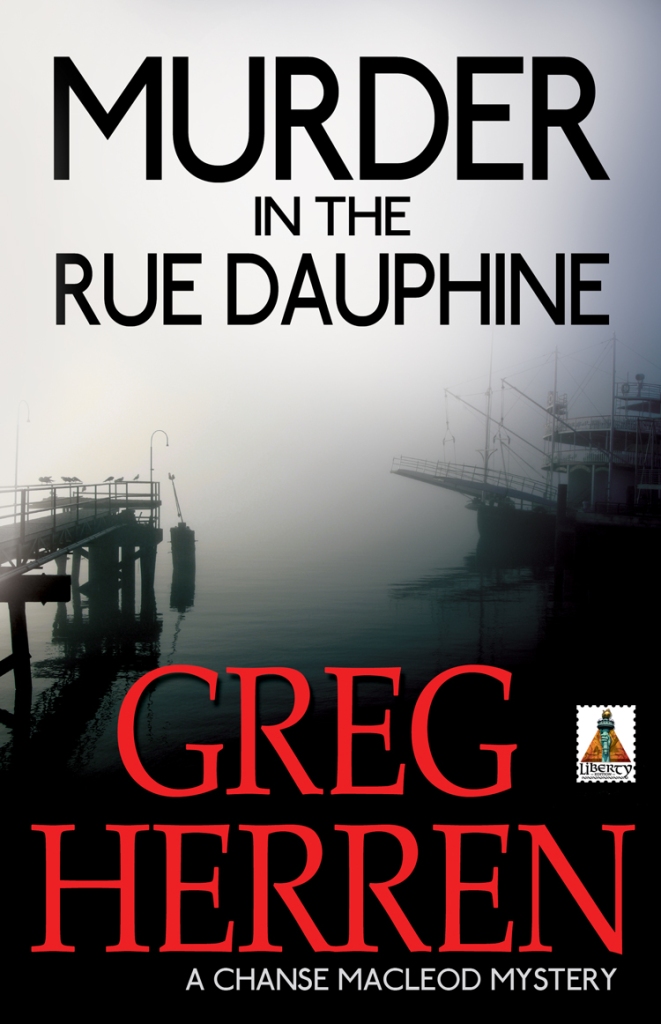
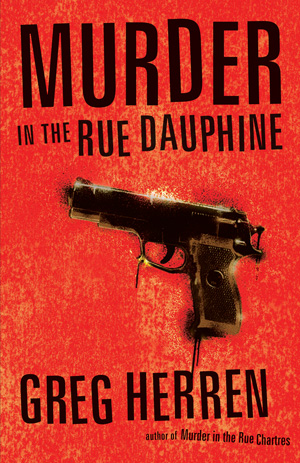
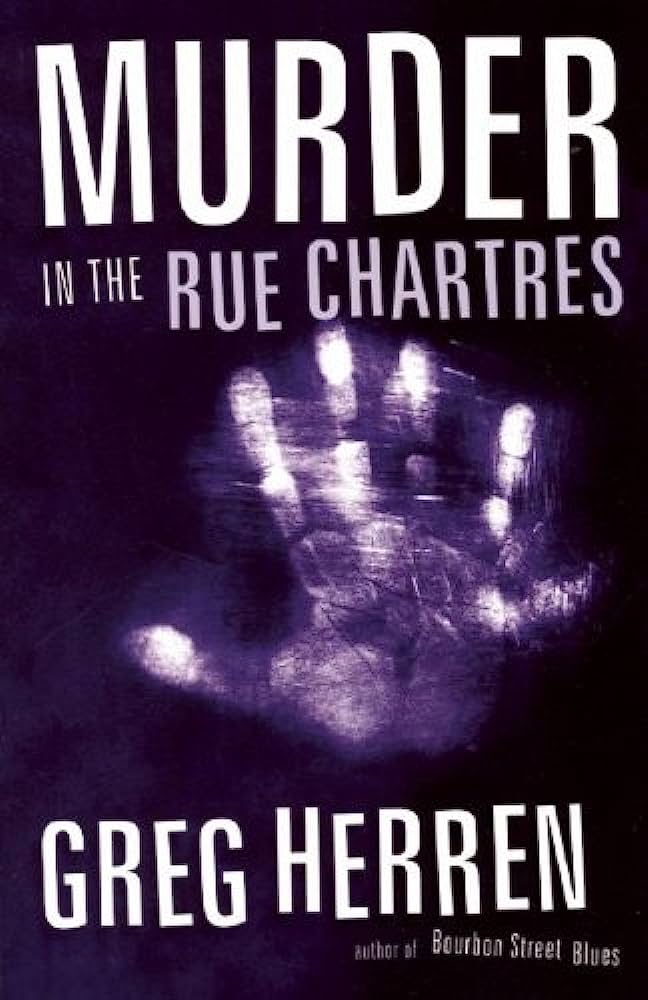

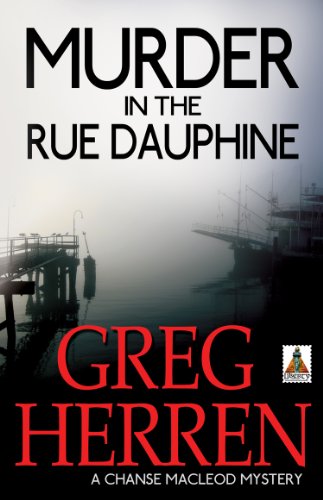





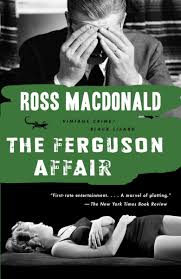
 Queer and Loathing in America