Good morning! We made it to Tuesday, didn’t we? Yesterday was a bit off for me, not going to lie. But I’m up early, didn’t hit snooze more times than I should, and I am waking up slowly. We’re going to be extremely busy in the clinic today and I am, once again, working an almost full appointment schedule by myself. Heavy heaving sigh. But tis the trials and tribulations of one Gregalicious life, and all one can do is bear it and power through. I do feel less wrung-out than I did yesterday, which is, clearly, a strong and steady improvement over Monday’s horror. It really wasn’t bad, actually, I just felt kind of inside-out all day. Work was its usual, and I stopped to make groceries on the way home–amazing how what I got would have cost about fifty bucks last year but is almost eighty now. Sigh. But we have to eat, don’t we?
We watched another episode of His and Hers last night, which is a very interesting show. I don’t think there’s anyone in the show to root for–they all seem like pretty terrible people, and we are learning everything very slowly, which is interesting but also doesn’t really draw you in because you don’t completely understand. It’s more observing than actually watching, if you know what I mean? It’s very well done, and it’s always fun to look at Jon Bernthal (who should be a bigger star in my opinion). The Beauty drops another episode tomorrow night, so tonight is looking like another His and Hers episode or two. I have to run errands tonight after work–have to go all the way uptown to get the mail and some more prescriptions–and I need to do a load of dishes and a load of laundry, too. Stay focused. I also want to work on the short story I started this weekend. I have a great idea for a story for an anthology that was recently announced, I just have to write the damned thing now. I really need to write something fictional soon–the creative writing muscles are atrophying as I type this.
I was also thinking more about Judgment at Nuremberg and societal guilt some more yesterday–and the subject of “what do the everyday people think” that this movie kind of addresses. The short story–set in a slightly future dystopian Louisiana–has me thinking about all of this sort of thing. I had always believed, since childhood, that the South was utterly and completely racist–and whenever I read a historical novel set during Jim Crow and before Civil Rights that centers heroic anti-racist Southern whites I roll my eyes. (Don’t even get me started on the To Kill a Mockingbird nonsense.) But as I read more actual Southern history, and talk to my dad about it more, turns out the South really isn’t a monolith–there were Southerners who opposed secession and fought on the other side, which sometimes led to horrible atrocities–a distant relative fought for the North, came home on leave, and was skinned alive by the Home Guard (sometimes you supposedly can hear his screams late at night in the back hollers)–aka the Confederate version of the Gestapo. The power structures of the Southern states were in the hands of the racists and the Klan (the argument could be made that they still are) so whites who actually opposed Jim Crow were also afraid. (One of the many striking aspects of Tananarive Due’s The Reformatory was the white family who were in the Klan that the teenaged Black girl worked for; the daughter, who reluctantly helps her, knows Jim Crow is wrong but will only do so much out of fear.) So, were Southerners who opposed enslavement and secession but kept quiet out of fear for their own safety any different from the everyday Germans just living their lives under an evil regime, without the power or safety to do anything? Again, that brings up that morality question–does silent opposition matter when atrocities are being committed?
This is why reading Black authors writing about the South is so important. Progressives are so frequently told we live in a bubble and not reality; but people who don’t read authors from different demographics are also living in a bubble of supremacy and racism that bears no resemblance to reality. (As well as Due, read Wanda M. Morris and Cheryl Head, for a start–and S. A. Cosby is always a sure bet.)
I had a lot of laughs yesterday at the pathetic white people outrage as the casting of gorgeous Lupita N’yongo as Helen of Troy because “historical accuracy.” Just out of curiosity, how many ancient Greeks are actually in the cast? Or Greeks, for that matter? Were you there and can conclusively state Helen was a white woman? Her father was Zeus, who fucked her mother in the form of a swan, and she was hatched from an egg. How many Greek gods are being played by actual Greek gods? Just say you’re a racist piece of shit and miss me with your coward-ass dog whistling.
And on that note, I am heading into the spice mines. Have a lovely Tuesday, and I will be back tomorrow.
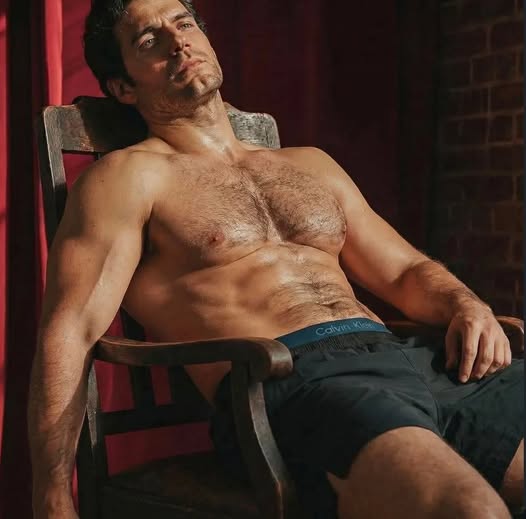
I will never stop being awed by how insanely beautiful Henry Cavill is….
Wednesday and Pay-the-Bills Day has rolled around for the first time in September. I didn’t sleep all that great, but don’t feel groggy at all this morning. However, if I had to I could easily go back to bed and fall asleep all over again. I am slowly starting to lift myself out of the abyss and pull my life back together. Yesterday was a pretty good day, actually. I felt great all day, not tired at all, and was able to get a lot done at the office. I wasn’t even tired when I got home after work, either! Huzzah and hurray! I spent some time getting caught up on the news when I got home, and then read for a while before Paul got home and I went to bed. I don’t know if this is all because of the injection on Monday, but whatever caused it, I am delighted and thrilled it happened. I suspect I’ll be a bit more tired this evening than I was yesterday, but I will happily take it, you know? The fatigue over the weekend was so intense and brutal–I’ve never been so tired it hurt, you know?–and I hope I never experience that again.
I am a bit tired this morning (mostly because of restless sleep and waking up several times during the night), but it’s not that horrible fatigue, which I fucking despise. I feel a little off, but nothing terrible that I can’t deal with, but no promises for this afternoon, you know? I was thinking about ordering groceries to be delivered this evening, but am not sure I shouldn’t just wait until Saturday. I am going to barbecue for the LSU-Florida game–burgers and cheese dogs, the regular tailgating action–and there are an awful lot of great games Saturday–Georgia-Tennessee, Wisconsin-Alabama, and two other games at the same time as LSU, Vanderbilt-South Carolina and Texas A&M-Notre Dame. I do love football season, even as it takes away from my productivity.
At least I enjoy cleaning while the games are on.
The world and country continue to burn to the ground, and social media continues to be filled with bots, grifters, rage baiters, and sad, broken people lashing out in a pathetic attempt to somehow feel better about themselves as American mediocrities and failures. I have very little hope for the future of this country, now that the small-minded hateful bigots who don’t understand the first thing about freedom and liberty are in control. It’s also interesting to see how many Americans are into the whole fascism thing. Sinclair Lewis was very prescient with It Can’t Happen Here, wasn’t he? I also saw some insane shit-posting about To Kill a Mockingbird being racist1, but not for the reasons most people do. No, this empty-minded moron was bitching about the book being racist because it showed an all-white jury wrongfully convicting a Black man for a crime they knew he didn’t committhus making white people look bad.
Excuse the fuck out of me?
As I replied, you’re right–it would have never gotten to trial. He would have been lynched the same night he was accused.
Because that was how it was done in Alabama in the 1930s, and to suggest anything else is a blatant lie.
I also love the MAGA bitch from Georgia who got the proposed Hyundai plant shut down completely, dealing a harsh blow to her own state’s economy and that of the district she is running to represent. If this were an episode of Law & Order, her body would be found and they’d work their way back around to her ignorance and stupidity. I am so tired of the rampant stupidity as the American empire crumbles and dies…this is going to be one of those times future history students will look back on and think but why were they so stupid? Couldn’t they SEE?
I was once that child reading history.
And on that note, I am heading into the spice mines. Have a lovely, lovely day, Constant Reader, and I’ll be back tomorrow.
Artist’s rendering of the Temple at Edfu, Egypt
My feelings about To Kill a Mockingbird are very conflicted, as I don’t see it as a great American novel about race the way most white people see it, and that may become an essay at some point. ↩︎
Monday morning has rolled around again and no, I didn’t want to get out of the comfortably warm cocoon of blankets yet again today. It was a nice, relaxing weekend. I didn’t go out to see any parades yesterday because I felt exhausted on Saturday and while i felt much better yesterday than I had, I thought it best to stay inside and rest for the day rather than push myself by going to stand on or around the corner for a few hours. This weekend is the big final push (I have to leave work early both Wednesday and Thursday), and I decided it was wisest to take Lundi Gras (Monday) off; Orpheus is that night and there’s no way I’d ever be able to find a place to park anywhere near the house. I do have PT that morning, so I’ll go to that and run some errands before heading back home and parking the car for another two days.
It actually turned out to be the best choice I could have made for the day because a friend called that I hadn’t spoken to in nearly two years (a myriad of reasons, mostly due to health concerns and my own insane rollercoaster life) and had I been out at the corner, i would have missed the call. It was a lovely conversation, and I realized once again how much I’ve missed, not only her, but so many others of my friends. I have always had the misfortune to have the majority of my writer friends not live anywhere near me, so it’s not like I can meet someone for a drink or lunch or anything at any time we so please. This has always been fine with me, but every once in a while it gets a bit lonely, so the few local friends I have are very precious to me. It was absolutely delightful to hear from her, and we were on the phone for nearly an hour, which was marvelous. (I’d been watching the Philip Seymour Hoffman Capote at long last when she called, which was really quite good and Hoffman deserved his Oscar, I think.) So yes, I kind of went down a Truman Capote wormhole yesterday. I am thinking Other Voices Other Rooms needs a reread, and maybe even a dip back into his short stories wouldn’t be a bad thing to do. My former antipathy for Mr. Capote (still processing it) has now turned to fascination; who was he behind that mask, that persona, he developed to hide behind? It’s also been years since I saw the film of In Cold Blood, too; it might be worth another look, too. This newfound obsession with Capote is multi-layered, too; it might take more than one lengthy post once I work my way through the way I’ve always reacted to Capote’s public face. (The self-loathing is coming from inside the house!) But after the call and after the film, I pretty much spent the rest of the night scribbling in my journal while watching an endless stream of Youtube videos, just to see what the algorithm thought I’d be interested in (Constant Reader, I was not interested in most of them, but I wound up watching a series of short histories of Eleanor of Aquitaine, one of my favorite historical women of all time.).
I didn’t write as much as I would have liked this weekend, either, but it’s also Carnival. Very little gets done during Carnival as I am too busy juggling and planning around parades to have much energy left to devote to writing. I did write some really good notes in my journal, though, which was fun; I always forget how much fun it is to freeform scribble in my journal and see where my subconscious mind takes me. It never matters if anything ever comes of it; it’s just playing around with words and ideas and names and form. I’ve been joking with myself that I should write a memoir called I Wouldn’t Normally Do This Kind of Thing, which is a terrific title for something like that (shout out to the Pet Shop Boys, because almost every song title is unabashedly clever and brutally honest and would make for a great title for essays or something), but as I always say, my memories lie to me all the time–which can be a problem when writing a memoir. Maybe personal essays would be a better idea than an actual memoir…and really, has my life been interesting enough for a memoir, anyway?
But I suppose that’s always in the eye of the beholder. I don’t think my life is anything special, or even unusual other than I am out of pace with traditional society with my sexuality and my chosen profession…but then other people will be amazed at some story of my past that I tell (usually after a few drinks) and I guess I never really think of me or anything that happens to me as anything other than normal and I always think everyone else has the same sort of things go on in their lives so it’s nothing out of the ordinary. But I have met a lot of important people and important writers. Larry Kramer used to call me periodically at Lambda Book Report to yell at me, but that was just Larry–he always seemed to be angry about something, but was actually also a really nice man (your mileage might vary, of course, but he also always made me laugh). Barbara Grier also used to call me about once a month to yell and swear at me, but I found her terrifically amusing and I could listen to her all day (and Barbara loved nothing more than a captive audience). There were only a few people in the business, actually, who were terrible to me when I worked there; I always seemed to have the ability to listen to everyone politely and was always pleasant and never argued with anyone….but there were a few I’d rather run over with my car and then back over them again rather than ever deal with them under any circumstance for any reason.
You know who you are, trash.
But I survived the first weekend of Carnival, and I am now thinking I want to watch the other Capote film, the one with Toby Jones–and maybe even revisit Murder by Death, which was another one of those after-church matinee movies Mom used to take my sister and I to. I just need to get through today at the office, and then I need to do my errands and go to PT before settling into my easy chair for the evening. I may go back to Lina Chern’s Play the Fool, which I am really enjoying, or my reread of Edna Ferber’s Saratoga Trunk, or Rival Queens, or even some short stories. I have some of Capote’s, and that might be interesting to reread. My friend who called yesterday afternoon recommended pairing Other Voices Other Rooms with To Kill a Mockingbird, which is a book I have issues with (more on that later at some point), but reading them as parallels to each other; the same childhood from different points of view in the same small Alabama town; it’s been a hot minute since I read the Capote novel but I did love it when I did. I don’t think I still have a copy of it, though.
And on that note, I am heading into the spice mines. It’s a windy, gray wet day in New Orleans, and so I don’t think I’ll have a lot of issues sleeping tonight, either. Have a lovely Monday, Constant Reader, and you never know–I may be back later. Stranger things have indeed happened!
I honestly believe that a lot of our problems in this country are a direct result of an attempt to enforce some national prudery standard that relentlessly tries to shame any and every one of us for the perfectly natural and normal human functions of our body. We are seeing this again in this modern age, as the Morality Police (who are all-too-frequently hiding some horrific skeletons in their own closets) try to get books banned, discussions about sex and sexuality and gender stifled and silenced, and entire segments of the population erased from public view and hidden away again because it makes them, well, uncomfortable.
Well, semi-automatic weapons, religion, and bigotry make me uncomfortable, but that doesn’t matter, apparently, as I am (to borrow a phrase from John Irving and The World According to Garp) a “sexual suspect.”
Ironically, I distinctly remember what television was like back when it was heavily censored and what was considered wholesome family entertainment was aired. It didn’t mean sex wasn’t talked about, it just meant that it had to be implication rather than outright said–which led to incredibly stupid phrases to stand in for sexual contact, or sexual intercourse, that were completely transparent and frankly, kind of stupid. That was the kind of television I grew up with, where everything was plastic and phony and created a false sense of what the country was really like (where, for example, are Mayberry’s Black people?), and some people watch those old shows and think, oh, what a better and simpler time we lived in then! We must get back to that world of innocence!
Which, of course, is complete and utter horseshit. Television of the 50s and 60s most certainly were not reflections of culture and society as a whole, no matter how much someone might want that to be the truth…it was not.
When I was a child, I hated the stupid, coy euphemisms screenwriters employed to mention sexual activity and escape the censors; “hanky-panky” is perhaps one of the worst. “Making love” is another one that puts my teeth on edge; “making whoopie” still another, and perhaps the worst offenderof all was ‘vo-dee-oh-doe’ from LaVerne & Shirley. Even when I was a kid that kind of “nudge-nudge wink-wink” kind of thing annoyed me; I can remember thinking, many times, “just say fuck, for Christ’s sake.” “Making love” is one that was really popular on soaps, and it’s always said tearfully; it also made me want to slap the speaker (and of course the movie Let’s Make Love really should be Let’s Fuck). The fact that we don’t have a common, easy to use word to substitute for fucking that delicate sensibilities won’t consider profane is part of the problem in this country, frankly. Oh, no! Sex is dirty, we can’t talk about that! We can’t come up with a non-offensive word for it because just thinking about sex upsets some people. God forbid we actually have a realistic, honest conversation about sex and sexuality. I hate to break it to you prudes, but sex is normal and healthy. The fact that our culture has tried so desperately to appease the prudes by turning sex and sexuality into something we’re just not supposed to talk about has put braces on our brains, and anchored fear and loathing to our sexuality; if our mightiest God in this country is Money, the second mightiest is SHAME. Having your body react to stimulation by getting aroused? SHAME ON YOU.
When I was growing up–and granted, things have gotten a little better since then–even masturbation was considered something shameful that no one would ever admit to; nothing like learning repression when you’re going through puberty. It was an insult to call someone a jack off; you mocked boys by talking about them jacking off…which was something I did pretty regularly, so even more SHAME. And when you take into consideration the fact that even as young and sheltered as I was, that I knew my sexuality–my physical and intellectual and emotional attraction to other men–was wrong and something else to be ashamed of; not only was I masturbating but I was thinking about men while I was doing it: DOUBLE WHAMMY.
It took me years to shake off that prudish conditioning, and it wasn’t until I stopped feeling shame about sex and my sexuality that I finally started to actually live my life, rather than having a life that just happened to me. Fear and shame had made me passive; afraid that being myself and living the kind of life I wanted to would cost me friends, family and employment; afraid that embracing having sex with other men (and exploring every element of what that meant) would lead to an infection that could kill me; afraid afraid afraid.
I often say that I refuse to live in fear, but that I am also sensible; I always am acutely aware of my surroundings and everyone around me–while that may have developed from being gay and knowing that made me a target, I think it’s prudent and smart to always be aware, regardless of who and what and where you are.
Given my prudish upbringing and conditioning, as well as the shame and fear I lived with for so long, it is kind of interesting that I started write erotica in my late thirties. Writing erotica for me was an education in many different ways. I learned a lot about myself while writing it, for one thing; for another, I taught myself how to write short stories by writing erotica (beginning, middle, end is never as apparent or obvious as in an erotic short story), and I was also able to work through a lot of my own issues with shame by writing erotica. The first erotica story I ever wrote, “The Wrestling Match,” was a liberating experience for me; I found myself blushing with embarrassment as I wrote it, which was an interesting (to me) phenomenon. Why was I so embarrassed to write about desire, lust, and sex?
Because years of conditioning to associate shame with desire and sexuality had taken firm root in my mind. It was an interesting experience–and the next time I wrote an erotic story, tit was an entirely different situation; there was no shame or embarrassment. Apparently, all it took was writing that first story to work through it…it was also interesting, because around that same time I was trying to get caught up with all the queer fiction and nonfiction I hadn’t known existed for such an extended period of time, and reading has always been how I learned about anything. I was reading Dorothy Allison’s essay collection Trash (which should be required reading, really), and Dorothy’s point that if we spoke honestly and openly about sex and sexuality (and other aspects of human life that for whatever reason we’ve been conditioned to think we can’t talk about) a lot of the stigma and shame most people feel would be eliminated. As long as your fantasies don’t involve hurting anyone or children–if everyone involved is able to give informed and full consent–there’s nothing to be ashamed of, really. But we’ve been conditioned in western civilization since Catholicism conquered the Roman Empire to consider anything of the body to be sinful and shameful; things of the mind and spirit are what we are supposed to focus on while denying the earthy sinfulness of our sexual desire. (This also goes for other bodily functions, like waste and gas) This is particularly true when it comes to kink. We’ve been conditioned in this country to think anything besides missionary position between a man and a woman is something so beyond that it must be shamed, and reacted to with revulsion. Why? As long as no one is being hurt and everyone is on board, I don’t care if you like being spanked, or lashed with cat o’nine tails; or if you like to wear leather and get a thrill from it. My own kinks primarily are focused around the domination/submission play of wrestling; I’ve written about that extensively enough to not feel the need to go into it again here (but check out my erotic pro wrestling novel, Going Down for the Count, available at any bookseller on-line!).
We don’t have honest conversations about sexuality and desire in this country. Writing an erotic short story was incredibly freeing for me; it broke the bonds of shame that indoctrination had built up in my brain. It may not be the case for everyone else, but it’s always interesting to me that people never question themselves when it comes to their own prudery, lusts and desires. (The way they depict it on the hilarious animated comedy series about puberty, Big Mouth, is particularly genius: the Shame Monster.) If you feel shame about your sexuality and your desires, shouldn’t you examine that? Where did it come from? Why do you feel this shame, and what is its root cause?
I do spend a lot of time gazing at my own navel and trying to figure out where all of my phobias and fears and so forth come from, so it’s always interesting to me when people don’t and seem to have no interest in self-examination. Maybe it’s just another form of my own narcissism and self-absorption; that could easily be the case. I sometimes wonder if the reason others don’t reflect on themselves and self-evaluate is because they are somehow more comfortable in their own skins than I am in mine. It’s certainly possible.
But the only way we can stop a lot of the bigotry and hatred in this country is to start being open and honest about sex, sexuality, and desire. To stop shaming people for being interested in sex, and exploring their fantasies and desires. Almost all of our prejudices are rooted in this fear of sex and sexuality; white supremacy is, in some ways, about protecting the “purity” of their blood and “womanhood” from the sexual predation of non-whites. (That was really what the trial in To Kill a Mockingbird was about; but interestingly enough Harper Lee, in illustrating Southern white bigotry through a rape trial, was also unintentionally sending a very strong message to her readers about class structures in the South; but that’s a subject for another time. White people really love that book….)
Banning books and discussion of sexuality and gender doesn’t make those things go away; instead, it just makes them even more enticing as forbidden, things that are dirty and we aren’t supposed to talk about.
Then again, if we are going to talk about these things, people also need to listen–and the ones who need it most? Never are the ones listening in the first place.
So, for today’s BSP about Bury Me in Shadows, I am going to talk about where the actual story that goes to the heart of the plot came from.
My grandmother was probably one of the biggest influences in my life, for both good and bad. I won’t talk about the bad—I was raised to believe you never bleed in public—and there was quite a bit of it; I didn’t speak to her the last thirteen or so years of her life. But the good was good, really. She loved old movies and passed that love of the glory days of Hollywood on to me; she always encouraged me to read and to be a writer; and she was the one who instilled in me my love for crime films and (to a lesser degree) horror ones—what she used to call “scary movies”; I watched The Haunting for the first time with her, and sometimes when I rewatch an old classic, like The Strange Love of Martha Ivers or The Letter, I remember watching it with her on the couch. She was also the one who introduced me to some authors I love, Victoria Holt (The Secret Woman) and Mary Stewart (The Ivy Tree), and she also encouraged my interest in history, which she also really enjoyed. She used to tell me stories about the past all the time when I was young—stories that at the time, and for most of my life, I remembered as being “family history” and was very surprised as an adult to find out they were fairly common legends and stories from all over the South, as well as from books and movies. In other words, none of the stories were true…but when I was thinking about this again the other day it occurred to me that it was entirely possible I was remembering it wrong—it was a long fucking time ago, after all, and my memory has been wrong before. It’s entirely possible she was just telling me stories, that I assumed were family histories…anyway, there were a lot of them, and when I was in college I started writing a lot of the ones I remembered down. They were often tales of blood and murder and crime; sometimes ghost stories.
The Lost Boys, the legend I used as the basis for the book’s background, is one of those stories.
And yes, bits and pieces of the story are apocryphal; sewn together by my grandmother into one story to entertain me.
Long story short: before the Civil War the county where my family comes from (again, not sure if this is true or not; the histories of the area I’ve read indicate that it’s not; so she either was weaving a story for me or I misunderstood the story or altered it in my memory as I got older) used to mostly belong entirely to one family—from which I am theoretically descended from (my grandmother also had a lot of delusions of grandeur)—and after the war, they lost nearly everything, except for a small tract of land that still remains in the family to this day. Anyway, the father and the oldest son went off to war, leaving his wife and two younger sons behind. The father was killed in the war. When the son came home after the war was over, the house had burned to the ground and there was no sign of wife or the two youngest sons anywhere; they’d vanished without a trace. No one ever knew what became of them; and the story, according to my grandmother, was that a deserting Union soldier burned the house and killed them (yes, the same story as appeared in Gone with the Wind, among others; my grandmother also told me another story about a Union deserter committing murder of a defenseless Southern woman—which I also turned into a short story that collects dust in my files), and that on or around the anniversary of their deaths, you could hear the younger boy calling for his mother in the woods near where the old house had been. Good stuff, right? I certainly thought so, and what a great basis for a story.
Of course, when I started researching the history of the county, none of this appeared to be true—the Union army never came any closer to the county than Tuscaloosa, for one, so the odds of a deserter making it all the way there on foot are pretty slim, and especially if no one else saw him—and of course, none of my ancestors owned most of the county. But it was a good story, even if not true, and I felt that writing about it could make for an interesting tale. My main character, Jake, is aware of the old family legend; he wrote a paper about it in high school, but doesn’t believe it’s anything more than a legend. I thought it would be cool to leave the ruins of the original house there, deep in the woods, far from the county road and the current domicile of the family, the crumbling house on the dirt road just off the county road. I also brought in a team of archaeologists from the University of Alabama, excavating the ruins—one of the few sites left that haven’t been excavated—and the professor leading the team, Dr. Brady (named after a historian friend), while intrigued and interested in the legend, isn’t trying to find proof one way or the other; he’s simply interested in what information about how the family lived can be unearthed.
The book is more than this, of course; but the Lost Boys legend was the starting point from which the rest of the book grew. I have a very complicated relationship with Alabama, to be honest; it’s my homeplace and I love the state. It’s stunningly beautiful. Even the poor rural county we came from is beautiful, with rolling hills and small mountains covered in pine forest, hollows filled with kudzu, muddy orange streams and rivers, riotously colored flowering bushes, and the air…oh, how wonderfully clean and fresh and pure the air smells. I love the orange dirt, and how round and smooth the gravel can be. The sky is a gorgeous cerulean, and of course, when it rains, it really rains. I can remember how still and heavy and damp the hot summer air was, the gnats and mosquitoes and dirt daubers and wasps and hornets and bees and horseflies. Whenever I stop as I drive through on my way somewhere else (usually Kentucky or Atlanta), I am always amazed at how lovely the young people are working in the small highway-side town’s fast food places. I remember screen doors with a coil so they’d always shut (or slam, if you just let go), and the big red Coca-Cola coolers with the bottle opener on the side in the general stores—and of course, the big old style Dr Pepper signs, that looked like a clock with only the numbers 10, 2 and 4—because that was the time for a Dr Pepper. (I also remember it was considered a cure-all when you were sick; just heat some Dr Pepper on the stove and add lemon; just like 7-Up was a cure for an upset stomach.)
But the state’s history– enslaved people, what happened to the indigenous tribes, Jim Crow, Selma, the institutionalized racism–is also deeply problematic. How does one write about the problematic history of the state? How do you point out how wrong all of that is without becoming preachy? I’ve often taken issue with white-written narratives about the pre-Civil Rights era in the South, as well as those set during that era and after; I remember reading one book where the heroine was doing research about the history of an incredibly racist town where a race-related murder had occurred, driven by the Klan–but focusing on the good, non-racist, non-Klan members of the town–what I call the see? We aren’t all bad take. I definitely didn’t want to write one of those stories. A few years back, I found a copy of a book I read when I was fairly young–it belonged to my uncle, actually–about the Civil Rights era in Alabama, called The Klansman by William Bradford Huie, whom I believe was actually a journalism professor at the University of Alabama…and it was different than I remembered, yet still chilling. I’m not sure what Huie was trying to do with the book, to be honest; the Klan sympathizers really came across badly, and even those who weren’t out and out members of the Klan were still racists who saw the Klan as a necessary “evil”–the sheriff couldn’t get elected without the support of the Klan, and he spends the book trying to walk the line between pleasing the Klan and not doing anything illegal…but you lie down with dogs, you wake up with fleas. (I read it the same summer as I read To Kill a Mockingbird, which also belonged to my uncle; the two books are forever linked in my mind.)
Bury Me in Shadows may be many things, but it’s not a Lost Cause narrative, nor is it a “look at the nice white saviors” novel, either.
One of the things I love most about books being turned into television series–or mini-series–is reading the book while I am watching the show. I discovered how amazingly fulfilling and fun and joyous this could be with Big Little Lies, and I’ve tried–sometimes failing–to do this every time Paul and I start binge-watching and loving another adaptation. (Little Fires Everywhere remains my biggest disappointment; I cannot believe I did not have a copy of the book on-hand, or waited to watch until I had one in my clutches)
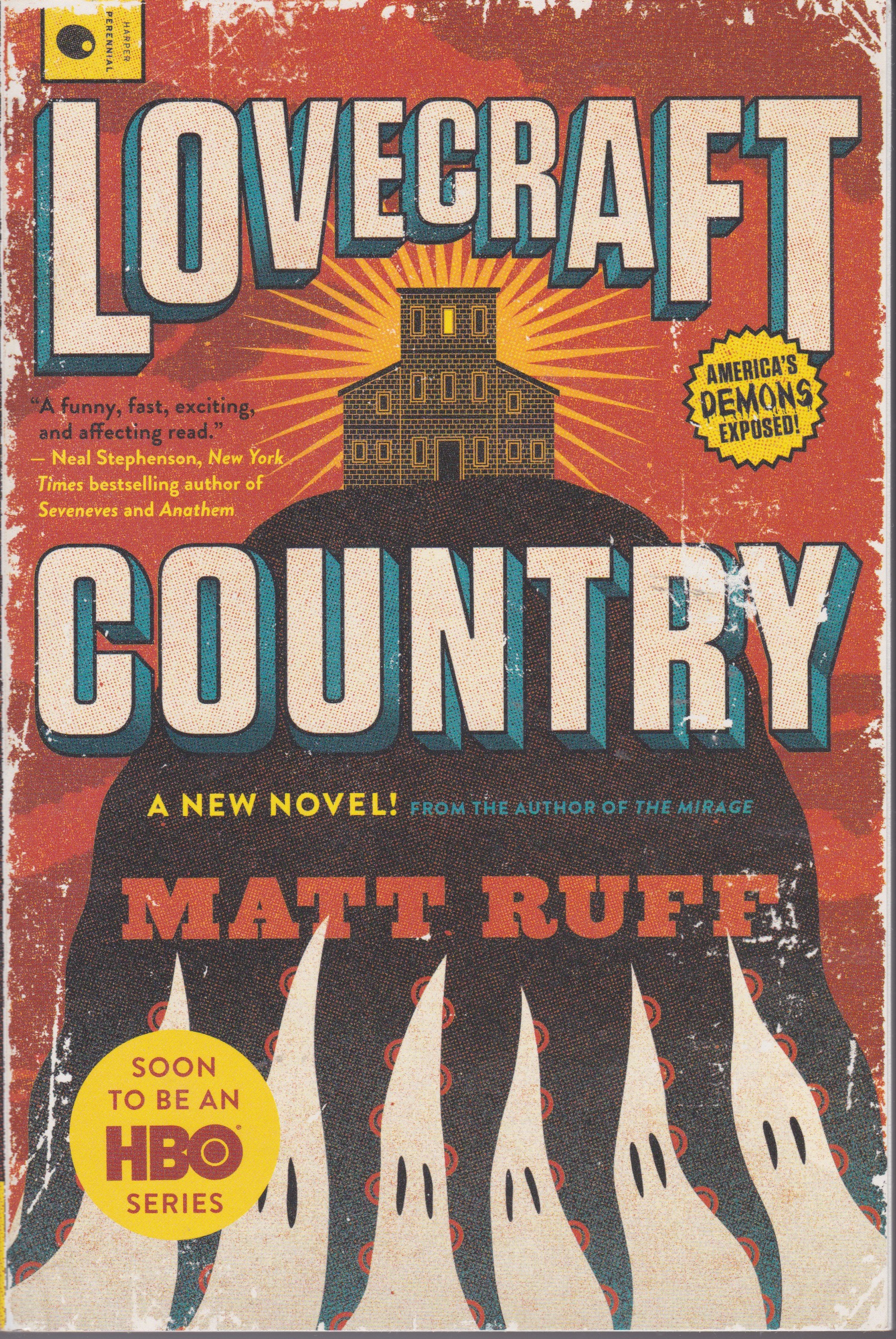
When I saw the first preview for HBO’s Lovecraft Country, it literally blew me away. I literally thought to myself, wow, I cannot WAIT to watch that, and was even more delighted to discover that it was, in fact, a novel. I got a copy, placed it on the mantle, and the week the first episode aired, I started reading. (Obviously, I do not read as fast as I used to.) I love love LOVE the show, and the book is actually pretty marvelous, as well. I finished it last night as I waited for the way-outer bands of Hurricane Laura to reach us here in New Orleans–all we got was a tropical storm effect, I am terrified frankly to look up what actually happened where the eye came ashore, and will have to gird myself with more coffee before I do look–and I am pleased to report the book finishes just as strongly as it starts–and that the entire book is fucking fantastic.
Atticus was almost home when the state trooper pulled him over.
He’d left Jacksonville two days before in the secondhand ’48 Cadillac Coupe that he’d bought with the last of his Army pay. The first day he drove 450 miles, eating and drinking from a basket he’d packed in advance, stopping the car only to get gas. At one of the gas stops the colored restroom was out of order, and when the attendant refused him the key to the whites’ room, Atticus was forced to urinate in the bushes behind the station.
He spent the night in Chattanooga. The Safe Negro Travel Guide had listings for four hotels and a motel, all in the same part of the city. Atticus chose the motel, which had an attached 24-hour diner. The price of the room, as promised by the Guide, was three dollars.
I’m going to be honest right up front: I’ve never read H. P. Lovecraft. Oh, the horror, literally, right? When I was a kid I bought a copy of The Dream Quest of Unknown Kadath and other Stories, and it just…well, it just didn’t do it for me. I lost interest several pages in, and gave up; and have never since returned to try the Lovecraftian waters. As I grew older and became more and more aware of the horror genre, I also became aware of how much of an impact and influence Lovecraft had, not just on horror, but on the sisters that genre is usually lumped in with, fantasy and science fiction. Lovecraft is honored and saluted and studied and written about, over and over again; new anthologies explore his worlds and “cosmic horror”; so many horror writers and fans claim, on their social media pages, to have attended “Miskatonic University” (which, to be fair, is far less annoying than those who claim “the School of Hard Knocks,” har har); and of course, over the past decade (perhaps longer; who knows? I don’t, and don’t care to find out) you cannot be involved in publishing, or a fan, as I am, of the horror genre and not been aware of what I have come to call “the Lovecraft Wars.” (The Lovecraft Wars, in short, debate the legacy of Lovecraft and his vile, racist beliefs; the standard defense is a shrugged ‘he was a man of his time’–to which the only proper response, frankly, is so was Hitler–and whether or not he should continue to be honored as an influential author; I don’t know the answer to those questions, frankly, and it’s not my writing community so I have no skin in the game. But you cannot help but be aware of this ongoing conflict.)
Anyway, I was pleased when I saw the trailers for HBO MAX’s Lovecraft Country, which clearly centered Black people, and when I found out it was also a book, I decided to get it and read along while watching the series. I was also a little disappointed to see, based on the author photo on the back cover, that author Matt Ruff appeared to be white–which also seemed to be a whole other field of land mines; the #ownvoice debate.
And then I started reading, and watching.
The book is set in a post-Korean War pre-Brown v. Topeka Board of Education United States; when racism was not only permissable and acceptable to the majority of white people but was often enshrined into law; separate bathrooms, denial of service, mob violence and burning crosses were, horrifyingly enough, just a part of everyday life for Black people. The police weren’t there to help protect them; they were there to force them to continue to live their lives on their knees–and kill them if they tried to rise. Lovecraft Country doesn’t flinch away from this or try to downplay it in any way (either book or television show), and there were times I found it hard to keep reading and would put the book down–only to think to myself, that’s some serious privilege there, bud–this is what Black people experience to this very fucking day and they can’t just ‘put down the book’ and walk away from it; refusing to read it because it makes you uncomfortable and makes you squirm makes you even more complicit than you already are. So, yes, there are some parts to the book that will make white people uncomfortable–but you need to get over it, for any number of reasons but at least one is because the book itself is a revelation.
As I’ve said, I’ve not read Lovecraft, but I got the sense from reading the book that the interconnected stories that make up the book are all inspired by, or retellings of, some of Lovecraft’s; only now centering Black people and their struggle against not only supernatural forces but against the casual, every day racism of the society in which they live. Atticus is returning to Chicago from Jacksonville because he received a letter from his estranged father about a family legacy; Atticus’ mother, it turns out, was descended from a slave who was raped and impregnated by a master who was also a very powerful warlock and part of an ancient society with peculiar beliefs centered in the book of Genesis. His uncle George is the publisher/editor of the travel guide mentioned in the opening of the book; eventually Atticus and George go on a road trip to Massachusetts–to Lovecraft Country–along with a childhood friend named Letitia (Tish)–to find Atticus’ father and they wind up in a very chilling and scary place called Ardham (Lovecraft wrote about Arkham–and I will always wonder if Arkham Asylum from the Batman universe was an homage to Lovecraft as well). They deal with racism every step of the way, “sundown towns” (towns where people of color were required to be outside the city limits by sundown or else suffer the consequences), and corrupt racist cops.
Each section of the book focuses on another person who is a part of their immediate family/friends group, dealing with some kind of different, supernatural experience: the next part of the book centers Tish buying a big empty old mansion in a whites-only part of Chicago that also happens to be haunted, and so on–Tish’s sister has her own story; Atticus and his father go looking for journals of another warlock and encounter a haunting; George’s wife and son have their own stories as well–but all these stories are connected by a thread that goes back to Atticus’ family legacy and a war between different covens of warlocks for not only supremacy, but knowledge and power.
The book is exceptionally well-written, and as I said earlier, unflinching in its depiction of a racist society from the point of view of those consistently victimized by it, and it’s a toss-up between who is scarier–the warlocks and the forces they unleash, or the horrible racists, so entrenched in their horrific beliefs and values that they can’t see Black people as human beings. The fact Ruff chose to call his primary character Atticus didn’t escape me, either; Atticus being also the name of the noble white hero of To Kill a Mockingbird, which is, while a beautifully written novel, one which has become increasingly problematic to me over the years for any number of reasons. I greatly enjoyed reading the book–and in all honesty, it made me curious to read Lovecraft at some point after all these years; although it’s certainly not going to be a priority for me.
I will read more of Ruff’s work, though; the descriptions of his other books sound incredibly subversive, which appeals to me.
Friday and a rather chilly, grayish day has come to usher in the weekend. I was exhausted last night when I got home from work–which has been happening more and more lately–and slept really well. Paul didn’t get home until late, so we weren’t able to watch anything last night–but we made our plans for the weekend; since we really don’t care about the Super Bowl we’re going to try to get caught up on the shows we watch this weekend. I also want to get deeper into the Dorothy Hughes novel I am reading, Dread Journey. It’s relatively short, so I should be able to get through it relatively quickly, if I can devote the time to it.
This week wore me out somehow–I can’t remember the last time I was so worn down by a week in which it wasn’t parade season or I wasn’t on a trip somewhere. Not sure what that’s about, but it’s also part and parcel of the reboot I need to do on my life and my weekly routine. Most of all I need to start taking better care of myself, for one thing–particularly when it comes to health-related issues; there’s doctor’s appointments and blood work I need to have done that I somehow never seem to get around to, and that’s a big no-no. Last year was supposed to be the year that got taken care of–and it actually didn’t turn out that way.
But…at least now when I am home and too exhausted after work to write or read or focus on a TV show, I have lots of LSU game highlights from this past season to stream on Youtube.
I’m not, I think, going to try to overdo things this weekend; or make a to-do list that I will never finish, you know? I do need to update the to-do list I have running–I think I accomplished almost everything I needed to on the list yesterday, and there are some emails I need to send this morning before I head into the office later this morning–and I have several blog posts I’ve started writing and need to finish–my rereads of Victoria Holt’s Kirkland Revels and Patricia Highsmith’s The Talented Mr. Ripley have reviews I’ve started and not finished, for example. And as I begin to move on to the next book in the TBR pile, I should get those out of the way because I will also have to write a review of Dread Journey.
And I have some short stories I should finish, and others I should revisit.
The publishing world has really been a dumpster fire for quite some now–first the RWA mess, and now the whole American Dirt dust-up. Both dust-ups ultimately boil down to the same thing: what responsibility do writers have when they write outside their own experience? Particularly when it comes to the marginalized? I have always held that a writer can write about anything they wish; anything that intrigues them enough for them to sit down and spend the time constructing a novel is something they should write about. I chose to write a novel about rape culture in a small town, but I chose not to write it from the point of view of the victim, but rather that of someone else in the town, another player on the football team who wasn’t involved in the incident–but is close friends with the boys who did. I’ve been struggling with this manuscript for several years now; partly from a sense that maybe I wasn’t the right person to tell this story; was centering a teenaged boy rather than a teenaged girl in this story the right choice; was i doing a kind of To Kill a Mockingbird thing, trying to do a #notallmen type thing that would ultimately be offensive?
I like to think the fact that I actually do worry about these things is a good sign.
Anyway, I’ve always said that writers can write anything they are interested in, but have a responsibility to get things right. I’ve written from the point of view of women before; I’ve written from the point of view of a teenaged girl before. Do I, as a gay man, have a right to write about straight women/girls? Of course I do, and no one has ever told me that I don’t. But I also owe it to women–and all the women I’ve known–to create multi-faceted, complex, complicated women characters that are believable and whose experiences are also believable. Likewise, a cisgender straight person writing about gay men have a responsibility to gay men to get it right and create real characters rather than fantasy, and a white person writing about an oppressed racial minority particularly has a responsibility to that minority to do the work and get it right. As writers, we don’t always get it right, and we owe it to that minority to listen when they say we got it wrong.
We need to do better.
And comparing minorities of any kind–religious, racial, gender, sexuality, ethnic–to vampires and werewolves and zombies to justify writing outside your own experience? Shows that you don’t have the empathy to write about any minority. You can’t compare actual human beings to mythological creatures as a justification for writing about them because we actually exist.
And if you can’t understand how horrible and odious making those comparisons are…well, I’m not going to read your work because I can be relatively certain it won’t be any good.
And on that note, those emails aren’t going to answer themselves.
As Constant Reader is aware, on 2019 I embarked on something I called The Diversity Project for myself; an effort to read books by authors who were not straight or white or cisgender. I had hoped to use 2019, and this project, as not only a way to broaden my reading and make up for years of lost time, but also to broaden my mind, my knowledge, and my experience.
It does not escape me that it’s kind of shitty that I actually had to make an effort, make in into an actual project, to ensure that I read outside of my own privileged experience. I don’t deserve a cookie or praise for doing something I should have been doing my entire life. It’s horribly shitty that my entire reading life could best be described as a mayonnaise sandwich on Wonder bread. I’ve also been trying to remember something, anything, other than Gone with the Wind and To Kill a Mockingbird that I read as a child that had people of color as characters (and frankly, those two problematic books don’t count). Bayport and River Heights and Rocky Beach and Sleepyside and all the other towns and villages in the teenaged sleuth series for kids I read were all lily-white.
Several years ago, Brash Books brought the entire Blanche White series by Barbara Neely, all four of them, back into print. I had never read Ms. Neely’s books; I’d never, to be completely honest, even heard of them. But the concept sounded fantastic, and unlike anything I’d ever read before, so I went ahead and ordered Blanche on the Lam, the first book in the series, which proceeded to languish and collect dust in my (massive) TBR pile. Mystery Writers of America recently selected Ms. Neely as a Grand Master, and as I was heading up to New York for the board retreat/orientation for 2020, I thought to myself, self, take Ms. Neely’s book with you on the trip to read–it’s serendipity and meant to be, and also far past time.
And that’s exactly what I did.
“Have you anything to say for yourself?” The judge gave Blanche a look that made her raise her handbag to her chest like a shield.
“Your Honor…I’m sorry…I…”
“Sorry? It most certainly is sorry! This is the fourth, I repeat, the fourth time you’ve been before this court on a bad-check charge. Perhaps some time in a jail cell will convince you to earn your money before you spend it, like the rest of us! Thirty days and restitution!”
“But, Your Honor…” Blanche’s legs were suddenly weak. Her hands were freezing. Beads of sweat popped out on her nose. She wanted to tell the judge that a jail cell was cruel and unusual punishment for a person who panicked in slow elevators. She also wanted to ask him where the hell he got off, lying about her like that! This was her second, not her fourth, charge. Furthermore, just as she’d done the last time, she would have made good on the checks even if she hadn’t been summoned to court. Hadn’t she already covered three of the five checks she’s written? And right here in her handbag she had the forty-two-fifty she still owed, plus fifty dollars for the fine–same as the judge had made her pay last time. But last time she’d had a judge with his mind already on the gold course. He’d hardly bothered to look at her. There’d been no talk of jail that time.
From the opening sentence, Neely is being completely subversive to her readers–not only is she writing about a woman of color, front and center, that woman is also working class and struggling to make ends meet. She is dealing with–in even a small way–with the criminal justice system that is tilted against her–poor, working class, of color–and sure enough, she gets screwed. And while some might argue she shouldn’t have bounced checks (it’s not really clear whether she deliberately wrote bad checks, or if she wrote them thinking she was going to get paid, and then didn’t), I think everyone can agree that thirty days in jail–and a judge sentencing her based on a false premise that she was a more habitual offender–is excessive.
Blanche’s voice is one that is rarely, if ever, heard in crime fiction, either before or after this series, and that’s a shame. The book itself is thoroughly enjoyable, as Blanche manages to take advantage of a distraction at the courthouse and walk out, unimpeded…thus going “on the lam”, and not knowing what to do or where to go, remembers that she was supposed to take a temp gig as a housekeeper, and goes to that address. She winds up going out of town to work at a wealthy family’s vacation home, and it soon becomes very apparent that there is something really wrong with the family.
It’s also next to impossible not to root for Blanche, to want her to do well, and somehow get herself out of the predicament she’s found herself in. After all–there is a murder, she’s a fugitive from “justice,” and of course she’s a woman of color in a corrupt, racist place–it would be incredibly easy for law enforcement to simply pin the murder on her and wash their hands of the entire mess. It’s an absolute joy to see Blanche–with her own heart and compassion, not give in to impulses she shouldn’t, and to think her way out of everything, and not only exceed the reader’s expectations but subvert them completely.
Read this book. Read the entire series. There’s seriously no question that Barbara Neely is a grand master. None whatsoever. I can’t wait to read the rest of the series.
I’ve always been a voracious reader, and when I was a teenager I loved nothing more than those enormous books that could also be used to shore up the pilings of your house–epic novels with paperback editions that occasionally topped a thousand pages, so thick that reading them inevitably cracked the spine, leaving loose and sometimes lost pages in its wake. They always seemed to lose their book shape, these enormous and theoretically disposable books, and looked ugly on the shelf when you tried to put them back. I’ve always liked clean lines on my bookshelves, and those enormous paperbacks always messed up the ramrod straight line of spines I liked looking at, admiringly, my own personal library.
It was during this time I discovered Herman Wouk.
The first Wouk novel I read was The Winds of War. It was my father’s book, actually, although all the books in the house generally wound up in my room eventually. It was mountainous, enormous, and while I was aware of World War II history–it was still fairly recent, and I had many family members in my grandparents’ generation who served–but it wasn’t my favorite period of history (although I would eventually come around to it and become fascinated by it, a fascination I still hold to this day) and I was particularly interested in reading it. One Saturday I was sitting in the living room, bored, and rather than walking to my room to get the book I was currently reading, I picked up The Winds of War and started reading. It was summer, we were living in Kansas, and we’d just moved there and I knew no one. Several hours later I was deep into the book, completely fascinated, mesmerized by this story of the Henry family–a Naval family–caught up in the sweep of oncoming war in Europe and in the Pacific. The book closed with the attack on Pearl Harbor and the United States finally entering the war.
And I became a Wouk fan. I started reading all the Wouk I could find, loved them all, from The Caine Mutiny to Youngblood Hawke, and couldn’t wait to check War and Remembrance, the sequel to The Winds of War, out from the library when it was released.
And then there was Marjorie Morningstar.
I saw you once. I saw you and you noticed me because you caught me looking at you, seeing you. Back and forth, back and forth. Good-looking women do that. Lock eyes, then look one another up and down. I could tell at a glance you’ve never doubted you were good-looking and you still had the habit of checking a room to make sure you were the best-looking. You scanned the crowd of people on the sidewalk and your eyes caught mine, if only for a moment, then dropped away. You saw me, you tallied up the points. Who won? My hunch is you gave yourself the crown because you saw a Negro woman, a poor one at that. In the animal kingdom, the male performs for the woman, woos her with his beautiful feathers or flowing mane, is always trying to out-strut the other men. Why do humans do it the other way? It doesn’t make sense. Men need us more than we need them.
You were in the minority that day, you were in our neighborhood and almost everyone there would have picked me. Maybe even your husband, Milton. Part of the reason I first noticed you was because you were next to him. He now looked exactly like his father, a man I remembered with some affection. I can’t say the same about Milton. I guessed, from the way people gathered around him on the temple steps, patted his back, clasped his hands in theirs, that it must have been his father who had died. And I could tell from the way that people waited to comfort him that Milton was a big shot.
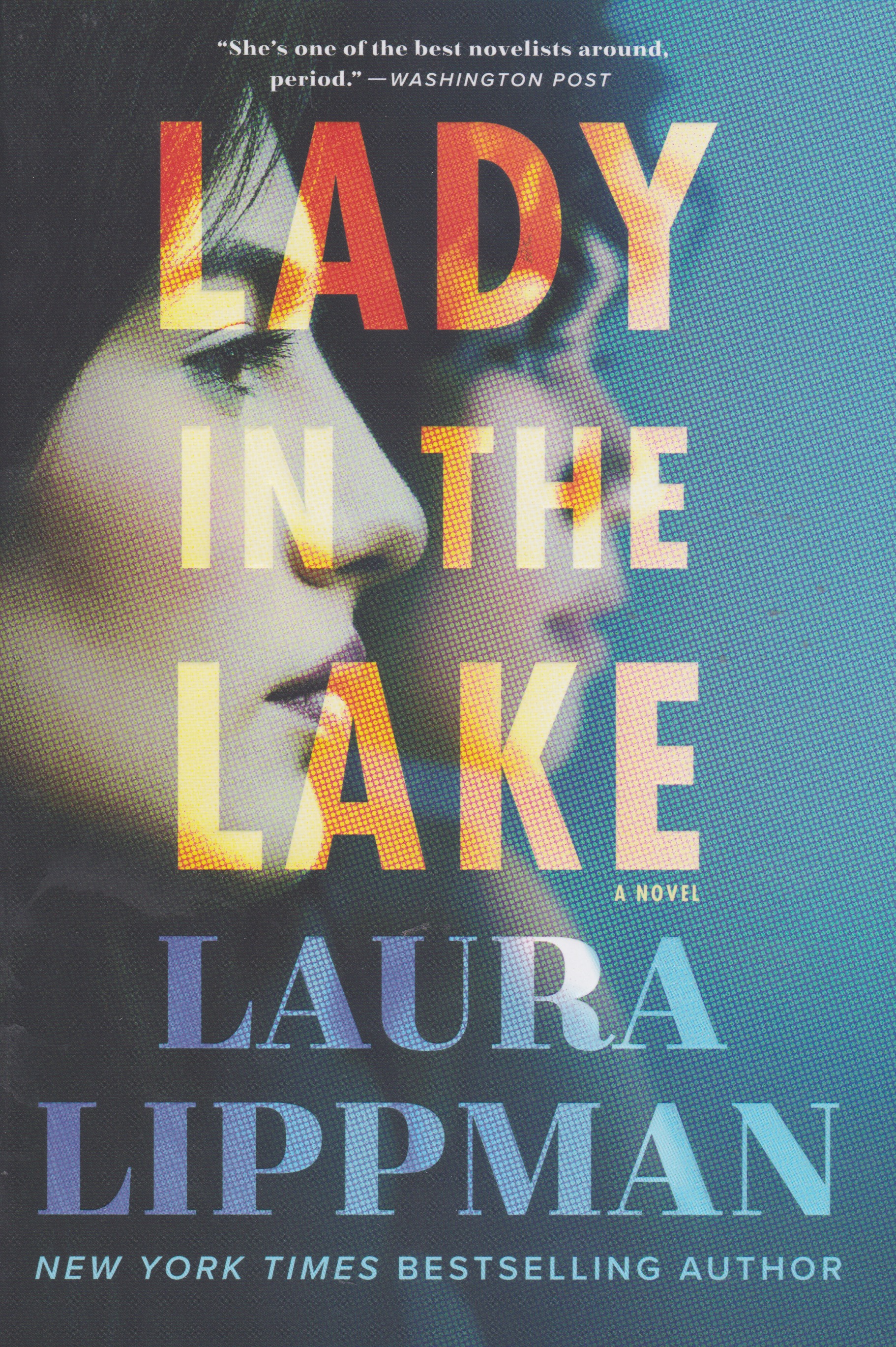
Laura Lippman’s latest novel owes the same kind of debt to Wouk’s Marjorie Morningstar as her Wilde Lake did to To Kill a Mockingbird (and Thomas Thompson’s Celebrity); in some ways, her heroine, Maddie Schwartz, has a lot of the same history as Marjorie; the close strictures and mores of the 1950’s for a young Jewish woman in Baltimore molded and shaped her much as they did Marjorie. The book opens with Maddie walking out of her marriage and away from her young son; she just has a general sense of malaise and an unshakable sense there has to, needs to be, more in life for her. Maddie is beautiful and knows she is; she knows how to manipulate men and get them to do what she wants them to do. Needing money, she pretends her engagement and wedding rings were stolen for the insurance; one of the responding cops, a young black man named Ferdie, soon becomes her illicit lover. Maddie’s discovery of a missing young girl’s body is soon parlayed into a job at a Baltimore paper; she becomes interested in another murder–that of Cleo Sherwood, the so-called “lady in the lake”; a young woman of color murdered and dumped in the fountain in a park. Maddie eventually, in her careless way (one of the strongest character traits Maddie has is carelessness; she seems to just blunder her way ahead without giving a thought to the repercussions and fall out her actions might cause) she starts investigating Maddie’s death, using her position as a clerk at the paper to fool people into talking to her. SHe wants to be a reporter, you see, and this Cleo case–no matter how many people try to dissuade her, no matter how many roadblocks get put up in her way–is a way for her to get upgraded to reporter, and she doesn’t care what damage she might leave in her wake as she goes for what she wants.
Lippman has long been one of the leading lights of the crime fiction community; her Tess Monaghan series is one of the best, and her switch to stand-alone crime novels has firmly established her reputation as one of the best writers of our time. One of the great things about Lippman is how she pushes herself into new directions, new perspectives, and new approaches with every novel; each stand-alone is particularly distinct and exceptional in its own way. She explores in her work what it means to be a woman, whether in today’s world or in the recent past, and how societal mores and expectations can stifle a woman’s needs and ambitions. Her characters struggle against those strictures, but at heart her novels are about the complications, complexities, and layers of being a woman in American society. She’s explored love and marriage, the fallout from lust, what it means to be a mother, and above all else, the complicated relationships between women–whether it’s sisters, mother/daughter, or just friends. Maddie doesn’t regret walking out on her marriage for one moment; she doesn’t even seem particularly concerned that her teenaged son wants to stay with his father and her regular dinners with him are uncomfortable. She knows her leaving has damaged her relationship with her son, but she doesn’t really seem to care too much about that. Maddie is sometimes downright unlikable, yet what she wants, her confusion about who she really is and how to go about building the kind of life she thinks she wants make her sometimes unlikable actions and behaviors forgivable in the reader’s eyes; Lippman has constructed her so carefully the reader can’t help but care what happens to her.
Lady in the Lake is also a departure from other Lippman works in that it’s told in a vast array of points of view; when we are seeing things from Maddie’s point of view, it’s a remote third person pov–but everyone else is in a tight, first person present tense point of view. We even hear from the ghost of Cleo Sherwood from time to time. Multiple points of view are a hard row to hoe for even the best writers; Lippman somehow manages to imbue all these minor and supporting characters with unique voices and perspectives that make the reader regret, just a little, that we don’t get more than just a glimpse of these characters. In that respect, Lady in the Lake is a tour-de-force; a masterwork from a great writer at the top of her game. It’s one of the most unusual crime novels I’ve read, and its originality, along with Lippman’s cool expertise at her craft, will result in it being one of the top books of the year.
It’s already been an exceptional year for readers–I’ve read so many amazing books this year so far, and am looking forward to reading more.
Well, I managed to get the round table thing finished yesterday afternoon, despite the best efforts of my computer to ensure I got nothing done yesterday. I really don’t think I was the right fit for this conversation as I am neither a science fiction writer nor a buff; I am, at best, a casual fan of scifi more than anything else, and the questions were really in-depth and more than a little bit over my head. But I gave it my best shot, such as it was, and managed to get it done. I may have come across as a bit pessimistic about the future, but that’s kind of how I’m feeling these days–which makes me also very grateful to be my age and not younger.
I also wrote the first draft of “Moist Money,” which pleased me enormously (not the draft, just that I got it done). I went a few words over the three thousand word limit–but it’s also just a first draft, and it’ll tighten up some in the second draft. It’s a very dark, nasty, noir story that’s more than a little misogynistic (to be fair, my main character hates straight men as much as he hates straight women), but overall I am very pleased with it. It’s going to need some more work, obviously, but again, I am very pleased with getting it done. It seems like it’s been forever since I got a draft of anything finished, you know? And it’s been a while since I worked on Bury Me in Shadows (which I am planning on working on some today), so it’s not like I’ve been a writing machine lately, either.
I also started reading Laura Lippman’s Lady in the Lake, which already is fucking fantastic. She keeps raising the bar for all the rest of us, which is both intoxicating and intimidating. I read the first few chapters, then set it aside for a while. The writing and story-telling is so terrific it needs to be savored, rather than rushed through. One of the many things I admire about Lippman is she never writes the same book twice; each of her stand-alone novels is markedly different from the others. Sunburn was her exploration of noir; Wilde Lake was an homage to To Kill a Mockingbird with a modern twist to it; After I’m Gone was a complicated study of the women left behind when a slightly crooked man disappears; and so on. Her Tess Monaghan series (which I love love love) was also never formulaic, never predictable, and always a terrific, satisfying read. She even took chances with that series that most series writers won’t; Tess got pregnant in The Girl in the Green Raincoat, in order for Lippman to write her take on Rear Window; the most recent Tess novel, Hush Hush, was an exploration of motherhood and bad mothers. (I intend to read some more of Lady in the Lake this morning, after I finish this and write a little bit; I intend to spend the afternoon writing, and maybe even go to the gym at some point, as an early birthday present to myself.)
I had some serious computer issues yesterday, with the programs periodically “not responding” and the occasional screen freeze, which required force-restarting the computer or unplugging it. Eventually, the computer problems seemed to work themselves out somewhat; the computer still isn’t as fast as it used to be, and the programs do lock up from time to time, which is incredibly frustrating, as you can imagine. I guess I’m simply going to have to bite the bullet and get some on-line assistance from Apple techs, which I don’t think I should have to pay for, since the computer worked perfectly fine before the Mojave update.
Ah, well, such is life. I also need to get some Apple techs to deal with the Air on-line, but I did buy the Apple Care for it so it shouldn’t cost anything out of pocket.
Fuckers.
We also tore through the first three episodes of season two of Mindhunter last night on Netflix; it’s been so long (and my memory is basically worthless these days) I’d kind of forgotten what was going on with the show–but it didn’t take long to get back into the swing of the story and the plot. The show is simply exquisite; I think this season is even better than the first, frankly. Jonathon Groff, Anna Torv, and Holt McCallany are perfect in their roles, and they’ve recreated the time period perfectly. I can’t recommend Mindhunter enough; I can’t wait for Paul to get home tonight so we can dive back into it. I’ve said it before, and I will continue saying it; this is perhaps the platinum age of television; there are so many amazing shows it’s impossible to keep up with them all, and the Emmys are far more competitive, and interesting, than the Oscars.
There’s also a third season of Dear White People up on Netflix, as well.
It’s gloomy outside the windows this morning; I suspect this is going to be another rainy August day here in New Orleans, on my last day of being fifty-seven (although technically, it’s the last day of my fifty-eighth year) and I continue my steady crawl to sixty. Tomorrow of course is also the last day of this long weekend, and I do feel like it was necessary and needed. I feel a lot more relaxed and lot less stressed than I did Thursday when I came home from work–and this ‘mental health mini-vacation’ has certainly done the trick.
And on that note, I am heading back into the mines for spice. Have a lovely Monday, everyone.







 Queer and Loathing in America