Morning Good Morning

Sunday morning and I slept late, which is fine, really. I keep forgetting that sleeping in on my days off isn’t a criminal act of any kind. After so many years of keeping myself overly busy and so I was always behind on deadlines and so forth, I’ve kind of gotten into the insane mindset that sleeping late is a waste of time that could be better utilized, writing or cleaning or reading. I do have some things I need to get done today–mostly running to the store to get the things i need to make a carrot cheesecake for a co-worker’s birthday tomorrow–but if i manage my day properly, I should be able to get things done.

I spent yesterday running errands, and trying to get things cleaned up around the house while dipping into two books–The Berlin Stories by Christopher Isherwood and Ode to Billy Joe by Herman Raucher. I ordered the latter from ebay after I started doing my research into Robby Benson for the post I made about the crush I had on him as a teenager; realizing the movie script and novel were written by Herman Raucher made me interested in reading the book, as well as wondering about Summer of ’42, and so I ordered copies of each. Billy Joe arrived yesterday, and I was curious about it. Usually novelizations were work-for-hire arrangements and the author used a pseudonym; some are better than others, of course, but just reading the first chapter of Billy Joe I can tell it’s head-and-shoulders above most novelizations, and it’s probably more thorough in telling the story than the movie was, which has me interested. I’ve also been thinking about The Berlin Stories lately, after watching the film Christopher and His Kind, and may revisit it again, too, for Pride Month; Isherwood is one of the literary gods of the gay canon, and the opening sentences of Goodbye to Berlin are perfect for parodying in the prologue to the next Scotty. I still have to finish my reread of Michael Thomas Ford’s Suicide Notes, and I think I’m going to bump the new John Copenhaver up on my TBR list. It is Pride Month, and I should immerse myself in queer lit for the month, don’t you think, Constant Reader?

I also want to write about Summer of ’42 at some point. Like The Other, it was an early read that was very influential on me, and one I often don’t think about when I do think about influential works I’ve read or make a list. I really do need to sit down and identify the books that really impacted me and the way I write; The Other, Summer of ’42, and so many, many others. I also want to write today; I didn’t really yesterday, but I did spend some time yesterday doing research; i.e. watching Youtube videos on the Oklahoma true crime story that fascinates me still, as well as ones that review the 1970’s and pop culture and what was going on those early years of the decade, which is when the book will be set. I think I am moving in a more historical direction rather than writing about the current day; Never Kiss a Stranger is set in the 1990s (1994, to be exact) and of course The Summer of Lost Boys is going to be set in either 1972 or 1973; I can’t decide which, although I suspect 1973 is going to end up being the winner when I finally have to decide.

We finished Under the Bridge last night, and it’s most excellent; I highly recommend it. Based on a true crime novel about the Reena Virk murder in Victoria, British Columbia back in the 1990’s, Reena was beaten badly by a group of girls–some she thought were friends–and then after the others left her broken and injured and bleeding along the river bank, a boy and a girl came back and basically, finished her off. The show reminded me a lot of Megan Abbott’s work; Abbott always writes about the mysterious world of female relationships, female rage and jealousy, and that’s what Under the Bridge does so beautifully. The acting is extraordinary; a real standout is Javon Walton as Warren, the young boy who kills Reena. Walton is very handsome in that young way, and I looked him up because the performance was so extraordinary, and turns out he also played Ashtray on Euphoria, who was one of my favorite characters on that show. Do watch it when you get a chance. I’m going to get a copy of the book now, too. Yay, more things to read! Just what I need!

We also started The Acolyte, but I was sleepy by the time it started and kept dozing off. No judgment on the show, I was just tired.

And on that note, I think I’ll head into the spice mines. I’ll probably finish the dishes this morning while making a grocery list, and then I’ll dash to the store and get gas. I may even finish one of these other Pride blog drafts, so have a lovely Sunday, Constant Reader, and I may be back later.

You Are Everything

Tuesday morning and trying to get awake fully; my mind is awake and my body is, but I still feel a bit groggy. I slept well, which was absolutely lovely, and am sitting here swilling coffee and getting mentally prepared to face the day. I have to run errands tonight after work (prescriptions, mail, gym), and then I am going to come home and just chill for the evening, maybe do a little writing. I didn’t do any last night, because I wanted to watch the regional final (LSU lost in extra innings to the fourth ranked team in the country and could have won), after which I didn’t do much of anything just puttered around the kitchen doing chores until it was time for bed.

The LSU loss was disappointing, of course, but the Tigers made a helluva run in the post season. Just three weeks ago, no one thought they’d even make the post season, let alone get to a regional final. But then they had their amazing run in the SEC tournament, eliminating top ten teams left and right before giving Tennessee a run for their money in the final. So, well done, guys! Sure, another world series run would have been fun this year, but not having one does in no way diminish or undermine how magical last season was, or make it any less wonderful to remember. GEAUX TIGERS, and we’ll see you again next spring….and now it’s time to start gearing up for football season, which isn’t that far off. Woo-hoo!

I’ve been posting my Gay Moments in Greg’s Life entries, which has been kind of fun doing. Right now, I have several drafts in progress about dancing in gay bars, circuit parties, and body culture–which all will be interesting to write–and of course at some point I will probably write about HIV/AIDS. I enjoyed writing my Pride entry and the ones about The Other and Starsky and Hutch; probably will do Robby Benson, Playgirl, and Gordon Merrick at some point, too. I also will probably do some others, but right now I can’t think of what they might be. I’ve also started posting these longer form posts to Substack, too–if you’re reading them here, I don’t imagine there’s any need to read them there–but I think I need to start building up things; I don’t know if social media numbers or Substack followers or anything like that will matter in the long run in publishing. No one ever really knows what publishers are looking for or want; their criteria is ever changing but what isn’t is that the accountants also have their thumb on the scale. It is to my everlasting disappointment that my career started right when the industry began to substantially change from what it had been since the Depression to the disheveled mess it is now. At any rate, I think Substack is the place for me to post my personal essays, which is much easier than trying to find a place to publish any of them. Set a goal of perhaps one per week after the Great Moments in Greg’s Gay Life, or my pride celebratory posts are completed.

Something to consider, any way.

I know Substack is evil, but isn’t everything nowadays? The glory days of social media are, I think, finally past us; Twitter (fuck you, Musk) and Facebook aren’t nearly as much fun as they were over a decade ago, and kind of feel like some pointless obligation and reflex activity that really isn’t what’s cracked up to be anymore. It never really was, to be honest, and it was a horrible waste of time more than anything else, really. It also creates a bizarre illusory reality that bares no resemblance to real life. How many times have I been excited to meet someone because we’ve had a lot of fun interactions on-line, only for them to be like “who are you?” I noticed this early on, back in the days of Livejournal’s heyday when everyone blogged (and here I am, twenty years later–this blog will turn 20 on 12/26/24); you don’t really know someone from on-line social media interactions, and you’re certainly not friends. Needless to say, it was a learning experience (I never have really understood friendship, in all honesty; what I think it is clearly is not what other people think it is, and maybe that’s a me problem–which is why I always have so many walls I can withdraw behind, so many masks I can slip on; when you grow up queer in a homophobic society, you develop lots of coping mechanisms), and I always now just say “we know each other on-line” instead of “oh I love her! We’re friends”.

Now that social media has turned into what it is, I am not on it as much and…I don’t really miss it? And it’s very noticeable how much time I used to waste on it.

And on that note, I am heading into the spice mines. Hope you have a lovely Tuesday and who knows? I may be back later.

Behind Blue Eyes

So, in honor of Pride Month, I’ve decided to do things a little bit differently than I usually do when it rolls around every year. Usually, I’ll share book covers by queer authors that I either enjoyed or influenced me, either personally or professionally, in some way–or could be used for that hoary old cliché this made me gay. In a way, it’s a trip down memory lane for me, going back to my childhood, my teens, and twenties; places I am currently revisiting as I plan out The Summer of Lost Boys.

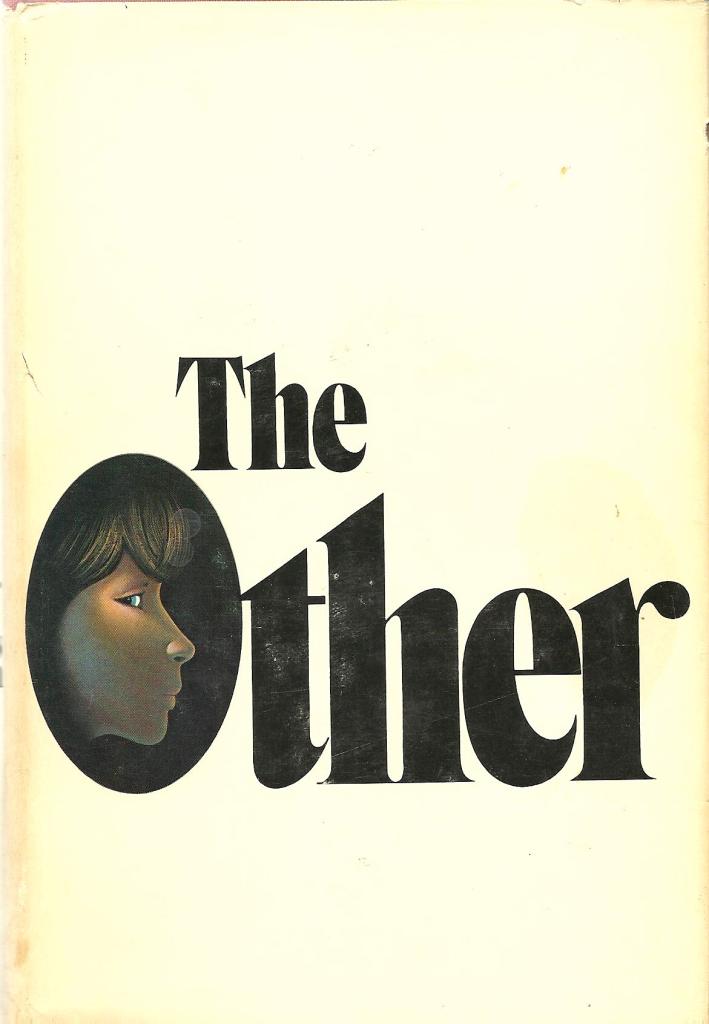
Thomas Tryon’s debut novel, The Other, is often heralded as one of the books (the others being The Exorcist and Rosemary’s Baby) that kicked off the horror craze of the 80’s and 90’s; Stephen King’s Carrie was released in 1974 and shifted the craze into four-wheel drive. I read this book when I was in the seventh grade, and it resonated with me in ways I didn’t fully understand or comprehend at the time. It drew me in, and fascinated me in ways I’d never been fascinated with a book before. Part of it was the transition I was making from reading kid’s books to more adult fare; I was already reading at a collegiate level by the seventh grade. (The Ken Holt series also resonated with me, as did the Rick Brant–which are getting their own entries.)

I wouldn’t learn until years later that Tryon was gay–although I should have known, were I more mature and gay wasn’t one of those things people didn’t talk about when I was a kid; it’s certainly there in his books–and then it made even more sense to me why the book resonated so much with me, why it intrigued me so much, and why I identified with it so much. Niles Perry, the point of view character, is a shy, reticent boy who mostly lives in his own head and world and doesn’t really interact a lot with people. He’s a nice kid who is always worried about getting in trouble and doing the wrong thing; his identical twin brother, Holland, is more of what we would now call a sociopath. But Holland has no fear, has no dread of consequence, and is more outgoing and adventurous; he’s more of a troublemaker and relishes getting revenge on people who’ve done him, in his mind, grievous wrongs. Niles loves his brother–adores him, wants to be like him, wants to be less timid–but is also afraid of him. He knows all Holland’s secrets and he knows everything that Holland does, and often he figures out Holland’s schemes and even tries to stop him…but Holland always outsmarts him, and leaves Niles to clean up his mess.

This brotherly dynamic–the closeness and the dominant/submissive relationship between the twins spoke to me. I saw myself as more of a Niles type than a Holland; shy and quiet and mostly keeping to myself–and always being drawn to flashier, more outgoing types as friends, to whom I was both devoted but also jealous of–a pattern I followed for most of my life. This is the same reason certain books drew me in as a teenager in most cases; A Separate Peace has that same underlying relationship theme–the flashier more outgoing more popular friend, and the quiet best friend content to live in his shadow but also being a bit resentful and jealous.

And then about two-thirds of the way through the book comes a plot twist that changes everything you’ve already read and processed and you have to see the book in an entirely new way–every time I reread it (which is every year or so since I got a hardcover copy off eBay), I try to find the clues to the twist in the first two-thirds, and they are there, but cleverly disguised so you don’t put it together until it’s literally revealed in such an incredibly powerful scene that just thinking about it–and its creepy conclusion–makes the hairs on my arm tingle a bit.

I didn’t have a brother, so I wasn’t sure about the brother dynamic Tryon explored so beautifully in the book; is that the way things work in real life between brothers? Probably not, as every set of brothers is different, of course. (I’ve rarely written about brothers, now that I think about it. Chanse has one who turned up in a short story and Scotty has Storm) But the relationship interested me, and it’s a trope that is often used in every style of fiction; two people, either siblings or close friends, one is more outgoing and daring and likes to take risks while the other is more nervous and afraid and namby-pamby, and that weird combination of love/jealousy that can often get involved in those stories.

It’s also a strong dynamic that can play out within gay couples, as well.

The Other is also written in a lyrical, beautiful, dream-like style; that lovely sense of remembering the past nostalgically, when everything was magic and the world seemed full of wonder.

I was paging through the book the other day and I began to realize that it’s impacted and influenced me as a writer far more than I had ever realized.

A Cowboy’s Work is Never Done

Sunday morning, after a gloomy rainy day (marvelous thunder and downpours off and on all day) where I pretty much just stayed indoors. I walked over to get the dry cleaning in the morning, and by the time I got back it was starting to sprinkle, and shortly after I came inside the floodgates opened. I curled up in my chair and read The Rival Queens for a while, then Paul got up and we finished watching Bodkin, which I enjoyed but didn’t care for the ending too much, after which we watched LSU lose to North Carolina (fourth ranked; LSU is number 24 and was only ranked after the SEC tournament, so no disgrace there, and they play to stay in the regional again today, against Wofford again. After the game we started Anthracite, a new French show on Netflix that is kind of off-kilter and very interesting. I did some writing in my journal, and I did do some chores around the house so it wasn’t a wash of a day, and really, who cares if it was? I really need to stop being so down on myself and recognize that sometimes I need downtime just like everyone else. I do want to do some things today, though–the whole day can’t be downtime, for sure. I also slept really well last night, for ten hours, which is insane. I am sleeping a lot lately and getting very good sleep, which has been lovely.

I have decided to do the occasional Pride blog post, about “things that made me realize I was gay” growing up, or things that I appreciated that probably were indicative of my sexual orientation from a very early age. Revisiting that dark closeted teenage space for this book hasn’t been terrific, but I think it will also help me deal with it, frankly. The 1970s are also an interesting time to go back to, as well, trying to dredge up memories that are long lost in the dark dusty recesses of my brain. I started a couple of said pride posts yesterday–one about The Other and one about Starsky and Hutch (which was really the first modern himbo show; more on that later)–and am thinking about other ones. My favorite gay anthems? I don’t know. But this year it seems very important to celebrate Pride–and shove it down the throats of the MAGA traitors and their evangelical cosplay Christian allies (looking at you, Mike the Self-righteous Johnson). After all, I can’t go anywhere without having a fucking cross shoved in my face.

Hey “christians”–more teaching by example and less demonstration of how Christian you are not, what do you think? Maybe then people will stop deserting your houses of worship, because they see the lies, self-righteousness, and utter hypocrisy that masquerades as faith in your befouled churches of blasphemy and apostasy.

It looks sunny outside this morning, so I think perhaps the rains of the last three days have now passed. That’s good, because I do want to go to the gym today to continue my rehabbing of my left arm. I am going to try this morning to get this and at least one other of the Pride posts done today; some writing and some chores, and when that’s all wrapped up I’ll head over to the gym for some rehab, come home and get cleaned up, and then read some more. I think I may stay away from LSU’s games today; if they beat Wofford again they face North Carolina again at six pm, for two games in one day, which is rough–and much as I love my Tigers, I can’t spend the day watching baseball, either.

And I am excited about writing again. It’s a lovely feeling. I’m not sure entirely what all I want to accomplish at this point other than trying to get the work done, but I definitely can get it all done if I keep my nose to the grindstone and keep working. I’m on my own schedule, so the only person being hurt if I take a day or so off from writing is me.

And on that note, I am heading into the spice mines. Have a lovely Sunday, Constant Reader, and I’ll probably see you again later today.

Your Cheatin’ Heart

The other night I picked up an old favorite book I read originally when I was a teenager and realized, as I paged through it, that The Other by Thomas Tryon was probably one of the most influential books I’ve read, as far as my own writing style is concerned. Obviously the series books are different, but the stand-alones owe a lot to The Other, and probably one of the books I will write later this year will owe even more to it. I always forget it when someone tags me on social media to list books that made me who I am or influenced me or something like that, and I never remember The Other.

But looking through those pages, I remembered another book I read around the same time that also had a lot of influence on me as a writer, Larry McMurtry’s The Last Picture Show.

Sometimes Sonny felt like he was the the only human creature in the town. It was a bad feeling, and it usually came on him in the mornings early, when the streets were completely empty, the way they were one Saturday morning in late November. The night before Sonny had played his last game of football for Thalia High School, but it wasn’t thet that made him feel so strange and alone. It was the look of the town.

There was only one car parked on the courthouse square–the night watchman’s old white Nash. A cold norther was singing in off the plains, swirling long ribbons of dust down Main Street, the only street in Thalia with businesses on it. Sonny’s pickup was a ’41 Chevrolet, not at its best on cold mornings. In front of the picture show it coughed out an had to be choked for a while, but then it started again and jerked its way to the red light, blowing out spumes of white exhaust that the wind whipped away.

At the red light he starts to turn south toward the all-night café, but when he looked north to see if anyone was coming he turned that way instead. No one at all was coming but he saw his young friend Billy, headed out. He had his broom and was sweeping right down the idle of the highway into the gusting wind. Billy lived at the poolhall with Sam the Lion, and sweeping was all he really knew how to do. The only trouble was he overdid it. He swept the poolhall in the mornings, the café in the afternoons, and the picture show at night, and always, unless someone specifically told him to stop, he just kept sweeping, down the sidewalk, on through the town sometimes one way nd sometimes another, sweeping happily until someone noticed him and brought him back to the pool hall.

Sonny drove up beside him and honked. Billy quit sweeping at once and got in the pickup. He was a stocky boy, not very smart, but perfectly friendly; picking him up made Sonny feel less lonesome. If Billy was out the poolhall must be open, and when the poolhall was open he was never lonesome. One of the nice things about living in Thalia was that the poolhall often opened by 6:30 or 7 a.m., the reason being that Sam the Lion, who owned it, was a very bad sleeper.

I think it was seventh or eighth grade when I first read The Last Picture Show. I had a battered copy that I got at a flea market (my grandmother’s second husband loved a flea market, and I always went with him whenever possible to look for books), and I hadn’t known the Oscar winning film (which I wouldn’t see uncut for over a decade until VCR’s became a thing and video rentals) was based on a book. There were some differences between the book and the movie–I never understood why they changed the name of the town from Thalia to Anarene–but for the most part, the movie was pretty faithful to the book.

I had meant to reread the book a few years ago–it had been years–but quit when I got to the part where the town’s older teenage boys decided to fuck a calf; I didn’t remember that from early reads and…it yucked me out. Interestingly enough, it never used to bother me, and I am not sure how I feel about that…or if I just went yuck and kept reading, or skimmed and moved on, but as an adult, I appreciate the book all the more, especially since I wound up living in a small rural town and going to a small rural high school several years after that first read. I never asked any of the kids I went to school with if they ever fucked animals–definitely didn’t want to know for sure–but I always did wonder, and there were definitely some kids I thought oh yeah.

But the book, about these kids learning about love and life and sex and growing up in a dying dusty small town whose best days are already past, has always resonated with me. My parents grew up in that same kind of environment in Alabama during the same time period, and there was so much…I don’t know, boredom and poverty in those small rural towns? The book and movie both were billed as the story of the explosive boredom in a small town. And that’s the part that people generally forget when thinking about the past and rural living–how boring it was. You had to find things to entertain yourself as a teenager, and that can lead to all kinds of trouble. McMurtry gave all of his characters humanity, and they were completely believable. There was the preacher’s kid, so uptight with his Christianity and strict life that he eventually takes a little girl with what is generally assumed as molestation in mind, and yet you can’t feel a little bit of sympathy for this poor kid with his horrific cruel parents (spare the rod and all that nonsense) who finally snaps. Everyone thinks he’s a “homo” anyway–which is really funny, because the person who really torments poor Joe Bob Blanton is the football coach, Coach Popper–who, despite being the embodiment of the town’s thoughts on masculinity (toxic, of course) is the town’s real homosexual–and he also accuses the English teacher of it, because he’s kind and gentle, and ruins him.

Very 1950s there, actually, and only emphasized to me how dangerous letting anyone know I was gay could be, and why I was so scared of my true self.

Great book, great movie–but please don’t mention Texasville to me. I hated that book.

Turn Me Loose

Sunday morning blog after an uneventful yet sort of productive day yesterday. Our Internet went out around one yesterday afternoon, and was essentially in and out (mostly out) until about eight o’clock last night. I did finish reading my book, which was superb (more on The Cypress House later) and I did get two more blog post drafts finished, which felt great. I ran my errands, cooked outside last night, and did some cleaning up around here as well. When it came back and we could watch television, we finished Pray Away and moved onto The Gentlemen, which we are really enjoying, on Netflix.

It was actually nice not having Internet, if odd–you never realize how much you depend on it until you don’t have it, seriously–because I was able to relax all day, instead of getting caught up on the news (rage-inducing, as always) or watching old LSU football highlights (always a joy) or finding new documentaries to watch. Pray Away was the final step in our “teenager abuse programs” watching, following The Program and Hell Camp, and what’s truly frightening is the gaslighting involved, for both kid and their parents–and that the troubled teen industry is still chugging along, abusing kids and bilking their parents of money. I’ve never wanted to do a conversion therapy story–I briefly touched on this in Baton Rouge Bingo and again in Royal Street Reveillon; that Taylor’s parents wanted to send him to one in Mississippi. I had also talked about a conversion therapy camp in Mississippi before in other works, some of them my Todd Gregory stuff, and maybe someday that will come to fruition in some way. Watching all these documentaries has put me in mind of how to write about one in a Scotty book or a stand-alone; there’s also another idea for a mystery/crime novel I’ve been thinking about a lot as I watched these horrific documentaries, only set in Kansas. (Oddly enough I find myself thinking about Kansas a lot more and more these days, not sure what that’s all about.)

I also was looking through books yesterday after I finished the Koryta to decide what to read next, and I was having trouble deciding; mainly because I have so many damned fine books to read in the TBR stack. I also ordered two more books yesterday morning–poems by Mary Oliver, recommended by the fabulous Carol Rosenfeld (me trying to learn more about poetry and start appreciating it) and the newest Scott Carson (which is a pseudonym for Michael Koryta). I think I am going to read The Pallbearer’s Club by Paul Tremblay (I’m a huge fan) while also embarking on a reread of Thomas Tryon’s The Other, which was probably one of the most influential books I read when I was a kid. I am still reading Rival Queens as my current non-fiction, and I am thinking that The King’s Assassin, the basis for the incredible new Starz series Mary and George (which you should be watching) and again, a period of history I’ve always been fascinated by, and watching the show has given me an idea about how I could approach another project that’s been in the files for almost two decades.

Today I intend to write and read and clean and organize for most the day, although I am sure once Paul gets up we’ll start streaming The Gentlemen again. I have some blog entries I also want to finish writing, and of course, there’s all kinds of writing that I need to get done today as well. I’ve been really scattered with my writing this year, and part of it has been an inability to focus on just one project with my usual laser-like focus, and that’s why I’ve not been able to get anything much done this year. This morning I feel more awake and focused than I have in a long time, which is great. Once I finish this and my review of The Cypress House I’ll get cleaned up, read for a bit, and pick up around here before focusing in on what I want to get written today. Being organized helps, and if I could simply manage to stay organized rather than just letting things pile up everywhere, I wouldn’t have to do as much cleaning and straightening and organizing as I always do on the weekends.

The Lefty Awards were presented last night in Seattle at Left Coast Crime, and I was very delighted to see the results this morning–Tracy Clark, Best Novel, Hide; Nina Simon, Best Debut, Mother-Daughter Murder Club; Naomi Hirohara, Best Historical, Evergreen; and Best Humorous, Wendall Thomas, Cheap Trills. I don’t know Nina, but the other three winners are friends, which is delightful, and I couldn’t be happier for Naomi, Tracy, and Wendall–who was on that Humor panel I had to step in to moderate at Bouchercon in San Diego last year, and was wonderful. Kudos to all winners and nominees!

And on that note, I am heading into the spice mines. Have a great Sunday, Constant Reader, and I will chat with you again later!

The hunky Alan Ritchson, starring in Prime’s Reacher, did an interview recently calling out evangelicals and Trump supporters, who got all in their feelings and have decided not to watch the show anymore. Sounds like ‘cancel culture’ to me. How woke!

Promises in the Dark

I grew up loving both horror and crime stories–those wonderful old black and white Universal monster movies used to scare me to death, not to mention all the marvelous ghost stories and mysteries that got filmed back in the day. I also watched a lot of the 1950’s paranoia horror monster movies–Godzilla and its ilk–and those also used to give me horrible nightmares. I also liked how twisted horror comic books like The Witching Hour, House of Mystery and House of Secrets were. I’ve always wanted to write those kinds of stories, but if you think I have zero confidence in my abilities as a crime/mystery writer, there’s even less when it comes to my writing of horror. I never feel like I ever get it right, you know, and my stuff is macabre and peculiar and slightly twisted, but it’s not really scary. But like I did with the mystery novels and movies I watched as a child, I was always looking for myself in those tales and not finding myself. Oh, every once in a while there would be some homoeroticism in some horror I would be reading (Peter Straub’s If You Could See Me Now comes to mind), but for the most part, there wasn’t much. Thomas Tryon’s The Other resonated with me–it wasn’t until decades later that I learned Tryon was gay, and that sensibility infused all of his work, hence my connection with it–but usually when gays showed up in horror they inevitably were effeminate and soon to become victims. (Kill your gays has always been a thing, clearly.)

When I was going through my “I want to be the gay Stephen King” phase in the 1980’s, I didn’t put gay characters or themes in any of my stories–although rereading my attempts at horror from then now, I can see the sensibility was always there–but the horror novel I started writing in about 1986 or 1987, The Enchantress, had a gay point of view character, even though I didn’t really know what I was doing. I was always afraid, you see, to include gay characters in anything I hoped to get published because I was so busy keeping my two lives completely separated that I feared writing sympathetic gay characters would out me. (During my many writings about my high school students from Kansas, one of them was actually gay and was probably the most realistic and honest character in all of those writings) Trying to salvage those stories now, decades later, I sometimes will revise one and make the point of view character gay–which inevitably makes the story work better, incidentally–and they see publication eventually; “Crazy in the Night” was one of those stories, and another morphed into Bury Me in Shadows, actually. Just this morning I was thinking about some more of those old stories and how to make a couple of them work–partly because I spent the last two mornings reading Other Terrors: An Inclusive Anthology from the Horror Writers Association, edited by my friends Vince Liaguno and Rena Mason. The point of the anthology was to focus and highlight horror stories from marginalized writers–where they are marginalized by race or religion or sexual orientation or gender identity, and it includes stories from some of the top names in horror publishing today.

As with any anthology, some stories stick with the reader more than others; this isn’t a dis on any of the contributors to the anthology–every story was incredibly well-written–it’s just that everything is subjective and some stories stick with the reader longer than others. For me, the standouts were Jennifer McMahon (“Idiot Girls”); Alma Katsu (“Waste Note”); Gabino Iglesias (“There’s Always Something in the Woods”); Hailey Piper (“The Turning”); Larissa Glasser (“Kalkriese”), Michael Thomas Ford (“When The Lovelight Gleams”); M. E. Bronstein (“The Voices of Nightingales”); and S. A. Cosby (“What Blood Hath Wrought”). These were the ones that really resonated me, with the connections of strong writing, three dimensional characters, and completeness of the story. For many of the contributors, this is my first experience with their work, and I will definitely look out for more of their work. These were the ones that made me start thinking about ideas and stories and characters; stories that not only were enjoyable and immersive to read but also kick-started my own creativity and inspiration.

And what more can you ask from a reading experience, as a fellow writer?

Now I want to write more horror.

Definitely check the book out, Constant Reader, I think you’ll enjoy it.

If Anyone Falls

I absolutely loved the tag line for the marvelous television adaptation of Megan Abbott’s equally brilliant novel Dare Me: “There’s something dangerous about the boredom of teenaged girls.” It’s also incredibly accurate; our teen years often impact and influence who we become and can color the rest of our lives. I loved Dare Me; it was lyrically, hauntingly written, and the story it told, while actually pretty simple, showed how the intricacies of relationships between young girls and authority figures who aren’t much older than they are, can become so complicated and complex; layers of love intermingling with hate and jealousy, the power dynamic shifting and changing as the characters themselves shift, change, and grow from their experiences.

I write, sometimes, books where the main characters are young–teenagers, either in high school or college or having just completed college–and those books are often labeled and marketed as “young adult” fiction, even though I generally just consider them novels about young people. I mean, technically novels about young people are young adult novels, and yet while I am resigned to this marketing label I am never certain if my books truly qualify or not. Perhaps that’s some kind of internalized arrogance and a sense of subconscious superiority to what I consider something lesser; it’s definitely something I should unpack at some point. But I think it is also an interesting starting point for one of my endless essay ideas, and perhaps someday–when I am less scattered, less all-over-the-place mentally and creatively–I’ll be able to sit down and write all those essays I want to write.

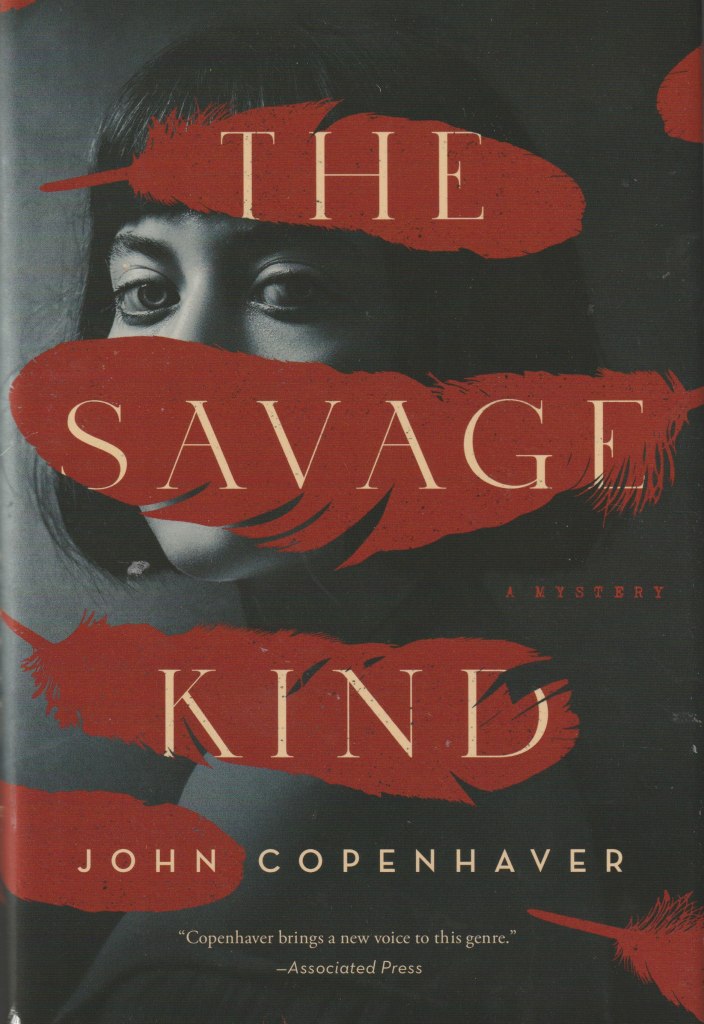
Which brings me to John Copenhaver’s second novel, The Savage Kind, which I just finished reading yesterday.

If I tell you the truth about Judy and Philippa, I’m going to lie. Not because I want to, but because to tell the story right, I have to. As girls, they were avid documentarians, each armed with journals and buckets of pens, convinced that future generations would pour over their words. Everything they did was a performance. Everything they wrote assumed an audience. After all, autobiographers are self-serving, aggrandizing. Memoirists embellish. It’s unavoidable. To write down your memories is an act of invention, to arrange them in the best, most compelling order, a bold gesture. Some of the diary entries that follow are verbatim, lifted directly from the source, but others are enhanced and reshaped. I reserve my right to shade in the empty spaces, to color between the lines, to lie.

You may balk, dear reader, but I don’t care. I need to get this right.

I could take different approaches. I could contrast the teenage girls: the black hat and the white, the harpy and the angel, the cunning vamp and the doe-eyed boob. Or I could draw them together, a single unit: Lucy and Ethel, Antony and Cleopatra, Gertrude and Alice, Holmes and Watson, or even, I dare say, Leopold and Loeb. But neither of those angles would work. The complicated facts are inescapable. These girls are both separate and together, but many times, they followed their own paths and even crossed one another. Things are never that simple, never that black and white, that good or evil, or that true or false. I’m not writing this to assign blame, or to ask forgiveness, or to tie it up in a bow for posterity. It’s not that kind of book.After all, an act of violence committed by one may have originated in the heart of the other. That’s to say, this is a story about sisters, and like many of those dusty and gruesome stories from ancient literature, here sisterhood is sealed in blood.

I should know. I was one of them.

Great opening, right?

John’s debut Dodging and Burning won the Macavity Award*, and was quite the impressive debut. II was completely blown away by the book myself–it showed a maturity and sophistication in theme, writing, and characters that one rarely sees in a debut novel. One of the things I thought was very interesting about the book was that while it did focus on a gay story, the main voices in the book were young straight women; I thought that was a risky thing to try to pull off, but he did a really excellent job.

As good as Dodging and Burning was, I wasn’t prepared for how good The Savage Kind would be.

The heart of the book is the friendship/relationship between two damaged young women in the post-war afterglow of the late 1940’s in Washington DC. (Both of John’s novels are set in the post-war period, when the world was trying to go ‘back to normal’ after the massive paradigm alteration of a global war that left most of Europe and significant parts of Asia in ruins; tens of millions dead, billions in property damage, and the world needed to rebuild from the rubble–and normal was also being redefined; the paradigm shift caused by the war made going back to “the way things used to be” practically impossible–which makes it a very interesting time to write about.) Philippa’s mother died giving birth to her and she has a slightly adversarial relationship with her stepmother, Bonnie. Judy was raised in an orphanage and adopted by a wealthy couple who had lost a daughter in a particularly brutal way–Judy was adopted to replaced their raped and murdered daughter, but her adoptive parents are still too scarred and damaged from the lost of their own child to raise and love another, and this history also colors Judy’s personality and who she is. The two girls find each other and become very close friends; so close that their love for each other might go even deeper than the Platonic ideal of friendship–their teenaged hormones raging out of control, are romantic/sexual feelings also developing between the two of them?

They are also playing girl detectives, trying to get to the bottom of a mystery that they don’t know has anything to do with them beyond the idle curiosity (and their dangerous boredom) but as they look further into the mystery revolving around a classmate, a favorite teacher, and that classmate’s family–as well as their own–they become more and more deeply enmeshed in danger and cling even tighter to each other.

As if that juggling act isn’t tough enough, Copenhaver makes all of these characters realized, fully developed and realistic in their emotions, their feelings, and their reactions. He also tells the story in alternating points of view between the two girls while they are experiencing the events, as well as a narrator voice from the future, telling the story in retrospect as well as talking directly to the reader. This is hard to pull off, particularly the omniscient future narrator–the last time I saw this used so effectvely and memorably was in Thomas Tryon’s The Other (at least, this is the book that popped into my head as I was reading, and it’s a favorite of mine).

The Savage Kind was nominated for a Lefty Award, and it very deservedly won the Lambda for Best Mystery recently. I highly recommend it!

*I may be wrong here, but I think he might be the first openly gay author of a book with gay characters and themes to win the Macavity Award; I know I was nominated once for a short story–but my characters and themes weren’t queer.

The 1

November 1st, or All Saints’ Day; which is the perfect day for a Saints game, don’t you think? LSU lost yesterday, badly, and while it was incredibly disappointing to watch, I felt worse for the players. We always forget, regardless of how talented they are, they’re really little more than kids. And since so many starters are either true freshman or sophomores…I think they’ll be really good next year…if they can survive what looks to be a season on par with the late 1990’s. Yeesh.

I am up ridiculously early because of Daylight Savings time; I’d be up early regardless, but I am wide awake and decided, since I have to get up early the next three mornings, that it made sense to go ahead and get up now–one advantage of the so-called “extra hour” (because if 2020 needs anything, it’s more time) is that by not using that hour to get extra sleep, I can recalibrate my body clock to my own advantage for the next few mornings. The sun isn’t up yet completely, but the cutting down of the crepe myrtles next door–many of them, but not all–means that my workspace and kitchen are going to be flooded with a lot more direct sunlight, which is going to make it unbearable in here once it gets hot again; which means I am going to need to do something about window coverings, whether it’s curtains or blinds. We’ll see how much time I have before that becomes a massive priority–hell, it might become one later this morning.

I was still very tired and physically exhausted yesterday. I ran my errands, and then working on cleaning up our side of the house–leaves, branches, debris–and so I watched the LSU game, doing some cleaning and organizing around here in the meantime, and then for Halloween watched House of Dark Shadows on Hulu. I originally saw this movie in the theater–my grandmother, who got me started watching the soap in the first place–took me, and it was a very different take on the Barnabas Collins story. For one thing, there was no redemption of the character; he remained an evil, cruel vampire till the end, when he was killed for his crimes, and he also kind of killed off the entire family, other than Elizabeth and David, by the end. It was straight up more horror than melodrama, and the movie did well enough to inspire a sequel (with none of the same characters or actors), but it really wasn’t as good a story as the redemption of the vampire arc the show did.

I also took the time to read four novellas of Cornell Woolrich, collected together in one volume with the name Four Novellas of Fear (which is really not the best title, as it gives the impression that the novellas are more horror than suspense/crime; which is what they really are). The novellas are all interesting takes, some of which are dated and wouldn’t work today, alas: “Eyes That Watch You”, the first, was my favorite, in which a woman who is completely paralyzed and cannot speak overhears her daughter-in-law and her lover plotting to kill the woman’s son. Unable to communicate and warn him, the crime takes place…and then she becomes determined, somehow, to expose the murderers to the cops and send them to the chair. Great concept, marvelously handled. The next, “The Day I Died,” is about a man who finds out his wife is planning to kill him for the insurance; he comes home early from work and surprises her with the man she has hired to kill him. The hired assassin winds up dead, and the hard-boiled heroine convinces her husband to go through with the plan–they have a ready made corpse whose face they can disfigure and claim it’s suicide. But as he leaves town he runs into a co-worker on the bus…and now he has to kill the co-worker somehow. It’s very noir, very well done–but again, wouldn’t work in a modern setting because of technology and the difficulty of disappearing in the modern world. The third story, “You Won’t See Me Again,” is about a young newly married couple who have an argument, and she walks out–storming home to mother. When she doesn’t return–as he suspects and expects her to, after a day or so–it becomes a missing persons case and of course, the husband is always the prime suspect in those cases. So now he has to find not only the wife he loves to make sure she’s safe, but also to clear her name. It’s yet another story that wouldn’t work in today’s world because of technology, but it’s a charming time capsule. Likewise, “Murder Always Gathers Momentum” is about the slow descent into crime of a person who is broke and desperate and owed money he was cheated out of; rather than confronting the man and asking for his money he decides instead to break into his house and steal it. He’s caught, commits murder, realizes how easy it is to become a criminal, and starts killing people to cover his initial crime….(this is very similar to Agatha Christie’s Murder Is Easy, in which Dame Agatha and Miss Marple also explored the idea that once you’ve killed, it becomes easier to keep killing) and there’s a terrific ironic twist at the end, worthy of The Twilight Zone or Alfred Hitchcock Presents.

Despite being dated, I enjoyed all four novellas–which were all very distinct and different, and cynical in their own ways. I certainly enjoyed them more than I enjoyed Night Has a Thousand Eyes, that’s for certain, and my own curiosity about Woolrich–who was a gay man, an alcoholic, and horribly unhappy in his personal life–deepened. (Just as watching The Other the other day, and thinking about the author of the book, Thomas Tryon–a closeted gay actor of the 1960’s who turned to writing novels in the 1970’s–reminded me that I had once thought him worthy of a biography, and I still kind of think that way; I just wish I had the time to devote to doing the research and traveling to Connecticut to examine his papers and so forth; he was also the long-time lover of the first gay porn star, Cal Culver, which is also an interesting footnote to his interesting life as well as of gay historical interest.)

I’m trying to decide what to read next, and have narrowed it down to four options (and may choose something else entirely): Owen Laukkanen’s Deception Cove; Shirley Jackson’s Life Among the Savages (which I may have already read, but I don’t remember finishing it); The House on the Strand by Daphne du Maurier; or The Hot Rock by Donald Westlake. I am leaning toward to du Maurier because I am thinking it may be time to finish her canon; but the others all look tremendously good, which inevitably always makes choosing difficult. I also want to start reading short stories again–I still have two volumes, for example, of Shirley Jackson stories to read–and I need to get back to my writing–if I can only remember where I was. I know I was rereading Bury Me in Shadows in order to get a grasp of the story–I also have been thinking about the tweaks it needs–and the deadline looms. I also need to revise my story “The Snow Globe,” there’s about a million emails to catch up on, and there’s also the bills to pay.

Heavy heaving sigh. I also want to make it to the gym this morning. One good thing that has happened in this past week is managing three workouts; my body feels wonderful, my muscles feel more stretched and better than they have since the pandemic closed my old gym (we belonged there for eighteen years) and that’s got to count for something, doesn’t it? I think so, and I like that I am developing better workout habits. I’ll worry about correcting my diet and going full on Mediterranean diet after a few more weeks.

I’m also going to write a story–or rather, try to finish one–for the next Mystery Writers of America anthology. Getting a short story into one of those is on my bucket list, and I have two potential in-progress stories for this one; three, really: “Condos for Sale or Rent,” “Please Die Soon,” and “A Dirge in the Dark”. I guess I’ll need to read what’s been done on all four stories and then see about finishing any or all of them…it’s not a bad idea to get all three stories written, pick one to submit to the MWA anthology, and then send the others to other markets.

So many stories in progress.

The sun is rising and the loss of the trees has also made a significant difference to my view–which isn’t nearly as pretty or scenic as it was before, and will take some getting used to. The great irony is my landlady has been trying to get the property owner next door to trim the trees back for years–and trying to get her to trim them regularly, as they are problematic for hurricanes/tropical storms. It took Zeta for her to take the risk presented by the crepe myrtles seriously, with the end result that some were not only trimmed back dramatically, but others were removed entirely. I may have to hang up a small blanket or something in the meantime as a stopgap until I have the time and financial means to get curtains or blinds.

And on that note, I must head into the spice mines and start working on getting caught up, a Sisyphean task at best. Have a lovely Sunday, Constant Reader, and enjoy your Feast of All Saints.

Enchanted

Daphne du Maurier has long been one of my favorite authors–ever since I discovered her short story collection Echoes from the Macabre when I was eleven or twelve; the first story in that collection, “Don’t Look Now,” remains one of my all time favorites; later in my teens I finally read Rebecca, and it has remained one of my favorite novels of all time, getting the periodic reread. One of the things I loved about du Maurier, as I tore through several of her other novels in the wake of Rebecca (The King’s General, The Flight of the Falcon, Jamaica Inn, and Frenchmen’s Creek) was that her novels subverted expectation; her books were marketed, or at least so it seemed to me, as romantic suspense novels and/or historical romances; yet the books were anything but that (whenever someone refers to Rebecca as romantic suspense it’s all I can do not to laugh in their face). The King’s General, for example, based on actual history, does not have a happy ending at all; and even the others aren’t exactly warm and fuzzy. About seven or eight years ago I finally read My Cousin Rachel, at the recommendation of a friend who couldn’t believe I’d never read it; once I had, it immediately shot to the top of my list of all-time favorites.

I’ve not finished the du Maurier canon–not because I don’t want to, but primarily because she’s dead and I know at some point, I will run out of du Maurier fiction. I know this is silly; I should, now that sixty is just on the horizon, start finishing the canons of my favorites because it would really suck to die and not be finished with them. (But then we always think we have more time than we actually do, don’t we? It’s sometimes very difficult for me to wrap my mind around the fact that I am, indeed, as old as I am.)

But watching the film of The Other made me think of this particular du Maurier, and I decided to give it a shot.

I left the car by the side of the cathedral, and then walked down the steps into the Place des Jacobins. It was still raining hard. It had not once let up since Tours, and all I had seen of the countryside I loved was the gleaming surface of the route nationale, rhythmically cut by the monotonous swing of the windscreen wiper.

Outside Le Mans, the depression that had grown upon me during the past twenty-four hours had intensified. It was inevitable, always, during the last days of holiday; but this time, more than ever before, I was aware of time having passed too swiftly, not because the days had been overfull but because I had achieved nothing. The notes I had written for the lectures I was to give during the coming autumn were scholarly, precise, with dates and facts that I should afterwards dress up in language designed to strike a spark in the dull minds of inattentive students. But even if I held their flagging interest for a brief half hour, I should know, when I had finished, that nothing I had said to them was of any value, that I had only given them images of history brightly coloured–waxwork models, puppet figures strutting through a charade. The real meaning of history would have escaped me, because i had never been close enough to people.

It was all too easy to lose oneself in a past half real, half imaginary, and so be blind to the presesnt. In the cities I knew best, Tours, Blois, Orleans, I lost myself in fantasy, seeing other walls, older streets, the crumbling corners of once glittering facades, and they were ore live to me than any real structure before my eyes, for in their shadows lay security; but in the hard light of reality there was only doubt and apprehension.

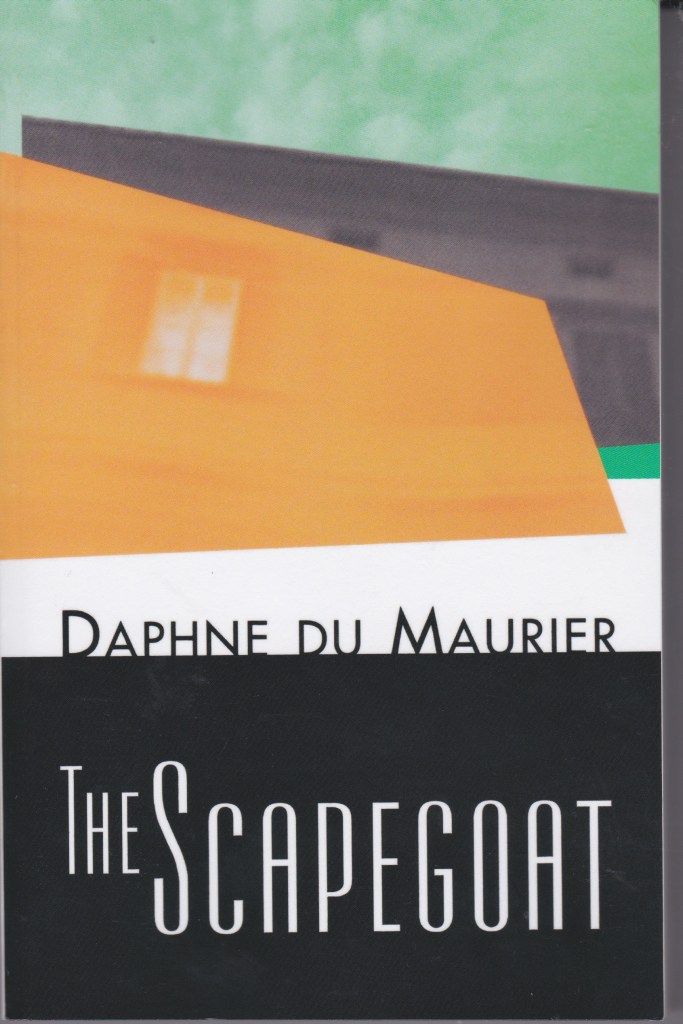
There are very few writers who can write so poignantly about depression and dissatisfaction with life; the dark night of the soul, as it were. This is where the hero of The Scapegoat finds himself at the opening of the novel. John, our thirty-eight year old hero, is an Englishman who teaches French history, is fluent in French, and is becoming incredibly dissatisfied with his life. Although his French is flawless and spoken like a native, his fascination and love for France has slowly become disaffecting for him–he feels like he doesn’t belong there and doesn’t quite fit in as he is not actually French; his life is humdrum and routine and lonely; he has no family, few friends, no loves. He has stopped in Le Mans on his way to visit a monastery, and as he walks around the rain-drenched city, he feels his difference very deeply; and then something strange happens: someone mistakes him for someone else, and then very shortly thereafter he runs into his mirror image–and his life is never going to be the same again.

The double, Jean, the Comte de Gue, is also dissatisfied and bored with his own life, and the two men have a few drinks. Eventually they repair to a disreputable looking hostel for another drink–and then our hero, John, passes out, only to wake up more than fourteen hours later to find that “his” driver is there, waiting for him to take him home. He soon realizes all of his things–passport, wallet, ID, car keys–are gone; he has two choices open to him. He can either tell this fantastic story of his to the police and to the driver, who will most likely judge him insane….or go along with the pretense, and slip into the life of his double.

Naturally, since this is a du Maurier tale, he chooses the latter.

In the hands of a lesser writer this contrivance–obviously, without making this decision the rest of the novel cannot happen–would be too glaring, too crazy, too much, really; but du Maurier does such a magnificent job of capturing his own boredom, ennui, dissatisfaction with the dull, plodding life he has made for himself that it actually almost makes sense for him to made this insane decision, for how can he possibly hope to pull off such an imposture? The look-alike story has been done to death over the years, and its overuse on soap operas–generally used when a popular actor has left the show, was killed off, and wants to return; or the double is evil and is taking over the good character’s life (they did this on Dynasty, poorly, with a Krystle look alike)–has made it seem trite and boring and over-used, as well as ridiculous. But Dickens used it for A Tale of Two Cities (even making his dopplegangers English and French, as du Maurier did), and of course, Mary Stewart’s brilliant The Ivy Tree also used the look-alike trope quite ingeniously. (Apparently Josephine Tey did the same with Brat Farrar.) Du Maurier does make this work–ironically, the only creatures who doubt that the Comte is actually the Comte are dogs; but then again, even when he behaves out of character for his look-alike or doesn’t know something he should, no one has any reason to doubt him or believe that a double has replaced their Jean. Would you suspect someone you love and know quite well has been replaced by a twin? There are also some wonderful subplots, regarding the real Comte’s relationships with his family, and while there really wouldn’t be much consequence if he is caught out, a lot of the thrill of the book comes from him not just uncovering the truths behind the fraught relationships with his relatives and the darkness of the past, but also figuring out ways out of situations where he would be found out.

And du Maurier’s writing style itself is the real star. There’s a hypnotic, dream-like quality to her voice; she weaves her words and sentences and paragraphs together softly but beautifully; there’s a melancholy to her style that always hypnotizes her readers into buying into the conceits of her stories and plots.

I greatly enjoyed this read, and am now looking forward to finishing the du Maurier canon.

Like I said, limited time.