Stagger Lee

Thursday last morning in the office this week blog. I get to go in a little later because I have to stay until five tonight; and of course tomorrow morning I have PT at the ungodly hour of seven a.m. Gah. But it’s okay, really. I slept super well last night–probably the best night’s sleep of the week–and I finally got my keyboard for the iPad yesterday: huzzah! It works beautifully, too…which is the last excuse I had for not getting any writing done (or as much as I would like). Now I have a functional laptop and a functional iPad for writing anywhere in the house, which is kind of fun. I can get my iPad in the morning and write in bed if I want, or I can take the laptop up there, or…so many plethoras of options, and NO MORE EXCUSES.

Oh, I’ll still make excuses, of course, to get out of doing the day’s writing. And I did do some yesterday–I wrote about seven hundred or so words on “Passenger to Franklin” (an Agatha Christie title homage that really pleases me far more than it probably should)–but very little of anything else other than watching Part II of The Real Housewives of Beverly Hills reunion (Kyle Richards remains a disgusting piece of shit bitch who doesn’t need to be on my television screen anymore). I then spent the rest of the evening watching the news (or clips from the news) and despairing further about the future of the country and grateful again that I am old. It’s about the only benefit to being old, really, and not having children: the future isn’t really my problem, but at the same time, I also don’t want the adults of the future to have to deal with a destroyed and/or increasingly hostile and damaged planet, either, because I am not a monster. Sometimes I think I worry about the future more than people who actually do have kids, or are young.

I watched a really interesting conversation between Rachel Maddow and Nicolle Wallace last night–and they were both right: the Republican Party of today wants to eliminate our democracy and set up an authoritarian state where they are always in charge and they can get rid of everyone they don’t like. Sound familiar? See Berlin, 1933. It’s scary to contemplate, and even scarier to realize The Handmaid’s Tale was actually very prescient. I became worried about authoritarianism coming to the US during the Reagan years and what followed, when the Republican party became convinced that they had a divine right and mandate to always be in power. As I watched people get subsumed by Fox Propaganda in the 1990s (when the character assassination of Hilary Clinton truly began), I saw it for what it was: definitely not a news organization, and it’s partisan nature had everything to do with the rollback on rules about what is and isn’t news…during the Reagan administration. It’s astonishing how little people think about the recent past, or even try to put the present in the context of the recent past.

Let alone thinking about the older history, which no one knows1. Then again, I am from a part of the country that proudly claims hatred and bigotry as their heritage, so maybe knowing history might not help as much as I would like to believe.

Heavy heaving sigh.

Those who don’t know history are doomed to repeat it.

I’m doing a panel for a Sisters in Crime chapter on-line event this weekend, do tune in to any or all of the antics this weekend. It’s called Murderous March, and it’s being put on by the Upper Hudson Sisters chapter, and you can register to view the panels here. My panel is at 2:30 eastern, it’s called “It Was a Dark and Stormy Night,” and is being moderated by the wonderful Richie Narvaez. My co-panelists are the amazing Carol Pouliot, Edwin Hill, Tina Bellegarde, and M. E. Browning. It should be a pretty good time, I think.

And on that note, I think I’ll head into the spice mines. Have a lovely day, Constant Reader, and I’ll probably be back later.

Johnny Be Good

I love Stephen King, and have since I first read Carrie when I was thirteen.

I will also go out on a limb and say that while he has written some amazing fiction and novels in the last forty years, the run of novels between (and including) Carrie and Misery in the 1970s and 1980’s was probably one of the greatest runs of incomparable work ever accomplished by any writer in any sub-genre or genre of fiction, period. There wasn’t a single stinker in that run, and even the one I personally dislike ( Pet Sematary) isn’t bad–it’s actually a testament to King’s skill that I’ve refused to reread it since that first time; it made me incredibly uncomfortable in so many ways viscerally that I’ve really never wanted to read it again.

And isn’t that the real point behind horror?

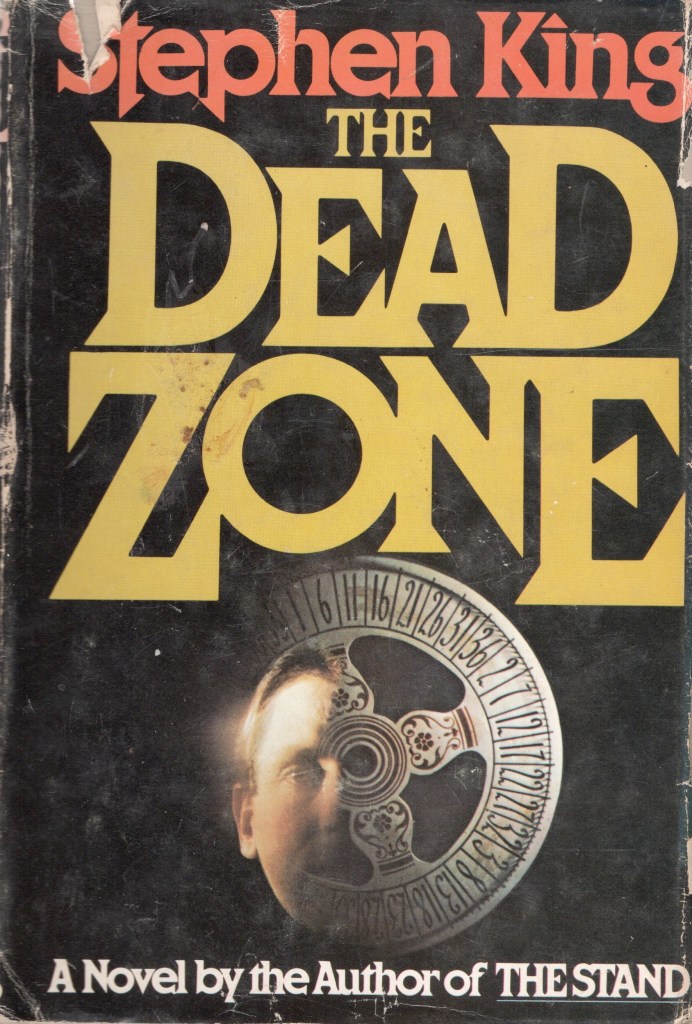
I also saw something recently about how people who suffer from anxiety often rewatch movies/television shows and reread books when they are anxious because there’s comfort in knowing how something ends. It had never occurred to me that this was a thing, but I used to reread books all the time when I was younger, often picking one up and just opening it at random and diving into the story again. I reread most of the earlier Stephen King novels countless times, as I have also reread books like Gone with the Wind and kids’ series books and other particular favorites. I still reread some periodically, like Rebecca and The Haunting of Hill House. When I picked up The Dead Zone to reread it–I realized that I don’t really reread the way I used to when I was younger. On the rare occasions when I thought about it, I figured it was because I don’t have the time and there are so many unread books around the house that I shouldn’t revisit something when I have unread books collecting dust and moldering on the shelves. But reading that about people with anxiety made me recognize myself and I also realized that I don’t reread as much as I used to (or rewatch) because I don’t have as much anxiety as I did when I was younger. (Don’t get me wrong, I still have too much of it for me to be comfortable going forward without doing something for it, you know.)

I’d thought about rereading The Dead Zone in the wake of the 2016 election; I had posted on social media early on during that campaign season, “Is anyone else reminded of Greg Stillson?” But I couldn’t, just as I couldn’t go back and revisit Sinclair Lewis’ It Can’t Happen Here or The Handmaid’s Tale or any of the other great collapse of American democracy novels. But this reread…made me truly appreciate all over again what a literary genius Stephen King actually is–and an American treasure.

By the time he graduated from college, John Smith had forgotten all about the bad fall he took on the ice that January day in 1953. In fact, he would have been hard put to remember it by the time he graduated from grammar school. And his mother and father never knew about it at all.

They were skating on a cleared patch of Runaround Pond in Durham. The bigger boys were playing hockey with old taped sticks and using a couple of potato baskets for goals/ The little kids were just farting around the way little kids had done since time immemorial–their ankles bowing comically in and out, their breath puffing in the frosty twenty degree air. At one corner of the cleared ice two rubber tires burned sootily, and a few parents sat nearby, watching their children. The age of the snowmobile ws still distant and winter fun still consisted of exercising your body rather than a gasoline engine.

Johnny had walked down from his house, just over the Pownal line, with his skates hung over his shoulder. AT six, he was a pretty fair skater. Not good enough to join in the big kids’ hockey games yet, but able to skate rings around most of the other first-graders, who were always pinwheeling their arms for balance or sprawling on their butts.

Now he skated slowly aruond the outer edge of the clear patch, wishing he could go backward like Timmy Benedix, listening to the ice thud and crackle mysteriously under the snow cover farther out, also listening to the shouts of the hockey players, the rumble of a pulp truck crossing the bridges on its way to U. S. Gypsum in Lisbon Falls, the murmur of conversation from the adults. He was very glad to be alive on this fair, winter day. Nothing was wrong with him, nothing troubled his mind, he wanted nothing…except to be able to skate backward, like Timmy Benedix.

So begins the prologue to The Dead Zone, a King classic that doesn’t get nearly the respect it probably should–especially in wake of the 2016 election. Johnny does, in fact, learn how to skate backwards, but is so excited about it he doesn’t notice he is heading right into the hockey game, where he gets hit broadside by a teenager and sent sprawling, hitting his head on the ice and knocking himself out. As he slowly comes back to consciousness, he starts muttering things that make no sense to the worried kids and adults gathered around him, including saying to “stop charging it’ll blow up”. But then he wakes up, is fine, goes home and doesn’t even tell his parents what happened (imagine a child knocking himself out and the parents not even being told today–never happen). A few days later one of the men’s car battery is dead, he jumps it–and it blows up in his face; only no one remembers the things Johnny was muttering; everyone’s forgotten about it.

The second part of the prologue introduces us to the other main character of the book, or the person who is fated to have the biggest impact on John’s existence, which also begs the question of fate and destiny; these two men’s lives are going to intersect, and the rest of the book follows their lives–primarily focused on Johnny’s, with the occasional swing over to see what’s going on with Greg Stillson and his climb to power and success. That prologue introduction to the traveling Bible salesman in Oklahoma who kicks a dog to death lets us know who he is right from the very start–he’s the bad guy, the reason all these things are happening to Johnny so their lives will cross.

Johnny’s story has three acts: first, the car accident that leaves him in a coma for five years (and introduces us to him, his love interest Sarah, and his parents) and inevitably ends with him catching the Castle Rock Strangler, using the abilities that he woke up from the coma with; the second, which concludes with the vision about the graduation party ending in fire and mass death; and the third, where he realizes he is the only person who can stop Stillson’s political rise, the country’s descent into fascism and a final cataclysmic nuclear war (which was an every day reality for us all back when this book was written, by the way).

The most interesting character to me, always, from the story of The Trojan War (I loved mythology and ancient history as a child) was Cassandra, the princess who was given the gift of prophecy accidentally (her ears were licked by one of Apollo’s temple snakes; he cursed her by having no one believe her and this frustration drove her mad); I always wanted to write from her perspective. John Smith is a modern-day Cassandra, a young man who unwillingly was given the gift to see the future as well as have psychic visions, and his story plays out very similarly to Cassandra’s, and asks the big question: if you had the knowledge and foresight to stop Hitler in 1932, even if it meant killing him, would you do it? The personal good vs. the collective good?

I thoroughly enjoyed this reread, and it definitely holds up, even if it is a time capsule of the 1970s, which also made it a big more fun.

(Oh, and that fall he took as a child? While it is never really explained where his abilities come from, King implies that that first head injury awakened the talent in him; the later head injury and coma woke it up again and gave it more power.)

Also Sprach Zarathustra

Yesterday was a day.

Never mind why–it is simply too tedious for me to get into any detail and trust me, you’d be bored to tears–but the one nice thing about it was once it was finally over and donw with and I was safely inside the Lost Apartment and in my LSU sweats, with a purring kitty sleeping in my lap, I was able to rate rested and relaxed and now, hopefully I’ll be able to get my life back under some kind of control. That would be so lovely.I work a longer day now on Fridays–five hours instead of four–but shifting to coming in later in the day was an extremely smart move.

But the good news is that I was able to finally finish reading Rob Hart’s wonderful novel, The Warehouse.

the warehouse

Well, I’m dying!

A lot of men make it to the end of their life and they don’t know they’ve reached it. Just the lights go off one day. Here I am with a deadline.

I don’t have time to write a book about my life, like everyone has been telling me I should, so this’ll have to do. A blog seems pretty fitting, doesn’t it? I haven’t been sleeping much lately, so this gives me something to keep myself occupied at night.

Anyway, sleep is for people who lack ambition.

The rise in popularity  in dystopian fiction since the turn of the century isn’t really that difficult to understand; the world is kind of on fire and each day we seem to be inching our way to the inevitable collapse of civilization as we now know it. I do recognize how pessimistic that thought is, but it’s one I’ve been finding myself having more and more as the years have passed since the century dawned with so much promise back in 1/1/00. Remember how exciting the new century seemed back then, when it was fresh and new and full of promises? Yeah, well. Who knew? I wonder if people felt the same way in 1919…but given they’d just gotten through the first world war and the Spanish flu pandemic that killed millions, probably.

Early in the 1990’s, as queer equality issues began to become more and more mainstream–with the inevitable holier-than-thou nasty religious pushback–I wrote down many pages of thoughts and ideas I had about a dystopian future world, one in which queer people finally obtained equality only for there to be a horrific and horrendous pushback, similar to the one depicted in Margaret Atwood’s The Handmaid’s Tale that pushed back against feminism and women’s equality. I saw an America where evangelical Christianity was encoded into our law; where people of color and other undesirables began to disappear as they were blamed from everything wrong with modern society and the economy; and where those unaffected by those prejudices and legalized bigotry turned a blind eye to the suffering of fellow Americans as long as they could pay their bills and buy nice things for their family. Since that original idea–which was easy to scoff at by friends I talked about it with, as they weren’t queer or marginalized–I’ve come back to that idea, time and again, as the idea sometimes seems to be taking root in reality. I tend to avoid dystopian fiction, as a general rule; I’ve read Brave New World, 1984, The Stand, Alas Babylon, The Handmaid’s Tale and many others; I’ve watched the Mad Max films. I generally try to avoid it, to be honest; I find our the dystopia evident in our reality far more frightening and oppressive than anything I might find in fiction.

But I couldn’t get into The Hunger Games  or any of the others published in the twenty-first century to great sales and acclaim; just had zero to no interest. I got into the zombie apocalypse stuff for a while, with The Walking Dead, but even it eventually devolved into misery/torture porn and I lost interest.

But Rob Hart’s The Warehouse…I don’t know; for some reason as soon as I heard the concept behind it, months before its publication date, I knew I wanted to read it. Part of the exhausting frustration I’ve felt over the last few weeks as I slogged away at the volunteer project has partly been due to my inability to spend more than twenty minutes or so at a time with the book; the one good thing, as I said already, about today’s errands was the ability to sit in a waiting room for long stretches of time with nothing to do other than read–and occasionally delete emails from my phone.

What a wonderful, frightening, and all too realistic book Rob Hart has gifted the world with!

The Warehouse is set in a world in the not-too-distant future where almost everything has collapsed. This collapse of functionality of the general society isn’t explained; but it has to do with climate change and economic shifts and rising seas. One company, Cloud, which allows everyone to buy everything they need on-line and have it delivered quickly via drones, with MotherClouds scattered all over the United States, has pretty much monopolized means of production and delivery; their employees are given free housing and so forth and live in climate controlled dorms that are all connected with the warehouses and entertainment complexes; enclosed cities, where your every move and your every purchase is monitored. There’s health care and communal bathrooms and showers and you need your Cloud wristband to get anywhere or do anything.

Sound all too frighteningly familiar?

The story is told from three different points of view; the book opens with with a blog entry from Gibson, the man who thought up and founded Cloud and became worth billions as he essentially took over the United States; Paxton, a small business owner who invented a thing called Perfect Egg, so that you could make a perfect hardboiled egg in the microwave and peel it perfectly every time, a business that flourished until Cloud’s demands for deeper and deeper discounts eventually forced him out of business and has now landed a job there; and Zinnia, a young woman we don’t know much about who is also starting work there, but she has an ulterior motive. Zinnia and Paxton eventually cross paths, become friends, and as he works security, she begins manipulating him for information as she also starts to develop feelings for him.

It’s a terrific story, very well told, with very smart things to say about capitalism, consumerism, and how easy it is to compromise your principles in exchange for security. Bright and intelligent and well-written, you can’t help rooting for both Paxton and Zinnia to somehow make it through everything and somehow come out on top.

Most dystopian tales deal with the aftermath of nuclear war, or Big Government taking over, or some kind of religious fascism, but rarely, if ever, has the dystopia arisen out of capitalism and consumerism, and Rob Hart hits the bull’s eye squarely with this one. (Well, also Atlas Shrugged by Ayn Rand, but Ayn Rand deserves many posts all by herself, and she wishes she had one tenth of Rob Hart’s story-telling skill)

This is destined to be a classic, and I do hope Ron Howard does the story justice on film.

In closing this, I’d like to thank Rob–and other writers like him, like Ben Winters and Adam Sternbergh–for pushing the envelope of the crime genre, melding crime and speculative fiction in clever, innovative stories that broaden our genre and enable them to tell bigger stories than we customarily see in crime fiction. I loved this book from start to finish, and it’s so layered and clever–the development of Gibson, through his blog entries, his justifications for his egotism and so forth, was chillingly genius.

Read this book. It’s amazing.

Invisible Touch

The last Monday in June dawns, and I am tired and sleepy and despite sleeping well, am awake much earlier than my body wants me to be. And while hot New Orleans summers are almost a stereotype at this point, it’s already hotter here than it usually is at this time; it feels more like August out there than late June. Taking the streetcar down to the Quarter both Saturday and Sunday drained me, physically; I think that’s why I am so tired and out of sorts this morning. Perhaps that will allow me to write from my subconscious this morning; we shall see how that goes.

I was so drained yesterday after I got home that I sat down at the computer and started Chapter 21; I managed about 300 excruciatingly painful words before I finally gave up and retired to my easy chair to watch the end of Cardinal and an episode of The Handmaid’s Tale; we are about three episodes behind on it. It’s hard to watch, particularly with what is going on in the country at the moment, quite frankly; the idea of children being taken away from their mothers, while always sickening, is particularly rough to watch right now.

But I just have to get through this week and I only have a two-day work-week next week; then comes a lovely six-day stay-cation, or whatever you want to call it. I am definitely looking forward to that down time to clean the house, move some things to storage, clean out some cabinets and so forth; I’ve decided that the 4th itself will be my day of rest and then I will focus on getting things done on the other days I have off, which will be lovely.

But all I really want to do right now is go back to sleep. But I must persevere. The spice must be mined.

The next story in my collection Promises in Every Star and Other Stories is “Disaster Relief”:

“Most of the damage is upstairs,” I said as I unlocked the front door to my apartment and pushed the door open. I stood in the doorway and allowed him to pass. “Although we did get some mold down here on the walls.” I shrugged. I’d shown the wreckage that had been my home for just two months to so many people by this time that it didn’t affect me anymore. The first time I’d walked in after Katrina had gone through I had been in shock. You never expect to see your home in that condition; mold running down the walls, plaster wreckage covering the stairs, your bed a mildew factory. It had made me sick to my stomach.

Well, that and the smell coming from the refrigerator.

It was my home, it was the same apartment I’d been so excited to move into a million years ago in June, but I didn’t feel the same way about it as I did before.

Christian Evans, my FEMA inspector, whistled as he walked in and took a look around. “Nice place.”

“It was.” I used to love the high ceilings, the two ceiling fans, the curved staircase leading up to the second floor, and the hardwood floor I polished until it was like a mirror. Now the floor was covered with dust from the collapsed ceiling upstairs. The plaster on the walls in the living room was cracked, and the true enemy was evident on the ceiling—those horrible black spreading spots of mold that looked like ink blots. But at least the ever-present stench of mold and mildew was hardly noticeable anymore.

And I’d won my epic battle with the refrigerator.

“But I imagine you’ve seen a lot worse.” I went on, hugging myself. It was a cool morning with a strong breeze blowing that made it seem colder, and of course I didn’t have the heat turned on. Not much point in trying to warm the place when there was no ceiling upstairs. Of course he’s seen worse, I scolded myself. That had been my litany ever since I’d come back.

You’re one of the lucky ones, remember that.

Christian shrugged. He was a small man, maybe about five eight, in his early thirties. He was cute in that nondescript metrosexual “is he gay or straight?” way. He had a light brown goatee, and had gelled his brown hair into that just-got-out-of-bed look that seemed to be all the rage. Before the storm, I’d always referred to that style as the freshly fucked look. I’d never really cared for it much, but it worked on him. He had a way of grinning that somehow worked with the gelled hair. “I’ve been out to the 9th Ward and Lakeview,” he said as he pulled his laser pointer out of his pocket and started measuring the dimensions of the room. “So you lost your couch?”\

This story came about because of a post on my blog I made about our FEMA inspector.

That was a crazy weekend, all those years ago. My friends and fellow authors Timothy and Becky, part of the Timothy James Beck writing team, had scheduled a book event the week before Thanksgiving as a fundraiser for Katrina relief and invited me to participate; we’d become friends through our blogs and had communicated a lot, and this was an opportunity to meet in person as well as for me to get away from the ruins of New Orleans for a few days. I had already planned on driving up to Kentucky for the holiday, and the plan was to swing through Illinois afterwards to pick up Paul and Skittle and bring them home at long last. My car needed new spark plugs and possibly a tune-up, which I planned on getting done in Houston.  My grandmother died on the Thursday I was in Houston; my mother called me on Friday to tell me the service/funeral would be on Sunday so I needed to go to Alabama on Saturday. Okay, fine, cool. Then Paul called me to tell me the FEMA instructor was coming by at 8 am on Saturday morning to go through our house, so I needed to be there.

JFC.

My car was finished at six thirty that evening, so I drove back to New Orleans from the auto repair shop and got up at seven the next morning to meet the FEMA inspector–and once he was done, I was going to drive to Alabama. The FEMA inspector was very attractive and sexy; after the tour of the apartment I wrote in my blog Is it wrong to find your FEMA inspector sexy? I could probably write a really weird erotic short story about having sex with your FEMA inspector in the ruins of your house.

Someone–I don’t remember who–commented on the blog not only asking me to write the story but promising to include/publish it; whether it was on a website or in an anthology, I don’t recall. So, while I was at my parents’ in Kentucky for the holidays, I wrote “Disaster Relief.” it was my first Katrina piece of fiction, and it was pretty good, if I do say so myself.

IMG_2367

Secret Lovers

I slept so well last night that I didn’t want to get up this morning, which is perhaps the greatest feeling of all. Huzzah! It also means I am not heading into the weekend feeling tired, which will be yet another great feeling. Hurray! Huzzah! Of course, the kitchen’s a disaster area, but I may have the time to correct that this morning before I head into the office. One can always hope, at any rate.

I do think “Burning Crosses” is ready for a read aloud; there’s one more paragraph I need to add, and maybe a sentence here and there, but other than that, it’s close to done. I have also made progress on “This Thing of Darkness,” and I think, as far as short stories go, I am ready to get back to finish/polish/read out loud “Once a Tiger” and “The Problem with Autofill.” I also want to get back to the WIP and the Scotty; I need to read Scotty from the beginning and make notes; and likewise, Chapter Two of the WIP needs to be rewritten, may even need to be a completely newly written chapter because I need to add a scene. But I am hopeful I am setting myself up for an incredibly productive weekend. I am going to a book signing on Saturday afternoon for Bryan Camp’s The City of Lost Fortunes at Tubby and Coo’s (hello, Five Guys!) and I am also supposed to go to a party on Saturday evening, but we’ll see how that all plays out. I may just make Saturday an errand day and try to spend Sunday focusing on writing.

We shall see.

The Terror continues to enthrall, as it moves along to its inevitable end. The ninth episode, which we watched last night, was just non-stop misery and powerful acting from everyone involved. After we finished watching, Paul and I talked about how much we’re enjoying it and The Handmaid’s Tale, and I made the curious realization that the two shows we’re enjoying the most right now are horrific stories of human beings caught up in the most terrifyingly horrible of circumstance, and how interesting is it that we are so enthralled by what basically are, thematically, stories of survival and how much can you take, how much can you handle without giving up entirely?

The writing, and the acting, always stellar, is Master Class worthy in this heartbreaking episode. I fear The Terror will be overlooked for awards, when that season is upon us; which is absolutely wrong. It should win all the awards; I would be hard-pressed, though, to decide on which actor to vote for; there are all that good.

I have to say, yesterday was a lovely day for me professionally. The table of contents for the Murder-a-Go-Go’s anthology I am in was released, and it’s quite stellar. It was lovely to see the social media response; all the likes and retweets and excitement. I am very pleased to be in this book, and I am equally pleased with the story I wrote for it. The book won’t be available until 2019, alas; but it’s going to be a truly good one.

And on that note, it’s back to the spice mines.

32293383_1843901179237450_7087727290112540672_o


Fortress Around Your Heart

It’s Monday, and I didn’t get near what i wanted to get done over the course of the weekend; which is something I should simply refer to as Monday’s Lament from now on. I did get Chapter Twelve finished, and I got started on Chapter Thirteen; and I sort of know where the (meandering) story is going; and there are some things I am definitely going to need to go back and fill in later. And it’s Monday, of course; the start of a new week in which I can certainly hope to get a lot finished.

We watched a wonderful series from Australia this weekend on Netflix, called Deep Water. It’s a crime show, and it opens with the discovery of the body of a brutally murdered gay man. As the investigating officer starts digging into the case, she begins to suspect that this murder is somehow connected to some other murders–over twenty years earlier–of gay men in the same part of Australia. The more she digs, the more convinced she becomes, and she soon begins to suspect the accidental drowning of her older brother, on Christmas Eve, 1989, is yet another one of a string of murders, hate crimes, committed against gay men all those years ago. It’s extremely well-written, and powerfully acted; it also deals with sexism against women in the police department; the old boys’ network of the police; homophobia; cover-ups; and how much–and how little–society has changed in the past twenty-five years.

We also watched the second episode of Season 2 of The Handmaid’s Tale. I had wondered if the second season of this show would be near as bleak, depressing, and heartbreaking as the first, and so far the show continues to deliver. This particular episode, in addition to dealing with Offred’s situation, also brought back Alexis Bledel’s character, off at the brutal world of the Colonies, where the unwomen are sent. If you will recall from the first season, Alexis Bledel played the lesbian Ofglen/Emily; she was originally punished and then committed another crime, resulting in her being sent to the Colonies. This episode, while focusing on Offred/June as always, shows the Colonies and what her life is like there, while she remembers how the downfall of democracy and the rise of religious fascism and its impact on her as a married lesbian with a child. I love how The Handmaid’s Tale is not afraid to go there, quite frankly; and its message is quite plain: women and queers have common cause against the patriarchy.

Coupled with Deep Water, watching this episode put me into a deep, contemplative place. I haven’t really quite formed the thoughts yet, but there are some nascent ideas and thoughts forming in my head. I read a piece this weekend about Mort Crowley, The Boys in the Band revival on Broadway, and the disappearance of gay culture. I also have had come conversations with younger gay men over the course of the past two weeks. Paul and I were also listening to some gay dance remixes from our partying days of going to clubs and dancing the night away last night before bed, and we recalled those times with a bit of sadness; I do miss the fun we used to have, but do I want the full-on oppression that came with it?

It wasn’t that long ago, as Deep Water showed, that we were seen as disposable, human garbage on the fringes of society and no one cared if we were assaulted, murdered, disappeared. (There’s a serial killing investigation going on in Toronto right now that has been glossed over, ignored, despite all evidence to the contrary, for years: Toronto.) One of the reasons I originally wrote Murder in the Rue Dauphine  was precisely for this reason: who cared if some gay man was murdered? I think about the story line for that book from time to time, and often shake my head, thinking, “oh, that book could never be written today; it wouldn’t hold up, no one would believe that a closeted man would or could be blackmailed today.” And yet there is a story line in my current book along those same lines, that i struggle with; is this realistic in this day and time? Is this a secret someone would be willing to protect today? On the other hand, we do still see outings; there was a recent scandal in Metairie where the parish president was outed for pursuing a teenaged boy who worked at Lakeside mall. So, it’s not completely out of the question for a crime storyline anymore.

And this also makes me reflect, again, on ambition, and my tendency to self-defeat myself; my fear of failure, and how I built my career in such a way as to guarantee that I would never become hugely successful; writing gay characters and gay themes in crime fiction essentially guaranteed, almost from the first, that i would never be a New York Times bestseller or would win an Edgar Award or get reviewed in major newspapers; I could be published, but as a gay writer of gay stories, the expectations were low; no one would expect me to sell hundreds of thousands of copies in my little niche within a niche within a niche market. Did I subconsciously set out to sabotage my own career from the very start, setting myself up for low expectations from the start? I’d always intended–and it is there, in my journals–to eventually move to writing mainstream fiction; mainstream crime fiction. And yet, in all these years, of writing millions of words and creating hundreds of characters and telling all these stories, I’ve only recently (in terms of the years of my career) begun to try to write something more mainstream. It would take very little work to make that book appealing to my current publisher; it’s always there in the back of my head as I struggle with it and try to place my finger on what’s wrong with it and why no agent seems to want it–and then I remember that I’ve actually only sent tentative queries to a handful of agents, and am I giving up on it too soon? The amount of time I’ve actually spent on this piece of work isn’t that long in the overall scheme of things; I’ve worked on it around other things I’ve had under contract.

The entire point of last year was to work on it, get it finished and polished and ready for submission, and yet I allowed myself to waste most of the year in feeling sorry for myself and paralyzed and unable to write anything; was this simply another way of defeating myself, of fearing to fail and therefore not even trying?

You cannot succeed unless you aren’t afraid to fail.

Failure is the best way to learn.

And now, back to the spice mines.

17191400_1290543300993731_6767665762992739786_n

Every Breath You Take

Good morning, Sunday. Facebook and Twitter have both already warned me to ‘stay dry–rain is in the forecast’, but outside my windows here in the Lost Apartment it’s all sunshine, shade, and blue skies. Of course, in New Orleans that means nothing–in five minutes there could be a massive thunderstorm with the streets flooding–but I am going to just sit here for a moment and enjoy the sunshine. I need to get a lot done today–yesterday was sheer madness all day; Wacky Russian in the morning, laundering the bed linens, post office, testing at the office, lunch with a friend who is moving away, home to make mac-n-cheese for a party at Susan’s, and then, of course, the party itself. It wasn’t until well after nine last night that I was able to collapse into the easy chair and relax–and now that The Handmaid’s Tale is finished, and we have finished watching the latest season of Supernatural, we are looking for something new to watch, so we started watching The Magicians. The first episode was okay; but it seemed (with no offense to Lev Grossman, who wrote the novels the show is based on) kind of derivative; like I’d seen it before.

Then again, there have been a lot of books/movies/TV shows set in schools for magic, haven’t there? We’ll keep going, but at least tonight there will be another episode of Orphan Black, and I am STILL waiting for the second season of Versailles to pop up somewhere I can watch it. BASTARDS! I am particularly interested in seeing Versailles because I am getting to the really good part in The Affair of the Poisons…which I am really enjoying. I never understand why people think history is boring…then again, those are the people are responsible for it repeating all of the time.

I’ve also made some progress in reading  Since We Fell, but am still not loving it. I’m intrigued enough to continue reading, but it seems as though the entire first hundred pages or so is just backstory. Which isn’t a bad thing, mind you; I’m just waiting for it to get to the real story.

At some point today I need to go to the grocery store–an odious chore, but one which I usually don’t mind. I think I’m most likely going to go to Cadillac Rouse’s in the CBD; shrimp and grits might be on the menu for tonight, and I want to try maybe some different cheese in it; rather than the usual cheddar that it calls for, I may try gruyere. It was fun making macaroni-and-cheese yesterday; it’s been a long while since I’ve made it (that healthy eating thing; the recipe I make calls for sour cream, heavy cream, half-and-half, butter, and 24 ounces of cheese). If I am going to make shrimp-n-grits, I need green onions and shallots. Or, I could just stop on the way home tomorrow night and get some things–and find something in the kitchen that it already on hand for dinner. Right now, I am feeling pretty lazy, so that may be the route I choose to take. We shall see. They are also filming on my street tomorrow–actually, on the next block, so parking on MY block will be limited since all their stupid trucks and Kraft services and everything will be set up on OUR block. (I wonder if it’s New Orleans NCIS? I’ve always had a crush on what’s his name, from Quantum Leap, who plays the lead) Anyway, I need to get some shit done around the house, I need to revise three chapters today (I’ve done no revising the last two days, and thus am very behind on the revisions), and I’d like to work on my short stories as well.

Heavy heaving sigh.

Always, so much to do. It ain’t easy being a Gregalicious.

All right, best to get back to the spice mines. Here’s your Father’s Day hunk; a hot daddy!

9e4e41c6e20dd8082ef22dc42394e91c

Don’t Stand So Close to Me

SATURDAY! I’ve already been to the gym–I did not want to wake up this morning and head over there, but like a good boy I did–and now am getting ready to clean the kitchen, make my post workout protein shake, and make a grocery list. I have the galleys of a pseudonymous novel to finish going over today, and I also want to get some more revisions done on the WIP. I have big plans for today, obviously, but we’ll see how it all turns out. I’m almost caught up on American Gods (one more episode to go and I’ll be current), and we also started watching 11/22/63 on Netflix this week–it auto-started after we finished this week’s episode of The Handmaid’s Tale–and we’re enjoying it. It’s very strange to watch something based on a Stephen King novel which I haven’t read; it’s one of the few I’ve not read (including the last three volumes of The Dark Tower, Black House, The Girl Who Loved Tom Gordon, Doctor Sleep, Bronco Billy, and End of Watch) and wasn’t, honestly, feeling all that inspired to read it–I wasn’t all that inspired to watch it, either; the whole Kennedy thing doesn’t really interest me anymore–but we are really caught up in the show, which makes me tend to think the book (which is almost always better than visual adaptations) is probably fantastic; it’s just so damned long. Paul and I have been talking about taking a long weekend and going back to a tennis resort like we did a couple of years ago; if we do that, I’ll probably take 11/22/63 with me to read.

I haven’t had the time to really get further in Ill Will, which is also something I hope to get further along with this weekend. The writing is exceptionally good, and I love the entire premise of the book, too. I’ve not read Chaon’s Await Your Reply, but I do have a copy of it as well. I’ve heard a lot of good things about Chaon; Ill Will is certainly bearing those good things out. And isn’t lovely to find a new writer you enjoy?

Yes, it is. Always.

I’ve also been rereading Mary Stewart’s Airs Above the Ground this week, which is one of my favorite books of all time–Mary Stewart was simply brilliant. I love the premise behind the opening of this novel, just as I loved the premise of The Ivy Tree, and so many other of her books; I’d love to recycle those premises as an homage to her at some point; who knows? Every time, though, I reread a Mary Stewart novel I remember my friend Sara come up to me at a Bouchercon and telling me someone had said on a panel she was watching that “Mary Stewart’s heroines were just too passive for his/her tastes.” I was as appalled as Sara; Mary Stewart’s heroines were not passive; they had agency, didn’t need to be rescued,  and went sailing forth happily into adventures. Airs Above the Ground’s Vanessa March was one of those amazing heroines; and the premise–someone saw her husband on a newsreel somewhere he wasn’t supposed to be, and so naturally she heads off to find out what he’s doing, all the while suspecting he is having an affair. God, how I would love to use that same style of opening…but the premise of The Ivy Tree is even better; a young woman is hired to impersonate another young woman–missing for years–in order to manipulate a dying man into making sure his will leaves his estate to the people who hired her. So fucking brilliant, really.

And now, it’s probably best for me to return to the spice mines. Them galleys ain’t going to proof themselves.

Here’s a Saturday hunk for you:

d954e593-4f28-4cc2-a9a1-43150d9615e0_thumb


Holding Out for a Hero

I finished reading The Sympathizer last night, and really enjoyed it. Calling it a crime novel is a bit of a stretch, but an argument can be made for it, and I can see either side of the argument, frankly. As I said before, it was interesting to read about the Vietnam War from the perspective of an actual Vietnamese-American, and I feel like Viet Thanh Nguyen did a really excellent job of showing how one could become a Communist back in the days when the small country was torn to shreds by war; and wind up playing a double–sometimes triple–game. I have Nguyen’s short story collection The Refugees; I am looking forward to reading some of his short fiction. And I have landed on James M. Cain’s The Cocktail Waitress as my next read. I am rather excited about it, as I love Cain.

I was in a mood yesterday; not really sure what triggered it, but am more than willing to blame it on heavy weather. It’s pretty much been raining every day and night this week; today I can see sunshine outside my windows through the condensation, and as such the humidity has been unbearable and that does affect me, even when I take a Claritin, as I did yesterday. I got home last night and we watched this week’s episode of The Handmaid’s Tale, which gets more and more viscerally disturbing from week to week. It’s very hard to watch–I can’t imagine how women watch it, frankly–and sometimes so much so that I pick up my phone and scroll through Twitter and Facebook until I can look at the television again. I’ve not read a lot of dystopian fiction, nor seen a lot of dystopian films (I’ve never read nor watched The Hunger Games, or any of the really popular young adult dystopian novels, outside of Chuck Wendig’s Under the Empyrean Sky, and I never read the other two books in that trilogy), pretty much limiting myself to Stephen King’s The Stand, and the Mad Max Beyond Thunderdome film (I’ve not watched any of the other Mad Max movies), and Harlan Ellison’s story “A Boy and His Dog”, along with the film. I’ve had, over the years, ideas for dystopian fiction novels of my own–I am often influenced by books, movies, and television programs that I enjoy; so after watching Thunderdome and reading “A Boy and His Dog” in a short period of time, my mind naturally moved to an idea for a book/story about a dystopian future where a young woman is competing in a cross country car race, across the blighted wreckage of the Great Plains (which sounds kind of Hunger Games-ish, doesn’t it?), which I called “Fox on the Run”–the drivers are called ‘foxes’ and the people trying to catch and wreck them, take them out of the race, are called “hounds”–which I’ve toyed with over the years but never did anything with. In the early 1990’s, I came up with another dystopian idea, in which fundamentalists have taken over the US government, the country had splintered into pieces, some of them at war with each other, and how the fundamentalists have started rounding up ‘indesirables’–gays, lesbians, transgender, mixed race, etc.–and putting them in ‘work camps,’ but there’s an ‘underground railroad’ of sorts to help the undesirables get out. That one was called There Comes a Tide, which was a direct result of the horror of the AIDS epidemic and the callous federal response to it. When hysterics–and this was actually happening, for those of you who don’t remember or weren’t there–were calling for quarantining gay men (and just how and when and where? Yup, concentration camps), it wasn’t hard to imagine that such a thing could actually happen. (That time was so scary, and so incredibly frustrating.) I also have yet another idea, one I’ve actually started writing, but haven’t gotten far with, and over time I’ve come to realize there’s a way to link all these stories together into a trilogy…but not sure I am the right person to write such a trilogy.

But it’s something I think about, from time to time–usually when I am trying not to work on whatever I am currently working on, which is when I usually get my best ideas for other projects, natch. Isn’t that always the way? So, of course, as I work on the revisions, all I can think about is the next Scotty book–and once I actually start writing THAT, I’ll start thinking about something else. I would love to get Crescent City Charade finished by the end of the summer, so I could go on to write Muscles this fall…but we’ll see how everything shakes out.

I’m absolutely delighted that today is Friday, of course. I am hoping to get to see Wonder Woman this weekend; if Paul doesn’t want to go I may just go by myself. On the other hand, maybe I should use that as a reward: if I get as far as I would like to in my revisions, I can go see Wonder Woman.

Hmmm.

Okay, back to the spice mines.

Here’s a Friday hunk to get your weekend started:

troy baker


Jumpin’ Jack Flash

Well, I finished the outline yesterday and am actually feeling pretty good about it. As I finished outlining the last chapters, I began to see with a much greater clarity what the problems with the manuscript were, the changes that needed to be made to it, and what would, in fact, make it a much stronger book than what I originally wrote. It’s going to require a lot of work to fix it, frankly–more than I would have preferred–but hopefully it will turn out to be exactly what I wanted it to be.

And that’s a good thing.

Yesterday was one of those days where I didn’t get as much done as I would have liked; I just felt off center and off-balance for most of the day. I’m not sure why that was; one of those eternal mysteries, I suppose. I did have some trouble sleeping last night as well, which sucked because I have a ten hour day of work today including bar testing tonight. Ah, well, I should sleep well tonight, one would think.

We watched the third episode of The Handmaid’s Tale last night, which continues to chill and disturb me. It is so incredibly well done,  and while the men are repugnant, the absolute most chilling characters to me are the collaborationist women. Atwood’s novel was such genius, really, and I love how the show is taking the time to fill in all of the backstories and develop the characters even more so than she did. The not-knowing in her book was particularly chilling, but I think the show is making it a much richer, complex tale–which is also necessary for something that is visual rather than simply read. I am thinking I need to find my copy and read it again.

We also watched a documentary about H. H. Holmes, billed as America’s first serial killer–although I would posit the Benders in Kansas were the first. I first knew of Holmes because Robert Bloch wrote a fictionalized account of his ‘murder castle’ that I read called American Gothic. (I love Bloch, and went through a period where I read all of his work I could get my hands on; Psycho is still one of my favorite crime novels) The documentary was very well done, but all I could think about while I watched was the Benders and wondering whether there were any books about them. I’ve wanted to write about them ever since I first heard about them, when I was a teenager living in Kansas, but am not sure if I want to do it as a historical crime novel, or as horror….or both. Someday!

I’m almost finished with Cleopatra’s Shadows, which I am sort of enjoying, but wish I was enjoying more. I know that sounds like damning with faint praise, because I am enjoying it, but I only have about sixty pages to go, and I will be curious to see how the author deals with the inevitable (I mean, it’s historical fiction, I know what happens) end.

I’m having lunch with a friend whom I haven’t seen in years today before work, which should be a rather pleasant experience. It’s always lovely to catch up with friends.

And on that note, it’s back to the spice mines with me. Here’s a Tuesday morning hunk for you, Constant Reader:

KONICA MINOLTA DIGITAL CAMERA