Behind Blue Eyes

So, in honor of Pride Month, I’ve decided to do things a little bit differently than I usually do when it rolls around every year. Usually, I’ll share book covers by queer authors that I either enjoyed or influenced me, either personally or professionally, in some way–or could be used for that hoary old cliché this made me gay. In a way, it’s a trip down memory lane for me, going back to my childhood, my teens, and twenties; places I am currently revisiting as I plan out The Summer of Lost Boys.

Thomas Tryon’s debut novel, The Other, is often heralded as one of the books (the others being The Exorcist and Rosemary’s Baby) that kicked off the horror craze of the 80’s and 90’s; Stephen King’s Carrie was released in 1974 and shifted the craze into four-wheel drive. I read this book when I was in the seventh grade, and it resonated with me in ways I didn’t fully understand or comprehend at the time. It drew me in, and fascinated me in ways I’d never been fascinated with a book before. Part of it was the transition I was making from reading kid’s books to more adult fare; I was already reading at a collegiate level by the seventh grade. (The Ken Holt series also resonated with me, as did the Rick Brant–which are getting their own entries.)

I wouldn’t learn until years later that Tryon was gay–although I should have known, were I more mature and gay wasn’t one of those things people didn’t talk about when I was a kid; it’s certainly there in his books–and then it made even more sense to me why the book resonated so much with me, why it intrigued me so much, and why I identified with it so much. Niles Perry, the point of view character, is a shy, reticent boy who mostly lives in his own head and world and doesn’t really interact a lot with people. He’s a nice kid who is always worried about getting in trouble and doing the wrong thing; his identical twin brother, Holland, is more of what we would now call a sociopath. But Holland has no fear, has no dread of consequence, and is more outgoing and adventurous; he’s more of a troublemaker and relishes getting revenge on people who’ve done him, in his mind, grievous wrongs. Niles loves his brother–adores him, wants to be like him, wants to be less timid–but is also afraid of him. He knows all Holland’s secrets and he knows everything that Holland does, and often he figures out Holland’s schemes and even tries to stop him…but Holland always outsmarts him, and leaves Niles to clean up his mess.

This brotherly dynamic–the closeness and the dominant/submissive relationship between the twins spoke to me. I saw myself as more of a Niles type than a Holland; shy and quiet and mostly keeping to myself–and always being drawn to flashier, more outgoing types as friends, to whom I was both devoted but also jealous of–a pattern I followed for most of my life. This is the same reason certain books drew me in as a teenager in most cases; A Separate Peace has that same underlying relationship theme–the flashier more outgoing more popular friend, and the quiet best friend content to live in his shadow but also being a bit resentful and jealous.
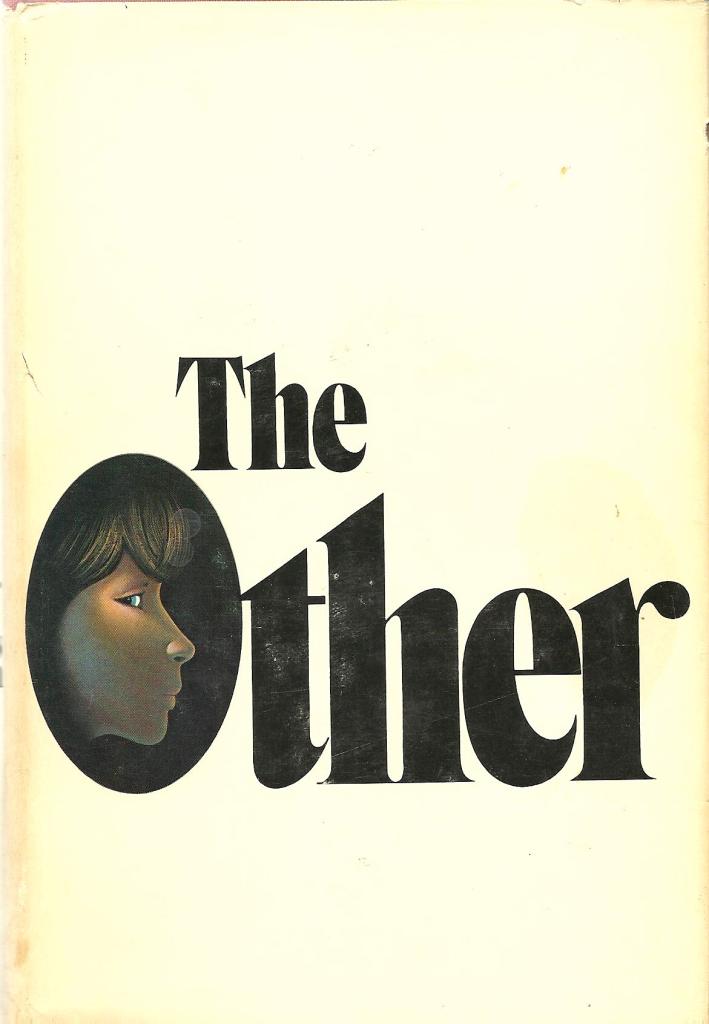
And then about two-thirds of the way through the book comes a plot twist that changes everything you’ve already read and processed and you have to see the book in an entirely new way–every time I reread it (which is every year or so since I got a hardcover copy off eBay), I try to find the clues to the twist in the first two-thirds, and they are there, but cleverly disguised so you don’t put it together until it’s literally revealed in such an incredibly powerful scene that just thinking about it–and its creepy conclusion–makes the hairs on my arm tingle a bit.

I didn’t have a brother, so I wasn’t sure about the brother dynamic Tryon explored so beautifully in the book; is that the way things work in real life between brothers? Probably not, as every set of brothers is different, of course. (I’ve rarely written about brothers, now that I think about it. Chanse has one who turned up in a short story and Scotty has Storm) But the relationship interested me, and it’s a trope that is often used in every style of fiction; two people, either siblings or close friends, one is more outgoing and daring and likes to take risks while the other is more nervous and afraid and namby-pamby, and that weird combination of love/jealousy that can often get involved in those stories.

It’s also a strong dynamic that can play out within gay couples, as well.

The Other is also written in a lyrical, beautiful, dream-like style; that lovely sense of remembering the past nostalgically, when everything was magic and the world seemed full of wonder.

I was paging through the book the other day and I began to realize that it’s impacted and influenced me as a writer far more than I had ever realized.

Back Door Santa

Today’s title sounds rather like a gay Christmas tune, does it not? It certainly sounds like a great title for a gay porn story set during the Christmas season, and just typing that out made me immediately regret never doing a Christmas gay porn anthology–imagine how the evangelicals (aka cosplay Christians) would have reacted to that!

And Jayden Daniels won the Heisman Trophy! GEAUX TIGERS!

I overslept this morning, mainly because I didn’t sleep well last night. I didn’t feel good yesterday; I ran some errands and came home exhausted, collapsing into my chair in exhaustion and later on, started feeling crummy; my stomach was really bothering me for some reason, and I went to bed early, hoping to sleep it off….only couldn’t sleep for a long time. I did finally fall asleep after midnight, and when Sparky got me up for his six am feeding I went back to bed and stayed there until almost nine thirty. I don’t feel that great this morning, either, which is not a good thing, either. I think my blood sugar crashed and I never really replenished it yesterday, and I also think I’m dehydrated–so no, this coffee isn’t really helping much here, either. I think when I finish writing this I am going to go sit in my chair and read for awhile until I feel somewhat better, and will write later on today.

I hate when I don’t feel well, you know?

We got caught up on Monarch: Legacy of Monsters yesterday, and then watched Indiana Jones and the Dial of Destiny, which was…disappointing. I love the character, I love Harrison Ford, and I love Phoebe Waller-Bridge, but the movie just didn’t engage me the way the first and third movies did; the second, fourth and fifth being disappointments. Just thinking about those movies for a moment, though–the first and third movies are predicated on the idea that the Bible is true, and there is a God up there in the heavens or wherever that is supposed to be. Likewise, horror films and books as a general rule, also work as inadvertent Christian propaganda; vampires and The Exorcist go so far as to say Catholicism is the only “good” force to combat non-Christian supernatural forces. There’s an essay in that; I’ve always found it amusing that Christians–especially Catholics–are very anti-horror because “demons and witches” and “the devil” while the work itself actually is predicated on the foundation that the Bible, and Christianity, are not only real but the primary defense against evil in the world. (It always amused me the way the church always came for Anne Rice, when all they had to do was read her books to see how staunchly pro-Catholic they actually were.)

I was too tired and unwell yesterday to be able to focus on reading more of Raquel’s book, but I am going to probably dig into that for a while this morning once I finish this and put some food into my system to see if that helps me feel better. I think it’s weather related; our bipolar weather swung back into the warm and wet side again yesterday afternoon and into the evening, so it may have been a combination of sinus, blood sugar crash, and dehydration–so I am going to have to have some of that rehydration drink today. It really does suck how a bad night can throw you off your game; all I want to do is go back to bed and rest some more. This doesn’t bode well as I have to go back to work on Tuesday; yikes! But if it wears me out, it wears me out–and should mean I’ll sleep well that night.

We also watched some of the Grand Prix figure skating final last night, too–after finishing Indy and giving up on another show we were watching–and there just aren’t a lot of good, top quality skaters anymore; there’s a huge drop-off from the top three–and the pairs? Yikes. The team that won was the best of the six, for sure, despite a lot of mistakes. Skating just isn’t as much fun to watch as it used to be–although Ilia Malinin and his insane amount of quads in every long program is pretty impressive, and he’s getting better at the artistry, which used to be practically non-existent in his programs. I think he’s going to be one of the greater skaters, as long as his body holds out–all those quads are a lot of pressure on his ankles, knees, and hips.

Sorry to be so dull today, but yikes–exhausted and tired and still not feeling super great.let me eat something and maybe that will help–and so I will bid you adieu on this Sunday morning, and hope you have a lovely day.

Up Where We Belong

Shirley Jackson never explained.

I’ve always loved The Haunting of Hill House, and Jackson has always been one of my favorite writers. I’ve long ago lost count of how many times I’ve reread the book, and of course I love the original film version from 1963, directed by Robert Wise and starring Julie Harris in one of her best screen roles as Nell. The sense of dread and fear contained within the pages of that incredibly short novel are astounding. I’ve always believed that one of the book’s greatest strengths was its lack of explanation; horror novels, or ghost stories, or whatever you want to call Jackson’s novel, inevitably always get hung up on explanations of who or what caused the place to become haunted and/or accursed. Jackson never bothered, knowing instinctively that the unknown is far more unsettling and terrifying than any understanding or explanation she could provide to her readers; she just never explained. “The Lottery” offers no clues as to why the villagers have developed this annual ritual, it simply happens and she shows it to us without explanation…which again makes it that much more unsettling. In the years since I originally discovered and read a very cheap copy of The Haunting of Hill House at a used book store, with its Gothic-style cover depicting a beautiful Nell with long flowing hair and a long flowing gown, holding a candle while climbing the horrible spiral staircase in the library, I’ve read more of Jackson and become an even bigger fan of her work than I already was. The Haunting of Hill House and “The Lottery” firmly cemented Jackson’s deserved place in American literature; the rest of her equally brilliant, disturbing and unsettling work serve to heighten that place and elevate it even more.

I am not a purist. A long time ago I realized that films and television programs adapted from books would almost always be disappointing for a fan of the book; ones that are actually better than the book (The Exorcist, The Godfather) are few and far between. I stopped getting irritated by these changes a long time ago. I also learned to stop being bothered by such things; it’s an adaptation, after all, and that means changes because it’s now a different medium. (I have already mentioned my amusement at how militant fans can be about these things; particularly when it comes to things like Nancy Drew or the Hardy Boys.) I hated the 1999 remake of The Haunting; it was special effects nightmare that made little to no sense; the whole point of the story was you never see what it is that’s going on and never are really sure; this second film version ignored that and therefore, it wasn’t The Haunting but just another haunted house movie. I greatly enjoyed the Netflix adaptation mini-series by Mike Flanagan; it was a different interpretation–again, you never see anything–and I thought it was a brilliant modernization/adaptation.

But I did approach this book, said to be a retelling of the story, with a bit of trepidation. I’d heard of Ms. Hand before, of course–I have a copy of Curious Toys, which I bought when she on the Shirley Jackson Award for it, and had been meaning to get to her work at some point.

I left the rental just as the sun poked its head above the nearby mountains, and golden light filled the broad stretch of river that ran alongside the little town. Nisa was still curled up in bed, beathing deeply, her dark curls stuck to her cheek. I brushed them aside but she never stirred. Nisa slept like a child. Unlike me, she was never troubled by nightmares or insomnia. It would be another hour or two before she woke. Longer, maybe. Probably.

I kissed her cheek, breathing in her scent–lilac-and-freesia perfume mingled with my own Jasmin et Tabac, one of my few luxuries–and ran my hand along her bare shoulder. I was tempted to crawl back in bed beside her, but I also felt an odd restlessness, a nagging sense that there was somewhere I needed to be. There wasn’t–we knew no on around here except for Theresa and Giorgio, and both would be at work at their home offices overlooking the river.

I kissed Nisa again: if she woke, I’d take it as a sign, and remain here. But she didn’t wake.

I scrawled a note on a piece of paper–Nisa often forgot to turn her notifications off, she’d be grumpy all morning if a text woke her. Going for a drive, back with provisions. Love you.

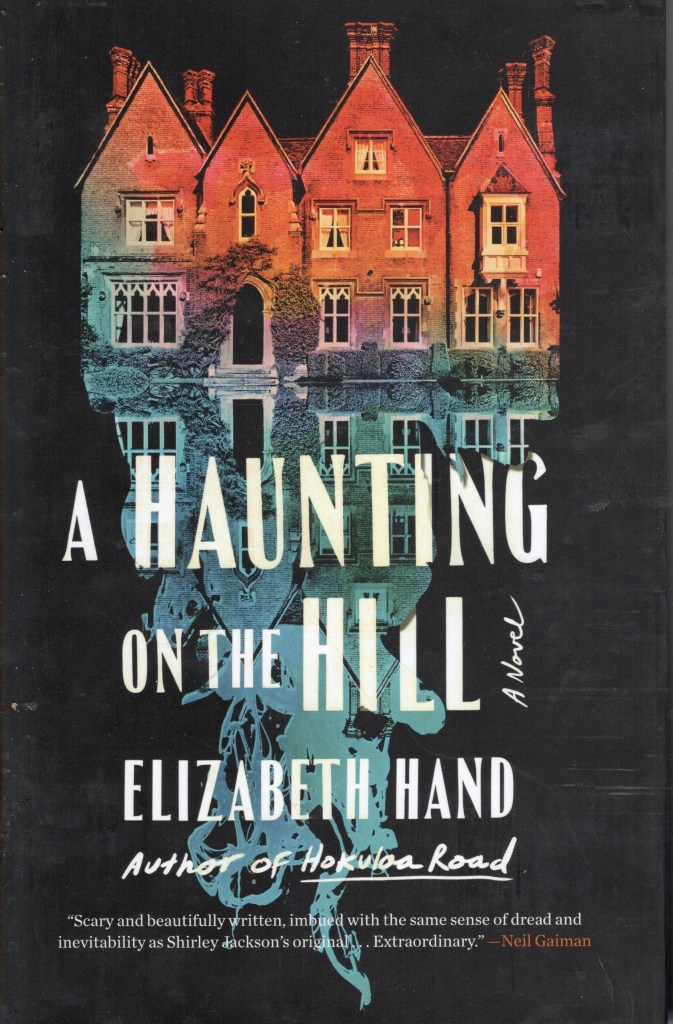
This book isn’t a retelling of the Jackson novel, but rather a kind of sequel, picking up at Hill House some sixty years after poor Nell drove her car into the tree after the turn in the driveway as she realized she’d been wrong about everything but only too late. This is a new story of Hill House, and our main character, Holly Sherwin, is staying upstate with her lover Nisa in an Air BnB, and bored, wakes up early and goes for a drive. A playwright, she’s recently won a grant to help cover expenses while she works on her play, Witching Night, which is based on an old sixteenth century manuscript she came across by chance. It’s the story of an old woman accused of witchcraft and burned at the stake, based on a real event; her girlfriend Nisa is an accomplished rising singer/songwriter, who is rewriting old murder ballads to use as the soundtrack/backdrop of the play. She goes for a drive and finds herself at Hill House…which draws her in much as it did Nell in the original Jackson and she decides to rent the house for two weeks, move in with her cast (her bisexual friend Stevie, a former child star molested on set and now an amazing sound tech) and Amanda, a brilliant aging actress whose career took a turn when a costar fell to his death–and of course people wondered if she pushed him. Holly herself has a bit of a checkered past; someone had told her a story that she adapted into a play; the original person threatened to sue her but before anything can be done that person commits suicide. That derailed her playwriting career–and believe me, Hand does an excellent job of depicting what the excitement that a burnt-out creative experiences when inspiration, an opportunity to flex those creaky muscles and create again, feels like.

All four of the characters are beautifully rendered and are completely real, and one of the things I liked was how Hand slyly also referenced the Flanagan mini-series as a part of the Hill House continuity. Hand’s Hill House has similarities to Jackson’s, and there are more than enough nods for the Jackson fan to recognize and smile about. Hand also does an incredible job of creating that claustrophobic dream-like feel Jackson used for her book, but Hand doesn’t mimic Jackson’s style; the style of this novel is entirely Hand’s, but one has to marvel at Hand’s mastery of creating that same feeling in her reader but in an entirely different way. The language she uses is flawless and rhythmic, just like Jackson’s was, but again completely different. There are also moments that mirror the original novel beautifully; call backs to the original story that I personally felt like little secrets Hand was sharing with me the reader. It’s a very intimate story, and I felt like I was there with them, the characters were people I understood and knew and cared about. Hand also tells the story in alternating points of view, which helps create the off-balance slightly skewed perspective the story needs; Holly tells the story in the first person, but the others are from a third person point of view.

It was terrific, and I look forward to reading more of Hand’s work.

But I’m Not

Sunday and I slept late this morning and i am not a bit ashamed of it, quite frankly. The opportunities to sleep in are rare these days–getting up early so often for so long has adjusted and shifted my body clock in ways I’m getting used to but don’t like, and chief among those ways is the inability to sleep in. Yesterday I was up before eight, for example, but this morning it wasn’t even nine when I got up, and I could have easily stayed in bed longer. But there’s spice to mine today, and while there is still a lot of it to get done, I am feeling very good about things this morning. I actually felt really good about them yesterday if I am going to be completely honest. I got two chapters done and finished editing a manuscript (not my own) and turned it in to the publisher, which felt marvelous to be finished with that. Deadlines and juggling projects is something I’ve always done, but something I’ve noticed since the pandemic shutdown is deadlines are much more stressful and demanding on me, and take a bigger emotional toll than they used to. Probably part and parcel of the long COVID rewiring of my brain, but whereas before, I relished the pressure and it drove me to work harder, now it shuts me down and/or depresses me, which has the exact opposite reaction it used to have with me: instead of driving me, I think oh I’ll never get this all done so why bother and I end up blowing things off completely. Depression is quite the bitch, you know.

But I am very pleased with the work I got done yesterday and look forward to today’s work. I also did a load of dishes and laundry yesterday, and some cleaning. But after I was finished with work for the day, my brain was too fatigued to read so I watched movies on television, discovered two gems I’ve been wanting to revisit: Cruising and The Last of Sheila. I wanted to watch Cruising because I remember all the controversies about the movie while it was being filmed (yes, even in rural Kansas we heard about the gays being mad about the movie). I eventually watched it in the mid-1990’s. Paul is a huge Al Pacino fan, and when we moved in together he owned almost the entire Pacino filmography on videocassettes, so one night we watched Cruising. I didn’t much care for it when I watched it the first time, but I’ve wanted to watch it again–when I watched I wasn’t yet a published crime writer–because the story itself is interesting to me. A hot young ambitious cop sent undercover into the gay BDSM/leather community to look for a serial killer? The question of identity and sexual confusion that could arise from playing the part, which entailed going out and picking up (or being picked up) by gay men expecting some sex? I mean, you have to admit that’s a great set-up and concept for story. The Oscar winning director William Friedkin (he won for The French Connection but was much better known for directing The Exorcist) failed and ended up with a deeply flawed film. Pacino was also robbed of a far greater performance due to the homophobic cowardice of the either the director or the studio. Rewatching, the film’s flaws are even more apparent, but it’s a shame. It could have been a great film–and it does remain one of the few Hollywood films that actually depicts gay bar culture of the late 1970s the way it was–but I don’t know what went wrong with it, but it’s still a great idea. I also liked seeing New York as dirty and grimy, the way it was during that time period before gentrification came to Manhattan. It’s also fun seeing old movies where people who went on to greater stardom later had bit parts or cameos; Ed O’Neill popped up on screen at one point, as did several others that made me think, hmmmm.

If I had the time or inclination, I would take that basic framework of an idea and turn it into something stronger than the film. There was also a book it was based on, but it’s rare and used copies are insanely expensive. It also reminded me of a gay crime novel I read as a teenager living in Kansas; I may have been in college, I don’t remember, called A Brother’s Touch by Owen Levy. The book was about a brother who comes to New York to look into his estranged brother’s life after he is murdered–they were estranged because the dead brother was openly gay–and begins to question his own sexuality after being enmeshed into the gay community of Manhattan at the time. It was reprinted recently and I got a copy (by recently I mean in the years since Katrina; I have no concept of time and its passage anymore); I should move it closer to the top of the TBR pile. I wish I could still read as voraciously as I used to…something else that has slowed down with getting older.

After watching this I wanted to rewatch a classic old crime film of the old school, The Last of Sheila, which I’ve always loved. Co-written by Stephen Sondheim and Anthony Perkins and directed by Herbert Ross, it’s a whodunit worthy of Christie herself, in which a widowed producer invites some film community members on hard times for a week on his yacht. Everyone invited was at the party a year before where the producer’s wife Sheila wound up being killed by a hit-and-run driver, and the producer, whose known for loving to play games, has come up with a game for his guests to play. Everyone gets a card, and every day they will stop somewhere they will look for clues to the identity of whoever holds the card of the day–the first is a shoplifter, the second is a homosexual–and of course, the game turns dark and ugly when the producer host–played to sadistic asshole perfection by James Coburn, is murdered…and it turns out the game their host was playing had layers none of the guests knew about going in. The cast is a perfect time capsule of early 1970’s stardom: Richard Benjamin, Raquel Welch, Dyan Cannon, James Mason, Joan Hackett, a beautiful young Ian McShane, and of course, Coburn. It has twists and turns and surprises, and is so markedly clever that it’s hard to describe without spoiling anything…and the surprises are what make it such a great and fun film. This was one of our Sunday movie-after-church movies, I think; I do remember seeing it in the theater and being impressed and amazed. One thing I absolutely loved in the rewatch was the books scattered over every set–they are all mystery novels by Agatha Christie, Ngaio Marsh, Ellery Queen, and Erle Stanley Gardner, which should tip the viewer off that you are in for a mystery influenced by the master crime plotters of the time. It’s really a shame the film wasn’t a success, because it would have been amazing if Perkins and Sondheim had collaborated on more scripts like this one. As I was watching, I kept thinking how much I would love to write a puzzle-type mystery like this one; I’ve always feared such a thing was outside of my wheelhouse so I have always been afraid to try. Who knows? Maybe I will.

I feel very rested this morning and I am not dreading diving into the book this morning, which is nice. I don’t think I have the mindspace and bandwidth to work on multiple things all at the same time anymore, if that makes sense. I don’t know if it has to do with the long COVID rewriting of my brain waves or what, but the last few books I’ve written or worked on–going back to Bury Me in Shadows–have been more stressful than fun for me to write. Writing on a deadline is always stressful, and I rarely, if ever, actually make deadlines. But having multiple projects going on at the same time now feels like I am not devoting enough of my time and attention to any of them, let alone all of them, and that makes me feel uncomfortable about the work. Of course, my last three books–and my last anthology–have all gotten a lot of mainstream award attention, which makes it seem weirder. Which, of course, makes me wonder if the stress and the heavy burden pressure of multiple projects going is somehow making me produce somehow better work than before, and do I really want to mess with that at all? It never ceases to amaze me how neurotic I am about being a writer, and how afraid I am that any change or variation means it’s all over for me now.

I do wonder sometimes if other writers have that same secret fear: that the well will eventually run dry or that we’ll forget how to do what we do. People like to call me prolific; I’ve slowly come to the conclusion that I am and that it’s not a bad thing (I always try to figure out if being called something is bad–which goes back to being called a fairy as a child and thinking he was saying ferry and being very confused). John D. MacDonald was prolific; so were Ellery Queen, Agatha Christie, and Erle Stanley Gardner. I think my insecurities came into play when people started calling me prolific; I am so used to being insulted that I assumed it must be an insult as well, like it was something I should be ashamed of or something. I’ve decided to embrace it as a compliment. I am sure there are literary writers who produce one novel every ten years or so who would think it an insult, but I don’t respect them so don’t really care much what they think. And if I am not as prolific as I used to be–which I am not–it’s nothing to be ashamed of; I’ve gotten older, have gone through some things, and I don’t have the energy that I used to have. My imagination still rages out of control at any and all times, of course, but I don’t have the energy to fool myself into thinking every idea I have will turn into a short story, an essay, or a novel. I certainly won’t live long enough to turn all the ideas I already have into longer works of whatever style and kind.

And on that note, I am diving back into the book. I am getting another cup of coffee and putting some bread in the toaster for later, and I may or may not do another Pride month entry later today. Anyway, you have the loveliest Sunday possible, Constant Reader, and I will check in with you again later.

Where Have You Been

Wednesday and Pay the Bills Day has yet again rolled around. Huzzah?

Yesterday was a good day. I had a great day at work getting caught up on everything around the office and seeing clients; I came home in a good mood and not exhausted, so I worked and edited for a while before blowing the proverbial end of day whistle and repairing to my easy chair to relax for the evening. It was nice, really, having a lovely day again. It has been so long. I also slept pretty well last night, too–I woke up a few times throughout the night, so it wasn’t a straight sleep through, but I feel rested and good this morning; not groggy or like my body hasn’t woken up yet, either. But the coffee tastes great, I don’t want to go back to bed and sleep some more, and I am getting my shit together. Today feels like it might be a good day; I’ve learned that how I feel when I wake up isn’t always necessarily the best indicator of how the day will go because they’ve certainly gone south once they’ve gotten underway, LOL.

Ted Lasso is back, tonight I think? Won’t be watching until the festivals are over and Paul is home in the evenings (same with The Mandalorian, and the festivals are next weekend), and of course we also have Outer Banks on deck, too. I didn’t read when I finished working yesterday–I’d wanted to–but by the time I’d finished with my editing, I was burned out and tired and just mentally fatigued, so I went to the easy chair and watched some history documentaries to pass the evening until I got tired (documentaries on Claude of France; Anne of Brittany; and several other figures from French history) and went to bed. It was very cold yesterday (for New Orleans and compared to lately) and so I had to end up turning on the heat last night. I just turned it on downstairs, figuring some heat would rise and it’s better to sleep under a pile of blankets when it’s a bit on the chilly side in the bedroom. It was nice to come downstairs this morning and not start shivering, or hovering by the Keurig waiting for the coffee to brew so I could wrap my cold hands around the hot cup. I also have been paging through Stephen King’s Danse Macabre and Grady Hendrix’ Paperbacks from Hell, which is a marvelous reference guide (I was happy to read–I’d forgotten–that King agrees with my assessment of The Exorcist and William Peter Blatty’s writing; this is another instance where the movie is better than the book) and I am not entirely sure I’ve written a post about Paperbacks from Hell? I’ll have to look, but this is another example of my memory being shot; how do I not remember whether I’d written about something or not? Particularly when it’s something I’ve really enjoyed? I suppose it wouldn’t hurt to do another post (if there was an original) about the book because it really is delightful and fun.

I also paid my latest camera ticket on-line last night. I fucking hate camera tickets. I got this one driving home from getting up super-early and having blood drawn; I just brushed my teeth and washed my face, threw on some clothes and headed down there without having coffee first–coffee can affect your blood sugar levels, and as mine are getting higher with every blood draw, my doctor is monitoring that–and so of course I wasn’t really terribly awake as I drove home sans three test tubes of blood.

I fucking hate the cameras. I get at least two tickets per year, and always–always–in a school zone. (No, that doesn’t mean I see kids milling about on both sides of the street and speed up, hoping…I am not fond of children, to be sure, but I don’t want to eliminate any of them) I guess when I get to the speed limit/school zone signs I need to just slam on the brakes rather than gradually slow, which is what I usually do.

Ah, well. I hope the traffic camera tickets help pay to fix the streets or fill in a pothole or two. There’s a lot of road repair going on at the moment–Elysian Fields, Claiborne, and Martin Luther King; all main streets and all ones that are part of my daily drives around the city–which is a good thing, even if it’s a massive pain in the ass right now for me.

And tonight I have to make groceries and probably should swing by the post office and I have a prescription ready, too, so hello, Uptown New Orleans! I need to edit tonight, too. I am hoping this centered, peaceful place I’ve found myself in these last couple of days is lasting….

And on that note, I am heading into the spice mines. Have a lovely Wednesday, Constant Reader, and I will check in with you again tomorrow.

Play with Fire

Well, I met quota again last night which was marvelous. It’s still a bit chilly this morning. By the weekend it should be back into the seventies (it was yesterday as I ran my errands after work; it’s sixty-one this morning but it does feel colder outside of my bed and blankets), as the Alabama and Kansas State fans start arriving for the Sugar Bowl. LSU is also playing on New Years’ Day in the Citrus Bowl against Purdue, which will probably be the only game I actually watch that day.

There’s been a conversation going on over at Book Twitter lately that doesn’t really impact me in any way, but it’s been kind of interesting to follow. The conversation has to do with concerns about what is and isn’t considered y/a fiction as well as what is, or should be, considered age-appropriate reading material for teenagers and pre-teens. It doesn’t impact me because no one considers me a young adult writer, for one thing; despite having written numerous books with younger and/or teenaged characters (Sorceress, Sleeping Angel, Sara, Lake Thirteen, Dark Tide, Bury Me in Shadows, #shedeservedit), most people think of me as a gay mystery writer. Everything published under my own name is a mystery novel of some sort, whether it’s one of the series books or one of the stand-alones. I’ve never really marketed myself as a writer of young adult fiction, really; I shy away from that, I think, because of The Virginia Incident and the subconscious fear that one day that controversy might resurrect itself (which is ludicrous, and I know that; it certainly would have by now and it hasn’t, which further proves my belief that The Incident had nothing to do with me or my writing or my career and everything to do with systemic homophobia and othering used for political gain). It just seems weird to me that in less than five years after that happened–when I was deemed a menace to America’s youth–I could publish books for teenagers without a single whiff of complaint or scandal or even the raise of a single eyebrow.

Interesting, isn’t it? Almost like the whole thing was just more smoke and mirrors whose sole intent was to rile the homophobic base.

I just love that my existence is considered by some as a constant and continued threat to children.

One of the things that has always mystified me over the years is what is and isn’t considered age-appropriate. Intellectually I was far more advanced that most of my classmates (my emotional and personal maturity being an entire other subject–I’d say I am still behind on that score) and I started reading early. The library and the Scholastic Book Fairs were my best friends as a child, and I read everything I could get my hands on. I loved history, from which grew an appreciation and love for historical fiction (which I really don’t read much of anymore, which is odd. I really want to read Hilary Mantel’s Cromwell books…) and of course, my grandmother got me interested in “scary” movies and mysteries.

You’d think I’d be a huge fan of historical mysteries, but I actually don’t read many of them. I did love Elizabeth Peters’ Amelia Peabody series, and I’ve become a huge fan of Laurie R. King’s Mary Russell series…I think exploring historical mysteries might be a project for 2023.

But the point was I was reading books far too advanced for most people my age when I was young. I freely will admit that in my first read of Gone with the Wind at age ten I didn’t know Rhett raped Scarlett the night of Ashley’s surprise birthday party–it wasn’t until a reread in my late teens where I thought oh, this isn’t right–let alone that she enjoyed being overpowered and forced. I also read The Godfather when I was ten, and there was no mistaking anything about Sonny Corleone and Lucy Mancini. He had a cock the size of a horse’s and her vagina was apparently the Lincoln Tunnel. (Although the she felt something burning pass between her thighs still mystifies me to this day.) I also read The Exorcist when I was ten and I was also very well aware of what was going on in the crucifix masturbation scene. As a kid, I was fascinated by these sex scenes (aka “the dirty parts”), and it wasn’t until I was older than I began to question the entire Sonny-Lucy thing (and why it was even in the book in the first place); and while the crucifix scene was gross, shocking and basically icky to me at ten–when I reread the book sometime in the past decade it seemed prurient, to be honest–used primarily for shock value and to get people to talk about it.

So, yes, I started reading books for adults when I was around ten. I also read Antonia Fraser’s Mary Queen of Scots and Robert K. Massie’s Nicholas and Alexandra that same year–I remember doing a book report on Mary Queen of Scots and my teacher not believing that I had read the thick volume; he started opening the book at random and asking me questions–which I was able to answer, so he grudgingly accepted the book report and gave me an A. (Teachers have doubted me all of my life; can’t imagine why I am insecure about my intelligence…)

Over the course of my teens I also read books by Harold Robbins, Sidney Sheldon, Jackie Collins, Jacqueline Susann and Gordon Merrick-every last one of them crammed to the gills with racy sex scenes. I was also reading Stephen King, Irving Wallace, Herman Wouk, Agatha Christie, Ellery Queen, Jean Plaidy, Victoria Holt, Phyllis A. Whitney and any number of authors who wrote for adult audiences not teens. Were there things in the books I didn’t understand? Sure there were. Were there things in those books that were probably inappropriate for teenagers? Undoubtedly. (I’ve also never forgotten the scene in Joyce Haber’s The Users where a Liza Minnelli-based character fucked herself with her own Oscar; some images are simply too vivid to forget methinks.)

This is one reason I shy away from calling some of my books with teenagers “young adult” novels. Megan Abbott’s Dare Me centered teenagers, but I would never consider Dare Me a young adult novel. I was thinking about this the other night while watching Sex Lives of College Girls (it’s hilarious, you really should be watching); can I authentically write about teenagers anymore? Have I ever been able to? I don’t speak their language anymore, and I haven’t been one in over forty years (!!!!); I don’t know the technology they use or their slang or what they watch or listen to. I don’t know what today’s teens think about virginity and sexuality these days; do the tired old tropes still exist? Does that whole “good girl/bad girl” dynamic still exist, or are today’s teenaged girls a bit more sophisticated than they were when I was in high school when it comes to sex and sexuality? (Contrasting two high school shows with queer content makes you wonder–there’s the jaded cynicism of the rich kids in Elite vs the wholesome purity and innocence and sweetness of Heartstopper, which also had me wondering–although I feel certain Heartstopper might be closer to reality than Elite…or that’s just my hope?) Of course I have other ideas for more books about young people–I have another in-progress one that’s been sitting around for a very long time that I need to repurpose–and I’d kind of like to write more at some point, but I don’t know. My suburban 70’s serial killer preying on teenaged boys book would be told from the perspective of a twelve year old, but it would definitely not be a young adult novel–but will probably be marketed and sold as one.

And on that note I am heading into the spice mines on my last day in the office for 2022. Check back in with you later, Constant Reader.

Broken Promise

And here we are on Friday yet again. The nights this weekend are a return to the frigid climes of earlier this week, but the days promise highs in the 50s, at least, and it’s supposed to get back up into the 70’s next week…or so it said the last time I checked. I generally tend not to look at weather forecasts more than a few days out, primarily because New Orleans weather is completely unpredictable and defies expectations all the time. It feels chilly this morning–I’ve not checked the temperature yet–but the space heater is on, as always, and I am shivering a bit under my layers and considering going to get a blanket. The HVAC guys were here yesterday, but there’s still no heat and there’s also no sign of them outside this morning. Which is fine; I can huddle under blankets as I do my work-from-home duties this morning. Okay, I checked, and it’s thirty-five with a high of 48 predicted. Yikes! Sometimes, methinks, it’s better not to know some things.

The forecast for next week looks much better. It’s simply a matter of getting through this last blast over this weekend.

We finished watching season two of Mr. Mercedes last night, and it was…well, it was a bit disappointing. The season wound up diverging significantly from the book it was based on (End of Watch, the concluding book of Stephen King’s Bill Hodges trilogy), and while the middle of the season was compelling and impossible to turn away from, the last two episodes, for me and Paul at least, significantly went off the rails. The third season starts airing on March 4, based on the second book of the trilogy, and we’ll watch because we really like the characters–and I think Book 2 was my favorite of the trilogy–but now It’s a Sin has dropped and so has something else we wanted to watch as well, but right now I can’t think of what that other show might be. Oh, yes, The Luminaries with Eva Green.

I also watched, while making condom packs yesterday, the original film version of The Amityville Horror, which fits into both the Cynical 70’s Film Festival as well as the Halloween Horror Film Festival. I actually saw this movie in the theater when it was released all those years ago, and just like then, I found it unimpressive, not particularly scary, and farfetched. I had read the book, of course–I think I bought it off the wire racks at the Safeway in Emporia on 6th Street–but the book wasn’t very well written and the story–theoretically something that actually happened–wasn’t convincing and, I thought, pretty poorly written (and I wasn’t a particularly discerning reader back then, either). It was, however, a phenomenon; a huge bestseller and the movie also made a ton of money, spawning numerous cheesy sequels (none of which I watched). Horror made a big comeback as a genre in the 1970’s; it could even be seen as a “golden age”–there was a glut of films and movies in that decade, and the demand didn’t taper off until the late 1980’s/early 1990’s. Amityville was a big part of that–following The Exorcist and Rosemary’s Baby and Carrie; it was the decade when both Stephen King and Peter Straub’s careers are writers took off, and there were a lot of books published….a LOT. (I do highly recommend Grady Hendrix definitive Paperbacks from Hell–it will trigger a lot of memories for you if this was a period when you were actually alive…it certainly did for me.) But the movie is still bad, after all these years–James Brolin was certainly handsome, coming off his years on Marcus Welby and before he spent the 80’s managing Arthur Hailey’s Hotel on ABC. (Although I couldn’t help thinking, “wow, of someone would have told me back then Brolin would marry Barbra Streisand and live happily ever after and his son Josh would become a major star, I would have laughed and laughed and laughed.”) Margot Kidder plays his wife, Kathy, and this is the best, I think, she’s ever looked on film–they are a handsome couple and have some chemistry together, even though both performances eventually descend into one note, repeated over and over again. Rod Steiger also has a supporting role to which he brings all his Method bombast in a role that doesn’t really make a lot of sense, nor does what happens to him. The movie’s end, like the book’s, explains nothing other than the family abandoned the house and never returned. (Of course, the house has changed hands with people living in it for decades and none of them have experienced anything the Lutzes claim to have. Even cynical teenager me, when reading the book, thought, oh, you bought a house you couldn’t afford and dreamed up a crazy story to try to get out of the mortgage..the movie only convinced me further that I was correct in my theory. I looked it up on line, and the lawyer for the kid who murdered his family in the house later admitted he and the Lutzes, “over many bottles of wine”, came up with the story…to not only get them out of the mortgage but to try to get his client a new trial. The Lutzes still claim it all really happened. *insert ‘sure Jan’ GIF here*)

I think I bought another copy of the book several years ago–still in print all these years later!–to reread and see if it was as bad, if not worse, than I remembered. I have yet to get around to it…but watching the movie made me think I need to reconsider that urge to reread it.

But the 1970’s were, as I have said before, a weird decade of transition and change. Conspiracy theories were running rampant everywhere about everything–the JFK assassination in particular was talked about and theorized about a lot–but this was also the decade of the Bermuda Triangle, when UFO’s really became a topic of discussion, when The Late Great Planet Earth truly began shifting certain sects of Christianity into doomsday prophecy and end-times philosophy, and of course, we cannot forget the existential threat of Communism that had some people seeing Russian agents everywhere and there was the ever-present threat of nuclear annihilation.

Although there are times, too, when I think about the 1970’s as the last gasp of American naiveté and innocence. The one-two punch of Vietnam and Watergate made everyone start distrusting the government…and HIV/AIDS was just around the corner.

Hmmm. Some pretty heavy thoughts on a shiveringly cold Friday morning in New Orleans.

And now back to the spice mines. Stay warm, everyone, and stay safe.

The Story of Us

Well, this has been an adventure. The power just now came back on.

It went out on Wednesday sometime between four and four-thirty; and of course, it’s fall, so it also starts getting dark around four-thirty/five every day. It is pitch black inside the Lost Apartment, by the way, when we don’t have power and night falls. Even the candles don’t help. I am so tired of disruptions, you know? It seems like every time I get centered and get ready to pull it all together, there’s another fucking life disruption. Wasn’t it just the other day I was talking about trying to focus on positivity, and figuring out how to get my act together, and so forth? Then along comes a hurricane out of literally fucking nowhere and everything is fucked again. Sure, the house survived, Paul and Scooter and I made it through without harm, and not having power is a very small thing in the overall scheme of things–but I’m just so tired. No power of course means everything in my refrigerator has to be thrown away–yay! because I can certainly afford to replace it all!–and it means no computer, no lights for reading, no internet, no stove, no food, no hot showers, and most heinous of all: NO FUCKING COFFEE.

The storm was bad enough to live through–the winds were literally one mile per hour lower than a Category 3 hurricane, so it was classified as a 2–and it was scary. The rain was coming down so hard and so fast I was certain that the streets would flood–and the howling of the wind was bone-chilling. I kept worrying about the roof, about trees and branches, about the car…and then of course the power went out, leaving us in pitch blackness. I lit some candles but it was way too dark to read, and just started dozing off a bit in my easy chair, off and on. I finally just went to bed at nine-thirty, after moving my car back to the street from the high ground, and I just spent Thursday reading, and when the daylight faded and the candles weren’t enough, grabbed a flashlight so I could finish reading. And of coure, Friday we were still without power. The office was also without power, and even though it was a work-at-home day for me–and I did have the option to stay home and count it as work, I decided to go into the office; just to be in the light and have power and be able to charge my phone again and…also, for some reason, it takes my phone forever to charge in my car now. I don’t know what that is all about, but I spent over an hour in the car yesterday charging my phone.

An effective use of gasoline.

Before we lost power on Wednesday, I decided to stream The Other while making condom packs. I had never actually seen the film, written and produced in 1972 by Thomas Tryon from his novel of the same name; the book is one of my all-time favorites and I also consider it to be a big influence, not just on my writing but in my reading tastes as well. The novel is fantastic, absolutely chilling, and has two big plot twists that completely change the complexion of the story, and the reader’s perception of what is going on at the Perry house just outside Pequot Landing, Connecticut. I have always avoided the film, primarily because I love the book so much, and secondly because, as much as I do love the novel, I’ve never really seen a way to film it effectively. The film is okay–the big surprise, for me, was seeing early in their careers John Ritter and Victor French in supporting roles–but the concept of the book itself, while not particularly original (identical twins, with one being good and the other being evil; it’s been explored in films, novels and soap operas going back decades)–in this case, though, the twins are young–only eleven–which also throws the book into the “bad children” category, along with The Bad Seed, The Exorcist, We Have Always Lived in the Castle, and We Need To Talk About Kevin–as opposed to adults, the way the good twin/bad twin story is generally presented. The movie is flawed, and doesn’t necessarily hold your interest the entire time–but it did make me want to read the book again. It’s time, methinks.

But watching The Other drew me to a Daphne du Maurier novel I’d not read before, The Scapegoat. Du Maurier takes the twin concept and gives it a bit of a twist; rather than having her twins be related by blood, hers are merely look-alikes; total strangers (one British, one French) who happen to look exactly alike (people always used to say that everyone has a twin somewhere in the world; I always wondered about that because whenever I would visit New Orleans–and for about a year or so after we moved here–I used to get mistaken for someone else in gay bars. It was quite weird.), and run into each other by chance at a train station in Le Mans; they have a few drinks together only for the Englishman to wake up the next morning in a sleazy hotel room, and all of his things–passport, ID, wallet, car, etc.–are gone and the other man’s things in their place. So John becomes Jean…because who, after all, would believe his story? If he went to the police, would they not think him completely insane? So he takes the du Maurier step of deciding, okay, I’ll be Jean and live his life, despite knowing very little about his double. And yet no one in his family–neither wife, mother, brother, sister-in-law, daughter, mistress one and mistress two–suspect for even a moment that he isn’t Jean, the Comte de Gue; which is kind of weird–but then again, they do notice he isn’t acting quite the same. And much as I love du Maurier, the entire set-up of the story is quite contrived, yet somehow she makes it work, which is part of why I admire her so much. Literally, what John is doing is quite mad; and yet, as he gets to know the family and his counterpart’s relationships with each of them–there’s also a brilliant subplot about a feud between Jean and his younger sister, going back to the Nazi occupation and resistance–he begins to care for them, and tries to do better by them than their actual blood relative did. It definitely held my attention, and I kept reading, wondering how on earth she was going to end it–and she ended it with the typical du Maurier cynicism and disdain for the “happily ever after” that holds true for all of her stories, or at least the ones I have read.

And now I must figure out how far behind I am now on everything; the mind reels, quite frankly. I was very definitely behind before the storm came; I am absolutely unnerved at how terrifying it will be to take a look at my inbox and what has been going on while I have been, quite literally, powerless. But there’s really no sense in allowing myself to get overwhelmed, is there? There’s so much work that needs to be done around the Lost Apartment–cleaning and straightening and so forth–and of course there are football games this weekend. But at least the power is back so I can watch the LSU game. GEAUX TIGERS!

Heavy heaving sigh.

Holy Ground

I came across the coroner’s obituary last night.

As I typed it, I realized what a New Orleans-like thing it was to say; and it made me smile a little bit. The coroner in question wasn’t currently serving New Orleans; he had retired in 2014 after ten terms in office, and his name was Dr. Frank Minyard. He played the trumpet, and was actually a gynecologist rather than a pathologist. Was he good coroner or a bad one? A little of each, I would gather, based on the obituary by John Pope you can read by clicking here.

But he was, like so many New Orleanians used to be, quite a character. New Orleans has always been a city full of characters, which is why so many people write about New Orleans, and write about it well. Not only can you probably get away with writing anything crazy-seeming about New Orleans; chances are if you dig a little into our history here, you’ll inevitably find crazier shit than anything you could dream up on your own. I have to say I have really been enjoying reading up on our local history here.

Hurricane Sally came ashore earlier this morning, and it had continued turning enough to the east that we didn’t get much of anything here in New Orleans. The panhandles of Alabama and Florida (in particular Mobile and Pensacola) are an entirely different story; my heart sank down into my shoes (well, my slippers) on seeing footage and images from that section of the Gulf Coast. Hurricane season is so emotionally exhausting, really; all that stress and tension and worry, and then when it goes somewhere else the enormous guilt one feels about the relief that your area escaped unscathed while others are losing everything–including some lives–is horrible, just horrible. It’s oddly gray and hazy-seeming outside the windows this morning, with the crepe myrtles and the young live oaks in the yard on the other side of the fence doing their wavy dance thing they do when the wind blows; the sidewalk outside also looks wet so we must have gotten some rain as well overnight, but not enough for me to notice anything as I slept through it all. (That’s the other thing about hurricanes, particularly the ones that come ashore overnight; you go to bed wondering what you’ll wake up to find in the morning–or worse yet, disaster will rip you out of a deep sleep.)

So, yes, this morning I feel very emotionally drained; well rested, but exhausted emotionally.

And then, of course, once the danger has passed, you have to reset yourself and get back to normality–whatever the hell that is, or what passes for it, at any rate.

Yesterday’s entry in the Cynical 70’s Film Festival was The Omen, which was a huge hit back when it was released in 1976 and spawned two sequels, Omen II: Damien and The Final Conflict. I had never seen the sequels, and I think I originally rented the film–I don’t think it played at the Twin Theater in Emporia–but I did read the book (the book was written by David Seltzer, who apparently, according to the opening credits of the film, wrote the screenplay; which came first? I don’t care enough to look it up) and of course, was put in mind of it by paging through The Late Great Planet Earth, which laid the groundwork for the movie. Obviously, it’s about the anti-Christ, who is Damien Thorn; the movie opens with the Robert Thorn (played with an almost wooden-like quality by Gregory Peck) arriving at a hospital in Rome only to be told that the child his wife has given birth to has died; he worries about her mental stability and how she will handle the news–and so a priest offers a substitute baby whose mother died giving birth. (And this is the first place I called shenanigans on this rewatch; one, he is about to start a lifetime of lying to his wife and two–was there any need to tell Robert Thorn his child died? If the idea was to have the Thorns accept the anti-Christ into their home as their child, wouldn’t it simply make more sense to swap the babies, so neither of them knew? Because how could they have been so certain Thorn would accept this literal deal with the devil?) The movie is paced fairly well, and it moves right along–there’s not a lot of gore or blood and guts, but it does beggar credulity at more than one point–and perhaps I am looking at it with jaded eyes some forty years later, but both Peck and Lee Remick, who plays his wife, seem to just be phoning it in for the paycheck and there’s also the element of their age; they seem to be fairly old to just be trying to start having a child at the opening of the movie. (I think the book plays this up more, stating that Kathy Thorn has suffered innumerable miscarriages leading up to this birth and it has shaken her mental stability; kind of hard to do that on film but it certainly would have made his motivation in accepting this needless deception–again, they could have just as easily substituted the baby without having to go through this entire risky rigmarole.) After finishing, I looked for Omen II but it’s not streaming for free anywhere; I then watched The Final Conflict, which was simply terrible (outside of Sam Neill, who was terrific and charismatic as an adult Damien, saddled with an incredibly bad and far-fetched script).

The movie does fit, however, with the Cynical 70’s Film Festival, because here we have yet another conspiracy, one in which some members of the Catholic Church have turned to Satan to try to bring about the end times as well as the birth of the Antichrist–because whereas in the 1950’s and the early 1960’s, it would have been unimaginable for such a film to be made, but also to be believable; who would have ever believed such a thing was possible? Of course, both book and film of Rosemary’s Baby set the stage for The Omen, but both were later 1960’s, when things were starting to change, times were getting more cynical, and so were people. Rosemary’s Baby changed almost everything, both in the world of novels and film, in showing that horror was both bankable and mainstream. The early 1970’s saw the publications, and enormous success, of books like Ira Levin’s The Stepford Wives, William Peter Blatty’s The Exorcist, Thomas Tryon’s Gothic horror masterpiece The Other, and eventually, Stephen King’s out-of-nowhere bestseller Carrie. Soon Peter Straub would publish Ghost Story and Carrie would become a hit movie, triggering a horror revival that brought both the literature and the films into the mainstream. This revival didn’t lose steam until the 1990’s, and frankly, I think horror is on the verge of another revival.

I could be wrong, of course. I certainly have been before, but I am seeing some really terrific work as well as amazing new voices–over the past year alone I’ve read some astonishing work by new-to-me writers, and I only wish I had more time to read everything I really want to. Paul Tremblay is amazing, and so is Bracken MacLeod, Christopher Golden, and Silvia Moreno-Garcia, among others; I’m seeing a lot of new and interesting looking titles being announced or reviewed almost every time I turn around.

I guess today is Wednesday? I am really not sure, living in this weird world that comes with hurricane watches, where it is very easy to lose track of dates and times and what day of the week it actually is. But a quick glance at Weather.com assures me that all the other storms out in the Atlantic basin pose no threat to Louisiana, so I guess we can relax for a little while, at least.

And on that note, tis back to the spice mines.

Picture to Burn

Thursday, Thursday, is today’s child full of woe? I used to know that rhyme when I was younger–one of those things that would pop out of my mouth and brain every now and then when I wasn’t expecting it to–and now I cannot seem to summon it from the depths of my memories. I think it was Tuesday’s child, anyway; was Thursday’s child full of grace or something like that? Possible, I suppose.

Another good night’s sleep was had yesterday evening, which is lovely. I have to go into the office today and run errands on the way in.  I’m just glad to be feeling more rested, to be honest, and then tomorrow is a work-at-home day, and then I slide into the three day weekend, which is kind of nice. I hope to finish reading  Little Fires Everywhere this weekend, start reading The Coyotes of Carthage, and perhaps dip my eyes back into the Short Story Project–I have Sara Paretsky’s short story collection glaring at me from the end table as well as the new Lawrence Block anthology, and so many others I’ve not finished reading–and of course, I want to get a lot of writing done. I want to spend some time on Bury Me in Shadows, as well as maybe get some short story writing done, which would be lovely.

One can certainly hope, can’t one?

But I’ve also learned my lesson about over-planning for the weekend; I know I need to just make a list of things to do that need to be done and not overly pressure myself to get it all done over the course of the long weekend, while recognizing that I also need to recharge my batteries and I also need to do some cleaning; perhaps even work on that damned file cabinet which I never finished working on.

Yesterday’s Cynical 70’s Film Festival choice wound up being nothing I was considering. Instead, I choose to rewatch The Exorcist, which I’ve never seen other than the “edited for television” version. The Exorcist was a phenomenon at the time, and most people still, to this day, consider it the scariest film they’ve ever seen and it regularly pops up on lists of best horror films ever made. I read the book at the height of its popularity, when I was in junior high school, and while it didn’t precisely scare me, it was lurid–we all read it for the lurid parts, like the crucifix masturbation scene and so forth; there was something sacrilegious about reading it, like actually reading it was an act of subversion. The film broke all box office records of the time and was nominated for a lot of Oscars, and the soundtrack–Mike Oldfield’s “Tubular Bells”–always brings up mental associations with the film. It was the first outright horror film to get that many Oscar nominations, or to be nominated for any, really, other than Rosemary’s Baby, which wasn’t nominated for a lot; William Friedkin, fresh off his Oscar winning outing with The French Connection–which is also on my list–directed it. A more traditional entertainment, The Sting, wound up sweeping the Oscars that year. A few years ago, I reread the book to see how well it held up, and as an adult who is also now a writer and has been a reviewer, and has read thousands of other books in the interim, I can say it doesn’t hold up well at all–it really isn’t all that scary, either; it was a product of its time and it might not even get published were it written today. The characters were very cardboard and one-dimensional and behaved in ways that made no sense whatsoever; the focus was on the sacrilege, really, and the shock. I wondered if that would be true of the movie, as well, in its unedited version.

The acting was fine, really; Ellen Burstyn is never bad in anything, and Linda Blair was also fine; but the truth is the direction of the film doesn’t really develop the characters enough to make the viewer empathize with them, or identify with them. The scares weren’t as scary as they were; it’s hard to be scared when you know something is coming and you’ve already seen it, after all; part of the thrill of a horror film is not knowing when the scares are coming, so rewatches never have quite the same effect. I watched this time in a more analytic way, rather than as a viewer–but while others I’d seen before–Aliens comes to mind–really hold up incredibly well, The Exorcist doesn’t; I don’t feel like I got to know enough about Chris MacNeil or Father Karras enough to care about either one of them; and I found that I had more questions about them and who they were than I did when I viewed it as simply an entertainment. I think had the film been filmed more intimately, rather than from a cold distance, it would have held up a lot more; I don’t know, I am neither a filmmaker or a critic. But it didn’t trigger much of a reaction in me, and that’s rather telling. I think the problem, from a story-telling point of view, is that it couldn’t make up its mind whether it was about the MacNeils or Father Karras; although the title would tend to make you think the focus was on Father Karras; it should have been titled The Exorcism, really, and that, I think, was the end problem result for me: the book and film were really about Father Karras and his struggle with his faith, but only touched on that issue glancingly; because it also wanted to focus on how dismissive we are of spiritual issues in our modern scientific world, and wanted to show how an atheist, irreligious woman would try to get her child scientific treatment and slowly come around to the idea that in the modern world, something rooted in past superstition was the issue. Both are great stories, but for me, it failed in trying to tell both and wound up just skittering across the surface like a needle on a warped vinyl record.

Ultimately, though, The Exorcist–both book and film–are important works in both disciplines; along with Rosemary’s Baby, ushered in the 1970’s revival and rejuvenation of horror, in both film and literature, and that influence cannot be denied. Without either of those books, would Carrie have been published, or Peter Straub’s first horror novel? It was The Exorcist, after all, that first really introduced me to horror.

And I absolutely loved the television series inspired by it.

And on that note, tis time for me to return to ye old mines of spice. Have a lovely day, Constant Reader, and I’ll catch you again tomorrow.

IMG_4201