Paperback Writer

John Copenhaver, one of queer crime’s latest (and brightest) stars recently (you should read his books, frankly; I am looking forward to his latest, Hall of Mirrors) wrote a brilliant essay on the concept of writing complex queer characters, and the artistic need to push beyond ‘gay is good’ messaging and not worrying about the question of role models which you can read by clicking here. I highly recommend it–it’s well thought, reasoned, and stylishly written, and the kind of thing I wish I could write.

But reading this essay made me think about my own work, the pressures I’ve had–either real or imagined–about representation and addressing social issues through the framework of queer people and characters, and made me think about the work I do from not only a creative view (which is how i always view my work) but from a cultural, political, and societal perspective. That’s not something I’ve ever really consciously done (“oh, let’s make this political“) but one thing I’ve never done is worry about how straight people might react to my work…primarily because it isn’t really for them that I write my books in the first place. If my work offends straight people that isn’t my problem, nor is their whining about how queer people see and perceive them…and it’s not like there aren’t millions of books designed as comfort reads for cishet white people. I’ve also never understood taking offense at a book. I’ve read plenty of books whose point of view I’ve neither understood nor care to; and I tend to not read anything that I think is going to either offend me or be antithetical to everything I read–I tend to avoid Westerns, international spy thrillers, and war novels, and mostly for the same reason I tend to avoid most cishet white male authors. Your work isn’t written for me, and I can’t imagine westerns to be not problematic1–likewise, I’m not interested in reading about toxic male he-men that are racist rah-rah-rah books to make white men feel better about themselves (you know who you are) and so I avoid covers that pretty much spell out to me what the contents are going to be–women who exist only to be beautiful sex toys, any gay characters are offensive stereotypes and usually die, and so on and so forth; I love my country in spite of its flaws, and that love is strong enough to bear critiques on our nation and the people who run it, so I don’t need to read fiction designed to make me thump my chest and scream AMERICA LOVE IT OR LEAVE IT at anyone who dares critique the country and its domestic and foreign policies.

If cishet white people enjoy my work, fine. If they don’t, well, as I said it isn’t intended for them in the first place.

first author photo

When I first dreamed of being a writer, it never occurred to me to write about gay characters or themes. I was a child, for one, and for another that child was terrified that anyone might figure out that I wasn’t one of the “normies”, and what I actually was inside was something they’d all view with contempt. When I was a kid I wanted to write a kids’ series, like Nancy Drew or the Hardy Boys, and even came up with multiple different ones that I wanted to write, and came up with a rather lengthy list of titles for the books (which I still have, because I’d still like to try this at some point before I die), and gradually moved on to wanting to write other styles of books as I got older and began reading more. My addictions to soaps, both daytime and nighttime, during the late 1970s thru the early 1990’s, had me looking at writing more about towns and large casts of characters, and I always wrote a murder mystery into my ideas for these Peyton Place type novels I wanted to write; I also wanted to write Gothic suspense novels, and Stephen King had me also wanted to write mainstream horror novels…and later on, I moved into wanting to write horror/suspense/crime novels for young people.

It wasn’t until I met Paul, and I found gay bookstores, that I realized I could write gay stories and themes and characters, and I decided I wanted to write gay crime novels, set in New Orleans, and so that’s what I set out to do, starting a novel called The Body in the Bayou, which I had already thought up as a series about a straight Houston private eye–so I made the main character gay and moved it to New Orleans. I threw out the first ten chapters within two weeks of moving here, and started over again.

Promo photo for my old training business

And then I found myself in the conundrum John talks about in his essay so brilliantly; is it okay to have queer characters be the bad guy? Do we have to write all of our stories and novels from a thematic viewpoint that ‘gay is good’? Do we as creators have a responsibility to the community to only present queer people as heroic, or can they be flawed or even bad?
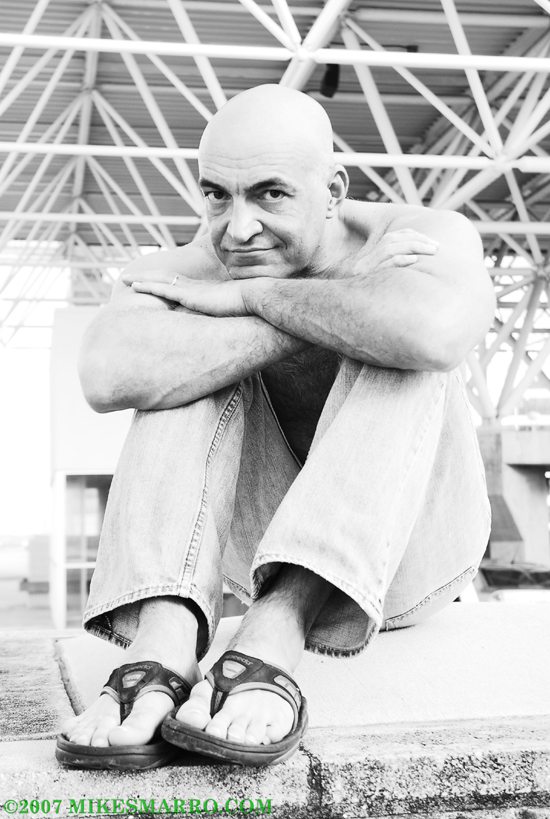
Author photo from 2007

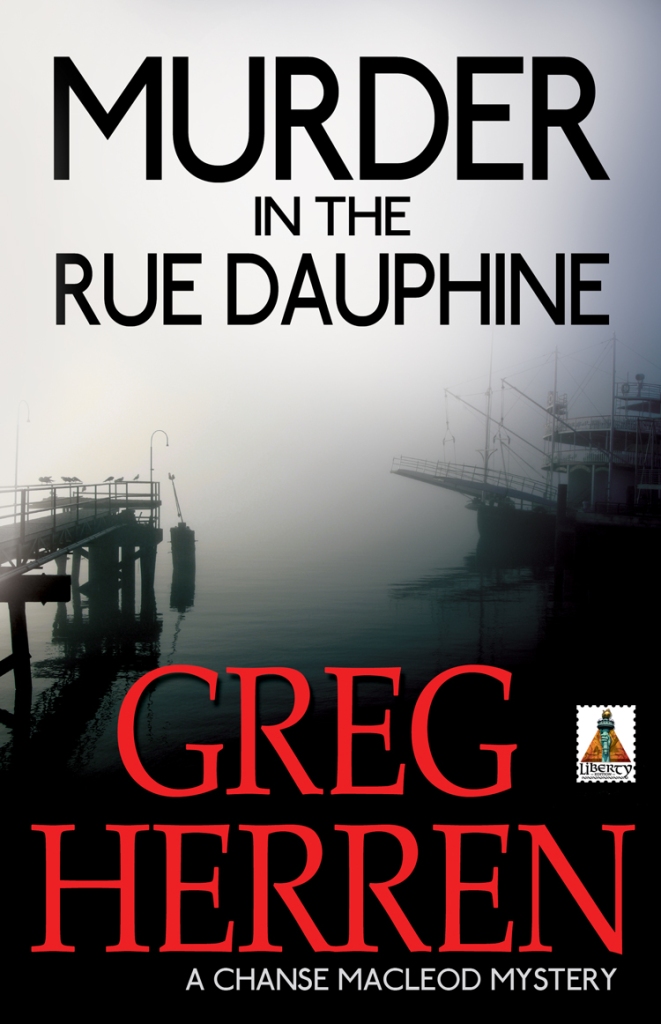
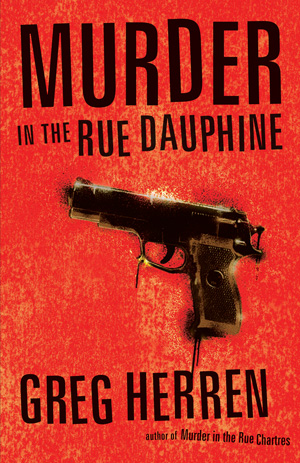
I’ve talked about this before–how the idea for the case in Murder in the Rue Dauphine came to me, and I also worried about how the book would be received because I was explicitly creating a case and a world where not all queer people were good people. It was inspired by a gay man who came to New Orleans, got involved in the non-profit world here, threw a bunch of money around, and then disappeared overnight as his house of cards was about to collapse, stealing a shit ton of money and owing everyone a lot of money. That was when I realized how we always are welcoming to other queer people and we can sometimes overlook red flags and warning signs because you’re working with another queer person. We tend to give other queer people the benefit of the doubt and more chances than we would a straight person…and I wanted to explore that in fiction. Shining heroes without feet of clay also aren’t fun or interesting to write about, either.

Gay isn’t always good.
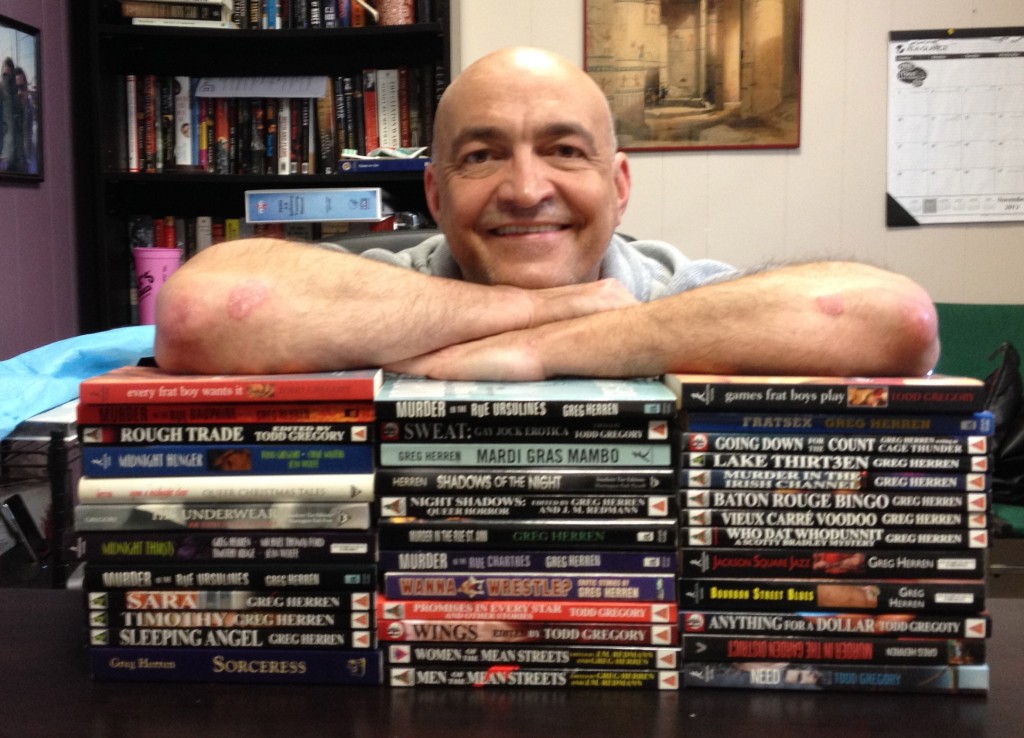
Most recent author photo, and I definitely need a new one.

And we aren’t doing our readers any services by creating “perfect” characters, either. Neither Chanse nor Scotty is perfect (although Scotty’s definitely an idealized person, I have to admit, but he does have flaws and blind spots) and the main characters in my stand alones are often messy, sloppy people who need to get out of their own way sometimes. Those are the kinds of characters I like to read about–because they are human.

I also find gay criminality enjoyable to read. James Robert Baker’s books were like being slapped in the face; full of gay anger and revenge and bitterness about the homophobic world in which we all exist–but Baker’s messy characters are active; they want revenge on the world and by God they are going to get it. The Ripley books by Patricia Highsmith are magnificent. Christopher Bollen’s A Beautiful Crime was terrific with its messy gay characters perpetrating a fraud.

I think we relate to and enjoy messy criminal queers because they are so relatable to us. There’s no worse feeling than powerlessness, the inability to control your own destiny and life, and always wondering …is it because I’m gay? I’ve gotten angry about this any number of times during my life, and I have always wondered somewhat would this happen to a straight man? and the answer is always no.

But do read John’s article. It’s very well done and thought provoking, and I’m going to let it simmer in my head for a while longer.

  1. Westerns would be a good discussion for another time, actually.
    ↩︎

Take a Chance On Me

Ah, Murder in the Rue Dauphine.

It’s always weird for me to talk about my writing and my books and so forth on here; I always worry that I am either contradicting and/or repeating myself. When you’re as self-obsessed as I am, that can be a problem; talking about myself is probably my favorite thing to do–on here, at least. And I feel like I’ve told the story of where Chanse came from and how the series developed from the very beginning many, many times.

It was when I was living in Houston that I rediscovered crime fiction, and the old love was even deeper once it was rediscovered. This was the period when I read most of the Perry Mason novels, discovered Paretsky and Grafton and Muller, and decided to give Travis McGee and John D. MacDonald another try. (I had read The Dreadful Lemon Sky when I was a teenager, but I hadn’t liked it; I was more into the classic detective mystery, with lots of suspects and a denouement with everyone gathered in a drawing room as the identity of the killer was unveiled–the McGee series was definitely not that. But MacDonald had written a superb introduction to Stephen King’s first short story collection, Night Shift, and I had always wanted to give him another chance–pun fully intended.) I devoured the McGee series this time around; and I really admired the character and how fully rounded and developed he was (I should give the series a reread; I’d be curious to see how they hold up now)…and armed with all these new private eye novels and Perry Mason puzzles, so I started coming up with my own version. Even the name was a shout out to McGee. My character was also tall with sandy/dirty blond hair, a former college football player, and he lived in Houston, with an office downtown and a secretary named Clara. The title of the first book was going to be The Body in the Bayou, and I started basing the case on the tragic Joan Robinson Hill case, immortalized in Tommy Thompson’s Blood and Money (the premise of the story was that the character representing Joan’s father hires Chanse after Joan’s death to find dirt on John–and then John is murdered; fictionalized, of course.) I wrote about six or seven really bad chapters long hand before giving up. I didn’t know how to write a novel then nor did I understand the concept of rewrites and revisions and drafts. (My ignorance was truly astounding.) The hurdle I couldn’t clear was typing. I was a terrible typist. I’d had a job in California working for an insurance brokerage that was computerized, and had a word processing program that I used to write short stories on; it made such an incredible difference that I knew I would have a much better shot at actually making my dreams come true if I only had a word processor…

In 1991, after I moved to Tampa, I managed to get a word processor, and that was what I wrote my first two and a half young adult novels on–the original drafts of Sara, Sorceress, and Sleeping Angel–and used it happily for several years until it finally died on me. But by then, I was living with Paul and had swung back around to wanting to write adult crime fiction again, and I wanted to write the Chanse character that I’d already created…so I picked back up on The Body in the Bayou, moved it from Houston to New Orleans, got rid of the office and the secretary, and made Chanse gay. I kept the title, but threw away the story; I wanted it to be a gay story, too. I don’t really remember the plot, but it had to do with the murder of a beautiful boy-toy for a wealthy closeted gay man in New Orleans…and Chanse knew the boy-toy from his days working as an escort before he landed the rich man, I wrote about six or seven chapters of this before we moved to New Orleans….and I realized I’d have to throw it all out again because it was all wrong; I’d made the classic mistake so many writers make when writing about New Orleans: writing about it having never lived here, I only had tourist experiences–which are vastly and dramatically different from the actually “living here” experiences. So, once again, I threw it all out and started over, this time calling it Tricks instead of The Body in the Bayou.

The title morphed again to the less saleable Faggots Die after the first draft; and I remember talking to Felice Picano–he was coming into town for the Tennessee Williams Festival, and I picked him up at the airport. As we drove back into the city from Kenner, we talked about my book and the series, and he nixed the new title as well as the old one. “No one, ” he wisely said, “will pick up a book called Faggots Die, and Tricks sounds like a pornographic memoir of your sex life.” Felice was actually the one who suggested I mimic titles for the series from a classic writer…and we were throwing titles around in the car when I said, “You know, the streets in the Quarter are technically rues–Rue Bourbon, Rue Royale, Rue Dumaine–and the murder happens on Dauphine. Maybe Murder in the Rue Dauphine?”

“That’s perfect,” Felice said, and then we played with Poe titles the rest of the way into the city–incidentally, one of them was The Purloined Rentboy, which became my short story “The Affair of the Purloined Rentboy”, so never throw anything away.

And thus was Murder in the Rue Dauphine titled; and the plan for the series titles was also devised–the branding was changed by the publisher, but I can honestly say my first book was titled by Felice Picano.

Never come to New Orleans in the summer. It’s hot. It’s humid. It’s sticky. It’s damp. It’s hot. Air conditioners blow on high. Ceiling fans rotate. Nothing helps. The air is thick as syrup. Sweat becomes a given. No antiperspirant works. Aerosols, sticks, powders, and creams all fail. The thick air just hangs there, brooding. The sun shows no mercy. The vegetation grows out of control. Everything’s wet. The build­ings perspire. Even a simple task becomes a chore. Taking the garbage out becomes an ordeal. The heat makes the garbage rot faster. The city starts to smell sour. The locals try to mask the smell of sweat with more perfume. Hair spray sales go up. Women turn their hair into lacquered helmets that start to sag after an hour or so.

Even the flies get lazy.

My sinuses were giving me fits as I left the airport and headed into the city. It was only 7 o’clock in the morning but already hotter than hell. The air was thick. I reached for the box of tissue under my seat and blew my nose. The pressure in my ears popped. Blessed relief.

As I drove alongside the runways I could see a Transco Airlines 737 taxiing into takeoff position. I saluted as I drove past, thinking it might be the flight that my current lover was working. Paul looked good in the uniform. It takes a great body to look sexy in polyester. He does.

He’d be gone for four days on this trip. I was at loose ends. I’d wrapped up a security job for Crown Enterprises the previous Wednesday. The big check that I’d banked guaranteed I wouldn’t have to worry about money for a while. I like when money’s not a concern.

And so began a series that lasted for seven titles and about twelve years or so; I don’t remember what year the last book in the series was published. I never expected anyone would publish it; it was intended to be a “practice novel” so I would get used to rejections and learn. It was also the first manuscript I ever wrote that went through multiple drafts before I thought it was finished enough to send out on query. It was supposed to be an exercise in learning humility and getting experience with the business while I wrote the book I did expect to get an agent with and sell–which was what I’d always called “the Kansas book” for over a decade at this point. (It eventually morphed into #shedeservedit.) But you never really learn what you’re supposed to when you’re stubborn, thin-skinned, and used to being demeaned and talked over and not taken seriously, for any number of reasons. I sent the manuscript to three agents: two sent me lovely but form rejections, which was disappointed but not surprising. I took this well, put the manuscripts away to send to three more once the final rejection came.

It came on a Friday, if I recall correctly. I went to pick-up the mail and my manuscript was there. Not a surprise, of course, but still a little disappointing. I went out to my car and opened the package…and paper-clipped to the title page of the rubber-band bound manuscript was a torn piece of used paper, with a note in ink reading I find this manuscriptand characters neither interesting or compelling with the agent’s initials at the bottom.

It was like being slapped in the face.

By the time I got home I was in a raging fury. I was literally shaking with rage when I came inside. How fucking unprofessional, I thought as I sat down at my computer to check my emails, trying to decide how I would enact my vengeance on this rude piece of shit.1 There was an email there from the editor I was working with on an anthology which had taken my first-ever fiction short story and thus would be my first publication. I had never read the signature line–mainly because I was so excited for my first fiction sale (NARRATOR VOICE: it was porn). This day, he concluded his email with Please send us more work. We definitely want to see more from you and as my ego preened, slightly soothed from the insulting agent note from earlier in the day2, I also looked down at the signature line and realized I was communicating with the senior editor at Alyson Books! I immediately wrote him back a very short note: I’ve written a novel with a gay private eye set in New Orleans, would you be interested in that? and before I could talk myself out of it, hit send.

He wrote back immediately and said please send it to me ASAP!

I put the same manuscript back in a new envelope, and drove back to the postal service to get it in the mail before I changed my mind, and breathed a sigh of relief once I got back to the car–and immediately forgot all about it.

Six weeks later I came home to a phone message from the editor. I called him back, he made me an offer, and my career leapt forward much faster than I expected…and it started a roll of good luck and “being in the right place at the right time” that has kept me publishing almost non-stop since Murder in the Rue Dauphine was released in 2002.

It sold really well, got mostly favorable reviews, and scored me my first Lambda Literary Award nomination.

Not bad for a manuscript and characters who were neither interesting or compelling, right?3

It also took me a long time to realize–or rationalize–that the note wasn’t meant for me. (I was most offended that I wasn’t even worthy of an actual form rejection letter; that was the truly insulting part for me.) I realized when telling this story on a panel somewhere, that the note was probably meant for an intern or a secretary or an assistant, who just shoved the whole thing in an envelope to do the rejection and through some wild Lucy-and-Ethel office shenanigans, it went out without the rejection letter and with the note intended for internal eyes only…and made me wonder, how different would my career and life be had that fuck-up not happened?

We’ll never know, I guess.

  1. Not really proud of this reaction, but I did get the last laugh. ↩︎
  2. Said agent died a few years later. I may have smiled and said good, a la Bette Davis vis a vis Joan Crawford’s death. ↩︎
  3. I may be more forgiving about a lot of things these days, but I will always be petty about that hateful agent. ↩︎

One More Chance

My first series will always be special to me, even though I’ve retired Chanse MacLeod…at least for now, at any rate; I’ve learned (sometimes the hard way) that I shouldn’t ever say never when it comes to my writing career. Chanse will always be special for me in that he was the main character in my first book to be published as well as the first series of mine to see print. I originally created Chanse in 1989–can you believe that? Thirteen years from the time I first started constructing the character and him getting into print.

When I left California and moved to Houston that year, I decided to put the miseries of the 1980’s behind me, forget the past, and try to move on to the future I wanted for myself. I still had no idea what I wanted to do to make a living, but I knew I was never going to become a writer unless I actually, you know, wrote. When I moved to Houston, I moved away from reading mostly epic fantasy and horror to reading crime and horror. Sue Grafton’s F is for Fugitive had just been released, and the bookstore–Bookstop?–I frequented in Houston had a store catalogue that had book reviews and author interviews, and Sue Grafton was on the cover. I thought the alphabet titles was a great idea, so I bought the first three and took them home. I loved them, and started diving back into the crime fiction genre headfirst. I also started reading the Erle Stanley Gardner Perry Mason novels again–I’d read some when I was a kid–and I also started reading the rest of the Travis McGee series (I’d read, and not liked, The Dreadful Lemon Sky when I was thirteen; I wasn’t old enough to appreciate the series) and absolutely loved them. I loved McDonald’s writing style more than anything else, and the descriptions of McGee sounded, well, hot.

I started creating Chanse MacLeod as a blend of Kinsey and Travis McGee, really; I was driving to work one day and crossed a bayou. noticing the sign for the first time, and thought “The Body in the Bayou would be a great title for his first book” and so i started constructing the character and his world. He was a former cop turned private eye in Houston; he’d played college football at Auburn but suffered a career-ending injury his senior year and so he went into law enforcement, eventually going out on his own. He had a secretary named Clara that he shared with a couple of lawyers in an office suite in downtown Houston, and most of his work involved trying to get evidence of adultery for wealthy and suspicious spouses. In 1994. after I fell in love with New Orleans, I moved Chanse to New Orleans and his college experience to LSU; I also was discovering gay crime novels around this same time, so I decided to make Chanse a gay man; from a small town in Texas with homophobic parents and family, playing a sport where homophobia is rife, and he too discovered and fell in love with New Orlean…so he became a cop when his football career ended, eventually becoming a private eye. I started rewriting the four or five chapters I’d written with the story set in Houston…but once I moved to New Orleans and began to grasp what it was actually like to live here, I threw the entire thing out and started over.

That manuscript I started over became Murder in the Rue Dauphine, and the first place I submitted it to offered me a contract six weeks after I mailed them the manuscript. Alyson was home for the first five books in the series…before Alyson Books went belly-up, without paying me the advance for the fifth book and no longer paying me royalties on the others (the entire series was still in print when Alyson folded).

Burn in hell, corporate trash who bought Alyson.

(The company had been doomed for a while, and the unfortunate last minute attempt to rescue it failed, which I thought was horrifically unfair to the person who they brought in to save it. The final collapse was hardly his fault; his predecessors had made so many unbelievably stupid mistakes there was no saving the business, really. And ebooks and so forth started eroding away at the reader base, at the same time the business began to crumble. I’ve always felt bad for the poor dude who was the last to hold the title of publisher. I don’t think he had any staff and he was the only person working there by the bitter end.)

But when Alyson went belly-up and chose to stop honoring their contractual obligations to pay their writers, I’d already moved the Scotty series to Bold Strokes Books and was doing not only anthologies for them but also editorial work for them, so moving the Chanse series there was a no-brainer.

The last two books in the series were done with Bold Strokes Books.

As with anything with my career, I had a plan for the Chanse series but of course, man plans and the gods laugh. I had always intended the series to be seven books, from the very beginning, and I had this emotional journey for him all mapped out: the series would chart his progression from lonely, damaged and scarred loner with a snide sense of humor to more centered, more grounded, more mature and more settled into his life. So, when the series opened, he was–against his better judgment–seeing a hot flight attendant, and wondering if he was actually falling in love and had the opportunity to be happy for once in his life. I really did give him a miserable backstory; alcoholic mother, abusive drunk redneck father, grew up living in a trailer park in a snotty small Texas town where no one would let him forget he was trash until he showed some football playing ability–and he was just cynical enough to understand they still considered him trash, but trash with a skill they appreciated. He went to LSU and joined a fraternity in a final attempt to banish the homosexuality from his brain (it didn’t work), and then was injured in a bowl game so his career was over–he’d been considering going for the NFL draft. He was a big man, as such; and spent a lot of time in the gym working out and keeping fit. I also had to make a horrific decision while writing the second book–with every intention of walking that ending back in the third.

And then Katrina happened, and everything changed.

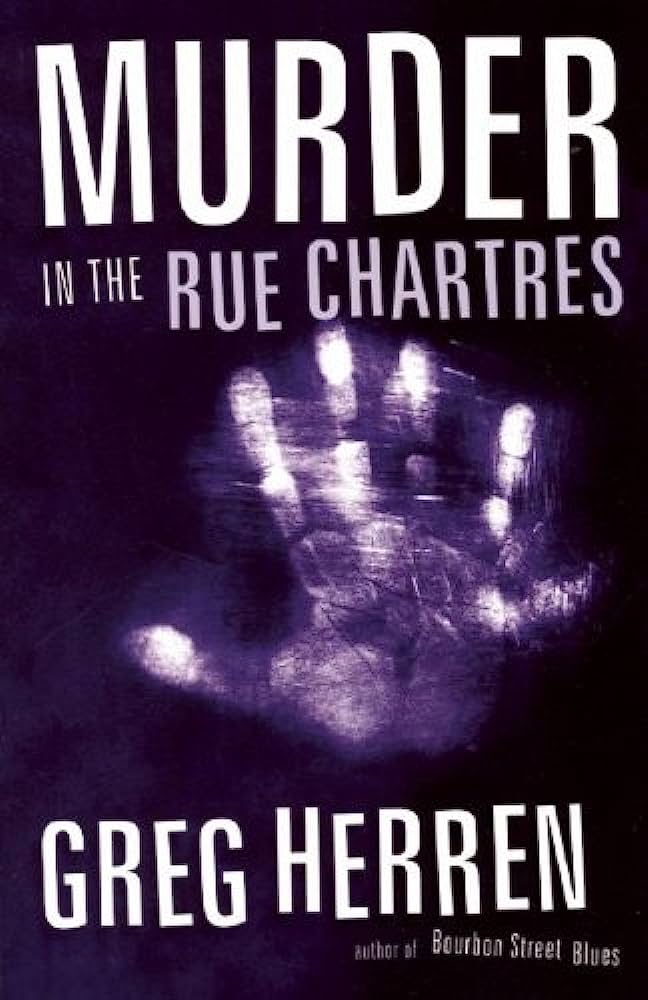
My editor at Alyson Books at the time, Joe Pittman, was new. He had come on board shortly after my previous editor was let go (I had a different editor for each of the first three Chanse books, and in fact had a different for the last two–so the Chanse series went through five editors at Alyson…now I would see that as a sign), and I was assigned to him as a gay mystery writer. He got in touch with me after Katrina to check in on me and of course, to encourage me to write about Katrina, which I did NOT want to do whilst I was in the middle of experiencing the aftermath still. I was still unhoused at the time, staying with my parents in Kentucky, before moving back to Hammond, Louisiana, just before Rita to housesit. Paul and I talked on the phone one morning and suggested we do a fundraising anthology for Katrina victims…but I wasn’t interested. Joe called me that afternoon and with the same suggestion, so I told him Paul wanted to do one and that was how Love, Bourbon Street came to be. Joe also kept insisting to me that I should write a post-Katrina book as the next Chanse book, and despite my reluctance I decided to go ahead and do it. Part of the problem, as I saw it, was, how do you end a book on a hopeful note when the city is still in ruins and most of the population still displaced? Joe kept pushing me, and I finally agreed to write Murder in the Rue Chartres–and I really don’t remember anything about writing the book other than I did actually write it, and it turned out to be one of my best books. It won the Lambda, for one thing, and got great reviews everywhere.

The fourth Chanse novel was, in my opinion, the weakest of the series. They’d fired my editor before I signed a contract for the fourth book, and when that finally happened, they needed me to write in like eight weeks. I asked for a two book contract so I would never have to write another book in eight weeks again (LOL at my naivete), and they were so desperate for the fourth they agreed. (I had already written a Scotty book that was just sitting in a drawer; I turned it into the fourth Chanse and to this day I think it was a mistake.) Of course, they did publish the fifth, but they never paid me a dime for Murder in the Garden District. The only money I’ve made off that book is from the ebook Bold Strokes put up–I gave them the entire Chanse backlist for ebooks, and those Chanse books still sell.

Maybe I shouldn’t have ended the series at seven?

But it felt like the right place to stop. Chanse’s personal story of personal growth and how it happened kind of got lost along the way; he grew and changed as the series progressed, but writing the last two–which I also think are good–felt a little paint-by-the-numbers for me; I felt that writing the sixth and when I felt it again in the seventh, I decided to stop there. I wasn’t getting any satisfaction for writing the books anymore, there was no joy derived from doing them, and since I’d already planned to stop at seven…I stopped at seven.

I still get ideas for Chanse books, of course. I have an LSU fraternity murder that would be a perfect Chanse story–I planned it as a novella–and of course, I’ve always wanted to fictionalize the Jeff Davis Eight murders as a Chanse novel, too. Maybe I could do three Chanse novellas published in one book?

That would make a lot more sense, and could be even more fun to write than one long single story novel.

Or I may not do anything with Chanse at all, and use those stories/plots for something else.

Too Far from Texas

I used to think you could never be too far from Texas, in all honesty, despite my deep appreciation and affection not only for Houston (I lived there for a time) but for all my marvelous friends in Texas. Murder by the Book, the only mainstream mystery bookstore that would allow me to have events in their store when I first published, always holds a deep place of affection within my heart and soul; I love that store, and of course, I also love me some Whataburger.

Whataburger alone makes Texas worth visiting, to be honest.

The Chanse MacLeod series was originally going to be set in Houston. I created him, and actually started writing about him, while i lived in Texas from 1989-1991. I remember distinctly that he had an office and a pager, as well as a secretary and an off-hours answering service…clearly, I didn’t understand how private investigators actually worked and was basing everything off movies, books, and television programs. But I do recall the name of the first book was going to be The Body in the Bayou–and Chanse was also straight in his original iteration–and it wasn’t until later (after my birthday visit here in 1994) that I decided to move it to New Orleans, and of course by the time I started rewriting the New Orleans version, I’d discovered gay mysteries and so of course, I changed his sexuality (I’ve never once regretted that either, I might add). I also put The Body in the Bayou aside and started writing a whole new murder mystery for him (Murder in the Rue Dauphine) that eventually became my first published book. Chanse remained from Texas–a small town in east Texas called Cottonwood Wells–and I even wrote a short story where Chanse goes back home to that small town. (I’d always wanted to write a book where he goes back home and has to deal with memories and so forth; I just never got around to it and his original publisher always made the sign of the cross at me whenever I suggested, “hey, should I set the next one in Chanse’s home town, where he has to go to clear up a crime someone from his past is accused of?”) Cottonwood Wells also popped up in earlier drafts of #shedeservedit, as where main character Alex’ family was originally from; that eventually got edited out over the final drafts.

Sunday morning and I slept late, and even after waking, stayed in the bed for a while longer. It felt very comfortable and my body was very relaxed, which was lovely, and I didn’t really want to get out of the bed, to be honest. I made swedish meatballs last night for dinner and left the mess for this morning (I am now cursing lazy Greg last night who made that decision–part of the reason I made this decision was I realized while cooking that the dishwasher had a clean load in it that needed to be put away, and it was a pain in the ass to do while cooking and trying to time everything) and I didn’t really want to come downstairs and face the mess. I did get some cleaning and organizing done yesterday–I did the kitchen floors at long last–and I also worked on the living room some. I wrote about fifteen hundred words yesterday to flex my writing muscles a little bit–I’ll probably go back over them again today as I write more–and I also have to get the proofs for Streetcar significantly finished today. I also want to work on the new Scotty a little bit as well. We’ll see how much I can get done this morning/afternoon before Paul gets up–although he is going to go into the office today; there was a lot of thunderstorms yesterday and street flooding, so he and the IT guy rescheduled for today (can’t say as I blame him, we were in and out of flash flood alerts all day yesterday; the joys of the tropics in the summer) which will free up this afternoon for proofing.

My self-care appointment (okay, it was a back wax; someday I will write an essay about my issues with body hair) went well and after that, I swung by and picked up the mail. On my way back home I stopped at the Fresh Market (I rarely shop there; I always forget it’s there) to get a few things, and while it is more expensive than other places, I like shopping there. The fruit and vegetables always seem much fresher, and rather than buying prepackaged ground sirloin, I instead got it from the butcher counter, remembering suddenly that it’s fresher that way–and those meatballs turned out superlatively. I think in the future I might shop there a little more regularly. They don’t carry everything I would need, of course–that would make life too easy–but for meats and fruit and vegetables…well, it really cannot be beaten. I spent some more time with In the Dark We Forget–which I am also going to do this morning for a bit, it’s really good and I want to find out what happened to Cleo and her parents–for the rest of this morning, and then I need to vacuum the living room at some point (I swept up the floor in there last night as well, and tried to get it to look cleaner and better organized in there as well; it’s amazing what a difference the clean floor makes). So, a busy busy day for one Gregalicious. But that’s fine, I kind of like having things to do…it’s just when I have so much to do the thought of it is soul-crushing and defeating that I don’t like it.

We started watching The Anarchists on HBO MAX last night, and it’s….something, all right. It’s also interesting how these people chose to define “anarchy” as something other than what most people generally accept it as meaning; but they were using the actual definition of anarchy rather than the societal definition. I always laugh at people who think that laws and rules and regulations are things that restrict freedom and are unnecessary in a society; it’s really just another branch of libertarianism or Ayn Rand’s insane “objectivism”–those laws and rules and regulations exist because they were necessary, because human beings tend to always operate by putting their own needs first. Regulations exist because food manufacturers regularly sold bad, or dangerous, food to the general public because there were no regulations and no one keeping them honest; robber barons created monopolies to exploit the public and make themselves rich (Bezos, Musk, etc are simply the modern day version of the robber barons) at the expense of the needy; hence we needed government intervention to prevent abuses. I’ve never understood the mentality of “oh, if we do away with regulations and laws and rules we’ll all live together in peaceful harmony” because there’s always at least ONE asshole in every group.

ALWAYS.

And on that note, I am going to make another cup of coffee, put the clean dishes away, and go read for a bit. Have a lovely Sunday, Constant Reader, and we’ll talk again tomorrow, if not later. (I’ve been going down the Stevie Nicks discography for my titles, and some of them–along with some of them from other song lists I was using before–wind up having the same titles as some of my books, and I’ve decided–see yesterday’s post about Sleeping Angel–that when I have a blog list song title that matches the title of one of my books, I am going to post about the book. Right now, I have Timothy in my stored draft blogs folder, and I think there’s another called “Watching Scotty Grow” in which I am trying to write the history of the series, which could be helpful as I am writing Book Nine at the moment, and since I am doing Stevie’s discography, that means Sara will also be coming up at some point.)

Vicious Circle

Ugh, Monday morning. I slept really well again last night–woke up before the alarm, in fact–and feel relatively well rested, if not completely mentally awake yet. I am sort of feeling like myself again; like my batteries have finally recharged, even if it meant putting some things off for a few days and just allowing myself to relax completely. The Lost Apartment is all pulled back together again; I’ve made some terrific progress with my writing, and my creativity is firing on almost all of its cylinders again, which is more than I ever thought would happen for me again. I finished reading The Russia House yesterday–it’s quite good, if unexciting; the writing itself is so marvelous the coldness of the story itself doesn’t matter, really–and we started watching season two of Very Scary People, getting through the Son of Sam and Night Stalker cases, and then part one of the Coed Killer (honest takeaway from this series: California sure has a lot of mass murderers and serial killers/rapists) before retiring for the evening. I also started reading Jack Olsen’s The Man with the Candy: The Story of the Houston Mass Murders (interesting title, because the term “serial killer” hadn’t really been coined yet), which is extremely well written, and also paints an interesting picture of Houston; coupled with Thomas Thompson’s Blood and Money–I’ve always wanted to write about Houston. I lived there for two years, and then six months again a few years later, and it’s an interesting, complicated city that no crime writer, at least that I am aware of, has set a crime series in, or written a crime novel set there….which is something I find interesting. I think it’s also true of Dallas.

Interesting trivia Greg fact: the Chanse series was originally set in Houston, and the first book was called The Body in the Bayou. I later, when I started writing it seriously (and got beyond two chapters) I moved the series to New Orleans and the story evolved into Murder in the Rue Dauphine, which is the real reason why Chanse was from Texas: he was originally supposed to have lived in Houston, playing for the (at the time) Oilers after attending Texas A&M before getting injured and becoming a private eye. (In the published series, Chanse went to LSU instead of A&M, and was injured in his final college game, which kept him from playing in the pros.)

I still think someone should write a cop or private eye series set in Houston. As wild and crazy as these true crime books set there make Houston seem, I doubt very seriously that the city isn’t wild and crazy still. I remember going to see the stage version of Disney’s Beauty and the Beast at Theatre Under the Stars (TUTS) there, the very first time it was publicly performed (little known Greg fact), and the audience was interesting….I loved the guys in their formal jackets, ties, Wranglers and boots escorting women in evening gowns and furs and dripping with diamonds ( needless to say, I was wearing a nice pair of slacks and a dress shirt, but I spent the intermissions and the pre-performance time in the lobby literally just staring at the fascinating fashion choices for Houston’s moneyed class).

Oddly enough, there were not many children there; considering it was the stage production of a Disney animated film, you’d think there would be more kids there…but it was a world premiere, and more about Houston’s higher class showing off jewels, furs, and gowns more than anything else.

I also had fun brainstorming the background work for Chlorine over the weekend; naming characters and loosely sketching out bios for them, as well as trying to figure out how to pull off the plot and how to make it work. This is the really fun part of a book–figuring out everything–before the drudgery of actually writing it starts. I am very excited about writing this book, though, and it’s been a hot minute since I was excited about writing a book–in fact, so long that I can’t remember the last time I was actually excited to write a book–it may have been Lake Thirteen, all those years ago–which is different than being happy to write a book. I also have to be careful not to worry about expectations of other people, too–Chlorine began its life as just a vague idea I had one morning while writing my blog, which somehow caught on with some of my friends on Twitter who started tweeting at me (some of them still, periodically, will bring up Chlorine on social media, wondering where it is and when I am going to write it), excited about the idea.

I also spent some time yesterday coming up with a to-do list, which I always enjoy doing when I’m not stressed and worn out. When I am stressed and worn out (hello, first three months of this year), to-do lists simply make things worse more than anything else; emphasizing how far behind I am and how much I have to get done and sometimes–not always, just sometimes–the to-do list defeats me once it’s written. Just looking at it causes me stress. I’m not sure how long I am going to be able to hold off stress at the moment–it’s always just lurking there, in my peripheral vision, waiting to pounce on my like a tiger and hold me down–but I am hoping that having the apartment back together and having the two deadlines in my rearview mirror will help stave off it’s inevitable return for a little while, at least.

Tonight I am planning–we’ll see how that goes–to return to the gym for the first time in a couple of weeks, which means basically starting over with one set of everything, which means I won’t be there for terribly long, which for a Monday night is a good thing, most likely. Here’s hoping this will also help me fall asleep tonight; insomnia so frequently derails me. The office is also on track to going back to full staffing and regular open hours, possibly as early as May; I am curious to see how that winds up going. I’ve gotten used to the tumbleweeds blowing through our mostly empty department, and it will seem weird having other people around when they actually starts to happen.

And on that note, tis off to the spice mines with me. Have a lovely Monday, all, and I’ll check in with you again tomorrow morning.

Cruel Summer

As far as summers go, I’d say this is one of the cruelest of my life thus far. (Nothing, however, including this one, has been as bad as 2005; let me make that very clear–but this one also isn’t over yet and apparently the Saharan dust storm that was hindering the formation of hurricanes is over now. Yay.)

I read an interesting piece on Crimereads about Robert S. Parker and his creation of his iconic character, Spenser, which put me back in mind of how I came to create MY character, Chanse MacLeod–who I have been thinking about lately ( I’ve decided that rather than writing novels about him I’m going to work on some novellas, and then put four of them together as a book; currently the working titles for the first three are “Once a Tiger,” “The Body in the Bayou,” and “The Man in the Velvet Mask”–I still need a fourth, and it’s entirely possible that any of these could turn actually into a novel, and I do have some amorphous ideas about what the fourth one could be), and reading this piece, which is excerpted from a scholarly tome about the genre I would like to read (Detectives in the Shadows: A Hard-boiled History by Susanna Lee), made me start thinking about how I created Chanse, and the entire process that the series actually went through over the years of his development.

It also made me think about looking at Chanse, the series, the characters, and the stories I chose to tell in a more critical, analytic way; I am not sure if I can do this, actually–while I’ve not published a Chanse novel since Murder in the Arts District back on October 14, 2014 (!!! Six years? It’s been six years since I retired the series? WOW)–which means I do have some distance from the books now, I still am the person who wrote them…even though I barely remember any of them now; I cannot recall plot points, or character names, outside of the regulars who populate every one of the books (I also cheated by using some of the same regulars in the Scotty series; Venus Casanova and Blaine Tujague, the police detective partners, appear in both series; and Paige Tourneur, Chanse’s best friend and a reporter, originally for the Times-Picayune who eventually moved on to become editor of Crescent City magazine, also turned up in the Scotty series, in Garden District Gothic and then again in Royal Street Reveillon. Serena Castlemaine, one of the cast members of the Grande Dames of New Orleans, who shows up in the most recent two Scotty books–the same as Paige–is a cousin of the deceased husband of Chanse’s landlady and erstwhile regular employer, Barbara Palmer Castlemaine).

I first created the character of Chanse MacLeod while I was living in Houston in 1989, and the series was intended to be set in Houston as well. I didn’t know of any crime novels or series set in Houston, one of the biggest cities in the country, and I thought that was strange (and probably wrong). Houston seemed like the perfect city for a crime series–huge and sprawling, economically depressed at the time but there was still a lot of oil money and speculators, con artists and crime–and the original story was called The Body in the Bayou (a title of which I am very fond, and is currently back in the running to be the title of a Chanse novella), because Houston also has bayous. I was reading John D. MacDonald’s Travis McGee series at the time, and loving them–I particularly loved the character of Travis McGee–and how twisty and complicated (if sometimes farfetched) the plots of the novels were. I had read The Dreadful Lemon Sky when I was thirteen, and liked it; but promptly forgot about MacDonald and McGee; a Book Stop in Houston that I frequented reminded me of them and I started picking them up. I had also discovered Sue Grafton and Sara Paretsky by this time, and was falling in love with the crime genre all over again, developing a taste for the more hard-boiled side I disliked as a teenager. This was when I decided to try writing in this field again–for most of the 1980’s I was trying to write horror and science fiction (and doing so, very badly).

But coming back to the field that I loved as a kid, tearing through the paperback stand alones from Scholastic Book Club and all the series, from Nancy Drew to the Three Investigators to Trixie Belden before graduating on to Agatha Christie and Ellery Queen and Erle Stanley Gardner, seemed preordained, and also seemed somehow right; writing mysteries, or crime fiction, seemed to me the right path to becoming a published author (turns out, that was the correct assumption for me to make, and one that I have never regretted).

Chanse was originally, as a straight man, a graduate of Texas A&M and a two year veteran of the Houston Oilers; an injury eventually led to early retirement and joining the Houston PD, where he only lasted another three years before quitting and getting a private eye license. He had a secretary, a woman of color named Clara, who was heavyset and in her early fifties. That was about as far as I got; I think I wrote a first draft of a first chapter which established him as having his office near NASA, in Clear Lake (which was near where I lived) and his first case was going to involve a wealthy oil family in River Oaks. Chanse was also six four, dirty blond hair, green eyes, and weighed about two-twenty. When I fell in love with New Orleans four or five years later, I started revising the character and started writing The Body in the Bayou while I lived in Minneapolis. By this time I’d discovered that gay fiction was actually a thing, and that queer mysteries actually existed: Joseph Hanson, Michael Nava, RD Zimmerman, etc. I wanted to write about New Orleans, and I wanted to write a more hard-boiled, MacDonald like hero than what I was reading. (Not that Hanson, Nava, and the rest weren’t doing hard-boiled stuff; they were–I just wanted to subvert the trope of the straight male loner-hero detective.)

Chanse was definitely a loner, and after I moved to New Orleans I once again started revising the manuscript and story that eventually became Murder in the Rue Dauphine. He was cynical about life, love and relationships, even as he was slowly inching his way into a relationship with a flight attendant named Paul Maxwell; he had only two friends, really: Paige Tourneur, who’d been his “beard” while he was at LSU and in a fraternity and was now a reporter for the Times-Picayune; and Blaine Tujague, a former one-night stand and fellow gay man on the NOPD (I changed his backstory to having attended LSU on a football scholarship and a career-ending injury in the Sugar Bowl at the end of his senior year, which led him to joining NOPD, where he lasted for two years before going out on his own). He also lived in a one bedroom apartment on Camp Street, across the street from Coliseum Square in a converted Victorian, the living room also served as his office–and that was the same place where Paul and I lived when we first moved to New Orleans.

The series and the character evolved in ways I didn’t foresee when I first imagined him as that straight private eye in Houston; or even when I rebooted him into a gay one in New Orleans. The original plan was to have him evolve and grow from every case he took on–which would parallel some kind of personal issue and/or crisis he was enduring as he solved the case–the first case was about his concerns about getting involved in a serious relationship as he investigated a case that made him realize he was very lucky to have found someone that he could be with openly; the second case was about investigating someone who wasn’t who they claimed to be while at the same time he was finding out things about Paul’s past that made him uncomfortable. Katrina, of course, came along between book two and book three and changed everything; I know I also wrote another that dealt with the issues between mothers and children which made him reexamine his own relationship with his mother.

The great irony is I probably need to revisit the books to talk about them individually, or to even take a stronger, more in-depth look at the character; maybe that’s something I can do (since I have ebooks of the entire series) when I am too tired to focus on reading something new or to write anything.

And it’s really not a bad idea to reexamine all of my books and short stories at some point, in order to get an idea of what to do (and how to do it) going forward.

And now back to the spice mines.