Shake Your Body (Down to the Ground)

Saturday morning and I have a couple of errands to do this morning. I need to go by the bank (I haven’t made a deposit in person in eons) and I have to swing by the grocery store. Sigh. I really didn’t want to leave the house today, but here we are. It’s also a struggle these days to get through as we go through and experience the collapse of the American experiment in self-rule. I think another significant part of our history that isn’t taught the way it should be is we aren’t taught about how many Tories there were in the colonies during the lead up to and aftermath of the Revolution. We aren’t taught New England threatened to secede during the War of 1812, or that there were people on both sides of the Civil War1 that sympathized with the other side; North and South weren’t monoliths the way we are taught. We aren’t taught about how many Americans were Nazi sympathizers and isolationists before Pearl Harbor, using the slogan “America First”–so you see why I have always raised a cynical eyebrow whenever anyone uses that slogan; it was tied to Nazi sympathizers to me.

Watching the collapse of our country is challenging and more than a little bit depressing. It is terrible that just as I approach the age of retirement and the final chapter of my life…well, the retirement may turn out to be involuntary, as my clinic’s funding is definitely on the chopping block, Social Security is about to be looted and destroyed, and I don’t want to even look at the paltry 401k, which has also probably evaporated. No job and no retirement funds is going to be awesome when I turn 64. Paul got the notice from the NEH to not bother applying for grant funding, as it’s all been cut, so his job may not survive this, either–no more festivals in the spring. So, miss me with “we need to be nice to MAGA voters now finding out”–fuck them now and forever. I will never forgive them, and their suffering lightens mine. You want to embrace them, be my guess. Me? I will never stop laughing and pointing, let alone mocking them and enjoying their tears. My patience has worn out for ignorant haters, sorry not sorry– and as they so eloquently put it, “fuck your feelings.”

Yesterday was a nice day, overall. I got up, had a virtual meeting at work, and then did my Admin work before running some errands. I got that done, and then Paul and I made a Costco run and spent an insane amount of money. After getting home, lugging everything into the house and putting it all away, I was tired. I collapsed into my chair for a while as Paul went upstairs to work on the NEH grant–but got the email so didn’t have to bother for the rest of the evening and we dove further into The Residence, which I am greatly enjoying. Uzo Adoba is fantastic as Cordelia Copp, the world’s greatest detective, and it’s very well cast, high production values, and the writing is quite crisp. The chief usher at the White House (the divine Giancarlo Esposito) is murdered during a state dinner, and Cordelia is brought in to solve the murder. I think what’s most interesting is the divide between the White House domestic staff v. the White House political staff; the domestics work for the House, the political staff comes and goes. I’d never really thought much about the staff of the residence, so it’s an interesting look at how that all works, and it’s very cleverly structured. Highly recommend.

I do have some errands to do today, and a lot of straightening up to do as well. I want to get some reading and writing in this morning, so I can go to the gym tomorrow (I know, right?) and get some more done. I’ve been letting things slide a lot lately, which probably means I am depressed, which isn’t surprising, given the state of the world and everything else going on in my life. I think there’s an element of why bother with this book, to be honest, which is counter-productive and quite self-destructive, but it’s hard to be productive when your default is almost always pessimism. I always knew Republicans were working very hard to destroy everything decent about this country (unfettered capitalism is sociopathic in nature), but I never dreamed they might actually succeed. To paraphrase Game of Thrones: “Whenever I wonder why the Republicans would do something so counter-productive to democracy, I like to play a little game: what is the worst reason they would want to do this?”

Littlefinger was right, even if he did end up with his throat slit for his treachery.

Yesterday I also realized that one of the great American traditions, going back to colonial days, of evading paying duties and tariffs was smuggling. I used to love to read about Colonial smugglers (John Hancock was one), and some great fiction was built up around smuggling. I’ve always thought the years of Prohibition (and alcohol smuggling) in New Orleans would be an interesting time to write about. That decade saw the rise of Huey Long to power in Louisiana, and there are some fantastic stories about that post-Storyville time here. Jean Lafitte was a pirate, too–but he was also a very successful smuggler. But again, one of the great problems of New Orleans/Louisiana research is going down wormholes and sidebars–my ADHD does not matters at all in this regard; I do remember wanting to write about “Mrs. Officer,” the first woman cop in New Orleans, who was hired because they needed a woman to search and interrogate criminal women, which was a problem during Storyville days. I mean, what a great decade to research and write about! Imagine what “Mrs. Officer”2 endured in terms of misogyny as the only woman cop in an era where women couldn’t vote.

There’s also a protest today scheduled in New Orleans, as well as around the country. I’m hoping to make it, it just depends on how tired I am after getting things done this morning. I feel pretty good right now, but that also doesn’t mean I won’t flag later, either.

And on that note, I am heading into the spice mines. Have a lovely Saturday, Constant Reader, and I’ll check in with you most likely tomorrow morning.

  1. This is a classic example of why I say we don’t teach history properly (which will end up being a longer-form essay for my newsletter at some point). There were plenty of Tories during the American Revolution. There were Southern sympathizers in the North and Unionists in the South–I knew about the North, but whenever I’d come across that about the South I figured it was after-the-fact apologia, excusing Southern whites for their inhumanity. But over the least few years as I’ve done more deep dives into Alabama history, and hearing more old family stories, I’ve come to realize it was actually true. Erik Larson discusses this in more detail in his The Demons of Unrest, which I do recommend. ↩︎
  2. SHe was always referred to as “Mrs. Officer,” which also makes a great title. ↩︎

I’ll Never Love This Way Again

Remote Friday, which used to be Work-from-Home Friday–they call them “remote days” at the office now, so I had to rename the blog entry to be correct, because I am nothing if not a stickler (as if). I was correct in assuming I would be brain frazzled when I got home from work (it was a good day, if busy, and I got a lot done. Even wilder, there wasn’t much back-up of traffic on the highway), so I recharged for a bit in my easy chair with Sparky, and reacquainted myself with what happened in the advancing collapse of the Weimar Republic while I turned my attention away, and wasn’t in the least bit surprised at the most recent Neville Chamberlain-like statesmanship from Democratic leadership. The party just needs to die at this point before it gets too ugly…for them. I believe when MAGA turns on the people they voted for it will be incredibly violent and deadly–which is going to be a true Reign of Terror, since the betrayal runs so deep. The failure, and potential death of the Democratic Party–thanks, Chuck Schumer and Hakeem Jeffries, for your utter failure of leadership–will be less ugly, but ugly just the same. It’ll save me some money, since I will no longer be donating to any politician or party going forward…and I certainly will not be doing any campaign work of any kind ever again, either. Right now, the list of donations for 2026 is looking like it will be entirely to primary opponents. Why on earth would I ever support people who aren’t going to fight for the country and the Constitution?

I managed to get chores done last night, as I wasn’t physically tired at all, but had no bandwidth for reading or writing–but instead of sitting in my chair all night, I got my ass up and started doing chores. I did laundry, emptied the dishwasher, and washed everything in the sink and reloaded and ran it again. I picked stuff up and worked on the kitchen, too. I hate that my mind is so fried by Thursday, but this was also a busy-ass week and I was in clinic every day. I also slept very well last night, and Sparky wasn’t as insistent that I get up at six as he usually is. I also managed to pay my car registration on line, got the bills all paid, and now get to do some work-at-home duties before running some errands before settling in to read and write for the rest of the afternoon. LSU’s final gymnastics meet is tonight, at Auburn, so we’ll be watching that tonight, and we need to find something new to stream–but we also have this week’s Reacher and Abbott Elementary to watch, too. That’s tonight sorted, any way.

Tomorrow the weather is going to be ugly with some sort of super storm cell capable of producing powerful tornados. We don’t really have basements or interior rooms here, and the houses all have enormous windows, so yeah, tornados here are quite unpleasant. Yet another reason for me to get everything done outside of the house that needs to be done today, you know? I just need to get the mail and some groceries, nothing too terrible and relatively easy to get taken care of, which will be very nice. It also appears that the Irish Channel St. Patrick’s Day parade is cancelled, possibly postponed.

By checking the news for the weather, I also saw that today is the anniversary of one of the city’s darkest days in history–the lynching of eleven Italian-American immigrants in the city jail. The police chief had been murdered, and the (bigoted) view of New Orleanians that it was a Mafia or a local Italian crime gang, so when some of them were acquitted…the good white men of New Orleans (sarcasm) stormed the jail and lynched the prisoners. It created an international incident and almost led to war with Italy; to appease the Italian government, one of the things the US did (besides paying an enormous indemnity) was create Columbus Day–which is how that happened….funny that a holiday created to honor a genocidal maniac came about because of bigotry, racism, and murder. I wonder…is this the time period racists mean when they talk about how New Orleans “used to be safer”? Because that doesn’t sound too safe to me…maybe it was when Storyville was open? When the Axeman was killing people? I do want to write about the lynchings some time, but I don’t know how to turn that into a story or a book. Perhaps someday….

And on that note, I am heading into the spice mines. Have a lovely Friday, Constant Reader, and I may be back either later or not till tomorrow morning. I will see you then!

Sail On

And another Sunday fun day has rolled around. It was cold in New Orleans yesterday, but I did drop books off at the library sale, picked up the mail, and made groceries. Irony of ironies, when I got home I realized I didn’t have one of my bags–containing the things I went to the store for in the first place. Sigh. So I will have to go out in the cold this morning to rectify that error, but that’s all right. I got some things done yesterday around here, and worked a bit on my editing of my own stuff (which is going slowly because it’s horribly depressing to see how shitty the writing is, despite reminding myself first drafts are always shitty first drafts are always shitty– it still wears me down).

Okay, I bit the bullet and went to the store to get the things I paid for yet didn’t have when I got home from the store yesterday It was actually pleasant; mayhap in the future I should go early in the morning to make groceries. It’s only forty degrees but sunny here this morning, that always odd combination where it looks like it’s hot and steamy outside but it’s not! Now that I have that out of the way–which is also part of it, the putting it off and putting it off until such time as my day is interrupted and never quite recovers. Now I have that out of the way and don’t have to worry about it, and because it wasn’t a crowded shitshow the grocery usually is right before a holiday, I feel neither tired or burned out from the experience. I know it sounds weird, but a crowded grocery store overstimulates me and wears me out.

I did sleep a little later than usual this morning, and the bed was warm and comfortable and inviting and I didn’t really want to get out from underneath the blankets. But Sparky was hungry and would not rest until I was up, which is just as well. He’s fed and if I’d lounged in bed even longer this morning I would have not gone to make groceries, so everything was a “win-win”. I did have the games on yesterday, for what it was worth. Talk about snooze-fests. Is this what we have to look forward to with this new system? Blowouts in the first round? I also don’t like the home field advantage half the teams get in the first round. It makes a difference. I was at least hoping, despite my antipathy toward everyone playing this weekend, for some good, fun games to watch.

It was a good thought.

Was anyone surprised that disgusting grifting POS Krysten Sinema is going out the way she has chosen to? What a despicably corrupt narcissistic bitch. May we never hear her name again except for her obituary and the outpouring of contempt sure to follow. She betrayed her constituency, she betrayed queer people, and she betrayed her party to cozy up to Fascists and block progressive legislation while taking bribes and enriching herself. One of the problems with our current situation is that anyone can run against a horrible MAGA candidate and look good, rally votes and win an election as a viable alternative to something worse–but there’s nothing stopping said person from selling out for personal enrichment once they are serving. I’d like to see an IRS investigation as well as a DOJ one to find out who’s been paying her to be Mitch McConnell’s little beta bitch since she took office. She was so hated in Arizona that Kari Lake would have beaten her in the general1. I hope she spends the rest of her life getting drinks thrown on her and pies in her fucking face, like the clown she actually is. Good riddance to some serious raw sewage.

I was thinking yesterday (fleeting thoughts I’ve had a lot over the last few months) about James A. Michener and how no one today would read any book as long as his were, back in the day. I enjoyed Michener–Hawaii was a bit much–but I’ve been thinking how amazing it would have been for books in that style to have been written about Kansas, Louisiana, or Alabama. I certainly would never write such a thing–I don’t have the patience to do that much research, let alone turning it into a million words or so of a novel. (Although Michener would have written about three hundred pages about the forming of the Mississippi River delta, let alone the lakes and the swamps.) I was revisiting one of my favorite New Orleans histories, Frenchmen Desire Goodchildren, and I was also remembering that Gallatin Street, one of the worst sections of the old French Quarter, no longer exists. It was a vile place of bordellos and sleazy, dangerous bars; murders and rapes and muggings happened there with a stark regularity until it was demolished to extend the French Market. I’ve been wanting to write another Sherlock story in the 1910’s Quarter, and having either him or Watson visit a nasty dangerous gay bar on Gallatin would be a fun scene to write…if Gallatin was still around by that time; I think it’s badness was over by the time Storyville was set up, but who knows? I’ve resisted writing about Storyville, because it’s already been done so many times…but I also think it would be fun to write about New Orleans during Prohibition, too, when New Orleans became known as the Liquor Capital of the United States. That…could be a lot of fun. Maybe even an ATF agent coming to the city to root out liquor sales, only to hang their head in utter and complete defeat?

Thinking of Michener also reminded me of how much I used to read when I was a kid. Granted, the distractions of a gazillion streaming services didn’t exist back then; there were only three real channels, and we didn’t spend most of our times looking at our phones because there were no images on it. It also has made me think about how my primarily formative years–the 1970s–were awash in cynicism and mistrust of everything and how huge conspiracy theories, or all kinds of other “unexplained phenomena” struck people’s fancies. There was, of course, the JFK assassination conspiracy theories–but there were so many others. The Amityville Horror (on which I called bullshit at the time and still do), the Bermuda Triangle, UFO’s…you name it, people were interesting in it. I read Erich von Däniken’s books about “ancient aliens”, and of course there was all kinds of deconstruction of religion and the Bible, which was also interesting–The Late Great Planet Earth was a huge bestseller, detailing how the prophecies of Revelations and the end times were coming true right before our very unseeing eyes! End times Christian theology took hold–and never really let go, either. The X-Files could have been made in the 1970s (although it would have never been greenlit) but there was a lot of media, especially film, that tried to cash in on all of this. During the shutdown I did my “Cynical 70s Film Festival”, and it’s really amazing how a thread of paranoia runs through so many films of that decade. It was a strange decade, that saw the further inward collapse of the social engineering that took place after the second world war–that excluded everyone outside of the straight white cisgender male. The center wasn’t holding, and now? We’re living in the midst of the backlash towards social progressivism in this country.

And on that note, I am going to make another cup of coffee and head into the morning spice mines. Have a lovely Sunday, Constant Reader, and I may be back later–one never truly knows, does one?

  1. That’s pretty fucking hated. ↩︎

House of the Rising Sun

This is probably one of the most famous songs about New Orleans of all times, and of course, doing a deep dive into the history of the song–which began as an English folk song, of all things–was a pleasant way to spend a few hours. I heard the recording by the Animals when I was a kid, and honestly never cared very much about it. I always thought it was about a house of prostitution in New Orleans–Storyville, probably–but never gave it much more thought than that. But when I was looking for titles of songs about New Orleans to use for blatant self promotion for Mississippi River Mischief, it was kind of an obvious one. And when it came up on my list for this next post, I realized I didn’t really know very much about the song other than I didn’t care for it very much. It originated in the 16th century as an English folk song, and gradually evolved into an Appalachian folk song called “Rising Sun Blues” (great title, I may abscond with it, frankly) before finally becoming a folk-rock hit for The Animals in 1964 with its current name. (Musicologists suggests it’s thematically related to the old English folk song “The Unfortunate Rake,” per Wikipedia.)

I do find that kind of thing interesting, even if I don’t have any use for that information. (Although Barbara Michaels did a great job of using classic traditional folk songs and their history as the foundation for her underrated but marvelous novel Prince of Darkness–which I would love to revisit.)

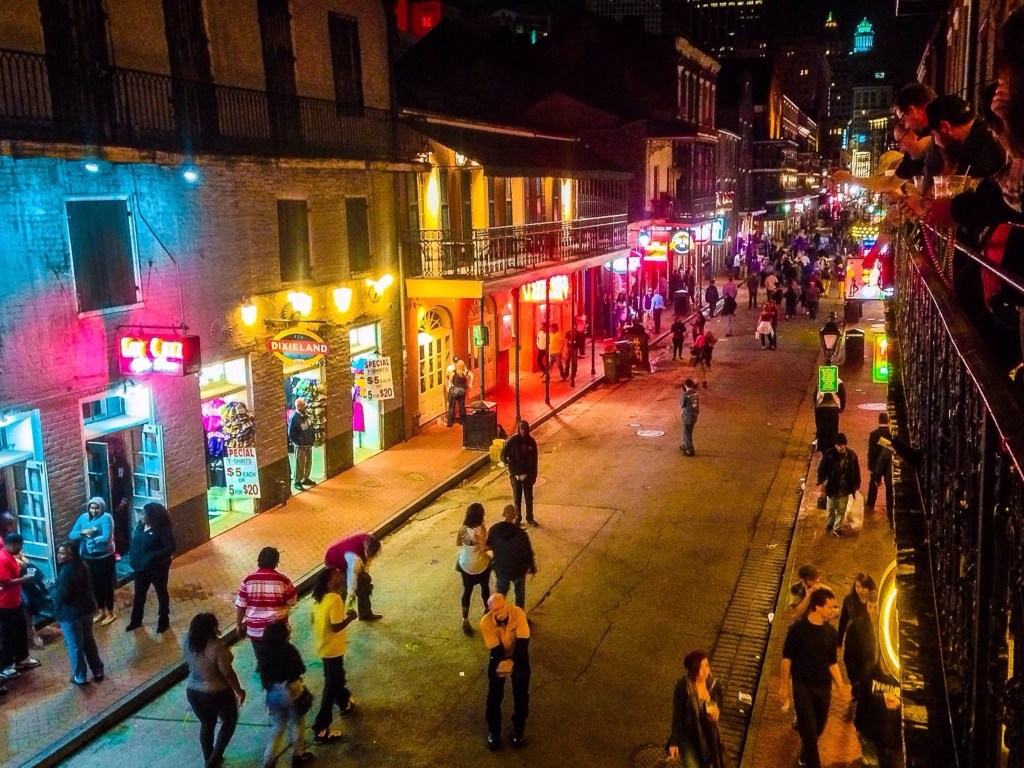
If you were playing Family Feud and the question “what is New Orleans known for”, the top two answers would probably be Bourbon Street and Mardi Gras. This annoys the locals and the natives to no end; and it’s understandable. Boiling New Orleans down to those two things is incredibly reductive. But they are major facets of the city, and both are responsible for a lot of tourist revenue, which the parish, city and state desperately need because our state and local governments (all of Louisiana’s cities and parishes) are complete and utter failures. When we moved here in the mid-90s, New Orleans had a strong base of tourism, but it was nothing like now. Since Katrina the city’s primary focus has been building the city into a tourist destination, putting all of the proverbial eggs into that particular basket. The pandemic wound up killing businesses that Katrina couldn’t; the St. Charles Tavern at the corner at Martin Luther King didn’t survive COVID, as one example. (They had amazing fried mushrooms; we used to get them every once in a while as a delicious greasy breaded and deep-fried treat.)

When I first decided to start writing about New Orleans (much as I hate to say this, but New Orleans really IS my muse, and I love that I live in the neighborhood of the Muses here), one of the things I was determined not to do was use clichés about the city in my work. It wasn’t until my fifth novel that I wrote about Carnival/Mardi Gras, which is where most writers about the city inevitably start (cliché as it may be, you also cannot write about New Orleans without eventually having to write about it); I wanted to get more established as a writer before I went there. Part of the reasons the first two Scotty books were set around Southern Decadence and (to a far lesser extent) Halloween was because those were also important holidays for the gays here. I did address Bourbon Street with the first Scotty; I knew that title (Bourbon Street Blues) would tell anyone that it was a New Orleans story, so yes, I took advantage of a cliché there. But I also realize now that most of my New Orleans writings were very provincial in a way; I mostly write about the “sliver along the river”–the Marigny, the Quarter, the CBD, the lower Garden District, the Garden District, the Irish Channel, and Uptown. There’s way more to New Orleans than these neighborhoods–sometimes I send them over the bridge to the West Bank or out to Metairie; there was a very vivid post-Katrina scene where I sent Chanse out to Lakeview, but for the most part I’ve not done much about other neighborhoods here. The West Bank, City Park, the East, Gentilly; all of these rich and vibrant neighborhoods–as well as the diverse ethnic make-up of the city–are very fertile ground for someone writing about New Orleans. Generally, the neighborhoods I write about are the neighborhoods writers who don’t live here focus on because they are the better known ones.

And of course, I’ve rarely, if ever, touched the history of the city–and it is rich, compelling, and fascinating…and super dark.

That’s kind of why I wanted to move this recent Scotty out of the city and into one of the rural parishes not far from the city limits. I have fictionalized these parishes before–I try not to fictionalize New Orleans, but have no problem inventing parishes and towns in the rest of Louisiana. St. Jeanne d’Arc parish is loosely based on St. John the Baptist and St. Charles parishes, known as “river parishes” because they run along the river north of the city. Redemption, also an invention I’ve used in other books, is based on the “bayou parishes”–not along the river, but between the river and the wetlands/Gulf of Mexico; those are Terrebonne and Lafourche parishes. Louisiana is just as interesting as New Orleans, and also has an amazing and interesting history of its own. Of course, the next Scotty will be back in the city–his next few, if they go as planned, will all be within the city–but that doesn’t mean I don’t want to keep writing about Louisiana and my fictional parishes, either.

There really is so much material here I could never run out of ideas.

Lady Marmalade

He met Marmalade down in old New Or-leenz, strutting her stuff on the street, she said “hello, hey Joe, you want to give it a go?

That classic song by Labelle came out while I was in high school, during the early to mid-1970’s, and there was a lot of prurient young teenager thrill in knowing that the French lyrics translated to “do you wanna have sex with me tonight?” But the song–essentially about a hooker in New Orleans and a man’s experience with her–was an introduction to another side of New Orleans–one you wouldn’t find in the World Book Encyclopedia.

It was very important to me, for a variety of reasons, to make Scotty someone who embraced his sexual orientation and sexuality. I wanted to write someone who LOVED having sex, loved beautiful men, and felt no Puritan-American based shame about enjoying sex. Those kinds of characters were few and far between in gay fiction, let alone in gay crime fiction. After writing the typical miserable cynical bitter gay man with Chanse, I didn’t want to do that again. I wanted Scotty was to be the obverse of Chanse in everything, except their mutual love of New Orleans.

(This was, in part, in response to being briefly dropped by Alyson when I signed the Scotty series with Kensington, being told “two mystery series set in New Orleans would be too alike.” I took that personally, as an insult to my talent, ambition, creativity, and abilities…and I think I proved my point. Once Murder in the Rue Dauphine and Bourbon Street Blues were released–and Rue Dauphine sold super well for them and was nominated for a Lammy–Alyson changed their minds. I’m still mad at myself for not asking for more money.)

But while Scotty was highly sexually active, he never got paid for it. He also never did porn–although I did consider that at one point as an option; I thought a murder mystery built around a porn shoot would be interesting and kind of fun. And of course, in this book he mentions that he and the guys have recorded themselves having sex, and have sexted each other.

Scotty always preferred to keep his status amateur–but he was a go-go boy (stripper, exotic dancer, dick dancer, whatever you prefer to call the guys who dance for dollars in gay bars wearing various kinds of male undergarments), and he was certainly someone who was not averse to having a sexual encounter with a handsome stranger. (There’s a joke about this in Mississippi River Mischief where Frank comments after they’ve met someone, “I’ve been with you for almost twenty years. If you think I can’t tell by now that you’ve recognized someone but you’re not sure from where, which means you’ve probably slept with them, think again”–a paraphrase, but you get the gist; Scotty is often running into men who look vaguely familiar, and that usually does mean he slept with them a long time ago.)

New Orleans, despite it’s rather prim-and-proper high society set (on the surface, anyway), with the Pickwick Club and the Boston Club and the mysterious Mystick Krewes of Rex and Comus and so on, has always been a city of loose morals and freewheeling attitudes towards sex and sexuality. We had a zone where prostitution was legal for three decades or so (Storyville) and I wouldn’t be surprised if there were several bordellos operating within the city limits as we speak. There was the arrest of the Canal Street madam; and of course local author Chris Wiltz wrote The Last Madam, a biography of notorious Norma Wallace–the last well-known madam in the city. (Which I need to reread…) Bourbon Street was known for its strippers and vice for decades; there are still strip clubs on the infamous strip running from Canal downtown to Esplanade–and there are usually men in bikinis or something equally scanty on the bars of the gay clubs down down around the St. Ann/Bourbon queer nexus of the Quarter. When I was starting my deep dive into New Orleans/Quarter history, I wasn’t surprised to find out there were “stag” bars down along the riverfront along the levee; and if someone at one of the fancy houses in Storyville had a predilection for the Greek vice that needed scratching, the madam would send one of her bouncers down there to find someone willing to turn a trick, with a fair share going to the house, of course.

I think that’s fascinating, really; and something I want to explore in a story. I’ve started the story (it’s “The Blues Before Dawn” which I’ve mentioned from time to time) but can’t quite nail down the crime part of it. The set-up is great, though, he typed modestly.

I didn’t intend for Scotty to wind up in what is now known as a throuple–a three way couple, or a relationship of three people–on purpose. I wanted to create the dynamic of two men being interested in him at the same time, and have some fun with that in the first book. I absolutely did, and when I sent Colin away at the end of the first one, that was deliberate. I couldn’t decide who Scotty should wind up with, and I wanted Frank to be really who he logically should end up with–but this bad boy with a mysterious background who was so hot and sexy? I couldn’t NOT bring him back, and so I decided I had three books to wrap up the romantic dilemma. I wasn’t certain what the backstory of the dilemma would be, or how it would turn out, or how it would go–but when I was writing Jackson Square Jazz I found the perfect place and perfect way to bring Colin back. That book ended with them deciding to try a throuple to see how it works out. It was going pretty well until Mardi Gras Mambo–and I tried really hard with that book to not end the romantic story the way it ended in that book…and finally decided, since the series was actually turning out to be popular, that I would finish it by the end of the fourth book.

I’ve also not talked about it in the books or on this blog at all, but….they also have an open relationship. (Someone asked me about this at some point after the last book came out.) Nothing else would work for Scotty–he may not take advantage of the opportunities that pop up now the way he used to, but that’s because he has the freedom to make that choice. If he was forbidden from outside sexual relationships, he would cheat–and he doesn’t want to do that because that’s hurtful and wrong. He never wants to hurt Frank or Colin–but both of them are also away from New Orleans for long periods of time; Colin off doing his international agent stuff, while Frank is on the wrestling tour doing shows and promo events; so they are on their own a lot and temptation is always there–after all, all three of them are gorgeous–so while it is unspoken on the page, it’s an open throuple. And usually, Scotty finds outside sex to be kind of dull, unemotional, and not nearly as much fun as it is with one or both of the guys. That’s a character development arc. I also don’t show Scotty going out to clubs or waking up with hangovers with a stranger in his bed anymore, either. He does still go out–he loves dancing–but the gay bar scene has changed since he was younger and he doesn’t find it to be nearly as much fun as he used to.

Though he won’t say no to a hit of Ecstasy during Carnival or Decadence.

How subtle are the changes in Scotty as he has grown, aged and evolved? I think they are miniscule, but a revisit of the first two books in the series has shown a lot of change and growth over the years for him. He is definitely not that same flighty twenty-nine year old who booked a gig dancing at Southern Decadence all those years ago to make rent and wound up kidnapped by neo-Nazis deep in a swamp–I think he’s a little less flighty and a lot more responsible than he used to be…though he’s not as responsible as most people his age. Turning him into a property owner in the Quarter from a renter–and letting Millie and Velma ride off into the sunset in Florida as retirees–has also made him grow up, as now taking care of the property is his responsibility.

I will always be fond of my Scotty, though, and hope to keep writing him till I can no longer type into a computer or speak into a word-to-text app.

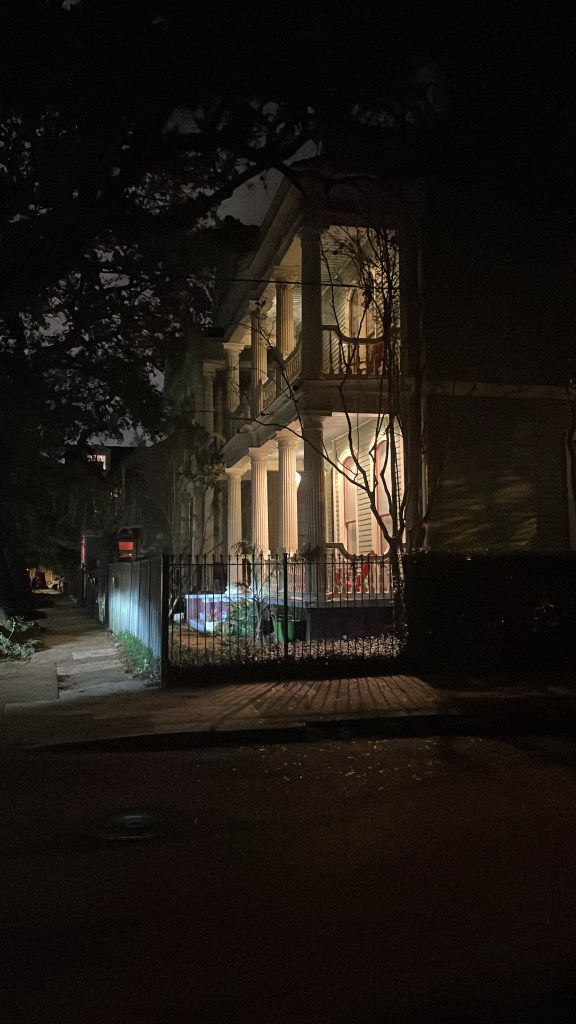
my neighborhood is so beautiful at night, isn’t it?

Nobody

Sunday morning and I managed to get a lot done yesterday while watching games occasionally. I got bored watching Georgia throttle Florida, laughed about the Kansas win over Oklahoma, watched Tulane almost blow a significant lead and lose to Rice, and got bored with Tennessee-Kentucky so switched over to Elité on Netflix–and this seventh season is simply terrible. We have one more episode in this season and it’s over, and I can’t say I’m sorry to see it go.

But I did get a lot done yesterday. I cleaned. I ran errands,,,and I worked on the filing. Yes, there’s still work to be done, but my workspace no longer looks like I need to. just take a flamethrower to it, and even the laundry room is beginning to look like it’s more together than it should be. I do have to do some refiling, but everything is properly sorted and where it needs to be, if not alphabetized properly. I also discovered a lot of duplicate files–I am sure there are even more to be found, once the filing truly starts getting compiled and sorted properly. I also need for some of these files to just go away; I am never going to get to all of these ideas and I am never going to write all these stories and novels or essays and nonfiction books, either. But which ones to keep, which ones to abandon for good? I’ve been saving ideas and files and stories and scenes and characters for well over forty years now; you can only imagine how much I’ve forgotten about that are buried deep within this insane file-hoarding situation; it’s almost as bad as my book situation.

But getting all this clutter and debris sorted and put into a semblance of order also helped me get focused more–I think perhaps that’s been part of the problem with focusing on writing anything, really; knowing how out of control the filing had gotten and not knowing where anything was, or what I was working on could be found, and so forth. I’m going to try to get back to work on my next book today–after I get some more of these blog entry drafts completed and posted–and I am also going to try to work on the files some more. I decided that I am not, after all, going to be able to get my story “The Blues Before Dawn” finished in time to submit to the Bouchercon anthology, so it’ll go back into the files for now for a while. I never could quite get the story write, but that opening–my main character walking home in the misty morning hours of the Quarter while listening to someone playing the blues on a saxophone on a balcony, hidden away in the fog. I love that image, and I know that my main character is an apprentice waiter at Galatoire’s and sometimes turns tricks for money at Ma Butler’s bordello in Storyville; I also know it’s a Sherlock Holmes story from the perspective of someone who has a crush on Mr. Holmes–and now has to depend on Sherlock to save him from wrongly being accused of murder. The rest? Not so much…and it’s due on Tuesday, so that’s not going to happen. A pity, yes, but a Sherlock story from the perspective of a sometime male harlot was a long shot for the Bouchercon anthology anyway.

I did start reading The Lonely Ghost by Mike Ford, which is quite delightful, along with a reread of Ammie Come Home by Barbara Michaels (also one of my favorite books of all time, and definitely one of the greatest ghost stories of all time) when I had a few down moments to spend (I’ll get back to The Lonely Ghost later on this morning), and I also have to make a cheesecake this morning and get the white bean chicken chili started so it’ll be ready for tonight and the rest of the week, of course. Halloween is going to be one of those frantic unsettling days, but that’s okay; I can make it through it all.

I slept really well last night, which was lovely; my sleep lately has been pretty marvelous, honestly. Relaxing in the evenings last week, letting the anxiety not get to me, and getting good night’s sleeps this past week was really kind of lovely and nice. I also slept late this morning, opting to stay in bed later than I usually do because it frankly felt nice, you know? Today I am also planning some self-care and grooming, which will be nice. Maybe even take a walk later in the day, when it starts cooling down? Although without the humidity yesterday’s low eighties felt marvelously and delightfully cool.

And on that note, the spice ain’t gonna mine itself, so off I go. Have a marvelous Sunday, Constant Reader, and I’ll check in with you again.

Steal Away

Thursday morning and the week is almost over.

I withdrew a short story I had submitted to a magazine in September of 2022; thirteen months is more than enough time to decide whether or not you want a story or not, and if you haven’t gotten to it by now, well, how long do you need? There’s a serious conversation about short story publishing that needs to be had at some point–but I think that aspect of the business isn’t taken as seriously as “book” publishing, and there aren’t many people who primarily focus on the short form for the abuses of writers that occur in that small part of the business to really be brought to public attention because, let’s face it, nobody really cares. I know that one of the big name prestigious crime short story publishers always takes twelve to fourteen months to respond to submissions…and when you know that going in, that’s one thing. This market I’ve published in before and it’s never taken even a fraction of this long to get a response to a submission; it had been pending on Submittable since the day after I clicked “submit.” It may be right for another market I am looking at right now–and I had wanted to include it in my next short story collection as a republished story. Heavy heaving sigh.

Maybe someday I will do a blog post about the slog publishing short stories can often prove to be. I was in one anthology that sat on my story (and everyone else’s) for at least three years (more like four, if not five); finally released the book but never sent me a print copy (I did get the electronic one) and I never did get the really nice check they offered me to get me to write the story. There were rarely any updates, either–and certainly none since it finally saw “print.”

Sigh. The glamorous life of a writer is mostly spent tracking down payments and author copies, seriously. Well, maybe not mostly, but it takes up a lot more time and energy than a non-writer might think.

I slept really well last night, with Tug making his usual five a.m. supplication, and I’ve already discovered a quirk: if I give him food, he will squeak at me until I dump out his water bowl and refill it–every single time. He won’t even start eating until he hears the water running in the sink. Granted, I always change out the water every time I feed him–but it’s part of his routine and he won’t eat until he knows he’s getting fresh water to go with the food. I think he’s completely settled into our lives as our house cat, too. He certainly believes he’s Lord of the Manor, and when he’s full grown he’s going to be a terror–because even pint-sized as he is now, he can get up to places you wouldn’t think; he’s a climber, so any possibility of a Christmas tree again is completely gone; which is fine, really. I do love Christmas, but it’s really for kids, and the older I get the more I care about the time off than holiday joy and gifts and things like that.

I made groceries on the way home last night at the Carrollton Rouse’s, which is becoming my favorite Rouse’s; the ones on the CBD and on Tchoupitoulas are convenient, but the one on Carrollton has more selection; which means going there I can get everything in one stop, whereas at either of the others I need to go to another vendor to get the rest of the things I need, which is very frustrating; and so even the extra time it takes to get up there and back is actually made up by the times savings of only going to one store. I was also very tired when I got home–we’d had a rather busy day at the office–so I didn’t read or do anything much other than put the groceries away; Paul had a board meeting so he didn’t get home until late, either. I did work on my story “The Blues Before Dawn”, and made some decent headway on it; the question is whether I want to make it another “Sherlock-in-New-Orleans” story, which I kind of want to do; I think I’ll do that for a draft and then do a second where the detective isn’t Sherlock, but I like the idea of writing a Sherlock story from someone else’s perspective, as well. I really like the idea of writing a bunch of Sherlock short stories in 1916 New Orleans, with Storyville (cliché, I know) and the Italian immigrants in the Quarter and the little Chinatown district on either side of Canal and illicit queer bars servicing sailors and so forth; how fun is that? And of course the Opera House was still there in the Quarter too–and people still spoke French in New Orleans, or at least the bastardized Louisiana version of it. I think my goal for the weekend is to finish a draft of the story and do some more work on the second Valerie novel.

And I have to go into the office tomorrow for my work-at-home day; which I may switch over to Monday; I’m not sure and I haven’t really decided yet, to be honest. I have to go in for a benefits meeting, and was thinking that maybe the thing to do would be to work in the office since I have to go there anyway; but….now I am thinking I should just go for the meeting and maybe work at home around it; I am not sure, and I suppose I will decide tomorrow morning when I get up–depending on when I get up, that is. Frankly, I am leaning towards just going in for the meeting and being done with it and coming back home. I like not having to get up on Friday mornings–even if I rarely sleep past seven as it is–but the lack of alarm going off is actually quite lovely.

And on that note, I am heading into the spice mines for the day. Have a great one, Constant Reader, and I’ll check in with you again later.

NOLier Than Thou

(NOTE: I started writing this post back in January, after I’d returned to New Orleans from my last Mystery Writers of America board meeting–this is to give context to the opening paragraph– as you are no doubt well aware, Constant Reader, that I’ve not been back to New York since January; so this is that same trip where this happened and I started thinking about these things, which have never been far out of the forefront of my mind since then.)

While I was in New York recently, walking around to and fro, here and there, hither and yon, I was always checking my phone (and yes, I hate that I’ve become one of those people) and then shoving it back into my pants pocket without putting it to sleep first or closing the app that was open. As I walked around, of course this led to my phone doing all kinds of weird things –closing an app and opening another, etc.; but at least there were no butt dials, right? At one point, when I pulled out my phone as I took a seat on the subway, somehow what was open on the screen was a google search for my book A Streetcar Named Murder–and when I went to close that screen I touched one of the images by mistake, which took me to the Goodreads page for the book. Bear in mind, I never look at Goodreads for any of my books, let alone Amazon–the temptations to start reading the bad reviews is too great, and while I can usually laugh them off, occasionally–and it depends entirely on my mood, of course–one will get under my skin and it will annoy me, and that’s not good for anyone.

This particular day on the subway the Goodreads page opened to the bad reviews first–its average is four stars, which I will always take because I am not Lauren Hough–and the very first one made me laugh out loud on the subway. Paraphrased, it was basically someone taking umbrage at “someone who doesn’t live here or know the first thing about New Orleans” writing a book about New Orleans. The reason they had come to this conclusion was because Valerie referred to Mardi Gras as “Fat Tuesday”, and according to this one-star reviewer, no one from New Orleans would ever say Fat Tuesday instead of Mardi Gras.

Well, I’ve lived here for twenty-seven years and I have heard any number of locals say Fat Tuesday rather than Mardi Gras, and so of course I had to click on the reviewer’s profile…and grinned to myself when I saw that they actually live in Metairie, not New Orleans…which to locals is a bigger crime than getting something wrong about New Orleans: claiming to be from New Orleans when you actually live in Metairie. (the rejoinder is usually along the lines of “bitch, you live in Metairie.”)

It was also kind of fun to be accused of inauthenticity when it comes to writing about New Orleans, because I personally have never claimed to be an expert on anything New Orleans (others have said that about me, and I always am very quick to reply not even close); the more I learn about the city the more I realize how little I actually know about the city. There’s an extremely rich (and often incredibly dark) history here; it’s hard for me to wrap my mind around the fact that the New Basin canal was there as long as it was, or that there were several train stations around the French Quarter (including one that essentially was in Storyville–rather convenient for the whores and pimps, right?), or that where UNO is now used to be the lake shore resort of Milneburg, or that the only way across the river or the lake was by ferry until Huey Long built a bridge at the Rigolets (the narrow inlet between lakes Pontchartrain and Borgne).

I was on a panel once at the Tennessee Williams Festival with Bill Loefhelm (if you’re not reading Bill’s books, shame on you and correct that immediately) and the question of New Orleans authenticity came up, and Bill’s response (paraphrasing) was that New Orleanians have a tendency to play a game called “NOLier than Thou,” in which they try to one-up each other to see who the true New Orleanian actually is–which is, of course, gatekeeping. (And yes, I immediately turned to him and said, “I like that and am going to steal it” SO CONSIDER IT STOLEN.)

It does bother me somewhat when I read books set in New Orleans written by people who have never lived here; you can tell, but I also get over it pretty quickly; who is to say who can and can’t write about a place? There’s a significant difference between visiting and living here, which I realized almost immediately after we moved here, and that also becomes very apparent in fiction. I had started writing the book that would become Murder in the Rue Dauphine before I moved here, and I realized, once I did live here, that everything I’d written about New Orleans was completely wrong. I didn’t work on the book for another two years; and even then I wasn’t entirely sure I’d lived here long enough to write about the city. So…I kind of cheated by making Chanse MacLeod not a native either; he’d moved to New Orleans after getting his degree in Criminology from LSU, and had been here about six or seven years when the story opened. So he was an outsider, too; so his views on the city and how things work around here were from an outsider’s perspective, like mine; that was easier. With Bourbon Street Blues, I decided that Scotty was not only a native but came from two old-line society families, from the Garden District and Uptown. One of the greatest joys of my publishing career was having the Times-Picayune’s mystery reviewer, as well as the Books Editor, both say repeatedly that I got New Orleans right in my books. (Thanks again as always for all of your support, Diana Pinckley and Susan Larson!)

And I never really worried about it too much from then on. I wrote about New Orleans as I saw it–the potholes, the cracked sidewalks, the leaning houses, flooding streets, oppressive weather and hurricanes. As the years passed, I became more and more aware that my New Orleans writing was primarily confined to the Quarter, the Marigny, the CBD, the Lower Garden District, the Garden District, and Uptown–a very narrow slice of the city, but those were also my slices of the city, so that’s I wrote about. Sometimes I’d venture into another neighborhood–Lakeview, the Irish Channel, English Turn–and sometimes the story would take the characters to another part of Louisiana–the bayou and river parishes, the Maurepas swamp, the Atchafalaya Swamp, Baton Rouge–which, oddly enough, I had no qualms about fictionalizing. I’ve created numerous fictional towns and parishes surrounding New Orleans; I’ve even invented a sleazy gay bar in the Quarter (the Brass Rail).

So, was I doing New Orleans (and Louisiana) right by making stuff up, inventing places like the Royal Aquitaine Hotel, the Brass Rail, Bodytech Health Club, Riverview Fitness, etc.? Sometimes you have to fictionalize things, even if they are based on something that really exists. I never really thought much about it; I felt like I was getting the feel of New Orleans right, that my characters talked the way people in New Orleans do and react the way people here do, and that I was putting enough reality into the books for them to ring true to locals, natives, and tourists. Sometimes the cases are based on, in or around something that actually happened or exist; like the Cabildo Fire, the Fire at the Upstairs Lounge, Hurricane Katrina and the ensuing flood; termite swarms; Huey Long’s deduct box; and even the court case in, I think, Murder in the Irish Channel that triggered the murders was actually based on a civil trial I served as a juror on.

When I started writing A Streetcar Named Murder, I realized a lot of things I was writing about had to be fictionalized; I couldn’t set a murder at a Mardi Gras krewe ball and use an actual krewe that exists in real life, for one thing (like I had to invent a French Quarter hotel for a couple of murders to occur in) and while I didn’t want to use the cheat that Valerie had moved here again, like I did with Chanse, I wanted her to be of New Orleans but not be of New Orleans…so her parents are from Georgia and moved here after college and marriage, so Valerie was born here, went to school here, met and fell in love with and married her husband here–but her roots aren’t very deep, so she is both insider and outsider at the same time. I liked that idea; like how I am of the South but not of the South, she was of New Orleans but not of New Orleans at the same time. When creating Jem Richard in Death Drop, again, he’s a recent transplant to the city but his father is from New Orleans but relocated to Dallas, where Jem was born and raised. Jem spent a lot of his summers in New Orleans when he was growing up with his paternal grandmother, so he too is of New Orleans but not of New Orleans; which I am really liking as a method of storytelling about the city. I also moved Jem to a different part of the city; he lives in the 7th ward, on St. Roch Avenue in what is known as the St. Roch neighborhood (aka what realtors are trying to redefine and rename as the “new Marigny”, in order to raise prices) which is also very close to my office. Part of this was to move the action out of the neighborhoods I usually write about (although he does wind up in both Uptown and the Quarter) and so I could explore another neighborhood/part of the city than what I usually write about.

I also had recently–prior to the pandemic–started feeling more disconnected from the city than I ever had before. Primarily I think this was due to my office moving; we had been on Frenchmen Street in the Marigny, one block from the Quarter and where Scotty lives, so whenever I needed some Scotty inspiration I could walk a block, stand under the balconies of his building and just look around, drinking in the sights and sounds and smells of the block. To get past this, I started joining New Orleans history pages on Facebook, like Ain’t Dere No Mo New Orleans or the HNOC page and various others–you do occasionally run into Confederate apologists and racists there (they usually cry about the “crime” in New Orleans–you know, the usual dog-whistles from the white flight racists who fled to Jefferson Parish or the North Shore to escape desegregation of the public schools) and reading more histories of the city, state, and region–which are incredibly fascinating. That reading/research helped me write my historical Sherlock in New Orleans short story, “The Affair of the Purloined Rentboy”–but I have also since realized I got some things wrong in the story too, but there is just so much to know. I set the story in 1916 for example….without knowing New Orleans was hit by a MAJOR hurricane in 1915 that wiped out any number of settlements and villages around the lakes and the bay shores (that will turn up in a story sometime; the destruction of the lake front village of Freniere is just begging to be fictionalized and written about). When I mentioned this to another writer, who primarily does historicals, she snorted. “It’s impossible to know everything, and would people in 1916 still be talking about a hurricane from 1915?”

Probably, but if it doesn’t have anything to do with the story being told, why would I mention it?

A very valuable lesson, to be sure.

So, yes, lady from Metairie: you caught me. I’m not from New Orleans, you’re correct. But I’ve also published over twenty novels and umpteen short stories set here, and have even won awards for doing it.

And I’ll call it Fat Tuesday if I fucking want to.

The Huey P. Long Bridge at sunset, photo credit Marco Rasi

Evangeline

One of the great joys of my life has always been history. One of the many reasons I love New Orleans so much is because the city has never completely paved over and replaced its history; on a foggy night in the French Quarter, the sound of mules pulling tour carriage clopping on the streets can make you feel like you’ve somehow stepped through a window into the past, and I love that. I’ve never known much beyond some basics of New Orleans and Louisiana history; and I’ve been going down rabbit holes since right around the start of the pandemic, learning more and more about the history here. It’s humbling to realize how little I actually did know. I knew when the French arrived; I know how English Turn got its name and when Louisiana was turned over to Spain (1763, to be exact) and when it became American (1803). I also know Napoleon sold Louisiana to the Americans before he succeeded in forcing the Spanish to return it to France….so he could sell it to the Americans. I know New Orleans fell to the Union in 1862 during the Civil War; I know a little bit about Storyville and Huey Long; and I know that the landing boats used for the Normandy invasion in World War II in 1944 were built here. I know a smattering of things post-war about New Orleans–but the gaps in my knowledge are staggering, and I know even less about the rest of the state’s history.

I know that the Cajuns are actually Acadians, from French Nova Scotia, kicked out after the French and Indian War and forced to resettle elsewhere–many of them, after a long and mostly horrific journey, arrived in the swampy wetlands of Louisiana and made their home here. I know that Longfellow’s epic poem “Evangeline”, about two lovers tragically separated during what is called le grande derangement–the Great Expulsion–who promise to find each other once they reach Louisiana. It’s a tragic poem, and of course the Evangeline Oak in St. Martinsville is supposedly the”place” that the fictional lovers finally found each other after so many years, but their pairing was simply not meant to be–the story is a tragedy, after all–but that was how the “Cajuns” came to be Louisianans, and even after they arrived it wasn’t easy for them here. The Creoles of New Orleans looked down their aristocratic noses at the lower class farmers, and so they settled in the part of Louisiana still known as Acadiana to this day.

I have a copy of Evangeline somewhere. I really should read it.

One of these years, I am going to explore my state more. I’ve lived in Louisiana now for almost twenty-seven years, and I’ve never done much in terms of exploration, sight-seeing, and research. The Atchafalaya Basin fascinates me, as does Acadiana. The more I read about the history of both New Orleans and Louisiana, the more I realize how little I know (I always laughed off being called a “New Orleans expert,” because there’s literally a library filled with information about the past of both the city and the state to completely humble me and make me realize I know actually very little about either, and definitely do not qualify to be called expert on anything Louisiana.

I’ve slowly started writing about the rest of Louisiana, but I often fictionalize the places I write about; they are loosely based on the reality but I get to play around with that sort of thing and that’s better for me than trying to write about the real places and making it all up. My first time outside of New Orleans writing about Louisiana was really Bourbon Street Blues, when Scotty is kidnapped by the bad guys and winds up deep in a swamp. “Rougarou” was when I came up with a fictional town and parish outside of New Orleans, which I’ve used since then again. Need had portions that were set in the rural parishes outside of the New Orleans metropolitan area. The Orion Mask and Murder in the Arts District also were heavily reliant on being set (at least partially) in a fictional parish between New Orleans and Baton Rouge. “Solace in a Dying Hour” is another one of these stories. Oh, and Baton Rouge Bingo also had a lot of action outside of New Orleans as well.

I probably should have majored in History for college, but what would I have done with that kind of degree other than teach? Ah, the paths not taken, since I never had any desire to be a teacher, probably my subconscious saying um, you cannot be a teacher because of who you really are which was probably smart. Besides, I wouldn’t have ever been able to pick a period to specialize in; I would have had to be like Barbara Tuchman, interested in everything and picking certain periods that intrigued me for study. How could I ever choose between the Wars of Religion and seventeenth century France, or the Hapsburgs in Spain and Austria? Although I suppose I could have specialize entirely in the sixteenth century, primarily because it was such a tumultuous transitional century. I wish I was a trained researcher, but I suppose I could still learn how to do research properly despite my great age; the problem is time. Fall Saturdays are given over to college football (and I am not giving up one of the great joys of my life) and of course Sunday I watch the Saints. But if I am going to write historical fiction set in New Orleans or Louisiana, why wouldn’t I avail myself of all of the magnificent research facilities here in the city? UNO, Tulane, Loyola and I’m sure Xavier all have archives in their libraries documenting the past here; there’s the Historic New Orleans Collection and the Williams Research Center and really, so so very much. I also need to explore the bayou parishes and the river parishes, and make my way further north to explore Acadiana…and if I ever want to write a book based on the Jeff Davis Eight, I would need to go visit that parish and look around, get a grasp for how it feels and looks there.

So much to do, so little time…and one of the great problems about Louisiana and New Orleans history is trying to decipher what is fact and what is fiction; as so many “historians” and “writers” (looking at you, Robert Tallant and Harnett Kane) often wrote legends and lore as historical fact. I’m not sure how much of Gumbo Ya-Ya is actually true or not, but for writing fiction…perhaps it doesn’t matter as much how right it is? I have this idea for a story, predicated on something I recently discovered again–I have a tendency to forget things–but there was a community just outside of New Orleans called St. Malo, which was settled by Filipinos who’d escaped bondage on Spanish sailing ships. Filipinos in Louisiana in the eighteenth century? But it’s true; and the community was mostly houses and buildings built over the water; the 1915 hurricane destroyed it completely and it was never resettled, with those who survived moving into the city proper. I have an idea for a story called “Prayers to St. Malo” that would be built around that, but the story is still taking shape. There is always more to learn about regional history here…and since I am doing such a deep dive into Alabama history, why not continue diving in regional here?

Louisiana is unique and special and different–which is why I think I felt at home here that fateful thirty-third birthday when I came to New Orleans to celebrate it. New Orleans was the first place I ever felt like I belonged, and I’ve never regretted moving here. I just wish I’d started diving into the local history sooner.

Darkness at the Edge of Town

I’ve kind of slowed down on my blatant self-promotion for A Streetcar Named Murder, mainly because the enormous thrill and rush of Release Day/Release Week has already come and gone. It isn’t like I’ve run out of things to say about New Orleans by any means; I could be here blogging for the rest of my life about New Orleans and never do more than scratching the surface. The depth of my lack of knowledge about New Orleans is bottomless. One thing, for example, that I can never completely wrap my head around is where the train tracks and stations were in the city, back when rail was king and vitally important to the operation of our port. I know there was a station in Storyville; part of the reason it ended up being closed was because so many men went through New Orleans on their way to serve in Europe during World War II, and the Department of War looked askance at the soldiers disembarking in a red light district (can’t say as I blame them, but on the other hand, they were heading off to the miseries of the trenches and what was, at the time, the bloodiest and deadliest conflict in human history, so why not let them get laid and party it up before getting on their troop transport?

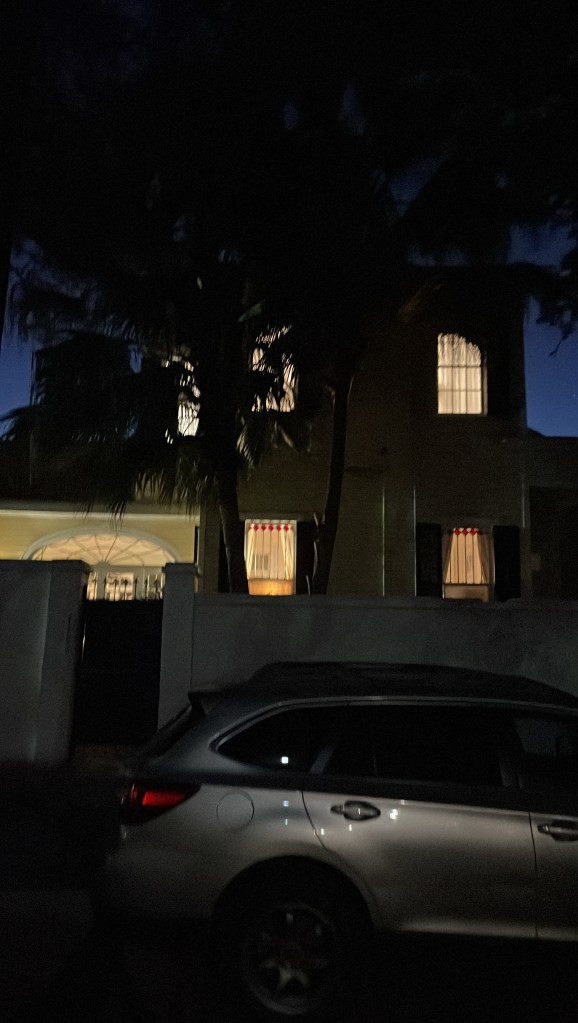
I have always considered New Orleans to be a dark city–despite its many charms and enticements–not just because of the history here (which is plenty dark) or even the crime “problem” (which goes back over three hundred years), but because it really gets dark here at night; not quite as the true dark you can get out in the country, but for an urban area? New Orleans is the darkest city where I’ve lived. I’ve never experienced an urban area that gets so dark at night once the sun has set.

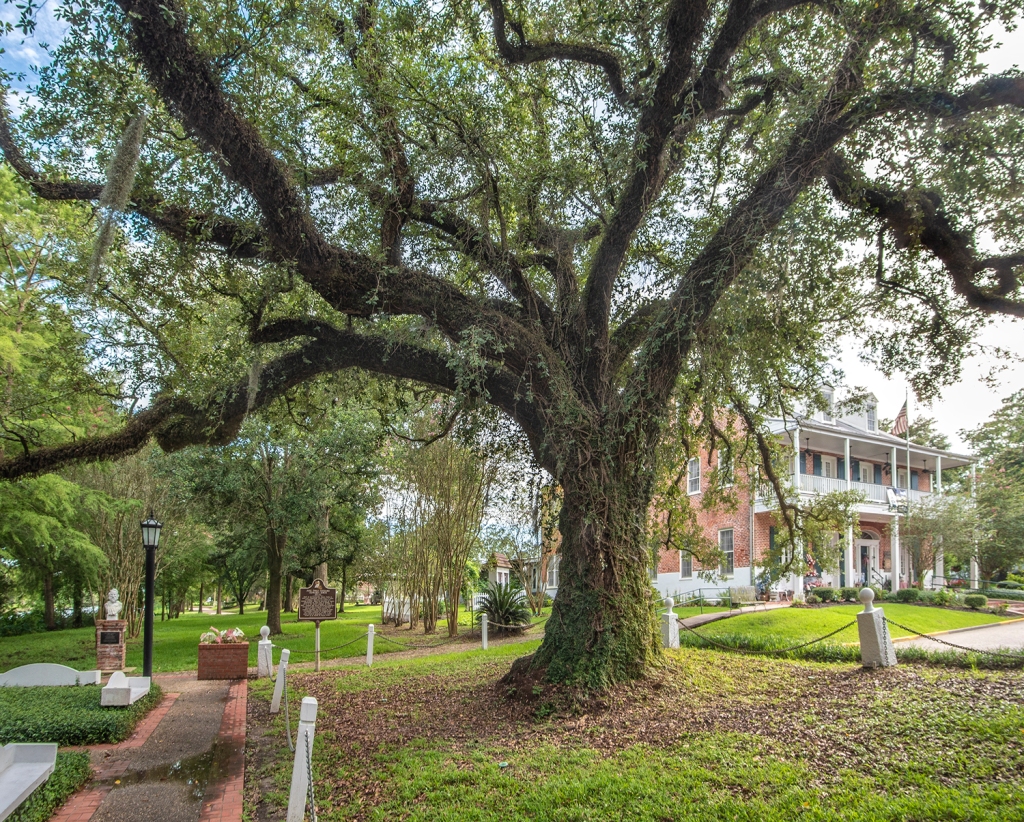
It’s like all the lights from houses and street lamps and businesses just \gets somehow sucked into the darkness and vanishes. When I come home after dark and park on my street, it always catches me by surprise when the inside of my car is lit up by one of the street lights. This happens, I think, because the massive live oaks everywhere inevitably block out the lights with their enormous branches. Oddly enough, cloudy nights generally are lighter than cloudless ones–because the cloud cover reflects back the neon of the French Quarter, turning the night sky clouds reddish-pink; it’s a phenomena unique to New Orleans that I really love. And the street lamps here seem to only cast light downward rather than up and out; it’s very hard to read street signs in New Orleans after dark.

See how dark it gets at night? It’s like the light gets eaten by the night.

Then again, that could be my eyes getting worse with age. My sister can’t see hardly at all after dark now, which worries me a little, but not a lot: her eye issues were different than mine. I was horribly near-sighted while she had an astigmatism, but my mother also has trouble seeing at night, too and she never had to wear glasses (she has reading ones now) so that doesn’t bode well, does it?

Another part of the reason it gets so dark here at night also has something to do with how many of our street lights are out, too. New Orleans street lights aren’t the kind that go up and then hang out over the street, either. Ours are the old-fashioned kind, with a bulb and its cover going up in a straight line–I think they were the old gas ones, adapted for electricity; I am not sure one way or the other. But I do like the antique, old timey look to ours. Now that I think about it, we couldn’t have the ones that hang out over the street, either; because of parade clearance! The low hanging branches of the live oaks that line St. Charles are also a problem for the larger floats, too; which is why so many of them are festooned with beads riders accidentally toss into the trees instead of to the outstretched hands of eager parade-goers–it’s going to be Carnival here sooner rather than later.

New Orleans’ haphazard approach to street lights and keeping the city lit up and visible at night also plays, interestingly enough, a role in A Streetcar Named Murder, actually; that darkness has a very strong hand on the finale of the book. When I was driving back from Kentucky after Thanksgiving, I noticed that once you got over the twin spans from Slidell and are back in Orleans Parish the lights on I-10 either don’t work or weren’t on, which gave the busy highway an eerie, almost hypnotically haunted feeling as I arrived in New Orleans East and climbed the bridge over the Industrial Canal. It even feels like the headlight beams of my car also get swallowed up into the darkness.

Is that darkness metaphorical? Maybe.

But I can only imagine how dark it must have been here at night when there wasn’t any electricity or gas, for that matter. And of course, it was very dark here after Katrina when most of the city lay in ruins. That was such a weird time.

I read a great review of Gary Krist’s Empire of Sin yesterday, which pointed out that the book was about a thirty year battle between the city of New Orleans and its brand of lawlessness, debauchery, and sin; which really is spot-on accurate. New Orleans has always been fighting that branding almost from the day the French settled on the high land along the river here. There has never been a time in her history when New Orleans has not drawn in tourists due to the branding with debauchery and sin. Someone was telling me the other day that the primary problem with dating apps in New Orleans is they are always full of tourists looking to get laid and not wanting to pay for it–which made me laugh; it reminded me of the old gay truism about not looking for hook-ups on-line the week before Decadence, Halloween or Carnival–because the chatrooms etc. were full of people coming in for the weekend and looking to make hook-up dates in advance…which was so patently absurd because seriously, back in the day if you couldn’t get laid just by going out during those events…well, you should just hire an escort and be done with it. People come here specifically to have the kind of good time they can’t have at home.

So, yes, the city has always had that kind of reputation and branding, which is why I always roll my eyes when the whites who fled the city for the suburbs and/or the north shore clog up the comments on social media and news articles about crime in New Orleans, clutching their breasts and casting their teary eyes up to the heavens as they bemoan how New Orleans has somehow slid into the gutter and how crime has gotten completely out of control. Fuck off, racists–we know what your dog whistles are because we’ve listened to them ad nauseum, ad infinitum: crime is a stand-in for oh no the black people and don’t pretend like you left New Orleans because of “crime”; you left New Orleans because of desegregation, so fuck all the way off. (The people who were protesting the removal of Confederate monuments in New Orleans were not from New Orleans, either.)

So, yes, there is crime in New Orleans–always has been, always will be–and I don’t know what the answer to reducing it or bringing the numbers down. But you can be the victim of a crime anywhere–the Clutters were murdered in rural Kansas back in the 1950s, after all–and it just means always be aware of your surroundings–which is always good advice for anywhere, really.