This is probably one of the most famous songs about New Orleans of all times, and of course, doing a deep dive into the history of the song–which began as an English folk song, of all things–was a pleasant way to spend a few hours. I heard the recording by the Animals when I was a kid, and honestly never cared very much about it. I always thought it was about a house of prostitution in New Orleans–Storyville, probably–but never gave it much more thought than that. But when I was looking for titles of songs about New Orleans to use for blatant self promotion for Mississippi River Mischief,it was kind of an obvious one. And when it came up on my list for this next post, I realized I didn’t really know very much about the song other than I didn’t care for it very much. It originated in the 16th century as an English folk song, and gradually evolved into an Appalachian folk song called “Rising Sun Blues” (great title, I may abscond with it, frankly) before finally becoming a folk-rock hit for The Animals in 1964 with its current name. (Musicologists suggests it’s thematically related to the old English folk song “The Unfortunate Rake,” per Wikipedia.)
I do find that kind of thing interesting, even if I don’t have any use for that information. (Although Barbara Michaels did a great job of using classic traditional folk songs and their history as the foundation for her underrated but marvelous novel Prince of Darkness–which I would love to revisit.)
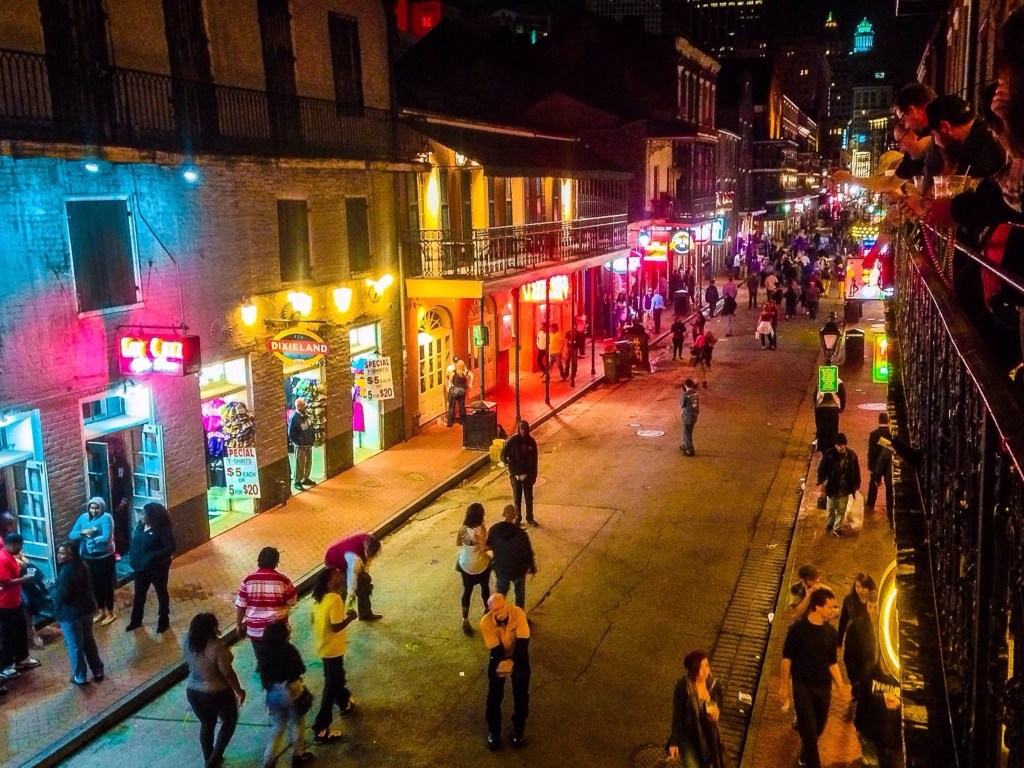
If you were playing Family Feud and the question “what is New Orleans known for”, the top two answers would probably be Bourbon Street and Mardi Gras. This annoys the locals and the natives to no end; and it’s understandable. Boiling New Orleans down to those two things is incredibly reductive. But they are major facets of the city, and both are responsible for a lot of tourist revenue, which the parish, city and state desperately need because our state and local governments (all of Louisiana’s cities and parishes) are complete and utter failures. When we moved here in the mid-90s, New Orleans had a strong base of tourism, but it was nothing like now. Since Katrina the city’s primary focus has been building the city into a tourist destination, putting all of the proverbial eggs into that particular basket. The pandemic wound up killing businesses that Katrina couldn’t; the St. Charles Tavern at the corner at Martin Luther King didn’t survive COVID, as one example. (They had amazing fried mushrooms; we used to get them every once in a while as a delicious greasy breaded and deep-fried treat.)
When I first decided to start writing about New Orleans (much as I hate to say this, but New Orleans really IS my muse, and I love that I live in the neighborhood of the Muses here), one of the things I was determined not to do was use clichés about the city in my work. It wasn’t until my fifth novel that I wrote about Carnival/Mardi Gras, which is where most writers about the city inevitably start (cliché as it may be, you also cannot write about New Orleans without eventually having to write about it); I wanted to get more established as a writer before I went there. Part of the reasons the first two Scotty books were set around Southern Decadence and (to a far lesser extent) Halloween was because those were also important holidays for the gays here. I did address Bourbon Street with the first Scotty; I knew that title (Bourbon Street Blues) would tell anyone that it was a New Orleans story, so yes, I took advantage of a cliché there. But I also realize now that most of my New Orleans writings were very provincial in a way; I mostly write about the “sliver along the river”–the Marigny, the Quarter, the CBD, the lower Garden District, the Garden District, the Irish Channel, and Uptown. There’s way more to New Orleans than these neighborhoods–sometimes I send them over the bridge to the West Bank or out to Metairie; there was a very vivid post-Katrina scene where I sent Chanse out to Lakeview, but for the most part I’ve not done much about other neighborhoods here. The West Bank, City Park, the East, Gentilly; all of these rich and vibrant neighborhoods–as well as the diverse ethnic make-up of the city–are very fertile ground for someone writing about New Orleans. Generally, the neighborhoods I write about are the neighborhoods writers who don’t live here focus on because they are the better known ones.
And of course, I’ve rarely, if ever, touched the history of the city–and it is rich, compelling, and fascinating…and super dark.
That’s kind of why I wanted to move this recent Scotty out of the city and into one of the rural parishes not far from the city limits. I have fictionalized these parishes before–I try not to fictionalize New Orleans, but have no problem inventing parishes and towns in the rest of Louisiana. St. Jeanne d’Arc parish is loosely based on St. John the Baptist and St. Charles parishes, known as “river parishes” because they run along the river north of the city. Redemption, also an invention I’ve used in other books, is based on the “bayou parishes”–not along the river, but between the river and the wetlands/Gulf of Mexico; those are Terrebonne and Lafourche parishes. Louisiana is just as interesting as New Orleans, and also has an amazing and interesting history of its own. Of course, the next Scotty will be back in the city–his next few, if they go as planned, will all be within the city–but that doesn’t mean I don’t want to keep writing about Louisiana and my fictional parishes, either.
There really is so much material here I could never run out of ideas.
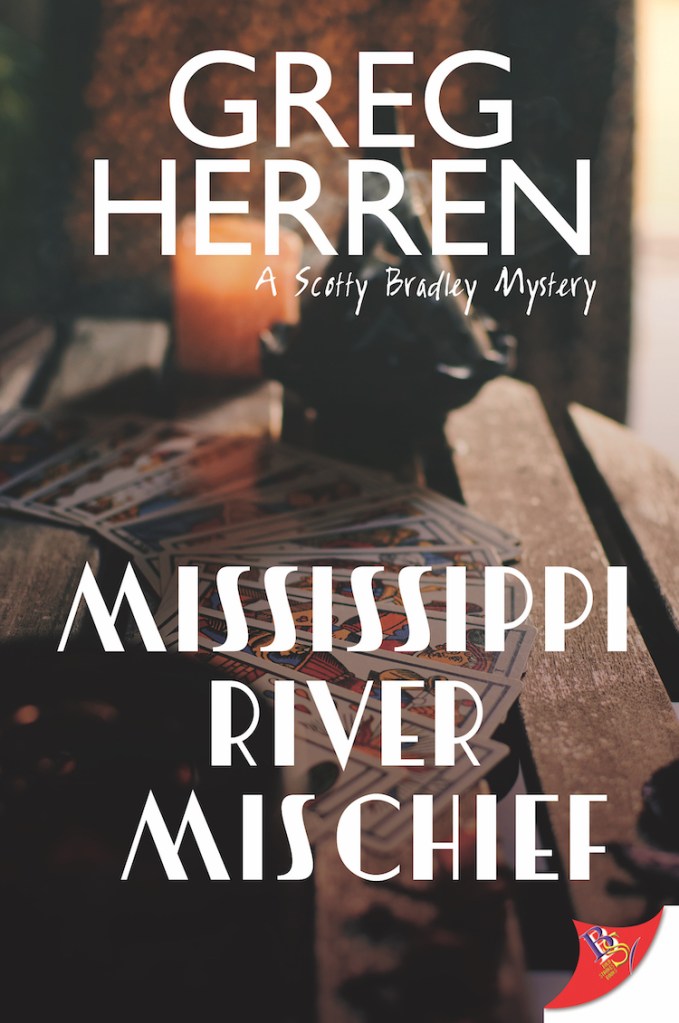
As if you weren’t sick of my self-promotion already, now I get to start promoting Mississippi River Mischief!
It’s hard to believe that this is Scotty’s ninth adventure. Not bad for someone who was just supposed to be a one-off, a stand-alone comic madcap adventure that took place during Southern Decadence. The idea for it came to me at Southern Decadence in 1999; on Saturday afternoon I somehow managed to get a prime spot on the balcony at the Parade to watch the massive crowd of sweating shirtless men partying down below at the intersection of Bourbon and St. Ann. I noticed a really hot guy wearing sweats and carrying a gym bag fighting his way through the crowd to get to the Pub downstairs, and I recognized him as one of the dancers for the weekend. In that instant, I had a mental flash of a dancer being chased through a crowd of shirtless sweating men at the corner by bad guys with guns and the dancer only wearing a lime-green thong. I held that idea in my head, and sometime later that weekend Paul said to me, “you know, you should write a book set during Decadence,” and I grinned and replied, “I already have the idea.” I had started writing a short story called “Bourbon Street Blues” a year or so before this; but realized that would make a better title for the stripper crime caper during Southern Decadence, so I made a folder for it and kept it in my files and in the back of my mind. Several years later, when talking with an editor about something else when I worked at Lambda Book Report, I asked if that might be something he’d be interested in. He said send him a proposal, which I did–having no clue what I was doing–and they offered me a two book deal, turning my stand-alone into a series. Having no idea how to write the second book in such a series, the money was too good for me to say no or to quibble, figuring I’ll figure it out when I need to–which is really the motto of my career.
The Scotty series has always had a bit of a “pantser” feel to it for me because I’ve always pantsed it. I knew that the first adventure–Bourbon Street Blues–was going to be that Southern Decadence story, and I also knew I was going to fictionalize a governor race, basing it on a senate race that occurred when we first moved here and we couldn’t believe that one of the candidates was actually a serious candidate (sadly, he was just a harbinger of what was to come in Louisiana; now he’d seem like one of the fucking sane ones), and I kind of borrowed, a bit unconsciously, from the Stephen King character of Greg Stillson from The Dead Zone. Bourbon Street Blues was a prescient novel in so many ways–and I had no idea of that at the time, seriously. There’s a scene where the Goddess shows Scotty the potential flooding of New Orleans after a levee failure (in the book it was deliberate though) and of course I predicted the Right’s move into full-bore hardcore neo-Nazism as well in that book…never dreaming it would become a reality.
Scotty has always been a fly-by-the-seat-of-my-pants series; I’ve never really outlined or planned the books or the series in any way, other than an amorphous idea that the love triangle situation I created in the first book would take three books to resolve. During the course of the third book I realized I needed at least one more book to resolve that story, and so it went from stand-alone to trilogy to quartet…and then Katrina happened. Katrina created an unplanned gap in the series, and I never really knew how to do Katrina from a Scotty perspective. It struck me that they wouldn’t have evacuated, but Scotty wouldn’t have ridden the storm out in his apartment, nor would his parents have done so at their place; they would have all gone to the Garden District where Papa and Maman Diderot have a generator. I just didn’t see how I could write a funny Scotty book about the levee failure and the city’s destruction. Also, we learned something about Scotty in the second book (Jackson Square Jazz) that I meant to deal with in the fourth book. By the time I was ready and able and willing to write that fourth book in the series…well, I forgot that I’d planned on dealing with that issue from Scotty’s past in it, and never did ever circle back around to that resolution of something from his youth.
I did remember when I decided to write Mississippi River Mischief, though. I kind of wrote myself into a corner with Royal Street Reveillon, in which something happened in Scotty’s personal life that was tied into the case, but I couldn’t write another book and pretend that never happened, even though it would be hard to deal with in the text of the book and story. But then, as I was trying to work it out in my head, I realized now you can circle around back to that issue from Scotty’s teen years because this is the right place and time for him to be reminded of it because of what happened to Taylor.
And you know what? I think it made for a better story now than it would have almost fourteen years ago.
Scotty has grown a lot over the twenty or so years (!!!) I’ve been writing him, but who he is at his core has never changed. Scotty is a good person, with a genuine sense of kindness, and is pretty level-headed and never really lets things get to him the way I let things get to me–and God knows, he’s dealt with a lot more shit than I have in life. I like his sense of humor, I like his spirituality, and I like his untrained, he-doesn’t-know-how-it-works psychic abilities, and of course, I love his family. His parents are amazing, his older brother and sister are also pretty cool characters, and of course Frank and Colin are also fun to write. I also never knew how subversive I was being by creating a throuple long before anyone ever talked about these kinds of relationships within the queer community–and it’s lasted all these years. There have been ups and downs, of course, but they always wind up coming back together again no matter what happens–and a lot has happened. Both Scotty and Frank have been shot a few times, not to mention all those car accidents–and he’s also helped cover up a crime (no spoilers here, no worries!).
The first song I ever danced to in a gay bar was, quite naturally, “It’s Raining Men.”
I never said I wasn’t a stereotype, did I?
I was twenty-one the first time I ever set foot in a gay bar. (If there were gay bars anywhere near me in Kansas, I had no idea) It was in Fresno, California, of all places; where I spent the 80’s and which I often lovingly refer to as “Topeka in the Valley.” It wasn’t much of anything, really; a small building on Blackstone Avenue, I think just past Olive, and near the off-ramp for the new cross-town highway in an attempt to alleviate traffic on the main streets of the city (it may have been further north). The bar was called the Express, and someone I worked with–the first obviously gay man I ever knew, and certainly the first one who was out and proud and not ashamed of it–took me one night after work. I was nervous as hell. I had no idea what I was getting myself into, and I remember it was dark and crowded. There was a bigger front room with the bar, and there was a smaller dance floor further in the back. We arrived–I didn’t recognize the song that was playing–got a beer (he got a vodka and cranberry), and then the next song started up. I didn’t know it, had never heard it before, but he dragged me out onto the dance floor and yes, the song was quite a jam. I loved it, and rather self0-consciously danced my ass off (I always loved to dance). My friend later told me the song was by the Weather Girls, who used to sing back-up for Sylvester, and it was called “It’s Raining Men.” The song was utterly ridiculous–it still is–but those powerhouse vocals, the driving beat, and the absolute joy in the idea that all you had to do was “rip off the roof and stay in bed” so a hot man will drop in from the sky for you? How could gay men not embrace the song? I bought the single at Tower Records a few days later, and every time that song played, I’d be out on the dance floor. Even now, when I hear it, I always think back to that first night I went to a gay bar.
HIV/AIDS was already a thing, but we didn’t know much about it in Fresno; it seemed like something new and scary but maybe no worse than some other new diseases that had been discovered in the 1970’s/early 1980’s. The rare yet terrifying information and reporting on it referred to it as GRID. It eventually claimed that co-worker who took me to my first gay bar, and his roommate, who was the one who told me years later that the co-worker (whose name I cannot recall, I just know it started with a K) was in the hospital, dying. “It’s Raining Men” always reminds me of him; always takes me back to that first time when I so nervously paid my cover charge and flashed my ID and walked into my first ever gay bar. There was another gay bar in Fresno, the Red Lantern, that was in a much shoddier (“dangerous”) part of town. (Gay bars, back in the day, were never in the best neighborhoods. Tracks in Ybor City in the early 90’s–when I lived in Tampa–was also not in the best neighborhood. Ybor City did begin gentrifying before I moved away, but originally? Yeah, not the best neighborhood.) I went there a few times as well–made friends there, made friends in the other bar, too. I lost all those friends, of course, and their names and faces are also gone, more lives lost to the mists of time in my memory. It seems a bit shameful to not be able to remember the names and faces of the first people who knew a part of me I’d never let anyone see before, but they also didn’t know me in that I kept the other part of my life secret from them.
It’s very strange, because I decided to google the gays bars of Fresno while I was writing this and apparently the Express closed in 2013? I don’t think it stayed in the same location–according to the site I found it had also been called “708” before becoming the Express again; who knows what that was all about. But the Red Lantern is still there on Belmont Avenue, in the same location; how wild is that? That’s a pretty long-lived gay bar for a place like Fresno, really. I remember in Houston there was JR’s, and Heaven, and maybe another one there in the Montrose district. But I didn’t start spending a lot of my weekend evenings in gay bars until I moved to Tampa. Tracks in Ybor City and Howard Avenue Station were the two primary gay bars when I lived there; and there was Bedrox on Clearwater Beach–which was the gay section.
And of course, there are gay bars everywhere in New Orleans. I haven’t set foot in one in a number of years, and may never do so again. I’m old; spending the night dancing would end with me in the hospital, or needing days to recover.
I don’t know what gay bars are like now because I’ve not been a part of that culture for a very long time–we haven’t even done condom outreach during special weekends in the bars in years anymore–which is why it’s hard for me to write about Scotty being still a party-boy. His age in the book I just finished and turned in is roughly forty-three or forty-four; after Katrina when I had to actually pick a time for the books to have been set (Katrina couldn’t be ignored), I decided that the Southern Decadence where Scotty met both Frank and Colin was in 2004, Jackson Square Jazz was that Halloween, and Mardi Gras Mambo was Carnival 2005. Scotty had just turned twenty-nine in Bourbon Street Blues, which meant he was roughly born in 1976, which works with the other timelines, making him twelve or thirteen when the Cabildo caught fire the last time. While the other books can be more amorphous, obviously Who Dat Whodunnit was set in January of 2010, right before the Saints won the Super Bowl. With the pandemic starting in 2020–which I will deal with at some point–this one had to take place before the world shut down, so I am thinking it’s May of 2019. I don’t want to skip ahead a year to the pandemic, so Quarter Quarantine Quadrille will be further in the future. I kind of want to do Decadence again in another book–with Scotty older but not much wiser–but am not entirely sure. I also would like to really do a Scotty Halloween book, and maybe even a hurricane evacuation one, I don’t know.
I am, however, very glad that I did write those first three Scotty books, when I was enmeshed in gay bar culture, because I’m glad it’s preserved in fiction. That world is gone now–washed away when the levees failed and the city rebuilt. Someone once told me I was the only person to document that pre-Katrina gay male existence, of going out to bars and being promiscuous and dancing all night long and drinking too much and occasionally dipping into party drugs.
I’m also kind of glad modern gays don’t have to use the weekends and gay bars as a place to let loose and be as free and gay as possible, which they couldn’t do during the week. Friday nights were always a relief, a respite from a cold and unloving world that judged us harshly and wished us harm.
I don’t miss the bright lights, the cigarette smoke (that’s how long it’s been), the stench of male sweat and the smell of poppers in the air as the deejay spins another banger. I mean, I do, but not in a sad kind of way; those memories are lovely and they make me a little wistful for the days when gay bars weren’t clogged with bachelorette parties and obnoxious drunk straight girls. But those weren’t the good old days, really; we had no rights and our sex lives were against the law; the few legal protections we have now were goals back then, something we could strive to achieve sometime in the distant future. I certainly never thought Lawrence would decriminalize my sex life and Obergefell would make it legal for Paul and I to marry; I never thought those things would happen during my lifetime. I didn’t expect to see an openly gay member of the Presidential cabinet; out queer characters as leads in television shows and movies–none of these things seemed possible to that closeted twenty-one year old who walked wide-eyed into the Express and went out to dance to “It’s Raining Men.”
I had no idea what the future held for me or for my community that night. In some ways I wish I could let that kid know everything would be okay and his life would turn out so much better than he ever dared dream…but knowing might change things, and I wouldn’t want to change anything that would take away the life I live now, because I love it.
Every gay man of a certain age knows all the lyrics to that song–and can (and will) belt it out while on the dance floor. The minute that piano intro begins coming through the speakers is one of those moments when everyone in the bar pauses and makes the “wooooo” sound as the dance floor fills. One year during Southern Decadence we stopped into the Louisiana Pizza Kitchen for lunch. Every table had a rainbow flag on it, which was cool. One of my friends picked up the flag and started raising it while singing “I Will Survive” because it was, in his words, “the gay national anthem.” I laughed really hard–we all did–but it also stuck in my head. That was in 1995, and almost thirty years later I always hear the opening piano riff and think ah, the gay national anthem! All rise!
I also always smile when I remember it.
Being queer in America means surviving, adapting a protective coloring, as it were, so that you could pass without question during your work life (or people might question it, but not to your face). The one nice thing about being a gay man is the fact that, in theory, we can navigate through the world and “pass”; there are very few of us that someone can look at and think, definitively and definitely, without question oh he’s a homo. I have never thought i presented as particularly masculine; certainly when I was a child other kids sniffed it out about me. I don’t know if that means they had some sort of “bullying gaydar” operating at a high level, or if I was so obviously gay that it was noticeable. (I’ve always wondered.) The way we think other people see us is so vastly different from how they actually do see us; none of my friends were either surprised or shocked when I came out to them at long last. I think that’s part of the reason “I Will Survive” is a gay anthem; for one thing it’s extremely adaptable, for another it’s defiant–oh no, bitch, YOU’RE not bringing me and my life down–(has anyone ever done a study about why gay men are drawn to Black women singers with powerful voices?) and that’s a message all gay men can easily identify with: survival. Back in the day we used to have to develop powerful camouflage (no, I never did) and keep the gay personal life and the non-gay professional life divided by a clear line of demarcation.
That’s why going to gay bars was so important for so many of us; the ability to have a place where you could unabashedly be yourself amongst other people like you was so freeing, so life affirming. After I left the travel industry, I was tired of working for straight businesses and having to play down who I was. I was tired of two separate lives, so after I made the decision to leave that job, start working as a personal trainer and focus my energies on writing, I also made the conscious choice to not ever work in a straight office environment ever again. The gyms I worked at were different, despite being owned and operated by straight people, because I never spent a lot of time there. I came in, trained my clients or did my own workout, and then bailed to come home to write. I have not really had a job in the straight world ever since, managing to work in queer spaces most of my life since.
With the community so hatefully under attack again, it takes me back to those olden days before Lawrence v. Texas was decided; when our sex lives made us criminals. I cannot emphasize this enough–before Lawrence, any time any member of my community indulged in sexual relations, they were breaking the law. Our very existence was outlawed. Legally, it was okay to be gay so long as you never acted on it. Which was very similar to the “don’t ask don’t tell” thing, or the strictures passed along by religious hierarchies to their memberships about being queer–it’s okay, as long as you never act on it. Hate the sin, love the sinner–that whole nonsensical thing that automatically relegates all queer people to a lower level existence in society.
Last night we watched the Amazon Prime documentary series on the Duggar family and their entire religious cult (not based in anything scriptural or Christian, really), Shiny Happy People, and it’s actually very chilling. I never watched their show, but it was during the time that TLC went from The Learning Channel to Touching Little Children; the Duggars anchored the channel’s reality program about abusive religious cults that demeaned women and celebrated over-fertility; it was around this same time TLC began promoting and broadcasting shows about beauty pageants for little girls–essentially, the sexualization of little girls for trophies and checks and tiaras. So, on the one hand they had shows with the Duggars and other families like them–abusive cults where children are often molested and it’s covered up–while also promoting and publicizing the sexualization of little girls in shows like Toddlers and Tiaras. Add in the fact that Josh Duggar–the predator groomed by his parents to be a predator–was going to work for the religious zealots known as the American Family Association (long known for it’s homophobia and misogyny) and pursuing a career in politics as a right-wing zealot and homophobe with direct ties to the Huckabee family, including Governor Sarah Huckabee Sanders. (An unholy alliance forged in hell that no one talks about at all anymore. I’d ask that bitch at every press conference if she and her father condoned the Duggars covering up their son’s molestation of children, including his sisters, and why they never spoke out against the Duggars, and just how close were the two families?)
The sheer misogyny of their beliefs and values–women have no value outside of the home and bearing children; if a male molests girls he is to be protected and the girls sacrificed–and women must obey their husband who is also their Lord and Master.
And they call queers perverts?
Take the sty from thy own eye, evangelicals. Seriously. But thank you, Amazon Prime, for releasing this documentary during Pride Month; let’s remind everyone of how foul homophobes are on every level.
The Internet saga continues. It was out when I got home from the office yesterday, and so Cox is coming out again this morning. If this continues to be an issue, we are definitely going to switch providers. There’s a local company our landlady uses that works well, and of course, since they’re local they are a lot easier to deal with–no text or on-line conversations with “support staff” needed. It eventually came back on after a couple of hours, but I am really getting terribly sick of this shit, you know? I have things to do today and messing with Cox isn’t helpful. Ah, well, there are worse things. I want to work on the book today, I need to run some errands, and I want to get some reading done–I want to finish the book I am reading and enjoying so I can move on to the new Megan Abbott, which I cannot wait to read.
And on that note, I am heading into the spice mines. Have a lovely Saturday and I’ll check back in with you later.
Pay-the-Bills Wednesday has rolled around yet again, Constant Reader, and so later on during my lunch break I’ll take some time away from my food to start paying the bills due between now and the next time we get paid. I am also looking forward to this three-day weekend we have on the horizon; I’d completely forgotten about Memorial Day. Do gays from all over still congregate in Pensacola over Memorial Day weekend, to party on the beach and get sunburnt in places that usually never see the sun? I know there aren’t nearly as many circuit parties today as there used to be, back in the heyday of the 1990’s, when it seemed like there was one every weekend somewhere; Southern Decadence still happens, of course (I’ll be in San Diego for Bouchercon this year) but I don’t know about the others. I know Hotlanta died a long time ago; does the White Party still happen at Vizcaya? In Palm Springs? The Snow Ball? The Winter Ball? The Black and Blue Ball? Cherries in Washington? I suppose the time and need for these parties has passed for the most part–they wouldn’t be dying out, otherwise–but at the same time, it’s all a part of the history of our community, and I do hope it’s been documented somewhere. The circuit parties were easy to condemn and point fingers at, but anything that helped create a sense of community as well as provided a safe space during difficult, repressive times for gay men to be themselves and be as gay as possible deserves to be, and should be, remembered.
After all, that was the world that kind of spawned Scotty.
Hmmm, perhaps a future-Greg project? Yay! Because that’s just what I need, another project.
But the revision continues to progress quite marvelously, if I do say so myself. I should probably write more Scotty books because it’s so lovely to get back into his mind-space, you know? He’s so cheerful, and always so upbeat and positive…and even when he gets down because of whatever problem he’s gotten himself into, he doesn’t moan or whine, he just rolls up his sleeves and figures it all out. That’s why I like him, and why his readers do. I wish I could have that reaction to things…I don’t. I always have to curl up into a ball for a while before I can even consider getting on with things. Maybe someday that will change and I can absorb and handle shocks and surprises with Scotty’s flair and aplomb. I’m not holding my breath until that happens, either.
I slept really well last night–yet another good night’s sleep in the books, I think I am on a record streak now of sleeping well–and feel pretty rested this morning. I was awake before the alarm went off this morning, and then hit snooze a couple of times to give my mind and body the opportunity to wake up slowly. We watched the new Ted Lasso last night, which was more of a Jamie Tartt-centered episode, and my word, seriously: how did Jamie Tartt become one of my most beloved characters on the show? Last night he made me laugh and he made me cry; and I love his friendships with Roy and Keeley, who are also slowly (hopefully) inching towards a reconciliation. There’s only one episode left–after which I may have to do a complete binge rewatch, from start to finish. It really is quite a marvelous show, and I do love that the gay storyline ruined the show for the homophobes. The mark of a truly good show is you aren’t sure how you feel at the end of the episode, despite having enjoyed it. Was it good? Did the stories make sense? Were the performances good? How was the writing? It’s one of the reasons I watch every episode twice; once to enjoy and go along for the ride, the second to appreciate the acting and the writing and connect even further with the episode. This season I’ve noticed some bashing of the show on Twitter (and not just from homophobes), which was why I started rewatching; to see if the haters were right and I’d overlooked something out of my deep affection for the show (I can also watch more critically the second time). I am pleased to report that the haters are, indeed, always wrong. I am really going to miss this show, but I get the sense that the season finale will be incredibly sad yet satisfying. They have a long way to catch Schitt’s Creek for best series finale, but I suspect they will be able to do it.
I’m curious to see what spin-offs might twirl out of the show. I’m really hoping Jamie gets his own show; I’ve really developed a huge crush on Phil Dunster, who might just pry the supporting actor Emmy out of the death grip Brett Goldstein’s had on it these last two years. The development of his character arc has just been phenomenal–all of the characters, really, but Phil Dunster has really been given the chance to shine this season (and some of last) and I do sometimes think he might not be taken as seriously as an actor because–well, because he’s damned good looking.
Since Monday was an odd day, I am having trouble this week keeping track of days. I keep thinking today is either Tuesday (which makes no sense) or Thursday (which kind of does). I’m looking forward to getting some more good work done on the book tonight–and if Paul is late getting home, I am so watching the Vanderpump Rules reunion’s first part. I need to devote an entire entry to the insanity this reality show–which I actually stopped watching years (and I do mean years) ago–has spawned. I had started writing about Real Housewives of Beverly Hills after its season completed; I think I can easily do both shows in one entry since both have spawned scandals that became news (a sad commentary on the state of our news media, frankly), which brings up the question of audience enablement–if the ratings go up when people are really despicable on a reality show, aren’t we just encouraging more of the same?
Questions, questions.
And on that note I am off to the spice mines. Have a lovely middle of the week, Constant Reader, and I will be back tomorrow.
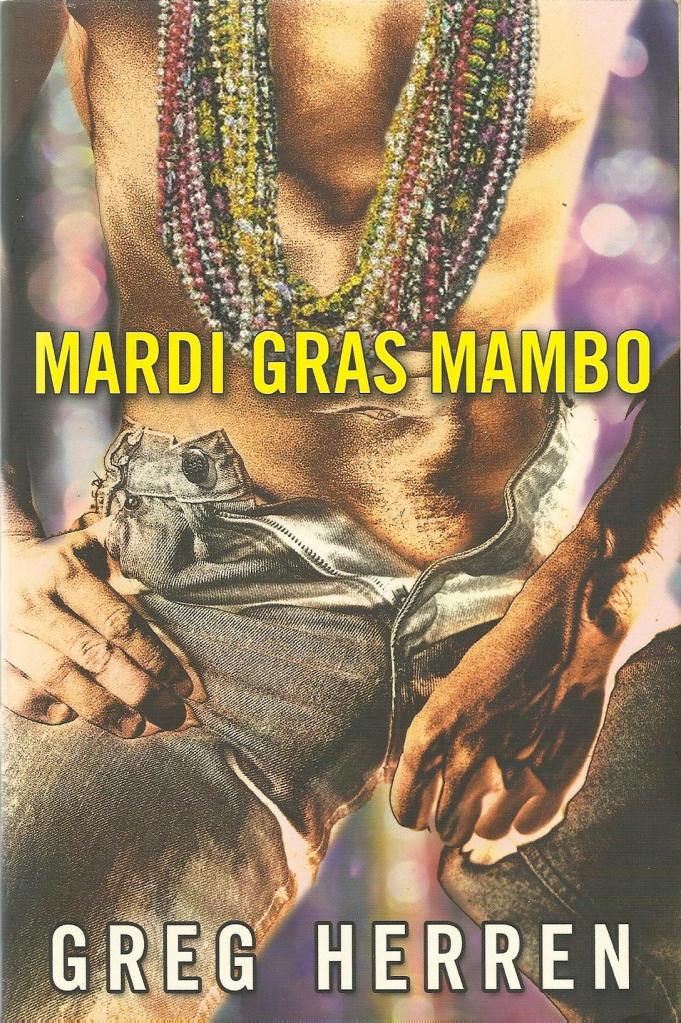
I’ve told this story any number of times; how the writing of the book was derailed by two awful things that happened in my life, and how I finally got back to writing again in the spring of 2005, managing to finish this and turn it into literally two or three weeks before Hurricane Katrina came barreling ashore and changed everything in my life, and the long recovery time from that paradigm shift, trying to adjust to the new reality I was facing every day. It felt weird going over the copy edits, weirder still doing the page proofs (I actually had the incredibly sharp-eyed Becky Cochrane and Timothy J. Lambert do it for me while I was visiting the Compound, thanks again, guys!), and even stranger having to tour and promote a book about New Orleans set before Katrina while still dealing with the recovery.
I’ve told those stories before, and that isn’t really what these entries are about; these entries are about the books themselves and how I came up with the stories and so forth, and the writing of the books. The primary problem, of course, is that I wrote this book between and around tragedies; the two year period I call the Time of Troubles that began on Memorial Day weekend in 2004 and ran through about 2008, really; because that’s about how long it took after all those issues for me to feel like my feet were beneath me again and I once again had a grasp on my life. I don’t remember what the original story was about, other than it centered on the Krewe of Iris, Scotty’s Diderot grandmother’s best friend who’d married a much younger muscle-stud Russian, and that’s really about it. The Russian would have something to do with a Colin case–and it would turn out actually be the case that brought him undercover to New Orleans in the first place during Southern Decadence; in Jackson Square Jazz we find out what Colin’s real job is, and that he was in town originally about the Napoleon death mask–but he was also in town to keep an eye on the young muscle-stud Russian who’d married Scotty’s grandmother’s best friend. It wasn’t really working, and I didn’t much care for the story, to be honest; I’d already asked for an extension before Memorial Day weekend in 2004 when all the shit started happening; after Paul was attacked they took it off the schedule and told me not to worry about it. (I appreciated the courtesy greatly at the time, but at the same time had this sinking feeling in the back of my head uh oh, they may not want another one after this–which turned out to be correct. But I dismissed the fear as part of my on-going struggle with Imposter Syndrome. It took me about six months, more or less, to get back to writing. I started my blog right after Christmas that year, and there I was writing every day again, and by January of 2005 I was ready to get going on this book again. I remember rereading everything I’d already done, not liking it, and deciding to scrap it and start over with the same essential premise: rich older society woman in New Orleans has married a much younger Russian boy-toy; Colin is investigating the boy-toy; and it’s Carnival season. Shortly after getting about halfway into a new first draft, the Virginia thing happened and I was derailed again. After that was over and I went back to the book…once again I didn’t like what was happening in the story and I threw it all out and started over again.
But this time, I hit my stride and four months later I turned the book in at long last, along with a proposal for a fourth, Hurricane Party Hustle, which was going to be set during an evacuation and would wrap up the loose ends left at the end of Mardi Gras Mambo.
And of course, three weeks later Katrina changed everything, and Hurricane Party Hustle went into the drawer.
Last night I dreamed it was Mardi Gras again. It seemed to me I was standing inside an iron gate, watching one of the night parades go by. The sidewalks in front of the gate were crowded with people, all shouting, with their grasping eager hands up in the air. Out beyond the edge of the curb, I could see people sitting in lawn chairs. Still others were up on ladders, with coolers and plastic bags of booty piled around them on the ground. Fathers and mothers were holding up babies, while black kids with the crotches of their pants down around their knees walked behind the crowd, weighted down by the ropes of beads around their necks. Beads were flying through the air, some getting caught and tangled in the branches of the towering gnarled oaks lining the avenue. The heavy upper branches of those oaks also blocked out the glow of the ancient street lamps so the night seemed even darker than it should. I could hear a marching band, playing a recent hip-hop hit, and the strange clicking sound of the baton girls’ tap shoes on the pavement. The air was heavy with the heavy fragrance of hot grease, corn dogs and the strange melted yellowish-orangey substance the vendors put on nachos that purports to be cheese—but no one is really sure what it is. A group of flambeaux carriers were passing by, dancing that odd little circular dance they do, their propane tanks popping and hissing, throwing long and twisted shadows that also danced inside the iron fence I was behind. Right behind them a huge float pulled by a tractor was coming and the crowd’s shouts became louder, more desperate, more pleading. On the float’s front was a huge white clown face, its bright red lips parted in what passed for a smile but seemed to me to be a frightening leer. The masks on the float riders glowed supernaturally at the hordes begging them for generosity in the strange light cast by the moon when it cleared the thick clouds in the cold night sky. I stood inside the black iron fence, my arms wrapped around me against the cold as an increased sense of menace and dread built inside me. Something bad was going to happen—
Oh, get real, Scotty!
If I do have bad dreams, I don’t remember them when I wake up. I’ve certainly never been troubled in my sleep, even though crazy things always seem to happen to me. I’m just one of those people, I guess. For whatever reason, the Goddess has decided to throw some wild stuff at me—she always has, even when I was a kid—and what can you do? I just don’t think I am one of those people who were destined to have a nice, normal, quiet life. Maybe it’s because I was named Milton Bradley at birth. Yes, that’s right. Milton Bradley. My older brother started calling me by my middle name, Scotty, before I started school and thank the Goddess, it stuck. Can you imagine how cruel the kids would have been to someone named Milton, let alone Milton Bradley? And then of course there’s the gay thing. I was lucky—my parents are pretty liberal and were delighted to have a gay son—like it somehow proved how truly cool they really are or something. They are pretty cool, actually.
By now, I’d taken to starting all of my New Orleans novels with a Tennessee Williams quote; for this one I chose a line from Vieux Carré: “You’ve got a lot to learn about life in the Quarter.”
I had opened Bourbon Street Blues with a parody of “The name’s Bond, James Bond” and I’d done something similar with Jackson Square Jazz–“Danger is my middle name”, riffing on Trouble is My Business. I decided to open this book with a parody of the opening line of Rebecca: “Last night I dreamed I went to Mardi Gras again.” But that entire opening paragraph of du Maurier’s is so fucking brilliant, I couldn’t help myself and made my entire first paragraph a parody of that opening. I then decided that from then forward, every Scotty book would have a Williams quote and each prologue–where Scotty introduces himself and his cast of characters and gives backstory so I don’t have to do it in the text of the story itself–would parody the opening paragraph of a famous novel, rather than just the first line (I am actually struggling to find the proper opening to parody to start the prologue for this one. I’ve used Rebecca, Peyton Place, The Haunting of Hill House, and Lolita, among others so far already; I’ve tried with this one to use An American Tragedy, Atlas Shrugged and The Great Gatsby thus far, with no luck. I’ve tried Valley of the Dolls several times for other books in the series already, but I can’t ever get it to work for me).
I do remember that the one thing that didn’t come across in those earlier drafts that I had abandoned was the sense of insanity that Carnival always brings with it; that feeling of “controlled anarchy” we experience those two weeks of parades, of knowing you have to schedule your entire life around a parade schedule–true even for those who do not live inside the box, as we say here; the box being the Uptown parade route–I always have to schedule my job, my trips to run errands uptown, everything, predicated around having to get home at least two hours before the parades start, and am incredibly lucky if I can get a parking spot within three blocks of the Lost Apartment. The thing I kept forgetting in those earlier versions was the books are meant to be fun. Granted, I was hardly in a mental space to write something fun…and of course the decision to really take it completely over the top the way I did was something I still think about to this day and wonder, where on earth did you get the idea for identical triplets?
Which, while crazy, made more sense than the cloning story I tried to write the second time.
Maybe those bad things happened for a reason? Because I couldn’t be more pleased with how the story and the book turned out. I also ran out of room to finish the personal story…but I also was operating on the assumption I’d get a contract for a fourth book. If not for Katrina, Kensington might have made another offer and Hurricane Party Hustle might have been the fourth Scotty than something just sitting in the files.
The book was released on Fat Tuesday, 2006. Paul and I had been out of town–the truncated Carnival/parade season seemed almost too sad to handle, so we’d accepted a gig to speak at the South Carolina Book Festival. We flew back to New Orleans the Sunday morning before Fat Tuesday. I’d checked my email that morning before boarding the flight to Atlanta (we changed planes) and then our cab driver couldn’t get closer to St. Charles than Baronne Street. A parade was going as we got out of the car, and we had to cross the parade (it was in the high seventies and sunny) with our luggage–I’ll never forget looking up as we got ready to cross and catching a bag of beads with my hand just before it connected with my face–and got home. I checked my emails and my word! SO MANY EMAILS.
You see, that day’s edition of the Times-Picayune carried Susan Larson’s review of the book, and it was a rave! Everyone emailed me as soon as they saw it–I still bask in the glory of that review–and I was about to embark on probably the most ambitious book tour of my career.
I just didn’t see, though, how I could write another funny, light book about a city still in ruins whose recovery was still questionable.
The series was, for the moment, over–with the personal story not resolved the way I would have wanted, but it could stand as it was, should there never be another Scotty story.
Rereading it, I couldn’t but laugh at some of the outrageous twists and turns the plot took.
It’s probably hard to imagine what Southern Decadence is like unless you’ve actually been to it; even the hundreds of pictures I’ve taken and shared on social media over the years can’t even remotely begin to get the concept of what it’s like across–the same as Carnival, really; it has to be seen and experienced to be truly understood. My first Southern Decadence was in 1995, which was around the twenty-second or third time it was held; my knowledge of Decadence, primarily from urban legend and tales told from one gay to another and passed down over the years, is sketchy and probably untrustworthy (if you’d like the unvarnished truth and read about the history, I highly recommendSouthern Decadence in New Orleans from LSU Press, co-written by Frank Perez and Howard Philips Smith; I have a copy and thoroughly enjoyed reading it. Alas, my memory isn’t what it used to be, but the story is it began as a bar crawl for a friend who was moving away, and grew from those humble beginnings into a massive event that draws queers from all over the world).
That first Decadence I came to was also one of the hottest, temperature wise, or perhaps it was simply because I wasn’t used to the summers in New Orleans yet since I didn’t live here. I just remember being in Oz one afternoon and just soaked in my own sweat, and going down the back staircase from the second floor–the staircase that opens out onto the dance floor–and having to hold onto the railing because the steps were slick and wet. The railing was also wet, and when I touched the walls so were they–all the humidity and body heat and sweat–but at the same time it was so much fun. Gorgeous, flirty and friendly men everywhere, everyone scantily dressed and getting wasted and just having a good time. This was during the height of the circuit parties, most of which have died off over the years–there’s no longer a Hotlanta weekend in Atlanta in mid-August anymore, for example–but back then, it seemed like every month if you had the time and the money there was a circuit party somewhere you could fly off to and be yourself and have fun being in an entirely gay environment for a few days. That was, for me, one of the primary appeals of circuit parties and gay bars–they were safe havens for everyone to be out and proud and loud…and after a few weeks navigating the straight world for work and play and life in general…it was lovely to let loose in, for want of a better word, a safe space.
Circuit parties also had their downsides, don’t get me wrong–Michelangelo Signorile detailed some of those in his book Life Outside, which got taken out of context an awful lot–drug use and rampant sex and bad choices also led to other problems, not to mention the spread of HIV and other STI’s; the very first time I ever went to a circuit party–Halloween in New Orleans, 1995–there was a very Masque of the Red Death feel to it; here were all these gay men crowded into a riverfront warehouse, doing drugs and dancing and having a great time while the plague raged outside the doors. I even wrote about that in my diary on the flight back to Tampa a few days later.
But Decadence was always my favorite, out of all of them, and it was something I looked forward to every year. My workouts were always planned so I would hit peak physical condition for Decadence and maintain through Halloween, before starting to work on the Carnival body. It feels weird to talk about it that way, but that was my mentality and my schedule for years. Bulk up for a couple of months, then lean down leading into the event.
I had always wanted to write about Southern Decadence, and I know I’ve written about how I came up with the idea for the book numerous times; standing on the balcony at the Pub watching one of the strippers fight his way through the mob of gay men to get to the Pub so he could work, Paul saying you really should write a book about Southern Decadence and seeing a scene vividly in my head as I looked down at the sea of sweating gay men. I’ve also written about where the idea for the character and his family came from. So what is there left for me to say about Bourbon Street Blues?
The new cover for the ebook edition.
The name’s Dansoir. Dick Dansoir.
Okay, so that really isn’t my name. It’s my stage name from the days when I was on the go-go boy circuit. I started when I was in college, at Vanderbilt up in Nashville. As with almost everything that goes on in my life, I became a go-go boy on a fluke. The Goddess brings interesting experiences into my life all the time. Sometimes I don’t think it’s all that great, to tell the truth, but she always seems to be watching out for me.
I was working out at my gym one day when this guy came up to me and asked me if I wanted to make some easy money.
Like I hadn’t heard that one before.
I was twenty-one at the time, just turned, but I wasn’t some wide-eyed dopey innocent. I was raised in the French Quarter, after all, and by the time I went off to college at age eighteen I had pretty much seen everything. French Quarter kids have a lot more life experience than other kids their age. You can’t really help it. The French Quarter is like Disneyland for adults, and growing up there, you get used to seeing things that other people can only imagine.
Anyway, this guy said he was a booking agent and scout for this agency that booked dancers in gay bars throughout the deep South. The troupe was called Southern Knights.
“You can make a lot of money this way,” he said to me above the sounds of people grunting and weights clanging. “You’ve got the look we like.”
I looked at myself in one of the mirrors that are everywhere in gyms. I was wearing a white tank top and a pair of black nylon jogging shorts. I was pumped up from lifting, and if I did say so myself, I looked pretty good. I’m only about five-eight—nine if I have thick-soled shoes on. I have curly blond hair that’s darker underneath. The sun does lighten it, but that darkness underneath always makes people think I dye it. I don’t. I have big, round brown eyes. I am also one of those blonds lucky enough to be able to tan. I’d gotten a good tan that summer and it hadn’t faded yet. The white tank top showed the tan off nicely. I also have a high metabolism and can stay lean rather easily.
But scam artists are everywhere. I wasn’t about to fall for a line from some stranger in the gym. For all I knew, it was a trick to get my phone number, or an escort service, or something else I didn’t want to be involved in.
Not that I have anything against escorting. People go to escorts for all kinds of reasons—loneliness, fear of commitment, whatever—but they do fulfill a need in the gay community, and more power to them. I just never saw myself taking money from someone for having sex. I like sex. I enjoy it. So, it just never seemed right for me to tale money for doing something I like.
Besides, taking money for it would make it work. I prefer to keep my status amateur.
I got a copy of the book out yesterday and skimmed/read it again, to get another look and remind myself of Scotty’s roots and beginning. I realized yesterday, as I turned the pages of an ARC (yes, I still have ARC copies of Bourbon Street Blues available), several things: one, that the reason I always hate reading my own work is because my brain is trained to read my work editorially, to fix and edit and correct and look for things needing to be fixed (and I can always find something) and that second, it’s really been so long since the last time I looked at this book–or any of the earlier Scottys–was four years ago, when I was writing Royal Street Reveillon. So, by making the obvious effort to flip the editorial switch off, and having so much distance from the book that it almost seemed like something new to me, I was able to skim/read the entire thing without wincing in horror or pain or embarrassment.
The original cover, which always makes me smile.
Bourbon Street Blues was also the last novel I wrote that didn’t have an epigram of any kind, let alone Tennessee Williams: I started that practice with Jackson Square Jazz with a line from Orpheus Descending: “A good-looking boy like you is always wanted.”
Reading the book took me back to the days when I was writing it. The Greg who wrote Bourbon Street Blues is still here, I’ve just been through quite a bit since then and have changed because of my experiences. There were some sentences in the book I would change now to make better, but there are still some jewels in there, and well, I can kind of understand now why the character is so well-liked. He’s charming and humble and kind; sure he talks about “being irresistible” a lot, but that’s part of the charm. Guys find him attractive. He doesn’t necessarily see it, but is more than willing to accept it and not question it. He enjoys his sexuality and he enjoys having sex. I wanted Scotty to be unabashedly sexual and to have no hang-ups, carrying no stress or issues about being a very sexual gay man.
As I read the book again, I also started seeing something that had been pointed out to me over the years a lot–and began to understand why this was pointed out to me so much; an old dog can learn new tricks, apparently–but I still think other people are wrong. The book isn’t “all about sex,’ as some have said. Rather, Scotty sexualizes men; he sees them as potential partners and appreciates beauty in men. His friend David also loves to get laid, so they cruise a lot–whether they are at the gym (either the weight room or the locker room), a bar, wherever they are–and so people get the idea that the book itself is incredibly sexual, even though there is literally only one sex scene in the entire book and it’s not graphic; Scotty’s weird mish-mash of spirituality and beliefs and values make the act itself a sacred ritual, and that was how I wrote the scene; from a spiritual, commune-with-the-Goddess perspective. It’s also funny in that people are so not used to seeing world through the Gay Male Gaze that it’s jarring, and puts sex and sexuality into the minds of the reader.
The question is, would people think the same if this was done through the Straight Male Gaze, in which women are sexualized? Since this is the default of our society–literature, film, television–is flipping the script to show the Gay Male Gaze so uncommon and so unheard of that it triggers such a reaction from some of the readers?
There’s also so much innocence in the book, and it’s also interesting to see it as a kind of time-capsule: Scotty doesn’t have a computer; his rent (on Decatur Street in the Quarter, with a balcony) is $450 a month (ha ha ha ha, that’s what the condo fee would be now monthly); and he also doesn’t have a cell phone. The whole point of the book was to do a Hitchcockian wrong place/wrong time now you’re in danger kind of story; and that is precisely what Bourbon Street Blues is. I’d forgotten that one of the running gags in the book is that he never gets a chance to sleep much throughout the story so he’s tired all the time and just wants it all to be over so he can go to bed.
Another thing that’s dated: even in 2002, in my naïveté and innocence, the evil politician running for governor–when described by Scotty’s brother Storm as problematic–even he doesn’t support an outright ban on abortion–he wants to ban it but with the rape, incest and health exceptions.
Even in 2002 I couldn’t conceive of anyone running for statewide office calling for an outright ban on abortion.
How things change.
It was also interesting that I got two things very wrong in the book, too: for one, I was thinking for some reason the swamp on the edges of Lake Pontchartrain on the way to Baton Rouge on I-10 was the Atchafalaya (it’s the Manchac/Maurepas), and while I had always remembered I’d given Scotty’s mom a name in this book but forgotten it later when I needed a name for her in a different book–I had the name wrong. I thought I’d called her Marguerite in Bourbon Street Blues then named her Cecile in a later book; I had actually called her Isabelle. (I’ve even told that story–about the names–before on panels and been WRONG ALL THIS TIME!)
It was also interesting and fun to remember–as I read–that Scotty was also not looking for a boyfriend. He was perfectly happy and content being single (which was also something important I wanted to write about–a gay man who didn’t care about finding a life-partner, figuring if it was meant to be it would happen). I also presented him with two potential love interests–Colin the cat burglar and Frank the hot daddy–with that actually being resolved without him having to make a choice between them. I also had the book end with Scotty being slowly persuaded into becoming a private eye.
Originally I had conceived it as a stand alone novel, but the publisher offered me a two-book contract, so when I was writing Bourbon Street Blues I knew there was going to be a sequel. This freed me to leave some personal things open for him; I knew I was going to bring Colin back in the next book so he was going to have to choose between them, and I also knew the personal story needed to be wrapped up by the end of the third book, which was going to be the end of the series with everything resolved. That changed when I wrote Mardi Gras Mambo, but that’s a story for another time.
Bottom line: it’s a good book and I am proud of it. It’s only available now as an ebook from Amazon, but I hope to eventually make it available through every service as well as get a print-on-demand version for those who might want one.
Saturday morning in the Lost Apartment and all is well in the world. Southern Decadence is raging in the French Quarter–if someone would have told me as recently as ten years ago I would have ever reached the point where I didn’t care about going down there and diving into the sea of mostly undressed gay men from all over the country I would have laughed at the absurdity, but one gets older and things and priorities change. Do I have fond memories of years of going and having an amazing time? Absolutely. Do I miss those times? Somewhat, but I am also aware that I am older and that kind of wild-ass partying is too much for my old body to handle anymore.
I slept really well last night, which was a delightful and pleasant surprise. When I got home from the office yesterday–running errands on the way home–I was tired, of course, but still managed to do all the bed linens, get the rest of the laundry done, and did two loads of dishes in the dishwasher. There are still some odds and ends around here that need to be taken care of, but other than that, the Lost Apartment is sort of under control. For now, at any rate.
College football is also back this weekend (GEAUX TIGERS!) with LSU playing tomorrow night in the Super Dome. Monday of course is Labor Day, Tuesday I have to go into the office, and then Wednesday it’s off to Minneapolis. Huzzah! As such I will probably get no writing done at all while I am gone–I’ll be too busy running around everywhere–so it would be nice to make some good progress on everything I am working on this weekend. Of course, the temptation to be lazy and simply spend the weekend relaxing is, of course, always going to be there–will probably win out more often than not–but that’s okay. I am done beating myself up for not working every minute of every day every week of every month of every year. Everyone needs down time, and it’s absurd to think otherwise.
My reading is all picked out for the flights/airport time: Laurie R. King’s Back to the Garden, Donna Andrews’ Round Up The Usual Peacocks, and Gabino Iglesias’ The Devil Takes You Home, if I don’t finish it this weekend, with Nelson Algren’s A Walk on the Wild Side on deck. I’ll probably get some books while I’m at Bouchercon, too–the book room is always too big of a temptation for me to avoid completely–and I am pretty overall excited about the trip, and neither flight requires getting up at the break of dawn, either, which is lovely. We also got caught up on Bad Sisters last night, a fun show on Apple Plus–but the one I am really looking forward to is The Serpent Queen, as I love me some Catherine de Medici, and I have long wondered why this fascinating, complex and extremely intelligent woman has never been deemed worthy of a film or a television series (it would have been a great role for Bette Davis back in the 1940s; she would have chewed the scenery like nobody’s business and gotten another Oscar nomination).
This morning’s coffee, by the way, is da bomb. Delicious and hitting the spot, which tells me yet again that I slept incredibly well.
I am feeling particularly good this morning, which is also nice. It’s always nice when you feel rested. Oh! I’ve also been invited to speak on a podcast about Daphne du Maurier’s My Cousin Rachel, which gives me an excellent excuse to reread it!
Alert Constant Readers will have noticed by now that I’ve been making posts about my stand alone novels over the last month or so (maybe just the last couple of weeks? I am not sure of anything anymore and I certainly don’t trust my memories); I am currently working on Timothy and The Orion Mask, after which I will most likely move on to some of the pseudonymous work I’ve done–the Todd Gregory novels, for example–but I should also, in honor of Southern Decadence, talk about Bourbon Street Blues this weekend; but I’ve already done plenty of writing and talking about Scotty and how he came to be, and how I came to write the book and where the idea for it came from, so I’m not entirely sure there’s anything left to say about Scotty and Bourbon Street Blues that I haven’t already said; I’m sure I just don’t remember everything I’ve written on my blog about that book. But it won’t hurt to revisit the book; I know there are some things about the books I’ve never talked about before. but we shall have to see.
And then should I do the short stories? The novellas? Why not? It is my blog, after all, and I can do whatever I please with it, can’t I?
And on that note, I am going to make another cup of coffee before heading into the spice mines. Have a lovely Saturday, Constant Reader, and I will check in again later.
It has been quite a while since I managed the kind of word count that I did yesterday. I got up at seven yesterday morning, wrote my morning blog entry and then finished writing about how my novel Sorceress came to be (I am gradually working my way through all of my books), started another entry on Lake Thirteen (still to come), and then went to work on my Scotty book. I banged out Chapter Three, and then moved on to another project I am working on for a friend; I was writing a chapter of that book per week to send on to him but it went off-track and I knew it. So, I had to go back and reread those first four chapters that are already completed to see–and the fix was so much easier than I had been fearing, with the result that rather than actually fixing the problem, I simply made notes on how to fix it for the binder where I keep the printed pages (I do this with every book the last few years or so; it’s just easier to print it out, three-hole punch it and put it in a binder where I can access it easily and make notes whenever necessary). So I wrote Chapter Five of that project, bringing today’s word count to six thousand, not counting the blog entries. Whew, did my shoulder hurt once I was done for the day, but I actually felt like I earned the rest of the day off.
So, overall it was a pretty good weekend. I am working at home today with lots of data to get entered before I can take off my spice-mining helmet and head to the easy chair to relax. Labor Day is this weekend, which means it’s also Southern Decadence in New Orleans, and I haven’t really checked the schedule to see what I am going to have to do–if anything–for the day job this weekend. Next week we’re off to Bouchercon, which I am looking forward to; it’ll be lovely, even if smaller than it usually is. It’s the first in-person one since Dallas in 2019 (I still swear sometimes that LSU had the best football season of all time in 2019 and that broke the world) and there will be people I’ll get to see that I haven’t seen since St. Petersburg in 2018. My schedule is already filling up; I had to create a day by day schedule of where I have to be and what I have to do and dates I’ve made with people already (to avoid double booking as well as to keep track); it’s going to be hectic, and I also bet I am not going to get to sleep a lot because of my hotel room insomnia issues, which makes the trip even more tiring and draining. And then I get to come back and go to work at the office all week. Yay.
I’ve done a lot of thinking this summer in those rare moments when I have some time to sit and think about things–I really don’t get to do this as often as I should; I am thinking that maybe once every three months I just need to take a three day weekend and go stay in a hotel by myself somewhere–maybe do some exploring of Louisiana and the Gulf Coast, I don’t know–to take stock of my life, evaluate where I am at and where I want to go, and what do I need to do to make the things I want to happen for me actually, you know, happen. The nine-day bout of COVID, with its exhaustion, fatigue and continual brain fog, forced me to not work, to not do much of anything other than trying to just stay on top of my emails. The forced rest actually gave me time to deconstruct my life and everything I do and all of my commitments, and recognize some things about my life and what I want out of it. One of the definitions of insanity is doing the same thing over and over but expecting a different result; I’ve been doing just that for quite some time now. I’ve missed a lot of opportunities over the years with my writing career–and while I am certainly of the mindset that everything happens for a reason and grabbing on to one of those opportunities might have changed my life in ways I cannot conceive, making it entirely possible that my life could be worse than it is now–one of the primary reasons I adopted the old “no regrets about the past” mantra–but I am getting old and many of those opportunities may never present themselves again. Now, I am at the point where my energies and abilities are growing more limited, yet the demands on my time, energy and ability don’t ever seem to ease up or abate in any meaningful way. I’ve made some decisions about my life and my future going forward; I also feel like they are the right ones to make and my mind is made up. (There are few things I find more annoying than making a decision and having that decision questioned, or having people try to talk you out of it. I rarely, if ever, change my mind once it’s definitively made up.)
I need to make writing a major priority again in my life. Yesterday it felt marvelous to get up in the morning, drink some coffee, and then sit down at the computer and start writing. I don’t know if my Scotty book is coming along well or not–it could be shit; and first drafts are usually pretty awful anyway–or if the other project is working or not, but it literally was so satisfying to sit at the computer and just create for hours. When I was finished for the day, too, I felt like I’d actually accomplished something and I liked the feeling. If I write a chapter of the other project every week while still managing to get two or three chapters of Scotty done every week, the Scotty will be finished on deadline and the other will have a completed first draft in another fifteen weeks. Juggling two completely different books and two entirely different styles is going to be a challenge, but I’ve always been about challenging myself when I write. (Even if it doesn’t seem like it.) I’ve also really been enjoying revisiting my books and remembering where the ideas came from, what I was trying to do with the book and story and characters; I hope those blog entries are entertaining. But…if they aren’t, you can always skip them, Constant Reader. I won’t mind. I’m also trying to write the book entries slowly, take my time with them, not write them all in one burst in one sitting the way I do the daily “this is what I am doing” entries.
I suppose I’ve always used this blog incorrectly. I probably should use it to do giveaways of copies of my books or engage with readers more, or turn it into a writing advice blog or something like that; develop a plan for it and stick to it rather than just pantsing it every morning. But that’s how I’ve always done it, and maybe when I’ve retired and don’t have to get ready for work every morning (the blog is part of my waking up to go to work process) I can take it another direction. Ah well, that’s about four years into the future, so I can worry about it then–if I even live that long.
We also binged Bad Vegan last night, which was insane but interesting, and of course episode 2 of House of the Dragon, which was markedly better than the first episode. (I did laugh at the opening credits of Episode 2, which weren’t included in episode one…reusing the Game of Thrones theme and using the same kind of “model” assembling itself was an interesting choice.)
And on THAT cheery note, I am heading into the spice mines.
It’s interesting how stories come to fruition; everything I write has an origin story, and my story in Chesapeake Crimes: Magic is Murder is no exception.
Ironically, “The Snow Globe” began as a Halloween story, believe it or not, rather than the Christmas story it actually turned out to be. The inspiration came to me on a Halloween night–actual Halloween, not gay Halloween–I think in either 2003 or 2004. I was out in the French Quarter by myself for some reason–that reason is lost in the mists of time, but it must have been 2004; Paul wasn’t quite comfortable yet being out and about in crowds just yet, so I wound up spending Decadence and Halloween and pretty much any time I went out back then by myself, meeting up with friends (the real life inspiration for Scotty’s friend David, for you Scotty readers out there). Anyway, this particular Halloween I wore a wrestler’s singlet that I’d borrowed from my friend Not-David. He was smaller than me but back then I was also pretty small; I weighed somewhere between 170 and 180 and wore 30 waist pants; everything I wore was a small (my shirts were mediums) but I’d forgotten how tight singlets actually are; a small male singlet fit me like second skin, and of course, I wasn’t wearing anything underneath (I got a lot of attention that night in the bars). Anyway, I was waiting for my friends and was standing on the balcony of the Pub/Parade, nursing a bottle of Bud Lite and watching the street–seriously, actual Halloween is primarily for locals, everyone wears a costume, and it’s a lot of fun–when someone walked out the door of Oz, across the street, wearing a devil costume.
He had on a mask, had the horns and tail–but all he was wearing was a skimpy red bikini and a lot of red body paints. He was wearing stiletto boots that looked like hooves (except for the stiletto part) and his body was amazing, and I literally thought, Satan has a great six-pack. This made me laugh, and I thought, that’s a great opening for a Halloween story.
I did make a note of the line in a journal, and never forgot it.
Flash forward a decade or so and HWA was doing a Halloween-themed horror anthology, and I thought my Satan has a great six-pack story would work perfectly for it. I worked on it–was also writing a book at the same time–and sadly, never finished it. Flash forward another two years and there was a hilarious thread on Facebook–I do not recall what it was about or how it started, but it eventually devolved into someone suggesting an anthology called War on Christmas in which every story took a kind of Hallmark Christmas movie trope and tweaked into something dark. Someone mentioned a magical snow globe in one of the films, I replied “Oh I want to do the story about Satan’s snow globe!”
And I realized that just changing one letter in Satan turned it into Santa, and I could use that opening sentence yet again. I love when that happens.
Santa, Dylan thought, certainly has a great six-pack.
He smiled as he leaned against the bar, watching the so-called Santa with a slight smile. He definitely wasn’t your average department store Santa, that was for sure.
The guy’s body was thickly–almost impossibly– muscled and perfectly proportioned. His biceps and shoulders were thick, every muscle cord and fiber etched and carved beneath his smooth, tanned skin. The cleavage between his big chest was deep, his nipples like purplish quarters. It didn’t seem possible for his waist to be so small, and the crevices between his abdominal muscles were deep enough for a finger to fit between up to the first knuckle. His legs were powerful and strong, ropy bulging veins pushing against the silky skin.
Like a traditional Santa his face was hidden behind the obligatory long white wig and the thick white beard and mustache—but that was his only bow to tradition. Rather than a red suit with white trim and a big black belt, he simply wore a very small bikini of crushed red velvet with glittery red sequins trimmed around the waist and legs with green faux fur. Large brass rings exposing pale skin connected the front to the back. His red boots sparkled with red sequins and glitter, trimmed at the top with green velvet. Slung over his right shoulder was a red velvet bag, also trimmed with green faux fur. Every movement he made as he talked to a group of young twinks with poufy hair and obscenely slim hips caused muscles to bulge and flex somewhere.
He knew he was staring but didn’t care.
Dylan wasn’t drunk. Well, maybe just a wee bit tipsy. He was nursing his third beer since getting to the party a little after eight, but about an hour ago the bartenders had poured free shots of some sort of tequila about an hour earlier. It had burned and made his eyes water—definitely not the best tequila.
The idea of a cursed snow globe really appealed to me, and since I’d only gotten about two paragraphs into the Halloween story, changing it to Christmas was easy; it actually even made more sense as a Christmas story as opposed to a Halloween story (and, truth be told, I had always hated the title I was using for it as a Halloween story; “The Snow Globe” is a much better title). The War on Christmas anthology chose to not use the story, but the editor gave me incredible feedback–primarily, I had played down the magic/voodoo aspects of the story, which were actually it’s strongest and most interesting point–in all honesty, I was hesitant to use voodoo as a dark force in the story; it’s clichéd, at the very least, and the last thing I wanted to do was add to the confusion of what voodoo actually is–but the ‘curse’ in the story is about vengeance, and every religion has both a light or “good” side and a dark or “bad” side.
Plus, I had always wanted to write about Baron Samedi, and here was a chance.
So, when I got the call for submissions for Magic is Murder, I thought, hey, here’s a place you send “The Snow Globe” too after you revise it per the editor’s notes! Needless to say, I was enormously flattered and pleased when the story was chosen.
I do like the story a lot; it’s always fun to write about snow in New Orleans (yes, it starts snowing in the story) and it was also kind of fun to write about an older gay man for a change; a single guy in his fifties who has started feeling his age and is. well, lonely.
And really, can you ever go wrong with a stripper Santa?
You can order the book here if you like, or you can order it from your local independent (always your best choice, really).