Dark Shadows (Josette’s Theme)

I always forget this when I am asked about major influences on my life, writing, and career–but probably the biggest influence on me was the television soap Dark Shadows.

“My name is Victoria Winters…”

So began the first episode, with young heroine Victoria speaking over some rather spooky music, usually with a background scene of a light in the window at the great house of Collinwood in the fog, or waves crashing against the beach, or the family cemetery, or even the Old House.

Dark Shadows is probably the root or seed from which Bury Me in Shadows was grown from, now that I think about it more. A haunted old house, an even older house in ruins nearby in the woods that was the original family home, ghosts and secrets from the past–oh yes, the framework is absolutely there, and it never even occurred to me.
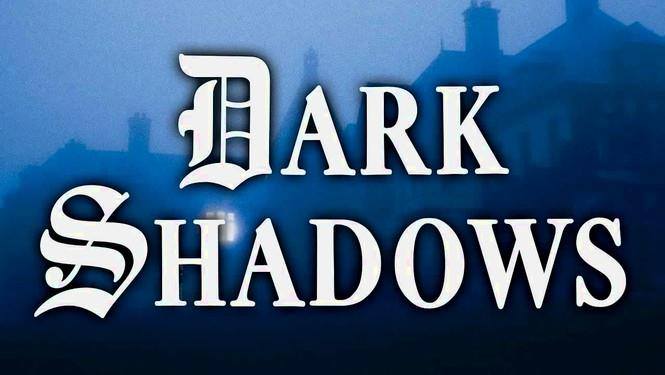
When my sister and I were kids, we moved to Chicago from Alabama. I was about two years old, give or take; I don’t remember moving up there nor do I remember ever living in Alabama; my sister was two years older. My parents both got jobs–the point of the move was for climbing the economic ladder; they both got really good jobs in factories while my dad finished his degree. But because they both worked (our friends and neighbors all felt sorry for us because our mom had to work; their moms all were housewives), we needed to be watched while they weren’t home. Our landlady recommended a woman down the street–a mother of six whose two youngest were in their last years of high school–and so we started spending our days with Mrs. Harris, who fed us breakfast and lunch, and Mom would pick us up on her way home from the bus stop. When we started school, we went there for breakfast and lunch but came home after school; school let out at 3:15 and Mom was usually home by 3:30. But it was Mrs. Harris–and my grandmother, who worked a night shift–who got me started watching soaps in the first place. One Life to Life and General Hospital sort of held my attention, but it was Dark Shadows I couldn’t wait for. I used to run home from school to try to catch the last five or ten minutes during school; it wasn’t a problem during the summer.

I loved Dark Shadows.

I was crushed when it was canceled.
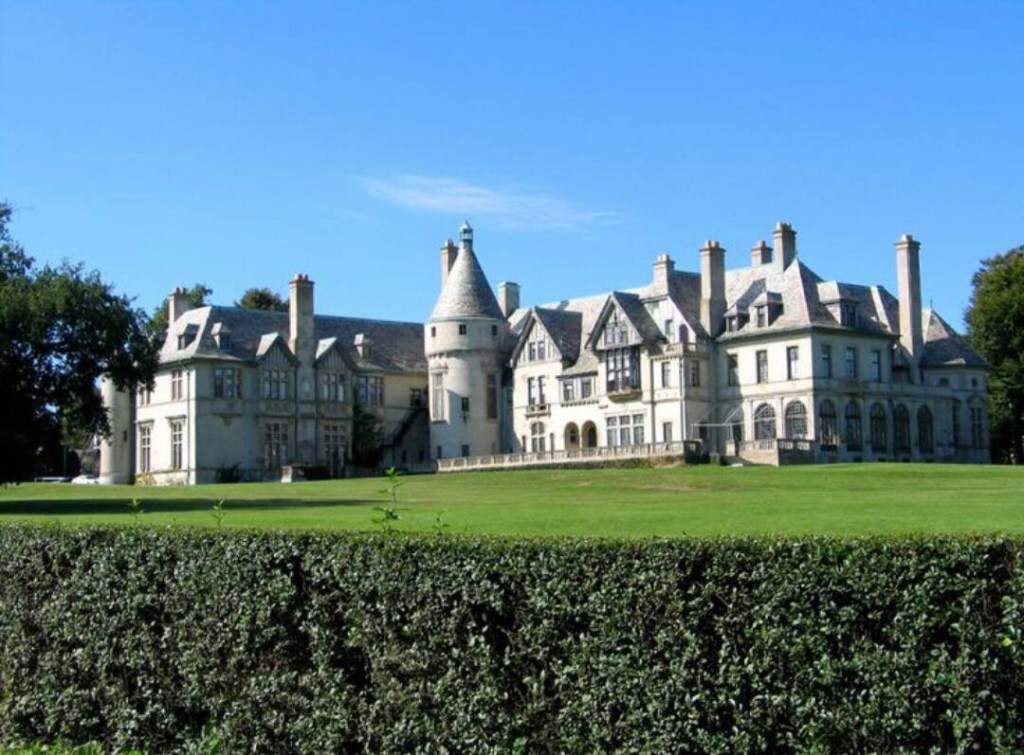
I mean, look at that house!!!!

The show wasn’t canceled, although the ratings were starting to slide a bit in the later years. The truism that Dark Shadows‘ producers and writers discovered is one that practically every other continuing series having to deal with the supernatural and supernatural creatures has had to deal with: how do you keep topping yourself and raising the stakes? True Blood, Supernatural, The Chilling Adventures of Sabrina, and countless others have all run headfirst into that wall. Once you’ve done time travel and vampires and witches and werewolves and Frankenstein and other dimensions, what is left to do? I admire them for pulling the plug rather than getting more and more desperate to get the ratings up and eventually damaging the legacy of the show.
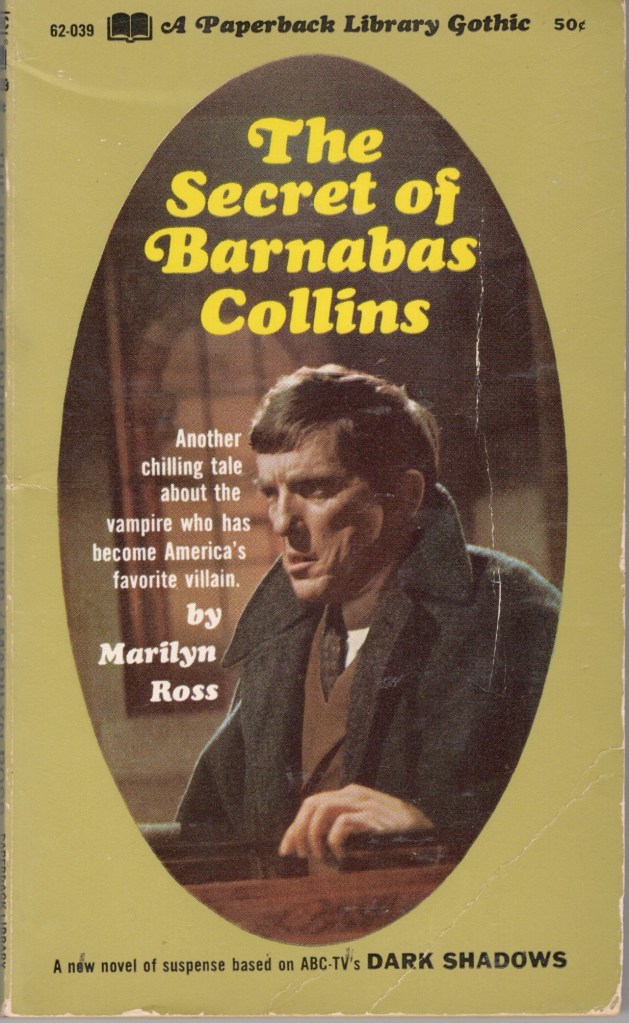
The show was a phenomenon the likes of which had never really been seen before in daytime–and the lesson learned from its success (go for the young audience!) would soon lead to the creation of youth-oriented shows like All My Children and The Young and the Restless–and of course in the mid-1970’s soaps would be forever changed when General Hospital introduced the character of teenager Laura Webber, played by an actual teenager, Genie Francis–and daytime was never the same. But Dark Shadows managed something that other soaps hadn’t–they created teen idols. Jonathan Frid as Barnabas, David Selby as Quentin, and even David Hennessey as David Collins were often on the covers of teen magazines like Tiger Beat and 16. The show even licensed FAN FICTION–a series of books based on the characters from the show, but thanks to all the fun stuff with time travel and parallel dimensions, Dark Shadows was perfect for spin-off books that took place in other Dark Shadows universe; one could even say Dark Shadows was one of the first shows to make use of a multi-verse.

The books were cheap–as you can see in the picture above (a copy sent to me by a friend with whom I bonded over our mutual love of the show) they ran between fifty cents and seventy-five cents a copy; they all had that same gold bordered cover with an oval image of characters from the show, and they were all written by “Marilyn Ross”, which was a pen name for a very prolific Canadian author named  William Edward Daniel Ross; he wrote over three hundred novels during his career, and Marilyn Ross was the name he used for Gothics–and the Dark Shadows books. (He also wrote as Clarissa Ross, and I read some of those novels as well, including The Spectral Mist.) They also weren’t particularly well written, and while they did take place outside the show’s continuity, there were also moments in some of them that didn’t make sense; in one of them, in which Barnabas shows up at Collinwood in the 1910’s, the only son of the family dies in a tragic accident…but if he was the only son, where did the present day Collinses come from? (The earlier books were told from the perspective of Victoria Winters, and in some cases the gimmick was some member of the family was telling Victoria a story about the family history.)

That’s the kind of shit that drives me insane.

But I remember when one of the off-brand television channels in Chicago (not affiliated with a major network) started running repeats of Dark Shadows from the very beginning when we lived in the suburbs in the evenings while the networks ran the evening news–guess what I was watching instead? Yup, Dark Shadows. (I always found it interesting, too, that the young actress who played Victoria Winters originally–Alexandra von Moltke–eventually became infamous as Klaus von Bulow’s mistress Alexandra Isles, who was, in the prosecutor’s theory, the reason Klaus injected Sunny with enough insulin to induce the coma from which she never woke up. But I digress.

I always wanted to write a vampire story similar to that of Barnabas Collins; I have an entire idea for a rural Louisiana version called Bayou Shadows that I’ve tinkered with off and on since the early 1990’s…but then Charlaine Harris started the Sookie Stackhouse series, which was essentially the same thing. I still might write about Bayou Shadows–the town called that has popped up from time to time in my books about New Orleans and Louisiana; most recently in A Streetcar Named Murder, actually–and if people think I’m ripping off Charlaine, so be it.

I’ll know that I’m really ripping off Dark Shadows.

The show also spawned two feature films, Night of Dark Shadows and House of Dark Shadows, each featuring one of the show’s leading men, Jonathan Frid and David Selby, respectively; the first did far better than the second. The show was revived in prime time for a single season in the late 1980’s; I watched it and loved it, of course–even got Paul to watch when it became available on DVD and I rewatched. I wish that show had been given more of a chance, because it was really quite good, and I was curious to see where the story went from that first season. It also had an excellent cast, including Hammer Film star Barbara Steele as Dr. Julia Hoffman. I did watch the Tim Burton film from this century, which had some clever moments but wasn’t quite as good; it went for the silly parody thing The Brady Bunch movies of the 1990’s did, but it didn’t land. The actress who played villainess Angelique in the original series, Lara Parker, has also written some Dark Shadows novels (I have copies but haven’t read them; I really should). Kathryn Leigh Scott, who played the original Maggie Evans on the soap (and in the first film) also has written novels; she was at Long Beach Bouchercon, where I met her and got a signed copy of her book Down and Out in Beverly Heels. She was lovely and couldn’t have been nicer; I really should read that book someday.

I’ve had Dark Shadows on my mind lately because I bonded with Carol Goodman at Bouchercon over our mutual love of Dark Shadows, and the Scotty book still in draft form takes place mostly in a rural parish outside of New Orleans; not the same parish where Bayou Shadows is located, but the next one over.

Sometimes I think it would be fun to reboot the show again, retelling the original story, or picking up from where the television series ended, or even doing a new generation, some forty years later, with David Collins as an adult with children and so forth…Carol and I have joked about coming up with a concept and trying to sell it and be the showrunners…which would be a dream.
Tusk

Monday and a work-at-home day, for data entry and other things. I also have a meeting at one (yay) and I am hoping to get some things delivered today so I don’t have to leave the house. Yesterday started out well; I wrote my entry and did some writing planning and then repaired to my easy chair to read; but then Paul got up and came downstairs and I decided that as long as I kept my notebook/journal handy, I could make notes while thinking and watching television. We missed the Saints game; I’d forgotten it was in London and by the time I checked what time it was starting it was already over so I can’t even blame the Saints for my complete (well, pointed, at any rate) failure to get as much done yesterday as I had wanted to–which means it’s entirely my fault.

I did watch the first two episodes of the new Interview with the Vampire series, and it put a lot of thoughts into my head. I thought it was remarkably well done and well-cast–I would have gone for a Skargaard for Lestat, but that could be True Blood’s fault as well–and it was beautifully filmed. The changes made to the original book (I liked that it’s structured as a follow-up interview to the original interview) and story were barely noticeable. It’s also amazing how different Jacob Anderson looks as Louis as opposed to Greyworm from Game of Thrones. It also made me start thinking about vampires and how/why they are so popular with queers–this show has no gay subtext, it’s right there in your face–and also remembered how incredibly disappointed I’d been when I first read the book, as a teenager. At that point in time, I’d forgotten that Dark Shadows had turned a vampire into a romantic leading man–my thoughts about vampires were entirely shaped at that time by Dracula and ‘salem’s Lot, and that was what I was expecting from Interview…and that is most definitely not what the book was. I read it again about ten years or so later, and still didn’t care for it much; I didn’t come into an appreciation of Anne Rice’s work until the 1990’s–a friend told me to read The Mummy so I did and enjoyed it, and then I read and loved The Witching Hour, so I took the first three volumes of The Vampire Chronicles with me to Hawaii on a vacation and that time…well, that time I got into the books and enjoyed them. Mrs. Rice soon became a “buy in hardcover on release” author for me, and remained that way for a very long time. I do think there’s a line from Barnabas Collins in Dark Shadows to Lestat/Louis to True Blood/the Sookie Stackhouse books; I once described True Blood as “Dark Shadows with sex, violence, nudity and blood.”

We then watched the first episode of Queer for Fear, a documentary series on Shudder about queer themes and subtexts in horror films, which was fun and certainly fit the theme of the day, but then we moved on to Your Honor starring Bryan Cranston, filmed and set in New Orleans (again, we marveled a lot about the geography–“oh, look, they’re transporting him from the courthouse to OPP but for some reason are coming in from I-10 which means they somehow detoured through Metairie”–and we can’t quite figure out where Cranston and his son live; they are always taking the bridge across the river, but Cranston can go jogging from his front door down St. Charles Avenue down to the lower 9th ward (clearly, training for a marathon of some sort) and back, so I am not sure why they have the need to go back and forth to the West Bank (Paul: this would only make sense if they lived in Algiers, but why would he cross the river to go jogging?). I know, I know, it’s fiction and make-believe and has everything to do with shots and visuals that remind the viewer it’s New Orleans; both the Crescent City Connection and the Huey P. Long bridges will do that, as will the drawbridge over the Industrial Canal, and nothing says New Orleans quite like the streetcar. I also know it’s being nit-picky and “more New Orleanian than thou”, but I can’t help it when I watch something filmed here (I was also identifying where scenes were shot in Interview with the Vampire as well). I’m sure New Yorkers do this a lot, too. We also watched this week’s House of the Dragon, which I am enjoying–there’s really no good characters to root for in this one; they are essentially all terrible people; at least in Game of Thrones we could root for the Starks as the only decent people in Westeros. We also watched the new episode of The Serpent Queen, as Catherine is now slowly coming into her own. I really am enjoying this series; I hope it doesn’t go off the rails at some point.

But now it’s October already–yikes; it seems as though this year has sped past but on the other hand January also seems like it was a million years ago already–and I’ve really got to start getting things done.

As I’ve been doing my entries about writing my books, it’s been a fun journey down memory lane, as I remember things I wanted to do and plans I had that somehow were either forgotten or pushed aside as other things crowded them out of my brain. Watching Interview and Queer for Fear reminded me of my own world of the supernatural I was trying to create with some of my horror writing (I don’t really consider my vampire writing as horror; yes, vampires, but the primary focus of them was the eroticism), and somehow I’ve managed to stick to the rules of that weird world of the supernatural I was creating through short fiction that spilled over into the erotica; so far I’ve done vampires and witches, rougaroux and le feu follet, all tied around parishes on the other side of the river and west/south of New Orleans. I have a couple of short stories to write still, and a book to get done–and I want to read more. I want to finish reading my current book and I think the first book for Horror Month will be a reread of Interview with the Vampire, perhaps followed by a reread of ‘salem’s Lot; why not explore the vampires?

And on that note, I am heading into the spice mines. Have a lovely first Monday in October, Constant Reader, and I will be checking in with you again tomorrow morning before the sun comes up. Yay.

Heavenly Action

I’ve always been—undoubtedly in part because I love history so much—an enormous fan of books where secrets from the past (even the far distant past) play an enormous part in the present lives of the characters in the story, and that solving those mysteries, learning the truth about the past, is necessary in the present for conflict resolution. As a history buff, the lack of a lengthy history as a nation is something I’ve always thought unfortunate; without ancient buildings and the way that history isn’t sort of always there in our faces the way it is in Italy or other older nations, it’s difficult for many Americans to either grasp, be interested in, or give a shit about our history—we have as a nation the attention span of a goldfish (thanks, Ted Lasso, for that reference).

To make a side by side historical comparison, for example, the Habsburg dynasty dominated central Europe for almost six hundred years, whereas the first European to actually arrive and establish a colony were under the aegis and flag of the Habsburg king of Spain—and that was in the early sixteenth century.

Secrets of the past casting a shadow over the lives of the living is often a theme in Gothics, my favorite style of novel/writing (noir is a close second). Rebecca is of course the master class in secrets of the past; the first Mrs. deWinter might not actually be haunting the halls of Manderley literally, but her ghost is definitely there. Victoria Holt’s romantic suspense novels inevitably were set in some enormous old mansion or castle, with potential ghosts a-plenty everywhere you turn. Phyllis A. Whitney’s one novel set in Britain—Hunter’s Green—also has a classic old British mansion with a potential ghost in it. Maybe it was the childhood interest in kids’ series, with the reliance on secret passages, hidden rooms, and proving that ghosts were frauds; every episode of Scooby Doo Where Are You? had the gang proving something supernatural was quite human in origin.

One of my favorite Nancy Drew books when I was a kid was The Ghost of Blackwood Hall; I don’t really remember much of the story now, other than a fraudulent haunting was involved and a woman—Mrs. Putney—was being swindled by a medium? (Reading the synopses on a Nancy Drew website, apparently part of the story involves Nancy and the gang coming to New Orleans, which I absolutely do not remember; my only Nancy Drew-New Orleans memory is The Haunted Showboat—involving yet another haunting. Interesting.) When I was writing the original short story (“Ruins”) I needed a name for the old burned-out plantation house; I decided to pay homage to Nancy Drew by naming it Blackwood Hall, and naming Jake’s maternal ancestor’s family Blackwood (his grandmother was a Blackwood, married a Donelson; Jake has his father’s last name, which is Chapman). I did think about changing this from time to time during the drafting of Bury Me in Shadows, but finally decided to leave it as it was. It might make Nancy Drew readers smile and wonder, and those who didn’t read Nancy Drew, obviously won’t catch it.

Hey, at least I didn’t call it Hill House.

But writing about ghosts inevitably makes one wonder about the afterlife and how it all works; if there is such a thing as ghosts, ergo it means that we all have souls and spirits that can remain behind or move on after we die. So what does writing about ghosts—or writing a ghost story—mean for the writer as far as their beliefs are concerned?

Religion primarily came into existence because ignorant humans needed an explanation for the world around them, combined with a terror about dying. It is impossible for a human mind to comprehend nothingness (whenever I try, I can’t get past “there has to be something in order for there to be nothing, you cannot have nothing unless you have something” and that just bounces around in my head until it starts to hurt); likewise, whenever I try to imagine even the Big Bang Theory, I can’t get past “but there had to be something to explode” and yeah, my head starts to hurt. Even as a kid in church, studying the Old Testament and Genesis, I could never get past “but where did God come from?” I don’t begrudge anyone anything that gives them comfort—unless it starts to impede on me. I’ve studied religions and myths on my own since I was a kid; the commonalities between them all speak to a common experience and need in humanity, regardless of where in the world those humans evolved; a fear of the unknown, and an attempt to explain those fears away by coming up with a mythology that explains how everything exists, why things happen, and what happens when you die. (I am hardly an expert, but theology is an amateur interest of mine, along with Biblical history, the history of the development of Christianity, and end-times beliefs.)

Ghosts, and spirits, have been used since humanity drew art on cave walls with charcoal to explain mysterious happenings that couldn’t be otherwise explained. I am not as interested in malevolent spirits—ghosts that do harm—as I am in those who, for whatever reason, are trapped on this plane and need to be freed. This was a common theme in Barbara Michaels’ ghost stories (see: Ammie Come Home, House of Many Shadows, Witch, Be Buried in the Rain, The Crying Child) in which the present-day characters must solve the mystery from the past; why is the ghost haunting this house and what happened to them that caused them to remain behind? I used this theme—spirits trapped by violent deaths in this plane whose truth must be uncovered in so they can be put to rest—in Lake Thirteen and returned to it with Bury Me in Shadows. I did, of course, worry that I was simply writing the same book over again; repeating myself is one of my biggest fears (how many car accidents has Scotty been in?), but the two books, I think, are different enough that it’s not the same story.

At least I can convince myself of that, at any rate.

There’s a few more ghost stories I want to write, actually; (it also just occurred to me that there was a ghost in Jackson Square Jazz, the second Scotty book) any number of which come from those legends my grandmother used to tell me as a child. I have this great idea for one I’ve been wanting to write set here in New Orleans for a very long time called “The Weeping Nun;” I have the entire ghost’s story written in my head, I just don’t have a modern story to wrap around it (same issue I have with my New Orleans ghost story book, Voices in an Empty Room) and of course there’s “The Scent of Lilacs in the Rain,” a short story about another Corinth County ghost I started writing and got to about five thousand words before the ghost even made an appearance. That great length is why I shelved the story—and now, of course, I realize I can do it as a novella, which is amazing news and life-changing, really. “Whim of the Wind,” the very first Corinth County story I ever wrote, is also kind of a ghost story, and maybe someday I’ll find the key to making it publishable (although I think I already did figure it out, thanks to the brilliance of an Art Taylor short story).

I’ve always believed part of the reason I was drawn so strongly to New Orleans is because the past is still very much a part of the present here—though not so much as we New Orleanians would like to believe, as several Facebook groups I belong to about the history of New Orleans often show how often and rapidly the cityscape has changed over the years—and you can sometimes even feel here, at times, under the right conditions (fog and/or mist are usually involved) like you’ve gone back in time, through a rip in the time/space continuum; which is something I’d actually like to write someday here—but that’s just an amorphous idea skittering through my brain.

And of course, I have an idea for a paranormal series set in a fictional parish here in Louisiana. I think about it every now and again, but am really not sure how I want to do it. I know doing a paranormal Louisiana town series will get me accused of ripping off Charlaine Harris’ Sookie Stackhouse novels, but that’s fine. I don’t think I would be doing vampire kings or queens or any of the directions Ms. Harris went with her series. (Monsters of Louisiana and Monsters of New Orleans—paranormal/crime short story collections—may also still happen; one never knows, really.)

As hard as it was sometimes to write, I think Bury Me in Shadows turned out better than I could have hoped. I think it captured the mood and atmosphere I was going for; I think I made my narrator just unreliable enough to keep the reader unsure of what’s going on in the story; and I think I managed to tell a Civil War ghost story (it’s more than just that, but that’s how I’ve always thought of it and that’s a very hard, apparently, habit for me to break.

I hope people do read and like it. We shall see how it goes, shall we not?

Breathless

Monday morning and up at the rise of the sun; back to another work week and trying to get caught up on everything.

I really do feel like Sisyphus pushing the rock uphill most days, you know?

But I woke up early yesterday and made progress, which is never a bad thing, and I also made it to the gym for my first workout of week two. I managed to accomplish all three workouts for week one, and so this week entailed an added set of 15 reps at the same weights I used last week. It was more difficult, but not painfully so or so bad that I couldn’t finish both sets–but on some exercises it was much harder than it was on others. That’s fine–I worked up a lovely sweat and my heart rate went up, which was the ultimate goal. I came home–it was really quite a beautiful fall day in New Orleans; sunny and crisp and cool–and had my protein shake before getting cleaned up and diving back into the emails and things I needed to get done.

I did decide what my next read would be: Donald Westlake’s The Hot Rock. My education in Westlake is sorely lacking (as is my education in Lawrence Block, for that matter) although I read one of his Hard Case Crime books, The Comedy is Finished, and I read the first of his Richard Stark novels…but other than that, I have failed miserably in reading Westlake. I remember when The Hot Rock was out in paperback originally; I also remember that it was filmed with Robert Redford (perhaps another film I can add–if I can find it–to the Cynical 70’s Film Festival), and I’ve had a copy of this forever. Rob Byrnes has always spoken highly of Westlake–his own comic caper novels, he claims, owe a huge debt to Westlake, and only three chapters into the book, I can totally see the influence–and I don’t know why it’s taken me so long to get around to reading The Hot Rock, frankly. The edition I have also has an intro from Westlake himself, which sort of explains where the book came from, and I found this very interesting:

One day in 1967 I was wearing my Richard Stark hat, looking for a story to tell about my man Parker, and I thought, he reacts badly to frustration, what if he had to steal the same thing four or five times? I started to work it out, then realized the idea was only comic and Parker wouldn’t stand for it. But I still liked the notion, and even–once it was comic–saw how to make it six thefts of the same elusive item. So I’d do it that way.

But if it wasn’t Parker, who was it? Who was this guy, dogged but doomed, and what was his name? Without a name, I couldn’t see him, and until I could see him I couldn’t write about him.

Wow. He then goes on to talk about how he came up with the name Dortmunder, but it was so weird to see a writer of Westlake’s stature having the same problem I have when writing, or coming up with a new idea: I can’t write about people if they don’t have names, because without names I can’t see them or know enough about them to write about them. I know there are writers who can do this; I am just not one of them, and I always thought it was one of my (many) peculiarities as a writer. Turns out, Westlake was like me, too. Mine goes even further–I can’t write a story without a title, and if the title is wrong, it impedes the story writing even further. I think some of the in-progress unfinished stories I have on hand suffer from this very problem–I know I think “A Dirge in the Dark” isn’t the right title for the story I am writing with that title–but I am hoping I can get it all worked out eventually.

I do hate daylight savings time, quite frankly, but this “gain an hour” nonsense was rejected by my body–which makes getting up earlier much easier than it usually is. I was awake before my alarm went off this morning, I am wide awake as I sip my first cappuccino of the morning, and I feel like it’s going to be, over all, a really great day–for a shitty, unsettling week. Heavy sigh. But I got everything ready last night so I don’t have to pick out clothes or anything this morning; my lunch is ready to go into the lunch box, and my office/kitchen is very neat and organized already–a very good start to the week. LSU has a bye week this coming weekend, and one good thing about LSU having a bad season–I’ve almost completely lost interest in both the conference and national championship races, which means I won’t be watching games other than LSU anymore, thereby freeing up my Saturdays almost completely. The Saints did eke out a win yesterday–although they did everything they possibly could to snatch defeat from the jaws of victory. As Paul said, “this year sucks and we can’t even get solace from football season.”

I did read a Charlaine Harris short story yesterday as well, from the MWA anthology she edited a while back, Crimes by Moonlight, which was, in her own words from her introduction to the piece, “a collection of woo-woo stories.” Her story was set in the Sookie Stackhouse universe she created with her bestselling novels (later adapted into True Blood, one of my favorite television series), and was called “Dahlia Underground.” Dahlia is a nine hundred year old vampire who looks nineteen–sexy and beautiful, she also dresses like a sexy dominatrix (I kept picturing my favorite True Blood character, Pam) who wakes up after an anti-vampire terrorist strike on a hotel. Numerous vampires were killed during the attack, she has to be dug out of the wreckage by a firehouse company, and then the rest of the story is about not only vampiric revenge on the terrorists, but Dahlia essentially adopting the fire company that saved her life. It was well done and enormously satisfying; the next story up in the anthology is by Edgar winner William Kent Krueger, which should also be fun.

My back feels a little sore this morning–not sure what that’s from, but it’s not muscle soreness, so who the fuck knows–so I am going to use the self-massager in a moment to try to loosen whatever it is that is tight back there. I’m having dinner with a writer friend tonight who is in from out of town to visit her daughter, who is currently enrolled at Tulane University, which is lovely–I always tend to avoid such commitments, but when I do agree to them inevitably have a good time–and I just have to be wary of time, since I have to get up early again tomorrow.

We continue to watch The Undoing on HBO, and I am beginning to think I’ve already got this entire thing figured out. I could be wrong–I have been before–and perhaps what I am thinking is too obvious to be the case. If it does turn out to the case, it will be disappointing…but therein lies the rub of being a crime writer who reads a lot of crime novels (and has edited dozens).

I certainly am hoping to get a lot done this week. But I am rested, hopefully there will be no more major life disruptions (he types hopefully the day before a terrifying general election), and if I can remain focused, I can get everything finished that I need to get finished this week.

And on that note, tis back to the spice mines with me. Have a lovely Monday before the election, Constant Reader, and if you haven’t already, VOTE TOMORROW.

Sign o’ the Times

Monday morning rolls around yet again, and a new week dawns. I slept pretty decently again last night, which is unusual. The alarm went off this morning and I hit snooze, despite being awake, because the bed was so comfortable. Sigh.

The Saints won again yesterday, and with the season LSU is also having, it’s been a pretty good football season for Louisiana football fans thus far. LSU undefeated, the Saints with a single loss? The big test for LSU is the Alabama game a week from Saturday–not sure when the Saints will be tested; but the day after the LSU-Alabama game the Saints are playing the hated Atlanta Falcons. So, yeah, that’s kind of a big weekend for both teams, and both have a bye this weekend–so no football in the Lost Apartment this weekend, alas.

We watched the new Meryl Streep movie on Netflix last night, The Laundromat, and weren’t terribly impressed with it. The story rather lacked cohesion, and there were times when I was frankly bored with it. I guess the idea was to expose and talk about the ways companies and the wealthy avoid paying taxes by setting up off-shore trusts and holding companies. but the examples given with how that affects people wasn’t particularly affecting? It was disappointing. Streep was good, but just not given enough to really work with.

I read some more into Certain Dark Things yesterday, which I am also really enjoying now that I’m getting deeper into the story. It’s very well written, and I like the structure of the narrative, as well as the entire mythology of vampires in the new world that Silvia Moreno-Garcia is creating here. It’s pretty good, and I do highly recommend it. I am hoping to get finished reading it sometime this week. I want to read one more horror novel before the end of the month and Halloween; although I’m not certain Moreno-Garcia’s novel really fits into the horror genre. The book isn’t scary, but it is about paranormal creatures, and an entire world and society of them. Similarly to Charlaine Harris’ Sookie Stackhouse novels, she imagines a world where vampires are “out of the coffin,” and people know they exist. The fallout from this has resulted in Mexico City establishing itself not only as an independent city-state, but also as a vampire-free zone. I also like the characters she’s exploring–Atl, the modern-day female vampire, descendant of a line of vampires going back to the Aztecs, and Ana Aguirre, a female police detective in the city investigating a murder obviously committed by a vampire. So in some ways Certain Dark Things can also be considered a crime novel, which is very cool.

I love when the two genres overlap, to be quite honest.

And on that note, tis back to the spice mines with me. Have a lovely Monday, everyone.

12191924_970372776357076_2172431378750923817_n