All 4 Love

So, yes, it’s my birthday. I took the day off from work and am staying home for the most part. But I do have to go to Costco AND the grocery store today; living large, right? This might be my wildest birthday ever! (Sarcasm.)

I mean, do I know how to celebrate a birthday or what?

But this is the fifty-seventh, and I wasn’t really raised to be overly sentimental about birthdays; I’ve never really made a big deal out of mine, and now all it really is, is simply an excuse to take a day off from the office. I didn’t get nearly as much done this weekend as I would have liked; yesterday was lovely–I don’t think I went outside even once, which to me is of course a lovely lovely day.

I really  do want to become a recluse. I remember someone asked me on a panel once to describe what my dream success would be, and I replied, to make enough money to  not only not have to have a day job but to be able to pay someone to run my errands for me so I’d only have to leave the house to go to the gym.

Is that really so much to ask? Apparently. Ah, well.

I hope to do some writing today as well. We shall see how that goes.

Next up in Florida Happens is Neil Plakcy’s “Southernmost Point.”

Neil S. Plakcy is a U.S. writer whose works range from mystery to romance to anthologies and collections of gay erotica. He has twice been a finalist for the Lambda Literary Award for Best Gay Men’s Mystery Novel.

Plakcy began his professional publishing career with the first of his Hawaiian mysteries, Mahu, acquired and edited for Haworth Press by mystery author Greg Herren. With the second book in the series, Mahu Surfer, Plakcy moved to Alyson Books, which continued the series with Mahu Fire and Mahu Vice, and published their own edition of Mahu in 2009. After the close of Alyson, MLR Books picked up the series, publishing new editions of the first three and then continuing the series.

Plakcy and long-time friend Sharon Sakson co-edited a collection of stories by gay men about their experiences with their dogs, entitled Paws and Reflect: A Special Bond Between Man and Dog. A frequent contributor to gay anthologies, Plakcy has also edited numerous collections of gay erotica.

With the publication of GayLife.com in 2009, Plakcy entered the M/M romance genre, basing the book on his own experiences in software and web development and his familiarity with Miami Beach.

Plakcy has been a finalist for the Lambda Literary Award three times: twice in gay mystery, and once in gay romance. He won the “Hawaii Five-O” award given by attendees at the Left Coast Crime fan conference and his work has been enthusiastically reviewed by mainstream and specialty publications as well as by many fans.
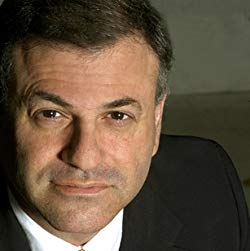
neil

It started with a selfie, and the drag queen who photo-bombed my boyfriend Lester and me.

Lester represents single-batch whiskeys, based out of Fort Lauderdale, where we both live. His region extends all the way to Key West, and one weekend in January he had a couple of promotions set up at bars on Duval Street, in the center of the entertainment district. I had a couple of days’ vacation coming to me from the FBI, where I work as a Special Agent attached to the Violent Crimes Task Force, so I took them and went along for the ride.

And a beautiful ride it was, once we ran out of highway, then cleared the urban congestion of Key Largo. All of a sudden there was water on both sides of the road, the dark blue-green of the Atlantic to our left, the lighter green of the Gulf of Mexico to the right. The long emptiness of the Seven Mile Bridge was liberating, even with the skeleton of the old railroad bridge beside us.

We made it to Key West late on Sunday afternoon, and after we checked into a bed-and-breakfast on Duval Street, we rented bikes and cycled over to the Southernmost Point, a big marker striped in yellow, orange and black that indicated we’d reached as far as you can go on the US mainland.

“Imagine living down here,” Lester said. “Only ninety miles to Cuba, and nearly twice that back to Miami.”

“I think there’s a kind of person who likes to live at the edge,” I said. “So far from everything else. Like you can leave all the troubles you had wherever behind you and kick back with a margarita and a pair of flip-flops.”

“Thank you, Jimmy Buffett,” Lester said. “Come on, let’s get a picture of us with the marker in the background.”

This is a fun, suspenseful tale about, interestingly enough, what happens when you get photobombed by a stranger and post the picture on social media; a sly commentary, really, about how social media has reduced the size of the world and shows us, sometimes daily, how many degrees of separation we really are all from each other–which isn’t as separated as one might think. Neil does a deft job of keeping the action moving, as well as developing his vacationing gay male couple with just a few quick lines here and there, and their relationship as well through the couple-dialogue speak they share. It’s a fun story, with lots of Key West color, and I’m very glad to have it in the book.

And now, off to the spice mines.
Nasty

I was writing notes in my journal the other day when this thought came to me : social media is actually neither. You aren’t really being social, or socializing with anyone; and it’s not really media either. If anything, it’s anti-social media, because people tend to spend their time looking at their phones and spending time on their computer on social media sites rather than actually talking to, or engaging with, actual human beings.

When I was a kid I was taught that there were three things you never discussed, at parties, dinner, bars, etc: politics, money, and religion. Your politics, your income, and your religion were no one else’s business; likewise, everyone else’s were none of mine. At the time, I was told it was simply manners; you weren’t supposed to know or care about anyone else’s politics, money or religion–nor were you supposed to hold that against them. This is why we vote in booths with a curtain closed, because our politics are supposed to be private. Likewise, so is our religion, so is our income.

The rise of social media, however, has broken down those barricades of politeness and what used to be known as minding your own business. It’s very difficult, you know, to find out someone you’ve been friends with for a very long time might hold a belief or a value that is not just not in line with your own, but might even be repugnant to you. I’ve long recognized that simply because my core values and beliefs are my own doesn’t necessarily make them right; but I have also always been willing to change my mind, to learn and grow, from talking to other people, from reading, and from occasionally questioning my beliefs and values. 

What I often find astonishing is that people not only do not want to rethink or analyze their beliefs and values, but how quickly they are to not only take offense at the very idea but also how quickly they will get defensive and immediately go on the attack. Asking for a careful reevaluation of what you believe is neither telling you you’re a horrible person nor does it mean the other person is attacking you; it simply is ‘hey, have you ever thought about it this way?’ I have often enjoyed my exchanges with friends who believe differently than I do; sometimes it has actually changed or altered my opinion in some way, even if it’s minor: I don’t understand why anyone would not be interested in personal growth, or would want to shy away from intellectual stimulation.

As a writer, I long ago realized two things: I always need to listen, and it is very rare to actually change someone’s mind in a social media exchange about anything. Social media discussions quickly descend into vitriol, condescension, and name-calling; I have the privilege of knowing people who have far higher degrees of celebrity than I can ever hope to achieve and when I see the venom and vitriol directed at them in the public sphere, it makes me recoil quite a bit. Why do people have to be so nasty? I wonder, and then of course the inevitable “what-about-isms” and “your side started it” and all of that nonsense that deflects and derails what could actually be constructive conversation is tossed aside, and beliefs and values become more deeply hardened, the brain more callused.

I have evolved on many issues throughout the course of my lifetime; many. I was raised in a society that believed many terrible things, and I was raised to believe many things that I now find abhorrent. But as a gay male who always knew he was different, even when he didn’t know what precisely it was that made him different, I had to question everything. It was hard–my teens and my twenties were horrific and I often thought about suicide–before I finally realized that the problem wasn’t me but rather the values and beliefs that had been drilled into me for as long as I remembered. Once I realized that I could reject those values and beliefs because they didn’t stand up under scrutiny, my life changed and I continued to grow and evolve and achieve all the things that I wanted in life.

This is why I find the trope that’s just the way I was raised to not only be tired but the sign of intellectual laziness; a mental atrophying that I neither understand nor sympathize with. But I also recognize that being an outsider, someone consigned by the dominant culture and society to the margins, has also created a higher sense of empathy and sympathy for the others out here on the margins; and all we are interested in, really, is being allowed to be on the actual page; why I am willing to always listen rather than react–no matter how tempting it may be to simply react.

This past week, I saw a lot of people proudly showing how mentally atrophied they were, and how much they preferred remaining in a state of atrophy rather than listen to other people. This was, of course, in regards (in this example) to the American Library Association’s unanimous vote to change the name of the Laura Ingalls Wilder Award to the Children’s Literature Legacy Award, because of some racist tropes and language used in her books.  What was even more shocking was that a lot of this appeared on a list-serve for a writer’s organization I belong to whose entire purpose is to focus on diversity in literature. 

Not just atrophied brains, but ones also incapable of irony, apparently.

It wasn’t the first time something like that has exploded on the list-serve; several months ago there was a, to me, shocking outbreak of homophobia on the list. The situations weren’t the same, of course; no one had decided to change the title of an award because the person it was named after was homophobic. No, in this instance a writer had simply posted a question about a manuscript she’d submitted to her agent, who’d told her no one would publish it because of its depiction of a gay character as well as HIV. I started to reply to her, explaining precisely why her plot was problematic and also incredibly ill-informed about HIV when the list exploded with a bunch of wonderful straight white women who completely missed the point, called the agent’s remarks censorship (they most emphatically were NOT) and advised the writer that ‘she needed to find another agent who wasn’t so worried about political correctness.’

I was so horrified by these comments and remarks by writers who belong to a writer’s organization committed to diversity that I almost resigned from the organization.

Instead, I decided to keep writing my quarterly diversity column (which these women clearly never read) and keep fighting the good fight; because the marginalized never get the chance, no matter how tired we are, to just sit back and let things develop or run their course. If we want anything, if we want to move in from the margins, we have to keep fighting because they simply aren’t going to give it to us unless we make them.

And you know what? There’s still a lot of fight left in this tired old queen.

Be fucking warned.

The next story in Promises in Every Star and Other Stories is “The Pool Boy”:

I waited until I heard Jason’s car back out of the driveway before I got out of bed. I was being a coward, I knew, but I still wasn’t ready to face him with what I knew. I didn’t want to have that argument, that confrontation. I wasn’t sure I was ready yet to talk calmly and rationally. It still hurt too much. I wasn’t sure I could discuss this with him without getting angry, without saying something that shouldn’t be said, words in anger that couldn’t be taken back. I wasn’t sure I was quite ready yet to turn my back on ten years of loving and laughing and fighting, of good times and bad, of sleeping in the same bed with him and drawing comfort from the warmth of his body.

I called in sick to work. I might not have been physically ill, but I was certainly an emotional basket case. There wasn’t any way that I could help my clients in this state. Their needs and concerns and problems all seemed so unimportant, so completely pointless to me, that going in to the office was probably a bad idea. I brushed my teeth and took a shower, then put on my robe and went downstairs for a fresh pot of coffee. While I waited for it to brew I got the notice out of the bill drawer, the notice that proclaimed his guilt to the world, the indisputable proof of his guilt; that he’d betrayed me, lied to me,  ignored how I felt and did what he wanted to anyway.

Funny that a twenty dollar parking ticket could mean so much more than what it was on the surface.

I stared at it. Yes, that was Brent’s address on the ticket. The time of the offense was four thirty in the morning. The date was that weekend I’d gone home to my nephew’s wedding. Jason had been illegally parked in front of Brent’s house at four thirty in the morning while I was out of town. There was absolutely no logical explanation for Jason’s car to be there at that hour.

He was still fucking Brent. Even though we’d talked about it. Even though he’d promised me he would end it. Even though he assured me he still loved me and he didn’t love Brent.

This just happened to be the one time he was caught.

How many other times had he gone over there without me knowing, fucking Brent’s pretty little ass?

I don’t remember which anthology I wrote this for; but it was pre-Katrina, and I’ve always liked this story. It’s basically about a guy whose partner is cheating on him, has promised to stop, but he’s caught him in yet another lie. Hurt and devastated and not knowing how to deal with the whole situation (do I leave him? Do I forget it? Do I pretend I don’t know? How do I even approach discussing this with him?), he calls in sick to work and stays home…and then the pool boy shows up; a beautiful, sexy young man and yes, before long, they are hooking up…and that hook up is what heals his soul; reminds him that despite this betrayal he’s still an active, vital, attractive, sexual human being who deserves better; sexual healing, if you will.

I really like this story.

6a00e54ecca8b98833017c328e11de970b

Self Control

Monday morning, and heading into day two of my Facebook imprisonment. Interestingly enough, I find that I’m not really missing it all that much; I suspect I’m not the first person to suffer a Facebook ban who’s found it surprisingly liberating, and I’m equally certain that is hardly the intent behind the banning. If you think about it, truly, punishing members by banning them is actually kind of arrogant on Facebook’s part, you know? “Oh, you’ve been bad, so you can’t post or interact with anyone on here for a week!” Does it not occur to them that not being able to use Facebook could, in fact, be like going cold turkey on smoking and actually cure one of wasting time on their actual site?

I also find it fascinating that hate speech–rape threats, racism, misogyny, homophobia, transphobia, Islamophobia–doesn’t violate their community standards, but guys wearing speedos or skimpy underwear do. Which has everything to do with the moral rot at the core of our society, frankly; the pearl-clutching mentality that the human body and sexuality is distasteful and not something people should ever talk about. Dorothy Allison wrote a brilliant essay decades ago about how if Americans could ever get over their unnecessary societal prudishness and learn how to talk honestly and openly about sex and sexuality, many of our societal problems would go away.

Thanks, Puritans.

I’m very glad I grew up in a time when there was no social media; and while I certainly don’t ever want to go back to having to write on a typewriter and mail submissions in, I cannot even begin to imagine what it would be like to be a teen today and have to deal with social media. One of the things that makes writing y/a hard for me is my lack of understanding about social media and how it really works; plus not understanding how much teens and young people are addicted to their phones. (I am one to talk; but when I think about being a teen, I can’t comprehend how different my life would have been with a smart phone; and how different that would have made high school in general. One of the issues I have with the WIP–which is a y/a–is precisely that; even when I started writing and publishing y/a back in the day the smart phone wasn’t as prevalent and all-pervasive as it is today.) I remember Lois Duncan talking, at her Grand Master interview for MWA’s Edgar Symposium a few years ago, about updating her y/anovels and having to constantly call her grandchildren because she needed a way to get rid of cell phones in order for the plot to work. I even had to deal with that some in my own books–Lake Thirteen and Sleeping Angel both required isolation; so those parts that required such isolation took place in the back country, in cellular dead spots.

I also sometimes wonder how much social media–and my smart phone–has impacted my ability to focus–and not just while writing or editing, but in general. I can’t think of a single time recently when I’ve watched a television show where I’ve not turned to my phone or my iPad “just to check social media.” This is not a good thing; and perhaps this Facebook-imposed exile is just the thing I needed to get my focus back.

Hmmmm.

And since I do have a lot to do, I should most likely be grateful to Facebook’s ridiculously random enforcement of ‘community standards.’ It’s kind of nice to have the habit broken, in a way. Maybe going forward I should use it merely as a way to promote my books.

Hmmmm.

And on that note, this short story ain’t going to write itself.

So for Monday, here’s a hot guy in his underwear.


marcus