Galveston

I always wanted to write a romantic suspense novel, a la Phyllis A. Whitney’s, set in Galveston where some of the mystery dates back to the Great Hurricane of 1900. It seemed like the perfect setting for one of her novels–she was very much a master of place and wanted her readers to get a very strong sense of where the books were set–and who knows? Maybe someday I will. Maybe someday I’ll take a week and spent it on the island doing research and getting a sense of the place.

Stranger things have happened, after all.

Good morning on this fine Labor Day, and I am up early because Sparky was incredibly hungry and hadn’t been fed in forever (per him) but I don’t mind being up early. I have things to do today and I’ve been fatigued all weekend and unable to do much of anything. I’m not entirely sure how this weekend slipped so completely through my fingers the way it did, but that’s fine. I must have needed the rest. Yesterday started out fine but by the time the afternoon rolled around I was fatigued and around two I finally gave up on getting much done and plopped down in my chair to watch the South Carolina/Virginia Tech and Miami/Notre Dame games (both teams I wanted to win, did. Huzzah!). We did take some time off from the Miami game to finish watching Hostage, which was quite excellent, before switching back to the game. I feel asleep and went to bed before it was over, so naturally I checked the score first thing this morning over my coffee. It was an interesting weekend of college football to get the season started. This week’s rankings will be interesting, but I am also of the mindset that rankings this early in the season–before we know how good anyone is–are pointless and predicated on reputation and how well they did last year…but that’s also a fallacy nowadays. Florida State was 2-10 last year; who would have ever thought they would beat ALABAMA this year?

It may not be a good season for Alabama fans, who are the most impatient in the world.

I also spent some time yesterday reading The Hunting Wives, which is very different thus far than the television show–but in a good way, which is like enjoying the same story twice. If you like the story, you should enjoy it, right? The television show reminded me of glossy melodramatic soaps from the 1980s, Knots Landing and Dallas and Lace and others of a similar tone, and was incredibly fun with lots of twists and turns. The book is different. It’s glossy the way the show is, but there’s also a raw kernel of honesty/unreliability in the POV character that is very different from the show. I did some writing work–mostly thinking some things through and taking notes–but not much and I’ll need to do more today.

I need to make a to-do list for today only and see how it all works out. I should also update the weekly one I currently am working on. At least I am up early, right? I am not sure how busy we’ll be in the office this week, but I only have two days in the office this week anyway. Paul has his trainer this afternoon, and so will be out of the house most of the day after sleeping in, so I’ll have some focus time for writing today.

I love my new phone, by the way, but need to stop playing with it all the time.

And on that note, I am heading into the spice mines. Have a lovely Labor Day, Constant Reader, and I will be back in the morning again.

Rocky Mountain High

I was really into soaps in the late 1970s and up until the mid 1990s or so. My fandom, how it came to be, and how much of an influence soaps were to me as a writer is a topic for another time, perhaps after Pride Month is over because it’s really not Pride related, except for how they related to me as a gay man. But by the late 70s, I was strictly an ABC guy: All My Children, One Life to Live, General Hospital and Edge of Night, with me having a special attachment to Edge, which will also be a subject for another time. But soaps were strictly a daytime medium for a very long time–at least until Dallas premiered. Originally, each episode was a stand-alone but the show very quickly moved to the serial format, and the ratings went through the roof–and of course, “Who Shot J.R.?” was a global phenomenon (I figured it out early on–when I saw that Mary Crosby was only contracted for four episodes in the following season and the reveal that the shooter’s identity would be revealed in episode 4…it wasn’t too big of a leap from there to “it must have been Kristin”. I was right.), and Dallas ruled the ratings from there on out..

The success of Dallas, of course, lead to copycats from other networks trying to cash in on the new craze; television is nothing if not a place where imitating success is seen as a no-brainer; the irony was that so many of the other soaps that launched at night in the wake of the huge success of Dallas…failed for the most part. The only post-Dallas night time soaps that enjoyed long runs were Knots Landing, Falcon Crest, and Dynasty.

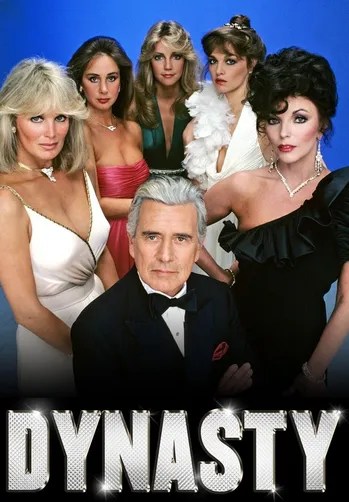
I first learned of Dynasty in a People magazine profile on Linda Evans, who at the time was best known as the woman John Derek left for Bo (who was a huge star at the time), and it mentioned she’d done a two hour pilot for a night time soap called Oil. By the time the fall previews started dropping, the show’s name had been changed to Dynasty, and there was going to be a gay character on the show. Once I read that, I knew I was going to watch. And then the premiere of the show was delayed months because of a strike. The show also had some other cast members I knew of and was interested to see–Wayne Northrop, who’d played Roman on Days of Our Lives; Pamela Sue Martin, of Nancy Drew and The Poseidon Adventure fame; and of course long-time television star John Forsythe as Blake Carrington, the patriarch of the family.

The first season was interesting enough, but the show didn’t really catch fire until the second season, when Joan Collins joined the cast as Blake’s first wife and mother of his children, Alexis. By the end of the season Dynasty had climbed from middling ratings to the Top Five, and it had become must-watch television.

But my primary interest was the character of Steven.

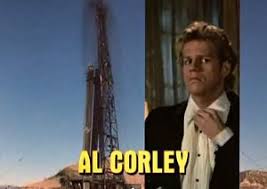
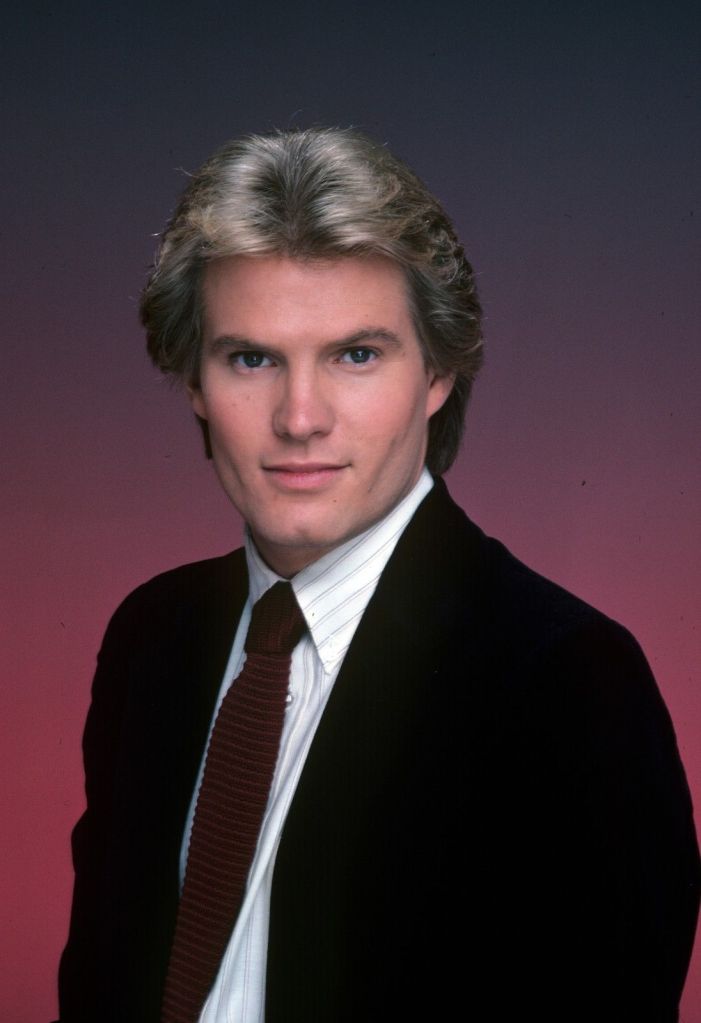
Originally played by Al Corley, Steven’s storylines were made clear in the pilot; Steven is coming to terms with his sexuality, coming back to Denver for his father’s wedding despite the fact that Blake is homophobic and he’s been living with a man (Ted Dinard) in New York for the past few years. Steven still isn’t entirely sure of his sexuality (it never occurred to anyone in production that he could be bisexual; he only had a binary choice during the entire run of the show), and decided to go to work on an oil rig to “become a man.” His co-workers pranked and hazed him for being gay at first, and then tried to “straighten” him out by buying him a hooker, which doesn’t go well. He then embarks on an affair with his boss’ wife Claudia (played by Pamela Bellwood, who was probably one of the best actresses in the cast), who was also mentally ill and her sanity wavered throughout the run of the show. Ted comes to Denver to get Steven to come home, but Steven’s decided to stay in Denver and try to get on with his life and ends things with Ted. Unfortunately, Ted comes to the Carrington estate (which was ‘played’ by Filoli, gorgeous place that was also the ‘setting’ for Laurie R. King’s superb Back to the Garden) to say goodbye, Blake comes home already angry, becomes angrier to learn Ted is in the house, rushes upstairs to see them hugging goodbye, and in a homophobic rage pulls Ted off Steven, punches him and knocks him down–only he is killed when he hits his head on a fireplace guardrail–and now Blake has to go on trial for murdering his son’s gay lover; and now the entire world nows.

Alexis returned for the trial, entering the courtroom wearing a veil, and Fallon gasps, “oh my god that’s my mother” setting the stage for season two, and night time television’s greatest villains, Alexis.

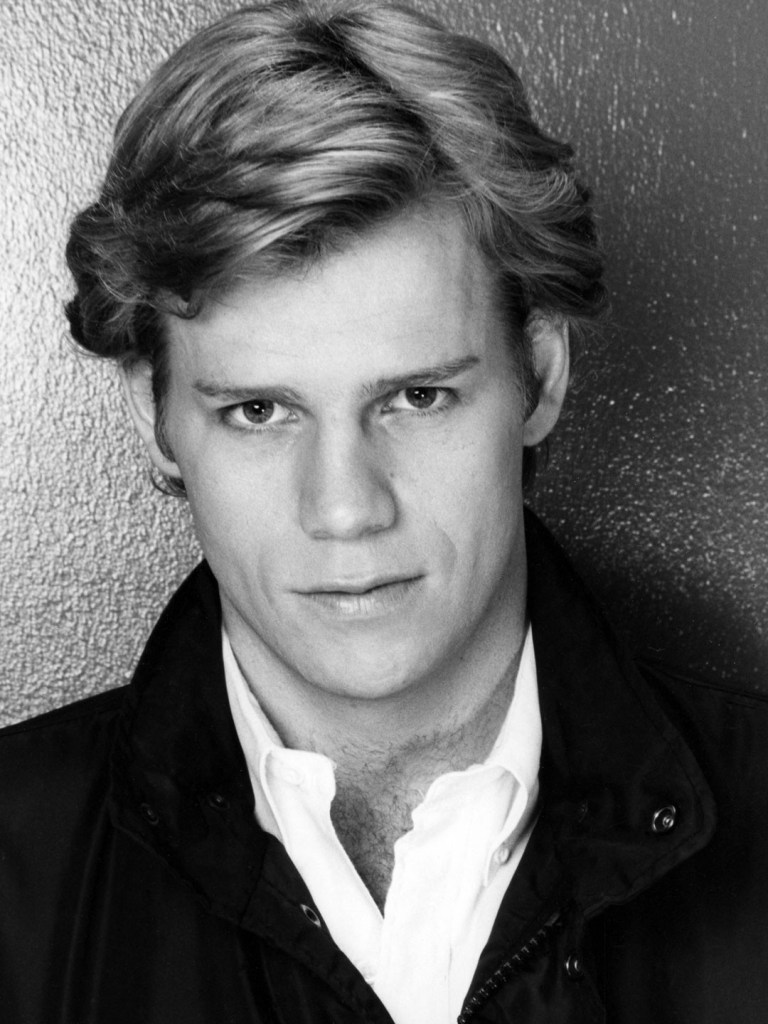
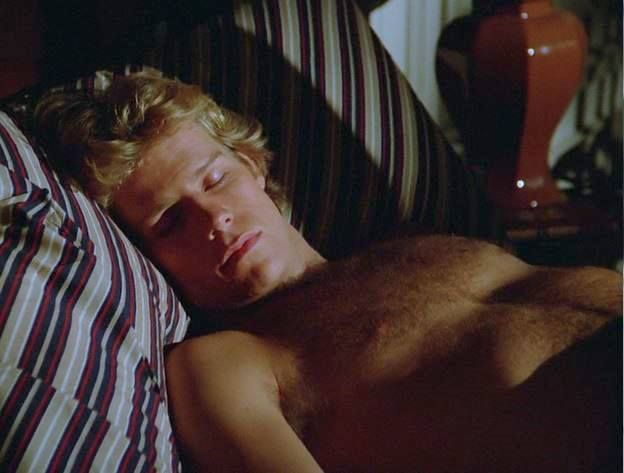
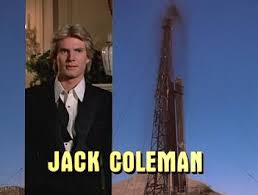
Season 2 was disappointing in terms of Steven as he spent season two trying to be straight, getting involved with and marrying Sammie Jo (Heather Locklear in the role that made her famous), but eventually telling his entire family that he’s gay, he’s tired of trying to be someone he’s not, and leaves Denver. He is reported killed in a oil rig explosion in the south China Sea in season three, which was their way of recasting–“plastic surgery so he doesn’t look the same”–and he was replaced by Jack Coleman (at the time best known for playing a serial killer on Days of Our Lives).

Coleman was fine, but he was different, and the character changed to match the actor. His entire storyline for the rest of the series involved him getting married, ruining that by getting involved with another man–before deciding what to do with him again for the sake of storyline; showing how hard it was to actually integrate someone with a same sex attraction into the cast of a soap. Every man he was involved with was a new character, and soaps–whose mainstay bottom line is thwarted romances, marriage and divorce–really didn’t know what to do with a non-straight character, other than throwing him into relationships with women (???) to have them end badly and so on.

When the reunion film was done in the 1990s, Al Corley returned as Steven (no explanation of why he looked the way he did before the surgery) and he’d made peace with his sexuality, again living in New York happily with another man and raising his son (oh yes, the gay character also impregnated one of his ‘women’)…while never once raising the possibility of bisexuality; I guess getting the 1980’s home audience vested in a gay character was risky enough without bringing in bisexuality–which tells you where we were as a country in the 1980’s…and we shouldn’t also overlook the fact that it was Dynasty that brought HIV/AIDS to the forefront of conversations in this country. Rock Hudson’s AIDS diagnosis became public shortly after he appeared on the show, and there was a lot of panic because he’d kissed the Linda Evans character–had he infected her? (We didn’t know as much then as we do now; now that fear is laughable but it was palpable back then because there was so much ignorance about it then, thanks to the Reagan Administration and the deeply embedded homophobia in post-war American culture.)

I started rewatching the original show once it was available for streaming, and that first season really is a slog; Blake was the primary villain in the first season (Alexis took his place, turning him into a more traditional soap hero–flawed but a good person at heart) and he just didn’t have the gravitas to relish being evil the way Joan Collins jumped in with both hands and feet), so while I was enjoying seeing the more honest and realistic to life way Steven and his dilemma was displayed in that first season–even the affair with Claudia made sense the way it was written–they really didn’t know what to do with him after the recast, and he descended from the fully developed realistic character Corley played to the two-dimensional soap hero he devolved into after the recast.

But…it was still pretty daring for the 1980s, and I did appreciate the attempt at representation. I know the reboot, which I didn’t watch, made Steven straight up gay; even gender swapping Sammie Jo by turning her into Sammy Joe. Progress is progress, and we cannot ever dismiss out of hand the brave attempts at using homosexuality and familial homophobia as a source for story; they were fighting the network censors, the right wing, and most of the country was homophobic, too.

They did the best they could and it was important at the time…even if it doesn’t hold up well under modern understanding.

Free Your Mind

Well, I slept deeply and well last night, only waking up twice–and both times I was able to go back into a lovely, lovely deep sleep. I also didn’t wake up until almost nine. I know, right? It’s so lovely to feel rested.

LSU’s game isn’t on until tonight, but there are some terrific games on throughout the day. I suspect I can finish the floors and cleaning the living room around and during some of these games; I can also get some writing done as well, methinks. I am leaning towards editing some short stories rather than working on the book–yes, I know that will put me two days behind where I want to be with it, but I am also stuck. (And no sooner did I type that, did I come up with a way to start Chapter Four in a way that will help advance the plot somewhat. Huzzah!)

Yesterday, as I mentioned, I stopped at the Latter Library on my way home from work to pick up a book I’d requested on-line, Volume 2 of Otto Penzler’s Bibliomysteries. If you aren’t familiar with the “Bibliomysteries,” these are slightly longer than your average short stories, written by today’s top crime writers, and have to focus or be centered around a book or a bookstore. I first became aware of them when I was a judge for the Edgar Award for Best Short Story a few years ago (maybe more than a few; time has become so fluid and untethered for me–particularly when I realize it’s fucking 2018 sometimes), and in fact we picked John Connelly’s Bibliomystery, “‘The Caxton Lending Library and Book Depository,” as that year’s Best Short Story winner. Since then, I’ve read others–Megan Abbott’s “The Little Men,” Laura Lippman’s “The Book Thing,” Denise Mina’s “Every Seven Years”–and been blown away by their absolute brilliance (which reminds me, I really need to get back to the Short Story Project, which has sadly fallen by the wayside); so I am very excited to read this second collection of these singles; the stories are, you see, originally published as singles–you can buy them as ebooks or you can get a print copy.

I love the library, and was extremely pleased with myself, as Constant Reader is probably already aware, for finally getting my library card. I haven’t had one since I left Kansas in 1981; and even in Kansas I hadn’t used mine for years when we moved. Libraries were very important to me, as a kid and as a teen; I don’t know why I stopped using them–other than the fact that I often lost library books, or forgot to return them on time, which meant fines, which meant lectures from my mother about irresponsibility and on and on and on it went–but I remember the Tomen Branch of the Chicago Public Library fondly; the library on 6th Street in Emporia, and the little library in Americus, as well as when the Bolingbrook Library opened. I often spent time in my school libraries as well as a kid. Stupidly, I suspect I stopped using libraries when I started working and had my own money to buy books with; I loved owning books, always coveted other people’s, and for years was also sentimentally attached to books and didn’t want to get rid of my copies of them. I still am, and I still hoard books, always buying more when I haven’t read all the ones on hand, and I was the same with the library; always checking out more than I could possibly read because I also wanted choices about what to read. I’m looking forward to reading–and reporting back–on the stories in this book I haven’t already read–the Abbott and Mina stories are also inside this collection of them. Writing a Bibliomystery is a bucket-list thing for me; but I will also need to become more important of a writer to be asked.

Last night, as I laundered the bed lines and blankets and coverlets, it took longer for the dryer to dry things then planned–it was damp yesterday, and damp always affects the dryer–so I had to stay up a little later than I wanted to, so I started streaming an 1980’s classic thru Prime: Night of the Comet, starring Robert Beltran, Catherine-Mary Stewart, and Kelli Maroney. I saw this movie in the theater when it was released; it’s not the greatest movie in the world, but it also recognized that it wasn’t a great movie and embraced its camp sensibility. The premise of the movie is this: a comet with an enormous orbit through space is going to pass close by Earth again for the first time in sixty-five million years (hello, dinosaur extinction event!), and of course, it turns into this thing, with comet-watching parties and so forth. Our two leading ladies manage to miss the comet by falling asleep inside of steel–Stewart in the cinema where she works in a steel-walled room for storing film; Maroney in a steel shed in the backyard–and the comet turns everyone into either dust or murderously insane zombies, and they have to survive somehow. Fortunately, the women–sisters–have a father in the military who taught them how to protect themselves. Beltran plays a truck driver (who passed the night inside his truck) they encounter, and eventually team up with for survival. I was just far enough into the movie to get to the part where they run into Beltran for the first time–having already realized most of the world is dead–when the blankets were finished. I also remembered some trivia–Stewart’s big break was being the original Kayla on Days of Our Lives (her replacement became one of the most-loved and popular stars of the show), and Maroney started out playing a manipulative spoiled bitch teenager on Ryan’s Hope. Stewart was also the female lead in a favorite scifi movie of mine from that same period, The Last Starfighter. Both kind of faded away which I always thought was kind of unfortunate–although watching the movie again last night and seeing their performances clearly, it’s really not that surprising.

And Beltran, of course, was part of the Paul Bartel stable, also appearing in Eating Raoul and Scenes from the Class Struggle in Beverly Hills. Interesting that Bartel’s films, which were kind of the same style as John Waters movies, aren’t remembered or talked about much anymore. (Bartel and his usual female muse, Mary Woronov, also were in another classic from the period, Rock ‘n’ Roll High School–but I don’t remember if Bartel directed that one.)

I may finish watching Night of the Comet at some point today; we shall see how the day goes.

And now, back to the spice mines.

IMG_4332

Ruby Red Dress (Leave Me Alone)

Twelve days left to Halloween.

I’ve talked about Dark Shadows already, and I’ve also talked about soap operas before. But a lot of what we see now on television is technically serials; most series now are serials, where the action of each episode is picked up from where it left off in the previous one; continuity is important; and what happens in each episode has a causal effect on the characters for many episodes (and seasons) to come. I can remember, while True Blood was airing, and I was describing it to a friend who didn’t watch…and finally, I said, “It’s kind of like Dark Shadows with nudity, sex, and a lot of blood.” (I intend to talk about True Blood before Halloween, but this is not the entry.) It was kind of true, and I intend to draw those comparisons when I talk about True Blood –but today I am going to talk about another serial television show involving the supernatural (I don’t know that I can call it, fairly, horror) that Paul and I enjoyed watching: Dante’s Cove.

b83d4-dantes-cove-s03

I probably would have never known about Dante’s Cove if I hadn’t been working as an editor for Harrington Park Press at the time. Here TV was doing those adaptations of the Richard Stevenson/Don Strachey novels, and were also developing a series called <I>Dante’s Cove</i>. HPP was bringing the Strachey books back into print with tie-in editions, and Here was interested in having Dante’s Cove be novelized with tie-in editions. I thought it sounded interesting (it was pitched to us as “gay Dark Shadows“), and was interested in doing the novelizations myself, so Here sent me the pilot and the first season on DVD to watch.

The story was, actually, rather similar to the Dark Shadows opening: a young person comes to Dante’s Cove/Collinwood at the same time as a centuries old supernatural creature arrives, released from being imprisoned apparently for all time. Dark Shadows had Victoria Winters and Barnabas Collins the vampire; Dante’s Cove had Kevin and Ambrosius “Bro” Vallin. While Barnabas spurned the love of the witch Angelique, who cursed him and turned him into a vampire, leading his family to chain him up in his coffin; Ambrosius was a practitioner of magic called Tresum, and was engaged to a high priestess of the religion, Grace Neville. Grace caught Ambrosius literally being fucked in the ass by another man, whom she killed with magic, and she, too, cast a spell that locked him up for all eternity. Except Kevin, who comes to Dante’s Cove after being thrown out by his homophobic family to be with his lover Toby, unknowingly releases Ambrosius from his prison–which also triggers Grace to return.

Grace was played by Tracy Scoggins, best known for playing Monica Colby on first The Colbys, and then later on Dynasty.

dantes-cove

There were various characters, lesbians, gay men, straight boys, and varying storylines. Toby, the male lead, was played by Charlie David.

dantescove03

Kevin was played by Gregory Michael, who also later turned up on the show Greek.

dantescove01

Arrow’s Stephen Amell was in the first season as an asshole straight boy who was recast in Season 2.

stephen-amell-dantes-cove-1645693-500-342

There was lots of male nudity–including full frontal–and the men always looked like they were covered in oil. Reichen Leimkuhl, who won The Amazing Race and was later on the terrible rip-off of Real Housewives type shows The A List–New York, joined the cast in Season 3. And Thea Gill from Queer as Folk, also joined in Season 2 as Grace’s sister and mortal enemy, Diana.

5yl

Like I said, lots of pretty shirtless men, bare male asses, and the occasional male full frontal.

dantescove

The primary problem with Dante’s Cove, I felt, was bad writing and bad directing, as well as some serious continuity problems. The actors did their best with what they were given, but they just weren’t given enough, and it seemed like it was trying to be too serious. But a supernatural-themed soap opera with gay and lesbian characters that could get away with nudity shouldn’t have taken itself quite so seriously; it should have gone for humor and camp, and I bet it would have really caught on. (As I’ve said about other shows, “it wants to be Tennessee Williams when it should be going for Melrose Place.”) We were entertained, and we enjoyed watching it, but there was always such a sense of what it could have been. In the third season, the show went more along a campy route, giving the characters great bitchy quips, and it looked liked it had found its way…but alas, it wasn’t to be. It was cancelled. There was a spin-off show about a lair of vampires who lived in a sex club called The Lair that was also fun, and looked like it was hitting its stride at the end of its first season…but there wasn’t a second season, alas.

The novelizations, alas, never happened, which was also incredibly disappointing. I really thought I could make it a lot of fun…but alas, it is another one of those ‘wasn’t meant to be’ things.’

It would be kind of fun to rewatch…

And now back to the spice mines.

Una Paloma Blanca

I really do think my enjoyment of horror comes from watching Dark Shadows as a child.

The show was spooky. I’m not really sure what drew me to Dark Shadows, but I was also watching other soaps with our babysitter, but by far and away, Dark Shadows was my absolute favorite, and it was my grandmother’s favorite, too.

“My name is Victoria Winters.”

Every time I hear those words, or type them, I can hear that strange, haunting background music they always played as she spoke. Every episode, before the opening credits, Alexandra von Moltke (who later became the other woman in the von Bulow case; she was Klaus’s mistress and her ultimatum to him about leaving his wife theoretically was his motive for allegedly injecting her with an overdose of insulin that sent her into a coma), spoke those words, and other cryptic words, setting the stage for the episode, and the brief cliffhanger scene that would air before the opening credits and a commercial break. I recently watched the very first episode again, on either Netflix or Amazon Prime, I can’t remember which–and thrilled to those words, to the scene of Victoria on a train, riding to Collinsport to become the governess to troubled child David Collins.

darkshadows

If I can recall correctly, another part of the plot and original story was that Victoria was an orphan; but the entire time she lived in the home a cashier’s check to pay for her expenses and to give her a little spending money always arrived at the orphanage, drawn on a bank in Collinsport and with no name on the check. When the opportunity for the job came, Victoria jumped on the chance to take the job and maybe find out the truth about her heritage and background.


2012-04-23-darkshadows_bw

Dark Shadows was seen originally as a Gothic soap; how many Gothic novels are about the orphaned governess coming to the spooky mansion in the middle of nowhere to work with the tormented family? It was all about the atmosphere, and the show did a great job with that. The Collins family itself was secretive and strange; Elizabeth Collins Stoddard, whose husband disappeared and hasn’t set foot outside of the great house of Collinwood in twenty years; her snarky hard drinking brother Roger, David’s father, who has no patience for his son and whose own wife is missing; rebellious Carolyn, Elizabeth’s daughter–the Old House, nearby and abandoned for hundreds of years. The show didn’t do too well, though, and was bordering on cancellation when showrunner Dan Curtis decided to take the show all the way to the supernatural side: he introduced Roger’s wife as a phoenix, and when her story ended, David started seeing the ghost of a little girl in the big house. Shortly thereafter, a cousin from England showed up–Barnabas, who was actually a vampire and had been imprisoned in his coffin since the 1790’s, only to be released in the present day.

Man, did I want to live at Collinwood. There were witches (Lara Parker as Angelique!) and werewolves and the Devil and time travel and parallel universes…it was amazing.

collinwoodnightThe show went off the air in 1971, although two Dark Shadows movies were made for theatrical release, House of Dark Shadows and Night of Dark Shadows. The first simply retold the Barnabas-is-a-vampire story from the original show, only gorier, without Victoria Winters, and without the ‘cure’ that made Barnabas human again. The second starred David Selby, Kate Jackson, and Lara Parker in a strange story that had little or nothing to do with the television show; although it had something to do with a ghost story and witchcraft (I only saw it once, and don’t really remember it well).

And then….for years, nothing. The show was syndicated for reruns, and I was able to rewatch some of it in the early 1980’s, but it was over.

It was rebooted in 1991 as a prime time show, which I also loved. It only lasted one season, but I thought the cast was terrific, and it was done very well. I was really looking forward to season two; but alas, it was cancelled. In the first season, they did the Cousin Barnabas is a really a vampire story, and then flashed back to the 1790’s, where Victoria Winters (in the show, played by Joanna Going, somehow got sent back in time to witness how Barnabas became a vampire due to the machinations of the witch Angelique (Lysette Anthony), and was about to be hanged as a witch herself when the present-days Collinses were able to bring her back–knowing that Barnabas was the vampire. That was the season ending cliff-hanger. I was totally bummed the show wasn’t renewed.

91-dark-shadows-title

I made Paul watch it from Netflix a few years ago, and he, too, was addicted and bummed that it ended after one season.

Dark Shadows fans still have conventions and get-togethers, and are quite fanatical about their devotion. The Tim Burton comic remake/reboot of a few years ago earned quite a bit of scorn from the devotees; I actually didn’t mind it that much–having Eva Green in the cast is always a wise move to earn my approval, quite frankly. But when the daytime show was still airing, it was quite a cottage industry; there was an entire series of paperback novels based on the show and its characters written by Marilyn Ross (I read some of them), comic books, a board game, dolls, albums–pretty much any way you could make money off Dark Shadows, they found a way to do it. There wasn’t a cartoon series, though, nor a breakfast cereal.

So, yes, my love of the supernatural is partly due to Dark Shadows. I’d love to have the time to watch the original show again, from beginning to end.


Cat’s in the Cradle

The death of Agnes Nixon this past week saddened me, and spurred me to write two blog posts about her greatest, and most famous, creations; All My Children and One Life to Live. I watched both shows, along with General Hospital, off and on for over thirty years; I only stopped watching soaps when I needed the time I spent watching them to write–a decision I’ve never really regretted all that much. But I watched, over the years, many different soaps at one time or another: The Edge of Night, Dark Shadows, Love of Life, Search for Tomorrow, As the World Turns, Guiding Light, The Young and the Restless, Another World, Days of Our Lives, The Bold and the Beautiful, Capitol, Love is a Many Splendored Thing–it’s really quite staggering. And at night, I remember watching Peyton Place with my mom as a kid–although I don’t really remember much of it–and later, I was a huge Dynasty fan. I did watch Dallas, Knots Landing, and Falcon Crest during the 80’s night time soap heyday; I also watched others that didn’t last very long, like Emerald Point NAS, Flamingo Road, Paper Dolls, and Bare Essence.

It’s pretty safe to say I am a fan of the serial/continuing story format. When I was in college, I managed to get into a graduate level English course despite being an undergraduate because I was able to write a paper that was good enough to get me in; it was on Popular Culture in the 20th Century, and attendance wasn’t required–always a plus for me–and there were no tests; you only had to write a lengthy paper on some aspect of popular culture in the 20th century for your grade. I chose to write about soaps; the paper, which would wind up being 120 or so typewritten pages long, was title “How Changes in Daytime Drama Storylines Have Reflected Changes in American Culture and Society Since the 1950’s.”

God, how I wish I still had a copy of that paper.

I really wanted to work for the soaps in the 1980’s; my ambition switched from being a mystery and/or horror writer to being a soap writer. I still think it would be a lot of fun, even if there are very few soaps left to work for. But writing that paper required me to do a lot of research into the soaps and their histories; I’ve never minded doing research if it was a subject I was interested in. So, I kind of became a mini-expert in the soaps, and their histories, and there were a lot of interesting trends. It was interesting how moralistic the soaps were–something that hadn’t changed from their early days; back when there was a Motion Picture Code and a Comic Books Code, and censors for television (do they still have censors?); in which someone who did something bad always had to be found out and punished. (An interesting aside: one of the bad things that characters could do, and be forgiven/rehabilitated for and not necessarily punished for, was rape. But that’s a subject for another time–but I want to go on record to say that characters who had long runs on soaps, and in fact became very popular, at one time were rapists: Luke on General Hospital, Mickey on Days of Our Lives, John on As the World Turns, Roger on Guiding Light, Todd on One Life to Live; far too many for it to be a one-off, and enough to make it a trend. Even in prime time, on Dynasty Adam raped Kirby and was never prosecuted; she later agreed to marry her rapist.)

I even wrote, as a joke, a soap parody when I was in college, with my friends as characters. I called it The Young and the Pointless, and it was primarily for my amusement, and that of my friends. Basically, I looked at my friends and asked myself the question, if you were a character on a soap, what kind of character would you be?  I came up with the storylines myself; borrowing liberally from the storylines I’d learned so much about writing the paper, and ironically, my friends couldn’t get enough of it. They really became invested in the story; one even told me “My character wouldn’t say this.” Every day they would ask “have you written any new episodes?” It finally became over-bloated, because people who weren’t in it originally wanted to be, and I tried to be accomodating, and I cancelled it at long last midway through the third “season”. But it was a valuable learning experience for me, in that I learned that 1. I could write stories that interested people and made them want to keep reading; 2. I learned valuable lessons in creating characters and writing dialogue; and 3. I learned how to plot out a story. It was more like the classic parody SOAP than a real soap opera, but it was so much fun to write. I still have the originals somewhere–I’d always intended to type it up and make copies for the friends who were characters in it. Alas, some of them have died in the years since–a rather sobering thought–but The Young and the Pointless lives on in my files.

Yesterday LSU won, beating Missouri 42-7 at Tiger Stadium; their first win under interim head coach Ed Orgeron. LSU looked terrific; the defense played incredibly well, and the offense misfired a couple of times, but over all looked terrific. Unfortunately, it’s hard to tell if that was because they’ve come together as a team and are playing up to their potential, or if Missouri just isn’t particularly good; but LSU looked much sharper against Missouri than they did a few weeks ago against Jacksonville State. Their schedule now turns into Murderer’s Row, with games against Florida, Arkansas, Alabama, Ole Miss, and Texas A&M, so we shall see.

I wound up not being as productive yesterday as I’d intended; I did a lot of laundry and did some cleaning, but not all the cleaning I’d wanted to do. I also didn’t do any writing; I wound up getting sucked into watching some games on television (the last five minutes of the Georgia-Tennessee game was amazing; it reminded me of the last three minutes of the 2009 Georgia-LSU game, where LSU went ahead 12-7, only to fall behind with forty seconds left 13-12, but scored with less than twenty seconds left to pull off the win 20-14). Amazing.

I also spent some time opening Antonia Fraser’s Mary Queen of Scots and reading random sections yesterday; I originally read the book when I was eleven. The Queen of Scots has always interested me, and also, she was one of that ‘monstrous regiment of women’ who held power in the sixteenth century–when, as I’ve mentioned before, more women were in positions of power throughout Europe than any time prior or since. I also read some of Barbara Tuchman’s essays in Practicing History, and again, thought about how much I would love to write a book about the sixteenth century.

God, how I love history.

And now, I need to make up for the work I didn’t get done yesterday, so it’s off to the spice mines I go.

Here’s a hunk for you to enjoy:

img_1103


Angie Baby

Agnes Nixon died yesterday. For those of you who don’t know who she was, she created the long-running soaps One Life to Live and All My Children, among others, and worked on numerous others as well. She created two of the greatest female characters in television history–Victoria Lord on One Life to Live and Erica Kane on All My Children, both of whom made daytime legends of the actresses who played them, Erika Slezak and Susan Lucci.

I loved soaps, and it wasn’t until the late 1990’s that I stopped watching them because i needed the time to write. When I was a kid, both of my parents worked so during the summers a lady down the street watched my sister and I during the day–and she was an avid fan of General Hospital, One Life to Live, and Dark Shadows. My grandmother also worked the evening shift at American Can Company back then, and so she also watched the shows, so on days when she watched us we watched them all together. It was hard sometimes catching up, since we weren’t able to watch them during the school year (other than Dark Shadows, which we could run home from school to catch the last twenty minutes or so of), but watch them we did…and when All My Children debuted, we started watching that one because it was new–we could know everything from the very beginning. The thing that was amazing about All My Children as well, was that it had young characters featured front and center; the romantic lives of teenagers was just as important as that of its older characters. Tara, Phil, Chuck and Erica were all high school students when the show started, and there was something else odd about the adults in Pine Valley, as well. They didn’t just sit around and talk about what was going on with their lives, they also talked about the Vietnam War, protests, and opposing it. The show was actually relevant; while other soaps were insular, where nothing mattered except what was going on in the town as though the rest of the world didn’t exist, the people in Pine Valley were very aware. And both Phil and Chuck–and their families–worried they’d be drafted when they got out of high school.

amcbook

Phil eventually did wind up going to Vietnam, and was reported dead there.

The show was incredibly popular with young people–all of my friends watched it, and as the years passed, the show continued its commitment to young love. Pine Valley also had something else that most other soaps didn’t have–people of color. In the early 1980’s, there were two parallel star-crossed love stories featuring teens–Greg and Jenny, who were white, and Jesse and Angie, who were black. Both stories got equal air time, were equally important, and the young actors were incredibly compelling. There was also a teen villainess, Liza Colby, played by Marcy Walker, who was also fantastic.

Greg and Jenny:
imgres

Angie and Jesse:

imgres-1

The despicable Liza:

imgres-2

Kim Delaney, who would go on to prime time success, left the show shortly after she and Greg were finally, after years of heartbreak, obstacles, and separation, married; the show decided not to recast but to kill her off.

It was devastating.

In college, everyone would gather around television sets in the lounges to watch All My Children ; when Jenny flatlined I remember everyone in the lounge gasped in disbelief; some people actually started crying. Years later, I mentioned to a friend “if someone ever tells you they used to watch All My Children , and you ask them when they stopped watching, they will tell you they stopped watching when Jenny died.”

The show did eventually recover from killing off Jenny, but it took a while.

Over the years, the show created incredible characters played by exceptional actors; Sarah Michelle Gellar’s big break came as Kendall on the show; a young actress who not only could hold her own against Susan Lucci but was a villainess you also felt compassion for. She played Kendall, the daughter no one knew Erica had; the product of a rape when she was thirteen that she gave away, and Kendall turned up as a teenager. The scenes between Erica and Kendall, when Erica tried to explain why she could never love her because she would always see Kendall and remember the rape, were incredibly powerful; Sarah Michelle Gellar would win an Emmy for those scenes, and I never understood why Lucci did not. (Lucci, of course, was nominated a billion times and only won once; it became a running joke for Lucci–the irony being she became much more famous for not winning than any of the women who won did; and when she did finally win, it was national news and she was on every magazine cover on the newsstands.)

e55267ed80865a18956f611ddd65fbb8

Kelly Ripa also got her big break on All My Children , as Adam Chandler’s illegitimate daughter Haley.

One of the other things that made the show special was it wasn’t afraid to be funny; it was more than just unrelenting melodrama and sobbing. One moment your heart would be breaking over Donna’s grief over her child dying in a fire and the next you’d be laughing at the antics of Opal Gardner. All My Children never was afraid to be funny. (One of the greatest characters on the show was villainess Janet–“Janet from another planet”–who did horrible things but at the same time was incredibly funny.)

And of course, there was Erica Kane. You can’t talk about All My Children without talking about Erica. When asked once if she would ever leave the show, Susan Lucci replied, “Why would I? Where else would I get to play Scarlett O’Hara every day?” Erica started out as a bitch on the show–a young teen villainess– but in the skillful hands of the perfect actress for the part and a talented writer who showed the character in all of her confusing complexity, Erica became the center of the show, and was always the star. Erica wanted to be loved, but she also wanted to be rich and famous and successful–and didn’t want to get all of those things by marrying a rich man; she wanted to get them herself. And that drive, Erica’s drive, I think, was what made her such a beloved character. She did things the wrong way, she lied and manipulated, but the disaster that was her personal life never stopped her from getting all the things out of life that she wanted–and when her deceptions once again destroyed her personal life, she always wiped away the tears and repeated her mantra: “I can do anything. I’m Erica Kane.”

And of course, Erica had daytime’s first (and one of the few) abortions.

The show always dealt, like it did with abortion and Vietnam, social issues. It had daytime’s first lesbian character, dealt with HIV/AIDS, had a gay character and addressed homophobia, and of course, Erica’s daughter Bianca became daytime’s first main character to be a lesbian…and to have as troubled, dramatic, and fascinating love life as any of the straight characters.

I could probably write an entire book about All My Children . I learned a lot from the show, about writing, how to plot a murder mystery (the show had some of the best murder mysteries on daytime), and how to create a complicated character.

RIP, Ms. Nixon. I’ll talk about One Life to Live tomorrow.