Several weekends ago, I did an on-line panel for Outwrite DC. The moderator was John Copenhaver (whom you should already be reading), and my co-panelists were the always delightful and intelligent Kelly J. Ford, Margot Douaihy, Renee James, and Robyn Gigl. The video is actually up on Youtube, if you would like to watch it. John’s questions were insightful and intelligent (as always), and the conversation was marvelous, inspiring, and fun; there’s nothing I love more than communing with other queer crime writers (or any writers, to be certain), and I always try very hard to not monopolize panels because I do have a tendency to talk too much–especially if and when I get going on a topic I am passionate about. So, I thought it might be fun to take John’s questions and turn them into a long form interview, for thoroughly selfish and totally self-promotional reasons.
The panel blurb claims that “queer characters are riveting and necessary material for crime fiction and how those stories can shape (and perhaps reshape) the landscape of contemporary crime fiction.” Do you agree with this statement—and why do the stories of queer characters have the potential to shape crime fiction?
I completely agree with this statement. Queer crime fiction has a very proud history that was never really recognized or appreciated by the mainstream crime writers, readers, organizations, and conferences. That is changing for the better.
New blood is always necessary for any genre–horror, romance, crime, literary fiction–because genres tend to stagnate after a certain period of time. The cultural shifts of the late 1960’s and 1970’s echoed in crime fiction, for example; you couldn’t write crime in those periods without addressing all the cultural and social shifts; Ross Macdonald’s later novels are a good example of this. The 1970’s saw a lot of anti-hero books being written. The private eye sub-genre had grown quite stale by this time, which was when the women really moved in and gave it a shot of adrenaline–Marcia Muller, Sara Paretsky, and Sue Grafton blazed that trail, and revitalized a sub-genre that had kind of lost its way. Queer writers and crime writers of color are currently doing the same to the entire genre. Voices and perspectives we aren’t used to seeing are now getting into print and changing how we see, not only our genre, but each other. Crime fiction has always given voice to societal outsiders and outliers; queer people and people of color are the ultimate outsiders and outliers in this country. Who better to tell stories of societal alienation?
Why did you choose your sub-genre? How do you think the sub-genre has influenced the types of characters you write?
Well, I write in several different ones. Chanse MacLeod was a straight private-eye series; Scotty Bradley was more of an amateur sleuth/humorous series, but he does have a private eye license in Louisiana. A Streetcar Named Murder was a cozy, with an amateur sleuth heroine who gets caught up in a family mystery. I’ve also done young adult and “new adult,” whatever that is (it’s been described as ages 16-25), and Gothics with a touch of the supernatural. I tend to write things that I like to read, and I have a varied reading taste. I started writing the Chanse series because I wanted to do a harder-edged private eye series with a queer twist and set it in New Orleans. I didn’t know about J. M. Redmann’s Micky Knight series when I started writing Chanse; would I have done something different had I known she’d already covered the hardboiled lesbian private eye in New Orleans? We’ll never know, I suppose. Scotty was meant to be a lark; a funny caper novel and a one-off. And here we are nine books later…
As for Streetcar, I had been wanting to try a traditional mystery with a straight woman main character for a long time. When the opportunity presented itself, I jumped in with both feet. I like trying new things and pushing myself. Having to follow the “rules” of a traditional cozy was a challenge–especially because I have such a foul mouth in real life. I love noir so am working on two different gay ones at the moment.
Why do you think amateur detectives are appealing? Do you think there’s a reason queer characters often find themselves in the role of amateur detective?
I think it’s because we all think we’re smarter than the police? We enjoy seeing a character we can identify with figuring things out faster than the cops, especially without access to all the evidence, interviews, and forensics the cops do. Murder She Wrote has been off the air for about thirty years and yet the books based on the show continue coming out every year. If we start out in mysteries reading the juvenile series–Nancy Drew and the Hardy Boys and Judy Bolton and all the rest were amateurs, so we always cut our teeth in the genre with them to begin with. Scotty is basically an amateur, even though he has a private eye license he rarely uses; he and the boys never get hired (although they kind of do in the new one, coming this November.)
Let’s talk about place. Greg, your books take place in the South. Why is place important to the crime novel—why is it especially important to the queer crime novel?
Place shapes who we are–not just as queer people, but as people in general. There are similarities between growing up in a small town in the Midwest and growing up in one in the South, but the differences are very marked. I’ve lived all over the country–pretty much everywhere but New England or the Northwest–and always felt, as a Southerner (despite no accent and not growing up there) like an outsider. Couple that with being gay in a time when it was still considered a mental illness, and you have someone always on the outside looking in. But I have that Southern pull to write about the South–although many would say that writing about New Orleans and writing about the South are not the same; like me, New Orleans both is and isn’t of the South, and I feel that very strongly. I’ve written books set in California and Kansas, even one in upstate New York, but I very much consider myself a Southern writer.
Place is even more important in a queer crime novel because place shapes the queer people so much. As a writer, I think one of my strengths is setting and place, and I think that comes from being very much a fan of Gothics growing up. Gothics are known for place and mood, and I think those are two things I do well.
All of you write wonderfully flawed characters. Sometimes, as LGBTQ+ writers, we feel the burden of representation and the urge to write only positive LGBTQ+ characters as an attempt to undo history’s (the dominant culture’s) demonization of us. Unfortunately, that can be limiting—even flattening. Clearly, you’ve all struck a beautiful balance with your characters. Talk a bit about how you approached this issue.
The flaws, to me, are what make the characters seem real. Nancy Drew and the Hardy Boys always annoyed me because they were so perfect; no one is that perfect, and anyone that close to perfect in real life would be irritating and insufferable. I am am quite aware that I am flawed (one of my biggest flaws is believing I am self-aware because I most definitely am not), but I am not trying to be perfect; I just want to be the best version of myself that I can be. By showing queer people with all their facets and flaws and failures and blind spots, we’re showing the reader that we are human; despite what those who hate us say or claim, we are human beings just like everyone else, just trying to get through life and do the best that we can. The villain in my first book was a gay man–and the entire book was a commentary on how we, as queer people, tend to overlook flaws and red flags from members of our own community. Just because someone is queer doesn’t mean they are a good person–and queers with a criminal bent do exist, and often take advantage of that sense of camaraderie we feel with each other, especially when we don’t know the person well. I tend to trust a queer person more readily than I will a straight person, and that’s wrong–which is why I think we feel so much more hurt when queer people betray us.
Speaking of the demonization of LGBTQ+ folks … Ray Bradbury of Fahrenheit 451 fame said, “There is more than one way to burn a book. And the world is full of people running around with lit matches.” What do you think about the current tactics to ban queer books from schools, libraries, and even bookstores in places like Florida, Arkansas, and Texas? Why are they targeting queer books?
This is, I hope, the last gasp of the homophobes who’ve never updated their hate speech in over fifty years. What the hate group “Moms for Liberty” are doing and saying is no different than what Anita Bryant said and did in the 1970’s, what Maggie Gallagher and her evil co-horts at the National Organization for Marriage repeated, then came the One Million Moms…all too often it’s the cisgender straight white women who are the real foes of progressive politics who fight to uphold a bigoted status quo. They always claim they’re concerned moms worried about their children–but are perfectly fine with them being shot up at school; working in a meat factory on the night shift at thirteen (have fun in hell, Sarah Huckabee Sanders, when you get there and French-kiss your Lord and Master Lucifer); or shouldn’t have the right to vote…they know better than a child’s actual parents, you see, about what the child needs or wants. Maybe they should spend more time with their own children than worrying about everyone else’s? Phyllis Schlafly, queen skank of the conservative right, ignored her own family while she embarked on her crusade to strip women of their rights and autonomy–all the while shrieking like a hyena into any microphone nearby that she was fighting progress to save the American family while selling some Leave it to Beaver-like nonsense as reality. I always felt sorry for her gay son. Imagine that as your mother.
As for why, it’s about control and power. I actually respected Anita Bryant more, because she truly believed all the vile, horrible, unChristian things she said and espoused. Most of the others, including the unspeakably vile and disgusting Moms for Liberty, are working a grift for money, attention and power. Hilariously, they’ve sold their souls in the worst possible way in the guise of family, religion and God; if they’ve ever actually read their Bibles, they need to work on their reading comprehension skills as they are both apostates and blasphemers who will spend eternity doing the breast stroke in the lake of eternal fire. Hope they enjoy it.
Sorry your husbands and children don’t love you, but who can really blame them?
What are you working on next? What’s coming up?
I have a short story in an anthology called School of Hard Knox from Crippen and Landru (and somehow got a co-editor credit for the book with Donna Andrews and Art Taylor); Death Drop, the first in a new series from Golden Notebook press, drops in October; and the ninth Scotty comes out in November, Mississippi River Mischief. I am writing a gay noir, and may be writing second books for the new series I started with Crooked Lane last year as well as a sequel to Death Drop, and have a couple of short stories I want to finish to submit to anthologies I’d love to be in.
Thursday and my last day in the office for the week. I slept super-great last night–the first time this week that has happened–and only woke up once. I feel rested and good this morning. Tomorrow, of course, I have to get my oral surgery done in the morning (yay? Well, the end result will be a lot of pain to end the almost constant pain I’ve been living with for years, so that’s better, right?) and then it will be a soft food/mostly liquid (not alcoholic) for I don’t know how long. I weighed myself yesterday, and with even my shoes and belt on and my keys attached to my belt and my wallet in my pocket, I’d lost three pounds since the last time I weighed myself (I would imagine all the eating I did in San Diego made me weight go up dramatically). It would be great if I could get back down to 200 at some point (I remember the days vividly when I would never admit to weighing that much publicly; then again, weighing that much would have completely freaked me out).
I managed to get the page proofing for Mississippi River Mischief done last night after work, and the book’s not bad at all. The writing is strong and the plot makes sense, which is always a plus, and it does move along nicely. I also had forgotten that I had set up the next one in the afterward; or at least had gotten the premise begun–this next one is going to take place while the boys are living in the dower house on Papa Diderot’s Garden District property, and maybe, just maybe, this next one will be the long-awaited and never-written (thanks to Katrina) Hurricane Party Hustle. Then again I am getting ahead of myself, am I not? Let me get all this other stuff done first and then I can worry about the tenth Scotty. But next year Scotty turns twenty-one at last (legal at last! legal at last!) and so I think I may spend a lot of time next year celebrating twenty-one years of Scotty. I think the ebook for Jackson Square Jazz might finally get launched, making the book available for the first time since 2010, and then I can rest easy at long last. I’m not sure how much work I am going to be able to do this weekend–will I be on painkillers the entire time? Will I be too zonked out on painkillers to get anything done this weekend? I guess we shall just have to wait and see. I also don’t know if and when I’ll be blogging again, either. But hopefully I can be lucid enough to read S. A. Cosby’s All the Sinners Bleed or if I can’t read, lucid enough to watch movies.
We watched some of the US Open last night, which was nice. I keep forgetting that it’s happening; we stream now rather than have cable, so I no longer have any idea when anything actually airs or what is actually airing, which is a significant shift in how I watch television. It was nice that so many Americans made it to the quarter-finals–it’s been a long time since the US made such a great showing at the US Open–and sadly, I have to admit that I’ve just not been as interested in tennis since Serena Williams retired. But I do love to watch tennis, as I remembered last night as I proofed, occasionally looking up to watch the action. We watched Madison Keys win, and then watched Carlos Alcazar until I went to bed (Paul of course stayed up watching).
The cover proof also landed in my inbox this morning so that’s what I’ll be doing tonight: filling out the page proof form and proofing the cover. I’m starting to feel creative again, too, which is super-great. I want to get some more writing done, and of course I need to start plotting out the next two books I am going to write while trying to finish a draft of Muscles, which is the plan for this fall (I probably will have to put Muscles aside to work on something else, but might as well get as much done as I can before the arm surgery, whenever that might wind up being).
More and more people who’d been at Bouchercon are testing positive for COVID, which believe me is the worst possible outcome I could have when I swab myself every morning. Sure, it means I’d have to reschedule the oral surgery, but there are definitely worse things that could happen to me then testing positive for it. I would definitely need to be past it when I consult with the Tulane Institute of Sports Medicine. It’s weird because everything is so up in the air until I know what’s going on with my arm, and how long the recovery process is going to be. I don’t know that I want to be doing a lot of traveling with my arm in a soft cast and a sling (and not the good kind, wink wink nudge nudge) because how would i handle the carry-on luggage? Heavy sigh. Again–not going to worry about it because that’s just borrowing trouble.
And on that note, my test is negative and I am heading into the spice mines. Have a great Thursday, Constant Reader.
And somehow, almost twenty-one years have passed since Scotty Bradley burst forth into the world with Bourbon Street Blues, one of what I hoped was the most unconventional and original amateur sleuths in the history of crime fiction. This is neither the time nor the place to again tell the story of how I created him, or how what was supposed to be a one-off stand alone book became a series spread out over twenty years (!!!); I’ve told those stories endlessly over the last twenty years both here and on panels. But Scotty remains very precious to me all these years later, and I still care about getting him and his life right on the page. I don’t torture him or make his life as miserable as I do Chanse’s (poor, poor Chanse), but he has his own problems and issues that he has to face–but his endless optimism and willingness to face things head on and deal with them, rolling with the punches and always getting back up, has never once wavered in all the years I’ve been writing him. I love him, his family–even the stuffy Bradley side; I love that the unconventional family their son married into pushes every single one of their buttons–and I love his New Orleans.
The other night I was scrolling through Youtube and, just for the hell of it, searched for a song that I’ve been trying to find a digital copy of for my Spotify or Apple Music accounts; Erin Hamilton (Carol Burnett’s daughter) remade Cheap Trick’s “The Flame” as a dance song (she also did the same with that old 1970s classic, “Dream Weaver” and I prefer her versions to the originals), and I love the extended remix. I found the video on Youtube and as I listened to it, it brought back a lot of memories of going out to the gay bars, hitting the dance floor and staying out there all night, getting caught up in the music and just having a great time. I think this song predated the turn of the century, so it’s a late 90’s recording…anyway, it really made me think, put me back into a Scotty place in my mind, and as I listened, sang along, and bopped my head, the next Scotty book started forming in my head….and I realized that’s been part of the disconnection I felt writing the last few Scotty books; sure, I could and can still write him, and sure, I could get back into his head space, but it was much harder for me to do than it used to be. I thought it might be because I don’t go to the Quarter at all anymore, or that I don’t spend any time in gay bars anymore; that I don’t know what it’s like to be a gay man in his forties (almost fifties) today–my own memories are of a completely different world than the one we live in now. But now I know what I was doing wrong–I was listening to the wrong kind of music while writing him. If I want to ease back into Scotty’s mind and world, I need to listen to dance music I used to hear in the gay bars.
And can I say that it’s a real shame that it’s so hard to track down old gay bar dance remixes?
Knowing this means I’ll probably keep going with Scotty for a while longer, at any rate. I love him, I love the character, and I know I’ve been avoiding dealing with some things in that series that will eventually have to be addressed…but it’s absolutely lovely to know that I can slip back easily into his mind-space just by listening to great old gay dance remixes.
“I think we should turn it into a home gym,” I said into the gloom. “I mean, wouldn’t it be great to just have to go downstairs to work out? And we can put in a sauna and a steam room. What do you think, guys?”
It was the Monday night after Mother’s Day, and the termites were swarming.
That was why we were sitting around the living room in the dark. The only illumination in the entire building came from two blasphemy candles, flickering in the center of the coffee table. Modeled after Catholic prayer candles, one had a picture of Drew Brees in his Saints jersey with a halo and heavenly light shining on his head with the words Pray to Breesus around the base. The other was St. Chris Owens of Bourbon Street.
So, yeah—blasphemy candles. They’re very popular here.
Yet even the scant pale light from the teardrop shaped flames was enough to draw an occasional scout termite from the gloom. We wouldn’t see it until it landed on the glass lip of one of the candles, before dive-bombing into the flame. There would be a brief sizzling sound, and then the yellow flame flickered and turning briefly reddish as the termite immolated. Once it was consumed, the flame would be steady and yellow again.
The swarming rarely lasted more than an hour, but that hour seemed to last an eternity.
Termites have always been the bane of New Orleans’s existence. The domestic kind were bad enough. Houses and buildings were tented to get rid of infestations, the bright yellow and red stripes announcing to the world that a termite Armageddon was happening inside. The city’s original termite problem had grown exponentially worse since the particularly vicious Formosan variety had hitched a ride on a freighter to the fertile feeding grounds of our old, mostly wooden city shortly after World War II. The dampness of our climate must have made them feel like they’d arrived at termite Disney World. The little fuckers love wet wood, so the entire city was an all-you-can-eat buffet. They’d killed live oaks that had survived hurricanes, destroyed historic homes, and I’d heard that they could even chew through brick and mortar.
Maybe that was an urban legend, but it wasn’t one I was interested in proving.
Formosan termites swarmed.
The first rule of surviving Formosan termite season was speed. Every source of light had to be turned off the moment you spotted the first scout. They’re drawn to the light, like moths, but unlike moths, they’re drawn to the light in the hundreds of thousands, turning your home into a scene from Cecil B. DeMille’s ultimate cheesefest The Ten Commandments. The big streetlamps along Decatur Street outside drew the swarms, horrifying clouds of little monsters flying around, frantically trying to mate while shedding wings like revoltingly nasty snowflakes.
It is incredibly hard for me to believe that I have written seventeen or so books and countless short stories set in New Orleans and never have once addressed the swarms of Formosan termites we live through every spring. They return after Mother’s Day and haunt us in the evenings, usually between eight and nine pm, until Memorial Day, give or take. They aren’t a nightly occurrence, thank the heavens, but they are usually at their worst on Mondays and Tuesdays. No one had warned Paul and I about them, so the first time we were swarmed we didn’t know what to do. Remembering that horror from the old apartment on Camp Street (we had a massive security light attached to the house right outside our living room, so any light at all inside would draw clouds and clouds of them inside), how was it possible I had never written about the Formosan termite swarms? And with Scotty having bought the building on Decatur Street from Millie and Velma–who I sent into retirement along the Gulf Coast of Florida–and learning about the responsibilities and drawbacks to being a New Orleans home-owner, as well as trying to figure out how to redesign the interior for more functionality as a single-family dwelling? Of course, the question of what to do with the empty retail space on the first floor would be an issue; I wouldn’t want a living space right on the sidewalk of Decatur Street at any time of day or night or month or year. I also wouldn’t want to deal with renters, either, and thus neither would Scotty. But the space can’t just be left vacant, either. So, I thought it would be a great way to open the book with them sitting out the swarms in the dark, with a couple of candles lit, talking about the renovation plans?
After I finished writing Royal Street Reveillon, I was pretty damned pleased with myself. I thought it was perhaps the best Scotty book of the entire series, and reflected my growth as a writer along with Scotty’s growth and development as a character. When I finished it, I had the thought I always have whenever I finish writing a series book: maybe that should be the last one. But I immediately dismissed that thought from my head; I had left something in the personal story of Scotty and the boys hanging with a bit of a cliffhanger, so I knew there had to be one more book at least to tie off that loose end. I was also thinking about a local-ish political scandal of the last decade–the usual, a conservative Christian pro-family politician outed for having an inappropriate relationship with a teenager (who was over seventeen, the age of consent for boys in Louisiana), and a political powerhouse dynasty that had ruled a near-ish parish for generations was dead in the water. I had been thinking a lot also about taking Scotty and the boys outside of New Orleans and the safety of Orleans Parish for an adventure; as my knowledge of Louisiana grew exponentially along with my study of the state’s history, I really wanted to set a book in a part of Louisiana I could fictionalize and have some fun with. I had already created a couple of fictional parishes and towns in previous work; The Orion Mask particularly was set in fictional Redemption Parish–but Redemption wouldn’t work for this one, so I needed another one.
While I was thinking this through, I remembered that two Nancy Drew mysteries were connected to New Orleans–she was only here for a couple of chapters of The Ghost of Blackwood Hall, but most of The Haunted Showboat was set here, or just outside of the metropolitan area (a quick reread showed that “Carolyn Keene’s” Louisiana and New Orleans bore no resemblance whatsoever to the reality…but I knew I had a Nancy Drew Easter egg in Bury Me in Shadows (Blackwood Hall), and I wanted to put one in a Scotty book–so why not a showboat? The ruling dynasty of the invented parish–St. Jeanne d’Arc, for the record–was given the same name as the relatives of Bess and George’s that they and Nancy were visiting in The Haunted Showboat, Haver. I even named the house in Mississippi River Mischief the same name as the Havers’ home in The Haunted Showboat, Sunnymeade.
And yes, the Havers’ showboat/gambling casino was also named the River Princess.
I originally planned on the case coming to Scotty through his sort-of-nephew, Frank’s blood nephew Taylor; someone he met in group therapy (which he is doing to help get through what happened to him in the previous book), or possibly even a boyfriend, someone he’s seeing. I could never get it to work right…and finally, I realized it couldn’t come from Taylor. Taylor is going to continue growing as a person and as a character, but this was too soon after his own trauma for him to be trying to help other people. And then I remembered David, Scotty’s best friend, the music teacher. David’s not been in a book since Mardi Gras Mambo, but I’ve never forgotten about him. And it made sense–David has moved on from his old school and now teaches at NOCCA (our local Fame high school), and the kid is one of his students–and David finds out by confiscating the kid’s phone in class. I wanted to create a character based on this absolute sweetheart of a young man I met; I don’t remember how we met, but friends of a mutual friend were in New Orleans, and wanted me to meet them for drinks…and they had a daughter who went to school here. The kid was a friend of hers, absolutely adorable and sweet, and a ballet major at Tulane. After the daughter and her friend left, the parents immediately turned to me and asked me, “is he gay? <The daughter> think so, and so do we.” What I should have said was, “Well, he’ll let people know if and when he’s ready”; what I actually said was “absolutely.” (I did later find out the kid did eventually come out; wherever he is, I hope he is happy and living his best life. He was so sweet and charming and likable…) When I started writing the character, I made him unlikable, arrogant and sure of himself and his own beauty, and the effect it had on other people. That was wrong, and I went back and made him more of a naïve kid, with a strong sense of right and wrong; and the story worked a lot better. It wasn’t like Scotty to be so judgmental about this kid; if anything, especially after what happened to Taylor, he’s be super-protective.
And this tale–the corrupt old politician and the beautiful teenager working at the food court at Lakeside Mall–gave me a chance to dig into something from Scotty’s past that’s never been truly explored: that his first lover was his high school wrestling coach when he was about fifteen/sixteen. This came up in Jackson Square Jazz–which of course has been unavailable for thirteen years–and I always meant to circle back around to it, just never did…but over the years there have been throwaway lines in books about how Scotty has always preferred older men (Frank is fifteen years older; we’re not really sure how old Colin is), and so to bring it up again in this instance? Yes, perfect.
I loved my story about the corrupt politician, the wrecked showboat in St. Jeanne d’Arc Parish, and the teenager, but something was missing.
I realized two things: something very important was missing, and the crimes of the Haver family were just too big and too many to fit into this book, so I chose to focus on only one…and then the Murdaugh case broke. The Murdaughs were a real life Haver family, and their crimes were almost exactly the same! So, I ripped one of their crimes from the headlines and made that the primary focus of the story, and it was the right choice: the book started falling into place and the story began flowing. I was very nervous about the book–slicing out all the other crimes while building up only one was tricky, since they were all woven through the entire manuscript and the new one had to be as well. I also wasn’t sure if the subject matter was handled appropriately; the old/young daddy/boy thing is the gay community is often mistaken for something much worse than it is, and talking about gay teenagers’ sexuality is also kind of a third rail. But I trust my editor, and she loved it.
My first series will always be special to me, even though I’ve retired Chanse MacLeod…at least for now, at any rate; I’ve learned (sometimes the hard way) that I shouldn’t ever say never when it comes to my writing career. Chanse will always be special for me in that he was the main character in my first book to be published as well as the first series of mine to see print. I originally created Chanse in 1989–can you believe that? Thirteen years from the time I first started constructing the character and him getting into print.
When I left California and moved to Houston that year, I decided to put the miseries of the 1980’s behind me, forget the past, and try to move on to the future I wanted for myself. I still had no idea what I wanted to do to make a living, but I knew I was never going to become a writer unless I actually, you know, wrote. When I moved to Houston, I moved away from reading mostly epic fantasy and horror to reading crime and horror. Sue Grafton’s F is for Fugitive had just been released, and the bookstore–Bookstop?–I frequented in Houston had a store catalogue that had book reviews and author interviews, and Sue Grafton was on the cover. I thought the alphabet titles was a great idea, so I bought the first three and took them home. I loved them, and started diving back into the crime fiction genre headfirst. I also started reading the Erle Stanley Gardner Perry Mason novels again–I’d read some when I was a kid–and I also started reading the rest of the Travis McGee series (I’d read, and not liked, The Dreadful Lemon Sky when I was thirteen; I wasn’t old enough to appreciate the series) and absolutely loved them. I loved McDonald’s writing style more than anything else, and the descriptions of McGee sounded, well, hot.
I started creating Chanse MacLeod as a blend of Kinsey and Travis McGee, really; I was driving to work one day and crossed a bayou. noticing the sign for the first time, and thought “The Body in the Bayou would be a great title for his first book” and so i started constructing the character and his world. He was a former cop turned private eye in Houston; he’d played college football at Auburn but suffered a career-ending injury his senior year and so he went into law enforcement, eventually going out on his own. He had a secretary named Clara that he shared with a couple of lawyers in an office suite in downtown Houston, and most of his work involved trying to get evidence of adultery for wealthy and suspicious spouses. In 1994. after I fell in love with New Orleans, I moved Chanse to New Orleans and his college experience to LSU; I also was discovering gay crime novels around this same time, so I decided to make Chanse a gay man; from a small town in Texas with homophobic parents and family, playing a sport where homophobia is rife, and he too discovered and fell in love with New Orlean…so he became a cop when his football career ended, eventually becoming a private eye. I started rewriting the four or five chapters I’d written with the story set in Houston…but once I moved to New Orleans and began to grasp what it was actually like to live here, I threw the entire thing out and started over.
That manuscript I started over became Murder in the Rue Dauphine, and the first place I submitted it to offered me a contract six weeks after I mailed them the manuscript. Alyson was home for the first five books in the series…before Alyson Books went belly-up, without paying me the advance for the fifth book and no longer paying me royalties on the others (the entire series was still in print when Alyson folded).
Burn in hell, corporate trash who bought Alyson.
(The company had been doomed for a while, and the unfortunate last minute attempt to rescue it failed, which I thought was horrifically unfair to the person who they brought in to save it. The final collapse was hardly his fault; his predecessors had made so many unbelievably stupid mistakes there was no saving the business, really. And ebooks and so forth started eroding away at the reader base, at the same time the business began to crumble. I’ve always felt bad for the poor dude who was the last to hold the title of publisher. I don’t think he had any staff and he was the only person working there by the bitter end.)
But when Alyson went belly-up and chose to stop honoring their contractual obligations to pay their writers, I’d already moved the Scotty series to Bold Strokes Books and was doing not only anthologies for them but also editorial work for them, so moving the Chanse series there was a no-brainer.
The last two books in the series were done with Bold Strokes Books.
As with anything with my career, I had a plan for the Chanse series but of course, man plans and the gods laugh. I had always intended the series to be seven books, from the very beginning, and I had this emotional journey for him all mapped out: the series would chart his progression from lonely, damaged and scarred loner with a snide sense of humor to more centered, more grounded, more mature and more settled into his life. So, when the series opened, he was–against his better judgment–seeing a hot flight attendant, and wondering if he was actually falling in love and had the opportunity to be happy for once in his life. I really did give him a miserable backstory; alcoholic mother, abusive drunk redneck father, grew up living in a trailer park in a snotty small Texas town where no one would let him forget he was trash until he showed some football playing ability–and he was just cynical enough to understand they still considered him trash, but trash with a skill they appreciated. He went to LSU and joined a fraternity in a final attempt to banish the homosexuality from his brain (it didn’t work), and then was injured in a bowl game so his career was over–he’d been considering going for the NFL draft. He was a big man, as such; and spent a lot of time in the gym working out and keeping fit. I also had to make a horrific decision while writing the second book–with every intention of walking that ending back in the third.
And then Katrina happened, and everything changed.
My editor at Alyson Books at the time, Joe Pittman, was new. He had come on board shortly after my previous editor was let go (I had a different editor for each of the first three Chanse books, and in fact had a different for the last two–so the Chanse series went through five editors at Alyson…now I would see that as a sign), and I was assigned to him as a gay mystery writer. He got in touch with me after Katrina to check in on me and of course, to encourage me to write about Katrina, which I did NOT want to do whilst I was in the middle of experiencing the aftermath still. I was still unhoused at the time, staying with my parents in Kentucky, before moving back to Hammond, Louisiana, just before Rita to housesit. Paul and I talked on the phone one morning and suggested we do a fundraising anthology for Katrina victims…but I wasn’t interested. Joe called me that afternoon and with the same suggestion, so I told him Paul wanted to do one and that was how Love, Bourbon Street came to be. Joe also kept insisting to me that I should write a post-Katrina book as the next Chanse book, and despite my reluctance I decided to go ahead and do it. Part of the problem, as I saw it, was, how do you end a book on a hopeful note when the city is still in ruins and most of the population still displaced? Joe kept pushing me, and I finally agreed to write Murder in the Rue Chartres–and I really don’t remember anything about writing the book other than I did actually write it, and it turned out to be one of my best books. It won the Lambda, for one thing, and got great reviews everywhere.
The fourth Chanse novel was, in my opinion, the weakest of the series. They’d fired my editor before I signed a contract for the fourth book, and when that finally happened, they needed me to write in like eight weeks. I asked for a two book contract so I would never have to write another book in eight weeks again (LOL at my naivete), and they were so desperate for the fourth they agreed. (I had already written a Scotty book that was just sitting in a drawer; I turned it into the fourth Chanse and to this day I think it was a mistake.) Of course, they did publish the fifth, but they never paid me a dime for Murder in the Garden District. The only money I’ve made off that book is from the ebook Bold Strokes put up–I gave them the entire Chanse backlist for ebooks, and those Chanse books still sell.
Maybe I shouldn’t have ended the series at seven?
But it felt like the right place to stop. Chanse’s personal story of personal growth and how it happened kind of got lost along the way; he grew and changed as the series progressed, but writing the last two–which I also think are good–felt a little paint-by-the-numbers for me; I felt that writing the sixth and when I felt it again in the seventh, I decided to stop there. I wasn’t getting any satisfaction for writing the books anymore, there was no joy derived from doing them, and since I’d already planned to stop at seven…I stopped at seven.
I still get ideas for Chanse books, of course. I have an LSU fraternity murder that would be a perfect Chanse story–I planned it as a novella–and of course, I’ve always wanted to fictionalize the Jeff Davis Eight murders as a Chanse novel, too. Maybe I could do three Chanse novellas published in one book?
That would make a lot more sense, and could be even more fun to write than one long single story novel.
Or I may not do anything with Chanse at all, and use those stories/plots for something else.
As I get ready to write another Scotty book, I am busy making his acquaintance all over again. It might seem strange, but yes, although I’ve written eight books about my ex-go-go boy/personal trainer/private eye, it remains true in this as in all other aspects of my life that my memory is not what it once was; in fact, I don’t think I’ve ever written a Scotty book since the first three without having to go back and revisit the series again. I have made continuity errors over the years (Scotty’s mother’s name changed over the course of the series, from Cecile to Marguerite and back to Cecile again), and I may forget things about his past and things I’ve written in previous books, but the one thing I never ever forget is his voice.
No matter what else is going on in my life, Scotty’s voice is very easy for me to slip back into, like a house shoe, and it somehow always feels like coming home to me in some ways. This is odd–because I would have always thought Chanse was the series character I was more connected to rather than Chanse, but that’s not the case at all. Scotty just won’t go away; but I ended the Chanse series and only every once in a while do I regret it (although I am beginning to suspect that I am going to probably end up writing another Chanse novel at some point in my life; I have two ideas that he’d be perfect for, but it also might be better and more challenging for me to simply come up with a whole new character for those stories rather than resurrecting Chanse); Scotty just won’t ever go away.
The idea for the Scotty series famously came to me during Southern Decadence, 1998.
(Well, I don’t know about famously, but I know I’ve told this story before many, many times. Feel free to skip ahead if you don’t want to see how I remember the birth of the character and the series now)
It was a Sunday afternoon, and Paul and I had somehow managed to get prime balcony standing spots–at the Bourbon Pub/Parade, right at the corner of St. Ann and Bourbon where the railing curves at the corner to head alongside the upper floor down the St. Ann side; so we could look down directly into the roiling mass of sweaty, almost completely naked bodies of hundreds of gay men from all over the country. That was my favorite spot for Decadence sight-seeing (Halloween, too, for that matter), and as I looked down into the crowd, I saw a guy in booty shorts and a very very loose fitting tank top, carrying a bag and trying to get through. I recognized him as one of the out-of-town dancers working at the Pub/Parade that weekend (I may have tipped him the night before) and as I watched in sympathy as he tried to get through that tightly-packed crowd of gays in various stages of being wasted, I closed my eyes and an image of him–or someone like him–fighting his way through the Decadence crowd while being chased by bad guys with shaved heads popped into my head just as Paul said, next to me, “You should really write a story set during Decadence” and then it popped into my head: someone escaping the bad guys has slipped a computer disc into one of the dancers’ boots on Friday night as he danced on the downstairs bar, and the bad guys want the disc back.
I didn’t have any way to write it down, obviously–I was wearing booty shorts, socks, and half-boots that came to my ankles, with nothing underneath the shorts and I had my tank top tucked through a belt loop like a tail in the back–yet even the title popped into my head: Bourbon Street Blues. The idea clearly stuck, because when I got home the next morning at about six or seven, dehydrated, drenched in sweat and having lost the tank top at some point during the night, I remembered it and wrote it down.
At some point over the next two years, I wrote a short story called “Bourbon Street Blues” about my stripper–only instead of being from out of town, I made him a local, filling in for someone booked from out of town for the weekend who had to cancel–and wrote about seven thousand words. It felt very rushed to me–the story–and I kept thinking it’s too long for a short story, it would have to be a novel but I also wasn’t sure there was enough story there for a novel. But I liked the idea, no one (at least, to the best of my knowledge) had written anything like it, and I thought, someday I’ll get a chance to write this story and develop this character.
Flash forward to 2001. This was during the time Paul and I had moved to DC to work for the Lambda Literary Foundation, we were miserable there and wanted to move back to New Orleans but didn’t have the money to do so, and the release of Murder in the Rue Dauphine was still at least a year away. I was talking to an editor on the phone about one of his new gay releases, and out of the blue I just pitched Bourbon Street Blues to him. He loved the idea, and asked me to write a proposal and email it to him. I had never written a proposal before, but I thought what the hell, how hard can it be? and so I wrote a two page proposal for the book. Two months later they made me a two-book offer–and the money was good enough to pay for Paul and I to move back to New Orleans as well as to live on for a while. I had only seen the book as a one-off, but they wanted a series. I needed and wanted the money, so I thought I can figure this out later and signed it.
Three months later, we moved back to New Orleans and I started writing the book.
The original cover is on the left.*
The one thing I wanted to do with Scotty was make him unabashedly, unashamedly, gay. I didn’t want him to have any hang-ups, a sad backstory, or parental issues. I wanted him to be a free spirit who embraces life with both hands, lived in the Quarter, and loved having sex, loved being found desirable, and never really said anything or thought anything mean about anyone else. I made him a personal trainer, and his poverty–he agrees to do the dancing gig for Decadence because he’s behind on his rent and other bills; he teaches aerobics and was a personal trainer–comes from his grandparents freezing his trust funds when he dropped out of college to go to work for a booking agency for male dancers. He has since stopped doing that, but fills in when needed (and when he needs the money) at the Pub/Parade. I also based the shitty politician running for governor–and trying to mount a Christofascist takeover of the state, beginning with an attack on Southern Decadence–on an actual politician who ran for the US Senate shortly after we moved here; we saw him being interviewed on the news and couldn’t believe it wasn’t a joke, some kind of performance art–but forget it Greg, it’s Louisiana.
I also want to let you know that while I was working on this manuscript my first book, Murder in the Rue Dauphine, was released–and I got a “damned with faint praise” review from the Bay Area Reporter, which complained that “it would have been nice to see inside the heads of the other characters”, which took me aback as the book was a first person narrative, which made that impossible. What the reviewer I think was trying to say was that she wished the book had been told in the third person; that to her that would have made the book more interesting to her. But in my baby-author naïveté, all I could think was how can you see inside the heads of other characters in a third person narrative unless the main character was psychic?And the proverbial lightbulb came on over my head. Make Scotty a psychic. This was also an integral key to the puzzle of who Scotty was; the reviewer also yawned over my “gay stereotypes” in Rue Dauphine, so I decided to make Scotty the embodiment of all the worst stereotypes of muscular gay men who worked out and had a lot of sex. Just writing that down now, I realize how incredibly insane it was for me to use my new series book and character to respond to criticism o my debut novel; and when the book came out I braced myself for the inevitable backlash to come.
No one was more surprised than I was at how readers embraced him. The book got great reviews, even from Publishers Weekly and Library Journal (Kirkus, of course, has always pretended I don’t exist). Bourbon Street Blues was even nominated for a Lambda Literary Award for Best Gay Mystery of 2003 (I lost, I think to John Morgan Wilson?) shortly after the sequel, Jackson Square Jazz, was released.
Jackson Square Jazz’s story was actually a recycled idea I had for a spin-off book for Chanse’s best friend Paige. The original concept was that someone would steal the Louisiana Purchase from the Cabildo–and somehow Paige stumbled onto the theft, and knew that the one on display currently there was a copy. (I was calling it, originally enough, Louisiana Purchase.) I decided to make that the basis of the second Scotty book. (This was inspired by a documentary I’d seen about the Cabildo fire of 1989–that may be the wrong date–and how the fire department tried saving everything in the museum before fighting the fire. I remembered how in the documentary they literally were placing historical objects and paintings against the fence at Jackson Square and thinking, anyone could have walked off with something during the fire…and my imagination immediately was off to the races.) Unfortunately, when I met with the museum director–whose actual first day on the job was the day of the fire–I found out that 1) the copy of the Louisiana Purchase at the Cabildo was actually only a replica and the original was stored in the weather-protected underground archive at the Library of Congress and 2) it was more than one page long–I’d imagined it was one large document like the Declaration of Independence; it is not. However–he also suggested I make the MacGuffin the Napoleon death mask–one of the three originals made when Napoleon died–and gave me some great backstory on it as well that I don’t remember if I used in the book or not; but it was a lot of fun talking to him (his name escapes me at the moment, alas) and was a great example of why it is important to actually do research and talk to people.
I also wanted to include figure skating–the working title for the book was Death Spiral, which the publisher made me change, asking for something alliterative, like Bourbon Street Blues–and so I decided to open the book with Scotty having a horrific hangover and then realizing someone was in the bed with him (it’s to this day one of my favorite book openings; what slutty gay man hasn’t been there?)…and then I remembered I’d introduced two love interests for Scotty in book one, and here he was in bed with someone else entirely. (The young man he woke up with was a figure skater in town to compete at Skate America, being held in the Smoothie King Arena.) I loved both of his love interests, and knew I was going to have to bring both of them back somehow, and then I was going to have to figure out which one he’d end up with. (Spoiler: I couldn’t decide, so he wound up with both of them.) I also threw in a ghost, a billionaire artifact collector, and pretty much everything but the kitchen sink. I turned in the book, along with a proposal for Book Three, in which I finally decided I was going to resolve the threeway relationship personal story, and that would be the end of the Scotty trilogy.
Man plans and God laughs. (Jackson Square Jazz was also nominated for a Lambda; I think this was the time I lost to Anthony Bidulka.)
Mardi Gras Mambo turned out to be an entire other kettle of fish.
I’m not entirely sure I remember exactly what the original plot of Mardi Gras Mambo was going to be, but I know it had to do with the Krewe of Iris (Scotty’s sister Rain belongs) and the book opened at the Iris parade on the Saturday morning before Fat Tuesday. It was due in June of 2004, and of course, I wasn’t nearly finished by the time Memorial Day rolled around, and was planning on asking for another month on the manuscript on the Tuesday after. Of course, that was the Memorial Day weekend when Paul was attacked and everything went to hell in my personal life. My publisher was incredibly kind; they took the book off schedule, told me to take care of Paul, and get the book done whenever I got the book done.
I started writing it again in January of 2005, shortly after I began keeping a blog in order to get me writing again. That was when the Christian/Virginia nonsense happened, and everything got derailed again. When I started writing the book again, I threw out everything except that first chapter at the Iris parade–which did wind up in the final book–and I do not recall what the second plot I chose to write was at this time, other than I knew I was bringing in a Russian character, inspired by someone I’d seen around in the bars for years and had always been just awestruck by his body–and yes, that Russian turned out to eventually be Wacky Russian, my personal trainer. I actually kept this as an inspiration–Eclipse used to be the nightlife insert for IMPACT News, a queer newspaper that died out in the early aughts:
Finally, it was April 2005, and I started writing Mardi Gras Mambo again. I had the plot all figured out–it was completely insane–but I also realized I couldn’t end the personal story with Scotty the way I had hoped and wrap it all up with Book Three. There had to be a Book 4, and so when I finished the book at last and turned it in, I included a proposal for a fourth Scotty, Hurricane Party Hustle–which was going to be set during an evacuation for a hurricane that missed New Orleans…I always thought it would be interesting to write a mystery story set during such an evacuation.
Of course, I turned the book into Kensington on August 14th, 2005. Fourteen days later, Paul, Skittle and I fled from New Orleans in the face of Hurricane Katrina.
I wouldn’t come back for good until October 11. Paul didn’t come home until after Thanksgiving.
Of course, I wrote to my editor a day or so after the levee failure to say, well, I don’t think I can write that book I proposed now.
I didn’t see, for a very long time afterwards, how I could write another Scotty book–light, funny, zany–in the aftermath of Hurricane Katrina. Then one day I was walking to work from where I’d parked my car and some people on bicycles came riding toward me. They smiled and waved and I smiled and waved back…and realized oh my God, that was Brad and Anjelina. Their house wasn’t far from my office–in fact, it was quite literally around the block from where Scotty lived–and I thought, you know, Brad kind of looks the way I describe Scotty–wouldn’t it be funny if someone tried to kill Scotty because he looked like a movie star who lived in his neighborhood? The more I thought about it, the funnier it became, and I started writing the proposal for Hollywood South Hustle when I got home from work that night. I was so certain they would take it that I started developing the characters and writing out a detailed synopsis…and they turned it down.
I wasn’t expecting that, but it was a marketing decision. Even if they signed the book immediately, it would still be another year before it would come out, and they felt by then Scotty’s audience was long gone, if it wasn’t already. It was disappointing, but right around the same time Alyson came back to me for a fourth Chanse book but they needed it right away–like within ten weeks–so I turned the Scotty story into Murder in the Rue Ursulines. I finished the book, turned it in, and figured the Scotty series was dead, alas.
Shortly thereafter, during the Gay Easter Parade an idea for a different Scotty book occurred to me . The parade was over and I was walking back to my car to drive home when I walked underneath a balcony…just as they started watering their plants. I got soaked–you can’t get mad, it happens in the Quarter periodically and it’s just one of those New Orleans things–and I thought, you really need to write about this. As I walked to the car, dripping, I pictured Scotty hurrying to catch a ride on his parents’ business’ float for the Easter Parade–and of course, he’d wear a white bikini, rabbit ears, and have a rabbit tail–when the exact same thing happened to him, only his bikini would become see-through when wet. By the time I’d driven home, I’d figured that the person on the balcony would be an old friend of his parents’, he’d invited Scotty in to dry off, and when Scotty was on his way home from the parade, the cops would be there because the friend had been murdered. Using The Moonstone as my inspiration, I came up with another MacGuffin story, a way for Colin to come back and explain everything that happened during Mardi Gras Mambo, and I had the perfect ending to Scotty’s story. I just didn’t have a publisher.
But Bold Strokes Books, a primarily lesbian publisher, had started doing books by and about gay men. I’d taken an erotica anthology to them when it was orphaned by the death of its original publisher, and so I wrote and asked if they wanted a Scotty story. They did, and thus Scotty came back to life one more time…and I figured that was the end of it. I wrapped up the personal story about the three-way relationship in a way that was organic and made sense; and I also added a new wrinkle to Scotty’s personal life: Frank’s late-in-life decision to become a professional wrestler. (One of the things we locals learned from Hurricane Katrina was to not put off following or chasing dreams or goals; my attitude thus became go for it and I started chasing down dreams I’d pushed to the side for years.) Mardi Gras Mambo and Vieux Carré Voodoo were both nominated for Lambdas, but at this point I can’t remember who I lost to in both of those cases–for the record, Lambda has never rewarded a Scotty book with an award–probably because they are inevitably funny and over-the-top, which never wins awards because funny is seen as “not serious,” despite the fact that humor/comedy is much harder than drama/tragedy.
I didn’t think I was going to write another Scotty book then, either. But then something miraculous happened: the New Orleans Saints won the Super Bowl, and I wanted to write about what it was like to live here during that incredible time. It didn’t seem like the right story for another Chanse book, so I thought, well, I can pull Scotty back out and write it from his point of view.
And of course, Who Dat Whodunnit was just sitting there for the title. How could I not write that book?
I had already established over the course of the series that the two sides of his family–the Diderots (maternal) and the Bradleys (paternal) didn’t really get along. The Diderots go back to Iberville and the 1718 settling of New Orleans; the Bradleys were Americans who came after 1803, and thus are not only parvenus to the aristocratic Diderots, but also l’Américains. Perish the thought! We’d also established that the Diderots were not nearly as conservative as their State Street living in-laws, but we’d never actually seen much of the Bradley side of the family, so I thought why not do the Bradleys and let us get to know the other side of Scotty’s family? It was around the same time I started reading about a megachurch out in Kenner (or Metairie? I don’t recall) that was rising to prominence in local politics and was, as you can imagine, homophobic. The same-sex marriage wars were also being fought at this time; and during one of those pageants (Miss America? Miss USA?) the reigning Miss California was asked about same-sex marriage during the question portion by judge Perez Hilton (why was he judging a beauty pageant for women is a mystery for the ages) and she responded that her faith had taught her that marriage was between a man and a woman (the audience started jeering) and she apologized by saying “I’m sorry, but that’s how I was raised!” She wound up as First Runner-Up, and some felt, rightly or wrongly, that her “politically incorrect” answer cost her the title. In some ways, I felt bad for her (although it’s not my fault it’s how I was raised I have always thought was an incredibly stupid thing to say; you have free will, and you should be capable of making up your own mind rather than simply parroting things without question you were raised to believe. So if your parents were racist white supremacists…) but then of course, the Right tried to turn her into a martyr and heroine, and she dove right into that headfirst, erasing any sympathy I might have felt for her (I still think the question was inappropriate for a pageant, as would be anything polarizing–and yes, well aware that same-sex marriage shouldn’t be polarizing, but here we are), and of course, Miss Upright Moral Christian had a bit of a shady past that eventually came out and that was that. I decided to base the murder victim in the book on this girl, and tried to explore the influence of this megachurch on her. I also gave Scotty a first cousin who was the darling of the Bradley grandparents because he was a jock and was on the Saints team as a player–but also a homophobic asshole. The Bradleys were like something out of Tennessee Williams–I think I even named Scotty’s uncle (the football player’s dad) Uncle Skipper as an homage to Cat on a Hot Tin Roof.
There’s a lot of story there left in the Bradley side of the family, now that I think about it–and I’ll be digging into that in the new one, rest assured!
Funny story: After I wrote Who Dat Whodunnit, I decided I was not going to write another Scotty book. This had been Book 5 of what started as a stand-alone and then became a trilogy and yet somehow, I’d kept going on top of that. I kind of felt played out a bit with Scotty, and the longer the series went on, the more problems I was having with things like character ages–Scotty was getting older, which meant his parents were getting older, which meant his grandparents were getting older, too. I didn’t want to deal with the deaths of his grandparents (or Aunt Sylvia, who was his grandmother’s age and had married Uncle Misha), and so I had two options: pretend they weren’t getting older and not talk about their ages, or let the series go. I was still writing Chanse at the time, and I kind of figured that would be the series that went on longer. But I was on a panel at Saints and Sinners and someone from the audience asked me if there would be another Scotty.
GREG: Probably not, but if I can figure out a way to include Mike the Tiger (the live tiger mascot at LSU), Huey Long, and a treasure hunt for Huey’s deduct box, I will.
(I had read T. Harry Williams’ award winning biography Huey Long and had become fascinated completely with him. All I had known about Long going into reading that biography was that he’d been a demagogue (thanks, US History textbook from high school) and Robert Penn Warren’s All the King’s Men had been loosely based on his life and career. Mention Long’s name to anyone and they immediately reply with “oh, he was so corrupt”–which amused me, since every Louisiana politician is corrupt to a degree–and I knew Roosevelt and others had worried about him as a populist politician who reminded them of Hitler (and the way he crushed his opposition in Louisiana and essentially became the state’s dictator, who could blame them?), but what was the real story? And Huey Long made me start to have what was at first a grudging admiration for him which grew into a kind of fandom the more I learned. (There are some similarities–more than one would think–between Long and LBJ in the Caro biographies, as well as with Robert Moses, another Caro biography; which would make for a very interesting comparison/contract essay at some point.) But the more I read about Long, the more I wanted to write about him. He fascinated me, and the fact that his trove of cash–the deduct box–was never recovered after his murder was even more fascinating to me.)
And don’t you know, later that night, it came to me. A few months earlier there had been a bomb threat at the LSU campus, and there had been some controversy about how the administration had handled the situation–they’d evacuated Mike the Tiger off the campus before the mass evacuation call for the students. It made sense to me (but I didn’t blame the students for being upset because it absolutely looked like the administration cared more about the tiger’s safety than the students’)–in the chaos of evacuating the campus, getting the tiger out safely would have been a nightmare, and God forbid something happen and Mike got loose. Then it hit me: what if some animal rights’ activists had staged the bomb threat in order to steal the tiger in order to set him free somewhere? (Mike is a frequent target of PETA, who often calls for him to be released into the wild–not in the US, of course–, or sent to a big cat sanctuary.) So, I had the tiger kidnapped, and since Huey Long was responsible for LSU being what it is today, it only made sense for the treasure hunt to have to do with his missing “deduct box”–Huey always used cash, after his assassination the deduct box containing thousands and thousands of dollars in cash disappeared–and there we had it: a plot involving Mike the Tiger, Huey Long, and the deduct box.
This was also the book where I decided to extend Scotty’s family a bit further by adding a new, younger gay character to the mix: Taylor, Frank’s nephew, disowned by Frank’s sister and her homophobic husband after he comes out to them after a semester in Paris, and so he comes to live with Scotty and the boys in the house on Decatur Street. I wanted to bring in someone younger, and gay, with literally hardly any gay experience in the world to reflect the change between generations of gay men and how they view being gay and the rest of the world.
I also figured this would be the last one, but like I said, Scotty just won’t go away.
SIDENOTE: I had to write to the administrators of the Huey Long website for permission to use some quotes from the site in the book. Needless to say, they were very wary of me when they responded, so I emailed them the chapter where I would use the quotes–Scotty was doing some research on Long, and came across the website. Like me, Scotty had always been told Long was corrupt and a demagogue…but demagogues also don’t get things done, which Long did. Some of Long’s programs–like the Homestead Exemption–still exist as public policy in Louisiana. They wrote me back, granting permission…and that was when I found out the person I was talking to was Long’s great-granddaughter, who was rightfully suspicious of anyone writing about her great-grandfather. I sent her a copy of the book when it was finished, and she sent me a lovely thank you card, which is probably one of my favorite writing souvenirs.
The genesis of Garden District Gothic was weird, but yet serves as yet another example of my adage never throw anything you’ve written away.
I had always wanted to spin Chanse’s best friend, journalist Paige Tourneur, off into her own series. I had always intended to do so; from the first time I thought her up for Murder in the Rue Dauphine I thought, “she’s fun and witty and interesting and that weird name–there’s so much more story there than we can get to as a supporting player in a series about someone else.” I have so much written down about Paige and her origin story; how she came up with that name and why; how she wound up at LSU; and so on and so forth. A friend started an ebook publishing company, and wanted me to write Paige novellas for her; I did two–Fashion Victim and Dead Housewives of New Orleans–but the sales, frankly, weren’t there and I didn’t have the necessary time to put in marketing them to help drive the sales, so even though I’d started a third, The Mad Catter, we agreed to kill the series and pull the first two from availability; ultimately, I was working too hard for too little pay-off. I was disappointed, obviously; Paige was kind of a passion project for me–I’d made any number of false starts writing a series book for her, and it was sad to see that there wasn’t an audience for her after all. But I had about four chapters of The Mad Catter in place, and I didn’t want to waste the time spent on them…so I decided to turn them into a Scotty book, which became Garden District Gothic.
I also brought in a new character–a true crime writer with a shady past of his own–who actually wrote a book, a la Midnight in the Garden of Good and Evil, about the case. The name of his book? Garden District Gothic. I brought him in, thinking I would spin him off into his own book/series–I thought it might be fun to write about a writer…(I thought about using him as the main character in another book based on an actual unsolved string of murders in a rural Louisiana parish, but very quickly realized he was simply an amalgamation of Scotty and Chanse, so that book–The Bodies in the Bayou–went onto the backburner. I think I may have created the character before, in the Chanse series, but I could be remembering that wrong. I also used this book to sort of set up the next; I will explain that further when I am talking about Royal Street Reveillon. I also crossed the character of Paige Tourneur over from the Chanse series into the Scotty series (I loved the character, hated to sideline her after I ended the Chanse series and the novella series didn’t pan out); not that she will be a big part of the Scotty series, but hey, every so often I need a journalist, and why not use a character I am very fond of already and wasn’t ready to stop writing about?
The book was loosely based, obviously, on the Jon-Benet Ramsey case–a decades old notorious murder of a child in the Garden District that was never solved. I wanted to examine and explore issues of class in New Orleans, but I am not entirely sure I pulled off what I intended with the book.
Then again, I think that with every book, don’t I?
And we now come to the (so far) most recent book of the Scotty series, Royal Street Reveillon.
Originally I’d envisioned the Scotty trilogy (when it morphed from a stand-alone) as encompassing the three big gay holidays in New Orleans: Southern Decadence, Halloween, and Mardi Gras. Jackson Square Jazz wound up taking place just before Halloween, alas; Scotty talks about their costumes in the epilogue, but I hit the other two holidays out of the park. When I added a fourth book, I tied it to the Gay Easter Parade–Scotty is on his way to ride on the Devil’s Weed’s float when the book opened–and then of course the next book was sort of Christmas/sort of Mardi Gras/sort of the Super Bowl. Baton Rouge Bingo was the first book that wasn’t tied to a holiday of some sort; neither was Garden District Gothic. But for the next Scotty book, I wanted to do a Christmas book. I’ve never really written much about Christmas, and I do love the season, especially in New Orleans. I wasn’t sure what kind of plot I was going to use, but I knew it was going to be set during Christmas season and I knew I wanted to use reveillon, the Christmas season meal you use to break your fast for Mass, in the title. I had introduced one of the characters from Dead Housewives of New Orleans in Garden District Gothic, so it only made sense to me (or so it seemed at the time) for me to take the framework of Dead Housewives–the entire Real Housewives spoof I wanted to write–and build this new story around it. I changed a lot–made the overarching story much more complicated, and especially complicating the “whodunnit” aspects of the three murders that all occurred within twenty-four hours of the premiere party for Grande Dames of New Orleans.
I also did a couple of horrible things to Scotty and his loved ones over the course of this book…which will have to be dealt with in the new one, alas. I hate when I do this to myself! But with Royal Street Reveillon and its darker themes, I wanted to show how much Scotty has grown and changed over the course of the series; he’s evolved as a person, partly because of the changes to his life and partly because of what he experiences through the murders he finds himself involved in. Do I wish, as I start writing Mississippi River Mischief, that maybe I hadn’t given so many growth opportunities over the years to Scotty and his gang of family and friends? Absolutely. But that’s part of the challenge of writing a series, and what makes it so much fun.
*Funny story about the original cover of Bourbon Street Blues. Back in the day, publishers used to meet with reps from Barnes & Noble and Borders to show them covers and get their input; covers were changed based on those meetings. The Bourbon Street Blues cover was so in-your-face it took me aback when I first saw it; and they had toned the original image down dramatically, mainly smoothing down the bulge so it wasn’t so in-your-face. The Barnes & Noble buyer told them, “he needs a bigger bulge” so they made it bigger–but were still cautious; the image’s original bulge was still bigger. I do think that story is hilarious.
Sunday morning and only daytime parades today. We skipped them all yesterday–all five of them–mainly because I felt mostly tired still; it was also a little on the chilly side outside. We will (or at least I will) be heading out there today for at least King Arthur; too many friends ride in it for me to blow it off completely. Since we didn’t have Carnival last year–and the year before was both so cold and so weird it didn’t really feel like Carnival–it’s hard to get motivated about it this year. There’s also the risk that being in the parade crowds will be super-spreader events; I can, of course, always test myself before going to work on Tuesday to make sure I’m still uninfected before heading to the office and spreading viral germs everywhere. And maybe going out there for King Arthur will make Carnival seem real again, I don’t know; listening to the marching bands crossing by at the corner didn’t seem to do it.
But I am going to go out for King Arthur even if it’s exhausting.
We watched three more episodes of Reacher last night, and it is very well done. The cast is very good, the writing is sharp, and there are high production values. I continue to grow more and more enamored of Alan Ritchson as Reacher–Willa Fitzgerald is also killing it as Roscoe–and the show is definitely making me want to revisit The Killing Floor. You owe it to yourself to check the show out if you like crime shows.
I didn’t read anything other than a couple of Laura Lippman short stories from her collection Seasonal Work, and I’m not going to go into great length talking about the stories primarily because I had actually read the two stories before–“Seasonal Work” and “The Book Thing”; I also had read the next one, “The Everyday Housewife”, before–but it’s nice to revisit them (I probably talked about them before on here or over on Livejournal). All three are sort of Tess Monaghan stories–they aren’t from her point of view but she appears in them; the latter is about her mom–which is also the approach I was thinking of taking in writing crime short stories with Chanse MacLeod in them (the ones I’ve already done are from Chanse’s point of view, and maybe the Chanse novella I am writing would be better told from someone else’s point of view; it’s an interesting idea and one I should really attempt–making a note as I type this out). Lippman is one of my favorite writers and I love her short stories, and reading (rereading) these has gotten me to reading again, which was the idea behind picking up the short story collection in the first place. I may go curl up with the book and read (reread) another couple of stories this morning.
I really would like to get back to doing more reading.
I also need to get back to writing. I’ve been having ideas lately–making notes, of course–but every time I look at “Condos for Sale or Rent” I am stuck and wind up having to go do a chore or something to try to prime the pump. Yesterday it was without avail. I wasn’t motivated much yesterday to do a whole lot–I overslept (as I did this morning) and then didn’t really have a lot of energy or creativity going on in my head for the rest of the day–it felt like my batteries were charged, but using them would have to be on accessory and drain them rather than recharging through use–and I wasn’t motivated to read, either, other than those couple of short stories. I did spend a lot of time thinking about another Scotty book–the title is Mississippi River Mischief–but at the same time I did a lot of thinking about not writing it. I always worry that my series–the Scotty primarily, since it’s the only one I am still continuing–isn’t challenging enough to me as a writer; it’s very easy for me to slip back into Scotty’s mindset and voice and start writing. I tried to make Royal Street Reveillon more complicated and complex than previous Scottys, like the second two books in the series were (the first and the fourth through seventh were very simple plots, A to B to C) and it’s one of my favorites of the series. I know what the heart of this book is going to be–political corruption in a bayou/river parish around the licensing of a casino boat on the river–and it occurred to me yesterday how to do a side story (something I had wanted to do in a Scotty book years ago but never did) and there needs to be more to it than the main story I’ve already dreamed up. But I made voluminous notes–and there’s also a personal story for Scotty and Frank I started in the last book that needs to be dealt with in this volume–and so maybe, just maybe, it’s not taking the easy way out by writing this after Chlorine?
We shall see.
And on that note, I am heading into the spice mines. Have a lovely Sunday, Constant Reader, and I will check in with you again tomorrow.
I read a piece yesterday on Crime Reads about aging your characters over a series, and have to say it was interesting; certainly, it make one Gregalicious stop and think–muse, really.
I was–doubtless like any number of Agatha Christie readers–already aware that Poirot was already elderly and retired from the police force in his first case, The Mysterious Affair at Styles; by the 1960’s when he was still solving cases he would have had to have been, per the piece, about 130 years old. Likewise, Miss Marple was already an elderly woman when she debuted in the 1930’s in Murder at the Vicarage, and while later Marple stories talked about how old and frail she was, by the time her last case–Sleeping Murder–rolled out in the 1970’s she also would have been well past one hundred. (The piece also discussed how old Nero Wolfe would have been by the time his final case was published, if the fiction matched reality.)
This is something that has been preying on my mind for quite some time, because of course, Scotty was only twenty-nine in Bourbon Street Blues (published in 2003), which, if we follow linear time, would make him around forty-six now. That’s not terribly bad–he typed as he eyes his own sixtieth birthday coming the following year–but it’s not Scotty’s age that concerns me so much as the age of everyone else in the series. If Scotty is forty six and the youngest Bradley child, and Storm was old enough to be a senior in high school when Scotty was in eighth grade–that puts Storm firmly at around fifty-one, which would put Scotty’s parents into their seventies and his grandparents in their nineties–at the very least. Scotty is actually younger–I didn’t follow linear time in the series (Katrina forced me to start aging him; I had intended for him to be twenty-nine forever)–and so he actually was 29 in 2004 and turned thirty just before Katrina–but that only shaves about a year off his age. I’ve not wanted to deal with the deaths of his grandparents or his parents becoming frailer with age, so I just pretend when I write about them that they’ve not aged. Scotty has, but they haven’t–and also, Frank is pushing sixty himself now no matter how I arrange the ages and timing of the series, and still wrestling professionally. Again, I’ve not really wanted to deal with the age issues–he retired after twenty years of service with the FBI, as a matter of fact–retiring in the period between Jackson Square Jazz and Mardi Gras Mambo, but I have intellectually accepted the fact that Frank is probably going to have to step away from the ring and the bright lights; it’s just a matter of when. I’ve always wanted to do a Scotty case built around the professional wrestling promotion Frank works for and will need to be retiring from; this was always going to be the premise behind Redneck Riviera Rhumba…but a Scotty book not set in New Orleans?
Anyway, I’ve really not wanted to deal with the deaths of Scotty’s grandparents, but I also know I am eventually going to have to–I can’t keep having them be just an amorphous age known as “old” and live to be over a hundred (although people do live that long, but it’s patently absurd that all four of his grandparents are remarkably long-lived; perhaps I’ll start killing off the Bradley side of the family first. I never liked the Bradley side, but have always had a soft spot for the Diderots.)
I can probably get away without killing the grandparents off for another couple of books, but…the clock is ticking. Although a Bradley death being the springboard for another case would be interesting. Hmmmm. *makes notes*
I also discovered an interesting location in Louisiana yesterday, Fort St. Philip. And yes, while that may not be completely factually correct–I’d heard of it vaguely before as one of the Mississippi River forts below New Orleans that were built to help defend the city–I’d never really learned much about it, but yesterday I discovered this weird abandoned location was actually home to a religious cult from 1978-1989, when they all moved away. Interesting, no? I could easily do a Sherlock story back in the 1910’s set there, or even have it be a weird Scotty story, or even simply a stand alone; an abandoned fort once home to a religious cult is like the perfect setting for a horror novel as well, isn’t it? Hmmm. I could also do all three, frankly; a Sherlock story in 1916; a Scotty story in the present; and a horror novel at any time. SCORE.
I did watch The Conversation while I was making condom packs yesterday, and am really glad I did. The film was incredibly timely when it was released back in 1974; the Nixon administration was crumbling because of it’s illegal electronic surveillance of the McGovern campaign, and the ensuing cover-up–although Francis Ford Coppola knew none of that would be the case when he wrote and directed the film. It was also overshadowed by his other film release that year–The Godfather Part II–which is really a shame. The Conversation has a plot, of course–and a pretty decent one–but the film is really a character study of Harry Caul, a surveillance expert who works pretty much alone and is legendary in his field–which few people really know about. The entire film hinges on the performance of Gene Hackman in the lead, and it’s one of Hackman’s best performances, understated and nuanced and completely immersive; I don’t think he got an Oscar nomination for this but he definitely should have–and it should have been a very close race for him. The film opens with Harry and his team–mostly hirelings, as he prefers generally to work alone–following and recording a young couple (Frederic Forrest and Cindy Williams) as they walk around a crowded Union Square. Harry is also haunted by one of his greatest achievements–he managed to eavesdrop and record a conversation between a corrupt union boss and an accountant about their embezzling of union funds; the boss assumed the accountant had talked and had people kill not only him, but his wife and children in a particularly brutal way. Harry looks at every job as a challenge, and his particular genius is conquering jobs most experts reject as impossible. But after those murders, Harry is beginning to question his own morality and his own ability to distance himself from what results from him doing his job…and as the film progresses, he begins to distrust his own client, and suspects the client (played by Robert Duvall and only ever known as “the Director”) is going to murder the young couple–the woman happens to be his wife. (A beautiful, very young pre-Star Wars Harrison Ford plays the Director’s assistant, and Harry’s contact–and his motivations are also murky and peculiar.) Harry is already paranoid–he refuses to have a phone in his apartment, and early in the film gets a post office box so no one will have his address–and watching the paranoia and fear build in him throughout the film is very impressive. It really captures the cynicism and paranoia of the 1970’s; it could be considered a defining film of the decade, and is definitely an excellent addition to your own Cynical 70’s Film Festival.
I also watched an old horror movie from the 1980’s called Witchboard, which I had enjoyed at the time but now–well, calling it “terrible” is actually a complement. The script is bad, the dialogue is bad, the cast has no chemistry together, and none of the relationships make any sense. The cast, led by Todd Allen (who is supposedly hot and sexy–okay, 1980’s straight masculinity), Tawny Kitaen (perhaps best known for the Whitesnake music video for “Here I Go Again”, for dancing erotically on the hood of a car; this film definitely answers any questions anyone might have about Kitaen’s acting abilities–they are virtually non-existent) and Stephen Nichols, who would go on to great fame on soaps like Days of Our Lives (as Patch) and General Hospital (as a Cassadine in love with Genie Francis’ Laura Spencer), but is frankly terrible in this. It came in late for the Halloween Horror Film Festival, but dear Lord, it is terrible. I have yet to decide which films to watch during today’s condom packing adventures, but I did find some more interesting looking 70’s films–along with some really terrible-looking horror movies from the 1970’s on.
And of course, there is always a lot of writing for me to do; volunteer work, and so forth….but I intend to really enjoy this weekend as much as I can. Have a lovely Friday, Constant Reader, as I put on my helmet and once again head to the spice mines.
And just like that, it’s Thursday again. Wow, where did this week go? It seems as though time is taking an eternity to pass–pre-pandemic times now seem as far back in the past as the Bronze Age–and yet here were are, at the Ides of October. Time keeps on slipping into the future…
I have to proof one of my stories this week; as Constant Reader may (or may not) remember, I sold “Night Follows Night” to an anthology of queer horror called Buried, being edited by Rebecca Rowland, and the galleys to proof dropped into my inbox this week. “Night Follows Night” is the story that begin its life as “This Thing of Darkness” and then was changed to “And The Walls Came Tumbling Down” before I finally settled on “Night Follows Night,” which may be the name of an old noir movie? Let me check the Google…hmmm, nothing coming up. I think I ran across it sometime when researching something–maybe it’s an old Cornell Woolrich title?–and thought, that actually fits my story better than “And The Walls Came Tumbling Down”, and so I changed it. (But “And The Walls Came Tumbling Down” is a great title, and I am going to use it for another story at some point, I am sure.) Anyway, I am quite pleased with how the story turned out, and I also like the cover art for the anthology quite a bit. I’ll share it when I can, and of course will be happy to provide purchase information and so forth when it’s available.
And the story is one of the best examples of how something completely mundane can inspire a story: this story was born when I went to make groceries in a particularly bad mood one morning and wound up with a shopping cart that wobbled because of a loose, squeaky front wheel. I tried a second; same thing. The third cart was also in the same condition, so I sighed and gave up, thinking as I pushed the cart into the store (Tchoupitoulas Rouse’s, in case you were wondering) and thought to myself, why do I always get the cart with the wobbling squeaky wheel as I went to the cantaloupes, picked one up, and thumped it…and then thought, do I really know what I am listening for when I thump a melon and then the story started forming in my head…and miracle of miracles, I still remembered it when I got home from the store, and scribbled down notes before putting away the groceries…and once the groceries were safely stored, I sat down at the computer and started writing. I think I submitted it somewhere it got rejected from; but nevertheless, I am very pleased that it’s finally found a home.
The LSU-Florida game this weekend has been postponed, possibly to December, because of a coronavirus outbreak on the Gators team. (Nick Saban and the athletic director at Alabama also both have tested positive this week; maybe having even a shortened season wasn’t the best idea?) Obviously, I am disappointed–even if they lose, I look forward to seeing LSU play every Saturday–but let’s face it; this football season is abnormal and weird and should have been skipped entirely. Whoever winds up winning the National Championship is going to have an asterisk next to their name, since it was a shortened, non-normal season to begin with, whether it’s college or pro; so while I understand the need to make bank for both…it really is amazing what a difference a lack of crowd noise makes when watching a game on television. Part of the fun of home games at LSU is the roars of the crowd in the background; listening to them spell out T-I-G-E-R-S after a touchdown, etc. etc. etc. The Saints games in the Dome with no crowd are equally strange and uninvolving. Who would have ever guessed?
Certainly not me–the guy who hates laugh tracks on comedy shows.
I started writing something new this week–yes, not something I am supposed to be revising, or finishing, or anything like that, you know, like I am supposed to be doing and I don’t know if I am going to be able to finish a first draft. It’s called “Parlor Tricks,” and it’s a short story that opens at a tedious dinner party in the Garden District–a trope I’ve used before, most notably in “An Arrow for Sebastian”–and one of the guests is a celebrity medium (Easter egg alert: the same woman who told Scotty’s parents he had the gift when he was a child) who, after dinner, conducts a seance, and it’s from the point of view of a non-believing young woman. I’m not really sure where the story is going to go–having her become convinced the medium has powers would be too cliched and has been done many times–but there’s a small kernel of an idea germinating there that I can’t quite force out into the open somehow; this, you see, is precisely why I have so many unfinished stories in the files.
Scooter continues to be much better, now that he’s getting insulin twice a day; but I still continue to be concerned that he isn’t eating enough. He is permitted to have a can and a quarter of this special diet wet food, but he won’t eat it if it’s been sitting out for a while, and he also wants a fresh spoonful whenever he gets hungry. He’s always been weird about eating–he’ll eat whatever is in the center of the bowl and then act like it’s empty once he can see the bottom, despite their being a ring of food around the empty space–and this is carrying over to the wet food, with the end result that we are wasting about a half-can of it every day. He’s going back to the vet for a follow-up visit this weekend; I am hoping we can dispense with the insulin shots, frankly.
I am working from home today and tomorrow; this was my first week of three days in clinic, and I wasn’t nearly as tired last night as I thought I might be, but I was definitely getting sleepy around ten–which is when I’ve been going to bed. I woke up at six again this morning, but stayed in bed for another hour or so, but feel very well rested this morning as I drink my coffee and keep adding another spoonful of wet food in Scooter’s bowl once he can see the bottom again. We started watching The Haunting of Bly House last night, but Paul didn’t really care much for it (he didn’t like The Haunting of Hill House either; I wound up watching it on my own) so that’s probably what I’ll watch this week while making condom packs, and we’ll have to find something else to watch in the evenings. There’s only a few films left in the Cynical 70’s Film Festival any way; and this month is supposed to be my month to watch (or rewatch) horror films anyway–and since their true American heyday began in the 1970’s…they are kind of an off-shoot of the Cynical 70’s Film Festival anyway.
I also remembered that usually every October is when I reread The Haunting of Hill House, and I got down my worn and much-read copy last night after I got home from work. Christ, that opening is such genius! I also think it’s smart to read a haunted house story again while I am writing a ghost story, and perhaps maybe rereading some of my favorite Barbara Michaels ghost stories might be in order. It is the season, after all, and it couldn’t hurt to read some more of Nathan Ballingrud’s North American Lake Monsters: Stories, either. (I’ve not done my annual reread of Rebecca in quite some time, either. I guess I can’t call it the ‘annual reread’ if I am not rereading it annually, can I?)
One thing I was doing between clients yesterday was looking fora classic book opening to parody for the next two Scotty books–yes, I have two in mind; French Quarter Flambeaux and Quarter Quarantine Quadrille–and as you may know if you’ve read the series and paid attention, each book opens with a parody of a famous novel’s famous opening (amongst those I’ve parodied thus far include Rebecca, The Haunting of Hill House, A Tale of Two Cities, and Anna Karenina) and I’ve picked out An American Tragedy by Theodore Dreiser for the former and I think I found one for the latter; but right now I cannot remember what it was. For you Scotty fans, the story for French Quarter Flambeaux is already starting to take form in my mind; it has to do with a closeted Jefferson Parish elected official, the collapse of a hotel on Canal Street, Carnival, and of course the conclusion to the spy intrigue began in Royal Street Reveillon; the second book will be the recycling of a Scotty plot that was originally planned to be the fourth book in the series–and yes, there’s possibly even a third brewing in my mind. I’m not entirely certain I should keep writing the Scotty books, to be honest; I love the characters and I greatly enjoy writing them, but at the same time writing a Scotty book always seems like a safe choice for me; so I need to, if I keep writing them, make them complicated and take chances with them and push myself creatively. 2020 has been a rough year for everyone, and it’s definitely, I feel, taken a toll on my creativity. I guess we shall see, shall we not?
And on that note, tis time for me to head back into the spice mines. Have a lovely Thursday, Constant Reader.
Here we are on Wednesday, halfway through the week and a storm is barreling down on us yet again. 2020 is just gonna keep on 2020’ing, y’all. The intensity of the storm–and how strong it will be when it comes ashore–keeps being increased, but everyone keeps insisting that it will slow down and de-intensify before it comes ashore, which is most likely going to be somewhere in Louisiana. Heavy heaving sigh.
But such is life on the Gulf Coast–even though we technically aren’t on the Gulf Coast.
I’ve been thinking a lot lately–always a dangerous thing–and a lot of it has to do with my seeing myself, and defining myself, as a crime writer. I am best known for two series featuring gay private eyes set in New Orleans: Chanse MacLeod and Scotty Bradley. (And while characters and places crossover from one series to the other–Venus Casanova and Blaine Tujague are the police detectives in both series; Paige from the Chanse series has shown up in the last two Scotty books; the disreputable gay strip club the Brass Rail in the upper Quarter; etc. etc etc etc. I have to this date resisted the urge to have the two characters cross over; and I do think that was a wise choice.) It isn’t all I’ve written of course; the two series total about fifteen or so novels out of thirty-three or so I’ve done overall. I’ve dipped my toes into young adult and new adult; romantic suspense and domestic suspense. I’ve done erotica, of course. But the two books I just signed contracts for are stand-alone novels; one will undoubtedly be called new adult and the other young adult, and while crime is in both books and affects the characters and helps shape the stories, they aren’t traditional type crime novels in which a mystery or a crime is solved. (The young adult is more of one of those than the young adult.)
I’m more curious now about criminals, or people who do bad things, and why they actually do them. I have always been drawn to noir–desperate people doing desperate things to get what they want (or feel they deserve)–and I’ve been exploring those interests primarily in short stories. I love what I’ve been doing in my short fiction lately (note to self: must revise short story this week), and I’m starting to think I want to explore those interests on a bigger canvas than a short story can or might provide for me.
A friend recently wrote me about my story “The Carriage House,” recently published in Mystery Tribune, and said, “You know there’s a novel in there, don’t you?” I kind of laughed to myself, because of course I originally envisioned the story as a novel first; before realizing yet again that I only have so much time left in my life to write all the books I want to write (I will go to my grave wishing I had written more books), and a while back I finally came to the conclusion that if some book ideas can be adapted and edited down to a smaller story, something shorter, that was probably the smart thing to do–even though short stories are much harder for me to write than a novel, weird as that sounds. And it’s not always possible–I also suspect some of the in-progress unfinished stories are unfinished because they really don’t work as a short story. But then again, I could be wrong and just haven’t figured out how to write the story yet.
We watched a few more episodes of Utopia last night, and it’s really quite something. Lots of violence and lots of action as the onion gets peeled back and the story of what is really going on in the show becomes more clear, it’s really creepy and terrifying, because it really isn’t that difficult to see it happening in the real world–it also doesn’t help that the show is centered around a lethal pandemic.
The weather outside my windows is solemnly gray this morning, lots of clouds. Yesterday the light was also strange; we’re in that weird pre-storm time. The storm seems to be shifting slowly west, which puts New Orleans on the wet side of the storm, and we’ll be feeling it beginning sometime tomorrow late in the day, and then most of the day Friday with some residual on Saturday. They’ve moved the LSU-Missouri game to Missouri’s home stadium officially this morning–I won’t say anything about the Florida-LSU game that was postponed years ago because of a hurricane because Florida refused to move the game day to Baton Rouge instead–and it’s also now a day game rather than a night game. I hope we still have power so we can watch; at least if we do lose power it won’t be completely unbearable in the Lost Apartment since the weather has shifted into fall.
The loss of morning coffee, on the other hand, will be horrific.
I also found some time to read a short story last night, and I chose “You Go Where It Takes You” by Nathan Ballingrud from North American Lake Monsters: Stories. This was the story that was adapted for the first episode of Monsterworld–which we will undoubtedly go back to once we’ve finished Utopia–and while there are significant differences between the show and the story, both are done really really well.
He did not look like a man who would change her life. He was big, roped with muscles from working on off-shore oil rigs, and tending to fat. His face was broad and inoffensively ugly, as though he had spent a lifetime taking blows and delivering them. He wore a brown raincoat against the light morning drizzle and against the threat of something more powerful held in abeyance. He breathe heavily, moved slowly, found a booth by the window overlooking the water, and collapsed into it. He picked up a syrup-smeared menu and studied it with his whole attention, like a student deciphering Middle English. He was like every man who ever walked into that diner. He did not look like a beginning or an end.
That day, the Gulf of Mexico and all the earth was blue and still. The little town of Port Fourchon clung like a barnacle to Louisiana’s southern coast, and behind it the water stretched into the distance for as many miles as the eye could hold. Hidden by distance were the oil rigs and the workers who supplied the town with its economy. At night she could see their lights, ringing the horizon like candles in a vestibule. Toni’s morning shift was nearing its end; the dining area was nearly empty. She liked to spend those slow hours out on the diner’s balcony, overlooking the water.
As you can see, Ballingrud has a beautiful writing style; easy and uncomplicated, but complex in its simplicity. The story, about a working single mother in a small Louisiana coastal town whose life changes when she meets a mysterious stranger at the diner one morning, paints an exceptional portrait of desperation. Toni, short for Antoinette, is only twenty three and has a young daughter still of daycare age; the child’s father walked out on her years earlier and left for New Orleans–no child support, little to no contact, nothing. Toni is desperate, trapped in a rut, and there’s something wrong with her daughter mentally–she needs specialized help that Toni is unable to afford to provide for her, so she is basically simply coasting along through her life, one day at a time, some days better than others, occasionally dreaming about a better life. The stranger is someone who has the ability to wear other people’s skins and transform into them; metaphorically changing lives with every transformation, and this experience convinces Toni to do something terrible herself, in order to free herself–shedding an old skin and acquiring a new one, starting over with a new life somewhere else, free of the child she cannot take care of properly, in the way the child needs. Ballingrud conveys that sense of desperation and the numbing acceptance of defeat–that undoubtedly any number of people feel–and by using a paranormal/supernatural experience to snap her out of it, shows convincingly how the medium of horror can be used, in the hands of a masterful writer, to say something deeply poignant and meaningful about the human condition.
I’m really looking forward to diving into more of his stories.
And on that note, that spice ain’t gonna mine itself.
And we have made it to Friday yet again, Constant Reader. Isn’t it lovely? I slept well again last night, which was, as always, a lovely and wonderful experience. I have a short day at the office today–data entry, which is always a joy–to ease me into the weekend. I’ll need to stop at Rouse’s on my way home again so I won’t have to leave the house over the course of the weekend. I am trying not to get too hyped or worked up about the LSU-Georgia SEC title game Saturday afternoon; we’ve enjoyed an absolutely glorious season, filled with enormous highs that just kept getting better as the season progressed; everything now is undoubtedly gravy. It should be a good game, and one can never completely rule Georgia out.
This whole season, for both LSU and the Saints, has seemed like a fever dream at times.
I also hate to see the season winding down. I love football, and I love football season, and am always a little sad to see it end. The season opener we attended, the Georgia Southern game, seems like it was an eternity ago, and yet the season has also seemed to fly by. And here it is Christmas season, with the conference championship games this weekend and then the bowls and the play-offs for college; there’s another month or so of the regular season for the Saints before the play-offs as well…and then it’s Carnival.
The end of the year/beginning of the year is always jam-packed around New Orleans.
I didn’t really get that across, I think, in Royal Street Reveillon; the way the holidays and football season’s climax all crowd in around each other and then suddenly it’s time for the parades and Carnival–but in fairness, theres a lot of plot and a lot going on in that book, and Scotty was a little too-distracted by all the goings-on to think about the holidays or football season too much.
It’s hard to believe sometimes that I’ve been writing Scotty since 2001; that his first adventure was published sixteen years ago, and I’m still writing about him. I never dreamed Scotty would stick around this long; I never dreamed readers and reviewers would embrace him so much. The advance for Bourbon Street Blues enabled Paul and I to move back to New Orleans in 2001 after That Horrible Year Away; so for that reason alone Scotty would alway have a special place in my heart. I was interviewed last weekend for a radio show (“The Adam Sank Show”); and getting asked questions about Scotty–and the book–kind of put me into a sort of reflective mood about the character and series. I never imagined I’d still be writing and publishing and talking about Scotty in 2019; then again, I never look that far ahead. But had someone told me back then that my happy-go-lucky go-go boy would still be around seventeen years later, going strong and with the possibility of yet another adventure hanging around on the horizon, I would have most likely laughed really hard in that person’s face.
Scotty and the boys have aged gracefully and well.
But if I do decide to write Hollywood South Hustle, there are a number of things I’ve been putting off that need to eventually be addressed at some point; Frank really should retire from professional wrestling–but there’s a professional wrestling murder mystery/adventure for the boys I’d want to write before that happens (Redneck Riviera Rhumba). The collapse of the Hard Rock Hotel construction site also provided a bit of inspiration for my Scotty gentrification novel, Bywater Bohemia Bougie (or Boogie, I can’t decide which one works better. I like the idea of addressing gentrification as well as the whole “bougie” thing; but boogie also works as a really good, fun word and as long as the title is alliterative, I don’t really care which word I use. (For the record, I sometimes sit around and think up Scotty titles, because I enjoy alliteration; others I’ve come up with include West Bank Waltz, Lake Shore Limbo, North Shore Novelty, Swamp Edge Swing, etc.; just on titles alone I could probably wind up writing Scotty books until I’m in my seventies). I still need to pull together the Scotty Bible, which would make writing any future Scotty books much easier, and strengthen continuity while eliminating mistakes.
As long as I can keep it fresh and new….which basically means as long as I don’t bore myself, really.
And on that note, tis time to head into the spice mines. Happy Friday, Constant Reader!


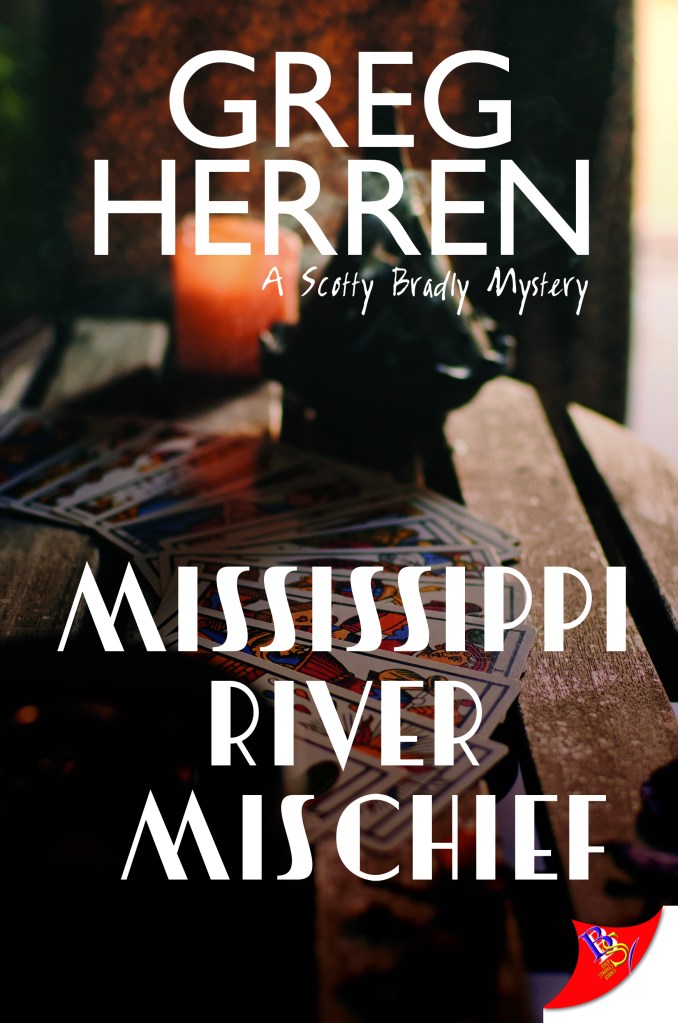
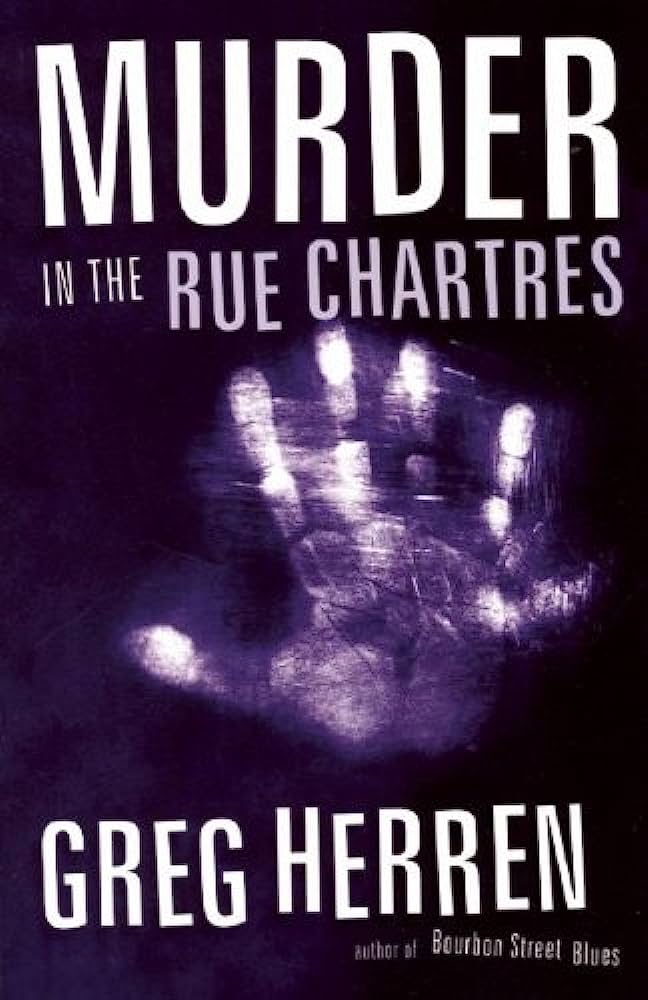

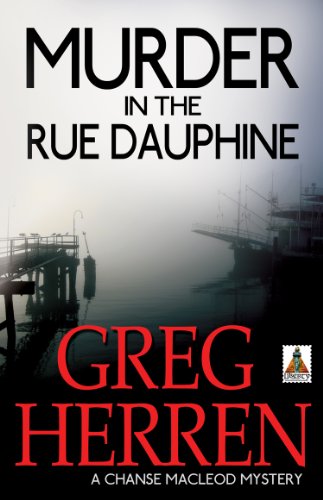
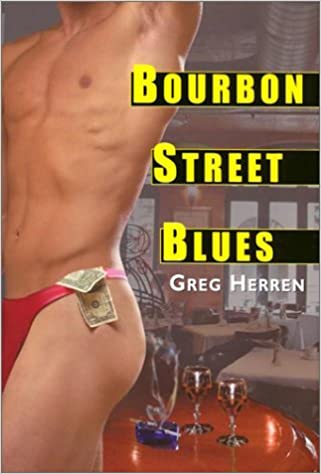
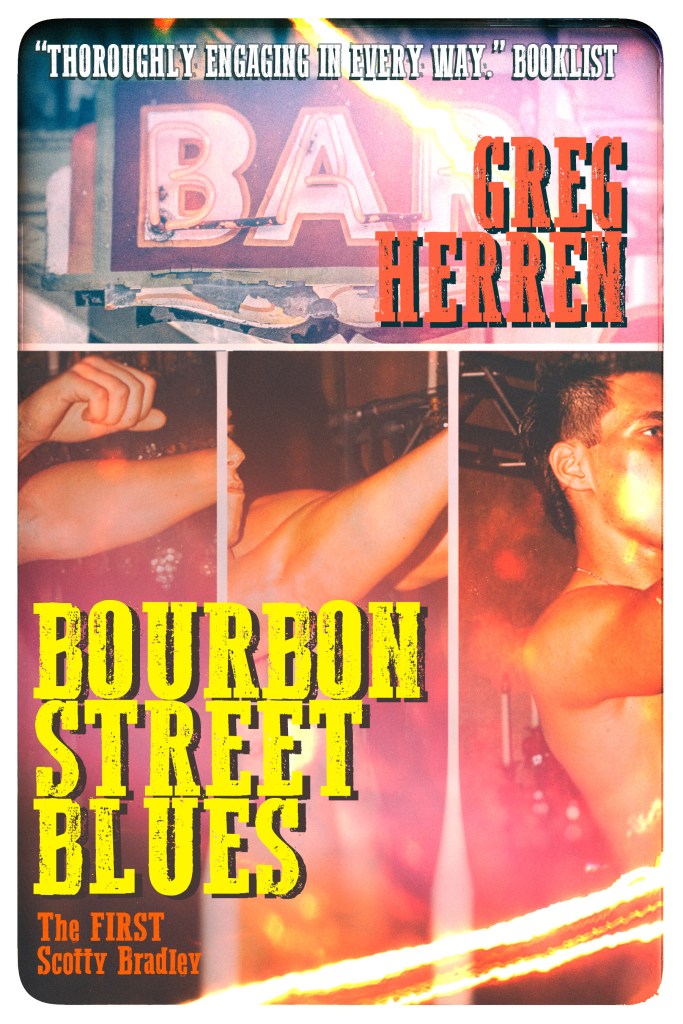
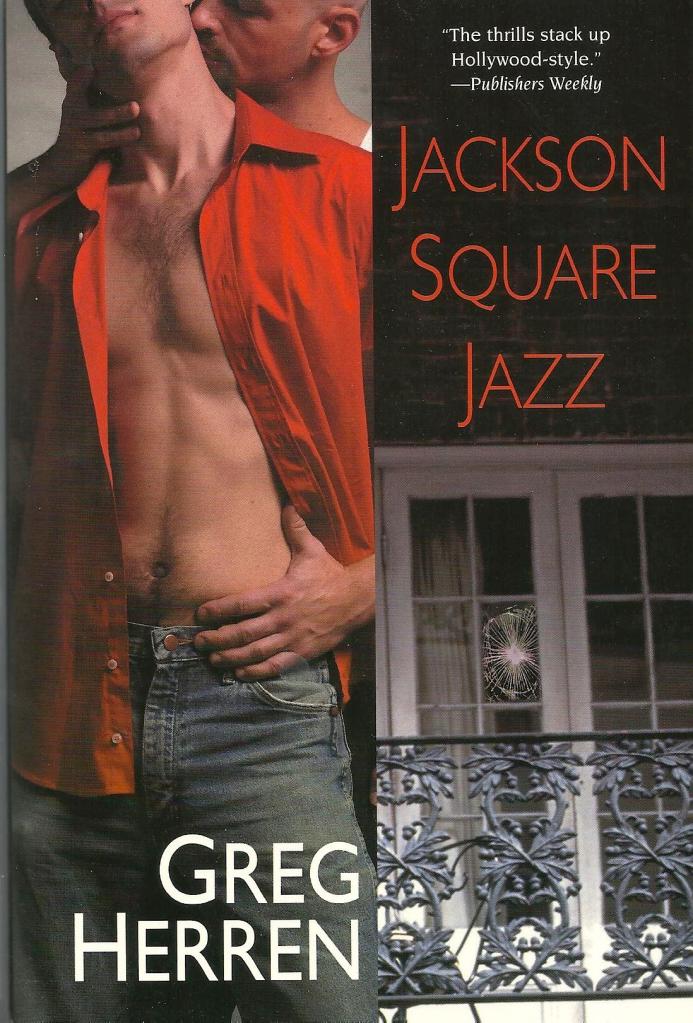
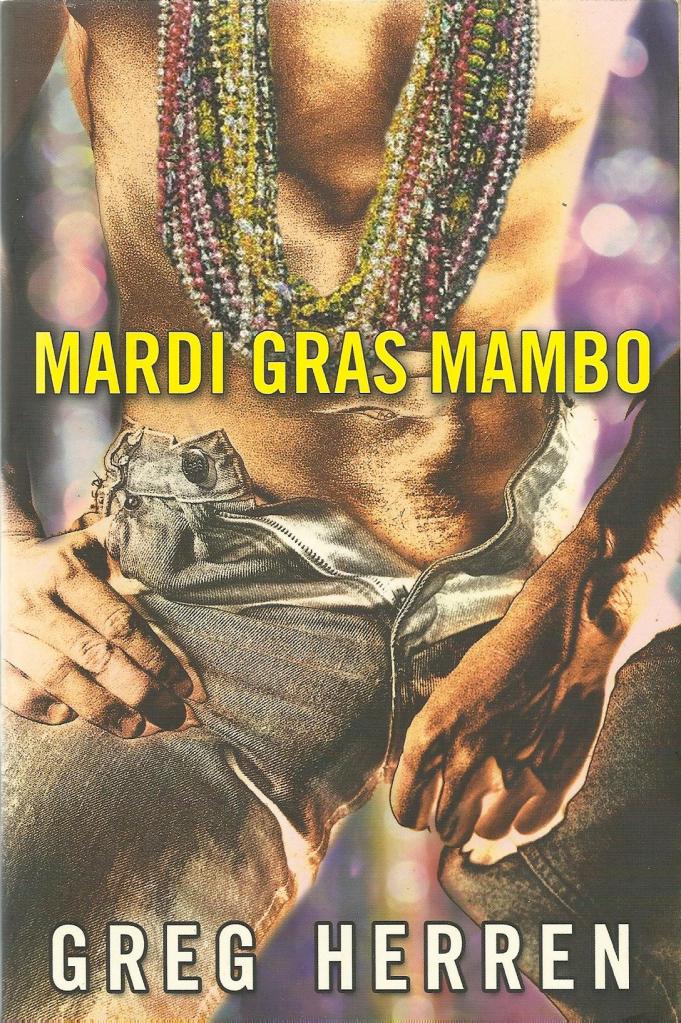
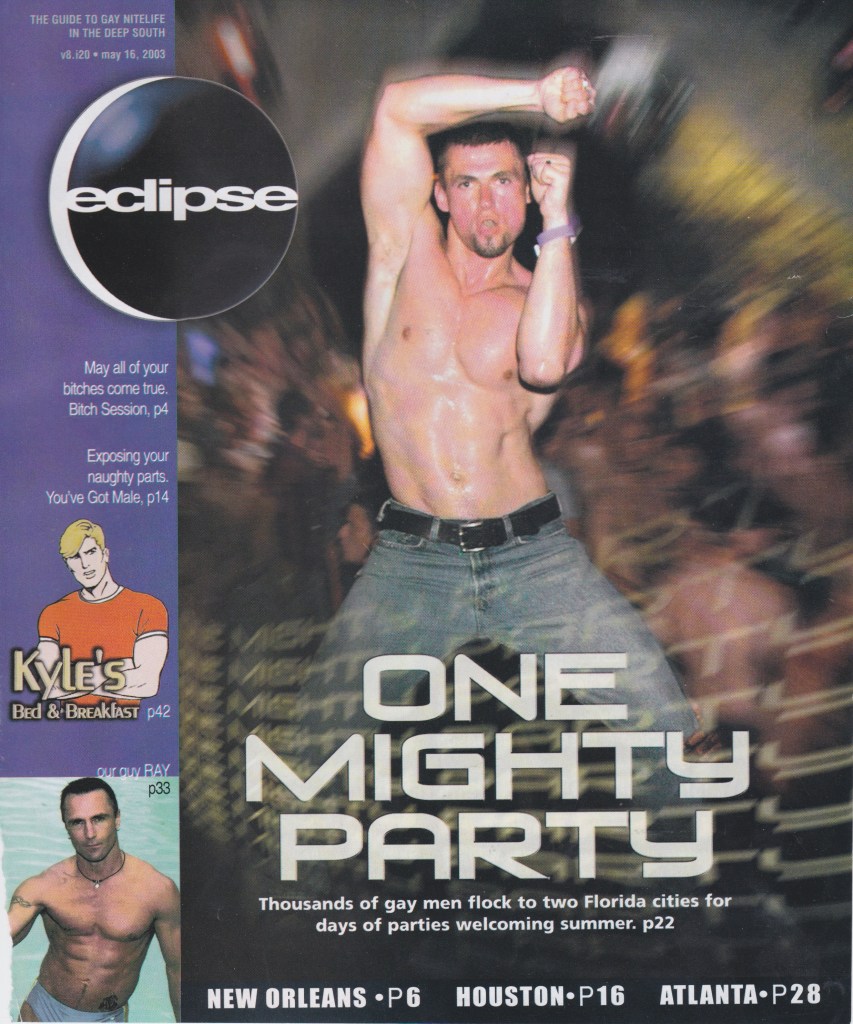
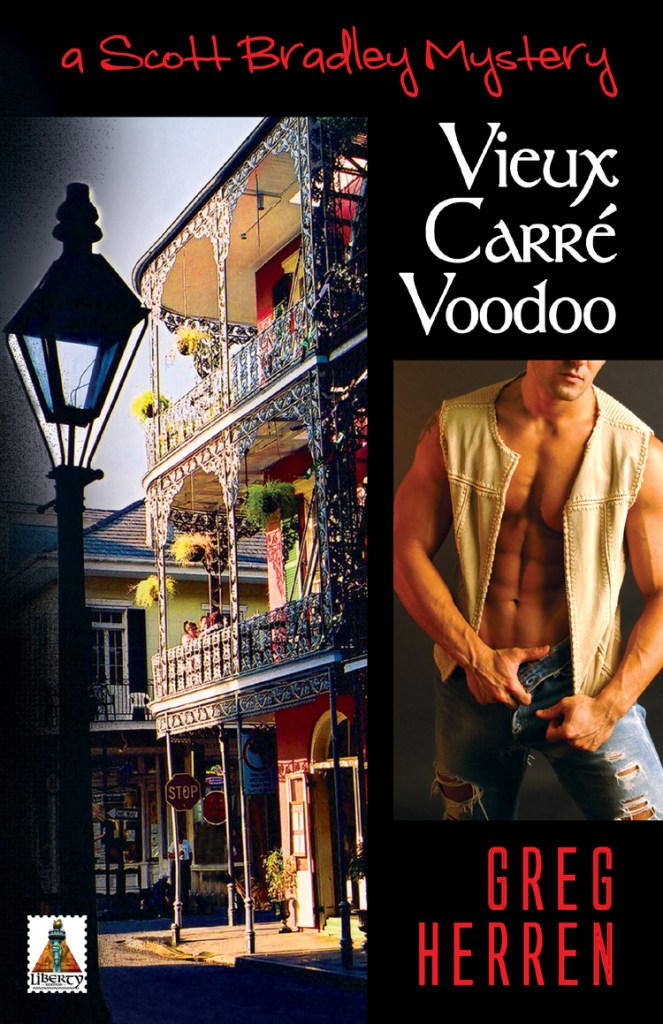
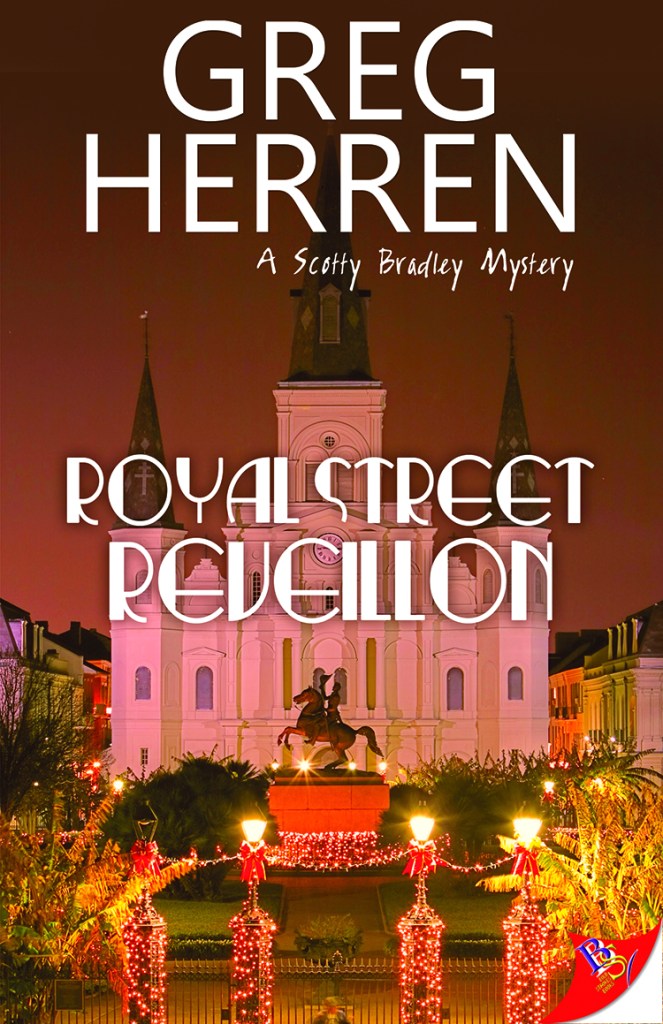
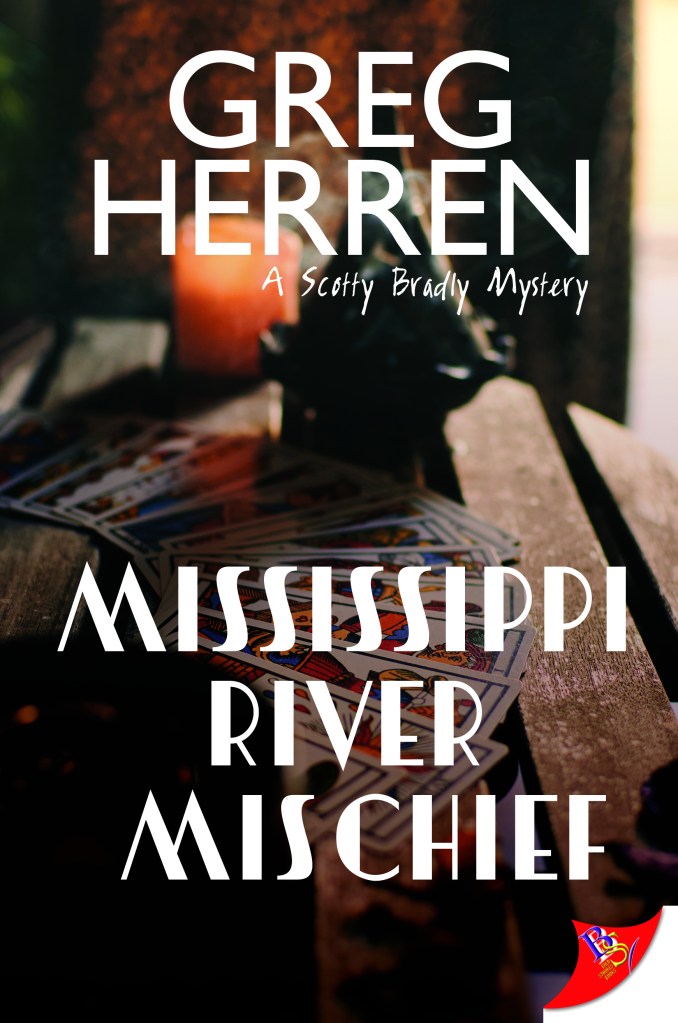




 Queer and Loathing in America