Seven Bridges Road

And now we come to the last (so far) Chanse novel, lucky number seven.

Took me awhile to get here, didn’t it? But it also took me awhile to get around to writing the seventh Chanse book. I worried a lot about this series as it developed–mainly because my original plan had derailed, and I never really sat down and mapped out the rest of the series with the new calibrations, so I was flying by the seat of my pants for the last two books, and in retrospect that sense that the series was going stale was a direct result of that fly by the seat of my pants style, which never worked for Chanse. So, essentially I’d forgotten how to write the series, and so…when I was running into problems with the seventh, it was easy enough to believe I was out of story for him and the series itself was becoming repetitive and stale. I’ve come up with more story for him since then–I’ve written a Chanse short story and started a novella, and had an idea for another entire book, so maybe I will revisit Chanse again in the next few years?

I had always thought of the series as lasting for seven novels, and when I sat down to come up with ideas for the seventh book, I started thinking about ending the series. The Chanse series, as you may have noticed once you’ve read these entries, almost ended every single time I published one–and by this time I felt like I was running out of ideas for him, and felt like I was writing by the numbers; following the same story beats and patterns I had already established in earlier books rather than pushing myself. I also worried that if I kept writing something I felt was getting stale, the book quality would also start to slip. I never wanted to be one of those authors who just keep writing the same old series long past its expiration date. Yes, they always sold well and yes, the income was nice…but…-and I began thinking that I may need to end the series before the readers began to notice the stories were starting to fall into a recognizable pattern; certainly the stories were beginning to have the same beats repeated, over and over. I wasn’t happy to not write another Chanse book, after all; Chanse really launched my publishing career and the series was very good to me over the years–but I felt it was the right decision for the time.
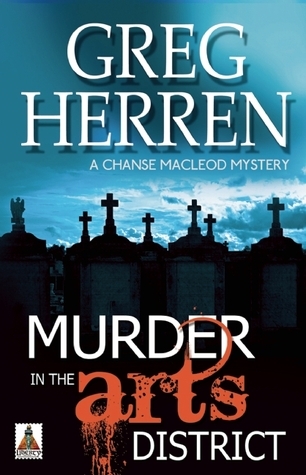
The electronic gate began rolling to the left with a loud clamor.

I closed the driver’s side window of my “billet silver” Jeep Cherokee, shivering. I turned the heater back up to high. I was cold even though I was wearing my black trench coat and a black knit Saints cap. It was in the low thirties. The sky was gray and covered with clouds, the air the kind of chilly damp that goes right to your joints. Last night there had been a freeze warning for all of southeastern Louisiana, so I’d had to turn all my faucets on to a trickle all night to keep the exposed pipes under my house from freezing. The grass on either side of the paved driveway had turned brown, and in the rearview mirror I could see the grass on the levee on the other side of the road behind me had as well.

This cold snap had every New Orleans weathercaster worked up into the kind of energetic, wide-eyed frenzy they usually reserved for hurricane season. The possibility of snow either tonight or sometime tomorrow had them practically drooling. The one currently breathlessly going on and on about how we all needed to bring inside all pants and pets inside before sunset was getting on my nerves, so I turned the radio off. It had snowed maybe three times in all my years of living in New Orleans. Those rare, occasional snowstorms always brought the city to its knees. Businesses closed, people holed up in their homes afraid to drive anywhere, and nothing got done.

I drummed my fingers on the steering wheel as the gate lumbered open slowly. My lower back was starting to ache, which wasn’t a good sign. I pressed the button on the steering wheel thatcontrolled the heater in the driver’s seat. Heat always seemed to help with the pain, but taking a pain pill wasn’t an option. Not if I wanted my brain to be functional when meeting a pair of prospective new clients, anyway.

Finakky, the gate was open wide enough for me to drive through, and I pushed the gas pedal down.

With the big metal gate open, I could see the house. In spite of myself I gasped. I’d seen Belle Riviere depicted many times on postcards, but the reality took my breath away.

The Arts District has always been in my neighborhood (sort of); it’s just on the other side of Highway 90 on Camp, with the nexus being I guess Camp and Julia Street. The Ogden Museum of Southern Art is across the street from the Community Arts Center, the Arthur Roger Gallery is there, and there are any number of smaller galleries scattered throughout the area, which is why White Linen Night is held there. I had thought about setting the case during White Linen, but…it’s so miserably hot. The last time I went, in the 1990’s, I literally thought I was going to have heat stroke–and I’ve never gone again. Writing about it would mean going again, and there was just no way I was going to do that.

The plot was actually brought to me by way of a friend who knew one of the people involved in the real life case; which I found fascinating. My friend’s friend was one of those effortlessly sexy and beautiful men; the kind everyone’s eyes turn to when he walks into the room, and being one of those, he landed a very wealthy partner more than double his age. (Yes, I know, age-gap relationships are real, but doesn’t everyone assume the younger, pretty one in these types of relationships are in it for the money?) Anyway, the story was they had been robbed, and the burglars had stolen some of their art. They reported it to the police, but the police didn’t believe their story, and thought they were committing insurance fraud!

This was very bizarre to me, but it centered on art and galleries, which is why I wanted to do with this book, and so I thought, I can make this work. I used the same basic premise–age-gap gay relationship; older guy is wealthy, younger has sordid past; art stolen and the cops don’t believe their story so they hire Chanse. I also wanted to get into how Chanse–a former college football player and a long time gym regular–was aging, and the aches and pains. He had a back injury from a car accident, and it was still bothering him in this book. He also was still dating the guy he met in a previous case–Rachel Sheehan’s younger brother–but I wasn’t sure where that was going so edited a lot of it out.

And when I finished writing it, I still thought that was a little too paint-by-the-numbers and not enough of a challenge to write–so maybe it’s time to give him a break, and that’s what I did. I do think the novella I want to write is more of a novel, really; and I like the idea and I also have another. So who knows? Chanse may be coming back at some point.

And I am not dissing the book–I’m proud of it, and think it’s one of the better Chanse books, for that matter.
Evangeline

One of the great joys of my life has always been history. One of the many reasons I love New Orleans so much is because the city has never completely paved over and replaced its history; on a foggy night in the French Quarter, the sound of mules pulling tour carriage clopping on the streets can make you feel like you’ve somehow stepped through a window into the past, and I love that. I’ve never known much beyond some basics of New Orleans and Louisiana history; and I’ve been going down rabbit holes since right around the start of the pandemic, learning more and more about the history here. It’s humbling to realize how little I actually did know. I knew when the French arrived; I know how English Turn got its name and when Louisiana was turned over to Spain (1763, to be exact) and when it became American (1803). I also know Napoleon sold Louisiana to the Americans before he succeeded in forcing the Spanish to return it to France….so he could sell it to the Americans. I know New Orleans fell to the Union in 1862 during the Civil War; I know a little bit about Storyville and Huey Long; and I know that the landing boats used for the Normandy invasion in World War II in 1944 were built here. I know a smattering of things post-war about New Orleans–but the gaps in my knowledge are staggering, and I know even less about the rest of the state’s history.

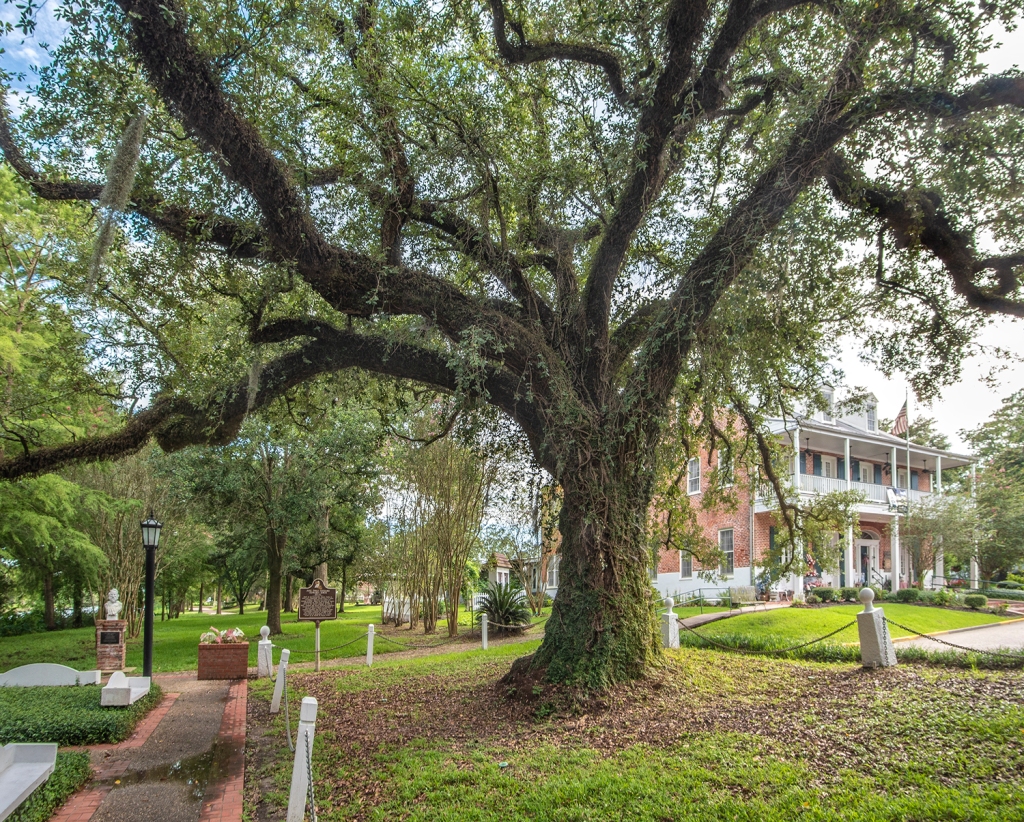
I know that the Cajuns are actually Acadians, from French Nova Scotia, kicked out after the French and Indian War and forced to resettle elsewhere–many of them, after a long and mostly horrific journey, arrived in the swampy wetlands of Louisiana and made their home here. I know that Longfellow’s epic poem “Evangeline”, about two lovers tragically separated during what is called le grande derangement–the Great Expulsion–who promise to find each other once they reach Louisiana. It’s a tragic poem, and of course the Evangeline Oak in St. Martinsville is supposedly the”place” that the fictional lovers finally found each other after so many years, but their pairing was simply not meant to be–the story is a tragedy, after all–but that was how the “Cajuns” came to be Louisianans, and even after they arrived it wasn’t easy for them here. The Creoles of New Orleans looked down their aristocratic noses at the lower class farmers, and so they settled in the part of Louisiana still known as Acadiana to this day.

I have a copy of Evangeline somewhere. I really should read it.

One of these years, I am going to explore my state more. I’ve lived in Louisiana now for almost twenty-seven years, and I’ve never done much in terms of exploration, sight-seeing, and research. The Atchafalaya Basin fascinates me, as does Acadiana. The more I read about the history of both New Orleans and Louisiana, the more I realize how little I know (I always laughed off being called a “New Orleans expert,” because there’s literally a library filled with information about the past of both the city and the state to completely humble me and make me realize I know actually very little about either, and definitely do not qualify to be called expert on anything Louisiana.

I’ve slowly started writing about the rest of Louisiana, but I often fictionalize the places I write about; they are loosely based on the reality but I get to play around with that sort of thing and that’s better for me than trying to write about the real places and making it all up. My first time outside of New Orleans writing about Louisiana was really Bourbon Street Blues, when Scotty is kidnapped by the bad guys and winds up deep in a swamp. “Rougarou” was when I came up with a fictional town and parish outside of New Orleans, which I’ve used since then again. Need had portions that were set in the rural parishes outside of the New Orleans metropolitan area. The Orion Mask and Murder in the Arts District also were heavily reliant on being set (at least partially) in a fictional parish between New Orleans and Baton Rouge. “Solace in a Dying Hour” is another one of these stories. Oh, and Baton Rouge Bingo also had a lot of action outside of New Orleans as well.

I probably should have majored in History for college, but what would I have done with that kind of degree other than teach? Ah, the paths not taken, since I never had any desire to be a teacher, probably my subconscious saying um, you cannot be a teacher because of who you really are which was probably smart. Besides, I wouldn’t have ever been able to pick a period to specialize in; I would have had to be like Barbara Tuchman, interested in everything and picking certain periods that intrigued me for study. How could I ever choose between the Wars of Religion and seventeenth century France, or the Hapsburgs in Spain and Austria? Although I suppose I could have specialize entirely in the sixteenth century, primarily because it was such a tumultuous transitional century. I wish I was a trained researcher, but I suppose I could still learn how to do research properly despite my great age; the problem is time. Fall Saturdays are given over to college football (and I am not giving up one of the great joys of my life) and of course Sunday I watch the Saints. But if I am going to write historical fiction set in New Orleans or Louisiana, why wouldn’t I avail myself of all of the magnificent research facilities here in the city? UNO, Tulane, Loyola and I’m sure Xavier all have archives in their libraries documenting the past here; there’s the Historic New Orleans Collection and the Williams Research Center and really, so so very much. I also need to explore the bayou parishes and the river parishes, and make my way further north to explore Acadiana…and if I ever want to write a book based on the Jeff Davis Eight, I would need to go visit that parish and look around, get a grasp for how it feels and looks there.

So much to do, so little time…and one of the great problems about Louisiana and New Orleans history is trying to decipher what is fact and what is fiction; as so many “historians” and “writers” (looking at you, Robert Tallant and Harnett Kane) often wrote legends and lore as historical fact. I’m not sure how much of Gumbo Ya-Ya is actually true or not, but for writing fiction…perhaps it doesn’t matter as much how right it is? I have this idea for a story, predicated on something I recently discovered again–I have a tendency to forget things–but there was a community just outside of New Orleans called St. Malo, which was settled by Filipinos who’d escaped bondage on Spanish sailing ships. Filipinos in Louisiana in the eighteenth century? But it’s true; and the community was mostly houses and buildings built over the water; the 1915 hurricane destroyed it completely and it was never resettled, with those who survived moving into the city proper. I have an idea for a story called “Prayers to St. Malo” that would be built around that, but the story is still taking shape. There is always more to learn about regional history here…and since I am doing such a deep dive into Alabama history, why not continue diving in regional here?

Louisiana is unique and special and different–which is why I think I felt at home here that fateful thirty-third birthday when I came to New Orleans to celebrate it. New Orleans was the first place I ever felt like I belonged, and I’ve never regretted moving here. I just wish I’d started diving into the local history sooner.

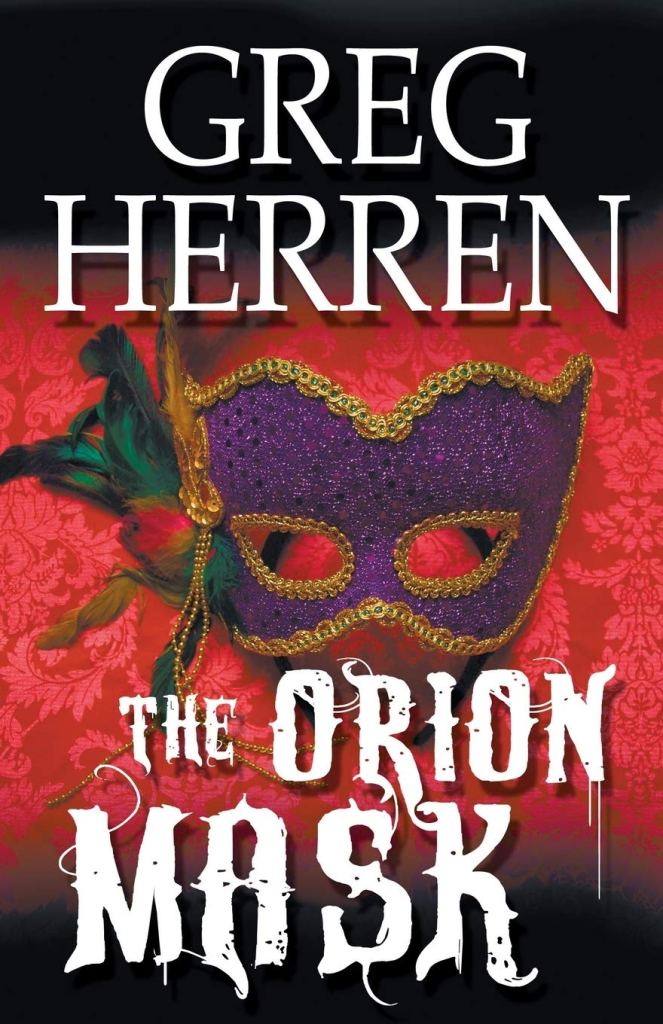
The Orion Mask

This is another one where I had the idea years before I actually sat down and wrote the damned book. I actually got the idea at my first ever Carnival; when I came as a tourist in 1995. We were at the Orpheus Parade on Monday night–I caught some beads thrown by Barbie Benton, if anyone remembers who she is–and I had noticed, at the parades since flying in late the preceding Friday for a long weekend, that the majority of the riders wore masks. I think I’d already known that, from books I’d read and movies and so forth, but seeing those plastic face-masks in person was a bit on the creepy side. I was already deeply in love with New Orleans–this was like the fifth or sixth trip I’d made there since my birthday the previous August–and that whole time I’d been thinking about how there had never been a New Orleans romantic suspense novel that I could recall; Phyllis A. Whitney wrote about New Orleans in Skye Cameron, but it was set in the 1880’s and I hadn’t much cared for the book (note to self: reread it!). I wanted something set in the present day, and as I caught more and more beads at the parade, it came to me: The Orpheus Mask.

I somehow even managed to remember the idea after staying out dancing until late at night, scribbling it down in my journal the next day. I honestly don’t remember if I flew home on Fat Tuesday or Ash Wednesday, but I also don’t remember Fat Tuesday, so it makes more sense that I did fly back on Fat Tuesday. I was an airline employee, after all, and since I had to fly standby would I have waited to fly home until Ash Wednesday, when every flight would have been overbooked by about thirty, or would I have flown home on a lighter travel day, Fat Tuesday? I’ll have to find my journals (I’ve been looking for the old ones forever; I distinctly remember finding them a few years back but I don’t know where I put them; perhaps I can spend some time looking for them this weekend?) to check and be sure. But The Orpheus Mask idea was always in the back of my mind somewhere–even after I moved to New Orleans and realized I couldn’t use “Orpheus” in the title, but the krewe and its parade were far too new and modern to work in the story I was developing. Finally I decided to simply invent a krewe, the Krewe of Orion, and thus the book’s title became The Orion Mask.

I also always knew that The Orion Mask was going to be my attempt at writing a romantic suspense novel, using some of the classic tropes of the genre, particularly those used by one of my favorite writers, Phyllis A. Whitney. I grew up reading her juvenile mysteries (the first were The Mystery of the Hidden Hand and The Secret of the Tiger’s Eye) and then I moved on to her novels for adults, the first being Listen for the Whisperer, after which there was no turning back. I went and devoured her back list (I haven’t read all of the books for juveniles) and then she gradually became an author whose books I bought upon release in hardcover. The last I read was The Ebony Swan; the quality of the books had started to slip a bit as we both got older plus the world and society had changed; even I had noted earlier that her characters were often–I wouldn’t go so far as to say doormats, but they didn’t seem to stand up for themselves much, and often the “nice” heroine was put in competition and contrast to an “evil” villainess; a scheming woman who didn’t mind lying and scheming to get what they want–which also included tormenting the “nice heroine”. (There were any number of times I thought read her for filth or whatever the saying for that at the time was.) My main character wasn’t going to be a pushover or weak; but I also wasn’t going to make him an asshole, either.

Taking this trip was probably a mistake I would regret.

I finished my cup of coffee and glanced over at my shiny black suitcases. They were new, bought specifically for this trip. My old bags were ratty and worn and wouldn’t have made the kind of impression I wanted to make. My cat was asleep on top of the bigger bag, his body stretched and contorted in a way that couldn’t possibly be comfortable. I’d put the bags down just inside my front door. I’d closed and locked them securely. I’d made out name tags and attached them to the handles. I’d taken pictures of them with my phone in case they were lost or misdirected by the airline. My flight wasn’t for another three and a half hours, and even in heavy traffic it wouldn’t take more than fifteen minutes to get to the airport. I had plenty of time; as always, I’d gotten up earlier than I needed to, and finished getting ready with far too much time left to kill before leaving for the airport. I checked once again to make sure I had my airline employee ID badge, my driver’s license, my laptop, and the appropriate power cords in my carry-on bag. I was flying standby, of course, but I’d checked the flight before leaving work the previous night and there were at least thirty seats open with a no-show factor of fifteen The only way I wouldn’t get on Transco flight 1537 nonstop from Bay City to New Orleans was if another flight to New Orleans canceled or this one was canceled for mechanical problems. But should that happen, I had my cousin’s cell phone number already loaded into my phone so I could give her a call and let her know what was going on.

I got up and poured what was left in the pot into my mug, making sure I turned the coffeemaker off.

The occupational hazard of flying standby was that your plans were never carved in stone and were subject to change at any moment.

They’d offered to buy me an actual ticker, of course, but I’d said no.

I wasn’t really ready to take any money from the family I didn’t know just yet.

I sipped my coffee. Has it really only been two months? I thought again.

I’d known they’d existed, of course, since that day I accidentally found my birth certificate when rooting around in my father’s desk drawer.

Phyllis A. Whitney’s books almost always involved two things: a murder in the past that cast shadows on the present, and someone going to meet a family they’ve been estranged from–usually not through any fault of their own–since their childhood. Another popular trope was that the murder involved one of the main character’s parents; in this case, I made it his mother. I named him Heath Brandon (after a co-worker), and the mystery from the past was his mother’s death. When Heath was a very small child, his mother was murdered by her lover, who then committed suicide. Heath’s father–never a fan of her family, the Legendres–took his son and left, cutting off all communications and never telling Heath anything about his mother. He always knew his father’s second wife wasn’t his mother, but all he knew about his mom was she died when he was young and talking about her upset his father, so he never brought her up and never even knew her name.

His father is now dead and Heath is working at the Bay City Airport for Transco Airlines (my go-to whenever I need an airline), when one night he notices a very attractive bald man in a tight T-shirt and jeans watching him work at the ticket counter. When the man appears the next night, Heath wonders if he should report him to security–but the man approaches him, invites him out for a drink and promises to tell him about his mother’s family. Heath in intrigued–he found out about how his mother died after finding his birth certificate and doing some on-line searches. But the man–Jerry Channing, who has also popped up in the Scotty series–is actually a true crime writer who doesn’t necessarily believe the story of how Heath’s mom and lover died, and is looking into it with an eye to writing a book. Jerry puts Heath in touch with the family, and now…he is going to meet them.

The Legendre plantation, Chambord, has been in the family for centuries. At one point, it became known for glass-making; I tied this somehow into Venetian glass, particularly the famous Murano style, and while the glass-making has long since fallen by the wayside, Chambord houses a Chambord glass museum on the property as well as a high-end restaurant–and also does the de rigeur plantation type tours. Once Heath arrives, any number of mysteries present themselves to him: why is his first cousin bear him such animosity? Why does is aunt? Why is everyone so afraid of his grandmother? And he begins to feel an attraction to his cousin’s handsome, sexy cousin–who runs the restaurant with her. Their marriage doesn’t seem happy–his cousin is kind of a bitch, as is his aunt Olivia–and he gets signals from the married restauranteur. Could it be?

And then, is it his imagination or has someone tried to kill him?

He also inherits his mother’s house in the lower Garden District of New Orleans (a house that is real and I’ve been in love with for decades), and when he goes to stay there for a night or two, he discovers a clue to the dark secrets that hang over Chambord–and what really happened in the boathouse when his mother and her lover died.

One of the things I realized while writing The Orion Mask how freeing it was for me to write a Gothic with a gay main character; Whitney and her colleagues were constrained by the rules of their genre and what their readers expected these books to be. I didn’t have either those fears or constraints; and whenever I would think oh I can’t do that Whitney would have never–then I would stop and think, you aren’t Whitney and you aren’t writing in her time period, and besides, your main character is a gay man not a young woman; of course you can do that even if its against the rules!

That realization also made me admire the talents and skills of Whitney and her contemporaries, and what they were able to accomplish within the boundaries of their genre, even more than I had previously. I will most likely write more of these style books in the future; it was a lot of fun writing this and playing with the conventions of romantic suspense.

Chambord was sort of based on Houmas House–I think I even reference that “Chambord” was made famous by a film with two aging stars that was filmed there (obviously, Hush Hush Sweet Charlotte); I also referred to Belle Riviére in Murder in the Arts District that same way.

The joys of a Greg multiverse!

Everybody Loves You

Monday morning, and the shopping days left till my birthday are slowly but surely getting crossed off my calendar. Yesterday was a lovely relaxing day at home; I did some on-line shopping (ordered a new pair of glasses from Zenni; we’ll see how they work out once they arrive; I may order a few other pairs to be more color-conscious; and yes, I know how weird that is for me–I didn’t get the fashion gene that most gay men seem to be born with, and so I’ve never really cared much about clothes other than their function–especially glasses

) and then spent some time doing the fun part of writing: thinking about the book(s).

I love that part. I actually realized yesterday that I was flying without a navigator (as usual), which is probably a mistake. I hadn’t spent any time really thinking about the story of Mississippi River Mischief and how it would impact the characters and how they interact with each other, etc. I had some basics down; I knew how I was going to start the story and open the book, and what I was going to include in it–I also recognized that another subplot is too big a story to be included in this book, and so I had to put it to the side for now, for use at a later date in a different book. But beyond that I hadn’t really thought much about it, and that was problematic for me and would inevitably cause problems for me down the line as I struggled to write a strong first draft. I also realized that a lot of what I was writing was going to take place outside of New Orleans, and yes, I know it’s anal of me, but my fictional Louisiana was far too amorphous. My work has always centered New Orleans and I’ve always been a stickler about getting that correct–I know I’ve made mistakes, I got Orleans and St. Louis Streets reversed in one book, or example– but over the course of forty-odd books, inevitably parts of some of them had to take place outside New Orleans. (I had, oddly enough, no qualms about completely fictionalizing the entire state of Louisiana for the most part outside of the metro area.) And being anal, I realized I had no real “map” or idea of what fictional parish or city or plantation was where and what names I’d used where and so on and so forth. And yes, I know it probably doesn’t matter–no reader would ever take the time to go through all of my books and try to piece Greg’s fictional Louisiana together and point out contradictions and errors, but it would bother me knowing that it was a mess outside Orleans and Jefferson parishes.

Something clearly had to be done.

So, I spent yesterday afternoon doing Scotty research–namely, checking every book I’ve ever written with scenes that take place outside of the metro area and try to assemble all of those places into a coherent and cogent “world” of Louisiana, strictly of my own making. I did allow myself to get sidetracked a few times with research into other projects, current or upcoming (the Great Hurricane of 1915, and the legend of Julia White were Internet wormholes I happily went down yesterday; I think a story I am going to write for an anthology call will be based in these two events), which is always a delight; Louisiana and New Orleans history are literal treasure troves for thoughts and ideas and so forth (another wormhole: the German Coast of the Mississippi River) and also humbling at the same time, because these wormholes always remind me how little I actually do know and understand about New Orleans and Louisiana.

Revisiting old books–especially Scotty ones–inevitably bring back memories of the time period in which the book was written, where the idea for it came from, what I was trying to do with it, and so on and so forth…not to mention how the character himself has changed and grown along with my writing styles and skills. It also reminds me of other things, too–plans I used to write the books, ideas and thought processes for the characters and their futures, and so on; things I had forgotten over the passage of time. I also sent the pdf of Jackson Square Jazz to my iPad; so I can slowly start copy-editing it so I can put up the ebook on Kindle at long last–there was also a part of that novel, part of Scotty’s long-forgotten past that only appears in this particular book that I want to circle around back to for this one. There are, I suspect, any number of sub-plots and character arcs that have been left hanging within the series over the years, and I don’t think it’s such a bad idea to reread the entire series again from start to finish since I am writing another book in the series. Obviously, I love Scotty and he is a part of me, and I don’t have a hard time slipping into his voice again (one of the things, I think, that makes writing a series a bit easier than writing a stand-alone–or starting a new series–is that ease of finding the character’s voice again. I’ve written eight Scotty books now, it should be easy to find his voice again), but there are a lot of other things I need to revisit and remember from the previous books in the series, so as to avoid continuity issues and things like that which plague me constantly.

For the record, the books I had to consult to map out my fictional Louisiana included not only Scotty books, but Murder in the Arts District (Chanse), The Orion Mask, a pseudonymous book or two, and some short stories. If A Streetcar Named Murder indeed becomes the launch of a new series for me, I’ll need that fictional map of Louisiana for that series as well–I’d already brought up one of my fictional parishes in the text of Streetcar, so…

I also reread the first four chapters of something else that is currently in progress to also kind of sort of make sense of it as well (and a good thing, too–I had two completely different sleazy gay dive hustler bars in the same neighborhood in two different chapters; easy enough to fix of course, and another continuity issue). This is going to sound weird–what else is new with one Gregalicious–but I am writing another book at the same time as this Scotty; I am sending a chapter a week to a friend, kind of like a serial novel, but I had not gone back and reread what I had already written on it (hence the two sleazy gay hustler bars in the same area of the fictional city) and so it went off the rails slightly (I suspected it was doing so and even remarked on it when I sent the email with the most recent chapter attached), and I am going to have to go back and clean that all up before proceeding–because it’s too big of a mistake to leave in the draft for correcting in another, later draft (plus, it will bother me to no end knowing those big mistakes are there), so I think I am going to have to make those fixes before I write Chapter 5–which is a good thing, because I am not really sure how to write chapter 5 or what to do in it; revisiting and fixing the first four chapters is always a good idea in these situations.

The problem with not outlining is because sometimes you get stuck.

We also binged a lot of The Sandman last night. What an extraordinary show–the visuals are absolutely stunning (I keep thinking how visually breathtaking it would be on the big screen), and the costumes, the art and set design, everything is just stunningly perfect, and the stories themselves (as well as the over-arcing storyline) are depicted and acted and written beautifully. This is the adaptation of the series I always wanted to see but never dared dream we would get; Paul and I are both just completely blown away by its brilliance (I also loved that Cain and Abel, from the old comics House of Mystery and House of Secrets, are a part of this universe; I loved those comics back when I was a kid–note to DC: make an anthology series of both of those comics, please.) We only have three episodes left, but by the time we finish this show–probably Wednesday, given how our weekday evenings seem to go–there should be some other amazing shows dropped for us to watch–I am particularly looking forward to The Serpent Queen; I’ve been asking for a Catherine de Medici series for years and now we are getting one that seems to embrace and encompass her manipulation and dedication to the acquisition of power, and of course House of the Dragon looks like it could be very fun, and other shows will be returning soon as well with new episodes.

So, overall it was a great weekend; I cannot complain. It was productive–perhaps not as productive as I would have liked, but I do feel like some seriously good work was done this weekend, and that’s all that matters. I have some work-at-home duties today–trying to decide whether to run errands today or on the way home from work tomorrow (on the way home is currently winning the debate in my head), and about the only real disappointment in the weekend was not being able to make time to read.

And on that note, I am heading into the spice mines. Have a lovely Monday, Constant Reader, and I’ll check in with you again later or tomorrow; depends on when I finish writing these other blog posts that are more essay-driven than the norm.

He’s My Sunny Boy

Friday and working at home. I don’t have to return to the office until Wednesday. I don’t know if I am going to attend any of the parades tonight, but I will most definitely attend Iris tomorrow, and Orpheus on Monday. Sunday is a madhouse out on the corner, with four parades running and the last two (Thoth and Bacchus), so Paul and I will sometimes go out for the earlier ones–but it’s so crowded by the time Thoth comes down the avenue we can’t stand it so we come inside. It’s weird. I intellectually know that it’s probably not a good idea to go out there–no one masked, everyone drinking and in close proximity to each other–and if I get sick I have no one to blame but myself. I still go back and forth on it–there’s a pandemic! But it’s Carnival!–so I may end up not attending rather then severely curtailing my parade attendance (I certainly don’t ever want to get Bad Carnival Karma); we’ll see how it goes.

I did spend some time last night filing, cleaning and organizing so I don’t have to do any of that this weekend. I have a short story to finish by Tuesday, a thousand emails to answer, another thousand tp generate (you think I’m kidding; I quite literally am not) and I’d like to get the floors done. I also have to run some errands at some point today–mail and make groceries (not much, just to get through the rest of the weekend)–and I also don’t have to go back into the office until Ash Wednesday (thank you, Fat Tuesday paid holiday), so I am hoping to get caught up on all kinds of things that will help ease off the pressure I feel like I am constantly under. One of today’s chores is to make that updated to-do list I’ve been meaning to get written all week, and to try to gather all my scribbled notes and idea scattered over various notebooks and legal pads compiled into one place. Once I get this short story finished, I am going to start working on Chlorine again–the goal is to have a workable first draft by the end of March, fingers crossed–but it’s going to be a shorter book, fast-paced with machine-gun like word rhythms. I am also becoming more and more fond of my main character–a not particularly talented but incredibly hot and sexy closeted film actor, cynical about using his face and body to get ahead because he is really only out for himself…understandable, given the climate of the times and his backstory–and creating him is probably the most fun I’ve had creating a character since, well, Scotty.

But he ain’t nothing like my Scotty. At all.

I also need to start pulling together the various threads of Mississippi River Mischief together; figuring out the various subplots to gel around the main story of the book, and I also have to map out Redemption Parish a bit more than the amorphous bounds I’ve already given it. I think it first appeared in Murder in the Arts District–no, not entirely correct; it was where my story “Rougarou” was set, and I think that was my first time writing about Redemption Parish and the town of Bayou Shadows–and I know The Orion Mask was also set there. I should probably go through everything and make notes for the sake of continuity–ha ha ha, just checking to see if you’re asleep–but yes, I think I originally envisioned Redemption Parish as being further upriver than where I want it to be for this book; I’ll definitely have to recheck Arts District and The Orion Mask to get a better idea of what I wrote and where I placed it so I can figure out how to finagle moving it and how to justify it…but….this is a different series than Arts District, and Orion was a stand alone, so…I definitely can get away with moving the parish if I need to. (As much as I want my books to all be connected together in some amorphous way–a la Stephen King’s Maine–I can also look at Scotty and Chanse and every other New Orleans thing I’ve written as different universes, like a multi-verse; so I can use characters from across all the books as well as places, but it’s a different world.

I also tend to worry about things no one else notices in my work, so there’s that.

But it wouldn’t hurt me to start a reread of the Scotty series. I am having trouble focusing on reading these days–it comes and goes–and so why not reread the Scotty books? Why not spend some time putting together the ultimate Scotty Bible, so I have an easy reference to check things? This actually sounds like a good idea, and it’s been so damned long since I wrote the first books I probably wouldn’t even remember who the killer was…so it would almost be like reading something new? And it could help put me back into the Scotty mindset. (Also, for the record, Mississippi River Mischief is set in the spring after the Christmas of Royal Street Reveillon, which will make it spring 2019. The next Scotty will be Twelfth Night Knavery, set just after Christmas 2019–January 2020–followed by French Quarter Flambeaux (Mardi Gras 2020) and finally Quarter Quarantine Quadrille, April 2020. So, the plan is for there to be at least four more books in the series, if I live that long. But I also reserve the right to change my mind and discard any of these books along the way–but this is what I am currently thinking.

And on that note, I am heading into the spice mines. Have a lovely Friday, Constant Reader.

Dreams

One of the challenges of being a writer is keeping your work fresh and new and interesting; it becomes easy -for want of a better phrase–to just phone it in and repeat yourself. This is particularly true for crime writers/writers of series; how do you continue writing about the same base foundation of characters without recycling plots or falling into formulaic structure?

One of the primary reasons I stopped writing my Chanse MacLeod series was precisely because of this; as I was writing the last book (thus far) in the series, Murder in the Arts District, I found myself thinking things like okay now it’s chapter five, I need some action here or I need to have a twist in the story before I get to chapter ten…and so on. I didn’t even think about it as I was writing the story–but when I was doing the revisions and edits, I remembered having those thoughts (I generally don’t have them while writing Scotty, but that’s a story for another time…and of course, as a reader pointed out, how many car accidents has Scotty been in, anyway?), and when I turned the book in, I went back and speed-read the entire series over again, and after about the fourth book, the writing pattern became rather obvious to me; and if it was apparent to me, I would imagine it was also fairly obvious to the readers. So, I decided to either end or take a lengthy break from the series unless another great idea for him jumped out at me; I have had several ideas since then, but the longer I go without writing about Chanse the less likely it becomes that I will write about him again. (Caveat: I have written a Chanse short story and have a novella in progress with him as the main character; I guess it is more accurate to say that I am not done with the character completely, yet I cannot see myself writing another novel with him as the point of view character–and will have to go another step forward with that as well to say at least not one set in New Orleans, as I am toying with an idea for a Chanse case in Louisiana but not New Orleans. Yes, that’s me–definitely not definite.)

I have nothing but the utmost admiration for series writers who manage to keep their series going for decades and dozens of books without writing the same book and structure over and over and over again; Ross Macdonald, Ellery Queen, Sue Grafton, Robert B. Parker, and Sara Parestky are just a few of them I can name, and their achievements have made them legends in the field. But other legends who wrote series took a different approach to their careers. Agatha Christie wrote several series–Poirot, Miss Marple, Tommy and Tuppence–but also wrote a lot of stand-alones over the course of the years. (Seriously, when it comes to crime fiction, Christie did everything first) Dennis Lehane and Harlan Coben started out writing series and moved on to stand-alones; as have numerous other authors.

And then there’s Laura Lippman.

Gerry Andersen‘s new apartment is a topsy-turvy affair–living area on the second floor, bedrooms below. The brochure–it is the kind of apartment that had its own brochure when it went on the market in 2018–boasted of 360-degree views, but that was pure hype. PH 2502 is the middle unit between two other duplex penthouses, one owned by a sheikh, the other by an Olympic swimmer. The three two-story apartments share a common area, a most uncommon common area to be sure, a hallway with a distressed concrete floor, available only to those who have the key that allows one to press PH on the elevator. But not even the sheik and the swimmer have 360-degree views. Nothing means anything anymore, Gerry has decided. No one uses words correctly and if you call them on it, they claim that words are fungible, that it’s oppressive and prissy not to let words mean whatever the speaker wishes them to mean.

Take the name of this building, the Vue at Locust Point. What is a vue? And isn’t the view what one sees from the building, not the building itself? The Vue is the view for people on the other side of the harbor, where, Gerry is told, there is a $12 million apartment on top of the residences connected to the Four Seasons Hotel. A $12 million apartment in Baltimore.

Nothing makes sense anymore.

The apartment cost $1.75 million, which Is about what Gerry cleared when he sold his place in New York City, a two-bedroom he bought in the fall of 2001. How real estate agents had shaken their sleek blond heads over his old-fashioned kitchen, his bidet-less bathrooms, as if his decision not to update them was indicative of a great moral failing. Yet his apartment sold for almost $3 million last fall and, as he understood the current was laws, he needed to put the capital gains, less $250,000, in a new residence. Money goes a long way in Baltimore, and it was a struggle to find a place that could eat up all that capital without being nightmarishly large. So here he is at the Vue, where money seems to be equated with cold, hard things–marble in the kitchen, distressed concrete floors, enormous light fixtures.

I’ve been a fan of Lippman’s since I read her debut, Baltimore Blues, mumbledy-mumble years ago. I absolutely loved it; I loved the character of Tess Monaghan, former reporter turned private eye, and the cast of regular characters who she interacted with on a regular basis throughout her amazing series run. Tess remains one of my all -time favorite series characters; the books were always compelling, interesting, and very hard to put down. Lippman is also that writer who can write short stories that are just as powerful as her novels, and over the last few years she has taken up writing personal essays that are also rather exceptional (her collection, My Life as a Villainess, was a bestseller during the pandemic). Her writing is always whip-smart and intelligent; following her on social media one can see how widely and perceptively she reads. About seven years into her career she took the risk to move from her series to stand-alones; a calculated risk, to be sure–but she then spent the next few years alternating between the series and stand-alones (alas, it’s been a while since the last Tess book, Hush Hush, although she has occasionally made guest appearances in her stand-alones when a character needs assistance from a private eye). Her books have explored themes of motherhood, what it means to be a good girl, and have also paid homage to time-honored sub-genres (Sunburn is one of the best noir novels of this century) and classic novels by either flipping the script (for example. Wilde Lake owes an enormous debt to To Kill a Mockingbird, imagining, really, where the characters and story would be decades later). She has also played with form, tense, and character–Lady in the Lake is almost Faulknerian in its use of point-of-view; I lost track of how many different point of view characters were in this book, and every last one of them rang completely true–and she has become, over the years, a true artist.

In my often-benighted first writing class in college (whose scars I still carry to this day),my incredibly pompous professor once berated one of the students for writing a story about a writer. “It’s the laziest form of writing, and character,” he proclaimed from his lectern at the front of the classroom, “and it tells you more about who the writer is more than the character ever will. If you ever start reading anything where the main character is a writer, you should run from it as fast as you can.”

I guess he wasn’t a fan of Philip Roth. (To be completely fair, neither am I. I’ve tried, but have never really got the magic there, but have always accepted that as my failing as a discerning reader rather than his.)

Stephen King often writes about writers; ‘Salem’s Lot has Ben Mears; The Shining has Jack Torrance (and the most deadly and horrifying case of writer’s block in literary history), It has Bill Denbrough, and on and on–but of course the most famous, and best, example would be Paul Sheldon in Misery. While I always have enjoyed King’s writing, and have gleaned things from his writer characters, Sheldon and Misery, for me, has always been the best. Sheldon was perhaps one of the most realistic and compelling writer characters I’ve ever read about–the man with aspirations to becoming a critically acclaimed literary writer, who yet makes a living by writing a bestselling romance series about a character named Misery Chastain whom he has come to hate and despise even as she makes him enough money to live well and focus on simply being a writer (the dream of all of us, really). He has killed her off finally in his most recent book, ending the series at last and finally taking the leap to write what he thinks will be the game changer for his career–until he has a horrific car accident and is rescued by Misery’s biggest fan.

The parallels between Misery and Dream Girl are there, of course, and easy to spot; Lippman’s character Gerry Andersen is an enormously successful literary writer (a la Updike or Roth) who is also kind of a dick in how he has treated the many women who have come through his life, and of course, his ego justifies all of his bad behavior until he, too, has an accident in his home that winds up with him trapped in a hospital bed in his secluded apartment (despite it being in Baltimore; the appeal of the place is its privacy and seclusion). But while Sheldon is being victimized by his sociopathic fan/caregiver in Misery, what is happening to Gerry is very different; he has his original fall that causes his injury because he receives a weird letter from someone claiming to be the real person whom he based the title character in his biggest success, Dream Girl, on, and she wants financial compensation. In his shock and surprise–people have always wondered, and have always asked him, if she was a real person and he has always said no–he falls down his stairs and busts up his leg. Once he is housebound, he has a night nurse AND his personal assistant there–rarely being ever alone in the apartment–but he starts getting strange phone calls from the woman claiming to be the real ‘dream girl’–but there’s never any record of the calls on his called ID, and the original letter disappeared as well. Is his medication playing tricks on his mind, or is there something more sinister at work in his cold, sterile, remote apartment?

As with so many other things, that writing professor was wrong about writing about writers. I’ve stayed away from it myself for most of my career–as I said, the scars are still very much there–but I have started dabbling into it a bit (my Amazon single, “Quiet Desperation,” is one attempt, and I may go even further; I’ve created a character who’s appeared as a minor character in some of my Scotty books who is a writer). The mystery here is quite compelling, and more than enough to keep me turning the pages to see what happens next. But I was also enjoying the insights into another writer’s life, albeit he was a fictional character; I find it incredibly easy to identify with characters who are writers because despite the fact that all writers have different methods and different careers and different mental processes, there are always those little nuggets of oh yes I know that feeling or I thought I was the only person who experienced this or ah yes this is exactly what it’s like.

Dream Girl is an excellent edition to the Lippman canon.

Everything’s Gone Green

My memory has truly become amazingly awful and limited as I grow older. Yesterday was one of those days that reminded me just how bad it’s become–and how rarely I follow through on plans I make.

I started writing about Kansas when I was a teenager living in Kansas, and I wrote a long, messy manuscript by hand that was essentially a kind of Peyton Place tip-off, with tons of characters and plots and subplots that meandered about and never really had one cohesive central story. Over the years since that handwritten, almost a thousand page first draft was finished, I came to the realization that as a single novel itself I would need to cut out a minimum of fifty percent of the characters and even more of the subplots while tightening it into one cohesive story. The name of the town changed multiple times, as did the names of the some of the characters, while others remained the same from beginning to end. I had no idea at the time of how to write a novel, or how to structure one…but since it already existed, I began mining it for other novels and short stories, pilfering names and subplots and so forth (the murder story in Murder in the Garden District, and the Sheehan family in the book, were directly lifted from this old manuscript; I changed the family name from Craddock to Sheehan). My young adult novel, Sara, also had a lot of story lifted from this same old manuscript–even characters’ names–so when I started building this iteration of what I’ve taken to calling “the Kansas book” over the years, I knew it was possible I was repeating names from the old original, and at some point I would have to check Sara at some point to get the character names from it, to not repeat them. The Kansas book was also intended to be set in the same world as Sara–Sara being primarily set in the county and the small grouping of three small towns consolidated into one high school; with this book set in the county seat, the small city/large town I called Kahola. Kahola never really sat well with me for the town name; it’s perfectly fine for the name of the county as well as the lake (there actually is a Lake Kahola; it’s where we went when I lived there and “went to the lake”), so I decided to change it to Liberty Center (which I got from Philip Roth’s When She Was Good, so it’s also an homage) and Sara geography be damned. So, yesterday while the Saints played terribly and ended their season (and possibly Drew Brees’ career), I was scanning though the ebook of Sara and pulling out character names–even minor ones– as well as place names and so forth.

I am very pleased to report that there is only one character name that traveled from the original manuscript to Sara and finally into this new iteration of the Kansas book, and obviously that needs to be changed. I am not willing to change the name of the county seat back to Kahola; it never really seemed to fit, and Liberty Center works much better on every level, but I can change the name of the character in #shedeservedit to avoid confusion…not that there would be much, since Sara is my lowest selling book for some reason I certainly don’t get, but it would unsettle me, so it cannot be. As I was pulling names out of the ebook, and place names and places of interest, I also began remembering other things.

I had originally intended for all of my young adult novels to be connected in some way, kind of how R. L. Stine had done his Fear Street series, where all of the books take place in the same town and high school, and a minor character in one would become the hero of another. I was reminded of this because Laura Pryce is mentioned by name in Sara; she was the protagonist of Sorceress, and she was from the same rural part of Kahola County and went to the same consolidated high school. Sorceress tells the story of how Laura goes to live with her aunt in a huge house outside the California mountain town of Woodbridge; Woodbridge is also the setting for Sleeping Angel, and characters overlapped from Sorceress to Sleeping Angel. The Chicago suburb in Sara where Glenn is from is the same suburb that the main character in Lake Thirteen was from; it is the same suburb where Jake’s father, stepmother, and half-siblings live in Bury Me in Shadows; and of course, this latter is set in Corinth County, Alabama–which is where my main character in Dark Tide was also from. As I was picking out the character and place names from Sara, I was also reminded of other books I’d wanted to write, and I had introduced some of these characters in this book intending to revisit them again at another time in another book or story–books and stories I have since forgotten about completely, and yet there are the characters, crying out to me from my Kindle app for me to write about them.

Having triggered my brain into the creative mode yesterday by doing this chore during the Saints game (I started during the men’s finals at the US Figure Skating Championships; congratulations to our world team o Nathan Chen, Vincent Zhou, and Jason Brown) I also began remembering other things I was working on–like “The Rosary of Broken Promises” and “To Sacrifice a Pawn,” two stories I started for a submissions call I didn’t manage to make; or some of my pandemic story ideas (inspired by the pandemic or during it) like “The Flagellants”, “The Arrow in the Cardinal’s Cap”, and “The Pestilence Maiden”; amongst so many, many others. This is why I despair of ever writing everything I want to write during the limited time I have on this earth; I could spend the rest of my life trying to write every story and novel idea I already have and would never be able to finish them all.–and I have new ideas, all of the time; it’s almost ridiculous.

I already know I am most likely going to revisit Corinth County in Alabama again–it’s basically where my already-in-progress novellas “Fireflies” and “A Holler Full of Kudzu” are set, amongst many other ideas for short stories, novellas, and novels. I will undoubtedly return to Liberty Center at some point as well; I have ideas for other Kansas books and stories, too; I’ve revisited Kahola County, Kansas in my short stories numerous times already as well. I’ve also got my own parish in Louisiana–Redemption Parish, which I wrote about in Murder in the Arts District, The Orion Mask, and some other short stories. I’ve also already invented a fictional town on the north shore–similar to Hammond–that showed up in Baton Rouge Bingo and will undoubtedly turn up again in my work, although perhaps not under my own name.

I spent some more time with Laurie R. King’s The Beekeeper’s Apprentice and am thoroughly enjoying the ride. King’s authorial voice is so strong (and reminiscent of the late great Elizabeth Peters) that I cannot wait to read more of the Mary Russell series–it’s so different from her Kate Martinelli series, which I also love–and intend to spend some more time with it this morning with my coffee as well; I see a new tradition for non-working days developing; reading with my coffee in the mornings, which is simply wonderful. I recently acquired Alyssa Cole’s thriller When No One Is Watching, which I am also looking forward to, and I have added both Stephen King’s The Stand and Faulkner’s Sanctuary to the reread pile…and I’d also like to get back to the Short Story Project at some point….and of course there are all those ebooks piled up in my Kindle as well.

We also spent last evening after the Saints’ loss getting caught up on The Stand, which I am enjoying, although it’s made some choices I find questionable. I’m okay with everything having to do with the plague and the characters making their way to either Boulder or Las Vegas being done entirely in flashback, but the focus on the character of Harold Lauder–whom, while important to the story, was at best a supporting character in the novel and the original mini-series–is an interesting choice. They’ve certainly spent more time with him than they have with any of the people who were the novel’s protagonists–Stu, Larry, Glen, Frannie–so the focus of the mini-series seems a bit off to me….but props to them for casting the delightful Alexander Skarsgard as Flagg; his beauty and charisma–so evident as Eric on True Blood–playing perfectly into the role of the dark leader of the other side. Over all, the series is well done and well cast (Whoopi Goldberg as Mother Abagail doesn’t quite work for me; in the book she was old and frail and Whoopi is many things but frail is not one of them; I’d have gone with Cicely Tyson or any of the other gifted Black actresses who are older now) and I am a bit more forgiving than most when it comes to adaptations, I think–especially since the key part of the word is adapt. (I saw some more Hardy Boys enthusiasts bitching about the Hulu series somewhere again yesterday; honestly–I really have to center a book and a mystery around a kids’ series’ overly enthusiastic fans) We still have the rest of the first season of Bridgerton to watch, and season two of Servant has dropped on Apple Plus–do NOT sleep on this creepy-as-fuck show; you will not regret it–and I am also anticipating the release of Apple Plus’ adaptation of Foundation, starring Jared Harris, and we’ve also got a second season of The Terror somewhere to watch, and the second season of Mr. Mercedes on Peacock as well…so we seem to be set for things to watch for a good while.

And on that note, tis back to the spice mines with me. Today is going to be mostly spent reading Laurie King this morning, and then the rest of the day spent with my manuscript as I try to work out the kinks and figure out what else needs to go into it. Have a happy holiday Monday, and do try to remember Dr. King’s message of equality, unity, and freedom for all.

Fifteen

Wednesday, and to quote Bon Jovi, “we’re halfway there, Oh! Oh! Livin’ on a prayer!”

Yesterday the city made it official: there will be no Mardi Gras parades in Orleans Parish in 2021. It’s more than a little bit shocking, to be honest; I seriously doubted that the City would actually pull the trigger on this. It’s going to be an enormous economic blow to the city, obviously, but it’s the right thing to do. I don’t know how this will play out in the long run, obviously, but I can’t help but feel bad for all the public service businesses and their employees who depend so heavily on Carnival for their income.

I did come up with an idea for the Christmas horror anthology–the title is “To Sacrifice A Pawn” (which I really really like), and the Louisiana monster I am using is a “grunch”–it was difficult not to go with the Cajun Fairy (the fee follay) or the unbaptized babies (the letiche)–but I can always use those at another time. But I am using Redemption Parish–my weird, self-created “haunted” parish that first appeared in either Murder in the Arts District or The Orion Mask–simply because I think it’s a great name for a Louisiana parish bedeviled by supernatural things. (One of the major drawbacks of being “prolific” is trying to remember things that you’ve written and published already; Christ on the cross, it’s not easy) And let’s face it, how much do I love the entire concept of Redemption Parish? I mean, there are parishes named Assumption and Ascension–although no Annunciation, which is a street in New Orleans, and a great name for a parish.

We finished watching the first season of Mr. Mercedes last night, and much as I wanted them to, they really didn’t stick the landing. I’m not sure why they made the choice to de-emphasize the characters of Jerome and his family, or reduced Holly to such a tiny role, but I think it was a mistake. I can also understand the change in what the crazed psychopath Brady’s final target for the climax was–it would be much too expensive and much too hard to film an attempted bombing at a boy band concert filled with teenagers–but it really did, somehow, shift the dynamic and make the climactic finale seem a little less urgent in some ways. The second season requires paying to join Peacock to watch, and as I’ve discussed numerous times already, I am not really up for paying for still another streaming service.

So, today is my last day in the office for a while. I work at home this week on Thursday and Friday, and then I am on holiday vacation next week, starting with this Saturday. I have a lot planned for this week off; we shall see if I achieve any of it. I need to finish two short stories, dive back into the book and get into a groove of writing it so I can get it turned in on time, an of course, the apartment itself is a pigsty. The LSU game this weekend hasn’t yet been either cancelled or postponed, but it doesn’t look very good for them regardless. Arkansas is surging this year (and really, good for them; their program has really slid into the basement over the end of this past decade, and while I am not a fan, you do hate to see it) and they really get up to beat LSU; not sure why they hate us so much, but there it is, and so it wouldn’t surprise me if our four year winning streak against them comes to an end this year.

And with all the short story stuff that’s been going on this year, I was thinking about my next story collection, and started trying to get a table of contents together for the next one. I’d always intended the next one to be called Once a Tiger and Other Stories, but I’ve come to the conclusion that there’s no way “Once a Tiger” will work as a short story (moving it into the novella camp) and so I need a new title; I am torn between using This Town and Other Stories or Neighborhood Alert and Other Stories; but then who knows? I may come up with yet another story in the meantime whose title is better for a collection. The other thing is I keep forgetting stories I’ve written and published, which is very strange–as I was pulling it all together yesterday evening, I know I forgot “Moist Money”, and who knows what else I’ve forgotten in the meantime?

And on that note, tis back to the spice mines. Have a lovely Wednesday, Constant Reader.

Cruel Summer

As far as summers go, I’d say this is one of the cruelest of my life thus far. (Nothing, however, including this one, has been as bad as 2005; let me make that very clear–but this one also isn’t over yet and apparently the Saharan dust storm that was hindering the formation of hurricanes is over now. Yay.)

I read an interesting piece on Crimereads about Robert S. Parker and his creation of his iconic character, Spenser, which put me back in mind of how I came to create MY character, Chanse MacLeod–who I have been thinking about lately ( I’ve decided that rather than writing novels about him I’m going to work on some novellas, and then put four of them together as a book; currently the working titles for the first three are “Once a Tiger,” “The Body in the Bayou,” and “The Man in the Velvet Mask”–I still need a fourth, and it’s entirely possible that any of these could turn actually into a novel, and I do have some amorphous ideas about what the fourth one could be), and reading this piece, which is excerpted from a scholarly tome about the genre I would like to read (Detectives in the Shadows: A Hard-boiled History by Susanna Lee), made me start thinking about how I created Chanse, and the entire process that the series actually went through over the years of his development.

It also made me think about looking at Chanse, the series, the characters, and the stories I chose to tell in a more critical, analytic way; I am not sure if I can do this, actually–while I’ve not published a Chanse novel since Murder in the Arts District back on October 14, 2014 (!!! Six years? It’s been six years since I retired the series? WOW)–which means I do have some distance from the books now, I still am the person who wrote them…even though I barely remember any of them now; I cannot recall plot points, or character names, outside of the regulars who populate every one of the books (I also cheated by using some of the same regulars in the Scotty series; Venus Casanova and Blaine Tujague, the police detective partners, appear in both series; and Paige Tourneur, Chanse’s best friend and a reporter, originally for the Times-Picayune who eventually moved on to become editor of Crescent City magazine, also turned up in the Scotty series, in Garden District Gothic and then again in Royal Street Reveillon. Serena Castlemaine, one of the cast members of the Grande Dames of New Orleans, who shows up in the most recent two Scotty books–the same as Paige–is a cousin of the deceased husband of Chanse’s landlady and erstwhile regular employer, Barbara Palmer Castlemaine).

I first created the character of Chanse MacLeod while I was living in Houston in 1989, and the series was intended to be set in Houston as well. I didn’t know of any crime novels or series set in Houston, one of the biggest cities in the country, and I thought that was strange (and probably wrong). Houston seemed like the perfect city for a crime series–huge and sprawling, economically depressed at the time but there was still a lot of oil money and speculators, con artists and crime–and the original story was called The Body in the Bayou (a title of which I am very fond, and is currently back in the running to be the title of a Chanse novella), because Houston also has bayous. I was reading John D. MacDonald’s Travis McGee series at the time, and loving them–I particularly loved the character of Travis McGee–and how twisty and complicated (if sometimes farfetched) the plots of the novels were. I had read The Dreadful Lemon Sky when I was thirteen, and liked it; but promptly forgot about MacDonald and McGee; a Book Stop in Houston that I frequented reminded me of them and I started picking them up. I had also discovered Sue Grafton and Sara Paretsky by this time, and was falling in love with the crime genre all over again, developing a taste for the more hard-boiled side I disliked as a teenager. This was when I decided to try writing in this field again–for most of the 1980’s I was trying to write horror and science fiction (and doing so, very badly).

But coming back to the field that I loved as a kid, tearing through the paperback stand alones from Scholastic Book Club and all the series, from Nancy Drew to the Three Investigators to Trixie Belden before graduating on to Agatha Christie and Ellery Queen and Erle Stanley Gardner, seemed preordained, and also seemed somehow right; writing mysteries, or crime fiction, seemed to me the right path to becoming a published author (turns out, that was the correct assumption for me to make, and one that I have never regretted).

Chanse was originally, as a straight man, a graduate of Texas A&M and a two year veteran of the Houston Oilers; an injury eventually led to early retirement and joining the Houston PD, where he only lasted another three years before quitting and getting a private eye license. He had a secretary, a woman of color named Clara, who was heavyset and in her early fifties. That was about as far as I got; I think I wrote a first draft of a first chapter which established him as having his office near NASA, in Clear Lake (which was near where I lived) and his first case was going to involve a wealthy oil family in River Oaks. Chanse was also six four, dirty blond hair, green eyes, and weighed about two-twenty. When I fell in love with New Orleans four or five years later, I started revising the character and started writing The Body in the Bayou while I lived in Minneapolis. By this time I’d discovered that gay fiction was actually a thing, and that queer mysteries actually existed: Joseph Hanson, Michael Nava, RD Zimmerman, etc. I wanted to write about New Orleans, and I wanted to write a more hard-boiled, MacDonald like hero than what I was reading. (Not that Hanson, Nava, and the rest weren’t doing hard-boiled stuff; they were–I just wanted to subvert the trope of the straight male loner-hero detective.)

Chanse was definitely a loner, and after I moved to New Orleans I once again started revising the manuscript and story that eventually became Murder in the Rue Dauphine. He was cynical about life, love and relationships, even as he was slowly inching his way into a relationship with a flight attendant named Paul Maxwell; he had only two friends, really: Paige Tourneur, who’d been his “beard” while he was at LSU and in a fraternity and was now a reporter for the Times-Picayune; and Blaine Tujague, a former one-night stand and fellow gay man on the NOPD (I changed his backstory to having attended LSU on a football scholarship and a career-ending injury in the Sugar Bowl at the end of his senior year, which led him to joining NOPD, where he lasted for two years before going out on his own). He also lived in a one bedroom apartment on Camp Street, across the street from Coliseum Square in a converted Victorian, the living room also served as his office–and that was the same place where Paul and I lived when we first moved to New Orleans.

The series and the character evolved in ways I didn’t foresee when I first imagined him as that straight private eye in Houston; or even when I rebooted him into a gay one in New Orleans. The original plan was to have him evolve and grow from every case he took on–which would parallel some kind of personal issue and/or crisis he was enduring as he solved the case–the first case was about his concerns about getting involved in a serious relationship as he investigated a case that made him realize he was very lucky to have found someone that he could be with openly; the second case was about investigating someone who wasn’t who they claimed to be while at the same time he was finding out things about Paul’s past that made him uncomfortable. Katrina, of course, came along between book two and book three and changed everything; I know I also wrote another that dealt with the issues between mothers and children which made him reexamine his own relationship with his mother.

The great irony is I probably need to revisit the books to talk about them individually, or to even take a stronger, more in-depth look at the character; maybe that’s something I can do (since I have ebooks of the entire series) when I am too tired to focus on reading something new or to write anything.

And it’s really not a bad idea to reexamine all of my books and short stories at some point, in order to get an idea of what to do (and how to do it) going forward.

And now back to the spice mines.

Blue Christmas

All hail Friday’s arrival!

Another lovely night’s sleep was enjoyed last night, and as I prepare for the weekend that is nigh–Christmas is just next week! Less than a week! AIEEEE!–sorry about that, had a moment of absolute terror there for a moment. I wrote for a little while again last night, working my way through Chapter Three, and I am hopeful that tonight and tomorrow I’ll be able to get it finished and move on to Chapter Four.

A boy can dream at any rate, can’t he?

As I sit here in the lovely warmth radiating out of my space heater, drinking my  coffee and looking out my windows into a somewhat gray yet sunshiny morning, slowly waking up and coming to full consciousness, I feel fairly content. With the end, not only of the year but the decade, coming up on rather quickly in the fast lane, it’s a time I suppose for reflection and planning for the next. It’s a bit much, really–2010 seems so long ago now–but since I so rarely look back and my memory is so sketchy these days, it’s going to take me awhile to process it all. I didn’t accomplish everything I intended to this past year; I didn’t attain the goals I set for myself at the beginning of the year. But that’s okay. I also didn’t plan on having to deal with depression and an inner-ear infection and insomnia for a large part of the year, either.

One of my co-workers said to me the other day, “Greg, you’re the happiest person I know. You just seem to have everything figured out”–which was an absolutely lovely compliment, even if completely inaccurate. It’s lovely to know that other people think that I have things figured out,  and maybe to some degree I do, but I still go through life thinking for the most part I am a complete moron with few, if any, interpersonal skills. I certainly don’t know what I’m doing with my career. I bumble along, writing my books and stories and trying to get them out there to readers, but I don’t know how to build my audience or do any of those things that professional authors are supposed to do. I certainly don’t use this blog, or my social media, the ways authors should. And that’s okay, you know? I don’t have the time to do a lot of marketing, which is also okay becaue I wouldn’t know what to do or how to get started marketing my book, and with no offense intended to anyone, I certainly don’t need to pay a lot of money for seminars or webinars or buy books about marketing that I don’t have the time (or interest) to read.

I think Royal Street Reveillon is perhaps the best Scotty book I’ve written thus far, and that’s a very satisfying feeling. I ended the Chanse series because I was tired of writing him and I couldn’t think of another story for him–but now I am thinking that Murder in the Arts District was the right place to end the series. I’d like to do another Chanse novel, and I have the story idea already; it would be nice to write the definitive Chanse novel and end the series there. I do think this idea, even though it wouldn’t be set in New Orleans for the most part, is the place to end the series. So maybe–just maybe–I might try to get that story done in the next year or so, give Chanse a proper send-off, you know? Or am I just procrastinating, pushing back writing something more mainstream off into the indefinite future because I am afraid of failing?

Heavy thoughts for a Friday morning before work.

And on that note, I am diving back into the spice mines. Have a lovely day, Constant Reader.

IMG_0968