Rockin’ Around the Christmas Tree

Monday morning and back to the office with me! It was a pretty good weekend, overall; I got some work done on the book, made groceries, did all kinds of chores, finished reading my Wanda Morris book and started reading another, and somehow managed to get some rest around all of that as well. I was very pleased with the work I did on the book, and who knows? Maybe I’ll even somehow manage to get it turned in by the extended deadline. #madness

And now it’s Monday morning, and I am up earlier than I need to be. I really need to focus, as a lot of things have been slipping lately as I focus on the book and getting it finished, and there’s been a kind of malaise–the feeling that usually comes along when I’ve actually finished a book, and has never before come while I was writing one. These last few years haven’t been easy for writing, to be honest, and yet–I’ve also produced some of my best work somehow during this time. I think Bury Me in Shadows is one of my best works, and while I don’t think it’s as good, #shedeservedit was also one I was terribly pleased with. And all I’ve seen anywhere for A Streetcar Named Murder has been highly positive. Land of 10000 Thrills was also one of the better anthologies I’ve done, and some of the short stories I’ve been doing during these last few years have also been really good. I also think that some of the stuff I have in progress–“Never Kiss a Stranger,” “Festival of the Redeemer,” Chlorine, Muscles, etc.–are also really good stuff. Some of the work I did this weekend is pretty damned good. I don’t think I’ve ever felt this confident in my writing before in my entire life, to be honest, but as long as I keep confidence from bleeding over into ego, I should be okay.

We watched all four episodes of Three Pines last night, and i think it’s very well done. Alfred Molina is perfect as Inspector Gamache, and while I must confess to only have read the first Louise Penny novel, Still Life, I was very impressed with it and liked it a lot (not sure why I’ve not gone back and read more of them; I do have the first three or four, but it probably has more to do with time and the massive TBR pile than anything else). I thought the show didn’t have the same feel as the books, in some ways, but it’s also a different medium and there are always changes. When I was reading the book (and again, only the first in the series so I am hardly an expert on Penny’s writing or her series) I like the town, and enjoyed my visit there. It was a nice, quirky, small town–but translating that to the screen is an entirely different ball of wax. I think the producers and writers decided that because the show is about murder, it needed to be a little darker, and Three Pines comes across as a small town full of eccentrics in the show, more like Twin Peaks, Picket Fences, and Northern Exposure than Penny’s creation….but I think it was a smart direction to go with the show. Penny’s strength is offsetting the charm of the town against the darkness of the crimes committed there, and I don’t know how well Penny’s vision could have translated to the screen any better. We both really liked it. We also watched a true crime documentary about Charlie Cullen, the killer nurse–which was creepy as fuck.

I’m hoping against hope that this good feeling will last all week. I’m going to have to stop and make groceries on the way home from the office–heavy sigh–but no need to swing around uptown for the mail until tomorrow. I have to remember to buy a shipping envelope to mail a copy of Streetcar to the winner of the drawing from Mystery Lovers’ Kitchen–I should add that to my to-do list…which I need to make a new copy of it. The problem is I don’t remember everything I am supposed to be doing, and I need to get back into the habit of making a new list every weekend so things don’t get lost.

I also spent some more time with Nelson Algren’s (I was spelling it wrong in the last blog) bleak A Walk on the Wild Side, which I am enjoying but isn’t precisely a quick read by any chance. It reminds vaguely of another novel set in the same time period, A Garden of Sand by Earl Thompson, which I’ve started any number of times but have never managed to get very far into because it is also not an easy read. I am going to try to devote an hour to reading every night–an hour a day is far better than what I’ve been doing, which hasn’t been helping to budge the TBR pile at all–and I think tonight we are going to finally start watching Wednesday. I’ve been reluctant to jump into it, despite the great reviews, because the Christina Ricci version from the 90’s films was, at least for me, definitive. But we keep hearing good things about the show as well as Jenna Ortega’s performance in the lead, so I think tonight will be the night we take the plunge.

It rained all day yesterday–it was even raining when I went to pick up the groceries–and it seems a bit gray outside this morning as well. I have a lot of emails to write and a lot of emails to answer and all kinds of stuff to do today–one of the reasons I got up an hour earlier than I needed to this morning–so I am trying to be proactive and not laze in bed the way I usually do on the mornings when I don’t have to get up at six. I am getting used to getting up early for the first time ever in my life, and quite frankly, I don’t like it. But I also don’t see the clinic hours being changed any time soon, either; I fear my afternoon/early evening shifts are a thing of the remote past now.

And on that note, I have quite a bit to do today, so it’s perhaps best that I make another cup of coffee, some toast, and dive right in. Have a lovely Monday, Constant Reader.

Automatic

Friday morning, and the temperature has dropped yet again. I have to work tomorrow and am going to a Christmas party; Sunday we have tickets for The Last Jedi (woo-hoo!) so my weekend card is pretty full. But next weekend is a four day weekend due to the holiday, which is lovely.

I managed to get a second draft of one story done yesterday, as well as getting about halfway through a rewrite of another. I am very pleased with both; once finished with the other second draft I am going to let them sit until next weekend. I am most pleased with myself. I am also about half-way finished with Krysten Ritter’s Bonfire, am still enjoying it, and will most likely finish it this evening–Paul is going to see a play. Today is also my short work day, so I’ll have time to get some cleaning and so forth done this afternoon, and then will undoubtedly curl up in my easy chair to finish reading the book. I am torn as to what to read next; I’ve got four Louise Penny novels in my TBR pile, but am leaning towards either a Daniel Palmer or perhaps something more y/a-ish; No Saints in Kansas or The Truth About Alice or Reality Boy. I’ll undoubtedly decide once I am done with the Ritter. I also have a lot of filing to do, as always.

I also am toying with a y/a idea; I’ve already started writing out ideas and plans for it; it’s working title is Bury Me in Satin, which I really like, but I don’t know why I am wasting time on it when I have to overhaul the Scotty as well as the WIP.

Heavy sigh.

All right, I need to get ready for work. Sorry this is so short, but hey, it’s Friday.

ef990a3327c8c611b21c1f204a9be3e2-1510778174-1510778175


Our House

..in the middle of our street.

We will not be discussing the embarrassment that was last night’s LSU “game.”

Friends are in town, and we had lunch with them at Commander’s Palace yesterday, which was lovely. I didn’t read the menu carefully and got something that had fried eggs on the top–which ran with yolk when you broke it; shudder–but I simply pushed them away with my fork and ate everything else. I was very tired after that, and came home, worked for a little while, and then curled up with Liane Moriarty’s The Husband’s Secret. I had read Big Little Lies concurrently with watching the HBO series, and enjoyed both the book and the show, so wanted to read another one of her novels. I wasn’t quite sure what I was expecting with this one–the jacket blurb mentioned that a wife finds a sealed envelope addressed to her from her husband, with the words To be opened only in the event of my death.

I would have opened it immediately, of course.

the husband's secret

It was all because of the Berlin Wall.

If it weren’t for the Berline Wall, Cecilia would never have found the letter, and then she wouldn’t be sitting here, at the kitchen table, willing herself not to rip it open.

The envelope was gray with a fine layer of dust. The words on the front were written in a scratchy blue ballpoint pen, the handwriting as familiar as her own. She turned it over. It was sealed with a yellowing piece of sticky tape. When was it written? It felt old, like it was written years ago, but there was no way  of knowing for sure.

She wasn’t going to open it. It was absolutely clear that she should not open it. She was the most decisive person she knew, and she’d already decided not to open the letter, so there was nothing more to think about.

Although, honestly, if she did open it, what would be the big deal? Any woman would open it like a shot. She listed all her friends and what their responses would be if she were to ring them up right now and ask what they thought.

Liane Moriarty is compulsively readable. And that’s not a quality in an author that should be dismissed lightlyAs I mentioned the other day with Louise Penny, it’s hard to classify Moriarty’s work; there’s a crime involved, but is it really crime fiction? I’m not sure it’s marketed that way; this book has a jacket blurb from Anne Lamott, for example, rather than Sue Grafton or Sara Paretsky. She is an enormous bestseller; which is no small feat for an Australian writer to accomplish in the United States, particularly when she is writing about Australia (although Colleen McCullough was quite successful in the US with The Thorn Birds, before she turned to ancient Rome). She structures her books around three women as the main characters; and she writes about the issues that concern women–I suppose, in a way, her novels could be classified as modern domestic suspense. Like the previous masters of domestic suspense (a classification title I am still not entirely convinced I like), she writes about every day women thrust into extraordinary situations, and she also shoehorns in some brilliant social commentary along with social issues, like Margaret Millar and Charlotte Armstrong and Dorothy B. Hughes did. The books are, as I said, compulsively readable and hard to set aside until you’ve reached the end.

Women writers, no matter their success, are rarely taken as seriously as male writers. I’m not sure if it’s because women writers tend to focus on women and issues that affect them while men, in theory, tackle larger themes. Male characters written by men are off saving the world in genre fiction, bedding fabulous babes and getting into fistfights, surviving by their skills or because their masculinity is superior to that of the bad guys. Or the male characters are finding dissatisfaction and misery in their maleness (I’m looking at you, literary fiction), prisoners of societal expectations of manliness and resenting putting aside their fantasy of what their life should be and having to settle for something that is less than that fantasy. Rarely do you find male characters (I’m not saying they don’t exist, so don’t come after me; I am fully cognizant of the fact that these are all incredibly broad generalizations) who are struggling with the work/home balance, juggling having to have a career and an income with finding time to be participants in their children’s lives or even, for that matter, simply helping around the house.

Men do not drive the story in Liane Moriarty’s novels, but they do impact it. They serve as catalysts for her stories, but her books are about the women whose lives are impacted by the men in them.

The Husband’s Secret,  like Big Little Lies, tells the story of three women whose lives intersect due to a private grammar school, St. Agatha’s in Sydney. Rachel is the aging part-time school secretary, widowed and haunted by the unsolved murder of her teenaged daughter many years before. The loss of her daughter has embittered her, and the only thing she basically has to live for is her grandson. Her story is set into motion when the perfect daughter-in-law she doesn’t much like and her son tell her that Lauren, the daughter-in-law, is being sent by her company to New York for two years, taking the only thing in her life she cares about–the grandson–away from her; just as her daughter was taken from her some twenty-five years or so earlier.

Tess’ world has just been ripped apart by the announcement by her husband and her best friend/first cousin that they are in love and want to be together–but out of respect for her having consummated the relationship. Her cousin, Felicity, is like a sister to her; their mothers were twins and they were born within days of each other. Felicity also used to be overweight; over the past year she has lost weight and become beautiful. Tess, betrayed and hurt, uses her mother’s recent accident in which she broke her ankle as an excuse to grab her son Liam and leave Melbourne, returning to Sydney to sort out her life and her future–enrolling young Liam in St. Agatha’s.

Cecilia, the third woman, is like Madeline in Big Little Lies; married, highly competent and efficient, the organizer that winds up running everything and basically being Supermom. She married a handsome rich man, and they have three daughters together. She’s hardly as confident as she seems; it’s a veneer to protect her and hide her own insecurities as she ruthlessly organizes her life and tries to put the world in order–one of those people who are basically exhausting to talk to; who leave you tired and drained when you finish speaking with them and you aren’t sure why.

Their lives intersect primarily because of the letter Cecilia finds in her attic, although Tess is less involved with the other two women, only peripherally floating into their orbit through the school, but the book’s theme is grief and motherhood and how these three different and incredibly complex women deal with both. What sacrifices do mothers have to make for their children, and what do they owe themselves? What is too far, too much, and where do you draw the line? Rachel’s life was decimated by her daughter’s murder and the lack of a conclusion to the story; to the extent that she walled herself up away from the rest of her family, and her relationship with her son has suffered–it is only through the events of this book that she finally realizes that her son is suffering not only from the loss of his sister and the loss of his father but from the loss of his mother. What does Tess owe to her young son in the wake of the apparent end of her marriage, and the horrific betrayal by her husband and her cousin? Does she try to ride out this love affair, rise above her own hurt and anger and put her child first? Is it better for Liam if she ends the marriage or tries to get past everything and forgive him, if that’s the option? She also is forced to take a long hard look at her own life at who she is and who has become as a person, and who does she want to become?

Cecilia’s journey is, of course, the most shattering. Her husband’s secret, contained in the letter, turns her world upside down and inside out; nothing is what she thought it was, what she believed, and she too is faced with a horrible choice: any decision she makes is going to be incredibly difficult to live with–but what can she live with for the sake of her daughters?

There is some reader manipulation; it’s important for the narrative that Cecilia not read the letter until a certain point, and when she does, the chapter ends with her starting to read–which felt unfair, particularly as the book shifted to another viewpoint in the next chapter. It would have been just as effective, I thought, for the text of the letter to appear and not show Cecilia’s reaction before shifting to the other viewpoint; that’s the editorial and/or authorial I would have made. It just kind of felt manipulative.

The book is very clever, certainly smart–I enjoy the way Moriarty writes, and she has a great way of finding the word rhythm that works, slightly altering those patterns as she shifts from viewpoint to viewpoint to give the reader a stronger sense of the character and their voice; a nice hat trick which is not easy to pull off. The decisions the women make–all affected by the letter Cecilia finds–may not be happily ever afters, but are all things they can, they find, live with. They can go on, they can endure, they can survive.

And maybe that is a happily ever after, after all.

After finishing this, I started reading Lisa Unger’s In the Blood, which immediately grabbed my interest; it was hard to put it down in order to get sleep.

And now, back to the spice mines.

Rock the Casbah

So, I finished inputting the line edit of my WIP. It went for 101, 276 words to 72, 545. Gulp. I literally sliced a little more than a quarter of the manuscript out, but that’s fine. I think it needs to be slightly over eighty thousand as an optimum, and I have some things I need to add. I am going to print it out one last time (this old school stuff seems to work best for me) and sit down and read it, making notes as I go on where things need to be added. With any luck, on October 1 I’ll start sending out the queries. Wish me luck, Constant Reader!

I should start drafting the query letter, I suppose.

In other drama, someone side-swiped my new car (well, bought it in January) in the parking lot at the office this morning. To add insult to injury, when they backed out of their spot they dragged the front edge of the car along the side of mine–which means they knew they’d hit it/brushed against it, and continued to back up, dragging their front edge against my car, the slimy ass motherfuckers. Of course, they left no note.

Don’t think I won’t be checking the front corners of those kidnap/rape white cans for gray paint every day for the next week or so. They’d best set their van on fire, if they know what’s good for them.

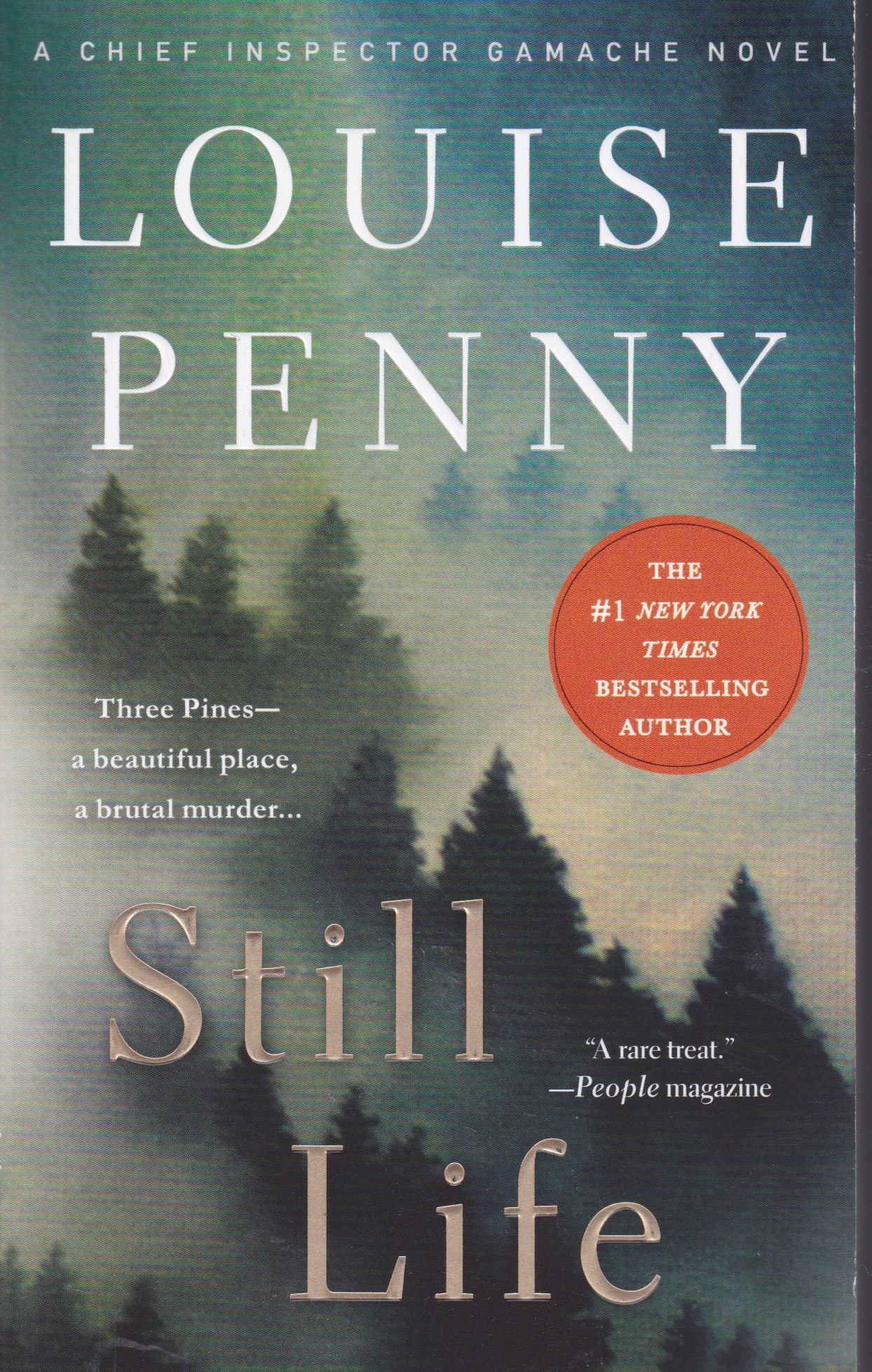
I also finished reading Louise Penny’s Still Life last night.

still life

Miss Jane Neal met her maker in the early morning mist of Thanksgiving Sunday. It was pretty much a surprise all round. Miss Neal’s was not a natural death, unless you’re of the belief everything happens as it’s supposed to. If so, for her seventy-six years Jane Neal had been walking toward this final moment when death met her in the brilliant maple woods on the verge of the village of Three Pines. She’d fallen spread-eagled, as though making angels in the bright and brittle leaves.

Chief Inspector Armand Gamache of the Surete du Quebec knelt down; his knees cracking like the report of a hunter’s rifle, his large, expressive hands hovering over the tiny circle of blood marring her fluffy cardigan, as though like a magician he could remove the wound and restore the woman. But he could not. That wasn’t his gift. Fortunately for Gamache he had others. The scent of mothballs, his grandmother’s perfume, met him halfway. Jane’s gentle and kindly eyes stared as though surprised to see him.

I became part of a discussion on Facebook the other day on whether Louise Penny’s readership–which is quite large–was either male or female. I had not, at the time, read any of Ms. Penny’s work; but I had a paperback copy of her first novel, Still Life, in my TBR pile. I also knew Ms. Penny was quite successful–had hit number one on the New York Times list, been nominated for every possible crime writing award and had won any number of them, and had recently won the Pinckley Prize here in New Orleans (previous winners included Laura Lippman–who was the first recipient–and Sara Paretsky). Any number of people whose opinions I respected were fans, and she got excellent reviews everywhere. I am always a little reluctant to come to the party late–I believe she has twelve or thirteen titles out, and as is my wont, I tend to be hyper-critical of things that have achieved great popularity before I’ve turned my attention to them; it’s a moral failing of which I am quite aware.

First novels can also be tricky. The discussion about Ms. Penny’s readership also veered off, at one point, into a mild debate as to whether her work could be classified as cozy or traditional; there is a distinction between the two categories of crime writing, but it’s also a very fine one; a book can be either, both or neither. I always tend to think of cozies as books with amateur sleuths solving the crime, usually in a small town or village (but not always); traditional do have professionals solving the crime, but aren’t quite as hard-boiled–say, Agatha Christie’s Hercule Poirot novels. Someone else chimed in to say Ms. Penny wrote procedurals, yet another distinction within the field; procedurals obviously have professionals solving the crime and take the reader through police procedure.

Still Life defies categorization; I can only define what I’ve read, after all, and one novel doesn’t give one the ability to officially classify a writer as anything, but this novel seemed, to me, to be both traditional and procedural; the crime-solver is a Surete police detective in Quebec, Armand Gamache, and the book does rather follow his procedure in solving the murder of Miss Neal–shot with an arrow. It also is the story of the village of Three Pines, a close-knit community which is surprisingly diverse for such a small village in the woods in Quebec, close to the American border–there is a black woman who runs the bookstore, and a gay couple who run the B & B which also doubles as a bistro and antique shop. Three Pines is actually a very charming little town, and the book itself is also charming…but it’s not as soft-boiled as these small town mysteries often are.

Agatha Christie’s Miss Marple was also charming, an old spinster who knitted and was kind, but also was a keen-eyed observer of human nature and the goings-on in her small town, St. Mary Mead, and those observations always had a touch of acid in them; Ms. Penny’s characterizations are very similar to those. At first, the way the narrative jumped around and would suddenly give you another character’s point of view for merely a paragraph was just a bit annoying, but as I continued to read on, I realized these sudden shifts were bits where she was defining the character for the reader–and she was doing it masterfully–a few short sentences about that person’s reactions to what was going on at the moment and how their personality, who they were as a person, shaped that reaction; it gave the reader insight into a character that never faltered throughout the rest of the book. Her unpleasant characters were very unpleasant indeed, and the more time you spent with those unpleasant people the less you liked them; even if you felt a bit of sympathy for them in the beginning, she eventually showed you more and more of them until you realized what monsters they truly were. The character of the victim’s niece Yolande was one of these; another was a member of the investigation team, Agent Nichol, whose arrogance and narcissism soon became so unbearable that her final come-uppance was enormously satisfying, even as she failed to learn from it and soon justified it as not being the result of her own failing, but Gamache’s.

Quite monstrous and unsympathetic, indeed.

One of the most interesting things to me about the book–which makes me curious to read more of Ms. Penny’s work–was that the book in and itself, the way it was written, how the story played out, etc., reminded me of Fair Day, the painting Miss Neal had entered into for consideration for an art show in the story. Miss Neal’s art was always seen as primitive at first by the viewer, but the more you looked at it the more it made sense until suddenly the viewer realized that Miss Neal was, in fact, quite genius. At first, the way the story and point of view jumped around seemed disjointed and almost amateurish in its story-telling; but the more time I spent with it I realized it was impressionistic art–once you start seeing the entire story, you realize how clever and brilliant it really is.

And while I was happy to find out the secrets of Three Pines, I was also sorry to finish the book. I certainly enjoyed my visit there, as did Inspector Gamache, and look forward to a return trip.

Too Shy

Thursday!

I worked late last night, but also pulled within four or five chapters of being finished with inputting the line edit. Hip hip hurray! HUZZAH indeed! So, so close, and I know exactly how to finish polishing it; I know what needs to be added.

That’s such a lovely feeling, you have no idea.

The rest of this month is going to be a bit challenging; I have to do a lot of bar testing, going to the office on Saturdays, the NO/AIDS Walk is an upcoming Sunday, and just thinking about any and all of it makes me tired. But I will persist. I will persevere. Because I am Gregalicious!

I’m enjoying Louise Penny’s Still Life, which is a really charming read, to be honest, and I can’t think the last time I read a book about which I could use the word charming as a descriptor. Granted, I tend to read darker stuff, but I am enjoying this. I will keep you posted, Constant Reader, as I make my way through the rest of the book. I think I have copies of other Louise Penny novels scattered about the house in TBR piles; but I do think when I finish this I am going to tackle the reread of It. It’s so daunting though, I look at how enormous the trade paperback I recently bought on impulse is, and want to weep. How did I ever read a novel that large in such a short period of time? Will it still hold up after all this time? The suspense! Older Stephen King novels I’ve loved have stood the test of time; and I do think that perhaps I also might give The Shining a reread in October, when I am going to primarily focus on horror, as I always do in the month of Halloween.

I am going to pick up a prescription (I meant to do this yesterday and forgot) and some other errands–since I worked late last night I don’t have to be in until one. I am also going to do some other chores around the house before I leave for the office etc. I am hoping to get some more of the edits input this morning as well.

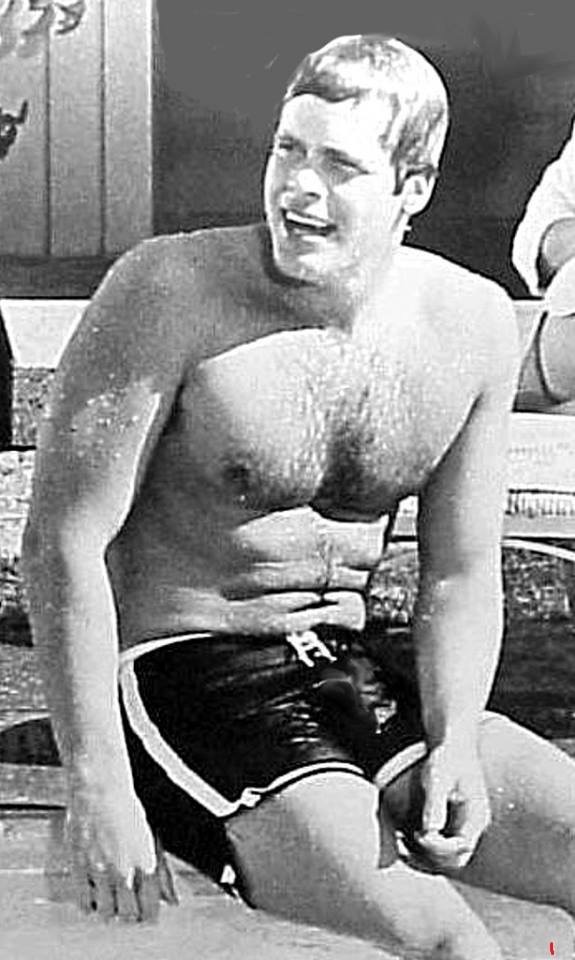
And here’s a Throwback Thursday hunk for you, Constant Reader, actor Doug McClure:

IMG_2685

The Girl Is Mine

Home from the doctor and a good report; blood pressure is good, got a flu shot which didn’t hurt at all, heart rate normal, temperature normal, and I’ve lost thirteen pounds since my last visit six months ago, which is pretty awesome. I do seem to have stagnated at the thirteen pounds though; and I do know that cardio and/or more working out is probably the only way to get the scale needle to move further down. Heavy sigh. But I am feeling more ambitious about that lately–not ambitious enough to actually do it, but to where I am seriously thinking about it, and looking for a way to schedule it into one Gregalicious’ busy schedule.

I did decide to put aside the book I was reading, and took Louise Penny’s Still Life with me to the doctor, to read while waiting. I wasn’t able to get very far into it, but it’s quite charming thus far. In an interesting aside, when I got into the elevator at my doctor’s building, the other person in the elevator, a woman, gasped and said, “Oh, you’re reading Louise Penny!” She held up a copy of Ms. Penny’s latest, Glass Houses, and I replied, “Yes, I’m just getting started with the first.”

She gave me a big smile and said, “Oh,  you’re in for such a treat! It’s a wonderful series!”

It’s always so lovely to run into another reader in public. It’s almost like we belong to a secret club, isn’t it? And to run into someone reading the same author you are is like being in the Illuminati…er, I’ve heard. Allegedly.

And on that note, I am going to do some chores while I put in some more edits.

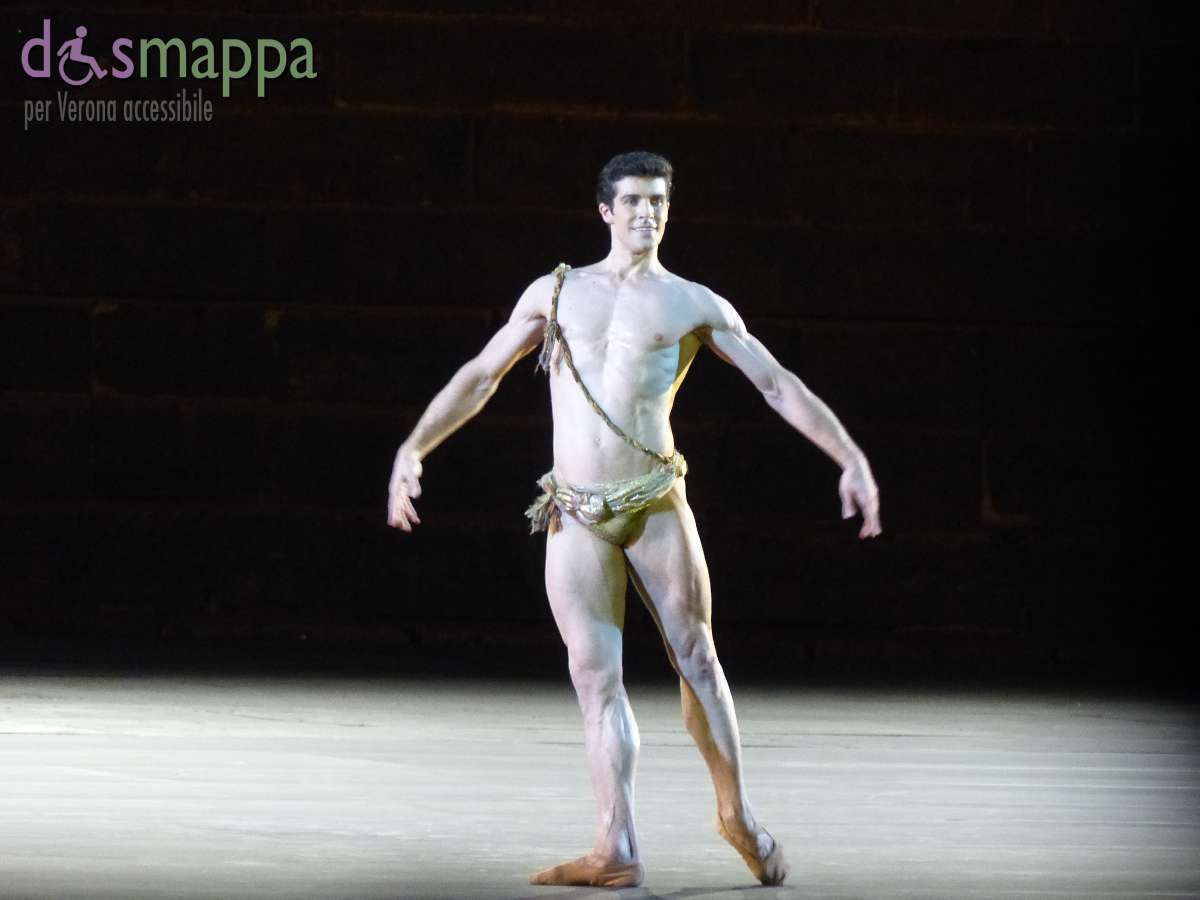
Here’s another shot of Roberto Bolle:

20150722-Roberto-Bolle-and-friends-Arena-Verona-dismappa-543

Dirty Laundry

Wednesday! I have my biannual doctor visit this morning, so won’t be going into the office until later; I am doing bar testing this evening as well. I hope to get more edits put in–seriously, passing the halfway point made such a mental difference; each page I finish it like another step down the other side of the mountain. I am really looking forward to finishing; I know exactly what I have to do with this in the final draft, and am really really excited about finally finishing and getting it out there.

Huzzah! Yay, me!

So, Paul had dinner with a friend last night, and while I was waiting for him to come home (I’m not enjoying the book I’m reading and may put it aside), I decided to watch a documentary on HBO: Bolshoi Babylon.

Wow.

Over the last few years I’ve become obsessively interested in ballet; but most ballet stories are generally about women–understandably so; the men are primarily there, for the most part, to show off the women and their skills–but male ballet dancers are fascinating to me. For one thing, their bodies are amazing, and for another, what they can make their bodies do is even more amazing. It’s rare for a male ballet dancer to outshine his female counterparts; but when they do, they become big stars. (Nureyev, Baryshnikov, etc.) The world of ballet also seems very dark to me, very noir; the way the dancers torture their bodies to make beauty and art, the fragility of the egos, the constant need for approval–and of course, as dark as it is, it can get even darker.

Bolshoi Babylon is about the acid attack on ballet director Sergei Fimin several years ago; I remember when it happened. Fimin was a star of the ballet, became the artistic director, and then was viciously attacked, acid thrown in his face, and a long, painful recovery from the attack followed–he eventually got the sight back in one eye, but remained blind in the other. A male dancer in the company was behind the attack; Fimin had passed over his girlfriend for a lead, and he wanted revenge for his love. (I was very much reminded of the Tonya-Nancy figure skating drama; ballet and figure skating also have a lot in common.) But the documentary simply uses the attack as a launching point for an examination of the world of the Bolshoi; its internal and external politics, and also focuses on some of the dancers and what their lives are like.

It was riveting.

I’ve long wanted to write a noir about figure skating, and another about ballet. Watching Bolshoi Babylon only emphasized that desire; alas, I have this manuscript to complete, a Scotty to write, and I am also toying with that horror novel. But I think I shall continue my researches into both figure skating and ballet; Paul got home and watched the end of the documentary, and he agreed that it would be interesting to go to the New Orleans Ballet.

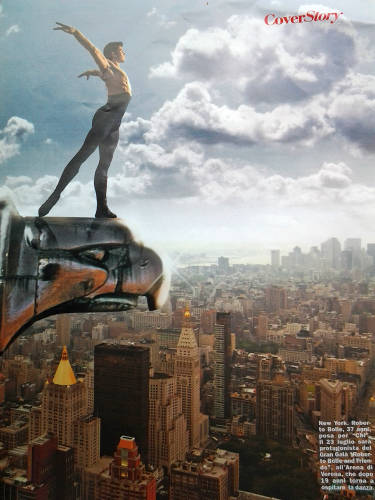
I also have been crushing on Italian ballet dancer Roberto Bolle for years now; thank you, Sarah Hilary, for bringing him to my attention!

Roberto-Bolle-Chi-2

I also got involved in an interesting discussion on a friend’s Facebook thread about author Louise Penny, whom I’ve not read, and who was just here in New Orleans to accept the Pinckney Prize, as this year’s recipient. I had to miss the event, as it was last week. But I do have a copy of her first novel, and I will try to read it before Bouchercon.

So much to read before Bouchercon! I can’t believe I have homework.