comfortably numb

Lou Berney is not only one of my favorite writers, but he’s also one of my favorite people in this business.

I met Lou for the first time many years ago, because we shared a panel together at Bouchercon in Raleigh (the moderator was Katrina Niidas Holm, and the other panelists were Lori Roy and Liz Milliron; none of whom I knew before and have been grateful ever since that I not only got to meet them and become friendly but also because–even better–I discovered incredible new-to-me writers whose work I’ve been enjoying ever since). Shortly after this I read his novel The Long and Faraway Gone and was completely blown away by it; it won every conceivable award for crime writing the next year, and he followed it up with the completely different but just as fascinating and brilliant November Road several years later. I’ve yet to go back and read his earlier work, but plan to eventually–but I also like having them in reserve; Lou’s not nearly as prolific as I would like. I kind of think of him as a male version of Megan Abbott: brilliant, insightful, and exceptionally gifted writers with piercing perceptions into the kinks and flaws of character that make people human.

And Dark Ride is exactly what is promised in that title–a dark ride.

I’m lost, wandering, and somewhat stoned. This parking lot, when you’re in the middle of it, deems much vastr and more expansive than it does from the street. Or do I just seem much less consequential? That’s the question. One for the ages.

It’s July, hot as balls. I stare up. The sky, pale and papery, looks like it’s about to burst into flame.

How would you describe the sky to someone who’s never seen a sky? You’d have to explain how it’s different every day. So many shades of blue, of grat. And we’re not even talking about sunrise or sunset. Plus the clouds! How would you describe clouds?1

“You need some help?”

“What?” I say.

Some dude in a suit is about to climb in his car. He’s about my age, probably a couple of years out of college. With the suit and haircut, though, he’s all business. Me, I’m wearing board shorts, flip-flops, and a vintage faded Van Halen T-shirt I found for five bucks at Goodwill. I haven’t cut my hair in almost forever and I’m a minimum-wage scarer at an amusement park fright zone.

Jesus, what a fucking great opening. (Although I did wonder if any T-shirt costs $5 at Goodwill.)

Dark Ride has about the most unlikely main character you’ll ever meet in a crime novel–Hardy “Hardly” Reed–and that above paragraph is a master-class in character. In fifty-two words and two sentences, Lou Berney created a character that I absolutely, 100% know and believe is real. I’ve known any number of Hardlys over the years, and I can also certainly identify with being in your twenties and kind of drifting aimlessly, with no plan for the future other than you’re afraid of it and you don’t want the path everyone else seems to wnt for you that you know isn’t right.

The story opens with Hardly going to the city building of some unnamed city in the Midwest (since it’s Lou Berney, I’m going out on a limb and saying it’s probably Oklahoma City or Tulsa) to get a thirty-day continuation on paying a parking ticket. A tedious, horrible, day-disrupting chore that most of us have had to deal with at some point in our lives. Personally, I despise having to go to any city or state office for any kind of business, and feel pretty confident in stating that’s probably pretty much how everyone feels about that sort of thing. (Even worse is getting the camera fucking ticket in the mail.) Hardly is, by every definition of the word, a loser–despite being very likable and relatable; the kind of man whose relatives just sigh and say, “well, that’s Hardly” when they talk about him. But Hardly doesn’t have relatives. His mother died when he was a child and he would up in foster care–and even admits he and his foster brother, a successful rising architect, got very lucky with their foster family. But he came out out of it with no purpose, no sense of direction, and no goals or desires for life. He just does his minimum-wage job, lives in his shitty rented room, and smokes a lot of weed. So do most of his friends.

And the opening paragraph and that meditation on the sky and clouds? Such a stoner thing to do. (I’ve had some experience with cannabis–especially in my twenties, but that’s a story for another time.) So, why is this amiable, stoner loser the main character of this book? we soon find out. As he waits in line to get his continuance, he sees a woman with two very young children–and notices on both a pattern of cigarette burns on each child. Horrified, he looks for someone in authority to report this to–but no one seems to care. The woman and her children leave, and he manages to meet someone who works there who pointedly won’t tell him their names but that he needs to sign in, which makes him realize he can her name that way–Tracy Shaw. He finally calls CPS and makes a report over the phone. Relieved that he’s done his duty, he goes on with the rest of the day, which includes going to work at the crappy amusement park where he works (a fair played a major role in The Long and Faraway Gone, which makes me think at some point in his life Berney must have worked for an amusement park or a fair) where we meet his co-worker and friend, a mentally challenged 16 year old named Salvadore, who is one of my favorite characters in the book.

It begins, though, to bother him that CPS never calls him back with questions or for more information–he’s sadly still young enough to believe in the efficacy and efficiency of Authority–and it begins festering in his head. He’s worried about Tracy, but he’s even more worried about the kids, seven and six by his estimate, and how their lives are being shaped and ruined by the abuse. It keeps bothering him until he decides to do something about it, and what follows is a delightfully entertaining, beautifully written saga of someone who has been completely written off by society as a loser and a wastrel yet still manages to find the strength of character and moral purpose to try to save those kids, however foolhardy–and dangerous–it may turn out to be for him.

I’m not really sure how to describe the book, to be honest. I feel like “stoner noir” is the best fit, even though the cover calls it a thriller, I don’t know if that’s actually correct or not. Hardly’s sense of purpose, his sense that he’s the only person who cares about saving those kids, reminded me of a knight’s quest from classic literature; another time he reminded me a bit of Don Quixote tilting at windmills. I loved this book. I loved the main character, I loved the voice, I loved everything about this book–except the fact I didn’t write it.

Buy it, read it, cherish and love it–and thank me later.

  1. “Bow and flows of angel’s hair, and ice cream castles in the air” per Joni Mitchell. You’re welcome. ↩︎

Sweet Music Man

Thursday and my last day in the office for the week. Yay, I think. I have to get up early and go see my new primary care physician tomorrow morning–I fired the last one for a multitude of reasons I will probably go deeper into in a future post–but I also have to fast for that because I am having blood work done, which means no coffee, no nothing other than maybe water tomorrow morning. I think as long as I sleep well, I’ll not leave a body count behind in my wake on the way to and from the appointment. I am also going to be making a go-cup of coffee that I will be taking with me and you can best bet I’ll be slugging it down once the blood has been drawn.

I slept well last night, which was lovely because I was definitely running down my batteries by the time I got home last night. By the time I’d done a load of laundry, emptied the dishwasher and reloaded it, I was more than ready to collapse into my easy chair. I did some minor writing last night–a few hundred words or so, nothing much other than to be able to say “I wrote some fiction last night”–but that’s okay. I’m getting back into the saddle again gradually, and soon I’ll be clocking three thousand word days again. We watched this week’s The Morning Show last night, and I have to say, it’s an exceptionally well done show. The ensemble itself is incredibly star-powered, beginning with Jennifer Aniston and Reese Witherspoon as the two primary leads, and the excellent job of the casting director manages to work its way down from the stars all the way down to the bit players–Shari Belafonte Harper is actually a member of the cast, but has very few lines and is rarely on camera, but it’s always nice to see her when she pops up on screen, to be honest. It’s very smart and very well-written, as are most shows on Apple Plus–let’s not forget we wouldn’t have Ted Lasso without Apple Plus.

Ironically, I was also watching shorter and longer videos on Youtube before Paul got home and went down a “Calvin and Hobbes” wormhole of videos about the greatest comic strip of all time. I always loved Calvin and Hobbes, and have all the collections, including the massive coffee-table sized one that contains every strip ever published. I was very sad when Bill Watterson ended the strip on a high note, and I’ve always loved his artistic integrity about not selling out to film or television or merchandising (I would have definitely bought a Hobbes plushy back in the day), as well as his decision to end the strip and take it out on top. (I was also a big fan of “Doonesbury”, “Bloom County”, and of course “The Far Side”.)

Anyway, watching a few documentaries on Youtube about “Calvin and Hobbes” mentioned how much emotional depth the strip had; how it could not only make you laugh but make you think as well as tear up sometimes…and I realized that Ted Lasso, like Schitt’s Creek, was also like that. Calvin and Hobbes were both so fully realized as characters in the strip–as well as his parents, and the other occasional characters that showed up, too–that you cared about them, just as you do the characters on Ted Lasso and Schitt’s Creek, which is why character is so important when it comes to story-telling. People will only care if the characters seem like actual real people to them, and once they care…well, you’ve got them, don’t you?

Maybe I should revisit my massive Calvin and Hobbes collection, too.

There are some good games this weekend in college football, but my primary concern is, as always, the LSU game; they’re hosting Arkansas in Death Valley and we’ll get yet another chance to see how good the Tigers are–but we also don’t know how good either Mississippi State (trounced last weekend) or Arkansas yet are this year; the test will always be how the Tigers do against Auburn, Alabama, and Florida–and there’s also no telling how good Mississippi is this year, either–they play Alabama this weekend, so we’ll get an idea of how the Tide is rebounding and how good the Rebels are. Everyone is writing Alabama off, and maybe it’s simply been burned into my brain throughout the course of a long lifetime of being a college football fan,…but you can never take the Tide for granted or ever completely count them out. They have that “brand” recognition that somehow manages to get them the win in close games; the luck always seems to magically appear every time they need it, only deserting them in the one game they may lose per year. They’re in the same position that LSU is in; already one loss early and therefore cannot lose again if they want to win the conference and the national title. College football is certainly more interesting this year than it has been since 2019, at any rate.

I want to be able to drop books at the library sale this weekend, wash the car and clean out the inside, and hopefully go to the SPCA and get a new cat. I also need to clean the house more–at least try to keep up with it the way I did when Paul was out of town earlier this summer–and get some writing done. I also need to do some reading. I want to finish Shawn’s book because I also just got my copy of the new Lou Berney, Dark Ride, which I am really looking forward to; I’ve been a big Lou Berney fan since we were on a panel together all those years ago at Bouchercon in Raleigh, and his work never disappoints. (That panel in Raleigh was definitely one of the highlights of my paneling career as a crime writer; Katrina Niidas Holm was the moderator; the other panelists were Lou, Lori Roy, and Liz Milliron. Nice, right?)

So, tonight when I get home from work I am going to do some more laundry, unload the dishwasher and clean the kitchen, and then I am going to either write or curl up with Shawn’s book.

And on that note, I am heading into the spice mines. Have a lovely day, Constant Reader, and I’ll check in with you again later.

You Must Love Me

Many years ago, at a Bouchercon in the far distant past, I was lucky enough to be assigned to a panel with several strangers. It was Raleigh, and I don’t remember what the panel was about–other than none of us on the panel actually wrote what the topic was about–but it ably helmed by Katrina Niidas Holm. That was the weekend where I was lucky enough to meet both her and her husband, Chris. Also on the panel were Liz Milliron, Lou Berney, and Lori Roy. I always intend to read my co-panelist’s work before panels, so I can talk to them intelligently about their books–but it’s not near as pressing as it is when I moderate, and this was one of those years where I was busy and simply didn’t have the time. The panel was marvelous. I had the best time, and I loved everyone on the panel. I have since gone on to read their work and have become a besotted fan of all three of them, really.

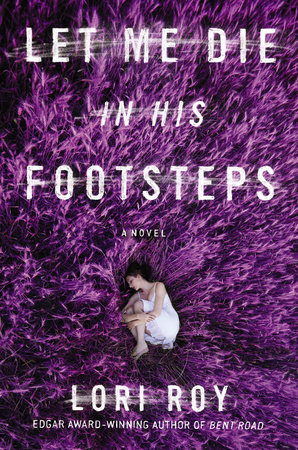
My first Lori Roy novel was Bent Road, which won her (deservedly) the Edgar for Best First Novel. I absolutely loved it, and made sure I got the next two as well. (At the Edgars following the Raleigh Bouchercon, both Lou and Lori won Edgars; her second, also making her one of the few authors to win Edgars for Best First and Best Novel.) I’ve read everything she’s published since then, but have never gotten to the second novel (an Edgar Best Novel finalist) or Let Me Die in His Footsteps, her second nomination for Best Novel and her second Edgar win. I don’t remember why I decided to finally read Let Me Die in His Footsteps, but I am very glad I did.

It’s really quite marvelous.

Annie Holleran hears him before she sees him. Even over the drone of the cicadas, she knows it’s Ryce Fulkerson, and he’s pedaling this way. That’s his bike, all right, creaking and whining. He’ll have turned off the main road and will be standing straight up as he uses all his weight, bobbing side to side, to pump those pedals and force that bike up and over the hill. In a few moments, he’ll reach the top where the ground levels out, and that front tire of his will be wobbling and groaning and drawing a crooked line in the soft, dry dirt.

Theyre singing in the trees again today, those cicadas. A week ago, they clawed their way out of the ground, seventeen years’ worth of them, and now their skins hang from the oaks, hardened husks with tiny claws and tiny, round heads. One critter calls out to another and then another until their pulsing songs made Annie press both hands over her ears, tuck her head between her knees, and cry out for them to stop. Stop it now. All these many days, there’s been something in the air, a spark, a crackle, something that’s felt a terrible lot like trouble coming, and it’s much like the weight of those cicadas, thousands upon thousands of them crying out to one another.

Annie has known all morning Ryce would be coming. It’s why she’s been sitting on this step and waiting on him for near an hour. She oftentimes knows a thing is coming before it has come. It’s part of the curse–or blessing, if Grandma is to be believed–of having the know-how.

Let Me Die in His Footsteps is set in rural Kentucky, with a dual timeline–the present in the book is 1952; the past is 1936. Both timelines feature two sisters, one normal and the other with the “know-how.” In the present, Annie is the sister with the know-how while her sister Caroline is normal and pretty and sweet and pretty much beloved. The 1936 section focuses on Caroline’s mother, Sarah, and her sister with the know-how, Juna. It is soon made clear in the present day that something terrible happened back in 1936, something whose repercussions are still being felt to this present day of 1952. Annie isn’t Caroline’s sister, but rather her cousin; Sarah is Caroline’s mother while Juna was Annie’s. Juna also had a bad reputation around the county, having played a pivotal role in the 1936 tragedy. The book opens with Annie reaching her ascension; the halfway mark between sixteen and seventeen, when she is supposed to look down into a well at midnight, where she will see the face of the man she is going to marry. Annie sneaks out of the house late at night to go next door and peer down into the Baine family well; there’s trouble and tension between the two neighboring families…dating back to 1936. All the Baine sons are long gone; the only one left is old Mrs. Baine, who sits out on her porch with a shotgun in case of her worthless sons try to come home. Caroline follows Annie and sees someone in the well; Annie sees no one. But after the look into the well, they discovered Mrs. Baine’s dead body in the yard…and all the secrets and lies from 1936 start to not only unravel but impact 1952.

We’re never really sure what the “know-how” is, or if it’s just an old wives’ tale, a superstition. The rural south in both 1936 and 1952 were dramatically different than modern times; the rural areas weren’t as exposed to television or films or the newspapers, really and the old ways still held sway. I can remember being told about someone with the sight that everyone was supposed to stay away from in rural Alabama when I was a kid; those kinds of superstitions and beliefs still exist in some of these more backward rural areas. But one thing I truly appreciate about Roy–who often writes about poor rural Southern people–is that her writing isn’t what I call “poverty porn”; her characters are very real and this just happens to be their situation. The Hollerans have a lavender farm, having eschewed tobacco in the recent past after Grandpa Holleran died from lung cancer. Lavender infuses the novel almost from the very first page. I love the smell of lavender, although I would imagine fields and drying houses filled with it might be a lot. The story plays out in a slow burn, terrific build to the end, and all kinds of secrets from the past must be dealt with in order for the present-day characters to get on with their lives.

Roy is such a good writer that it almost takes my breath away. She uses a distant third person point of view, one in which we don’t really get inside her character’s heads that much, so the reader has a kind of distant remove from the characters, but it really works. Her work reminds me of Faulkner without the racism, and of other great Southern writers. Her novels are very smart, with a lot of depth and emotional honesty that resonates with the reader, compelling us to keep reading.

Highly recommended; Let Me Die in His Footsteps clearly deserved to win the Edgar for Best Novel.

Hopefully there will be a new Lori Roy soon, because all I have left of her canon is her second novel, Until She Comes Home, which was also an Edgar finalist.

Love Touch

Sunday morning, as I sit here in my cool workspace swilling coffee, trying to wake up and figure out what to do with the rest of my day. I need to go to the grocery store and I should also probably make an attempt to go to the gym; but I can’t seem to find my iPad, which makes doing cardio pointless (I read or watch TV on my iPad while on the treadmill; perhaps not having my iPad is simply an excuse for not going; what if it’s gone, lost, stolen? I am trying not to think that way and am hoping that I simply left it at the office. If not, I am terribly screwed because I don’t know where it is and I currently don’t have the cash on hand to replace it. So, yes, let’s just continue pretending happily that it’s as the office, shall we?)

I could, of course, just go to the gym and do weights. That always feels good, at any rate. Perhaps once I finish swilling this coffee….

I slept late yesterday, and I slept even later today. I spent most of yesterday not only reading but doing chores around the house, on the pretense that today I would not only go to the grocery store and the gym, but I would also spend some time writing today. I need to finish a short story; I need to revise still another, and there’s that new one struggling to take root in my brain that I haven’t really decided what to do with just yet. There are two others swirling around up there in my head, as well as others I’ve not thought about or have forgotten about in the meantime. But now, now as I wake up I feel more confident about running the errands and going to the gym and actually doing some writing today.

I’ve been reading The History of Western Philosophy by Bertrand Russell, and greatly enjoying it; is there anything quite like well-written non-fiction? It’s why I love Joan Didion and Barbara Tuchman; one of the things I love to do while reading is to learn, and non-fiction fills that need quite beautifully. I also like non-fiction that makes me think; which is why I am looking forward to reading Dead Girls by Alice Bolin. I still would love to do a collection of my own essays, book reviews, and so forth; but egad, what an odious chore pulling all of that together would be. I struggle with essays, but I also think that the writing of essays; the ability to pull thoughts from my head and extrapolate them out to their fullest meaning, is vitally important and a skill-set I wish I had honed more properly. A friend once pointed out to me, as I bemoaned my inability to write essays, that my blog itself is nothing more than years of personal essays. That took me aback, because it was, in many ways, correct; there is definitely some truth to that, but it’s hard for me to take the blog seriously in that fashion, because so much of it is simply written off the top of my head in the morning as I wake up and drink coffee and try to figure out what to do with the rest of my day.

One of the problems for me with personal essays is, ultimately, the issue of self-deprecation, which I’ve addressed in previous blog entries about my writing and my career and my books; who am I to write about this subject? Am I expert enough in this to write about it, or am I simply talking about things that smarter, better-educated people have written about long ago and having the hubristic belief that I am the only person to see this truth for the first time? 

And, in considering myself self-deprecatingly as not that special or particularly smart, I defeat myself and never write the essay.

And of course, there is the problem of all the lies my memory tells me.

But yesterday, I took the afternoon to finish read an ARC of Lou Berney’s new novel, November Road, and was blown away by it.

Scan.jpeg

Behold! The Big Easy in all its wicked splendor!

Frank Guidry paused at the corner of Toulouse to  bask in the neon furnace glow. He’d lived in New Orleans the better part of his thirty-seven years on earth, but the dirty glitter and sizzle of the French Quarter still hit his bloodstream like a drug. Yokels and locals, muggers and hustlers, fire-eaters and magicians. A go-go girl was draped over the wrought-iron rail of a second floor balcony, one book sprung free from her sequined negligee and swaying like a metronome to the beat of the jazz trio inside. Bass, drums, piano, tearing through “Night and Day.” But that was New Orleans for you. Even the worst band in the crummiest clip joint in the city could swing, man, swing.

A guy came whipping up the street, screaming bloody murder. Hot on his heels–a woman waving a butcher knife, screaming, too,

Guidry soft-shoed out of their way. The beat cop on the corner yawned. The juggler outside the 500 Club didn’t drop a ball. Just another Wednesday night on Bourbon Street.

Lou’s previous novel, The Long and Faraway Gone, won every crime-writing award under the sun that it was eligible for: Edgar, Anthony, Macavity, and I don’t know what all; it was the crime publishing equivalent of the EGOT. It was, obviously, an exceptional novel. I met Lou when we were on a panel together at the Raleigh Bouchercon, along with Lori Roy and Liz Milliron; moderated by the amazing Katrina Niidas Holm. It was funny, because the panel topic was, I think, writing about small towns which, in fact, none of us on the panel really did, but we had fun with the topic and I know I brought up Peyton Place at least once and pointed out that suburbs are small towns with the primary difference being suburbs are bedroom communities for cities while small towns aren’t attached in any way to a larger city. It was fun and spirited and I liked Lou, thought he was incredibly smart, as were Liz and Lori. Lori and Lou went on to win Edgars for that year; and I admire their work tremendously. I’ve not had the opportunity to read Liz’ work; but she did have a terrific story in the New Orleans Bouchercon anthology, Blood on the Bayou.

Anyway, I digress.

I’ve been looking forward to November Road since I finished reading The Long and Faraway Gone, but I still need to go back and read Lou’s first two novels, Whiplash River and Gutshot Straight. 

I also have to admit, I was a little hesitant about Lou’s new book; it’s built around the Kennedy assassination in 1963, which always gives me pause (I have yet to immerse myself in Stephen King’s 11/22/63). I’m not sure why I don’t care to read fiction around the Kennedy assassination, but there you have: an insight into my mind. But the Kennedy assassination, while a primary plot device, is just that: a device to set the story in motion. Frank Guidry is involved with a mob boss in New Orleans, and after the Kennedy assassination he is given instructions to fly to Dallas, retrieve a car, and drive it to Houston to dispose of it. While he is doing this, he realizes that he is getting rid of evidence that may be of vital importance to the investigation into the president’s murder–and as such, is a loose end who knows too much and figures out he’s got to disappear now because they’re going to want to kill him. And sure enough, they do send someone after him, Paul Barone, a remorseless killer and tracker. The cat-and-mouse game between them builds suspense throughout the book.

But it’s not just about Frank, and it is a credit to Berney’s talent, creativity and imagination in that he throws in another primary character, constructed carefully in all the facets and layers that make her live and breathe: Charlotte. Charlotte is a wife and mother in a small town in Oklahoma, married to a useless drunk fuck-up with whom she had two daughters, and her salary working for the local town photographer is the primary thing keeping a roof over their heads. Her own ambitions for being a photographer herself are constantly shat upon by her boss, her society and culture and environment: she is a woman, a wife and mother, and in 1963 that so thoroughly defines her that any other ambition she might have throws her identity as wife and mother into question. Trapped, with the walls closing in on her closer every day, Charlotte takes the president’s assassination as a sign for her to run away with the girls and start over. Charlotte is an extraordinary character;  her relationship with her daughters is the strong backbone of this story. You root for her, you want her to make her escape and make her dreams come true.

Frank and Charlotte cross paths in New Mexico, and Frank sees them as his salvation; his murderous pursuers might be thrown off as they are looking for a single man, not one traveling with his wife and kids; the book becomes even stronger and more suspenseful once they are all together. Frank and Charlotte become close, despite not being completely honest with each other; they are both keeping their cards close to their vests, but yet form a loving bond. WIll they escape, or will they not?

November Road reminded me a lot of Laura Lippman’s Sunburn; the same kind of relationship building between a man and a woman where a lot of information, important, information, is held back from each other, and that lack of trust while falling in love is an important theme in both books: women trying to make their best lives, even if it means making morally questionable decisions, while becoming involved with a man who isn’t completely honest with her. Berney’s writing style, and tone, and mood, also put me in mind of Megan Abbott’s brilliant Give Me Your Hand. If you’ve not read yet the Lippman and Abbott novels, I’d recommend getting them and holding on to them until Berney’s book is released in October and reading them all over the course of a long weekend.

Bravo.