Shirley Jackson never explained.
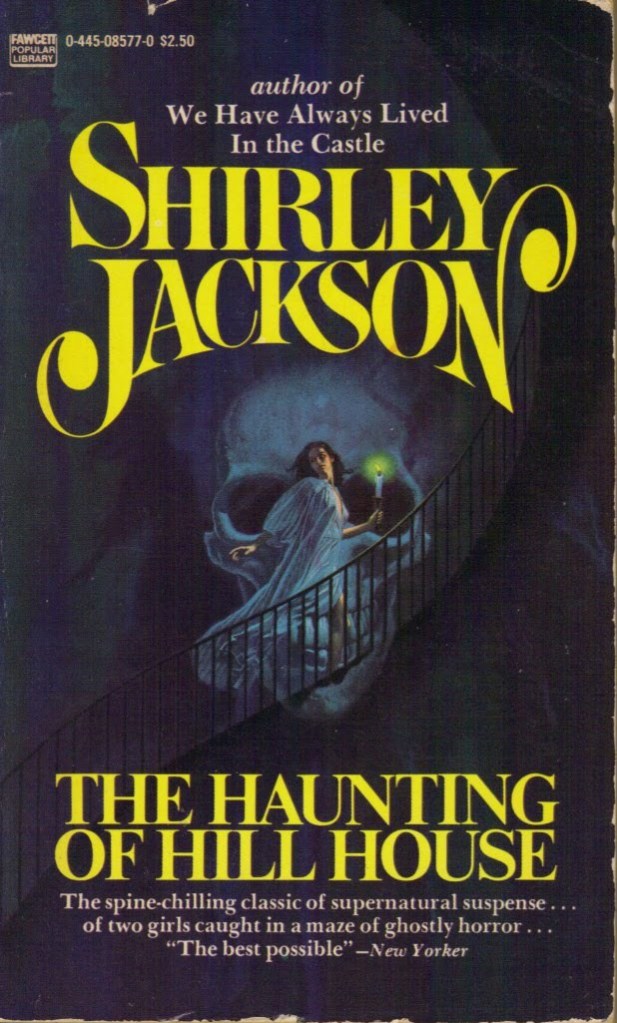
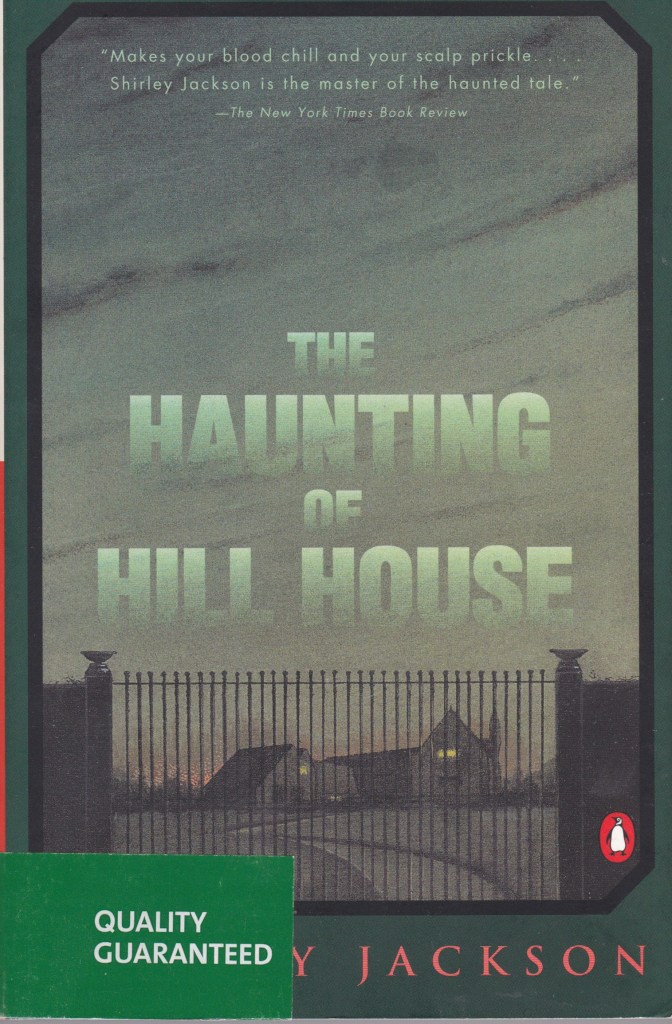
I’ve always loved The Haunting of Hill House, and Jackson has always been one of my favorite writers. I’ve long ago lost count of how many times I’ve reread the book, and of course I love the original film version from 1963, directed by Robert Wise and starring Julie Harris in one of her best screen roles as Nell. The sense of dread and fear contained within the pages of that incredibly short novel are astounding. I’ve always believed that one of the book’s greatest strengths was its lack of explanation; horror novels, or ghost stories, or whatever you want to call Jackson’s novel, inevitably always get hung up on explanations of who or what caused the place to become haunted and/or accursed. Jackson never bothered, knowing instinctively that the unknown is far more unsettling and terrifying than any understanding or explanation she could provide to her readers; she just never explained. “The Lottery” offers no clues as to why the villagers have developed this annual ritual, it simply happens and she shows it to us without explanation…which again makes it that much more unsettling. In the years since I originally discovered and read a very cheap copy of The Haunting of Hill House at a used book store, with its Gothic-style cover depicting a beautiful Nell with long flowing hair and a long flowing gown, holding a candle while climbing the horrible spiral staircase in the library, I’ve read more of Jackson and become an even bigger fan of her work than I already was. The Haunting of Hill House and “The Lottery” firmly cemented Jackson’s deserved place in American literature; the rest of her equally brilliant, disturbing and unsettling work serve to heighten that place and elevate it even more.
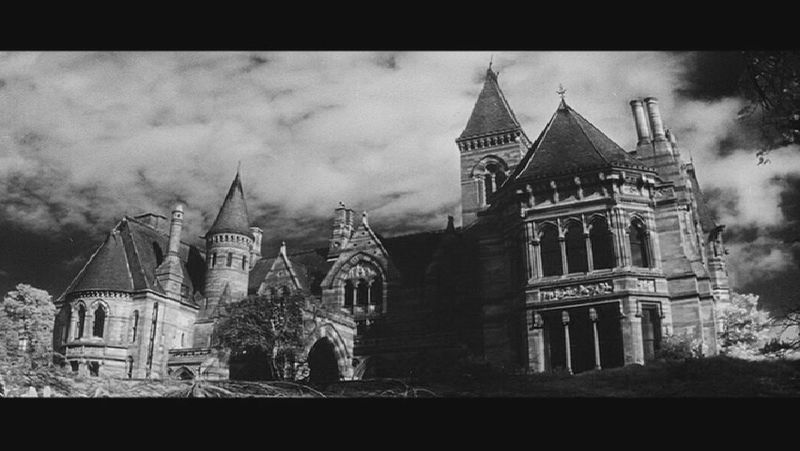
I am not a purist. A long time ago I realized that films and television programs adapted from books would almost always be disappointing for a fan of the book; ones that are actually better than the book (The Exorcist, The Godfather) are few and far between. I stopped getting irritated by these changes a long time ago. I also learned to stop being bothered by such things; it’s an adaptation, after all, and that means changes because it’s now a different medium. (I have already mentioned my amusement at how militant fans can be about these things; particularly when it comes to things like Nancy Drew or the Hardy Boys.) I hated the 1999 remake of The Haunting; it was special effects nightmare that made little to no sense; the whole point of the story was you never see what it is that’s going on and never are really sure; this second film version ignored that and therefore, it wasn’t The Haunting but just another haunted house movie. I greatly enjoyed the Netflix adaptation mini-series by Mike Flanagan; it was a different interpretation–again, you never see anything–and I thought it was a brilliant modernization/adaptation.
But I did approach this book, said to be a retelling of the story, with a bit of trepidation. I’d heard of Ms. Hand before, of course–I have a copy of Curious Toys, which I bought when she on the Shirley Jackson Award for it, and had been meaning to get to her work at some point.
I left the rental just as the sun poked its head above the nearby mountains, and golden light filled the broad stretch of river that ran alongside the little town. Nisa was still curled up in bed, beathing deeply, her dark curls stuck to her cheek. I brushed them aside but she never stirred. Nisa slept like a child. Unlike me, she was never troubled by nightmares or insomnia. It would be another hour or two before she woke. Longer, maybe. Probably.
I kissed her cheek, breathing in her scent–lilac-and-freesia perfume mingled with my own Jasmin et Tabac, one of my few luxuries–and ran my hand along her bare shoulder. I was tempted to crawl back in bed beside her, but I also felt an odd restlessness, a nagging sense that there was somewhere I needed to be. There wasn’t–we knew no on around here except for Theresa and Giorgio, and both would be at work at their home offices overlooking the river.
I kissed Nisa again: if she woke, I’d take it as a sign, and remain here. But she didn’t wake.
I scrawled a note on a piece of paper–Nisa often forgot to turn her notifications off, she’d be grumpy all morning if a text woke her. Going for a drive, back with provisions. Love you.
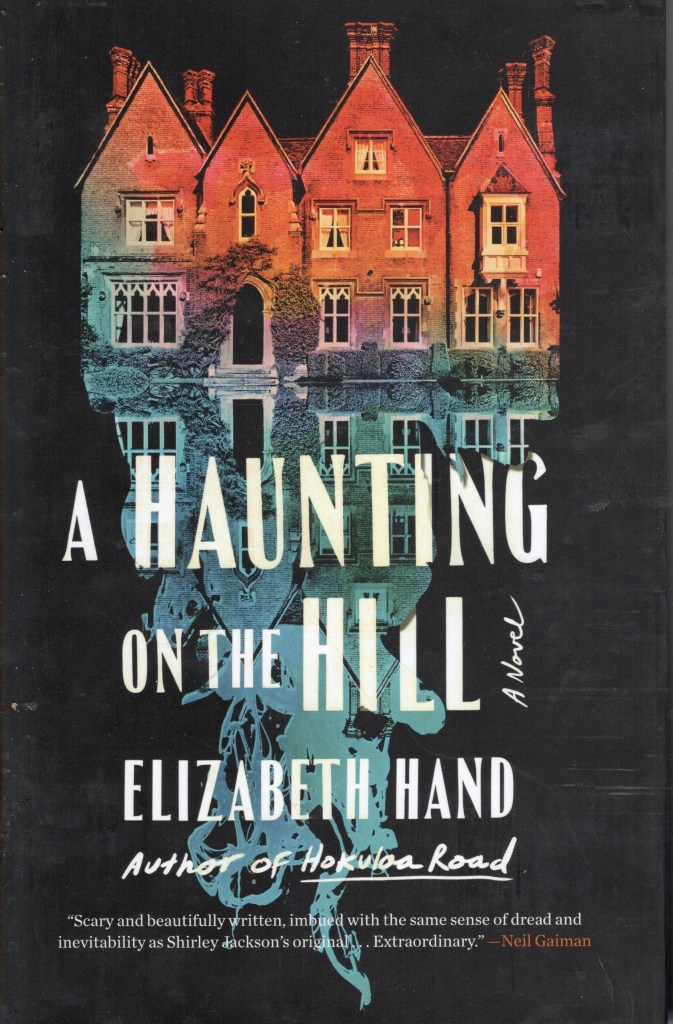
This book isn’t a retelling of the Jackson novel, but rather a kind of sequel, picking up at Hill House some sixty years after poor Nell drove her car into the tree after the turn in the driveway as she realized she’d been wrong about everything but only too late. This is a new story of Hill House, and our main character, Holly Sherwin, is staying upstate with her lover Nisa in an Air BnB, and bored, wakes up early and goes for a drive. A playwright, she’s recently won a grant to help cover expenses while she works on her play, Witching Night, which is based on an old sixteenth century manuscript she came across by chance. It’s the story of an old woman accused of witchcraft and burned at the stake, based on a real event; her girlfriend Nisa is an accomplished rising singer/songwriter, who is rewriting old murder ballads to use as the soundtrack/backdrop of the play. She goes for a drive and finds herself at Hill House…which draws her in much as it did Nell in the original Jackson and she decides to rent the house for two weeks, move in with her cast (her bisexual friend Stevie, a former child star molested on set and now an amazing sound tech) and Amanda, a brilliant aging actress whose career took a turn when a costar fell to his death–and of course people wondered if she pushed him. Holly herself has a bit of a checkered past; someone had told her a story that she adapted into a play; the original person threatened to sue her but before anything can be done that person commits suicide. That derailed her playwriting career–and believe me, Hand does an excellent job of depicting what the excitement that a burnt-out creative experiences when inspiration, an opportunity to flex those creaky muscles and create again, feels like.
All four of the characters are beautifully rendered and are completely real, and one of the things I liked was how Hand slyly also referenced the Flanagan mini-series as a part of the Hill House continuity. Hand’s Hill House has similarities to Jackson’s, and there are more than enough nods for the Jackson fan to recognize and smile about. Hand also does an incredible job of creating that claustrophobic dream-like feel Jackson used for her book, but Hand doesn’t mimic Jackson’s style; the style of this novel is entirely Hand’s, but one has to marvel at Hand’s mastery of creating that same feeling in her reader but in an entirely different way. The language she uses is flawless and rhythmic, just like Jackson’s was, but again completely different. There are also moments that mirror the original novel beautifully; call backs to the original story that I personally felt like little secrets Hand was sharing with me the reader. It’s a very intimate story, and I felt like I was there with them, the characters were people I understood and knew and cared about. Hand also tells the story in alternating points of view, which helps create the off-balance slightly skewed perspective the story needs; Holly tells the story in the first person, but the others are from a third person point of view.
It was terrific, and I look forward to reading more of Hand’s work.




 Queer and Loathing in America