My Favorite Things

And so we have reached the last day of 2021 at last (it’s still hard for me to wrap my mind around the fact that it has been 2021 for a year; 2022 is going to seem even stranger, methinks). I’m on a holiday, so there’s no work for the day-job to be done today, but there’s plenty of other things that need to be done. I need to work on the book some more, I need to clean, I need to run some errands, and I’d also like to do some reading. It’s a lot, I know, and who knows how much I can or will actually get done around here? Yesterday I did data entry, made condom packs and rewatched the original Clash of the Titans (starring a very young Harry Hamlin and his nipples; seeing this in the theater made me a Harry Hamlin fan for life) while I did so. I also was able to pick up two boxes of home COVID-19 tests (the day-job procured you them for the staff as a preventive measure, which are apparently like gold these days.

It was a very challenging year in many ways. I suspect that if I looked back at a list of my goals for the year, two of the most key things–getting an agent and finishing Chlorine–would not be able to be checked off the list. My faulty memory–I keep, for one thing, conflating the last two years as one and the same mentally–has something to do with it. I know I wanted to write more short stories in 2021, and I don’t know that I succeeded at that. I know I had a couple of stories of which I am very proud come out this past year (my first ever attempt at writing a Sherlock Holmes story for one), and of course I finished writing two books while trying to finish yet a third under contract, and trying to get Chlorine done.

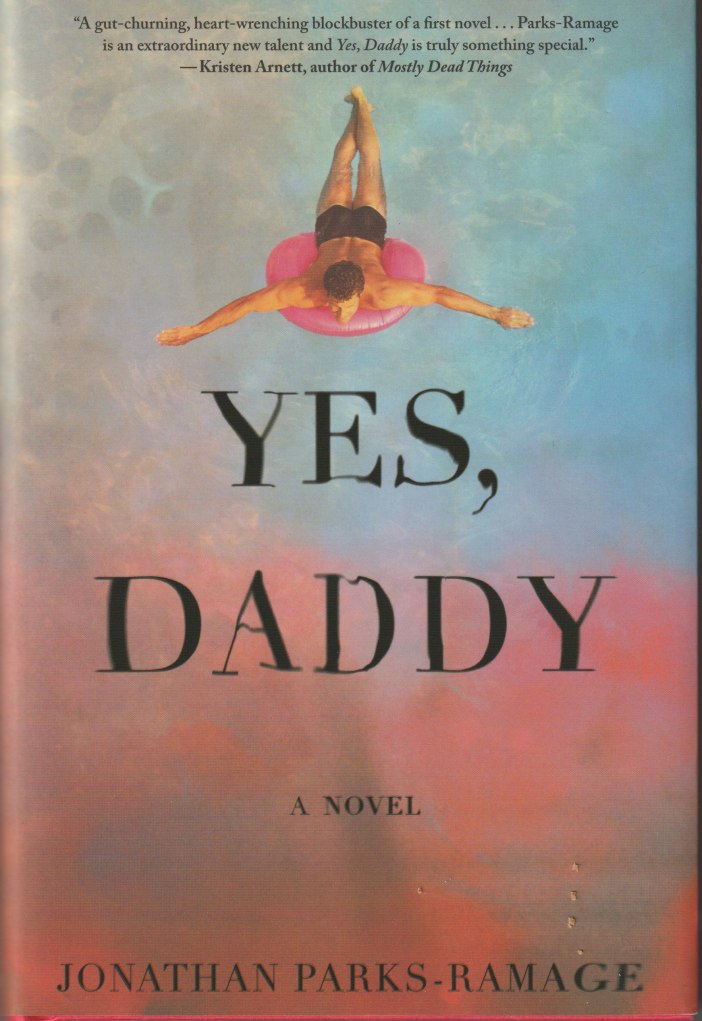
I always feel sort of weird at the end of the year when I compile my favorite things (books, movies, television) because I never limit myself to things that were new to the year, but rather new to me during the year; I am always so woefully behind on everything I read and watch that it doesn’t seem fair to leave off things that didn’t debut in 2021. Besides, it’s always kind of fun, I think, to remind people of things they themselves might have missed and forgotten about. But when I started thinking about all the books I read this past year, I would have sworn that I hadn’t read this much, or that I couldn’t have possibly read this many books–and I know I am also forgetting some, and these are the ones that stand out enough to be remembered. My favorite reads of the year were, in no particular order, The Turnout by Megan Abbott; The Collective by Alison Gaylin; Dream Girl by Laura Lippman; The Gift of the Magpie by Donna Andrews (I read three or four Andrews novels this past year, and loved them all, frankly); Velvet was the Night by Silvia Moreno-Garcia; Jar of Hearts by Jennifer Hillier; Razorblade Tears by S. A. Cosby; A Beautiful Crime by Christopher YBollen; Yes Daddy by Jonathan Page-Ramage; The Other Black Girl by Zakiya Dalila Harris; These Toxic Things by Rachel Howzell Hall; Invisible City by Julia Dahl; and By Way of Sorrow by Robyn Gigl. I also read a lot more cozies than I generally do, which were quite fun–I highly recommend checking out Leslie Budewitz, Vivien Chien, Sherry Harris, Ali Brandon, Miranda Harris, and Carolyn Haines, among many others–my TBR pile is nothing if not a treasure trove of terrific reading–and I am hoping to get even more reading done in the new year as well.

As for movies, I also watched a lot of movies. I saw a lot of classic cinema of the past I’d never seen before–my Cynical 70’s Film Festival had some marvelous entries this past year–as well as revisited some favorites. I greatly enjoyed Dune, which I thought was incredibly well done, and Shang-Chi and the Legend of the Ten Rings was a great super-hero film, with just the right amount of spectacle, humor, and humanity to ground it in enough reality that an audience could relate to it. I don’t remember any other new films that we saw in this past year, but I am sure there were some–the direct-to-streaming/limited theatrical release model for the pandemic ensured that I saw some things much sooner than I probably would have otherwise–but give me a break, I am still on my first cup of coffee after a lovely and deep night’s sleep.

Television again is something a bit blurry for me; the lines between 2020 and 2021 also blurring a bit here. I know we loved Mare of Easttown, Ted Lasso (a true gem of a show), The Mandalorian, Elité, Superman and Lois (probably the best version of Superman since the first two Christopher Reeve films), the original Gossip Girl (which is winding down now with a last season that is rather disappointing, alas), Hacks, One of Us is Lying, Cruel Summer, and Only Murders in the Building, which was also a jewel. But maybe my favorite show of the year was HBO’s It’s a Sin, which was not only well done, but powerful and thought-provoking. I had debated whether I wanted to see it or not; entertainment about HIV/AIDS, particularly about the height of the plague, has never sat well with me–either pandering nonsense or heavy-handed. The gold standard for me has always been Longtime Companion, but after watching I had to say It’s a Sin belongs up there. It was hard to watch at times–and I realized that the reason was the characters were all the same age that I was when it all started, which was a big part of it–but it also made me acknowledge and understand any number of things about myself and my past; namely that I had never grieved, just going numb at one point and deciding to keep moving forward and not think about anything. Watching the show brought back a lot of memories which, while painful at times, was necessary and needed.

I also spent time writing and working on two novellas, “Festival of the Redeemer” and “Never Kiss a Stranger”; one thing I really want to be able to do in the new year is get the novella collection together as well as another collection of short stories. Lots of plans for the new year, including a new Scotty novel I’ve been itching to get to, and another stand alone, in addition to Chlorine. I was able to visit my parents twice this past year, and I was also about to make it to New York and then Boston for Crime Bake, which was simply marvelous. I have lots of travel plans for the new year that I am hoping new pandemic variants aren’t going to jettison–I really do want to be around writers again, seriously–and over all, the year wasn’t as terrible as it easily could have been (2022, do not take this as a challenge). I got a new computer, paid off a lot of debt, and over all, I have to say, all things considered, 2021 wasn’t altogether terrible. I wish I had been more productive, but I also wish that every year.

And on that note, this next chapter isn’t going to write itself, is it? Have a lovely New Year’s Eve, Constant Reader, and I’ll talk to you next year!

Girl, You Make My Day

One of the things I’ve greatly enjoyed over the last few years has been the sea change in how publishing views works by non-white and non-straight authors; the push for more diverse voices in the publishing community has already borne wonderful fruit. I’ve been saying for years that the world of crime fiction was in danger of getting stale again, much as it did in the late 1970’s and early 1980’s; particularly the private eye novel. The arrival of Sara Paretsky, Sue Grafton, and Marcia Muller on the scene shook things up and shook things out; the private eye novel got a much-needed shot in the arm of adrenaline with these three women and the others their work inspired; I strongly believe the move toward diversity is going to bear fruit in much the same manner–and it already has, frankly; the works of diverse writers like S. A. Cosby, Kellye Garrett, Rachel Howzell Hall, Alex Segura, Tracy Clark, Cheryl Head, and so many others have joined the great pioneers like Walter Mosley and the wonderful Barbara Neely to open up new perspectives on crime and crime fiction; our society and world; and again, this was desperately needed–and is necessary every so often, for our genre to refresh and expand and become more inclusive. We’re also seeing more queer books being sent out into the world from the big houses in New York, which is also incredibly exciting (another shout out to Yes Daddy By Jonathan Parks-Ramage and A Beautiful Crime by Christopher Bollen).

It’s a very exciting time to be a fan of crime fiction.

Noir has always been one of my favorite sub-genres of crime fiction, and I always enjoy reading modern takes on it. I want to write more noir, quite frankly; Chlorine would be the first of at least four I want to write, if not more (for now, I have ideas for four of them, with Chlorine being the most full formed). I always enjoy modern takes on noir–Laura Lippman’s Sunburn was quite marvelous, as was Christa Faust’s Money Shot and Choke Hold)–and of course, S. A. Cosby is a master of rural Southern noir; both Blacktop Wasteland and Razorblade Tears are destined to be considered classics, I think.

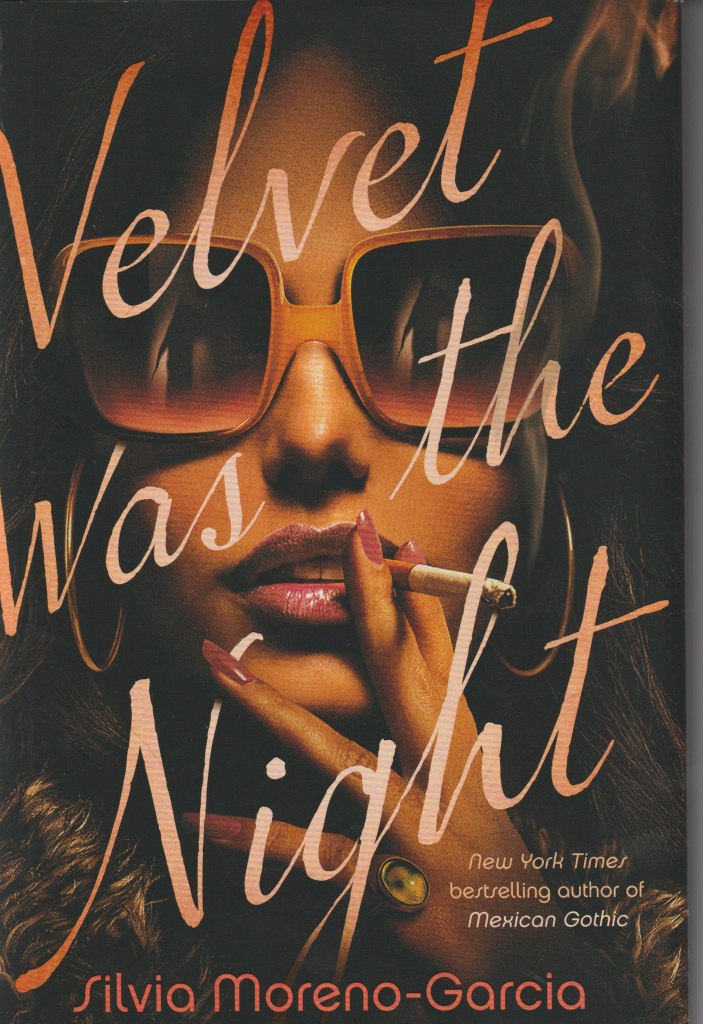
So, I was very curious to read Silvia Moreno-Garcia’s take on modern noir, Velvet Was the Night. It took me a very long time to finish–which is not indicative of the quality of the book, I hasten to add–because after I read so much during the post-Ida power outage, I kind of broke my brain and thus haven’t been able to really focus as much on reading as I would like; yesterday after the LSU game I sat down and finished it with Georgia-Kentucky on as background noise.

And what a fun ride it was.

He didn’t like beating people.

El Elvis realized this was ironic considering his line of work. Imagine that: a thug who wanted to hold his punches. Then again, life is full of such ironies. Consider Ritchie Valens, who was afraid of flying and died the first time he set foot on an airplane. Damn shame that, and the other dudes who died, Buddy Holly and “The Big Bopper” Richardson; they weren’t half bad either. Or there was that playwright Aeschylus. He was afraid of being killed inside his house, and then he steps outside and wham, an eagle tosses a tortoise at him, cracking his head open. Murdered, right there in the stupidest possible way.

Often life doesn’t make sense, and if Elvis had a motto it was that: life’s a mess. That’s probably why he loved music and factoids. They helped him construct a more organized world. When he wasn’t listening to his records, he was poring over the dictionary, trying to memorize a new word, or plowing through one of those almanacs full of stats.

No, sir. Elvis wasn’t like some of the perverts he worked with, who got excited smashing a dude’s kidneys. He would have been happy solving crosswords and sipping coffee like their boss, El Mago, and maybe one day he would be an accomplished man of that sort, but for now there was work to be done, and this time Elvis was actually eager to beat a few motherfuckers up.

He hadn’t developed a sudden taste for blood and cracking bones, no, but El Güero had been at him again.

The recent rise of Silvia Moreno-Garcia has been meteoric, although I am sure to her it has seemed anything but. I read her terrific vampire novel, Certain Dark Things, a while back, loved it, and have been following her career ever since as she has turned out novels at a terrific rate–Gods of Jade and Shadow, Untamed Shore, Mexican Gothic–all of which have been critically acclaimed and sold very well; I love that she bounces from genre to genre–horror to fantasy to crime; even bouncing around in the sub-categories of the crime genre. This is only my second read of her work–I have them all, of course–and had been meaning to get around to her take on noir with a Mexican flourish for quite some time. (I am really sorry I broke my brain with all the reading I did after the power went out; I greatly enjoyed this book, but it was so hard for me to focus for some reason…but am glad I sat down yesterday with the book, determined to finish it at last.)

One of the things that strikes me about Moreno-Garcia’s work is that I am seeing Mexico, a place I greatly love, through a fresh new perspective; like all Yanquis, I always view Mexico through the prism of a tourist. I’ve always wanted to write about Mexico, and have several short stories in the files that are set there (I did write one erotica story as Todd Gregory set in Acapulco; from the perspective of a tourist, of course: “Oh, What A Friend I Have in Jesus”)…but reading Moreno-Garcia makes me aware of how scant my knowledge of our Southern neighbor is–all of the counties south of the Rio Grande, frankly–which is a stinging indictment of our education system. (Don’t even get me started on the concept of Latin America vs. “America”) I know very little of Mexican history after the Spanish conquest, other than the Mexican War and the French empire set up under a Hapsburg by Napoleon III during our civil war. I know very little history of any of the countries that make up the rest of the American continents, really–and isn’t that more than a little bit disgraceful? I also know very little about their cultures, their politics, and what goes on there; a quick glance through the news also will show very little information or news being reported about those non-United States/Canada American countries, which is really a shame.

Velvet Was the Night is set un 1971, a particularly politically rife period in Mexico. The US was terribly concerned about communism being spread by the Soviets in what has always been considered the American soft underbelly–I mean, look at our reaction to Cuba–and there’s no question that CIA operatives and money were working to subvert Communism while supporting borderline Fascist governments because that was preferable to Washington than another potential Soviet satellite state in our hemisphere. The vast paranoia of that time–which really lasted from 1945-1990, really–cannot be underestimated or understated. By rooting her story in actual events of 1971–the crackdown of the Mexican government on dissidents–Moreno-Garcia slyly gives us a taste of how American foreign policy of the time affected everyone in Mexico, as well as a history lesson. (One of the great modern deceptions of our society is this idea that we always act benevolently as a nation; we’re doing this for your own good.) The book has two point of view characters; one, depicted in the opening above, is “Elvis”, a very young man who works as a thug, basically, for an oppressive group of anti-Communists that try to infiltrate dissident groups and haunt protests in order to make them turn violent, so the military can intervene on behalf of the “people.” Elvis grew up very poor and sometimes imagines what his life would be like if he were able to pursue his primary interests–educating himself and music. He doesn’t know what his future holds but is vaguely aware the path he is on–violence and more violence–will not end well. Over the course of the book he begins to question the values he’s been taught to believe in his gang, and begins to aspire to get out of it.

The other main character is Maite, a legal secretary barely getting by on her low salary and barely able to afford food. Her car has been in the shop unclaimed because she cannot afford the mechanics’ bill. She leads a lonely and solitary life, has a very vivid imagination and fantasy world she prefers to inhabit, colored strongly by her love of romance comic books and the music she likes to listen to. Maite’s lovely neighbor, Leonora, asks her to feed her cat while she is away, and when she agreed, Maite unknowingly enters the world of political struggle and upheaval. The riot depicted in the first chapter, that Elvis helps engineer? A friend of Leonora’s has taken pictures that prove that the riot was started by government forces, and those two rolls of film are the McGuffin everyone in the book is after–except poor innocent Maite, who, like any main character in a great Hitchcock film, becomes involved in something life threatening by simply agreeing to feed a neighbor’s cat–something she resents agreeing to do. When Leonora doesn’t come back, Maite starts looking for her–primarily motivated by the fact she can’t afford to keep feeding the car, and Leonora promised her money for feeding it–money she needs to get her car back. Motivated by her own poverty, Maite finds herself getting involved more and more in this clandestine world, and her own life is in danger soon.

The true strength of the book lies in the careful characterizations of both Elvis and Maite; two desperate people trapped by poverty in lives they want to escape, and the parallel journeys they both follow that lead their paths to cross; and the richness of the reality of what life in Mexico City was like during the turbulent time when the book is set. Moreno-Garcia shows us, as she did in Certain Dark Things, what the reality of life is like in one of the world’s largest cities, the reality the tourists rarely, if ever, get a chance to see. And while the hopelessness of both their situations seem unresolvable at times, the pacing is strong and the story construction so tight, and you the readers finds yourself rooting for them both to get out safely.

I really loved this book, and am sorry my inability to focus forced me to take so long to finish reading it. It’s extraordinary, and I recommend it highly.

Oh, Daddy

Many years ago, when you could still make money writing gay erotica (PORN), I used to write erotic short stories and edit themed volumes of it. I had always thought the concept of “daddy”–while possibly viewed as slightly off and strange and problematic by the mainstream–would make a great theme for an erotica anthology, potentially called Oh Daddy! Alas, before I could get around to doing it, that market had begun drying out; the last erotica anthology I edited–which had a great theme, I might add–did not do very well in print, alas. So my plans for Oh Daddy! wound up being scrapped; a pity, because I was certain I’d get some great and interesting stories on this dynamic.

The concept of “daddy” in the gay community is, to say the least, a bit controversial, and it’s really not defined; it can mean any number of things to any number of different people. The most common, of course, is its usage regarding age differences; an older man with a significantly younger boyfriend is often referred to as a “daddy” or “his daddy”; the assumption is the age difference inevitably favors the older man in the power dynamic of the couple–and we also tend to always think that there is some sort of benefit to being the older man’s “boy” (although “boy/daddy” doesn’t necessarily have anything to do with age, either); whether it’s financial, emotional, both, or something else–we always assume the younger man is, at the very least, being paid for/taken care of financially by the older man…especially if the older man is, say, a celebrity or wealthy or successful; why else would the younger man tie himself to an older one?

But this is heteronormativity at its finest, really (although younger women with successful older men aren’t always necessarily gold diggers, either; I’m not sure why we automatically always look at these May/December romances with such judgement and askance); younger man can be attracted to older men both romantically and sexually; there are no set rules of attraction, after all…and youth isn’t always an indication of sexual or emotional immaturity. I am always struck by that photo of Christopher Isherwood and Don Bachardy from when they first became a couple, back when Isherwood was in his thirties or forties and Bachardy a teenager; they look like father and son in the picture, with Bachardy literally looking like he’s just walked off the set of The Mickey Mouse Club in T-shirt and dungarees, with a sling shot in his back pocket and a cowlick. Yet they stayed a loving, committed couple for the next thirty or so years, until Isherwood’s death; but how differently would such a relationship be viewed today? A seventeen year old and a man in his late thirties/early forties?

It’s interesting.

So when I heard about Jonathan Parks-Ramage’s debut novel, Yes Daddy, I was interested in reading it and seeing its take on the topic.

And I was not disappointed–although it was absolutely nothing like I was expecting.

You asked me to be a witness in the trial.

I owed you my life and so I said yes.

What does one wear to a rape testimony? Your lawyer and I debated this endlessly. Nothing too tight, nothing too baggy, nothing too ratty, nothing too expensive, something sexless yet attractive, a suit jacket perhaps, but nothing flashy, a light navy was best, black was too morbid, too dark. I wanted to seem serious but not angry, definitely not vengeful; maybe glasses were a good idea, but the frames had to be simple, nothing flamboyant, nothing too gay, nothing that might trigger juror prejudice. Something to wear while the world decided if I had been raped.

Something that said, believe me.

I dreaded out rehearsals for the witness stand. Your lawyer’s endless questions. What did the basement look like? How many men? What did they do to you? I never slept, barely ate. Walked through the world a husk, disconnected from my body. Pain was the only thing that cut the numbness. I picked the skin around my fingernails with my teeth, tasting the blood on my tongue, repeating the process until all my digits were crusted in scabs.

Finally, the day of the trial arrived.

I don’t even know where to start with this book, to be honest.

I guess I can start by saying it’s very well done; the writing is terrific, and the tension/suspense are such that you cannot stop turning the pages in order to find out what happens next. Jonah Keller, the main character, is a fugitive from the midwest with evangelical parents–his father was a preacher–and he’s also an “ex-gay therapy” refugee. He no longer has a relationship with his father, and his relationship with his mother–still fervently religious–is fraught. He’s moved to New York to start his life over again, and his ambition is to write, be a playwright…but like so many others who moved to the big city with dreams of fame and fortune, he’s stuck in a nowhere job waiting tables at a shitty bistro and subletting an apartment he really can’t afford. He spends his rent money on an outfit so he can attend an event where he might meet his idol, hugely successful (and handsome) gay playwright Richard Shriver…hoping to meet and perhaps even catch his eye. Jonah’s plan is successful, and they begin an affair, with Richard buying him clothes, taking him out to expensive meals, giving him cash to cover his bills…and even offers to read Jonah’s work, maybe even help him get it workshopped and produced on stage.

All of Jonah’s dreams are coming true–but there’s always a fly in the ointment, isn’t there?

Richard brings Jonah out to his compound–where three of his closest friends also have houses–out in the Hamptons, and this is where Jonah begins to realize something isn’t quite right; not only with his relationship but with this entire set-up. There are four sexy, hot waiters on the property, usually serving meals to the people living on the compound wearing only black bikinis…and the dynamics of everything; their relationship, the friends, their future–begins shifting and going in directions that make toxic look like a far-off, distant hope to work towards. Saying anymore would be a spoiler–the book changes directions with shocking twists (but every last one of them is set up before you get there, but you still don’t see them coming) and the book and story become something completely different from what you were expecting at the start…and it’s a compulsive thriller; you simply can’t put it down. I read it through in one sitting last week, and passed it on Paul who ALSO read it in one setting–and he’s a very slow reader.

I greatly enjoyed this debut, highly recommend it, and look forward to seeing more work from Parks-Ramage; this is one of the best gay thrillers I’ve ever read.

I’m on the Road

We tried to stick it out, ever hopeful that Entergy would pull off a miracle, but today we cracked and couldn’t take it anymore. We were also out of food, and while some stores are indeed open (without power), it was incredibly ridiculously hot today; I’ve not really slept since the power went out Sunday morning; and we decided to go today. With it being the Thursday before Labor Day weekend, I knew–between Louisiana evacuees and “last holiday weekend at the beach” people, there was no point in following I-10 East and trying to find anywhere to stay. I only had a half-tank of gas, and wasn’t sure we’d be able to get any if we went north or west, so we headed east on I-10. We got gas near Biloxi (yay!) and once we hit Mobile we turned north. I knew we’d be able to find a pet friendly room somewhere between Mobile and Montgomery, and I was correct. Paul, Scooter and I are now checked into a motel in Greenville, Alabama. We’ve both taken our first hot showers since before the power went out, and are relaxing in the air conditioning (on high and full blast) while the US Open plays on the television. Everything is currently charging. Scooter isn’t sure what to make of this, as he has never stayed anywhere besides our house or the Cat Practice in the last eleven years, but he was great in the car and just slept…which is his usual state. I am looking forward to tonight’s sleep–you have no idea, Constant Reader, how much I am looking forward to finally getting some sleep. We have the room until Sunday–we’ll either go back to New Orleans or decide what to do next then. I’ll worry about it tomorrow.

It was very weird how quickly this storm came together–we barely had space to breathe or even think, and then it was already too late to go. I had to turn in my edits on #shedeservedit by the first; there were rumblings Friday morning that we were in trouble, and I had to power through the edits to get them done just in case (a wise decision, for once). I had to have my teeth cleaned Friday morning, and after I got home from that I just worked on the edits, finally finished about half an hour before I was due to meet my friend Ellen Byron for dinner at Red Gravy on Magazine Street. (The dinner and the conversation was marvelous.) Saturday morning I got up and by the time I was coherent–I overslept a bit, as did Paul–it was too late, really. I-10 in both directions a parking lot; I-55 and I-59 north both the same. We left very late for Katrina–and the crawl across the twin spans with the beginnings of the system starting to come in was not something I ever wanted to live through again. We just kind of looked at each other, and decided to ride it out and hope for the best–figuring if we made it through, we could leave afterwards. We watched a lot of television Saturday night, went to bed relatively early, and then of course, Sunday morning the power went out around eleven. I grabbed a book–I had started Megan Abbott’s The Turnout last week, and so I read for the rest of the day.

The storm was terrifying. The entire house rattled and shook, and there were times when I thought–I would swear to God this is true–I felt the house shifting before settling back to where it was once the gust had finished. I kept waiting for the windows to blow out–I moved my computer away from the windows–and finally, it was over. I never want to ride out a storm like that again, frankly; once was more than enough. And then we settled in to wait for the power to come back on, with no Internet and very very VERY spotty (did I say VERY) cell phone service, we were essentially cut off from the rest of the world. My friend Alafair texted me at some point and I asked her if the levees held; we literally had no idea what was going on, not only in the rest of the world, but in our own city–let alone our neighborhood. The weather was hot and humid but bearable–it was miserable, but it could have been much worse; had Monday been like today we would have left then.

I did manage to read a lot–I finished The Turnout and moved on to Yes, Daddy by Jonathan Parks-Ramage (loved it!), Dead Dead Girls by Nekesa Afia (also recommend); A Beautiful Crime by Christopher Bollen; Everything I Never Told You by Celeste Ng; and A Letter of Mary by Laurie R. King. I started rereading Paul Monette’s The Gold Diggers, and also started Silvia Moreno-Garcia’s Velvet Was the Night, which came with me to Alabama. I am going to do blog posts on all of these books at some point–it was a week of amazing reading, frankly–and I also thought a lot about things I am working on and things I want to be working on, so it wasn’t a total loss of a week. I cleaned and organized in the kitchen some, and of course today I had to throw away everything in the refrigerator and the freezer, which was sad–all that money into the trash–but better to clean it out now rather than let it sit in there rotting and then come home to it. (A valuable lesson from Katrina.)

I thought about bringing manuscripts to edit with me, but then decided not to–I have the electronic files, after all, and I have enough paper around as it is. I started purging books again too–and I spent a lot of time, as I mentioned, thinking about things and life in general and what my priorities should be going forward–there’s nothing like a catastrophe to make you sit down and think about what is and isn’t important–and I am going to probably make some changes going forward. I hate that this disruption came when I was on a roll–with my writing, with the gym, with the reorganization of the apartment–but I am glad that it did happen in some ways; I was kind of letting myself drown again and a reset was kind of necessary. I also don’t know how long this particular disruption is going to last, either.

So, I am going to relax, enjoy hot showers and air conditioning and having access to the Internet again–and read and write and try to dig out from under.

And now I am going to take a doll and go to sleep.

Til tomorrow, then.