And here we are on another work-at-home Friday, after an odd week. Monday was a holiday, and of course I took Wednesday off, so this has been an odd week. I kept thinking yesterday was Monday, for one thing, which was weird–I felt rested and motivated for most of the day, which was a good thing. I was also very efficient, getting everything done that needed to be done, and of course, I have work at home duties to get done. I slept well again and got up earlier than usual, so I feel good this morning, too. Might I actually get some things done this weekend? Remains to be seen. There’s a cold front coming in over the weekend, with temperatures dipping down into the freezing range on Sunday. We’re not supposed to get snow and ice, but….one never can be certain, can one? I did get some chores done last night, too, so I am already ahead on the weekend. All the dishes are clean, so all I need to work on is pruning the books some more and the floors. Huzzah! I should have time to get some writing done as well as some other cleaning and organizing, and reading, too. Well, we’ll see, at any rate; I reserve the right to be lazy this weekend.
I get all sorts of emails trying to sell me ebooks on sale for either $1.99 or $2.99, and usually I’ll get things that I’ve already read, or something I meant to read all along yet never obtained a copy. Yesterday, the ebook I impulsively bought was Thus Was Adonis Murdered by Sarah Caudwell.1 I have a mass market paperback copy I bought any number of years ago, and I cannot remember who recommended it to me, or why they did; but I now have it in physical and ethereal form, so maybe I’ll get around to reading it this year. Maybe I’ll get around to reading something, anything, this year.
I was delighted to see Sinners get so many Oscar nominations, setting a new record for most with 16. I personally loved the movie, thought it was incredibly well made, written, and acted, and am really happy the Academy seems to be getting past its issues with horror cinema (Frankenstein also got a lot of nominations, and I still want to see it). Maybe this weekend I can carve out some time for a rewatch of Sinners, as well as Frankenstein and my rewatch of The Mummy.2 I always have so much to do, and being overwhelmed by it and getting none of it done is a long-standing issue in my life. I think I am nervous about working on Chlorine, and that is effectively blocking me from getting other things done along the way, too. Obviously, the answer to that dilemma is idiot, so start working on it–it can always be fixed. I don’t know why I can’t get past the fear of writing stuff I may not be able to use, but here we are, you know?
I still haven’t watched the final season of Stranger Things, and honestly, can’t drum up much interest in my mind to even consider watching. I don’t remember much, if anything, of the previous season…which is probably part of the problem. We also lost interest in Welcome to Derry, too. I think watching Derry and not getting into it has something to do with my lack of interest in finishing Stranger Things. The show started out as an homage to Stephen King and the 1980s, which made it a lot of fun for me those first few seasons…but if anything, It was kind of the blueprint for Stranger Things, and as a fan of It, there was a lot of issues in my mind with continuing with Derry–and having started Derry, I think the similarities is the mind block for me.
I got my twenty-one year pin this week at work, which was yet another damn you’re old moment for me. I’ve worked there now for nearly a third of my life (my previous record for a job was five years) and a lot has changed since I went to work part-time at the CAN office of the NO/AIDS Task Force twenty-one years ago–not just for me and the world, but in HIV testing, treatment, and care. Twenty-one years ago we hadn’t reached the ability to achieve undetectable viral loads (making you non-infectious) and PrEP (to prohibit new infections).
And on that note, I am heading into the spice mines. Have a lovely Friday, Constant Reader, and I will check back in with you again tomorrow morning. Till then, arrivederci!
Screenshot
And yes, it bothers me that I cannot remember why it was recommended to me. I guess it doesn’t matter. ↩︎
I love the Brendan Fraser/Rachel Weisz movies so much–but I can’t remember which movie is which! It will be part of my newsletter’s Egypt series. ↩︎
Tuesday and soon enough I’ll be heading out to the dentist for my final fitting of the dentures–which means the next time I go, I will actually get them and be off this hateful soft food diet once and for all. I’ve kind of gotten used to it, though–but as much as I will miss the pint of ice cream, I can still have yogurt and the super-hot-and-spicy ramen on top of everything else. I think I am going to give myself to the end of the year–since I missed out on so much unhealthy food since the surgery–before I change my eating habits in order to be healthier going forward. The New Year will also be about six weeks after the surgery, so hopefully I’ll be in better condition by then to actually go ahead and change the way both Paul and I eat–Paul already eats much healthier than I do; so I just need to adjust mine a bit. But I can cut the ice cream out, as well as some of the snacking. Popcorn is really healthier, and it’s not hard to make, either. And I like it, just as I like pretzels, which are also healthier than chips (I think). At any rate, I need to spend some more time in the kitchen figuring out how to cook things I’ll like that are good for me.
And every once in a while, I can make Swedish meatballs or shrimp-n-grits as a treat…
Yes, because looking at food as a potential reward/treat is completely the healthy mindset I should have.
I’ve always had issues with my body and with food, for that matter; a lot of it stupid, a lot of it a product of my malfunctioning brain, and part of it from being, well, shamed for not being in the best physical condition possible. I don’t know when it all started, but I know when I was in high school–when I really started paying attention to male bodies–that I wasn’t built like other boys, and certainly not the ones all the girls were madly crushing on (for the record, I have never, nor will I ever, understand straight women’s taste in men), so I began thinking there must be something wrong with my body. I did eventually stop doing sports and so forth once I was in college, and that was also right around the time my metabolism slowed down from what it had been previously, so I gained weight–and I’ve never really been right in the head about my body and weight management ever since, I’m over sixty now, of course, and a lot of that body image stuff is in the past–but I do sometimes see pictures of myself and cringe at how big I look, which is patently absurd on its face and a mentality I need to get rid of once and for all. This soft food diet has helped me drop some extra weight–about ten pounds or so at this point–and I bet I lose even more after the surgery. Note to self: you need to buy a wagon to carry groceries in from the car, since you won’t have the use of both arms for a while.
It’s below sixty this morning and we’re having a middle of the week cold snap, even getting colder than fifty theoretically tonight. It’s also supposed to rain throughout the day. I am off to the dentist in a little while, so it’s one of those wretched days when I have to run all over town throughout the day, which is fine. I woke up this morning at five–and of course, Tug did his usual morning leap over Paul onto me and curled up on my pillow at around five-forty-five, waiting for the alarm so I would get up and feed him. He really is adorable, and loves to play like all kittens do; I need to buy him some toys, is what I need to do, and several laser lights because he got hold of the original one I bought and it’s disappeared, probably either under the couch or behind something. Maybe I should either swing by Petco or order something from their website to be delivered. I think he’d love one of those birds on a stick things; he was playing fetch with one of Scooter’s mice last night. But he’s adapted completely now to being our indoor cat, and he definitely feels like he is King of the Castle. He’s also curious about everything and still fearless, climbing under the couch or the dishwasher or wherever he can get–and he loves getting into the cabinets. He also broke my lunchbox yesterday; he knocked it off the counter after I packed it, and the clip for the shoulder strap broke. Sigh. I had to order another one.
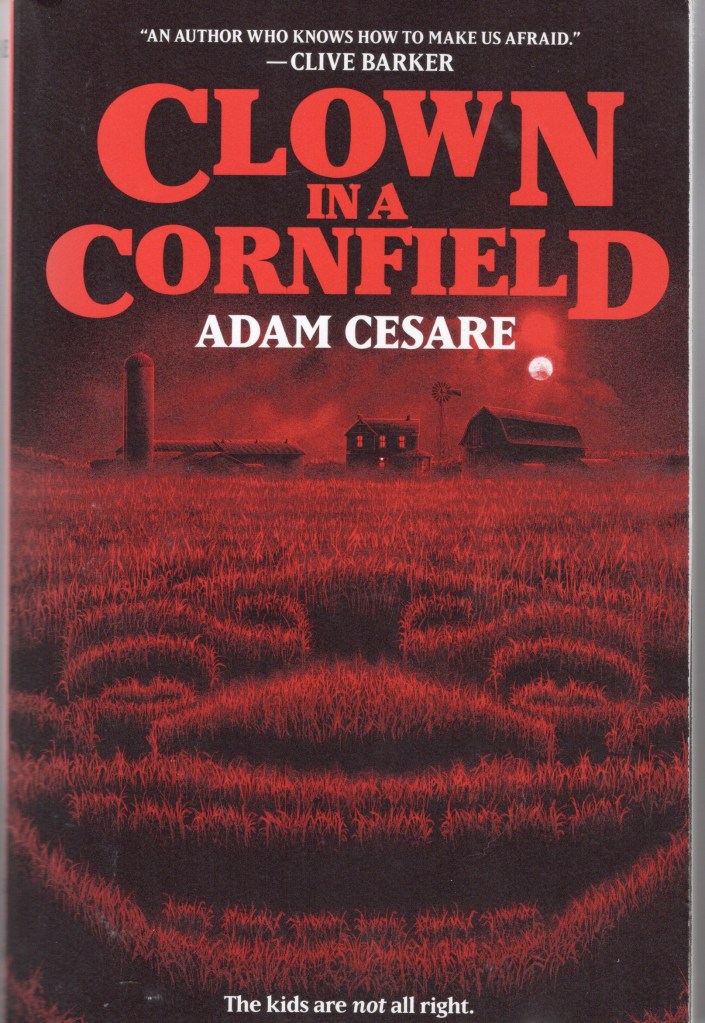
I also got some book mail yesterday: Adam Cesare’s Clown in a Cornfield 2: Frendo Lives and Lisa Unger’s Christmas Presents. Lisa Unger is one of my favorite writers, but is one of those I always forget to mention when people ask me about favorite authors in interviews and things. I read some more short stories from Alfred Hitchcock Presents Stories That Scared Even Me, and they were okay; more morbid and weird than anything else, but interesting. One was “It” by Theodore Sturgeon, which was very peculiar and strange but was kind of fun to read (even though a dog dies terribly in it) and “Casablanca” by Thomas M. Disch, which was interesting; about an American couple visiting Morocco when a nuclear war breaks out between the Soviet Union and the United States, and how things change for them during that period, as they slowly lose their ugly American haughtiness and privilege. It was difficult to feel sorry for them because they were so awful and so used to their being American being a magic ticket that they become nasty and unpleasant as they begin to realize that being American means nothing anymore. It was kind of haunting to remember that paranoia we were so used to living with when I was a child; that fear that at any moment bombs would be incoming that would change the world forever; the American cultural obsession with nuclear doomsday when I was growing up was really something and popped up in movies and books and stories all the time. The one I remember the most (literature wise) is Alas Babylon, and the movies–Testament and The Day After. When I was in high school PBS ran a documentary about the possibility of nuclear war and what it would like; which was when I learned nuclear missile bases dotted the Midwest and particularly Kansas–the abandoned missile base just outside of Bushong in north Lyon County was actually mentioned in the show as a target despite being abandoned in the early 1970’s (that missile base shows up in my story “This Thing of Darkness,” and sometimes I think it might be fun to set an entire book there–high school kids exploring an abandoned missile base only to find something horrible and deadly there), which was all we could talk about at school that week–the morbid fascination that out there in the middle of nowhere Kansas we were still Soviet targets.
Ah growing up in the second half of the twentieth century was such a joy.
And on that note, I am going to get showered and cleaned up and head for the dentist’s office. Have a lovely Tuesday, Constant Reader, and I’ll check in with you again later.
As Constant Reader is aware–because I am nothing if not repetitious–I spent ages two to nineteen in the midwest, and the last five of those in rural Kansas. I’ve blogged endlessly about it, have written several books set there, and often blame (some of) my emotional scarring on the experience. It’s one of the reasons that stupid fucking song from earlier this year (“Try That in a Small Town”) was so ridiculous and offensive; yet another tired round of ammunition from people who equate cities with evil and rural life with purity and goodness–to which I always say “Someone’s never read Peyton Place, let alone lived in a small fucking town.” Big cities certainly don’t corner the market on crime and sin and lawlessness; small rural communities can be just as vile and horrible as any metropolis.
Shirley Jackson didn’t set “The Lottery” in Times Square for a reason.
There’s an entire essay to be written about the moral rot of the Bible Belt and rural America–and make no mistake, rural America is every bit as corrupt, sinfully evil, and dangerous as the worst neighborhood in any big city–but this is not the time, as I am here to talk about this marvelous novel I read very quickly last night.
“Can you see me?” Cole yelled over to them. He was standing on the south shore of the reservoir, barefoot and facing the water. He looked like he was thinking, but Janet knew better. The scrunch in Cole’s expression came from trying to keep his belly in a six-pack.
“I’ve got you,” Victoria yelled back as she framed her brother. She was using his phone and struggling with the device. “How do you zoom on this thing?” she asked as she shuffled to the edge, not looking at her feet and focusing on Cole. Janet could see a pink stamp of tongue at the corner of Victoria’s mouth as she tried her best to get the shot her brother wanted.
“You’ve got to be in portrait mode when you go live.”
Janet meant it as a polite pointer, but as the words came out of her mouth, they sounded like a dig. SHe didn’t mean it to be a dig, but she couldn’t help it, either. Her tone was why people thought she was such a bitch. Her tone and that she kind of was. Whatever–it was fun to watch the sheep quiver.
I don’t remember how Adam Cesare and his y/a horror thriller Clown in a Cornfield first came to my attention; if it was a suggestion from a website or if I saw someone talking about it on social media or I don’t know where, but I am very glad it did. The book is absolutely right up my alley–young adults, horror, small town Midwestern America (you know, “the REAL America,” right, Sarah Palin?), and terrifying clowns. I’ve never been afraid of clowns–although many people are, and I can respect that. The white greasepaint, the garish hair and eye make-up, the clothes–it’s not hard to see how something intended to entertain children (remember, fairy tales in their original form are horrifying) can easily become something that is absolutely terrifying. John Wayne Gacy, notorious serial killer who preyed on children, worked as a clown for kids’ parties–which is very unsettling, and of course, who can ever forget Stephen King’s masterclass of clown horror, It? Killer clowns have become kind of a cliché…but they still work.
Clown in a Cornfield works on its basic surface level–it’s a scary story that reads quickly and raises the adrenaline and is chockfull of surprises and twists; like the novel version of a slasher movie. (Something I’ve always wanted to do, frankly.) It takes place over the course of a couple of days, and is set in the small dying town of Kettle Springs, Missouri, where main character Quinn Maybrook and her father have just moved from Philadelphia; it’s hinted early on that the tragic death of her mother is why they moved during her senior year: a fresh start in a wholesome rural small town in the REAL America…which turns out to be all too real. The town is dying because the corn syrup processing plant shut down, and the town is losing population. The above few paragraphs are from the prologue–which sets up the rest of the book. There’s a tragic death at the reservoir that day, which changes the kids and changes the town–as though they’ve finally crossed a line they were dancing very close to the edge of and there isn’t any turning back.
The willful and wild teens of the town have planned a surprise during the Founders’ Day parade which Quinn witnesses when the prank goes haywire, and she learns there’s a lot of anger directed at the town’s teenagers–the kids from above who have a Youtube channel where they film themselves playing pranks on people around town–and the idea is that the pranks have become dangerous and the kids are out of control. The next night there’s a party out in a cornfield, and that’s when the corn syrup company’s mascot, Frendo the Clown, shows up with a crossbow and the body count starts to rise.
I really enjoyed this book. It was well written and works very well on all of its multiple layers, from the basic story which is well paced and exciting, to the layers of social critique, satire, and politics that it also manages to be. I found myself caring about the main characters and rooting for them, and while I saw one major surprise coming way ahead of time, there were a lot of other shocks and surprises along the way that made up for the telegraphing.
There’s also a sequel now, and I am looking forward to the second installment. I think you’ll like it, too, Constant Reader, so give it a whirl–thank me later.
One of my favorite things about homophobic straight people is how clueless they are (the homophobia is really a tipoff) when it comes to queer stuff. (In fairness, if they don’t know any queer people why would they know anything about queer stuff?) Nothing amuses me more than watching crowds of straight people–whether it’s a sporting event, wedding, or a party– start doing the “YMCA” dance when the deejay puts it on. It’s particularly funny to me when it’s a sporting event, particularly something more on the unenlightened side with their fan base when it comes to queer equality, like NASCAR or hockey (although NASCAR had been doing rainbow stuff all month…). As I watch them all stand up and do the ‘YMCA dance”–always out of rhythm, never to the beat–I smirk to myself and think, you clearly don’t know that this song is about the sexual smorgasbord a YMCA was back in the day for gay men, do you?It’s about GAY SEX, homophobes! You’re singing along to a song about getting fucked at the Y!
It always makes me laugh. Every. Single. Fucking. Time.
I’m sure the founders of the YMCA system would have been quite nonplussed to know that in some major cities, gay men turned YMCA’s into essentially bath houses. There were a couple in Manhattan that were notorious for hook-ups, but of course a YMCA would draw gay men. For a long time they were the only places for men to go and get exercise, unless they belonged to a men’s club, like the New Orleans Athletic Club (which used to be for men only), and since gay men, especially after Stonewall, liked to be fit and keep their bodies worked out and in good shape (to draw lovers, of course) they wound up at the Y. And when you get a bunch of gay men thrown together in an environment that includes pools, weights, saunas, steam rooms and showers, you’re going to get hook ups. YMCA’s also provided cheap rooming alternatives, too–and of course, that meant that you could get a room at the Y (just like you could at a bath house) which meant you could bring partners back to the room for sex.
When we first moved to New Orleans there was still a Y at Lee Circle (now Harmony Circle); the Lee Circle Y had been there forever and was actually kind of historic; one of the Israeli athletes murdered at the Munich Olympics was a Tulane student who worked out at the Y. I thought that should at least have some kind of commemorative memorial plaque–and had preservation-minded folk cared about the Lee Circle Y, it could have been declared a historic landmark, instead of closing and the land being sold for yet another hotel. Maybe a murdered Israeli athlete isn’t enough of a connection for historical landmark status. But I used to train people there, and also taught aerobics until it was closed permanently. They had redone the weight room and bought all new equipment a few years earlier, too. Some things–like the locker room and so forth–were musty and moldy smelling, with that distinct stench of decades of male sweat baked into the walls.
But yes, the Village People of “YMCA” fame–every one of them was dressed as a particular gay archetype (leather man, Indian chief, fireman, cop, etc.) and all of their songs were thinly veiled odes to the joys of being gay and having lots of no-strings-attached sex; “Macho Man,” “In the Navy,” “YMCA,” “San Francisco”–and the village in their name was Greenwich Village, the gayborhood in Manhattan. (The promotional video for “YMCA”–taken mostly from the movie Can’t Stop the Music–which is a topic for another time, because yes, that movie needs discussion–really says it all.)
There were bath houses, of course (Bette Midler famously got her big break performing at the Continental Baths in Manhattan); New Orleans had two when we first moved here–the Club New Orleans in the Quarter on Toulouse Street and Midtown Spa on Baronne in the CBD, across from where the Rouse’s is now. Both are long gone now, ain’t dere no more as we say down here. We used to do testing in the bath houses, which was always a weird experience. Every room had a television with porn on a loop; the room they used to let us at CNO to test in also was the sling room. So I’d sit on the bed/cot, with porn playing on the television hanging from the ceiling in the corner, and a sling in the opposite corner from the television. I bet that sling could tell some tales….or could have before it was consigned to the dustbin of history.
I also remember the battle over closing bath houses during the height of HIV/AIDS. Rewatching It’s a Sin reminded me of a lot of the struggles back when the disease was new and we didn’t know much about it other than almost everyone who got infected died. It seems kind of counter-intuitive now, but there was an argument that could be made that restricting gay sexuality was also a repressive attempt to push gays back into the closet as well as further stigmatizing gay men. It seems silly now, of course, knowing what we know now, but the mask argument during the pandemic kind of took me back to the struggle to get gay men to wear condoms. (I’m so old I remember when herpes had everyone freaking out in the late 1970s.)
I keep thinking I should write about the Lee Circle Y, just to preserve that piece of New Orleans history. “Never Kiss a Stranger” originally started with my main character getting off a Greyhound bus and lugging his duffel bag down Howard Avenue to the Lee Circle Y, where he gets a room while looking for a place to live. (I later realized the story actually begins with him finding that place to live; the rest is just filler and not very interesting.)
As I mentioned yesterday–these blog post titles taken from the Supremes discography sometimes feel a bit off as I do some Blatant Self-Promotion about my new soon-to-be-released novel #shedeservedit.
I got my first ignorant comment on one of those blog posts yesterday; someone posted a link to a video about “toxic femininity” and how it’s “as bad if not worse” than “toxic masculinity.” Needless to say, I not only didn’t approve the comment but marked it as spam and blocked the user from commenting/reading my blog. For those of you who are new here–I don’t engage with trolls, not do I permit them the energy or the oxygen of allowing their ignorance to be seen by anyone here. This is my blog and I pay for it; therefore I will curate the content here and if you want to troll me, well, it’s just going to earn you a comment marked as spam and get you blocked, so don’t waste your time or energy on me. You may, of course–I cannot stop you, but I won’t engage with you nor will I allow Constant Reader to see your ignorance, so there you have it.
I wrote yesterday, and it felt good to get another chapter down. I only have two more to go and the revisions, and I have to say, pantsing this thing on a tight deadline hasn’t been the easiest way to write this book, but it’s working. I’ve got the plot all worked out now, who the killer is and why, and now all I have to do is cram the resolution into the last two chapters and we are finished, done, ready to go off to the editor with prayers that she likes what I’ve done and doesn’t require a complete overhaul, which is also entirely possible and within the realm of probability–one of the reasons, frankly, that I’ve not signed. a contract to dive straight away into another book when this one is finished; I thought it best to leave my time free just in case. (I am going to start working on Chlorine and Mississsippi River Mischief while waiting for my edits; there’s always something to write, after all–I can also work on the revisions of the novellas in the meantime as well.)
There’s always something…
Today’s BSP is going to focus on writing about small towns, rather than what I’ve been covering (toxic masculinity). The first book I remember reading about a small town that really stands out to me–as an examination of small town dynamics, rather than merely a setting for the story–was Ellery Queen’s Calamity Town, which was, if you are an Ellery Queen fan, the first Wrightsville story. There were several of these novels–the second, I believe, was The Murderer is a Fox–and I enjoyed them all; Queen clearly loved writing about Wrightsville, since he kept returning to the scene of the crimes, as it were, but the best, the true standout for me, was the first: Calamity Town. This book–published well over a decade before Grace Metalious scandalized the world with Peyton Place–also covers the same territory as Peyton Place: scandal and hypocrisy and the paralyzing power of gossip in small town America. Calamity Town remains a favorite mystery novel of mine to this day; I should reread it. It’s plot is ingenious and entirely rooted in human psychology, and it also contains one of the best and most clever misdirections in crime fiction history. It was Calamity Town that made me first start thinking about how small town society is actually a microcosm of American society as a whole, all encapsulated in a small package, and also that made me realize, for the first time, how claustrophobic small towns can be; where everyone knows everyone and you can’t really do anything without someone knowing; and how secrets kept can become very damaging over time. Queen is, at first, struck by the apple-pie Americana of Wrightville…and then he begins peeling back the layers.
Peyton Place, which I found to be far less scandalous than either General Hospital or All My Children by the time I got a copy at a secondhand bookstore in Emporia when I was seventeen or eighteen, also showed me again how claustrophobic small town life could be. Sure, there’s some bad to the point of laughable writing in the book (“your nipples are hard as diamonds”, anyone?) but other than those brief moments, overall it’s a very well-constructed book and a damning indictment on the hypocrisy of American small towns. I also read Sinclair Lewis’ Main Street around the same time for an American Literature class (I still think we should have read Elmer Gantry instead, or It Can’t Happen Here, but I was not in charge of the syllabus), which is also about the falseness of keeping up appearances and worrying what the neighbors think. I find it interesting that “small town American values” are frequently–particularly by conservatives–pointed out as what is the backbone of our country and so on and so forth (part of the entire “cities are BAD” thing we have had going on culturally for decades, if not centuries), but when that veil is peeled back, there is just as much rot and decay as in any “wicked” city. As I pointed out on Susan Larson’s radio show the other day, the vast majority of the soaps were originally set in very small towns, rather than urban centers.
Nobody does small towns quite like Stephen King, and the first time he really addressed small town life was in ‘salem’s Lot–although it can be argued he did a masterwork on small town life with Needful Things–and it was in his tale of small town Maine being overrun by vampires, he also did an incredible job of painting the town, it’s working class citizens and the minutiae of their lives; how circumstances trapped some of them and killed their dreams–and how others never had any dreams to be killed in the first place. The way he interweaves the lives of his small town characters, their relationships and histories and how everything is interconnected is masterful; has anyone ever done a critical analysis of King’s work with small towns? It also falls into this group; what King does with Derry is just as exceptional as his work on Castle Rock and Jerusalem’s Lot in the other works.
I based Liberty Center on Emporia, Kansas, geographically; my town is loosely laid out the same way Emporia is; there’s a small college there, as in Emporia, and there’s a meat packing plant on one side of town that reeks of death and stale blood on the south side of town, and of course, the waterfall on the river on the way out of town heading south and the park that goes with it. Other than that, it’s memory and invention; I’ve not set foot in Emporia in nearly forty years and have no plans to ever do so again. (Likewise, when I write about my fictionalized county in Alabama–it’s loosely based on where my family is from, but I haven’t been there in thirty years and will most likely never go visit again, so it’s all memory and invention for me.) I don’t know if I will write another novel about Kansas–I have some other ideas, of course, don’t I always–but it seems weird to create another fictional small city so similar to Liberty Center, but at the same time it seems even weirder to set another book there after having already done so (although i should probably revisit Sara sometime and see how I did it–and what I called the towns in Kahola County–before deciding one way or the other).
Heavy sigh.
Today I need to write another chapter, and I also need to work on revising a short story as well as writing a promotional article–and of course, there’s the horror that is my email inbox which needs to be dealt with this week once and for all (it’s all relative; answering everything and emptying it out inevitably means generating more emails there; my email responses will trigger emails in response which turns it into a Sisyphean task without end), and today is the men’s US figure skating championships, which naturally I plan to watch so I need to get my writing done before then, don’t I?
So on that note, I head into the spice mines. Have a lovely Sunday, Constant Reader.
I first discovered Stephen King when I was a sophomore in high school. A friend was carrying a paperback copy of Carrie around with her, and I neither recognized the title nor the author. The cover was interesting looking, in that weird kind of alternate reality type way that speculative fiction covers so often got at that time. “What is this about?” I asked when I picked it up and examined the book.
“It’s about a bullied girl with psychic powers,” she replied. “My mom was worried about letting me read it because she’s afraid I’m like her.”
It rather broke my heart a little to hear my friend, who was overweight and had very bad skin but also incredibly kind and intelligent, say this; but I could also relate a bit because I, too, was picked on and bullied. I, too, knew what it was like to walk past a gaggle of kids both pretty and “cool”, notice that they stopped talking as I approached only to whisper and laugh once I walked by…while simultaneously feeling grateful that they had the decency to whisper so I couldn’t hear what was said (and typing that really made me sad).
I opened the book to the first page and there it was, about halfway down the first page, in italics: Carrie White eats shit.
The preceding sentence, not italicized, read: “Graffiti scratched on a desk of the Barker Street Grammar School in Chamberlain:”
The realism of this, its brutal reality and recognition of the horrors bullied kids face, was like a 2 x 4 across my forehead. I started reading, and kept reading, until the bell rang and I was about thirty pages in, completely drawn into the story. I’d never read anything like it before; it was so real, so honest, so like what high school was actually like as opposed to the cutesy stories I was accustomed to reading about teenagers, where the concerns were “who will take me to Prom?” or “should I go ahead and have sex now or do I wait till I get married?” This was visceral, and I regretfully passed the book back to my friend, thinking, “I’ll look for it at Zayre’s when we go there next.”
My friend, who shared my love of reading, just smiled and said, “I haven’t started it yet–why don’t you go ahead and finish it and then give it back?”
I read it instead of paying attention in my next class–it was Drama, the little play we were rehearsing for class had me assigned stage managing duties, so I really had nothing to do since I wasn’t rehearsing–so I sat in a seat in our school theater, reading. I read it on the bus ride home. I read it when I got home, sitting on my bed with my back propped up by cushions. And I finished it that night–establishing a pattern with King’s fiction that lasted for decades: I would read the book as soon as I got a copy from start to finish, usually in one sitting (It kept my up all night because I couldn’t put it down).
When I saw Night Shift on the wire racks of the News Depot several years later in Kansas, I was terribly excited. A new Stephen King! I bought it immediately and took it home…slightly disappointed to discover it was merely a short story collection, and I wasn’t a big fan of reading short stories; I only read the ones I was required to read for a class assignment.
I read the first story, “Jerusalem’s Lot,” and didn’t like it at all; I put the book aside and didn’t return to it until months later…the next story, however, was “Graveyard Shift” and it was amazing…suffice it to say, I read the rest of the book through in one sitting–and it’s also been my go-to for rereads and so far when I don’t have a lot of time, or I want to simply relax and enjoy reading…one of the reasons for years I would often reread a favorite book.
But last night we started watching Chapelwaite, which I knew was an adaptation of that first story I didn’t care for–and have never reread as a result–and so I decided to go ahead and revisit the story.
I am really glad that I did.
Oct. 2, 1850
Dear Bones,
How good it was to step into the cold, draughty hall here at Chapelwaite, every bone in an ache from that abominable coach, in need of relief from my distended bladder–and to see a letter addressed in your own inimitable scrawl propped on the obscenelittle cherry-wood table beside the door! Be assured that I set to deciphering it as soon as the needs of the body were attended to (in a coldly ornate downstairs bathroom where I could see my breath rising before my eyes).
I’m glad to hear that you recovered from the miasma that has so long set in your lungs, although I assure you that I do sympathize withthe moral dilemma the cure has affected you with. An ailing abolitionist healed by the sunny climes of slave-struck Florida! Still and all, Bones, I ask you as a friend who has also walked in the valley of the shadow, to take all care of yourself and venture not back to Massachusetts until your body gives you leave. Your fine mind and incisive pen cannot serve us if you are clay, and if the Southern zone is a healing one, is there not poetic justice in that?
Yes, the house is quite as fine as I had been led to believe by my cousin’s executors, but rather more sinister. It sits atop a huge and jutting point of land perhaps three miles north of Falmouth and nine miles north of Portland. Behind it are some four acres of grounds, gone back to the wild in the most formidable manner imaginable–junipers, scrub vines, bushes, and various forms of creeper climb wildly over the picturesque stone walls that separate the estate from the town domain. Awful imitations of Greek statuary peer blindly through the wrack from atop various hillocks–they seem, in most cases, about to lunge at the passer-by. My cousin Stephen’s tastes seem to have run the gamut from the unacceptable to the downright horrific. There is an odd little summer house which has been nearly buried in scarlet sumac and a grotesque sundial in the midst of what must once have been a garden. It adds the final lunatic touch.
But the view from the parlour more than excuses this; I command a dizzying view of the rocks at the foot of Chapelwaite Head and the Atlantic itself. A huge, bellied bay window looks out on this, and huge, toadlike secretary stands beside it. It will do nicely for the start of that novel which I have talked of so long (and no doubt tiresomely).
When I first read this story (and disliked it so intensely) I was a teenager completely turned off by the archaic style of writing, as well as the concept of a story told in letters and diary entries (I wasn’t aware of the concept of epistolary fiction at the time; it was also why I stopped reading Dracula when I first tried as a teenager), and the story itself was just kind of…weird–with all its references to things inside the walls and “great worms” and “horrors from beyond the cosmos”…it wasn’t until I read King’s study Danse Macabre that I became aware of Lovecraft’s work and eldritch horrors; but remembering how much I disliked this story, it didn’t exactly inspire me to go on to read Lovecraft or works in a similar vein (the cultural war over Lovecraft in the speculative fiction community over the last decade–not sure of the time line, frankly, and don’t care enough to go look; I am loosely affiliated with that community and have many friends in it, so can’t not be aware but simply observed).
But watching Chapelwaite put me in mind of this source material for the show again, and I decided to reread it this morning, since I’ve never reread the story since its initial read back in the 1970’s. I’ve since read Dracula; Les Liaisons Dangereuses was the book that cured me of my disdain for epistolary fiction–the book is extraordinary–but yet, never gave “Jerusalem’s Lot” another try.
I’m glad I did.
This second read made me appreciation the story a lot more than I did over forty years ago. A quick glance at the copyright page for Night Shift shows that the story was an unpublished work included in this collection and seeing print for the first time; a shame, because it not only shows King’s incredible versatility as a writer but also it’s chilling and creepy; it’s almost Gothic in tone, certainly using a writing style from the past (although I don’t know that a man in 1850 would mention needing to relieve his bladder in a letter to a friend); one that is very formal and I didn’t care for much as a teenager but have come to greatly appreciate in the years since. The story is simple: Charles Boone, after some ill health after the loss of his beloved wife, has inherited a family estate on the coast of Maine. There was a family rift between his grandfather and great-uncle; the death of the former master of Chapelwaite has left Charles as the lone survivor of the family. Once he and his man-servant arrive, they begin to experience strange phenomena that they originally tribute to rats in the walls; but rats don’t explain when no one in the nearby town of Preacher’s Corners will come near the place, or will have anything to do with Charles. A few miles from the house is a pristine yet abandoned village: Jerusalem’s Lot (yes, the same name of the town from King’s classic vampire novel ‘salem’s Lot), and Charles–despite being warned (do people in horror stories ever listen to warnings?) investigate the little town, and…yeah.
GREAT story, and the end is *chef’s kiss*.
Very glad I decided to revisit the story, so thank you, Chapelwaite, for getting me to do so.
And I will add there’s another Jerusalem’s Lot story in Night Shift, “One for the Road”–which I deeply love.
One of the challenges of being a writer is keeping your work fresh and new and interesting; it becomes easy -for want of a better phrase–to just phone it in and repeat yourself. This is particularly true for crime writers/writers of series; how do you continue writing about the same base foundation of characters without recycling plots or falling into formulaic structure?
One of the primary reasons I stopped writing my Chanse MacLeod series was precisely because of this; as I was writing the last book (thus far) in the series, Murder in the Arts District, I found myself thinking things like okay now it’s chapter five, I need some action here or I need to have a twist in the story before I get to chapter ten…and so on. I didn’t even think about it as I was writing the story–but when I was doing the revisions and edits, I remembered having those thoughts (I generally don’t have them while writing Scotty, but that’s a story for another time…and of course, as a reader pointed out, how many car accidents has Scotty been in, anyway?), and when I turned the book in, I went back and speed-read the entire series over again, and after about the fourth book, the writing pattern became rather obvious to me; and if it was apparent to me, I would imagine it was also fairly obvious to the readers. So, I decided to either end or take a lengthy break from the series unless another great idea for him jumped out at me; I have had several ideas since then, but the longer I go without writing about Chanse the less likely it becomes that I will write about him again. (Caveat: I have written a Chanse short story and have a novella in progress with him as the main character; I guess it is more accurate to say that I am not done with the character completely, yet I cannot see myself writing another novel with him as the point of view character–and will have to go another step forward with that as well to say at least not one set in New Orleans, as I am toying with an idea for a Chanse case in Louisiana but not New Orleans. Yes, that’s me–definitely not definite.)
I have nothing but the utmost admiration for series writers who manage to keep their series going for decades and dozens of books without writing the same book and structure over and over and over again; Ross Macdonald, Ellery Queen, Sue Grafton, Robert B. Parker, and Sara Parestky are just a few of them I can name, and their achievements have made them legends in the field. But other legends who wrote series took a different approach to their careers. Agatha Christie wrote several series–Poirot, Miss Marple, Tommy and Tuppence–but also wrote a lot of stand-alones over the course of the years. (Seriously, when it comes to crime fiction, Christie did everything first) Dennis Lehane and Harlan Coben started out writing series and moved on to stand-alones; as have numerous other authors.
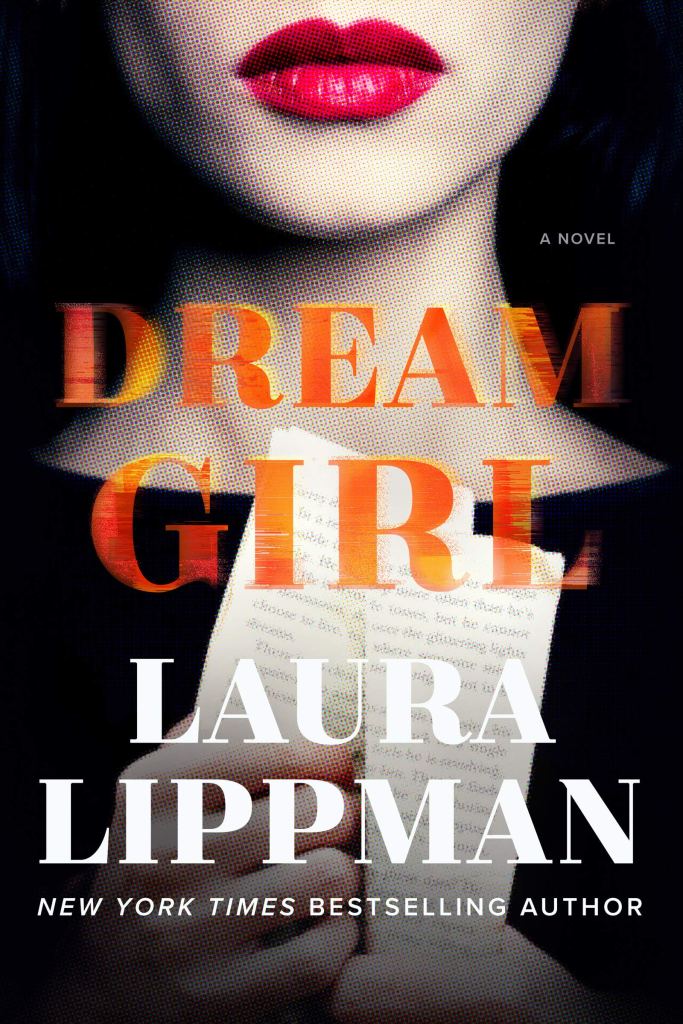
And then there’s Laura Lippman.
Gerry Andersen‘s new apartment is a topsy-turvy affair–living area on the second floor, bedrooms below. The brochure–it is the kind of apartment that had its own brochure when it went on the market in 2018–boasted of 360-degree views, but that was pure hype. PH 2502 is the middle unit between two other duplex penthouses, one owned by a sheikh, the other by an Olympic swimmer. The three two-story apartments share a common area, a most uncommon common area to be sure, a hallway with a distressed concrete floor, available only to those who have the key that allows one to press PH on the elevator. But not even the sheik and the swimmer have 360-degree views. Nothing means anything anymore, Gerry has decided. No one uses words correctly and if you call them on it, they claim that words are fungible, that it’s oppressive and prissy not to let words mean whatever the speaker wishes them to mean.
Take the name of this building, the Vue at Locust Point. What is a vue? And isn’t the view what one sees from the building, not the building itself? The Vue is the view for people on the other side of the harbor, where, Gerry is told, there is a $12 million apartment on top of the residences connected to the Four Seasons Hotel. A $12 million apartment in Baltimore.
Nothing makes sense anymore.
The apartment cost $1.75 million, which Is about what Gerry cleared when he sold his place in New York City, a two-bedroom he bought in the fall of 2001. How real estate agents had shaken their sleek blond heads over his old-fashioned kitchen, his bidet-less bathrooms, as if his decision not to update them was indicative of a great moral failing. Yet his apartment sold for almost $3 million last fall and, as he understood the current was laws, he needed to put the capital gains, less $250,000, in a new residence. Money goes a long way in Baltimore, and it was a struggle to find a place that could eat up all that capital without being nightmarishly large. So here he is at the Vue, where money seems to be equated with cold, hard things–marble in the kitchen, distressed concrete floors, enormous light fixtures.
I’ve been a fan of Lippman’s since I read her debut, Baltimore Blues, mumbledy-mumble years ago. I absolutely loved it; I loved the character of Tess Monaghan, former reporter turned private eye, and the cast of regular characters who she interacted with on a regular basis throughout her amazing series run. Tess remains one of my all -time favorite series characters; the books were always compelling, interesting, and very hard to put down. Lippman is also that writer who can write short stories that are just as powerful as her novels, and over the last few years she has taken up writing personal essays that are also rather exceptional (her collection, My Life as a Villainess, was a bestseller during the pandemic). Her writing is always whip-smart and intelligent; following her on social media one can see how widely and perceptively she reads. About seven years into her career she took the risk to move from her series to stand-alones; a calculated risk, to be sure–but she then spent the next few years alternating between the series and stand-alones (alas, it’s been a while since the last Tess book, Hush Hush, although she has occasionally made guest appearances in her stand-alones when a character needs assistance from a private eye). Her books have explored themes of motherhood, what it means to be a good girl, and have also paid homage to time-honored sub-genres (Sunburn is one of the best noir novels of this century) and classic novels by either flipping the script (for example. Wilde Lake owes an enormous debt to To Kill a Mockingbird, imagining, really, where the characters and story would be decades later). She has also played with form, tense, and character–Lady in the Lake is almost Faulknerian in its use of point-of-view; I lost track of how many different point of view characters were in this book, and every last one of them rang completely true–and she has become, over the years, a true artist.
In my often-benighted first writing class in college (whose scars I still carry to this day),my incredibly pompous professor once berated one of the students for writing a story about a writer. “It’s the laziest form of writing, and character,” he proclaimed from his lectern at the front of the classroom, “and it tells you more about who the writer is more than the character ever will. If you ever start reading anything where the main character is a writer, you should run from it as fast as you can.”
I guess he wasn’t a fan of Philip Roth. (To be completely fair, neither am I. I’ve tried, but have never really got the magic there, but have always accepted that as my failing as a discerning reader rather than his.)
Stephen King often writes about writers; ‘Salem’s Lot has Ben Mears; The Shining has Jack Torrance (and the most deadly and horrifying case of writer’s block in literary history), It has Bill Denbrough, and on and on–but of course the most famous, and best, example would be Paul Sheldon in Misery. While I always have enjoyed King’s writing, and have gleaned things from his writer characters, Sheldon and Misery, for me, has always been the best. Sheldon was perhaps one of the most realistic and compelling writer characters I’ve ever read about–the man with aspirations to becoming a critically acclaimed literary writer, who yet makes a living by writing a bestselling romance series about a character named Misery Chastain whom he has come to hate and despise even as she makes him enough money to live well and focus on simply being a writer (the dream of all of us, really). He has killed her off finally in his most recent book, ending the series at last and finally taking the leap to write what he thinks will be the game changer for his career–until he has a horrific car accident and is rescued by Misery’s biggest fan.
The parallels between Misery and Dream Girl are there, of course, and easy to spot; Lippman’s character Gerry Andersen is an enormously successful literary writer (a la Updike or Roth) who is also kind of a dick in how he has treated the many women who have come through his life, and of course, his ego justifies all of his bad behavior until he, too, has an accident in his home that winds up with him trapped in a hospital bed in his secluded apartment (despite it being in Baltimore; the appeal of the place is its privacy and seclusion). But while Sheldon is being victimized by his sociopathic fan/caregiver in Misery, what is happening to Gerry is very different; he has his original fall that causes his injury because he receives a weird letter from someone claiming to be the real person whom he based the title character in his biggest success, Dream Girl, on, and she wants financial compensation. In his shock and surprise–people have always wondered, and have always asked him, if she was a real person and he has always said no–he falls down his stairs and busts up his leg. Once he is housebound, he has a night nurse AND his personal assistant there–rarely being ever alone in the apartment–but he starts getting strange phone calls from the woman claiming to be the real ‘dream girl’–but there’s never any record of the calls on his called ID, and the original letter disappeared as well. Is his medication playing tricks on his mind, or is there something more sinister at work in his cold, sterile, remote apartment?
As with so many other things, that writing professor was wrong about writing about writers. I’ve stayed away from it myself for most of my career–as I said, the scars are still very much there–but I have started dabbling into it a bit (my Amazon single, “Quiet Desperation,” is one attempt, and I may go even further; I’ve created a character who’s appeared as a minor character in some of my Scotty books who is a writer). The mystery here is quite compelling, and more than enough to keep me turning the pages to see what happens next. But I was also enjoying the insights into another writer’s life, albeit he was a fictional character; I find it incredibly easy to identify with characters who are writers because despite the fact that all writers have different methods and different careers and different mental processes, there are always those little nuggets of oh yes I know that feeling or I thought I was the only person who experienced this or ah yes this is exactly what it’s like.
Dream Girl is an excellent edition to the Lippman canon.
And somehow we’ve managed to make it to Thursday again, which is a lovely thing to contemplate.
I have to say, it was lovely to get back into writing and editing mode this week, having not had the time or energy for the last few weeks; much as I always seem to loathe writing while i’m actually doing it, it’s always enormously satisfying when I do it. I also tend to be more on the side of depression and so forth when I am not writing, or don’t have the time to; writing, much as I always seem to be loathe to do it, always somehow evens out my personality and blunts the edges somewhat.
I should put that on a sticky note and glue it to the wall above my computer, really.
Much as I want to get back to the Kansas book, I think I’m going to start revising Bury Me in Shadows instead. There are simply too many versions and too many changes that need to be made on the Kansas book–so many that I don’t think there’s any way I could get the draft finished by the end of this month, whereas Bury Me in Shadows is more solid. It needs some language correction, obviously, and more character development and there are more things that need to be woven into the text of the story, but I think that’s far easier than the massive overhaul the Kansas book needs–which means probably a draft to overhaul it and then another draft to correct it, and there’s simply no way I’d be able to get that done this month. I probably–because of my laziness and my tendency to be distracted by shiny objects–won’t get it finished this month, either, but a good strong push might just do the trick. One never knows.
I also want to work on “Fireflies” and “Never Kiss a Stranger” this month, and I’d like to get some other short stories polished and out to markets as well.
I finished reading James Gill’s Lords of Misrule yesterday (more on that later) and have started reading Robert Tallant’s Ready to Hang: Seven Famous New Orleans Murders, which is interesting–but at the same time, since it’s an old book it’s filled with questionable language and attitudes towards people of color–always an issue when you’re reading an old book about New Orleans (Voodoo in New Orleans, also by Robert Tallant, is another one of those)–which also made me think about the problems of doing historical research. Newspapers, the go-to in the archives, have not always been the bastions of truth and integrity we assume them to be today (although…), which of course means the only actual reporting on things is probably heavily biased (Lords of Misrule in particular pointed out how horribly biased the newspapers of the times could be, particularly in regards to trumpeting the values of white supremacy), which blurs and muddies the truth. But I am really enjoying my trip into my favorite city’s often horrific and terribly bloody history; there are times when I wonder if there’s some kind of weird curse of some sort on this city–similar to the town of Derry in Stephen King’s It, where horrible things happen….and then everyone just moves on like it never happened. I’d never realized how brilliant that aspect of It was; King tried to explain that away as part of the power of Pennywise…but it’s actually a terrible honest truth about humanity: we tend to move on from bad things and eventually lock them away into the darkest parts of our minds.
I slept pretty well last night, only waking up once or twice, and feel pretty rested this morning, which is lovely. I have to put in eight hours at the office today, but we aren’t doing clinic, just walk-in testing, which means it won’t be as busy as it usually is. I’m still trying to get adjusted to switching my eight hour shift from Wednesday to Thursday; I keep thinking it’s Thursday on Wednesday, and then today I’ll keep thinking it’s Wednesday. *eye roll to infinity* It’s really strange how much routine in my life I have, and how much comfort I actually draw from said routine. I’m not sure what that says about me, but hey, there you go.
All right, time to get ready to head into the spice mines. Have a lovely Thursday, Constant Reader!
It wasn’t a pretty win by any means, but a win is a win–and LSU is now the only team to have beaten four teams that were ranked at the time of the game. With Ohio State’s stunning blow-out loss to Purdue, the Tigers should be ranked in the top four (probably number four) when the rankings come out..and also setting up a huge game against Number One ranked Alabama… look completely unbeatable. Regardless, this has been a wonderful dream season so far–particularly when you take into consideration everyone had LSU dead and buried before the season started. The defense looked amazing against Mississippi State last night; the offense moved the ball decently at times, but for the most part looked sluggish and off. But on a night when the offense wasn’t clicking, we still managed to beat a top 25 team 19-3.
Yes, this season has been joyous, for the most part.
I did all my chores and ran all my errands yesterday. I was too nervous about the game to get much else of anything done, other than random tasks that don’t require much thinking; filing, organizing, cleaning, dishes, putting groceries away, and so forth. I did some thinking about writing while my hands were busy, which sort of counts, and I did look over the Scotty book. I do like getting organized and preparing my thoughts. I am going to try to get my revisions done this morning before the Saints game; knowing I will become completely useless afterwards. But at least I don’t spend as much time as I used to parked in front of the television, flipping back and forth between games I don’t care very much about.
That’s something, at any rate, isn’t it?
The Saints game isn’t until two this afternoon, so I have plenty of time to answer emails and do some editing/revising/cleaning in the meantime. This is actually kind of nice; I slept later than I’d intended this morning but again I feel amazingly rested, which is kind of nice; and I remain hopeful that I’ll be able to get everything done that I need to get done today. It would be lovely to get three chapters finished; but I’ll have to see how that goes as I start writing. I’d also like to get my floors done today, and maybe some more reading of Empire of Sin; I also need to mark up my old journal with sticky notes for ideas on works in progress so I don’t forget about those notes. I used to have such an amazing memory; it’s almost tragic how much my brain has slowed and how overloaded it has become in my late fifties. Tragedy, truly.
Yesterday, in the afternoon lull before the LSU game, rather than reading something new I took down my hardcover copy of Stephen King’s ‘salem’s Lot, which is one of my favorite novels of all time, and dipped into it again from the beginning. If The Stand is my favorite King novel–of several to choose from; if pressed I name it as my favorite but it’s on a pretty equal par with several others, including Christine, Carrie, The Dead Zone, It, Misery, The Eyes of the Dragon, The Talisman, and Firestarter, to name just a few–‘salem’s Lot also holds a special place in my heart for any number of reasons. For one, it’s a book I bought solely because of the name of the author–the first time I did this with King, and from this one on I anxiously awaited the new King novel every year–because I’d never read anything remotely like Carrie before, and I was curious to see what he would do in this new book. I was living in Kansas when it was released in paperback; I actually saw in the grocery store line at Safeway with my mother and I asked if I could have it. She said yes in this instance–I always was asking for a book whenever we were anywhere shopping; whenever we went to malls she would send me into a bookstore while she shopped; the most exciting thing my mother could ever say to me was You can have a book–and I started reading it in the car on the way home. I remember it was a Saturday; I remember retiring to my room with a bag of taco-flavored Doritos (also a treat; my mom would either get me a bag of those or barbecue Fritos whenever she went to the grocery store and I would spend the afternoon methodically eating the entire bag while reading in my bed), and starting to read. Living in Kansas I had no idea what books were about–there were no book reviews in the Emporia Gazette, the only paper we had access to–and so I could only go by the blurb on the back of the book or on the first page inside the front cover. I had no idea what was going on in this little town in Maine until King revealed it halfway through the book. Also, when you bear in mind that Jerusalem’s Lot’s population at the beginning of the book was just over a thousand and I was living in a small town with a population just under a thousand; it was raining that day and as I read, the rain turned into a thunderstorm that seemed to last for hours; and right at the time King revealed that the secret supernatural thing going on was vampires the wind blew a tree branch against the screen of the window directly next to my bed–well, you can see why I may have uttered a half-scream and dropped the book. I remember my heart was racing and I was breathing hard; I had to go wash my face and take some deep breaths before I could pick up the book, find my lost page, and finish reading it. I stayed up until three in the morning finishing the book. ‘salem’s Lot has always had a place in my heart as the first book I ever read that truly terrified me; I’d read horror fiction before but I’d never had such a major physical reaction of sheer terror and shock as I had in that book. (I had also barreled through Carrie in one day, but it didn’t terrify me so much as suck me into a fast-moving train of a story about a horrible tragedy; I’d never read anything like it before–and this would prove to be the case with so many of King’s novels for me.) Reading ‘salem’s Lot made me a King fan for life; a Constant Reader, if you will. Eventually, other distractions and changes in my life also changed my King fandom; I don’t always necessarily buy his new novel the day it is released and put everything else on hold as I read it in a day or two, shutting everything else in the world out. (I just, for example, bought The Outsider yesterday; I still don’t have a copy of Sleeping Beauties, and I’ve never finished reading The Dark Tower series, haven’t read Bronco Billy or The Girl Who Loved Tom Gordon or Black House or Doctor Sleep or 11/22/63 or End of Watch yet; I know, I am a terrible King fan.)
But one of the things I loved the best about King–one of the reasons I always felt, back in the days when he was dismissed as simply another hack genre writer–was the way he depicted small towns and the people who populate them; Jerusalem’s Lot was the first of his great small towns, to be followed by Castle Rock and later, Derry. King’s small town, and the people who populate them, are so realistic, so real, so these are my next door neighbors, that I’ve always loved his work and characters and their reality, their realness. This is why his horror works so well–the reader is invested emotionally with his characters–which is also one of the reasons why my least-favorite King novel, The Tommyknockers, is my least favorite. (I also want to revisit that novel at some point; just as I want to reread Pet Sematary again. Both are amongst the few earlier King novels that I’ve only read once and never went back to; I used to reread King all the time.) This is also, I think, why Netflix’ adaptation of The Haunting of Hill House was so powerful, and why I enjoyed it so much: so much was done with character and their relationships with each other that I became vested; I cared what happened to the Crains.
And isn’t that, ultimately, what makes any work resonate with the reader? The ability to identify with, and care about, the characters?
I am really looking forward to continuing my return visit to Jerusalem’s Lot.
Well, my plans on how to stay calm during an LSU game most emphatically did not work yesterday.
I do, however, have a very clean apartment.
It was, on the whole, a most exciting game–if you’re an LSU fan, but it also had a lot of stressful moments, momentum swings, and tension. And yet, when the smoke cleared and the game clock ran down, LSU upset the second ranked team in the country and the national championship runners-up from last year decisively, 36-16. Hardly anyone gave LSU a chance, and even those who only made Georgia a seven-point favorite were doing so half-heartedly; as I watched the pre-game show it was so clear no one really thought LSU had a chance, or would even meet that seven-point margin; they were trying to hype up the ratings–if they said what they really believed, that Georgia was going to humiliate LSU–only die-hard fans would watch.
Which would have been a pity. LSU was dominant in retrospect–at the time it didn’t feel that way. We went up 3-0, stopped a fake field goal attempt on fourth down by the Bulldogs, and then drove down the field to go up 10-0. Two more field goals followed, along with some lights-out, tenacious defense, and the score at half-time was 16-0, LSU. Georgia had never trailed this season for more than fifteen seconds, and had not been held scoreless in a half in God knows how long. But it was really only a two-score game, and I was concerned about having to kick three field goals instead of touchdowns…then again, LSU had four scoring drives in the first half; it could have been 28-0. I worried those field goals might come back to haunt us in the second half. And I was wrong. LSU scored twenty more points in the second half to put the game away–although Georgia scored 16 points of their own–but the final score was 36-16, and the biggest win for LSU since the Alabama game in 2011; certainly one for the history books, and one that will go down in LSU lore as one of the great Death Valley wins.
Suddenly, after the Florida loss, with LSU looking slow and lackadaisical and almost mediocre, now LSU looks like a championship team who can compete with anyone. And while I don’t want to get my hopes up–Alabama looks completely unbeatable–how exciting would it be if we got to play Florida again for the SEC championship game? Florida has already lost to Kentucky; Georgia already has a conference loss with both Florida and Kentucky yet to play; all the contenders in the East have a loss already (Kentucky to Texas A&M; Georgia to LSU; Florida to Kentucky) so the stakes for the Florida-Georgia game are really, really high in two weeks.
Yes, it was a very exciting day around the Lost Apartment yesterday. GEAUX TIGERS!
I also watched another two episodes of The Haunting of Hill House, which is probably one of the best horror television shows I’ve seen in a while. I am quite frankly loving this television horror renaissance, which is producing such amazing programs. The Haunting of Hill House, of course, still can–and might–go off the rails, but so far it is terrifying, eerie, and mesmerizing; the call-backs to the original source material are enormously satisfying, and yet it could stand entirely on its own with a different title; it’s almost like a revisitation of the Lutz family twenty or so years after the original story of The Amityville Horror–how do you experience something supernatural and terrifying, particularly if you’re not really sure what it was you were experiencing, and deal with that trauma for the rest of your life? The Crain children, now adults, have dealt with this in varying ways, but they are definitely all suffering from PTSD and trauma. The first four episodes told the same story from different points of view of the adult Crains, their present reality juxtaposed with their memories of their stay at Hill House. All the characters are compelling, well-written and defined, and the acting is absolutely stellar. I said in a previous entry it’s reminiscent of the best of Stephen King’s It and Paul Tremblay’s A Head Full of Ghosts; I am also going to throw in the first season of the television adaptation of The Exorcist as well–an excellent show that only lasted two seasons but I wish it could have gone on for longer. This is some excellent story-telling, and it is astonishing how true to the mood of the novel this show is.
I won’t deny it–at first I thought, when I heard of this and how it was going to be done, I rolled my eyes. You can’t do this better than Shirley Jackson, I thought dismissively, remembering the horrible 1999 film version (the original film version, in black and white, directed by Robert Wise and starring Julie Harris–who should have at least gotten an Oscar nomination–was superb and terrifying). But I was absolutely, positively, completely wrong. The show is amazing and fantastic, and I can’t wait to watch more; I might even do so today before getting started on writing–since there’s no Saints game today, and of course being sick last week put me desperately behind.
I also read some more in Empire of Sin yesterday–Storyville is now up and operational. I’ve always avoided reading about Storyville, or even considering writing about it; for me, I was thinking it was almost cliche to do so. David Fulmer has already done a series set in that time–Chasing the Devil’s Tail, Jass, Rampart Street, Lost River–with his detective, Valentin St. Cyr; he also had a story in New Orleans Noir, and since he has done so well with the period and the area I didn’t really see any need to cover that same ground. But now….now I am thinking I could, and differently. “The Blues Before Dawn” might actually turn into a novel rather than a short story, and it’s a great title, if I do say so myself. But once I get this revision under control, I’ll have some more time to play around with the story and see where it goes.
I’m particularly interested in Tom Anderson, the unofficial mayor of Storyville.
I’m also thinking I should watch Pretty Baby again; it’s been decades.
And on that note, I think I am going to take my coffee into the living room, ensconce myself in my easy chair, and watch the next episode of The Haunting of Hill House preparatory to heading into the spice mines.









 Queer and Loathing in America