Sunday morning in the Lost Apartment and how the hell are you, Constant Reader? I slept super well last night–much better than Friday night, which felt really great–and am a-rarin’ to go this morning. Yesterday was a good day, frankly and surprisingly. I woke feeling rested and well, managed to get some things going in the morning, and kept getting things done for most of the day. I also took it a little easier than I usually do, resting and relaxing for a bit before getting up again to do something else. Thus I managed to get some things accomplished.
After doing some kitchen organizing yesterday (and filing), I started going through that box of clippings and magazine copies, to better organize them in another box, and found all kinds of things that are marvelous. I’ll do some scanning today, so that there’s an electronic version of everything preserved for all time. The Queer Crime Writers group has expressed some interest in archiving some of the articles and reviews of crime authors and their books…it was funny, but it’s been a long time since I looked at those old issues of Lambda Book Report, and while I am still proud of them, it’s been long enough that I can look at them critically and see the mistakes and flaws and so forth. It was also kind of interesting because I forgot, for one thing, that I interviewed Margaret Cho for Lambda Book Report, or that Paul used to do author interviews, and so forth. It was kind of cool experiencing the nostalgia of seeing them, or the old Saints & Sinners programs from the first years, when I had to do the layout and design for them (which is why they all look so amateur hour) but I also used to do that for Lambda Book Report too. There were also clippings from other gay papers, including the local IMPACT News which then became Southern Voice-New Orleans before folding completely, the Times-Picayune, Gambit, and St. Charles magazine. It’s hard to believe, really, that I’ve been in and around the publishing business for as long as I have. It’s also kind of eerie. I’m trying not to be a cliché, but seriously, where did the time go?
I also walked to the Office Depot during the afternoon rainstorm yesterday to get ink for the printer and some notepads. I live for the 5 x 7 legal pads, and I’ve been down to my last one for quite some time, which inevitably throws me a bit off-balance, as I use them for everything, from grocery lists to “what to do today” lists” and making notes to myself to remind myself of things. I just feel better knowing there are eleven notepads in the cabinet, next to two blank journals, for me to use if and when I need one again. It’s odd how comforting that knowledge is, so it’s clearly one of my (many) neuroses.
I also started watching a true crime series on Hulu–Paul was meeting a friend for dinner and drinks last night, so I was left to my own devices–about Billy Milligan, a serial rapist who had dissociative identity disorder at a time when not much was known a bout it; many people to this day don’t believe Milligan actually had the disorder, but was simply a very good actor (The Crowded Room series on Apple Plus is based on his story), but I stopped watching by the fourth episode. Do I believe DID is a thing? Sure, why not? Even if the Sybil case turned out to be a fraud, I do think the mind is capable of splintering like that when faced with a horrific trauma; ironically, this illness was depicted beautifully over the years for Victoria Lord on One Life to Live (winning her portrayer, Erika Slezak, a ridiculous amount of daytime Emmys over the years); it began when first shown as part of the melodrama with some research done into it; as more information about it became available and more studies were done, that was also explored over the years as it reoccurred, finally culminating with the truth that she was molested by her father–that was the initial trauma that shattered her mind. I’d like to write about this sometime myself, because it’s interesting to me, but it would take a lot of research because I’d want to do it right, you know?
I got a lovely compliment on a story I contributed to an anthology yesterday, which was unexpected and lovely–especially since I hadn’t felt confident about the story when I sent it in. It’s another Alabama story, which makes me happy, and I pulled up the electronic last version I had with me here at the house and…it’s full of mistakes. I just hope that wasn’t the version I sent in. But it’s a story I wrote a long time ago, based in some sort of reality. When we used to visit Alabama in the summer time, my aunt and uncle lived in the county seat in a nice brick one-story three bedroom house whose back yard gently sloped, gradually ending in what my cousins (and everyone) just called “the ditch.” I never really knew how it was created or where it came from–in the story I referred to it as a branch of the river that was dammed up and so it dried up–but it was about twenty feet wide and fifteen foot deep; and the bottom was just as I described it–littered with rusting cans and broken glass and other debris. But it was also cool down there as it was completely shaded by all the trees lining the sides (that’s what gave me the idea that it may have been a branch of the river; it does kind of look the shores of a river); there was also a path from the back of the house to an ancient wooden footbridge to cross to the other side. I wrote the story “The Ditch” originally years ago, I think possibly for a Horror Writers Association anthology, and it was rejected. I liked the story but knew it needed more work, and when I dragged it out to use for this anthology I did a strong revision. It is a much better story now than it was, but please God, tell me I didn’t turn in this error-riddled version. More on that anthology as it develops.
I also made a list of things I need to get done today (yay for little legal pads!) and am feeling pretty good about everything this morning. It really is amazing what a difference sleep makes, isn’t it? I woke up early this morning, am enjoying my morning coffee, and I finally feel like I am part of my own reality again (it always takes a while for me to readjust to my normal daily routine). I also have some writing and reading to do today, and I hope to get to work on the page proofs either today or sometime this week.
And on that note, I am heading back into the spice mines. Have a lovely day, Constant Reader, and I’ll check in again at some point, no doubt.
As I get ready to write another Scotty book, I am busy making his acquaintance all over again. It might seem strange, but yes, although I’ve written eight books about my ex-go-go boy/personal trainer/private eye, it remains true in this as in all other aspects of my life that my memory is not what it once was; in fact, I don’t think I’ve ever written a Scotty book since the first three without having to go back and revisit the series again. I have made continuity errors over the years (Scotty’s mother’s name changed over the course of the series, from Cecile to Marguerite and back to Cecile again), and I may forget things about his past and things I’ve written in previous books, but the one thing I never ever forget is his voice.
No matter what else is going on in my life, Scotty’s voice is very easy for me to slip back into, like a house shoe, and it somehow always feels like coming home to me in some ways. This is odd–because I would have always thought Chanse was the series character I was more connected to rather than Chanse, but that’s not the case at all. Scotty just won’t go away; but I ended the Chanse series and only every once in a while do I regret it (although I am beginning to suspect that I am going to probably end up writing another Chanse novel at some point in my life; I have two ideas that he’d be perfect for, but it also might be better and more challenging for me to simply come up with a whole new character for those stories rather than resurrecting Chanse); Scotty just won’t ever go away.
The idea for the Scotty series famously came to me during Southern Decadence, 1998.
(Well, I don’t know about famously, but I know I’ve told this story before many, many times. Feel free to skip ahead if you don’t want to see how I remember the birth of the character and the series now)
It was a Sunday afternoon, and Paul and I had somehow managed to get prime balcony standing spots–at the Bourbon Pub/Parade, right at the corner of St. Ann and Bourbon where the railing curves at the corner to head alongside the upper floor down the St. Ann side; so we could look down directly into the roiling mass of sweaty, almost completely naked bodies of hundreds of gay men from all over the country. That was my favorite spot for Decadence sight-seeing (Halloween, too, for that matter), and as I looked down into the crowd, I saw a guy in booty shorts and a very very loose fitting tank top, carrying a bag and trying to get through. I recognized him as one of the out-of-town dancers working at the Pub/Parade that weekend (I may have tipped him the night before) and as I watched in sympathy as he tried to get through that tightly-packed crowd of gays in various stages of being wasted, I closed my eyes and an image of him–or someone like him–fighting his way through the Decadence crowd while being chased by bad guys with shaved heads popped into my head just as Paul said, next to me, “You should really write a story set during Decadence” and then it popped into my head: someone escaping the bad guys has slipped a computer disc into one of the dancers’ boots on Friday night as he danced on the downstairs bar, and the bad guys want the disc back.
I didn’t have any way to write it down, obviously–I was wearing booty shorts, socks, and half-boots that came to my ankles, with nothing underneath the shorts and I had my tank top tucked through a belt loop like a tail in the back–yet even the title popped into my head: Bourbon Street Blues. The idea clearly stuck, because when I got home the next morning at about six or seven, dehydrated, drenched in sweat and having lost the tank top at some point during the night, I remembered it and wrote it down.
At some point over the next two years, I wrote a short story called “Bourbon Street Blues” about my stripper–only instead of being from out of town, I made him a local, filling in for someone booked from out of town for the weekend who had to cancel–and wrote about seven thousand words. It felt very rushed to me–the story–and I kept thinking it’s too long for a short story, it would have to be a novel but I also wasn’t sure there was enough story there for a novel. But I liked the idea, no one (at least, to the best of my knowledge) had written anything like it, and I thought, someday I’ll get a chance to write this story and develop this character.
Flash forward to 2001. This was during the time Paul and I had moved to DC to work for the Lambda Literary Foundation, we were miserable there and wanted to move back to New Orleans but didn’t have the money to do so, and the release of Murder in the Rue Dauphine was still at least a year away. I was talking to an editor on the phone about one of his new gay releases, and out of the blue I just pitched Bourbon Street Blues to him. He loved the idea, and asked me to write a proposal and email it to him. I had never written a proposal before, but I thought what the hell, how hard can it be? and so I wrote a two page proposal for the book. Two months later they made me a two-book offer–and the money was good enough to pay for Paul and I to move back to New Orleans as well as to live on for a while. I had only seen the book as a one-off, but they wanted a series. I needed and wanted the money, so I thought I can figure this out later and signed it.
Three months later, we moved back to New Orleans and I started writing the book.
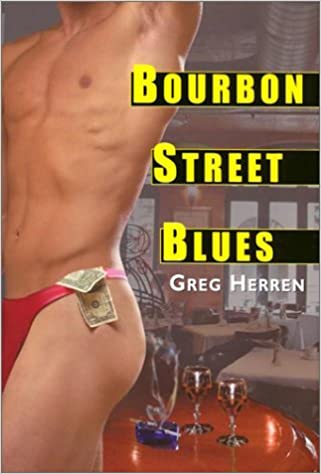
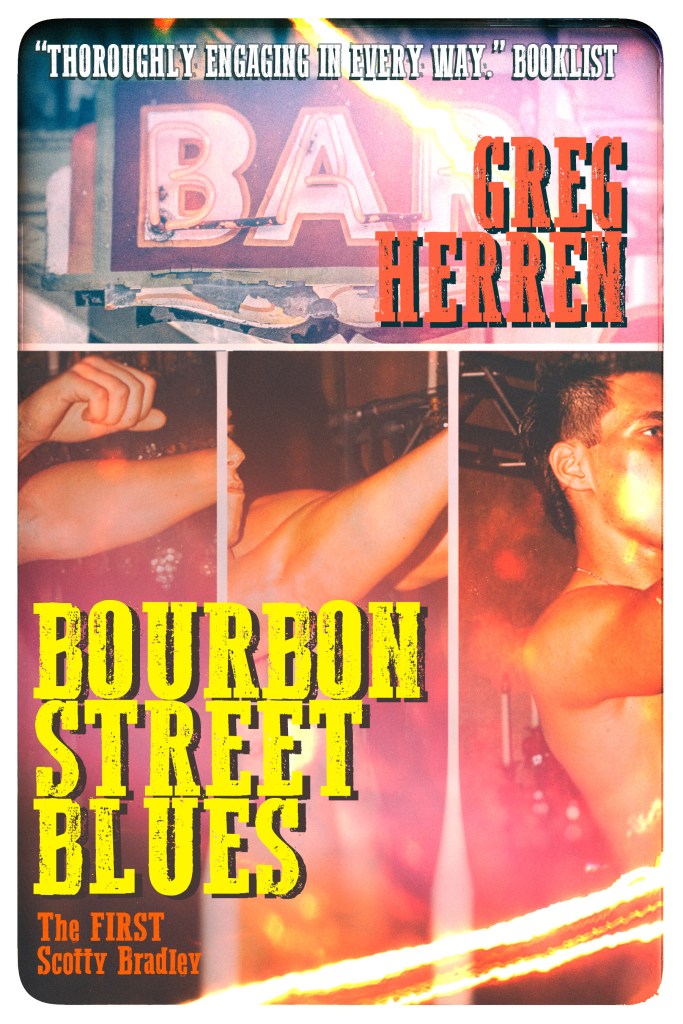
The original cover is on the left.*
The one thing I wanted to do with Scotty was make him unabashedly, unashamedly, gay. I didn’t want him to have any hang-ups, a sad backstory, or parental issues. I wanted him to be a free spirit who embraces life with both hands, lived in the Quarter, and loved having sex, loved being found desirable, and never really said anything or thought anything mean about anyone else. I made him a personal trainer, and his poverty–he agrees to do the dancing gig for Decadence because he’s behind on his rent and other bills; he teaches aerobics and was a personal trainer–comes from his grandparents freezing his trust funds when he dropped out of college to go to work for a booking agency for male dancers. He has since stopped doing that, but fills in when needed (and when he needs the money) at the Pub/Parade. I also based the shitty politician running for governor–and trying to mount a Christofascist takeover of the state, beginning with an attack on Southern Decadence–on an actual politician who ran for the US Senate shortly after we moved here; we saw him being interviewed on the news and couldn’t believe it wasn’t a joke, some kind of performance art–but forget it Greg, it’s Louisiana.
I also want to let you know that while I was working on this manuscript my first book, Murder in the Rue Dauphine, was released–and I got a “damned with faint praise” review from the Bay Area Reporter, which complained that “it would have been nice to see inside the heads of the other characters”, which took me aback as the book was a first person narrative, which made that impossible. What the reviewer I think was trying to say was that she wished the book had been told in the third person; that to her that would have made the book more interesting to her. But in my baby-author naïveté, all I could think was how can you see inside the heads of other characters in a third person narrative unless the main character was psychic?And the proverbial lightbulb came on over my head. Make Scotty a psychic. This was also an integral key to the puzzle of who Scotty was; the reviewer also yawned over my “gay stereotypes” in Rue Dauphine, so I decided to make Scotty the embodiment of all the worst stereotypes of muscular gay men who worked out and had a lot of sex. Just writing that down now, I realize how incredibly insane it was for me to use my new series book and character to respond to criticism o my debut novel; and when the book came out I braced myself for the inevitable backlash to come.
No one was more surprised than I was at how readers embraced him. The book got great reviews, even from Publishers Weekly and Library Journal (Kirkus, of course, has always pretended I don’t exist). Bourbon Street Blues was even nominated for a Lambda Literary Award for Best Gay Mystery of 2003 (I lost, I think to John Morgan Wilson?) shortly after the sequel, Jackson Square Jazz, was released.
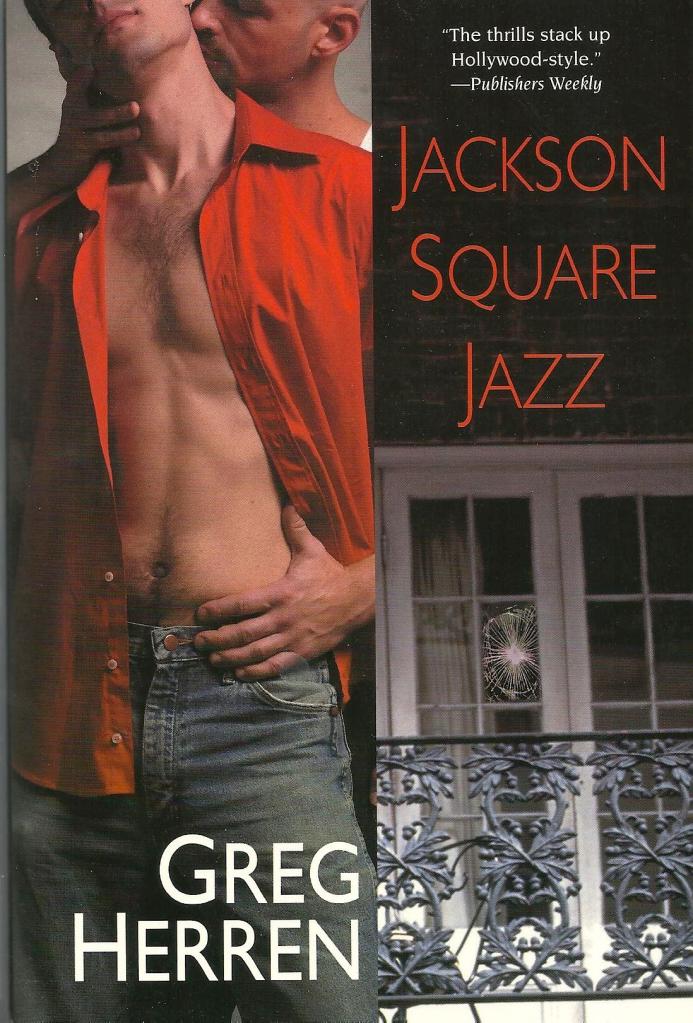
Jackson Square Jazz’s story was actually a recycled idea I had for a spin-off book for Chanse’s best friend Paige. The original concept was that someone would steal the Louisiana Purchase from the Cabildo–and somehow Paige stumbled onto the theft, and knew that the one on display currently there was a copy. (I was calling it, originally enough, Louisiana Purchase.) I decided to make that the basis of the second Scotty book. (This was inspired by a documentary I’d seen about the Cabildo fire of 1989–that may be the wrong date–and how the fire department tried saving everything in the museum before fighting the fire. I remembered how in the documentary they literally were placing historical objects and paintings against the fence at Jackson Square and thinking, anyone could have walked off with something during the fire…and my imagination immediately was off to the races.) Unfortunately, when I met with the museum director–whose actual first day on the job was the day of the fire–I found out that 1) the copy of the Louisiana Purchase at the Cabildo was actually only a replica and the original was stored in the weather-protected underground archive at the Library of Congress and 2) it was more than one page long–I’d imagined it was one large document like the Declaration of Independence; it is not. However–he also suggested I make the MacGuffin the Napoleon death mask–one of the three originals made when Napoleon died–and gave me some great backstory on it as well that I don’t remember if I used in the book or not; but it was a lot of fun talking to him (his name escapes me at the moment, alas) and was a great example of why it is important to actually do research and talk to people.
I also wanted to include figure skating–the working title for the book was Death Spiral, which the publisher made me change, asking for something alliterative, like Bourbon Street Blues–and so I decided to open the book with Scotty having a horrific hangover and then realizing someone was in the bed with him (it’s to this day one of my favorite book openings; what slutty gay man hasn’t been there?)…and then I remembered I’d introduced two love interests for Scotty in book one, and here he was in bed with someone else entirely. (The young man he woke up with was a figure skater in town to compete at Skate America, being held in the Smoothie King Arena.) I loved both of his love interests, and knew I was going to have to bring both of them back somehow, and then I was going to have to figure out which one he’d end up with. (Spoiler: I couldn’t decide, so he wound up with both of them.) I also threw in a ghost, a billionaire artifact collector, and pretty much everything but the kitchen sink. I turned in the book, along with a proposal for Book Three, in which I finally decided I was going to resolve the threeway relationship personal story, and that would be the end of the Scotty trilogy.
Man plans and God laughs. (Jackson Square Jazz was also nominated for a Lambda; I think this was the time I lost to Anthony Bidulka.)
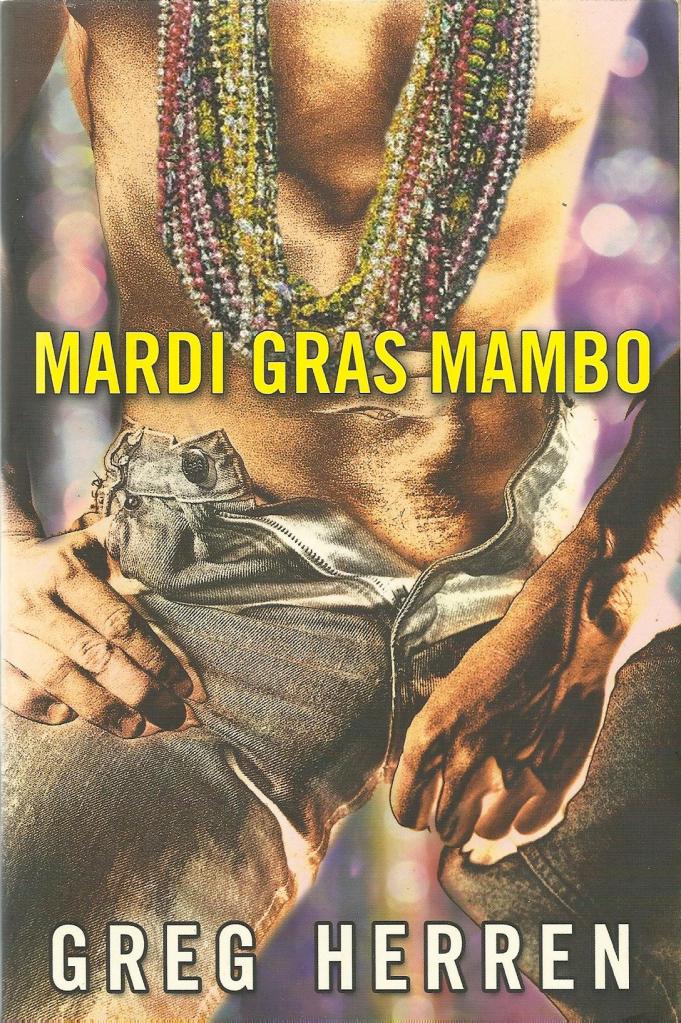
Mardi Gras Mambo turned out to be an entire other kettle of fish.
I’m not entirely sure I remember exactly what the original plot of Mardi Gras Mambo was going to be, but I know it had to do with the Krewe of Iris (Scotty’s sister Rain belongs) and the book opened at the Iris parade on the Saturday morning before Fat Tuesday. It was due in June of 2004, and of course, I wasn’t nearly finished by the time Memorial Day rolled around, and was planning on asking for another month on the manuscript on the Tuesday after. Of course, that was the Memorial Day weekend when Paul was attacked and everything went to hell in my personal life. My publisher was incredibly kind; they took the book off schedule, told me to take care of Paul, and get the book done whenever I got the book done.
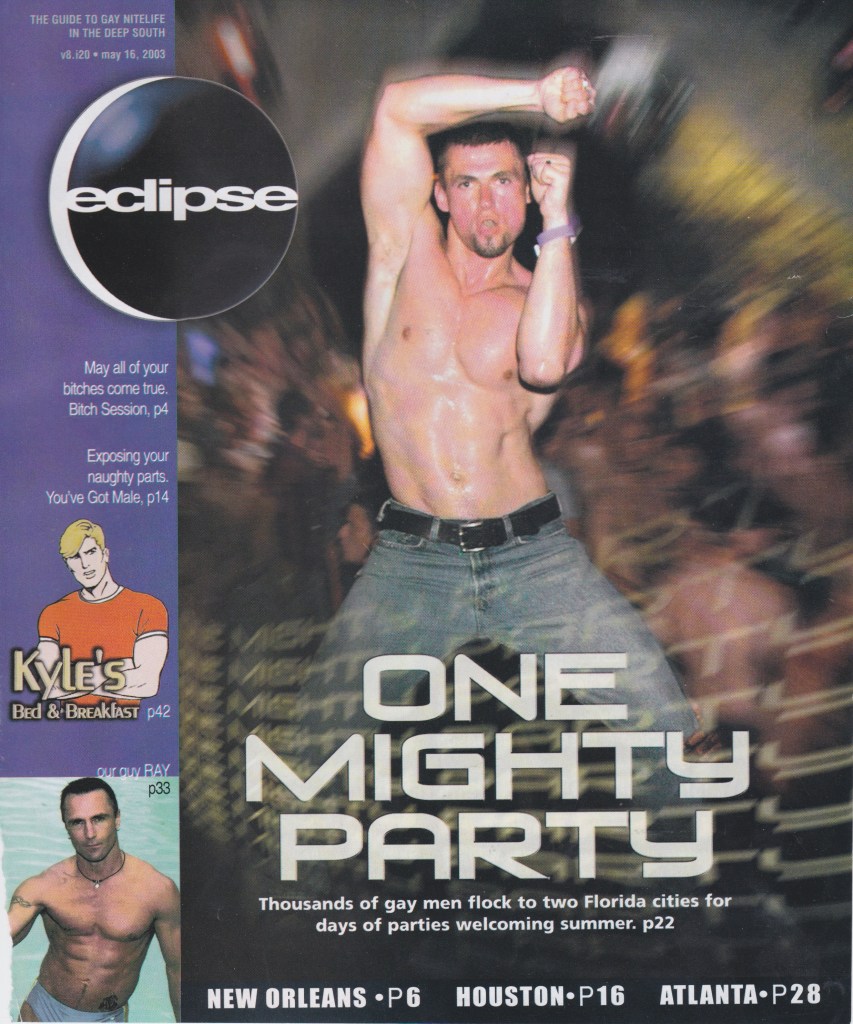
I started writing it again in January of 2005, shortly after I began keeping a blog in order to get me writing again. That was when the Christian/Virginia nonsense happened, and everything got derailed again. When I started writing the book again, I threw out everything except that first chapter at the Iris parade–which did wind up in the final book–and I do not recall what the second plot I chose to write was at this time, other than I knew I was bringing in a Russian character, inspired by someone I’d seen around in the bars for years and had always been just awestruck by his body–and yes, that Russian turned out to eventually be Wacky Russian, my personal trainer. I actually kept this as an inspiration–Eclipse used to be the nightlife insert for IMPACT News, a queer newspaper that died out in the early aughts:
Finally, it was April 2005, and I started writing Mardi Gras Mambo again. I had the plot all figured out–it was completely insane–but I also realized I couldn’t end the personal story with Scotty the way I had hoped and wrap it all up with Book Three. There had to be a Book 4, and so when I finished the book at last and turned it in, I included a proposal for a fourth Scotty, Hurricane Party Hustle–which was going to be set during an evacuation for a hurricane that missed New Orleans…I always thought it would be interesting to write a mystery story set during such an evacuation.
Of course, I turned the book into Kensington on August 14th, 2005. Fourteen days later, Paul, Skittle and I fled from New Orleans in the face of Hurricane Katrina.
I wouldn’t come back for good until October 11. Paul didn’t come home until after Thanksgiving.
Of course, I wrote to my editor a day or so after the levee failure to say, well, I don’t think I can write that book I proposed now.
I didn’t see, for a very long time afterwards, how I could write another Scotty book–light, funny, zany–in the aftermath of Hurricane Katrina. Then one day I was walking to work from where I’d parked my car and some people on bicycles came riding toward me. They smiled and waved and I smiled and waved back…and realized oh my God, that was Brad and Anjelina. Their house wasn’t far from my office–in fact, it was quite literally around the block from where Scotty lived–and I thought, you know, Brad kind of looks the way I describe Scotty–wouldn’t it be funny if someone tried to kill Scotty because he looked like a movie star who lived in his neighborhood? The more I thought about it, the funnier it became, and I started writing the proposal for Hollywood South Hustle when I got home from work that night. I was so certain they would take it that I started developing the characters and writing out a detailed synopsis…and they turned it down.
I wasn’t expecting that, but it was a marketing decision. Even if they signed the book immediately, it would still be another year before it would come out, and they felt by then Scotty’s audience was long gone, if it wasn’t already. It was disappointing, but right around the same time Alyson came back to me for a fourth Chanse book but they needed it right away–like within ten weeks–so I turned the Scotty story into Murder in the Rue Ursulines. I finished the book, turned it in, and figured the Scotty series was dead, alas.
Shortly thereafter, during the Gay Easter Parade an idea for a different Scotty book occurred to me . The parade was over and I was walking back to my car to drive home when I walked underneath a balcony…just as they started watering their plants. I got soaked–you can’t get mad, it happens in the Quarter periodically and it’s just one of those New Orleans things–and I thought, you really need to write about this. As I walked to the car, dripping, I pictured Scotty hurrying to catch a ride on his parents’ business’ float for the Easter Parade–and of course, he’d wear a white bikini, rabbit ears, and have a rabbit tail–when the exact same thing happened to him, only his bikini would become see-through when wet. By the time I’d driven home, I’d figured that the person on the balcony would be an old friend of his parents’, he’d invited Scotty in to dry off, and when Scotty was on his way home from the parade, the cops would be there because the friend had been murdered. Using The Moonstone as my inspiration, I came up with another MacGuffin story, a way for Colin to come back and explain everything that happened during Mardi Gras Mambo, and I had the perfect ending to Scotty’s story. I just didn’t have a publisher.
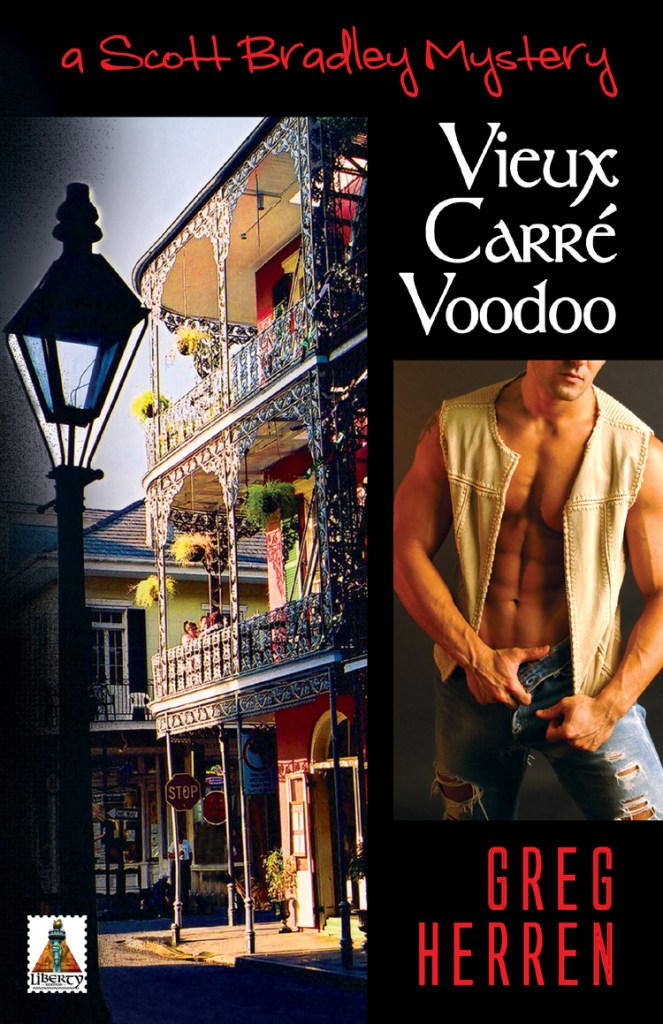
But Bold Strokes Books, a primarily lesbian publisher, had started doing books by and about gay men. I’d taken an erotica anthology to them when it was orphaned by the death of its original publisher, and so I wrote and asked if they wanted a Scotty story. They did, and thus Scotty came back to life one more time…and I figured that was the end of it. I wrapped up the personal story about the three-way relationship in a way that was organic and made sense; and I also added a new wrinkle to Scotty’s personal life: Frank’s late-in-life decision to become a professional wrestler. (One of the things we locals learned from Hurricane Katrina was to not put off following or chasing dreams or goals; my attitude thus became go for it and I started chasing down dreams I’d pushed to the side for years.) Mardi Gras Mambo and Vieux Carré Voodoo were both nominated for Lambdas, but at this point I can’t remember who I lost to in both of those cases–for the record, Lambda has never rewarded a Scotty book with an award–probably because they are inevitably funny and over-the-top, which never wins awards because funny is seen as “not serious,” despite the fact that humor/comedy is much harder than drama/tragedy.
I didn’t think I was going to write another Scotty book then, either. But then something miraculous happened: the New Orleans Saints won the Super Bowl, and I wanted to write about what it was like to live here during that incredible time. It didn’t seem like the right story for another Chanse book, so I thought, well, I can pull Scotty back out and write it from his point of view.
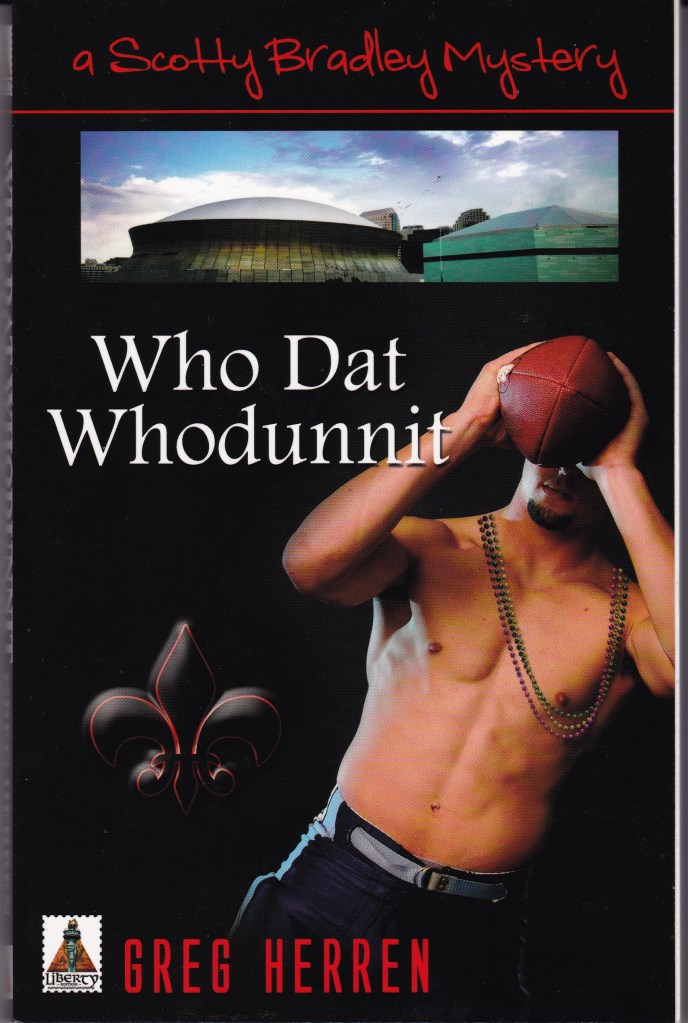
And of course, Who Dat Whodunnit was just sitting there for the title. How could I not write that book?
I had already established over the course of the series that the two sides of his family–the Diderots (maternal) and the Bradleys (paternal) didn’t really get along. The Diderots go back to Iberville and the 1718 settling of New Orleans; the Bradleys were Americans who came after 1803, and thus are not only parvenus to the aristocratic Diderots, but also l’Américains. Perish the thought! We’d also established that the Diderots were not nearly as conservative as their State Street living in-laws, but we’d never actually seen much of the Bradley side of the family, so I thought why not do the Bradleys and let us get to know the other side of Scotty’s family? It was around the same time I started reading about a megachurch out in Kenner (or Metairie? I don’t recall) that was rising to prominence in local politics and was, as you can imagine, homophobic. The same-sex marriage wars were also being fought at this time; and during one of those pageants (Miss America? Miss USA?) the reigning Miss California was asked about same-sex marriage during the question portion by judge Perez Hilton (why was he judging a beauty pageant for women is a mystery for the ages) and she responded that her faith had taught her that marriage was between a man and a woman (the audience started jeering) and she apologized by saying “I’m sorry, but that’s how I was raised!” She wound up as First Runner-Up, and some felt, rightly or wrongly, that her “politically incorrect” answer cost her the title. In some ways, I felt bad for her (although it’s not my fault it’s how I was raised I have always thought was an incredibly stupid thing to say; you have free will, and you should be capable of making up your own mind rather than simply parroting things without question you were raised to believe. So if your parents were racist white supremacists…) but then of course, the Right tried to turn her into a martyr and heroine, and she dove right into that headfirst, erasing any sympathy I might have felt for her (I still think the question was inappropriate for a pageant, as would be anything polarizing–and yes, well aware that same-sex marriage shouldn’t be polarizing, but here we are), and of course, Miss Upright Moral Christian had a bit of a shady past that eventually came out and that was that. I decided to base the murder victim in the book on this girl, and tried to explore the influence of this megachurch on her. I also gave Scotty a first cousin who was the darling of the Bradley grandparents because he was a jock and was on the Saints team as a player–but also a homophobic asshole. The Bradleys were like something out of Tennessee Williams–I think I even named Scotty’s uncle (the football player’s dad) Uncle Skipper as an homage to Cat on a Hot Tin Roof.
There’s a lot of story there left in the Bradley side of the family, now that I think about it–and I’ll be digging into that in the new one, rest assured!
Funny story: After I wrote Who Dat Whodunnit, I decided I was not going to write another Scotty book. This had been Book 5 of what started as a stand-alone and then became a trilogy and yet somehow, I’d kept going on top of that. I kind of felt played out a bit with Scotty, and the longer the series went on, the more problems I was having with things like character ages–Scotty was getting older, which meant his parents were getting older, which meant his grandparents were getting older, too. I didn’t want to deal with the deaths of his grandparents (or Aunt Sylvia, who was his grandmother’s age and had married Uncle Misha), and so I had two options: pretend they weren’t getting older and not talk about their ages, or let the series go. I was still writing Chanse at the time, and I kind of figured that would be the series that went on longer. But I was on a panel at Saints and Sinners and someone from the audience asked me if there would be another Scotty.
GREG: Probably not, but if I can figure out a way to include Mike the Tiger (the live tiger mascot at LSU), Huey Long, and a treasure hunt for Huey’s deduct box, I will.
(I had read T. Harry Williams’ award winning biography Huey Long and had become fascinated completely with him. All I had known about Long going into reading that biography was that he’d been a demagogue (thanks, US History textbook from high school) and Robert Penn Warren’s All the King’s Men had been loosely based on his life and career. Mention Long’s name to anyone and they immediately reply with “oh, he was so corrupt”–which amused me, since every Louisiana politician is corrupt to a degree–and I knew Roosevelt and others had worried about him as a populist politician who reminded them of Hitler (and the way he crushed his opposition in Louisiana and essentially became the state’s dictator, who could blame them?), but what was the real story? And Huey Long made me start to have what was at first a grudging admiration for him which grew into a kind of fandom the more I learned. (There are some similarities–more than one would think–between Long and LBJ in the Caro biographies, as well as with Robert Moses, another Caro biography; which would make for a very interesting comparison/contract essay at some point.) But the more I read about Long, the more I wanted to write about him. He fascinated me, and the fact that his trove of cash–the deduct box–was never recovered after his murder was even more fascinating to me.)
And don’t you know, later that night, it came to me. A few months earlier there had been a bomb threat at the LSU campus, and there had been some controversy about how the administration had handled the situation–they’d evacuated Mike the Tiger off the campus before the mass evacuation call for the students. It made sense to me (but I didn’t blame the students for being upset because it absolutely looked like the administration cared more about the tiger’s safety than the students’)–in the chaos of evacuating the campus, getting the tiger out safely would have been a nightmare, and God forbid something happen and Mike got loose. Then it hit me: what if some animal rights’ activists had staged the bomb threat in order to steal the tiger in order to set him free somewhere? (Mike is a frequent target of PETA, who often calls for him to be released into the wild–not in the US, of course–, or sent to a big cat sanctuary.) So, I had the tiger kidnapped, and since Huey Long was responsible for LSU being what it is today, it only made sense for the treasure hunt to have to do with his missing “deduct box”–Huey always used cash, after his assassination the deduct box containing thousands and thousands of dollars in cash disappeared–and there we had it: a plot involving Mike the Tiger, Huey Long, and the deduct box.
This was also the book where I decided to extend Scotty’s family a bit further by adding a new, younger gay character to the mix: Taylor, Frank’s nephew, disowned by Frank’s sister and her homophobic husband after he comes out to them after a semester in Paris, and so he comes to live with Scotty and the boys in the house on Decatur Street. I wanted to bring in someone younger, and gay, with literally hardly any gay experience in the world to reflect the change between generations of gay men and how they view being gay and the rest of the world.
I also figured this would be the last one, but like I said, Scotty just won’t go away.
SIDENOTE: I had to write to the administrators of the Huey Long website for permission to use some quotes from the site in the book. Needless to say, they were very wary of me when they responded, so I emailed them the chapter where I would use the quotes–Scotty was doing some research on Long, and came across the website. Like me, Scotty had always been told Long was corrupt and a demagogue…but demagogues also don’t get things done, which Long did. Some of Long’s programs–like the Homestead Exemption–still exist as public policy in Louisiana. They wrote me back, granting permission…and that was when I found out the person I was talking to was Long’s great-granddaughter, who was rightfully suspicious of anyone writing about her great-grandfather. I sent her a copy of the book when it was finished, and she sent me a lovely thank you card, which is probably one of my favorite writing souvenirs.
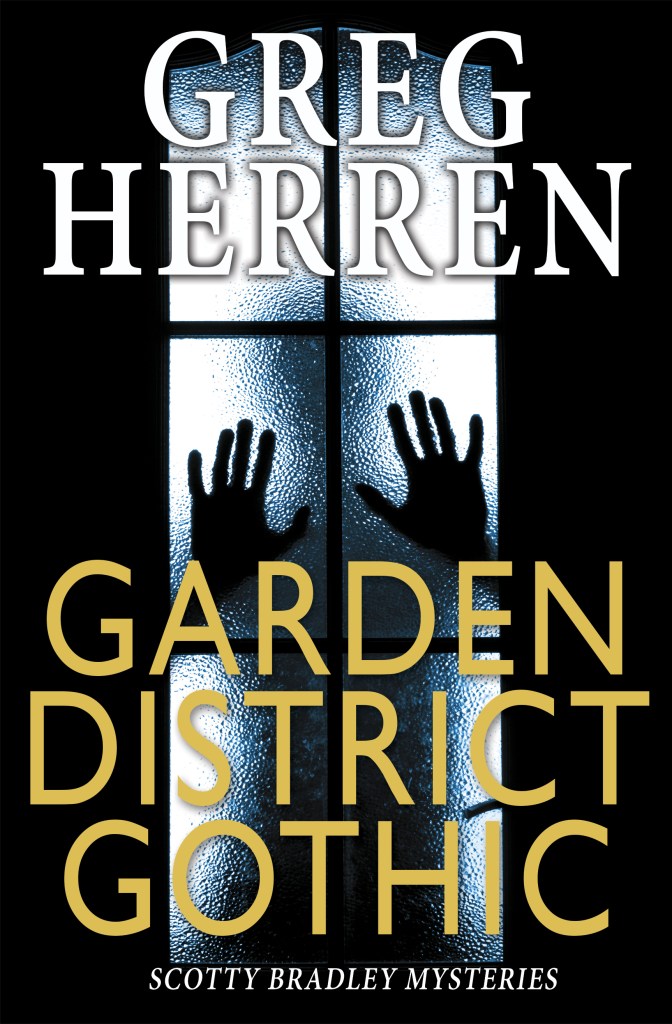
The genesis of Garden District Gothic was weird, but yet serves as yet another example of my adage never throw anything you’ve written away.
I had always wanted to spin Chanse’s best friend, journalist Paige Tourneur, off into her own series. I had always intended to do so; from the first time I thought her up for Murder in the Rue Dauphine I thought, “she’s fun and witty and interesting and that weird name–there’s so much more story there than we can get to as a supporting player in a series about someone else.” I have so much written down about Paige and her origin story; how she came up with that name and why; how she wound up at LSU; and so on and so forth. A friend started an ebook publishing company, and wanted me to write Paige novellas for her; I did two–Fashion Victim and Dead Housewives of New Orleans–but the sales, frankly, weren’t there and I didn’t have the necessary time to put in marketing them to help drive the sales, so even though I’d started a third, The Mad Catter, we agreed to kill the series and pull the first two from availability; ultimately, I was working too hard for too little pay-off. I was disappointed, obviously; Paige was kind of a passion project for me–I’d made any number of false starts writing a series book for her, and it was sad to see that there wasn’t an audience for her after all. But I had about four chapters of The Mad Catter in place, and I didn’t want to waste the time spent on them…so I decided to turn them into a Scotty book, which became Garden District Gothic.
I also brought in a new character–a true crime writer with a shady past of his own–who actually wrote a book, a la Midnight in the Garden of Good and Evil, about the case. The name of his book? Garden District Gothic. I brought him in, thinking I would spin him off into his own book/series–I thought it might be fun to write about a writer…(I thought about using him as the main character in another book based on an actual unsolved string of murders in a rural Louisiana parish, but very quickly realized he was simply an amalgamation of Scotty and Chanse, so that book–The Bodies in the Bayou–went onto the backburner. I think I may have created the character before, in the Chanse series, but I could be remembering that wrong. I also used this book to sort of set up the next; I will explain that further when I am talking about Royal Street Reveillon. I also crossed the character of Paige Tourneur over from the Chanse series into the Scotty series (I loved the character, hated to sideline her after I ended the Chanse series and the novella series didn’t pan out); not that she will be a big part of the Scotty series, but hey, every so often I need a journalist, and why not use a character I am very fond of already and wasn’t ready to stop writing about?
The book was loosely based, obviously, on the Jon-Benet Ramsey case–a decades old notorious murder of a child in the Garden District that was never solved. I wanted to examine and explore issues of class in New Orleans, but I am not entirely sure I pulled off what I intended with the book.
Then again, I think that with every book, don’t I?
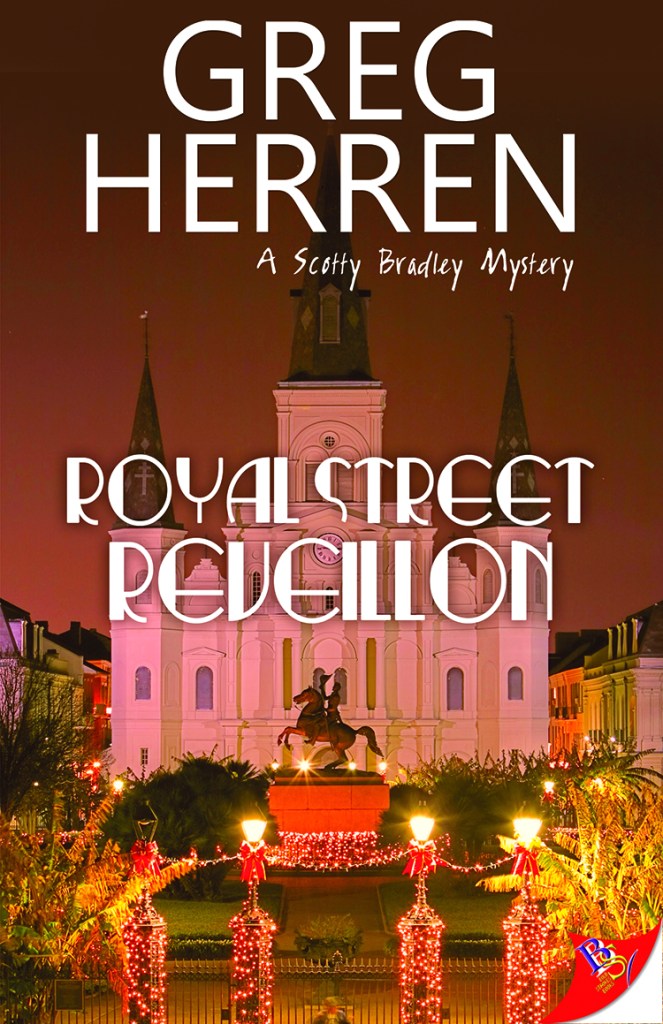
And we now come to the (so far) most recent book of the Scotty series, Royal Street Reveillon.
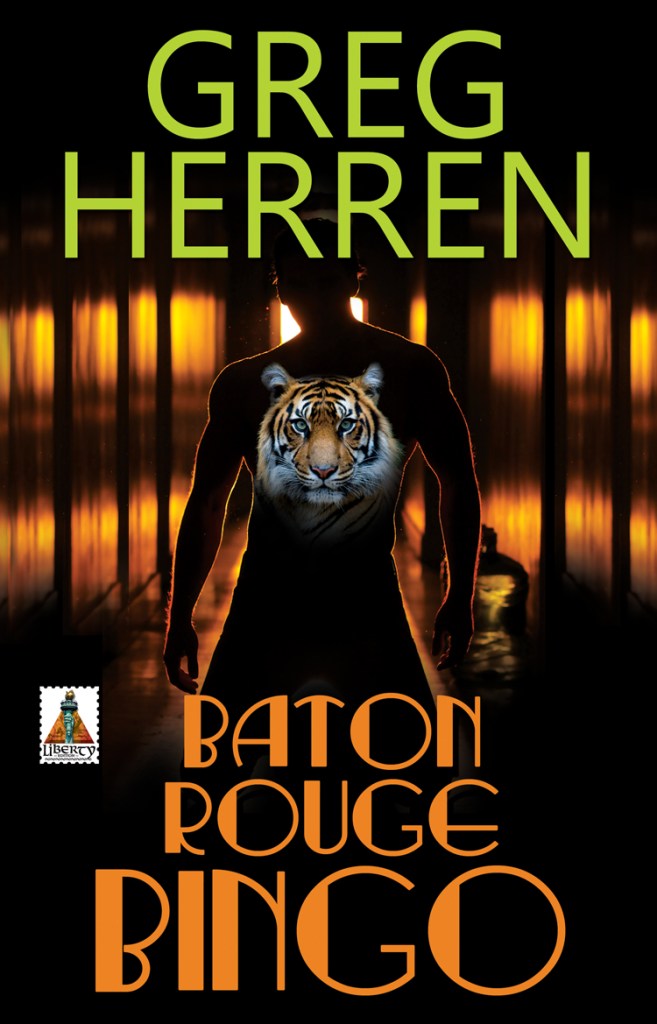
Originally I’d envisioned the Scotty trilogy (when it morphed from a stand-alone) as encompassing the three big gay holidays in New Orleans: Southern Decadence, Halloween, and Mardi Gras. Jackson Square Jazz wound up taking place just before Halloween, alas; Scotty talks about their costumes in the epilogue, but I hit the other two holidays out of the park. When I added a fourth book, I tied it to the Gay Easter Parade–Scotty is on his way to ride on the Devil’s Weed’s float when the book opened–and then of course the next book was sort of Christmas/sort of Mardi Gras/sort of the Super Bowl. Baton Rouge Bingo was the first book that wasn’t tied to a holiday of some sort; neither was Garden District Gothic. But for the next Scotty book, I wanted to do a Christmas book. I’ve never really written much about Christmas, and I do love the season, especially in New Orleans. I wasn’t sure what kind of plot I was going to use, but I knew it was going to be set during Christmas season and I knew I wanted to use reveillon, the Christmas season meal you use to break your fast for Mass, in the title. I had introduced one of the characters from Dead Housewives of New Orleans in Garden District Gothic, so it only made sense to me (or so it seemed at the time) for me to take the framework of Dead Housewives–the entire Real Housewives spoof I wanted to write–and build this new story around it. I changed a lot–made the overarching story much more complicated, and especially complicating the “whodunnit” aspects of the three murders that all occurred within twenty-four hours of the premiere party for Grande Dames of New Orleans.
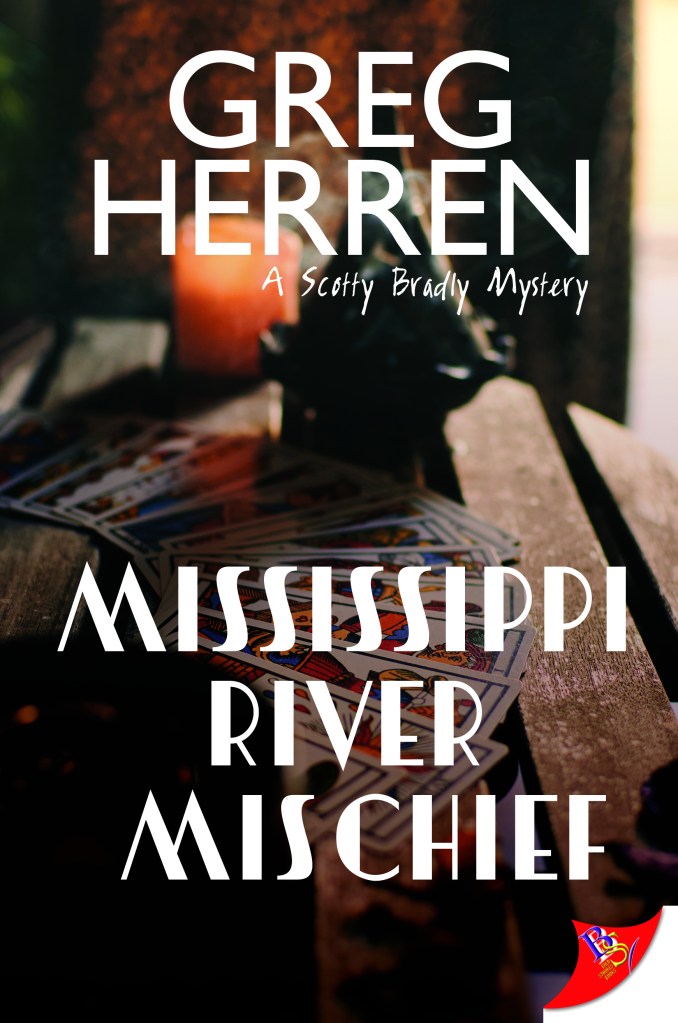
I also did a couple of horrible things to Scotty and his loved ones over the course of this book…which will have to be dealt with in the new one, alas. I hate when I do this to myself! But with Royal Street Reveillon and its darker themes, I wanted to show how much Scotty has grown and changed over the course of the series; he’s evolved as a person, partly because of the changes to his life and partly because of what he experiences through the murders he finds himself involved in. Do I wish, as I start writing Mississippi River Mischief, that maybe I hadn’t given so many growth opportunities over the years to Scotty and his gang of family and friends? Absolutely. But that’s part of the challenge of writing a series, and what makes it so much fun.
*Funny story about the original cover of Bourbon Street Blues. Back in the day, publishers used to meet with reps from Barnes & Noble and Borders to show them covers and get their input; covers were changed based on those meetings. The Bourbon Street Blues cover was so in-your-face it took me aback when I first saw it; and they had toned the original image down dramatically, mainly smoothing down the bulge so it wasn’t so in-your-face. The Barnes & Noble buyer told them, “he needs a bigger bulge” so they made it bigger–but were still cautious; the image’s original bulge was still bigger. I do think that story is hilarious.
Sunday morning and I slept in again, which was marvelous. I fell asleep in my chair last night while watching television, which makes me think that no matter what time I arise, ten is now my bedtime, and I am not really sure how I feel about that, to be completely honest. I welcome the good sleep, though, and the rested and refreshed feeling I’ve been experiencing in the mornings. Yesterday was a good day; I didn’t get nearly as much done as I wanted, but c’est la vie; such is life, and I did get things done. I worked on the kitchen, did some cleaning, working on my CV a bit more (more on that later), and laundered the bed linens (clean bed sheets and blankets always make sleep feel better for some reason I choose not to question). I did a load of dishes, cleaned some things out of the refrigerator that needed cleaning out, and organized some.
We rented Spider-Man: No Way Home yesterday and yes, I do think it was the best live action Spider-Man film (barring Spider-Man: Into the Spider-verse, which was animated). The young cast (Tom Holland, Zendaya, Jacob Batalan) are absolutely pitch-perfect; the concept of the story was actually good; and it was a sweeping epic that caught us up in the narrative. I hate to think this might be Tom Holland’s last go round as Spidey, frankly; I adore the kid, and have ever since his Lip-Sync Battle performance doing Rihanna’s “Umbrella” (that was what got me into the theater to see Spider-Man Homecoming, whichI didn’t care much about seeing before that clip won me over, and these three Tom Holland outings as my friendly neighborhood Spider-Man are my favorite Spidey live-action movies), and I hope this isn’t the end of this cast in these roles. I don’t know how the franchise can go on now, given the events of the movie, but in some ways it’s very true to the original comic books–Peter being alone and friendless. Tom Holland is also one of our best young actors; I’ve loved him in everything I’ve seen him in, even if the film itself was flawed. I’m sure he’s destined for a long and successful career, and he certainly has the money and success to focus only on projects that interest him as an actor; kind of like Daniel Radcliffe and the other kids from Harry Potter.
It would be a lovely place to be in as an actor, I would think.
After that, we switched over to Netflix to watch Heartstopper, a young adult gay romance series from Britain (with Olivia Colman in a very small party) and coming on the heels of season 5 of Elité, it was marvelous to see a love story between gay teens actually played by teens who weren’t perfect looking and beautiful. We deeply enjoyed this show, which was just incredibly sweet and adorable; how can you not fall in love with main character Charlie? How can you not empathize with him being mocked and bullied, yet despite this remaining first and foremost an incredibly kind and caring young man who loves his friends and wants to protect the people he loves from suffering the way he has suffered? It was apparently a graphic novel first, which was a bit of a surprise (I may have to go looking for it now; I definitely would read the novel if there was one) but a very pleasant one. It didn’t have any of the falseness or inauthenticity of other queer young adult fictions I’ve read and/or seen before; there was also lesbian representation as well as a very well rounded and developed trans character. It was so remarkably well done…I cried a couple of times. Rugby star Nick’s struggle to understand what he was feeling, and how to express himself in ways he’d never learned or thought about was also remarkably touching to see. I defy anyone to watch Heartstopper and these wonderful teens and not want to do everything in their power to protect them from hate and bullies–of which there is far too fucking much in the world, and has roared back lately thanks to the right wing hate machine. (It’s also been horrific watching people who consider themselves “allies” betraying us at every opportunity and turn…I’d forgotten how that felt, and frankly, I’ve cut people out of my life for far less than this…more on that later; I have been trying to compose a Julia Sugarbaker entry for several weeks now about the vicious political attacks on my community lately, but it’s not easy to do so without swearing vociferously and shredding people–mind you, they deserve it with both fucking barrels, but reason and logic is the best way to battle bigotry and hatred and garbage human beings.
I reserve the right to experience righteous anger and express it, though, because sometimes it is absolutely fucking necessary.
It’s weird that we’ve spent the weekend with superhero films, watching The Batman on Friday night and Spider-Man last night; we also started watching Severance last night, which I was also enjoying–my falling asleep during the second episode was more a result of my being tired more than anything else; I am going to rewatch it this morning while Paul sleeps–and there are several other shows I want us to get watching. We leave for New York on Tuesday, though–tonight and tomorrow night will be more about me packing and getting ready to head for the airport on Tuesday more than anything else; our flight is around noonish, I think–I need to double check, especially since I have to check us both in tomorrow–so we have time to drop Scooter off at the kitty spa before we have to head for the airport. (One of the things I need to do today is make sure I have everything I need, paperwork wise, for the trip–the car service from LaGuardia, the discount parking coupon for USPark, the confirmation number for the flights and the hotel)
Today I need to work on my story some more, do some more things, and get everything together that I need to get together before we leave town.
I’ve been updating my CV lately (something I’ve not done since 2009, and it wasn’t even really complete then) because I am doing a favor for a colleague (whom I also consider to be, at the very least, a friendly acquaintance) which requires me having an updated CV. As I was adding short stories, essays, articles, books and anthologies to the list, I began to realize why precisely people refer to me as prolific (which I always just smile and shrug off). The damned thing is already seven pages long, and I’ve not included everything–old books reviews, author interviews, columns, etc.–and there are some things I wrote for websites that I am no longer able to locate or remember (if it’s not in print, the chances I won’t remember it expand exponentially) and really, it doesn’t need to be that exact for this purpose; but it does make me think I really do need to, at some point, make sure every single thing I’ve ever written is included in my CV. I mean, it already looks impressive; I can only imagine how long it will be once it is as complete as I can make it. I mean, I wrote a fitness column every two weeks for IMPACT News and later for Window Media, for at least four years. That’s well over a hundred columns right there…not to mention all the book reviews I used to do. I think I have produced millions of words over the course of when I first started writing professionally all the way back in 1996 in Minneapolis, which was really when my writing career began; so I’ve been at this now for over twenty-six years, which is kind of amazing, really.
And perhaps it’s best for me to head into the spice mines now, so I can get a jump on the day. Have a happy Sunday, Constant Reader, and I will chat with you again tomorrow.
It seems hard to believe–and writing it out makes it seem even harder to believe–but my first book came out over nineteen years ago. Right? I’ve been a published author of crime fiction now for almost a third of my lifespan–more, if you consider my career beginning when the original contract was signed–and yes, it makes me feel a bit old and weathered, and no, it doesn’t seem like it’s even possible (well, that so much time has passed).
It’s also a little weird to remember that one of the launching pads that got publishing in the first place was book reviewing. I started reviewing books for IMPACT News here in New Orleans around 1998, which led me eventually to national magazines, and an assistant editor position at Lambda Book Report (now LambdaLiterary.org) for a few months before taking over as editor-in-chief for twelve issues. Over the next few years I still did the occasional book review, but was slowly backing away from it. As a novelist myself, reviewing books was basically a mine field for me. If I reviewed a book badly, someone would inevitably pull out the old canard of “he’s just jealous!” (nothing could be further, ever, from the truth; I am not jealous of anyone’s success; if anything, I am jealous of other writers’ abilities and skills and creativity–which would never result in a negative boo review in the first place)
Of course, this doesn’t mean I’ve never been accused of jealousy of other writers’ careers and/or success; it amuses me a bit, because clearly the person lobbing such an accusation doesn’t know me at all–but I also don’t like being perceived that way. So I stopped reviewing books for money and for publication–it wasn’t a big financial loss for me in the first place; few places pay incredibly well for reviews; certainly not the places paying me for them, at any rate–and it eliminated any future accusations of “jealousy.” I also stopped talking about queer writers, and/or blogging about their books, a while back for various reasons. For one, I don’t want to be seen as a reviewer or my blog as a review site; as it is, I got requests from authors and publicists periodically wanting me to read and review their book(s) here; inevitably, I never am able to get to it and I don’t want to read for anything other than pleasure anymore.
When someone sends you a book to review, it turns the reading from pleasure to work and I don’t want that; it’s hard enough to turn off my editorial brain when I read, let alone adding the reviewer’s mindset back into my psyche.
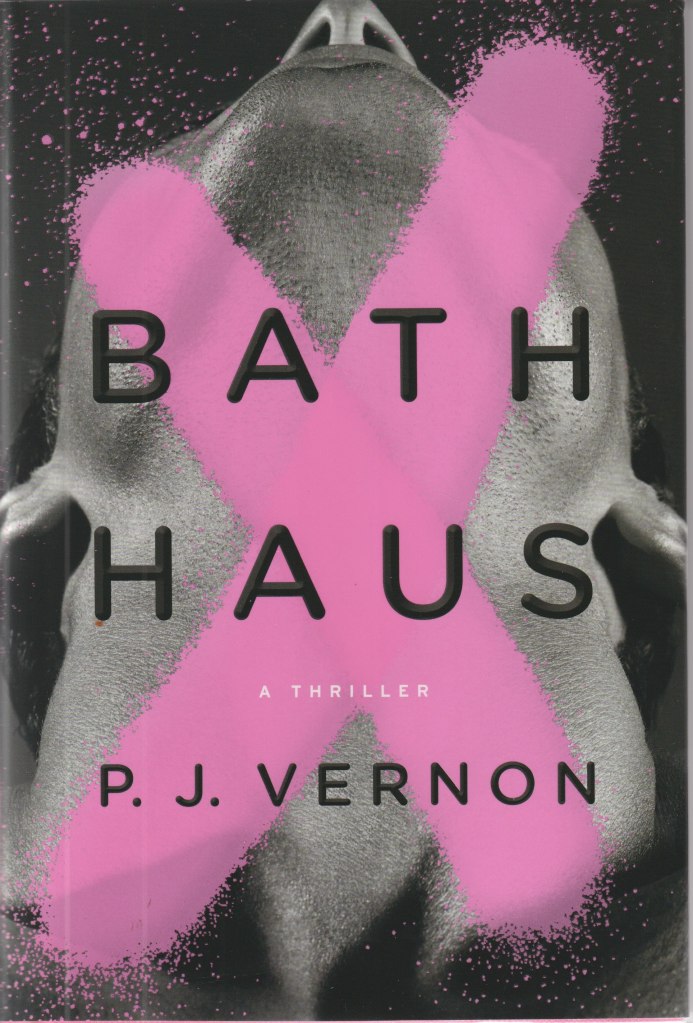
I also realize, now, that all of this dissembling might sound like I am about to write some terrible things about PJ Vernon’s Bath Haus; nothing could be further from the truth.
This is a fucking mistake.
My heart beats against the back of my sternum like it might knock itself still.
I kill the ignition and Nathan’s SUV sinks into silence. My wedding band slides right off, joining spare console change. Nathan and I aren’t married, but he insists we wear rings.
The iPhone buzzing in my pocket is a miniature washing machine. Nathan’s calling. I wait it out, don’t move. A simple phone call I treated like a kidney stone. Excruciating and it needs to pass. He leaves a voicemail.
“Oliver. Dinner’s wrapped up, heading back to the hotel now. Give me a call if you can. Wondering what you’re doing. Did you remember Tilly’s heartworm medication? Don’t forget. It’s important. Call me. Love you.”
Mental note: return Nathan’s call within the hour. Thirty minutes is his typical limit. If he doesn’t hear back within half an hour, we fight. But he’s out of town, and I can stretch it to an hour. He can’t fight me from Manhattan, and it sounds lie he’s been drinking anyway.
First of all, I want to point out that back when I was getting started, the chances of this book being published by a mainstream press like Doubleday, in hardcover, were so infinitesimal I can’t even think about such a manuscript being delivered to a mainstream editor in 2000 without laughing out loud. The book opens in a bath house, for God’s sake; my QUEER publisher made me make a slight change to Murder in the Rue Dauphine, which meant not having the murder victim and his wealthy closeted lover meet in a French Quarter bath house. (I was told they would not be seen as sympathetic by the reader, which also struck me as odd; but it was also my first book and I wasn’t going to argue, assuming my queer publisher knew better than I did) Hell, even the title is Bath Haus–which kind of lays it all out for you, right there. This book also doesn’t shy away from gay sexuality, either–another third rail in thriller/crime fiction. It’s all right there for you, and not done in a prurient way; it is simply presented as another facet of their lives, much as it would be if it were a heterosexual couple.
And I absolutely love this opening–which contrasts the mundanity of the coupled existence vs. the lure of cheating.
I mean, how genius to have his main character, about to enter a bath house to cheat on his partner, get a text reminding him to give the dog her heartworm medicine! Well played, indeed!
PJ has called this book “Gone Girl with Grindr and gays”–which is a great elevator pitch, really–but the only similarities here with Gone Girl is that the book focuses on a dysfunctional relationship that spirals out of control, and that it’s a thriller with the same kinds of surprising twists and turns and surprises that keep you turning the page, very curious to see how this is all going to end–and to find out what is going on as well.
The book focuses on a relationship that really isn’t an equal one: wealthy surgeon Nathan, from a socially prominent family, has rescued a lower class drug addicted younger man from drowning in his own no-where life. But that power differential (rescuer/savior and rescued/victim), when added in with the financial differences, has made Oliver almost as dependent on Nathan as he used to be with drugs; if he loses Nathan, he will have nothing–which he is very aware of, and yet…like all addicts, there is a self-destructive streak in Oliver. He has never gotten over the self-loathing that was only amplified by drug addiction–and so he has begun checking out other guys on a Grindr-like app called MeetLockr (props for the clever app name! PJ needs to trademark that before someone else makes a fortune off it…then again I am assuming it’s NOT a real app, aren’t I?) and finally, with Nathan out of town and the coast, as he sees it, clear–Oliver decides to go to Haus, a bath house, for a night of anonymous sex which should never intrude into the picture perfect life Nathan has provided him. But his encounter turns terrifying, as Kristian, a gorgeous Scandinavian, begins choking him far past the point of pleasure and Oliver panics, fights back, slashes Kristian’s cheek open with his locker key–and then has to lie to Nathan about the bruises on his neck, beginning a downward spiral of lies and deception that begets more lies and deceptions as he frantically tries to hide the truth from Nathan–but few things in this book are what they seem at first glance, and the deeper the reader gets into the book, the more surprises are in store….
Bath Haus is definitely a thriller; a non-stop thrill ride that is difficult to put down, with brief chapters and short staccato sentences that come at the reader like bullets from an AK-47, almost daring you to put the book down–which you won’t be able to.
The book has received a lot of hype–also thrilling for me to see–and I am very happy to say it lives up to said hype.


 Queer and Loathing in America